In Maynard Dixon’s poem “At Last,” the artist contemplates the desert after his passing. “If you should desire some news of me, go ask the little horned-toad whose home is in the dust,” he wrote.
Seventy-eight years after his death, if you should desire some news about Maynard Dixon, and the horned-toad isn’t taking your calls, then go ask Mark Sublette. The owner of Medicine Man Gallery is not only one of the leading authorities on the great Western painter, he may also be his biggest fan. The gallery owner and art scholar has long run the Maynard Dixon Museum from within his gallery in Tucson, Arizona, and has recently moved the museum from the gallery to a new location around the corner. The museum now has its own permanent space, as well as room for temporary exhibitions, programming and much more. The move and expansion have been a long time coming for Sublette.
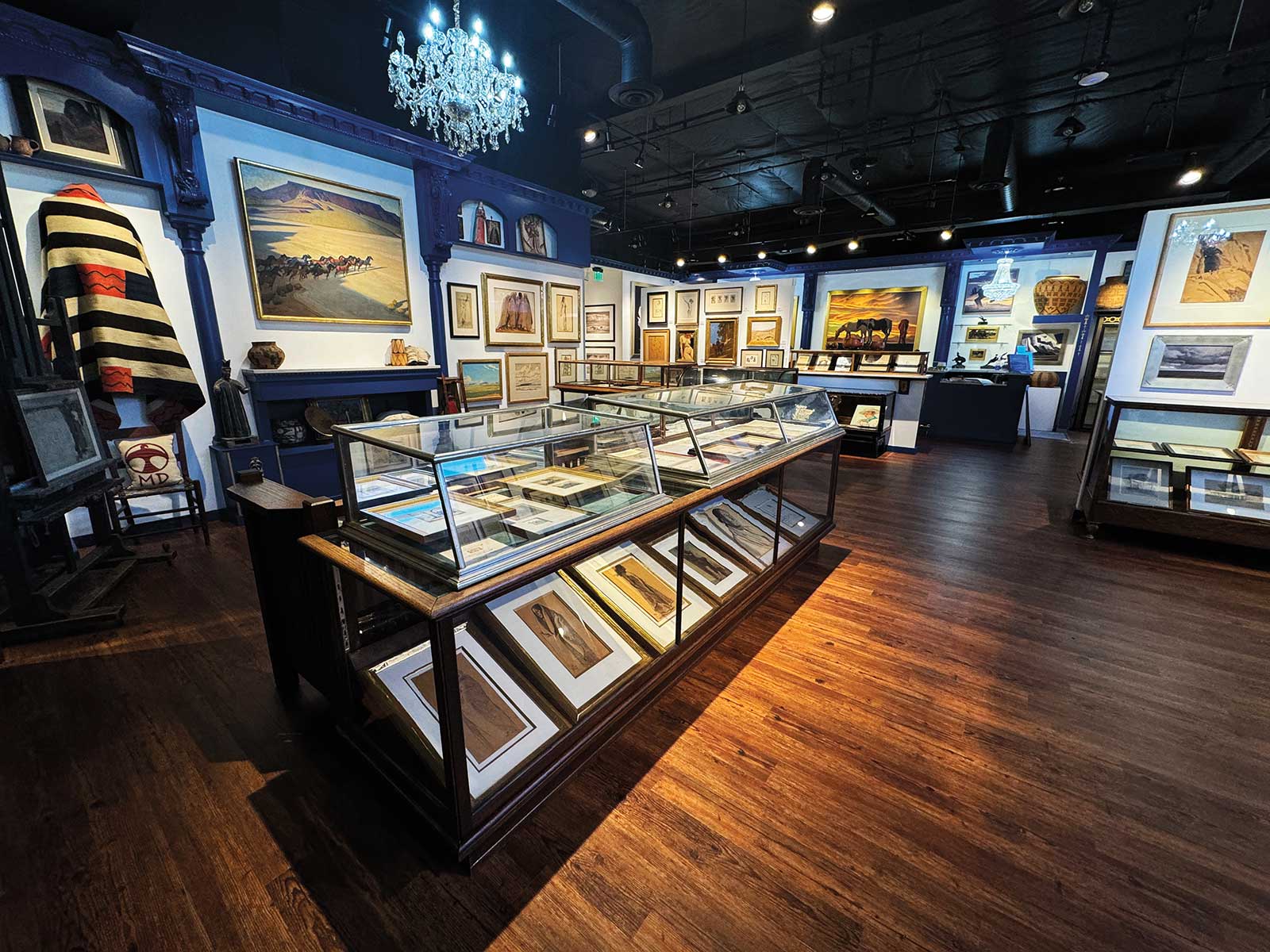 Maynard Dixon artifacts and material, including his 1927 oil Wild Horses of Nevada, on display at the Maynard Dixon and Native American Museum in Tucson, Arizona.“It was about 25 years ago that I felt there needed to be a place to collect all this great material I was seeing. So as important pieces crossed in front of me, I started collecting them to tell the story of Maynard Dixon,” Sublette says. “Of course, specializing in Dixon meant I was seeing some really great material. They were important to hold onto.”
As Sublette began curating a superb collection of Dixon material, the collection grew quickly. Today it has more than 150 pieces of art, including rare and important works, like his images of Boulder Dam while it was being built in 1934, major watercolors and even works that had first been offered to the public by Dixon during his famous 1939 studio sale, during which he raised funds to move from San Francisco to Tucson. The sale was a huge hit and even made it into newspaper coverage. The museum also has important early sketches of several of Dixon’s most famous works, including Earth Knower and Shapes of Fear,as well as the piece of art Dixon sent to Frederic Remington.
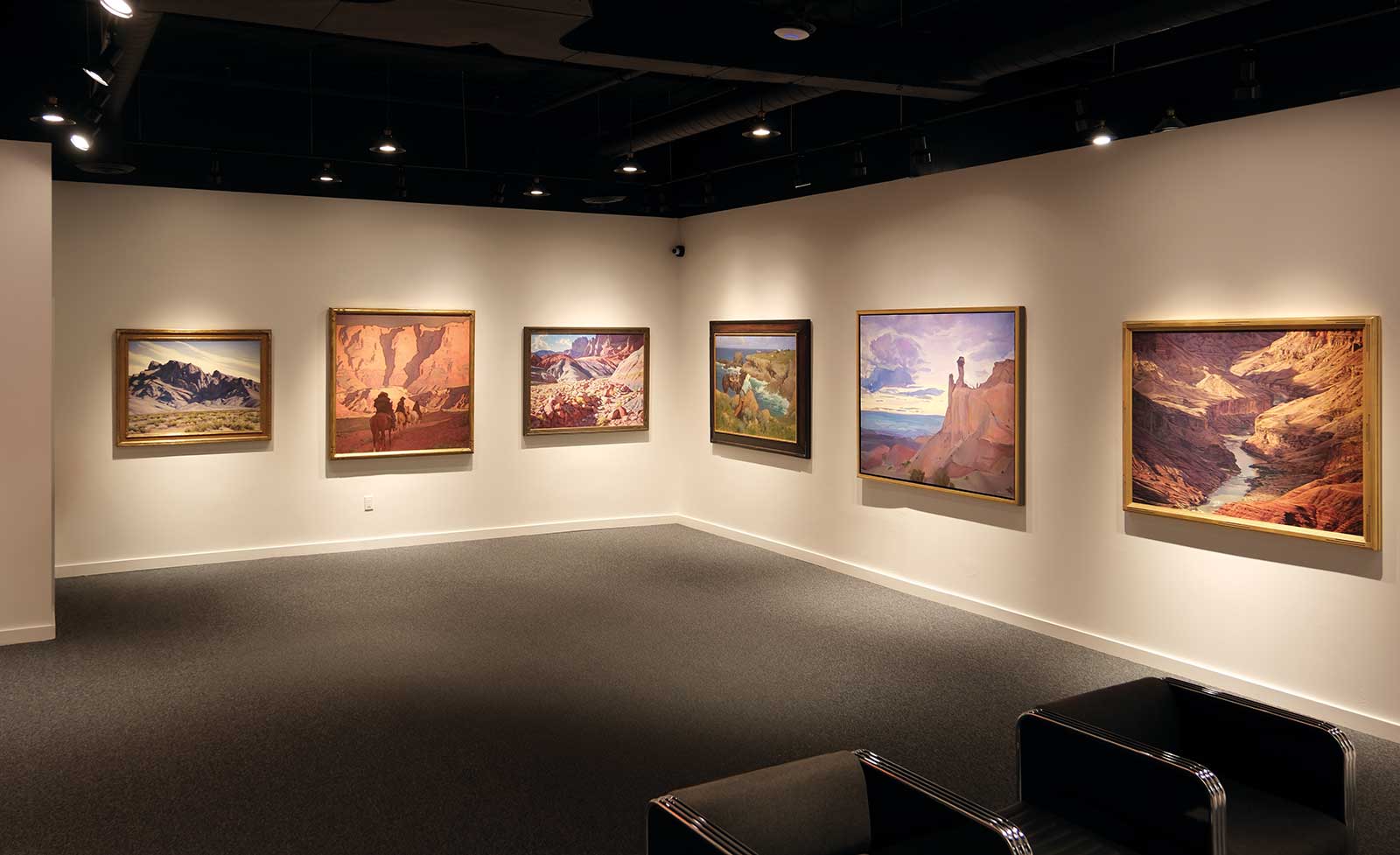 The exhibition Those Who Follow at the Maynard Dixon Museum.Artifacts include the artist’s bison skull, his walking cane, a chief’s blanket and one of the big Native American pots he had collected. The museum even has his easel, where much of his work originated, as well as his studio log which lists 767 entries.
The 3,200-square-foot museum—its full title is the Maynard Dixon and Native American Museum—will have several permanent exhibits, including much of the Dixon material and a recreation of his studio. The rest of the museum will feature rotating and traveling exhibitions. One ongoing exhibition, the museum’s first, is Those Who Follow, which is a celebration of Dixon’s influence as seen through contemporary artists’ works. Artists in the show include G. Russell Case, Kathryn Stedham, Amery Bohling, Josh Elliott, Glenn Dean and others. Immediately after that show, in December, will be a Dennis Ziemienski exhibition that will pair Ziemienski’s illustrations with those by Dixon. Additionally, there will be dedicated space for Native American art and artists, with an emphasis on jewelry. Finally, ongoing now, is a small exhibit celebrating the work of Ed Mell, the late Arizona painter who also greatly influenced art throughout the Southwest.
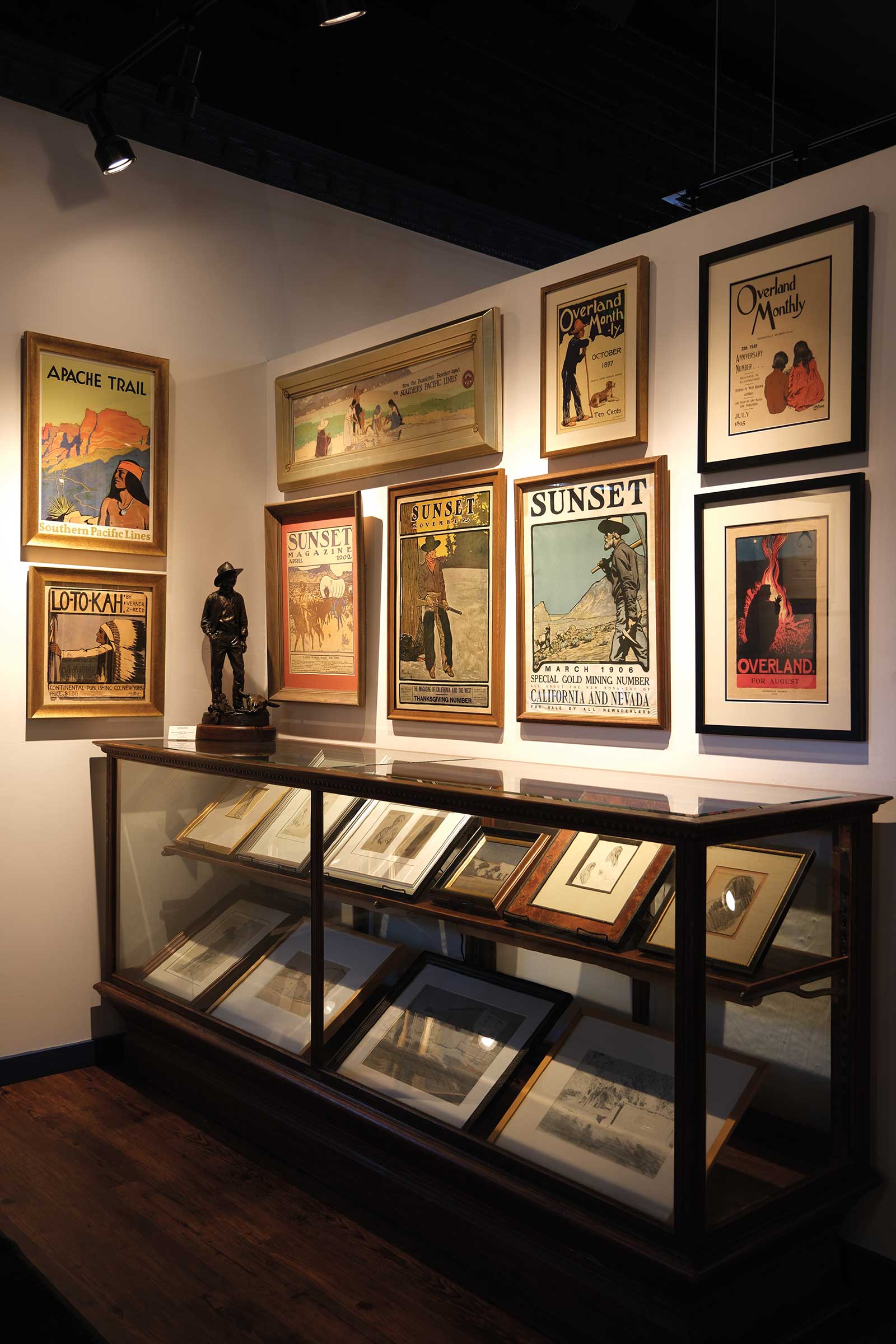 Maynard Dixon illustrations in one of the galleries at the new museum.
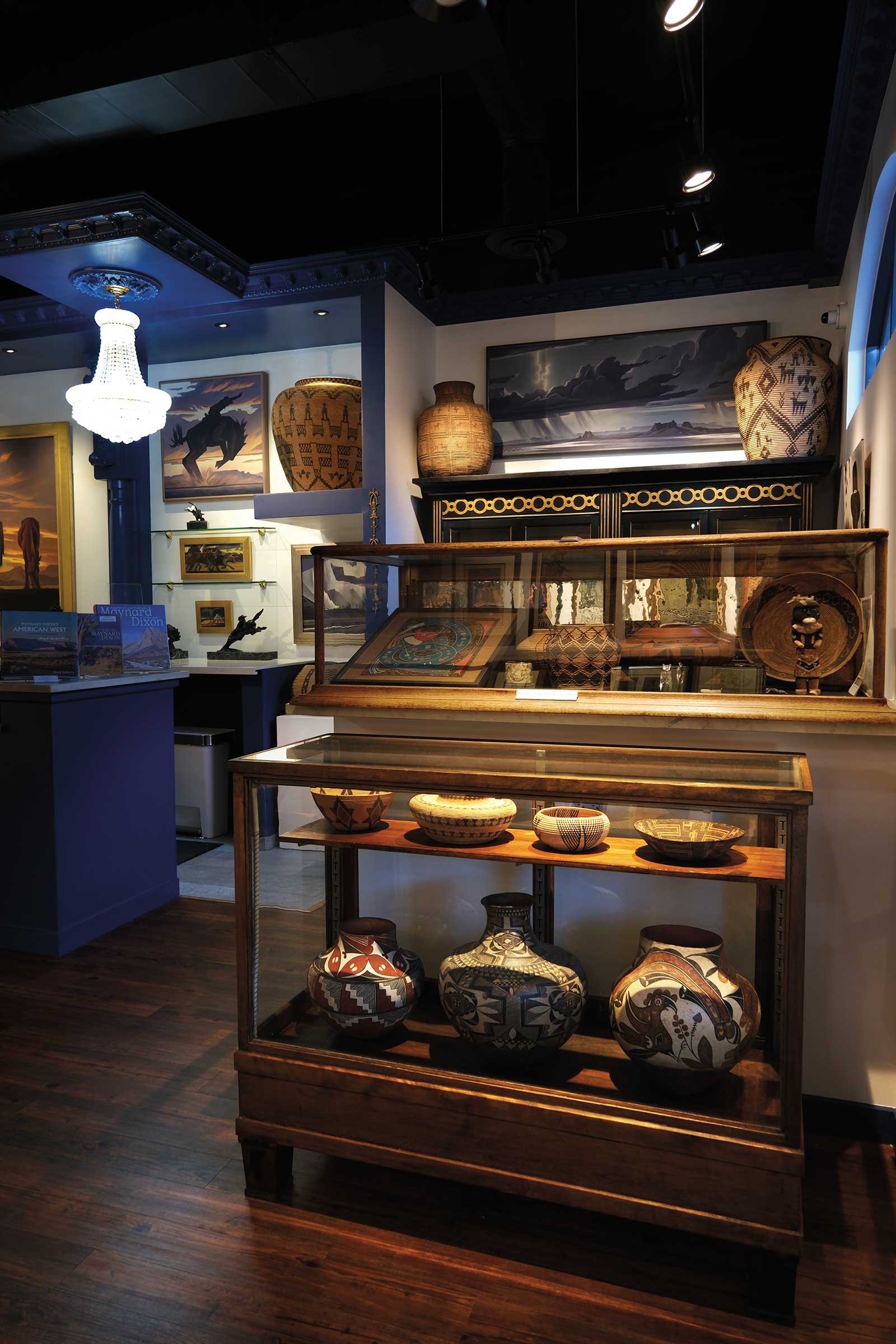 The interior of the Maynard Dixon Museum.
“I want there to be space in the museum to host events, exhibitions and also educational programs. For the die-hard Dixon fans, they will find this extremely interesting with so many objects and artworks that are only on view here in this museum. And for the people who are still learning about Dixon, there will be a lot here to get them excited about this important artist,” Sublette says, adding that Dixon marked a distinct period of Western art history. “He was the changing of the guard in the Western art genre. He was also one of the great bohemian artists. He was living in San Francisco, and was just really respected. He probably would have stayed there, even after the terrible 1906 San Francisco earthquake, but later in life his health was going down and he could feel he was running out of time. His lungs were failing him, so he came to the desert in Tucson.”
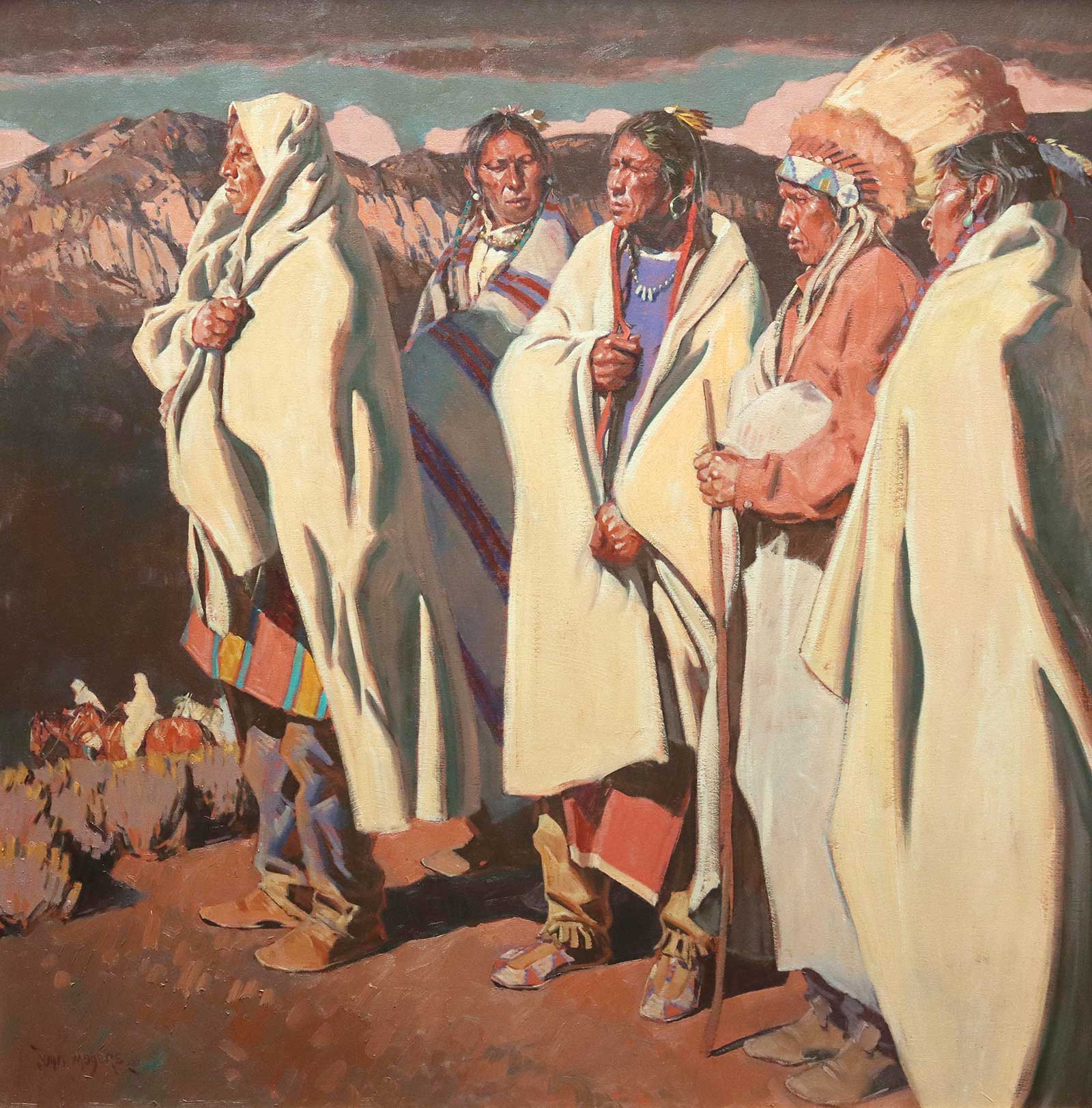 John Moyers, Land, Light, and Legend, oil, 48 x 48 in.
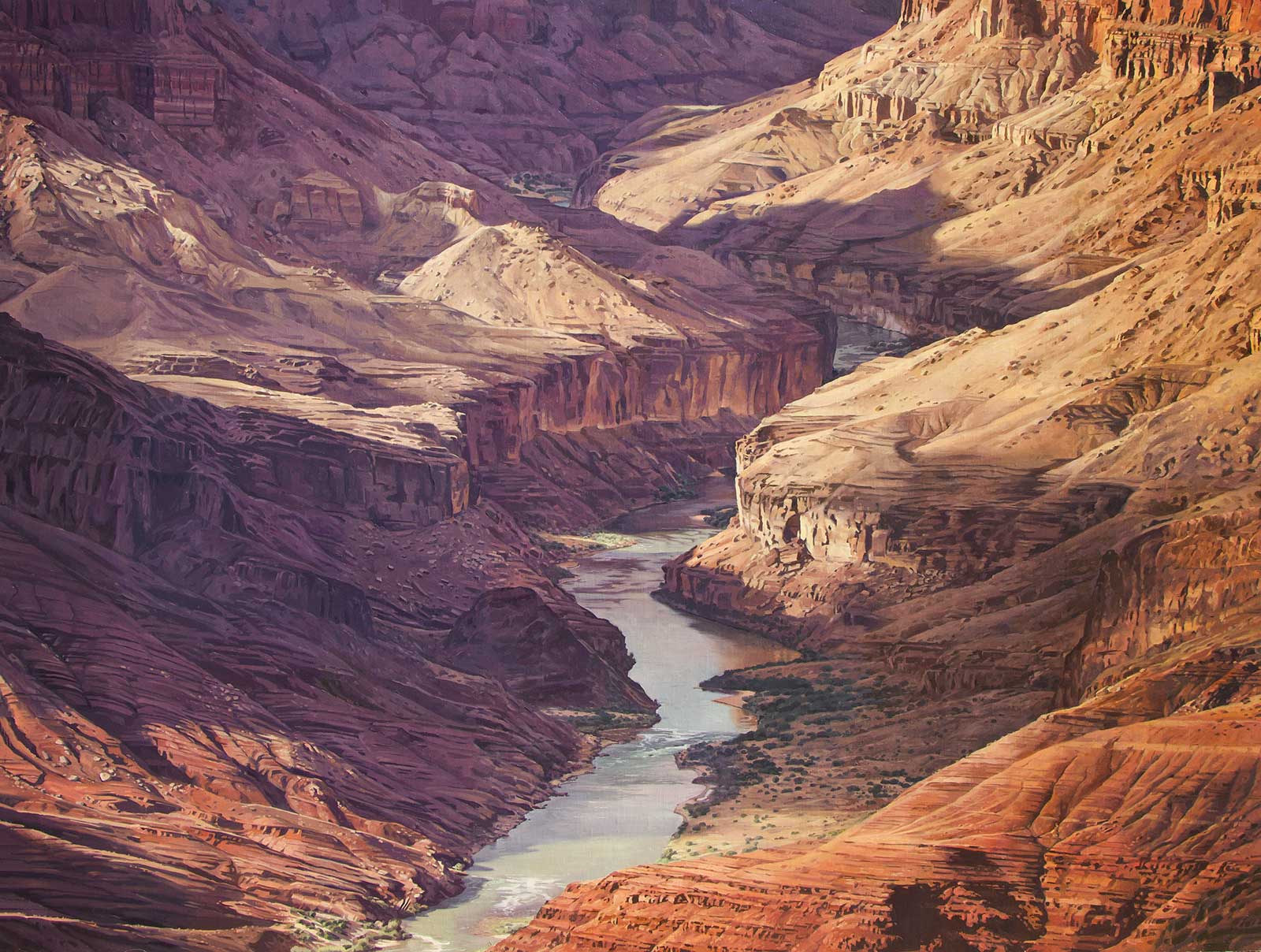 Amery Bohling, Reverence, oil, 40 x 50 in.
The gallery owner, now museum curator, adds: “More than anything, Dixon represented the shift into more modern art in the West. You can see that in his art, but also in the way he lived his life. He did unusual things for his time: he was [an advocate for] Indian rights, he was against Indian schools, he lived with Native American people through the year and visited something like 25 tribes throughout his life. Then he would go on to paint Cloud World,which would inspire countless other artists. He painted Monument Valley and Canyon de Chelly a hundred years before all the artists who are going there now. Back in 1905, no one wanted to paint Nevada, but Dixon did, and he came back with great material. Then he was in Arizona back when it was a territory. He has such an interesting history and storyline.”
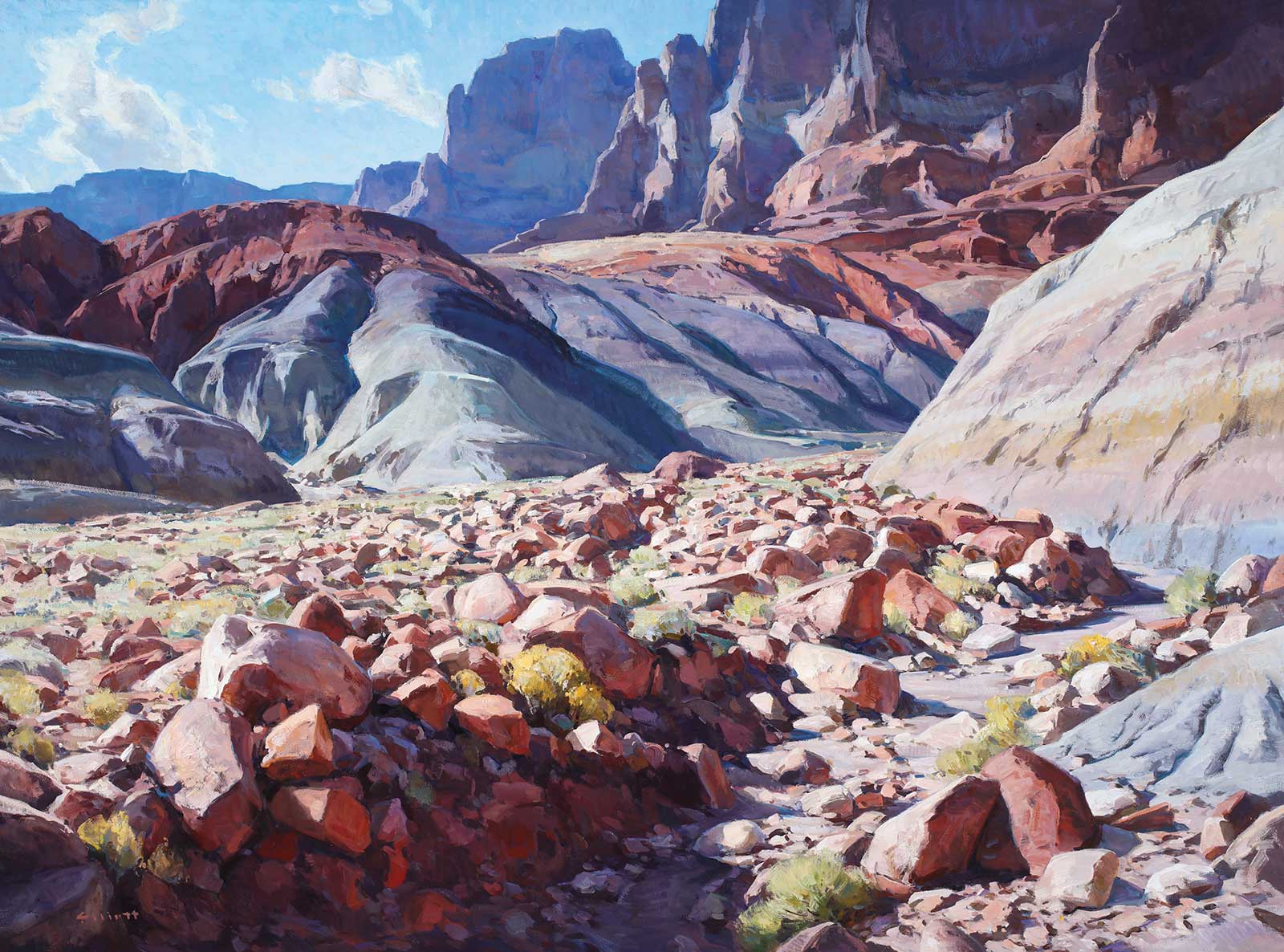
Josh Elliott, Vermilion Array, oil on panel, 36 x 48 in.
The Maynard Dixon Museum joins several other key venues, including the Brigham Young University Museum of Art in Utah, where Dixon is celebrated at a very high level with a large collection of material. And now that the museum is out of the gallery and in its own space, Sublette is treating it like a proper museum: it has its own website, it will host rotating and traveling exhibitions, and it will also have an entry fee of $12, which will go directly to the Sublette Family Foundation for the Arts, a nonprofit organization that was created to give back and support the art community and artists.
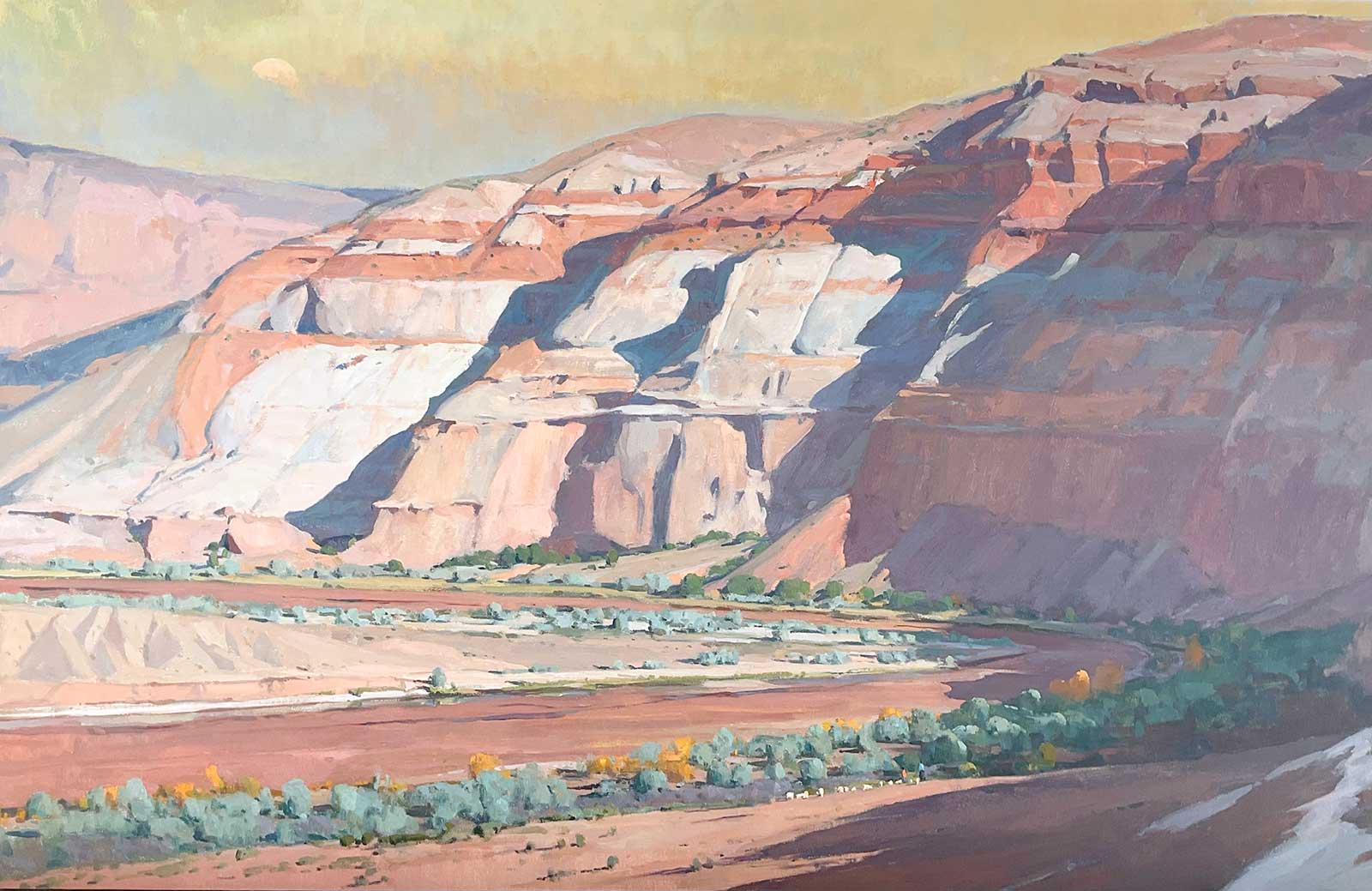
G. Russel Case, Hidden Away, 30 x 48 in. Museum images by Patrick Travers.
For information about the museum, and the ongoing exhibition Those Who Follow, visit the museum website. —
Those Who Follow
Through November 29, 2024
Maynard Dixon and Native American Museum
6866 E. Sunrise Drive, Suite 150 Tucson, AZ 85750
(520) 722-7798 www.maynarddixonmuseum.org
Powered by Froala Editor


