Tennessee painter David Wright admits he’s a stickler when it comes to the details of paintings, especially objects such as rifles, clothing, knife sheaths and other accoutrements. In his eyes, he’s protective of history, which needs to be accurate as often as possible. “If you’re doing historical subjects, you need to portray it correctly,” he says. “Lots of artists paint good art, but if you get into the historical phase, those past-time periods, it should be painted accurately.”
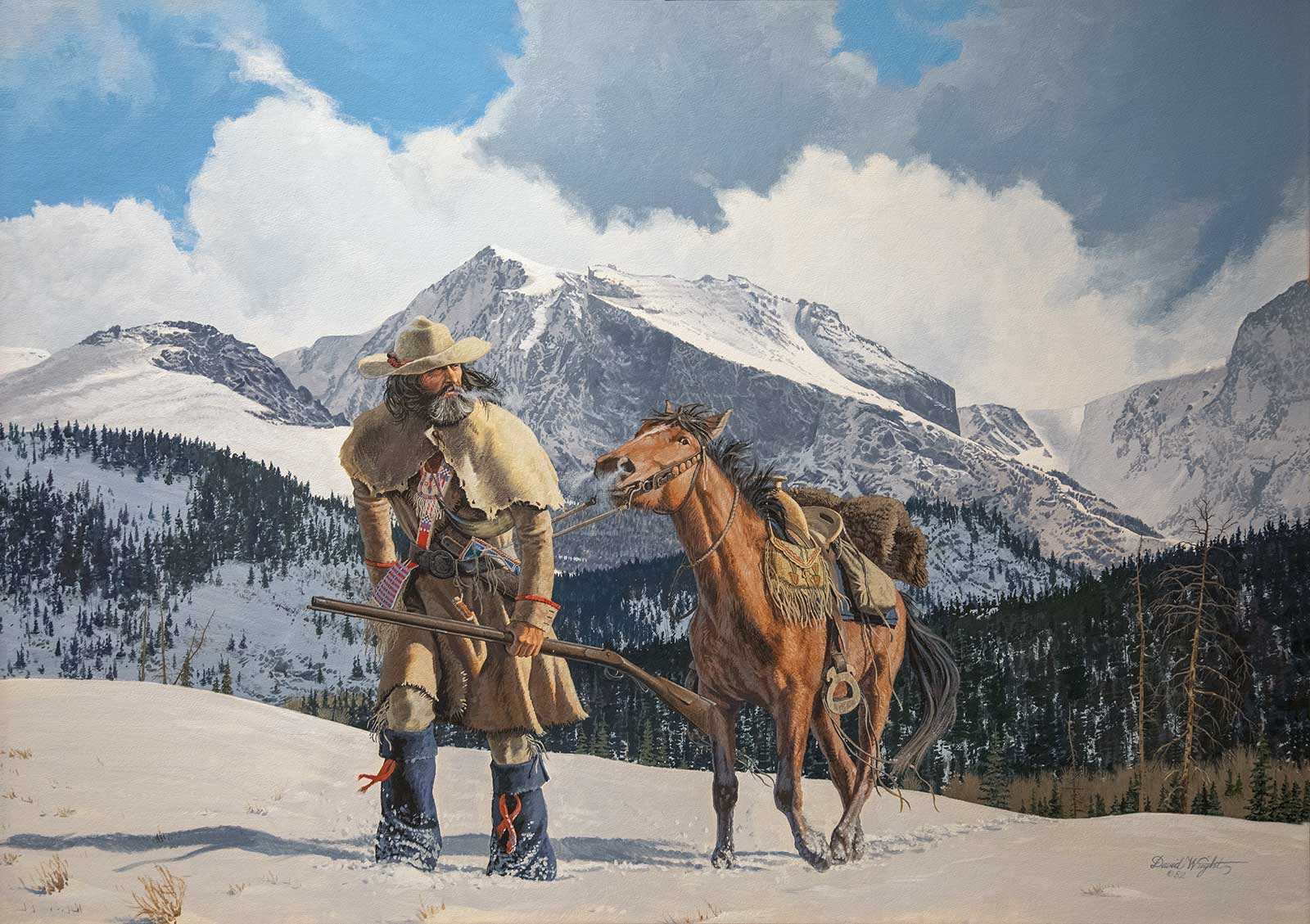
Up the South Slope, 1982, casein on board, 26 x 36 in. © David Wright. Booth Western Art Museum permanent collection, Cartersville, GA.
Wright, who has devoted much of his career to “pre-cowboy, pre-Civil War” frontier paintings, even labels his work—and the work of others, like John Buxton and Robert Griffing—as historical painting to distinguish it due to the research that goes into each work. The historical artist will be the subject of a new exhibition opening November 16 at the Booth Western Art Museum in Cartersville, Georgia. The Art of David Wright: Historian with a Brush is a retrospective that will feature around 30 works, some from early in the artist’s career, and also artifacts that will support Wright’s assertion that accuracy matters in Western art.
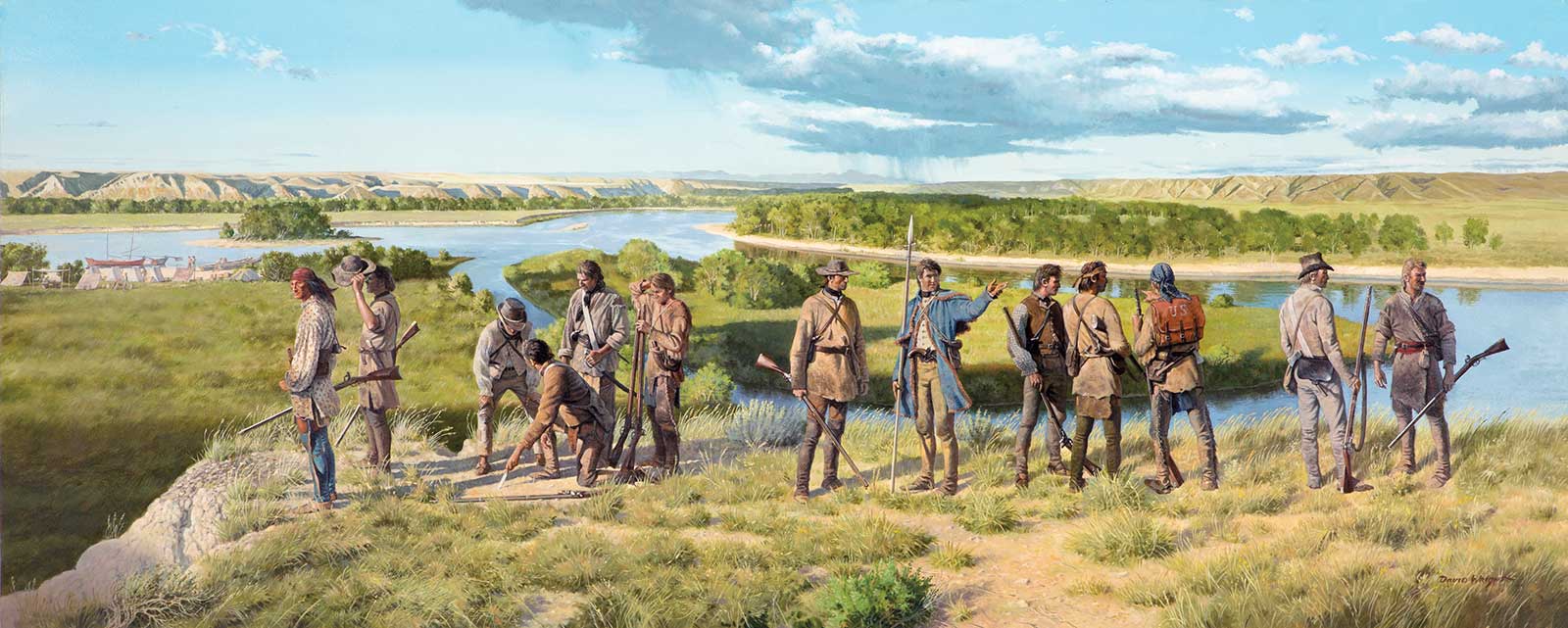
Lewis and Clark – Decision at Marias River, June 1805, 2015, oil on panel, 24 x 60 in. Collection of Tim Peterson.
Works include images that show the danger and beauty of the Old West, including pieces like Up the South Slope and his bear-attack painting Caught off Guard. Other works will involve more specific events that took place in the Old West. Lewis and Clark – Decision at Marias River, June 1805 shows the famous explorers trying to decide which fork to take on their journey, and The Captives shows two Native American warriors returning to camp with uninvited guests.
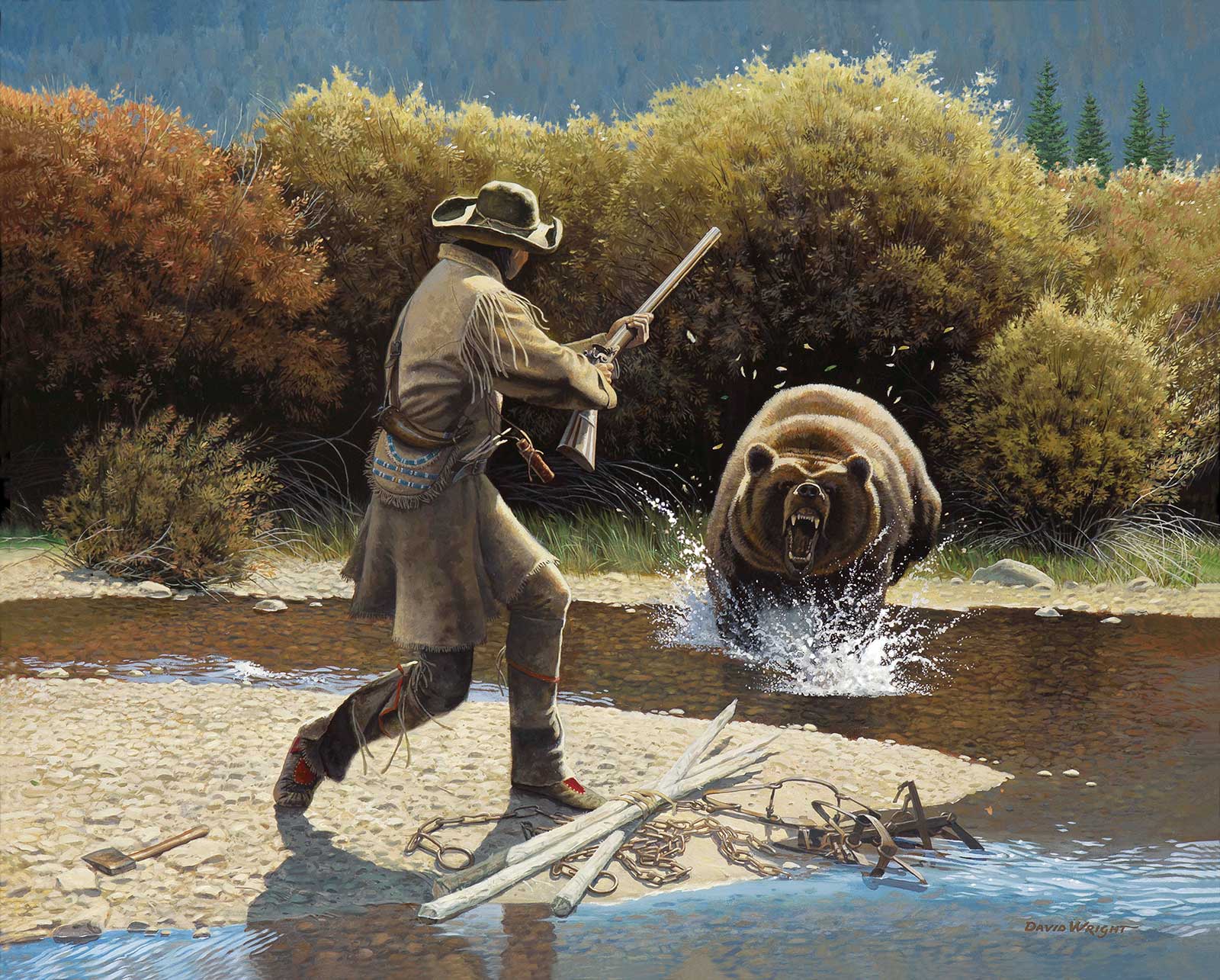
Caught Off Guard, 2013, oil on panel, 26 x 33 in. © David Wright. Collection of Fred and Beryl Everett.
When it comes to research, Wright says he uses lots of books, including first-person accounts that were recorded from the early American frontier during the period of the Western fur trade. Museums and their collections of historical artifacts can also play a significant role when it comes to researching materials and objects. The internet can be helpful, but as with all things on the internet, don’t take everything at face value, he says. “In the end, you just weigh everything out carefully and try to take from the best sources,” he adds.
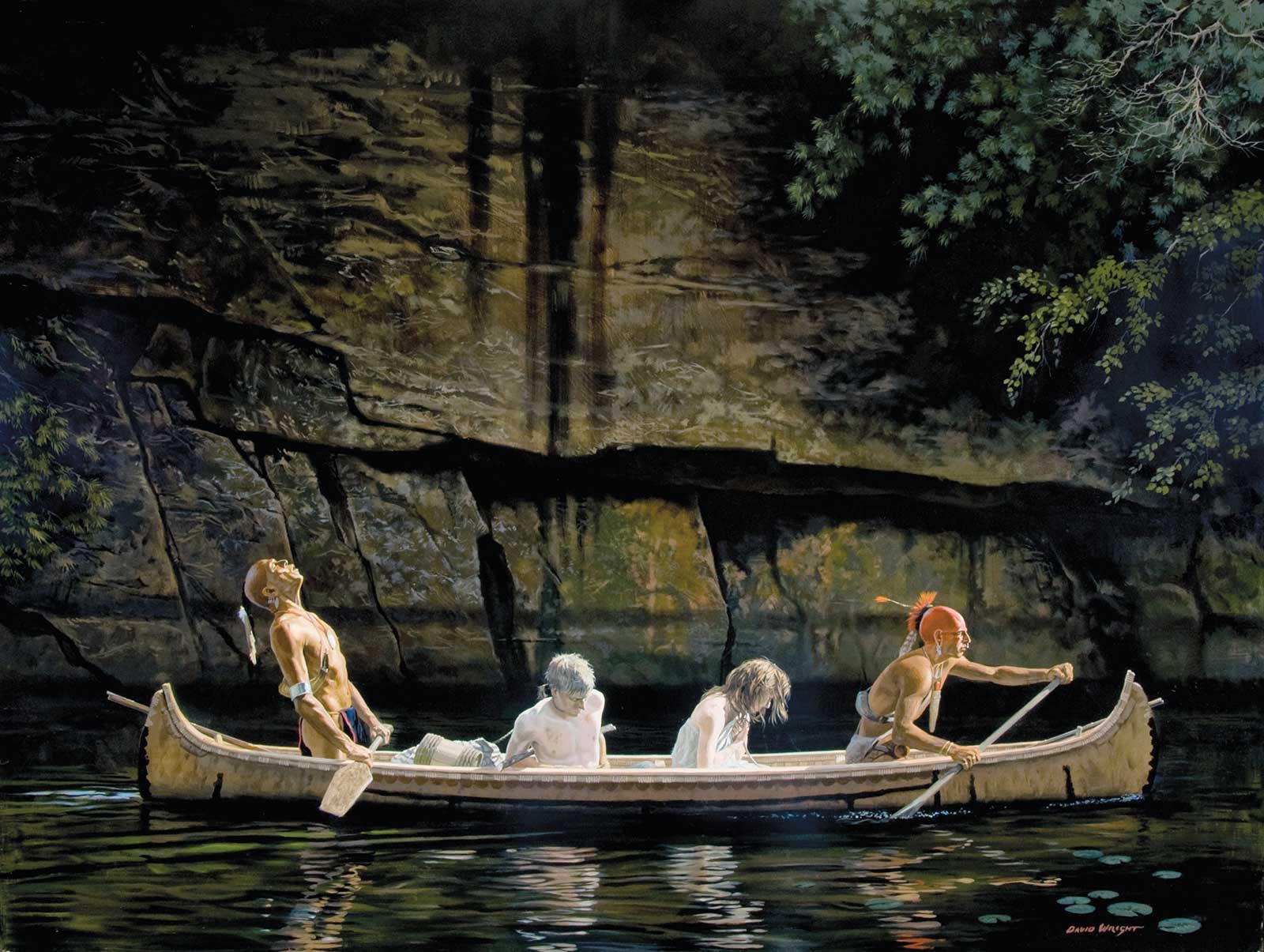
The Captives, 2008, oil on canvas, 36 x 48 in. © David Wright. Collection of Phyllis Cockerill.
“His depictions of memorable moments in American history have earned him countless awards and placement in prestigious museums and private collections around the country,” says Seth Hopkins, executive director of the Booth Western Art Museum. “Yet, he is a humble man, who is grateful for the collectors who sustained him through the years, cherishes his relationships with other artists, and values the friendships he has made with many like-minded individuals he has come in contact with throughout the country.” —
The Art of David Wright: Historian with a Brush
November 16, 2024-April 13, 2025
Booth Western Art Museum
501 N. Museum Drive, Cartersville, GA 30120
(770) 387-1300, www.boothmuseum.org
Powered by Froala Editor


