Many would argue that no single technological advancement had such a profound impact on the cultural geography or social topography of the United States as the advent of the railroad. In an exploration of how the arrival of trains impacted the visual culture during the rapid industrialization and expansion of the 19th and 20th centuries, the Shelburne Museum presents All Aboard: The Railroad in American Art, 1840-1955.
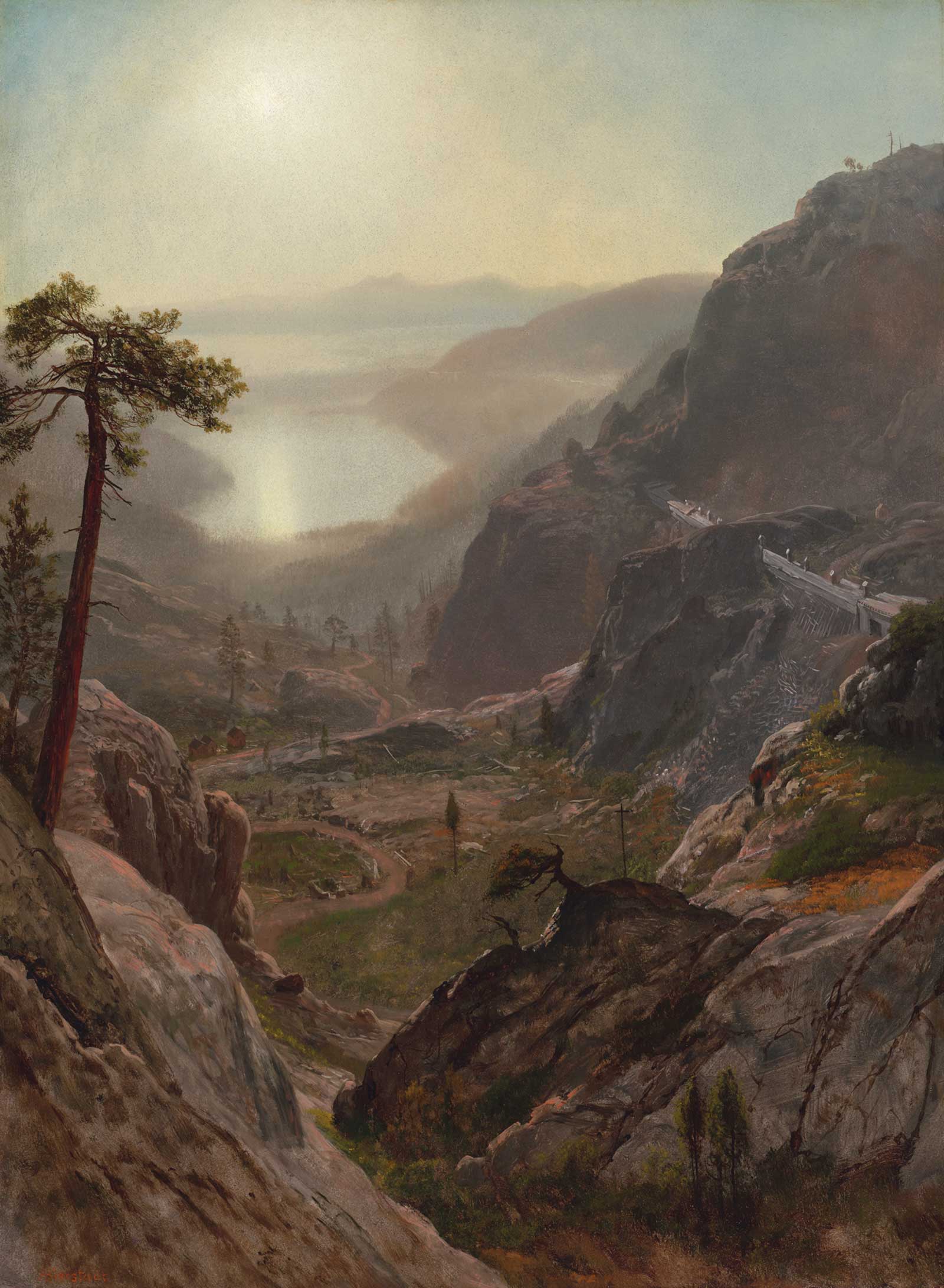
Albert Bierstadt (1830-1902), View of Donner Lake, California, 1871-72, oil on paper mounted on canvas, 29¼ x 217⁄8 in. de Young Museum, Fine Arts Museums of San Francisco. Gift of Anna Bennett and Jessie Jonas in memory of August F. Jonas, Jr. 1984.54. Photograph by Randy Dodson. © Fine Arts Museums of San Francisco.
Comprised of 40 works, the exhibition features Thomas Cole, Jacob Lawrence, Edward Hopper, John Sloan, Reginald Marsh, Thomas Hart Benton and many scenes of the West by artists such as Georgia O’Keeffe, Albert Bierstadt, Henry Farny, Theodore Kauffman and others.
Taken together, All Aboardexplores the influence of the railroad on the history of American art, from its beginnings as a technological wonder, connecting the country coast to coast, to its role as a driver of industry and urbanization at the turn of the century, and its eventual adoption by artists drawn to the subject for its modernist potential.
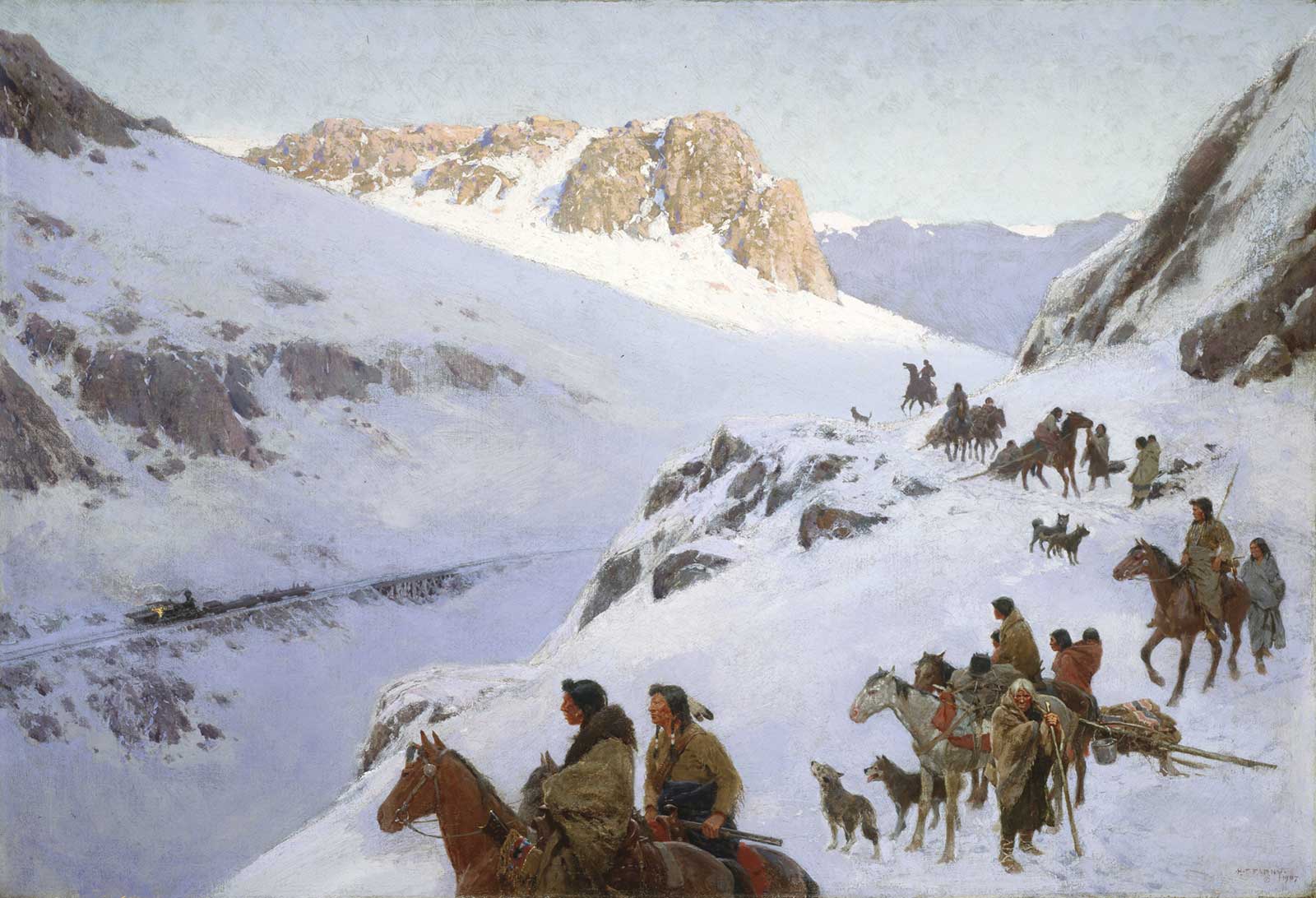
Henry Farny (1847-1916), Morning of a New Day, 1907, oil on canvas, 22 x 32 in. National Cowboy & Western Heritage Museum, Oklahoma City, Museum Purchase, 1998.72.07.
“Creatives—artists and writers—immediately recognized the impact of the railroad, pro and con,” says museum director and CEO Thomas Denenberg. “Perspective changed over time, from those who issued warnings about the ‘iron horse’ and how it may impact the environment or Indigenous people, to those who literally saw the railroad as an engine of change in a rapidly expanding economy.”
One of the earliest pieces in the exhibition, Westward the Star of Empire, 1867, by Theodore Kaufmann, depicts a group of Native Americans removing railroad tracks in an effort to derail an approaching train.
Commissioned by railroad magnate Collis P. Huntington, Bierstadt’s View of Donner Lake, California, 1871-72, focuses on the railroad’s encroachment on landscapes that many believed should remain untouched and pure. The painting ignores the tragic events that occurred there in favor of an idealized vison of the natural world meant to evoke a sense of awe.
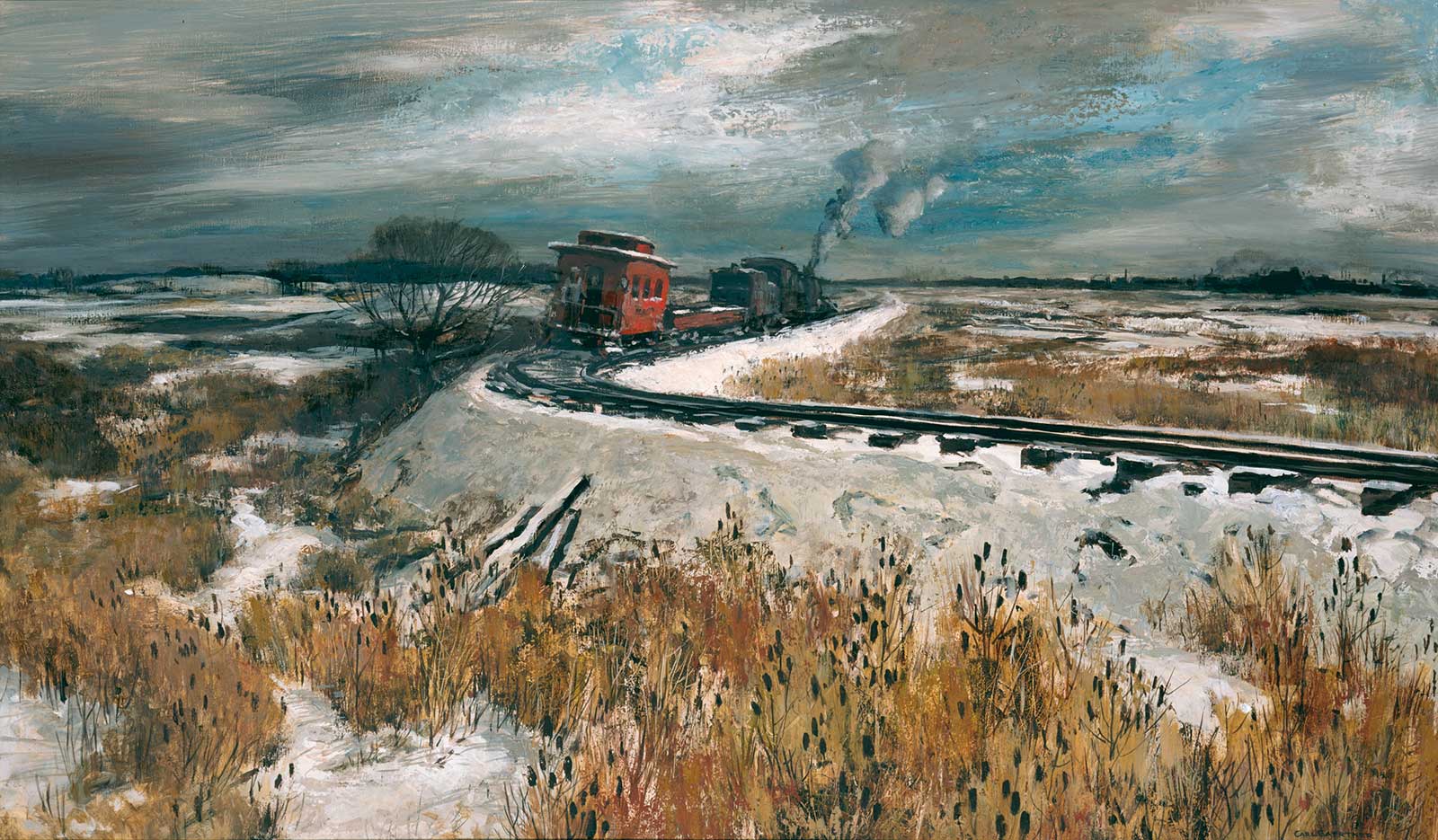
Carl Frederick Gaertner (1898-1952), Swamp Spur, 1944, oil on canvas, 24 x 40 in. The John and Susan Horseman Collection, Courtesy of the Horseman Foundation.
Works like Henry Farny’s 1907 painting Morning of a New Day illustrate the perception of the railroad as a powerhouse able to overcome the once-impossible passage through the Rocky Mountains.
Carl Frederick Gaertner’s 1944 winter scene Swamp Spur, is representative of a time when trains became associated with separation, loneliness, migration and nostalgia for simpler times, which affected the way painters portrayed train-related subject matter. Ironically, this shift in perception, reinforced by the art, songs and prose of the day, cast the railroad in the nostalgic light that persists today.
“Artists concretize myth,” says Denenberg. “They absorb and interpret, and—as we developed a visual culture in the course of the 19th century—are afforded a privileged role in society.”
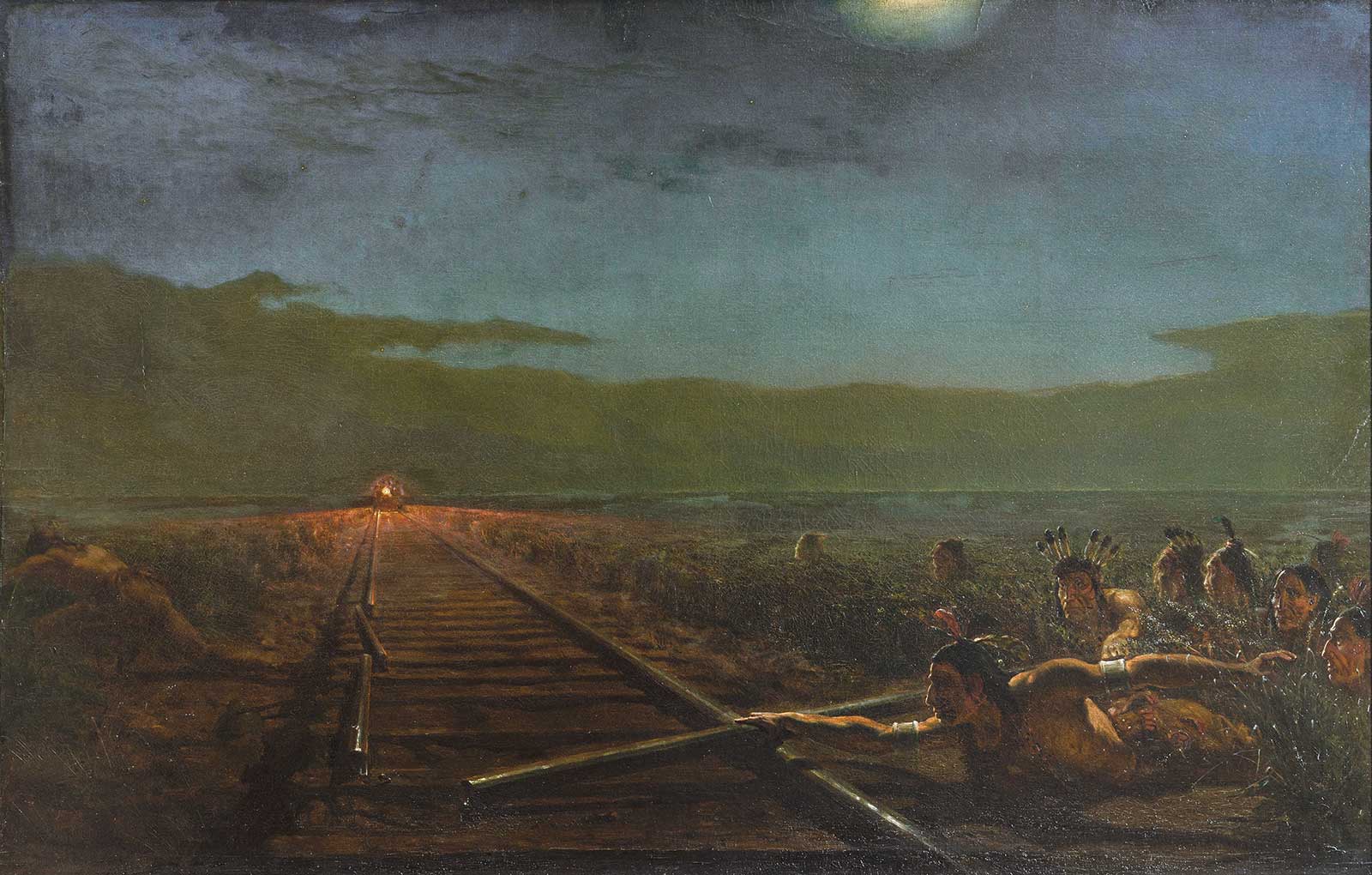
Theodore Kaufmann (1814-96), Westward the Star of Empire, 1867, oil on canvas, 35½ x 55½ in. Collection of the St. Louis Mercantile Library at the University of Missouri-St. Louis. Gift of James E. Yeatman.
All Aboard will travel on to the Dixon Gallery & Gardens in Memphis in early November, followed by the Joslyn Art Museum in Omaha, Nebraska.
Denenberg says, “The exhibition is a wonderful collaboration among museum colleagues that allows all three institutions to leverage their collections to create an impactful and rigorous survey of an important part of this country’s history viewed through the eyes of artists.” —
All Aboard: The Railroad in American Art, 1840-1955
Through October 20, 2024
Shelburne Museum
6000 Shelburne Rd, Shelburne, VT 05482
(802) 985-3346
www.shelburnemuseum.org
Powered by Froala Editor


