For the past number of years, I have had both the good fortune and the pleasure of accompanying two wildlife artists, Greg Beecham and Pete Zaluzec, on their annual photography trips to collect the resource material they need for their respective art creations.
On one of the early mornings of our latest trip, when the wind was blowing and I was standing almost motionless waiting for some fighting activity to take place between the stallions that were part of a small band of wild horses we had tracked down, I thought to myself, nobody would ever believe the amount of time and effort that dedicated wildlife artists invest into collecting their photographic resource material. And it was at that very moment, when I was cold and momentarily uninterested in what I was looking at, that I thought collectors might find it interesting to learn about the things many wildlife artists experience when they are out in nature gathering resource material.
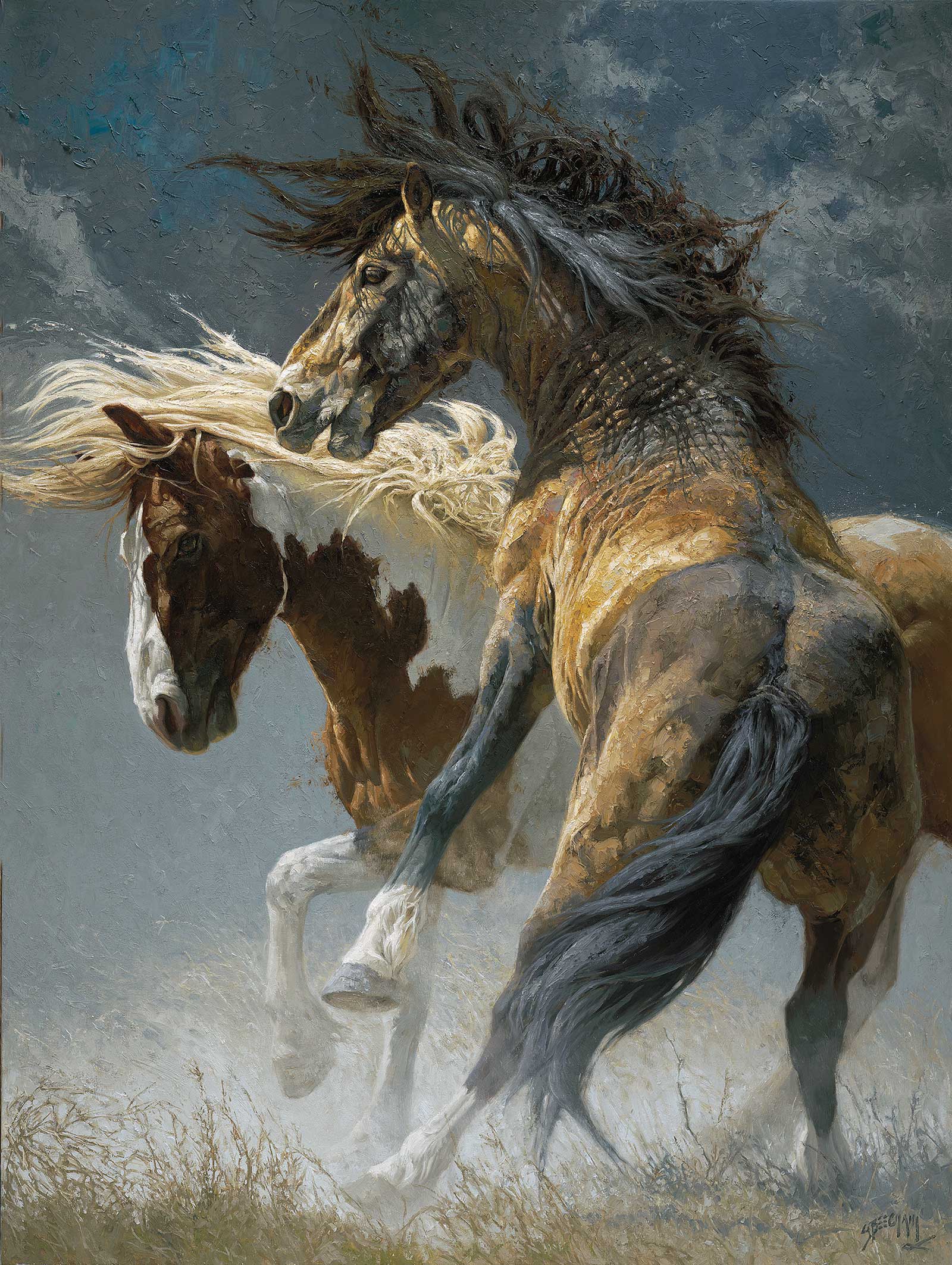
Greg Beecham, Where the Wild Ones Roam, oil on linen, 48 x 36 in.
So, by chronicling my latest photography trip, with two wildlife artist friends, I thought that I would try to convey, from my perspective, what it is like to spend several days searching for that perfect photographic opportunity that could possibly become the inspiration for their next work of art.
Our trip began in Southern Utah at the Onaqui wild horse range and from there, we drove north to Yellowstone for an entirely different type of photography experience looking primarily for grizzly bears. Because this was a wildlife artists’ photography trip, everything was low budget and spartan. We were always looking for the least expensive accommodations. And since entire days are spent searching for wildlife, most of our meals consisted of cold cuts, condiments, sliced bread, bottled water and diet beverages that are carried in coolers in the back of a pickup truck.
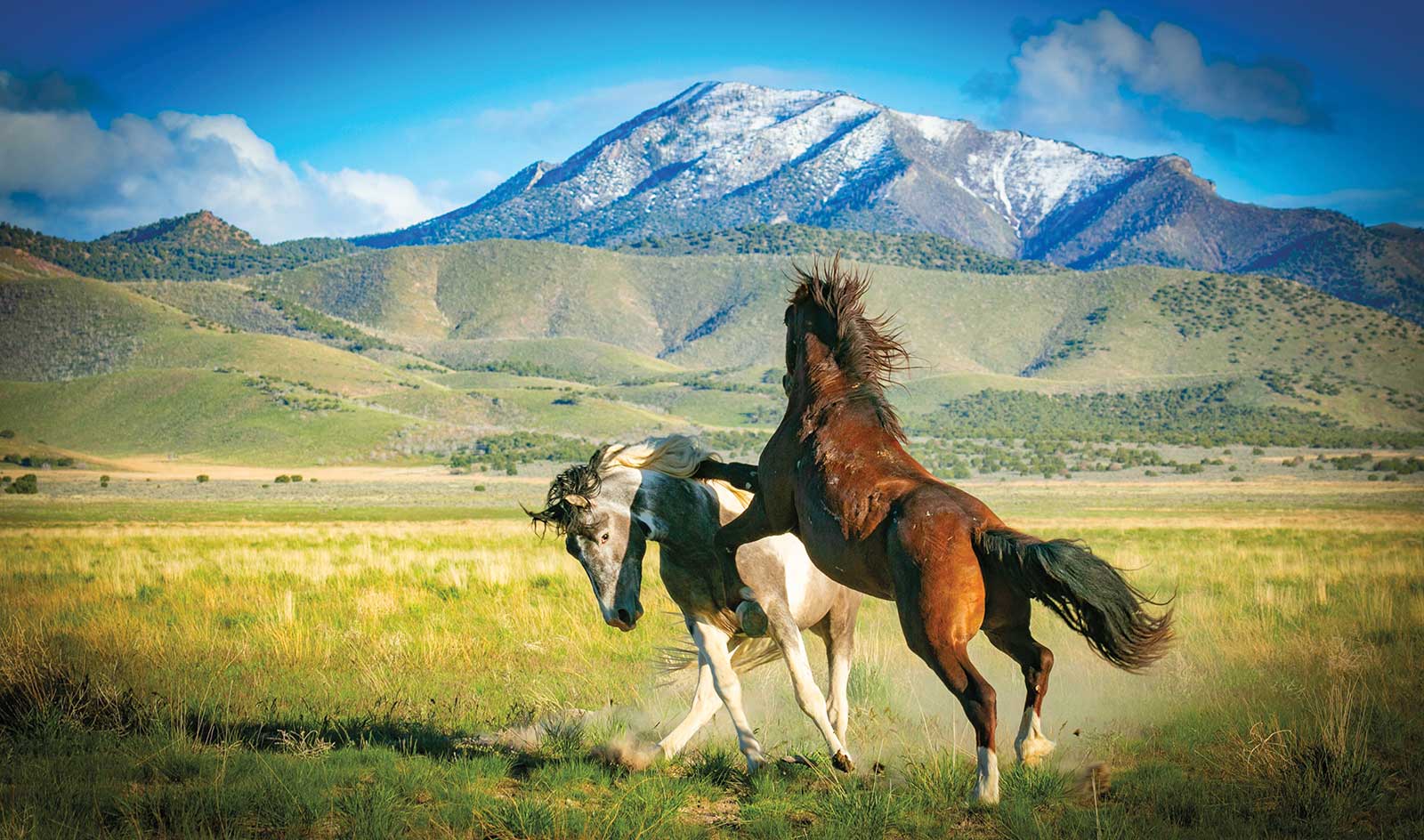
Horses on the Onaqui range in Utah. Photo by Dan Corazzi.
The Onaqui wild horse herd, which is made up of approximately 340 horses, is found on government (BLM) land in Dugway, Utah. On this latest trip, each day was frigid and blustery. Our daily 13-hour routine was the same, beginning early each morning at a specific watering hole and hoping to see a band of horses. Once we found a band, we stayed with them for several hours patiently waiting to “capture” those exciting action photos of stallions fighting or racing around us. If there was no activity for an extended period of time, we left that band and continued searching for another.
During this trip, we were able to locate two bands of horses, one of which was made up of about 50 adult horses with several colts, and the second one was made up of approximately 150 adult horses and several colts. Locating the horses involved a significant amount of driving on dirt roads until we found the first band, and determined that their daily “routine” began at the same watering hole very early each morning.
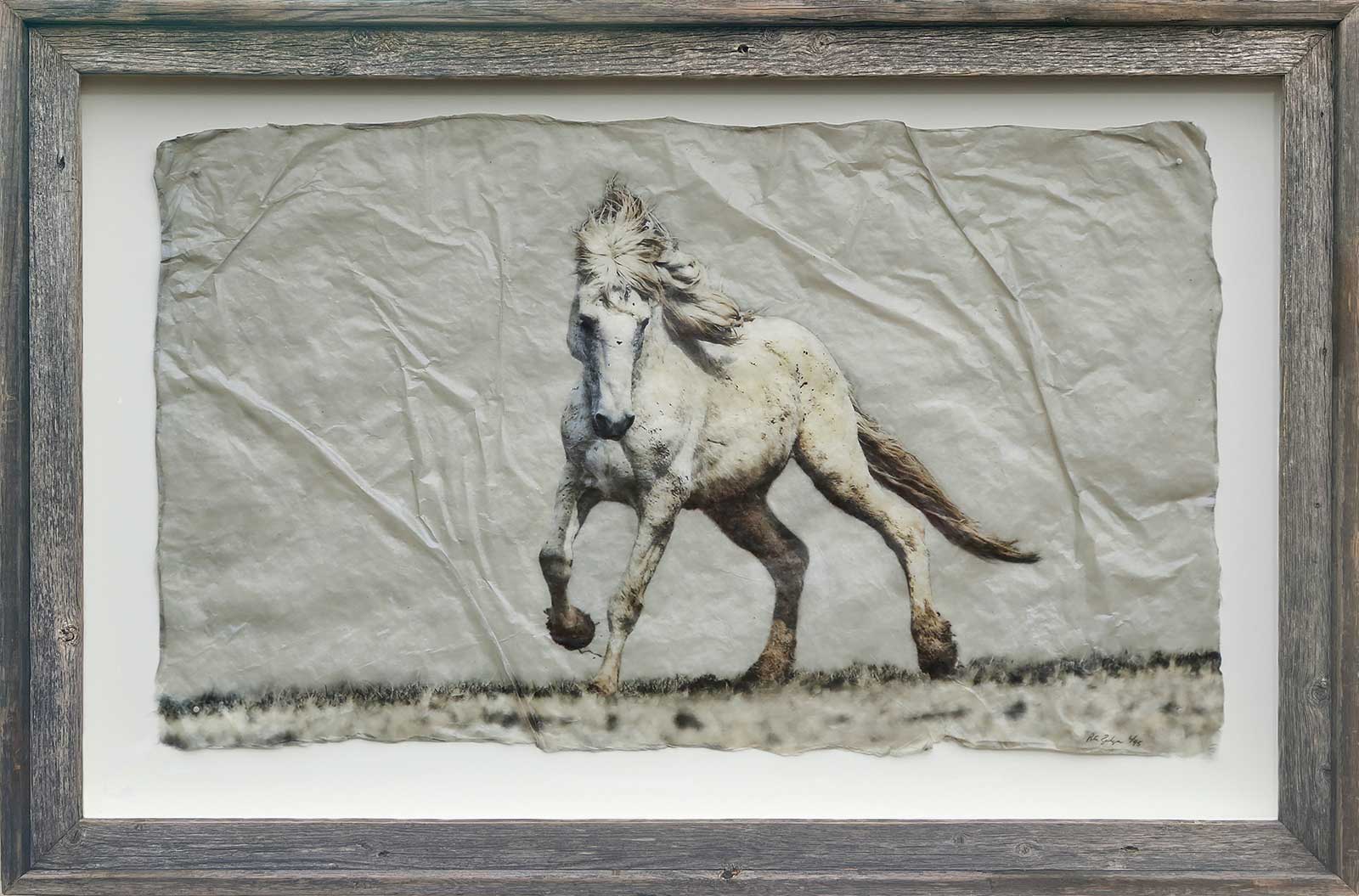
Pete Zaluzec, Mustang Dance, print on Gampi paper, 12½ x 21 in.
Knowing that, we would arrive at the watering hole by 7 a.m. so that we could have the opportunity to capture some brief moments of stallions fighting by the water. As luck would have it, or wouldn’t have it, fighting did not always happen. However, having the experience of watching 100-plus “wild” horses approach a watering hole, and not all race to the water at the same time, was almost as interesting, if not as exciting.
When the entire band arrived near the watering hole, all the horses would stop and remain completely motionless while several horses—those closest to the water—would begin to drink and walk around in the water. After that first group finished, they would walk away from the water and the next small group would walk into the water and drink. This ritual would go on, for almost two hours, until all of the horses had a chance to walk to the water and drink. During that entire time, the rest of the herd continued to remain motionless. Then, on cue, the leader of the band would make a sound and the entire band of horses would begin to slowly move away to start their day of grazing on the open range.
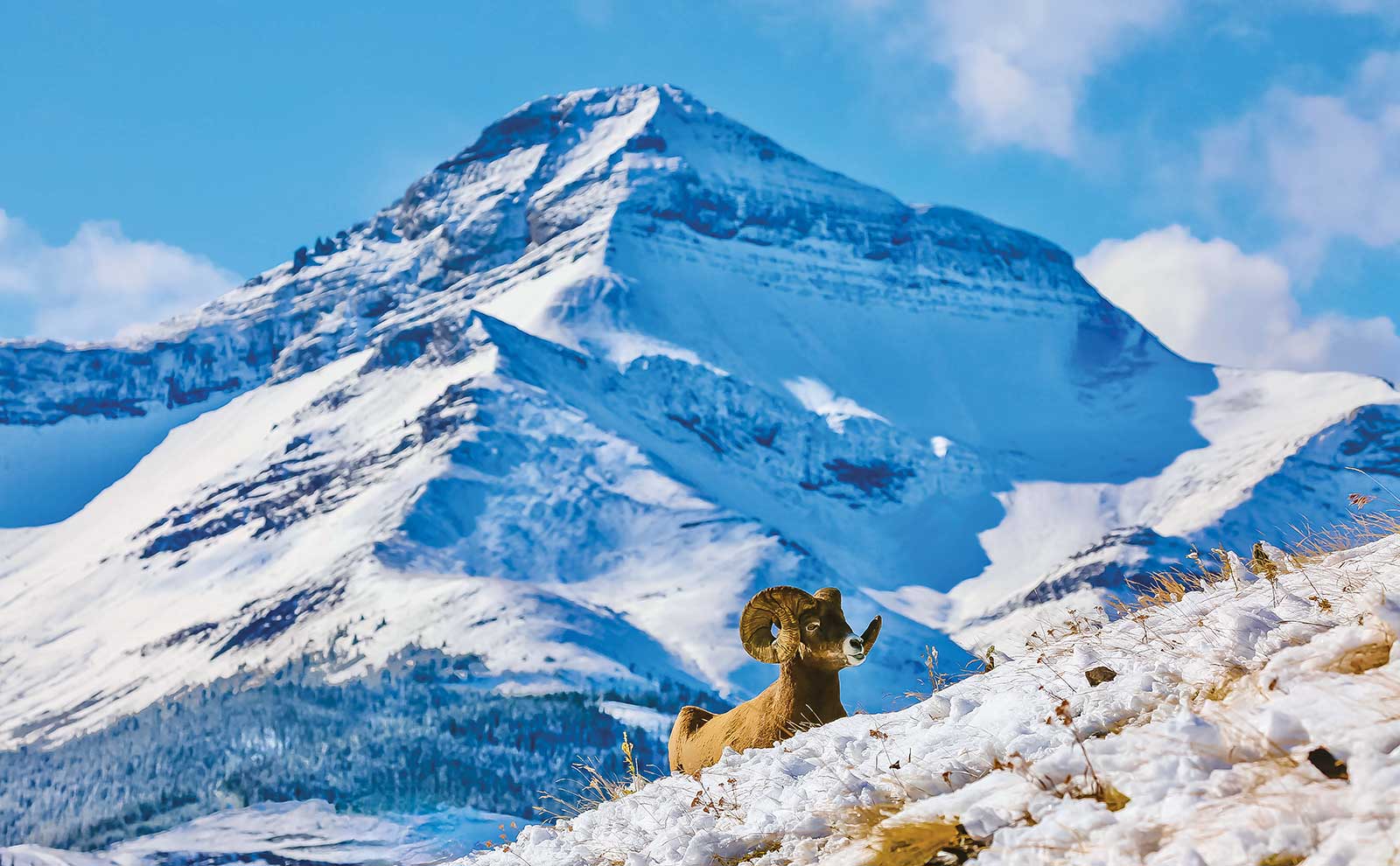
Canadian bighorn. Photo by Dan Corazzi.
As they left, we began searching for the other band of horses that was off grazing somewhere else. To locate the second band, we drove several miles on the dirt roads and two miles off the main dirt road. When we finally spotted the second band, we parked our pickup trucks and walked at least a mile until we approached the horses that were just lazily grazing and walking in the area.
Although the Onaqui horses are considered to be “wild,” they are not dangerous. After finding a band that was grazing, we spent endless hours standing and walking with them. However, during that entire time, we always had to be alert in case any stallions started fighting near us and or if they began racing directly at us.
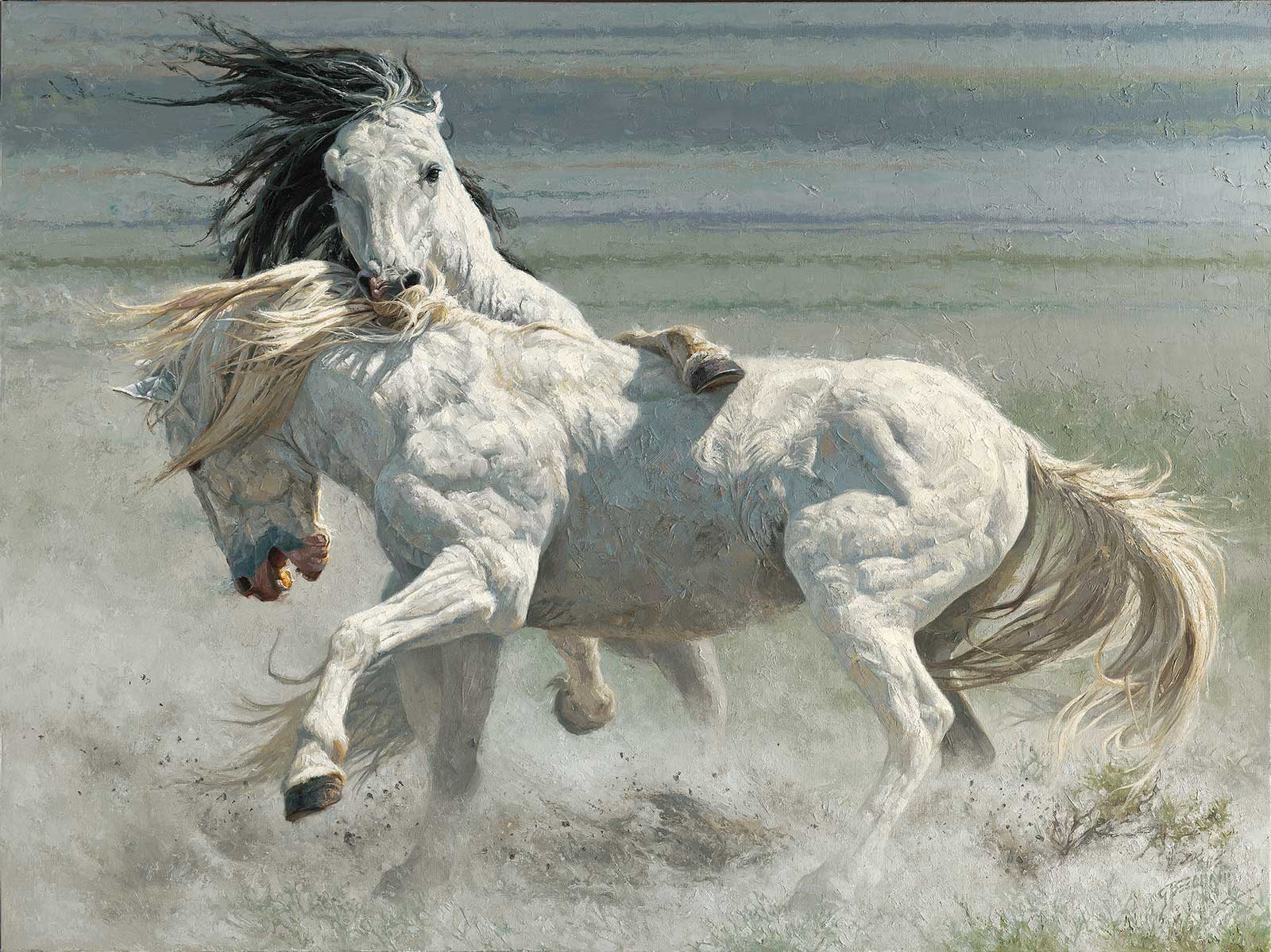
Greg Beecham, Dust Busters, oil on linen, 30 x 40 in.
After Onaqui, we headed to Yellowstone. Due to the sheer size of the park, and the distances that we had to drive searching for grizzlies, a typical day there was much different. We left our hotel by 5:30 a.m with no breakfast and returned at 8:30 in the evening.
Trying to locate grizzly bears in Yellowstone is nothing like searching for wild horses in Utah. Grizzlies are naturally elusive, and they are extremely dangerous—especially female grizzlies with cubs. For that reason, we are required to stay at least 100 yards away from the grizzlies in Yellowstone. That requirement is strictly enforced by the park’s rangers.
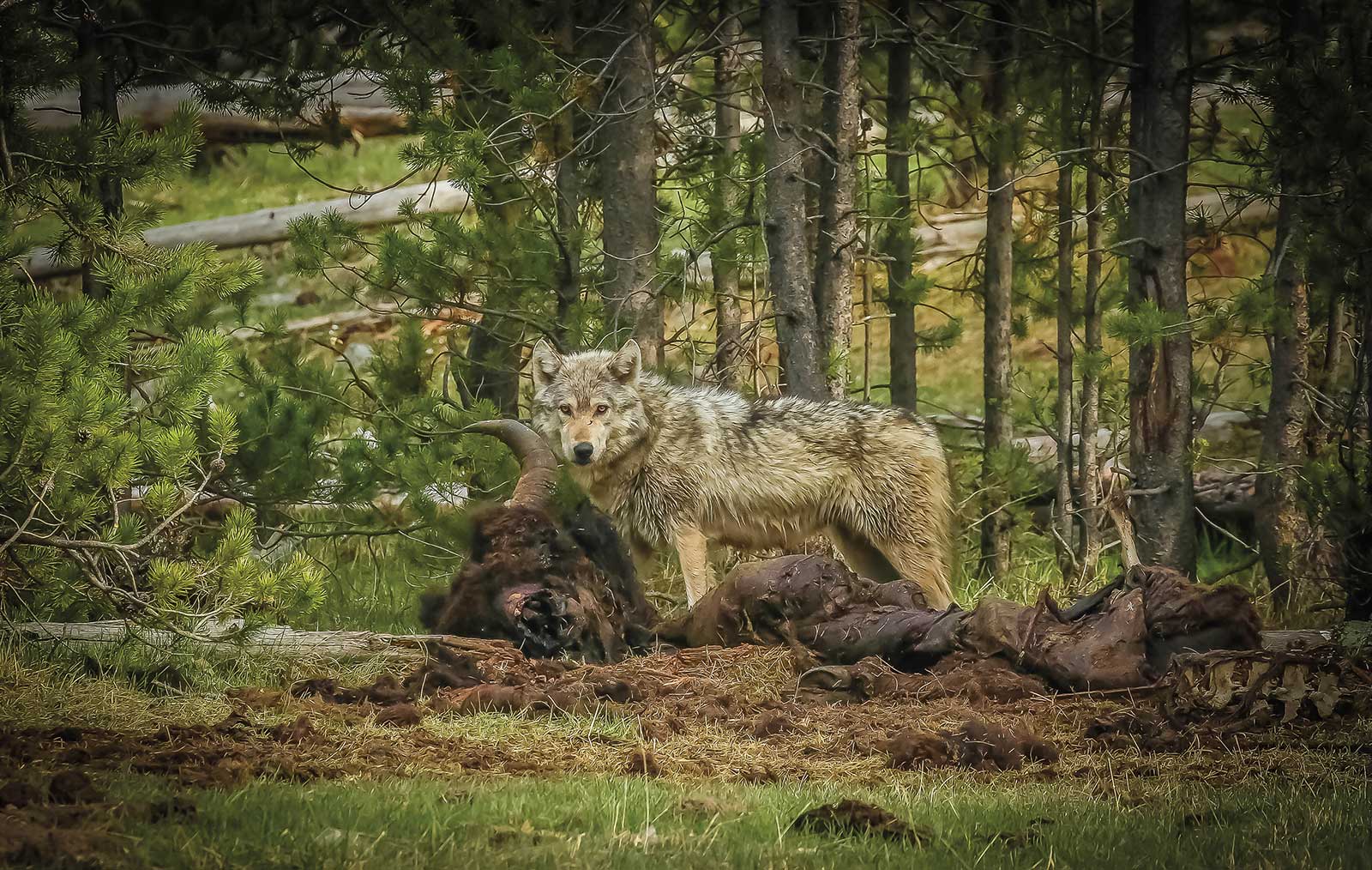
A wolf in Yellowstone National Park. Photo by Dan Corazzi.
Our days in Yellowstone began earlier and they were significantly different from our days at the Onaqui Range. By comparison, the Bureau of Land Management (BLM) range where the Onaqui horses are found is very large, but it can’t compare in size to Yellowstone. During one day of looking for the wild horses, we might drive a total of 50 miles. But, when we were in Yellowstone looking for grizzlies each day—driving from West Yellowstone to Hayden Valley, Lamar Valley, Tower-Roosevelt, Fishing Bridge and other places within the park—we drove between 250 and 300 miles each day. That meant that we spent more time driving and less time actually photographing.
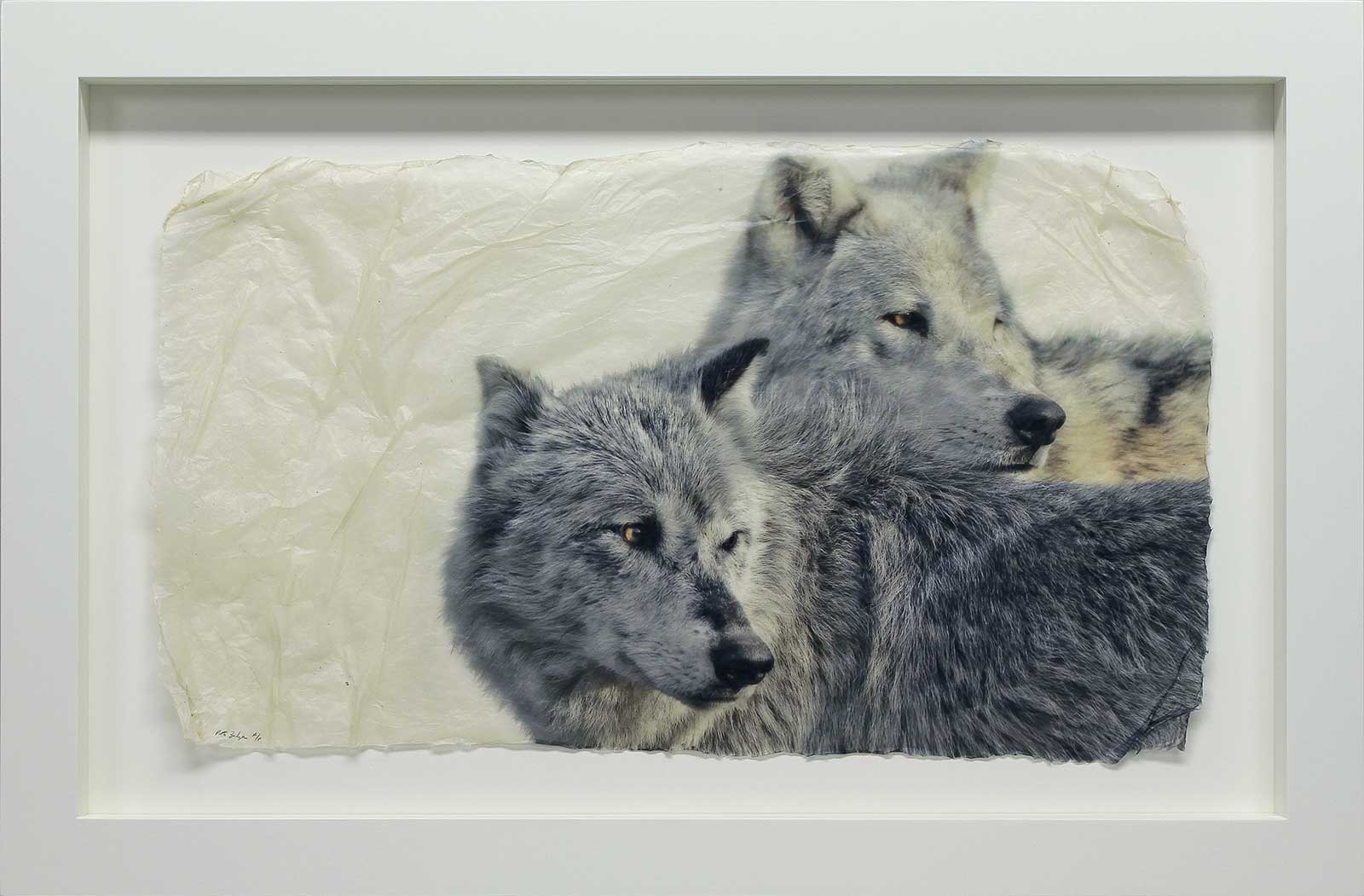
Pete Zaluzec, The Last Look Back, print on Gampi paper, 12½ x 21 in.
When driving that many miles per day in Yellowstone, you never know what you are going to see. Often, we might spot a wolf, a fox or some elk because we made a detour on a road or because we decided to wait 10 minutes longer before leaving a location. This is exactly what happened on our last day. As we were beginning our long drive out of the park, we caught a glimpse of a red fox through some trees running in a field of snow. We parked our vehicle and we had a serendipitous experience watching that fox hunt for mice under the snow. For the next 45 minutes, we took several hundred photos of the fox repeatedly diving deep into the snow grabbing field mice for his next meal.
Another difference in the two experiences, had to do with the length of time we were able to spend photographing a female grizzly with her cubs each time we spotted them. Unlike the wild horses, when the grizzlies are eating grass, they don’t stay in the same area very long. We usually had about an hour to photograph a female grizzly and her cubs before they decided to move out of our range. But, if a grizzly and her cubs were feasting on a bison carcass, we had much longer to photograph them and we could always count on them returning to the same location the next day, to continue feasting on what was left of that carcass. Fortunately, we experienced both types of opportunities during this trip: a female grizzly and her two cubs eating grass and a second grizzly, in another area with her two cubs, feasting on a bison carcass that she had retrieved from the water.
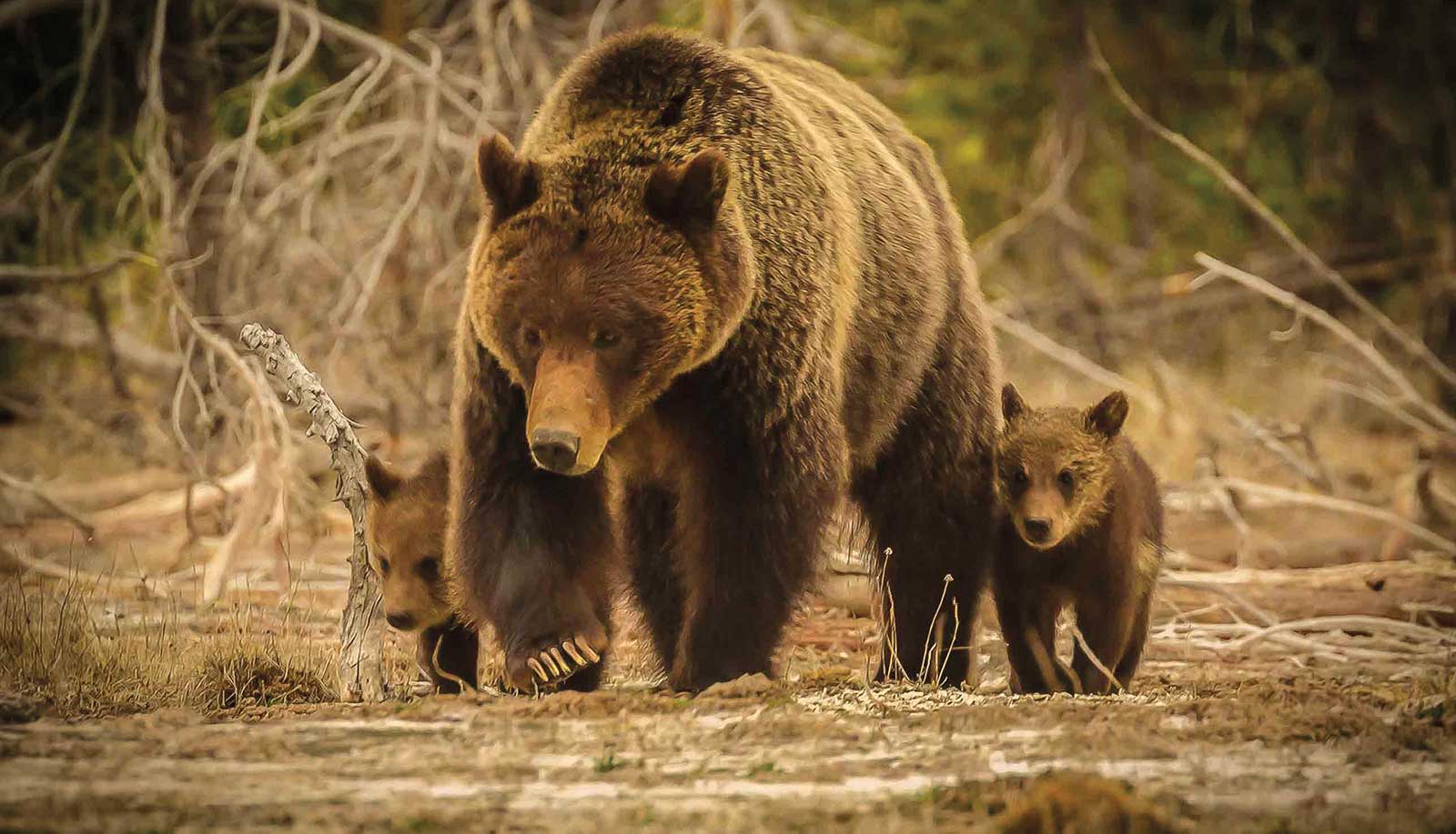
Grizzly sow and cubs. Photo by Dan Corazzi.
Lastly, when photographing the wild horses, if we encountered several other photographers who were in the area, that would be a crowd. But in Yellowstone, since the majority of the grizzly sightings are from the main roads, once someone saw a grizzly and stopped their car, a “bear jam” was created and vehicles were parked on both sides of the road for as far as the eye could see. And because of the differences in both of these experiences, each of us ended up taking an average of about 12,000 photos at the Onaqui Range and only about half that number at Yellowstone.
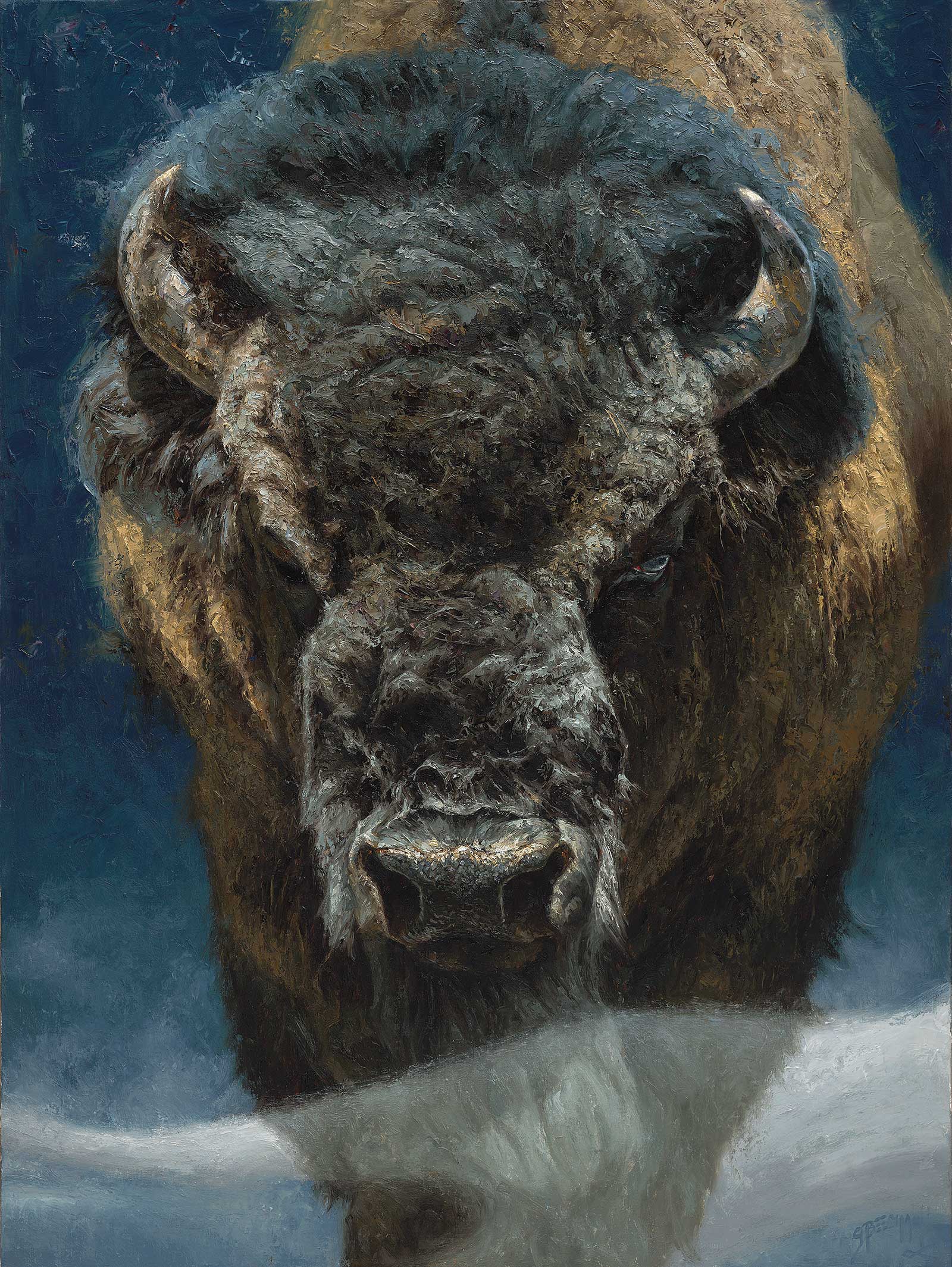
Greg Beecham, Ol’ One Eye, oil on linen, 40 x 30 in.
Looking back on these many wildlife photography trips that I have been part of, I learned numerous things that would be invaluable for all young and or aspiring wildlife artists. But the single most important thing I have learned is that dedicated wildlife artists do not take shortcuts when they are planning for their works of art.
Yes, as an aspiring wildlife artist, you certainly can purchase commercial or stock photographs, or you can visit a zoo. But, if you want an animal’s personality and character to be evident in your artwork, it can only be achieved if you have spent endless hours experiencing that animal in its natural environment.
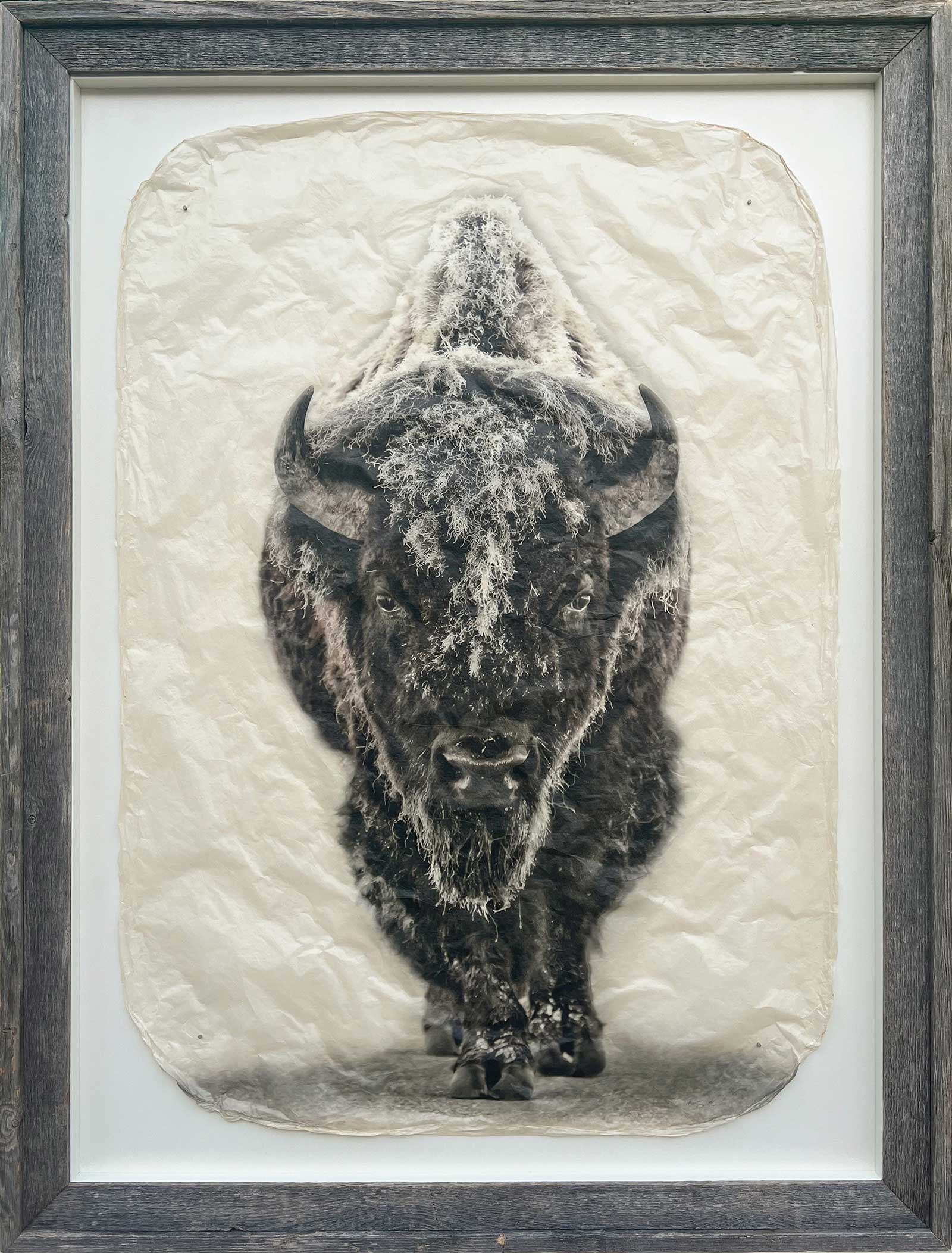
Pete Zaluzec, Snow Bison, print on Gampi paper
Using the words of wildlife artist Greg Beecham: “The animals tell me what to paint.” —
+++
Dan Corazzi is a past member of the board of the National Cowboy & Western Heritage Museum in Oklahoma City, where he served as chairman of the Prix de West Committee until 2022. Currently, he serves as the vice chair of the board for Western Spirit: Scottsdale’s Museum of the West. For the past 10 years, he has devoted a great deal of time fulfilling his passion for photographing all forms of Western wildlife and the magnificent landscapes of the American West. Additionally, he continues his involvement with Western art by consulting with Legacy Gallery, in Scottsdale, Arizona, on its highly successful Western Horizons show.
Powered by Froala Editor


