Talk to enough cowboys and they’ll confirm something Western artists have also been fervently repeating for generations: the West is not a geographic location on a map, it’s not a way of dressing or talking, and it’s not something that can be bought or sold in any market. Living and working in the American West, they say, is an entire way of life.
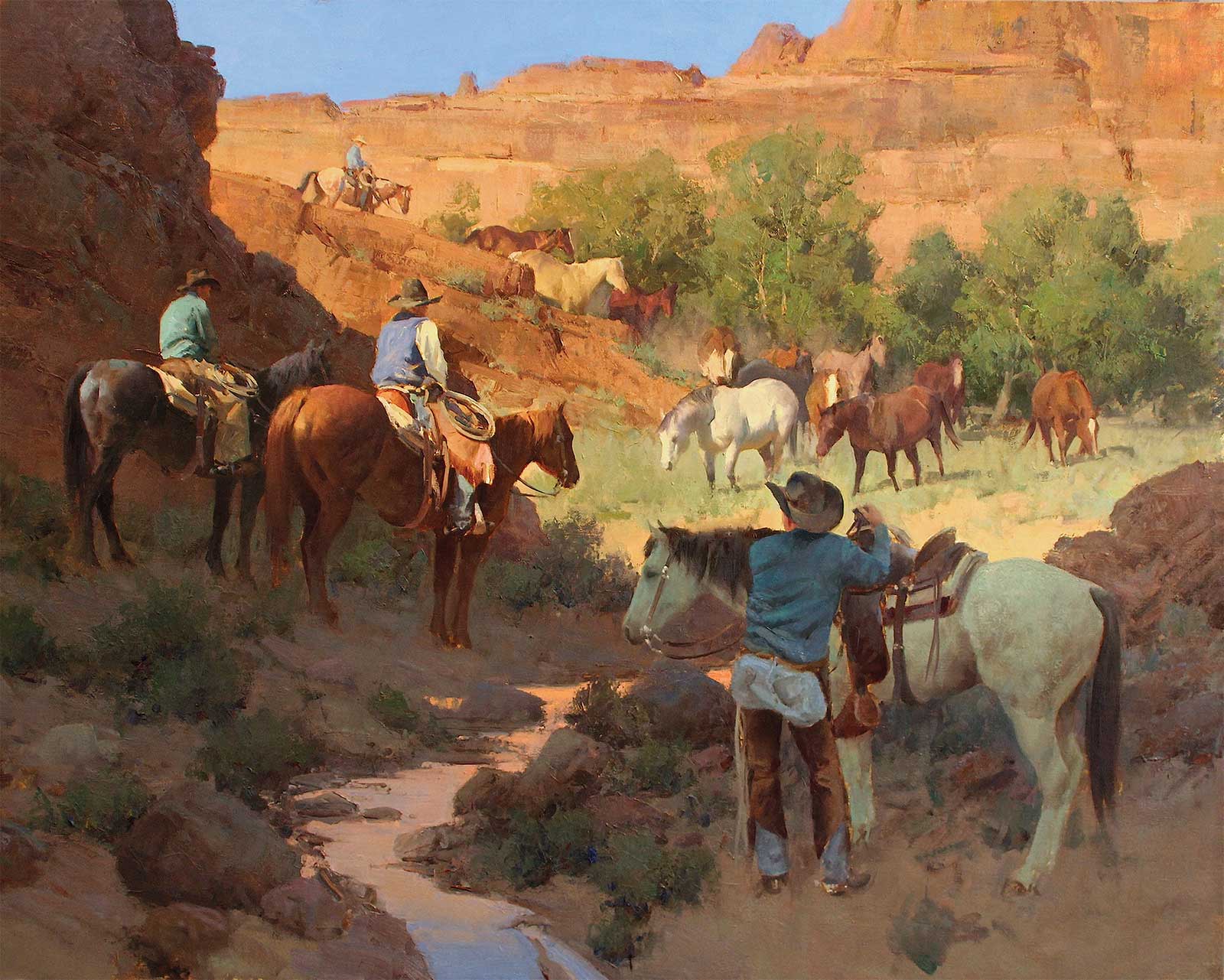
Legacy Gallery, Canyon Springs, oil on linen, 40 x 50 in., by Bill Anton.
Nowhere is that more obvious than on the many ranches in the American West, where people work tirelessly every day of the year to raise cattle and horses, and where they keep Western traditions alive at the ground level. These are the subjects of so much of Western art: the drag riders eating dust on a trail ride, the night herders who live by moonlight, the bronc riders who break horses with risk to life and limb, and the ropers who ride into thick brush to bring out last calves. These depictions are the bread and butter of Western art—classic, iconic and timeless.
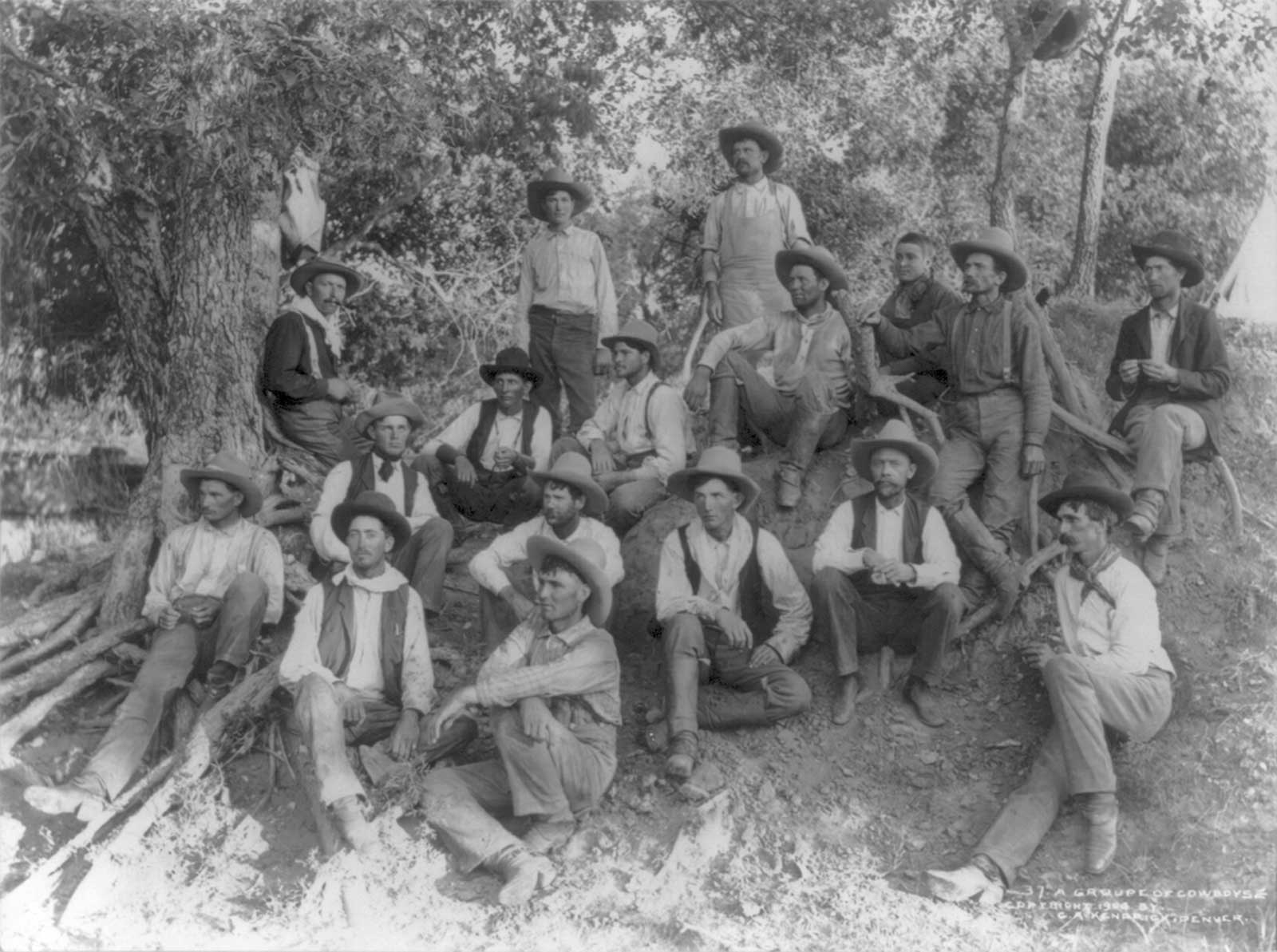
A group of cowboys, ca. 1904, gelatin silver print. Courtesy Library of Congress.
One artist who has turned to these subjects again and again is Bill Anton, the Arizona painter known for his authentic cowboys. In Canyon Springs, Anton paints four riders tending to a dozen horses. True to form, the painter adds a more complex element to the scene with a dramatic shadow that cuts diagonally through the composition, which allows him to show the shade of the canyon and the intense afternoon light. Anton will be showing Canyon Springs at Legacy Gallery’s Forever West exhibition this month in Santa Fe, New Mexico.
Another artist who is drawn to the cowboy is Cowboy Artists of America painter Tyler Crow. In Hazard of the Trade, which was recently on the cover of Western Horseman magazine, Crow shows one of the ways a rider can get in trouble, and then how he can maneuver out of it. It’s a dangerous job. Angry mama cows, steep ravines, calves that cross under a horse, rattlesnakes—there are many ways things can go wrong, and the skill of a rider will often prevail. “Painting the American cowboy is my way of sharing what a true cowboy is. A cowboy has integrity and stands tall for God, family and country,” Crow says. “They are men of their word and take honor in their credibility. To me, a cowboy is a true American hero.”
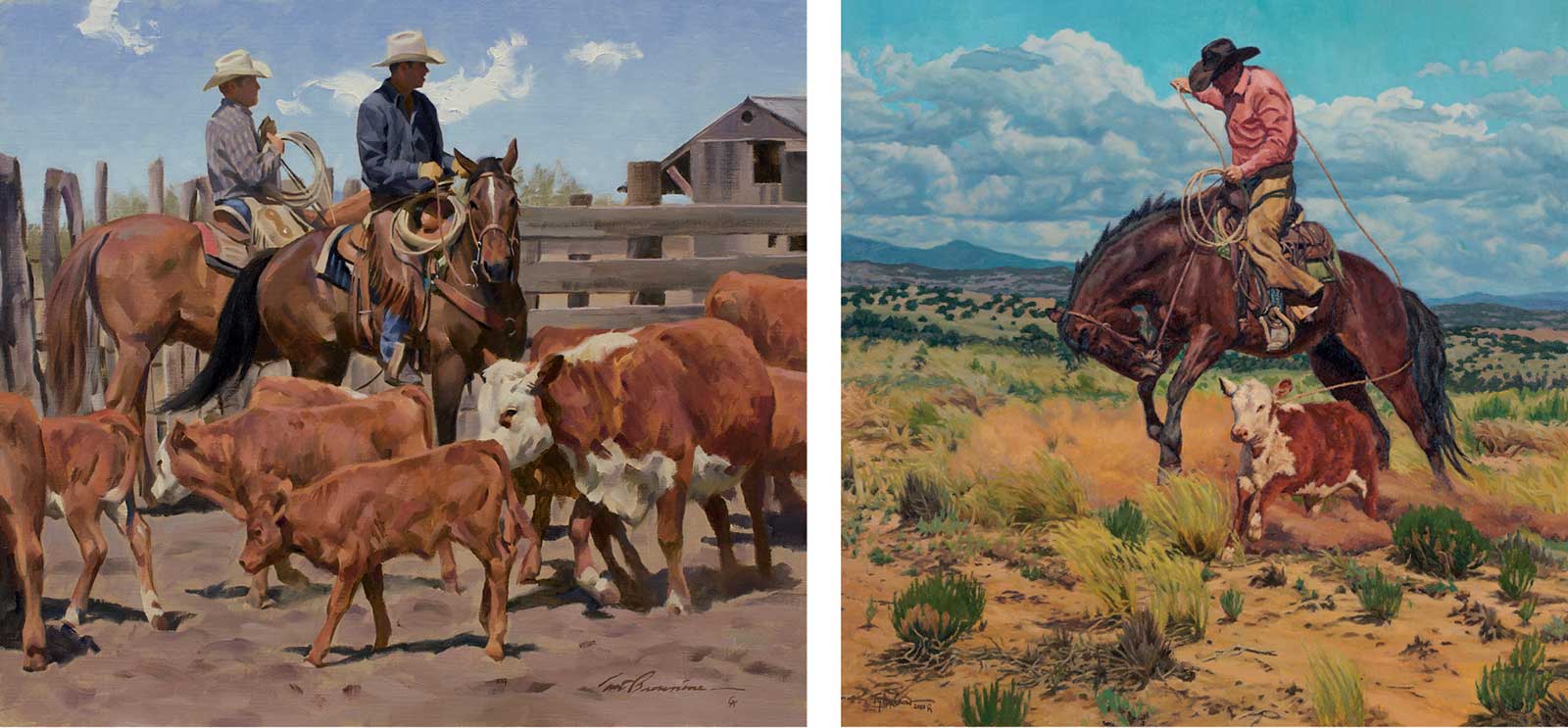
Mockingbird Fine Art, In the Pens, oil, 18 x 20 in., by Tom Browning; Tyler Crow, Hazard of the Trade, oil, 24 x 24 in.
Tom Browning is also in the Cowboy Artists of America (as an emeritus member), and shares many of Crow’s ideas about the cowboy as an important figure within American culture. In his new painting In the Pens, Browning shows what ranch life is all about—cows. His mixture of mama cows and calves in a pen as two riders maneuver through the mix is a slice-of-life ranch painting that shows the work that goes into caring for raising cattle. Other paintings Browning completes show cowboys on the open range riding through thick clouds of dust as they chase down strays or push a herd toward unseen pens. His cowboys are worker bees: ever vigilant, skilled and sure of their surroundings as they toil through difficult tasks. In the Pens will be on view at Mockingbird Gallery in Bend, Oregon.
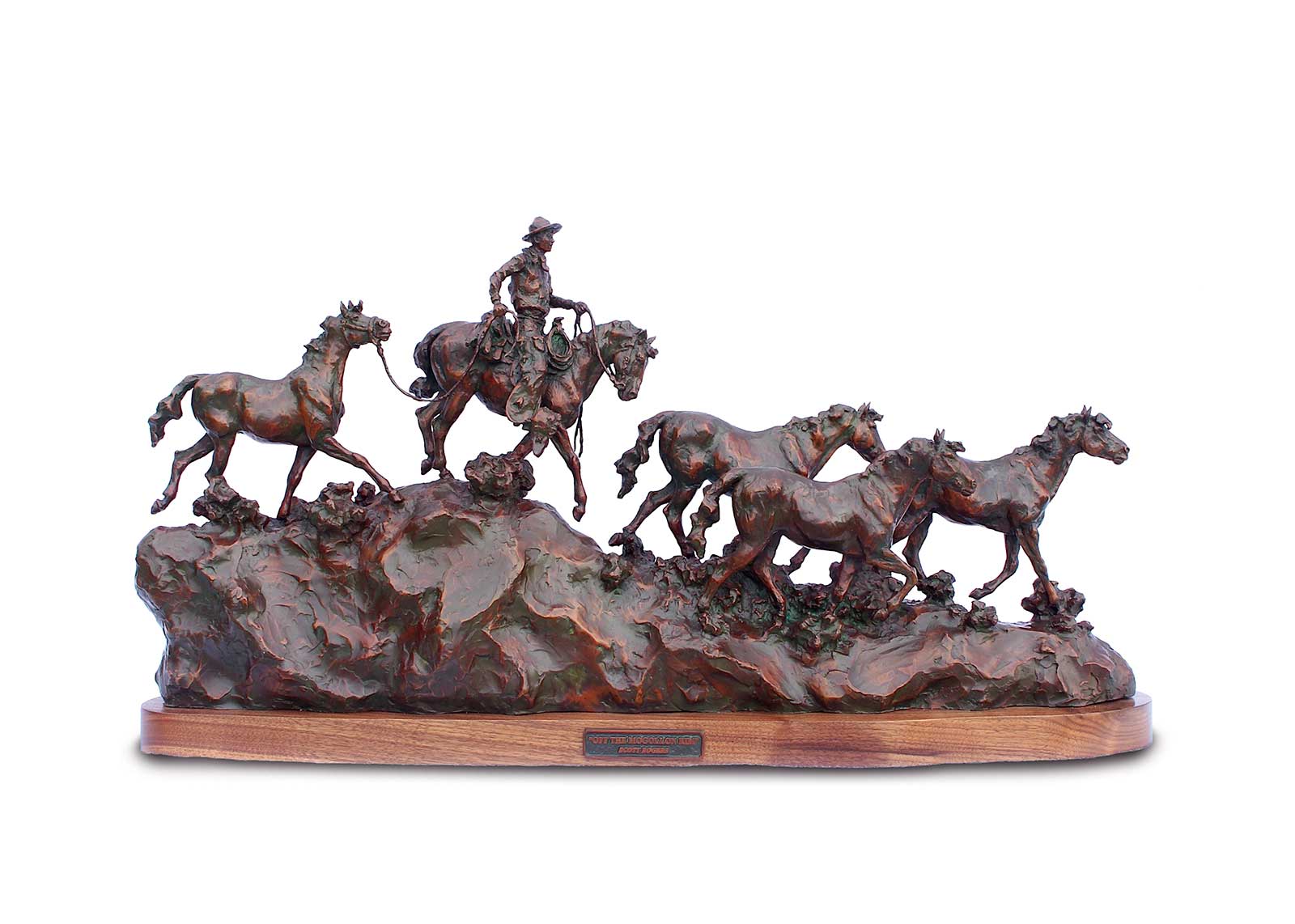
Legacy Gallery, Off the Mogollon Rim, bronze, ed. of 30, 18½ x 36 x 6 in., by Scott Rogers.
Anton, Browning and Crow all paint what looks like modern-day cowboys. And yet their figures could easily pass for cowboys from another time period. Consider the Library of Congress photo showing 17 cowboys from around 1904. Although some elements of the image are unmistakably from a different time—the handkerchiefs around necks, the vests and some of the pants—the faces and the way the men carry themselves could easily be from 1904, 2004 or 2024. After all, the West isn’t a style, a place or way of talking. It’s a way of life.
Cyndi Hall, general manager of Legacy Gallery,echoes that ranch life is a “way of living,” that is rapidly fading into history, and is often romanticized in Hollywood and television as a dramatic and adventurous existence. “However, in truth, it is an honest, family-centric endeavor where hard work and dedication are paramount,” she continues. “Some artists choose to capture this essence not through tales of cowboy heroics, but by focusing on the subtleties and moments that define ranch life. They illustrate the way sunlight caresses the back of a horse or the quiet, unspoken bond between the land and its caretakers. These artworks are not merely visual stories of a bygone era; they are heartfelt tributes to a lifestyle grounded in simplicity, resilience and the profound beauty found in everyday moments. Through their eyes, we witness a fleeting glimpse of tradition and the timeless spirit of those who live off the land.”
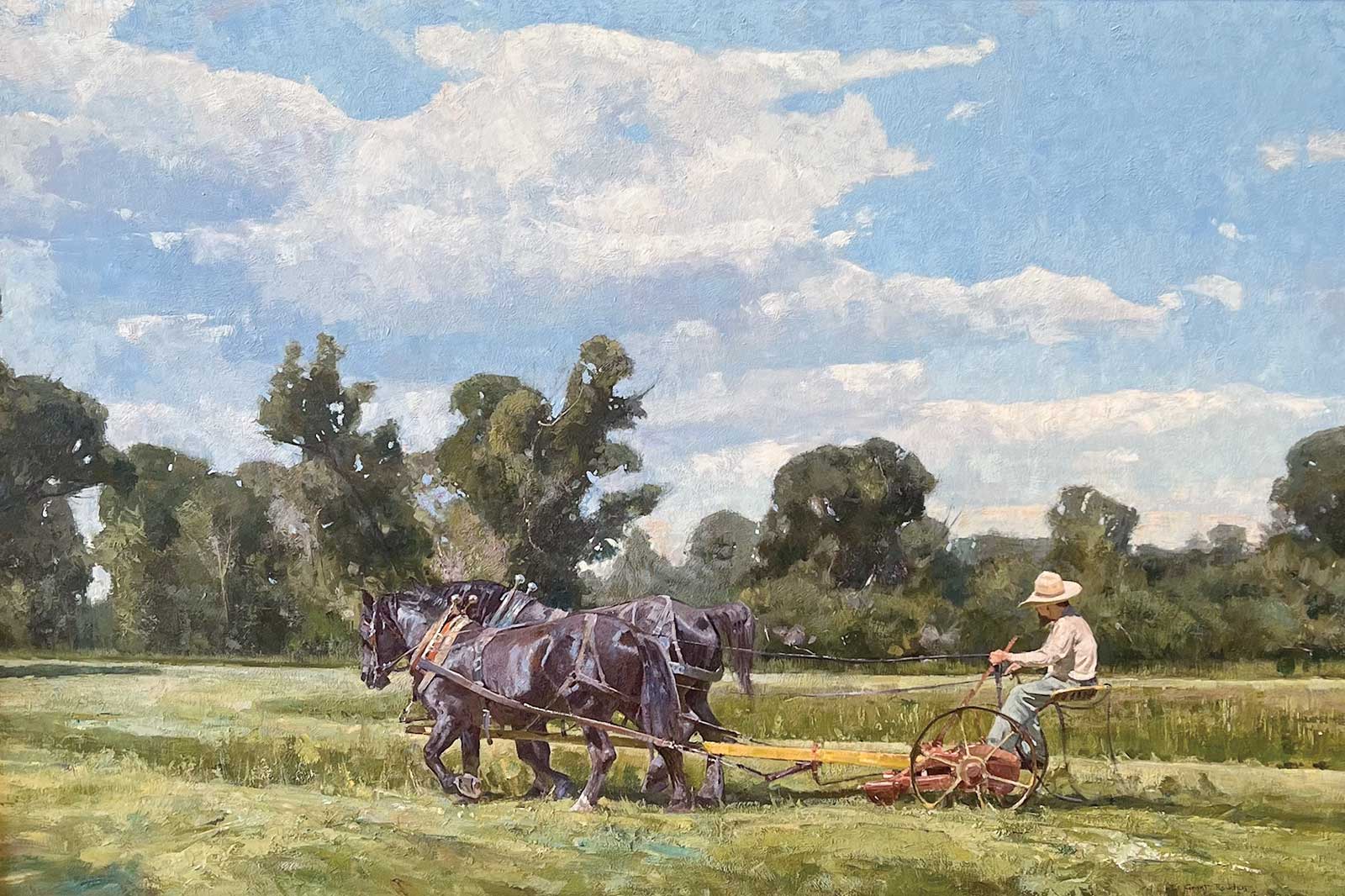
Legacy Gallery, Mowing Hay, oil, 40 x 60 in., by Grant Redden.
The artists showcased in this year’s Hold Your Horses! Invitational Exhibition & Sale, hosted by the Phippen Museum, are inspired by the inherent beauty and majesty of the horse. “These artists in particular are captivated by the horse’s graceful movements, powerful presence and expressive nature,” says Phippen representatives. “Through various mediums, whether in painting, sculpture or photography, the artists that participate in this annual show focus on highlighting the timeless elegance and significance of horses in historic and modern culture. This art form not only celebrates the aesthetic beauty of these majestic creatures but also highlights their integral role in the ranching community.”
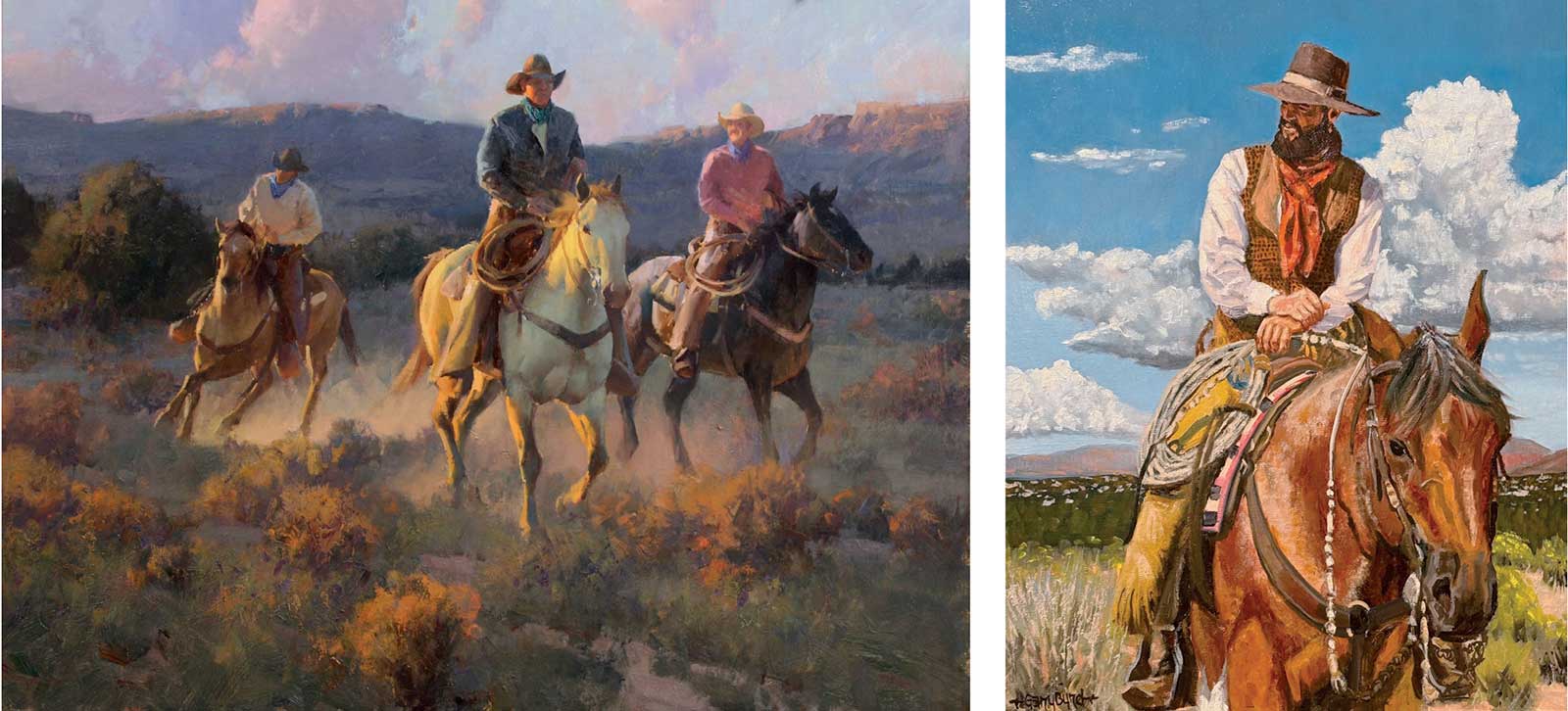
Legacy Gallery, The Morning Commute, oil, 30 x 40 in., by Bill Anton; Phippen Museum, The Horseman, oil, 20 x 16 in., by Gary Byrd.
The artwork showcased in the Buffalo Bill Art Show & Sale, presented by Cody Chamber of Commerce, represents the West in unique and incredible ways. “Artists represent the West, both old and new, and produce pieces that honor our landscape, historical figures, cultures, and wildlife,” says director Katelyn Parker. “It is remarkable to see the West through their unique viewpoints.
“The American West embodies a spirit of freedom and adventure, capturing a lifestyle that many strive to experience,” Parker continues. “Just as tourists flock to the Western United States each year to immerse themselves in its rich culture and breathtaking landscapes, art enthusiasts are drawn to collect pieces that celebrate these iconic scenes. The allure of the West, with its untamed beauty and storied heritage, resonates deeply with collectors who seek to bring a piece of that magic into their own homes.”
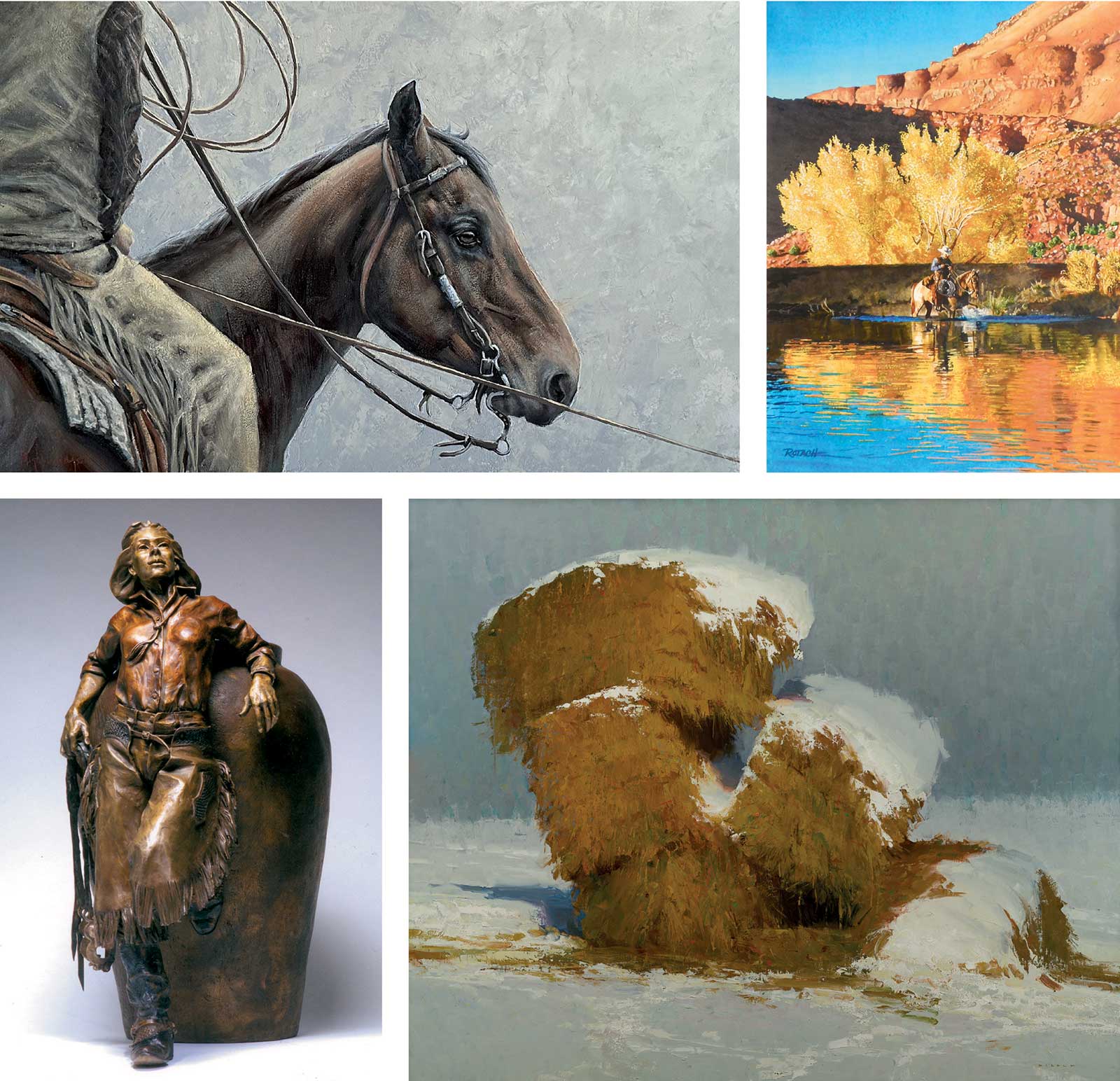
Top: Phippen Museum, Eye on the Prize, oil, 10 x 16 in., by Julie Nighswonger; Phippen Museum, Splash of Color, gouache, 24 x 18 in., by Marlin Rotach. Bottom: Cody Chamber of Commerce, She Rode Good Horses, bronze, 15 in., by Deborah Copenhaver-Fellows; Cody Chamber of Commerce, The Things We’ve Handed Down, oil, 37 x 45 in., by David Dibble.
The 43rd annual show, held at the Buffalo Bill Center of the West, runs from September 16 to 21, and features more than 100 contemporary Western artists creating in a variety of mediums. The live auction and banquet are held Friday, September 20. Visit the show website for additional information, including the additional small works showcase.
Artist Brad Teare’s landscape paintings of ranch life portray their rustic charm and enduring spirit. Through a careful blend of vibrant colors and implied details, Teare focuses on the clusters of outbuildings and barns that exemplified the ranches of the early 20th century. “My paintings are not just a reflection of the architectural uniqueness and the charming arrangement of the buildings, but a deliberate attempt to evoke a sense of nostalgia and tranquility in the viewers,” he says. “I strive to celebrate the simplicity and rugged elegance of rural architecture—a testament to the harmony between human craftsmanship and the surrounding environment. Each rough-hewn brushstroke conveys not just a scene but a story of hard work, tradition and the quiet moments of beauty found in everyday ranch life.”
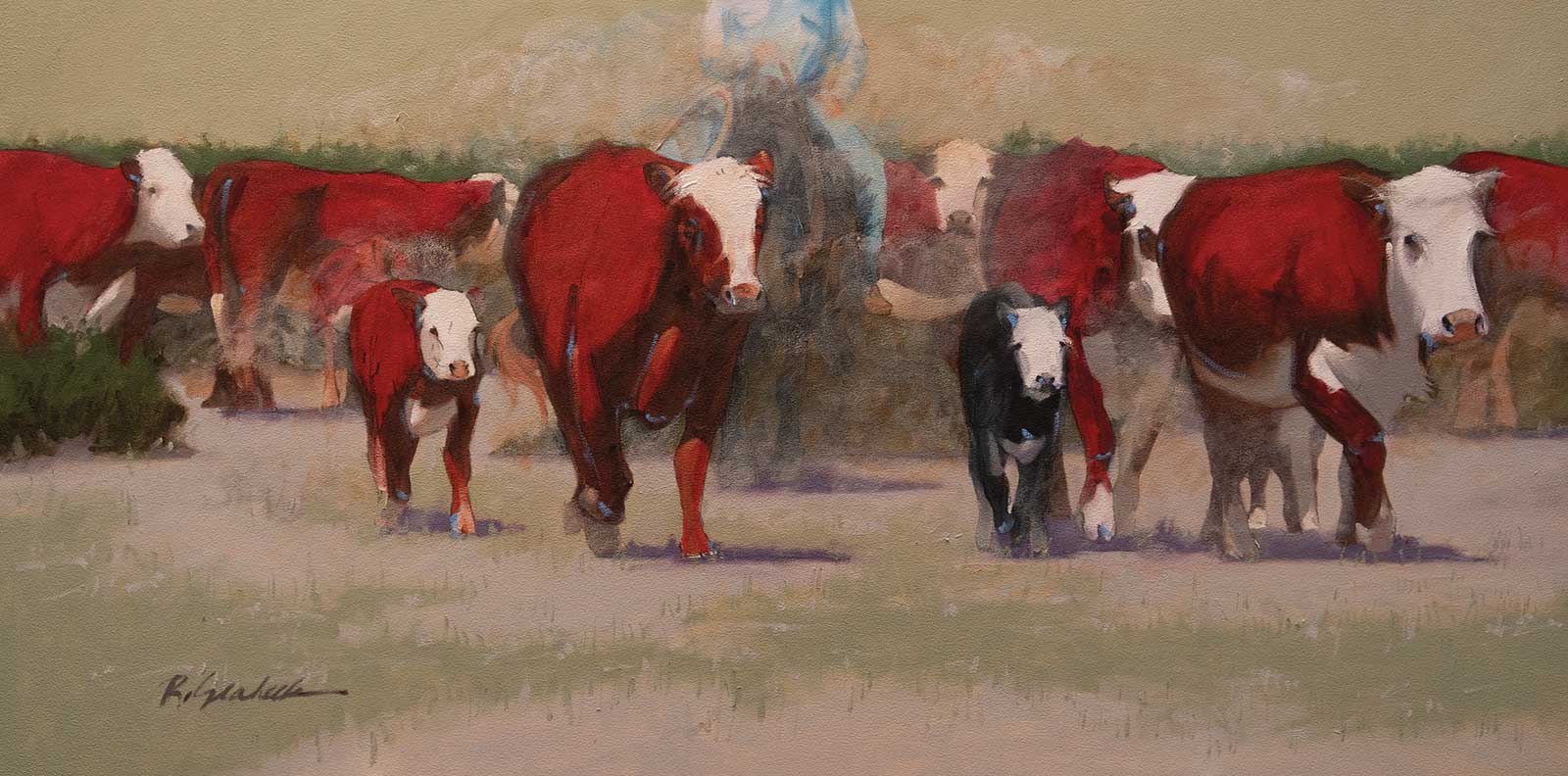
Cody Chamber of Commerce, Trail Drive, oil, 18 x 36 in., by Robert Seabeck.
When looking to expand your collection, the artist suggests looking for a truly unique style. Teare adds, “My ranch paintings will interest collectors who want to bring the serenity and nostalgia of rural life into their homes and offices in a unique, impressionist style.”
Growing up in northern Kentucky, artist Julia Munger Seelos enjoyed working at a horse farm in the summers. “After long, hot days doing chores, we would climb up in the hay loft and listen to the afternoon thunderstorms beating on the metal roof,” she shares. “I have always found old barns to be excellent subjects. They seem to hold memories of days long ago, telling stories of the American West. In my works I often paint ranches of the Central Valley that provided the settings for John Steinbeck’s novels. I love the colors and textures of the weathered boards and rusted roofs. In my works, I hope the viewer can experience the same nostalgic adventure.” Find her work at Gallery Viewpoints Gallery in Los Altos, California.
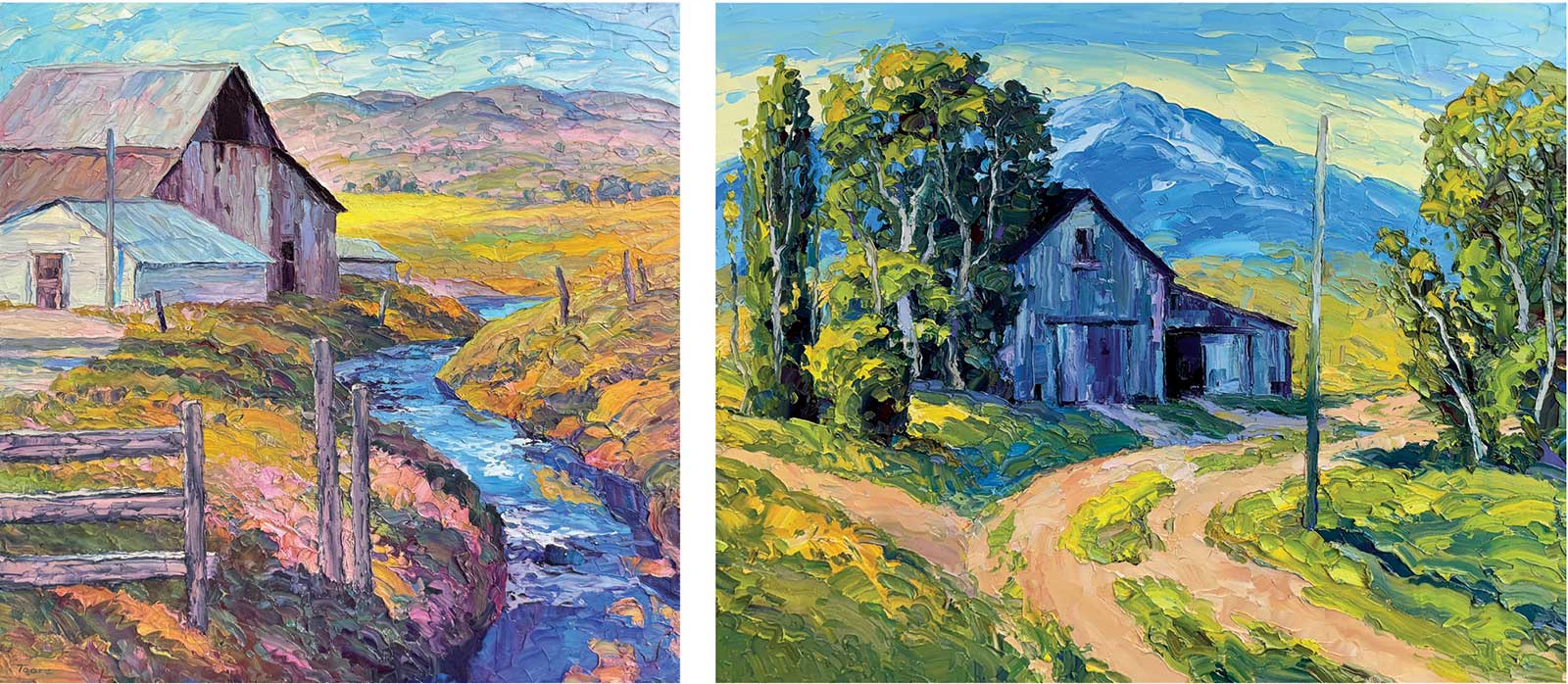
Brad Teare, Country Brook, oil on canvas, 24 x 24 in.; Brad Teare, Fragile Memory, oil on canvas, 24 x 30 in.
When collecting ranch scene artwork, Seelos advises: “Select work that keeps you interested, that tells a story you relate to and that creates a mood or an emotion.”
Artist Judith Jordan has always had a passion for painting. Currently, she lives on a horse ranch with her husband, where horses, mules, chickens, ducks, peacocks and a menagerie of other farm life roam the landscape. She is never lacking for interesting subject matter. Jordan enjoys painting the fields with horses and mules dotting the landscape. She also works primarily in oils, working to soften edges and forcing light onto the canvas. “Artists are like sponges soaking up their surroundings and seeing the beauty in familiar objects,” Jordan adds.
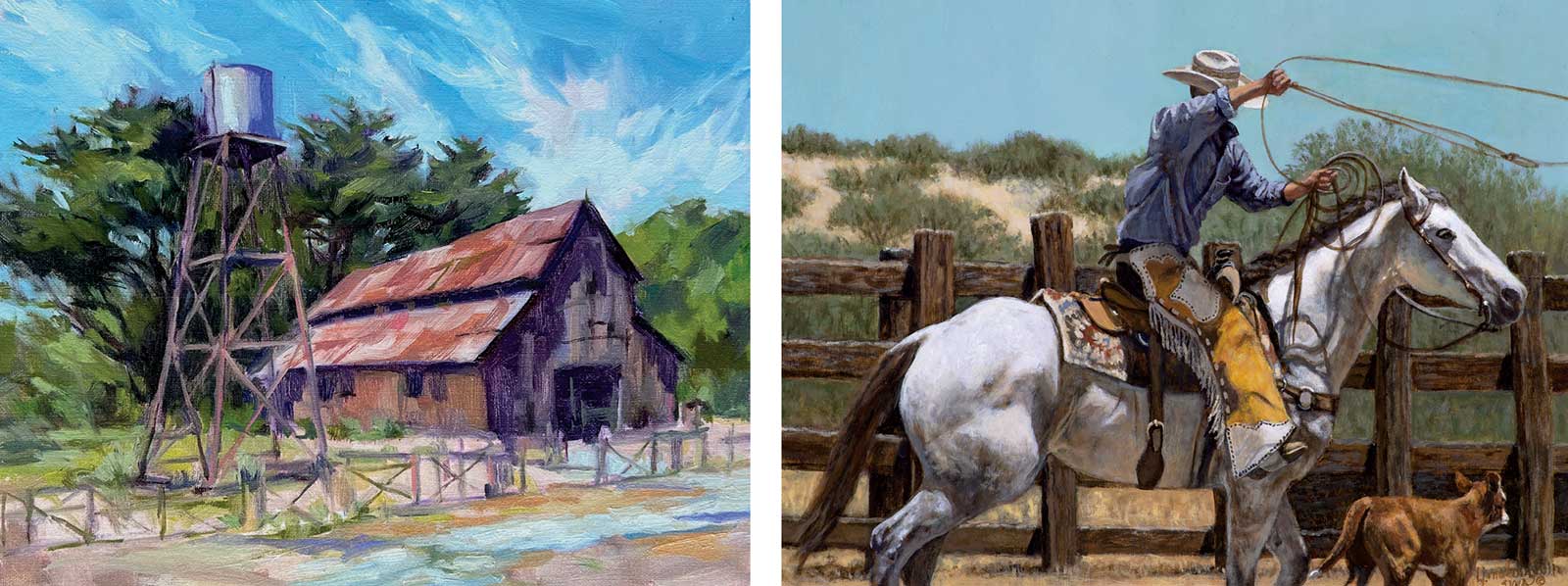
Julia Munger Seelos, Edna Valley Heritage Barn, oil, 11 x 14 in.; L J McLoughlin, The Catch, acrylic, 12 x 16 in.
L J McLoughlin, a ranch working cowgirl, has painted subjects of the American West in a realistic style, with acrylic and oil paints, for over 50 years. She won first place in her first art show at age 15, sold her first painting at age 16 and was issued a scholarship at age 18. Since then, she has competed in numerous art shows, won significant ribbons and recognition, has been written up in newspapers and Western art magazines. Today, she paints from her ranch studio in southeastern Arizona.
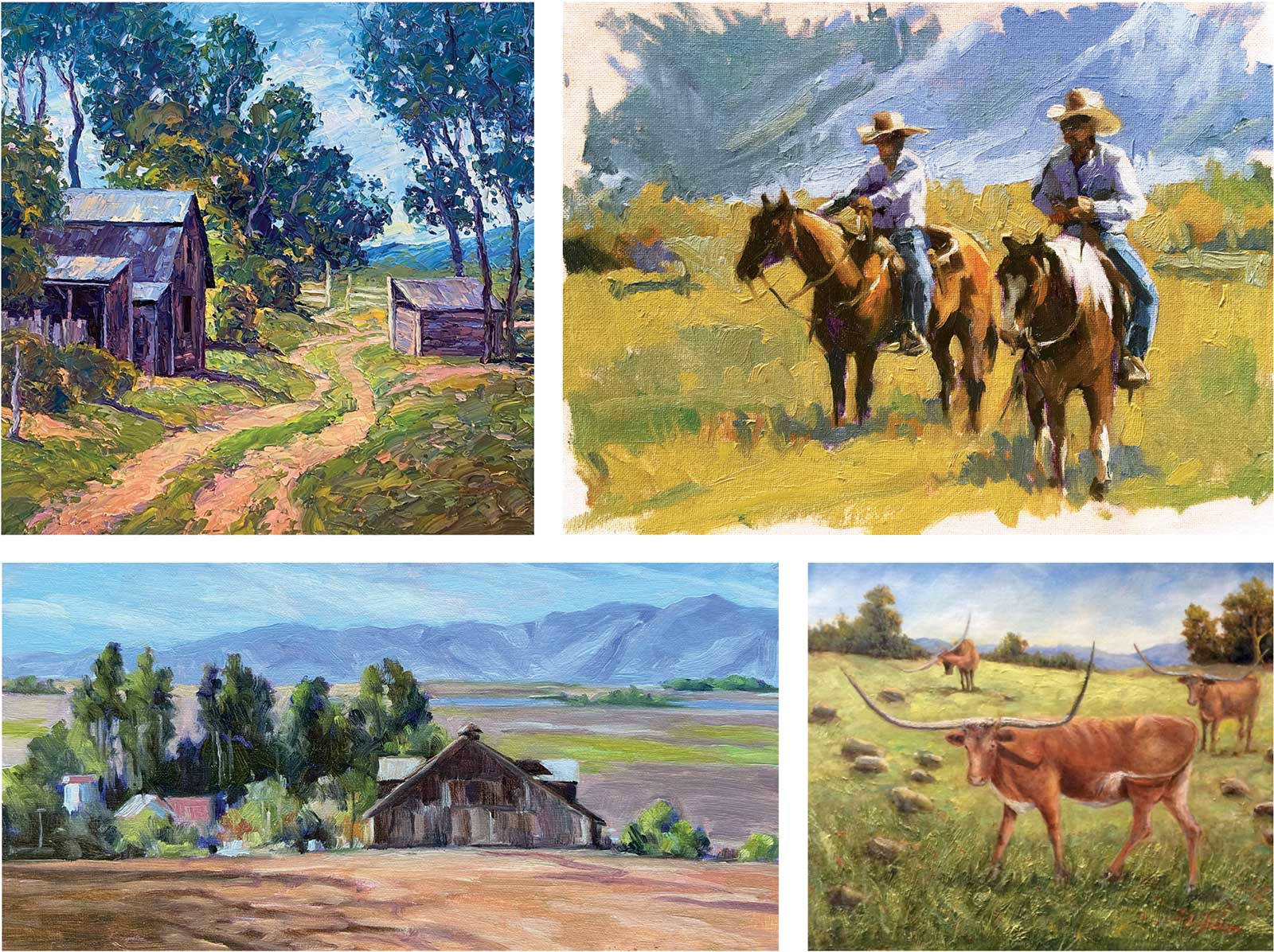
Top: Brad Teare, Rustic Sentinels, oil on canvas, 30 x 30 in.; Julia Munger Seelos, Modern Wranglers, oil, 8 x 10 in. Bottom: Julia Munger Seelos, Salinas Classic Farm, oil, 8 x 16 in.; Judith Jordan, The Longhorns, oil on linen, 30 x 40 in.
“My vision is to present paintings of Arizona and other places in the American West, by creating works using the backdrops of the West’s beautiful and gritty scenery,” she notes. “I visit places of historical significance, and compose my paintings. Every rock and every nuance is actually there, if the viewer ever decides to visit the site. If not, they have a canvas of accurate Western life placed on their walls, and a memory of those real, current or nostalgic Western events captured in a moment in time.” —
Featured Artists & Galleries
Brad Teare
(435) 232-1863
bradteare@gmail.com
www.bradteare.com
Instagram: @bradteare
Cody Chamber of Commerce
Buffalo Bill Art Show & Sale
836 Sheridan Avenue, Cody, WY 82414
(307) 586-1584, bbas@codychamber.org
www.buffalobillartshow.org
Judith Jordan
www.jhjordanart.com
Julia Munger Seelos
(650) 743-6346, www.juliaseelosgallery.com
julia_seelos@yahoo.com
Legacy Gallery
7178 Main Street, Scottsdale, AZ 85251
(480) 945-1113 225
Canyon Road, Santa Fe, NM 87501
(505) 986-9833
www.legacygallery.com
L J McLoughlin
Pearce, AZ, (520) 507-0213
www.ljmcloughlin.com
Mockingbird Fine Art
869 NW Wall Street, Suite 100
Bend, OR 97703
(541) 388-2107
www.mockingbird-gallery.com
Phippen Museum
4701 Highway 89 North, Prescott, AZ 86301
(928) 778-1385
www.phippenartmuseum.org
Tyler Crow
www.tylercrowart.com
Instagram: @tylercrowart
Powered by Froala Editor


