Connecting with Teal Blake by telephone always has interesting results. Expecting the quiet silence of the studio or maybe the gentle strum of country radio in the background, callers to his phone frequently hear clanking metal pens, braying horses and bleating calves. For Blake, the art starts on horseback before it ever gets turned into brushstrokes in the studio, which means he lives life in the saddle—one ride and one painting at a time. And if he can’t get to your call, leave a message after the bleat.
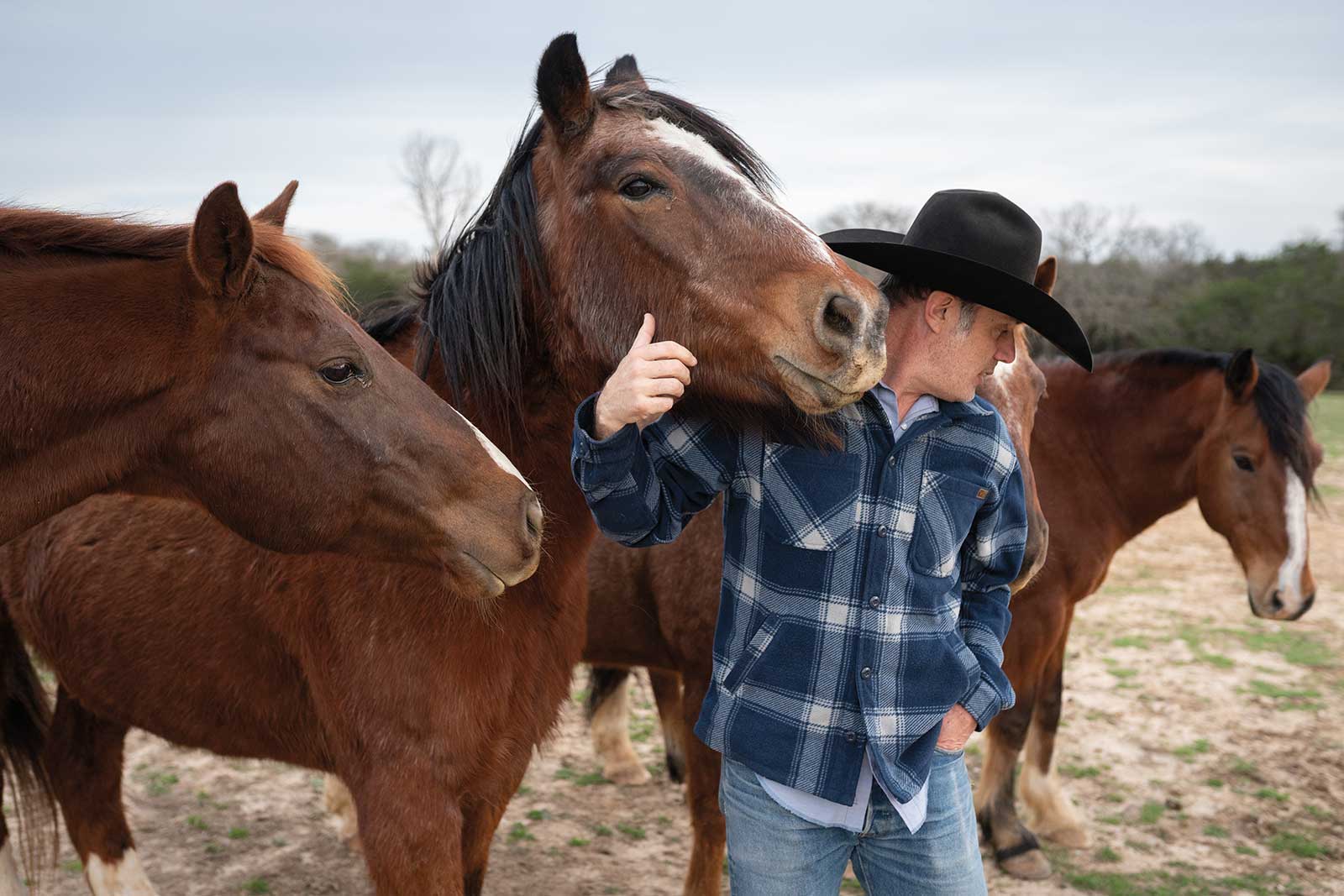
The artist with several of his horses. Blake frequently rides and is still a working cowboy.
What’s so remarkable about the genuine cowboy lifestyle he leads, besides the exceeding rarity of real cowboy artists, is that it is the embodiment of Charles M. Russell, who serves as the unofficial great grandfather of the Cowboy Artists of America and its merry band of painters, sculptors and occasional cowboys. And Blake, a CA member since 2014, may be the most similar to Russell: he works in watercolor and oils, dabbles in bronze, he still rides and ropes, he was born and raised in Montana (Russell was born in St. Louis, but lived and died in Big Sky Country), he’s illustrated and authored books like Russell, and even the artwork has some similarities. Ultimately, it comes down to one key likeness: authenticity. Russell lived the West, and Blake is living a similar lifestyle, albeit a century later.
“I love reading about Russell and these guys who went to the West to see what was going on. They weren’t in it for the money. They just loved the West, and when they arrived they didn’t want to go back home,” Blake says. “Frank Tenney Johnson is another guy who came out West, met some cowboys and then never wanted to return to the East Coast again. He wrote letters home basically saying, ‘I don’t want to come back.’ These are the friends I want to keep. The West is a different world, and for me it’s home.”
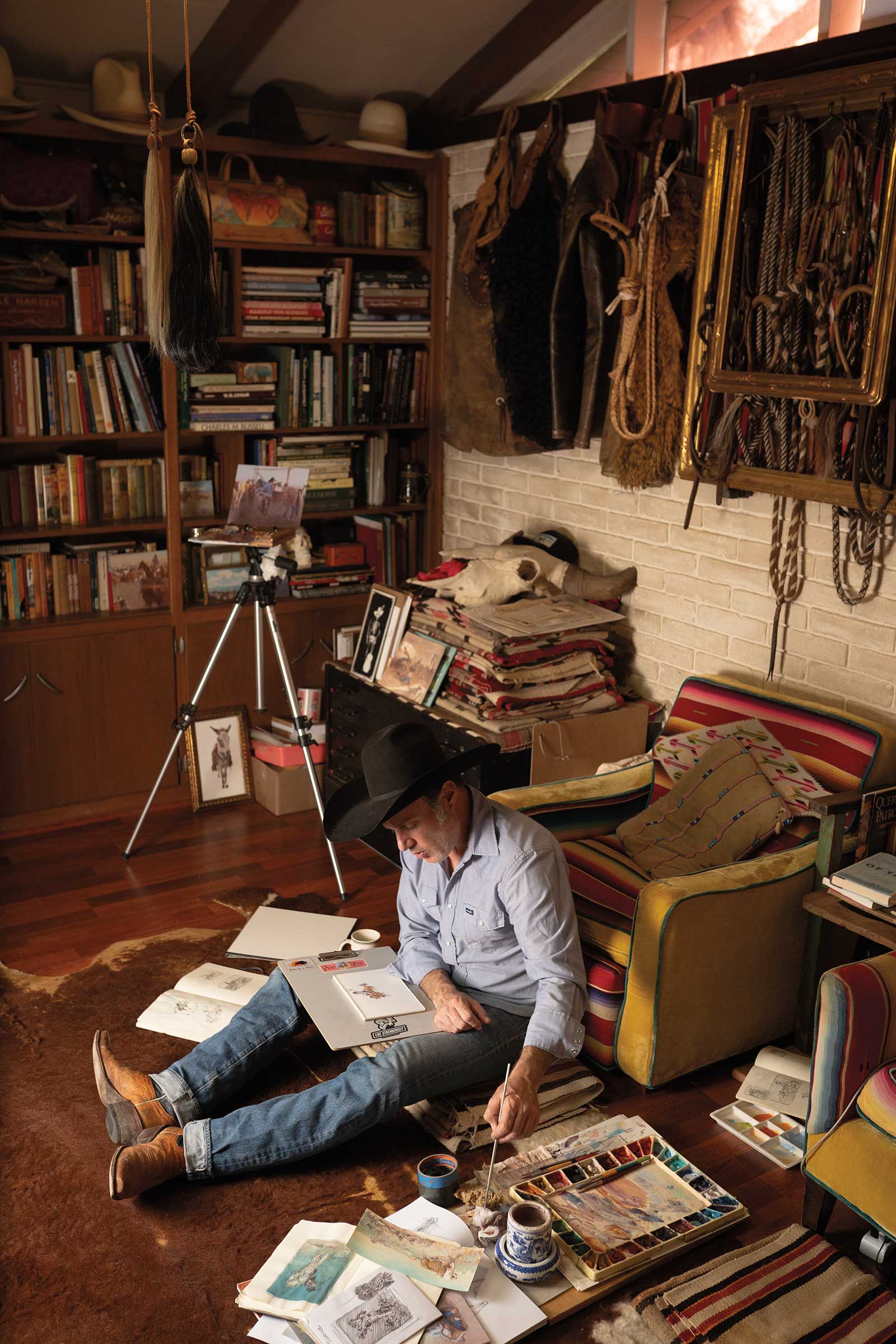
Teal Blake in his Texas studio.
Living an authentic Western life started early for Blake, who was born in Helena, Montana, but raised in Augusta 75 miles north. His father, artist Buckeye Blake, was running ranches, and his mother, Tona Blake, was an artist, photographer and journalist. Some of the ranches were quite remote—“If it rained you weren’t leaving for a month, rattlesnakes on the porch…that kind of stuff,” Blake says—which meant there was a distinct ruggedness to growing up. Even after the family moved into town, ranch life was inescapable.
Art careened into his life through his dad, who gave him scraps of paper to draw on, and later let his son ride out with him to his studio. “I was drawing on everything, even on my schoolwork,” he remembers. “Horses, horse heads, cattle…it all came very early for me. Drawing was a constant. I can’t remember a time without it.”
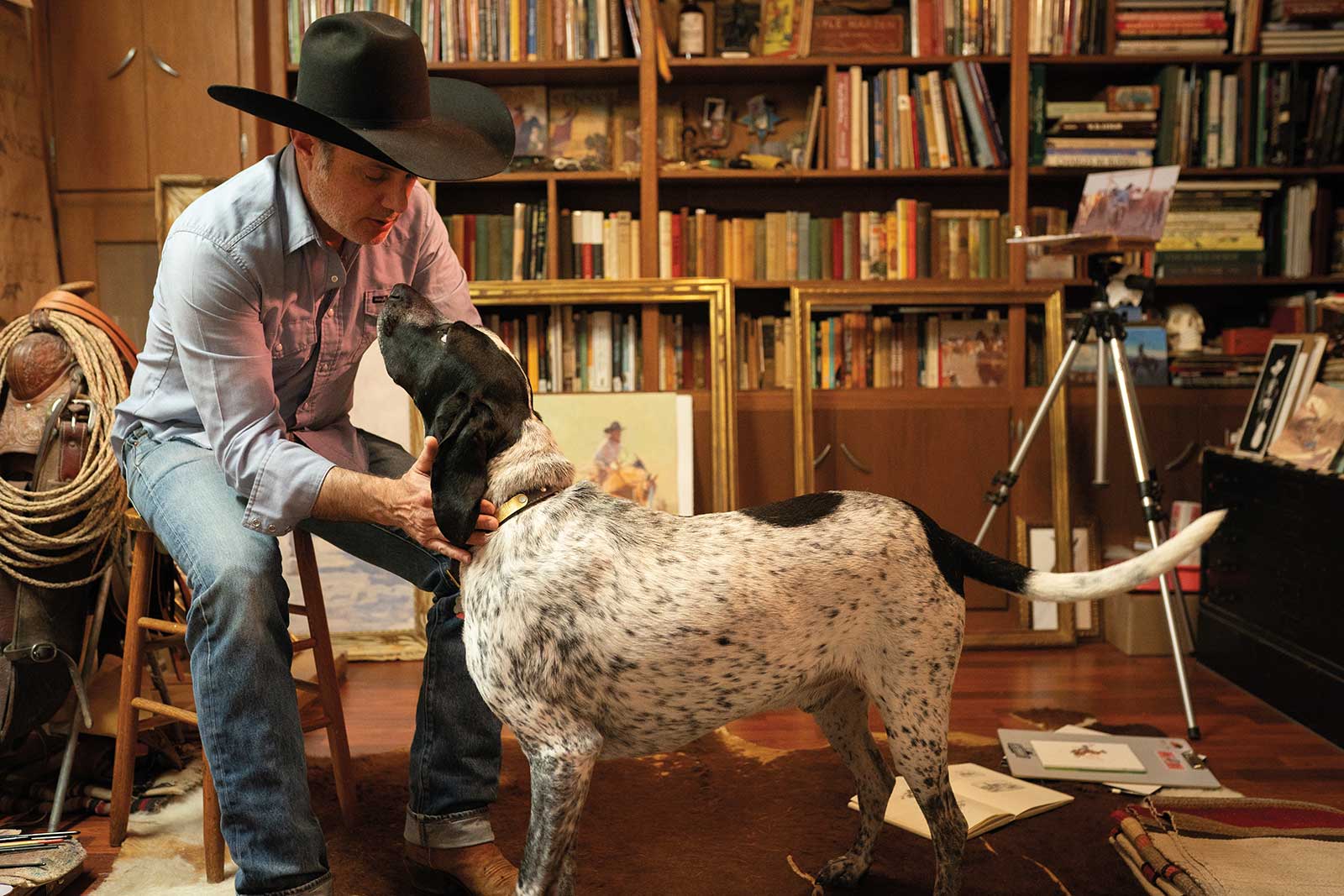
Teal Blake in his studio.
His interest in art was always there, but rodeo took hold of him when he was old enough to ride bulls, which propelled him into his 20s as he hit the rodeo circuit. “By then I was living in Weatherford, Texas, and riding professionally. I was doing four or five rodeos a week consistently,” he says. “I was in different associations and events, and you could line them up like that where it was a full-time thing. I was riding bulls, and then later showing cutting horses and team roping. My family had always raised performance horses, so between the rodeos and horse shows, I lived on the road. It was constant: ride all day, drive all night. It was the rock-star lifestyle.”
Blake describes an accident that wasn’t bad, but could have easily ended his career or his life, and it made him take stock in what he wanted to do with his future. His parents had come to Texas to visit him around 2006, and his dad had set up an easel in the house he was renting. Sitting in front of that easel, holding art supplies and looking at those blank canvases and papers, Blake knew what he wanted to do. Eight years later he was invited into the CA. At the time, he was the youngest member of the group at 35 years old.
“The first person to approach me about the CA was Bill Owen. He came to visit me when I was working at the Pitchfork Ranch in Texas. I had met him at one of the Phippen [Museum] shows maybe a year or two earlier. He wanted to meet and look at my artwork. We even made a trade because he wanted one of my little watercolors,” Blake says. “Later I went and took a job back in Montana running a big ranch up there. I took all my easels and painting stuff with me when I moved up there. It was there that I got the call from Grant Redden that Bill had died. I was happy to have met him that one time, because I never got another chance to talk to him. My next call was from Bruce Greene, who asked if I wanted to submit my work.”
Blake joined the group in 2014, and he remembers the CA being quite stable at the time, even after the death of Owen, who, by some accounts, was a rigid and exacting force within the group who helped maintain order. He does remember there was an exodus not long after joining, but the root cause for that was largely the age of some of the members: Gary Carter, Fred Fellows, Mehl Lawson and others became emeritus members, and there were several deaths. Membership dipped slightly, but the mood was positive.
“If you read the books, you know the CA had some ups and down, but by 2014 it seemed like they had worked them all out,” he says. “When I became a member, I was all in, all invested, at that moment. But I also knew I was coming in as the new guy at the bottom of the totem pole. I did more listening than talking.”
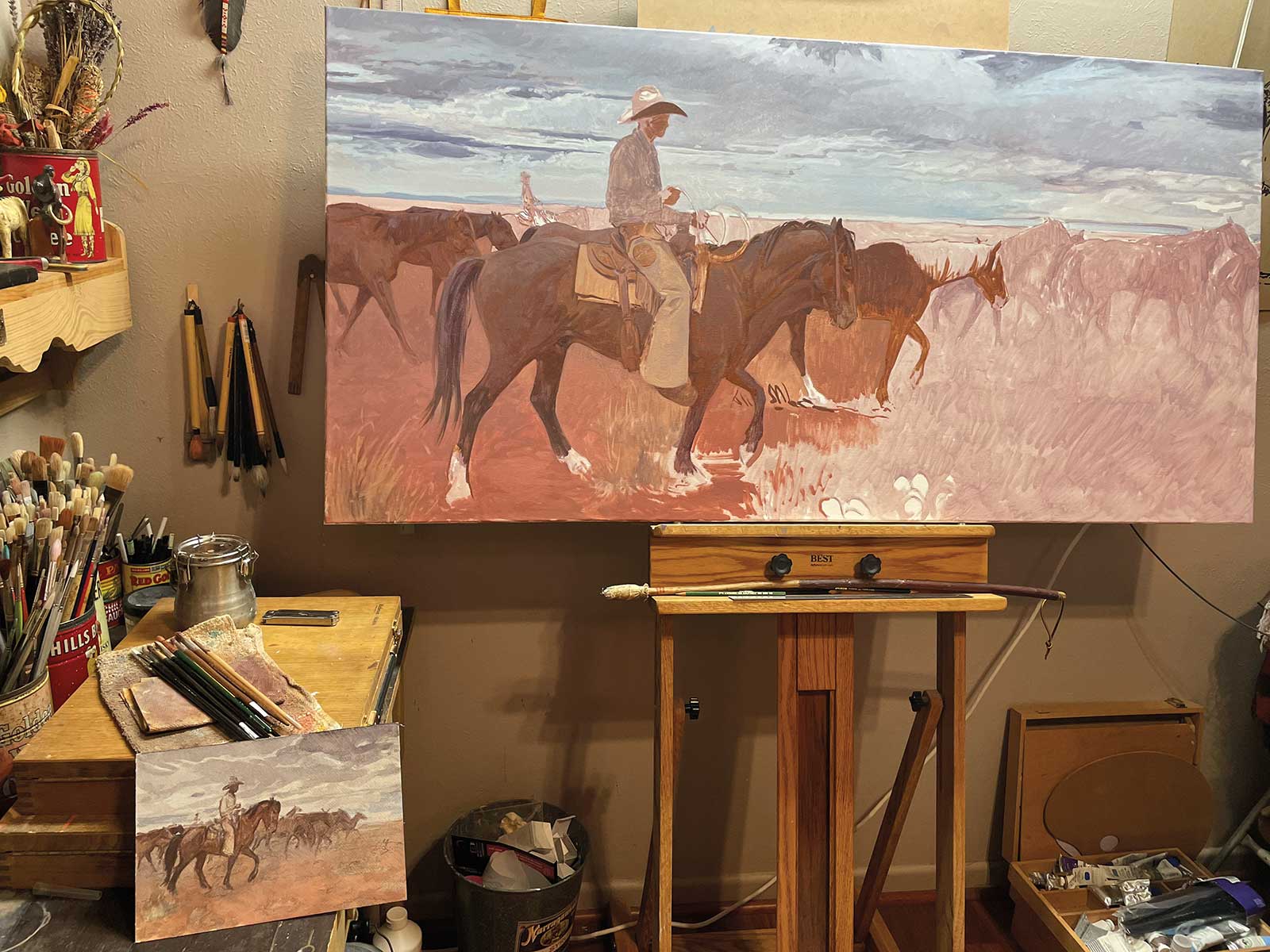
An unfinished work on the easel for the upcoming CA show in November. Courtesy the artist.
Big changes were on the horizon, including the CA’s eventual move to Fort Worth, Texas, from Oklahoma City, where it had a home for many years at the National Cowboy & Western Heritage Museum. This was not without controversy, and yet the transition was smooth, all things considered. There would also be new members, new trail rides and new opportunities. Slowly at first, and then at a quicker pace, Blake’s role with the group increased as he took on more responsibility and put himself out there with his own ideas. “I’m a big believer that things have to change over time. Nothing can survive forever without adapting,” he says. “So, I like to encourage change whenever possible and certainly when necessary. If you’re lucky, you can ride along without having to change anything, but no one is that lucky. Change happens for a reason.”
What changes has he proposed? He wants to bring in younger and more contemporary voices into the CA, and wants the group to modernize some of its business. But Blake is intentionally vague here, mostly because his loyalties will always be with the CA and unless they’ve discussed it and voted on it, he won’t share group business with magazine writers. He doesn’t even take credit for a recent initiative to invite non-CA artists to show work at the annual CA show in November in Texas, a plan he certainly had a hand in—“That was all of us who introduced that,” he says. The group’s members, Blake included, have adopted the CA mantra, “Ride for the Brand,” which puts the group over the individual. It’s a code they live by.
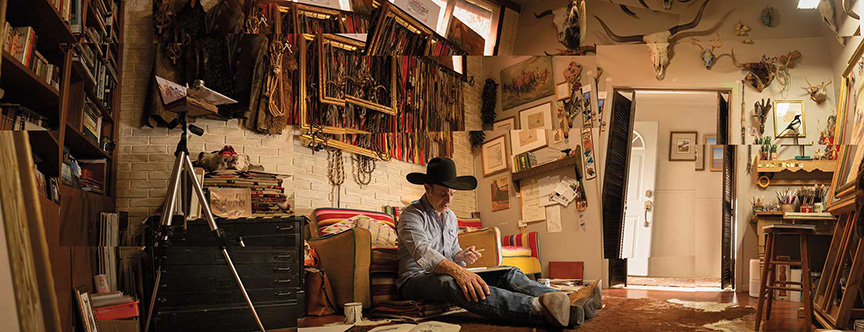
A collage of images from Blake’s studio.
And make no mistake, the CA is a fascinating organization, but it can also be confounding to outsiders, especially when it comes to the mystery of its mechanisms. There have been periods of intense turmoil in the group—Joe Beeler was so fed up that he quit the group he helped create, though he did come back—and also times of intense scrutiny (the CA’s refusal to invite women members still frustrates some). And yet, what happens behind closed doors usually stays behind closed doors. Consider the group’s day-long meeting held during every trail ride. For decades, rumors have swirled of shouting matches and heated arguments, and yet when that tent flap comes up and the members walk out, they are tight lipped and friendly with each other. Whatever mud was flung, if any, was wiped off before the meeting ended. By the time the members turn up for the annual show, the group is humming along with a warm efficiency. Those who are willing to talk, off the record and anonymously, talk about passionate and stubborn members who are all doing their best to keep the group focused and relevant. Everyone has good intentions, and sometimes the problem is just personalities butting up against each other, even as they share the same goals.
Somehow, amid all the politics and planning that goes with a successful 60-year-old organization, Blake has found his place within the CA, and he also represents the next generation of artists who will be given its reins. He’ll be joined by Tyler Crow, Dustin Payne, Chad Poppleton and other younger members who are passionate about the group’s future. “I will say this, working with the CA is easy because the artwork makes it easy. We’re artists, so it’s like herding chickens, but that would be anywhere and with any group. But look at the art the group is making and then it all becomes worth it,” he says. “The quality of the art and the artists is just incredible. So for me, the honor of getting to be a part of that and learn from these guys, that’s why I’m here.”
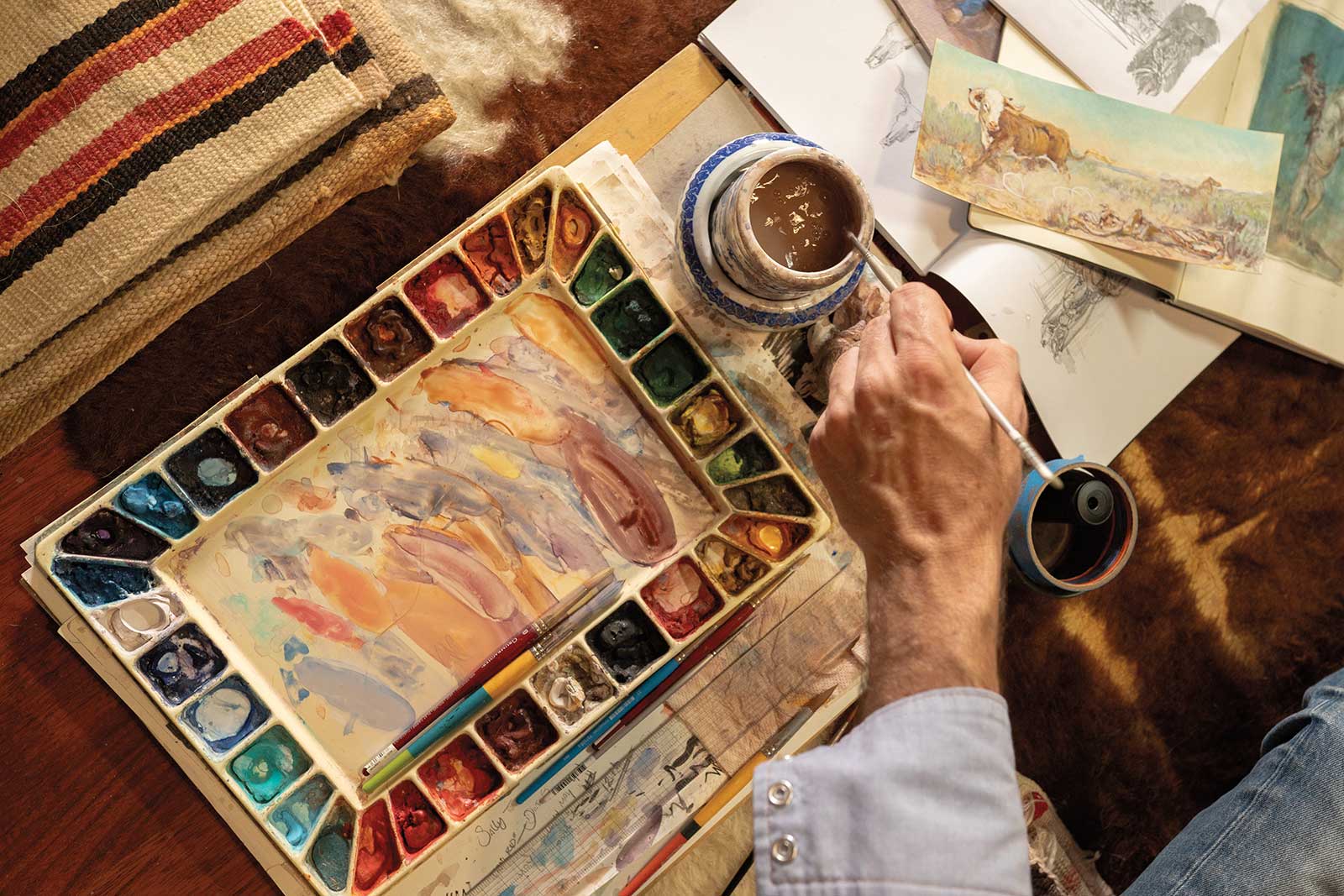
At work with watercolors.
Gallery owner Mark Sublette, who has shown Blake’s work in his Medicine Man Gallery since 2017, says there is a clear appeal to his art. “It’s authenticity. That’s the easiest way to describe it. He’s a great artist as well, but what elevates his work is that he walks the walk and talks the talk. There aren’t many of those guys left, and that’s why we celebrate their work when it shows up,” Sublette says. “I follow the CAA a little, but mostly the individual members. I like following Teal and what he’s doing because he’s an independent thinker. I don’t want to say a loner, even though that sort of works, but Teal knows what he wants from his art career and he won’t stop until he gets it, and that’s what makes his work exciting.”
Today, Blake lives with his son near Fort Worth, where he maintains a studio and a small cattle operation with several horses. Although he spends less time as a working cowboy these days, he still finds time to ride and rope, and as often as possible he’ll help out at nearby ranches or round-ups. “We call it neighborin’, and it’s where everyone helps each other out,” he says. “You just go out and do what they need you to do—baptism by fire.”
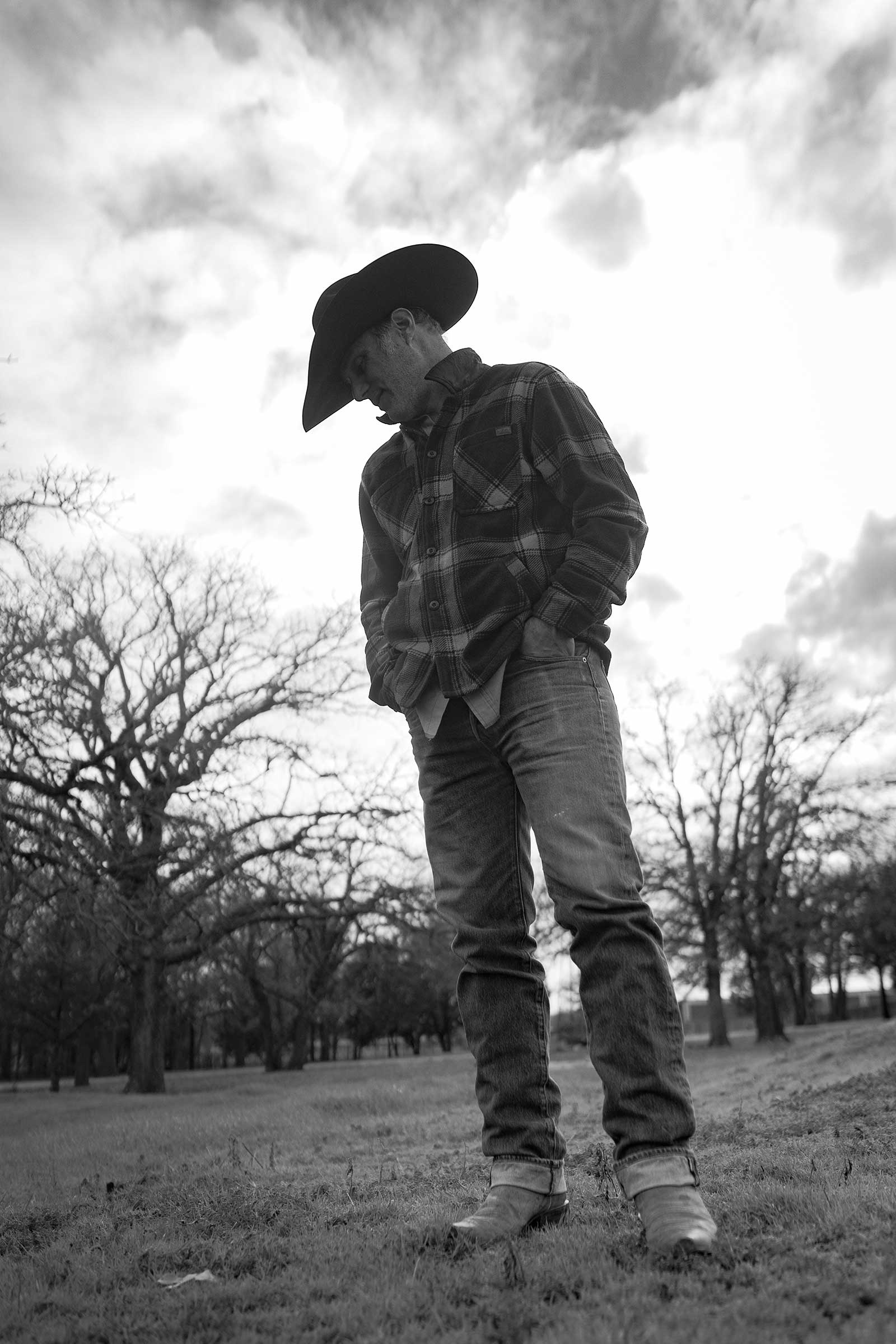
His studio is active as ever, with major work being prepped for the CA show in November and then a Medicine Man show in January 2025 with Howard Post, another artist who walks that walk. In recent years, Blake has seen his work resonate with collectors at a high level, including huge sellouts at recent CA shows. Collectors say they are drawn to his strong cowboy imagery in both oil and watercolor, but really it all comes down to his genuine cowboy way of life, which injects life into his work.
“I couldn’t give either thing up if I had to—horses or art. They just mean too much to me. If I had to be back in a line shack breaking some colt somewhere and sketching on feed bags, I would,” he says. “I like to think of Will James and Charlie Russell…these guys who did it all just because they loved it. That’s why I do it—I love every part of it.” —
Powered by Froala Editor


