

During the Klondike Gold Rush in the final years of the 19th century, miners, adventurers, explorers and fortune seekers trekked up to Alaska to look for gold. When they arrived, they found a very different world, one ruled by ice and snow. Horses were only so useful, so many resorted to sled dogs. It’s the stuff of Jack London books, because London was there during the Klondike years, which is how he got the idea for The Call of the Wild. Sled dogs are recognized today for the important role they played in the development of the West.
Those animals are the subject of a new exhibition at Western Spirit: Scottsdale’s Museum of the West. Sled Dogs in America: Alaska and Beyond, which opens July 17, features the paintings and sculptures of Veryl Goodnight, who has been using sled dogs as subjects since 2006, after she moved to Colorado and reconnected with two mushers.
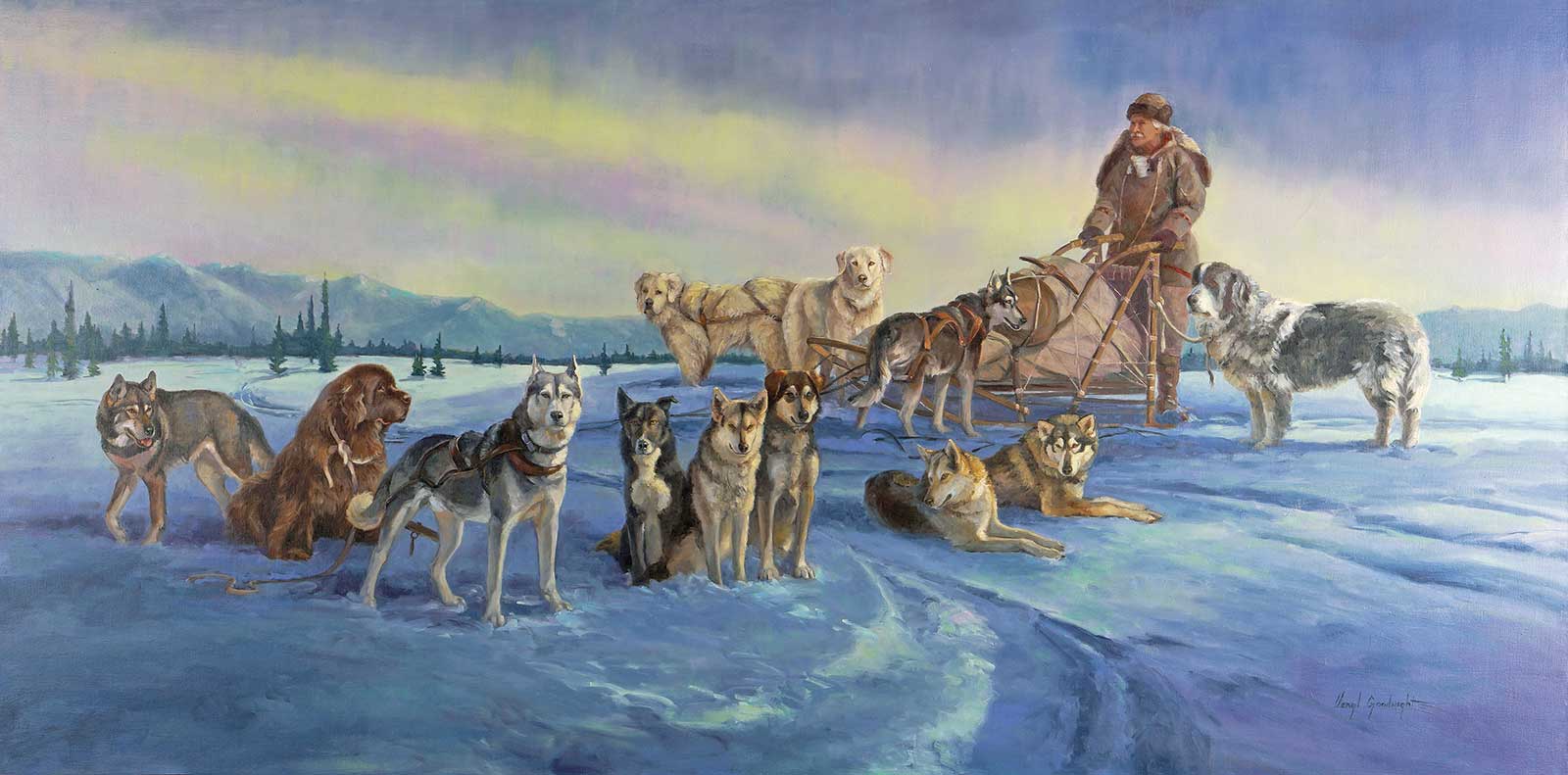
The Gold Rush Dogs, oil on linen, 40 x 80 in.
“The enthusiasm of the dogs got me hooked and I ended up with a recreational team of four dogs. While I did a handful of races, what really interested me was the discovery of the large freight huskies and realizing their importance in shaping our continent. At one time they were the sole means of transportation in snow-covered parts of North America,” Goodnight says. “I became interested in bringing the many roles of these dogs and their drivers to the world of Western art. The untold stories began with the first migration of humans from Northeast Asia over the land bridge and later in walrus skin boats. These early immigrants are the ancestors of the Navajo and Apache. Sled dogs were to the North what the horse was to the plains.”
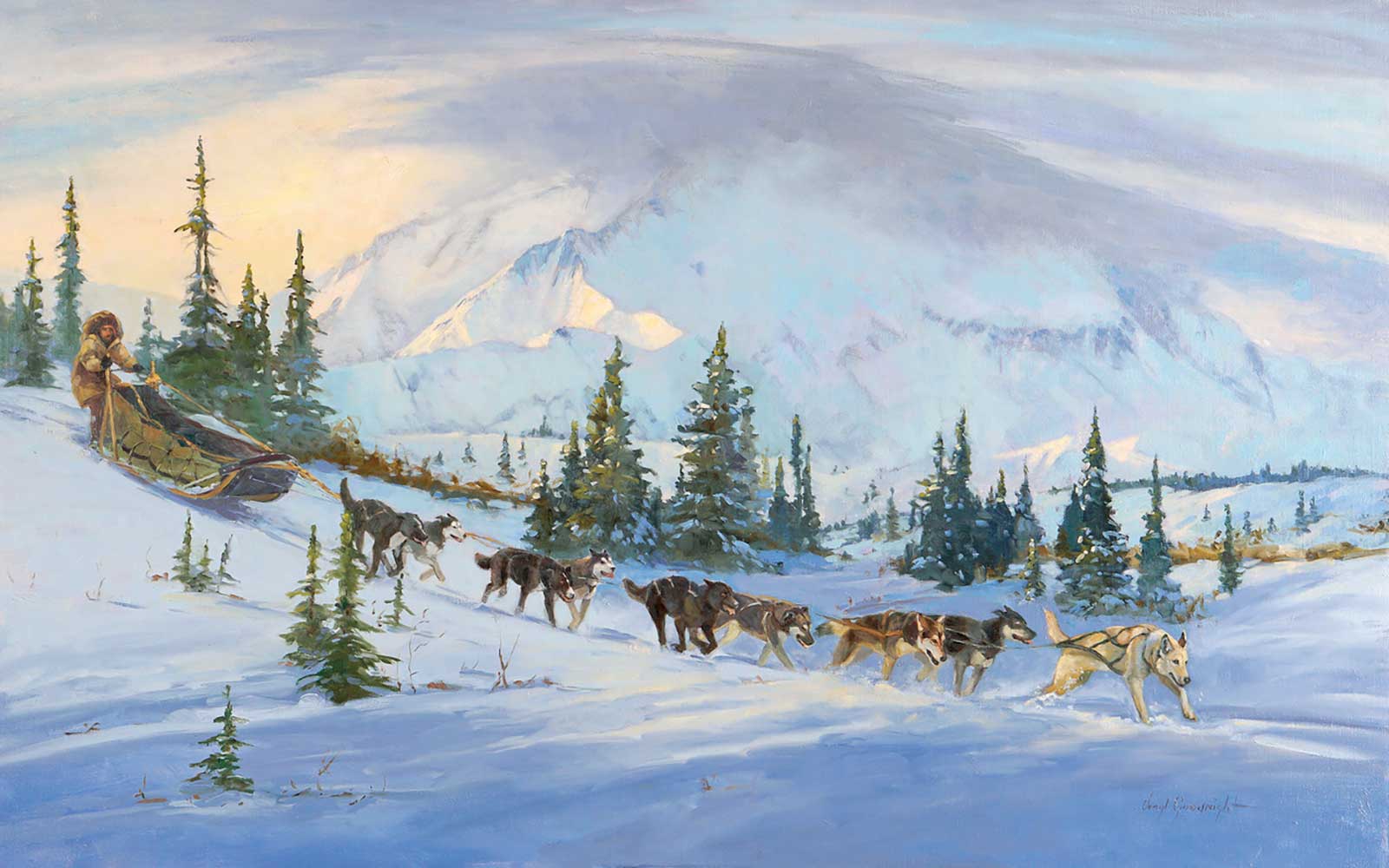
No Time to Spare, oil on linen, 30 x 48 in.
The artist is widely known as a sculptor, but the exhibition will mark her triumphant return to painting with large and major works on view. One important painted work is The Gold Rush Dogs, an 80-inch-wide scene showing a grouping of dogs, including one of her own, that represents some of the breeds that were commonly used on sled teams.
The exhibit includes 10 paintings and one bronze. Seven of these have been held off the market in order to share this incredible history at the museum. The works will be released for sale at the close of the show next April. Goodnight also has a reproduction of a “handle bar” sled made as a prop, as well as four leather collar harnesses made of the type seen in historic photos. Numerous other objects or historical artifacts will be included to help tell the story of sled dogs.
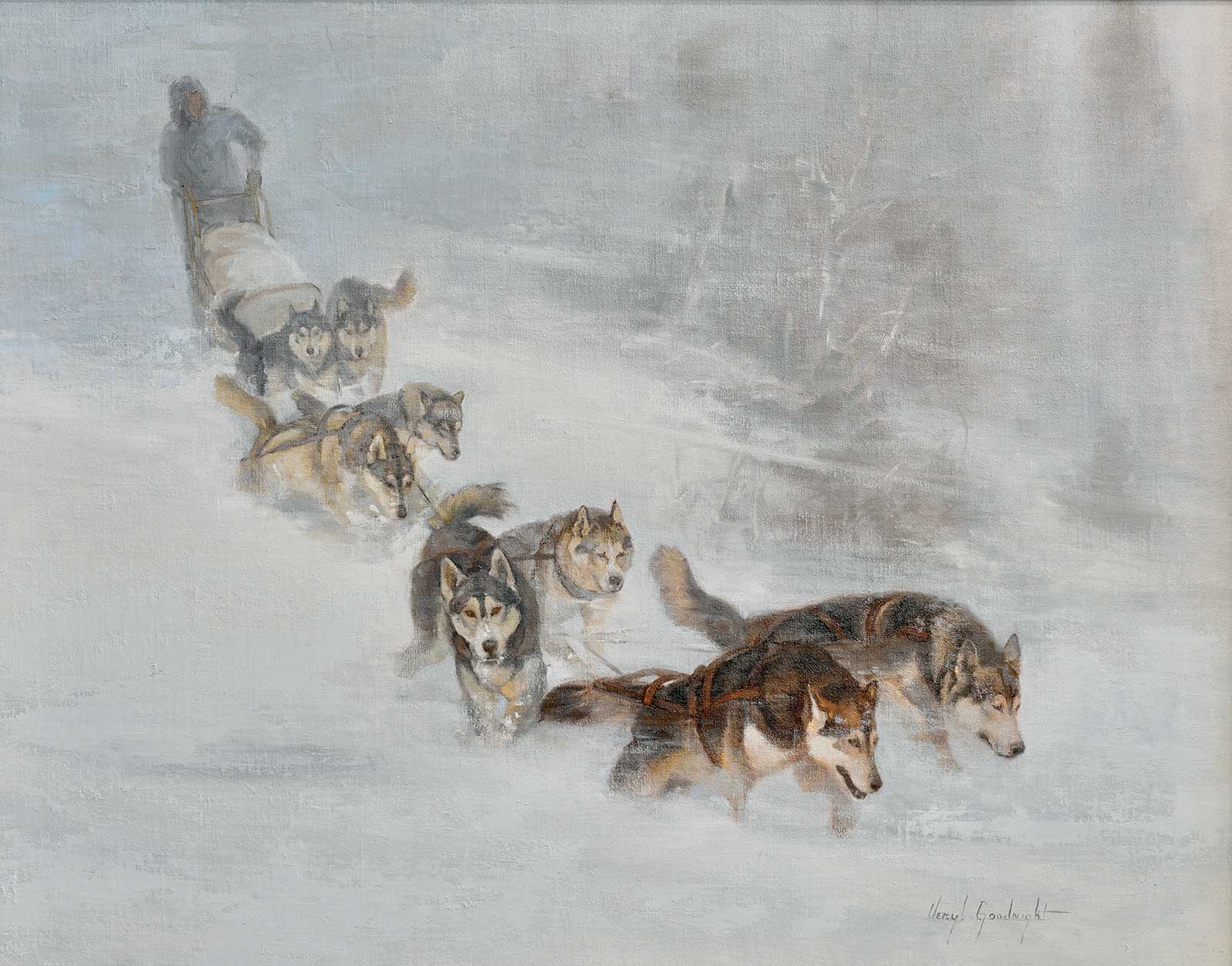
Perseverance, oil on linen, 32 x 37 in.
Asked what it is like to ride behind sled dogs, the artist says it is incomparable. “It is primal. The dogs are born to run and they love it. They don’t just walk off when the snow hook is pulled. They launch and you are initially flying at 18 to 22 mph before they settle into a trot of about 10 mph,” she says. “While hooking the dogs to the gang line, you cannot hear yourself think from the excited barking. Then it is silent, other than the sound of the runners on the snow and the panting of the dogs. I began mushing at age 60, when most are quitting. My learning curve was steep with one concussion and two black eyes. This entire journey has taught me to appreciate dogs on a far higher level than as a pet. As my husband noted, ‘dogs give so much and expect so little.’ I hope this show will somehow give back to the four-legged companions that have been by the side humans for thousands of years.” —
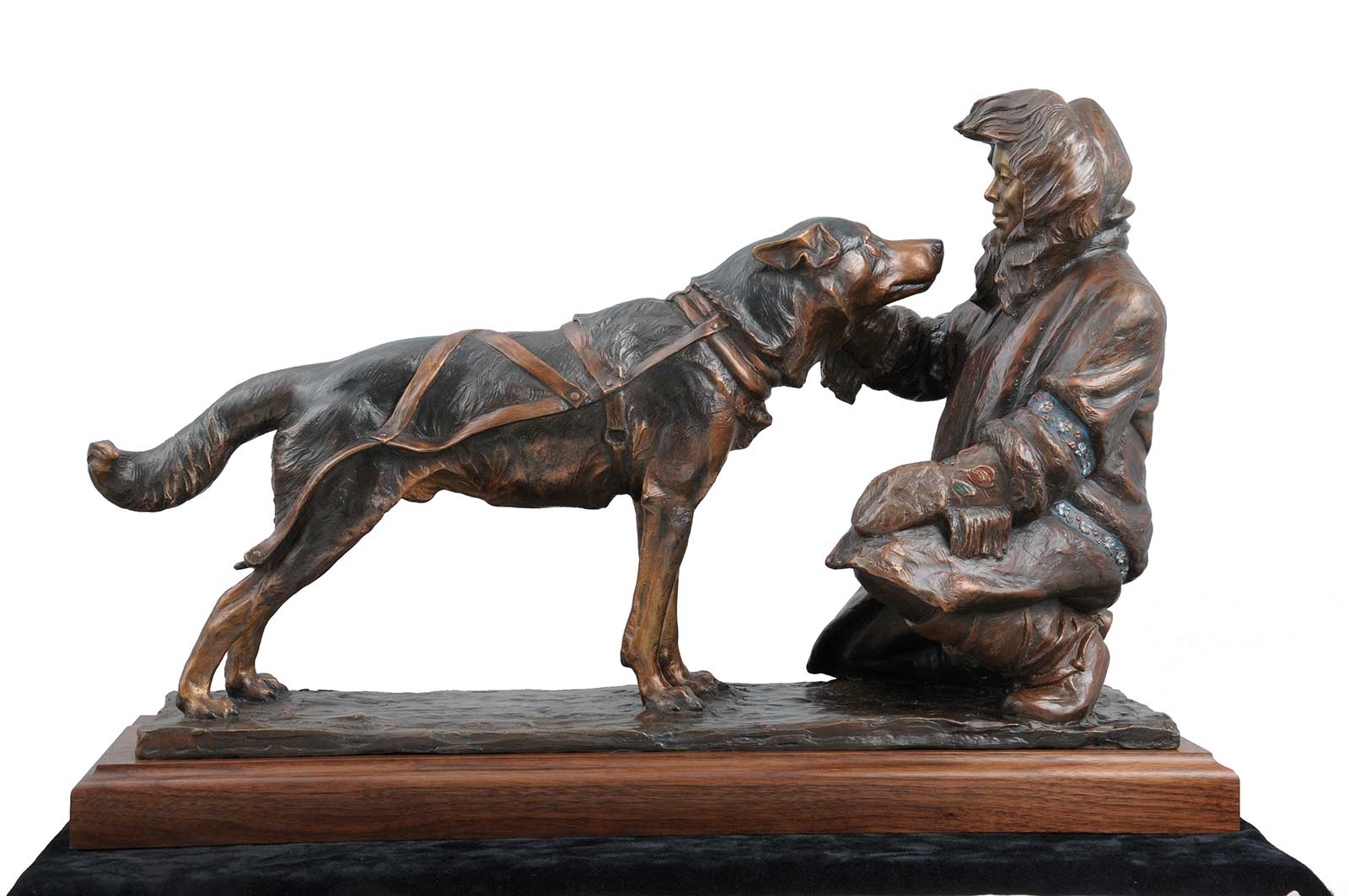
Village Kinship, bronze, 18 x 27 x 10 in.
Sled Dogs in America: Alaska and Beyond
July 17, 2024-April 27, 2025
Western Spirit: Scottsdale’s Museum of the West
3830 N. Marshall Way, Scottsdale, AZ 85251
(480) 686-9539, www.scottsdalemuseumwest.org
Powered by Froala Editor


