Before Lil Nas X spent 19 weeks at the top of the Billboard Hot 100 in 2019 with “Old Town Road.”
Before Netflix released Concrete Cowboy and The Harder They Fall in 2021. Before Beyoncé became “Cowboy Carter” this spring, LaQuincey Reed was sculpting Black cowboys. His inspiration for doing so came from teaching middle school and high school art in Jones, Oklahoma.
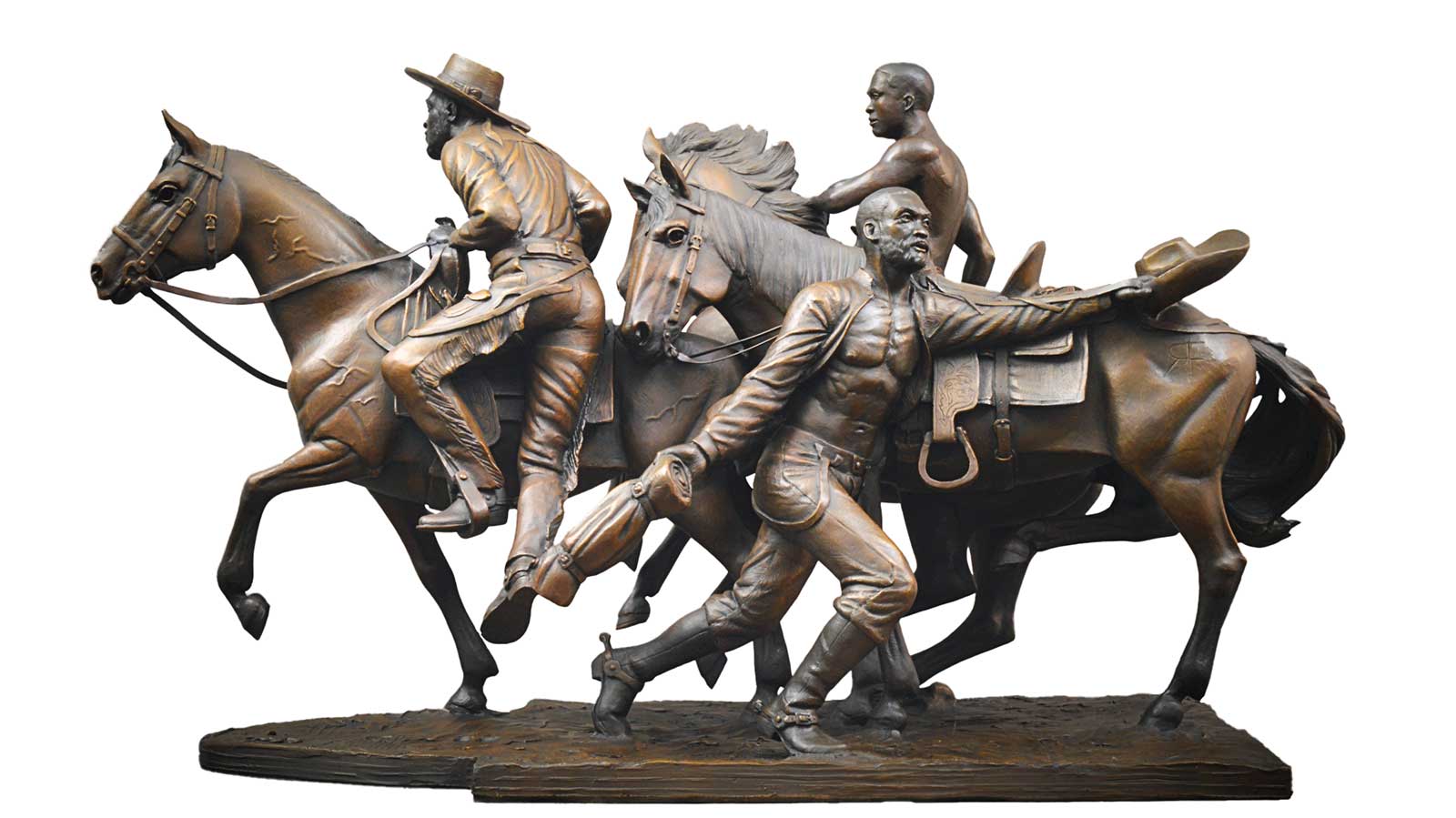
Get Up And Go, bronze, 29 x 19 x 35 in.
“Mr. Reed, you want to see me riding a bull?” Reed, who is Black, remembers one of his students asking. “I didn’t know anybody who was Black that was riding bulls or doing anything Western related.”
An introduction. That was 2013.
“Right down the way from Jones is the town of Spencer which is predominantly Black. If you drive down in Spencer, Oklahoma, you’ll see kids who are Black riding horses in a pair of Nikes just randomly off the side of the road,” Reed says. “I didn’t know that was going on and I felt that was a unique story to tell.”
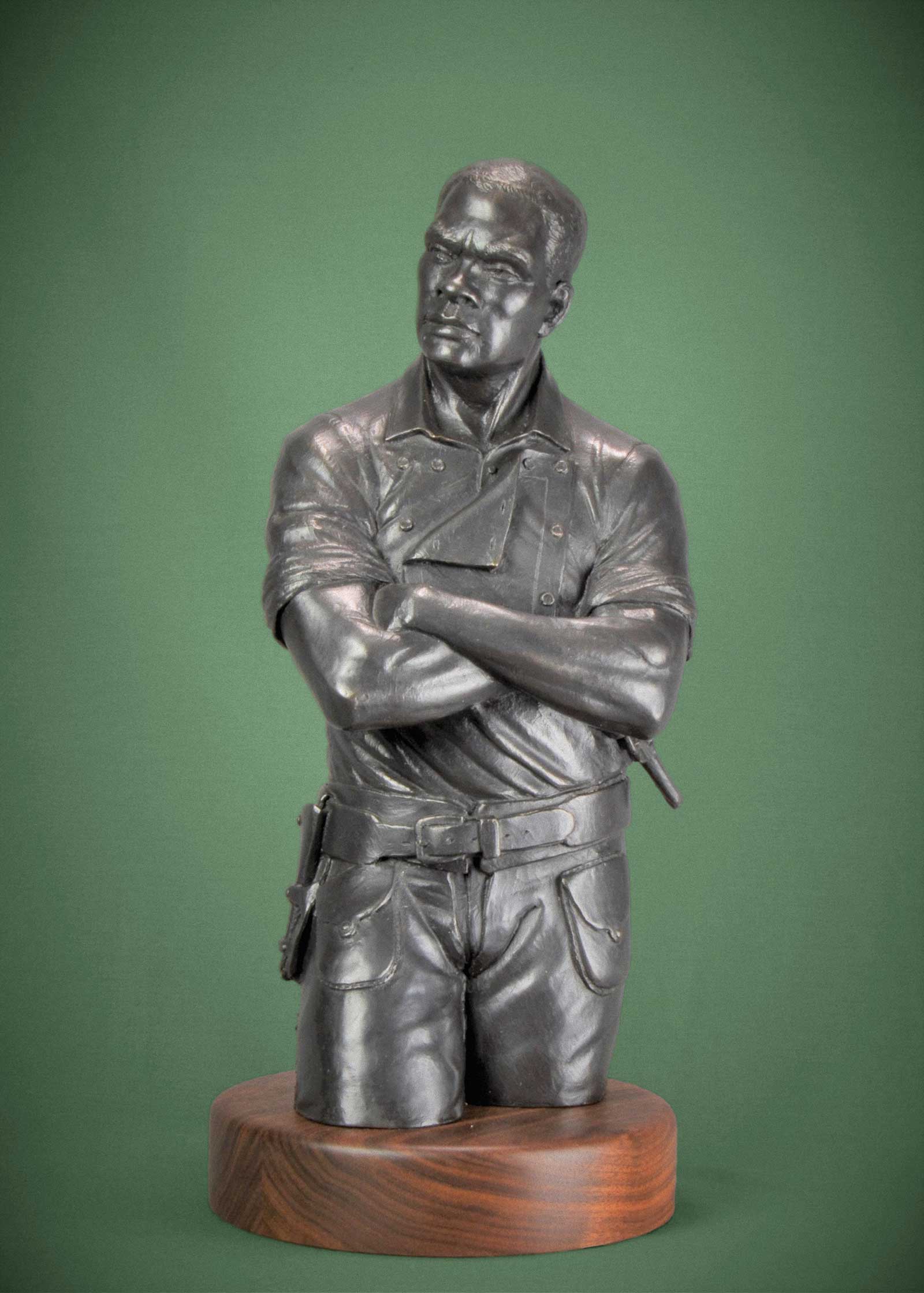
Don’t Push Me, bronze, 18 x 6 x 7 in.
The Black cowboy tradition is strong in Oklahoma. Following emancipation, thousands of formerly enslaved people left the South for greater opportunities elsewhere. What is now Oklahoma became a hotspot. In the late-19th and early-20th centuries, dozens of all-Black towns were founded across the state, more than anywhere else in the nation.
The all-Black town of Boley, Oklahoma, has been hosting a rodeo since 1903—prior to statehood—the longest-running African American community-based rodeo in the country.
“You look into the history of it and you realize it’s always been there, it just wasn’t talked about or in the forefront of everybody’s mind,” Reed says. “I was surprised this is a whole thing that I didn’t know was around and I’ve been in Oklahoma for most of my life.”
While Reed does sculpt historic Black cowboys, his primary interest has been depicting contemporary Black cowboys. Nothing else like it exists in Western art.
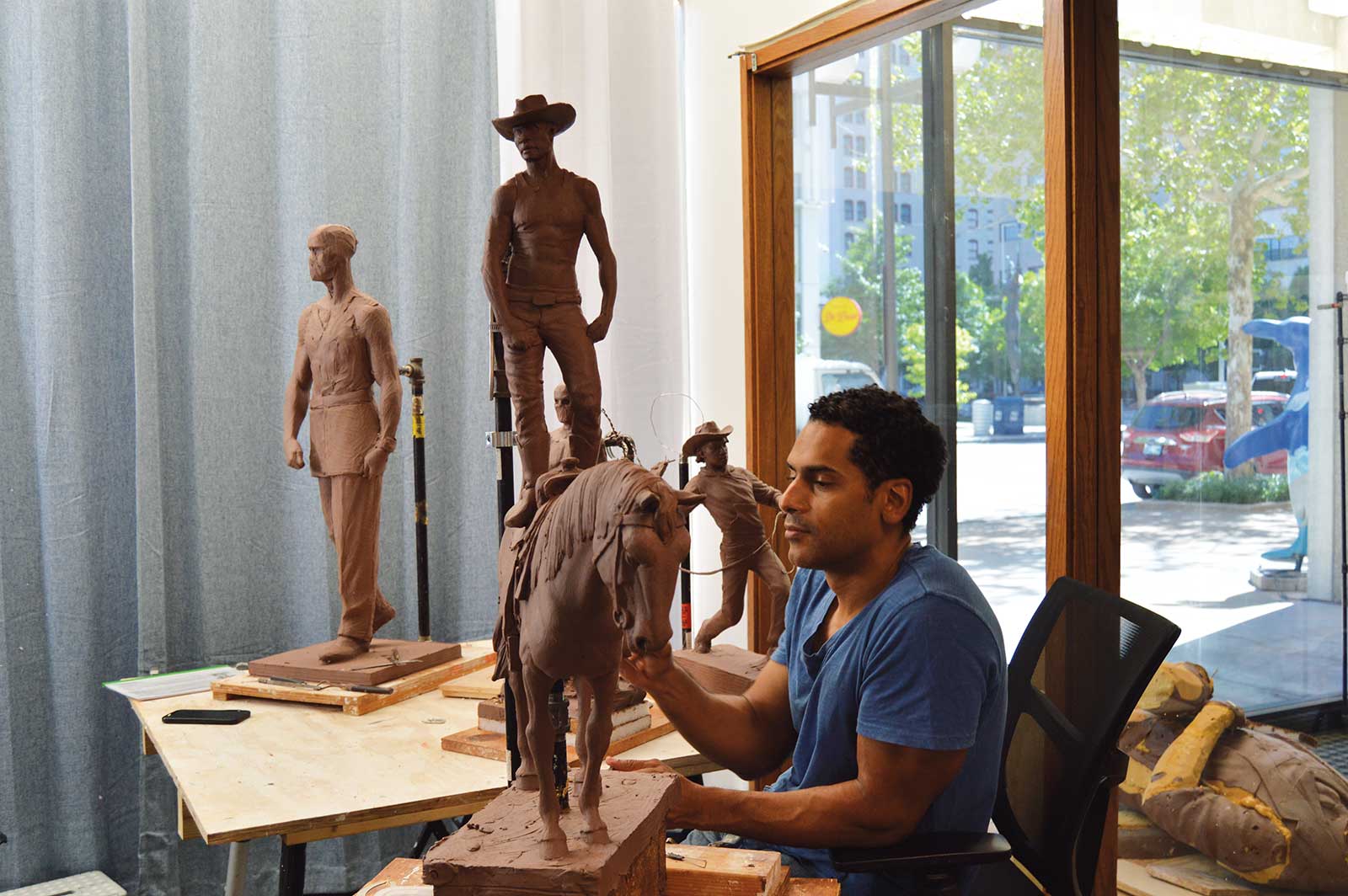
LaQuincey Reed in his Oklahoma City studio.
“When I saw that this was going on, I thought, I can stand out from everybody doing the cowboy in the yellow slicker type deal—nothing against that, but we see that a lot—whereas we don’t see a lot of Black cowboys,” Reed says. “A cowboy with dreads or a cowboy in a basketball jersey, depicting them doing different things and having a different viewpoint than what you’re normally seeing.”
Reed’s interest in art began on his grandmother’s sunporch drawing with his uncles as a kid.
“I talked to my uncles recently and I really thanked them because they gave me a path and a career,” Reed says. “You see this a lot, especially with young men, they don’t have a thing that they really love and that they can keep doing for the rest of their lives. They graduate high school or they graduate college and they’re rudderless. Fortunately for me, [my uncles] being with me and drawing with me, I’ve never been that way. I’ve always had one thing I really love and enjoy and I’ve wanted to do.”
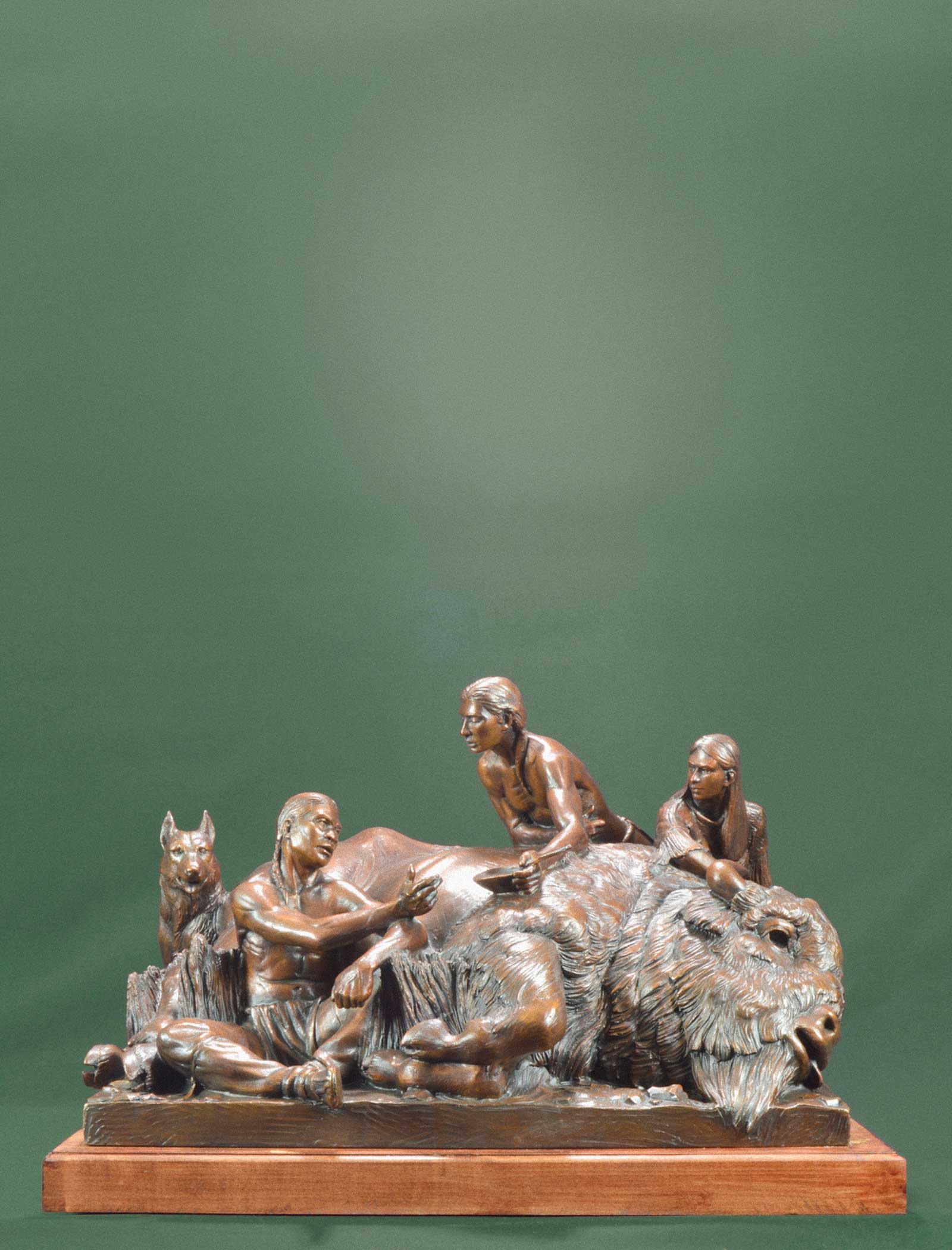
By Blood, bronze, 17 x 20 x 24 in.
Reed went on to pursue studio arts at the University of Oklahoma and along the way to graduating, learned a valuable lesson.
“I was trying to be a painter at the same time and realized I wasn’t a very good painter, but I was learning a lot about the business of sculpting—how to sculpt, how to talk to foundries, getting bids,” he says. “I had to make a conscious decision. God has laid out a path for me, you need to switch what you’re doing.”
At OU, Reed had the distinction of assisting on Paul Moore’s Oklahoma Centennial Land Run Monument, one of the largest bronze sculptures in the world and a project 20 years in the making. It can be found today on the south end of the Bricktown canal, about a mile from Reed’s current downtown Oklahoma City studio.
After college, like many artists, Reed lived the grind of full-time employment paying bills while simultaneously pursuing his artmaking.
“The most difficult thing was trying to find time. I would teach during the day and then your kid has soccer or baseball or whatever, and then you have to cook dinner and play with them, and by the time you get them down for bed, it’s like 9:30 or 10,” Reed remembers. “I worked from like 10 p.m. to 3 a.m.—trying to find that time where nobody needs you and you can just work—then I woke up at 6 in the morning to take the kids to school and get to school myself so I could teach.”
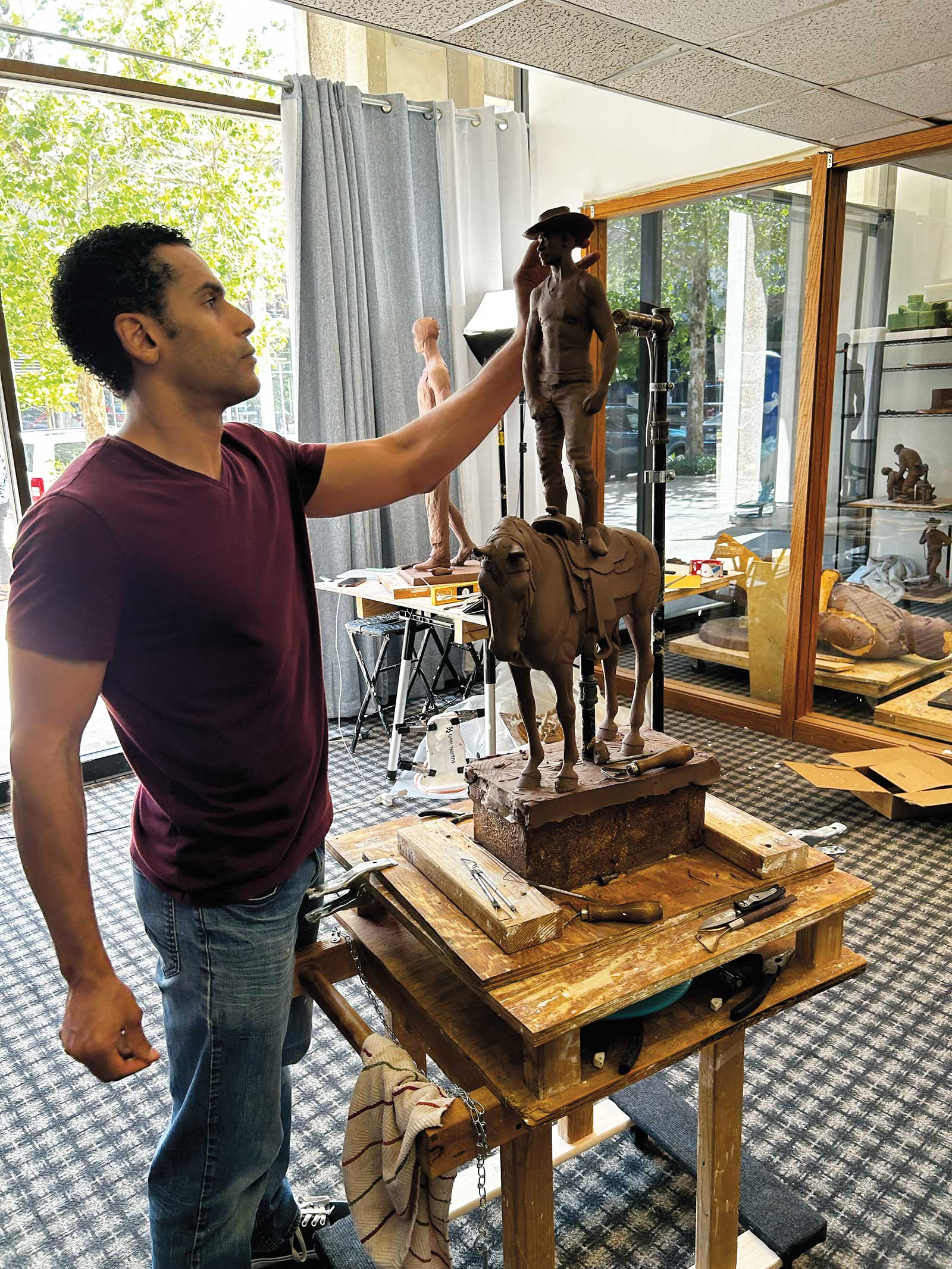
LaQuincey Reed works on the cay of a new bronze in his studio.
That hustle lasted for more than a decade for Reed, who finally made the plunge to leave teaching and commit to his art practice full time in 2022, shortly after his admission into the prestigious National Sculpture Society. An artist residency at downtown Oklahoma City’s Skirvin Hilton offering free studio space and a stipend helped him make the decision.
The residency went so well, what was supposed to be a year, stretched into two. Reed’s movie-star good looks and the in-progress, life-size sculptural pieces he was working on in his street-level studio attracted hotel guests and passersby to stop in and chat. Including the city’s mayor.
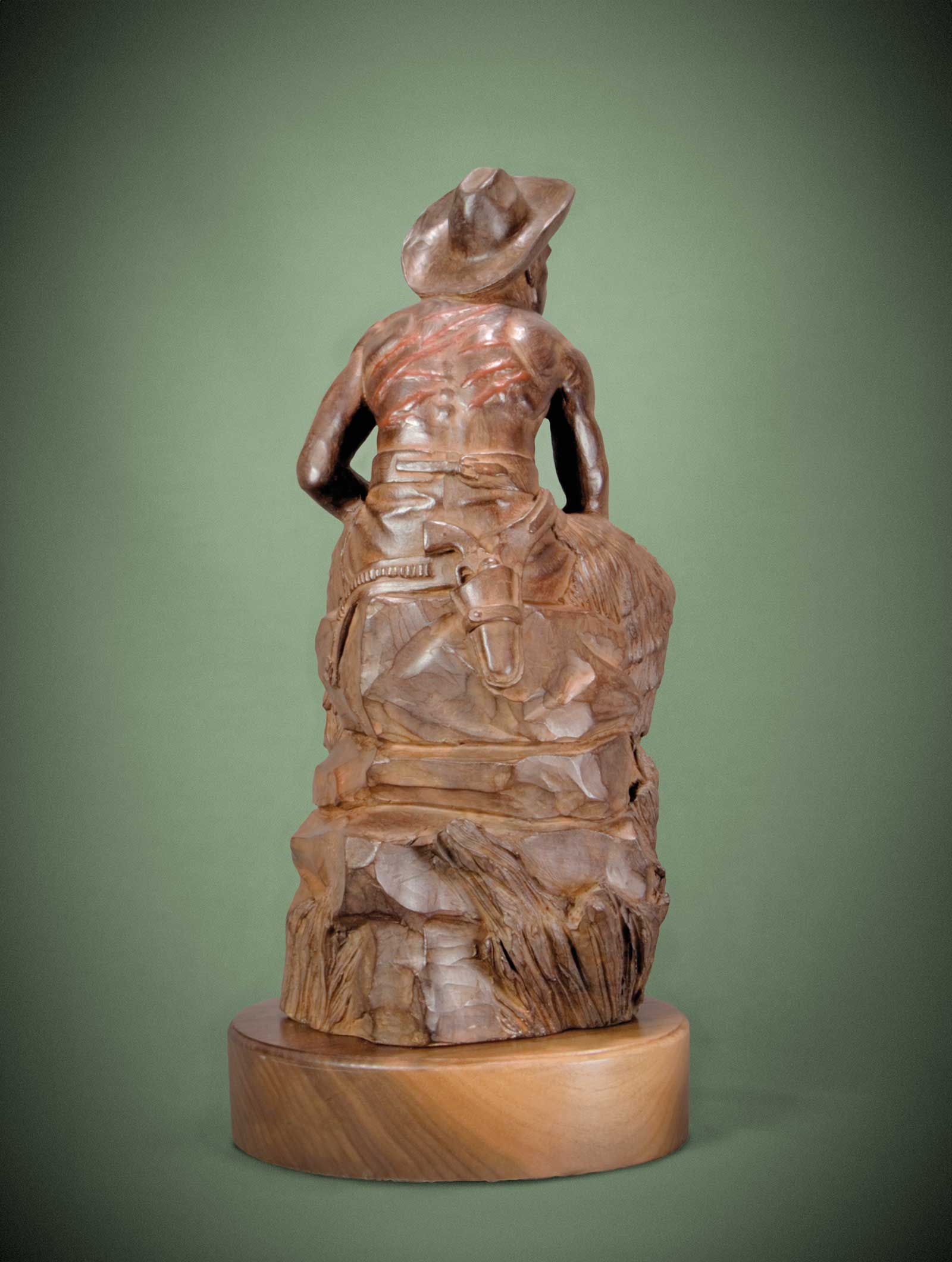
I Profit Off Me, bronze, 18 x 6 x 5 in.
Reed was further asked to host sculpture and mold-making workshops. He started a YouTube channel interviewing previous Skirvin artists in residence.
Reed’s career took off during the Skirvin residency, highlighted by three major commissions for the Oklahoma State Capitol building: Choctaw Chief Allen Wright, who suggested the name Oklahoma for the territory; Hannah Atkins, the first Black woman elected to the Oklahoma State House of Representatives; and Clara Looper, an educator and civil rights activist.
He was also contributing to an astonishing collection at Oklahoma’s state capitol. “I’d go to the state capitol and look, [thinking] it would be really cool to have a piece in here,” Reed says. “Then it felt like overnight—it was a longer process—but overnight, I’ve got three. It’s surreal to think about.”
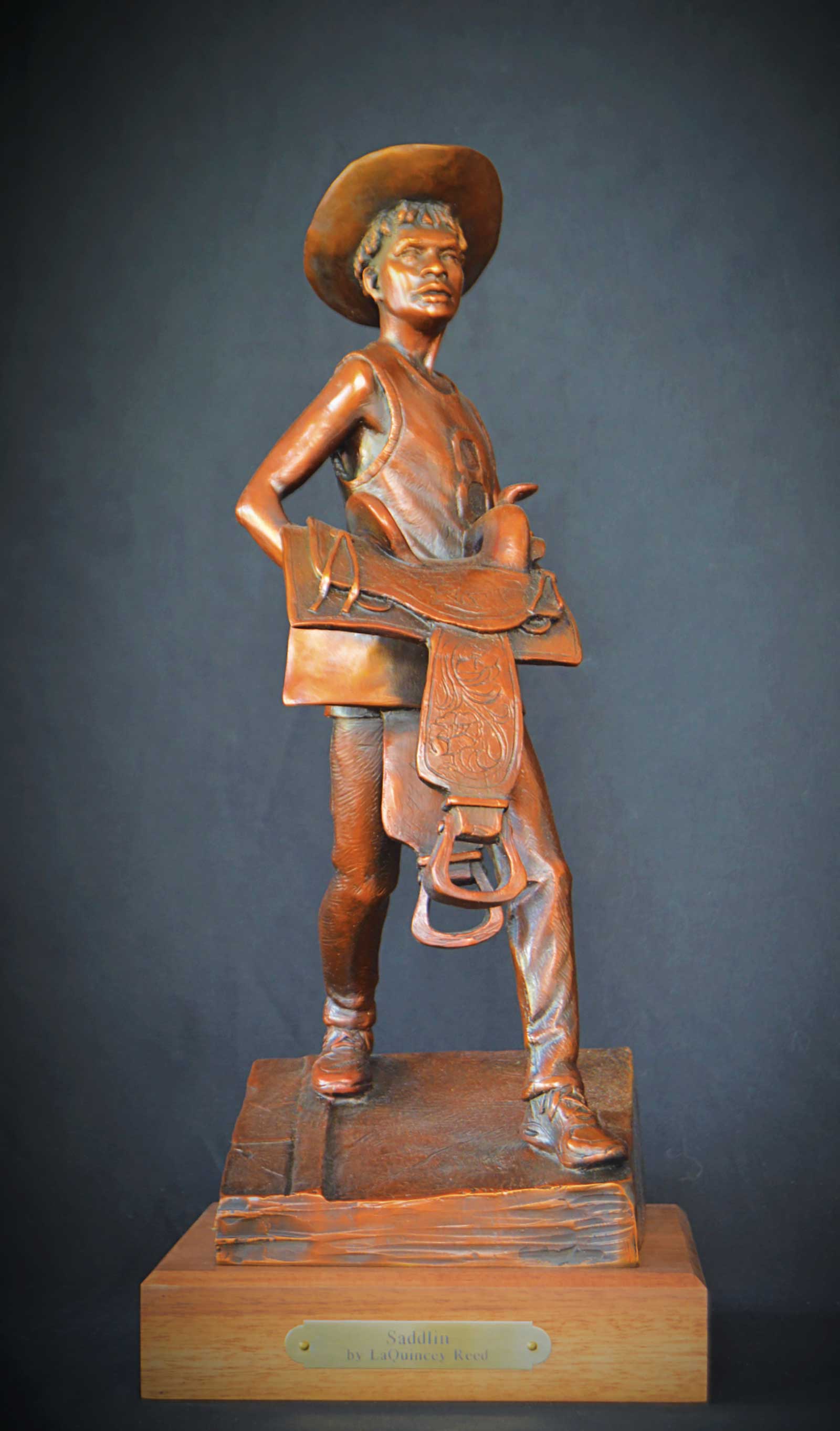
Saddlin’, bronze, 16 x 6 x 7 in.
Since then, he’s been busy. He’s currently working on a piece for the Catholic Charities of Oklahoma and one to be displayed in downtown Cheyenne, Wyoming. He used his uncles as models in an homage to them, and historic Black cowboys for a piece recently acquired by the Chisolm Trail Heritage Center in Duncan, Oklahoma. His work was featured in a spring 2024 exhibition at the Oklahoma Hall of Fame. He’ll be participating in the 40th annual Sculpture in the Park Show and Sale this August in Loveland, Colorado. In September, he’ll return to present at the Buffalo Bill Art Show & Sale in Cody, Wyoming—a show he’s attended for the past handful of years.
So Reed’s made it, right?
“I don’t know if I’ll ever feel like that,” he admits. “I feel like I’m still struggling with a lot of self-doubt, and I don’t know if I’m any good. I feel like I’m alright.”
Unquestionably, some of that self-doubt comes from the hurdle he’s yet been unable to clear: the market. Despite his success, Reed hasn’t found consistent gallery representation. “I talked to one gallery owner and he’s like, ‘man, it’s a tough sell, trying to sell Black cowboy sculptures,’” he says.
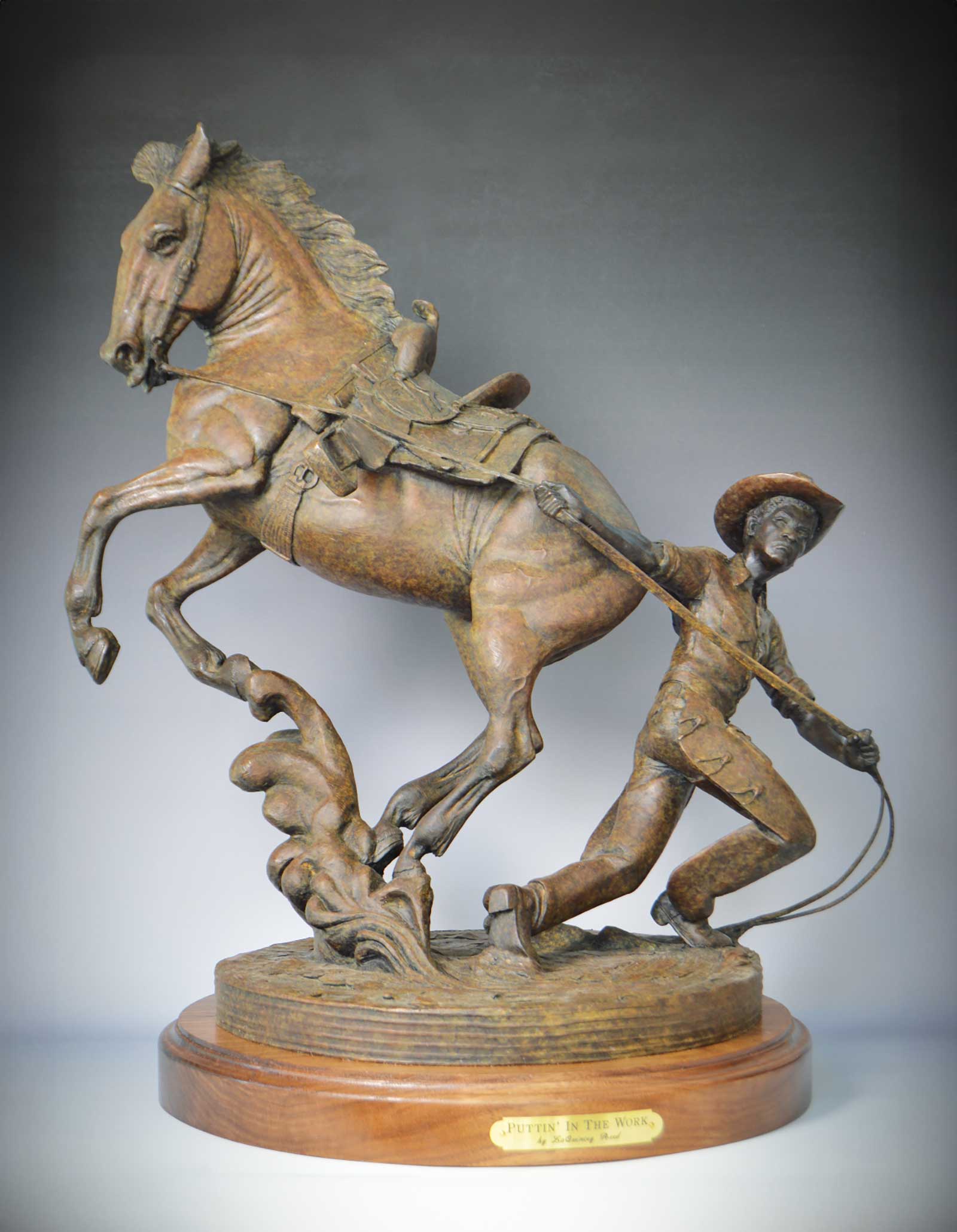
Puttin’ in the Work, bronze, 20½ x 13 x 20 in.
Sculptures are a tough sell to collectors in general due to their expense and challenges in display. Sculptures of radically untraditional subject matter, doubly so. Too avant-garde for Western; too Western for the avant-garde.
Maybe Reed should call Beyoncé, a noted art collector?
Kidding aside, tastes change slowly. That has been true in the art market for as long as it has existed. Everyone knows the famous story of Vincent van Gogh having only sold one painting in his lifetime.
At just past 40 years old, time is on Reed’s side, however. As surely as popular culture has embraced the Black cowboy, collectors will too, one day. And when they do, Reed will be there waiting. —
Powered by Froala Editor


