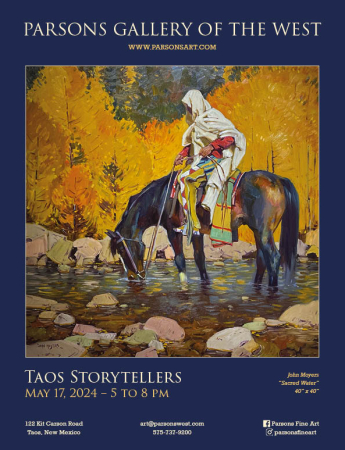
Beginning this May, Parsons Gallery of the West will host an exhibition that celebrates the impact Taos art has had on the larger world of Western art. Through the works of six living artists—Jerry Jordan, Melwell Romancito, Ron Rencher, Richard Alan Nichols, John Moyers and Roseta Santiago—the show is a glimpse at both the past and present, examining the ways in which these artists were influenced by the past masters as well as how they’re honoring visions of Taos today.
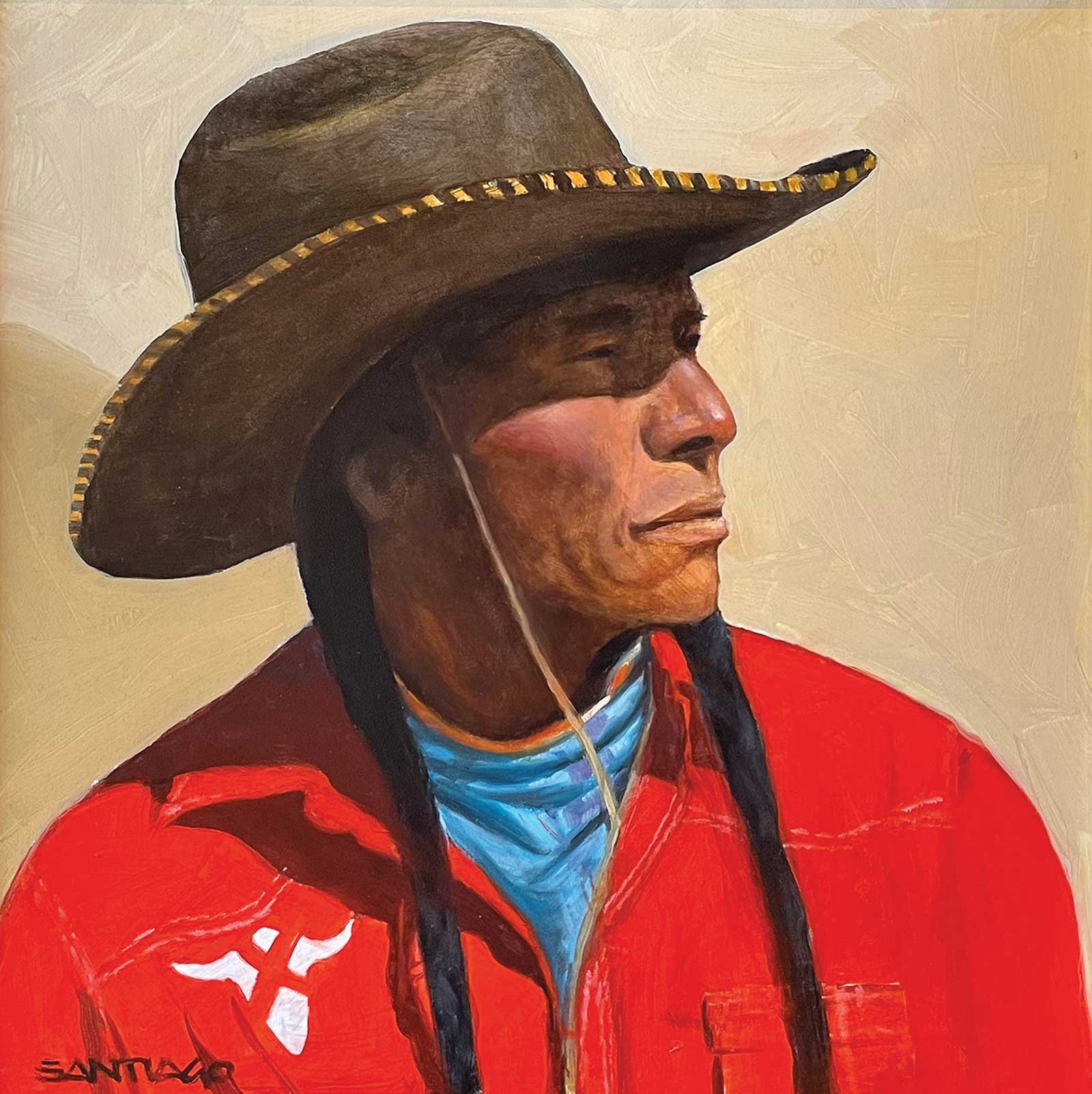 Roseta Santiago, The Wrangler, oil on panel, 12 x 12 in.
“Taos artists have historically played an important role in the creation of the Western art genre. Inspired by the natural beauty and rich culture of the area, the early Taos Art Colony, including the Taos Society of Artists and later the Taos Modernists, made our little town their home and muse,” says Anne Delling, the gallery’s assistant director. “Ever since, traditional Taos art has been highly influential, in many ways setting the gold standard for Western art…This select group of artists have been chosen for their ability to share the Taos story of today while honoring the traditional Taos art style.”
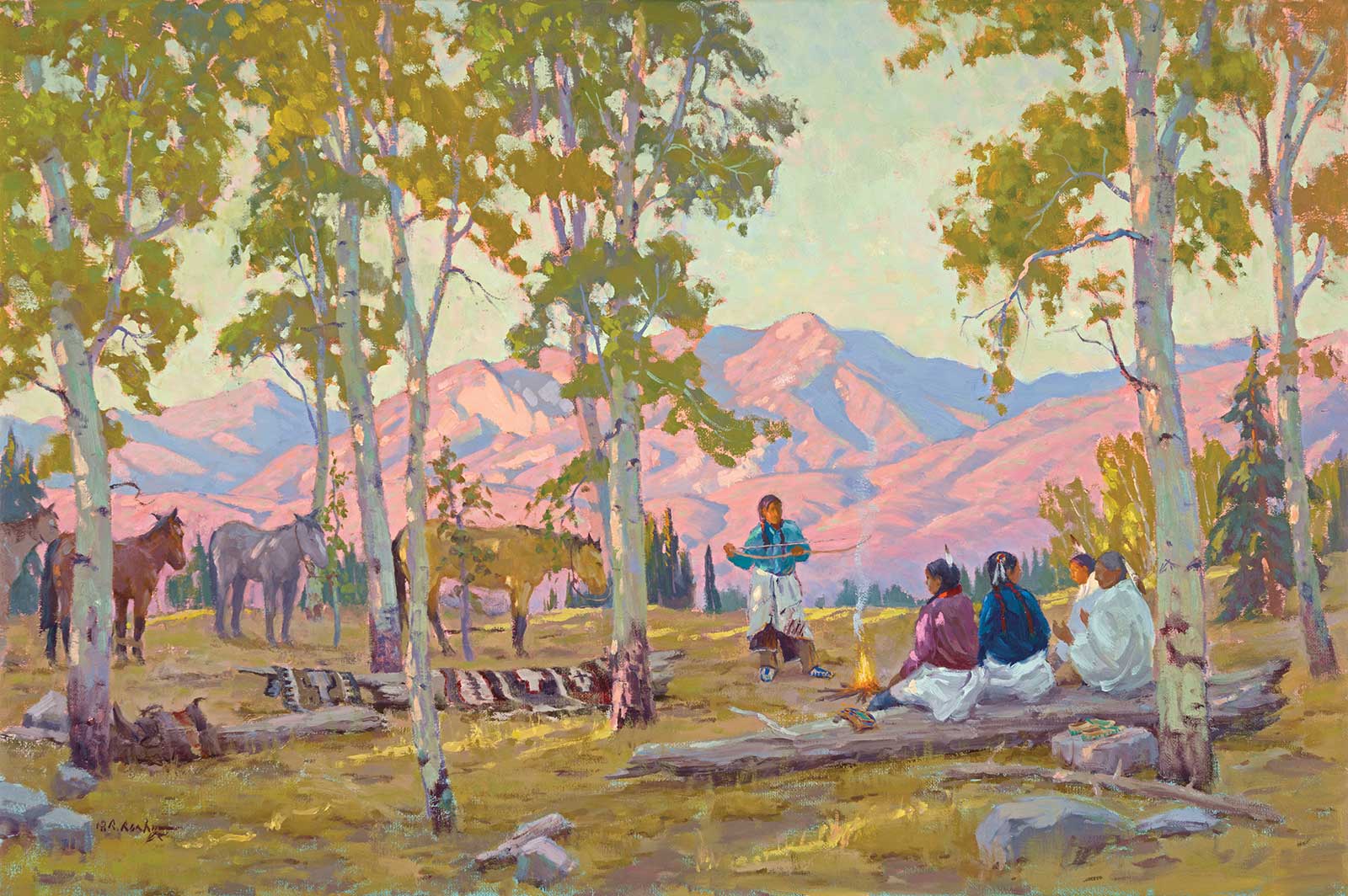
Ron Rencher, Aspen Camp, oil on linen, 16 x 24 in.
Santiago’s portrait Wrangler depicts a Native American man clad in vivid red. The piece is a quintessential example of what the artist’s work is all about: “People,” she says. “Their place in history and our current day world. Much is in place in Taos as it was portrayed by the Taos Founders painters. And as I paint my subjects today, I feel it is important to show that historic way of life as it continues today. Wrangler is a Native man who tends to his horses, [which are] his mode of travel and [make] his daily living.”
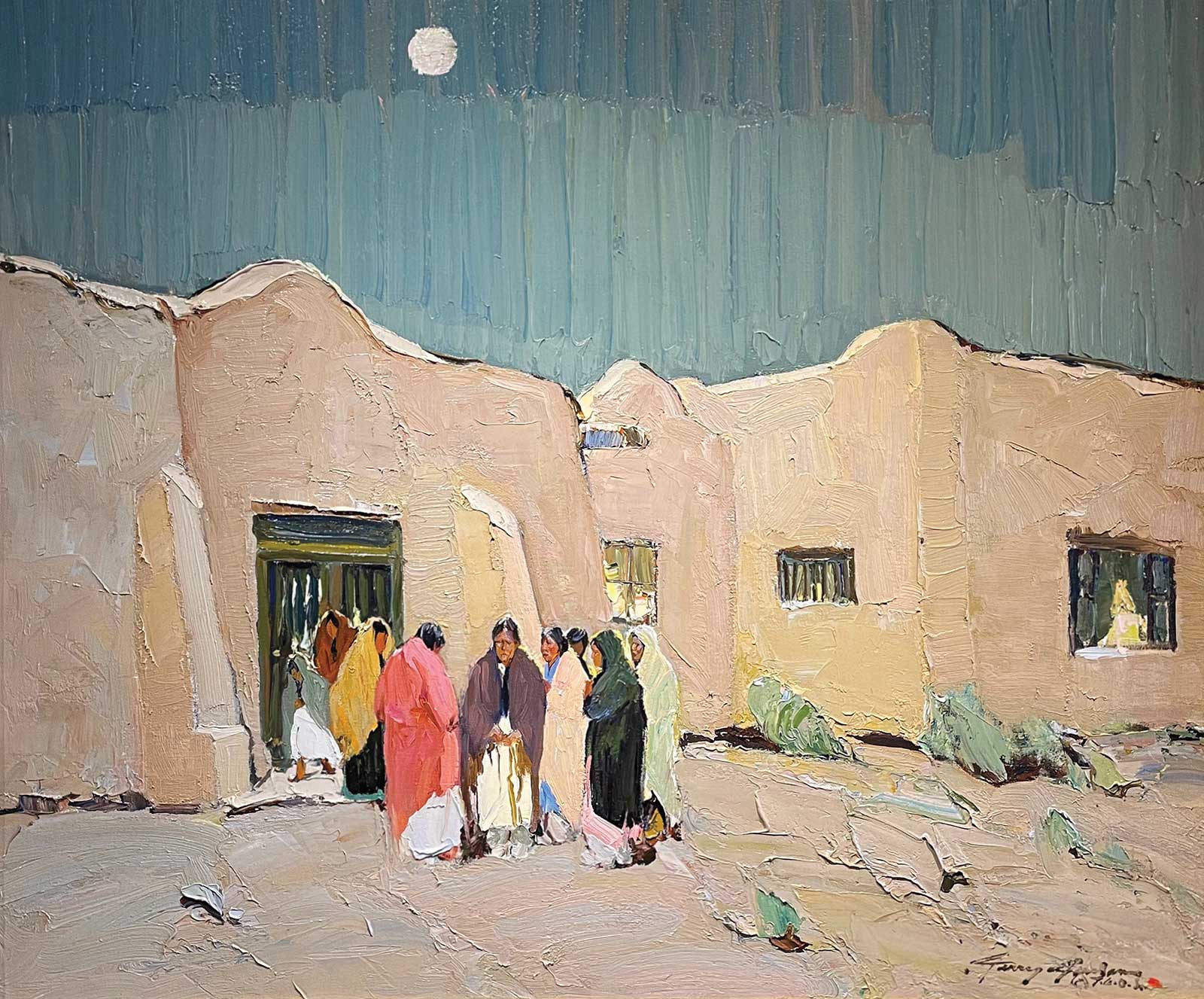
Jerry Jordan, Gathering at Millicent Rogers, oil on canvas, 30 x 36 in.
Romancito will have several paintings in the upcoming show. “My paintings will often tell a story and one that I set out to tell from the beginning. Other paintings decide what story I’m telling,” she reflects. “Landscapes tell a story, even when there are no people in the picture. When we first see that horizon it tells our restless brains we’re looking out at the world as we know it…And even though it is solid and not ephemeral like digital art, it sometimes holds a sublime scene that has no trace of humans, so no cement roads, cars or telephone poles. But still, the landscape has a story to tell for anyone who wants to listen by looking. It’s a hum of the very earth and its vibrations, the musical motif of clouds, the run of the river that we can’t see but know is just out of sight below, on the floor of the canyon.”
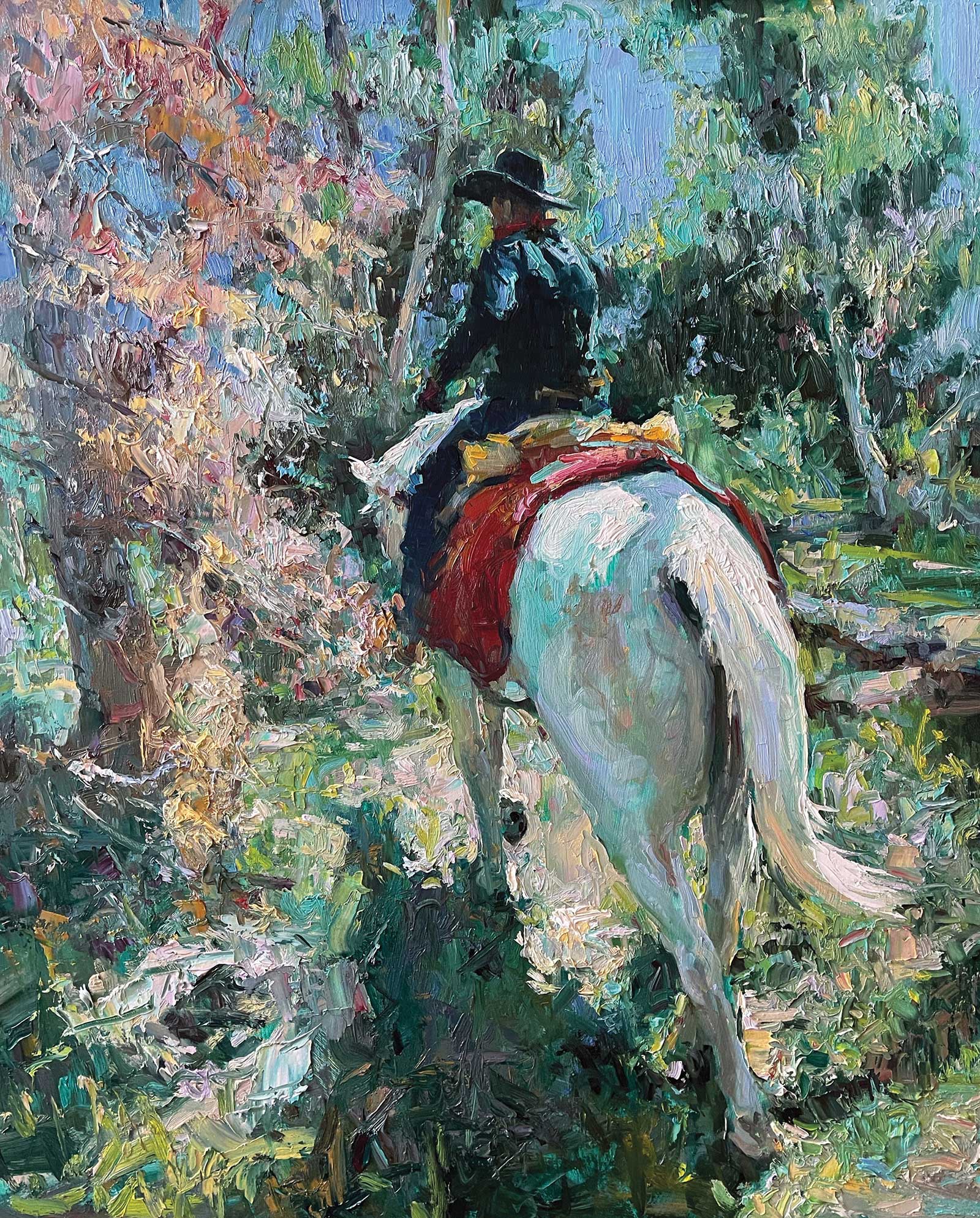
Richard Alan Nichols, Moonlight Passage, oil, 30 x 24 in.
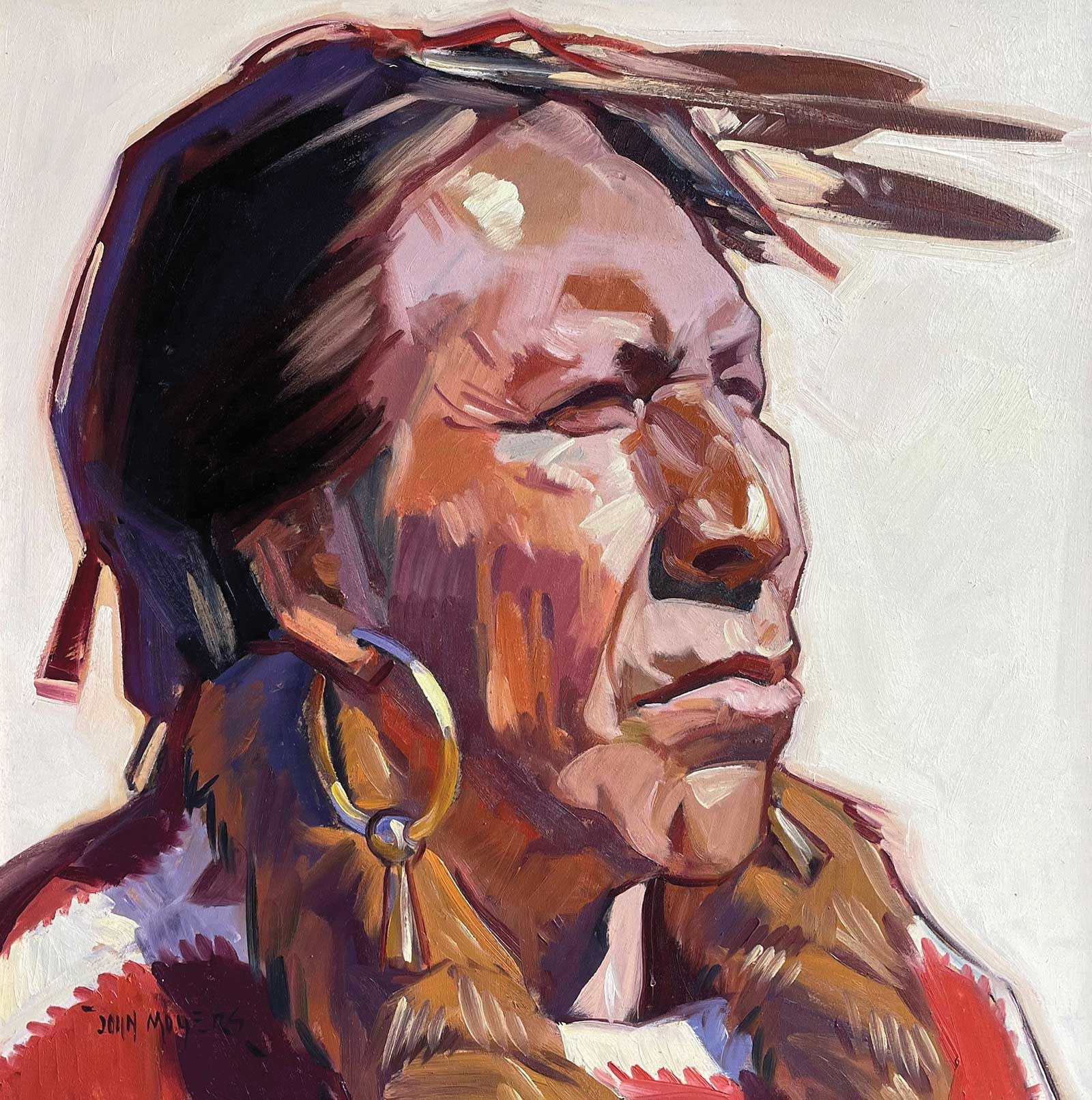
John Moyers, Crazy Horse, oil on panel, 24 x 24 in.
Rencher recently finished Aspen Camp, depicting a group of men from the Taos Pueblo who have ridden high into the mountains and set up camp among the aspens. “Generally, my Taos subject matter paintings are depictions of figures from Taos Pueblo,” he says. “Some are based on reference photos of folks from the Pueblo, others are from my own imagination. The latter are mental images that come to my mind and are, in a manner of speaking, rooted in my own experiences of trail riding and camping, while others are what I think could be these Native people’s interactions with nature (ceremonial or social), which to me are religious and reverent experiences that I imagine could or have taken place.” All of Rencher’s paintings are set in the past. “I read a statement in the book Paths to Taos and Santa Fe [that essentially said that] to the New Mexico pueblo peoples, their entire life and culture is a religious expression. Their spirituality extends into every aspect of their lives. This is something that I try to honor in my paintings.”
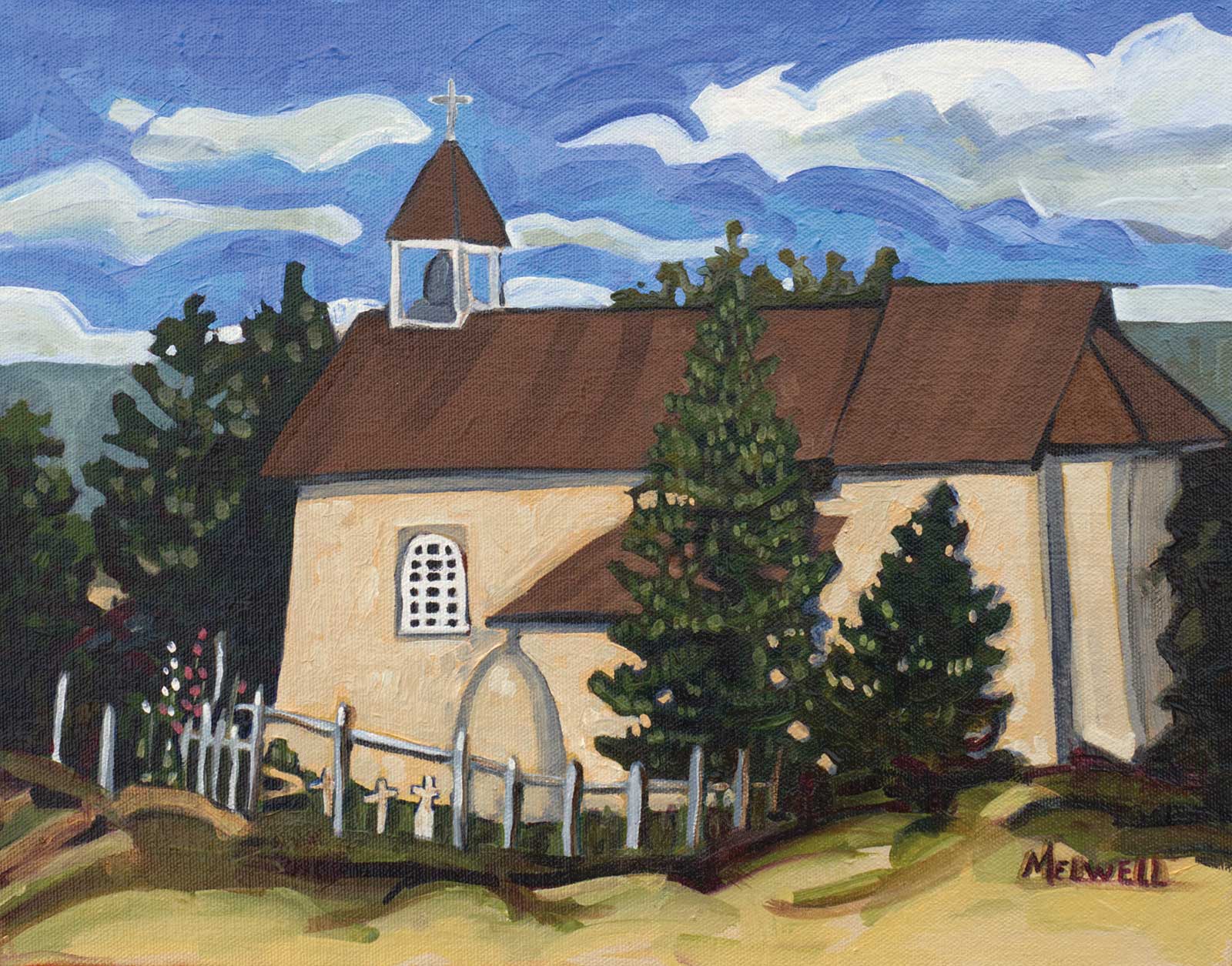
Melwell Romancito, Holy Trinity in Seco, oil on panel, 11 x 14 in.
Historic Taos Storytellers runs from May 17 to May 31 with an opening reception from 5 to 8 p.m. —
Powered by Froala Editor