Ed Mell, the iconic Phoenix painter whose artwork was a singular force in the Southwest and beyond, died February 21. He was 81 years old.
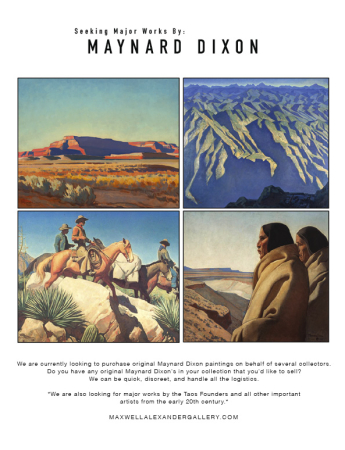
Word of his passing was headline news in Arizona, where Mell was born and where he spent more than 45 years as a professional painter. Tributes poured in from the Phoenix New Times, Arizona Republic, NPR and Arizona Highways, where Mell had contributed interior and cover images for many years. “Mell’s work was modernist, exploratory, vibrant. He captured the American Southwest in a style that was inspired in part by the likes of Maynard Dixon…but that, in due time, became inspirational in its own right,” wrote Kelly Vaughn for Arizona Highways.
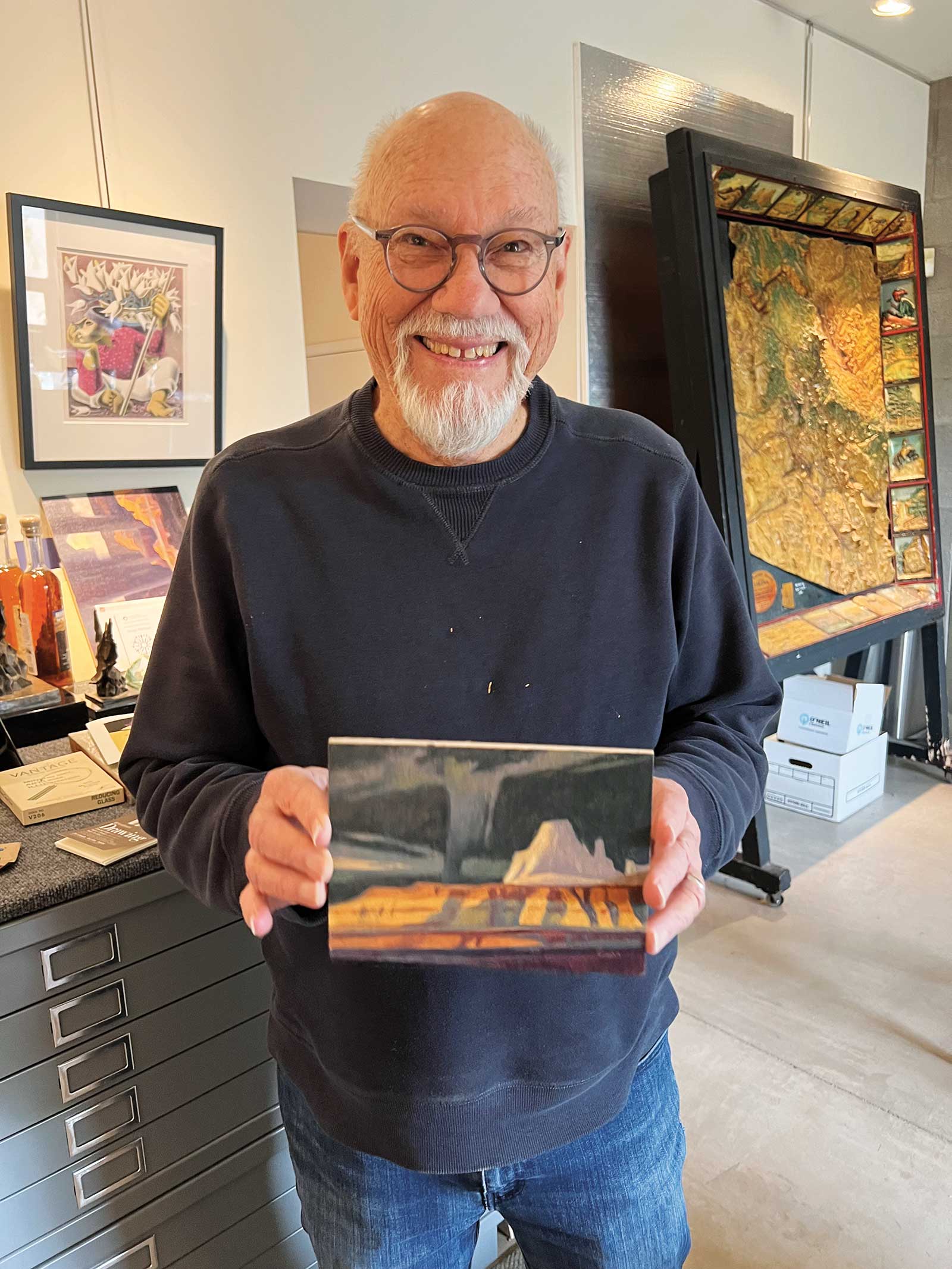 Ed Mell in his studio in 2023. Courtesy Mark Sublette.
Edmund Paul Mell Jr. was born in Phoenix in 1942. The son of a father from Minnesota and a mother from Kansas, Mell discovered art early. He made his first sculpture at just 7 years old, with clay from an irrigation ditch that ran behind the family home. Later, Mell would attend the ArtCenter College of Design in Los Angeles. In 1965, he sent a portfolio to New York and earned a coveted intern position at Young & Rubicam, one of the hottest advertising companies in Manhattan. By 1967 he had moved permanently to New York, and within two years had his own illustration studio, Sagebrush Studios with friend and airbrush artist Skip Andrews.
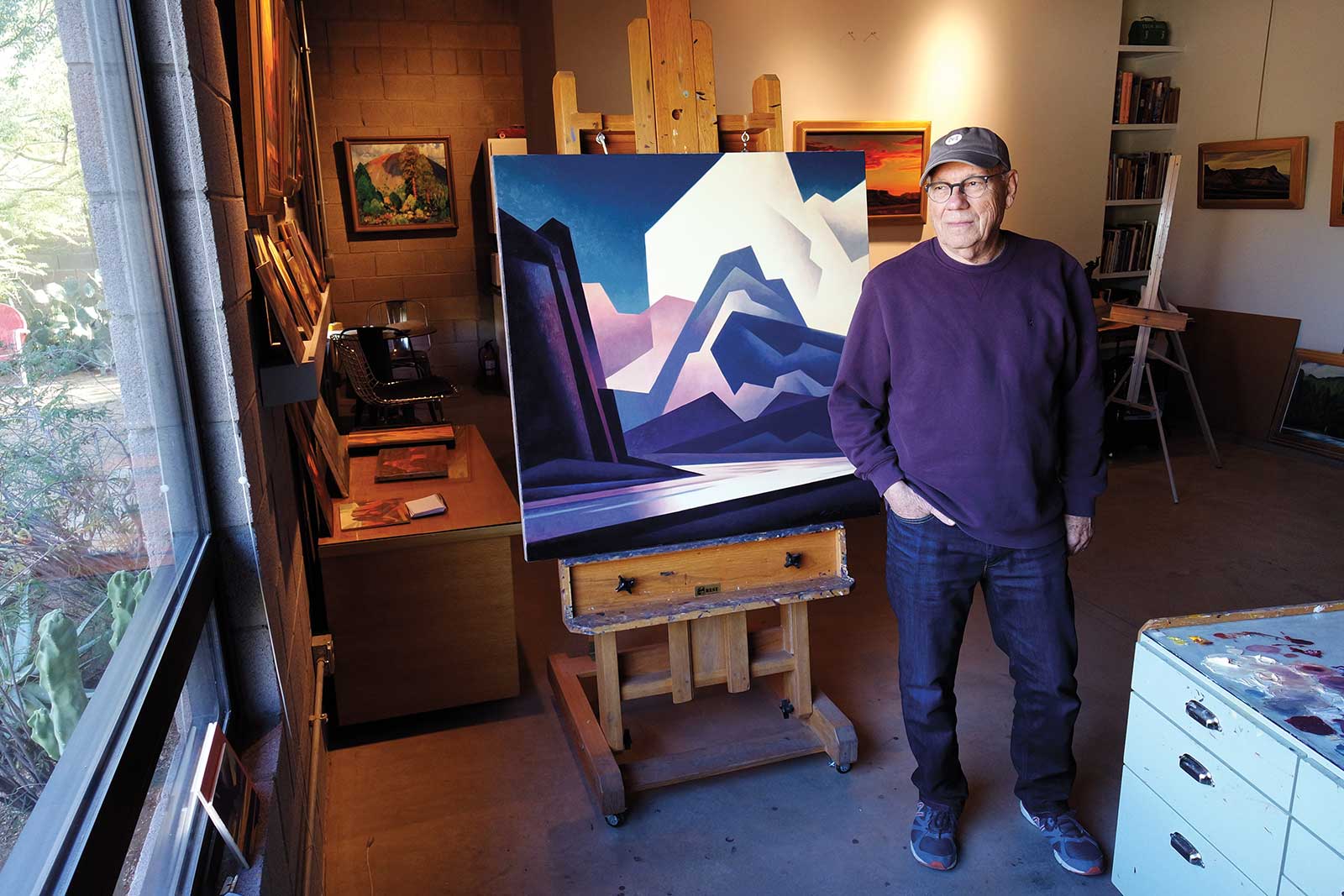
Ed Mell in his studio in 2015. Photo by Michael Clawson.
Sagebrush saw immediate success in the magazine world, with clients that included Esquire, Psychology Today and Life. Two early hits were an image of Porky Pig for Life and the infamous topless Minnie Mouse cover for National Lampoon. Walt Disney Studios sued the magazine over the cover and won, but the publicity the cover generated helped save the publication. The episode is dramatized to comic effect in the film A Futile and Stupid Gesture, about National Lampoon’s editor Douglas Kenney.
Mell grew disillusioned with the constant deadlines in the ad and illustration business, and in 1971 he took an art position on the Hopi Reservation in Hotevilla, Arizona. By 1973, after falling in love with Arizona and its beauty all over again, he was again living in Phoenix, where he would live the rest of his life.
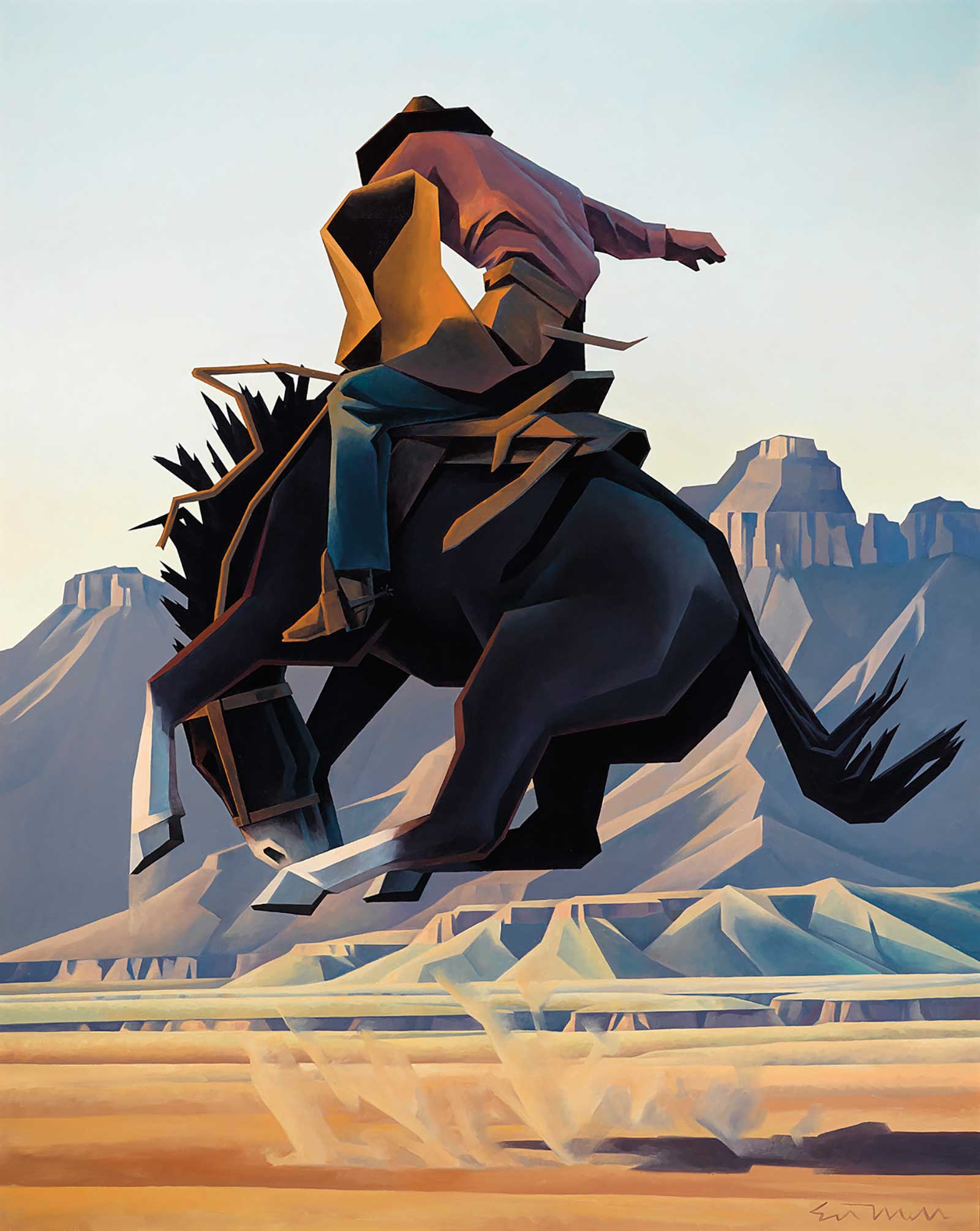
Jack Knife, 1985, oil on canvas, 60 x 48 in. Private collection.
He established a studio in a former grocery store in the heart of central Phoenix, where he would launch his fine art career. Early adventures included his friendship with helicopter pilot Jerry Foster, who flew Mell all around the state to photograph the desert and find inspiration. The art world quickly took interest in his work and soon his paintings were a hot commodity all around the West, including in Santa Fe where Arnold Schwarzenegger, on a break from filming Twins, bought Mell’s iconic gunfighter painting Square Shooter. Another highlight was the 1993 monument Jack Knife, which was installed on a roundabout in the center of the arts district in Scottsdale, Arizona. The monument was the location of a candlelight vigil following the artist’s death.
In addition to fine art, which Mell presented in numerous one-man shows every year at multiple galleries, the artist also still worked in illustration. In recent years his works have appeared on whiskey bottles, hotel murals, Arizona’s centennial stamp in 2012, a recent Nils Lofgren album cover and the set designs for Arizona Opera’s production of Riders of the Purple Sage.Mell was also a proud member of Phoenix’s active car culture, where he could leave art behind and talk about hot rods and vintage sports cars, including several that were part of his own collection.
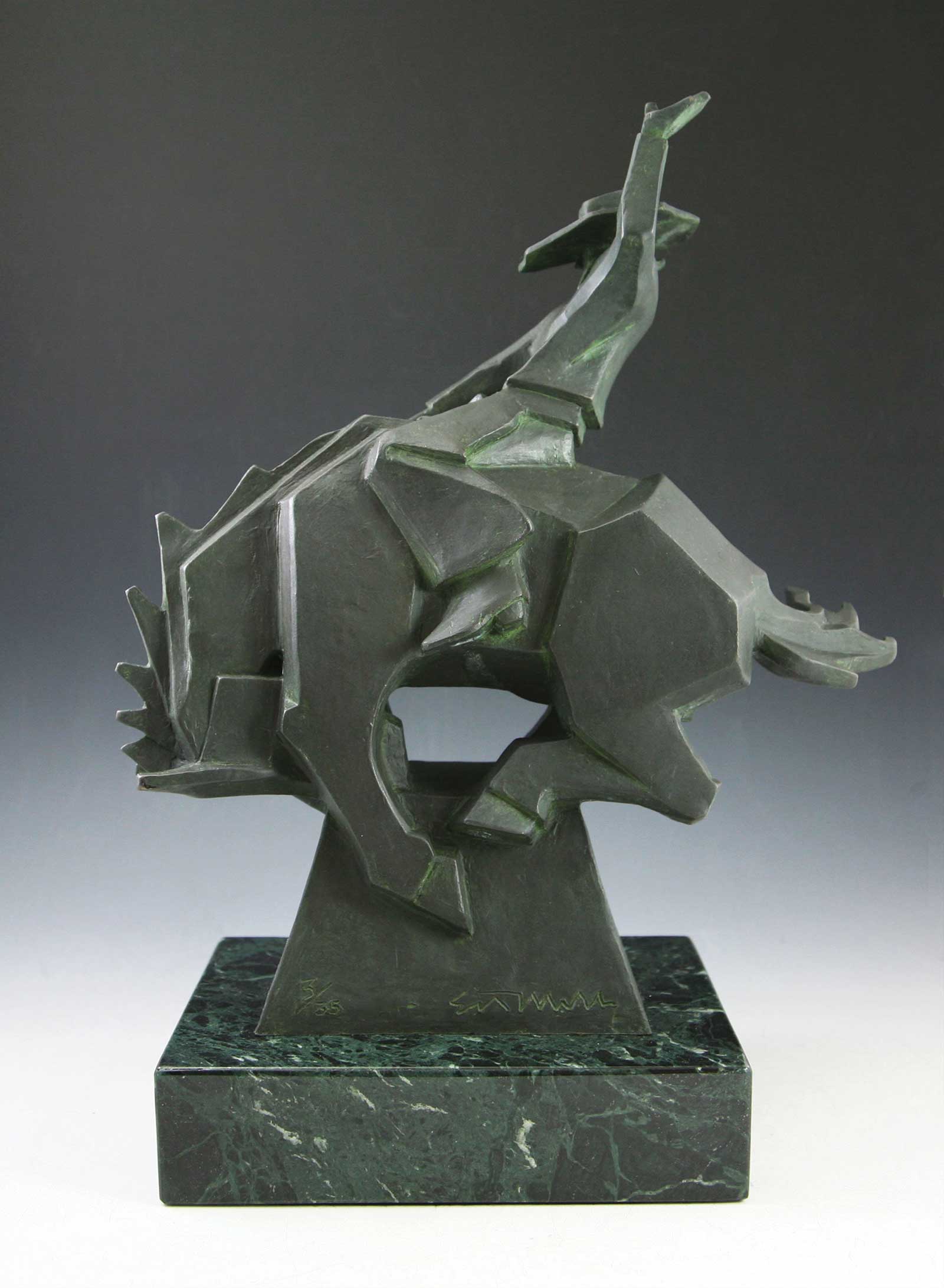
Jack Knife, maquette in bronze, for the monument in Scottsdale, Arizona.
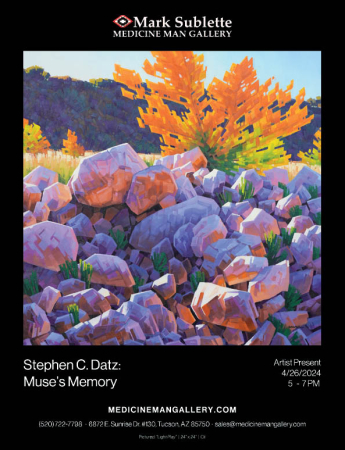
Mark Sublette, owner of Medicine Man Gallery in Tucson, Arizona, worked with Mell for more than 25 years and calls his work synonymous with Arizona, “whether it’s a bucking cowboy on his horse in the middle of Scottsdale or a beautiful sunset over the Grand Canyon, he painted the full range of subjects the state has to offer.”
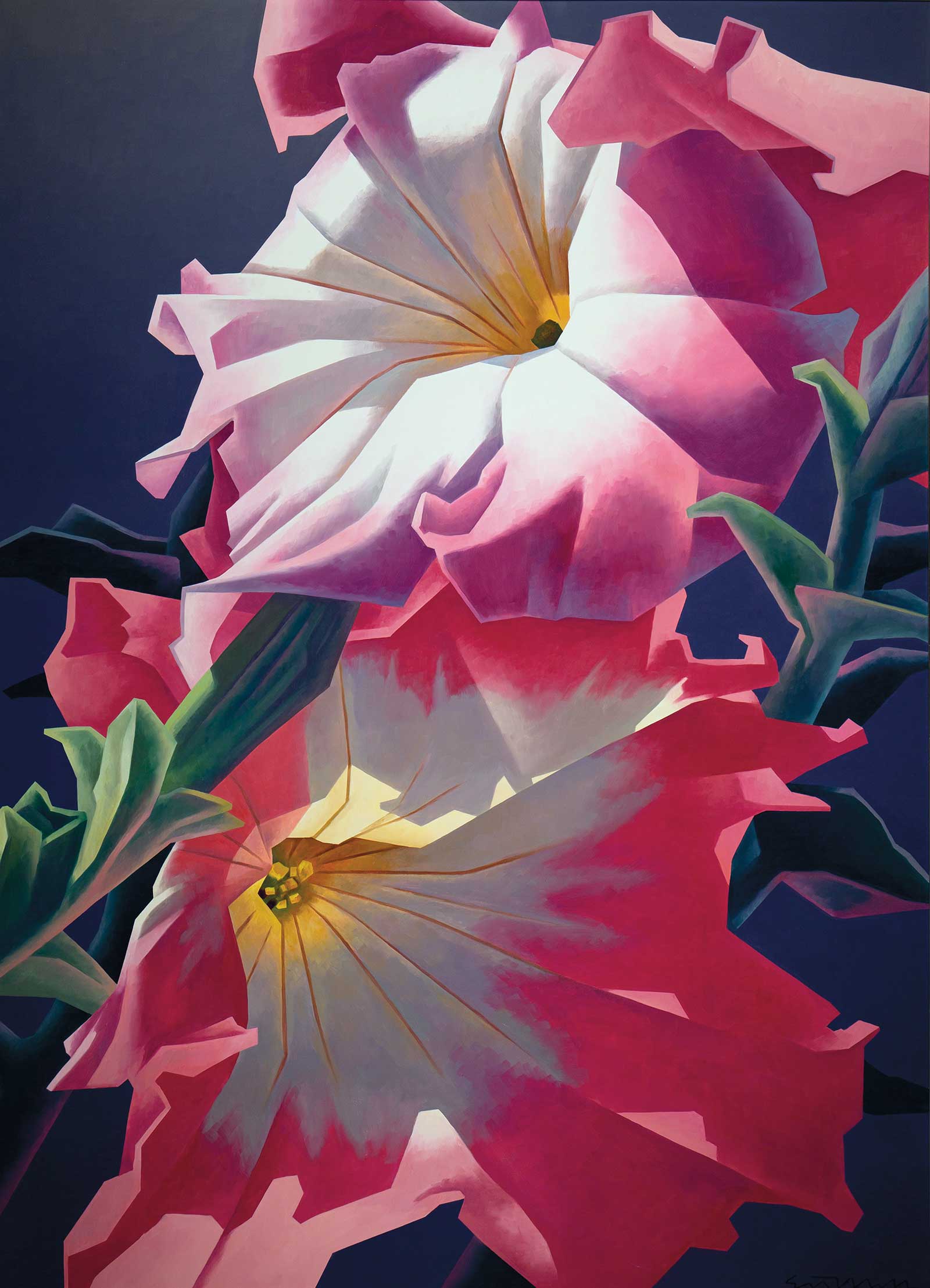
Two Petunias, 1990, oil on canvas, 72 x 52 in.
The gallery owner says Mell has a great legacy in Arizona, but also in the genre of contemporary Western art, where he was a champion and early innovator. “He is one of the building blocks of the modern West. When you talk into the stratosphere of artists who are working today, most of them would pay tribute to the trail that Ed cut through the modern sensibility of what is possible when you’re trying to interpret the West,” Sublette says, adding that he spent time with the artist three weeks before he passed. “He gave this great pearl to my son Charles. He said, ‘All great art is composed of lines, mass and texture.’ It’s those little words of wisdom that will hurt the most not to hear.”
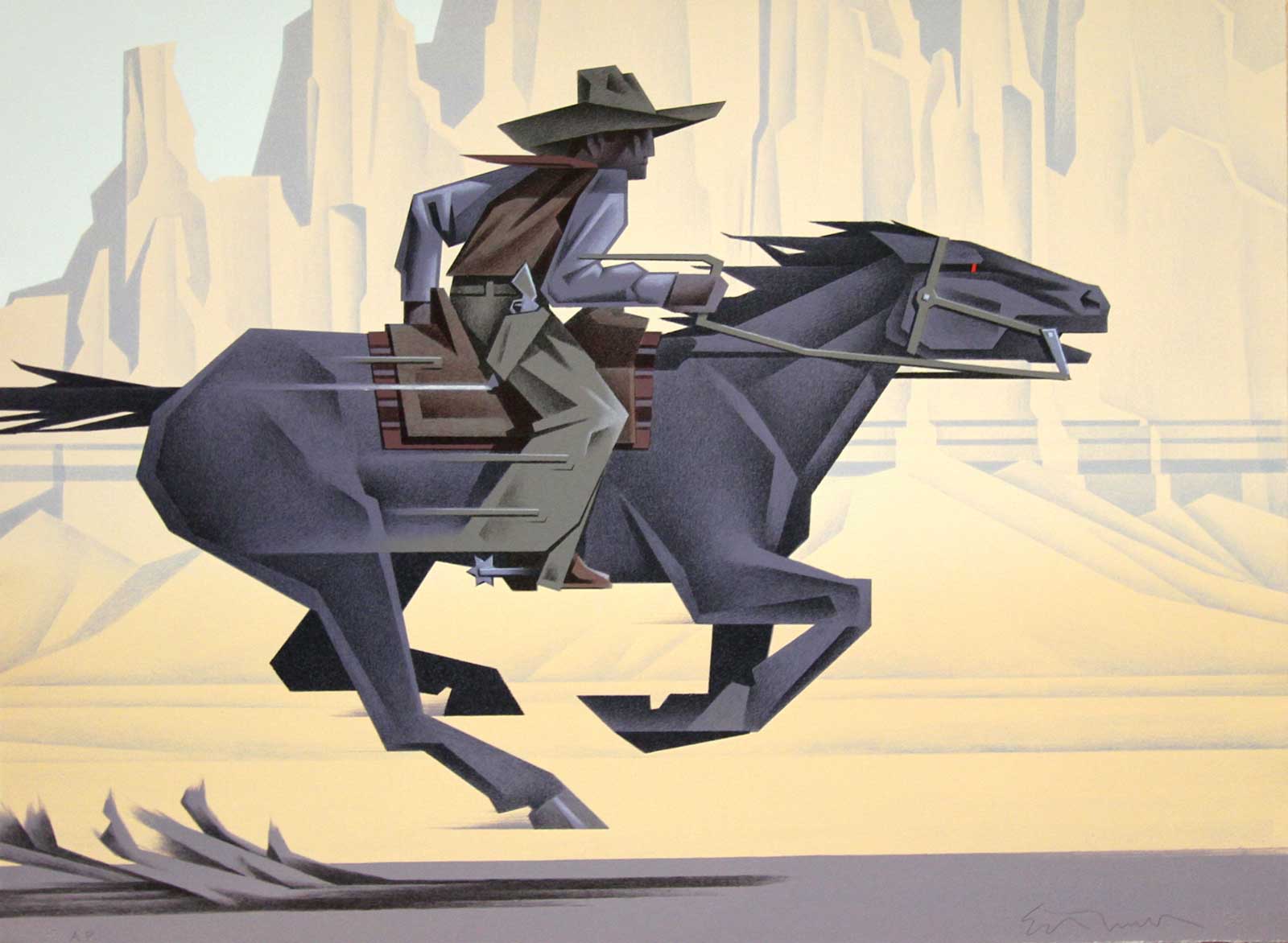 Full Speed Ahead, ca. 1985, oil, 33 x 40 in.
Gary Ernest Smith, a fellow modernist in the West, was a dear friend of Mell and remembers meeting him in 2005 when they both started showing at Overland Gallery on Main Street in Scottsdale. “The gallery he was showing at was across the street and going out of business, so I encouraged him to come over to Overland. I hit it off with him right away. He was one of the most honest guys you ever wanted to meet. He was just such a good person. His honesty was always there. Those are some of the strongest traits a person can have, and Ed had them,” Smith says. “The thing I admired about Ed, he was a true original. He was deeply influenced by Maynard Dixon and you can see it in his mesas and everything, but he grew so far beyond that, especially when you look at his abstract work. He and his work will be remembered for generations to come.”
Mell is survived by his wife, Rose Marie, and his son, television writer and producer Carson Mell. —
Powered by Froala Editor