On July 1, 1877, members of the press gathered at a Sacramento racetrack to watch a demonstration featuring Occident, a racehorse owned by Leland Stanford, the industrialist and eventual founder of Stanford University. The horse and rider came tearing down the track at full speed. They were pulling a curious contraption, a small two-wheeled cart designed to roll over a series of thin wires that would electrically trip 12 cameras positioned 27 inches apart alongside the track. As the horse galloped past, a moment taking barely more than a second, a drumroll of clicks could be heard by the viewers. The resulting images, taken via “automatic electro-photograph,” would show a single stride of a horse at a full gallop.
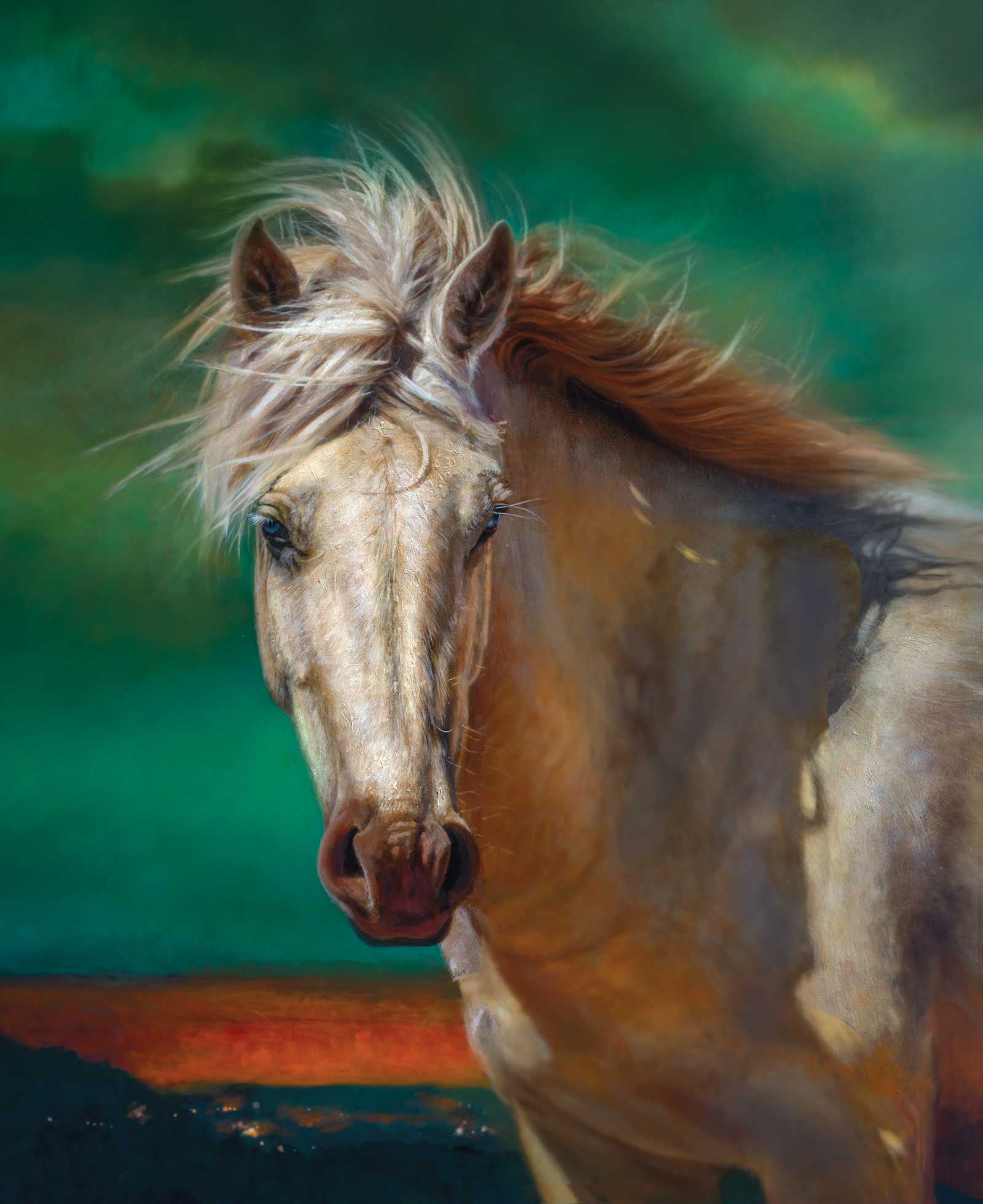 Legacy Gallery, Free Ranger, oil, 48 x 40 in., by Teresa Elliot.
Those images, and later ones with the equine subject Sallie Gardner in The Horse in Motion, were conceived and taken by Eadweard Muybridge, whose work would help pioneer high-speed photography, animation and motion pictures all in one culture-defining swoop.
But why a horse? Thank Stanford, whose beloved horses played a large role in his life. It had been said at the time that all four horse’s feet would be off the ground at a gallop, but horses moved so quickly that no one could confirm it and some remained doubtful. Muybridge provided the answer: there in the third frame is Sallie Gardner with all four feet in the air.
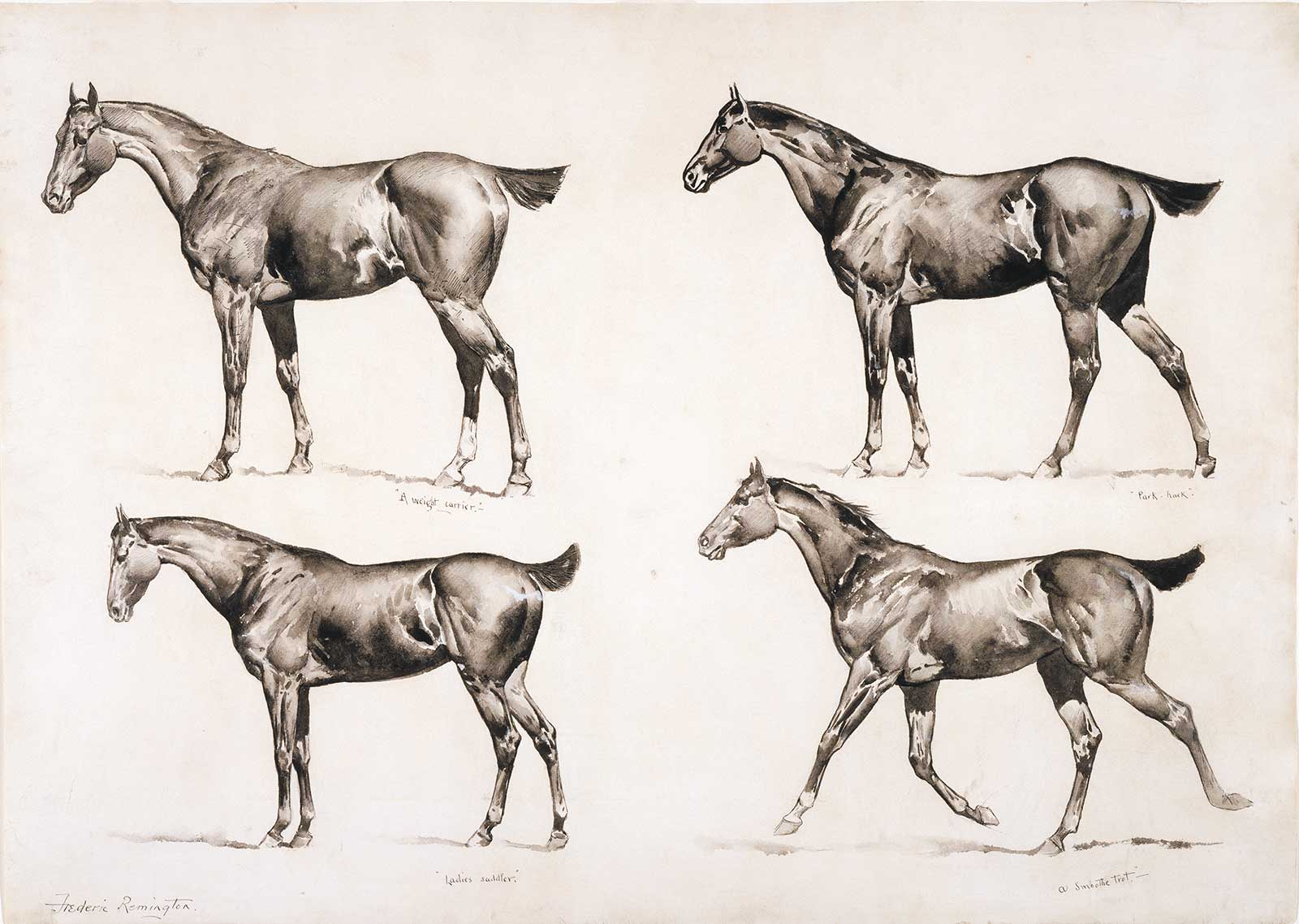
Frederic Remington (1861-1909), Types of Saddle Horses: A Weight Carrier; Park-Hack; Ladies Saddler; A Smooth Trot, ca. 1892, gouache on paper, 20½ x 29 in.
Muybridge would go on to influence countless others, including engineers, scientists, filmmakers, photographers and also artists, including Frederic Remington, who was exposed to Muybridge’s images and influenced by the locomotion of the horse. By the early 1890s, Remington was filling his studio with horse images. Sample almost any page of the artist’s catalogue raisonné and you will see his fascination, even obsession, with the horse: he regularly painted and drew horses in profile, in full gallop, rearing up on back legs, lunging forward in a buck. A good portion of the images have riders, but many more are just the horses with little to no narrative. Cowboy horses. Fox-hunting horses. Military horses. Bull-fighting horses. Racing horses. Horses in every pose, every color, every variety and in every type of saddle imaginable.
Born just 10 years before the death of Remington was Olaf Wieghorst,who would come to share in Remington’s obsession and adoration of the horse. While Remington’s interest was more academic and precise, Wieghorst’s interest grew more out of personal experience. After arriving in the United States from Denmark in 1918, Wieghorst promptly joined the Army with the 5th Cavalry. Later he would serve as a mounted police officer in New York City. By the time he started working in Western art, he had spent a good portion of his life on a horse. “Horses have been my life,” he said.
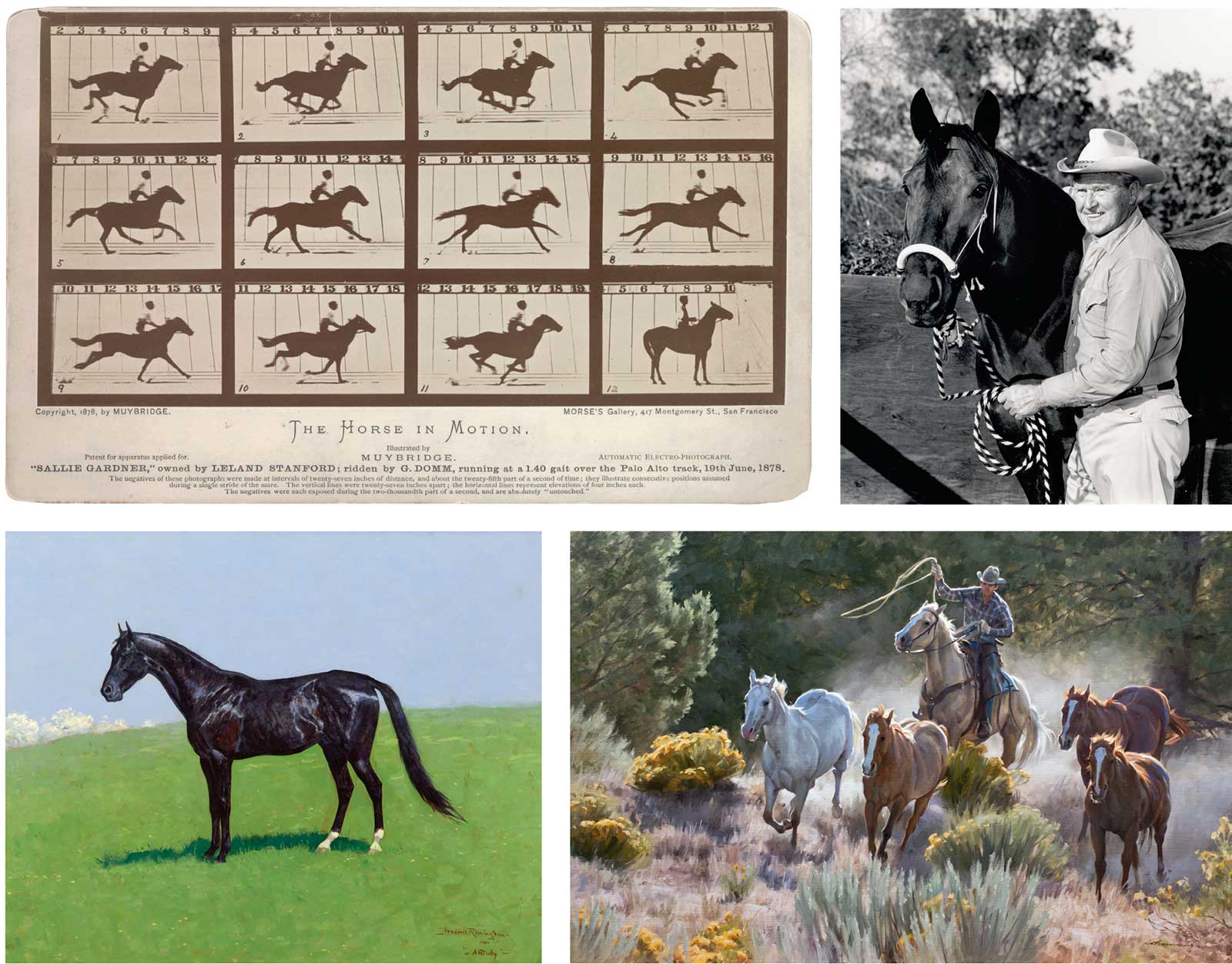
TOP: Eadweard Muybridge (1830-1904), The Horse in Motion, 1878, cabinet card with 12 photographs; Olaf Wieghorst and one of his horses. BOTTOM: Frederic Remington (1861-1909), Study of Bellini, A Trotter, oil on canvas, 32 x 40 in.; Legacy Gallery, Rousting the Hideouts, oil, 30 x 46 in., by Tom Browning.
Muybridge, Remington and Wieghorst—none of them invented the horse as a subject matter, but each brought unique qualities of horses to life through their works. Today, their contributions are still reverberating as art continues to pay tribute, document and romanticize the horse as a subject of the West. The fascination, appreciation and obsession still runs deep today.
Continue reading to hear more insights behind the creation and inspiration of equine subject matter, while garnering advice on establishing or adding to a collection.
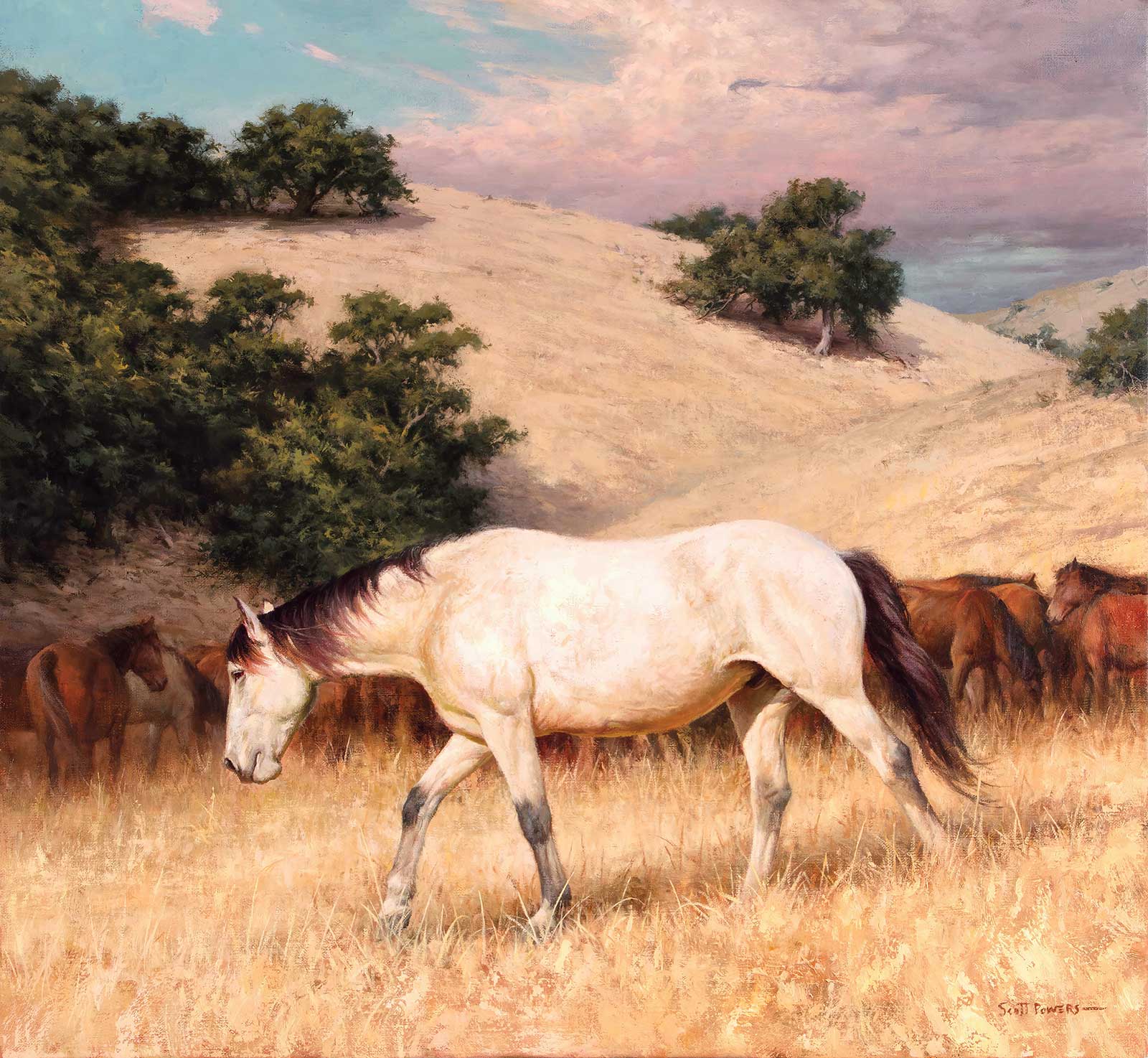
Legacy Gallery, California Gold, oil, 24 x 26 in., by Scott Tallman Powers.
“Over time, the relationship between humans and horses has undergone significant transformations, influencing both species in profound ways,” shares representative at the Phippen Museum. “Humans have selectively bred horses to enhance their speed, strength, size and stature. Yet, horses have also had a transformative impact on humanity. Our methods of transportation, trade, recreation, labor and even warfare, have all been impacted by our partnership with these magnificent creatures. Arguably, horses have played a pivotal role in shaping the course of human civilization unlike any other animal.”
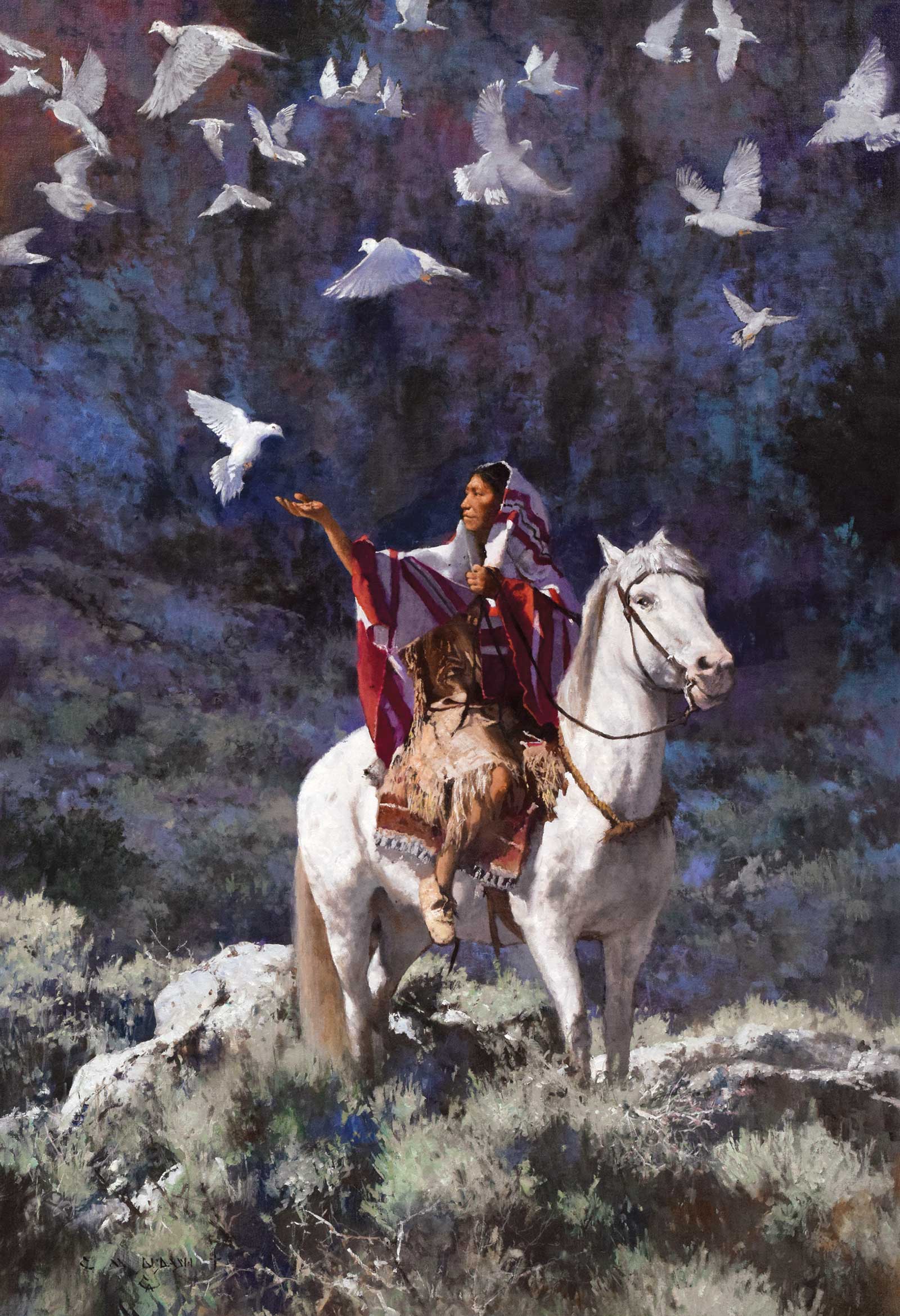
National Cowboy & Western Heritage Museum, Flight of the Dove, oil on linen, 50 x 34 in., by C. Michael Dudash.
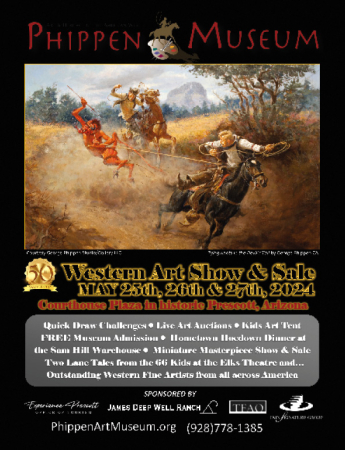
As a tribute to the remarkable history of horses, the Phippen Museum proudly announces the return of its highly anticipated annual event, Hold Your Horses! Invitational Show & Sale. The exhibition showcases the work of 39 esteemed artists celebrated for their depictions of the equine form. Among them is Julie Nighswonger, the recipient of the People’s Choice Award in the 2023 show, who is recognized as this year’s featured artist. Collectors and Western art enthusiasts are invited to view a digital gallery showcasing these exquisite artworks, with purchases available either in person or by contacting the Phippen Museum directly.
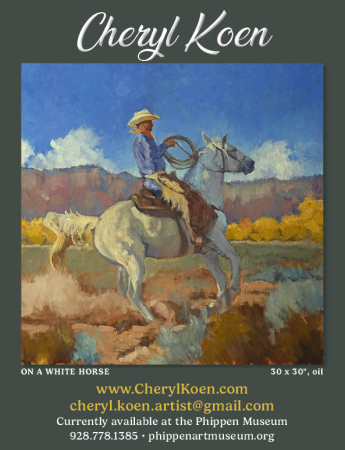
Artist Cheryl Koen, who has paintings currently available at the Phippen Museum, evokes the West of the past with paintings like Wild Mustangs,pictured here. Drawing inspiration from the works of icons like Maynard Dixon and James Reynolds, Koen captures the image of horses in their ability to roam free, form bands and be one with the land. “Mustangs are descendants of the horses the Spanish brought to America in the 1400s,” she explains. “They changed the West by enabling Native Americans to hunt and travel on horseback. Mustangs are known for their stamina and intelligence.”
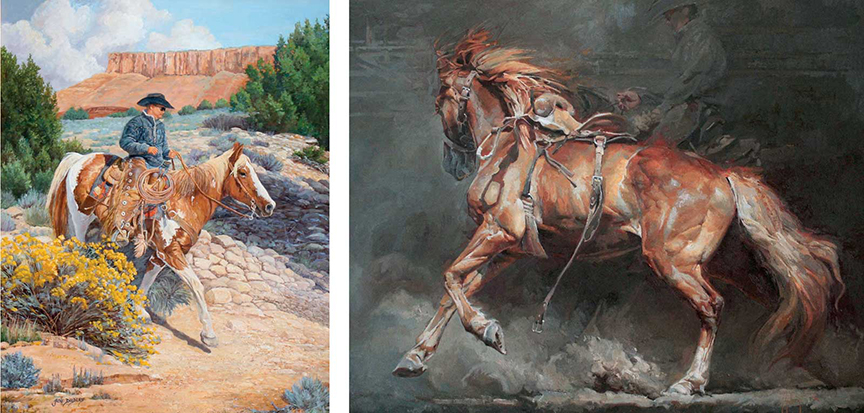
Phippen Museum, The Descent, acrylic, 20 x 16 in., by June Dudley; National Cowboy & Western Heritage Museum, Runnin’ on Empty, oil on linen, 36 x 44½ in., by Abigail Gutting.
Koen combines her love of the high desert landscape and rich color—conveying a high noon sensibility—in her depiction of horses on the run. The artist’s thick brushwork blends impressionist and realist influences. Koen’s work can also be found at the La Posada in Santa Fe, New Mexico.
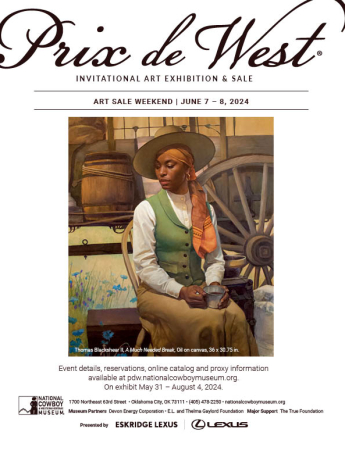
Since 1973, Western artists and art collectors have gathered at the National Cowboy & Western Heritage Museum for the Prix de West, the nation’s premier Western art exhibition and sale. The 52nd annual Prix de West Invitational Art Exhibition & Sale will be on exhibit and open to the public from May 31 to August 4, with the popular sale weekend held June 7 to 8.
For this year’s event, 90 artists are expected to attend, including new artists Tony Abeyta, Dan Friday, Abigail Gutting, Brett Allen Johnson, Jerry Jordan, Mary Whyte and Kim Wiggins. Art Sale Weekend will include artist seminars, workshops, a cocktail reception, a live auction and an awards dinner on Saturday, June 8.
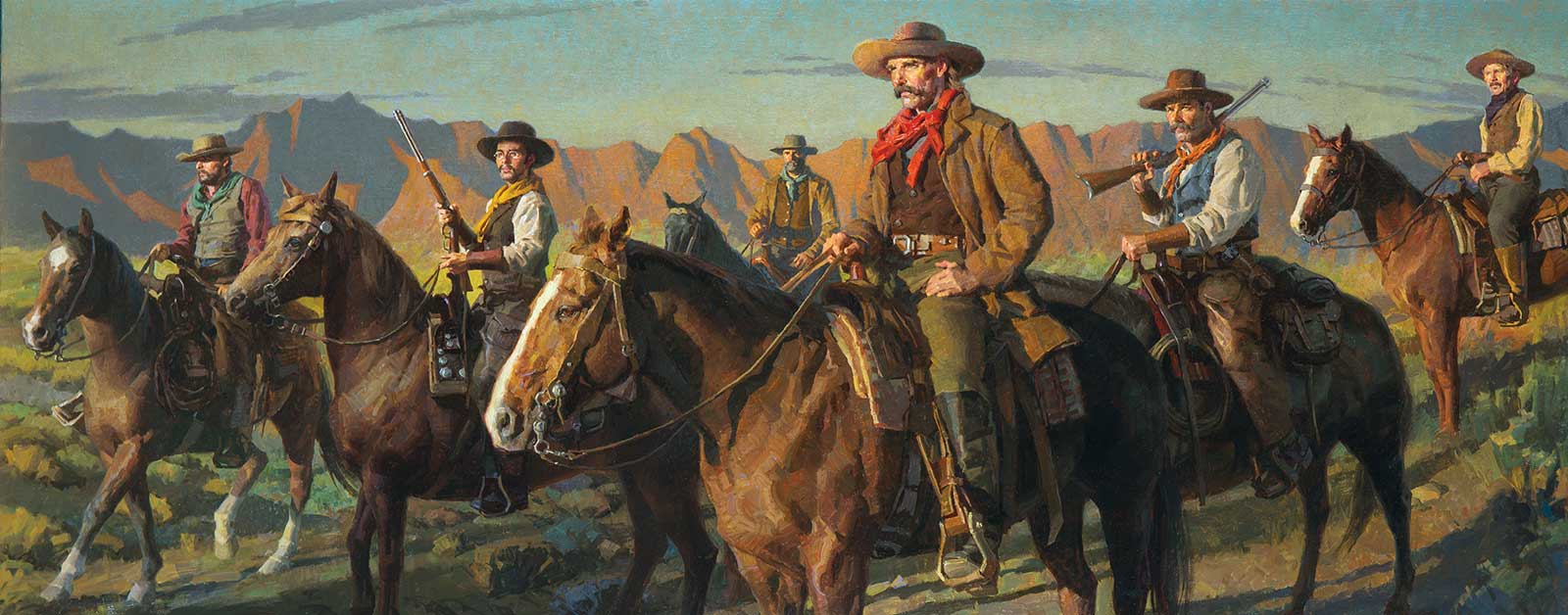
National Cowboy & Western Heritage Museum, Teddy Roosevelt and His Elkhorn Riders, 1884, oil on canvas, 20 x 50 in., by Morgan Weistling.
Collectors can expect to find works ranging from historical subject matter that reflects the early days of the West, to more contemporary and impressionistic artistic expressions—including “art of the horse.”
In the graceful gallop of a wild mustang and the silent patience of trusty steeds under a brilliant Western sky, you can find the heartbeat of artists like Teresa Elliot, Tom Browning and Scott Tallman Powers—represented by Legacy Galleryin Scottsdale, Arizona. “They are all whispers of dust and spirit, capturing the essence of equine nobility in their natural splendor,” says Cyndi Hall, gallery general manager. “It’s not just an homage to these majestic creatures, but a celebration of the untamed, unfettered soul of the West that they represent.”
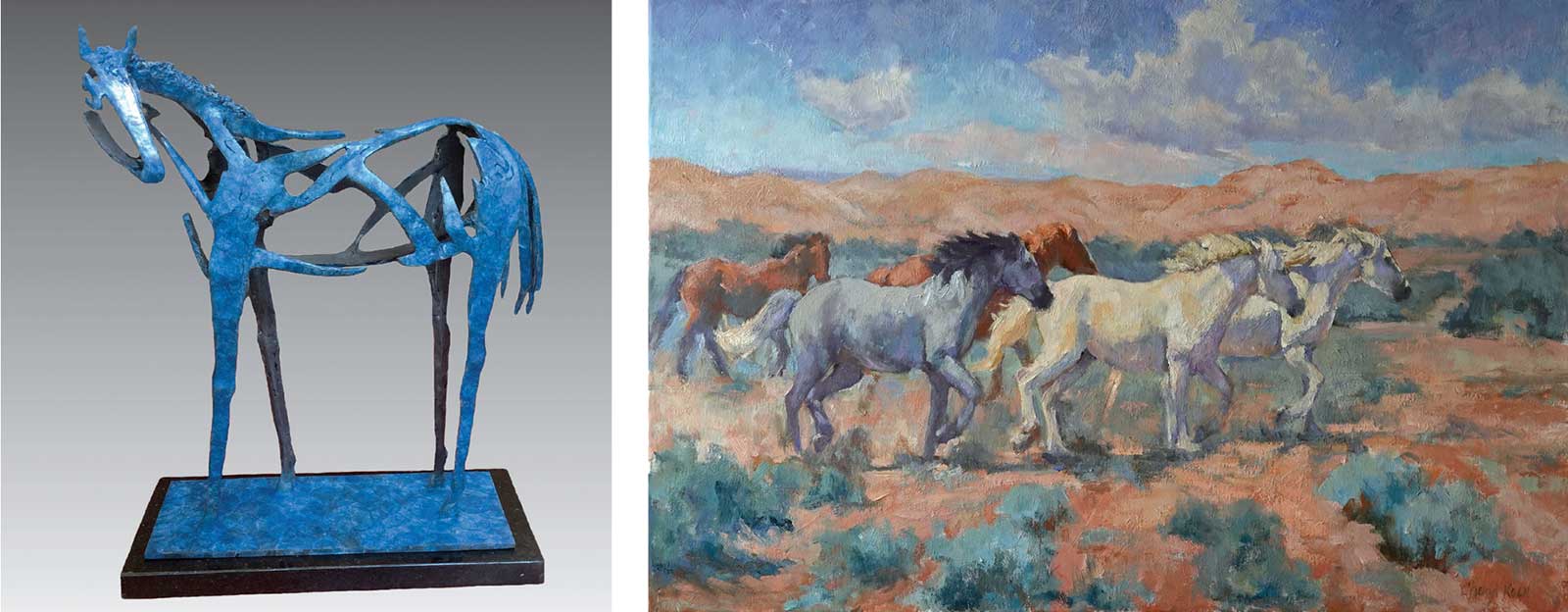
Phippen Museum, A Second Look, bronze, 15 x 12 x 7 in., by Al Glann; Cheryl Koen, Wild Mustangs, oil on linen, 20 x 30 in.
When it comes to collecting, Hall’s advice is simple and straightforward: “Allow your heart to lead you. Artworks within the equestrian genre hold a power, an almost ethereal allure that commands a space. Look for the art that speaks to you, that captures a moment or emotion that resonates...”
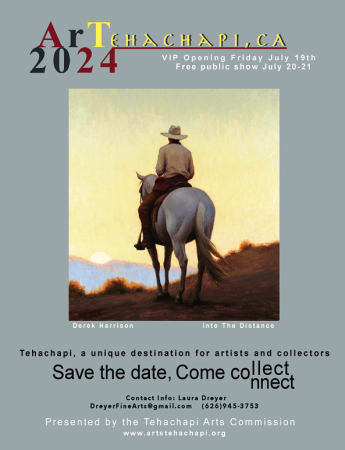
Horses have been an inspiration for artists for centuries, so it is no surprise that horses will bring nearly 50 nationally known plein air artists to Tehachapi, California, in May, for the Art 2024 Tehachapi paint-out sponsored by the Tehachapi Arts Commission. “This will be the fourth year in a row for many to explore the picturesque town and surrounding areas,” says representatives. “The artists’ spend four days painting and sketching, visit a working cattle ranch and spend a day with a herd of wild Morgan horses that have lived in the mountains for nearly 100 years. They return home to finish the paintings that will be juried into the Art 2024 Tehachapi, held in Tehachapi from July 19 through 21, with an elegant opening event planned for Friday evening, July 19.”
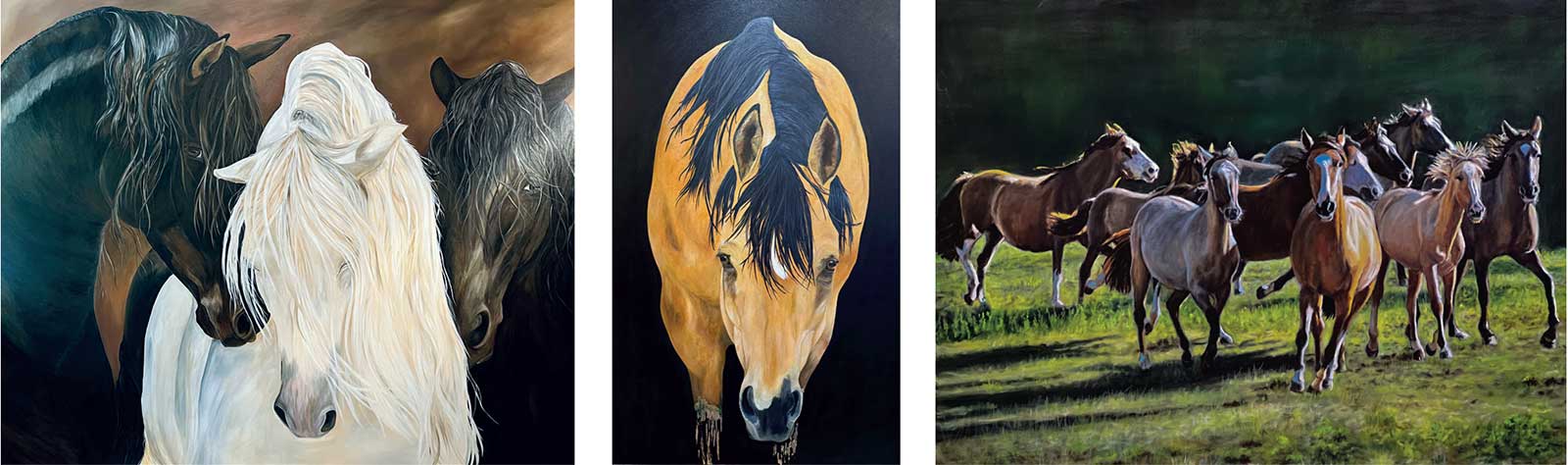
Jeanie Edwards, Claiming the Band, acrylic on canvas, 60 x 72 in.; Jeanie Edwards, Into the Ether, acrylic and gold leaf, 60 x 40 in.; J Watson Fine Art, Stampede, 36 x 48 in., by Judith Dickinson.
Returning for the fourth year is Annette Hammer with her oil painting Mustang Valley. Her art incorporates oaks, mountains, vineyards, farmland, cattle and horses. California artist Chuck Kovacic, with his piece On Patron, is also attending the paint-out for the fourth time. Pastel artist Otto Sturcke won Best of Show at Art 2021 Tehachapi with his pastel still life, and was awarded Best Still Life in 2023. This year the artist features his piece Morgan’s Morning.
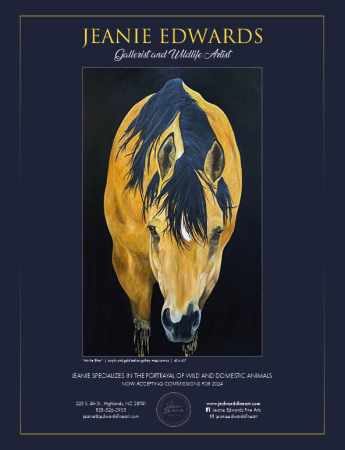
Artist Jeanie Edwards has always heard “paint what you know.” Well, for Edwards, that’s horses. She grew up quite literally in the saddle on a quarter horse farm. Her current body of work titled The Horses That Built Me, will focus on the horses that have had a distinct impact on her life.
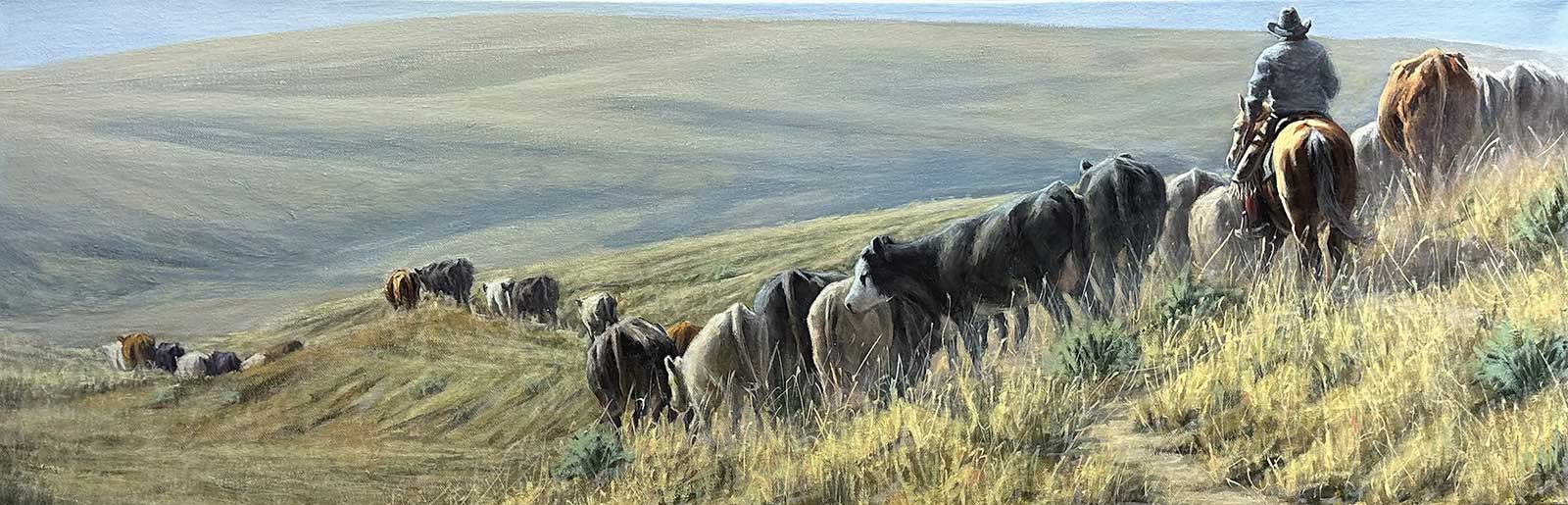
Phippen Museum, The Drive Home, oil, 12 x 36 in., by Julie Nighswonger.
Growing up as the daughter of an American Quarter Horse Association judge, and being a former Miss Rodeo Alabama, has given Edwards the privilege of knowing some of the finest horses in the industry. When she sits down at her easel to begin a new piece, she always starts with their eyes. You can view Edward’s work at her gallery, Jeanie Edwards Fine Art, in Highlands, North Carolina, and she will be participating in several shows this year—a complete list of which can be found on her website.
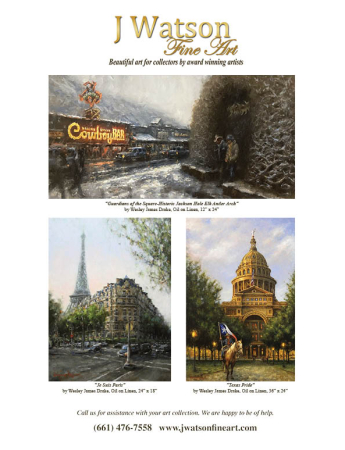
“I have always been captivated by the beauty and majesty of horses,” shares artist Judith Dickinson, represented by J Watson Fine Art. “As a child I grew up with horses, and that love and respect became very profound. I love capturing the very essence of the horse, while also showing their character, emotion and story. Portrayal of light [from] the beauty of my world is my main goal.”
While Dickinson is also known for her figure paintings and commissioned portraits, she has also painted many commissioned paintings of horses and people with their horses over the years. Pictured within this section are two fine examples of Dickinson’s expertise: Profile in Power, of two majestic horses in profile together; Stampede, featuring several horses in full gallop; and Honey, a detailed horse portrait in high detail.
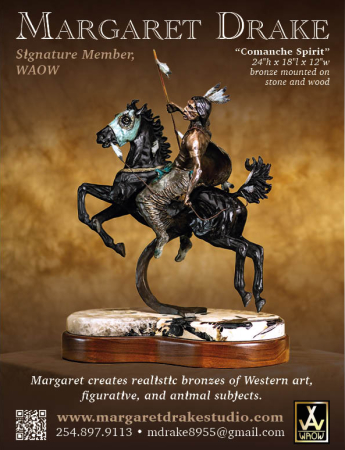
Artist Margaret Drakestrives to express strength, grace, motion, rhythm and beauty in her sculpture pieces. “Working with oil-based clay, I look for topics that will allow me to express these [characteristics],” says Drake. “My subject matter comes from my own imagination. I have always been an animal lover and I have always been fascinated with the grace, beauty and strength of truly athletic animals and humans.”
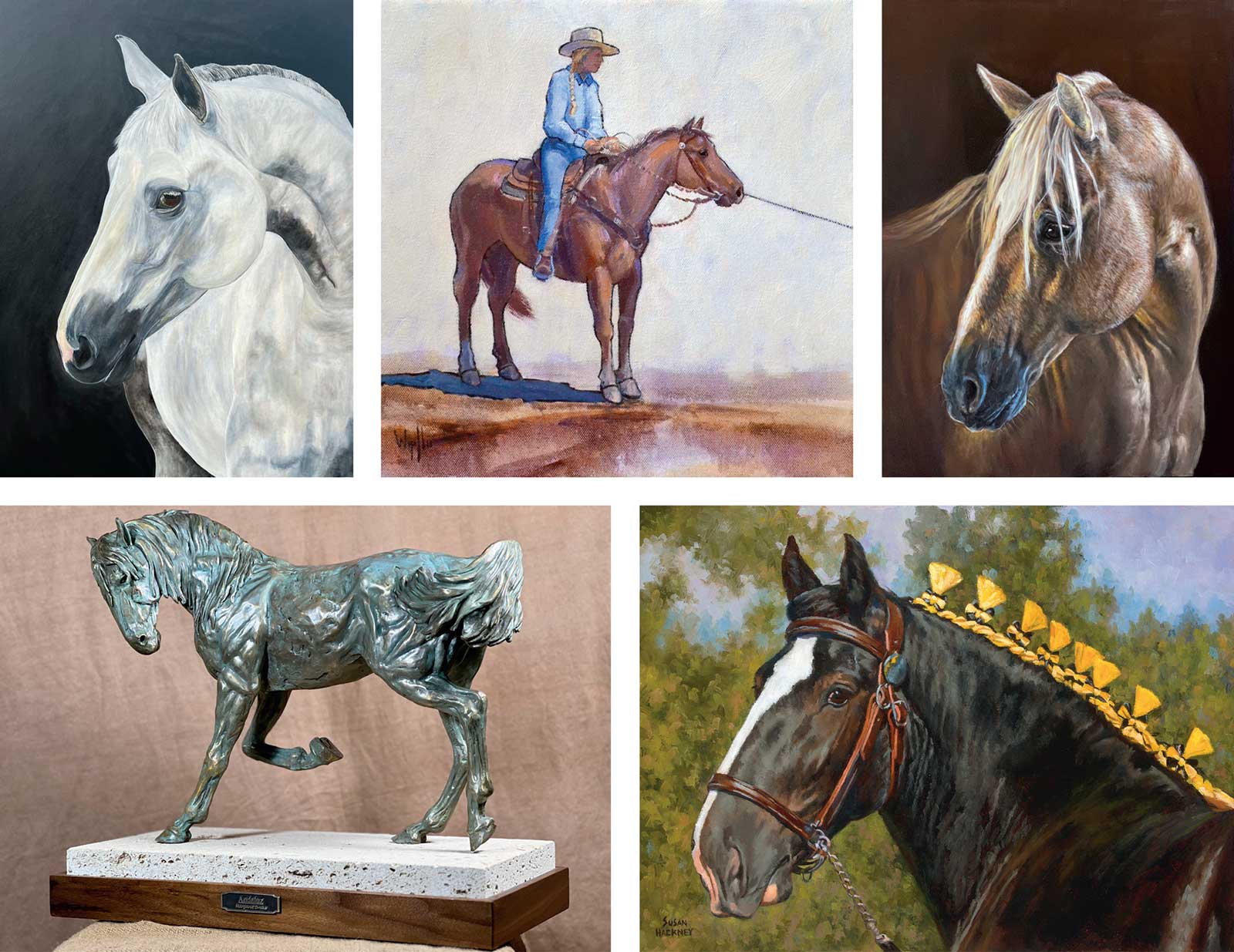
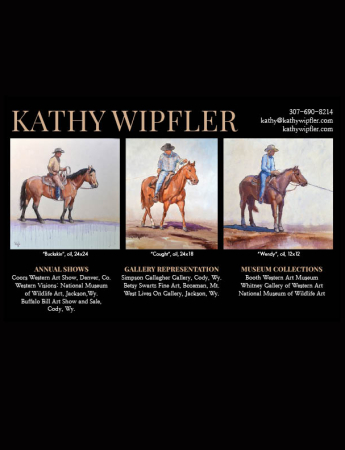
TOP: Jeanie Edwards, Capall, acrylic on canvas, 48 x 36 in. ; Kathy KJ Wipfler, Wendy, oil, 12 x 12 in.; J Watson Fine Art, Honey, oil on canvas, 40 x 30 in., by Judith Dickinson. BOTTOM: Margaret Drake, Andaluz, bronze on stone with wood base, 18 x 20 x 10 in. ; Susan Hackney, Yellow Ribbons, oil, 12 x 16 in.
Drake says that “taking an idea from my imagination, breathing life into the materials and seeing the transformation into bronze through the foundry work is what my art is about. There is beauty everywhere, waiting to be captured and celebrated as it sprints through the viewer’s imagination.”
When collecting, Drake notes that “if you see a piece that you love, and that affects your heart, buy it, regardless of genre. A bronze makes any room look more beautiful. Don’t worry about buying only from well-known artists—give the others a chance if you like their work.”
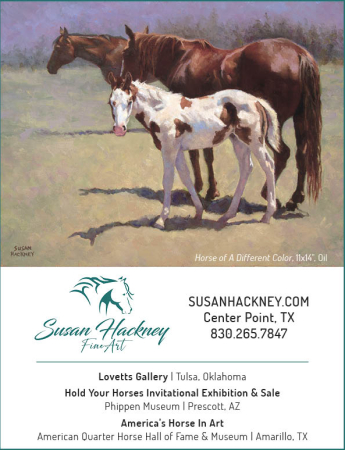
For as long as she can remember, Susan Hackney has also had a lifelong love affair with horses. “Horses possess a unique magical presence that resonates with me on a deep spiritual level,” says the artist. “I try to convey that magic, as well as the anatomy, the soul and the personality of the horse in my paintings. I am reminded of my overwhelming love and admiration—as well as receive inspiration to paint—by spending time with my quarter horse, Rio.”
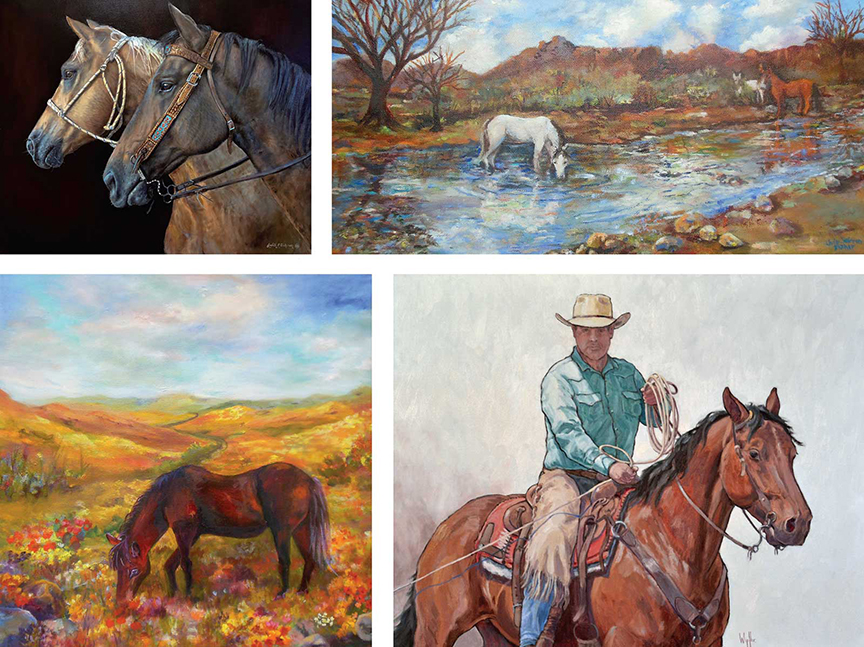
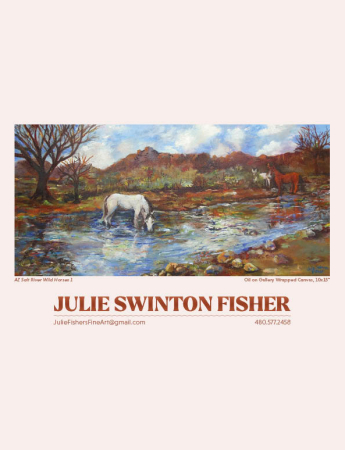
TOP: J Watson Fine Art, Profile in Power, 30 x 40 in., by Judith Dickinson; Julie Fisher, AZ Salt River Wild Horses I, oil on canvas, 10 x 15 in. BOTTOM: Julie Fisher, Even Horses Stop to Smell the Flowers, oil on canvas, 20 x 20 in.; Kathy KJ Wipfler, The Bay Mare, oil, 24 x 36 in.
Hackney has attempted to perfect her painting style by taking workshops with several Cowboy Artists of America members, as well as studying with other equine artists. She is represented by Lovett’s Gallery in Tulsa, Oklahoma, and will be showing in the Hold Your Horses Invitational Exhibition & Sale at the Phippen Museum; and America’s Horse In Art at the American Quarter Horse Hall of Fame & Museum in Amarillo, Texas.
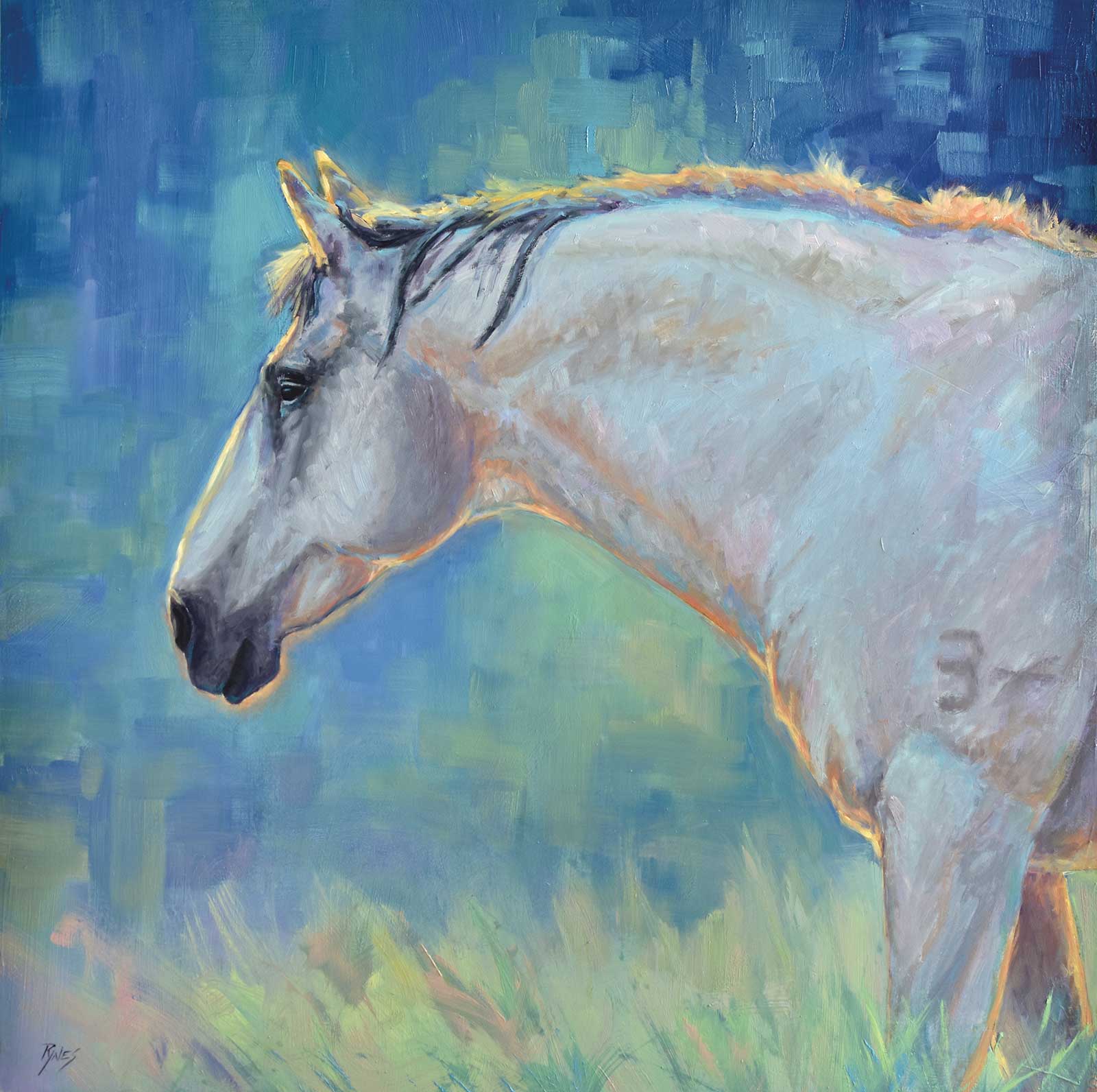
Nancy Rynes, Morning Glow, oil, 36 x 36 in.
For artist Julie Fisher, the Arizona Salt River wild horses have captured her heart and her paint brushes. “Living in Arizona offers me the ability to witness these stunning, majestic animals,” she remarks. “They can be seen cooling off in the river as people kayak by them or out in the foothills of the desert landscape. As a nature artist, I am inspired by the wild horses, desert landscape and skies, along with the breathtaking sunrises and sunsets. I paint in a realism/painterly style, blending several layers of oil paint until I am in love with the results.”
If you admire the beauty of these wild horses and the Southwest landscape, visit Fisher’s website for originals and prints. “Original art in a home brings warmth and beauty that cannot be replicated,” she says.
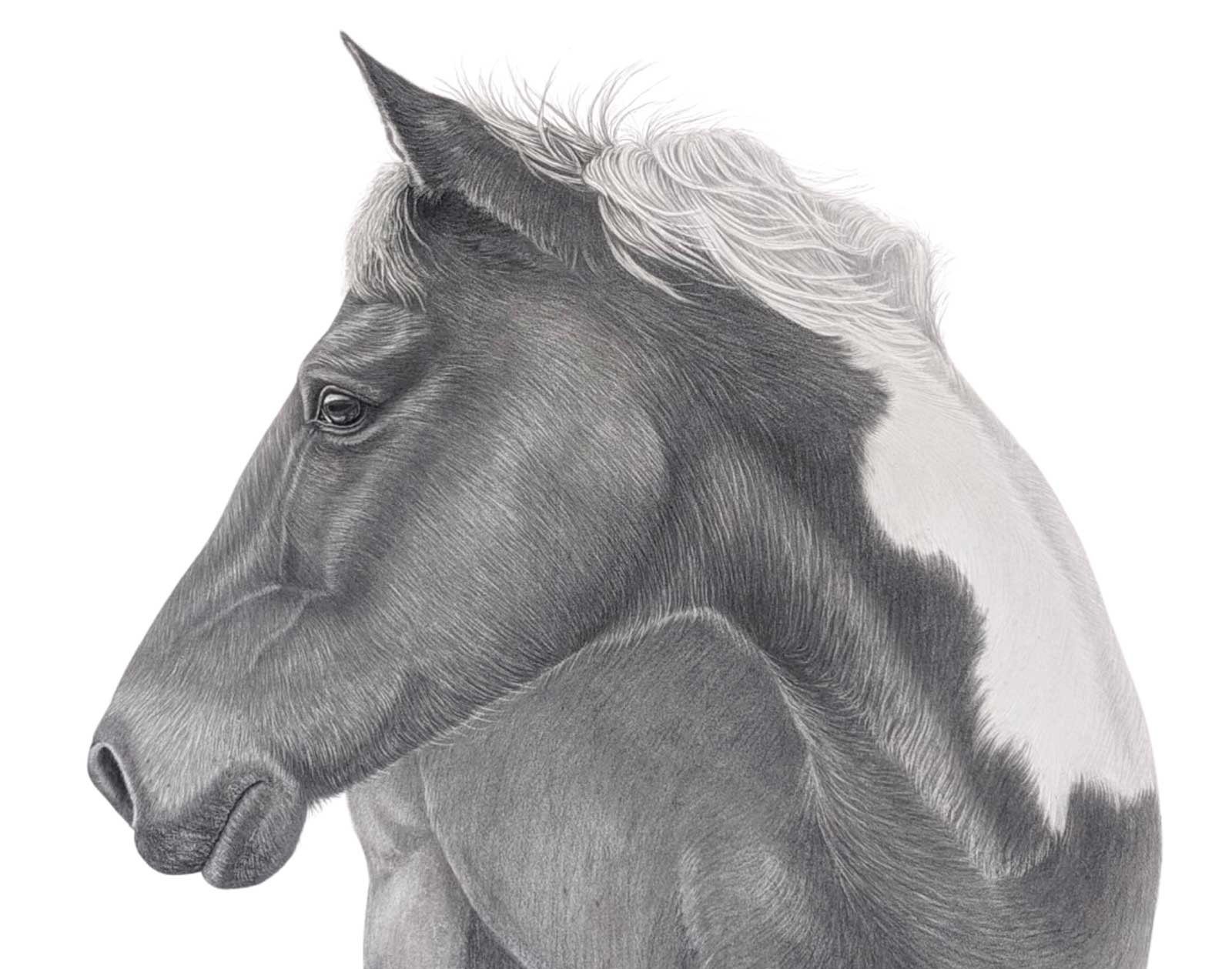
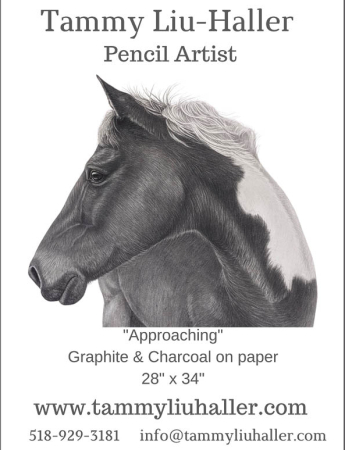
Tammy Liu-Haller, Approaching, graphite and charcoal on paper, 28 x 34 in.
Being a multigenerational Westerner, artist Kathy KJ Wipfler focuses her work on the history and traditions of the working people of the Western genre. “I have spent over 30 years riding with the ‘real deal’ cowboys and cowgirls in Western Wyoming, and they have become an integral part of my art endeavors,” she notes. “My subjects are my friends, and I am honored that they call on me to help with their work, which gives me the opportunity to interpret them in my work.”
Wipfler’s work is in museum collections like the Booth Western Art Museum, Whitney Gallery of Western Art and the National Museum of Wildlife Art, along with gallery representation at Simpson Gallagher Gallery in Cody, Wyoming; Betsy Swartz Fine Art in Bozeman, Montana; and West Lives on Gallery in Jackson, Wyoming. Upcoming shows include the Coors Western Art Show, Western Visions and the Buffalo Bill Art Show and Sale.
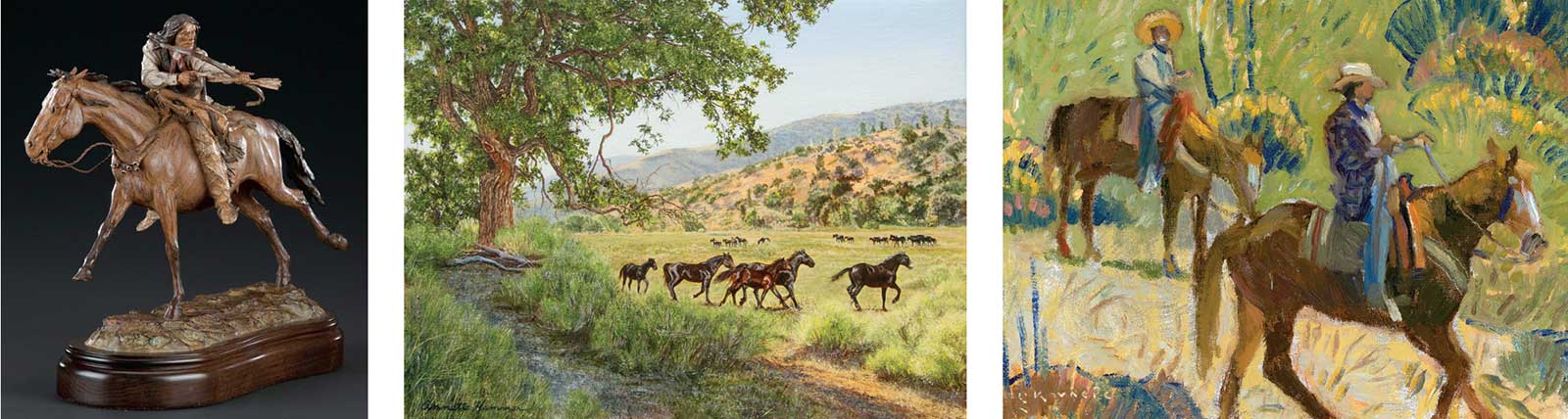
Bill Nebeker, KWAHADI COMANCHE: He Who Fights, bronze, 14 x 16 x 8 in.; Tehachapi Arts Commission, Mustang Valley, oil, 12 x 16 in., by Annette Hammer; Tehachapi Arts Commission, On Patrol, oil, 9 x 12 in., by Chuck Kovacic.
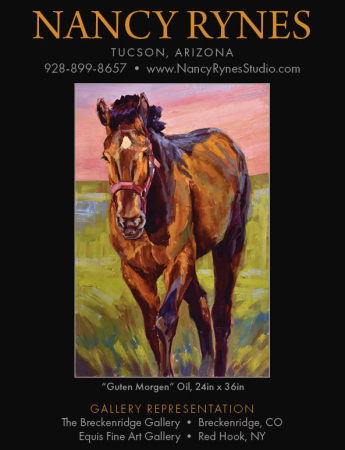
Like so many others in this section, artist Nancy Rynes also finds a wealth of artistic and personal inspiration from both animals and the landscape. The endless variety of colors, lighting and forms keeps her challenged and engaged more than any other subject. “Horses, in particular, captured my attention as an artist, due in part to my family’s long history of training and breeding Thoroughbred racehorses for some of the largest stables in the Midwestern United States,” she explains.
Today, Rynes enjoys capturing something out of the ordinary in each of her equine paintings. “One piece might focus on unusual lighting conditions while another may call out a horse’s dynamic energy,” she says. “But each piece is a challenge to create something more heartfelt, impactful and refined than the last.” Rynes’s work is available at her studio in Tucson, on her website and through galleries across the United States.
As a collector herself, Rynes recommends “seeking out equine art that not only looks beautiful in your home or business, but somehow feeds your heart and soul as well…Horses are, by nature, extremely intuitive and emotional, so I recommend collectors also check in with their own emotions when choosing a piece of equine art.”
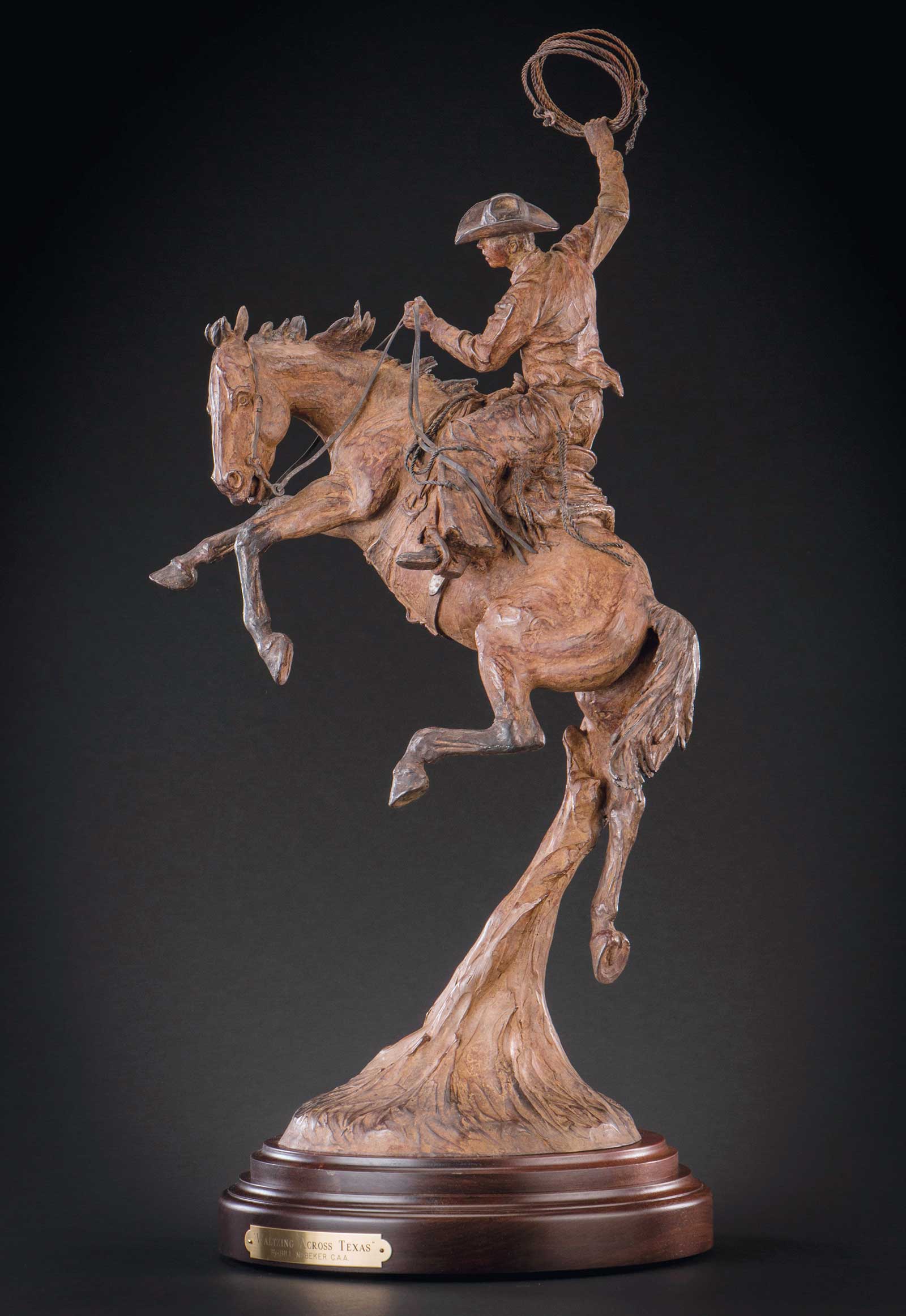
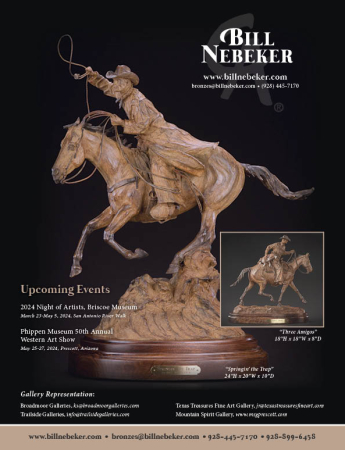
Bill Nebeker, Waltzing Across Texas, bronze, 30 x 17 x 12 in.
Artist Bill Nebeker has been riding horses since he was a boy, and had many different horses for a variety of tasks. “I love hunting on horseback with my dad, son or a friend,” he says, “and team roping or gathering cattle to drag calves to the branding fire are also two of my favorites. Sometimes I’ve held on tight when a new horse started to buck, trying to throw me, but whether I was lucky or great balancing skills, I’ve stayed in the saddle till the horse settles down.”
This history with horses made its way into Nebeker’s work as a sculptor, resulting in impressive bronze works like Home is the Hunter, KWAHADI COMANCHE: He Who Fights and Waltzing Across Texas,all pictured within this section.
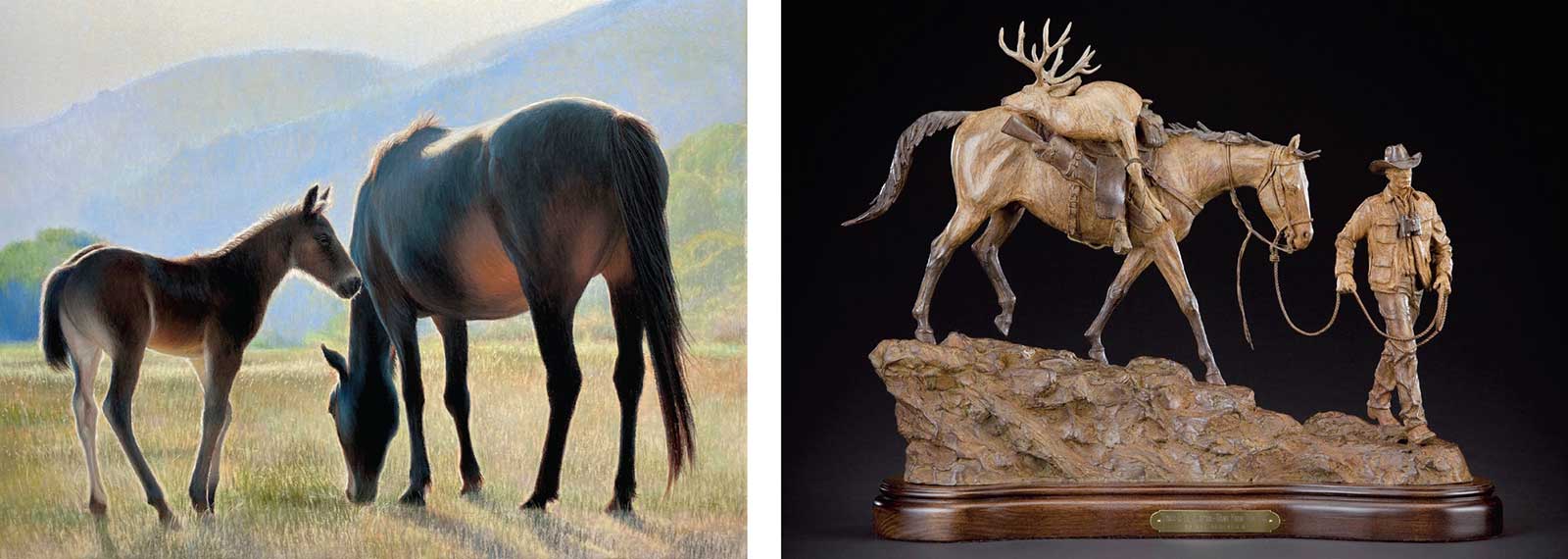
Tehachapi Arts Commission, Morgan’s Morning, pastel on board, 16 x 20 in., by Otto Sturcke; Bill Nebeker, Home is the Hunter, bronze, 19 x 22 x 8 in.
Nature has always brought Tammy Liu-Haller the most joy. As a child, she would be content to sit and observe the behavior of the animals around her. “As an adult, it’s where I still feel the most at peace—being outside, immersed in the natural world and observing the landscape and wildlife around me,” she says. “Particularly with monochrome artwork, it is easy for one to pass by with a quick glance. So, it is important that my work make people slow down and appreciate the subject before them. By rendering my subjects with my own combination of precision and softness, I hope to do just that. In doing so, perhaps they will also consider the subject at hand. Maybe igniting a new or renewed interest in the creature or nature scene before them.”
When collecting for the genre, Liu-Haller advises collectors to look for the style that speaks to them. “You’ll be surprised how such different mediums can invoke the same feelings of awe,” she says. —
Featured Artists & Galleries
Bill Nebeker
www.billnebeker.com
Cheryl Koen
www.cherylkoen.com
J Watson Fine Art
(661) 476-7558
www.jwatsonfineart.com
info@jwatsonfineart.com
Jeanie Edwards Fine Art
223 S. Fourth Street, Highlands, NC 28741
(828) 526-2933
jeanie@jedwardsfineart.com
www.jedwardsfineart.com
Julie Fisher
(480) 577-2458
juliefishersfineart@gmail.com
www.juliefisherfineart.com
Kathy KJ Wipfler
(307) 690-8214
www.kathywipfler.com
Legacy Gallery
7178 Main Street, Scottsdale, AZ 85251
(480) 945-1113
www.legacygallery.com
Margaret Drake
(254) 897-9113
mdrake8955@gmail.com
www.margaretdrakestudio.com
Nancy Rynes
Tucson, AZ
nancy@nancyrynesstudio.com
www.nancyrynesstudio.com
National Cowboy & Western Heritage Museum
1700 Northeast 63rd Street, Oklahoma City, OK 73111
(405) 478-2250
www.nationalcowboymuseum.org
Phippen Museum
4701 Highway 89 North, Prescott, AZ 86301
(928) 778-1385, www.phippenartmuseum.org
Susan Hackney Fine Art
Center Point, TX
(830) 265-7847
www.susanhackney.com
Tammy Liu-Haller
info@tammyliuhaller.com
www.tammyliuhaller.com
Tehachapi Arts Commission
(626) 945-3753
dreyerfinearts@gmail.com
www.artstehachapi.org
Powered by Froala Editor