Making up the entirety of the exhibition One with the Land: The Mountain Man’s Journey into the Unknown, hosted at the Museum of the Mountain Man, is the robust Peterson Family Collection. In approximately 75 paintings and bronzes, as well as miscellaneous books and articles, the collection explores the iconic American figure we know as the “mountain man” —along with the Western landscapes these men traversed.
“Mountain men were the first non-Natives to live year-round in the mountains,” explains executive director Clint Gilchrist. “In search of beaver, [the raw material for high-fashion top hats in the 1820s and 1830s], they explored every part of the vast, unknown American West. With no fixed base and constantly on the move, they lived off the land and became a part of the Rocky Mountain landscape that would come to define them.”
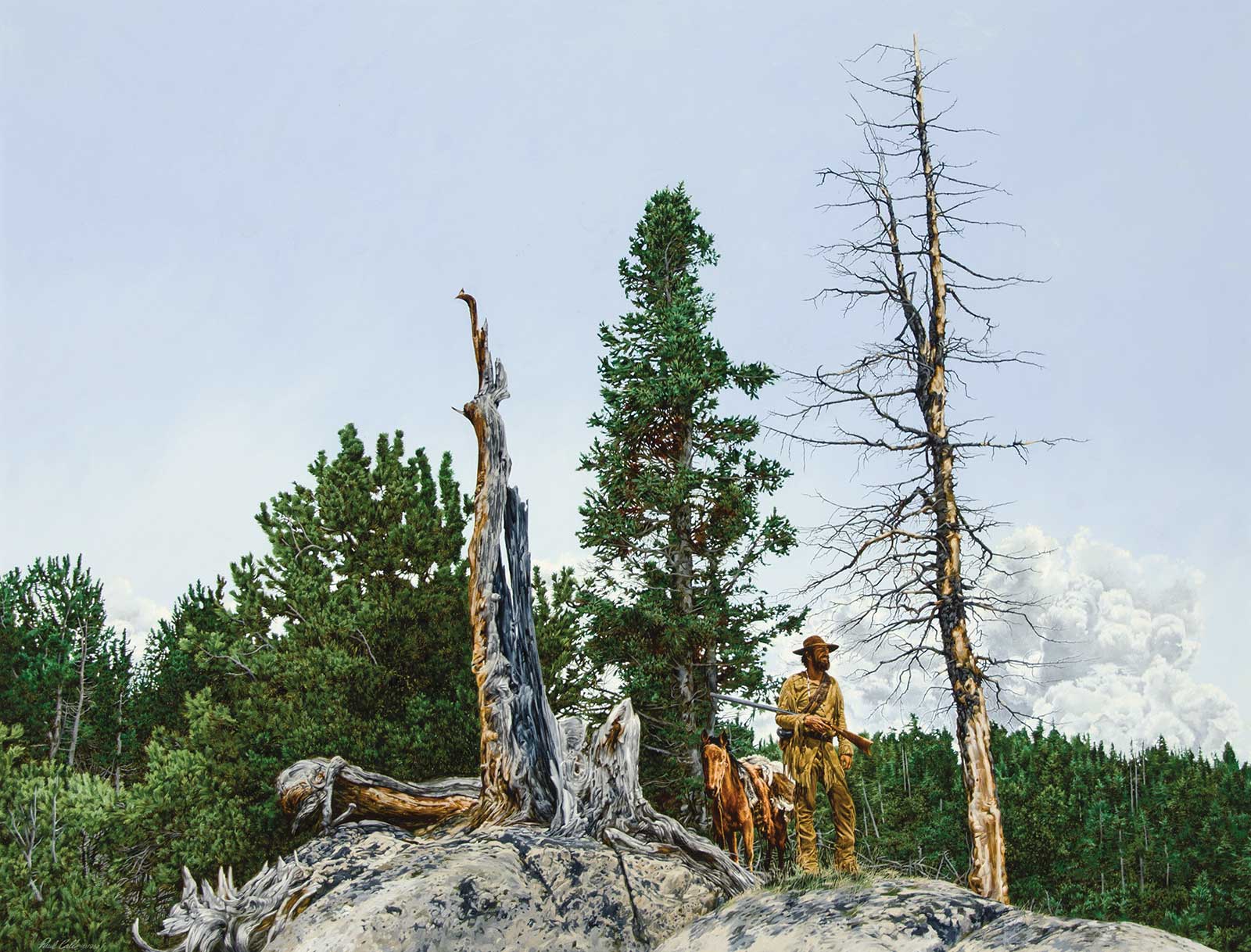
Paul Calle (1928-2010), One with the Land, oil on board, 33 x 43 in.
Tim Peterson, of the Peterson Family Collection, who has had active participation in the organizing of the exhibition, notes that it’s broken into two parts—starting with a focus on the “generic mountain man” in the wilderness. “There are oil, pencil, pen and ink drawings and sculptures that show the mountain man in nature, as well as the accoutrements that he used in order to survive in a rugged and dangerous land,” Peterson shares. “The second part of the exhibit focuses on ‘specific real life’ mountain men like the famous John Colter, Jim Bridger, Kit Carson, Jedediah Smith and Joseph Walker to name a few. We show these travelers in landscapes that they are known to have traveled and explored.” Along with the paintings, the museum provides books and reference materials that gives visitors more factual information about the mountain men.
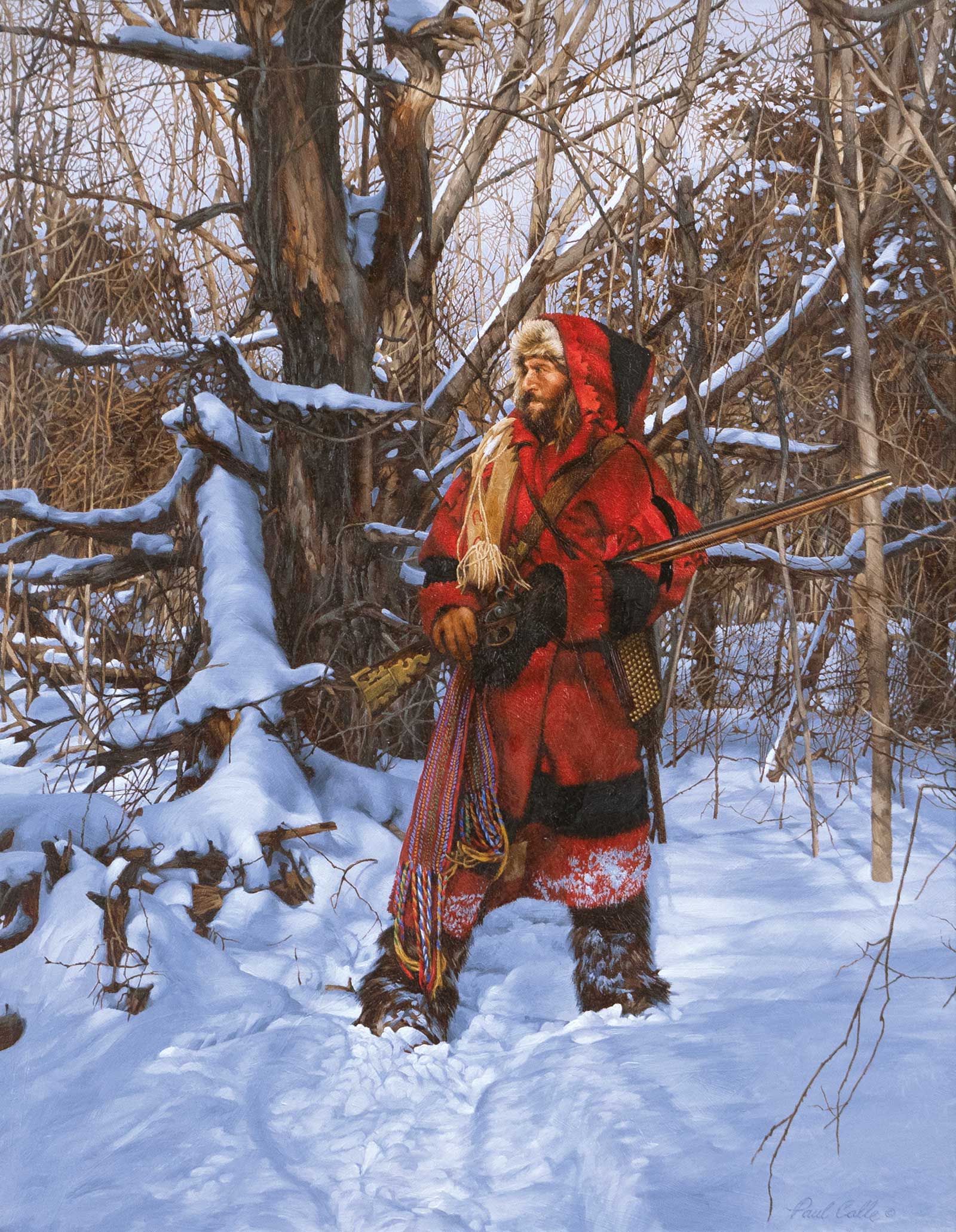
Paul Calle (1928-2010), Alone in the Wilderness, oil on board, 20 x 16 in.
A major highlight of the exhibition is the oil painting One with the Land by Paul Calle—inspiring the show title. The painting served as a “jumping-off point” for the exhibition, depicting a man alongside his horse, rifle in hand, taking in the sites—“with exposure to nature and the beauty of the American landscape,” says Peterson.
The second most significant painting, again by Paul Calle, is titled Alone in the Wilderness. “It is fitting that it is one of the first pieces you see in the exhibit because we wanted to stress how most mountain men did travel alone and they truly were in the wilderness,” Peterson says. “It is a piece that gives you a sense of a man alone in the cold winter mountains with no one to help him survive.”
Lastly, visitors should take note of the Charles Fritz piece, Headed for the Rendezvous: Jedediah Smith crossing the South Pass.“This is a painting that shows a historic mountain man that helped find the South Pass that allowed many settlers to travel through in their journey west,” Peterson shares. “It shows the importance of historical mountain men and how they not just build the fur trade business, but ultimately led the way for the early settlers to move and travel west.”
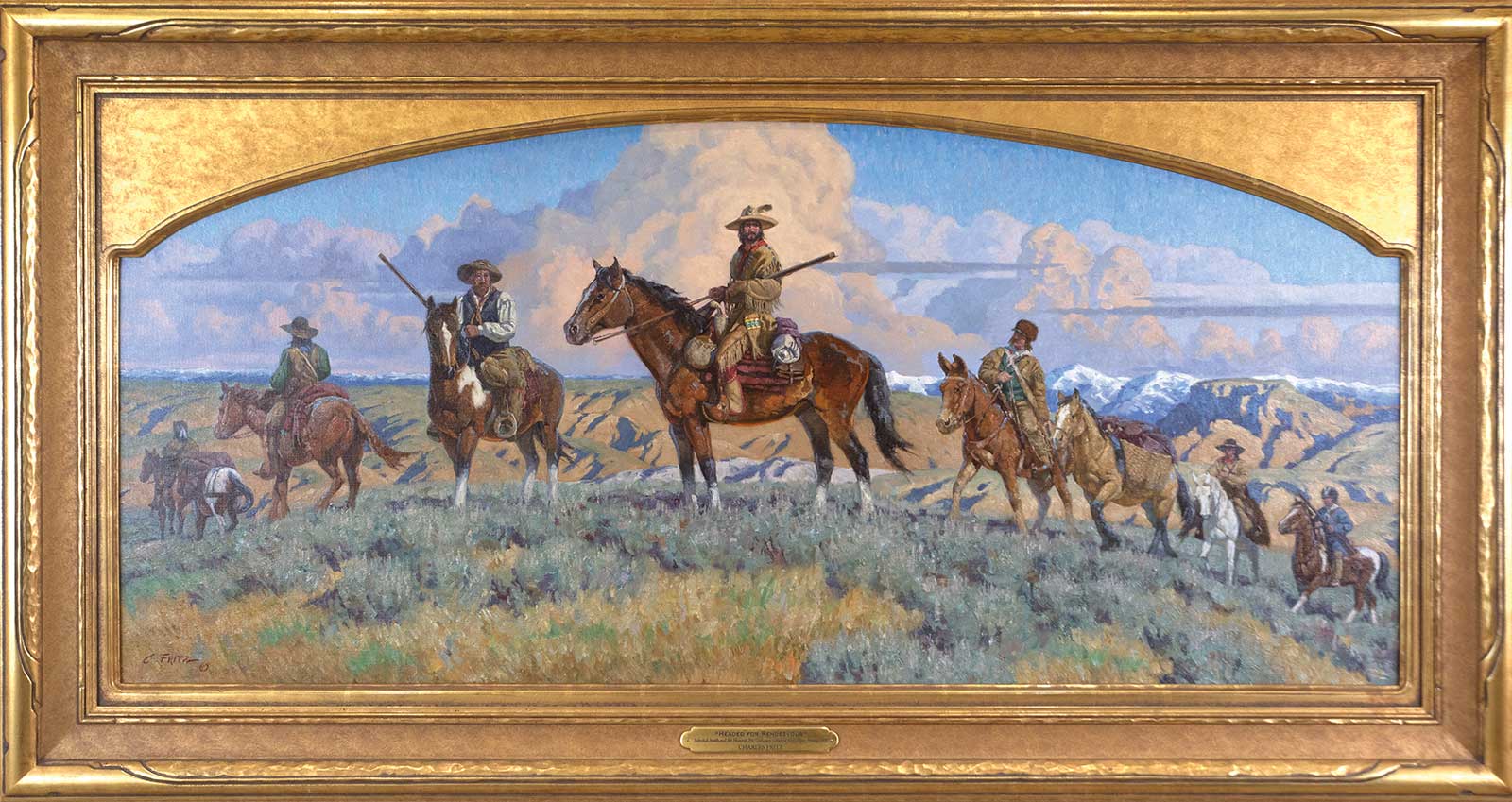
Charles Fritz, Headed for Rendezvous, oil on linen, 23 x 53 in.
Peterson and museum representatives hope that visitors to the exhibition, on view from May 1 through October 31, notice how the mountain man truly was “one with the land.” “They traveled in it, they explored it, they lived off it, and in many cases, they did not survive in it,” Peterson remarks, adding that the landscape is every bit as important as the mountain men themselves. —
One with the Land: The Mountain Man’s Journey into the Unknown
May 1-October 31, 2024
Museum of the Mountain Man
700 E. Hennick, Pinedale, WY 82941
(307) 367-4101 www.museumofthemountainman.com
Powered by Froala Editor