Nearly everyone knows about Frederic Remington. Most of us knew his work before we realized we knew his work. The iconography of his famous Broncho Busteris everywhere—in television and movies, in gift shops across the country, even in the Oval Office. Remington is a ubiquitous figure in both the Western art world and American culture at large.
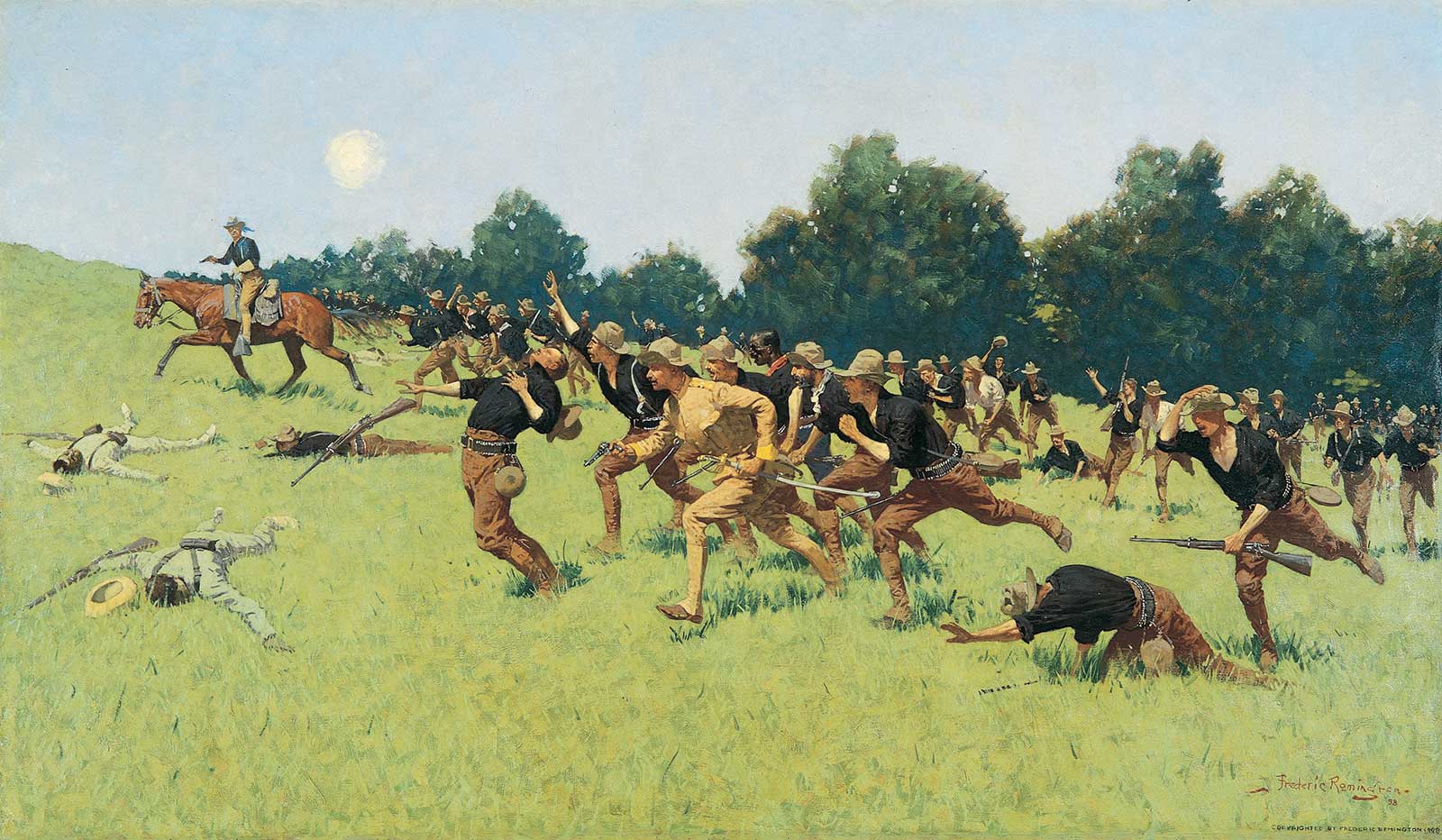 Frederic Remington (1861-1909), Charge of the Rough Riders, 1898, oil on canvas, 35 x 60 in. Gift of the Remington Estate.
Last year, the Frederic Remington Art Museum in Ogdensburg, New York, celebrated a monumental 100th anniversary. The museum aptly resides in an area where Remington spent his formative childhood years and built significant relationships in his life. He was born in Canton, New York, just minutes down the road, eventually moving to Ogdensburg when he was about 12 years old. While Remington has called many places home in his life, this was an area where he made some of his deepest connections, including meeting his wife, Eva.
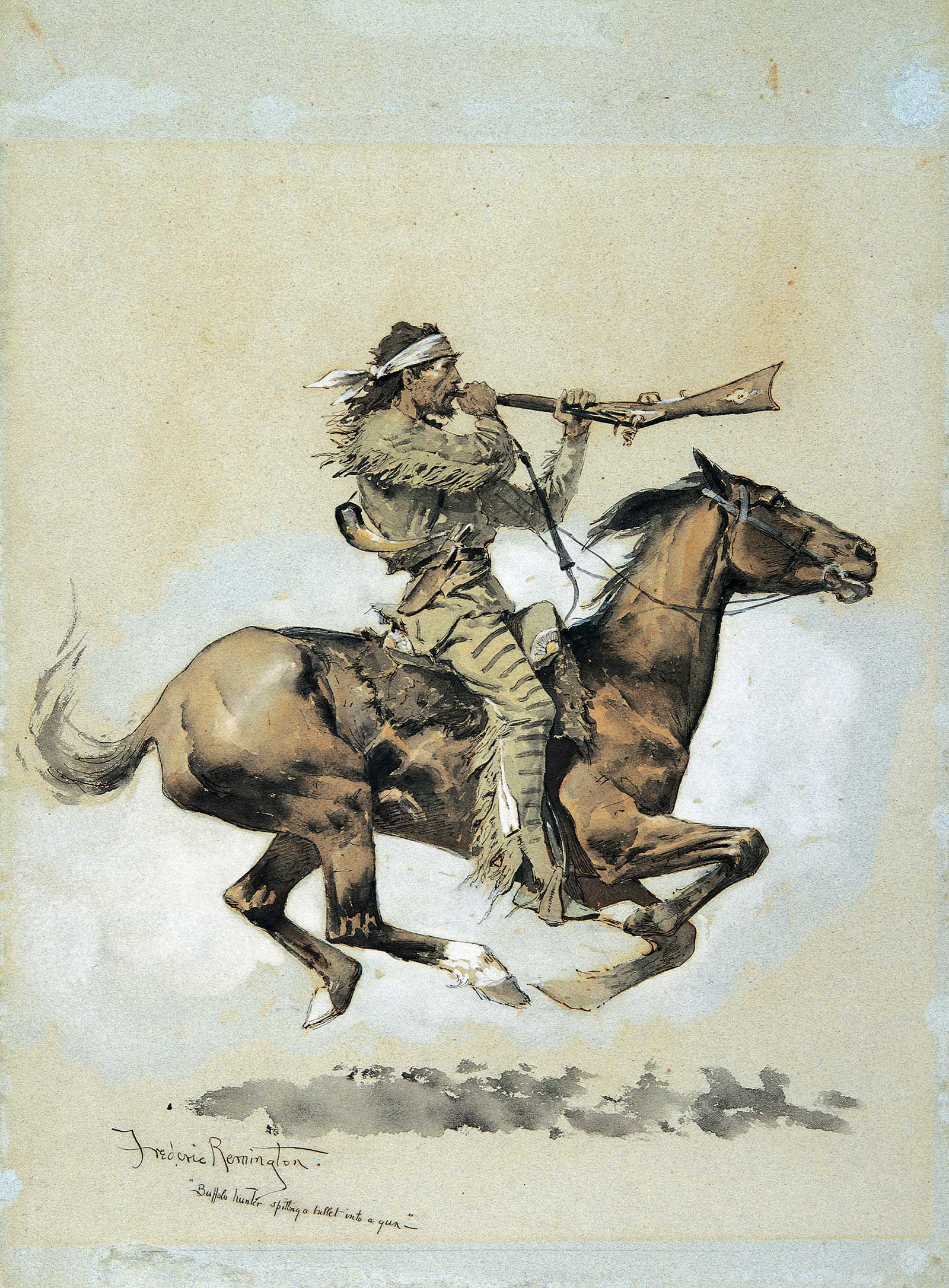 Frederic Remington (1861-1909), Buffalo Hunter Spitting a Bullet into a Gun, 1892, pen and ink wash, watercolor, and gouache, 21¹∕8 x 15½ in. Museum purchase.
“As one of the great creators of the iconography and mythos of the American West, Remington is often assumed to have been a Westerner himself. Many visitors are therefore surprised to discover that this ‘Western’ artist was an Easterner born and bred,” says Laura Desmond, curator and educator at the Remington Museum. “So, too, are they surprised to discover his works depicting ‘Eastern’ subjects, many of which are on display at the Remington Museum. We are able to feature works that show Remington’s deep engagement with the landscape of this region, where, particularly in the final decade of his life, Remington experimented with impressionist and tonalist techniques, tackling new issues of composition, color, light and atmosphere. In other words, our location helps visitors to better understand the context in which Remington worked, and to better appreciate his artistic concerns, evolution and accomplishments.”
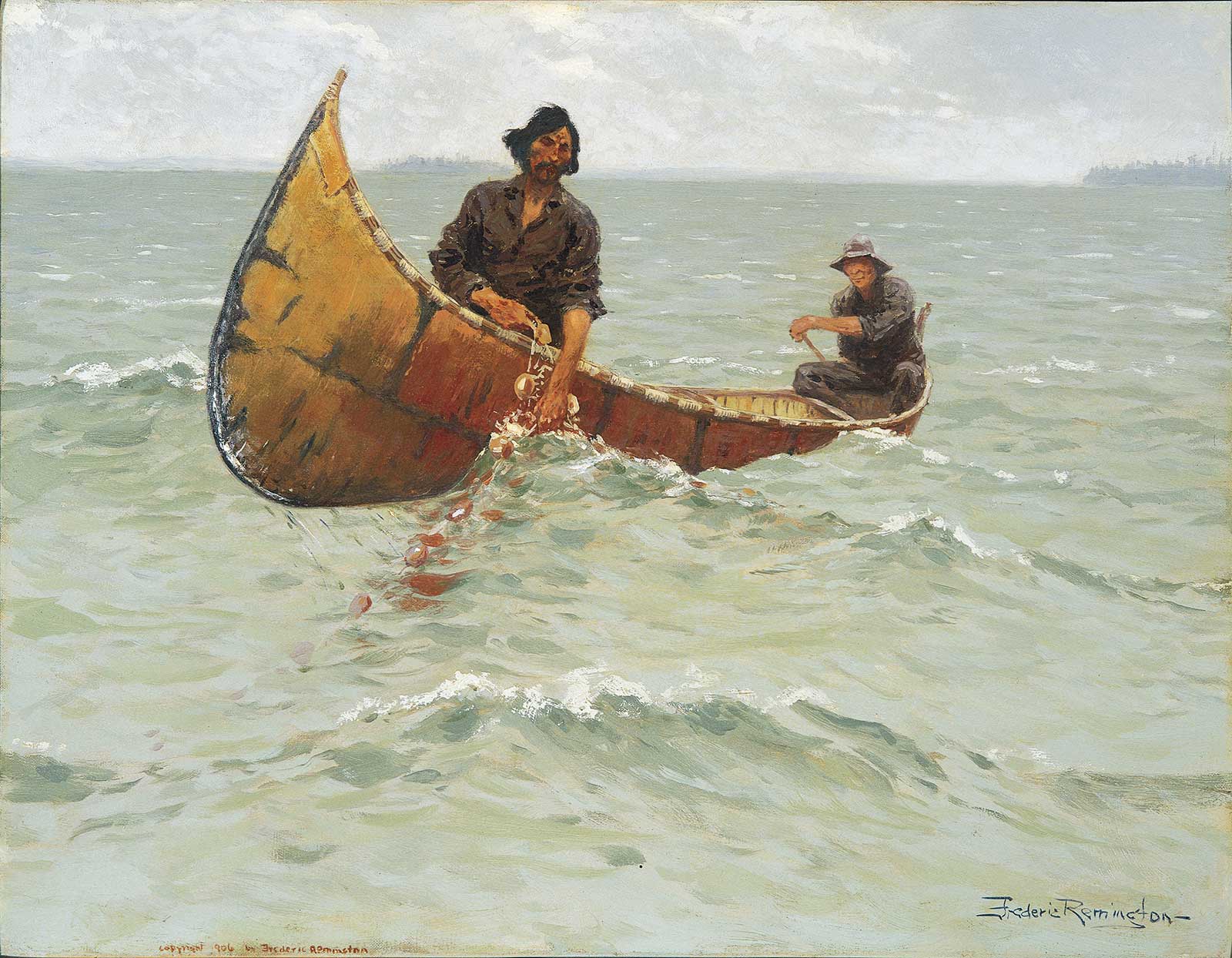 Frederic Remington (1861-1909), Hauling the Gill Net, 1905-06, oil on canvas, 20¼ x 26 in.
 The main building that would eventually become the Frederic Remington Art Museum was built in 1810 by developer David Parish, a prominent figure in the shipping and lumber industry. He lived in the mansion until 1816, and other members of the Parish family subsequently lived there into the 1860s. After Remington’s death in 1909, his wife Eva was invited to live in the Parish Mansion by Ogdensburg industrialist George Hall and the Remingtons’ close friend, John Howard. Eva resided there, along with her sister Emma, beginning in 1915 and up to her passing in 1918. She’d left her entire collection of her husband’s artwork, which included paintings and sculpture, as well as his studio contents, diary entries, letters and other personal effects to the Ogdensburg Public Library with the intention that a museum be established to preserve Remington’s legacy.
Remington’s old friends along with the rest of the community came together to make that a reality. The Parish Mansion was transformed into the Remington Art Memorial on July 19, 1923. Over the years there have been major additions to the museum, but this original building has always been at the center of it all. And Eva’s original gift to the library is still the core of the collection on display here—it all started from this one collection. One person’s vision, along with the support of Remington’s lifelong friends, blossomed into something tremendous and beautiful.
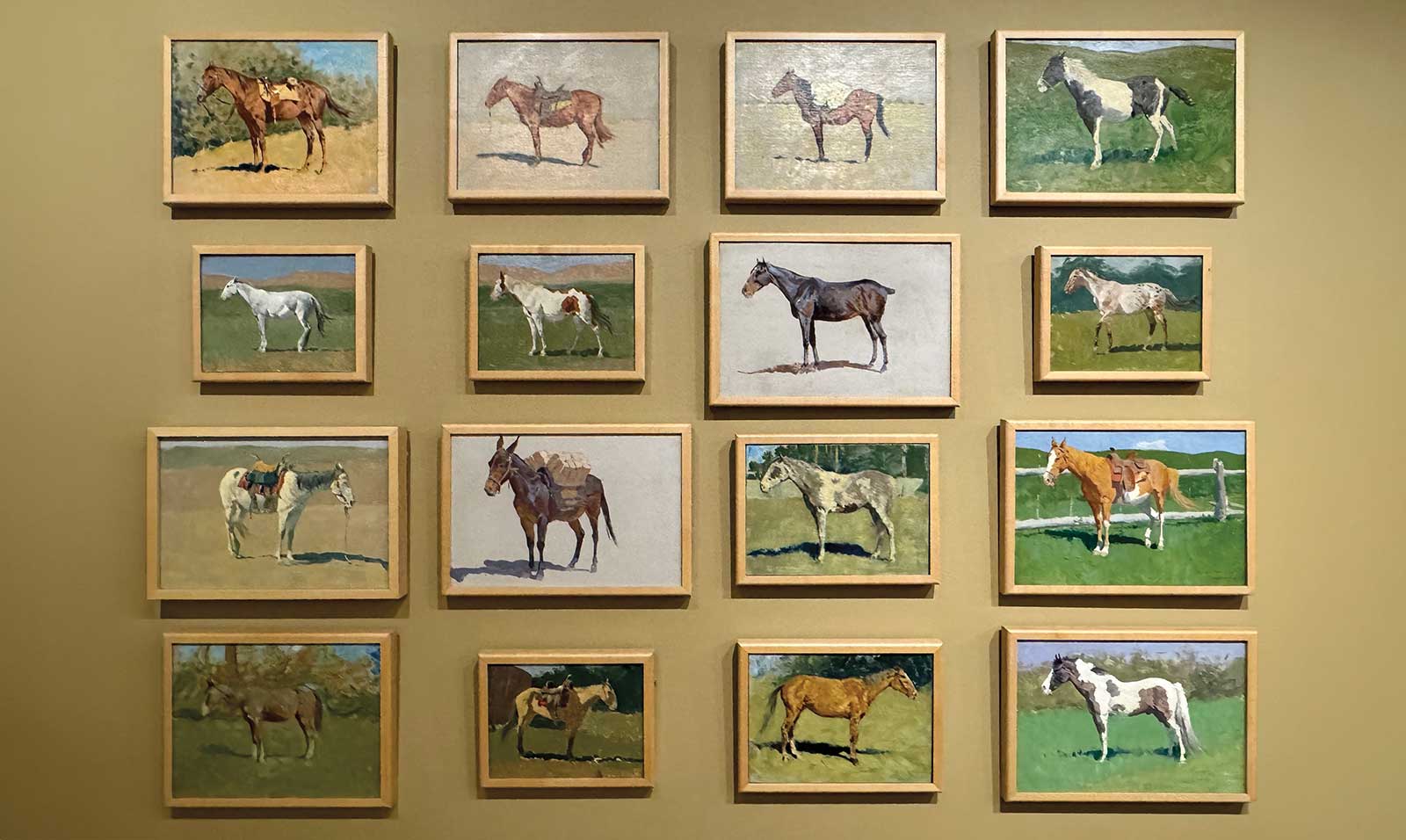
A selection of Remington’s Horse Studies in the Centennial Exhibit in the Addie P. Newell Gallery at the Frederic Remington Art Museum.
Desmond says that describing how many Remington works are currently part of the museum’s permanent collection is trickier than it sounds. “The answer depends upon what counts as a ‘Remington piece,’” she explains. “Do we count only major, finished works in oil and bronze? Or do we include oil studies, and does it matter if they’re signed or unsigned? What about signed pen and ink washes that were published as illustrations in Remington’s lifetime? Drawings? Sketches? Depending upon what you include, the answer could range from about 200 works to over 1,000.”
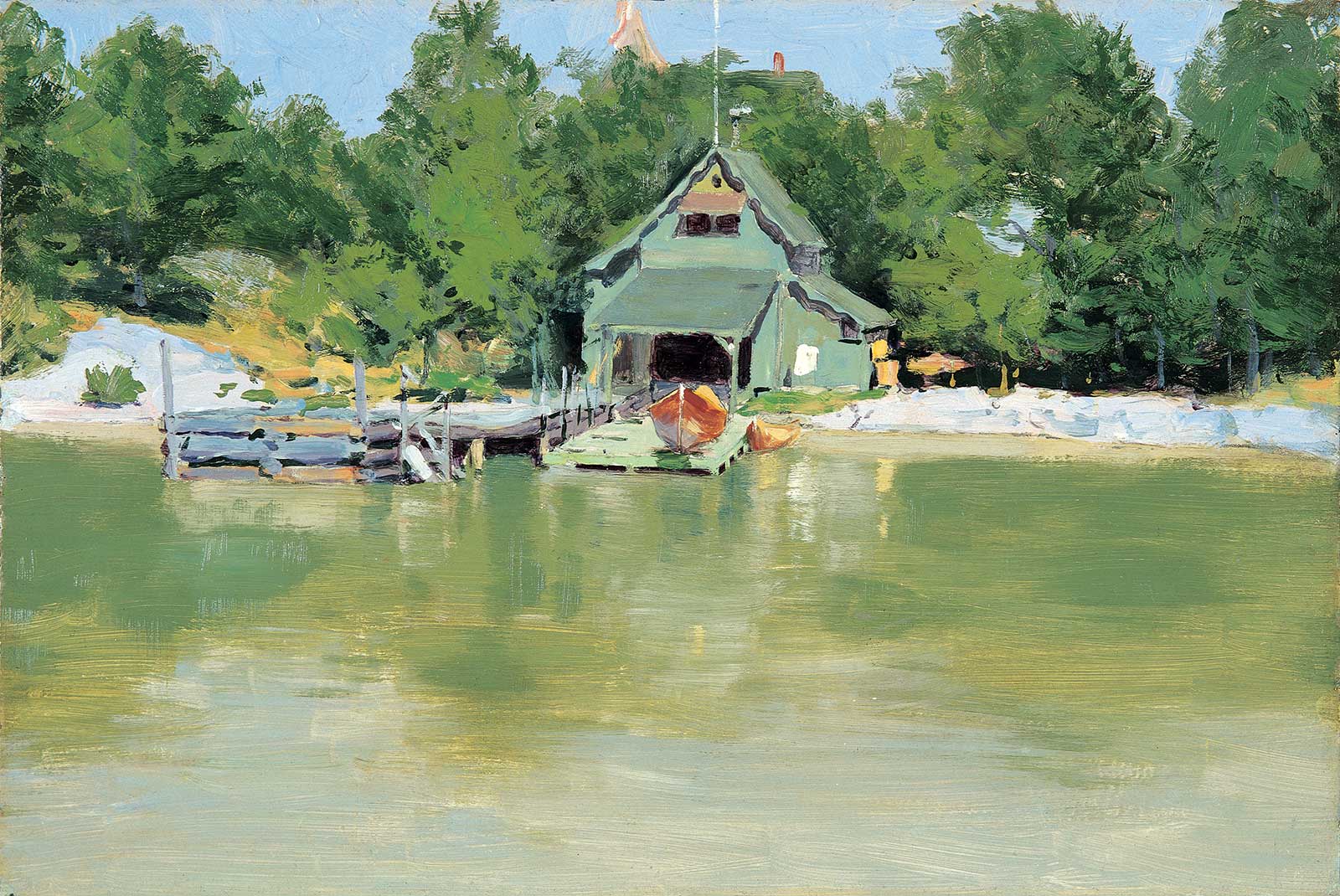
Frederic Remington (1861-1909), Boat House at Ingleneuk, ca. 1903-07, oil on academy board,
12 x 18 in. Gift of the Remington Estate.
The collection of Remington artwork within the museum is certainly extensive, offering visitors the opportunity to explore the full range of the artist’s technical process and his rich, albeit short career (Remington died at 48). “When you visit, you can see his earliest childhood drawings and his very last painting,” says Desmond. “You can connect the dots between preliminary sketches, reference photos, studies and finished works. You can compare works painted en grisaille with bold experiments in color, or minutely-detailed works in crisp, academic style with his vibrant, dappled impressionistic studies.”
The museum’s Albert P. Newell Gallery includes 18 important oil paintings and 16 bronzes, universally recognized as Remington masterworks. While the exhibits on display in the Newell Gallery change on a regular basis, it currently features the Centennial Exhibit, with 186 framed works and three cases of sketches and reference photos.
“To create an exhibit befitting this major milestone in the museum’s history, I had two primary objectives: to make accessible to the public as much of the museum’s collection as possible, and to demonstrate the relevance of Remington’s work to contemporary audiences,” says Desmond. The 186 original works are hung salon-style and organized into six bays focusing on different themes in Remington’s work: Indigenous subjects; race, whiteness and masculinity; settler colonialism and imperialism; animals; and his artistic responses to New York’s North Country. “The sixth area was curated by 2023 artist-in-residence David Kanietakeron Fadden and offers new perspectives on Remington’s artistic process and his representations of Indigenous subjects,” says Desmond. Related archival materials further inform each bay.
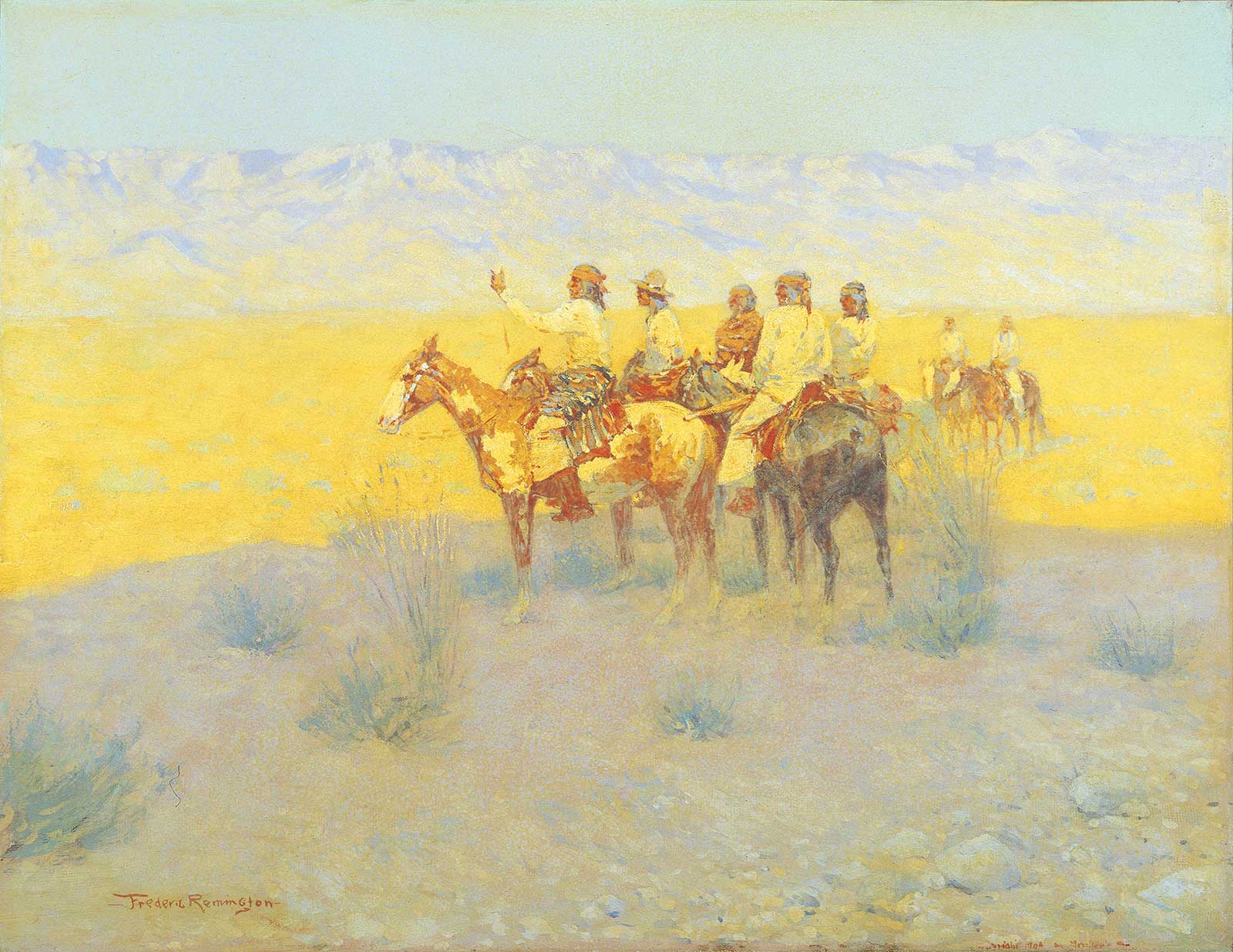
Frederic Remington (1861-1909), Evening in the Desert. Navajoes, 1905-06, oil on canvas, 20 x 26 in. Gift of the Remington Estate.
“These topics are as relevant today as they were in Remington’s day,” she adds. “Remington’s work was and still is part of multiple, often conflicting, discourses about race, masculinity, gender, violence, colonialism, imperialism, national identity, not to mention our relationship to the natural world. And his art embodies those discourses in multiple, often conflicting, ways. I’m a big believer in art’s ability to connect, challenge, inspire and transform us. Remington’s work encompasses so many foundational and contested myths, values and themes in American culture. It inspires and provokes timely and compelling conversations, conversations with the potential to help us understand and address the urgent challenges facing us today.”
The range of subjects the artist engaged in is truly expansive—from seascapes and marine art to horses and cowboys to winter scenes and bucolic landscapes. The Centennial Exhibit will remain on view through 2025.
Last summer, the museum also held a Centennial Celebration party, a major fundraising event that included live music, hors d’oeuvres and more.
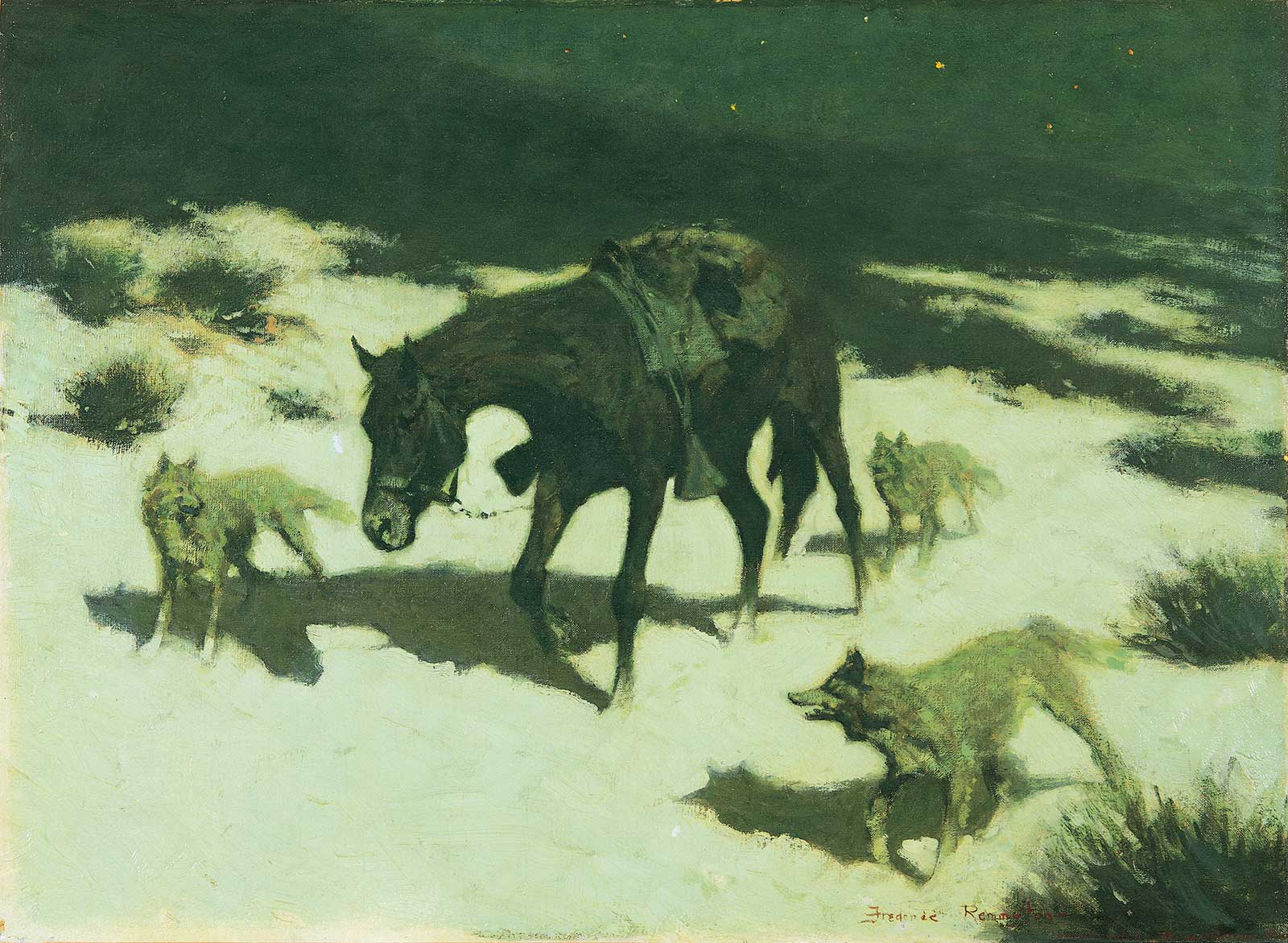
Frederic Remington (1861-1909), The Last March, 1906, oil on canvas, 22 x 30 in. Museum purchase, 1948.
“The museum has been celebrating its centennial in a number of ways throughout the year, but on July 19, 2023, we reenacted the dedication of the Remington Art Memorial that had taken place exactly 100 years earlier,” Desmond adds. “We enlisted public figures from the community to play the parts of their counterparts a century ago, and invited the public to gather on the lawn before the museum, just as they had done in 1923. There were folks in costume and speeches based upon those reported in the newspapers of the day. After the speeches, we shared the museum’s birthday cake. The entire day was a joyous celebration of the countless people, near and far, whose generosity and public spiritedness established, sustained and nurtured over the course of a century.”
Over the next 100 years, Desmond hopes the Remington Museum will continue to expand its audiences and further develop its global reach, as well as explore more opportunities for collaborations with museums across North America and beyond. Currently, the museum holds changing exhibitions by contemporary artists throughout the year, including three annual juried art shows and an exhibition featuring the work of an artist-in-residence. This year’s artist resident is Marjorie Kaniehtonkie Skidders.
“Beginning with Eva Remington’s founding bequest, the core strength of the museum is its outstanding collections,” says Desmond. “I hope that it will continue to grow with important new acquisitions that deepen and broaden the stories we can tell.” —
Centennial Exhibition
On view through 2025
Frederic Remington Art Museum
303 Washington Street, Ogdensburg, NY 13669
(315) 393-2425 www.fredericremington.org
Powered by Froala Editor