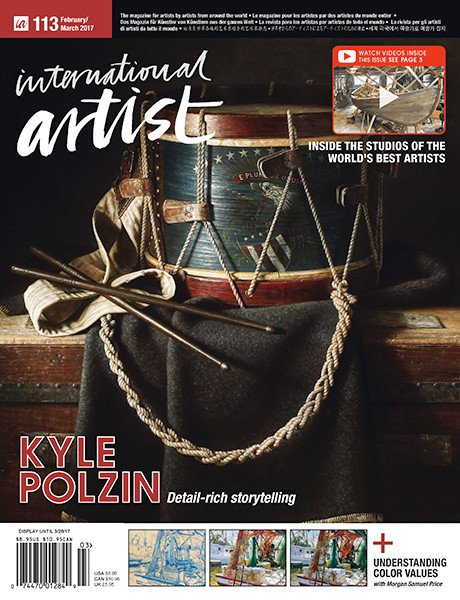
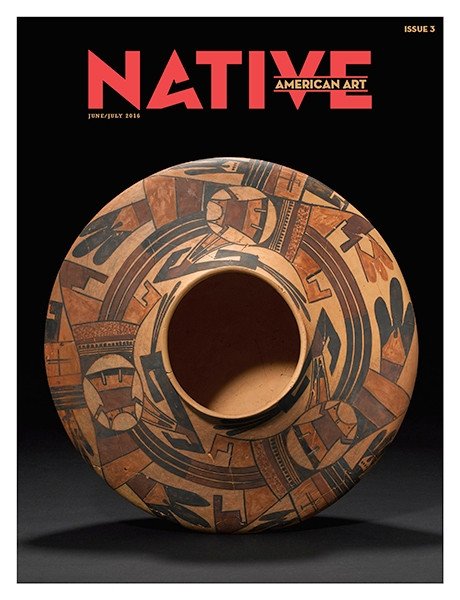
The beginning of awe-inspiring and iconic “national parks” first sprung to life in 1872 with the establishment of the first park that we now know as Yellowstone National Park. Fast forward to August 25, 1916, when President Woodrow Wilson signed the National Park Service Organic Act, thus creating the National Park Service. The parks would be fall within the jurisdiction of the Department of the Interior, which would be responsible with protecting the national parks, and helping to preserve these precious lands for future generations.
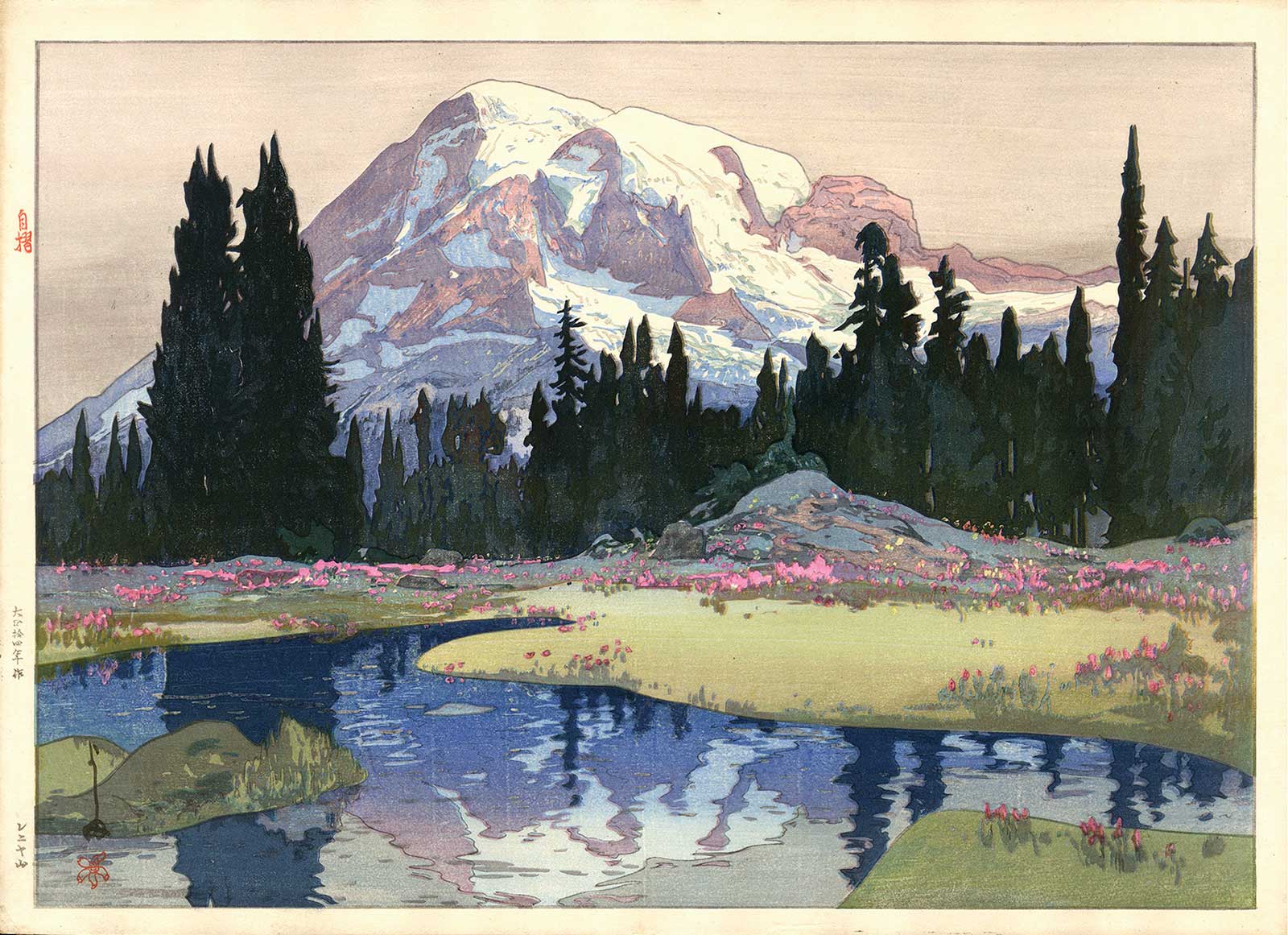
Floating World Gallery, Mount Rainier, 1925, woodblock, 13 x 20 in., by Hiroshi Yoshida (1876-1950).
It may come as a surprise to some that many artists, and more specifically, Western artists, were huge catalysts in the formation of the National Park Service, calling for preservation and using their talents to bring about awareness. This includes the likes of Carl Rungius, Albert Bierstadt, Thomas Hill and, of course, Thomas Moran, who is heavily associated with Yellowstone National Park through his gorgeous and dramatized scenes of the region.
The beauty of the many astounding national parks also reached international artists like Japanese woodblock printmaker Hiroshi Yoshida(1876-1950). “Following the Great Kanto Earthquake of 1923, Hiroshi Yoshida embarked on a tour of the United States and Europe, painting and selling his work,” says Ronin Gallery, with one of the largest collections of Japanese prints in the United States. “When he returned to Japan in 1925, he started his own workshop, specializing in landscapes inspired both by his native country and his travels abroad.”
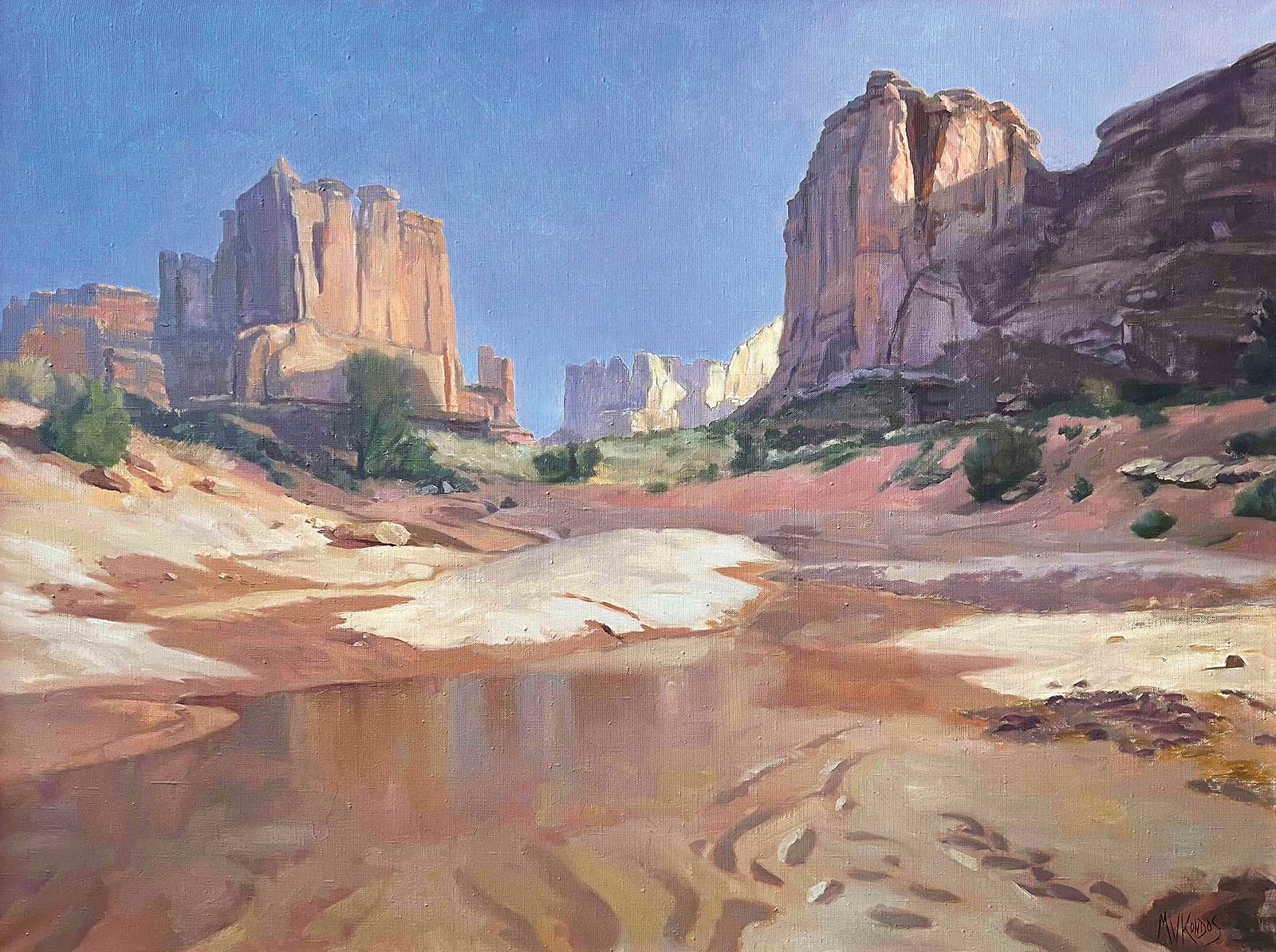
Michelle Kondos, After the Rain, Courthouse Towers (Arches NP), oil on linen, 30 x 40 in.
His print, Mount Rainier, from 1925, depicts a tranquil look at the national park located in Washington. Mount Rainier is an active volcano and the most glaciated peak in the contiguous United States. “Attracted by the calmer moments of nature, [Yoshida’s] woodblock prints breathe coolness, invite meditation and set a soft, peaceful mood,” expresses Ronin Gallery representatives.
More contemporary artists celebrate in other grand national park views, seen in the work of Michelle Kondos. For her piece After the Rain, Courthouse Towers (Arches NP),she shares, “Arches National Park is always one of nature’s masterpieces, but that’s never so true as those rare moments when it’s glistening with rain. I remember being transfixed by this scene, thinking about what a treasure we have in our parks, and knowing that I had to try to capture this moment on canvas. Then and there, I did a little plein air piece to try and roughly capture the light, color and the feeling. Later, in my studio, I let that small piece guide me in creating the larger version you see here.”
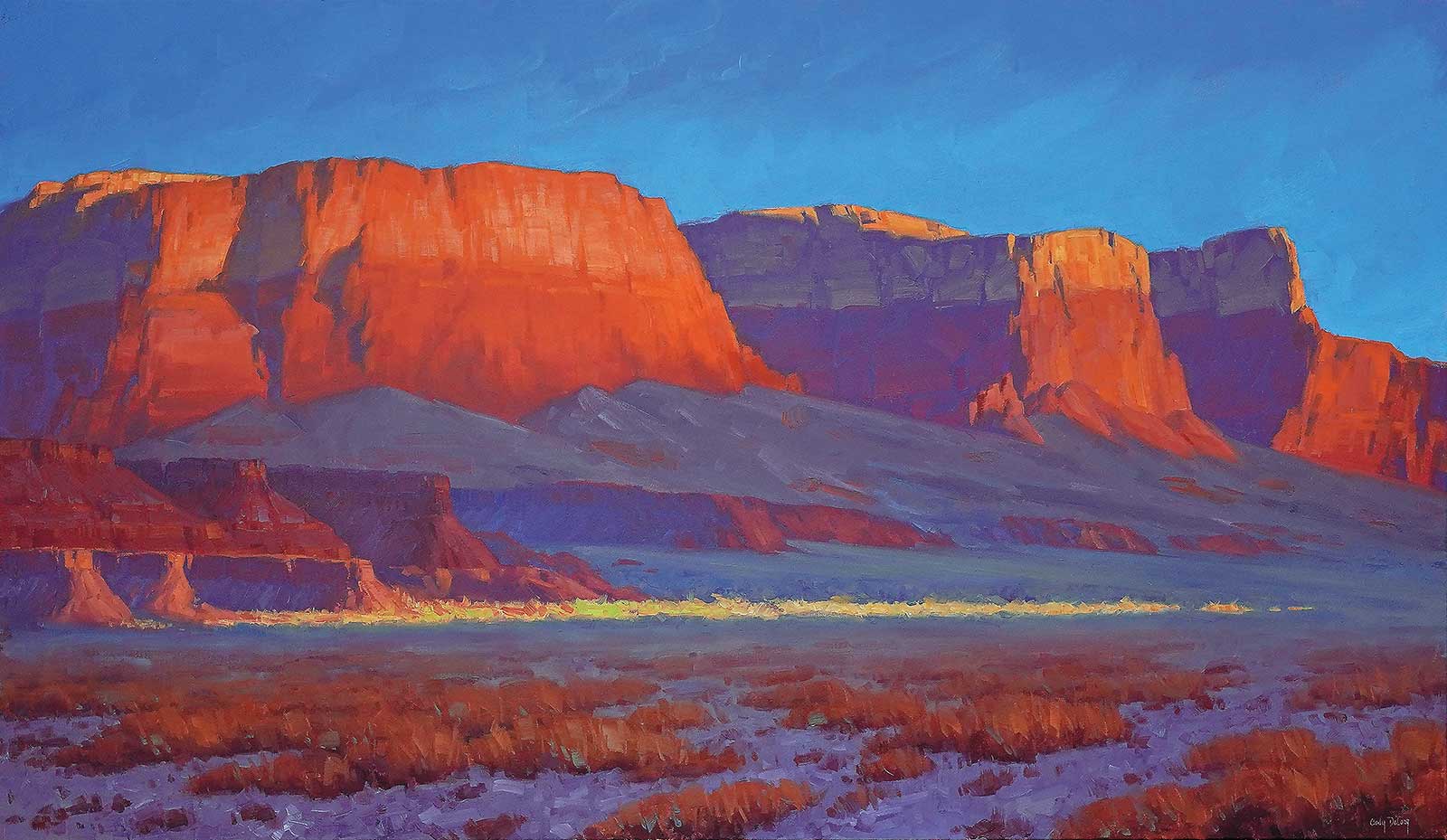
Cody DeLong, First Light, oil, 36 x 48 in.
The spectacular and striking views of the Vermilion Cliffs National Monument, leading to the front door of the Grand Canyon National Park in Northern Arizona, is featured in Cody DeLong’s First Light. “This is an area along the Vermilion Cliffs, not far from Lee’s Ferry where all rafting trips through the Grand Canyon are launched,” the artist explains. “I led expeditions for artists through the Grand Canyon for over 14 years, and on most of those trips, my boatman was Clair, one of the most experienced guides on the river. He started as a teenager and finally retired in his 70s, just a couple of years ago. We became good friends over the years and he and his wife, Pam, live near the base of the cliffs in this scene. This was the early morning light I witnessed one morning while visiting them at their home. Imagine waking up to this scene nearly every day. Special people living in a special place.”
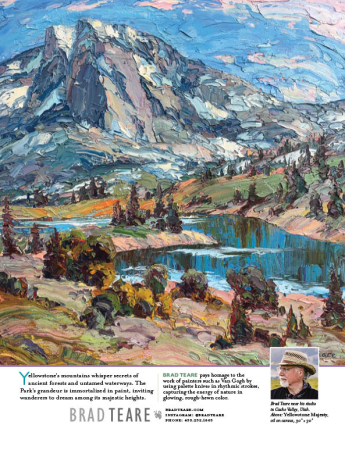
Artist Brad Teareis captivated by the majestic splendor of the national parks scattered throughout the American West. “The vistas of rugged terrain, towering mountains, serene lakes and ancient forests stir my soul and ignites my creativity,” says Teare. “The grandeur and untamed beauty inspire me to pick up my palette knives and translate their essence onto canvas. The palette knife is the perfect tool to capture the wild nature of these landscapes—the sharp interplay of light and shadow, the vivid hues of dawn and dusk, the intricate textures of rock formations and the delicate interlacing of plant life.”
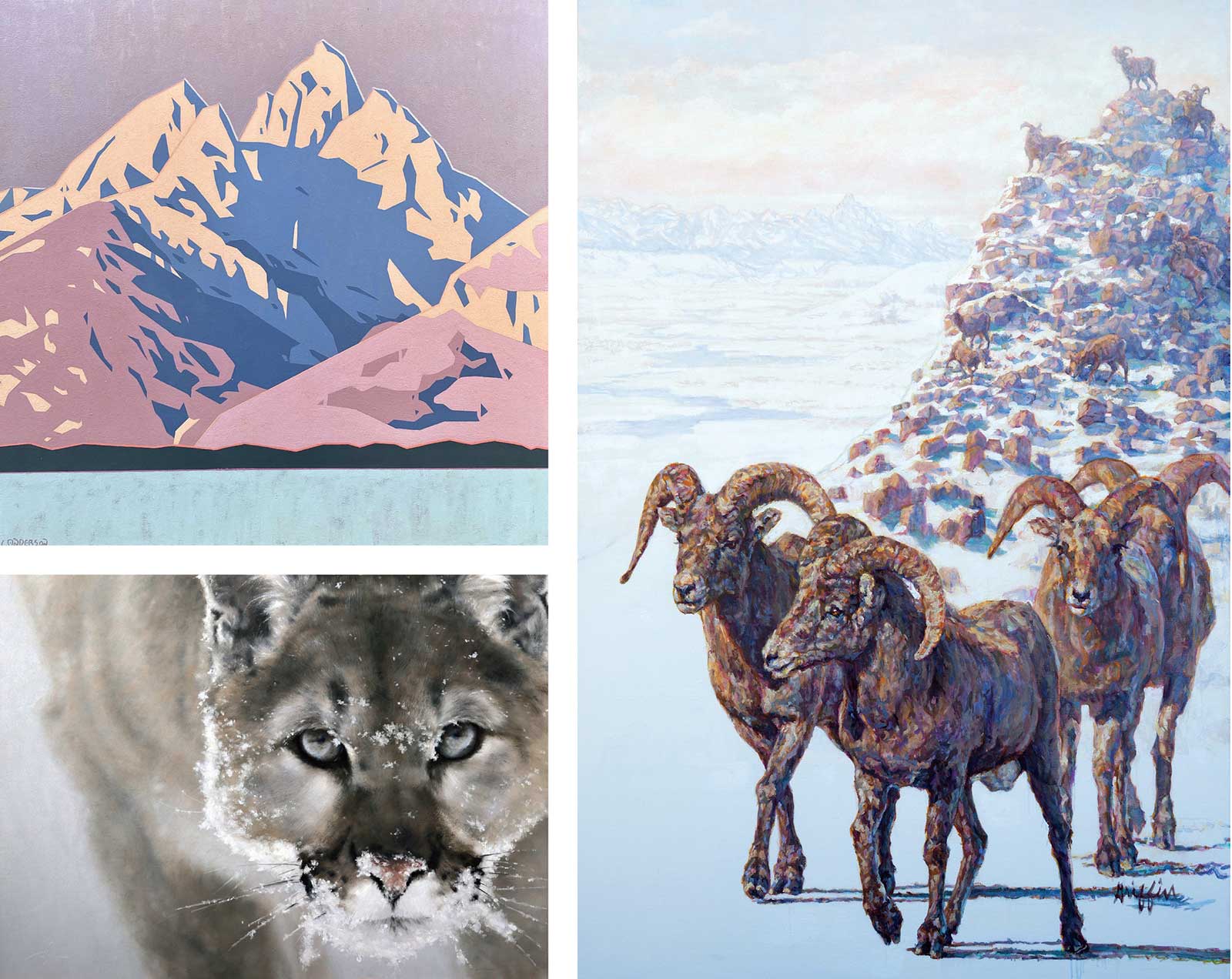
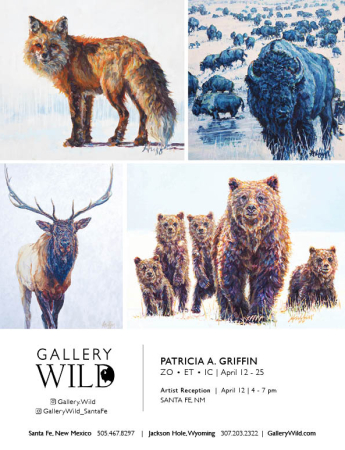
Clockwise from top left: Gallery Wild, Frozen Dawn, acrylic and oil on canvas, 30 x 30 in., by Luke Anderson; Gallery Wild, The Millers, oil on linen, 72 x 48 in., by Patricia A. Griffin; Gallery Wild, Frostbite, oil on canvas panel, 27 x 36 in., by Doyle Hostetler.
Through his paintings, Teare strives to convey what the eye beholds, but more importantly, what the emotions evoke by these astounding places—awe, reverence, tranquility and a profound sense of connection to the earth. “By painting such scenes, I seek to immortalize the timeless allure of the national parks, inviting viewers to embark on a visual journey and experience the same profound moments that inspire me as an artist,” he says.
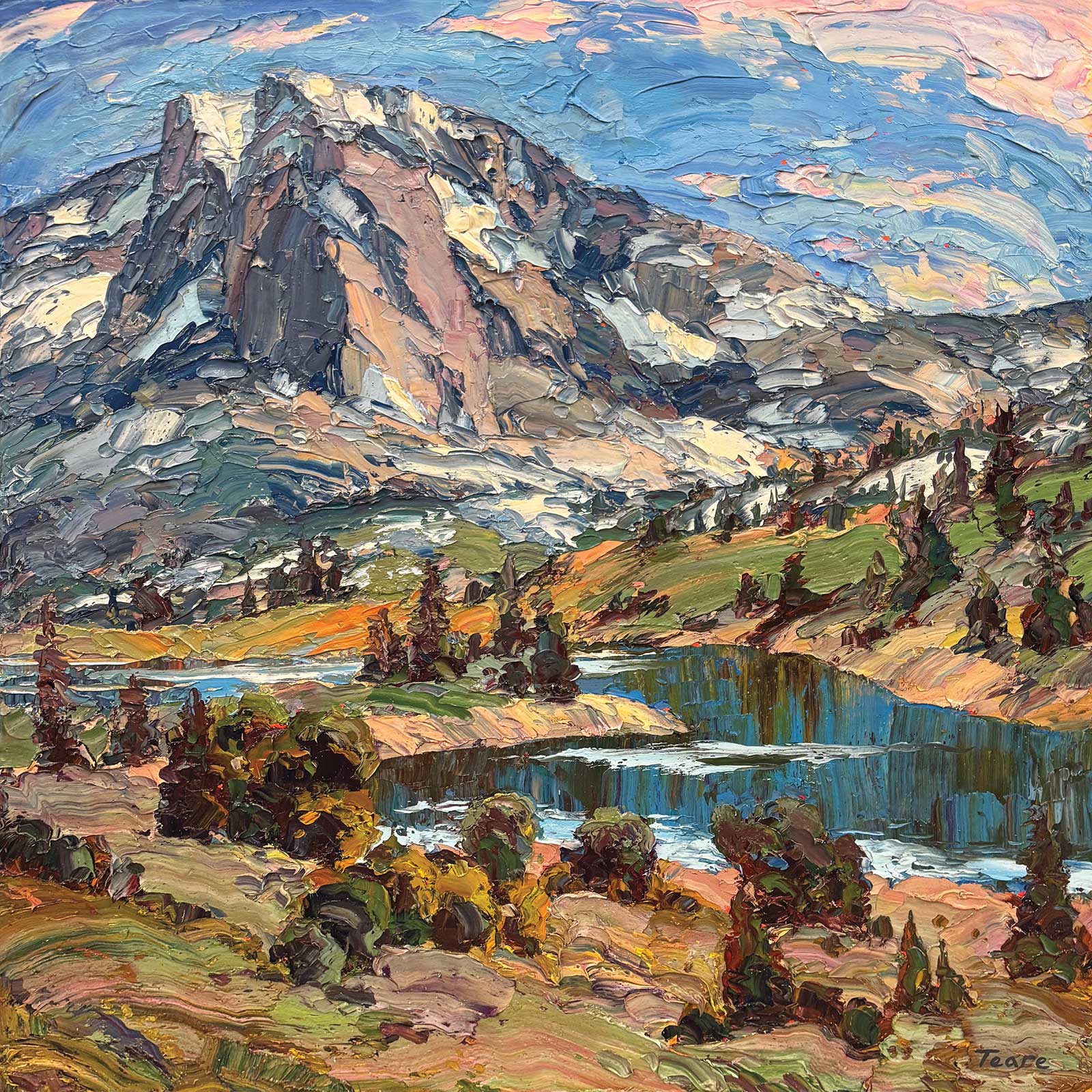
Brad Teare, Yellowstone Majesty, oil on canvas, 30 x 30 in.
Gallery Wild, located in Jackson Hole, Wyoming, represents numerous works featuring the national parks, and also many pieces that show the wildlife that inhabit the parks. “Jackson Hole is the gateway to Grand Teton and Yellowstone, two of the most iconic national parks in the United States,” explains gallery owner Carrie Wild. “Unforgettable landscapes and geological features combined with an eco-system that supports vast species of incredible life, have attracted [and inspired] artists throughout history. They have also played a key role in protecting public lands, including Yellowstone National Park.”
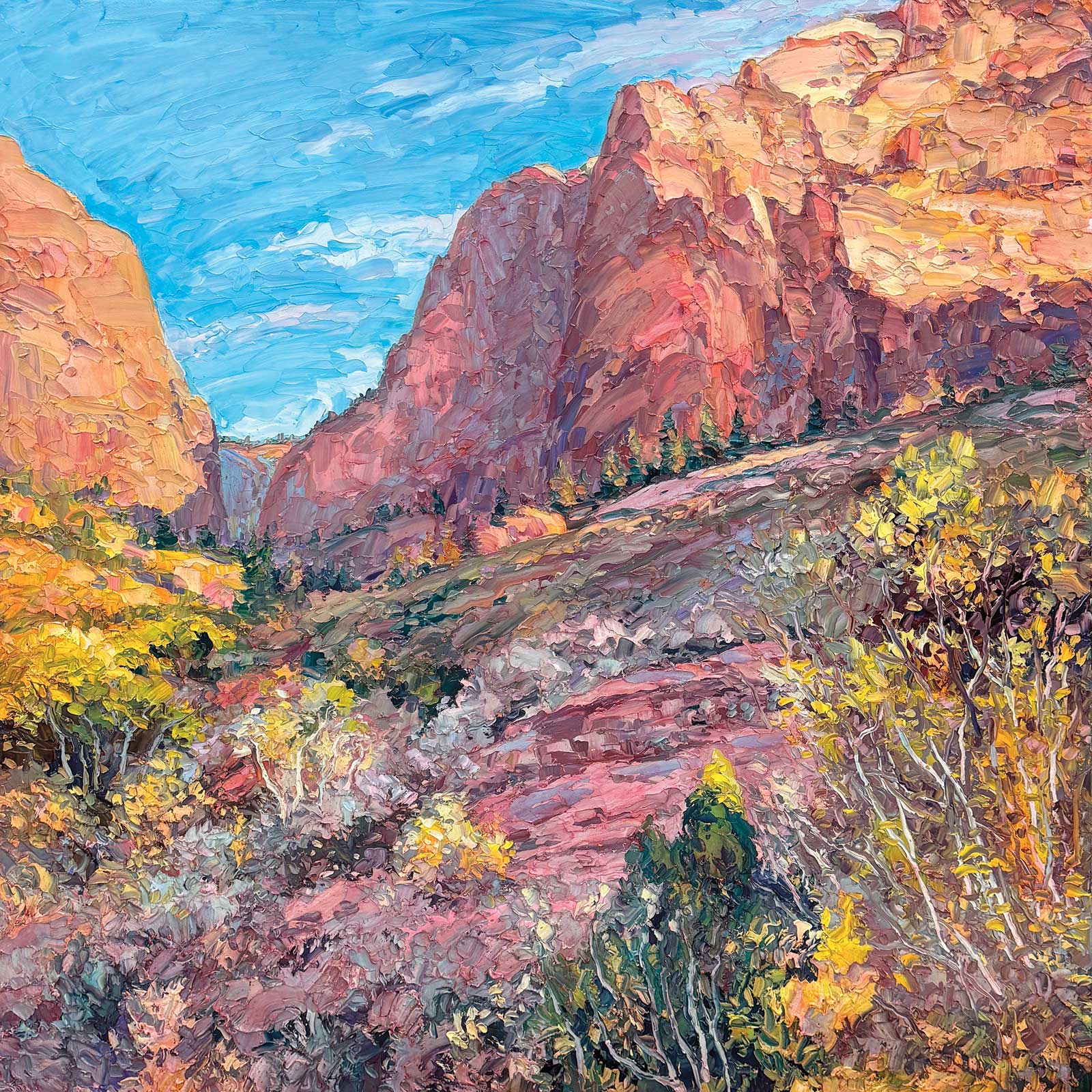
Brad Teare, Canyon Enchantment, Zion National Park, oil on canvas, 48 x 48 in.
For instance, Luke Anderson’s inspiration comes from unique features shaped by nature. “From the Teton mountain range to Old Faithful and desert landscapes of Utah, his surfaces incorporate contemporary elements of abstraction while paying homage to a traditional painterly style often found in Western and landscape art,” says Wild. “Artist Doyle Hostetler brings his wildlife subjects up close and personal, often choosing iconic species that are visible in the wild because of their protection within the borders of national parks. Patricia A. Griffin’s inspiration is founded by experience. Her studio sits on the boundary of Grand Teton National Park with unobstructed views of the surrounding landscape that provide endless sightings of megafauna including wolves, elk, bighorn sheep and moose to name a few.”
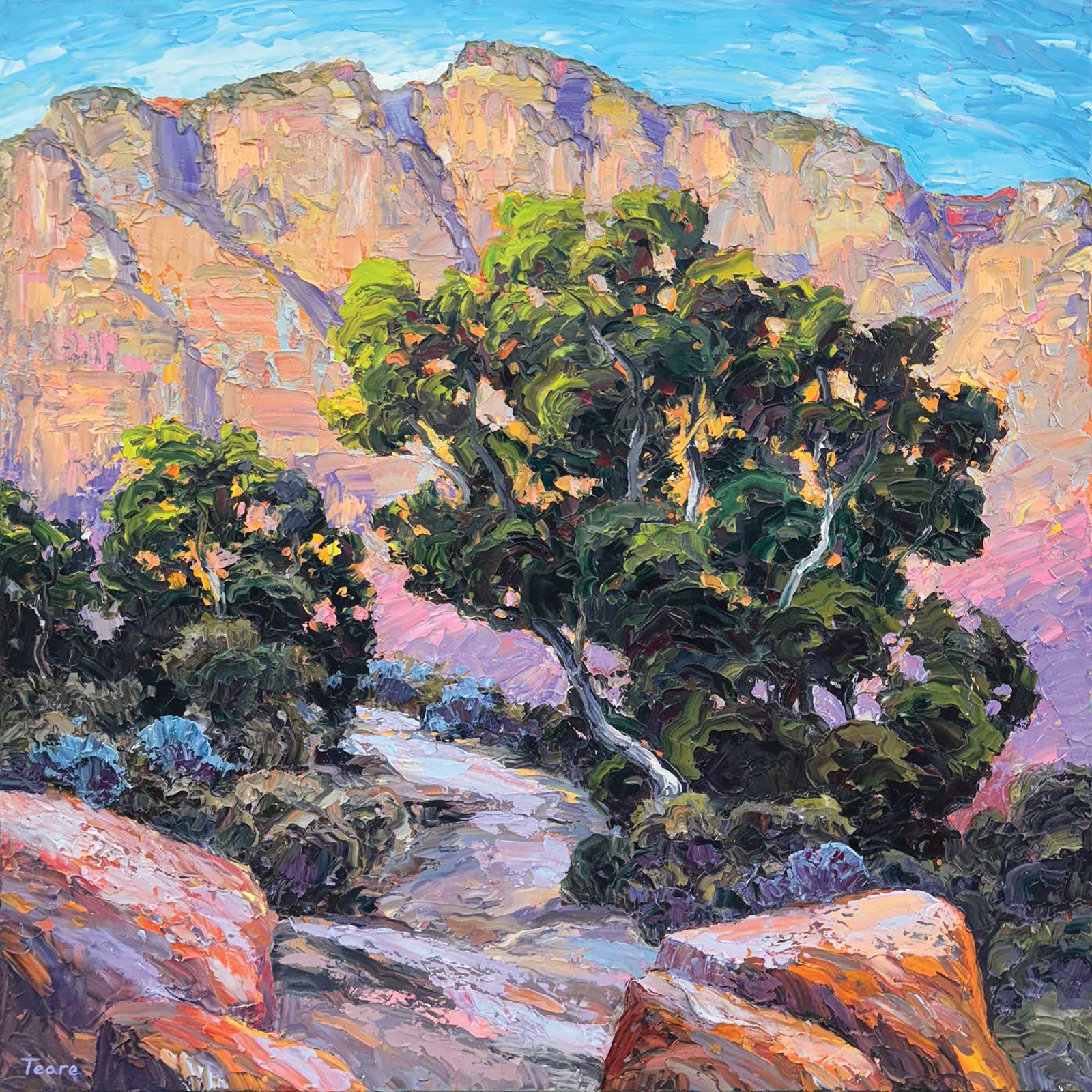
Brad Teare, Evening Falls, Zion National Park, oil on canvas, 36 x 36 in.
Artists around the country, and even the world, continue to uphold the importance of land and wildlife preservation through their depicitions of the national parks. They also strive to instill the importance of the natural world for our overall health—urging us to seek a little peace, quiet and contemplation. —
Featured Artists & Galleries
Brad Teare
(435) 232-1863, bradteare@gmail.com
www.bradteare.com
Cody DeLong
www.codydelong.com
Floating World Gallery
1925 N. Halsted Street, Chicago, IL 60614
(312) 587-7800, www.floatingworld.com
Gallery Wild
80 W. Broadway, Jackson Hole, WY 83001
(307) 203-2322 and 302 Canyon Road, Santa Fe, NM 87501
(505) 467-8297 info@gallerywild.com
www.gallerywild.com
Michelle Kondos
michelle@michellekondos.com
mvkondos@yahoo.com
www.michellekondos.com
Powered by Froala Editor