In the spring of 1924 in Tucson, Arizona, a group of artists, art enthusiasts and patrons gathered together to establish the Tucson Fine Arts Association. The subsequent decades would see the organization grow its exhibition and educational programs, focusing on paintings and etchings by artists from California, New Mexico and Arizona, evolving into an important cultural force in the vibrant city of Tucson. In the 1960s, TFAA’s name was changed to the Tucson Art Center, and eventually in the 1970s, the city of Tucson adopted a resolution to lease the entire historic block to the organization for 99 years. The Tucson Art Center changed its name to the Tucson Museum of Art and Historic Block (TMA), and opened its doors to the public in 1975 at 140 N. Main Avenue, where the museum still exists today.
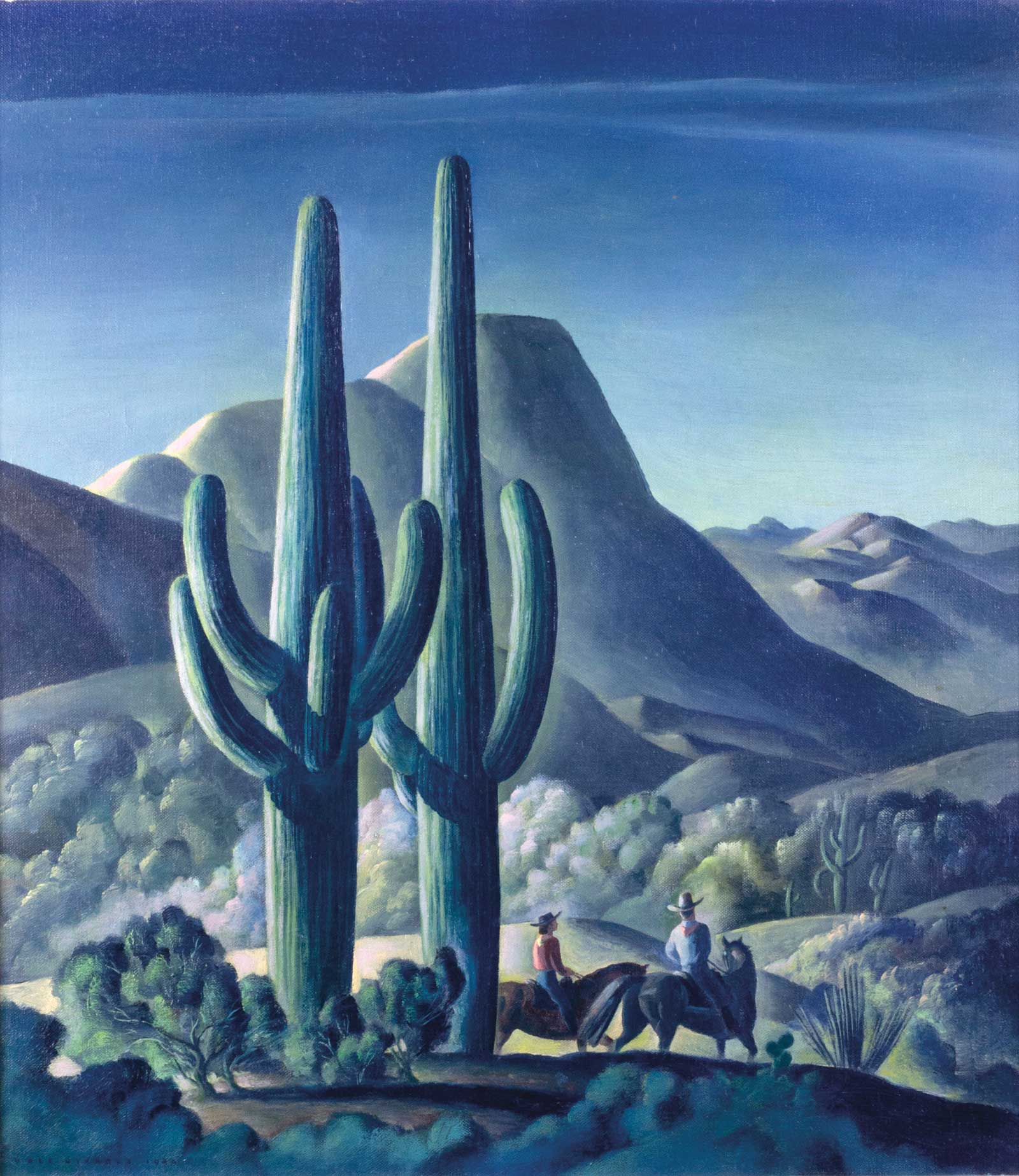
Dale Nichols (1904-1995), Evening in the Foothills, 1940, oil on canvas. Collection of the Tucson Museum of Art. Museum Purchase. Virginia Johnson Fund. 1992.398.
This year is a milestone for the institution as it celebrates an incredible 100-year anniversary. Throughout 2024, TMA is hosting a number of celebrations, including a gala as well as the exhibition Time Travelers: Foundations, Transformations, and Expansions at the Centennial. But if you’re holding this magazine in your hands, you’re almost certainly a fan of Western art—and the TMA’s Art of the American West collection is substantial.
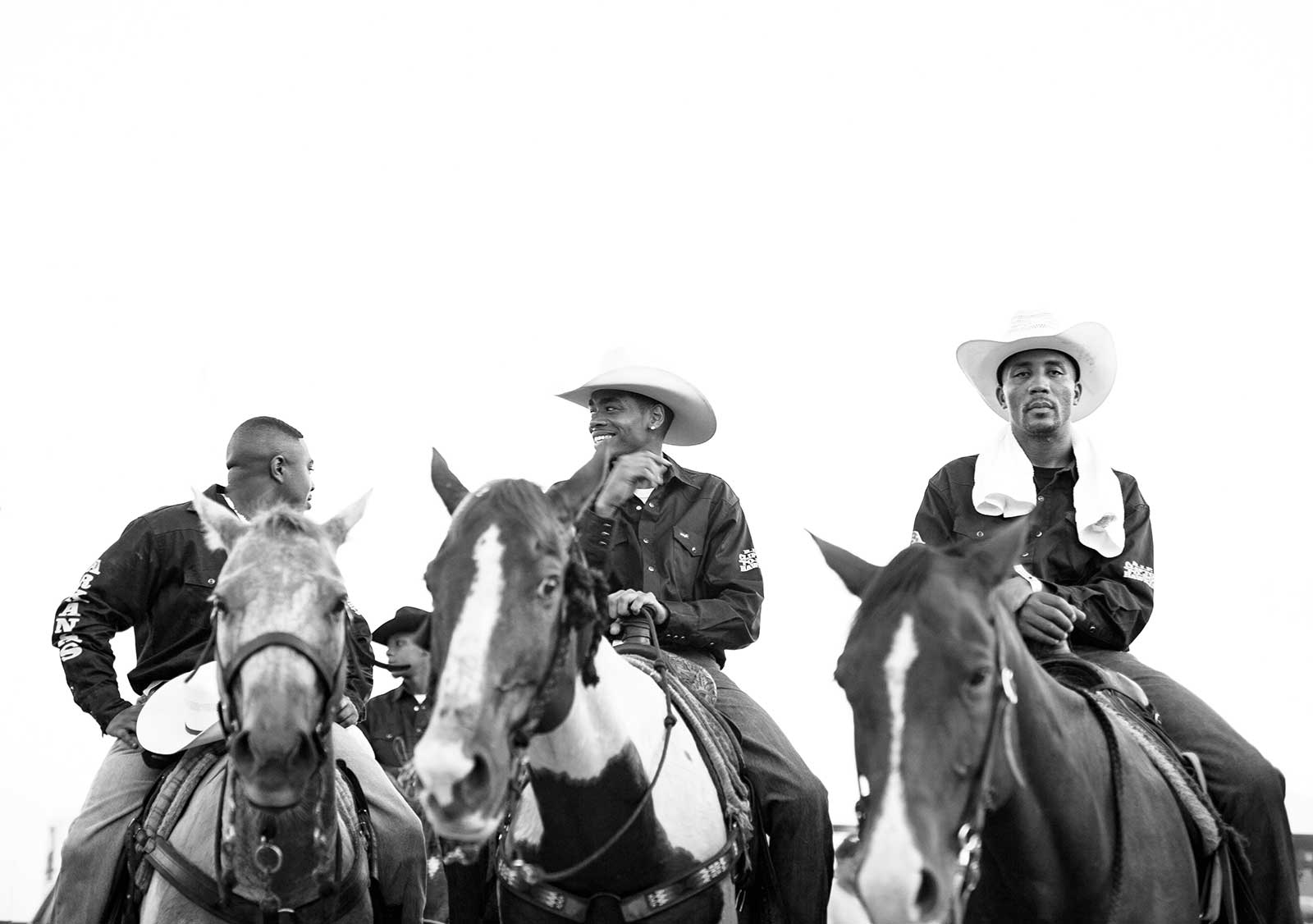
Ivan B. McClellan, Pony Express Riders, Okmulgee, Oklahoma, 2015, archival inkjet print. Museum Purchase. Funds provided by the Tucson Museum of Art Western Art Patrons. 2023.3.
“As TMA celebrates its centennial and considers its history, art of the American West has been present since its beginnings,” says Christine Crame Brindza, senior curator of the Art of the American West collection at TMA. “This genre has been a big part of [our] collections [and] exhibitions and corresponds with the spirit of Southern Arizona and the Southwest.”
The collection spans 200 years of Western art and history, made up of a diverse range of paintings, sculpture, works on paper and photography from across the Southwest, Plains and Rocky Mountain regions. It represents both artists inspired by the American West and artists who’ve lived it. Housed within the collection are works by the big names—Charlie Russell, Nicolai Fechin and Maynard Dixon, as well as incredible contemporary artists like Donna Howell-Sickles, Howard Post, Billy Schenck and the late Ed Mell, a great force of nature in the Western art world.
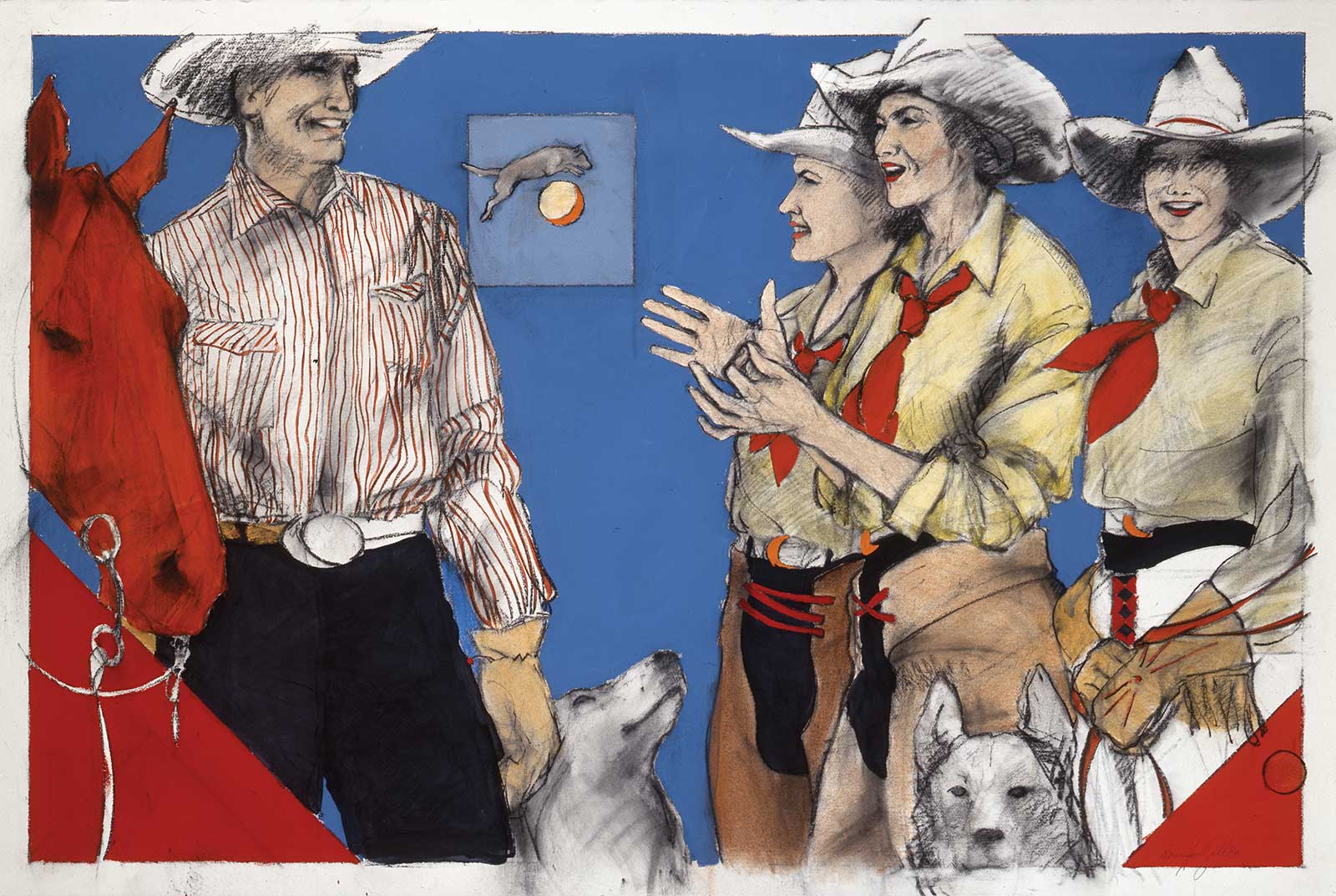
Donna Howell-Sickles, And the Dog Jumped Over the Moon, 1993, mixed media on paper. Collection of the Tucson Museum of Art. Museum Purchase. Virginia Johnson Fund. 1995.60.
“The historic and contemporary works that we have in the collection provide a wide range of ideas and perspectives about the West that together tell deeper and richer stories,” says Brindza. The Art of the American West Gallery displays historic and present-day artwork directly next to one another, encouraging dialogue among visitors. “It creates multiple points of discovery between works of art and greater understanding about the breadth of the region and its inhabitants. It demonstrates how art of the American West is not a genre that only represents the past, but also the present—reflecting ideas of now as well as making connections with the past.”
Tucson, steeped in both Mexican and Indigenous culture, is the perfect backdrop for such a collection. “Place is important when understanding art of the American West,” Brindza reflects, “and [we’re striving] to reflect the dynamics of the intersections of history, culture and heritage of Southern Arizona and the Southwest.” The museum is located about 60 miles from the United States/Mexico border. “Tucson is one of the oldest occupied cities in the U.S., and TMA’s location contains evidence of a site of an ancestral Sonoran Desert Community, the Hohokam, who are ancestors of the O’odham. In addition, TMA is positioned within the borders of the historic Presidio San Agustín del Tucson, an 18th- to mid-19th-century colonial Spanish fort,” Brindza continues. “With this, TMA includes five historic properties on its campus that range from the mid-to-late 1800s through early 1900s. There is a wealth of history and knowledge within a four-acre campus.”
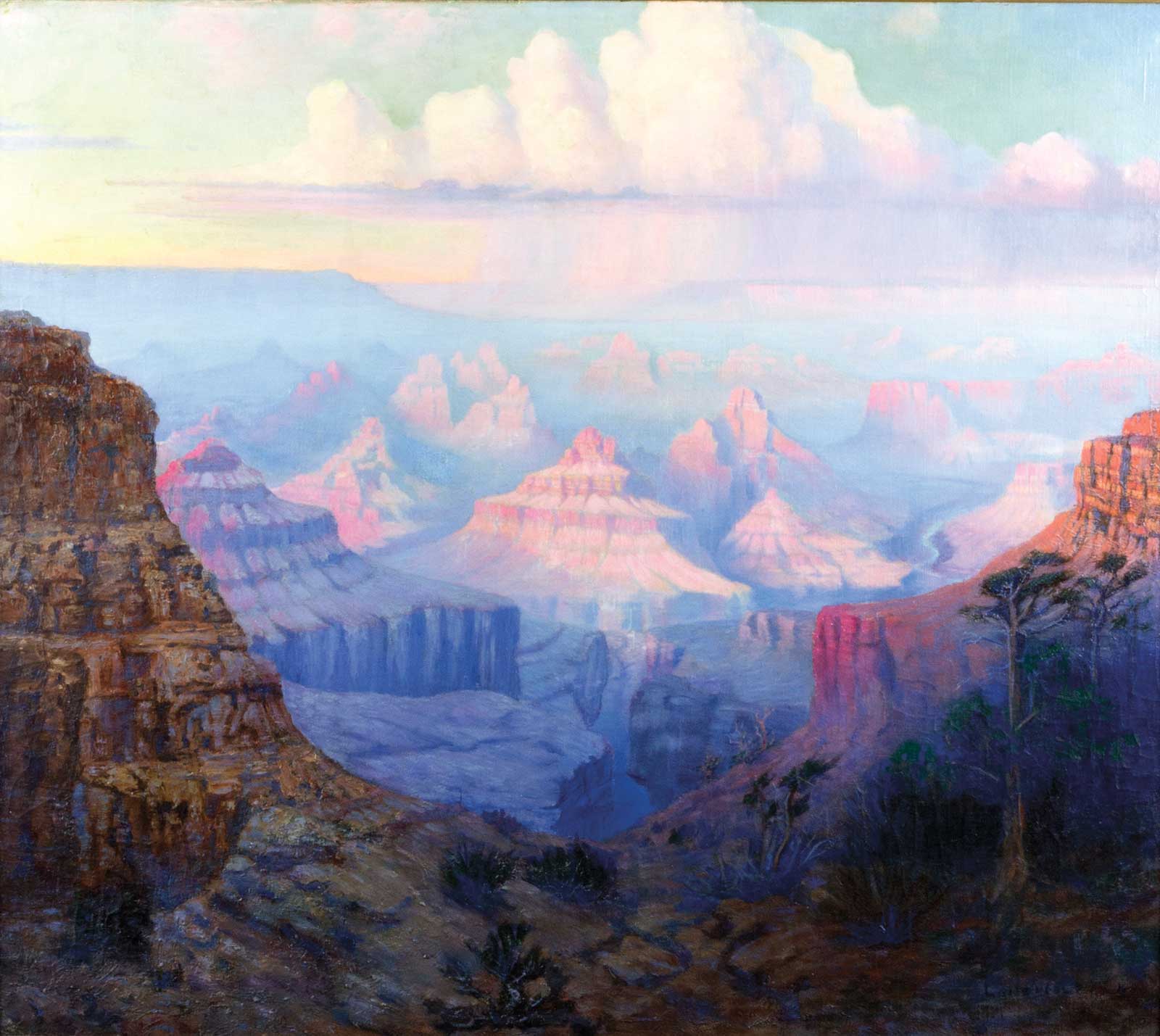
Lone Wolf (Hart Merriam Schultz) (1882-1970), Grand Canyon, 1919, oil on canvas. Collection of the Tucson Museum of Art. Gift of the J. C. Kinney Family. 1980.25.1.
A cornerstone of the Art of the American West collection, Brindza adds, is reflecting a multitude of stories and voices. Several recent acquisitions and exhibitions feature these diverse voices, including the People of the West: A Rethinking of “Westerners,” an exhibition that examines the concept of who is a “Westerner.” “The installation offers a new interpretation of this term that is more inclusive and reflective of a 21st-century vision. In its current iteration, TMA worked with students at Tucson High School in exploring the collection to find who they believe are ‘People of the West.’ This display includes art that represents someone they see every day, from those they would view in a coffee shop to portraits that reminded them of a relative…A few made connections to history, women’s roles, urbanization of the West and people in positions of power. This broadening of the definition of Westerner provides opportunities for visitors to engage with art of the American West in new ways.”
Brindza continues, “TMA’s audiences are diverse, with many local, regional and out of town visitors that come from across the globe. Many are experiencing the West for the first time, and therefore, it’s important for the collection to address the variety of ideas, subjects and perspectives found within. TMA is positioning this collection to be more reflective of the communities and ideas of the West that may have been overlooked in the past.”
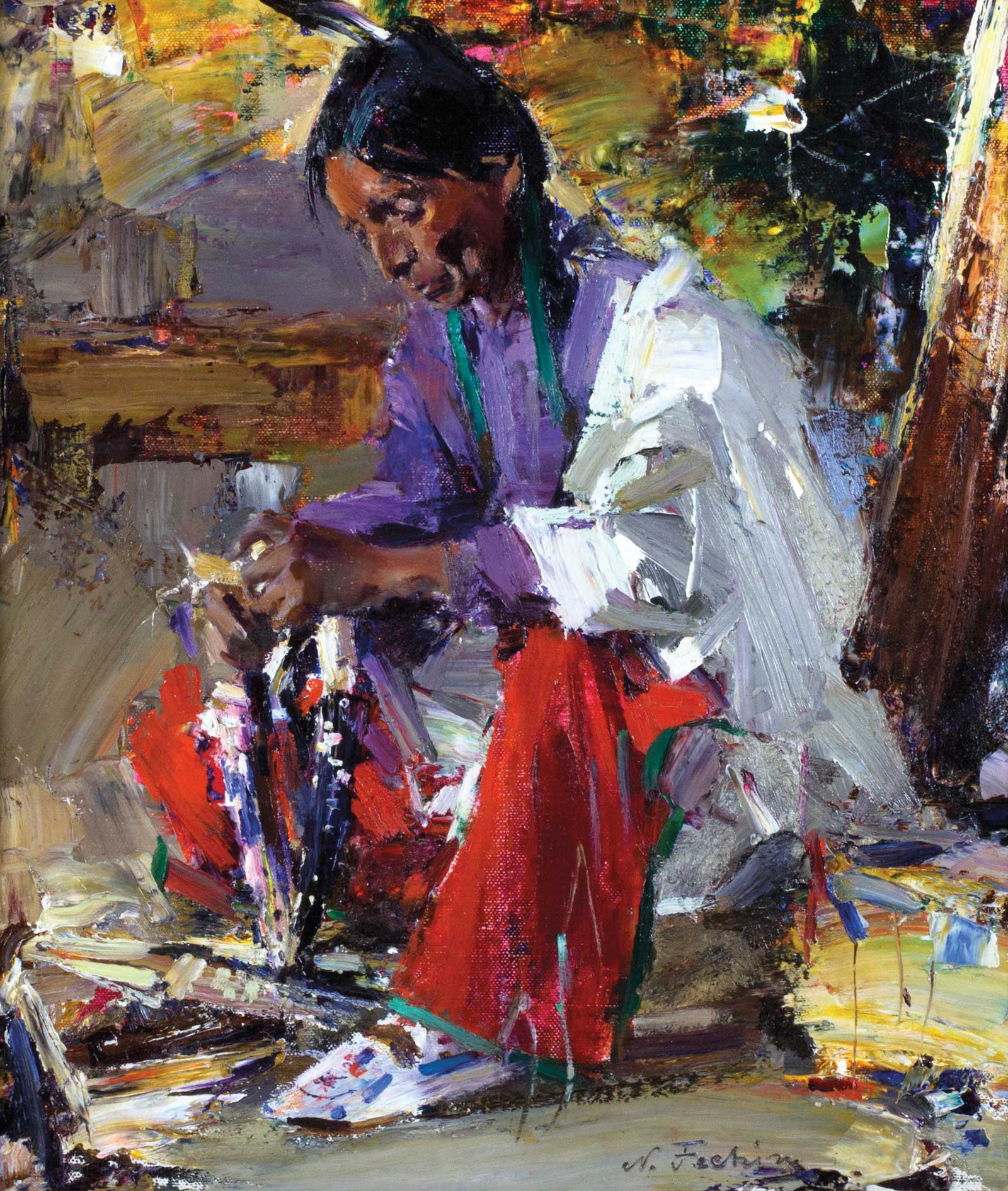
Nicolai Fechin (1881-1955), Indian with Corn, ca. 1927-33, oil on canvas board. Collection of the Tucson Museum of Art. Bequest of Ileen B. and Samuel J. Campbell. 1982.1.23.
Citing the museum’s ongoing exhibition Southwest Art: Contemporary Conversations, Brindza says TMA worked with seven community curators who explored different perspectives and identities that make up the Southwest, developing themes and creating wall labels. “They provided ideas that staff had not considered and pointed out areas where the collection could be expanded in the future…By working with members of the community and exploring with them the topics that matter most, we can [continue to] strengthen the way the collection is constructed as well as presented to the public.” —
Powered by Froala Editor