Depending on who you ask, the Old West may have ended when barbed wire was introduced to the open lands of the West, or even the arrival of the railroads, or the invention of automobiles or airplanes. Others mark it with the death of famous figures such as Wyatt Earp, Buffalo Bill or Jesse James. Hollywood suggests as much by framing the end of the West around the death or retirement of the last gunfighters in films like The Wild Bunch, Unforgiven and The Man Who Shot Liberty Valance.Some might argue that the Old West never truly ended in some parts of the country.
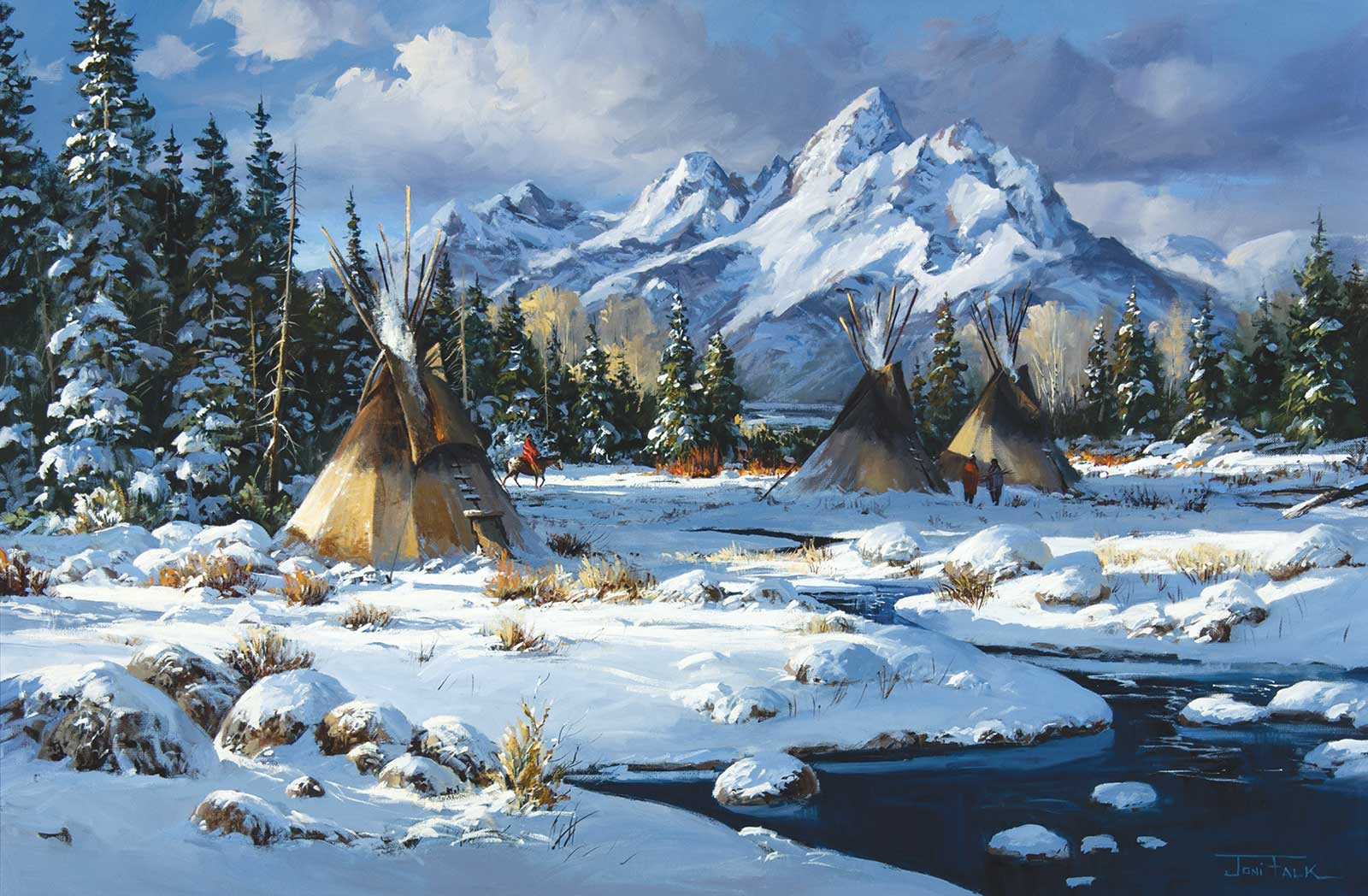 Scottsdale Art Auction, The Glow of Winter, oil on canvas, 24 x 36 in., by Joni Falk. Estimate: $6/9,000Whenever the Old West ended, from that moment onward artists began looking back to that period for inspiration in their work, whether it’s detailed historical paintings, portraits of Western figures, romanticized visions of what the West represents or even more critical examinations of the things that went wrong. Today, painters have a nuanced respect for the history that came before them. They can look back on the tragedies and triumphs of that period with 21st-century perspectives that allow them to identify new kinds of stories within the Old West.
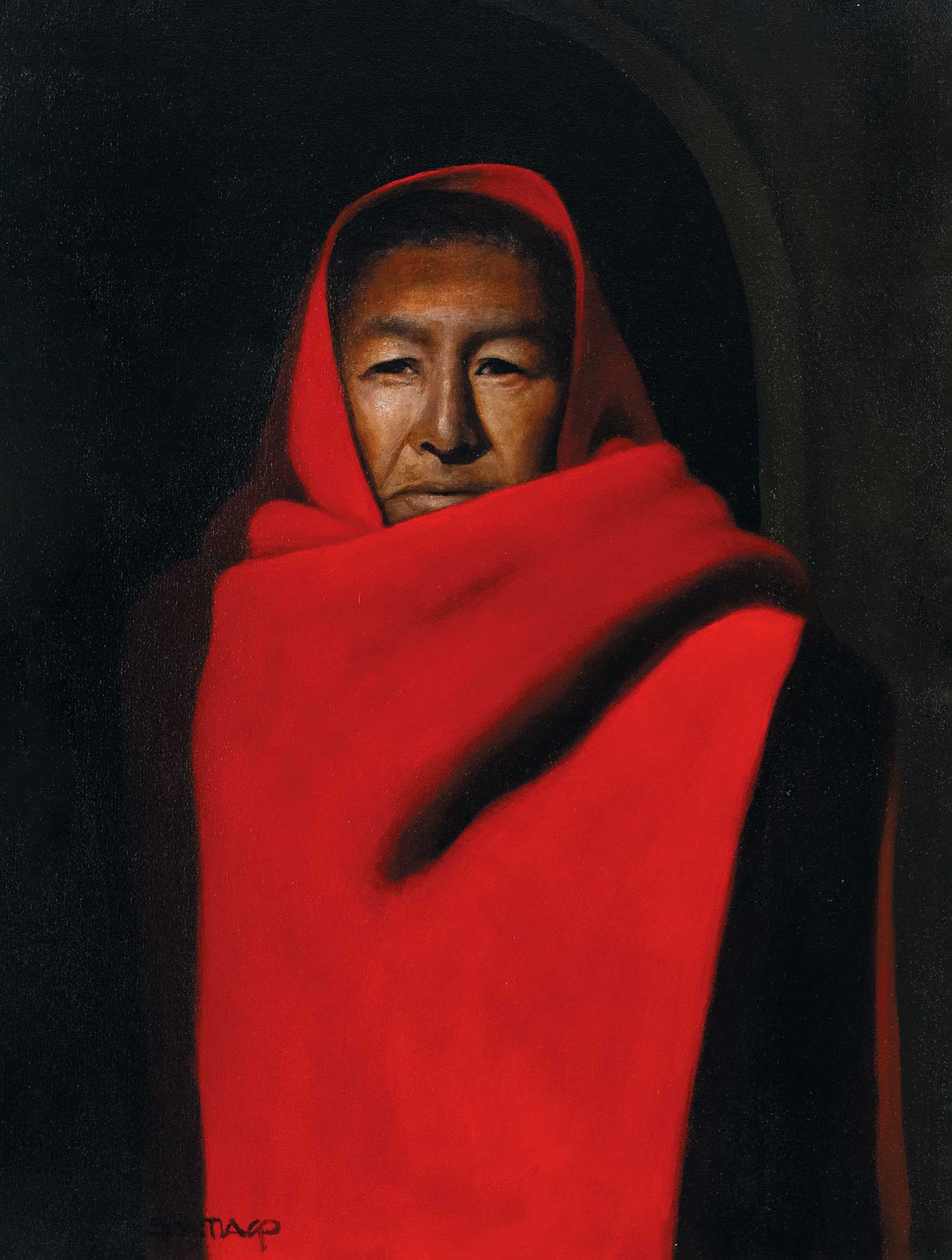 Blue Rain Gallery, Tony Leaving the Train Station, oil on canvas, 24 x 17 in., by Roseta Santiago.
And make no mistake, a lot of Western art is about storytelling, if not with the subjects of the art then certainly with the viewer. The art begs viewers: What are you feeling while looking at this? What does it make you think about within your own history? Where does your story connect with this one?
Figurative works create a gateway that prompts viewers to explore more within the art. It is prominent in three works featured here: Nocona Burgess’ Jicarilla Future, Roseta Santiago’s Tony Leaving the Train Station and Lorenzo Chavez’s We Become Where We Live.All three images focus on important figures of the Old West—Native Americans in various settings.
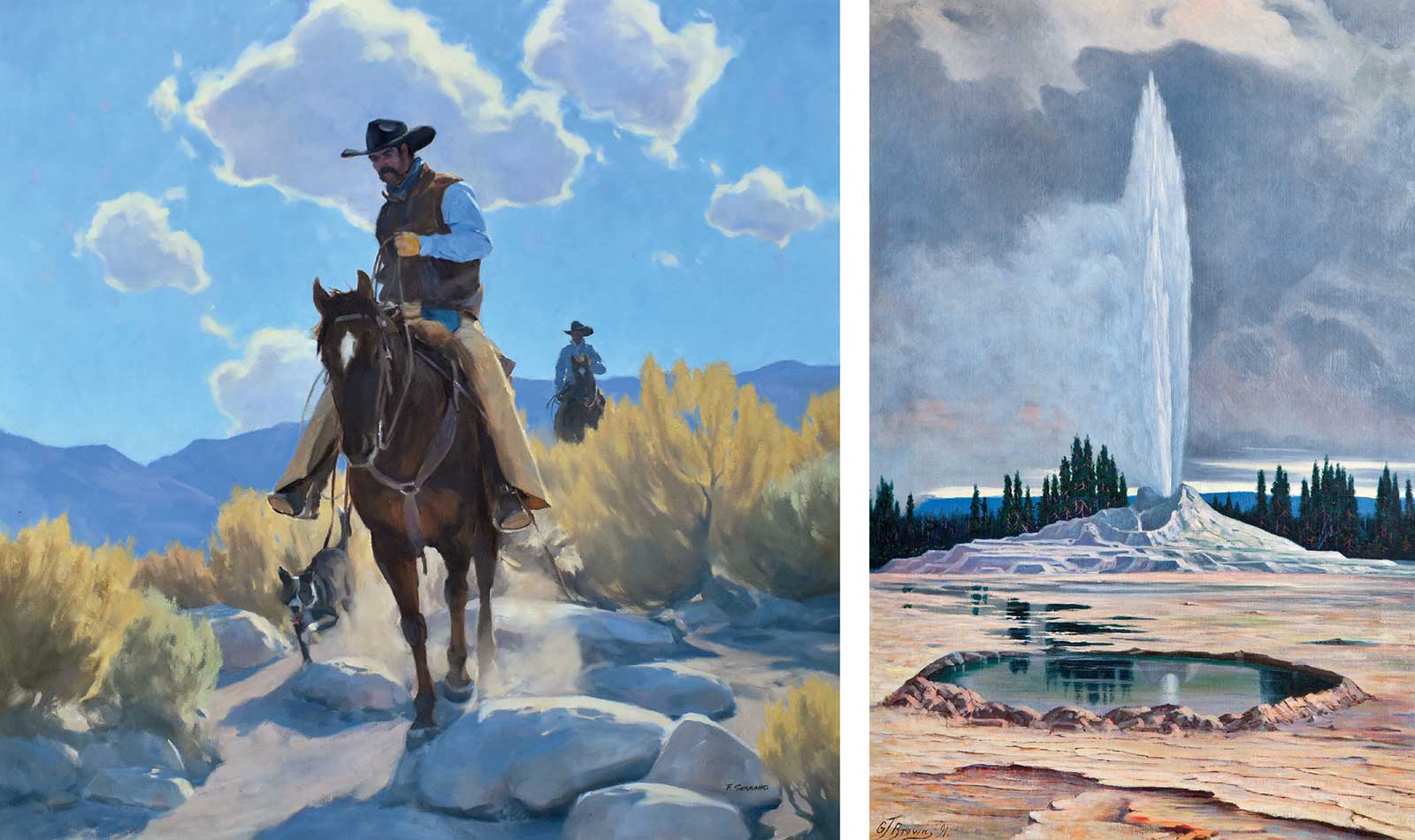
Tehachapi Arts Commission, Sierra Wranglers, oil, 30 x 30 in., by Frank Serrano; Eiteljorg Museum, Castle Geyser, Yellowstone, 1891, oil on canvas, Grafton Tyler Brown (1841-1918).
Burgess’ work shows a young woman, her face in a slight shadow as she seems to examine the viewer on the other side of the canvas. Her face is sad, but confident, and time seems to have taken a toll over her as she gazes from the artist’s contemporary composition and color palette. Burgess is Comanche, so he brings his own history into the painting and asks viewers to bring theirs. Jicarilla Future will be on view at La Luz de Taos beginning in April at the Couse-Sharp Historic Site in Taos, New Mexico.
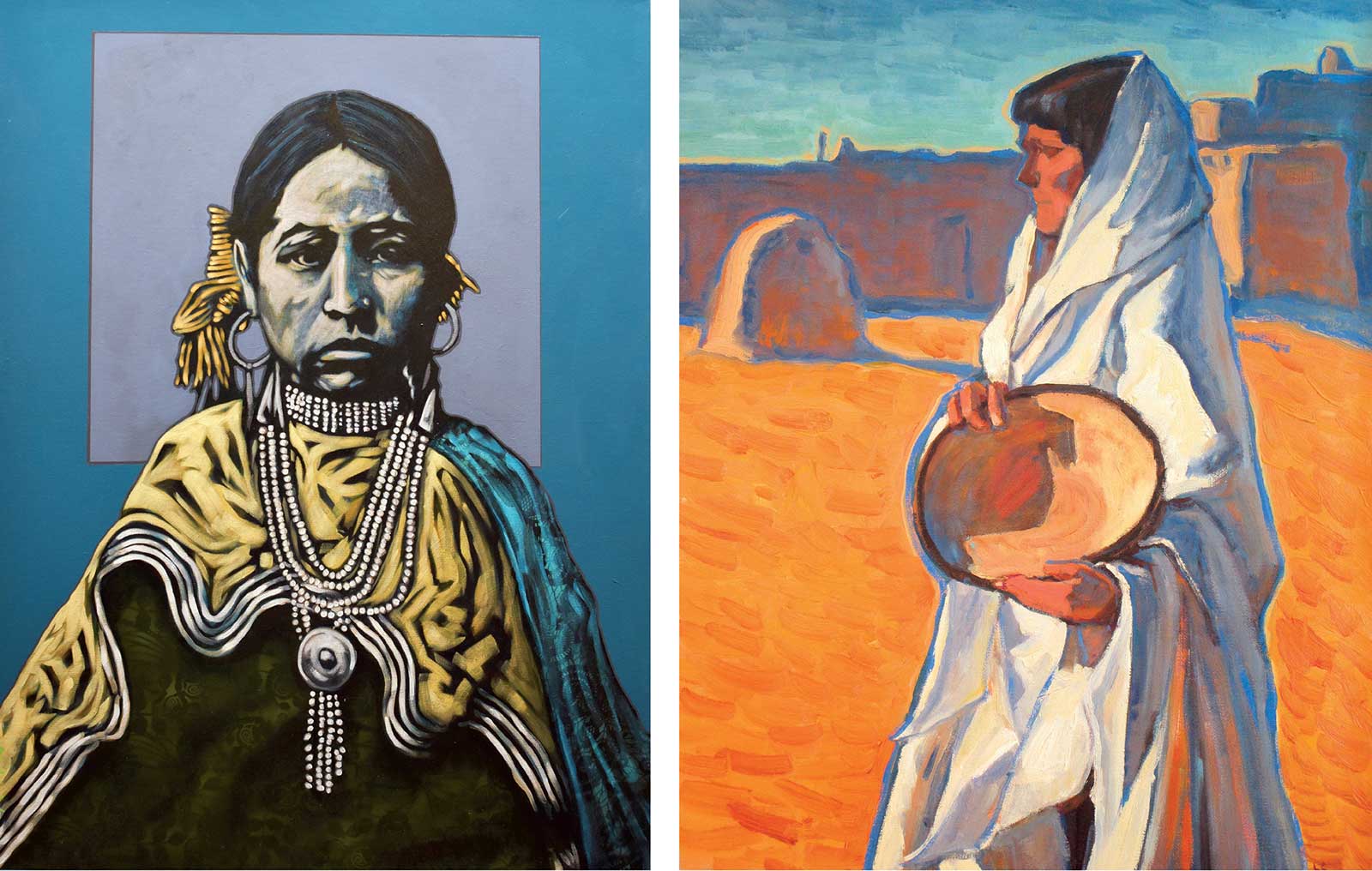
Nocona Burgess (Comanche), Jicarilla Future, acrylic on canvas, 40 x 30 in.; Lorenzo Chavez, We Become Where We Live, oil, 20 x 16 in.
For Santiago, whose paintings are available at Blue Rain Gallery in Santa Fe, New Mexico, she focuses more on the realistic aspects of her blanket-clad figure, although she also uses shadows to convey mood and time. Tony Leaving the Train Station also has that magnificent red that seems to emit light from its vibrancy alone.
In Chavez’s work, the paint is applied loosely and yet it still conveys some detail. “I view the myth of the West not as a separation of lives and ideas, but [as a connection] to place, people and spirit,” the artist says.
Like these three works, the Old West is alive, and still has so much storytelling potential, from grand scenes of nature or historic events to smaller images of single people.
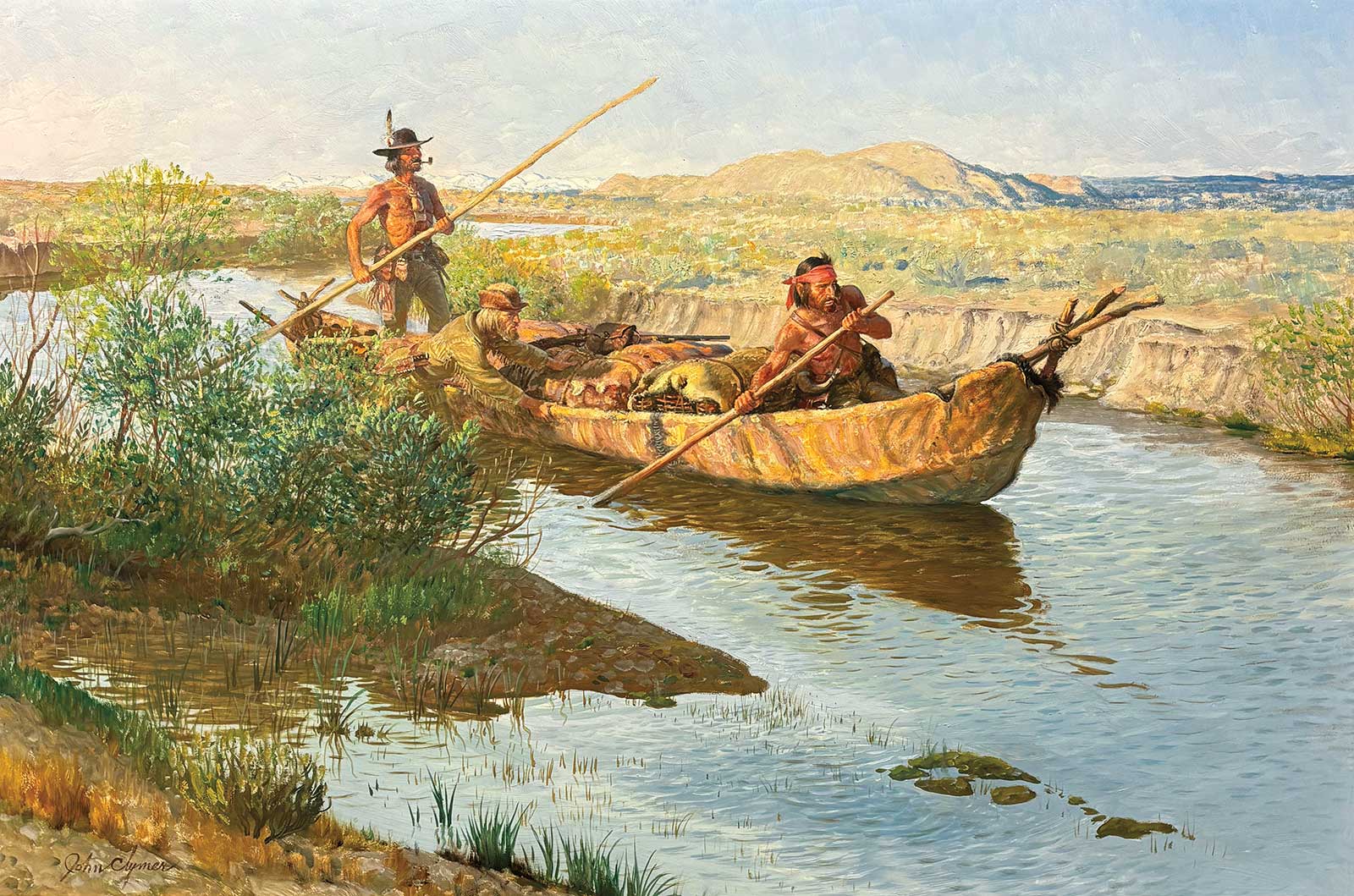
Scottsdale Art Auction, Trading Down the Sweetwater, oil on board, 24 x 36 in., by John Clymer (1907-1989). Estimate: $90/120,000
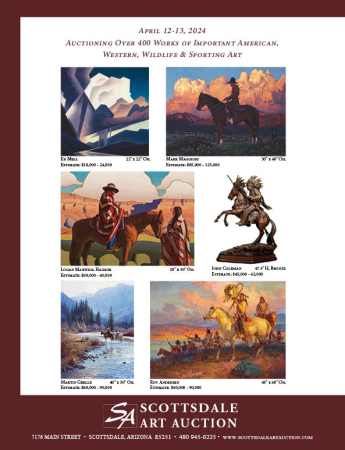
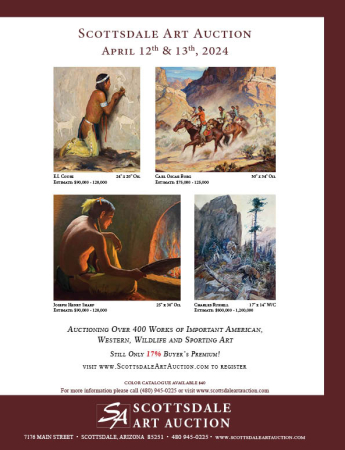
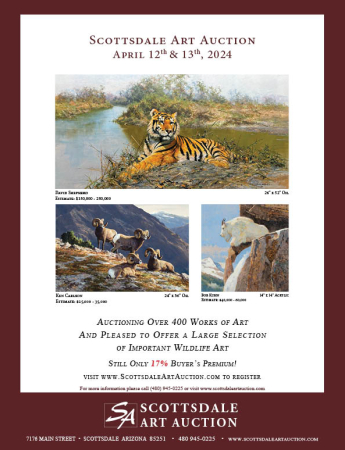
At Scottsdale Art Auction this month, the auction house will offer a number of works that show the Old West, including in Joni Falk’s The Glow of Winter (est. $6/9,000). Falk’s work has done remarkably well at the auction, which holds her world auction record. Other works in the sale include Olaf C. Seltzer’s Dangerous Grizzly (est. $30/50,000) and John Clymer’s Trading Down the Sweetwater(est. $90/120,000). The auction catalog helps illuminate Clymer’s piece: “Rivers play a vital role in many of John Clymer’s greatest works.
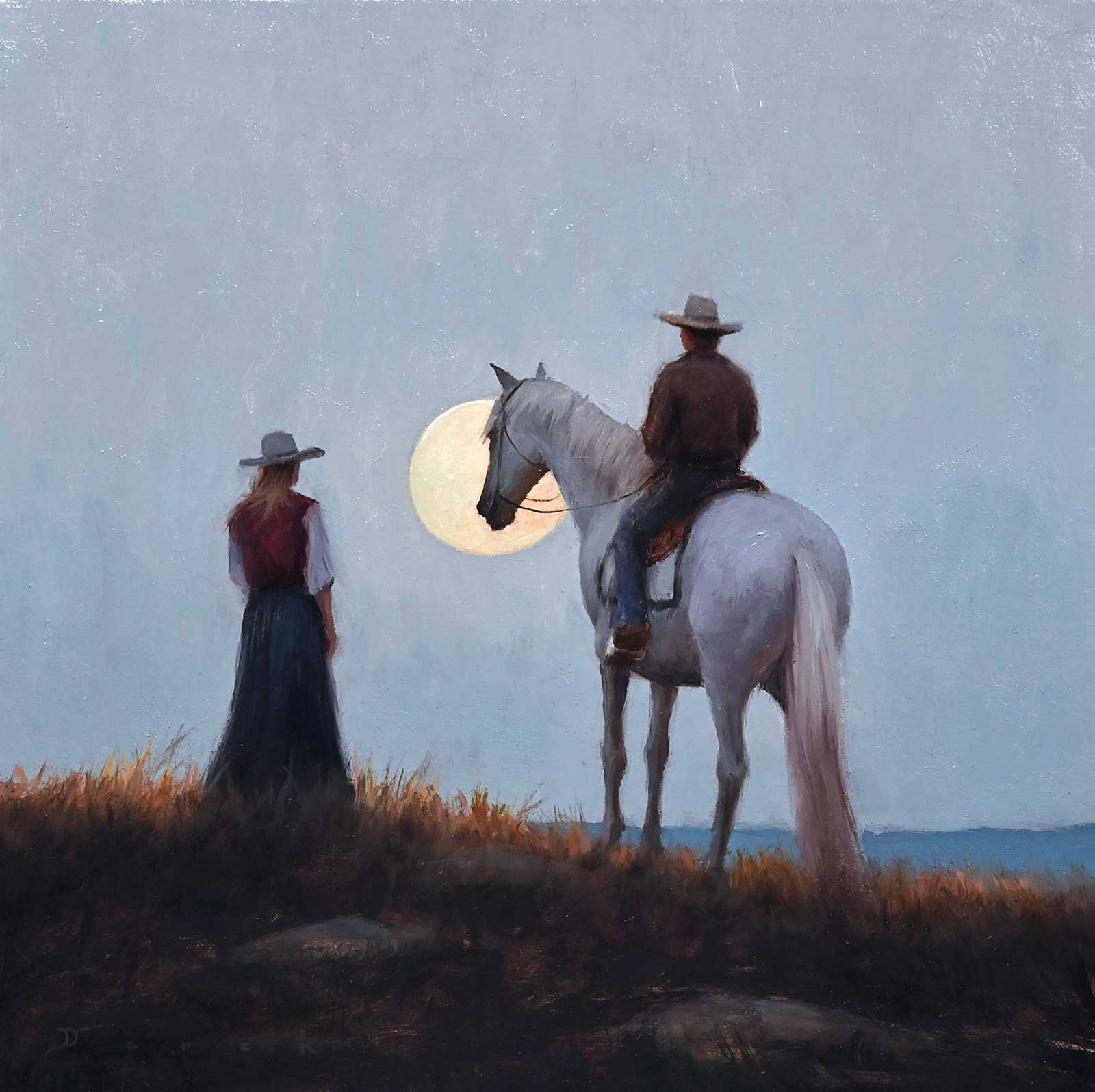
Tehachapi Arts Commission, Moonlight, oil, 10 x 10 in., by Derek Harrison.
As a man of history and a voracious reader, Clymer saw the waterways of the frontier as the lifeblood of the American West prior to the arrival of the great railroads. Lewis & Clark, George Catlin, Karl Bodmer’s expedition with Prince Maximillian, traders in overloaded flat boats, fur trappers during the 1600s and 1700s—all had relied on rivers to navigate their way around the West. Trading Down the Sweetwater is a stunning example of his fascination with the rivers of the West. In this case, the Sweetwater River is a tributary of Wyoming’s North Platte River.” The auction will be held April 12 and 13 in Scottsdale, Arizona.
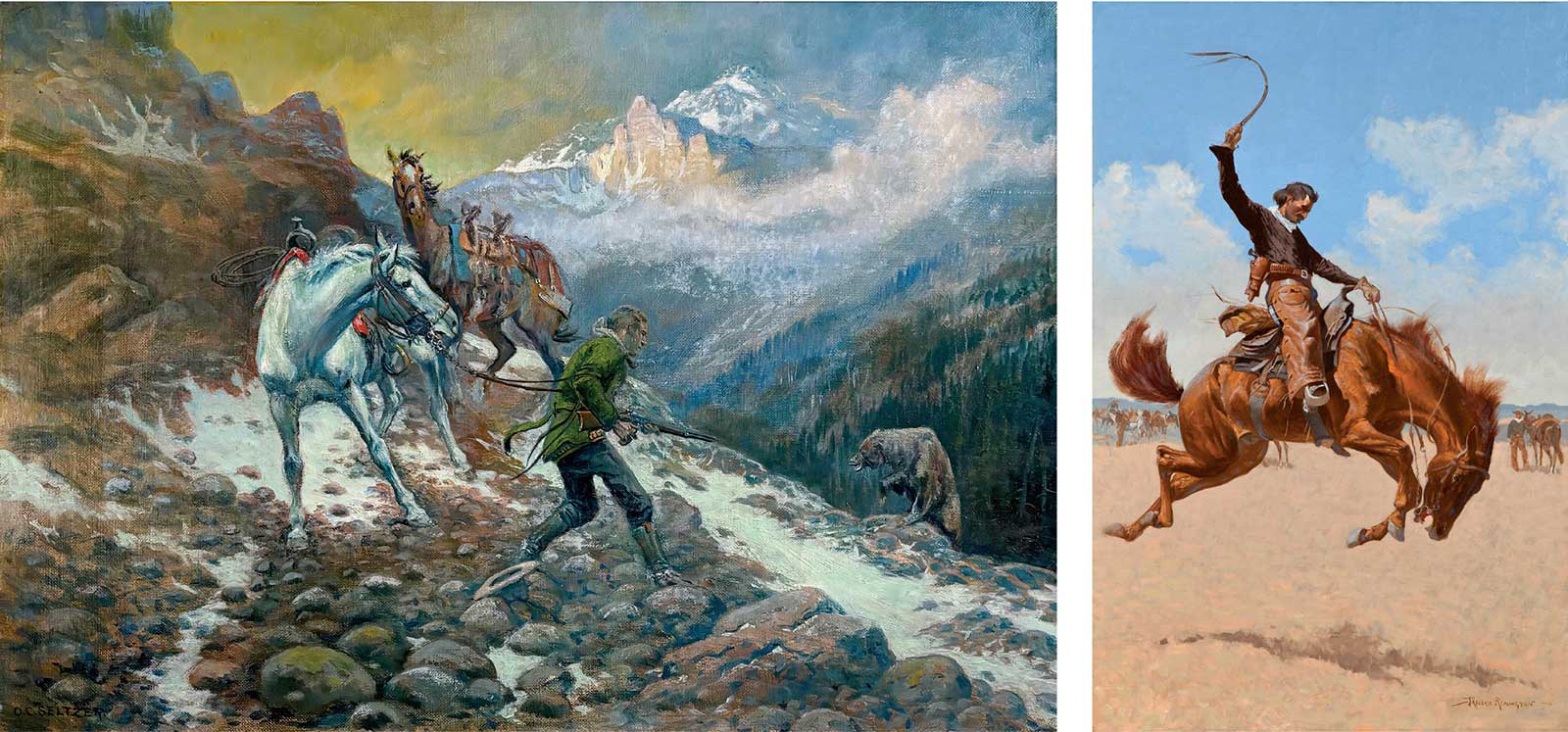
Scottsdale Art Auction, Dangerous Grizzly, oil on canvas, 14 x 20 in., by Olaf C. Seltzer (1877-1957). Estimate: $30/50,000; Eiteljorg Museum, A Buck-jumper, ca. 1893, oil on canvas, by Frederic Remington (1861-1909).
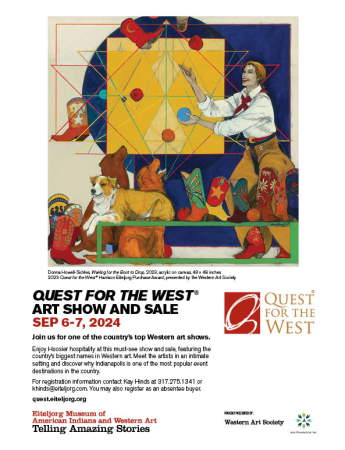
The Eiteljorg Museum of American Indians and Western Art in Indianapolis is committed to telling stories about the contemporary West as well as the Old West. “Guests at the Eiteljorg Museum are immersed in amazing stories of the art, history and cultures of Native America and the American West. The Eiteljorg is the only museum of its kind in the Midwest and contains renowned collections of Native American and Western American art,” the museum notes. “The Western art galleries featuring Attitudes: The West in American Art showcase a beautiful collection of iconic paintings and sculptures from the museum’s renowned Western art collection, including works by Frederic Remington, Charles Russell, Georgia O’Keeffe, Oscar Berninghaus, Mian Situ and others. Reimagined and reinstalled in 2018, the Western galleries not only address the question of what Western art is, they more deeply explore the art’s place in American culture.”
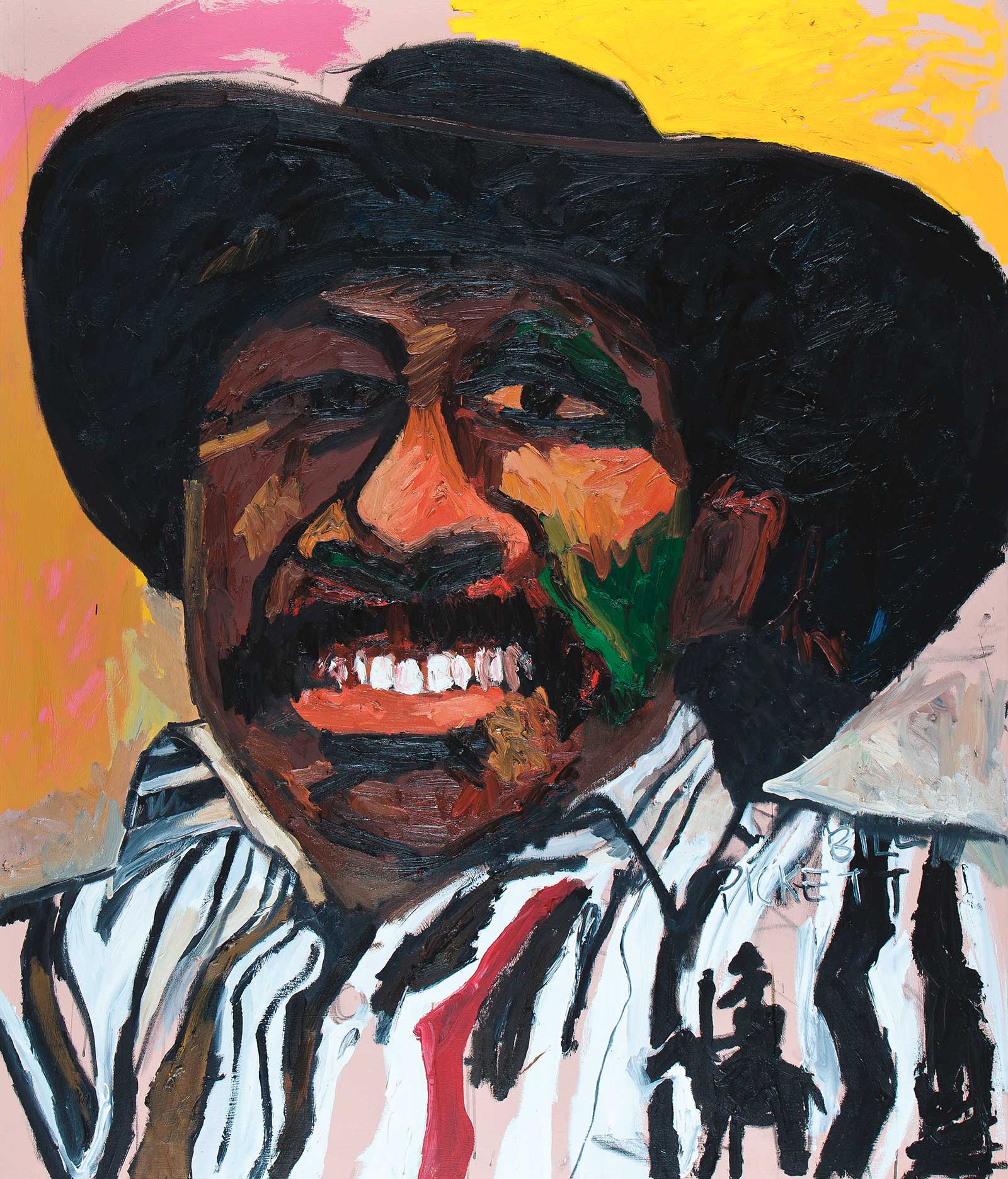
Eiteljorg Museum, Black Cowboy — Bill Pickett, 1995, oil on canvas, by Bernard Williams.
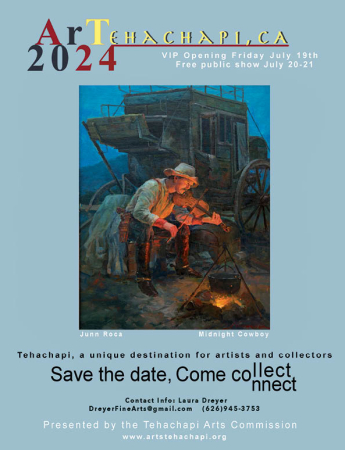
To experience even more of the Old West, mark your calendars for July 19 through 21 as Art 2024 Tehachapi is presented by the Tehachapi Arts Commission in Tehachapi, California. For the last four years, Tehachapi has become known as a destination for plein air artists from across the country. For this year’s show, more than 50 artists will spend four days in May painting and sketching the Tehachapi area and visiting a working cattle ranch. Their finished work will be submitted and juried into Art 2024 Tehachapi.Artists at this year’s show will include Frank Serano, Russian painter Nikita Budkov and Derek Harrison. Visit the commission’s website for more information. —
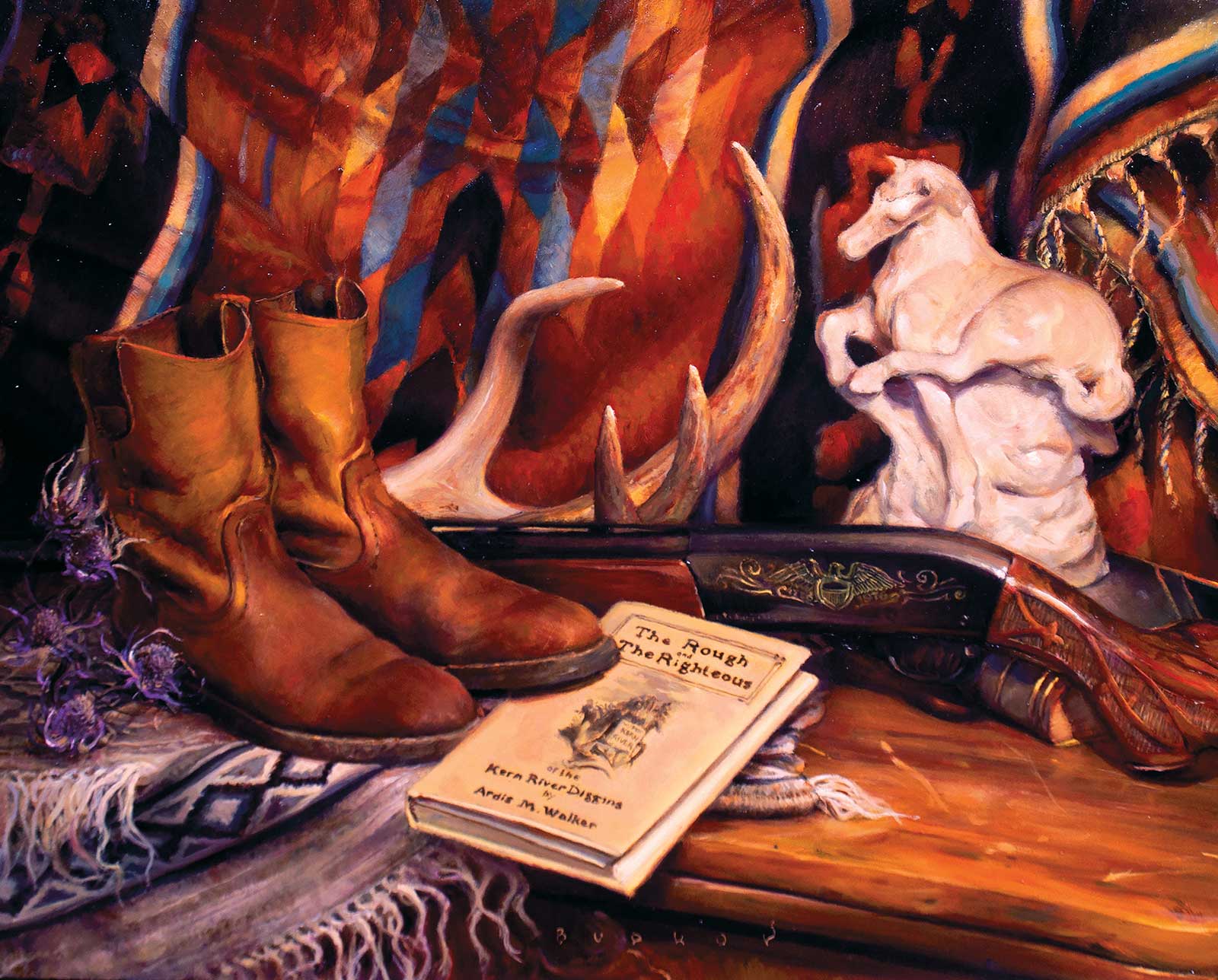 Tehachapi Arts Commission, The Story Begins, oil, 20 x 24 in., by Nikita Budkov.
 Featured Artists & Galleries
Blue Rain Gallery
544 S. Guadalupe Street, Santa Fe, NM 87501
(505) 954-9902 www.blueraingallery.com
Nocona Burgess
www.noconaburgess.com
Lorenzo Chavez
www.lorenzochavez.com
Eiteljorg Museum of American Indians and Western Art
500 W. Washington Street, Indianapolis, IN 46204
(317) 636-9375, www.eiteljorg.org
Scottsdale Art Auction
7176 Main Street, Scottsdale, AZ 85251
(480) 945-0225, www.scottsdaleartauction.com
Tehachapi Arts Commission
Dwight & Laura Dreyer, (626) 945-3753
dreyerfinearts@gmail.com
www.artstehachapi.org
Powered by Froala Editor