Organized by the artist and leader of the Seneca-Iroquois Nation Museum in Salamanca, New York, Hayden Haynes (Seneca/Iroquois Confederacy), comes a riveting exhibition hosted at the Westmoreland Museum of American Art titled Creating Common Memory. Carefully selected from the museum’s permanent collection, these significant works of art showcase “lesser-known or unknown stories in American history and culture, histories and belief systems of the peoples that inhabit this land,” says museum representatives.
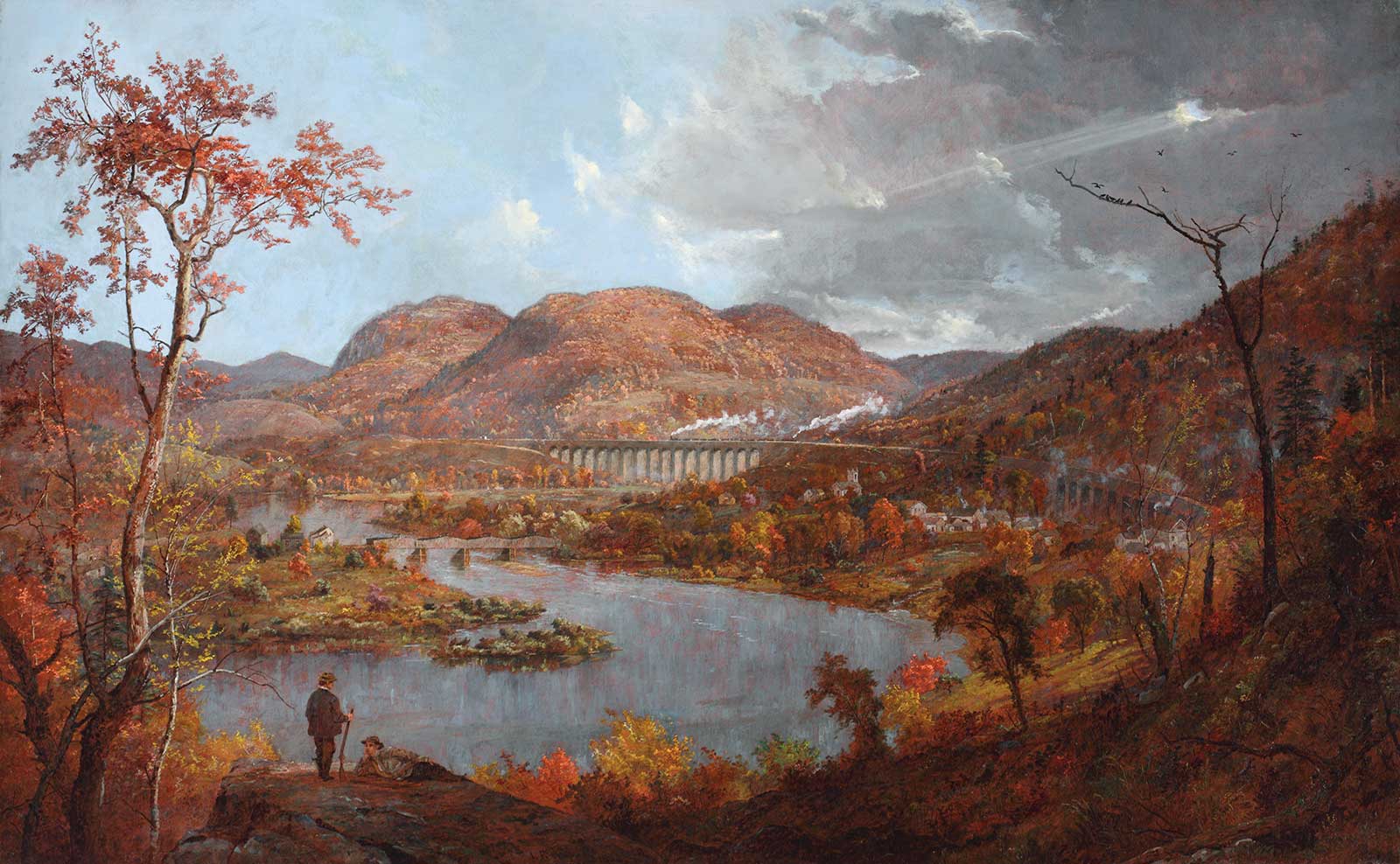
Jasper Francis Cropsey (1823–1900), Starrucca Viaduct, 1896, oil on canvas. Bequest of Richard M. Scaife, 2015.
“To respectfully recount American history, it is important to carefully examine how these narratives have and still shape our current thinking as a society,” the museum continues. “If change in the way of social justice is to be had, it is important to create a common memory of all peoples’ shared histories. By not thinking critically, and by not acting responsibly, there is a risk of perpetuating harmful narratives and actions.”
One of the highlights of the exhibition is a Robert Griffing oil painting, The Wounding of General Braddock: Battle of the Monongahela 9 July 1755, depicting the defeat of the British army at the beginning of the French and Indian War (1754–1763), that occurred in present-day Braddock and North Braddock, Pennsylvania.
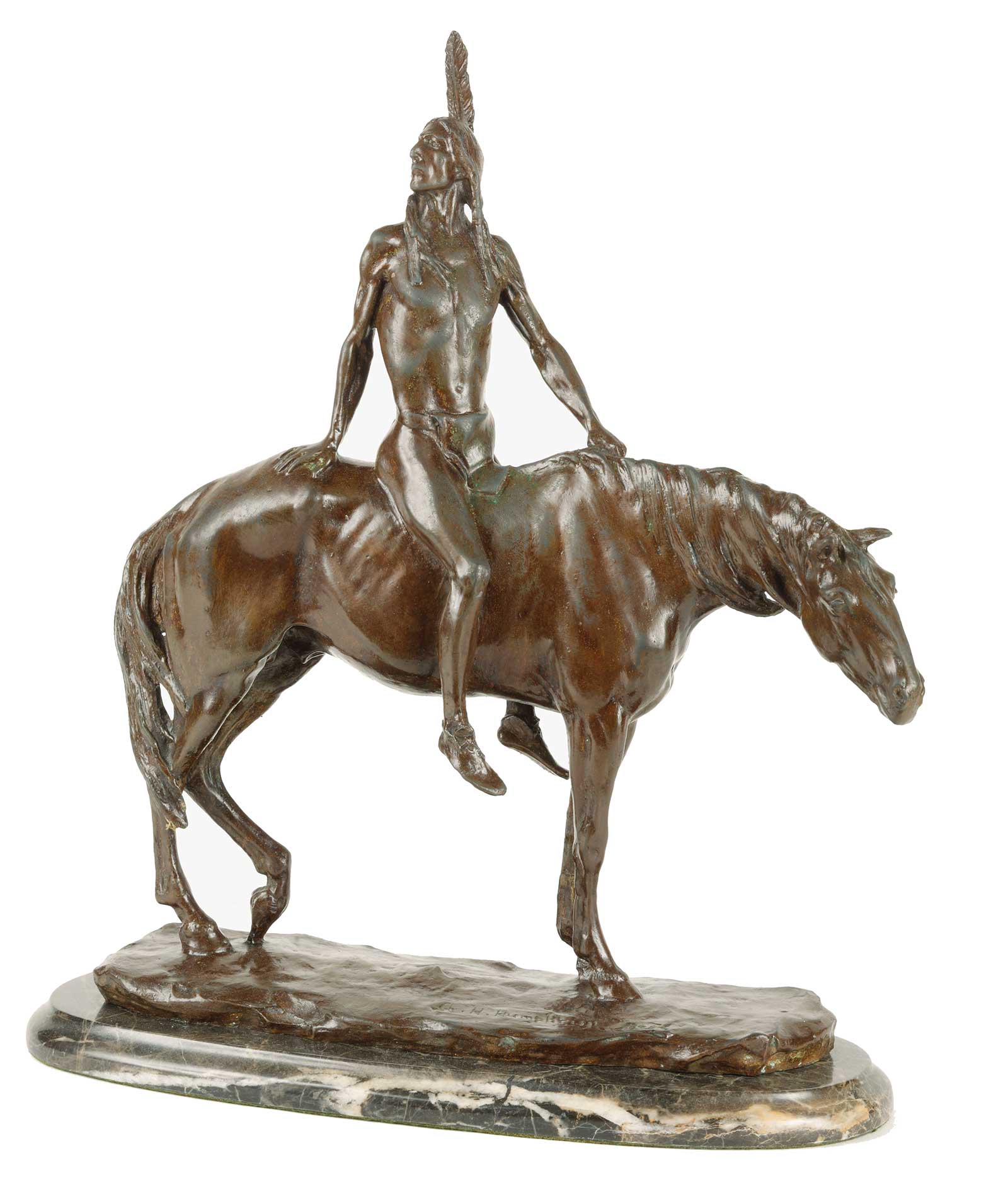
Charles Humphriss (1867–1934), The Warrior (Equestrian, Native American on Horseback), 1904 or 1905, bronze with light brown patina. Gift to the Westmoreland Museum of American Art, 1992.
“To me this painting is an example of many common narratives penned by early American historians (most of whom were men) writing about history from a patriarchal perspective,” Haynes says. “These writings in the 1700s and 1800s tend to focus on war and war heroes. Not surprisingly, white men were at the forefront of these headlines, particularly if they were the victors, even in this work where we see a major defeat of the British army that would eventually win the war.
“What is missing from this scene,” Haynes continues, “is any indication of the 500 to 600 Native warriors (two-thirds of the entire French and Native army) that won this battle against a much larger British army. Additionally, despite dozens of women serving as cooks, nurses and laundresses to Braddock’s 1,400 troops, there is no indication of them here either. Historical scholarship conducted since 2005 has revealed new French and Native sources that help to create a more complete picture of this hotly debated battle.”
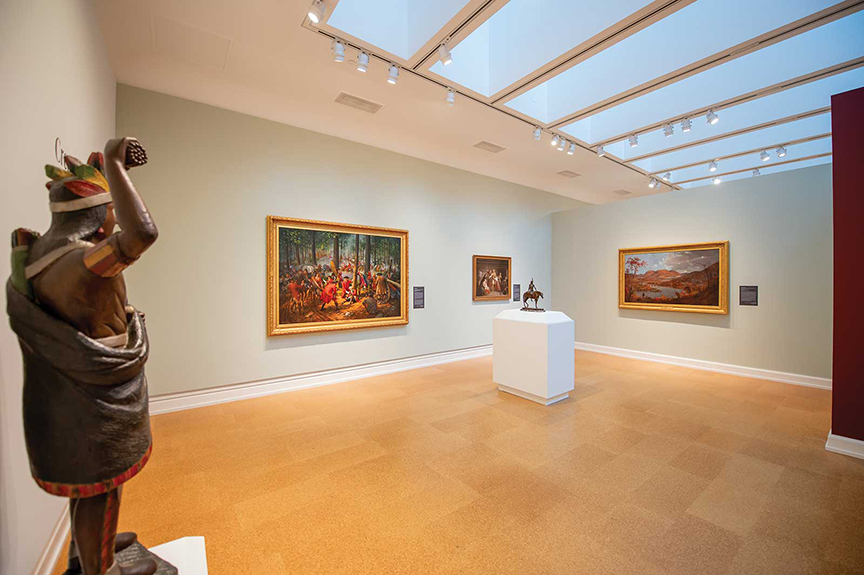
A view of the exhibition space at the Westmoreland Museum of American Art.
In the Charles Humphriss (1867-1934) bronze The Warrior (Equestrian, Native American on Horseback), from 1904, Haynes feels it hints at U.S. President Andrew Jackson’s Indian Removal Act of 1830 in which many Native nations were forced or coerced into leaving their territories for lands further west.
“During the 1800s it was of popular belief (and the hopes of many) that Indians would soon die out and that their lands would then be open for purchase. Many artists, writers, anthropologists and the like were working to save information about Native peoples and document them via imagery before that happened. However, I see this piece as an aesthetic of resiliency because despite federal policies, dispossession and the genocide that took place before, during and after this era, Indigenous people are still here.”
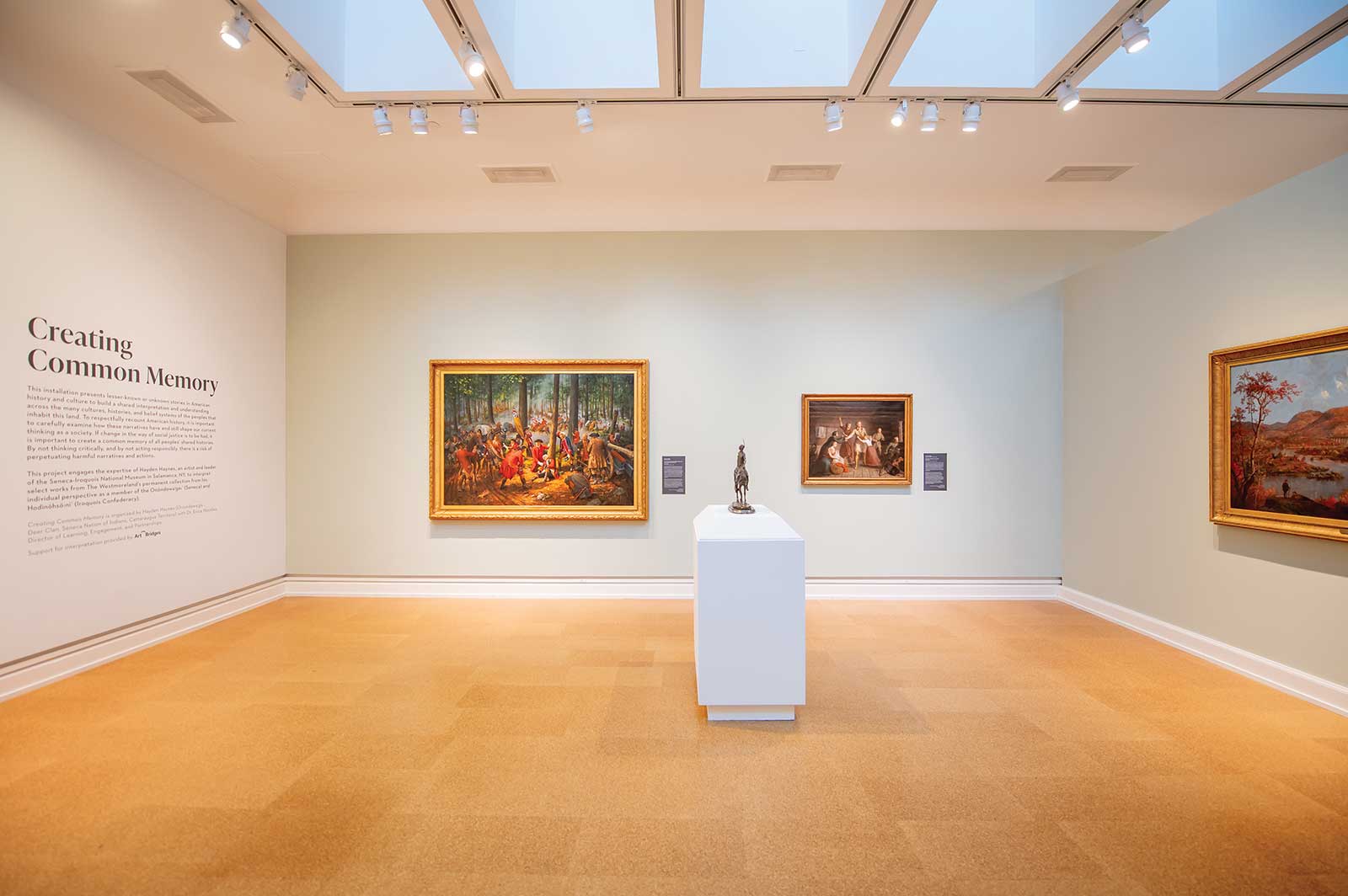
A view of the exhibition currently on view, and a full view (left) of the Robert Griffing, The Wounding of General Braddock: Battle of the Monongahela 9 July 1755, 2005, oil on canvas. Gift of COLCOM Foundation, 2015.
This very message seems to prevail above all else in the exhibition; that Native American people share a resiliency and a connectedness that is unrivaled, and despite the atrocities they’ve endured, they continue to thrive.
The exhibition will be on display at the Westmoreland Museum of American Art through December 31, 2024. —
Creating Common Memory
Through December 31, 2024
The Westmoreland Museum of American Art
221 N. Main Street, Greensburg, PA 15601
(724) 837-1500, www.thewestmoreland.org
Powered by Froala Editor