Editor’s Note: This is an excerpt from Dr. Peterson’s new book, Edward S. Curtis, Printing the Legends: Looking at Shadows in a West Lit Only by Fire. The book is now available.
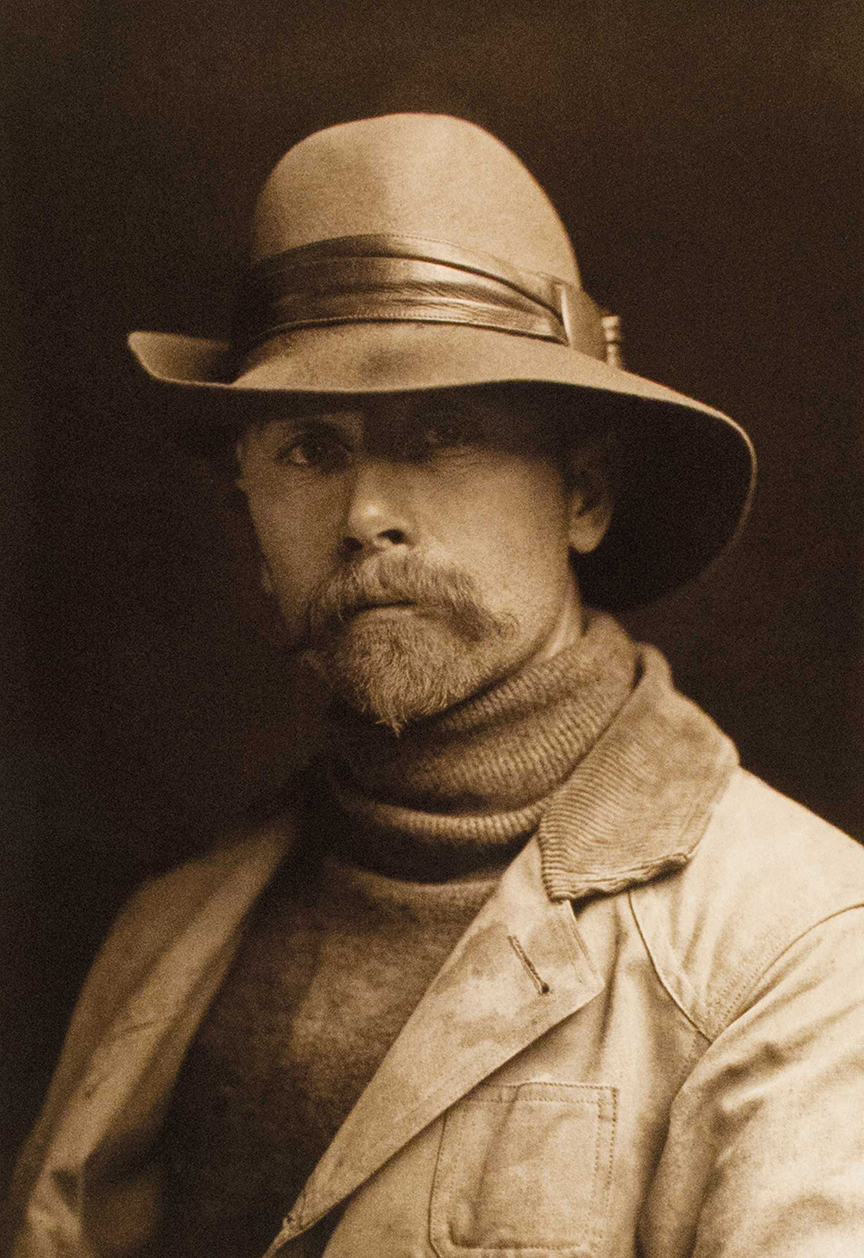
Edward S. Curtis, self-portrait, ca. 1899
In 1920 the newly elected President Warren G. Harding promised a return to “normalcy.” For most of the country that meant an end to the hardships of war and the beginning of that alternately leisurely and fast-paced decade known as the “Roaring Twenties.” More and more Americans financially extended themselves to speculate on the soaring stock market. “Buying on margin,” they called it. Nationally, it was a time of sustained economic prosperity where the use of automobiles, telephones, radios, motion pictures and electricity became part of the fabric of American life. The media focused on movies stars and sports heroes. Art, society and culture were rapidly changing. Art deco was the rage, and jazz was now the most popular music being played. Romantic art and Pictorialism were ancient history, a bad omen for Edward S. Curtis.
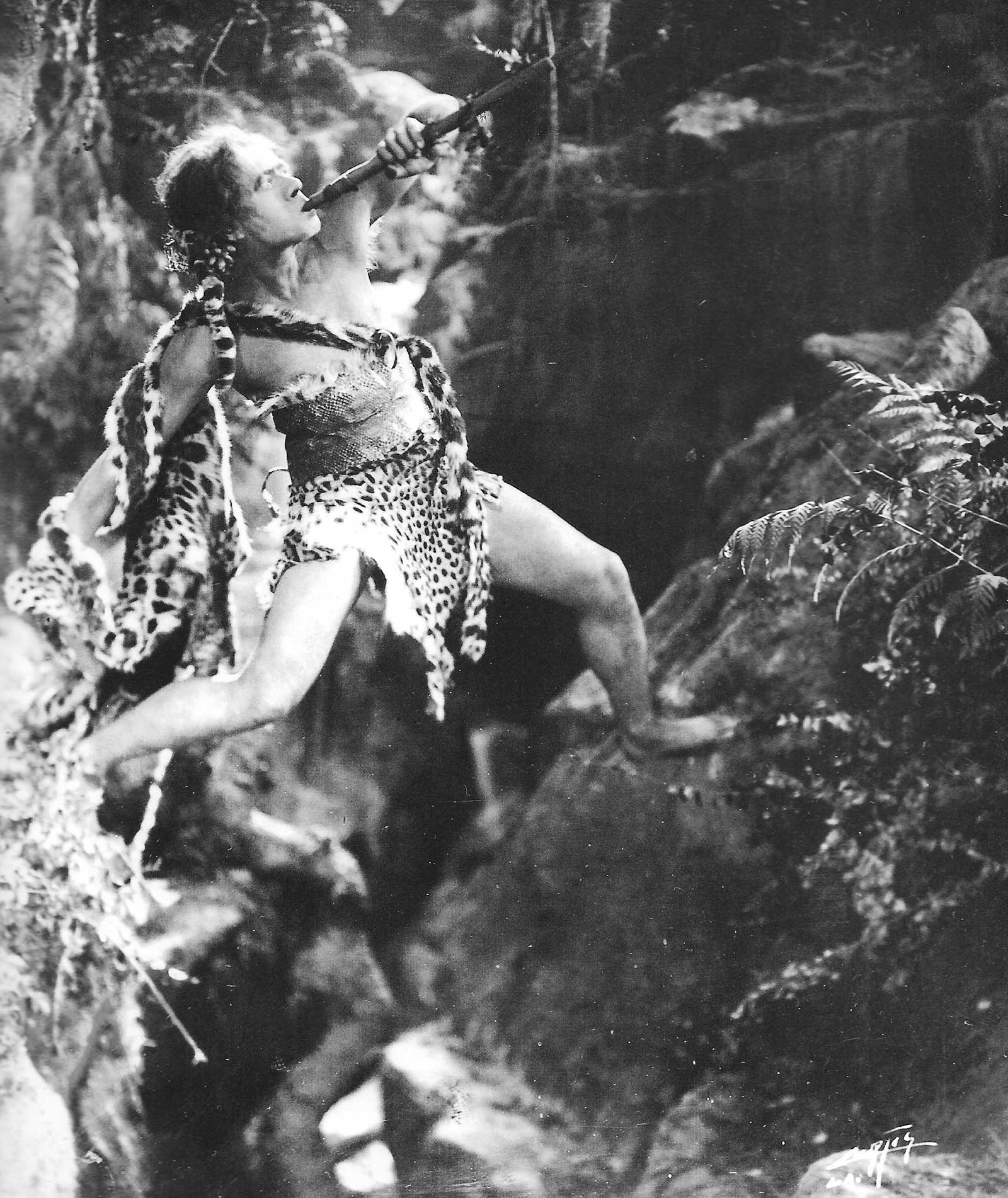
Elmo Lincoln as Tarzan Curtis, movie still, Curtis photograph, ca. 1921. Tarzan holding a flute is reminiscent of stories in The Flute of the Gods by Marah Ellis Ryan, 1909.
Many of the wealthiest Americans lived in Southern California, making their fortune as fruit growers; railroaders—like Henry Huntington; oil barons—by 1920 $80 million dollars’ worth of oil was being produced in the area; and of course, movie moguls and their stars. Others, like Jean Paul Getty, were heirs to fortunes. There were 160 movie companies active in the Los Angeles region producing 80 percent of all films in the world. In 1920, when newly divorced Edward S. Curtis (1868-1952) and his daughter Beth arrived from Seattle, the movie industry employed 10,000 people and was churning out hundreds of silent movies each year.
Visions of the American West were defined by the Western film and reimagined in visual art. Together, they both augmented and contradicted the Romantic art of the 19th century. For many of them, in a Western movie and in art the main character was the landscape—an inspiration for directors such as John Ford. He was guided by the landscape art of Thomas Moran, Thomas Hill and Albert Bierstadt; the grandeur of Monument Valley; and the images created by Western artists such as Frederic Remington and Charles M. Russell; and by photographers like Curtis.
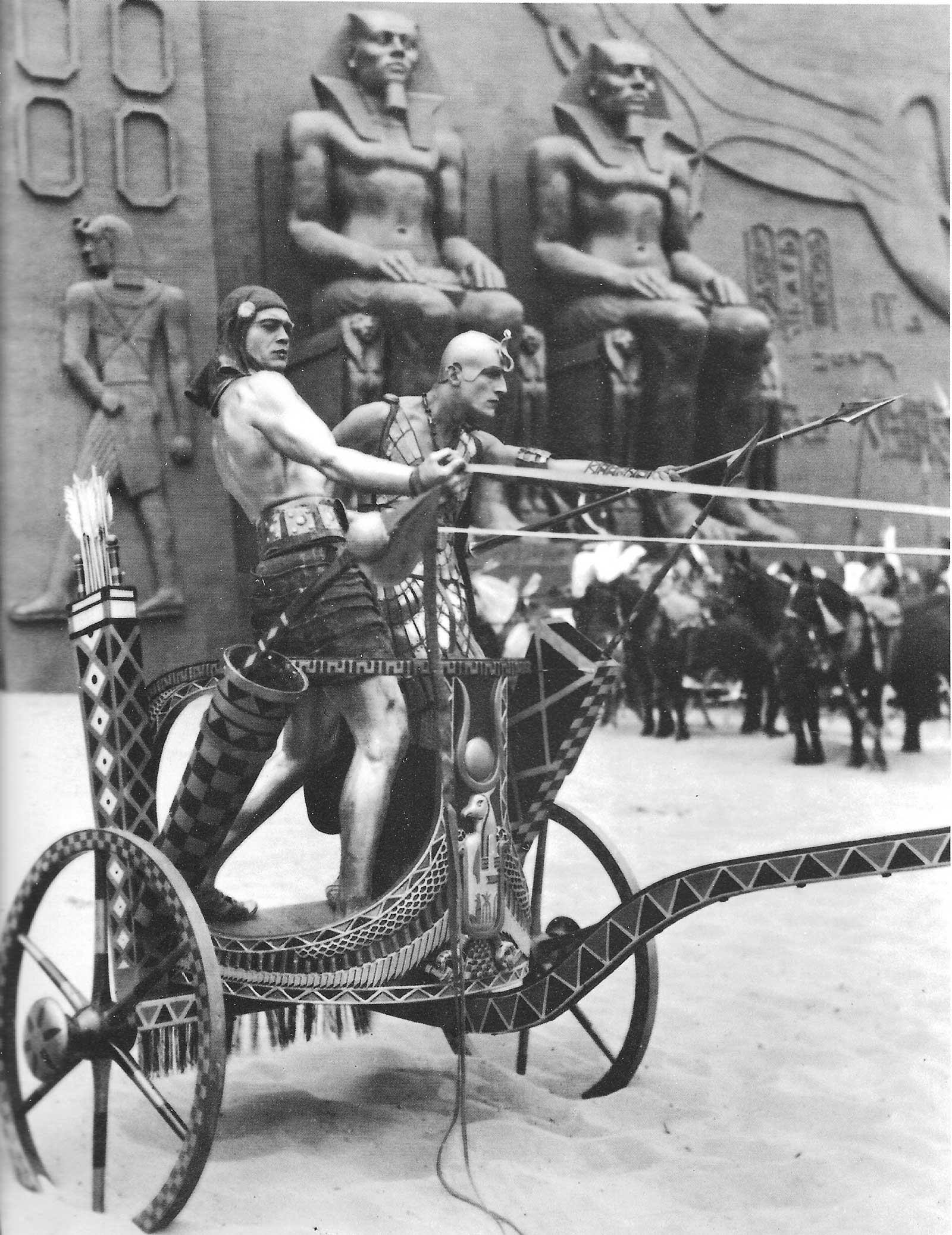
Noble Johnson as the Bronze Man (left) and Charles de Roche as Rameses the Magnificent, in The Ten Commandments, directed by Cecil B. DeMille, Curtis photograph, 1923.
One of Curtis’s first jobs was as a still photographer in 1921 when he photographed Elmo Lincoln as Tarzan in the serial The Adventures of Tarzan—the third Tarzan film starring Lincoln. The first two were Tarzan of the Apes (1918) and The Romance of Tarzan (also, 1918). Curtis’s still photograph shows Lincoln as Tarzan in a loincloth straddling two boulders as he blew a flute. Lincoln began his acting career in 1914 in The Battle of Elderbush Gulch (1914), directed by D.W. Griffith. He would work for the great director on three more movies, most notably, The Birth of a Nation (1916).
With Curtis destitute and living with daughter Beth, it was probably his close friend, author Marah Ellis Ryan who connected him with executives at Paramount who she had worked with her on the melodramatic novel Told in the Hills. They were the distributors of a blockbuster film that would be directed by Cecille B. DeMille, The Ten Commandments. In 1923 Curtis was named co-head of DeMille’s camera department. A Paramount press release described his position as “the most coveted job in motion picture photography.” Filming began May 21, 1923, and ended on August 16, 1923. The Exodus scenes were shot in northern Santa Barbara County. The production became the highest-grossing film of 1923. The film’s box-office revenue stood for 25 years as the highest at Paramount, until other films by the master director broke it. Besides that blockbuster, Curtis would also work as a still photographer on DeMille’s Adams’s Rib the same year and DeMille’s 1927 film, The King of Kings.
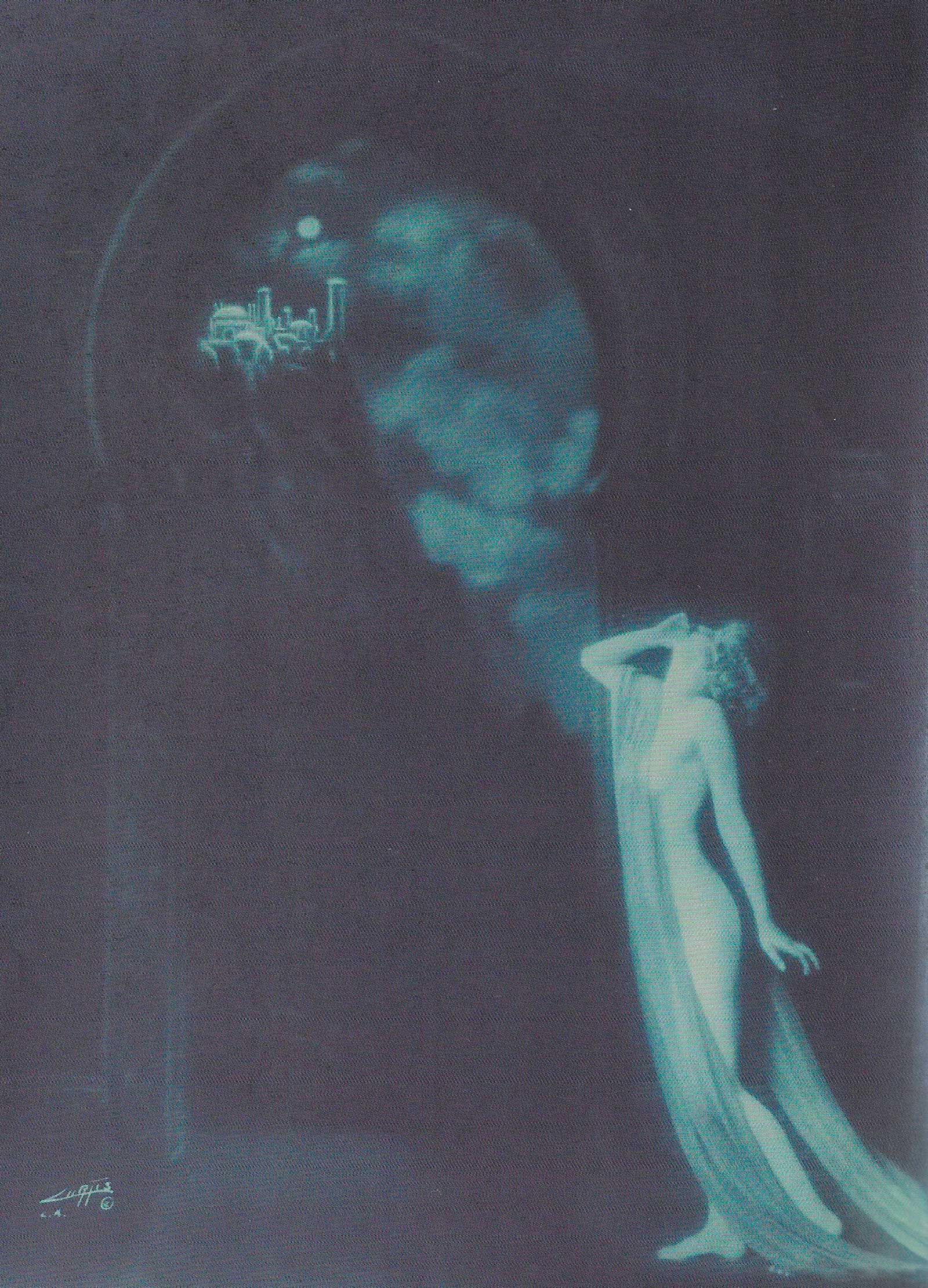
Castle of Dreams, Edward S. Curtis, blue-toned gelatin silver print, 1922
In a different artistic direction, in the early ’20s Curtis shot a number of dreamy, sensuous, nude images developed as blue-toned gelatin silver prints such as Aphrodite (1920), Castle of Dreams (1922), Sunset Trail (1922), and Portrait of Jean Wickersham (1925). Some were film stills. Of Aphrodite he wrote, “All primitive people assume that everything in nature possesses a spirit. The sea, with its varying moods from the calm placid surface to wild raging storm, naturally is foremost in the minds of all coast dwellers, hence whenever a man lives by the sea, he has the spirit of water. With the Greeks, the spirit bore the name of ‘Aphrodite’ who, according to variations of the myth, was the wife of Adonis.”
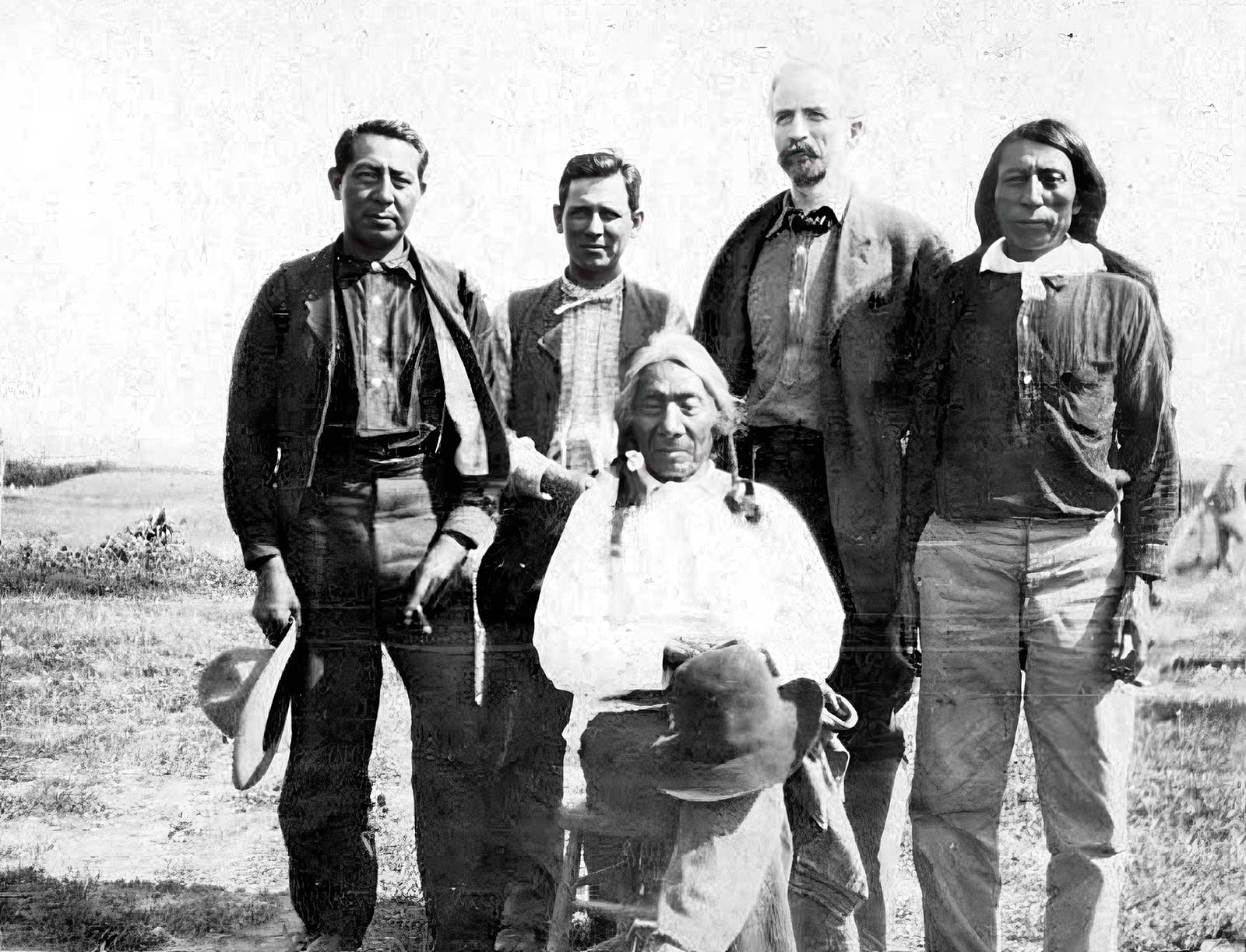
Standing left to right: Crow interpreter Alexander Upshaw, William E. Myers, Professor Edmond Meany, Jack Red Cloud (son of Red Cloud) and, seated, is Chief Red Cloud, Oglala Lakota leader. Fred R. Meyer photograph, 1907.
In 1922 Curtis published his first book and portfolio in The North American Indian (TNAI) series in six years, Volume XII (1922), which was dedicated to just one tribe, the Hopi. The final Volume XX on Alaska Natives would not be published until 1930. He had made his last visit to Arizona the year he moved to California. The Hopi volume had been in the works for over 20 years and was somewhat like an insurance policy to be cashed in when things were at the very worst. It proved to be a wise plan. It also gave him an excuse to revisit the Hopi. Stunning portfolio images included: Watching the Dancers; Walpi; On the Housetop; An Afternoon Chat; A Walpi Man; A Hopi Mother; Antelopes and Snakes at Oraibi, and The Piki Maker[a popular orotone]; among many others.
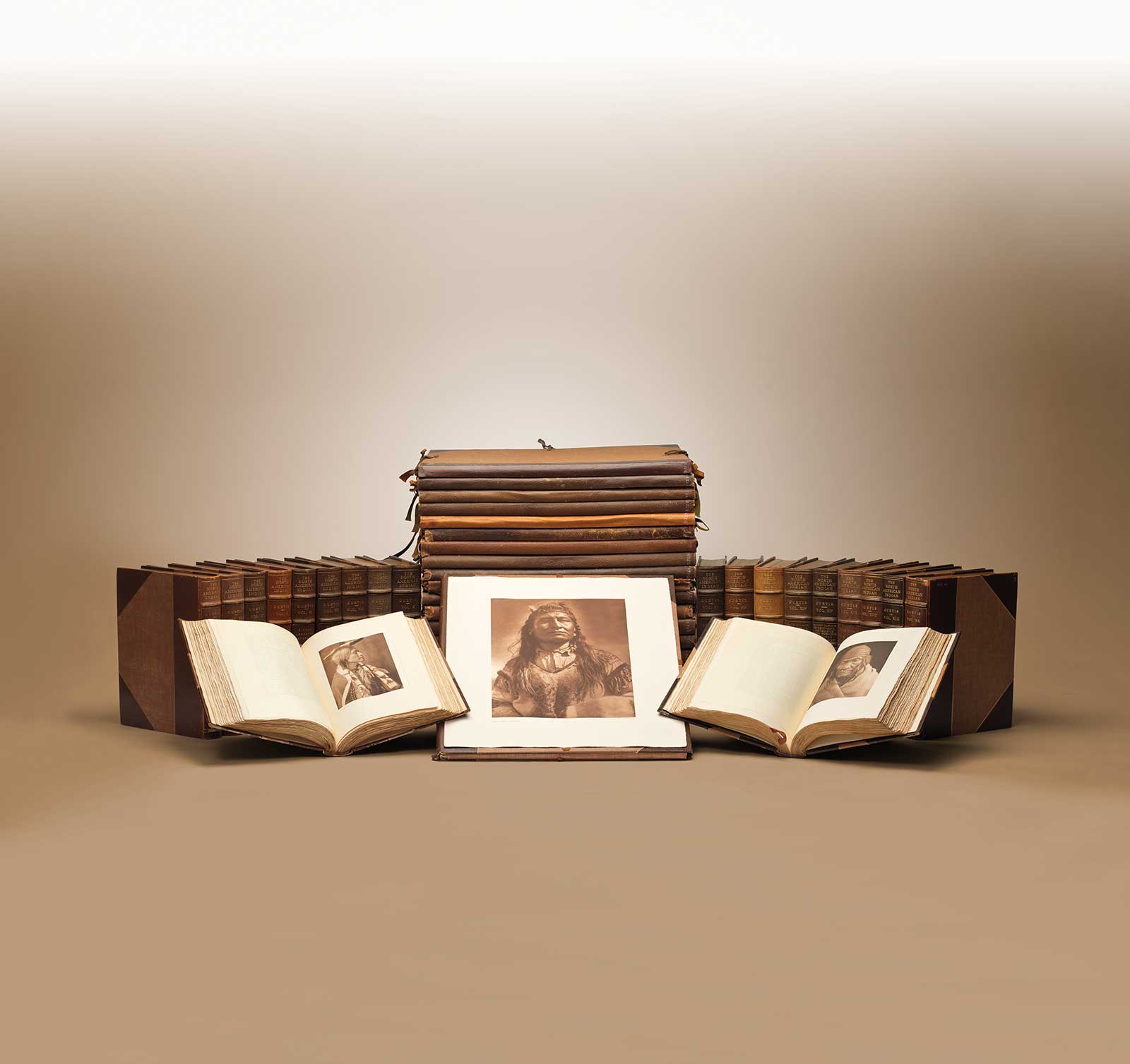
The North American Indian, portfolios I-XX and book volumes I-XX, Set #83
Americans were stunned and intrigued with the young women with their squash blossom whorl hair. It would inspire the hairstyle for Princess Leia in the Star Wars films. The hairstyle was worn only by young Hopi women to show that they were unmarried. A little less than one-third of Curtis’s photographs featured women. In general, they did not interact with white outsiders.
Unfortunately, profits from the sale of a set of TNAI had vanished since his last publication in 1916. There had been only 18 subscribed from that year to 1921. The war brought on staggering inflation. For example, the average yearly inflation over the six-year period was 9 percent, which meant it cost more to produce a set than what they were charging, even with the increase in 1924. Undaunted, over the next six years he would regain his drive and energy as he raced to finish his big dream.
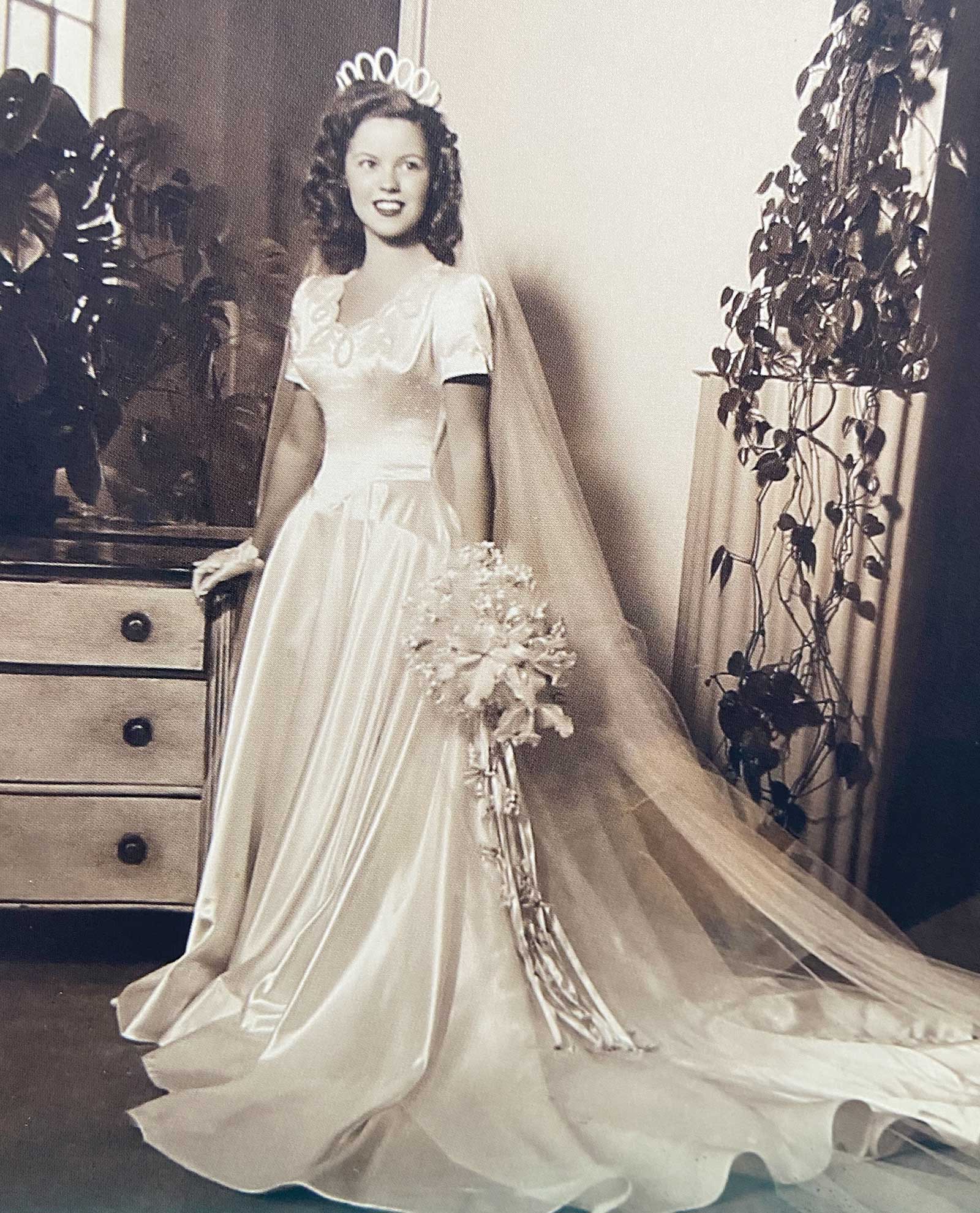
Shirley Temple, Wedding Portrait, Curtis gelatin silver print, 1945. One of his last noted photographs.
California Dreaming, 1922. Cultural changes made it even more of a challenge to complete Volumes XIII, XIV and XV on the California tribes. While living in California made it easier to reach the state’s tribes, the encroachment of white culture was rapidly destroying the Indigenous people’s identity, and the tribes were numerous and small. The population of California in 1906, the year Curtis received funding from J.P. Morgan, was just under $2 million. Yet, by the time Curtis began work on his California volumes of TNAI,it had doubled to $4 million. The population boom had obliterated many of the rich and historical lands of the Indigenous people. Curtis’s timing was not good.
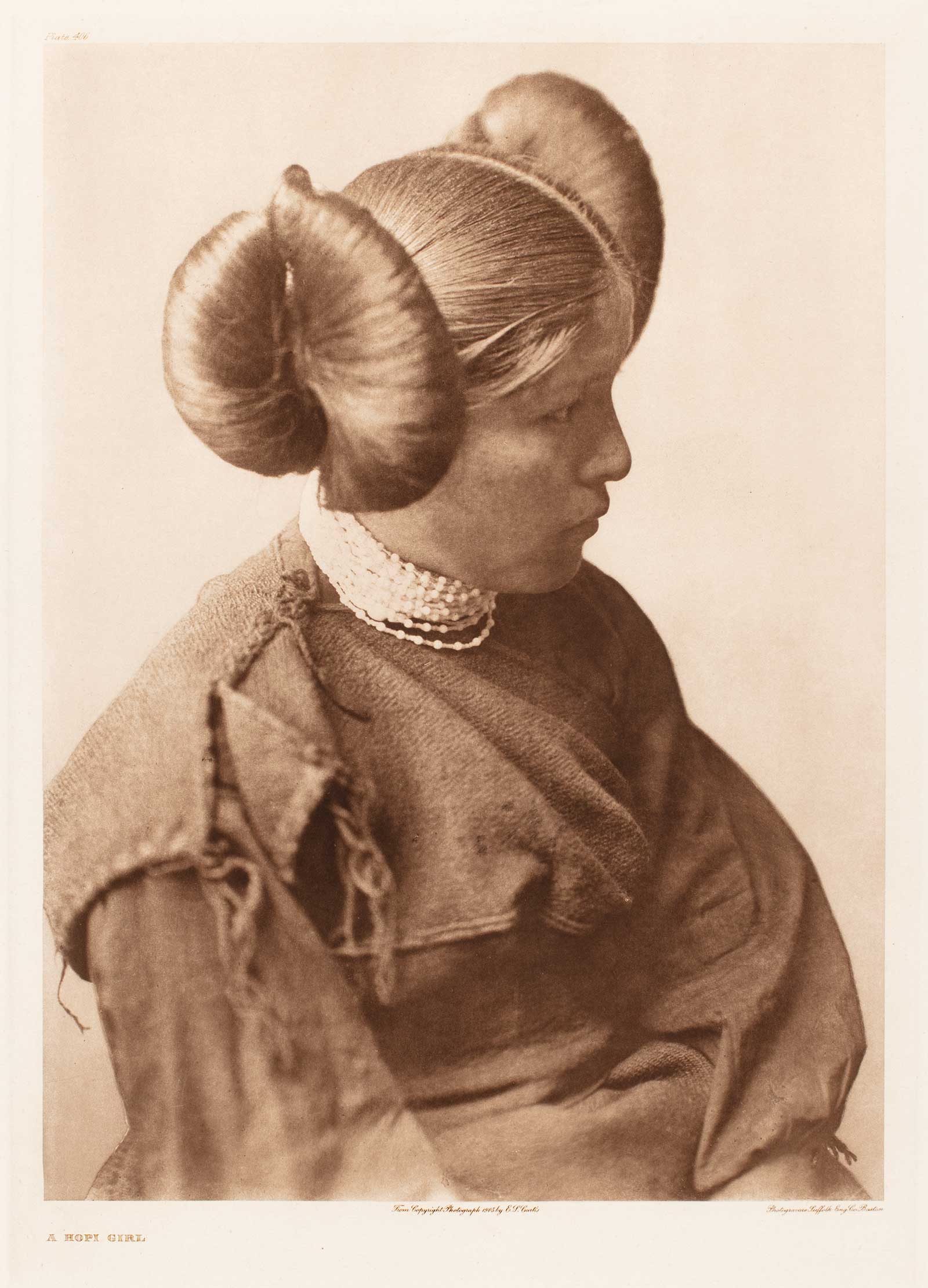
A Hopi Girl, Curtis photogravure, Vol. XII, 1922
Eager to get back to work on his big dream, Curtis invited his married daughter, now Florence Curtis Graybill, to come along on his sojourn. Curtis recalled, “I had the wish for a member of the family…I asked if her husband could spare her for a couple of months…” Florence would be Edward’s only child to have children. She recalled, “I left Seattle by train and met Father at Williams, California…According to his usual plan Father worked with an Indian interpreter, one with authority, a chief or medicine man. Father’s assistant, Mr. Myers, had already been in the area, gathering data. Father would work on the ethnographic notes that would go in the volume on these Indians and would make photographs.” In fact, Myers had been completing research on the California Indians since the war years.
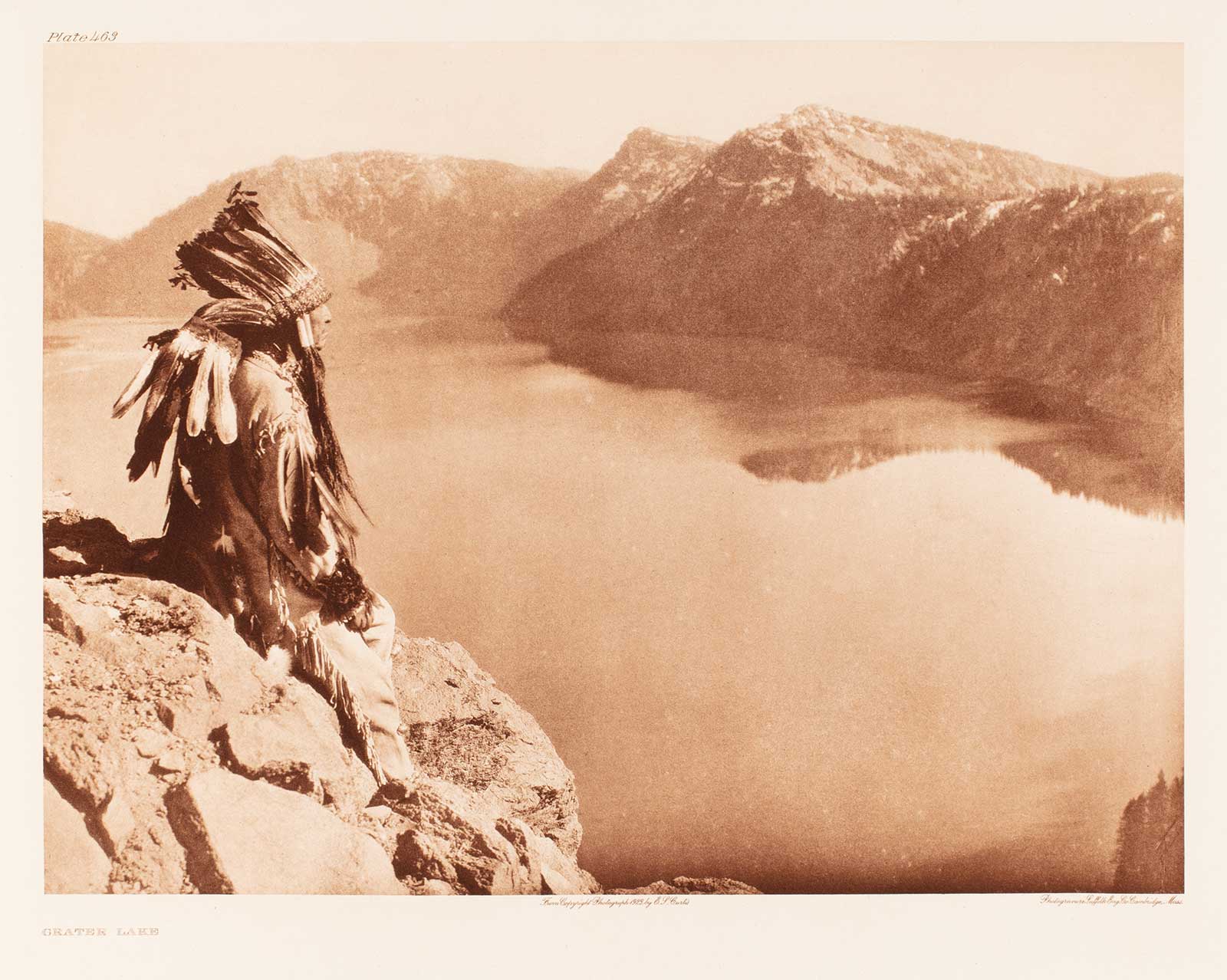
Crater Lake, Curtis photogravure, Vol. XIII, 1924
The task of photographing the different tribes in California alone was daunting. The state is 900 miles long and many areas at the time were difficult to access. Especially challenging was their jaunt into Southern Oregon to photograph the Klamath around Crater Lake. Today, there are 110 recognized tribes in California alone. The tribes are as small as five members and as large as 6,000. Indigenous language families include: Algic, Athabaskan, Chumashan, Hokan, Penutian, Uto-Aztecan and Yuki-Wapo. It was big country and big cultural diversity.
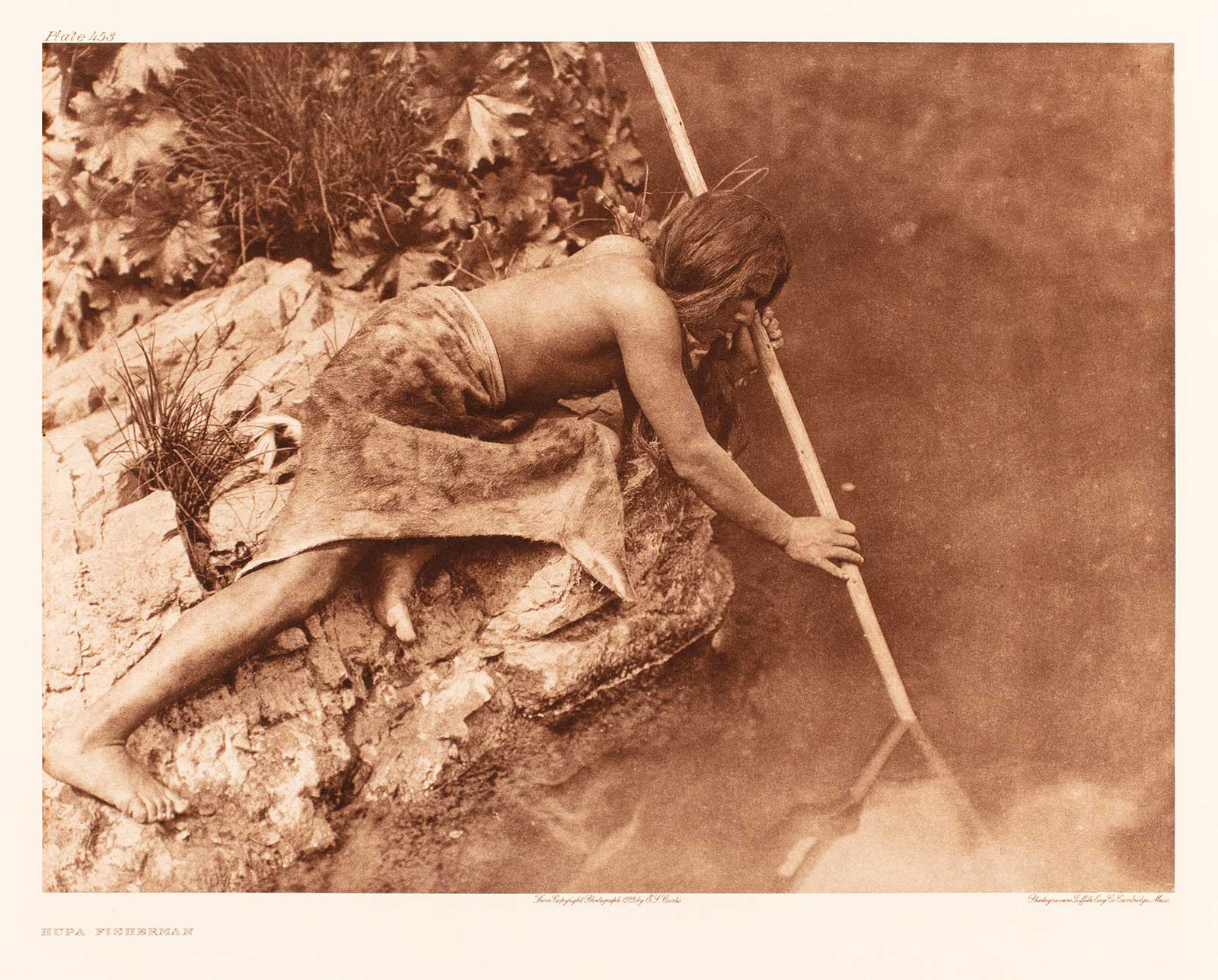
Hupa Fisherman, Curtis photogravure, Vol. XIII, 1924
In 1920 the Indian population in the United States was 244,437, down 4,000 from the 1890 census. Much of the decrease was from tuberculosis and other communicable diseases brought on in part by starvation diets and overcrowding. But the California Indians had grown by 1,000 to 17,360. The Indian population living in urban areas tripled from 1910 to 1930. With the movement to cities, many lost their cultural identities as they assimilated into the white culture. Curtis divided California Indigenous cultures into three regions: northern, central and desert west. He studied 15 tribes from the northern and central regions of the state and six tribes from the desert west.
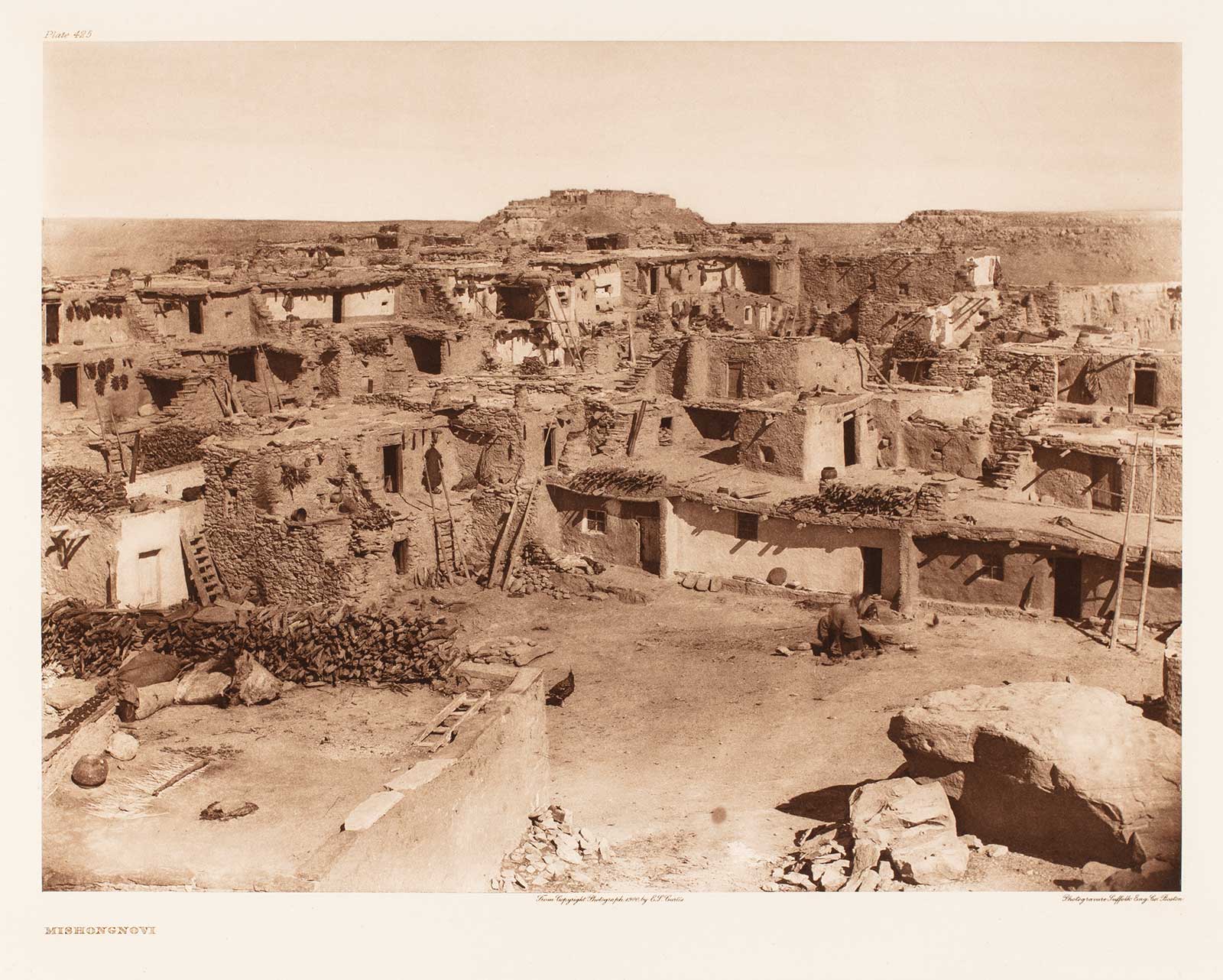
Mishongnovi, Second Mesa Hopi Reservation, Curtis photogravure, Vol. XII, 1922
The California tribes had attracted few painters or photographers because their cultures were deemed generally uninteresting and vanished compared to other regions. California artists mainly focused on seascapes and landscapes. A young Ansel Adams—one of the greatest landscape photographers of the 20th century—first photographed Yosemite in 1914 at age 12. He would have his studio in idyllic Carmel, south of San Francisco.
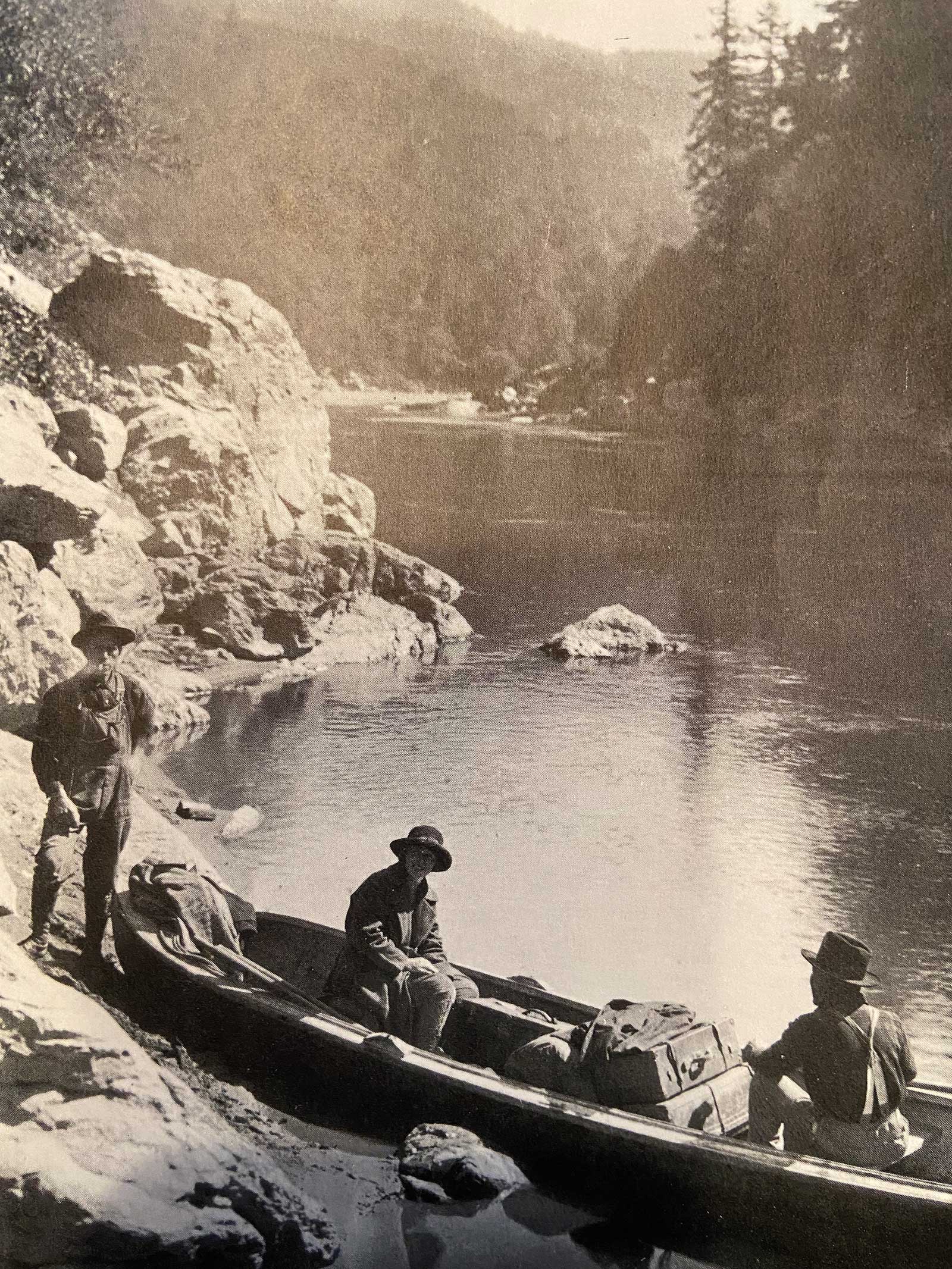
Florence Curtis with two Indian guides canoeing on the Klamath River, 1922.
Much different from the days when Curtis had an entourage of 20 or more workers, now it was just him and his daughter Florence racing down the roads in his Chevrolet coupe filled with camping gear and photographic equipment. Seeing firsthand how much he cared for the Indigenous people, Florence adoringly wrote, “For all his brawn and bravery he was a gentle, sensitive man and a wonderful companion. He had a vast knowledge of and kinship with the outdoor world in which he lived so many months every year. He knew the trees, the animals, the birds and flowers. Camping with him was an unforgettable experience.” Their travels took them to the Hupa, Achomovi, Pomo, Shasta, Yukok and Karok, scattered throughout the California and Oregon coasts and mountains. William E. Myers would join them in northern California to further work on the text. Multi-gifted Myers was from good Midwestern stock and next to Curtis, was the most important person associated with TNAI project. The devoted wunderkind was a genius at interpreting languages, which was very helpful when engaging various tribes to win their trust and gain information. He was also talented at short-hand that allowed him to take accurate notes. Not credited, Myers wrote the bulk of a number of volumes of TNAI.
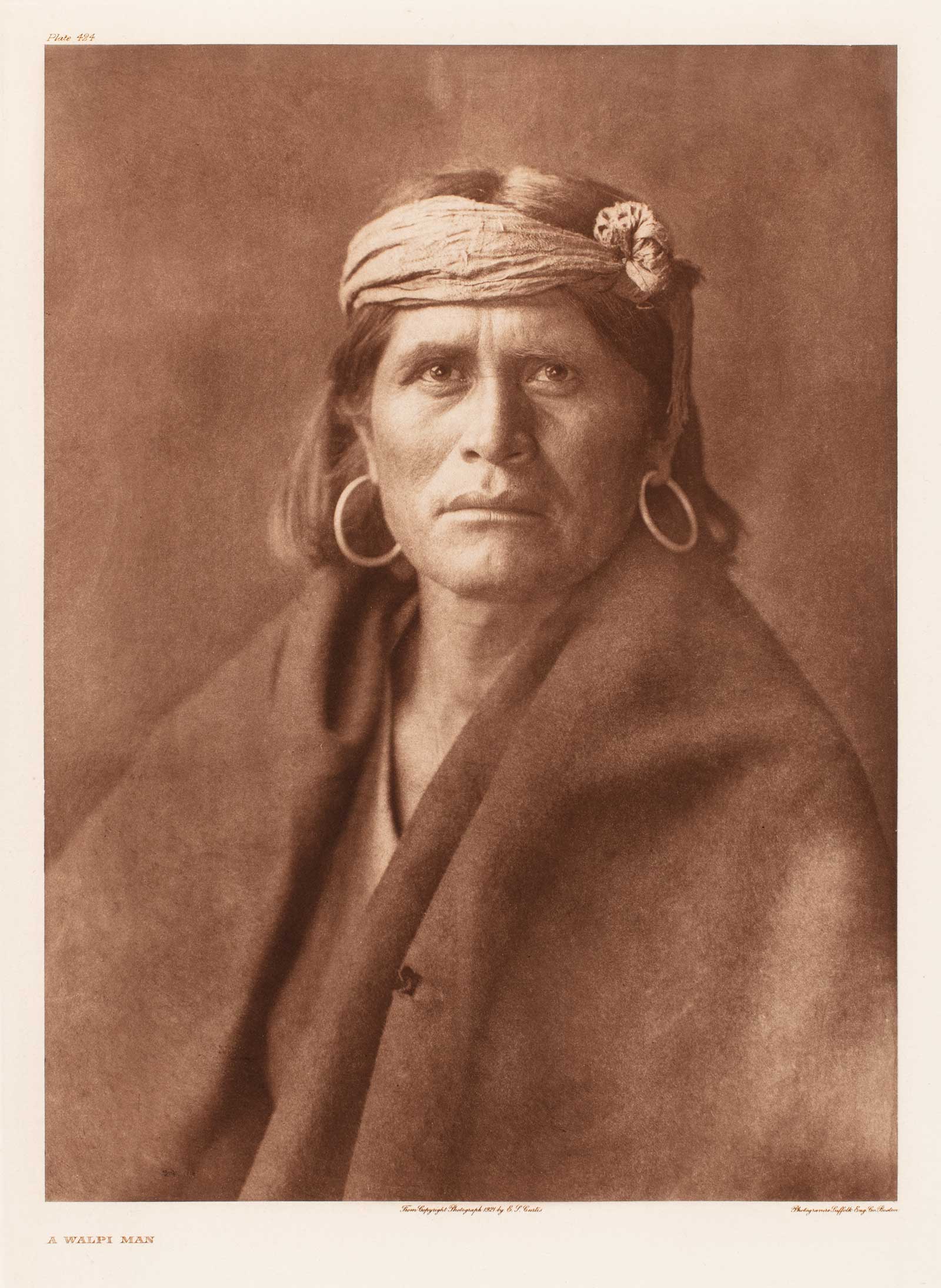
A Walpi Man, Vol. XII, 1922
Efficiently completing three volumes in a short period makes one wonder if Curtis could have worked with a smaller group on his previous volumes. The savings would have been enormous. But genius loves company. Volumes XIII and XIV were efficiently published in 1924; and Volume XV followed in 1926. The most memorable images from volume XIII were those of Crater Lake shot in Southern Oregon, The Chief—Klamath and Crater Lake. Both were made into popular selling orotones. Curtis wrote, “Crater Lake, a body of water indescribably blue, occupies an extinct crater in the heart of the Cascade Mountains of Southern Oregon. It is on the boundary of what was formerly the territory of the Klamath Indians, who held it to be especially potent in conferring shamanistic power who there fasted and bathed.” One stunning version, Day Dreams—Crater Lake, was hand-colored in the book. Other remarkable works included Spearing Salmon, A Smoky Day at the Sugar Bowl—Hupa, Karok Baskets [demonstrating his great talent at still life], and a smiling Hupa Mother and Child.
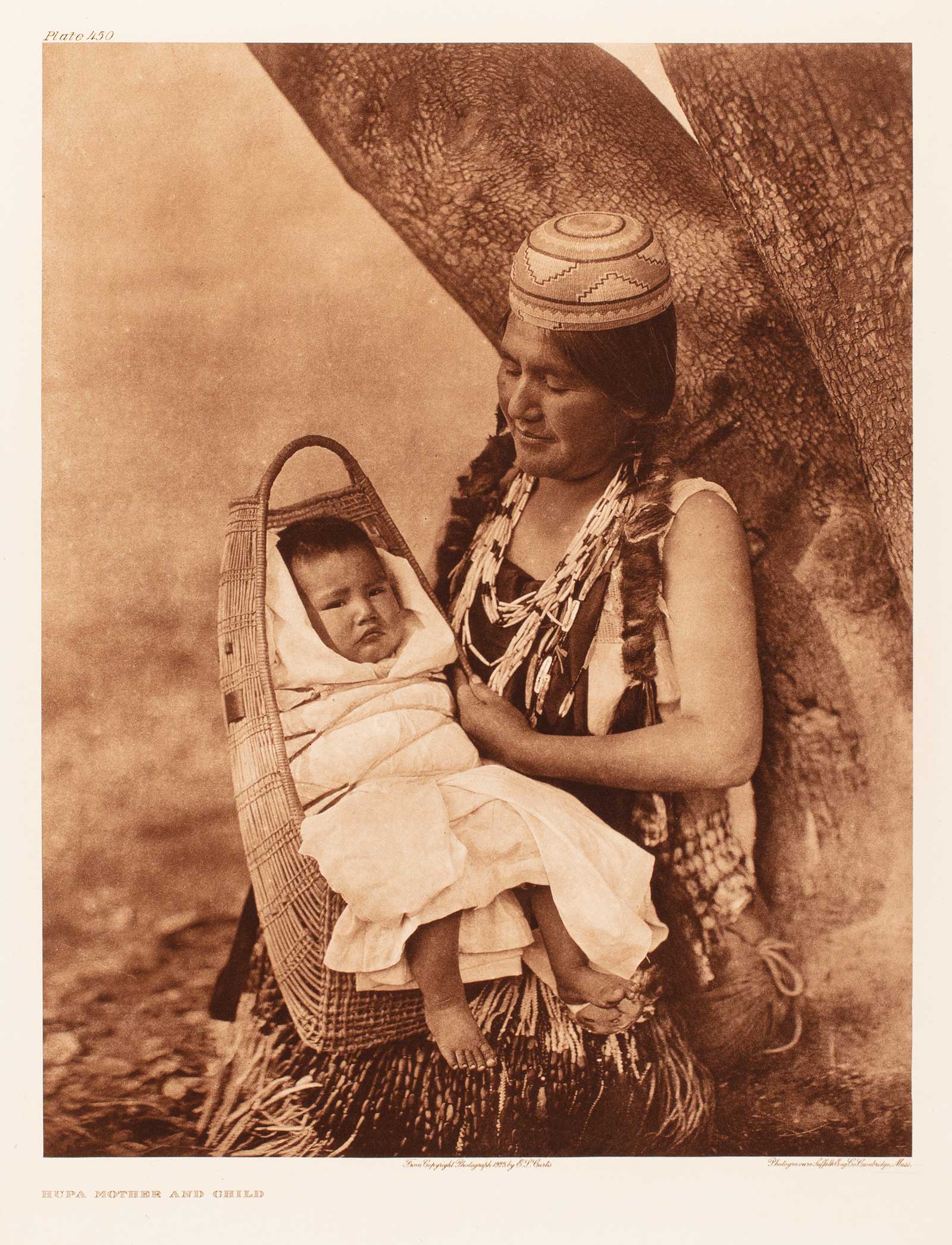
Hupa Mother and Child, Curtis photogravure, Vol. XIII, 1924
Curtis proved that he remained a master at his profession. He was on the final stretch. His last volume would take him full circle back to his beginnings when he traveled with the Harriman Alaska Expedition in 1899. The circle represented harmony, shalom. Soon he would be at peace with himself. North to Alaska once again. —
+++
Dr. Larry Len Peterson is a Western art historian and the author of numerous books about the West, including The American West Reimagined (2021) and Philip R. Goodwin: America’s Sporting & Wildlife Artist (2001). He is the 2019 Montana Heritage Guardian Award recipient, the highest honor bestowed by the Montana Historical Society Board of Trustees. Peterson is also the recipient of the C.M. Russell Heritage Award, Western Heritage Award, Scriver Award, High Plains Book Award, Will Rogers Gold Medallion Award, and the University of Nebraska Great Plains Book of the Month Selection. Dr. Peterson lives with his wife LeAnne on their Spirit of Winter Ranch near Sisters, Oregon, in the shadows of the Three Sisters Mountains—Hope, Faith, and Charity.
Powered by Froala Editor
Powered by Froala Editor