A grandness can be felt in Glenn Dean’s paintings of the West. The cliffs and mesas tower over his figures, the valleys stretch into vast basins of light and shadow, and the endless skies cradle his riders atop sage-topped ridgelines. And yet, as large as these scenes are, they are intimate and guarded—quiet moments within the lives of his Old West subjects. The ability to combine the epic with the personal is what makes Dean one of the top artists working in the West today.
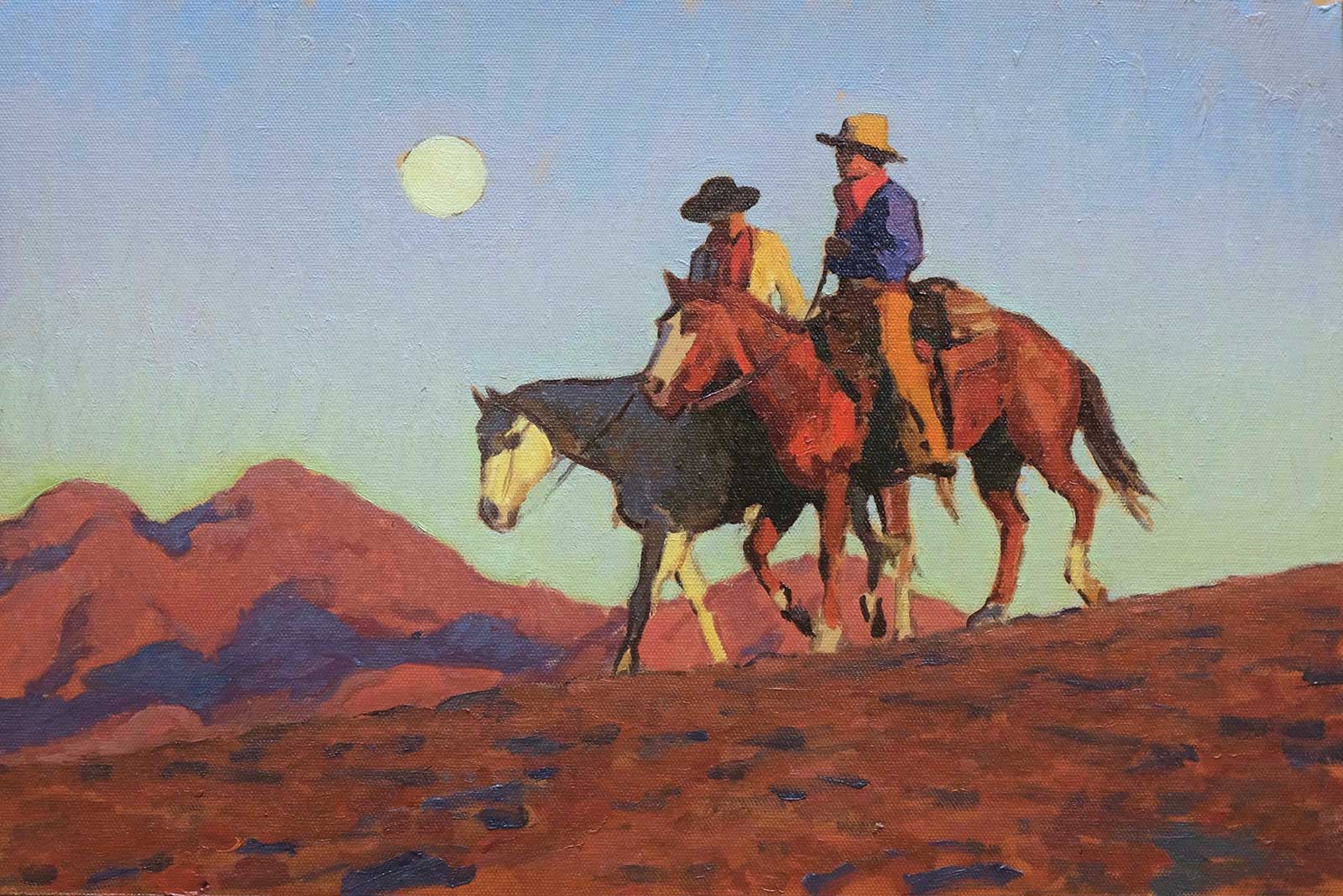 Mojave Moonrise, oil, 12 x 18”
He is not the first artist to paint with such authority regarding the size and scope of the West—he credits Maynard Dixon and Edgar Payne in his bio—but he is certainly doing something special with his paintings, which are meditations on life in the Southwest. Dean, who is famously tight-lipped about the narrative in his works, admits much of what he is searching for is form and shape.
“It’s not so much horizon or even light versus shadow. I’m really trying to find an interesting play in shape. I do this in a variety of ways, including with negative space, which I’ve always been attracted to,” Dean says from his California studio. “Just using some figures within the negative space against the skies, that really goes a long way with me as I explore each painting. Lately, I’ve also been exploring using different vantage points.”
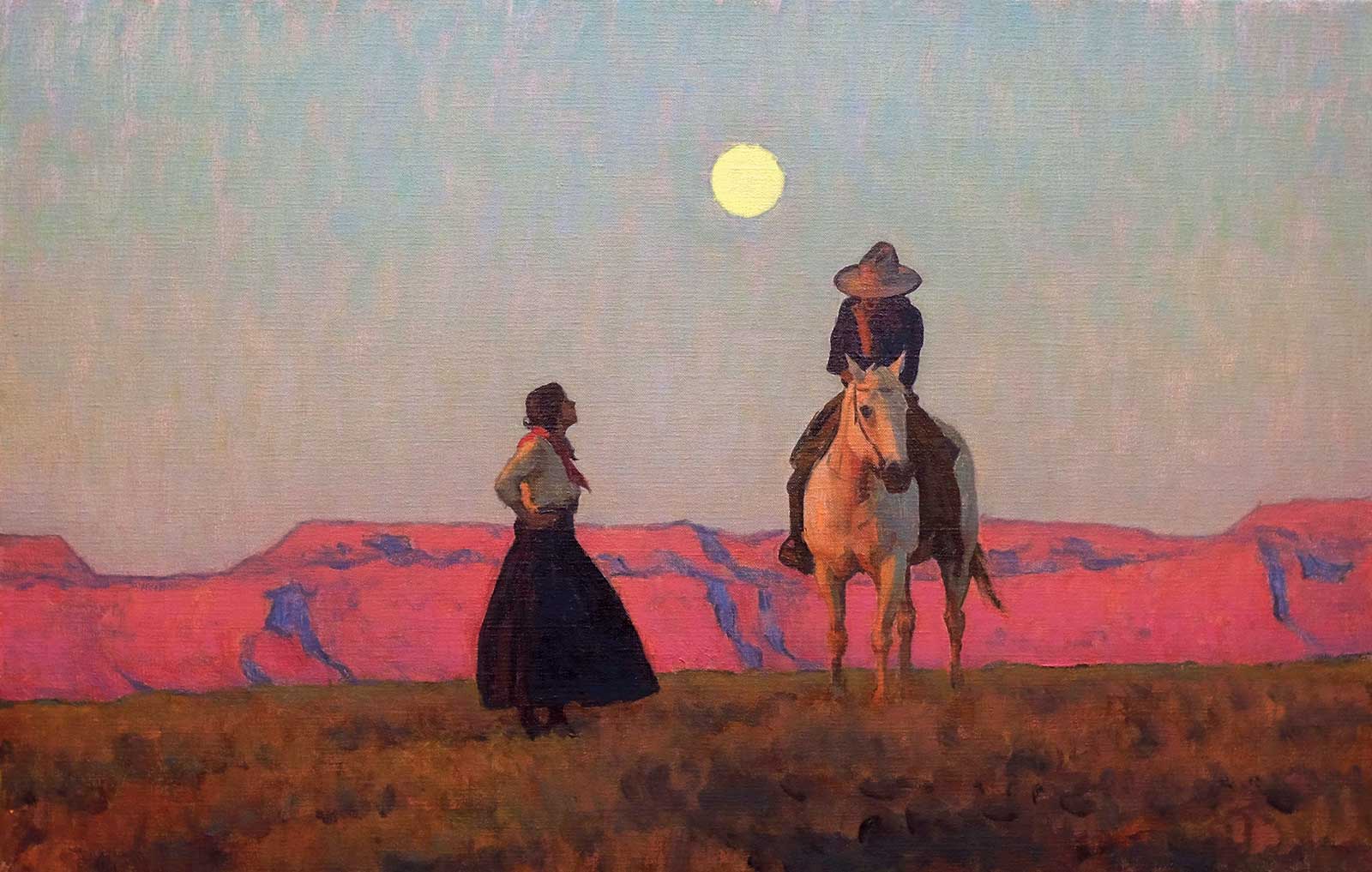
He Knew He Had a Good Woman, oil, 18 x 28”
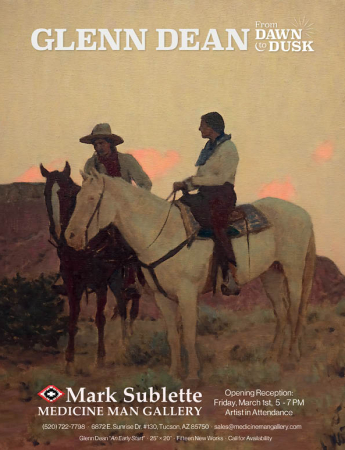
Dean will be showing new work in the solo show From Dawn to Dusk beginning March 1 at Mark Sublette Medicine Man Gallery in Tucson, Arizona. The gallery has shown his work for many years, even as Dean’s star has risen through the ranks of the Western art world. Today, he’s an in-demand artist whose works appear at shows and galleries all around the country. To balance the need to create work at a steady pace and make sure new paintings meet the high standards of the artist, Dean says he has learned to stay focused amid a flurry of events, openings and exhibitions. “I get an idea and it always works best to just go after it. I just hunker down and immerse myself in each piece,” he says. “If I’m not 100 percent involved, then that’s where your creativity suffers. So much of being an artist is just putting your nose to the grindstone. And then when you need to come up for air, you kind of survey what you’ve done but then go right back in.”
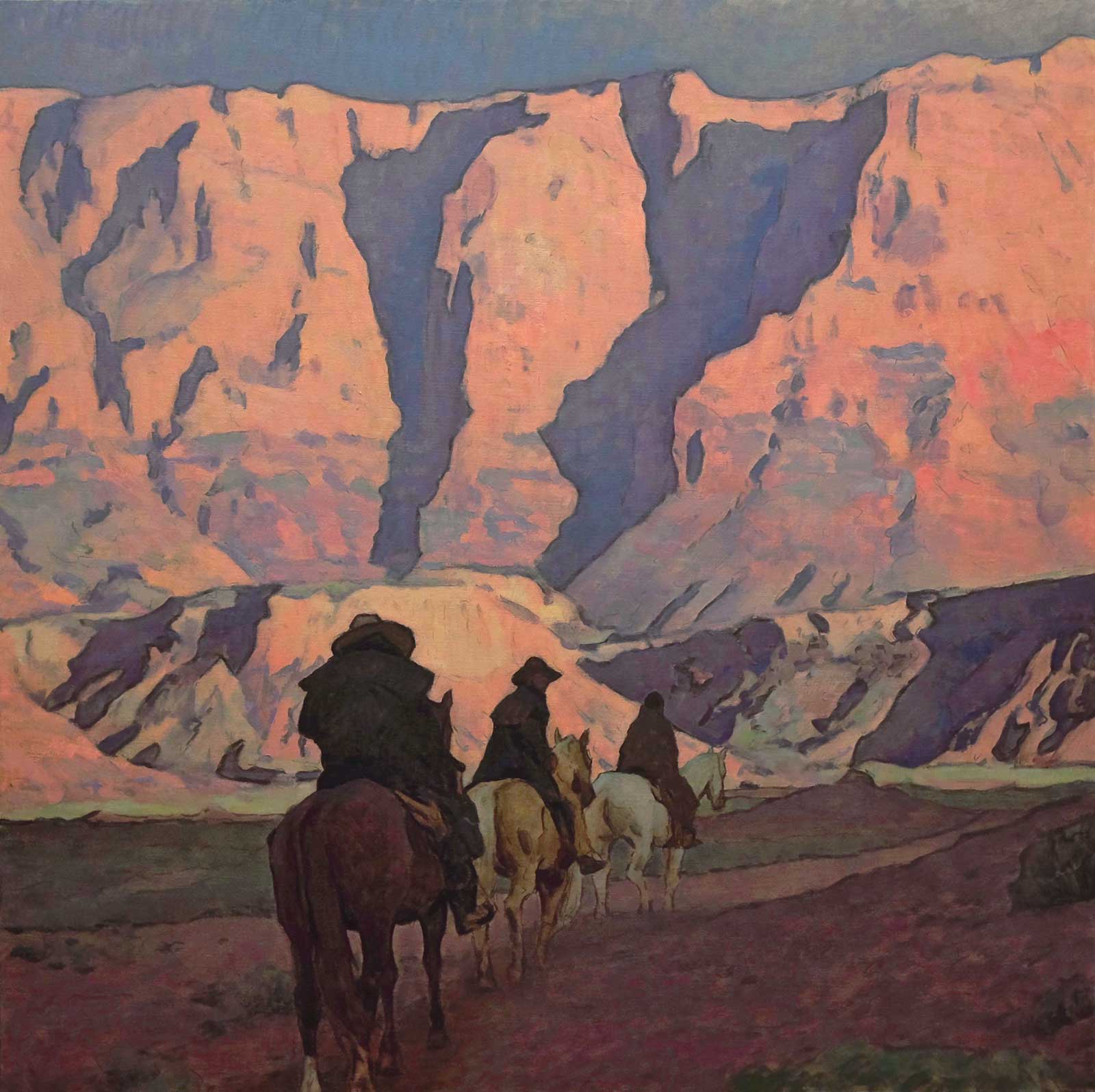
Silenced by the Majesty, oil, 48 x 48”
He continues: “Each painting has to be a new challenge, or else you might repeat yourself. I’ll challenge myself with color and composition, form and subjects. But trying to capture something new, that’s the fun of each piece. Coming up with those authentic paintings, without relying on a formula, that’s what really makes me excited about being in the studio.”
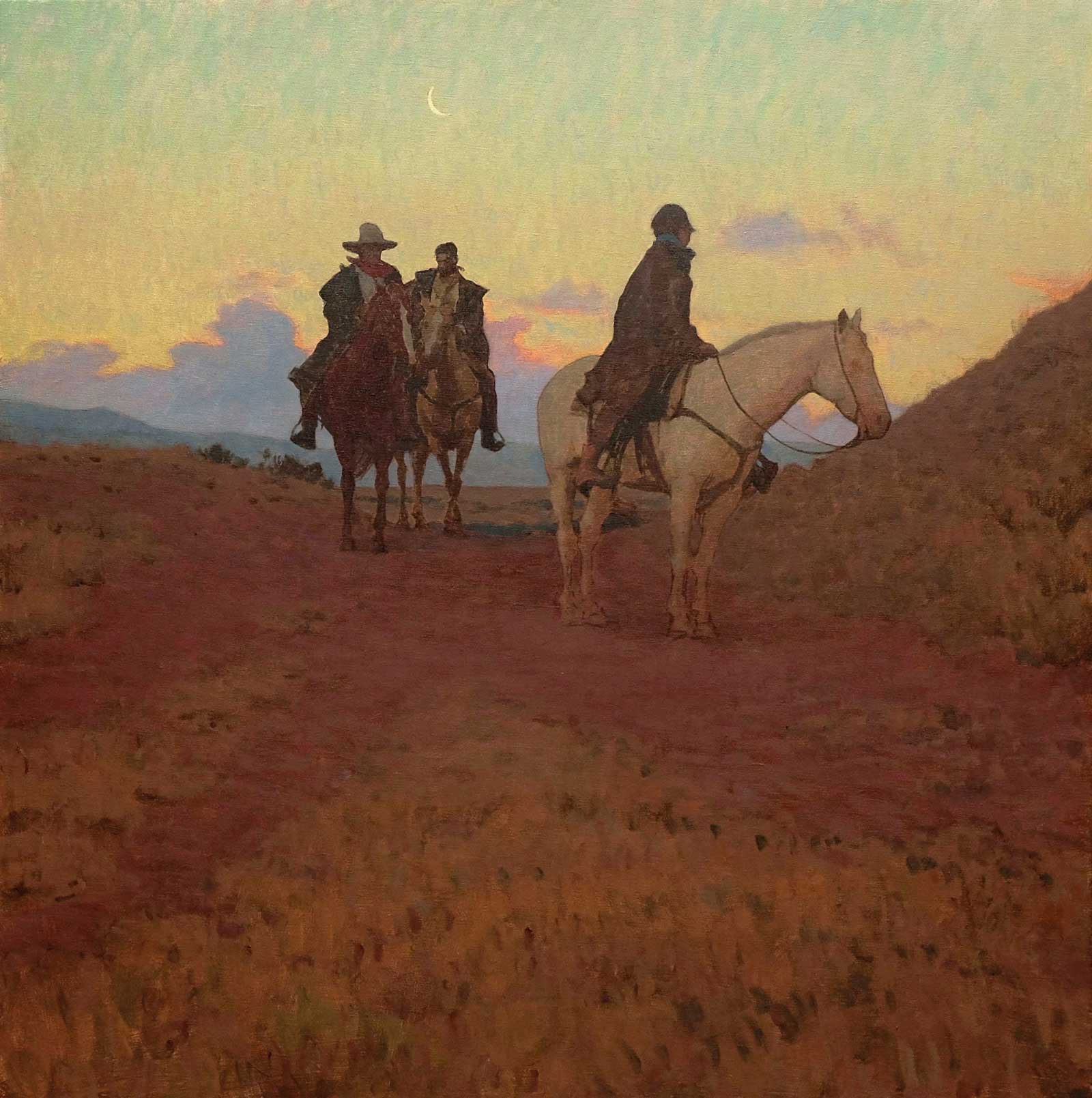
The Crescent Moon, oil, 40 x 40”
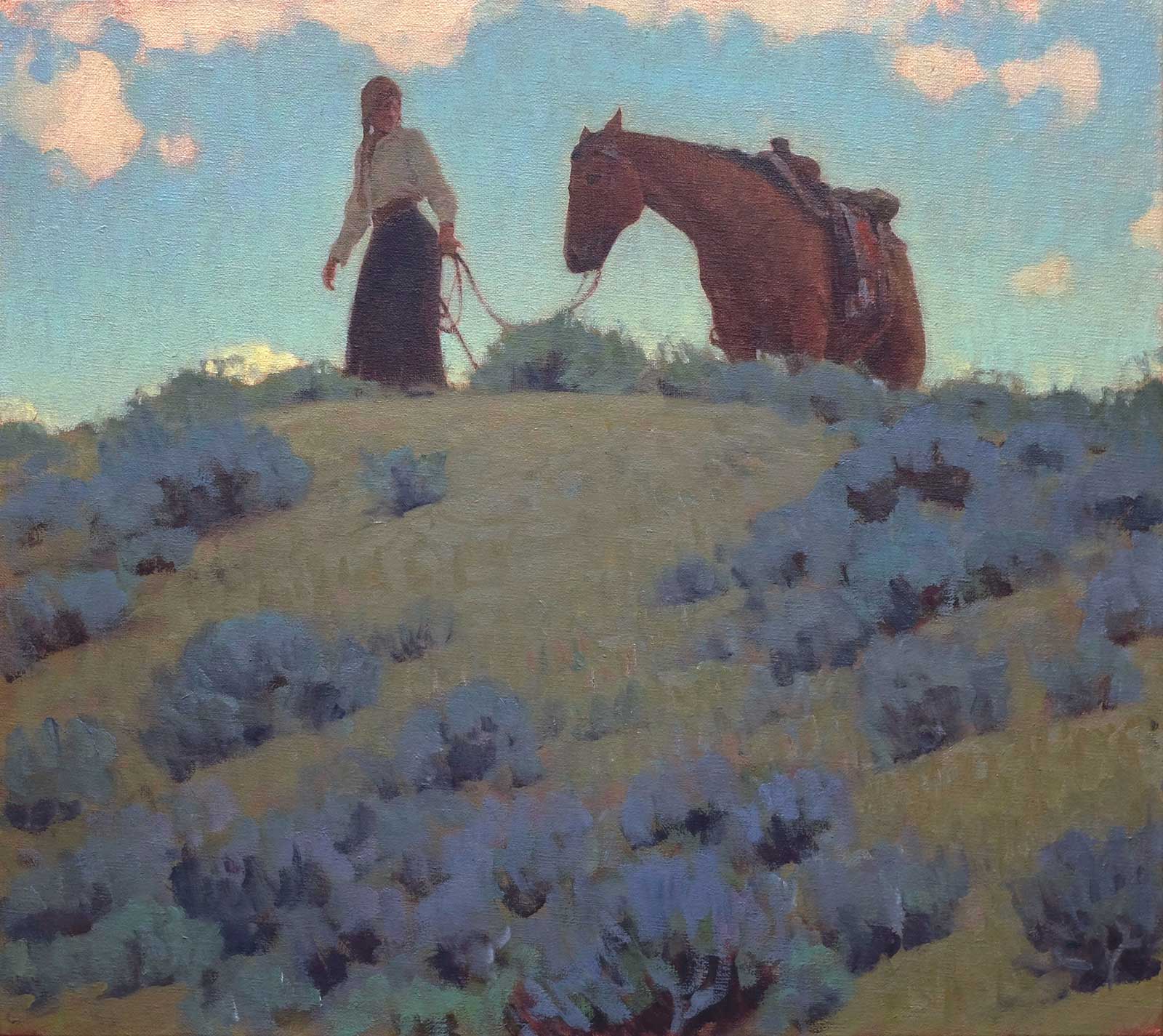
Against the Sky, oil, 25 x 28”
New works in the show include Silenced by the Majesty, which depicts distant cliffs bathed in pinkish light at the end of the day, forming an impenetrable wall of rock as three silhouetted riders make their way through the bottom of the painting. The middle rider seems to glance back, as if admiring the viewer, though no detail can be seen in his face to confirm his expression. Vague hints of facial expressions are also in He Knew He Had a Good Woman, which shows a woman, hand on hips, looking up at a rider. The moon hovers between them. The rider’s hat covers his face, but the face on the “good woman” has some small details, including the sharp angle of her nose that points up toward the man. Again, details are missing, which allows the viewer to input their own story. Has the rider just returned? Or is he leaving? What is the nature of their interaction? Dean leaves the details to those admiring the work.
“When you tell someone what they’re seeing, they’re stuck with it,” he says. “But if I let them decide, they can live with what they imagine.”
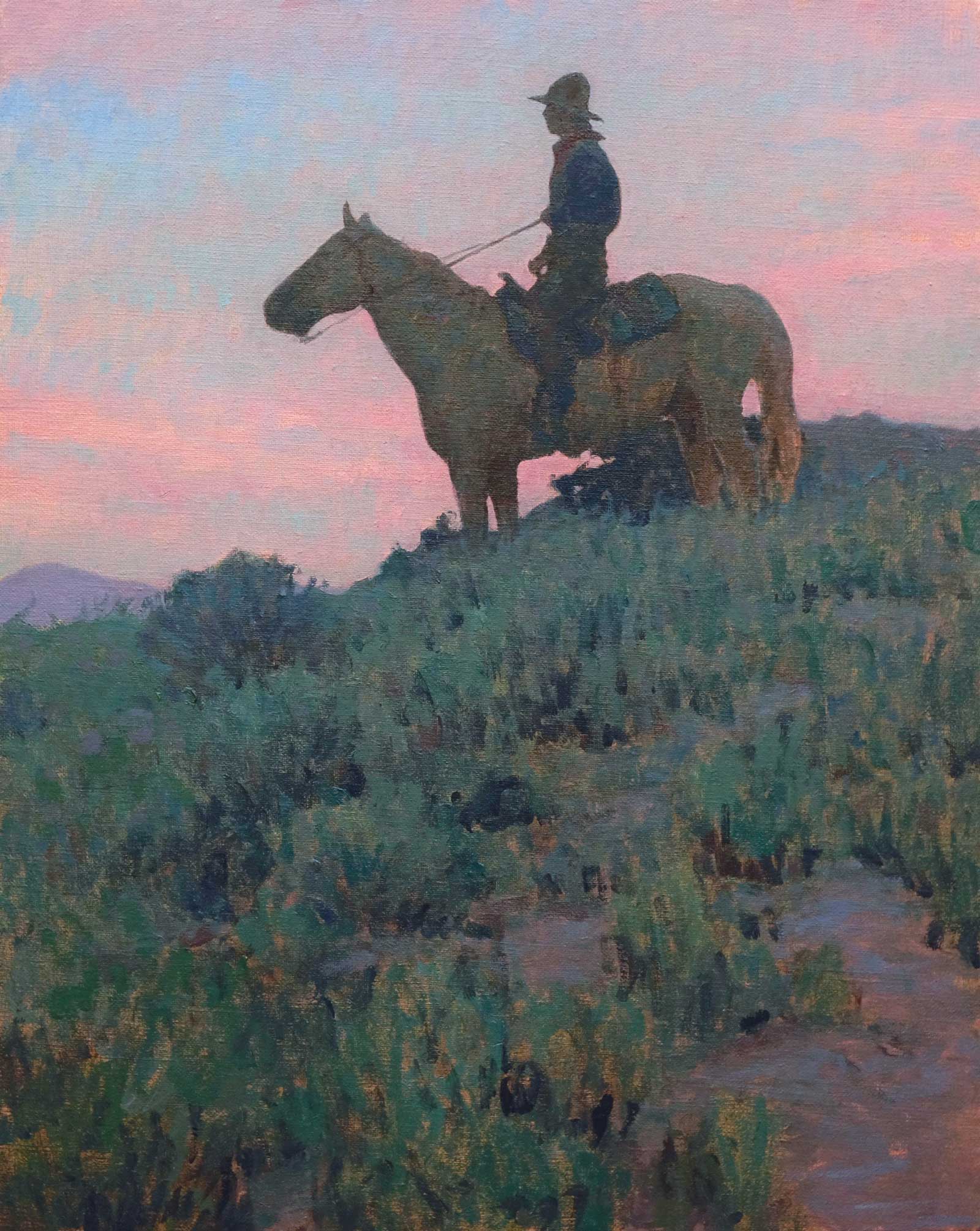
Alone Time, oil, 25 x 20”
The artist wishes he traveled more to get reference material but adds that he can quickly fill his tank on just one or two trips, which fuel new works for years. His paintings show Vermilion Cliffs, Canyon de Chelly, Ghost Ranch, the Eastern Sierras, Taos and other historic destinations in the Southwest. Trips to these places yield photographs, sketches and oil studies, all of which play a role in the studio. But nothing comes close to memories. And not just the input from the eyes, but also the feel of the wind on the skin, the sound of the desert in the ears, the smell of the sage and the dust in the nose.
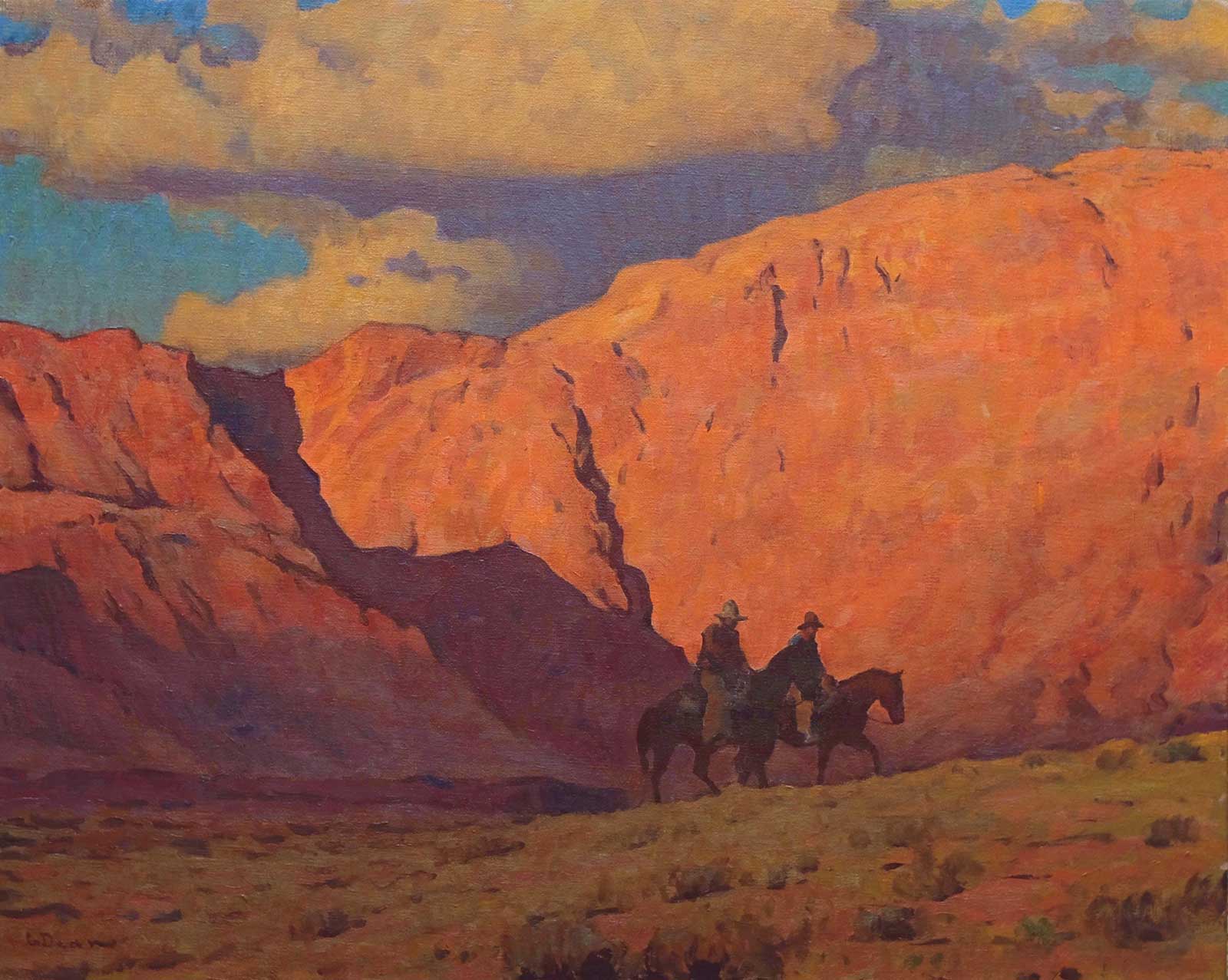
At the Shadows Edge, oil, 24 x 30”
“That’s where the paintings come together: memories and experiences. Being out there, working in those places, they really do inspire each and every work, and they do it much more than any photograph,” the artist says. “When I’m in the studio, I just tap into those memories of standing in those places. It’s an important part of the painting process. Being a witness breathes more life into a picture than anything else.” —
Powered by Froala Editor