Only two museums in the world, the National Museum of Wildlife Art in Wyoming and the Rijksmuseum Twenthe in the Netherlands, hold masterworks by each member of the Big Four—Carl Rungius, Richard Friese, Wilhelm Kuhnert and Bruno Liljefors. This year, the two institutions are bringing together the best artworks from each of these powerhouse wildlife painters for the exhibition Survival of the Fittest: Envisioning Wildlife and Wilderness with the Big Four, Masterworks from the Rijksmuseum Twenthe and the National Museum of Wildlife Art, hosted by the James Museum of Western & Wildlife Art in St. Petersburg, Florida.
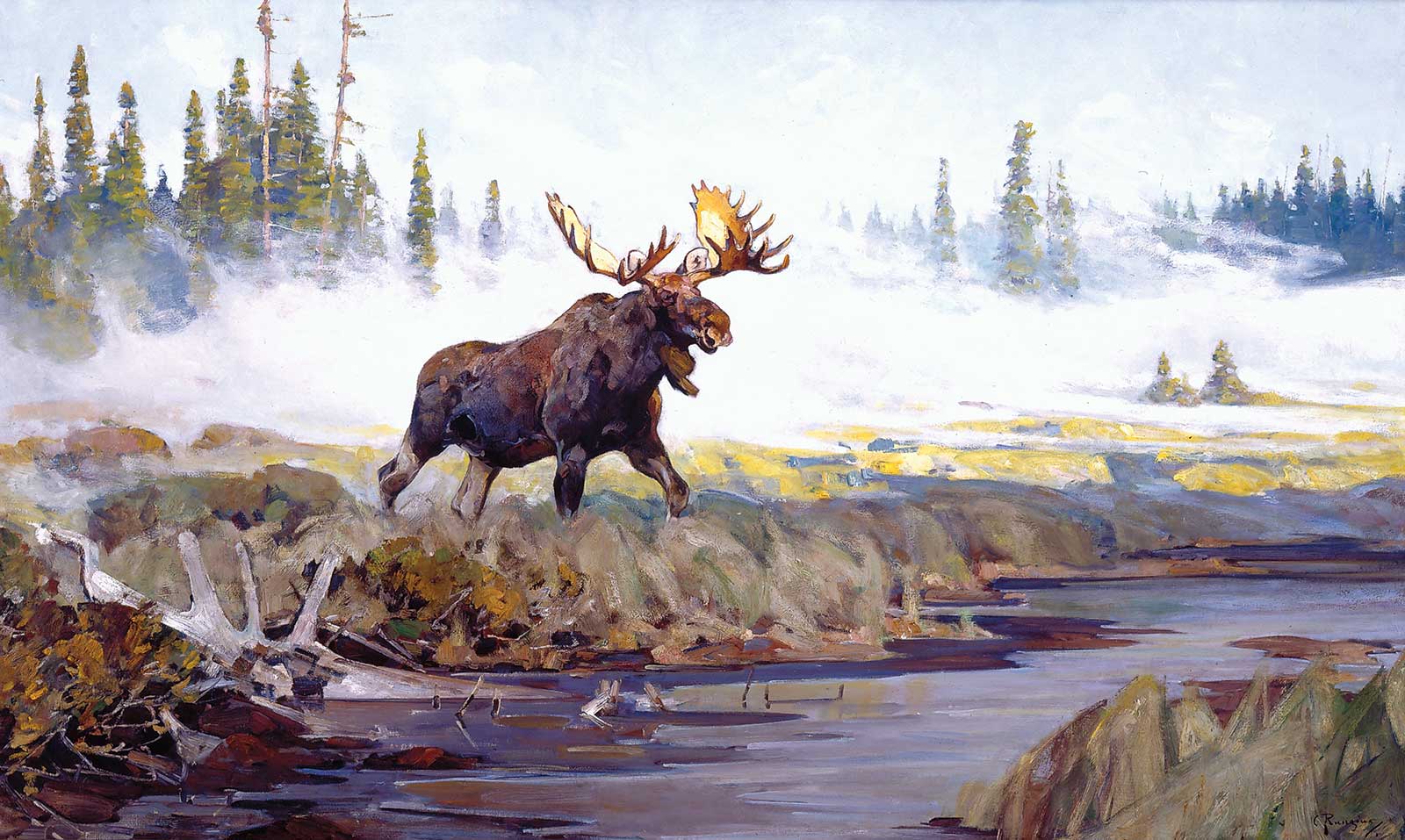 Carl Rungius (1869-1959), Morning Mist (Harlow Triptych), ca. 1930, oil on canvas, 47 x 79½”. JKM Collection, National Museum of Wildlife Art. © Estate of Carl Rungius.
“[Many visitors will remember] the exhibition and tour originated with the National Museum of Wildlife Art,” says Emily Kapes, curator of art at the James Museum. “[While] the James Museum’s collection of wildlife art features paintings by later 20th- and early 21st-century artists, this show broadens that view by going 100 years into the past to highlight pioneers of the genre.”
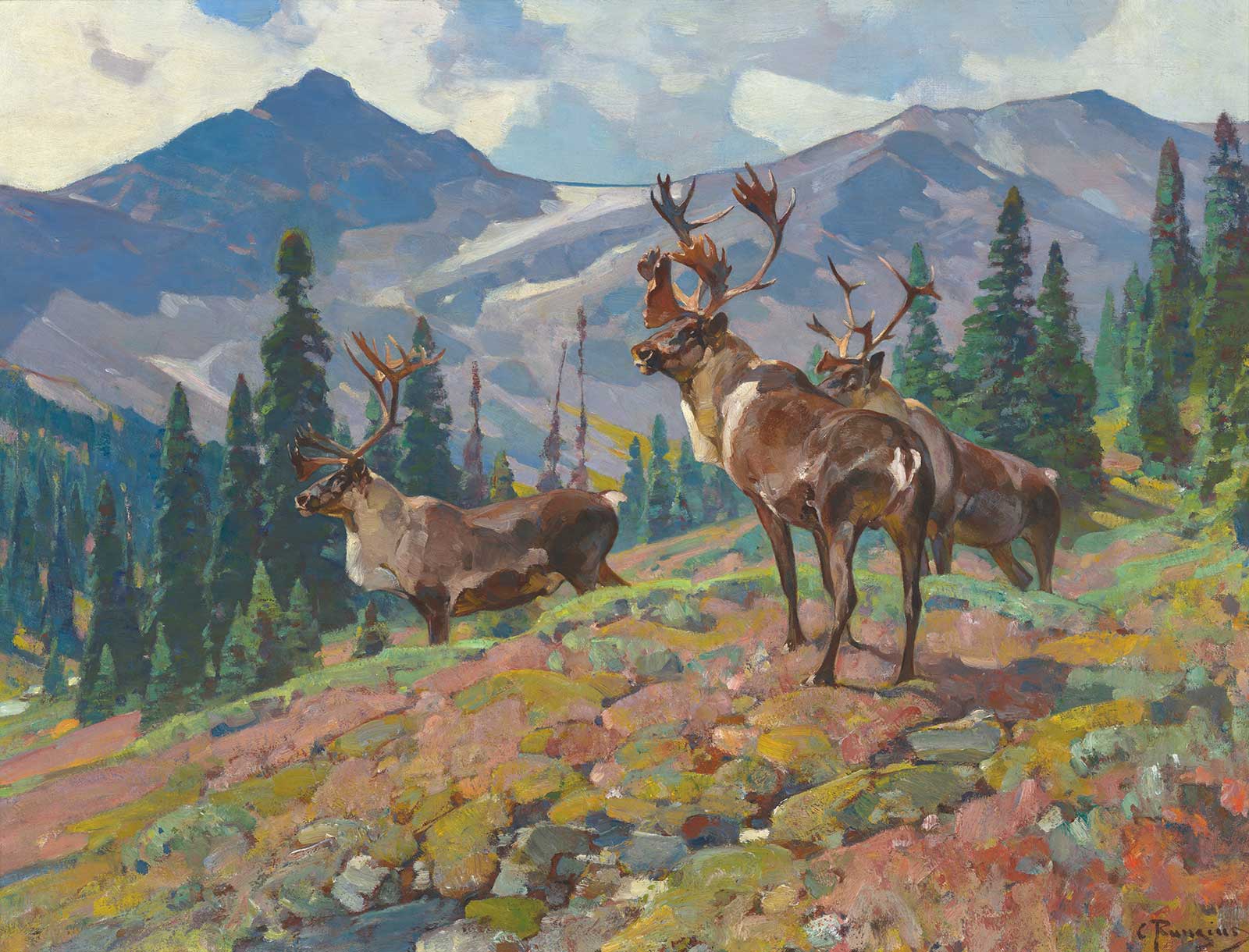
Carl Rungius (1869-1959), Three Caribou at Mount Robson, n.d., oil on canvas, 30 x 40”. Collection of the Rijksmuseum Twenthe, Enschede, Netherlands. © Estate of Carl Rungius. Photograph by Rik Klein Gotink.
An avid sportsman, Rungius was known for spending great bouts of time immersed in the wilderness, observing his subjects directly in their habitats. In Morning Mist (Harlow Triptych), painted around 1930, a large and magnificent moose treks through riverlands with less than favorable viewing conditions. Another superb piece by Rungius titled Three Caribou at Mount Robson features a family of caribou in alpine forest, keenly aware of their surroundings.
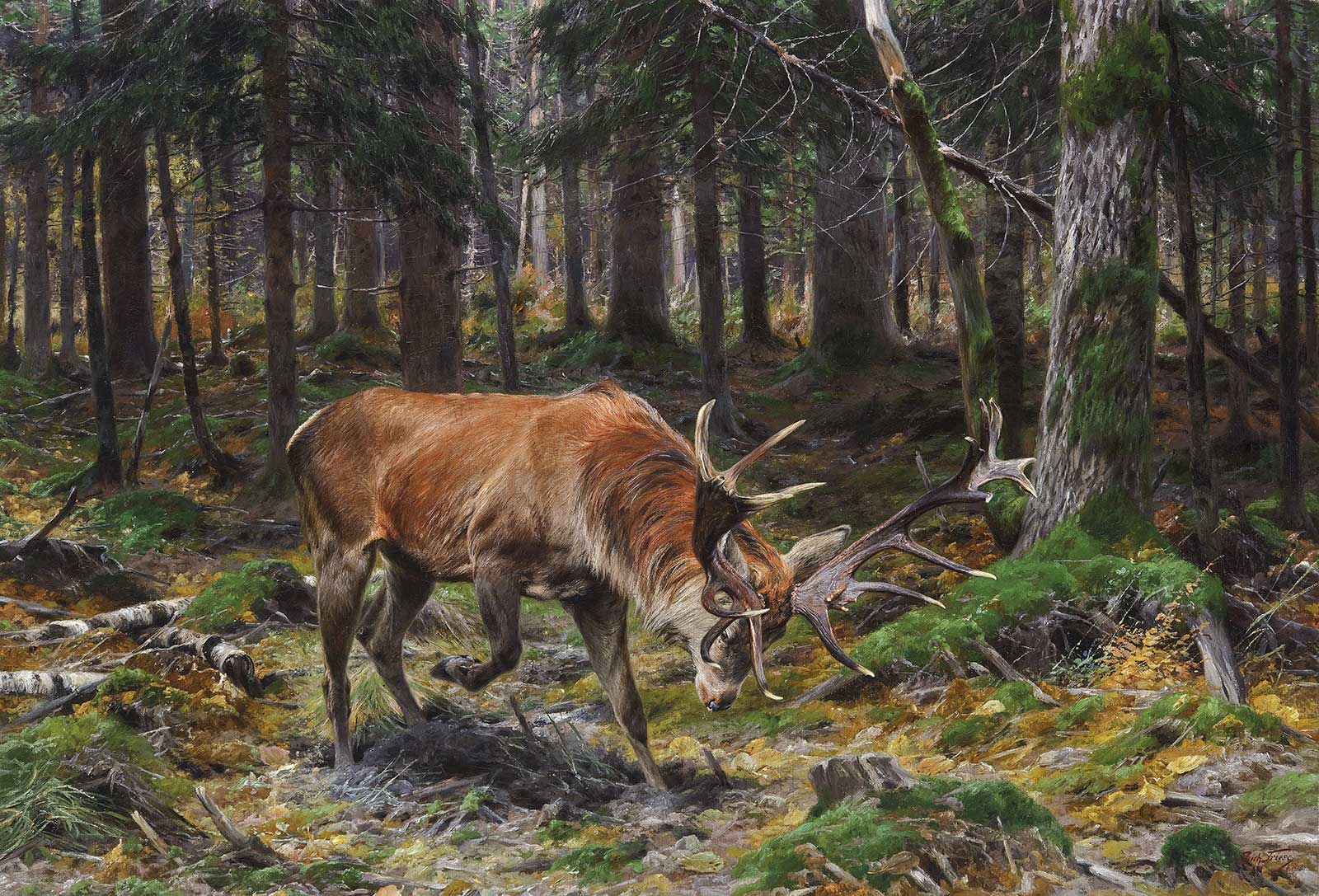
Richard Friese (1854-1918), Deer in a Forest Glade, 1912, oil on canvas, 43 x 62½”. JKM Collection, National Museum of Wildlife Art.
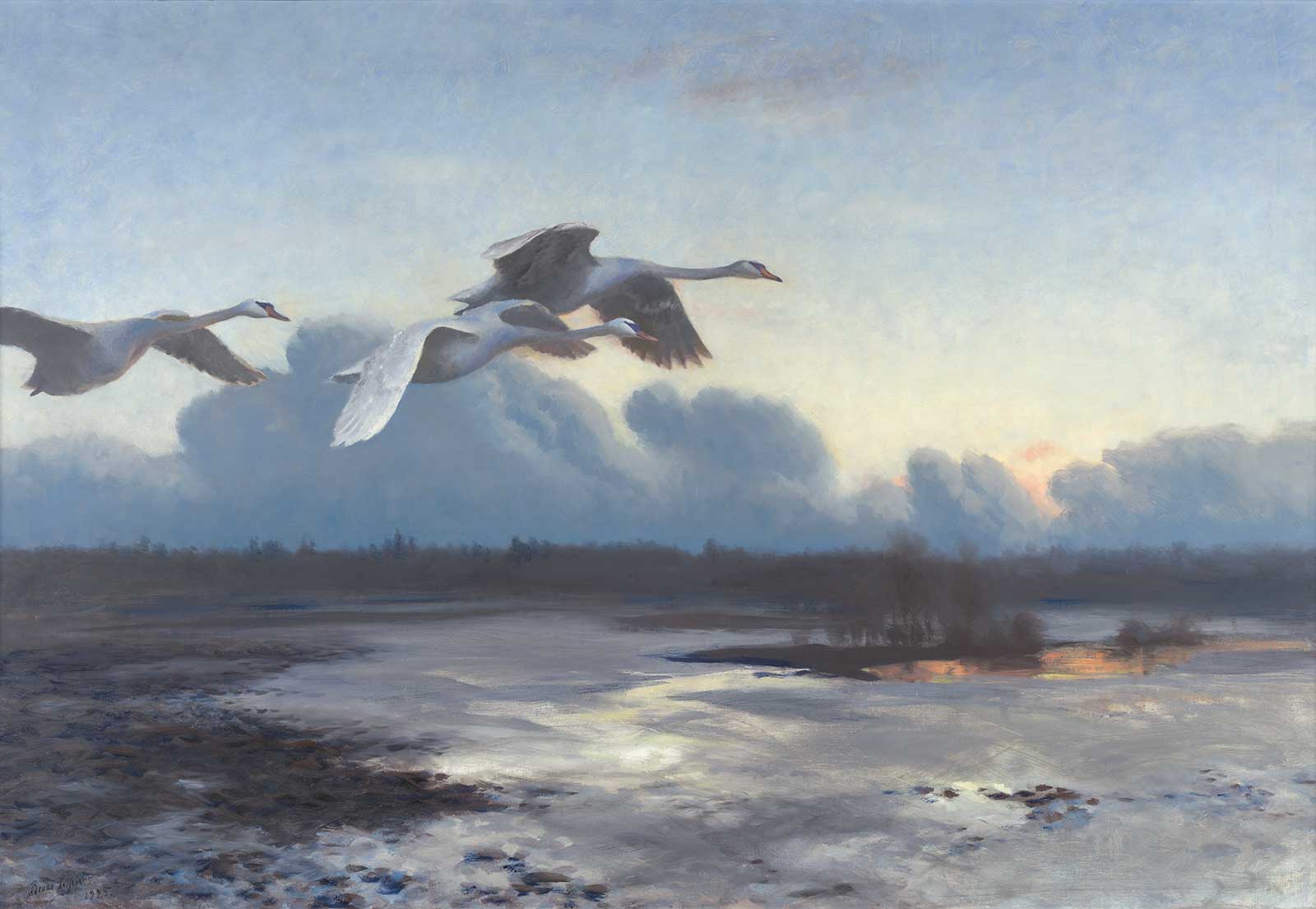
Bruno Liljefors (1860-1939), Migrating Mute Swans, 1925, oil on canvas, 41½ x 62”. Collection of the Rijksmuseum Twenthe, Enschede, Netherlands. Photograph by Rik Klein Gotink.
“The members of the Big Four were some of the first to present wildlife subjects in their natural habitats,” says Kapes. “Departing from scientific engravings and mythology narratives, they have influenced generations of artists.”
She cites Friese’s Deer in a Forest Glade from 1912 as another highlight in the forthcoming show. “[It’s] a standout painting for its depth and atmosphere that highlights this powerful creature. ‘Survival of the Fittest’ indeed.”
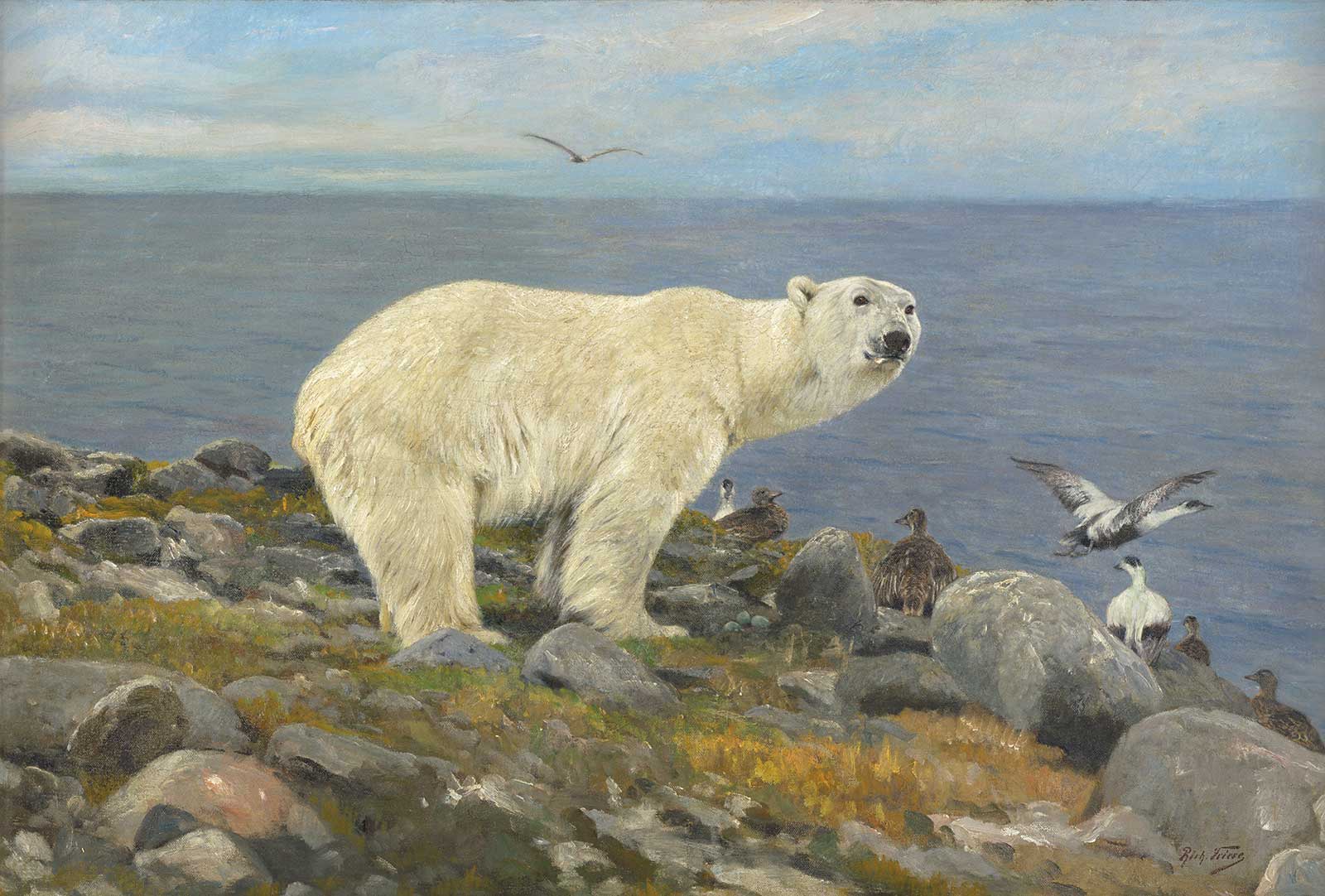
Richard Friese (1854-1918), Polar Bear and Eiders on the Coast, n.d., oil on canvas, 25 x 38”. Collection of the Rijksmuseum Twenthe, Enschede, Netherlands. Photograph by Rik Klein Gotink.
Survival of the Fittest will be on view at the James Museum of Western & Wildlife Art from February 17 to May 26. The show is organized by the National Museum of Wildlife Art and curated by NMWA curator Adam Duncan Harris. —
Survival of the Fittest: Envisioning Wildlife and Wilderness with the Big Four, Masterworks from the Rijksmuseum Twenthe and the National Museum of Wildlife Art
February 17-May 26, 2024
The James Museum of Western & Wildlife Art
150 Central Avenue Street, St. Petersburg, FL 33701
(727) 892-4200, www.thejamesmuseum.org
Powered by Froala Editor