If California brings to mind paper straws and palm trees, a West that’s simply about cities and strip malls and suburban sprawl—its Central Coast may surprise you. A hundred miles northwest of Los Angeles, California horse country begins to unfold. And depending on who you ask, it continues up El Camino Real to San Luis Obispo and all the way to Carmel Valley and Monterey Bay.
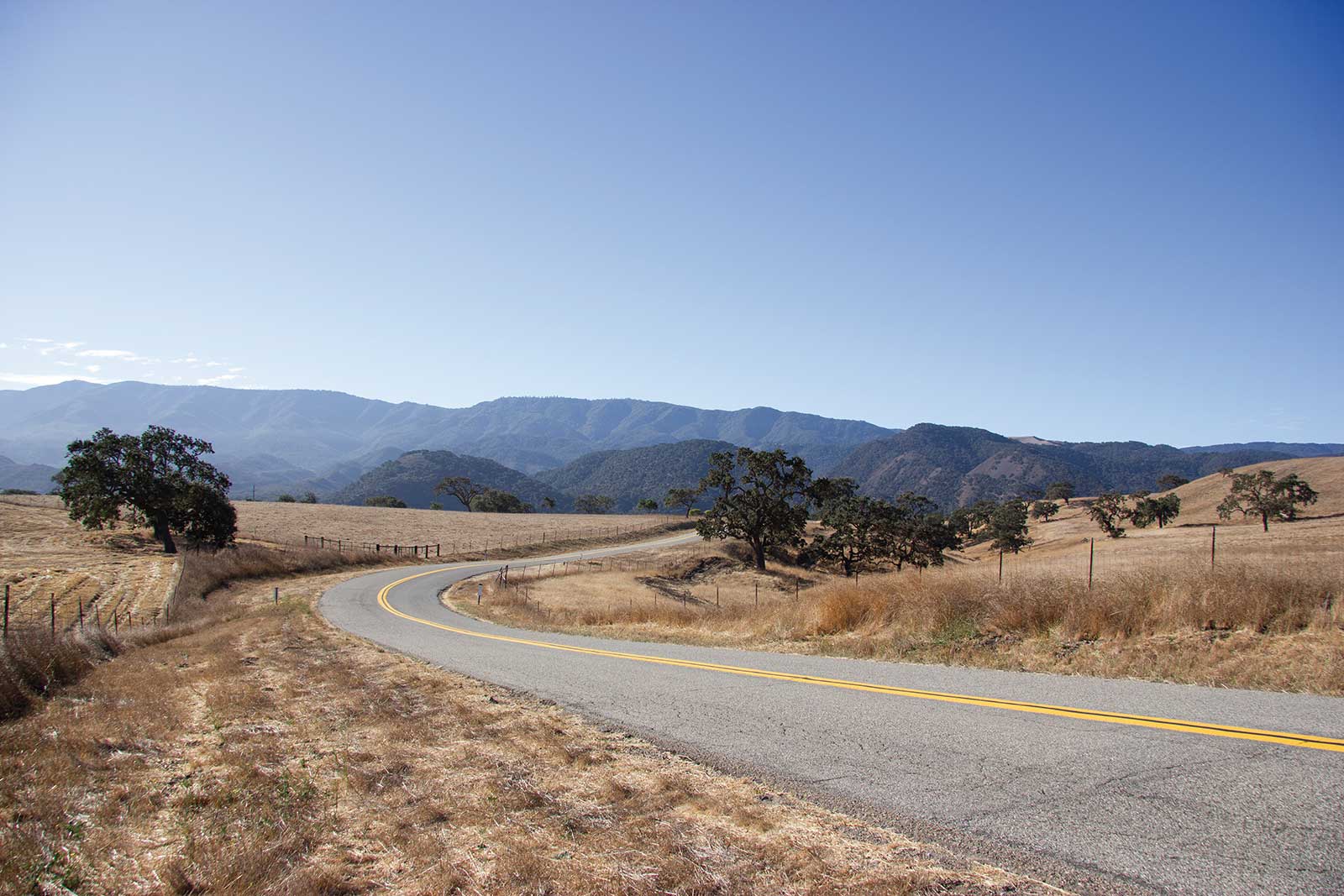
A classic California landscape of oak-dotted rolling hills in the Santa Ynez Valley, backed by steep, chaparral-covered mountains.
This part of California is The West in capital letters. It’s a West that had horse culture and a string of missions backed by the might of Spain before the United States Constitution was ratified a continent away. A West where team ropers, quarter horse reiners, thoroughbred breeders, and Prince Harry’s polo ponies all coexist today.
Yeah, I said coexist. So if you hadn’t guessed by now, I live in California. I wasn’t born here, but I got here as soon as I could. My ancestors set up shop in the Mountain West in the 1840s and ‘50s, falling short of the gold-frenzied horizon beyond. Quitters, as we call them in California.
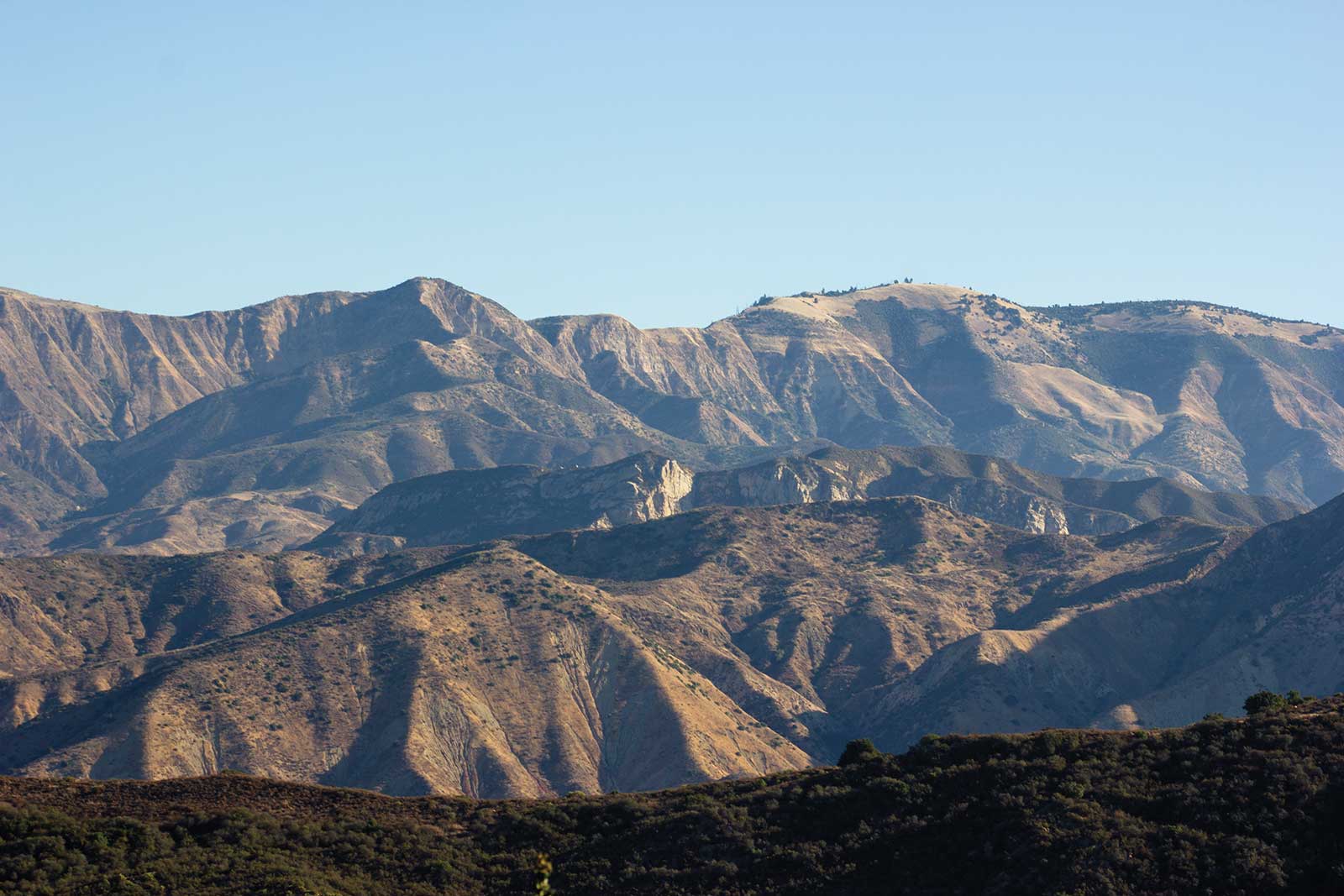
The rugged Los Padres National Forest seen from San Marcos Pass.
In the years since leaving the Great Basin, I’ve endured jabs about my adopted home. There are no cowboys in California, say people who’ve never been here. Western art isn’t being made on the West Coast, say people who only think of the Rocky Mountains and red cliffs.
If you know where to look, Western culture is alive and well out here on the Pacific Rim. Some might even call it the—ahem—real West. Statements like that usually don’t win me friends back home, but as a self-appointed member of the California Reputation Improvement Committee, I’m always looking for ways to show that we’re not all that bad. Hell, we might even have a few things in common. So when an opportunity to cover an event in California horse country came across my desk, I jumped at the chance to share a few private art collections and an underknown part of the Golden State.
My assignment was to be a “fly on the wall” as the Prix de West Society, a patron group from the National Cowboy & Western Heritage Museum, toured the Central Coast. Since 1995, they have been getting together for Western art-themed trips and educational, behind-the-scenes opportunities at the Oklahoma City museum, says director of development Jeff Ewing. Society members are often buyers from the annual Prix de Westsale, but others simply share a love for the Western way of life, he says.
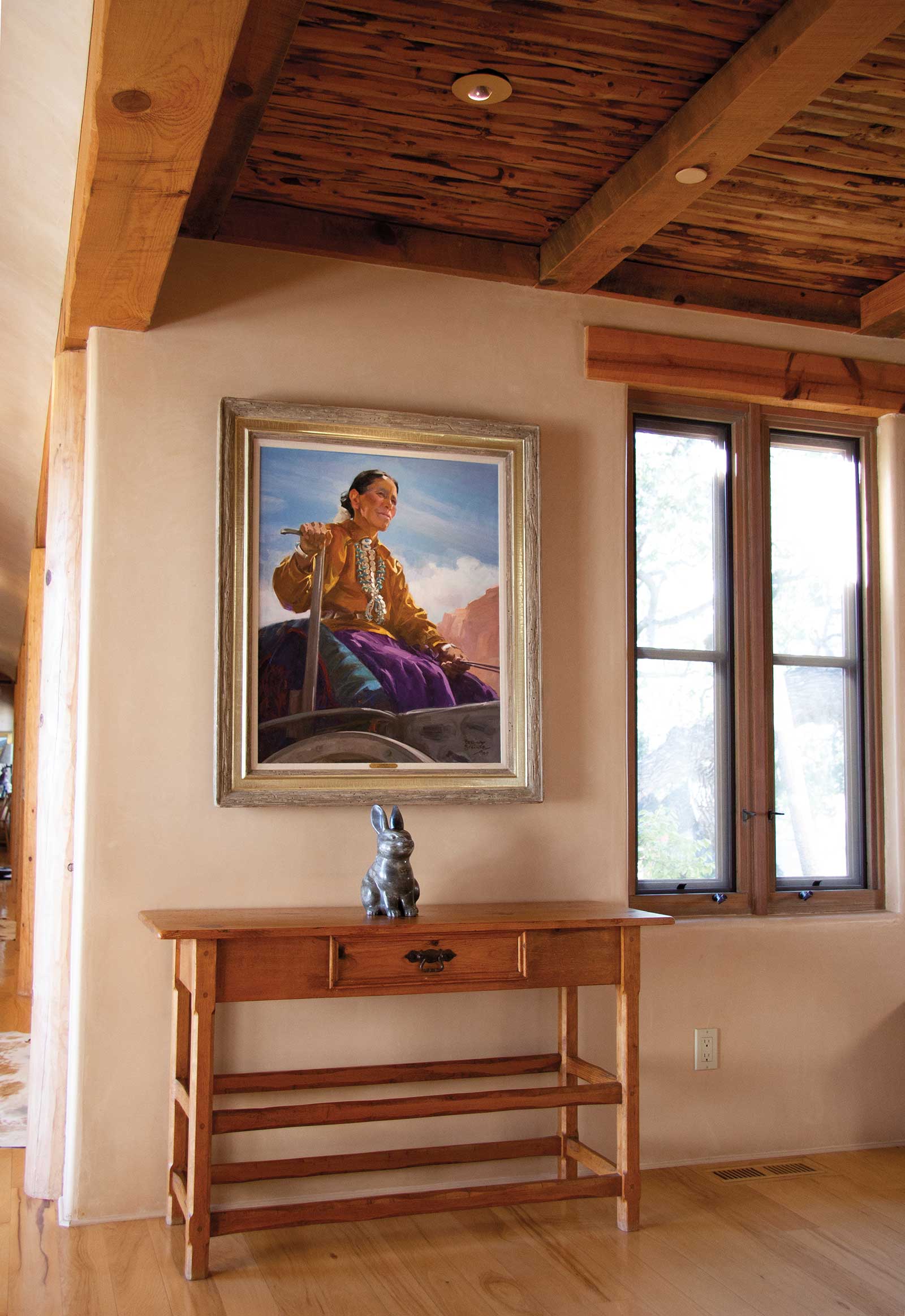
Navajo by Bettina Steinke hangs above Rabbit by Doug Hyde in the Greg and Sandy Simon collection.
This year’s trip to California included visits to artist studios and private collections, Ronald Reagan’s ranch, and a talk on the legacy of John Wayne. Aside from Dust Bowl-era migrations and a turncoat college football coach, it may not seem like Oklahomans and Californians have much in common. But, the more I pulled the thread, the more I found cultural parallels—most notably horsemanship and Western art.
The week of the Prix de West Society event, I crashed with friends in Santa Barbara (ironically, a pair of Oklahoma transplants themselves). It’s not something you’ll find on the tourism website, but the area is rich with petroleum, luring energy professionals from Texas and Oklahoma to come dip their toes in the sand. I guess that makes three things in common (for those keeping score at home).
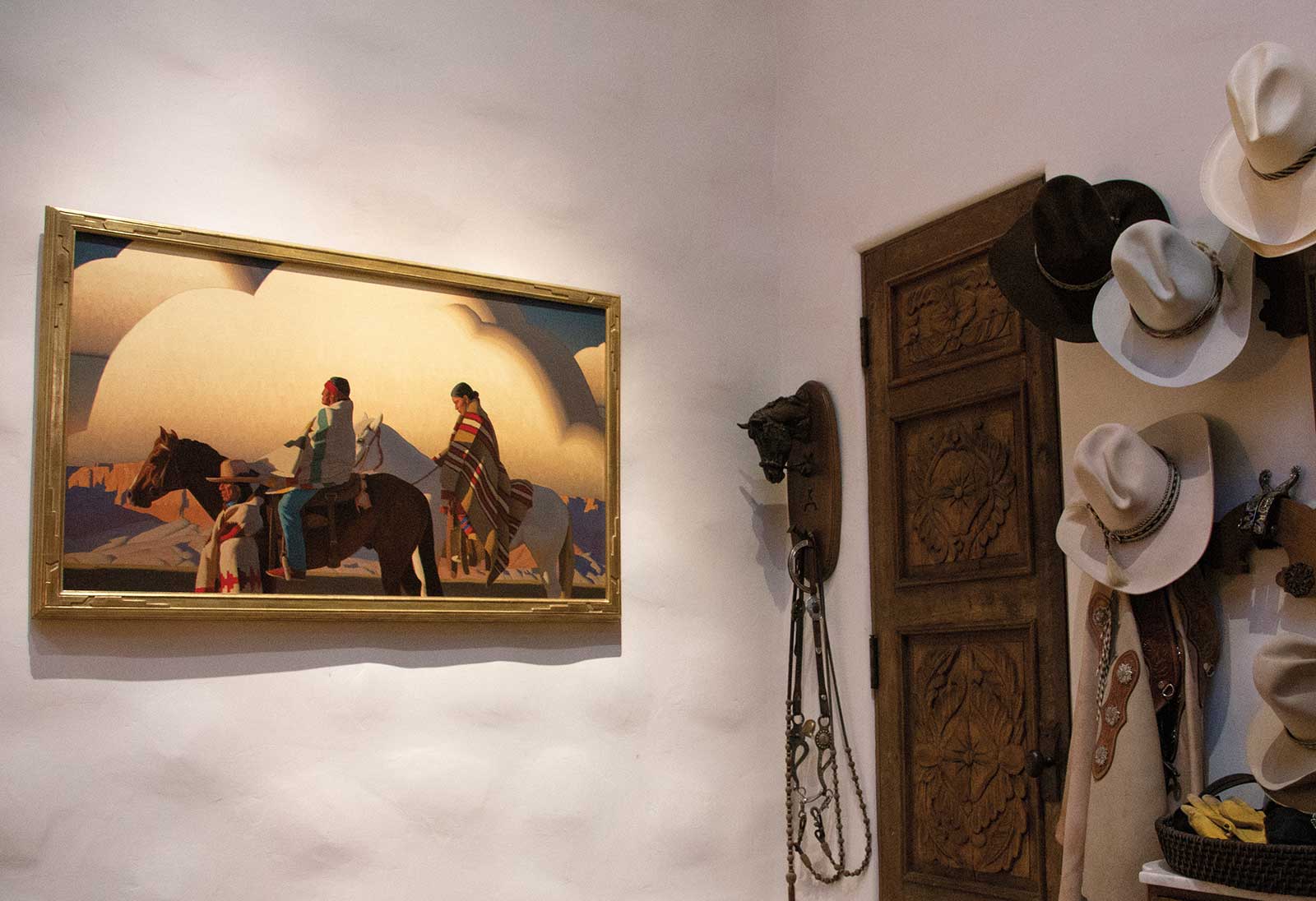
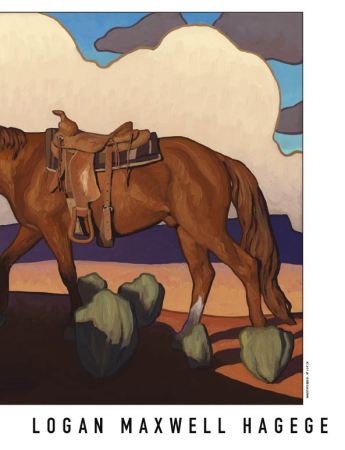
Across the Endless Skies by Logan Maxwell Hagege in the collection of Sharon Tate and Richard Kline.
When I caught up with the tour group in the Santa Ynez Valley, they had already been to the studios of Logan Maxwell Hagege, JoAnn Peralta and Morgan Weistling. Ahead of their luxury motorcade, I took a winding road into the hills above Solvang through horse properties with a dash of Mexican rancho-era charm. I arrived at the home of Sandy and Greg Simon, a hilltop property with a wraparound deck and hefty set of stone steps. Sandy was spearheading happy hour refreshments and I pulled up a chair next to Greg and another host on the tour, Richard Kline.
We chatted horses, their respective art-collecting journeys, and the early days of the Prix de West.A seven-time world champion, Simon spent 20 years showing performance quarter horses, and as a result, got to know Oklahoma City, home of the American Quarter Horse Association finals. Simon first visited the National Cowboy & Western Heritage Museum, then called the Cowboy Hall of Fame, about 40 years ago, became a member, started building a Western art collection, and “with trepidation,” went on to fill several leadership positions at the museum, he tells me.
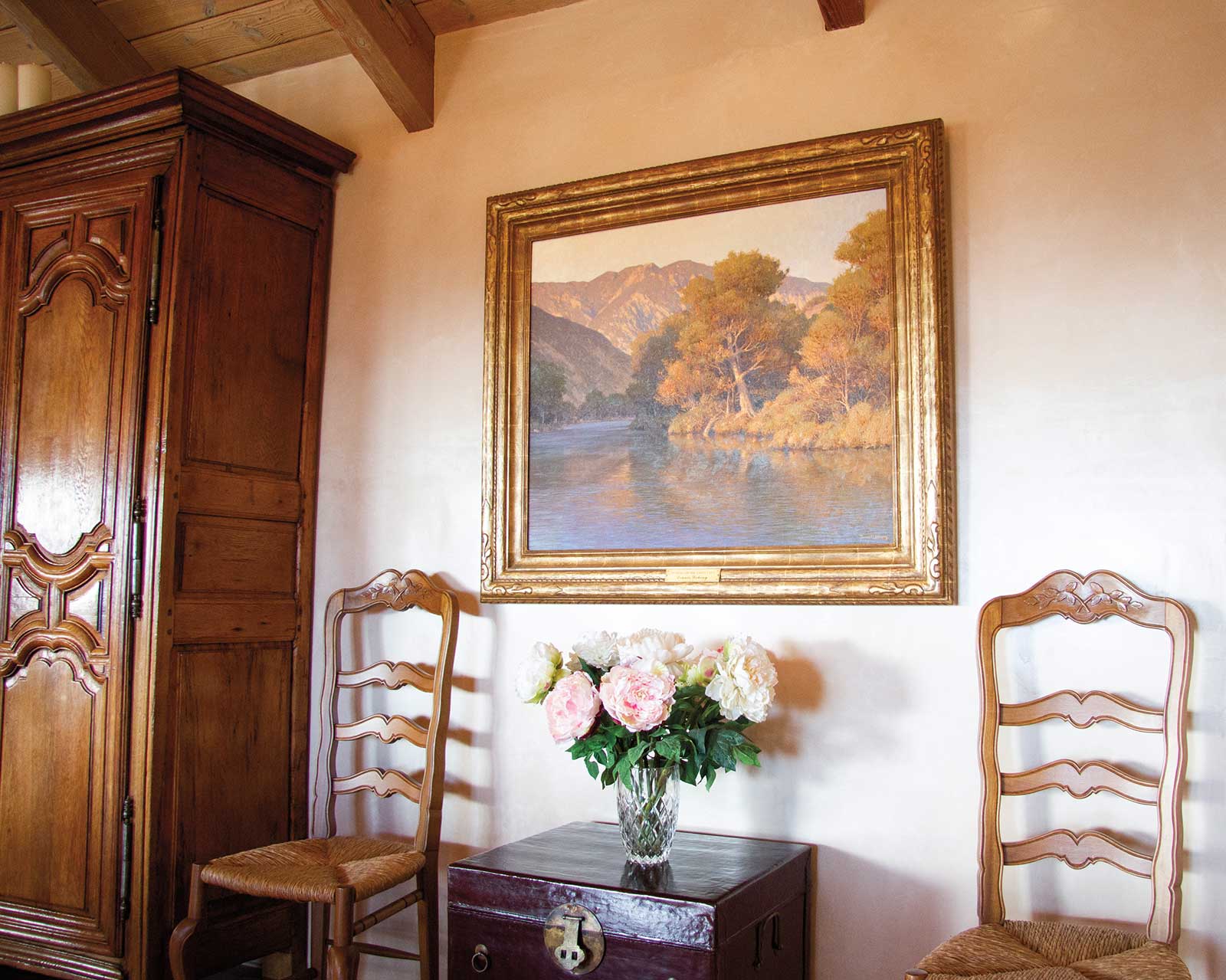
Collectors Greg and Sandy Simon have Dennis Doheny’s Evening on the Santa Ynez on display in their art collection.
Strolling through the Simons’ collection, I observe ranch scenes, desert landscapes and something I’d see in both home tours—an occasional seascape, too. Indigenous figures by John Moyers and Bettina Steinke nod to Simon’s roots in New Mexico while Pino D’Angelico’s flamenco dancer feels straight from Santa Barbara’s Old Spanish Days fiesta. Representing the home team were Dennis Doheny with a glowing painting of the Santa Ynez River and a bronze by sculptor Pat Roberts, wife of local horse trainer Monty Roberts. If you know Gerald Balciar’s megalithic mountain lion at the Cowboy, a bison in the Simon collection will feel familiar—it was carved from the same white marble.
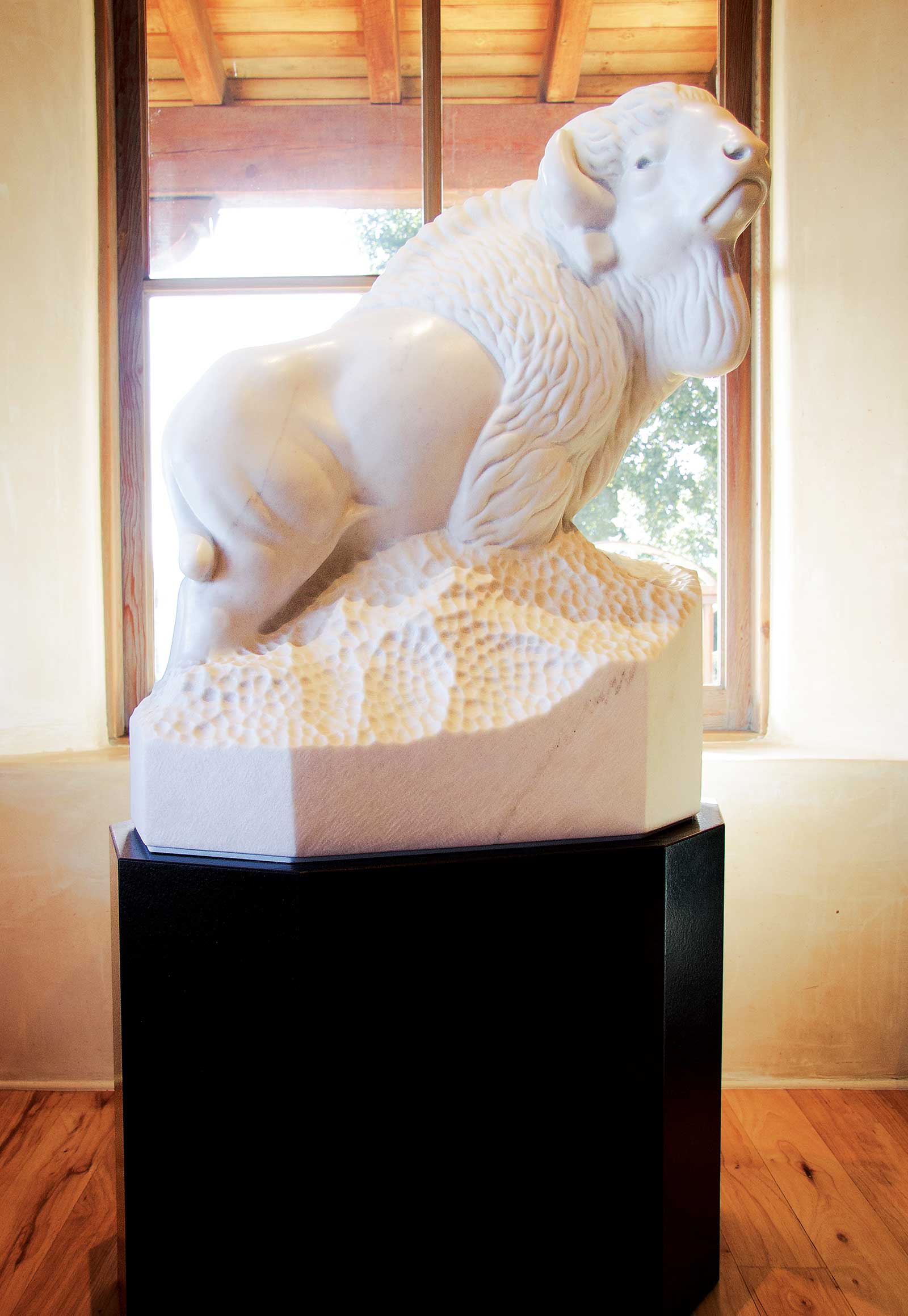
Bluestem Prairie by Gerald Balciar in the Greg and Sandy Simon collection.
Guests scale the big stone staircase and begin filtering in, recognizing works from past shows. A tour like this is almost a “retrospective of the Prix de West,” society member Terri Cooper tells me. Not only do guests get to revisit the art, it’s a chance to reconnect with artists and other collectors they’ve met over the years. “It’s like a big family,” she says. Like siblings, Prix de West buyers sometimes fight over the same things; I smile, as a few guests spot “the ones that got away.”
Cocktail hour draws to a close and I head out into a quintessential California landscape—grassy rolling hills, oak trees, an occasional cactus as big as my car—once again getting ahead of the 50-plus guests en route to dinner at the home of Kline and his wife Sharon Tate.
Also longtime Prix de Westsupporters, the couple came into art collecting through early advertisements. Tate, who worked in the fashion industry, began collecting French Belle Époque posters for their home in Los Angeles, segueing into pre-1930s lithographic movie posters for their Central Coast ranch. Mirroring the bold, graphic nature of the posters, the couple’s first “serious purchase” was a piece from Donna Howell-Sickles, Tate tells me. Next came Howard Post, part of the 1980s “New West” vanguard that Tate and Kline championed as they continued building their collection.
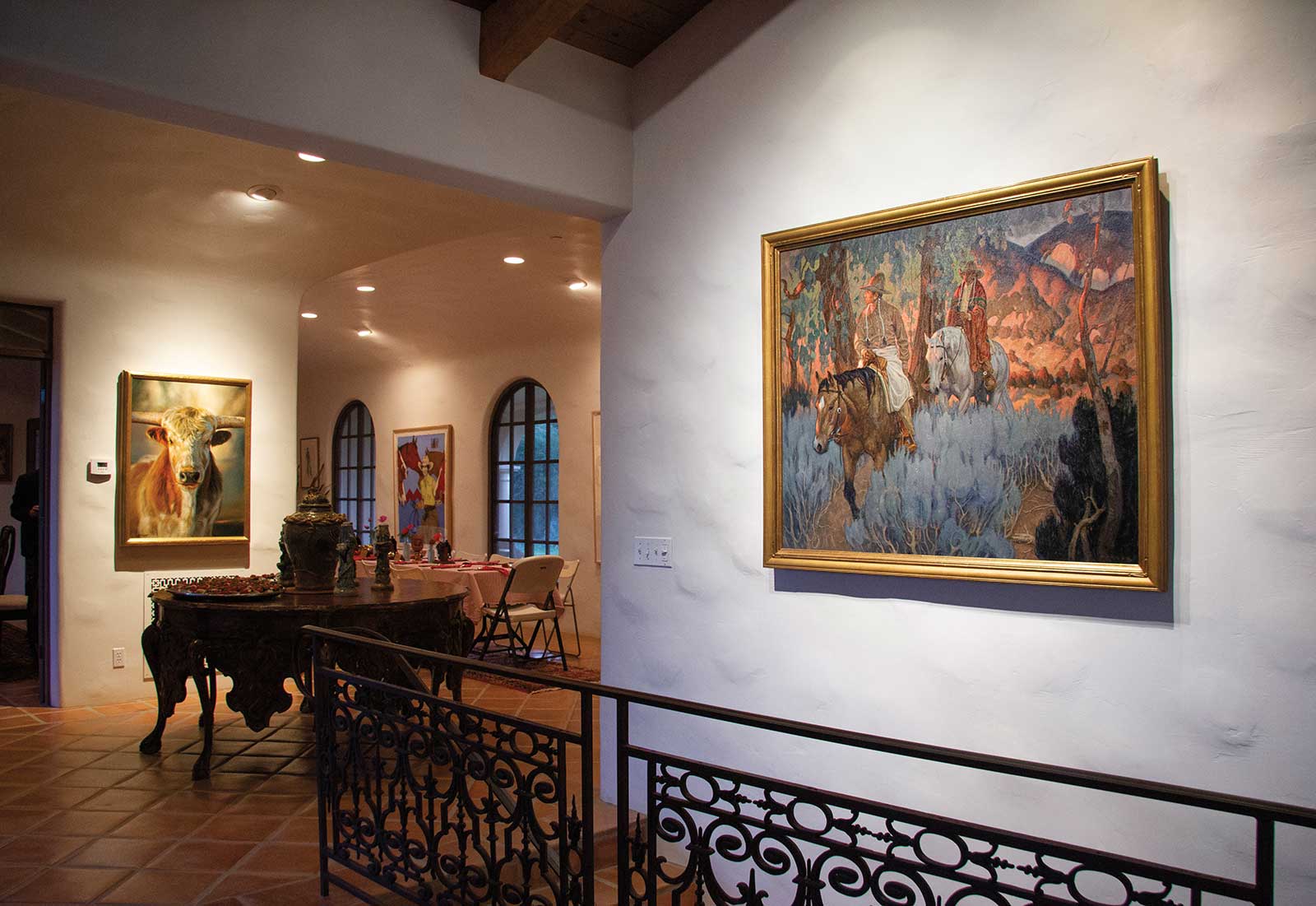
Featured prominently is Riders at Eventide by Eric Bowman in the collection of Sharon Tate and Richard Kline. On the left is Winter Bull by Teresa Elliott with Fancy Friends by Donna Howell-Sickles on the far wall.
A friend and neighbor, Simon invited them to their first Prix de West sale. They loved the experience and were subsequently “hooked,” Tate remembers. A spin around their hacienda-style home reveals several works purchased from the show—paintings by Bruce Greene, Quang Ho and, at the top of the stairs, a 2022 Prix de West acquisition, Riders at Eventide by Eric Bowman. Across from Bowman was a painting I recognized from the Maxwell Alexander 10th anniversary party, a bull by Teresa Elliott.
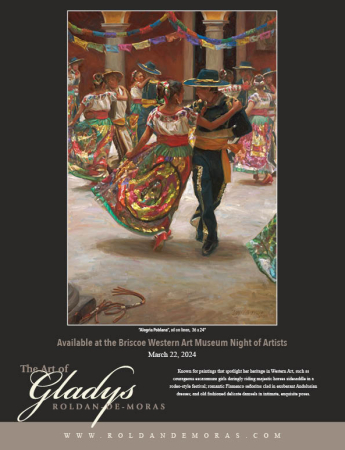
Another recent add to their collection is a Mexican folk dancer by Gladys Roldan-de-Moras, a piece picked up on a similar Prix de West Society trip to San Antonio. The story of the artist connecting with her own heritage really spoke to them, Kline tells me, and touring her studio in person, they knew they had to take a painting home.
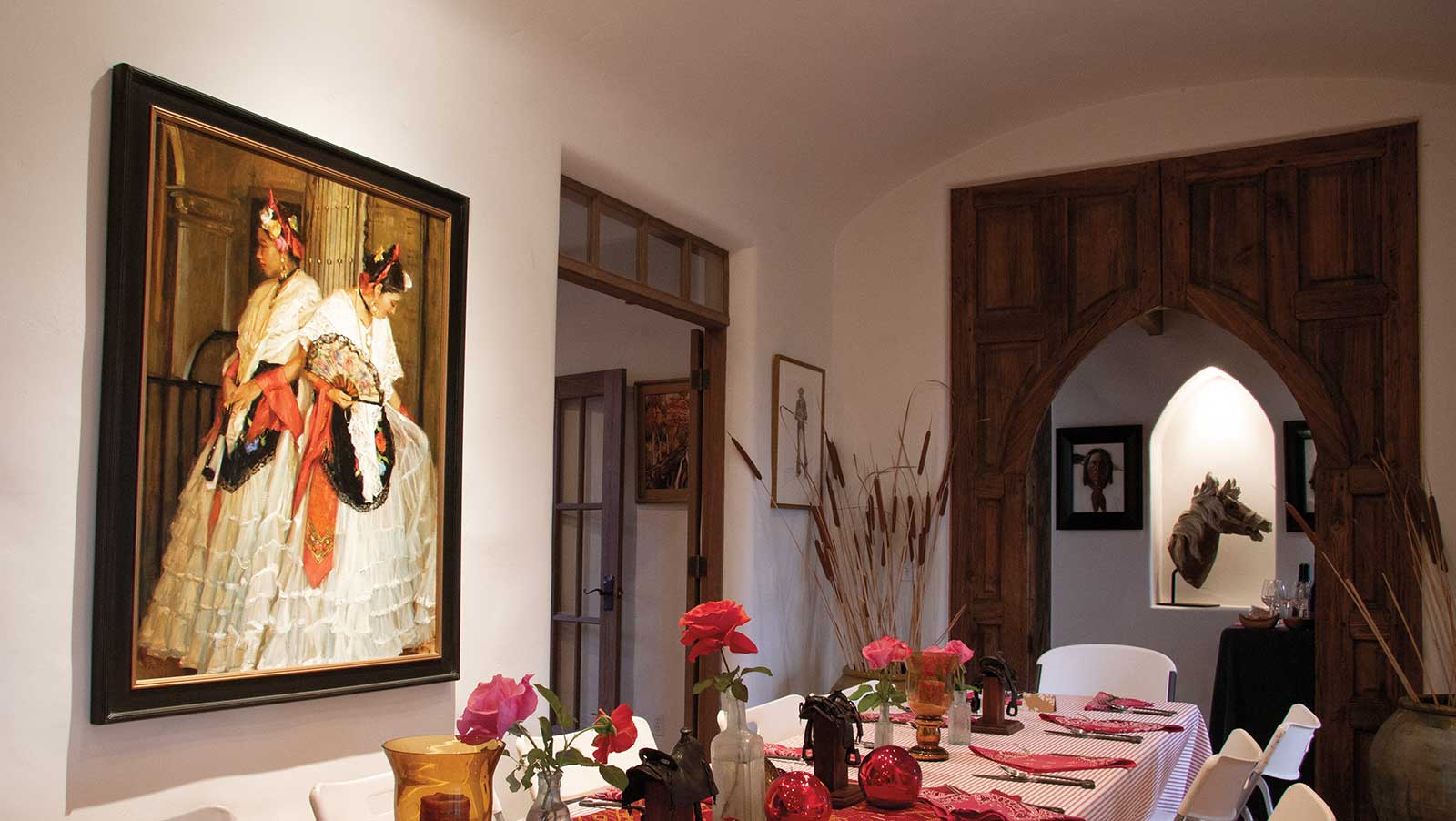
In the collection of Sharon Tate and Richard Kline is Gladys Roland-de-Moras’ Las Jarochas on the left. In the corner with the cattails is an untitled vaquero painting by Joe de Yong, a gouache on paper. On the right, on the far back wall, is Absaroka Man by Michael Cassidy and an antique merry-go-round horse head in wood.
These kinds of connections are common on society trips, says Ewing. That’s what the show and the tours are all about—collectors engaging with artists directly and building those bonds, he says. I see that personal chemistry in action as Logan Maxwell Hagege and Glenn Dean are both at the dinner, swapping stories with guests. I don’t get a chance to ask them, but I can imagine it’s pretty surreal going over to someone’s house and seeing your work on the wall.
As I drive back to Santa Barbara, birds of paradise, palms and century plants cut silhouettes against the Pacific. It’s one of those sunsets that gets you thinking the big thoughts. I think about the role museum shows play in shaping tastes of collectors and careers of artists. Balciar has been in the Prix de West for 40 years.
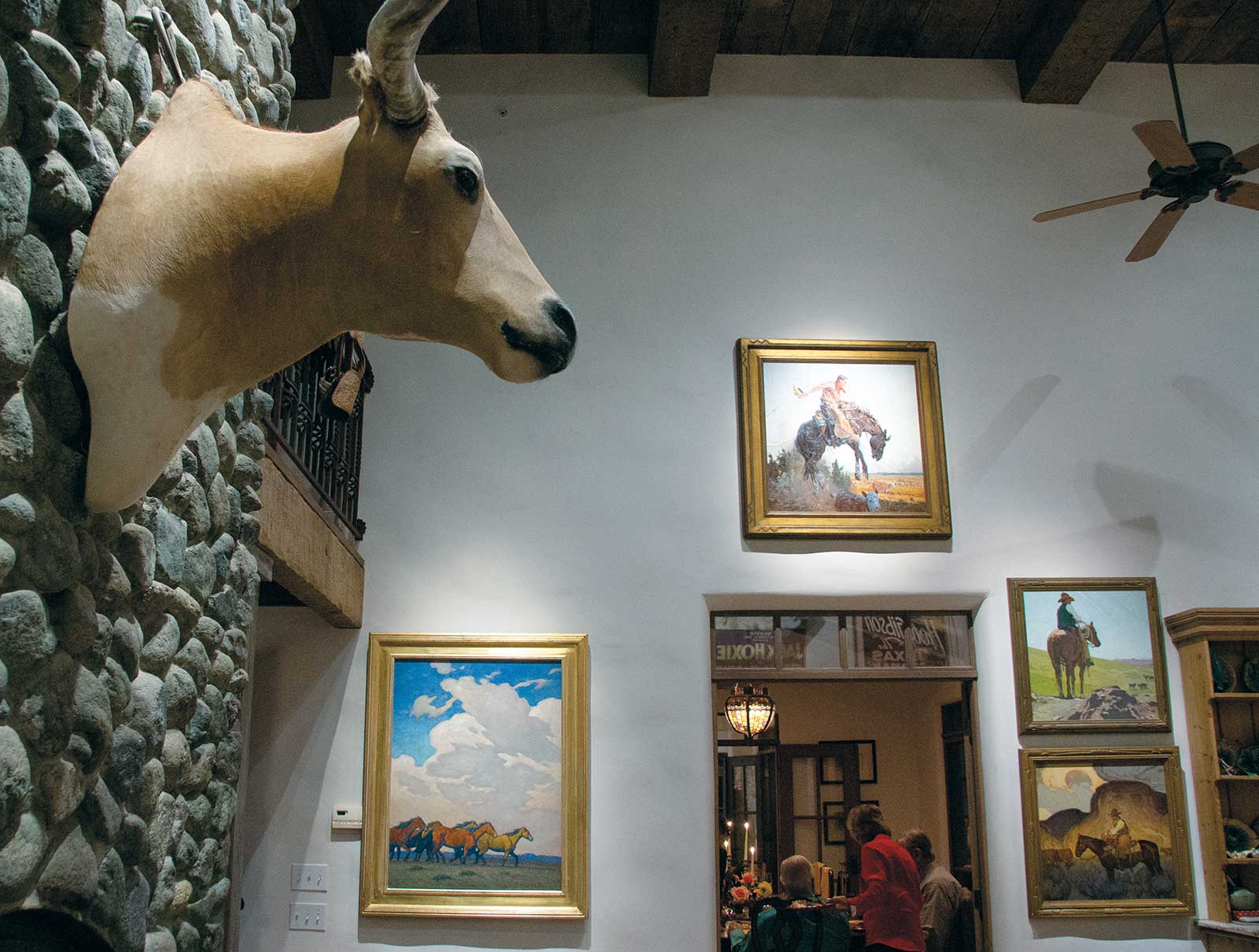
Paintings, from left to right, include Crossing the Pasture On the Move by Howard Post, Attitude and Altitude by Bruce Greene and then Cattleman’s Gaze by Glenn Dean above Contented in his Work by Eric Bowman. A steer head also decorates the walls of the home of Sharon Tate and Richard Kline.
I think of our hosts’ continued support of up-and-coming artists, and Tate’s description of Post and Sickles as “New West,” now both venerated members of the art world. More recently, Hagege and Dean received similar labels. I wonder what we’ll end up calling the next generation of artists to break into the Prix de West—an invitation Kline considers the top honor in Western art. I’m thinking “New New New West.” It’s a working title, of course.
I hadn’t been to Oklahoma at the time of the event, but a few weeks later, I take my maiden voyage to the museum that brought all of these people together. I see familiar names in the permanent collection, and a narrative of Western art shaped over 50 years. When I get home, I give Simon a call to finish connecting the dots. “The show can either be a mausoleum of what Western art once was,” he says, “or a continuation of evolving Western art,” says Simon.
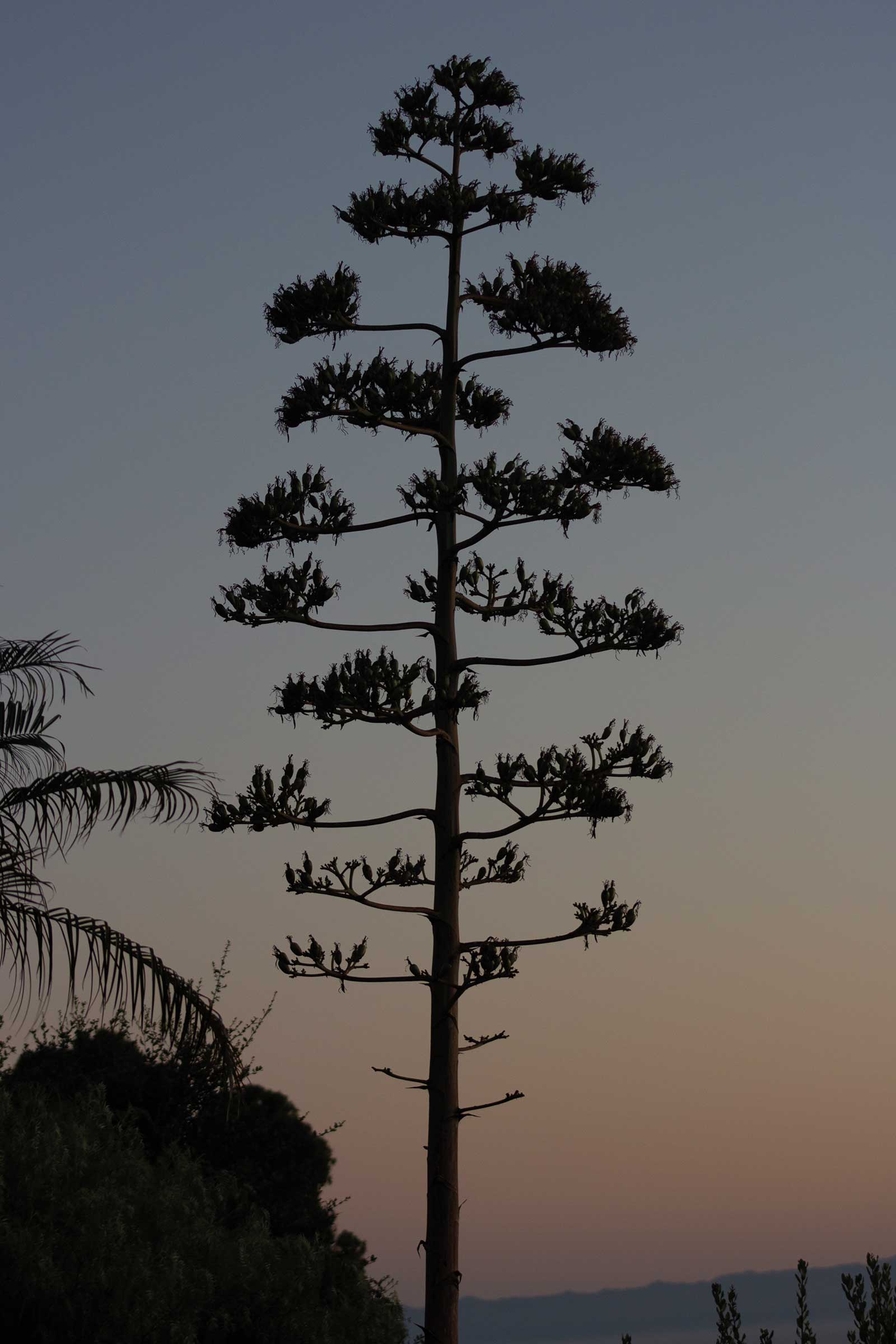
Palms and century plants silhouetted against the Santa Barbara County skyline.
As a cultural bridge between two very different states, I see the Prix de West as a perennial success. As for its role shaping another chapter of Western art, it will be fun to see what happens next. —
Powered by Froala Editor