In tandem with the visiting exhibition William Herbert “Buck” Dunton: A Mainer Goes West at the Phoenix Art Museum, is a vibrant exploration of artists besides Dunton that were impacted by the New Mexico and Southwest landscape. The Muse of New Mexico, currently on view, totals 18 historic and contemporary artworks from the museum collection—rounding out the discussion on the alluring quality of New Mexico.
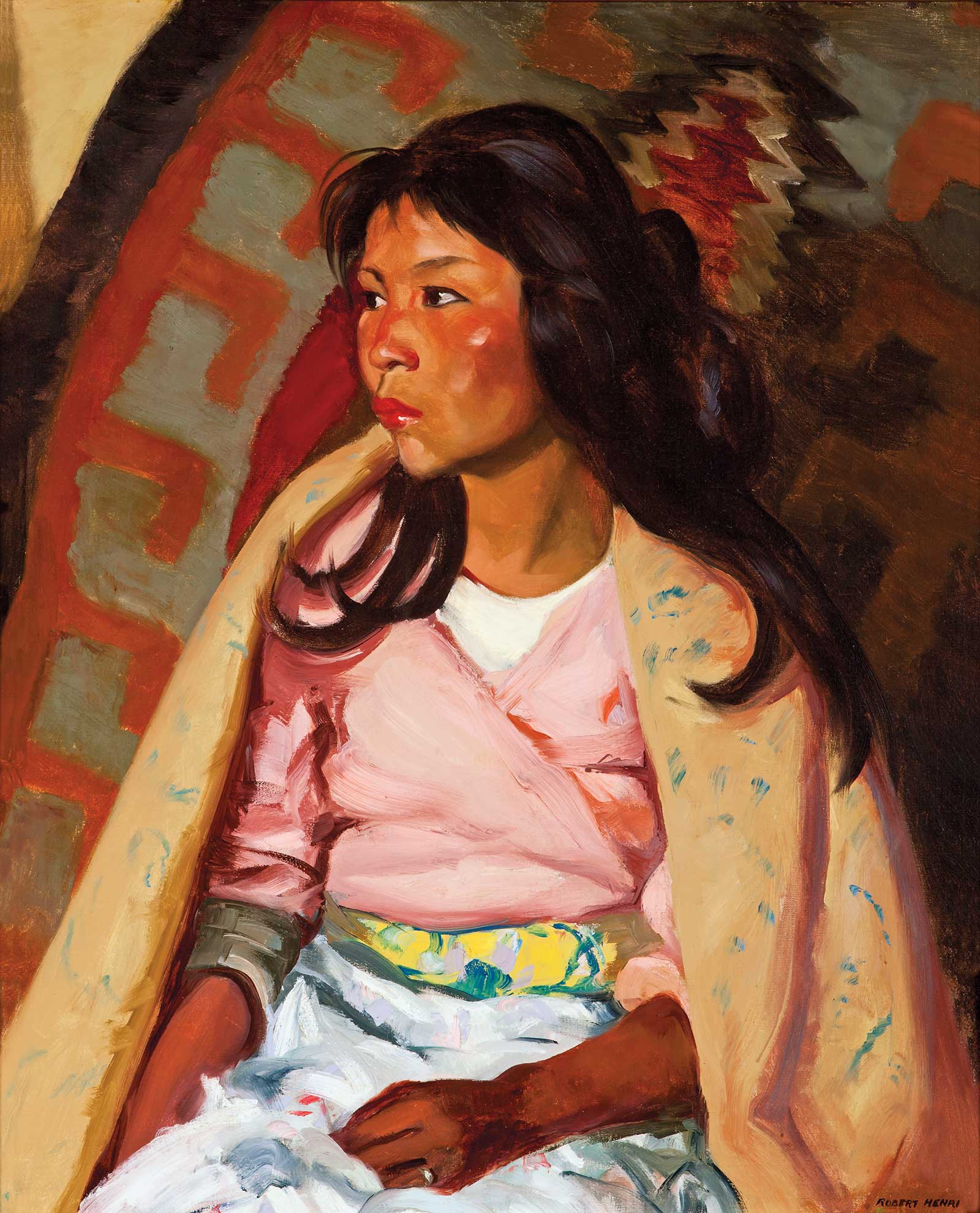
Robert Henri (1865-1929), Indian Girl of Santa Clara, 1917, oil on canvas. Collection of Phoenix Art Museum.
While A Mainer Goes West focuses on Dunton, a founder of the Taos Society of artists—“arguably the most important group to popularize real and idealized images of the American West,” the museum notes—The Muse of New Mexico extends the conversation. “[The Muse] provides a snapshot of the extraordinary range of styles artists used and the breadth of subjects they chose,” explains Betsy Fahlman, adjunct curator of American art at the Phoenix Art Museum. “It suggests what artists who were not members of the Taos Society of Artists did at the same time.”
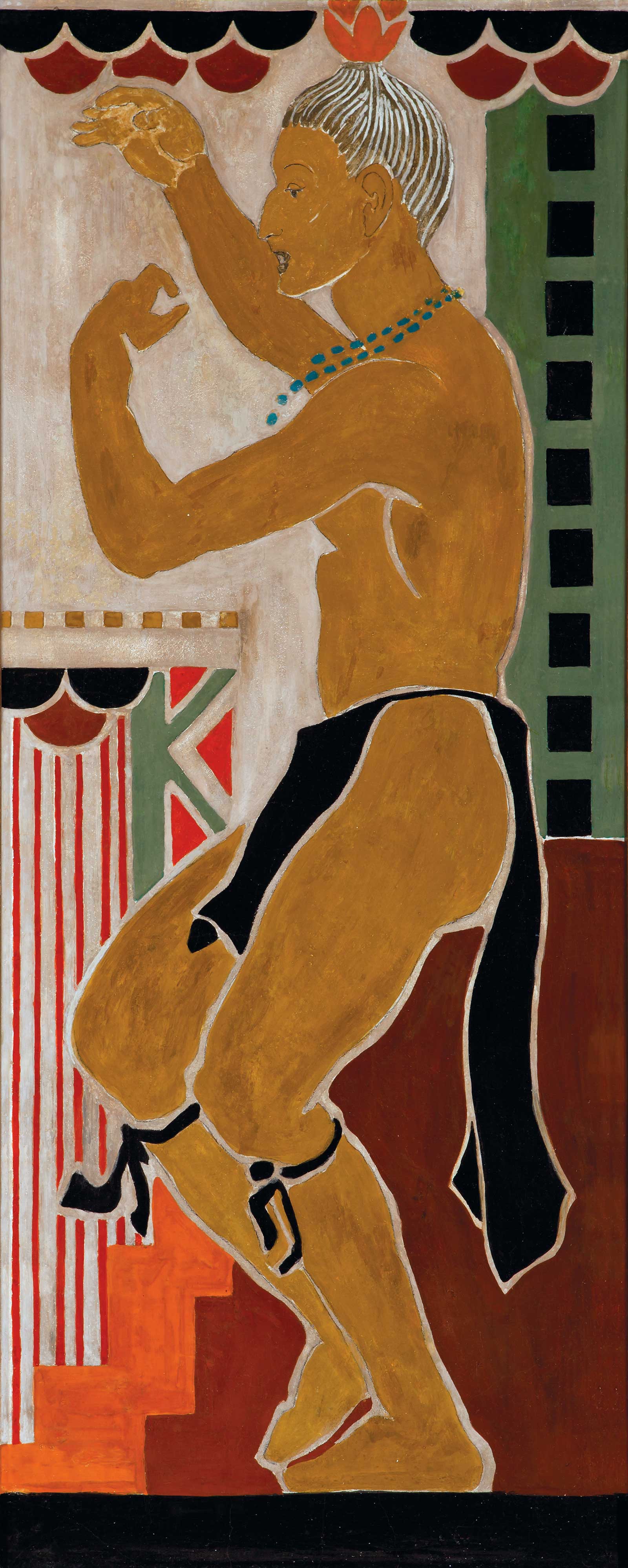
William Penhallow Henderson (1877-1943), Indian Dancer Mural, 1926-1927, tempera on plaster. Collection of Phoenix Art Museum, Gift of Mason Wells.
Fahlman considers The Muse to be a refresh of sorts that connects Dunton to other aesthetic options in New Mexico. The exhibition is not organized by date nor by style, but rather organized in a way for visitors to see the range of possibilities in the museum collection.
The works range in date from 1917 to 2011, beginning with Robert Henri’s (1865-1929) oil painting Indian Girl of Santa Clara. “This is one of my favorite paintings in the collection,” Fahlman shares, “and one of Henri’s strongest works. He did multiple paintings of this model, which he painted with strong colors and a painterly style. It conveys the magic that New Mexico held for its many artistic visitors.”
Henri’s connection to the Southwest has been largely overlooked, more widely known as the founder of the Ashcan School, with his urban realist scenes and portraits of “unusual sitters.” Pieces like Indian Girl illustrate a diversion from his New England and European scenery, having clearly swayed his interests—as Fahlman suggests.
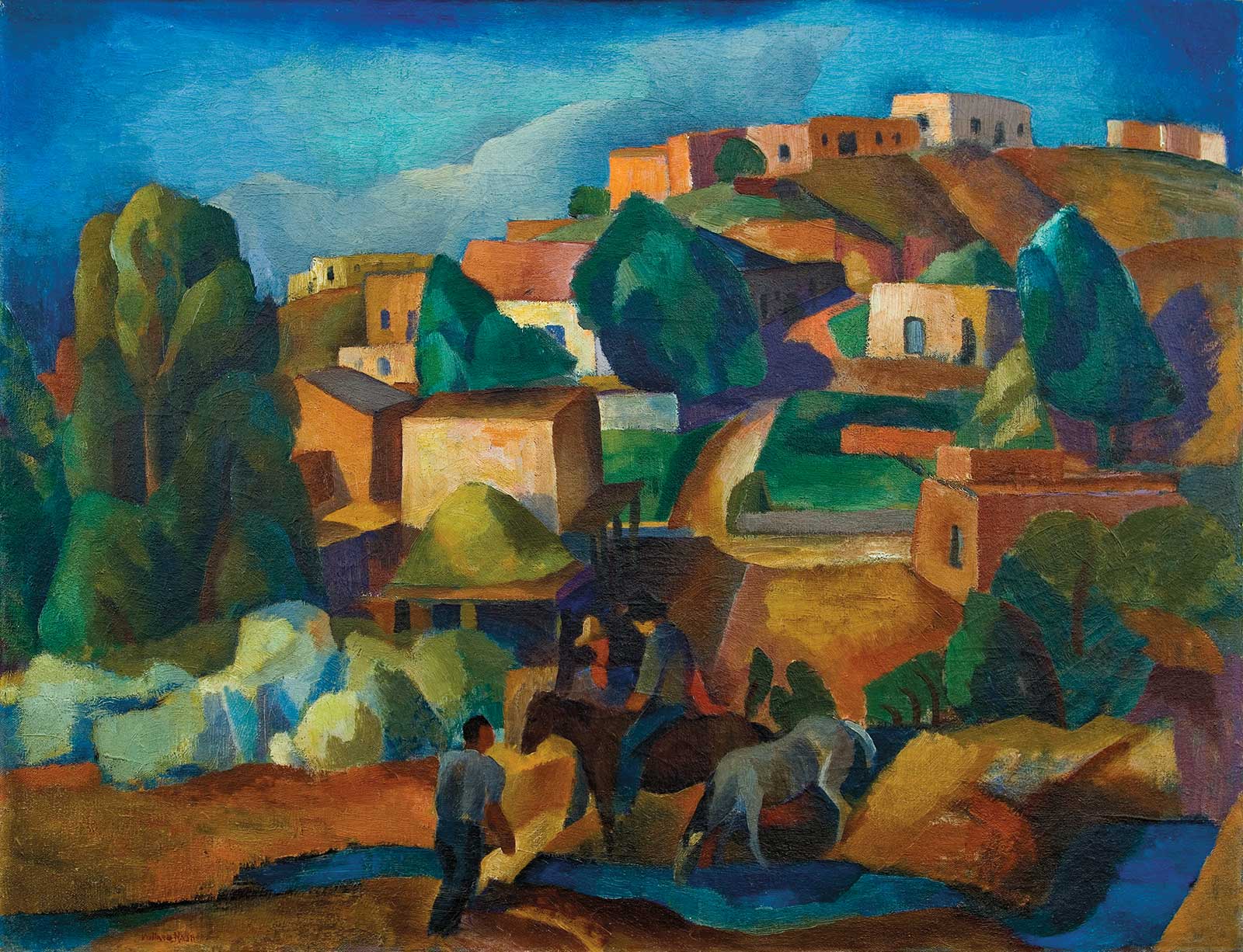
Willard Nash (1898-1943), Untitled (Santa Fe Landscape), circa 1925, oil on canvas. Collection of Phoenix Art Museum, Museum purchase with funds provided by Betty Van Denburgh and Western Art Associates in honor of its 40th Anniversary.
The exhibition also includes astounding landscapes as seen in Arturo Chávez’s Neapolitan Cliffs, 2011. “This big landscape is just gorgeous!” Fahlman exclaims. “For a person from the [East Coast], it speaks to the ‘wow’ of the scale and color of the Southwestern landscape.” Viewers will also take notice of Willard Nash’s (1898-1943) Untitled (Santa Fe Landscape), circa 1925, featuring a colorful scene of pueblo style buildings speckled amongst a hilly landscape, with figures on horseback in the foreground. “Nash’s landscape of Santa Fe was strongly informed by cubism, which he deploys with rich color,” Fahlman echoes. “It speaks to the multiple styles which the many artists who lived or visited the Southwest used to capture in this region.”
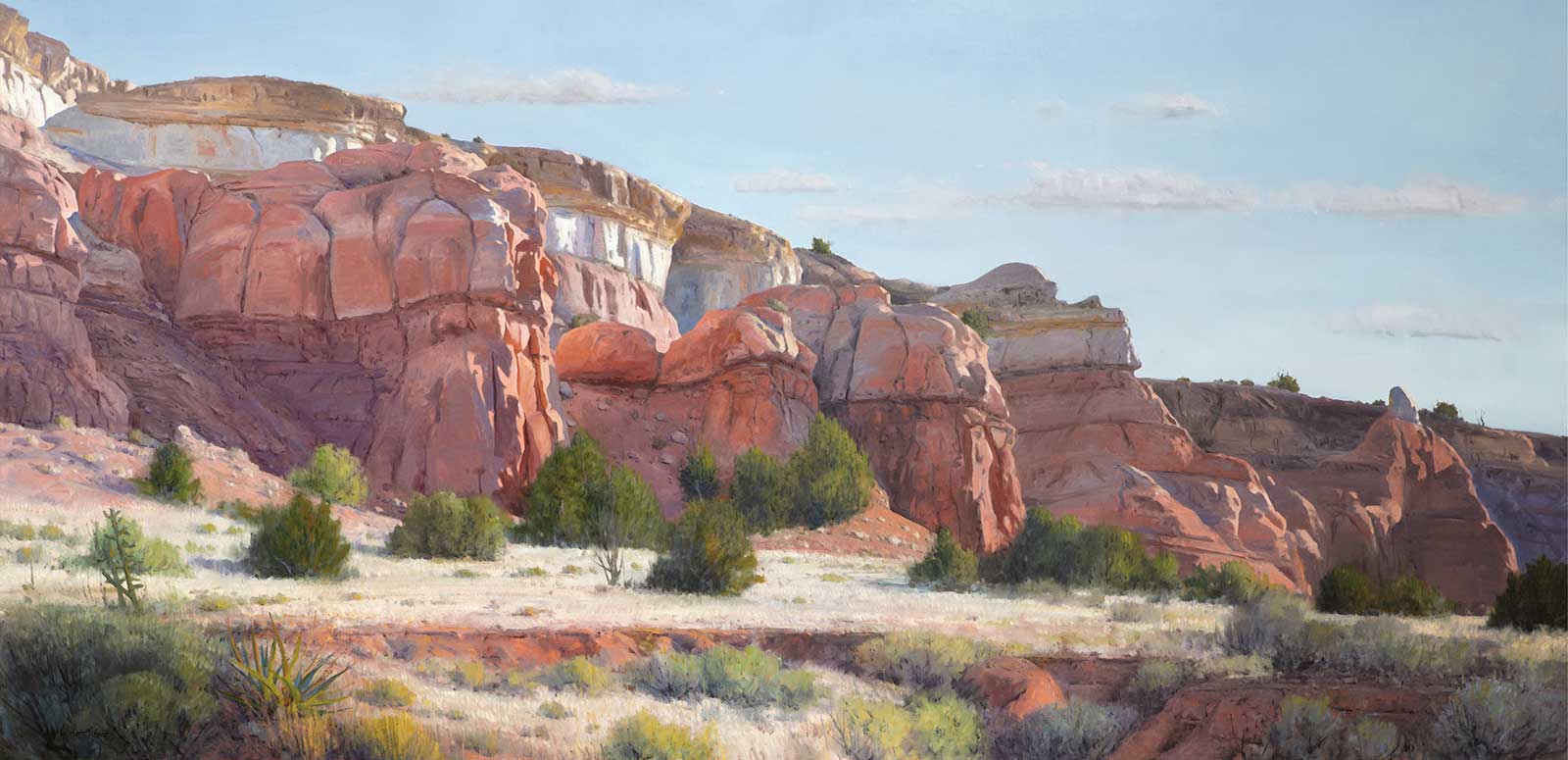
Arturo Chávez, Neapolitan Cliffs, 2011, oil on linen on panel. Collection of Phoenix Art Museum, Museum purchase with funds provided by Western Art Associates and J. M. Kaplan Fund, New York.
Owner of Medicine Man Gallery, Mark Sublette shares a compelling connection: “…Nash traveled to Taos to work with the famed modernist painter Andrew Dansburg, who had been talked into decamping from the Woodstock Art Colony in New York and coming to New Mexico by Mabel Dodge. A former student of famed Ashcan School painter Robert Henri, Dasburg had turned even further from the academic style he had been taught, and helped Nash do much the same.”
The Muse of New Mexico is on display alongside the Dunton exhibition through June 30, 2024. Fahlman hopes that “[attendees] notice the strength of the Western collection of the Phoenix Art Museum, as some of the works on exhibit have not been on display for a while.” —
The Muse of New Mexico
Through June 30, 2024
Phoenix Art Museum, 1625 N. Central Avenue, Phoenix, AZ 85004
(602) 257-1880, www.phxart.org
Powered by Froala Editor