An observer on his first trail ride was watching cowboys riding in the distance through rough country searching for bawling calves. During the occasional stillness of the pre-dawn round-up, several of the riders would pick at the leather pockets high up on their chaps. As the cowboys rode closer, it was obvious what was in those pockets: their smartphones.
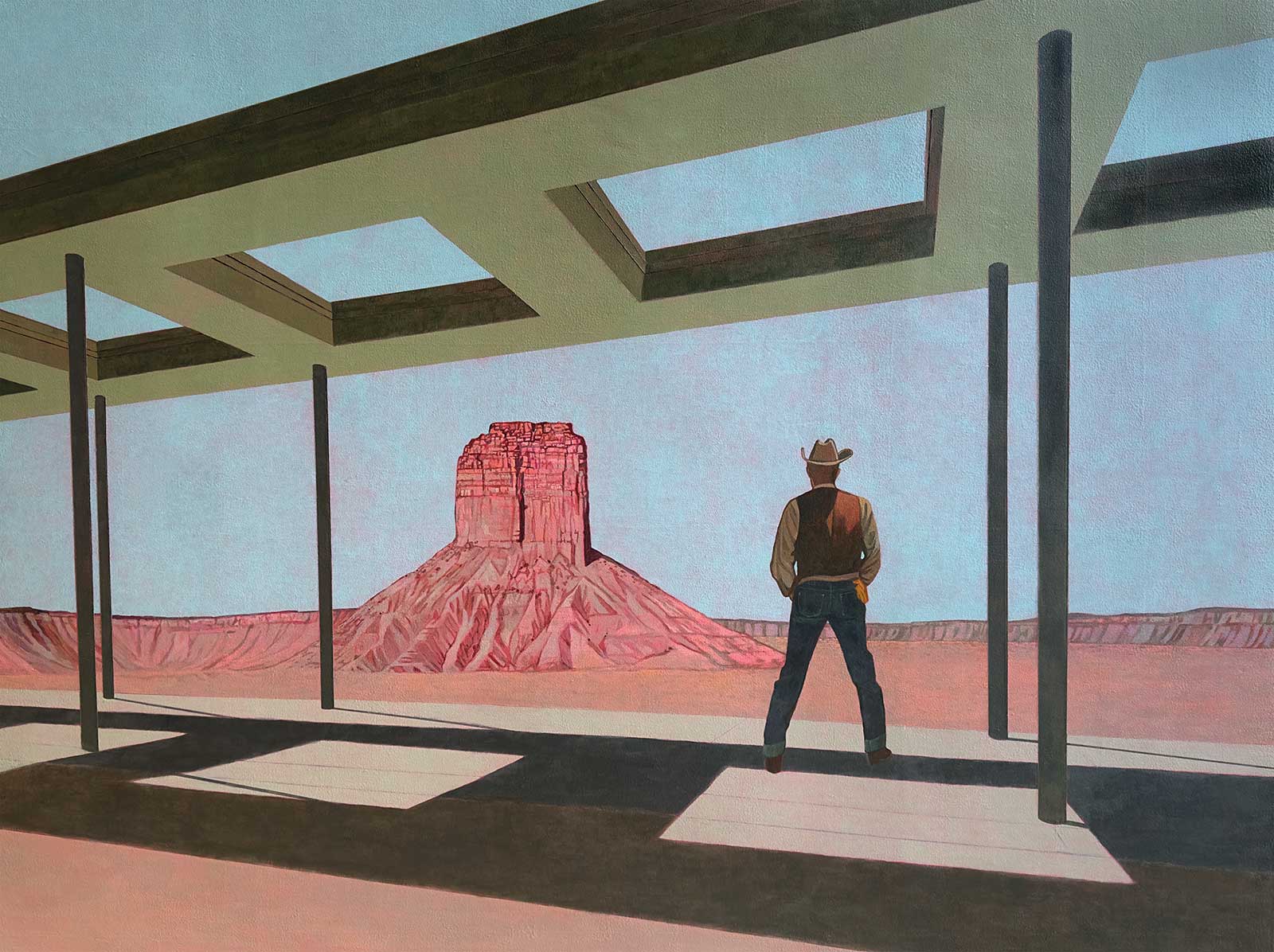
Desert Ratio, acrylic on birch, 36 x 48”
It shouldn’t have been a surprise to anyone watching because of course they had cellphones—to communicate with their spouses or children, for potential emergencies or maybe just browsing Instagram during the slowness of the morning. But who’s painting that more authentic version of the West, the version with the cowboys scrolling through their news feed or poking out text messages? Much of traditional Western art is about filtering out the modern aspects of the world, to sanitize the picture or the sculpture so it can exist in a timeless period somewhere between Frederic Remington and the Marlboro Man.So, who’s painting that picture? Well, Kevin Chupik is.
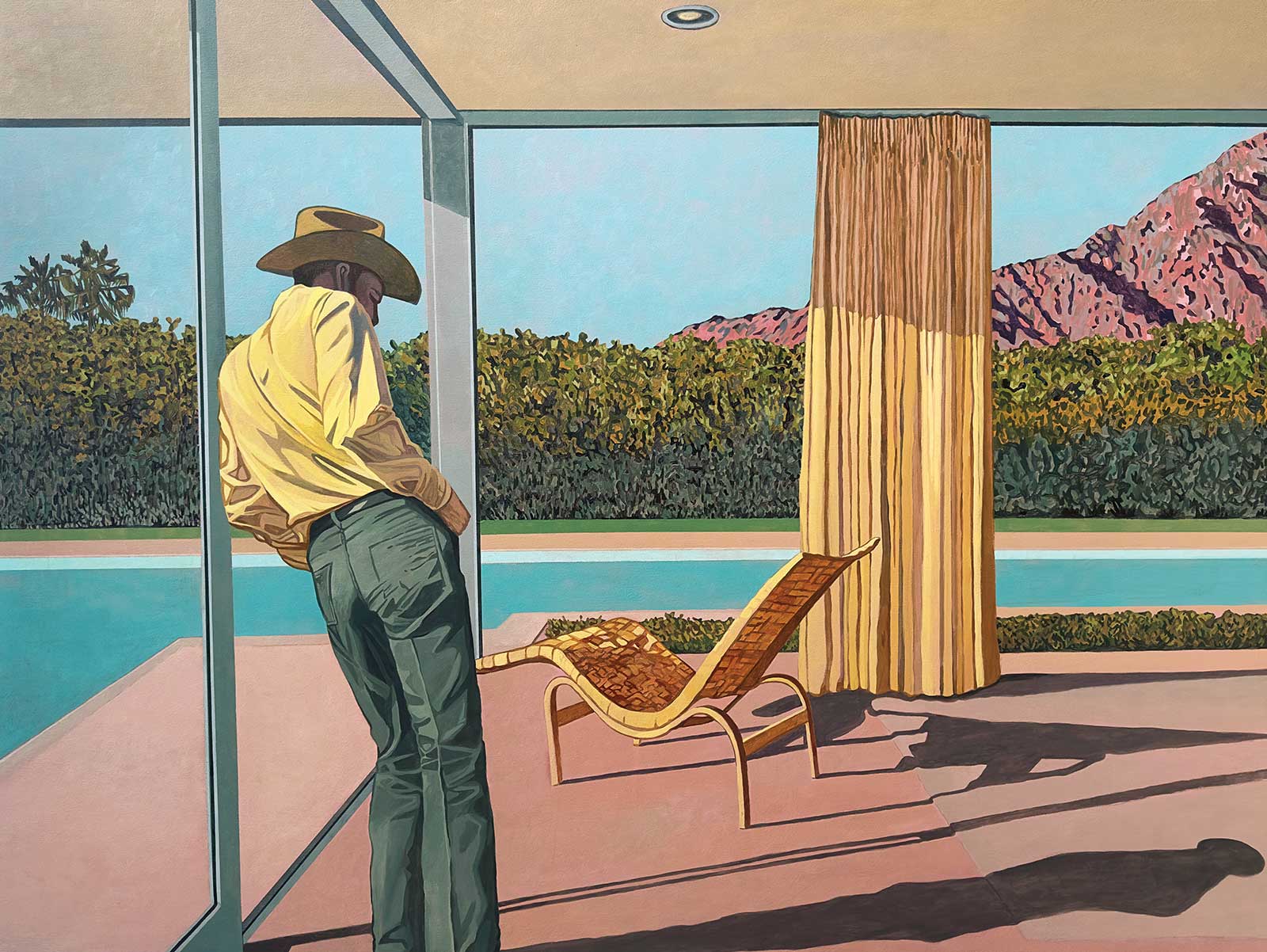
Setting Sun, acrylic on birch, 36 x 48”
His subjects aren’t riders flipping through smartphones, but they are fighting traffic jams on horseback, pondering the cleanliness of their clothing in a laundromat, checking into neon-glowing motels along lonely highways and watching the West unfold on drive-in movie screens. Using iconic Western imagery in contemporary settings, Chupik’s work crashes through the decorative foliage meant to separate the historic West from the modern West. The Texas-based painter yanks the illusion to the dirt so he can mash reality and myth together to strike at the heart of the American West’s great conundrum of celebrating the past without acknowledging the present. There is a playful irreverence in some of the work, but Chupik doesn’t see it that way.
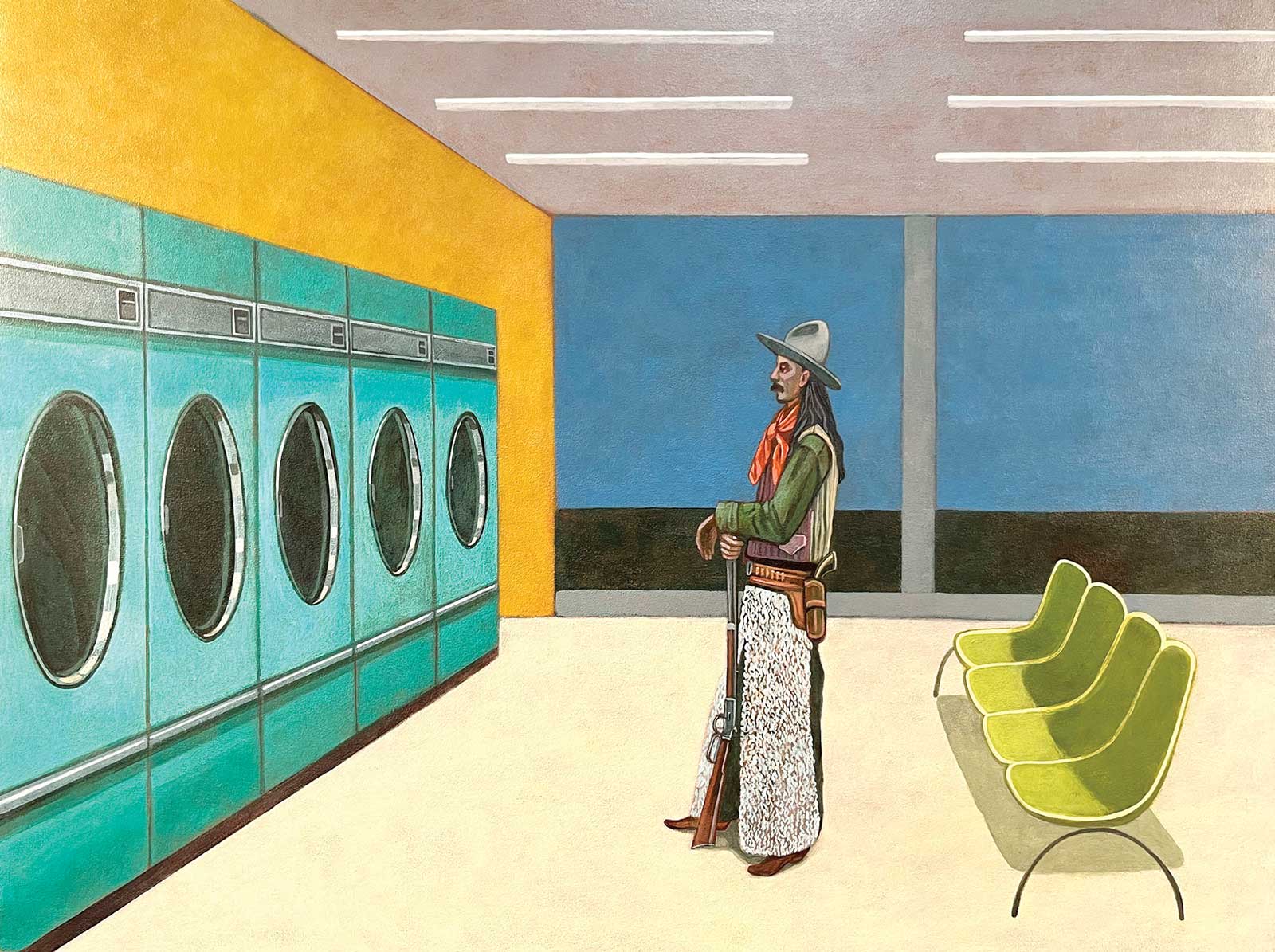
Between Cycles, acrylic on birch, 18 x 24”
“‘Irreverent’ doesn’t seem like the right word. I think we could agree that there has been and is some stagnation in the Western art world. These works are a response to that,” the artist says. “My subject matter is kind of the same as others’ works. It’s a horse and rider in a Western scene. I’m just coming from a more contemporary viewpoint, a viewpoint that is a worthy way to get people to invigorate with my imagery. No one appreciates a Remington more than me, but I think there’s a reason to cut some new trail and go in a new direction. I don’t want to regurgitate artwork that has been around for 100 years. I want to explore what’s out there.”
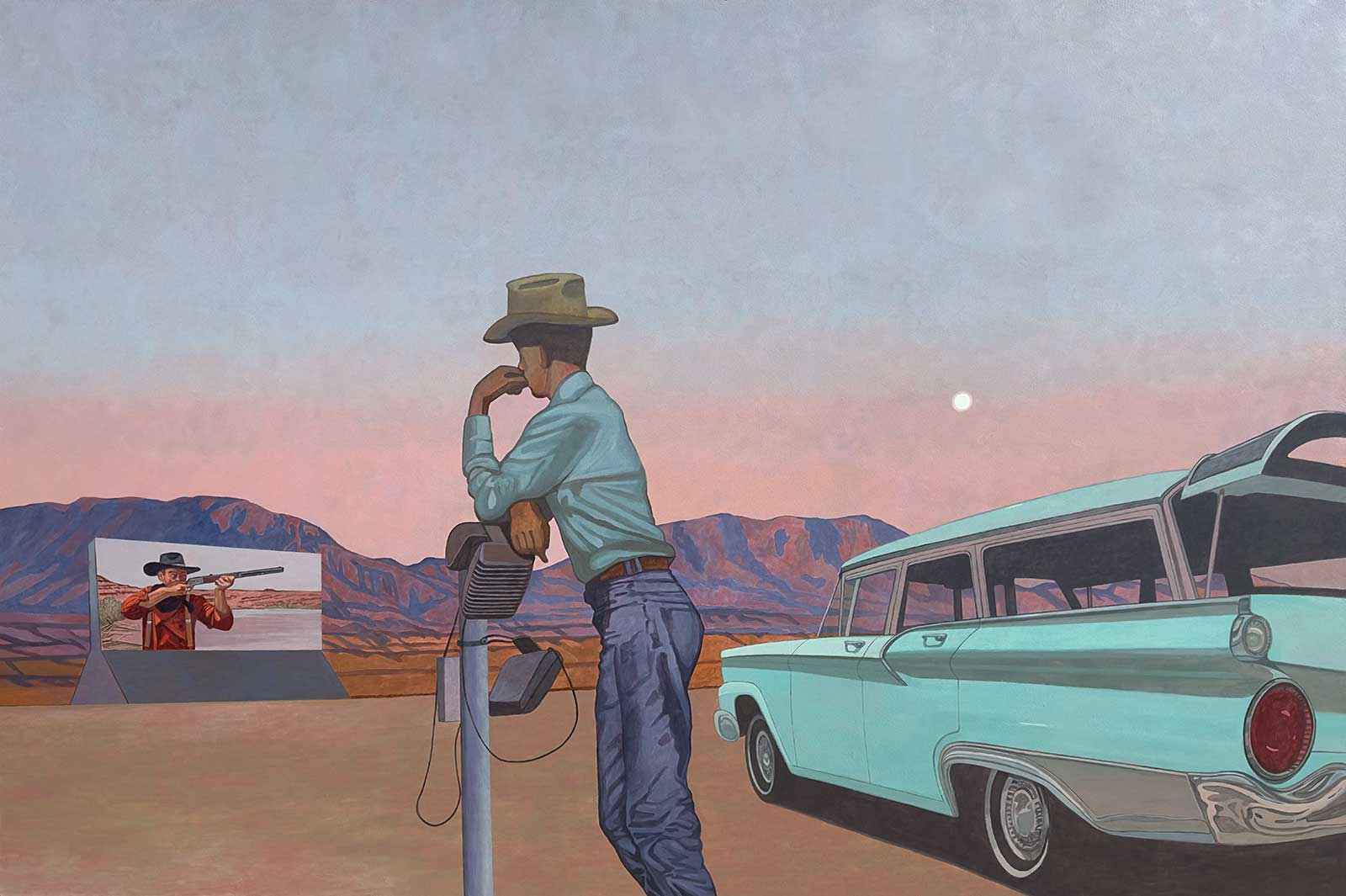
The Searchers, acrylic on birch, 48 x 72”
Chupik isn’t the only artist that has explored these themes. Phil Epp’s paintings of wind turbines whirling over vast plains touch on similar ideas about the modern-day encroachment on wild spaces. The work of Ray Swanson was frequently ahead of its time, putting Native American subjects in contemporary clothing with modern-day objects—his subjects were allowed to exist in 1992 as opposed to 1892. John Moyers famously painted a soda can into his work Caught Between Two Worlds, which fundamentally changes the tone of the painting’s Native American chief figure.
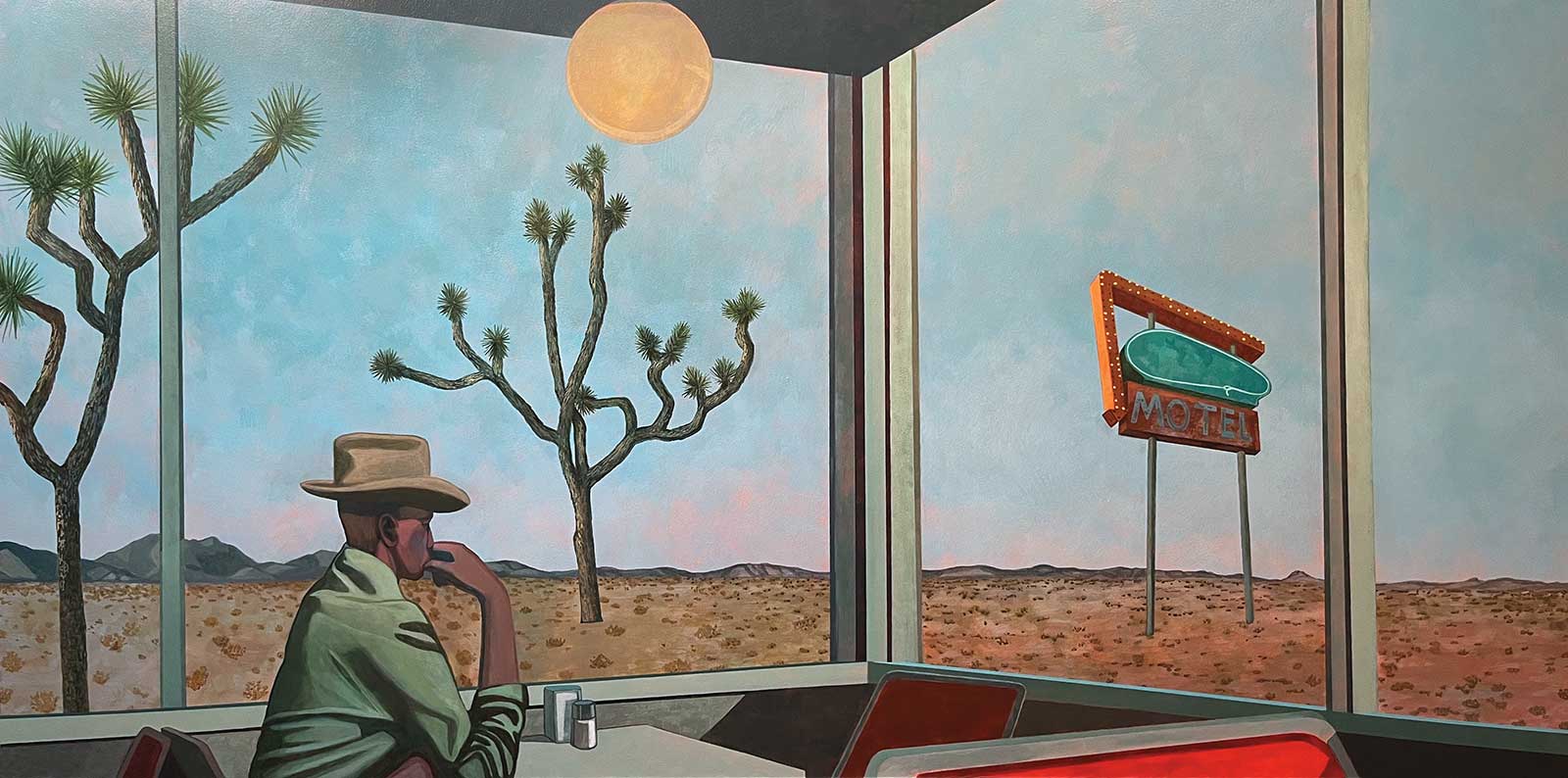
Desert Solitaire, acrylic on birch, 24 x 48”
These are interesting examples, but Chupik is going further and faster than many of his contemporary colleagues. Consider Desert Ratio, a work that was recently purchased by the Booth Western Art Museum in Cartersville, Georgia. The painting shows a cowboy figure in a broad stance squaring up against one of the rock formations in Monument Valley. Above the figure is a modern piece of architecture that is improbably lifted from a mid-century neighborhood in Palm Springs, California, and transplanted into this iconic landscape. Desert Ratio throws reality out the window, and yet all the parts of the painting are recognizable and they provoke an immediate response about the West.
Many of his paintings cast cowboy subjects as pondering figures staring into a future that must look familiar—desert vistas filled with sagebrush, Joshua trees and prickly pears, Maynard Dixon clouds—but the expressions on their faces suggest unease and mystery. They are lost souls looking for a purpose. Consider Between Cycles, the laundromat painting with a figure who resembles Wild Bill Hickock. What is he waiting for? The Western way of life to return, or maybe just the dingof the washing machine? Chupik leaves it open-ended.
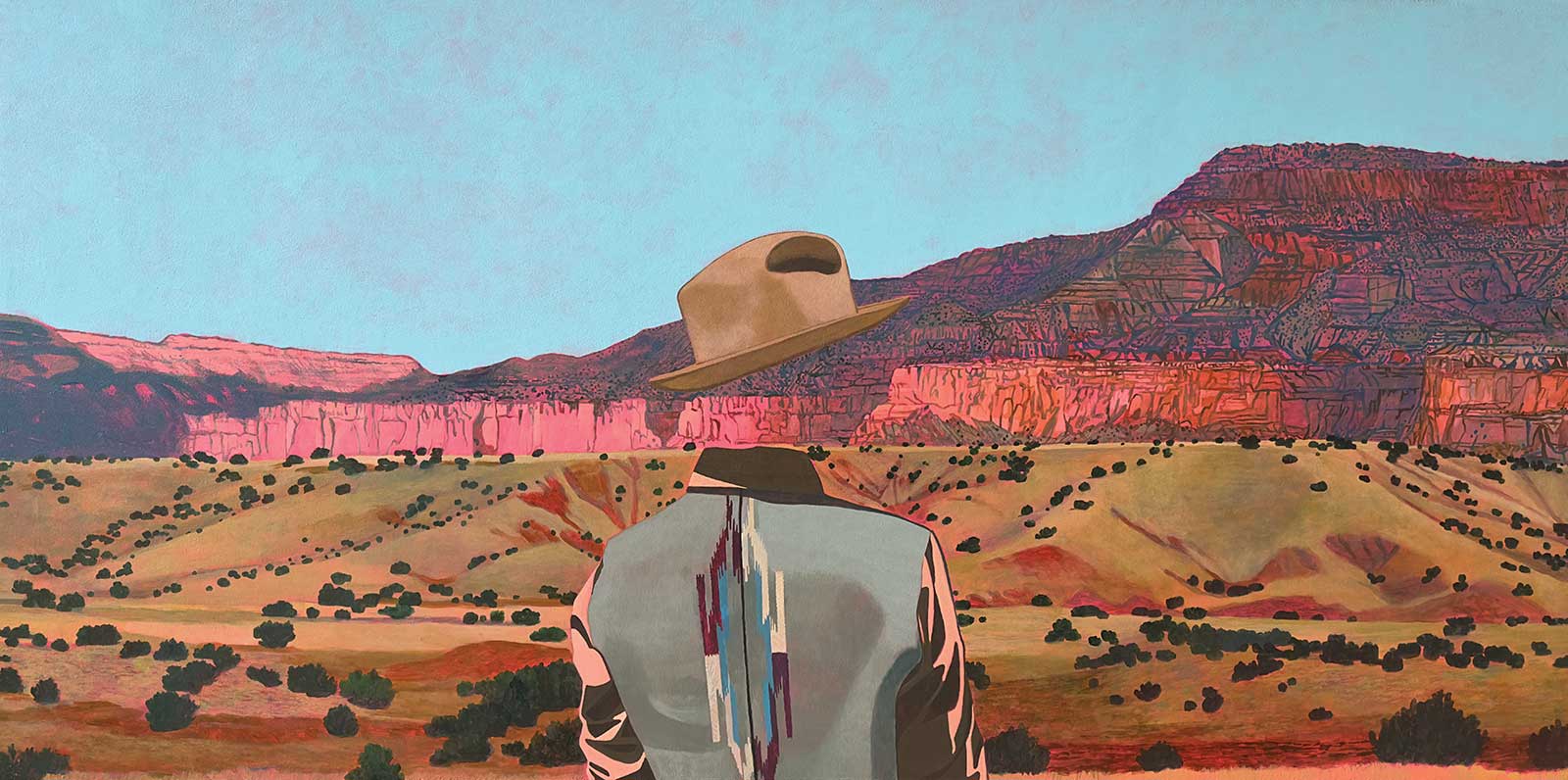 Man from Chimayo, acrylic on birch, 30 x 60”
The artist is fully entrenched in the West. He lives in Aledo, Texas, outside of Fort Worth, where he went to high school and college before leaving for lengthy stints in Colorado and Nevada. Some artists explore illustration or design before fine art, but Chupik knew early on that he wanted to be a fine artist and create his own work. “By my second year of college, I basically stopped going to school just to go to school. I started devoting all my time looking at art. I would go to museums and also spend an inordinate amount of time in the studio,” he says. “Later I got through grad school, but grad school did more to disenchant me with an art career than anything to that point. Ironically, I was in this beautiful place in Boulder, Colorado, so I was spending more time in the Four Corners area and making trips to Utah and Northern Arizona. It was an unexpected education.”
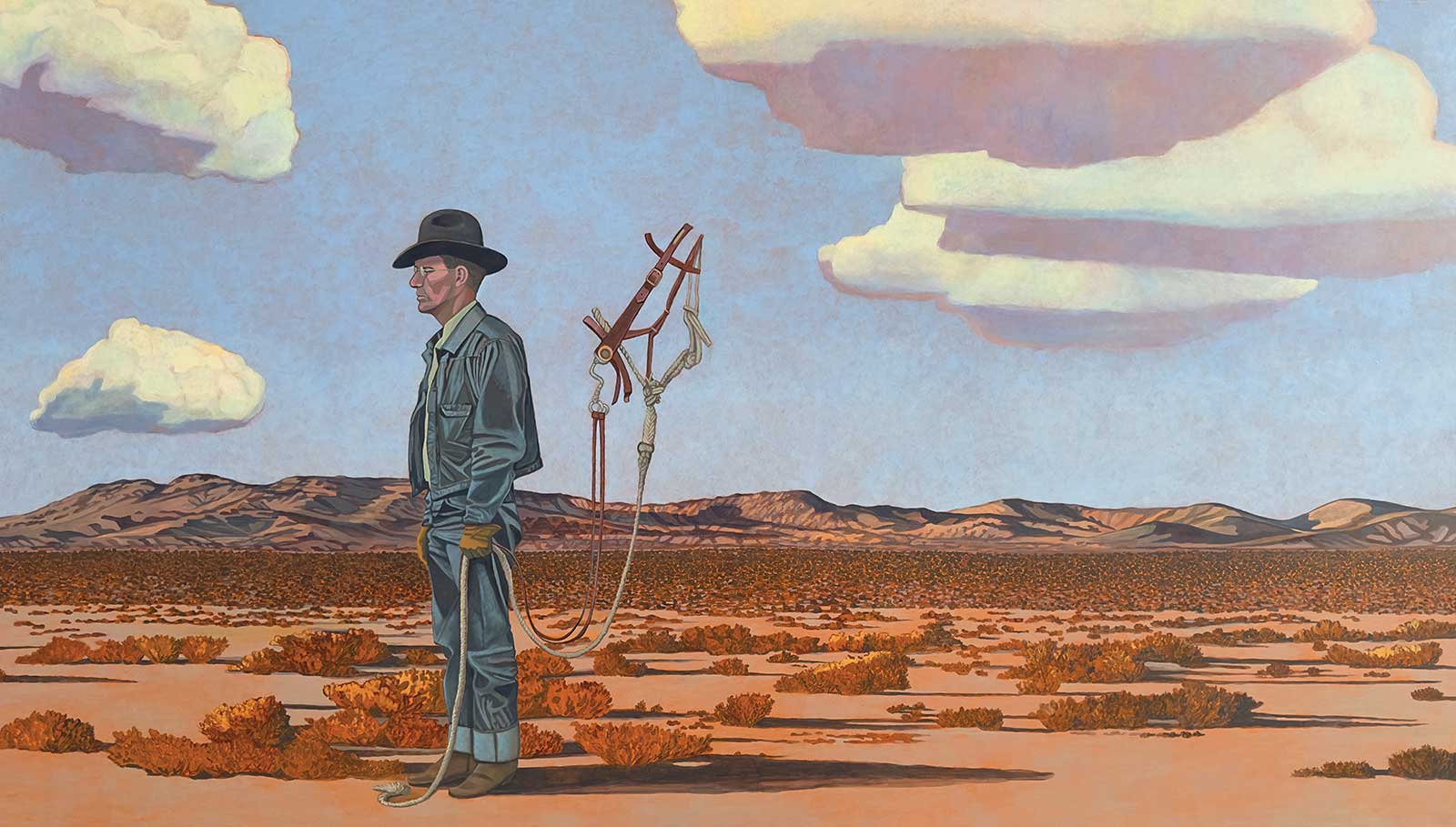
Mirage, acrylic on birch, 48 x 84”
His trips in the Southwest fueled a deep interest in the West, its land and its people. After going through school throughout much of the 1990s, Chupik had a setback in 1997 after a climbing accident at the Grand Canyon. The accident was severe, but he survived and today uses a wheelchair. In the aftermath of the accident, art became an even bigger outlet for his creativity. “My work is a way of armchair traveling,” he would later say. By 2003, he would expand his work into teaching. By 2017 he was back in Texas, where his studio is today.
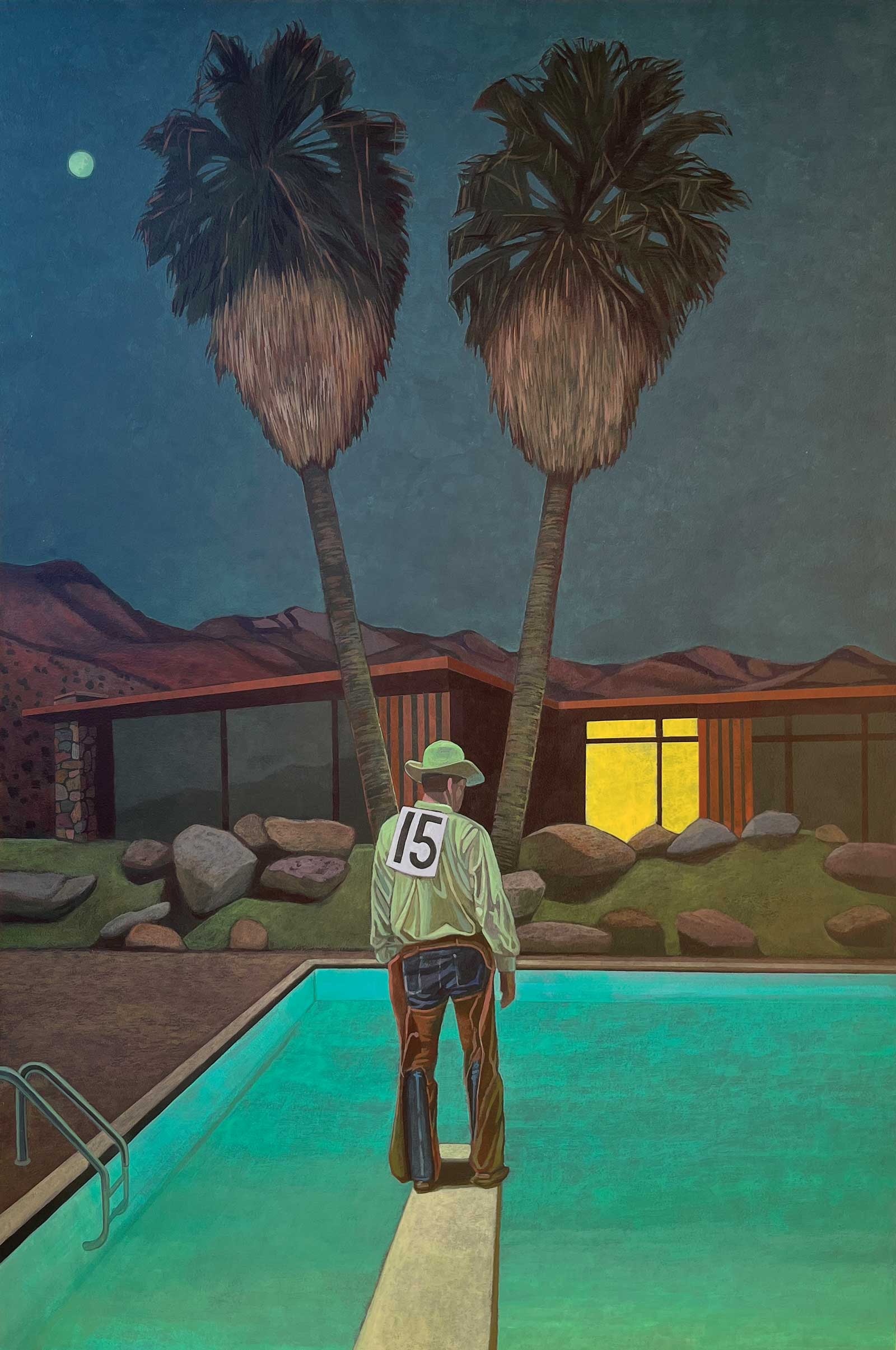
Deep End, acrylic on birch, 34 x 24”
Prior to the move to Texas, in 2014, the artist had a solo show that began to clarify his creative voice. “I had this notion about cowboys and Indians and trains, these things from my childhood. They were such strong images so I started pairing them together using the most simplistic forms I could come up with,” Chupik says. “A dozen pieces turned into 24, and then more. The response was really strong. After moving back to Texas, maybe about three years ago, that’s when I started running out of everything I was painting. It’s been crazy. I’ve been sold out for over a year.”
Although he’s largely working on his own, Chupik has partnered here and there with Mark Sublette and his Medicine Man Gallery in Tucson, Arizona. In February, Chupik sent Sublette a piece for a rodeo-themed show that moved the needle for a lot of collectors. (The work, Continental Cowboy, appeared on the cover of the February issue of Western Art Collector.)
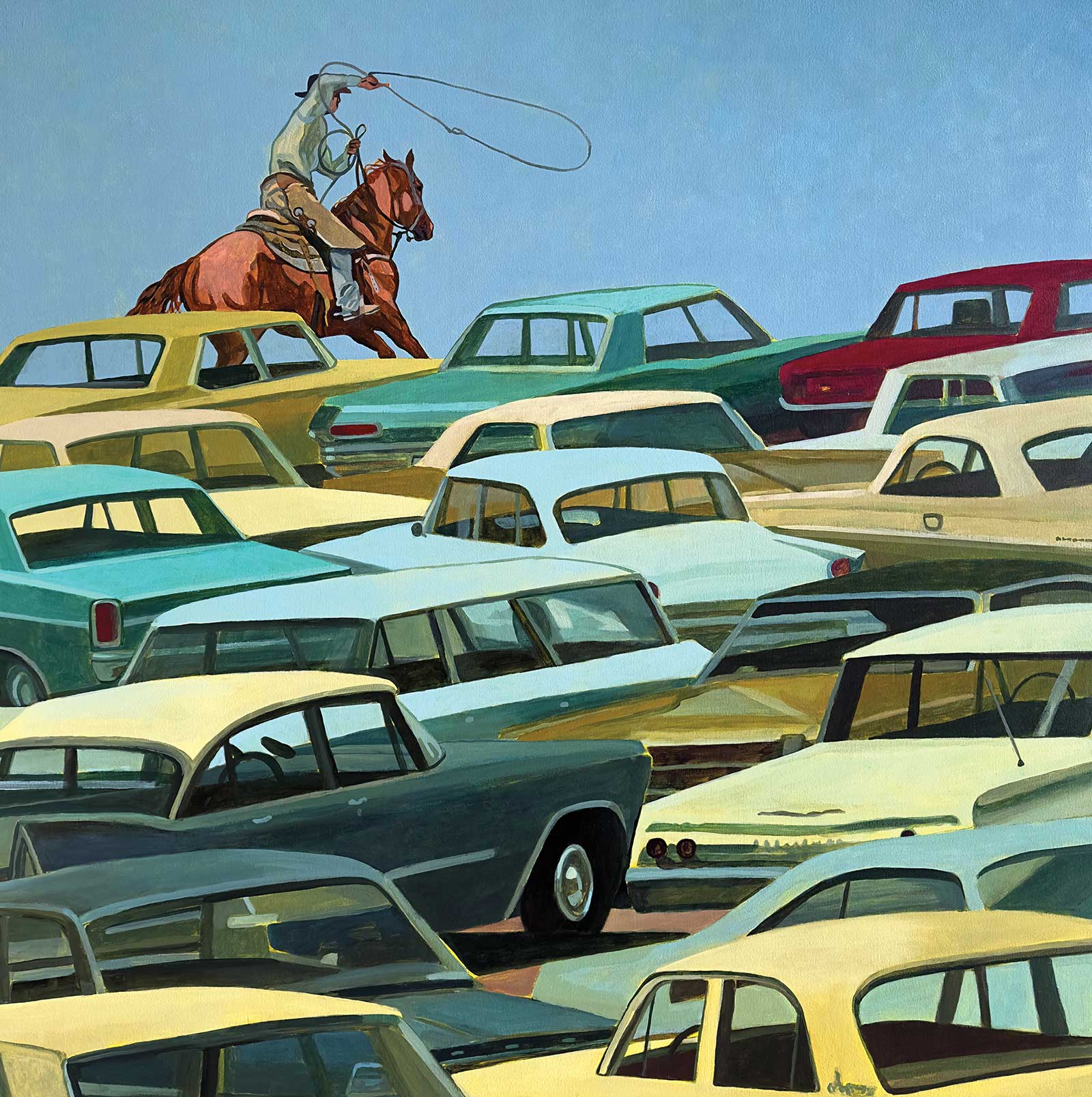
Stampede, acrylic on birch, 36 x 36”
“I became aware of his work two years ago on Instagram. I was planning the rodeo show at the time and I just knew Kevin would be perfect for it. He gave us a piece and was kind enough to do our podcast. We immediately saw interest in his work. He’s even working on a piece for me for my collection,” Sublette says, adding that he doesn’t represent Chupik but the two have agreed to work together again. “I like his take on the West. His work resonates with me simply because I grew up in the Southwest in New Mexico—the imagery just clicks. A lot of his work has this lonesome quality to it, some might even say despair. I see a longing in his work, one for life and time. He also has a sense of humor and an original voice. His work immediately captivated me, and still does.”
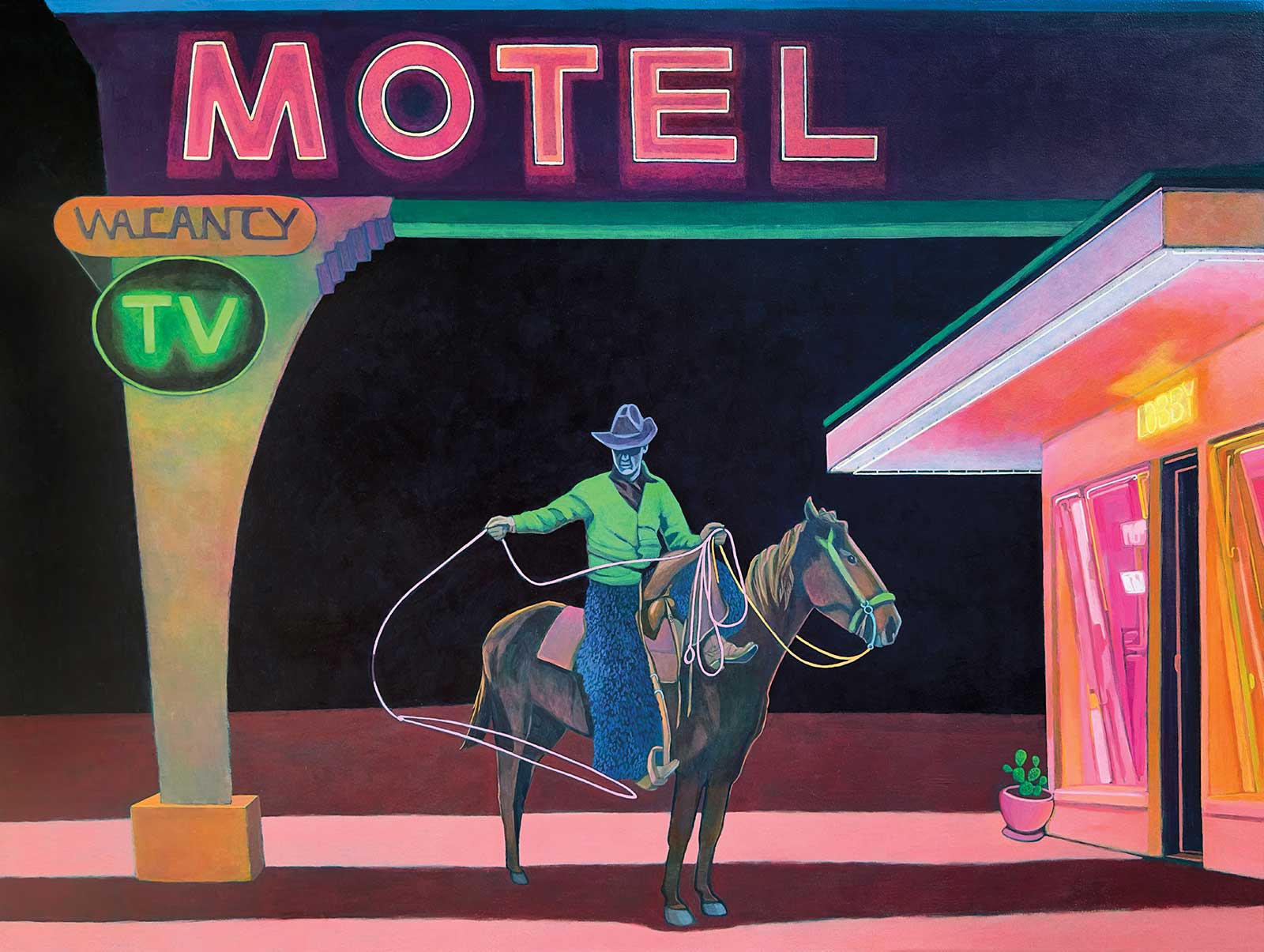
Glow West, acrylic on birch, 36 x 48”
Some of that humor, wit and voice can be seen in two pieces: Man from Chimayo, showing an invisible figure standing in front of a magnificent landscape, and Mirage, which has a cowboy figure holding the reins of an invisible horse. In both paintings, some elements have vanished into the scenery leaving clothing and riding gear propped up in the air. “All those years spent out in the country, my goal was to get lost. It was an immersion within the ruins and the canyons of the landscape. These [pieces] are responses to that,” Chupik says. “The West has this pure warmth. It can be awesome and fierce, an overwhelming sensory overload of beauty. And yet it can also be loaded with all these mythological things that are tied to pop culture and Western imagery and iconography. All of those things are at my disposal to use and, for me, they have never felt forced or formulaic because they are part of who I am and where I came from.”
To see more of Chupik’s work, visit his website www.kevinchupik.com. It looks great, even on a smartphone. —
Powered by Froala Editor