The German romantic landscape painter Caspar David Friedrich (1774-1840) wrote, “When a scene is shrouded in mist, it seems greater, nobler and heightens the viewers’ imaginative powers, increasing expectation—like a veiled girl. Generally the eye and the imagination are more readily drawn by nebulous distance than by what is perfectly plain for all to see.”
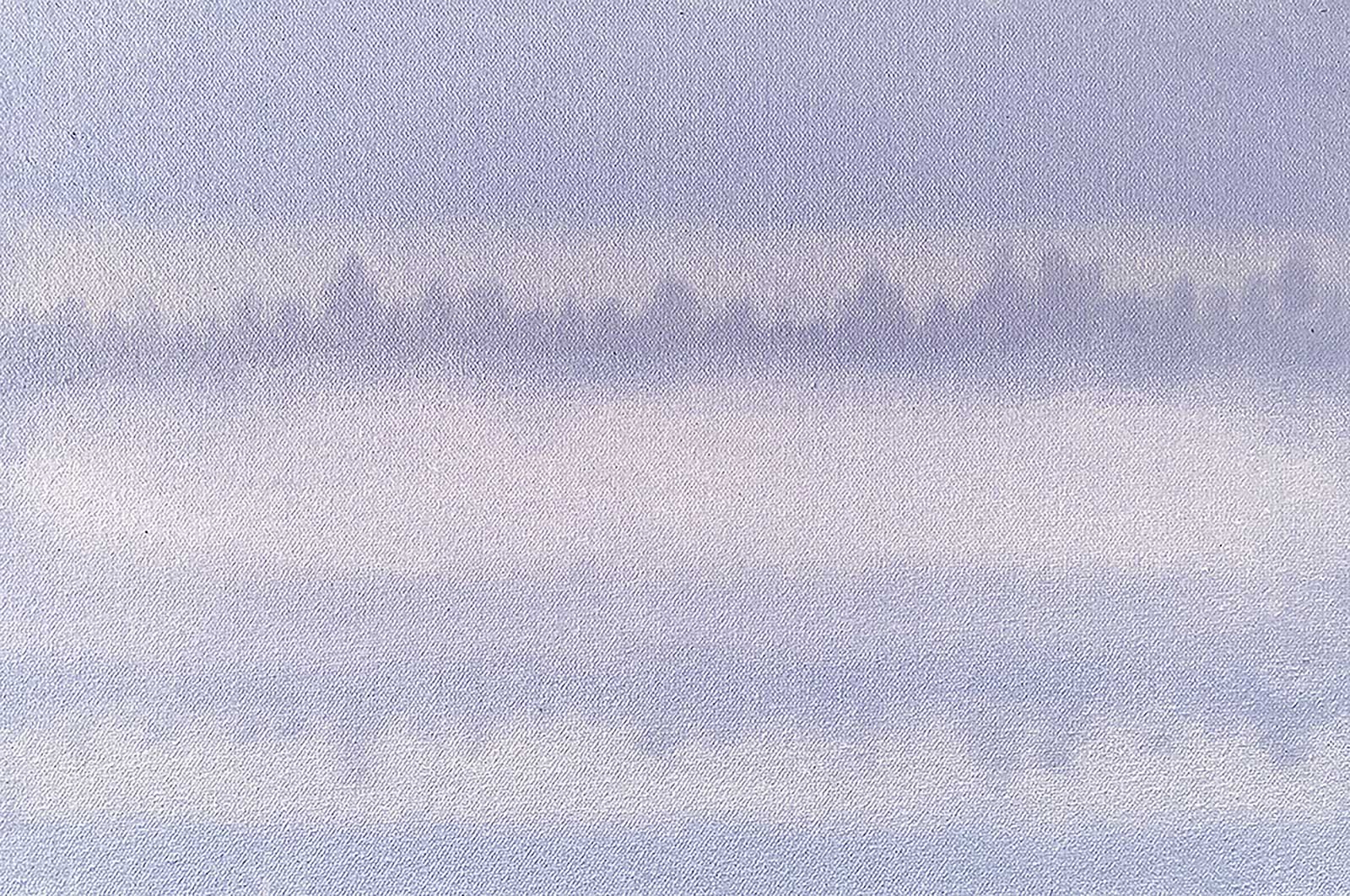
Altamira Fine Art, Silver Lake IV, oil on canvas, 9 x 14”, by Dave Hall.
The mysterious reality of monochromatic mist, rain and fog obscures, for some, the more comfortable reality of bright skies, clear forms and color. For others there is a more emotional, spiritual reality to the mist—a feeling of calm, a time for contemplation and a feeling of revelation when they lift.
There is an unmeasurable vastness to the mist, even in small paintings by artists who are acutely aware.
As a fly fisherman, Dave Hallis always aware of the subtleties of the landscape, light and water and how trout respond to them. “I am moved by the half-light of dawn and dusk,” he says, “and my paintings are inspired by the Greater Yellowstone country of the American West. A piece of my heart resides there, due in large part to the poetry associated with the convergence of family and friends, moving water and mayfly hatches.”
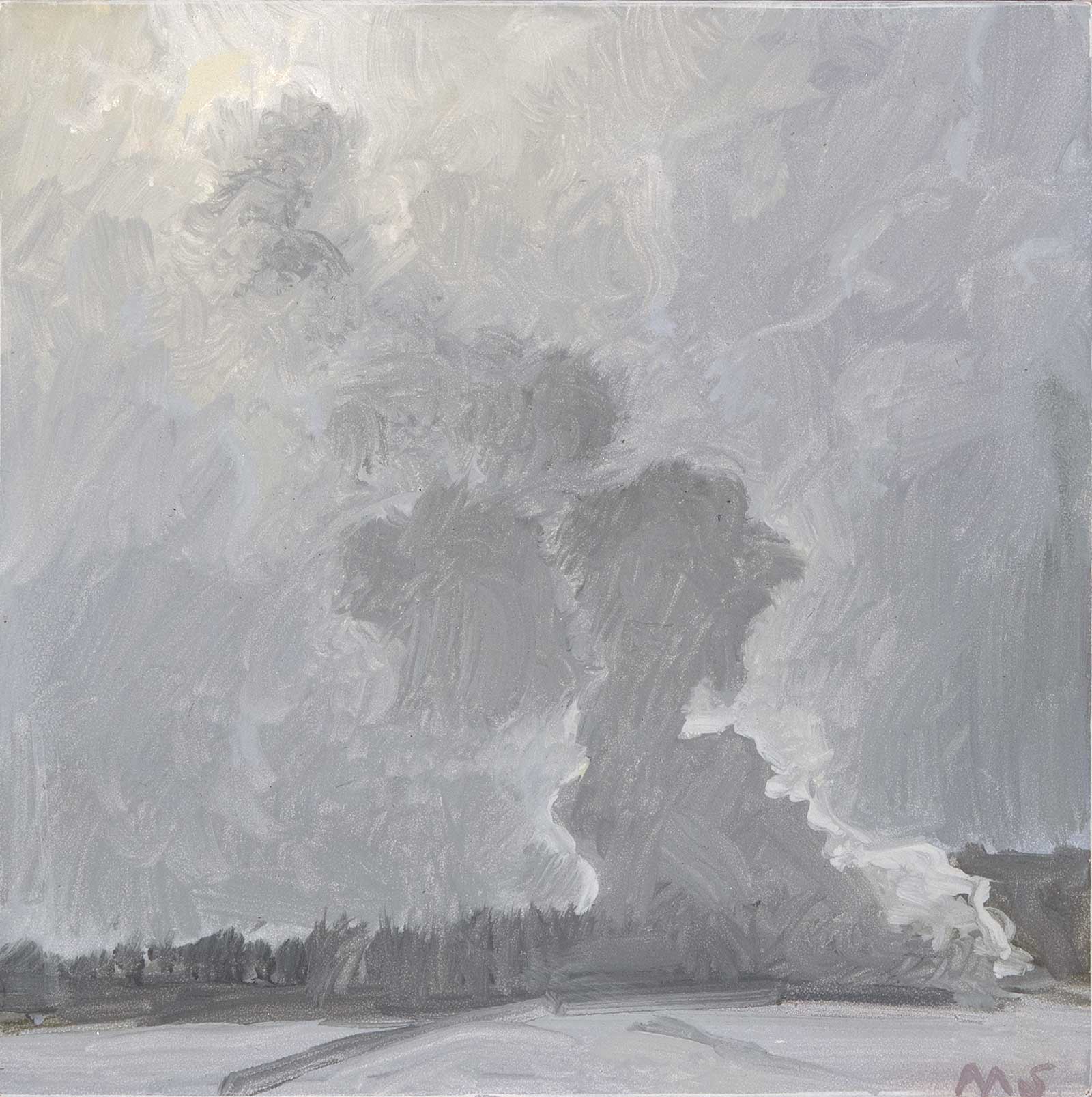
Evoke Contemporary, Yellowstone Thermal Geyser #2, oil on panel, 5 x 5”, by Michael Scott.
He isn’t formally trained but grew up in a house full of art by his father, grandmother and great great grandfather. He graduated from Yale University’s School of Forestry and Environmental Studies and taught physics at a private school before making the leap to painting full time when he was in his 50s. He continues his concern for conservation by donating paintings to national and regional river conservation organizations.
Silver Lake IVis built up of transparent glazes that, in their own way, suggest the indistinct translucency of the light of mists rising from the water. They recall influences from the color field paintings of Mark Rothko and the subtle landscapes of the late Russell Chatham who wrote, “Creating art is an attempt to search for something beyond ourselves.”
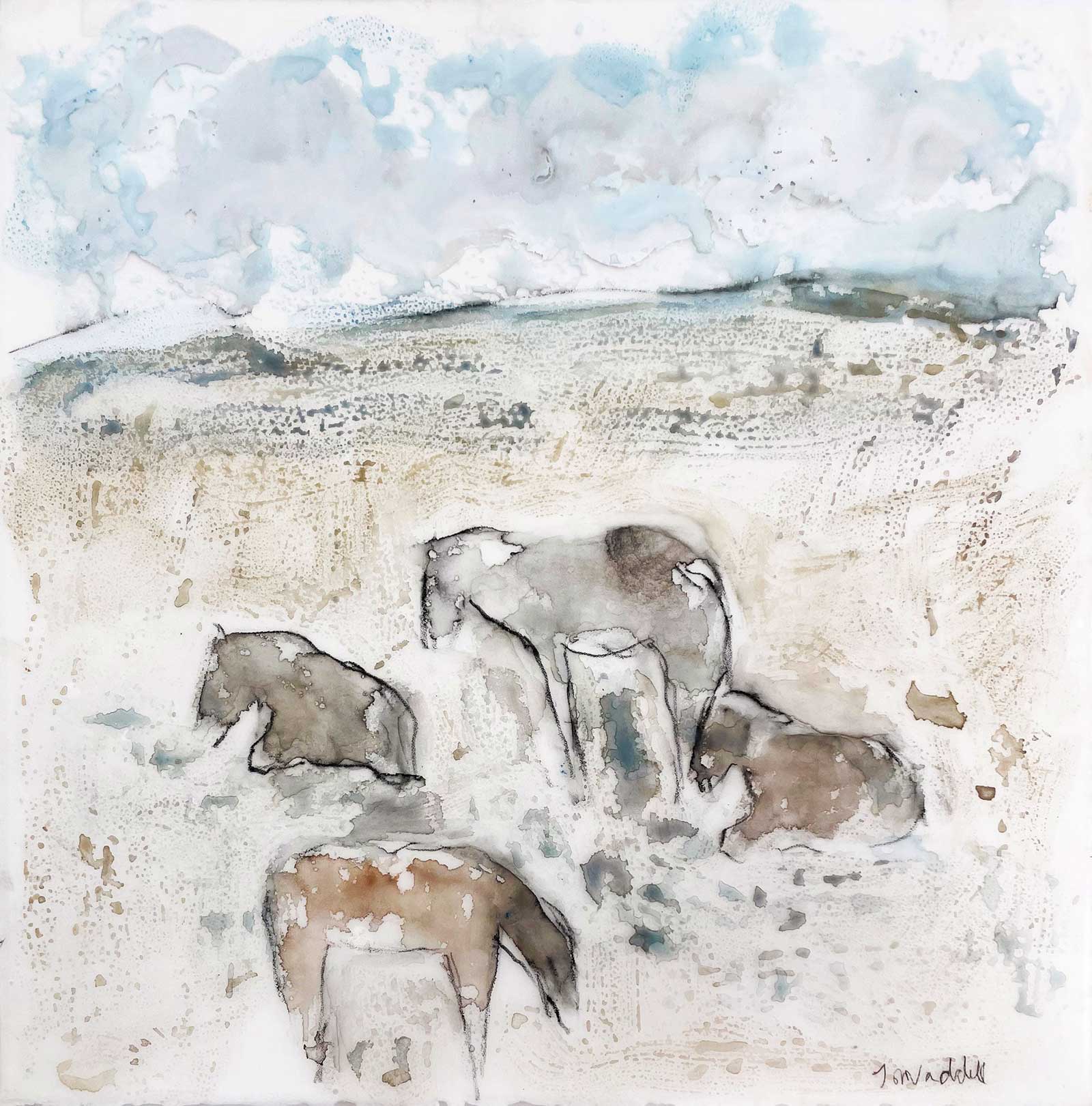
Gail Severn Gallery, Bailey & Friends Dr. #3, gouache and graphite on mylar, 12 x 12”, by Theodore Waddell.
Nancy Bush, who also counts Chatham among those landscape artists who have hand an influence on her, writes, “I strive for my paintings to have a universal appeal and not just a particular region. I feel it is about human emotions in time and space represented by light, darkness, warmth, cool, wet, dry, etc. These elements should evoke a very human response of how one feels upon viewing my work. If they connect that way, then I feel my work is validated.”
She professes to loving “gray cloudy days” and writes, “Trying to capture the spirit and emotion of what is happening before my eyes is the greatest challenge. “I want the viewer to feel the physicality and emotional essence of the subject matter of the painting.”
In her painting Valley Rain, the texture of the canvas adds to the impression of falling rain. A break in the clouds shines promising light on the landscape.
Michael Scott paints vast canvases of the physical phenomena of the environment and contemplates the science and the ineffable mystery behind them. He encapsulates the vastness of the landscape and the extraordinary forces beneath it in his 5-by-5-inch panel, Yellowstone Thermal Geyser, #2.Yellowstone’s geysers occur when rain and snowmelt encounter an underground magma chamber. The water rises into hot springs and, where there is a constriction on its route, into a spouting geyser.
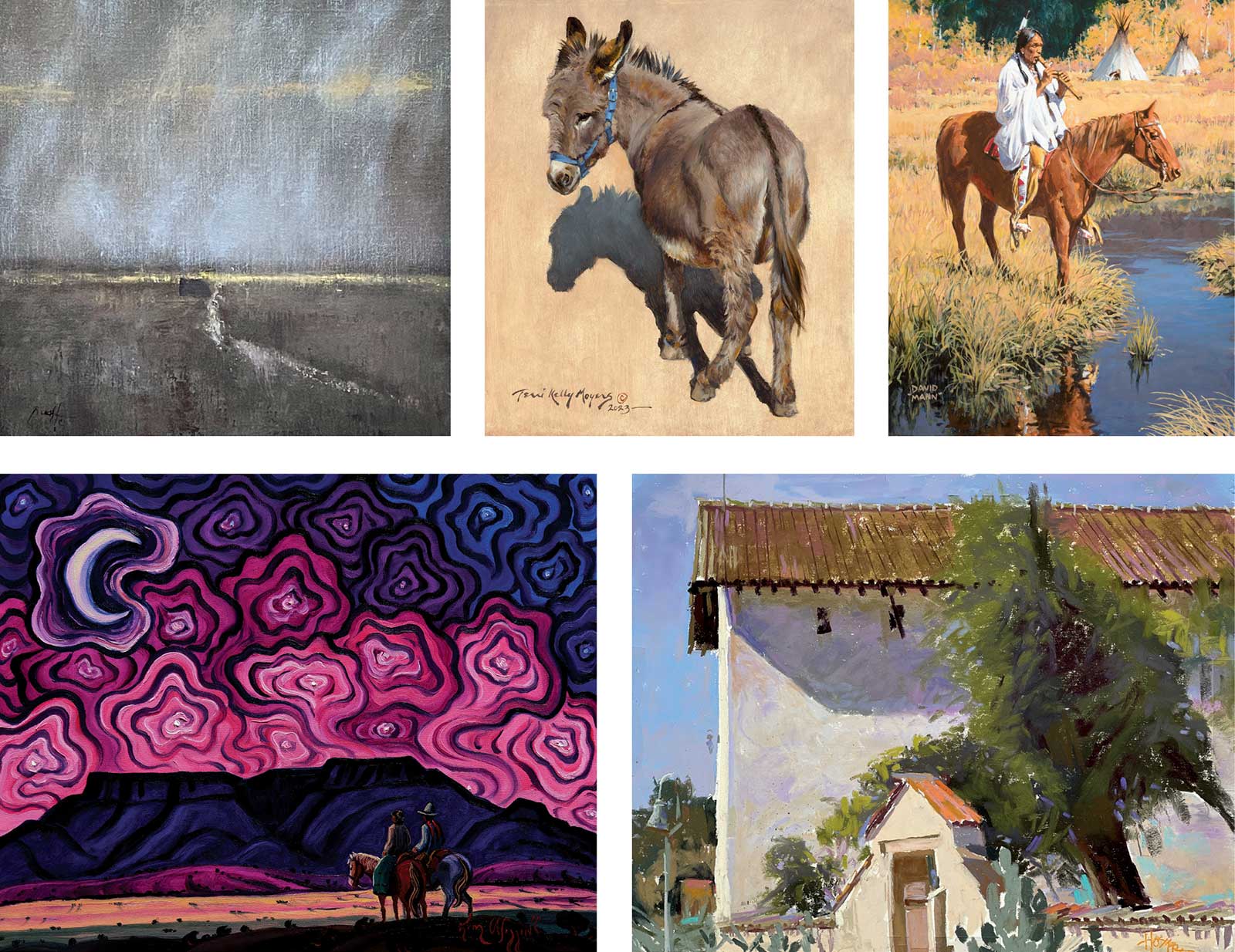
Top: InSight Gallery, Valley Rain, oil, 12 x 12”, by Nancy Bush; Legacy Gallery, Jack for Short, oil, 12 x 10”, by Terri Kelly Moyers; Legacy Gallery, Autumn Song, oil, 14 x 11”, by David Mann. Bottom: Legacy Gallery, Moenkopi Night, oil, 8 x 10”, by Kim Wiggins; Claggett/Rey Gallery, Morning at the Mission, pastel, 8 x 10”, by Truman W. Hosner.
He explores beyond the visible and explainable. The gray mistiness of the scene manifests a “visual obscurity and can represent an environment that can be confusing. This disorientating feeling however is often followed by clarity, insights and great revelations…It is both real and imagined at the same time as it confronts the viewer in both physical form and sprit.”
Theodore Waddell says, “I can’t tell you anything about clouds, horses or bison that you can’t see for yourself. But I can tell you how much I love them and how much I love the West. To me, it’s spiritual.” He has a reverence for the horses and cattle and other animals at nearby ranches and farms. In his paintings, the animals are enveloped in dimensionless landscapes, visually inseparable from them. In Bailey & Friends Dr. #3,he paints on mylar which resists the paint in a way that makes the horses become mysterious and indistinct as they might appear in the mist.
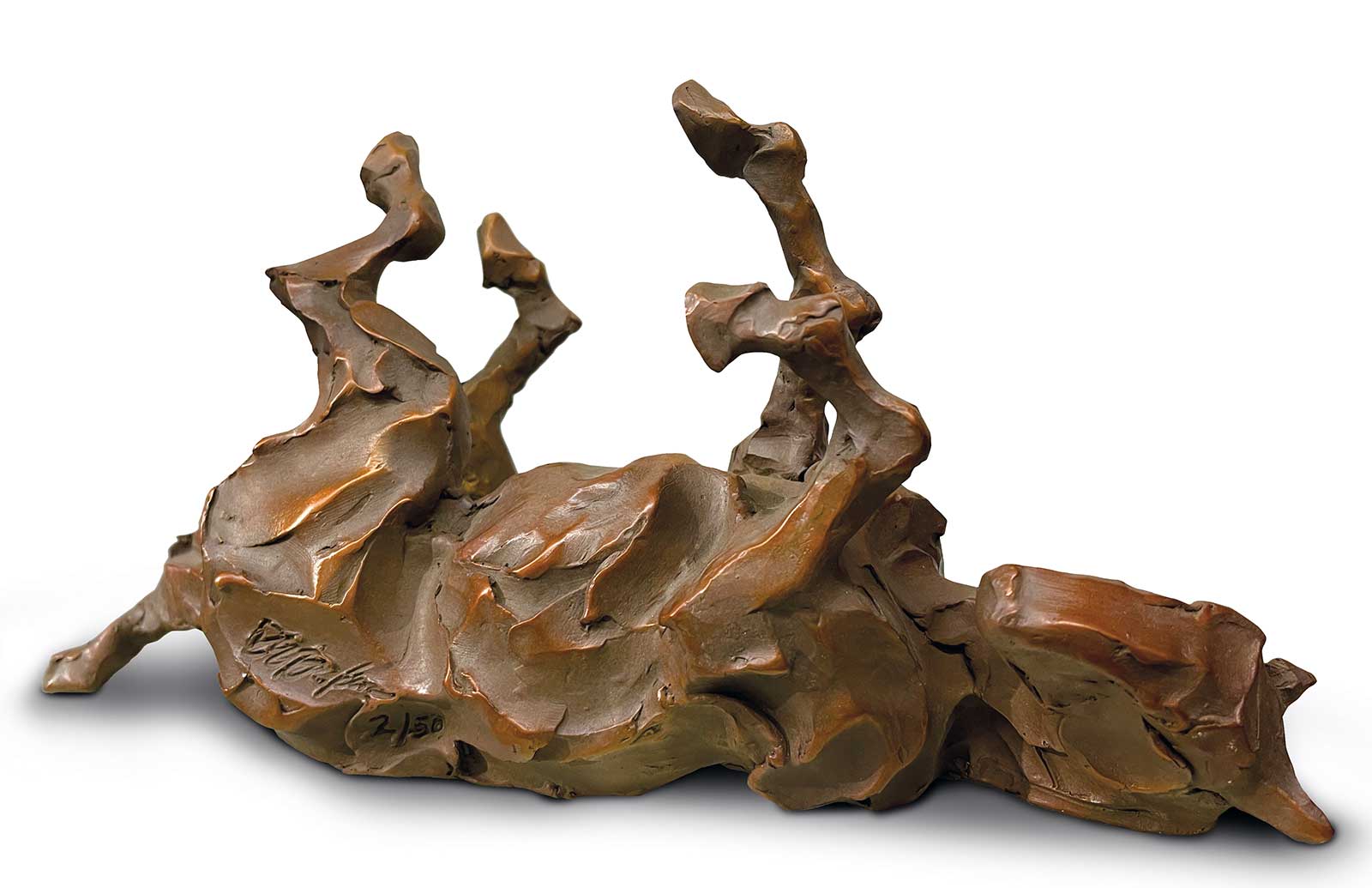
Claggett/Rey Gallery, A Roll in the Hay, bronze, 6 x 12 x 4”, by Jane DeDecker.
Throughout this section dedicated to small works and miniatures, you’ll hear from additional artists and galleries alike who provide insights into the genre.
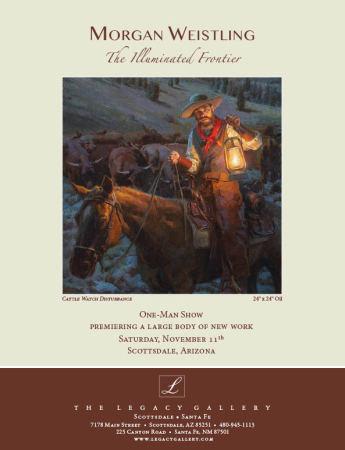
Prominent galleries like Legacy Gallery located in Scottsdale, Arizona, presents some of the finest in representational and impressionistic art in a range of subject matter. This includes small works and miniatures that will be on display for Legacy’s Holiday Miniature Show opening December 7. Attendees will find impressive small works like Terri Kelly Moyers Jack for Short, David Mann’s Autumn Song and Kim Wiggins’s Moenkopi Night.
Gallery representatives share that “Moyers has never wanted to do anything in life but paint. Even as a child growing up in Calgary, Alberta, Canada, she was constantly drawing with her main subject matter being horses. Whether painting a portrait, a landscape or a cowgirl riding a horse, Moyers’s subjects are things that are beautiful and that move her. Mann’s oil paintings focus on the visually rich, historic Native American culture of the mid 1800s. He is known for his use of strong light and dynamic shadow in daylight, and interior settings. By drawing his main characters closer to the viewer, he achieves a sense of personal relationship and connection to his subject matter. Wiggins’s distinct style and modern vision of the West has made him one of the most recognizable artists in America today. He is acknowledged as one of the creative forerunners behind the current New West Movement and is one of the prominent speakers in the art industry, encouraging innovation in Western art.”
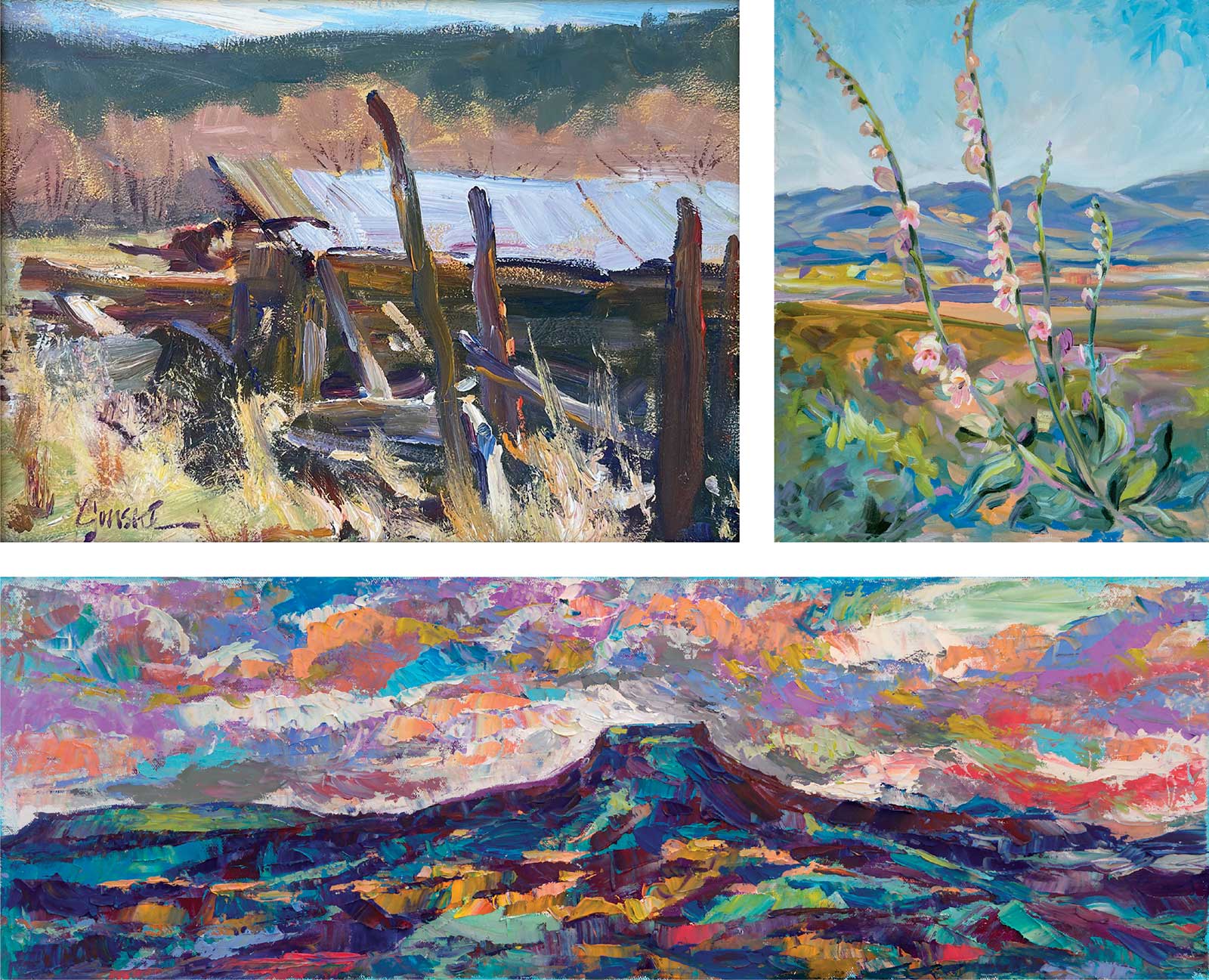
Top: Claggett/Rey Gallery, Spring Maintenance, oil, 9 x 12”, by Walt Gonske; Barbara Meikle Fine Art, Morning Penstemons, oil on panel, 20 x 16”, by Barbara Meikle. Bottom: Barbara Meikle Fine Art, Patchwork Pedernal, oil on canvas, 10 x 30”, by Barbara Meikle.
Claggett/Rey Gallery co-owner Margaret DeDecker, notes that “capturing a moment in time is forever the imminent chase of an artist’s career. “A gesture here, an environment there, a brilliant flash of light at sunset or the flirtatious glint in someone’s eye. It is these raw reactions that test an artist’s ability to respond and harness the visual gifts of everyday life. Often these studies, miniatures or on-the-spotters, are kept hidden in an artist’s repertoire for further development in the studio. If luck may have it, you can come across these organic creations for your collection and without hesitance you should acquire them...Perhaps a proper reference should be ‘brilliant gems’—large in spirit and tenacity and not to be overlooked.”
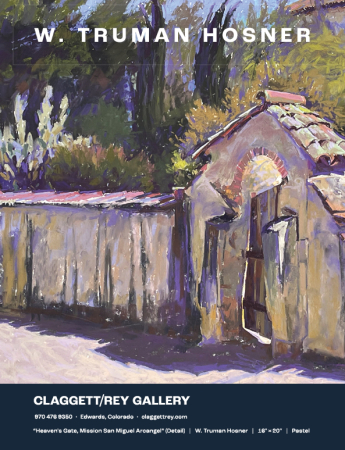
Claggett/Rey continually exhibits brilliant gems from all their artists, such as the exciting new collection of site studies of San Miguel Mission in California by W. Turman Hosner this November.
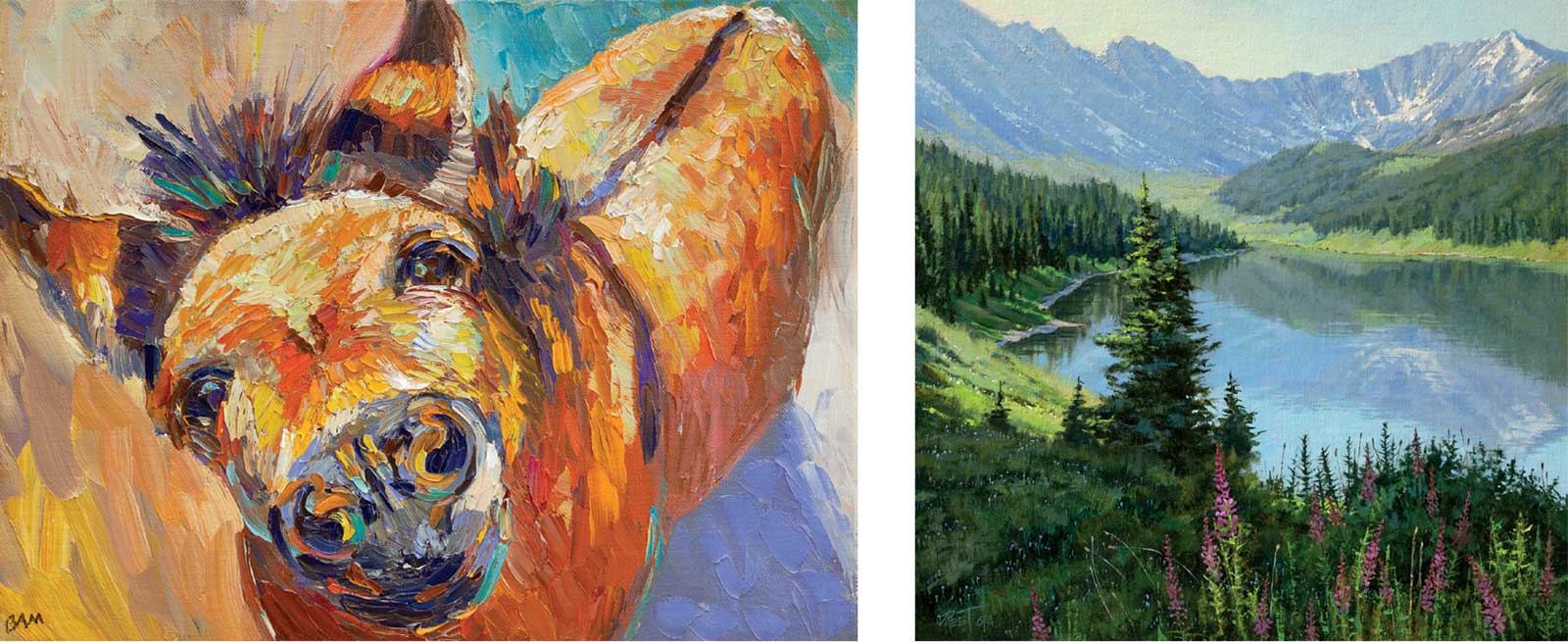
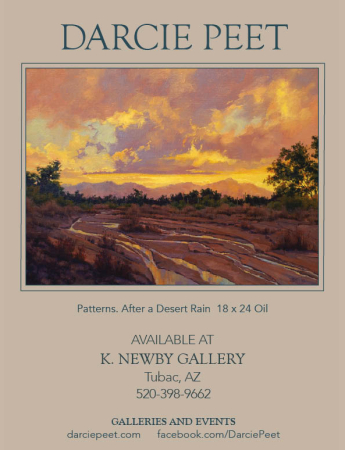
Barbara Meikle Fine Art, My Treat Hound Ruthie, oil on canvas, 12 x 16”, by Barbara Meikle; Darcie Peet, Morning Fresh Sprinkled in Wildflowers, oil, 16 x 16”
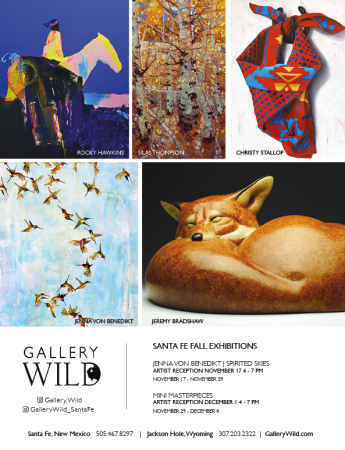
Gallery Wild’s collection of small works is a great way for new collectors to dip their toes into the world of Western art. Jeremy Bradshaw’s Red Queen Mini is a miniature version of his best-selling, sold out, bronze edition, which offers collectors an affordable way to collect his work. Luke Anderson uses his graphite drawings as studies for his stylized oil paintings while other artists like Jenna Von Benedikt use small works as a way to experiment with new styles and painting techniques.
“Whether you are looking for a small piece to fill a nook space or are in search of an affordable approach to art collecting, Gallery Wild has a fantastic collection of small works that represent our entire artist roster and allow their individual styles to shine through the small scale,” says gallery co-owner Carrie Wild.
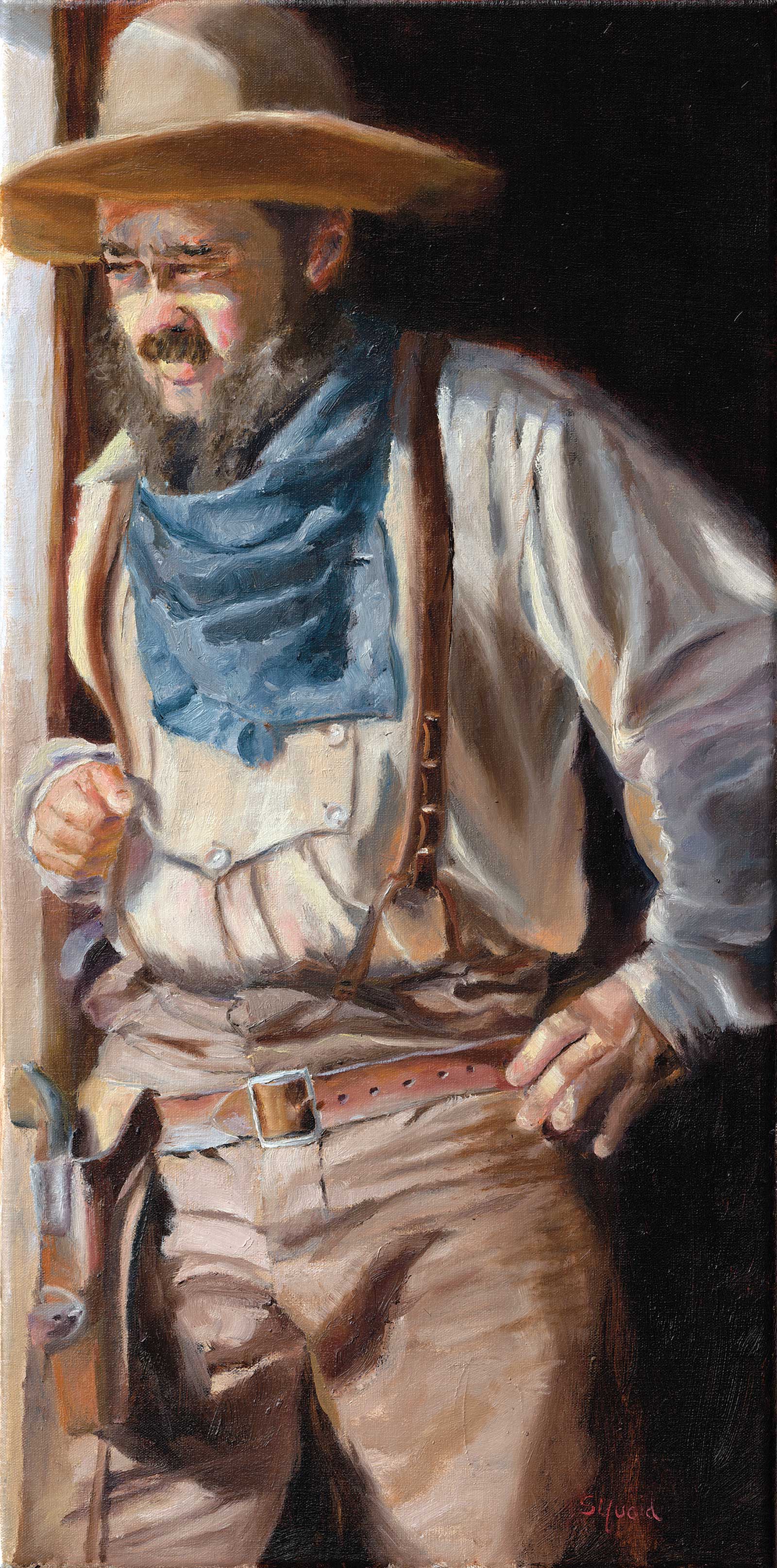
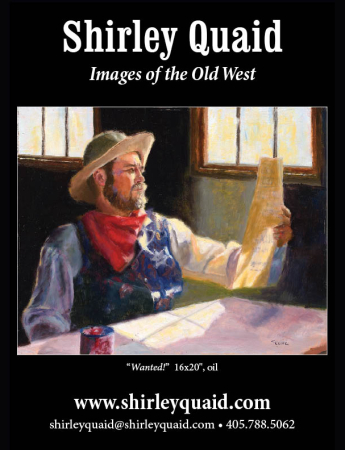
Shirley Quaid, Still Waitin’, oil, 24 x 12”
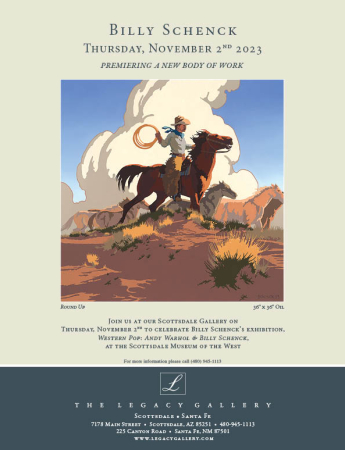
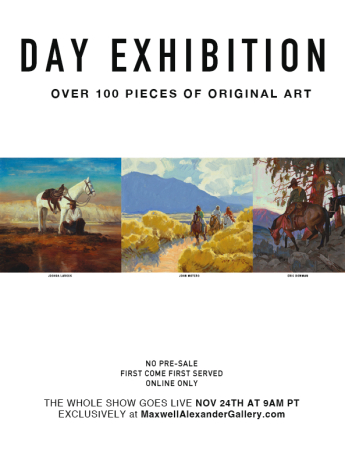
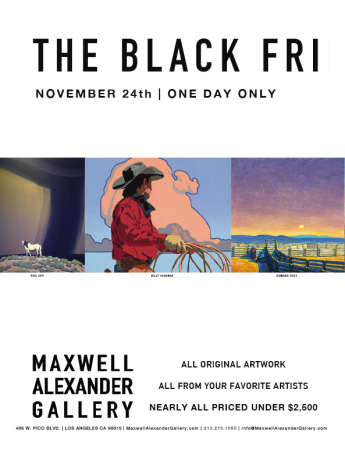
With a focus on contemporary realism, the Southwest and landscape subject matter, Maxwell Alexander Gallery presents many small-work wonders. One of the gallery’s most anticipated events of the year is the online Black Friday show, full of small works at reasonable prices. Opening November 24, the show boasts more than 200 pieces by more than 50 artists. Viewers can expect small masterpieces by prominent artists like Billy Schenck and his Pop Western subject matter pictured here in Study for Clint. Also find unique landscape depictions like David Grossman’s Bright Autumn Hill and Phyllis Shafer’s Alpine Lake.
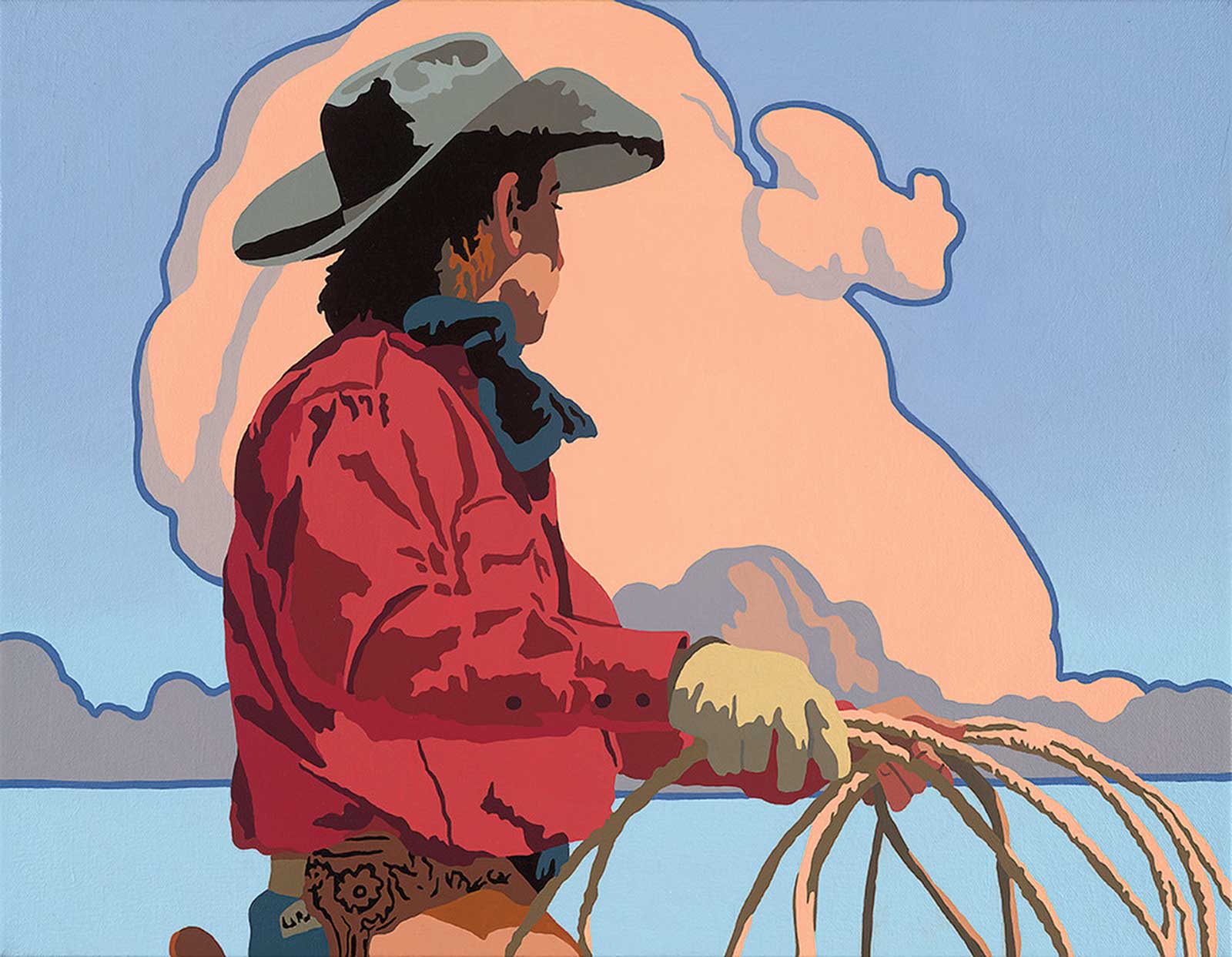
Maxwell Alexander Gallery, Study for Clint, oil on canvas, 14 x 18”, by Billy Schenck.
Items for the popular Black Friday show sell fast, so make sure to be prepared for purchase by 9 a.m. the day after Thanksgiving.
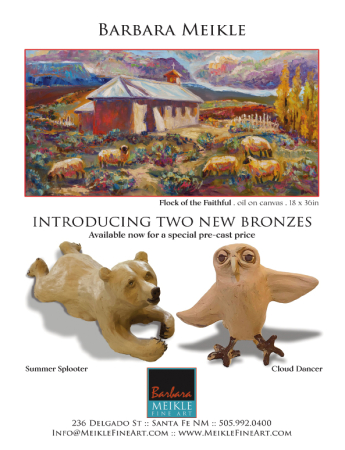
“Sometimes really wonderful things can happen in small packages,” says artist Barbara Meikle of painting in smaller format. “When you’re giving a gift of art, size can also matter. I like to think of my smaller works in two ways: as a study for a larger piece, an investigation if you will, into an idea, and as a complete work unto itself—an intense focus on an intimate subject. My little mule Ruthie is a constant inspiration and I do lots of small paintings of her. She’s got such an expressive face it doesn’t take much to capture her curiosity and her naughtiness.”
When collecting Meikle says, “I really think that serious collectors don’t often consider anything about a piece other than how it strikes them. Size is important but only as a way to emphasize a feeling or an idea. In the end, it’s the image and the emotion that matters most...”
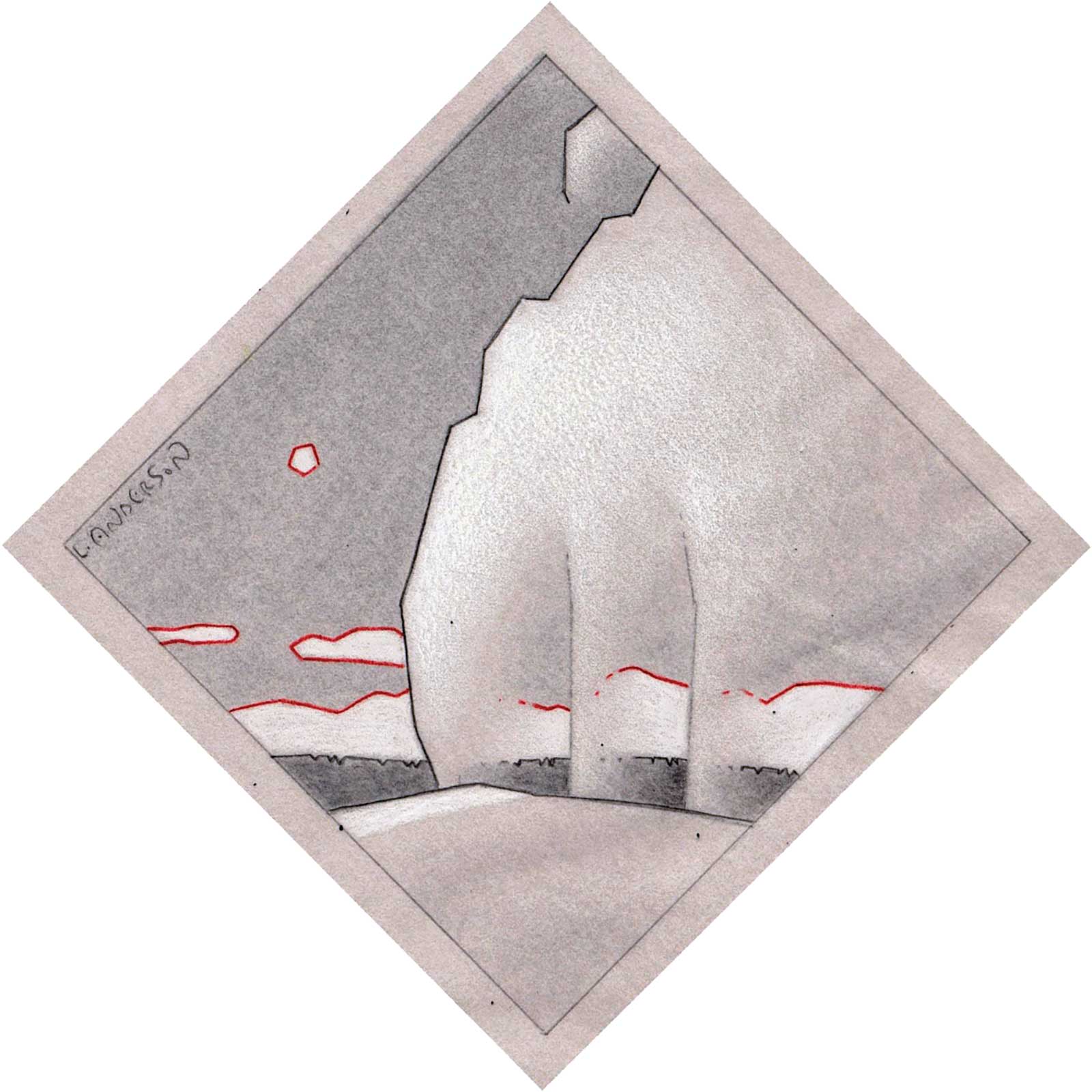
Gallery Wild, Old Faithful, graphite and wax pencil on paper, 6 x 6”, by Luke Anderson.
Living minutes away, artist Darcie Peet has painted and hiked in the high mountain valley of Colorado’s Ten Mile Range for years. “Its many moods never disappoint, even in winter when the peaks are laden with snow and the waters have turned to ice,” Peet describes. “My first choice is always in July and very early morning with rarely a soul around, one can almost hear the stillness, yet the wildflowers are loud and boisterous. The rising sun is darting through trees and catching the dagger-like tips of magenta fireweed with sprinkles of smaller wildflowers scattered like lost stars still in shadow. A perfect painter’s setting and inspiration that so reminds me of a quote from the book On the Loose: “I’d rather wake up in the middle of nowhere than in any city on earth.” Find Peet’s small oil masterpiece Morning Fresh Sprinkled in Wildflowers, inspired by her natural surroundings, pictured within this section.
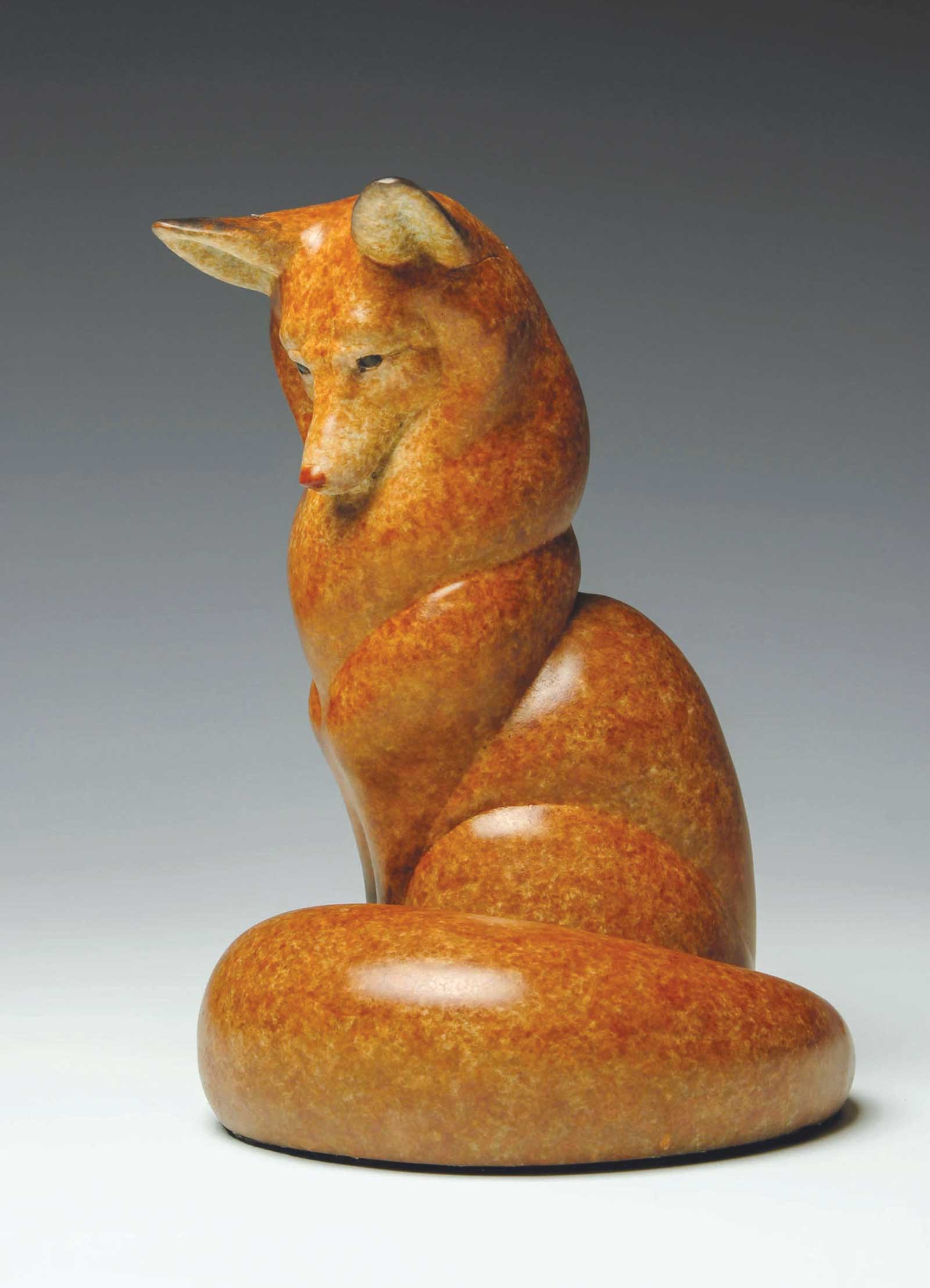
Gallery Wild, The Red Queen, bronze, 8½ x 5 x 6”, by Jeremy Bradshaw.
Award-winning artist Shirley Quaid was born and raised in Oklahoma and still resides in a rural area in the south-central part of the state, where she works in her “dream studio” nearly every day. One of her galleries says, “Shirley Quaid paints the Old West with familiarity. Her work takes the viewer into a time and place tucked into the past.” Quaid also notes that she doesn’t consider herself a portrait painter, but “I like to paint people,” she says. “Most people from the Old West were survivors. I paint the expressions and emotions of those people going about their daily lives.”
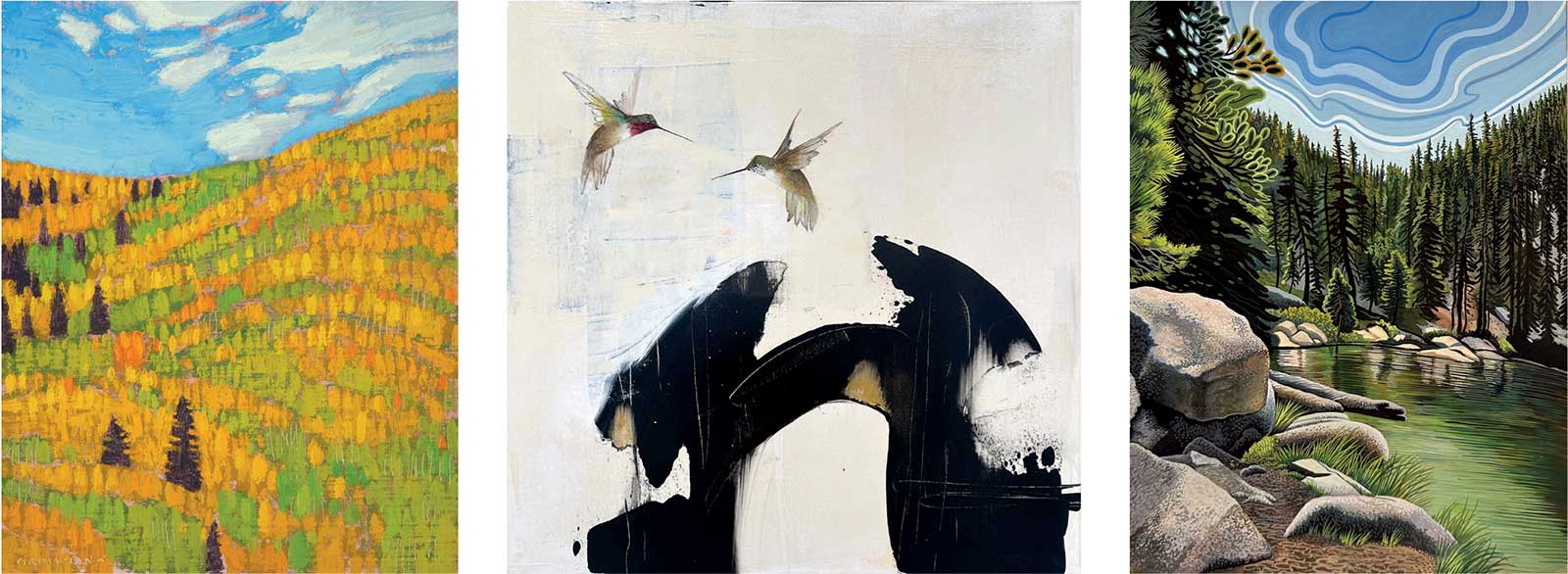
Maxwell Alexander Gallery, Bright Autumn Hill, oil on linen panel, 10 x 8”, by David Grossman; Gallery Wild, Victory, oil on canvas, 20 x 20”, by Jenna Von Benedikt; Maxwell Alexander Gallery, Alpine Lake, gouache on paper, 13½ x 10¼”, by Phyllis Shafer.
In one of Quaid’s small Western works, measuring at 24 by 12 inches, Still Waitin’, depicts a cowboy standing in a sunlit doorway, illustrating her talents in capturing the complexity of the human the spirit. Quaid’s work can be found in Oklahoma City and Spring Cottage Gallery in Spring, Texas. —
Featured Artists & Galleries
Altamira Fine Art
172 Center Street, Suite 100, Jackson, WY 83001
(307) 739-4700, www.altamiraart.com
Barbara Meikle Fine Art
236 Delgado Street, Santa Fe, NM 87501
(505) 992-0400
info@meiklefineart.com
www.meiklefineart.com
Claggett/Rey Gallery
216 Main Street, Suite C-100, Edwards, CO 81632
(970) 476-9350, www.claggettrey.com
Darcie Peet
www.darciepeet.com
Evoke Contemporary
550 S. Guadalupe Street, Santa Fe, NM 87501
(505) 995-9902, www.evokecontemporary.com
Gail Severn Gallery
400 First Avenue North, Ketchum, ID 83340
(208) 726-5079, www.gailseverngallery.com
Gallery Wild
80 W. Broadway, Jackson, WY 83001
(307) 203-2322
203 Canyon Road, Santa Fe, NM 87501
(505) 467-8297
www.gallerywild.com
InSight Gallery
214 W. Main Street, Fredericksburg, TX 78624
(830) 997-9920, www.insightgallery.com
Legacy Gallery
7178 Main Street, Scottsdale, AZ 85251
(480) 945-1113
225 Canyon Road, Santa Fe, NM 87501
(505) 986-9833
www.legacygallery.com
Maxwell Alexander Gallery
406 W. Pico Boulevard, Los Angeles, CA 90015
(213) 275-1060
info@maxwellalexandergallery.com
www.maxwellalexandergallery.com
Shirley Quaid
(405) 788-5062
shirleyquaid@shirleyquaid.com
Powered by Froala Editor