What is it that separates an artist from success or obscurity? Are some people just born with it? Thicker skin? Did they somehow develop a drive to succeed no matter the cost? Luckily for Doug Monson, he has all three, but that’s not the determining factor. It’s love. His parents never pushed him down that tired road of “do good in school so you can be a doctor or a lawyer.” As far back as Monson can remember he was putting crayon to sketchbook, backed by nothing but enthusiasm from his parents. So he was off to the right start, but that doesn’t mean his career wasn’t fraught with disappointments.
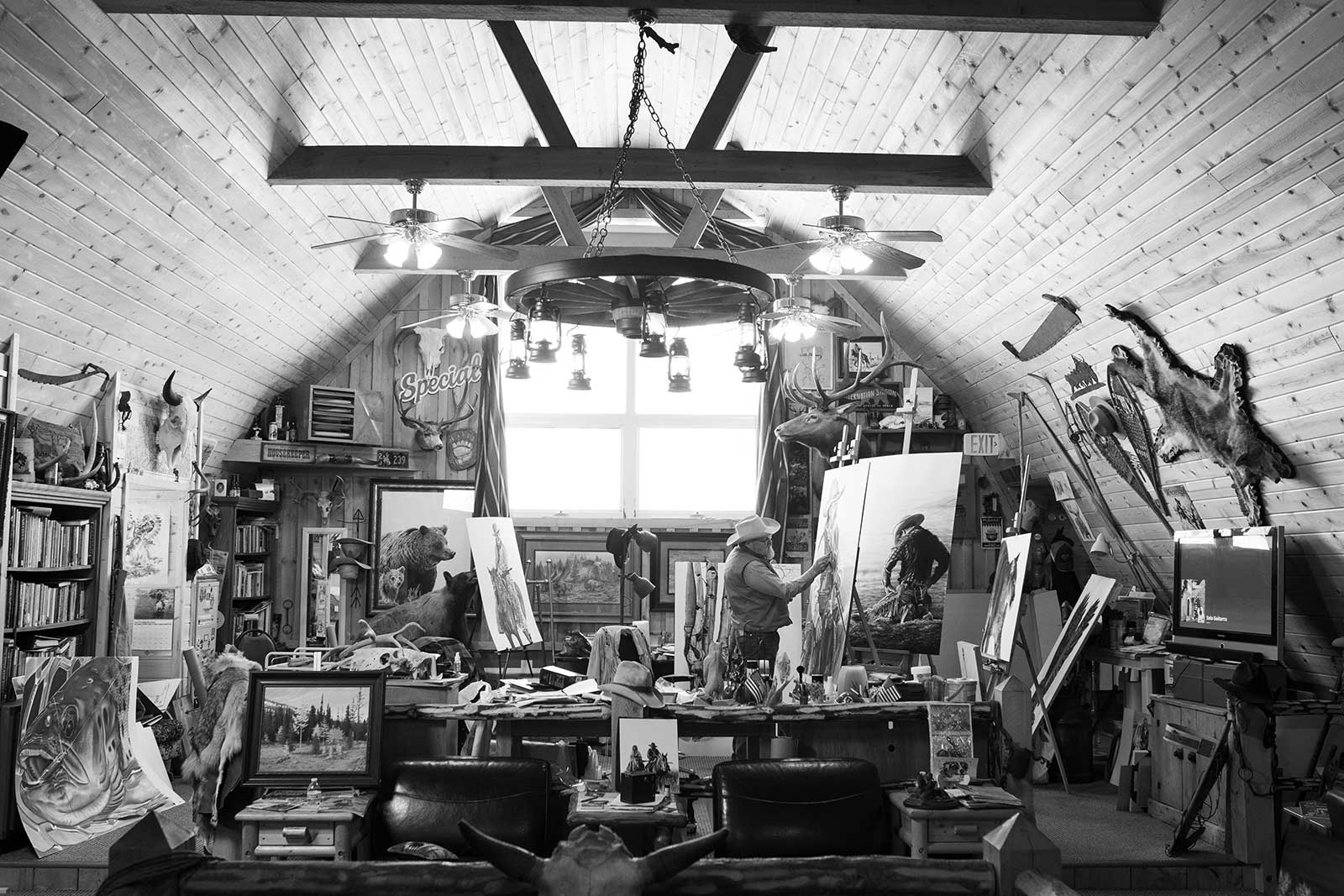
Doug Monson at work on one of his charcoal pieces.
Monson grew up in the late 1960s on the same farm as his father in Cedar Hills, Utah, at the mouth of the American Fork Canyon. Obsessed with the West, he devoured every issue of Western Horseman and copied the old masters like Clark Bronson and Charlie Russell. They were his real teachers because at school he wasn’t fitting in—he was the round peg in a square hole. Looking ahead, he thought maybe ranching could be the way, and as a follow-up to dairy farming it didn’t seem like too much of a stretch, but friends told him working on a ranch would ruin his love for being on horseback. Without a lot of other options, he started work as a plumber in high school. “[But] never did I stop drawing,” he says, adding that he took inspiration from both of his grandfathers who were folk artists—one an oil painter and the other a woodworker.
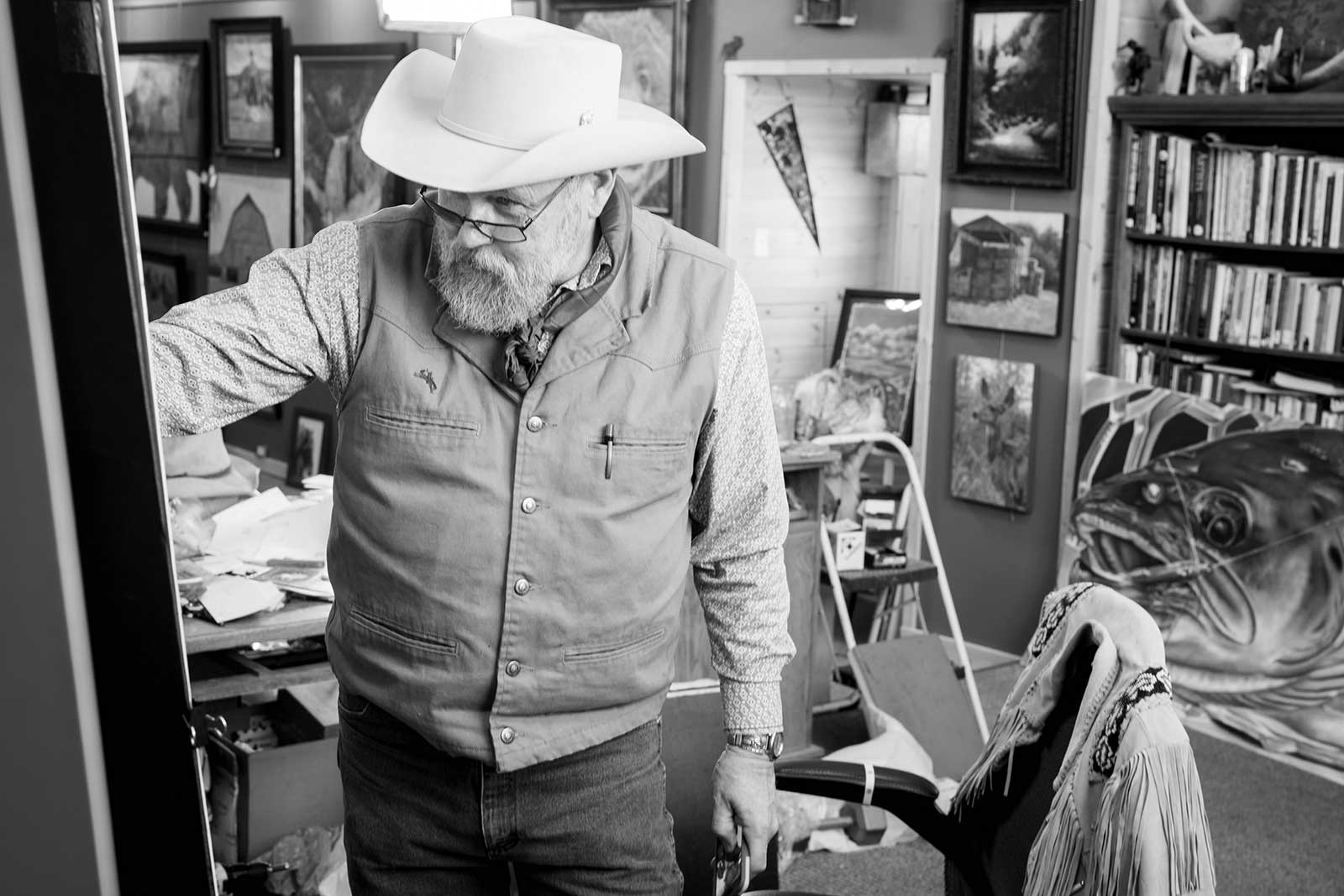
Doug Monson at work at his easel.
At that time, the drinking age in Wyoming was only 19 years old, so off to Wyoming he went, eventually finding pay on an oil rig. The long hours of merciless labor in demoralizing weather weighed hard. After a year of thankless work and abuse on his body and mind, he knew it was enough already and headed south where plumbing jobs were still plentiful. In 1994, he married his wife, Donna, who had three kids that he loves as his own. Two years later, with her full support, he made a go at being a full-time artist. That dream lasted six months before he had to go back to a normal paying job. Although it was a setback, Monson was undeterred from putting pencil to drawing paper.
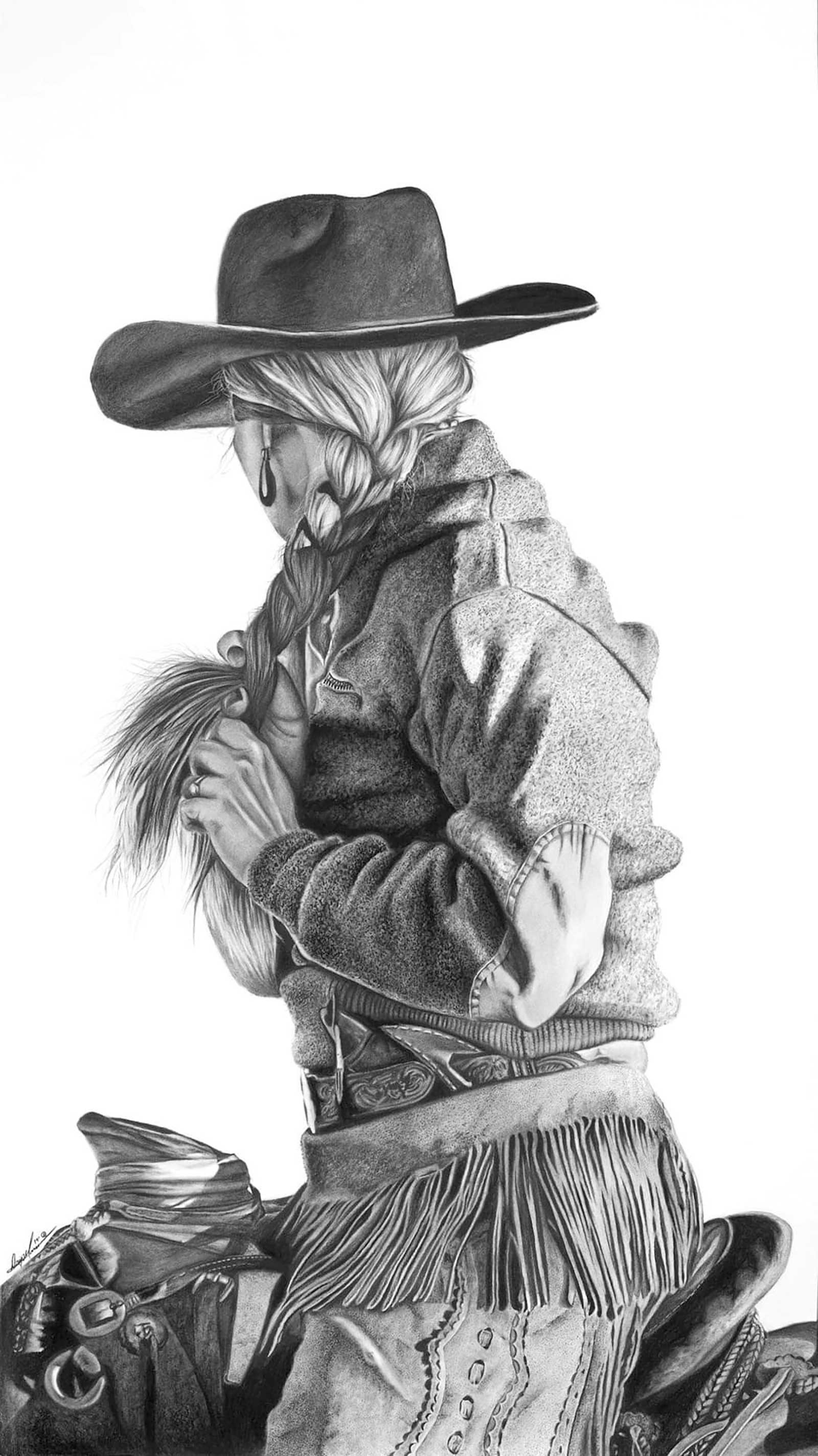
Braided Love, charcoal, 60 x 33”
In 2003 the right door opened, or so he thought. His work was accepted into a notable gallery in Jackson Hole, Wyoming, but after a year he had zero sales. With adult decisions on his mind, like retirement and feeding a family of eight, it was time for another profession change. This time Monson ended up working for the Union Pacific Railroad as a tack welder and union representative, grinding out 72-hour work weeks. The nature of the job was not unlike that of the oil rig with callous labor in the hellacious heat and cold. He recalls a 48-hour track repair in the Spanish Fork Canyon during a winter blizzard. Focused on the task at hand, the rest of the world seemed detached by the deadening effects of falling snow and bone-numbing temperatures. He stood up to grab a tool and was greeted by a 40-mph train on the second track, close enough to end his life had he taken one more step. These conditions were not ideal for anyone trying to muster up the inspiration to go home and make art, but Monson always found a way. Even when work called him out of town, pencils and pads were the first items thrown in his suitcase. Money was good, but after a number of grievous years that were a far cry from the serenity of a studio, “I could feel it shortening my life span,” Monson says. A doctor told him he’d eventually lose the use of his hands if he continued. An artist cannot create art without hands so he made another change, staying at the railroad but working as a machine operator.
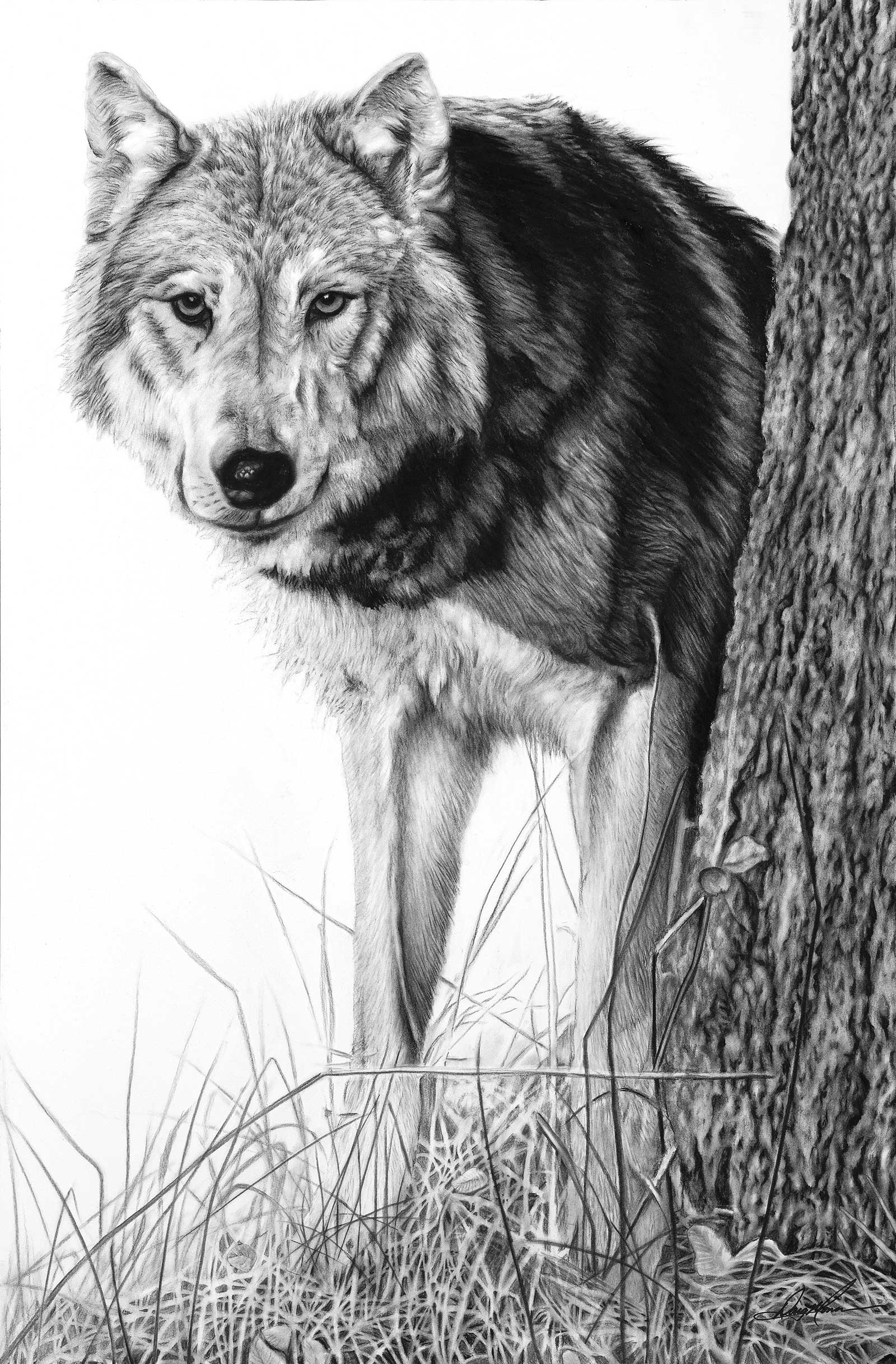
Creeper, charcoal, 40 x 32”
By 2009, Monson took leave to support his ailing father. Down time with his father gave way to more art and a connection he’d been yearning to have. Later, a gallery owner in Park City, Utah, showed interest and offered the greenhorn some advice. At the time, Monson’s drawings all had highly detailed backgrounds, which looked great but didn’t sell. The gallerist recommended he work bigger, switch to charcoal and leave the backgrounds out. It was advice he took to heart and canvas, immediately starting on a 40-by-60-inch drawing made from a photograph he took of a grizzled old bison walking away from the camera. It broke all the rules. As a kid, Monson had a flare for doing everything he shouldn’t. This time it actually paid off. “It’s good to know the rules of art. If you know them, you know how to break them,” he says. As it turns out, the gallerist knew what he was talking about. The drawings started selling enough that Monson, now 43, was able to resign after 15 years on the railroad and commit to his art, once again, on a full-time basis. Along with Park City came another placement in Jackson Hole and several others around the West.
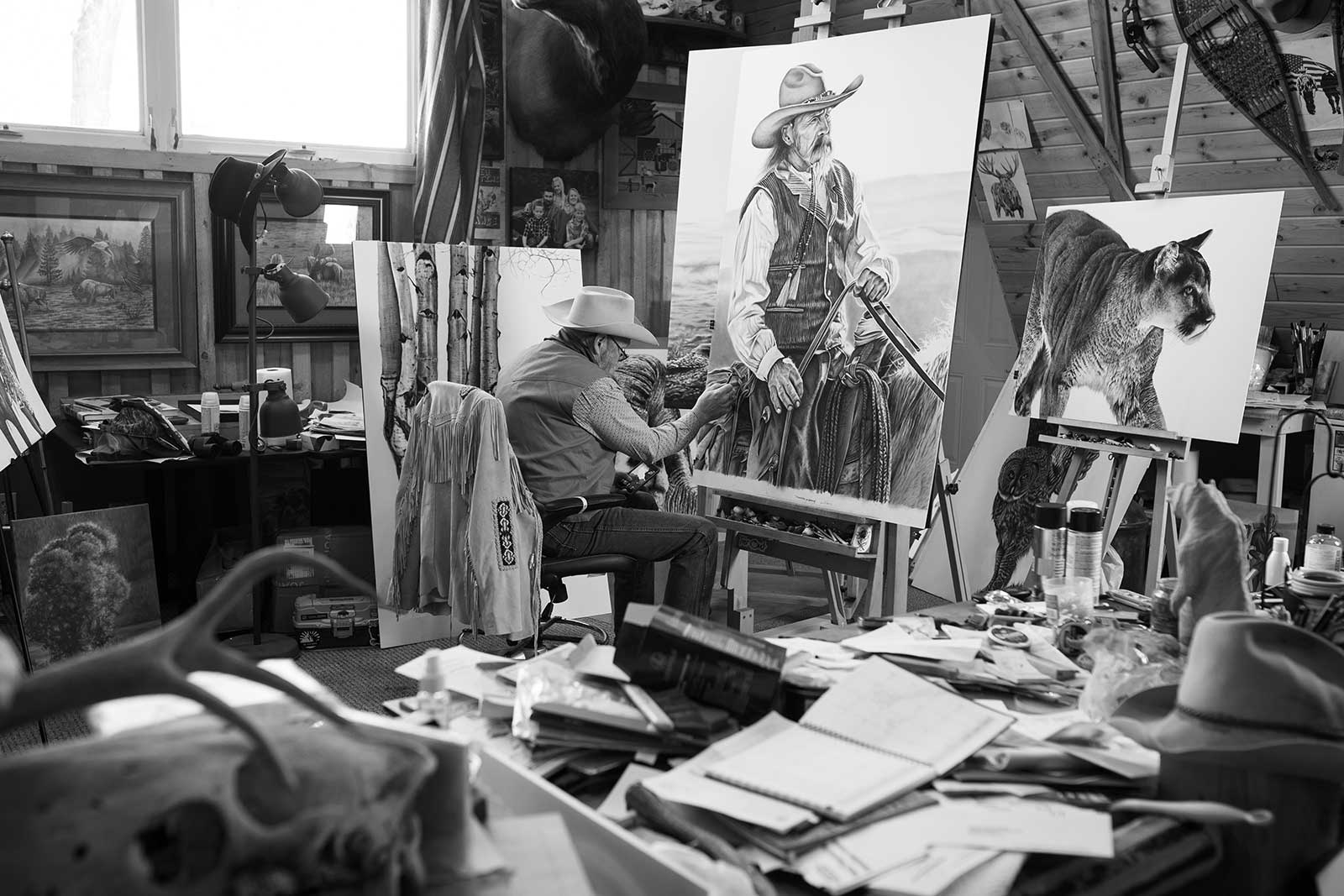
Doug Monson’s studio is in the loft of a converted barn.
Momentum was building, but after a while, it again felt like he was taking one step forward and two steps back. Jim Wilcox, artist and owner of two Jackson Hole galleries, said pricing was the issue. His pieces were too low. Monson doubled his prices, and sales did the same. He was riding high. Today you can still find Monson’s work at Wilcox, which is “the best gallery I’ve ever been associated with,” he says.
In 2015, Monson and his wife purchased property in a place he calls “the least populated side of the least populated state.” It’s located in Afton, Wyoming, in the Starr Valley, a place they long admired. The property has a house and an old barn that used to be a restaurant. To get things going, he rented out the house and half of the barn to a construction company. The other half was set aside for his newest dream, a gallery to show art and his personal studio. To start that dream he called upon his former skillset to plumb in a shower. That, combined with a mattress on the floor, microwave and fridge, was all he needed. Two-week stints were spent flopping like a bachelor at night and remodeling the barn all day. This continued for years, back and forth from Utah to Wyoming, all while making art.
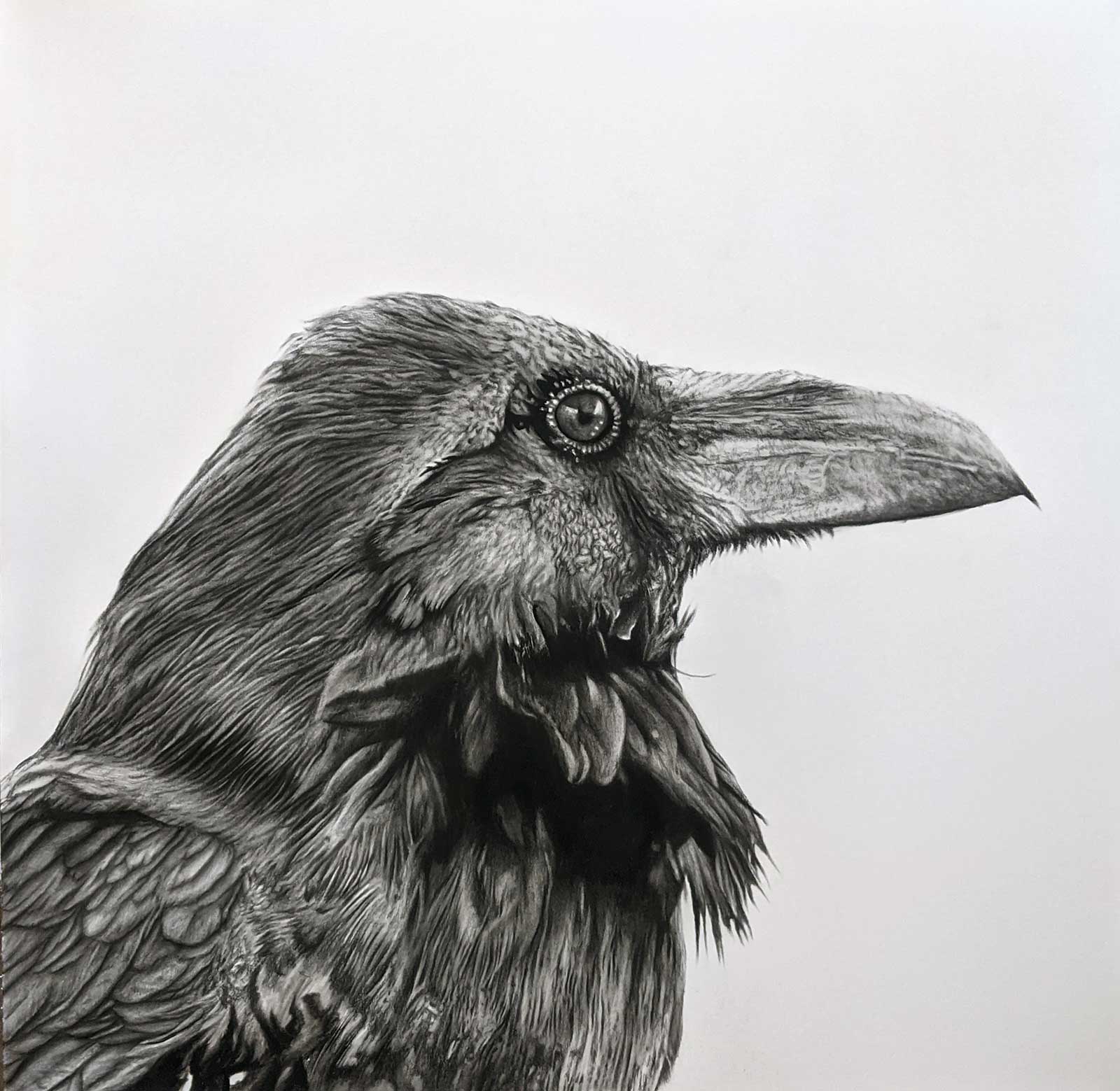
Raven Profile, charcoal, 40 x 40”
Finally in 2020, Western Skies Gallery opened. It’s an unexpected space in an unexpected place, 60 miles from Jackson Hole, one of the wealthiest zip codes in America. Walking into the gallery is a visual treat and a 180-degree flip from the stark walls of most other fine art galleries. You’re greeted by Monson, a handsome, well-kept 57-year-old guy, who could be the subject of his own Western drawings. Monson is proud to display and sell pieces by other artists that he admires. On the second floor of the gallery, it becomes clear what all the grueling years of construction were for—his studio. Originally a hay loft, the room has its original bones. His days of creation are spent bathed in beautiful northern light that calmly rakes across vaulted wood ceilings. The walls are adorned with artwork, finished and not, Western trinkets and taxidermy. It’s a massive space that feels well lived in, both welcoming and comforting. An environment any artist of any medium would never in their right mind give up. “I can get the best out of my art here,” he says.
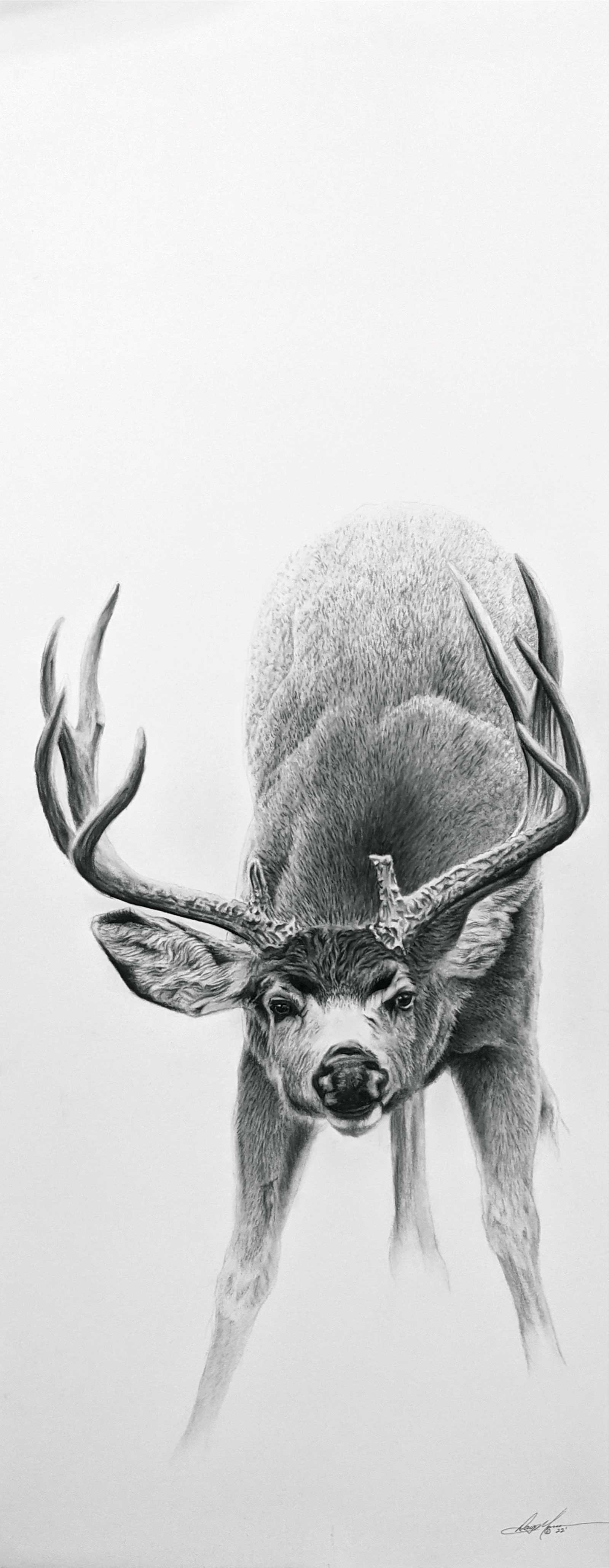
Faded Glory, charcoal, 40 x 16”
The thing he believes separates him from others is texture, which he creates with a backward technique, starting with the darks, then the middle shades of gray, and lastly the highlights using a cotton swab instead of traditional store-bought tools. It’s not uncommon for Monson to have 10 pieces going at once, all made from his own photographs. He refuses to compromise on quality, even if that means a work takes a year’s time before it’s complete. He’s a different artist from his early days of “just putting medium on paper and trying to make it look right.” After all this time and success, he knows that it’s never as good as you think or as bad as it feels. So he remains in a constant state of growth. He keeps the same attitude as all the greats—“If I stop learning, I’m done.”
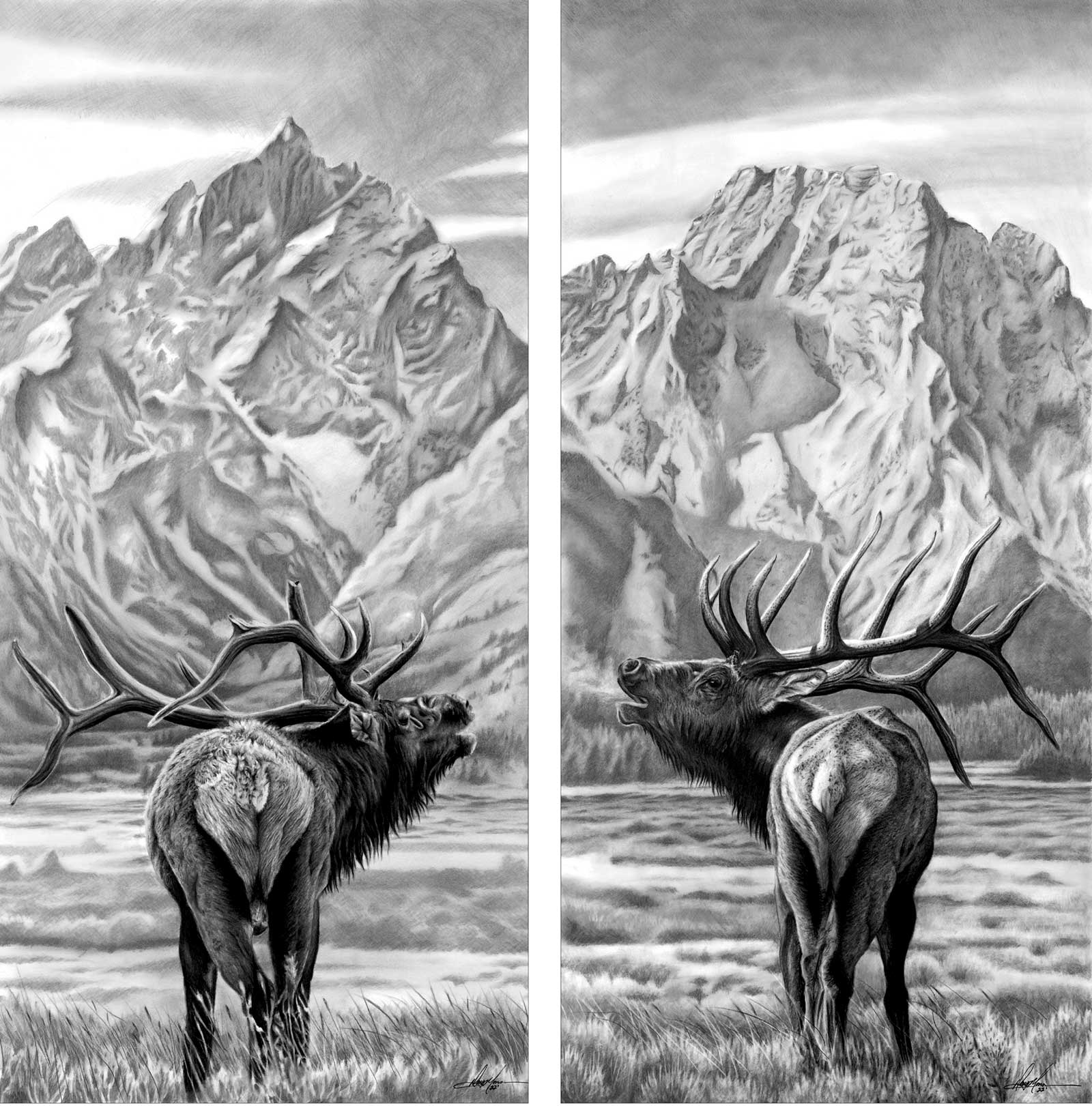
Main Event #1 and #2, charcoal, 50 x 24” each
A life in art is one of highs and lows. Dedication to craft comes with a perennial seat on the roller coaster, a ride Monson has been on for years. A ride he understands. Before Covid, sales were at a peak, then it all dropped out from under him as sales stopped. To compensate, he drove shuttles for fly fishing guides on the Snake River in the summer and plowed snow in the winter. After the pandemic, sales boomed again, but that doesn’t mean he sat back in cruise control. He’s now looking ahead with ideas of grander drawings created from photos he’ll make of historical reenactments. The drawings would be much more intensive, requiring about 250 hours to complete, but that also demands a higher price tag.
Talking with Monson is easy. He’s kind and unassuming. Maybe because he never forgets just how hard the road has been for him. His future plans also involve giving back. He plans to remodel the rest of the barn in order to host workshops and provide residencies for local artists, so that he can practice the Golden Rule. No doubt, a noble quality passed down from Mom and Dad. —
+++
See more of Monson’s work at www.westernskiesgallery.com.
Powered by Froala Editor