When William Henry Jackson (1843-1942) photographed Yellowstone in the 1870s, a mule team carried the 400 pounds of his equipment—bulky cameras, heavy tripods, fragile glass plates, a portable darkroom and processing chemicals.
The Wyoming Historical Society describes his process. “The technology of the time was the wet-collodion process: First, the photographer had to light-sensitize his future negative, a plate of glass, in a darkroom or dark box or dark tent, as Jackson used in the field, with a collection of bottled chemicals, including nitric acid and silver nitrate. Then he made his exposure, usually by removing the lens cap. Last, he developed the negative. [Jackson’s biographer Peter] Hales adds, ‘Plates were developed, fixed, washed, dried over an alcohol lamp, and then varnished to protect the image, all within minutes of the exposure.’”
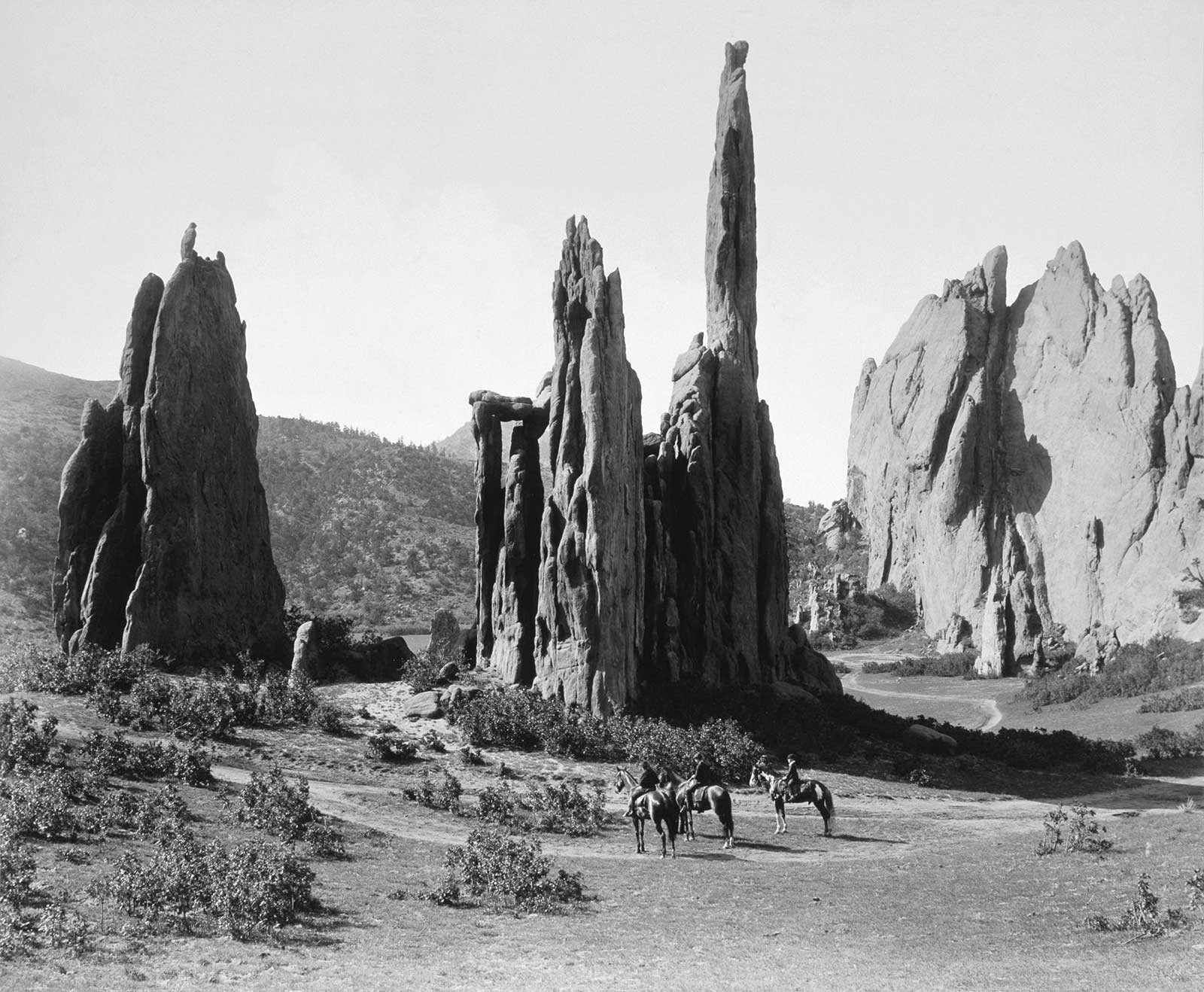
William Henry Jackson (1843-1942), Upper Falls of the Yellowstone, ca. 1873, albumen print, 10 x 127/8". Minneapolis Institute of Art, Mr. and Mrs. Julius E. Davis Fund.
Upper Falls of the Yellowstone, circa 1873, is an albumen print on paper coated with egg white (albumen) containing salt and sensitized with a silver nitrate solution, then printed using daylight under his glass plate negative.
John Doddato used a 4-by-5-inch view camera to capture the scene for his photo Walking Limb, Yosemite N.P. With any large format camera, the process isn’t simply point and shoot. He describes the trials of making this striking image.
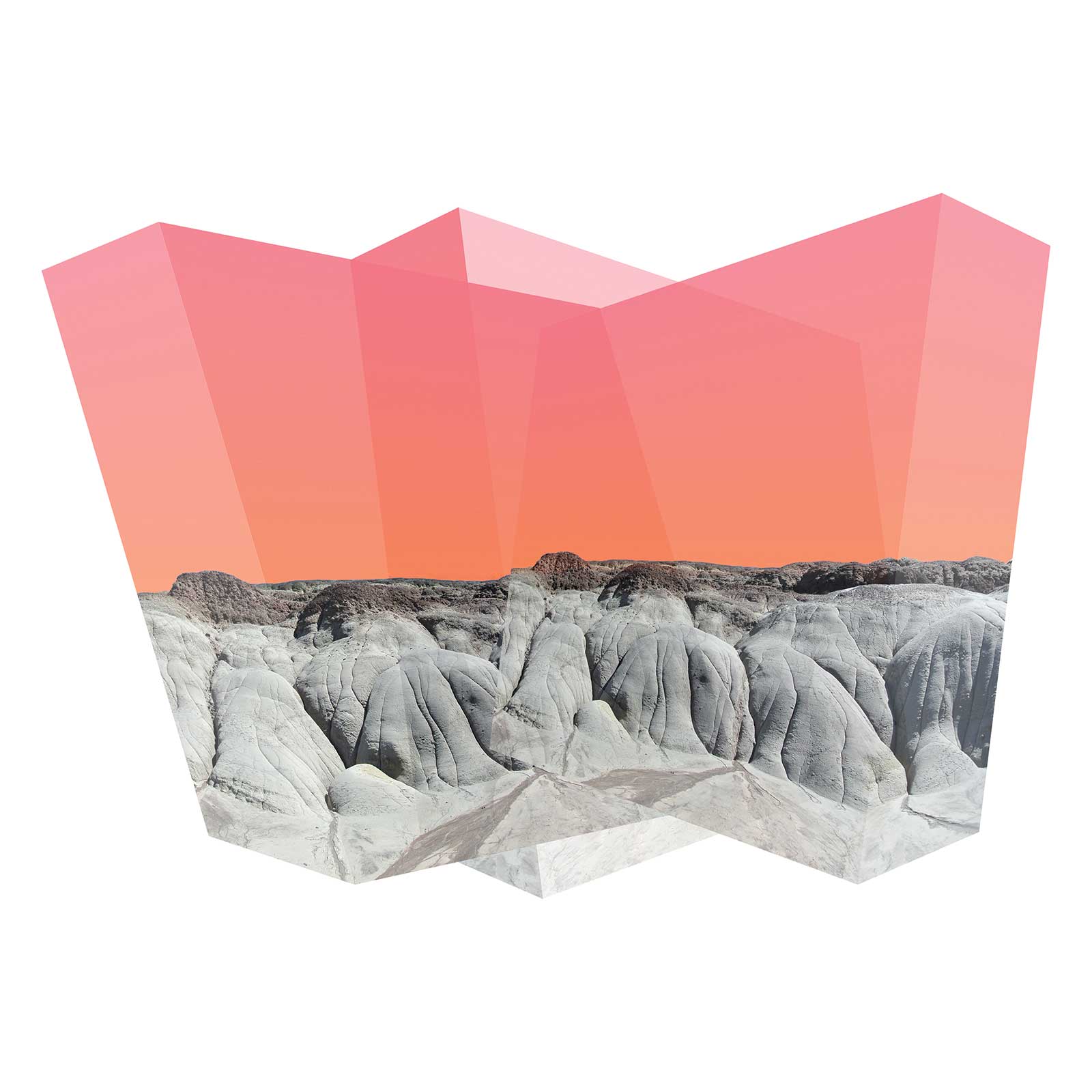
Niman Fine Art, Altered Landscape #2, digital C-print face mounted to shaped acrylic, ed. of 3, 20 x 14 x 1", by Michael Namingha.
“I came across this fallen limb late in the day and decided to return in the morning to take a photograph. I arrived early and had to wait quite a while for the first signs of daylight. As the sky started to lighten, I began setting up my view camera and composing the scene. Being my first morning in the valley, I wasn’t sure exactly where the sun would rise as I stood patiently waiting for the light to increase. Much to my surprise the sun broke out over top of the mountain, and I realized I wasn’t in the best position with a backlit situation. I quickly made the exposure and pulled out my film holder to flip it over to make a second exposure. But by the time I got the film in position the sun had washed out the entire scene. This is my only exposure of this limb, and it is a difficult negative to print. When viewing the proof sheet it would appear as if this negative is a complete loss for ever making a decent print. I have learned a lot working with this negative over the years and apply some of the thought process and techniques in my digital work today. This particular image is one of my favorites for what it has taught me in the darkroom and beyond.”
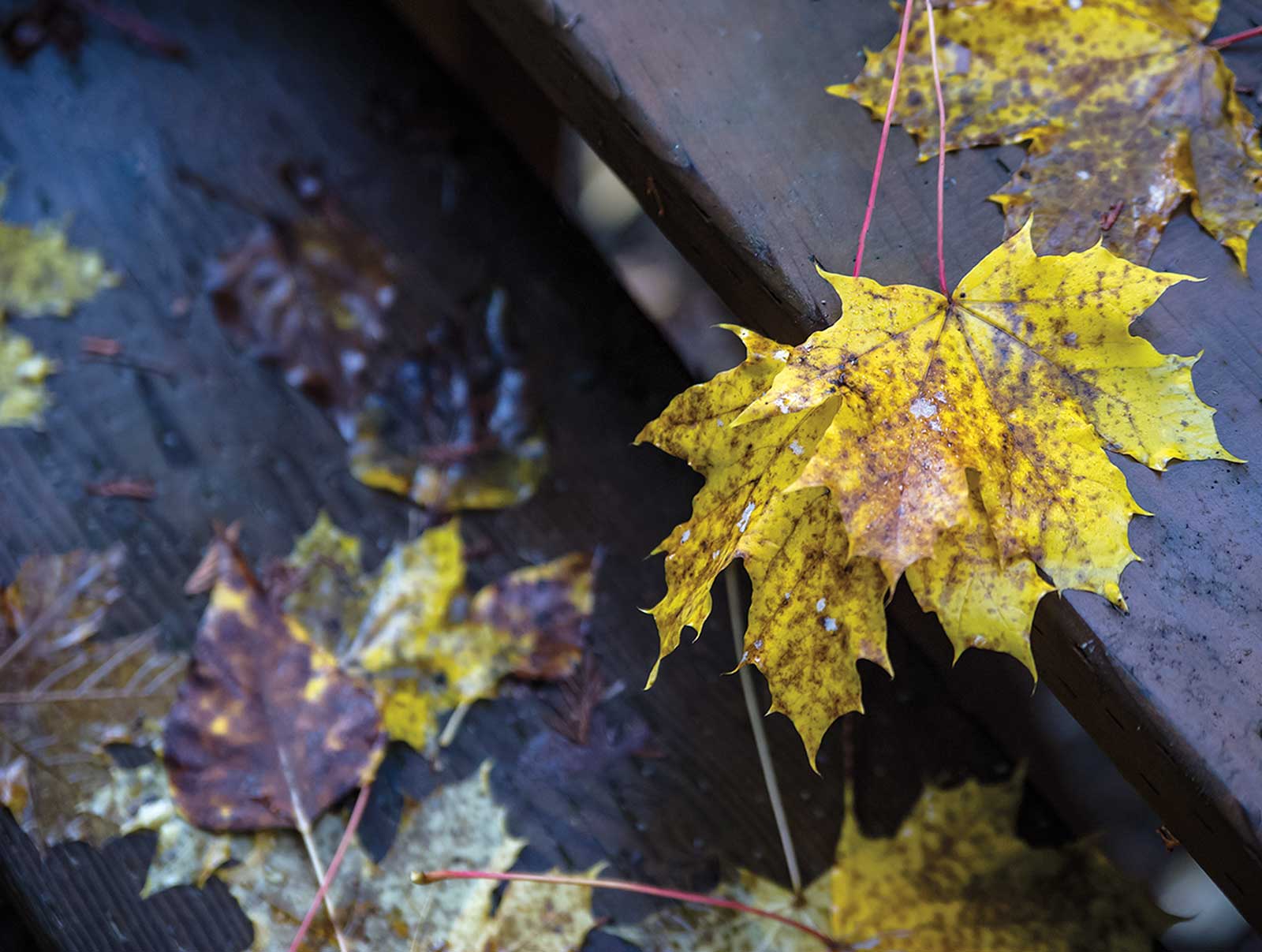
Linda Roberts Photography, The Last Step, limited edition photography, ed. 2 of 20, giclee print on archival canvas mounted to rigid substrate, 15 x 20", by Linda Washburn Roberts.
Michael Namingha comments, “I’ve always wanted to take photography outside the realm of a square or a rectangle.” His Altered Landscape series of C-prints face mounted to shaped acrylic invites the viewer to look at the landscape in a different way and give the impression of three dimensions. The lovely roseate sky has a more ominous origin than the setting sun, however.
The largest methane gas cloud in North America was discovered by NASA covering the region of Chaco Canyon and other sites sacred to the Hopi and Puebloan people of Arizona and New Mexico. It appeared in colors of red, pink, orange and yellow. The methane cloud is the result of leakage from oil and gas operations in the region.
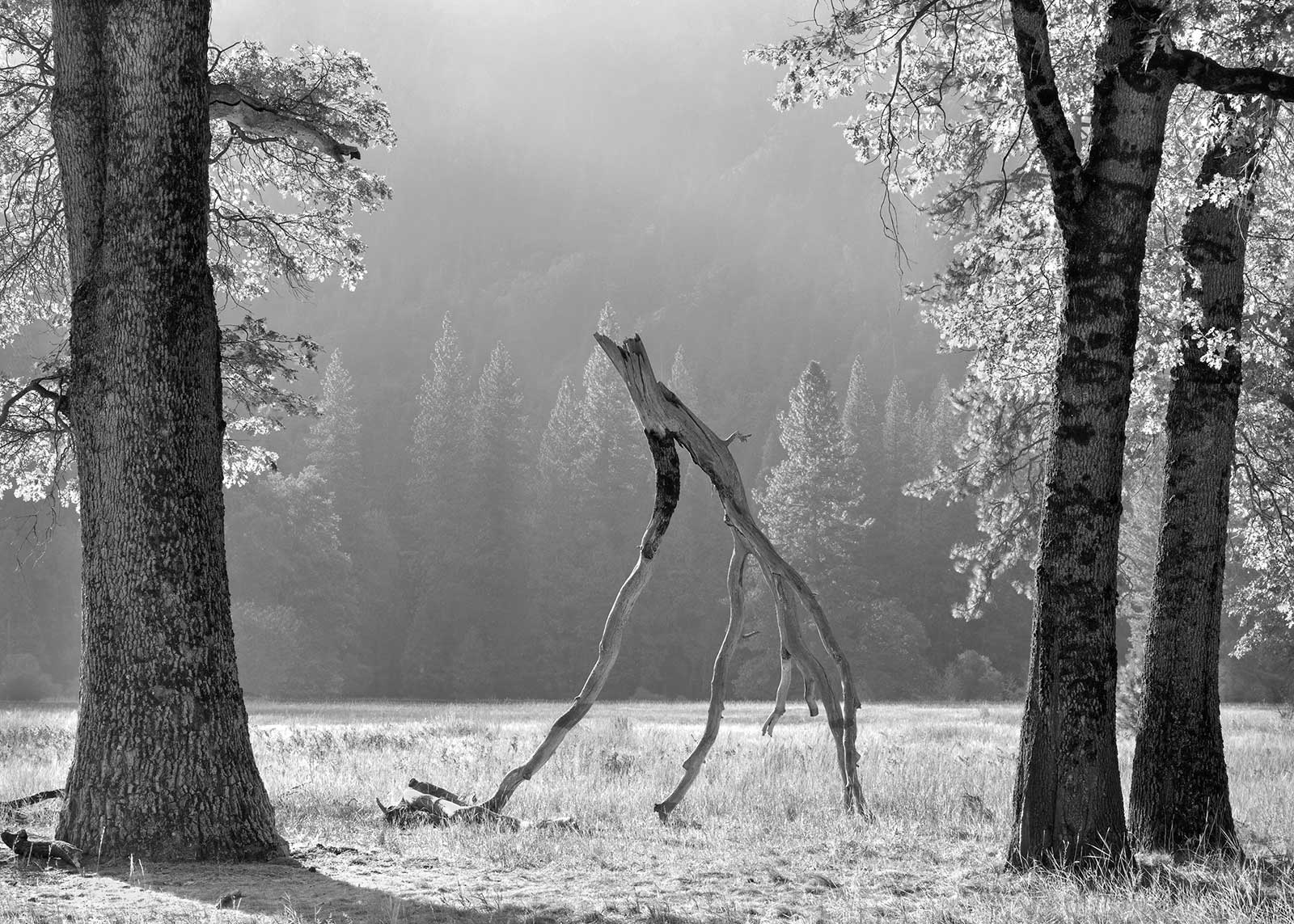
John Doddato, Walking Limb, Yosemite N.P., silver gelatin print, 11 x 14"
The Environmental Defense Fund states, “One in three Americans lives in a county with oil and gas production. As oil and gas operations increasingly extend into neighborhoods across the United States, concerns have mounted about the impact of the industry’s air pollution on the health of nearby communities.”
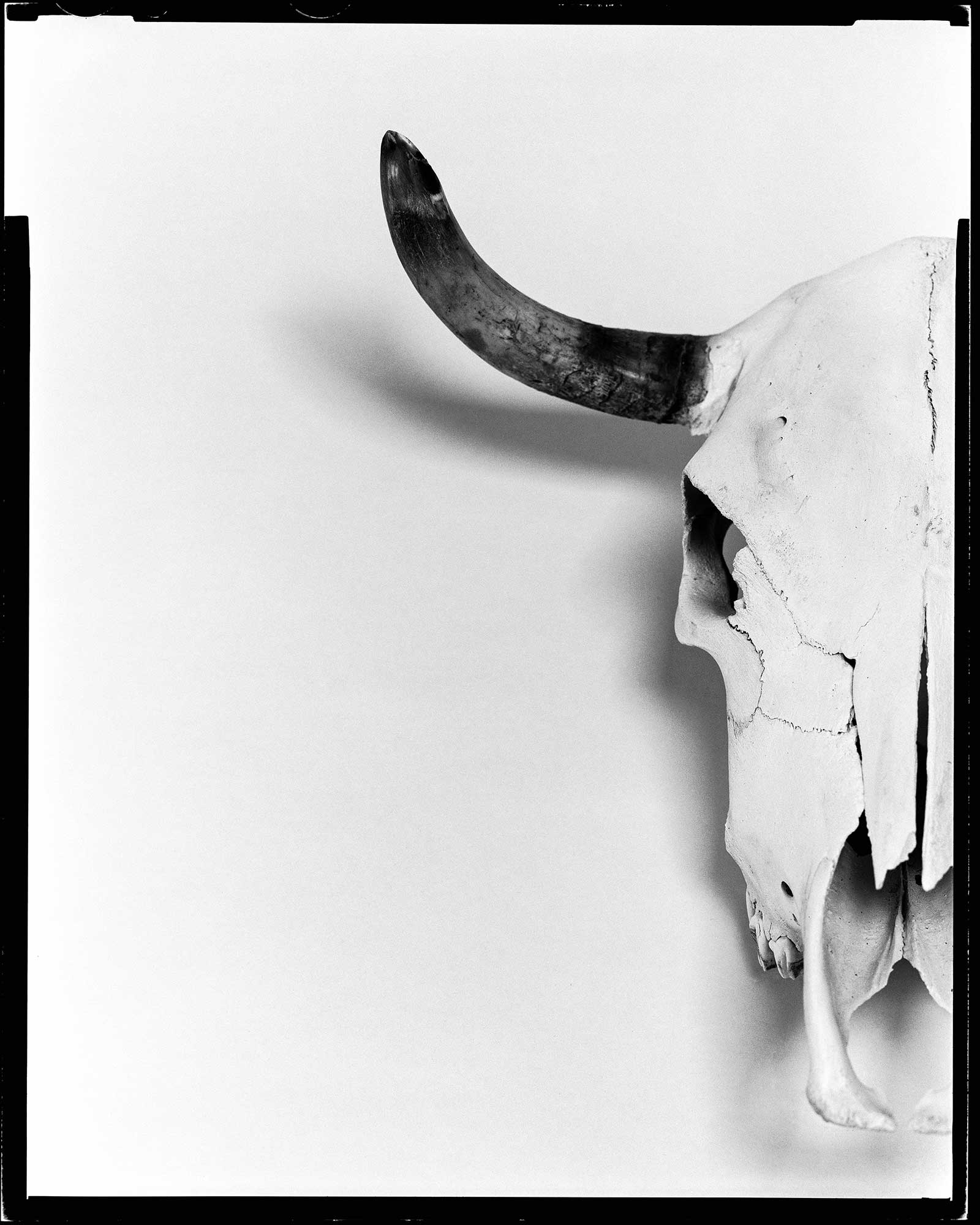
Steele Burrow Photography, Steer, 1, multiple limited edition sizes from 20 x 16” to 75 x 60", by Steele Burrow.
Although his work is not centered in his Hopi-Tewa heritage, his innovative use of photography to address environmental concerns echoes the innovations made in pottery by his great-great-great grandmother, Nampeyo. His work recalls the Hopi tradition of being caretakers of the earth.
Throughout the pages of this new special section, explore more works within the world of fine art photography.
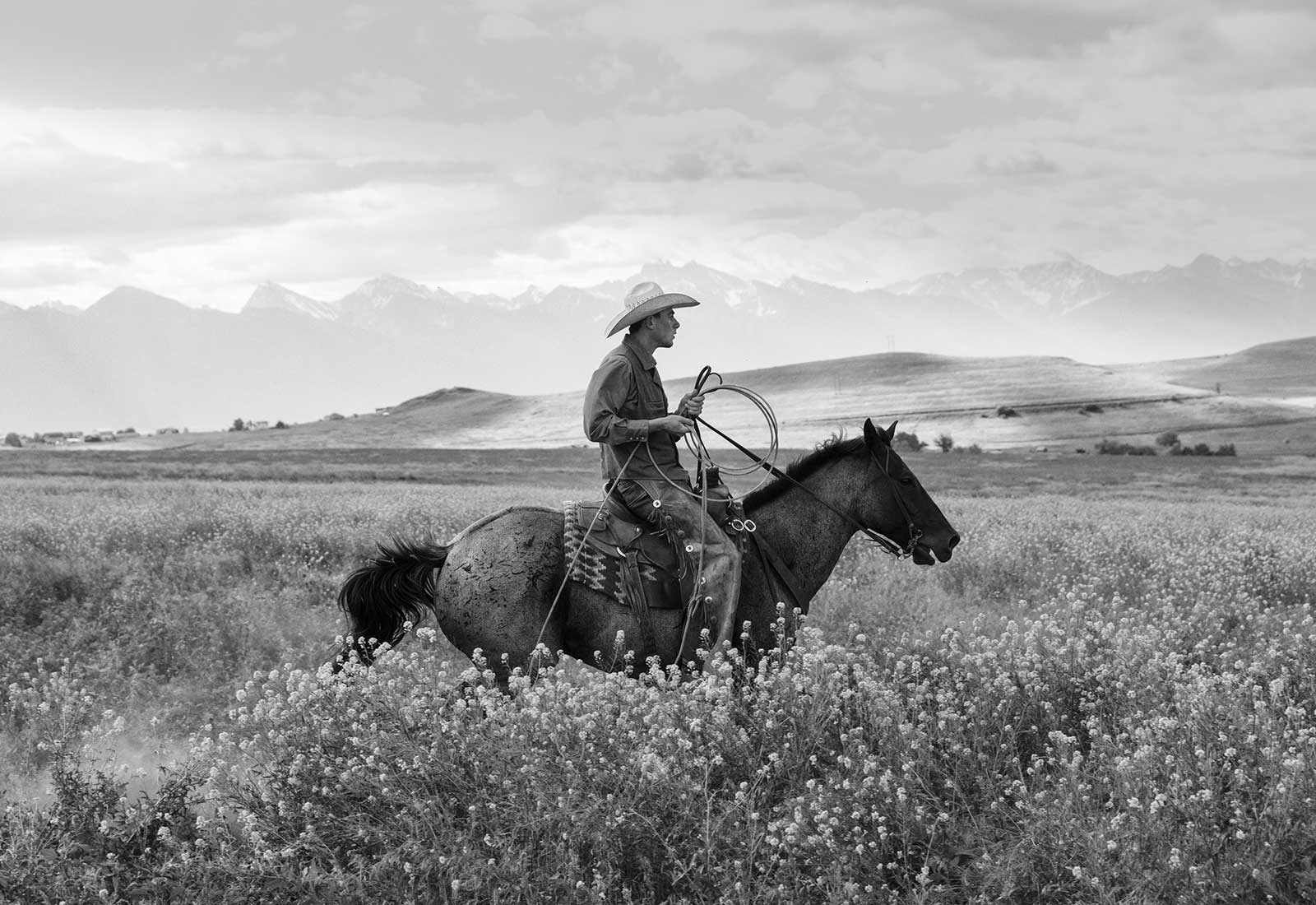
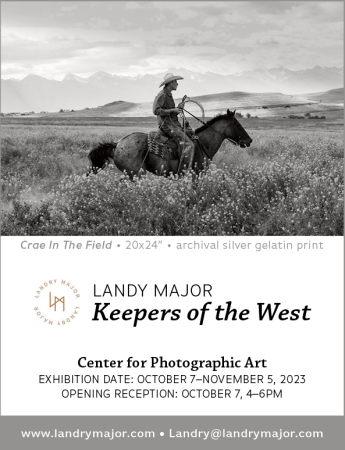
Landry Major, Crae In The Field, archival silver gelatin print, ed. 3 of 15, 20 x 24"
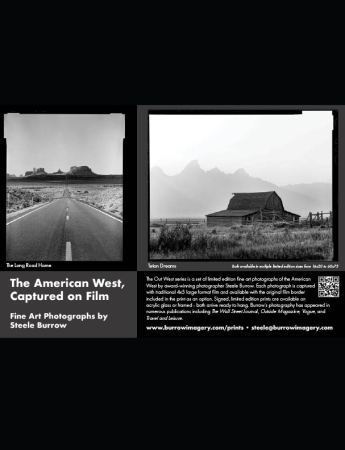
Steele Burrow of Steele Burrow Photography returned to his roots in film photography during the early stages of the pandemic in 2020 when he wanted a creative escape that avoided screens. “The discovery I eventually made—large format black-and-white film and traditional 4-by-5 film cameras—opened a new world for my creative passions,” he says. “With a combination of old school tools and a partnership with one of the more creative film labs still working today, I developed a process that combines the best of analog processes and modern printing to make prints that have a unique sense of authenticity and grit. It lent itself perfectly to photographs of the West.”
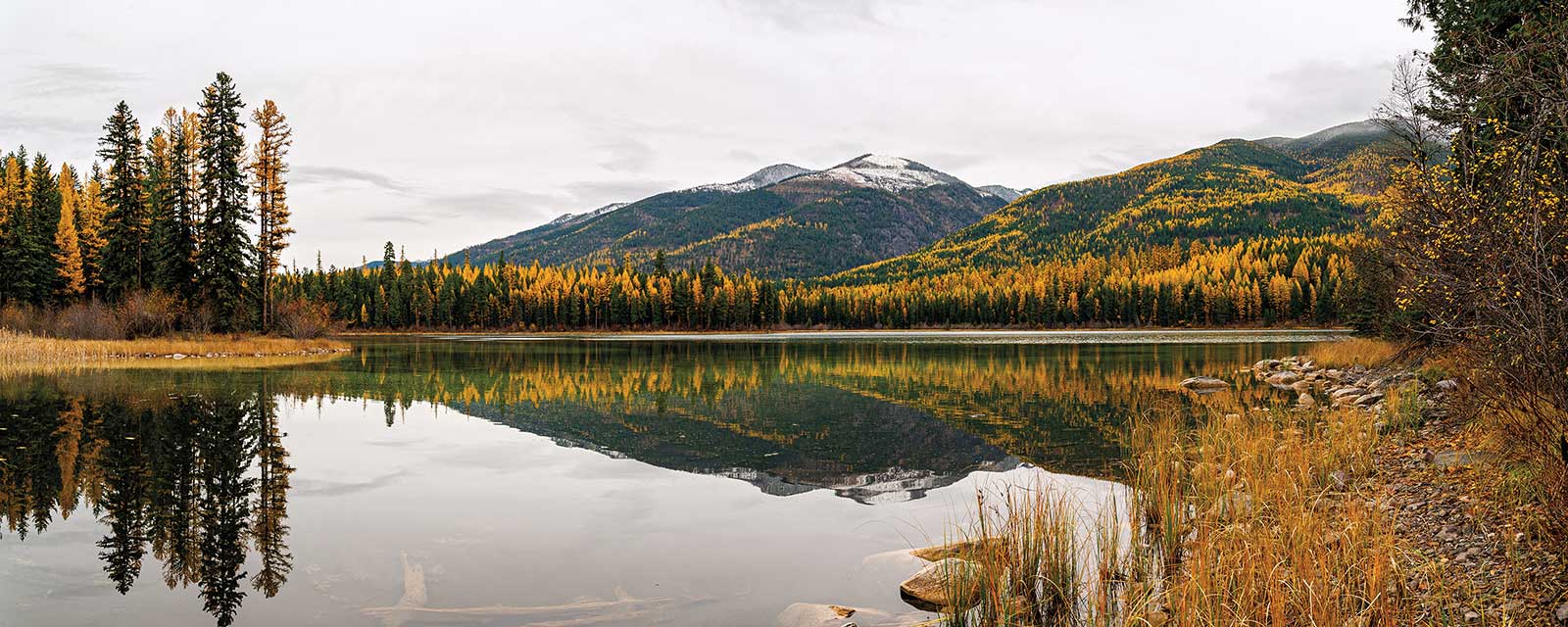
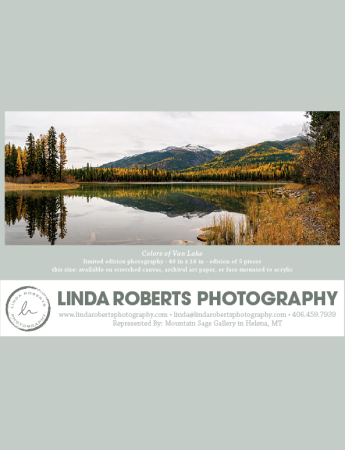
Linda Roberts Photography, Colors of Van Lake, limited edition photography, ed. of 5, 16 x 40", by Linda Washburn Roberts.
Landry Major’s Crae in the Field is part of her ongoing six-year series Keepers of the West. “My childhood summers were spent on a family dairy farm in Nova Scotia—waking at dawn and herding cows alone in the field, where the only sounds were the birds waking and the gentle murmurs of the cows. The smell of fresh milk and fields of grass were the touchstones of my youth,” says Landry. “Keepers of the West took me back to fields at dawn, this time on the family-run ranches of the American West.” For collectors of photography, she says, “I believe that collecting images of this genre in archival silver gelatin prints makes editions special. The old wet darkroom process done by a master printer is in keeping with the timeless quality of the subject matter. When you see the beauty in person it is so much more special than an inkjet print.”
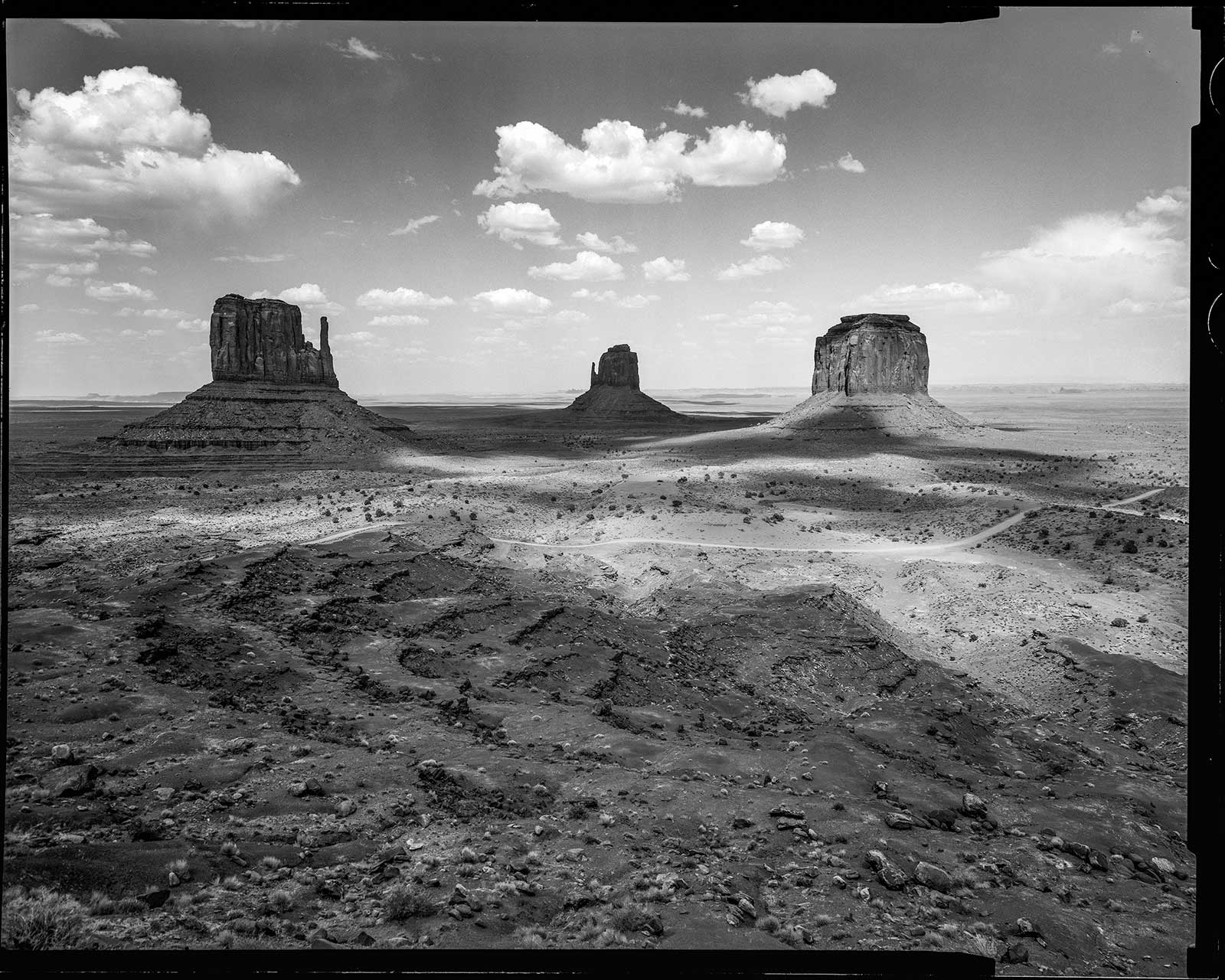
Steele Burrow Photography, Monuments Rising, multiple limited edition sizes from 16 x 20” to 60 x 75", by Steele Burrow.
For Linda Washburn Roberts of Linda Roberts Photography, spending time exploring with her camera “feeds my soul and inspires a deep appreciation for the endless cycle of natural life, from trees huge enough to hold centuries to the briefest of insects. This inspiration enables me to find beauty in humans’ desire and ability to discover our own spirituality in this world that surrounds us.” Primarily a nature photographer, Roberts looks for details in her subject matter as well as how light affects objects or a scene. “Those details inspire me to create images that tell a story or evoke an emotion. When you look at my work and can see that story, or a piece of your own truth, I feel I have succeeded as a photographer and artist.” —
Featured Artists & Galleries
John Doddato Photography
www.johndoddato.net
Landry Major
(818) 404-2723
landry@landrymajor.com
www.landrymajor.com
Linda Roberts Photography
Linda Washburn Roberts, Helena, MO
(406) 459-7939
linda@lindarobertsphotography.com
www.lindarobertsphotography.com
Niman Fine Art
125 Lincoln Avenue, Suite #116
Santa Fe, NM 87501
www.namingha.com
Steele Burrow Photography
steele@burrowimagery.com
www.burrowimagery.com
Powered by Froala Editor