As our special sections roll around every year, it’s always fun to see what artists and galleries will contribute to the section. It’s also fun to decide on a theme for the introduction. This year I’ve chosen three of my favorite animals portrayed in very different ways by three artists. In Maine, we used to go out in the spring to search for the first great blue heron of the season—a beautiful, graceful but nervous bird. Here in Santa Fe, ravens are everywhere, noisy, playful and elegant. Foxes…because they’re cute.
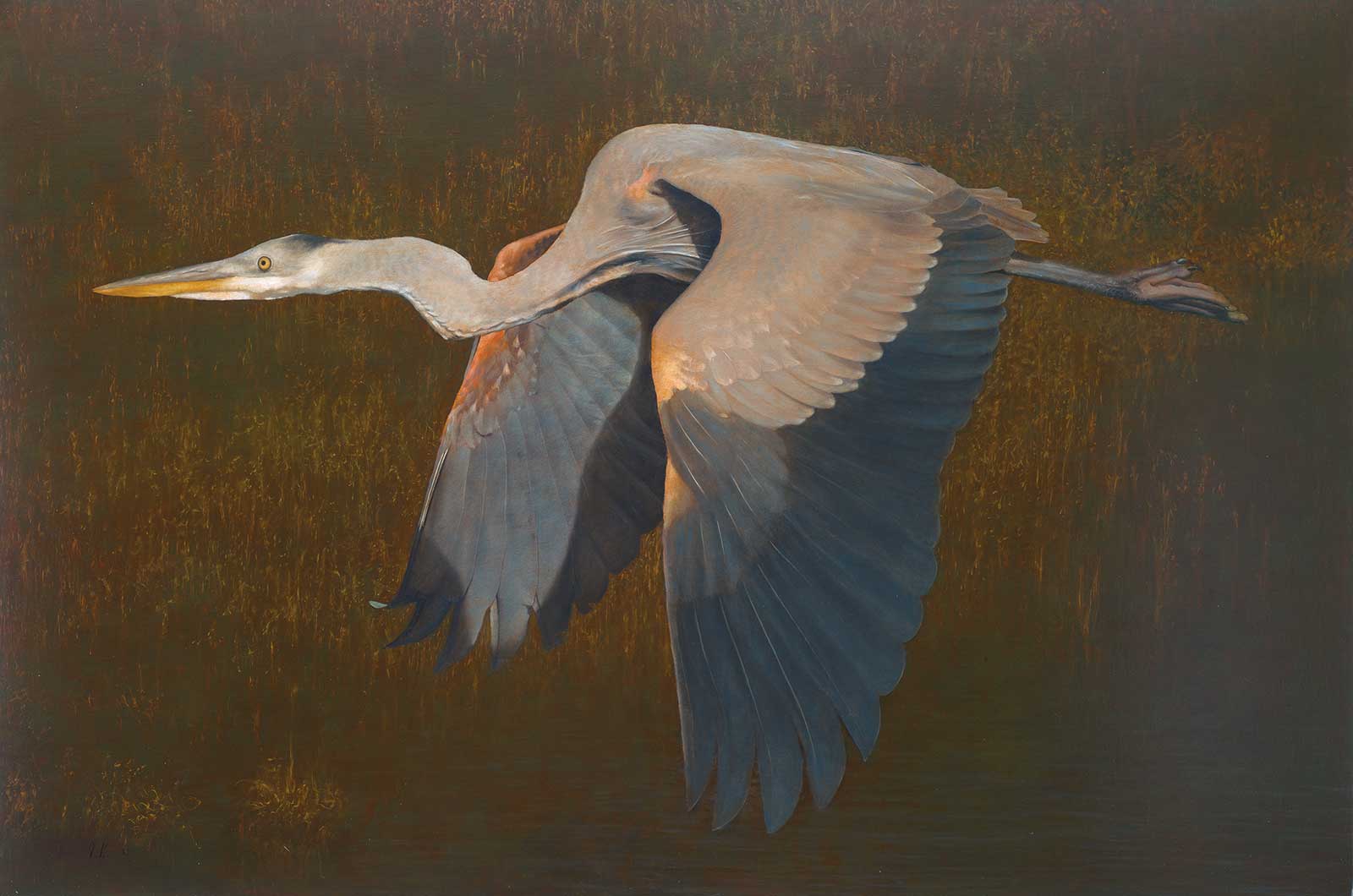
Winfield Gallery, Great Blue Heron, oil on linen, 40 x 60", by Jonathan Koch.
When Stina Folkebrant was an artist in residence here earlier in the summer, she painted with acrylic on embroidered bed sheets and on a huge panel outside her gallery. Her mural, 9th Migration, graces the walls of the National Nordic Museum in Seattle and she recently completed a mural, Hide & Seek, at the EU Commission Research Centre in Ispra, Italy.
In Raven’s Canyon, the Swedish artist was inspired by the story of the ravens Hugin (“thought”) and Munin (“memory”) that fly around the world collecting information for the god Odin. She relates, “They fly both over Midgaerd (home of the humans) and Asgaerd (home of the gods). With this in mind, I painted several ravens chatting and jumping around, exchanging information in a place they feel safe, a special canyon hidden away from humans, Raven’s Canyon. Imagine what secrets they hide and what knowledge they possess.”
Jonathan Koch, who was trained as an illustrator at the Rhode Island School of Design, says, “Nature continues to serve as both my instructor and my greatest inspiration.” The subtlety of color and texture in his still life and landscape paintings is evidenced in his golden-hour painting, Great Blue Heron. He has said, “Oil is my medium of choice to transmit light. It is the medium most suited to capture the unique qualities of nature.” Koch merely suggests the marshy habitat of the great bird as it glides ethereally through the air.
Henry David Thoreau described the color of the great blue’s wings as “a tempered blue as of the sky and dark water commingled.” The author and conservationist Delia Owens waxes poetic describing their having the “color of gray mist reflecting in blue water. And like mist, she can fade into the backdrop, all of her disappearing except the concentric circles of her lock-and-load eyes.”
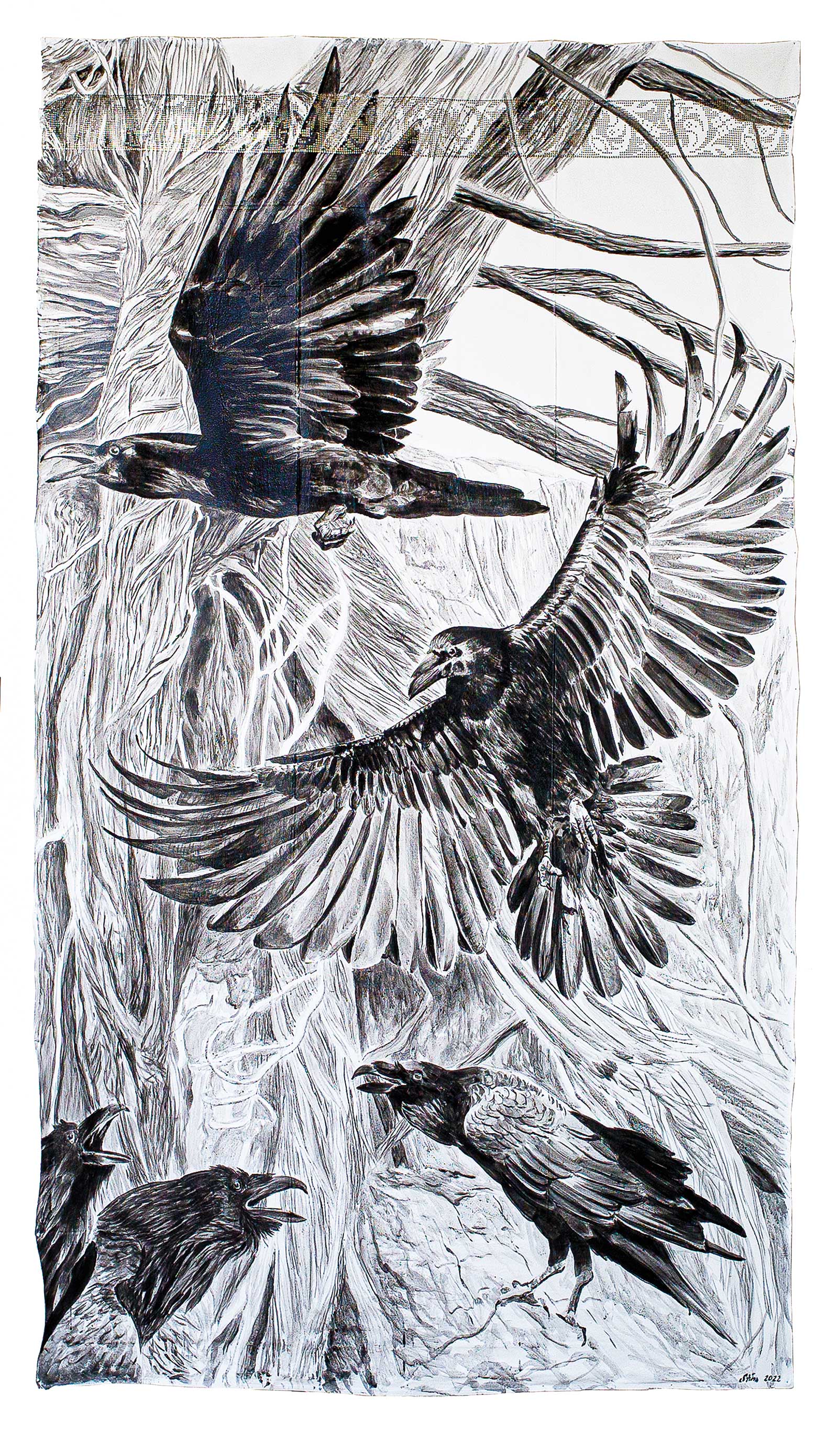
Edition One Gallery, Raven’s Canyon, acrylic on an old Swedish embroidered bedsheet, 87 x 43", by Stina Folkebrant.
Amy Lay paints her animals essentially devoid of context, energetically, almost abstractly, rendered in oil. Her life-long love of animals began near the Eagle Cap Wilderness of northeastern Oregon on the mountain ranch her family has had for five generations. In Fox Run, the sleek, bushy-tailed creatures leap through the air, the top two almost ghost-like in their speed.
Continue reading to hear from additional artists, galleries and museums that celebrate wildlife themed artwork. You’ll also get unique insights into collecting for the genre, whether adding to or beginning a collection.
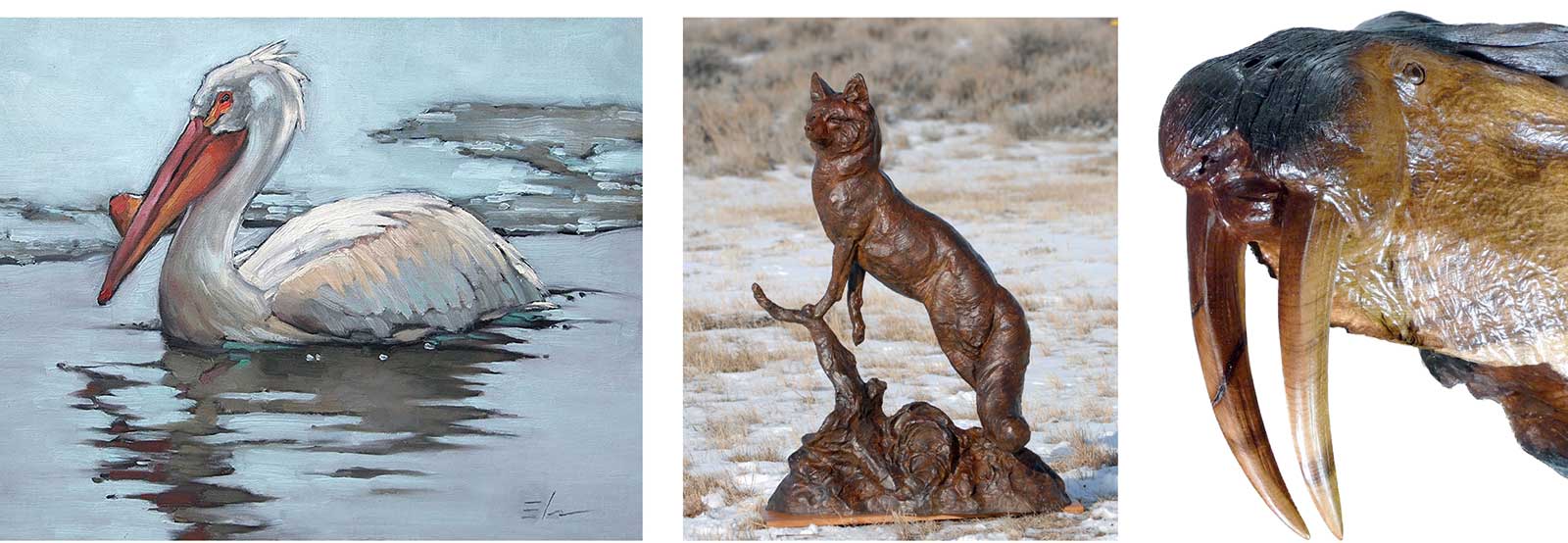
Elise Mahaffie, Stillness, oil on canvas, 11 x 14”; Legacy Gallery, Curious, bronze, ed. 15 (garden size), 48 x 35 x 17”, by Tim Shinabarger; Pacific Carvings, Clam Digger (detail), myrtlewood, 12 x 12 x 10”, by Terry J. Woodall.
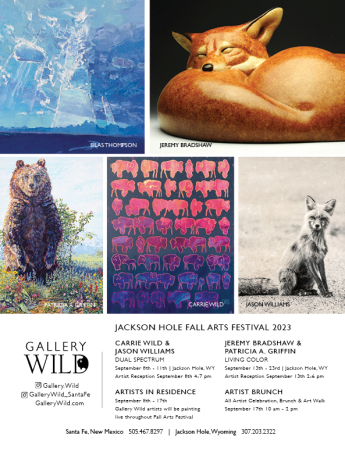
Wildlife art acts as an awe-inspiring window into the natural world, inviting viewers to connect with the untamed beauty that surrounds us. Gallery Wild artists are driven by an unyielding passion for nature, and their works embody the diverse and delicate ecosystems we must strive to protect. Both gallery locations, in Jackson Hole, Wyoming, and Santa Fe, New Mexico, house artwork that represents the surrounding wild landscapes and wild creatures that call those spaces home. “Our hope is that gallery visitors find refuge in our gallery space, reflect on their experiences in the outdoors and take home a piece of original artwork that serves as an endless reminder of those wild memories and the need to conserve open spaces,” says owner Carrie Wild. “This exchange allows the artwork in our gallery to become a powerful catalyst for change, inspiring viewers to take an active role in safeguarding our precious wildlife and the habitats they call home.”
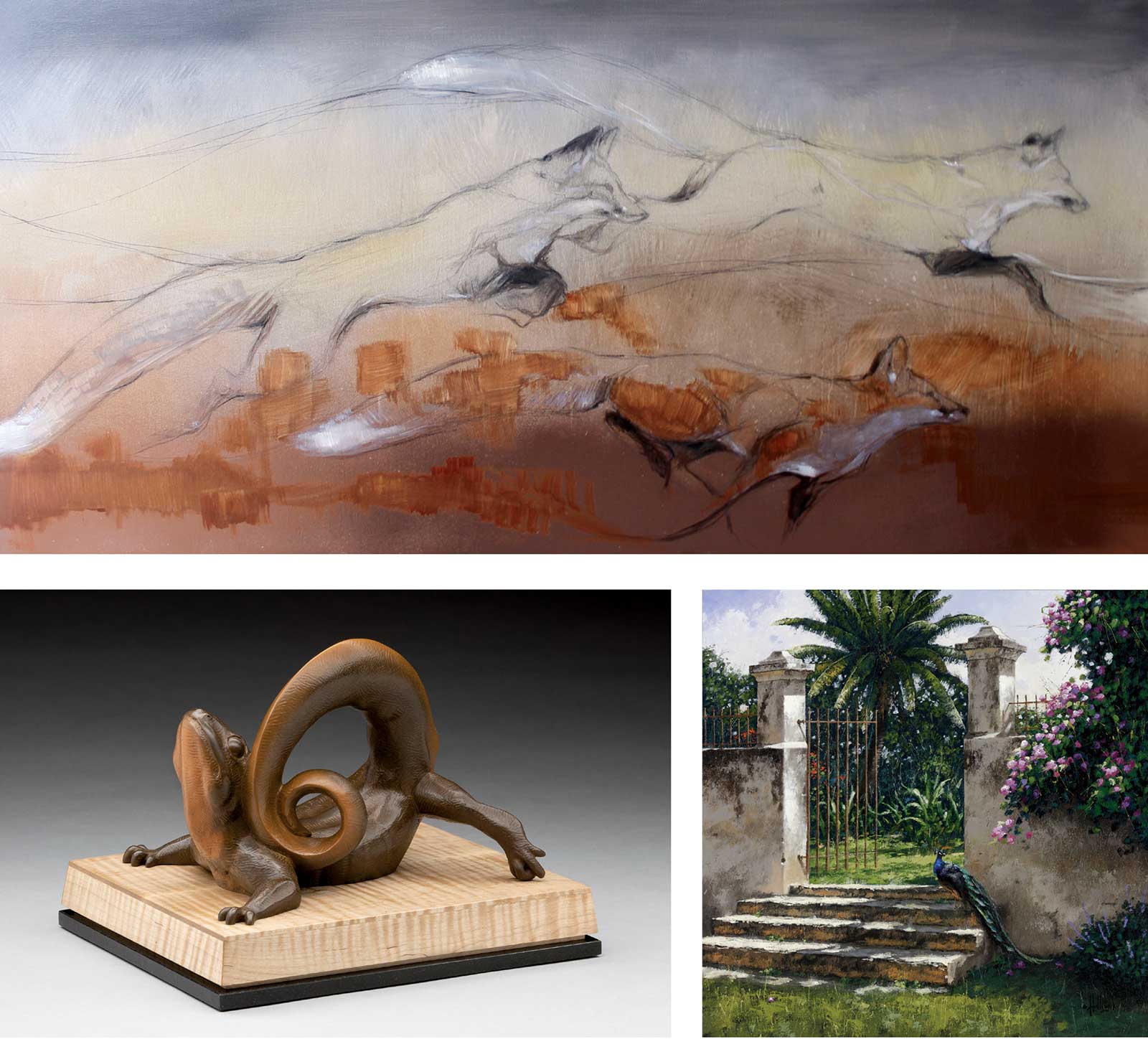
Top: Manitou Galleries, Fox Run, oil, 24 x 48”, by Amy Lay. Bottom: National Museum of Wildlife Art, Rough Skinned Newt, bronze, ed. of 15, 8 x 10½ x 9½”, by Tony Hochstetler; National Museum of Wildlife Art, The Sentinel, oil on linen, 24 x 24”, by George Hallmark.
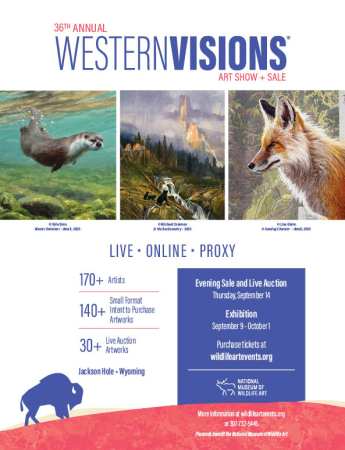
The National Museum of Wildlife Art is gearing up for another exciting edition of the annual Western Visions Art Show + Sale, held during the Jackson Hole Fall Arts Festival. More than 170 contemporary wildlife artists present diverse offerings beginning September 9. Artist George Hallmark presents his impressive oil painting The Sentinel, featuring a lush garden scene with a peacock in main focus, while Tony Hochstetler displays bronze work like Rough Skinned Newt—a realistic, yet minimal sculpture of the amphibian. There will also be more abstracted views of wildlife like in Amy Lay’s oil and charcoal painting Wapiti and Violet Greens—all pieces pictured here.
The festivities for Western Visions include a live auction on Thursday, September 14, from 6:30 to 7:30 p.m., and the intent-to-purchase sale that closes at 8 p.m. An after-party celebration will follow from 8:15 to 9:30 p.m. The exhibition will be on display through October 1.
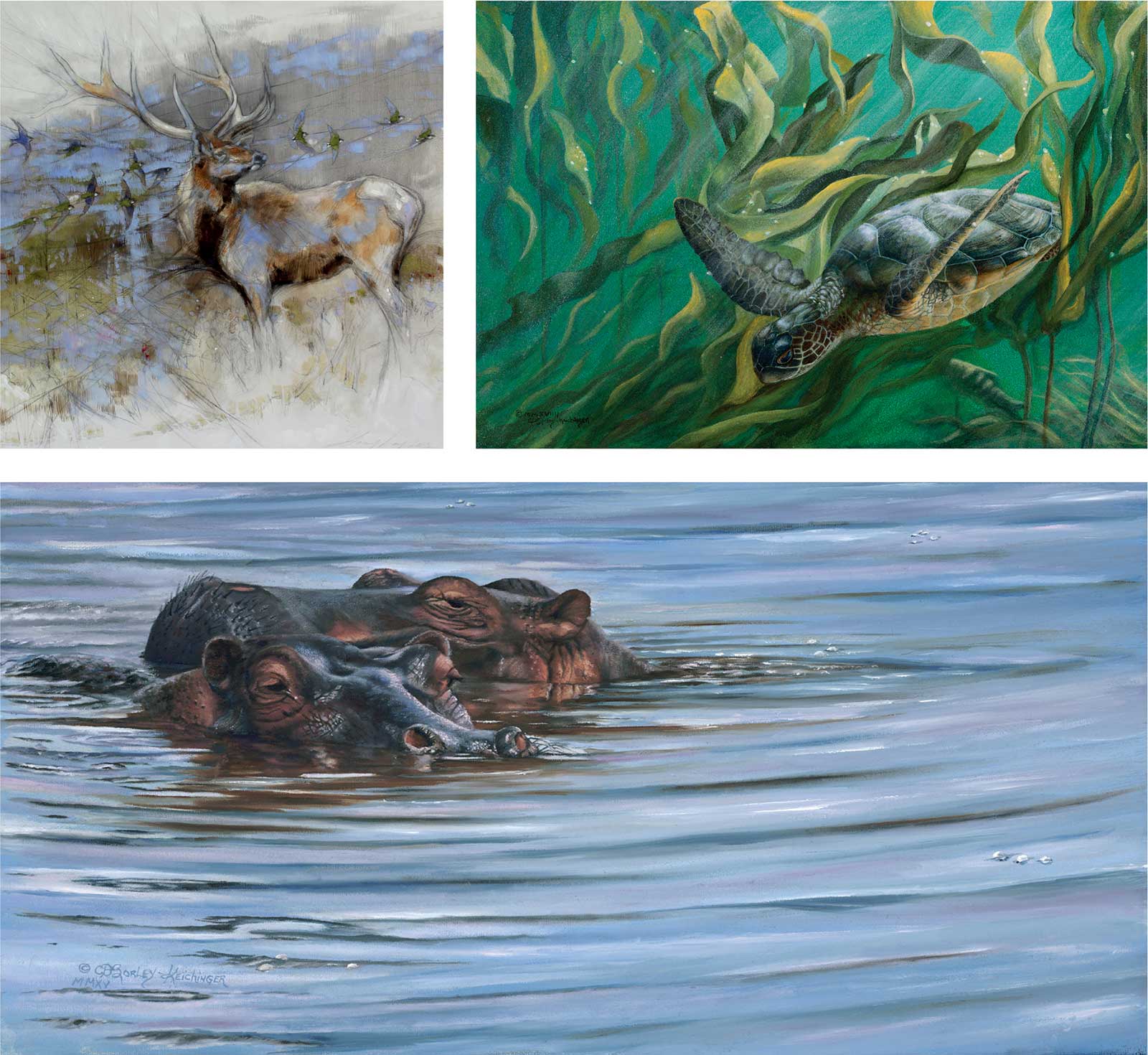
Top: National Museum of Wildlife Art, Wapiti and Violet Greens, oil and charcoal on canvas, 36 x 36”, by Amy Lay; Cindy Sorley-Keichinger, Seaweed Dance, acrylic 9 x 12” Bottom: Cindy Sorley-Keichinger, 10 or 20 Hippos, oil, 10 x 20”
“Wildlife artists employ various techniques to bring their subjects to life,” shares Legacy Gallery, based in Scottsdale, Arizona. “Ranging from hyper-realistic portrayals to impressionistic interpretations, each piece of artwork offers a glimpse into the wonders of the natural world. These creative endeavors not only serve as a celebration of wildlife but also allow individuals to develop a deeper connection with nature, fostering a sense of empathy and compassion towards the animal kingdom.” Legacy represents prominent wildlife artists like that of Tim Shinabarger, Paul Rhymer and Daniel Smith, all with artworks on display in this section.
When collecting wildlife art, Legacy Gallery feels that “artist and the collector stand at the intersection of creativity and conservation. It serves as a powerful tool to raise awareness, ignite emotions and inspire action towards the protection of our planet’s extraordinary biodiversity.”
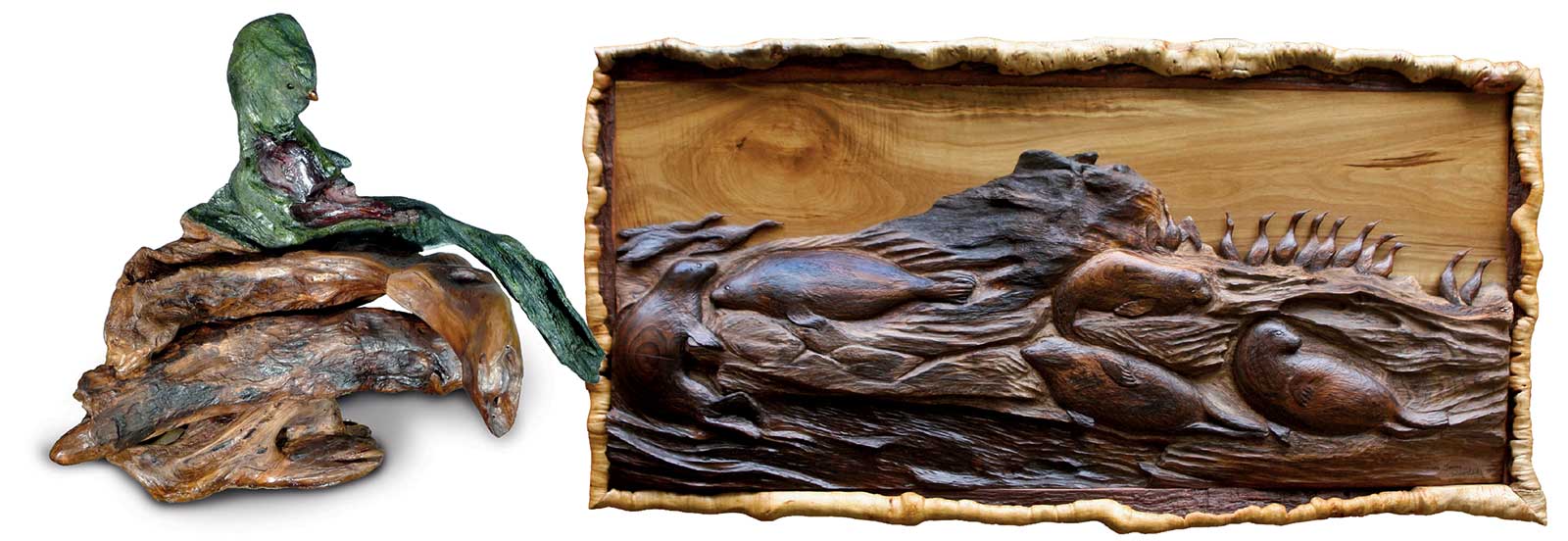
Pacific Carvings, Trogon King, myrtlewood, 16 x 24 x 12”, by Terry J. Woodall; Pacific Carvings, Lords of Lake Baikal, myrtlewood, 18 x 36 x 2”, by Terry J. Woodall.
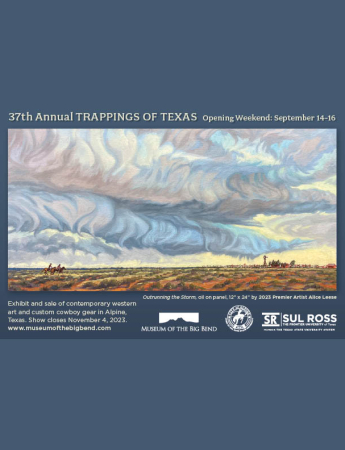
The Museum of the Big Bend in Alpine, Texas, is home to one of the premier contemporary Western art sales and exhibits in the country. For more than 35 years, Trappings of Texas has showcased the best there is to offer in art, created by the folks who live the cowboy life. Trappings features both artwork and cowboy gear side-by-side, creating an immersive Western experience for buyers and cowboy enthusiasts. “[The sale and show] offers the novice and seasoned buyer the opportunity to meet the artists who have works for sale and to support the show through their purchase,” says Mary Bones, director of the museum. “The show features both well established artists alongside up-and-coming artists in the beautiful Big Bend ranching country of Texas. A great weekend of events awaits you September 14 through 16!”
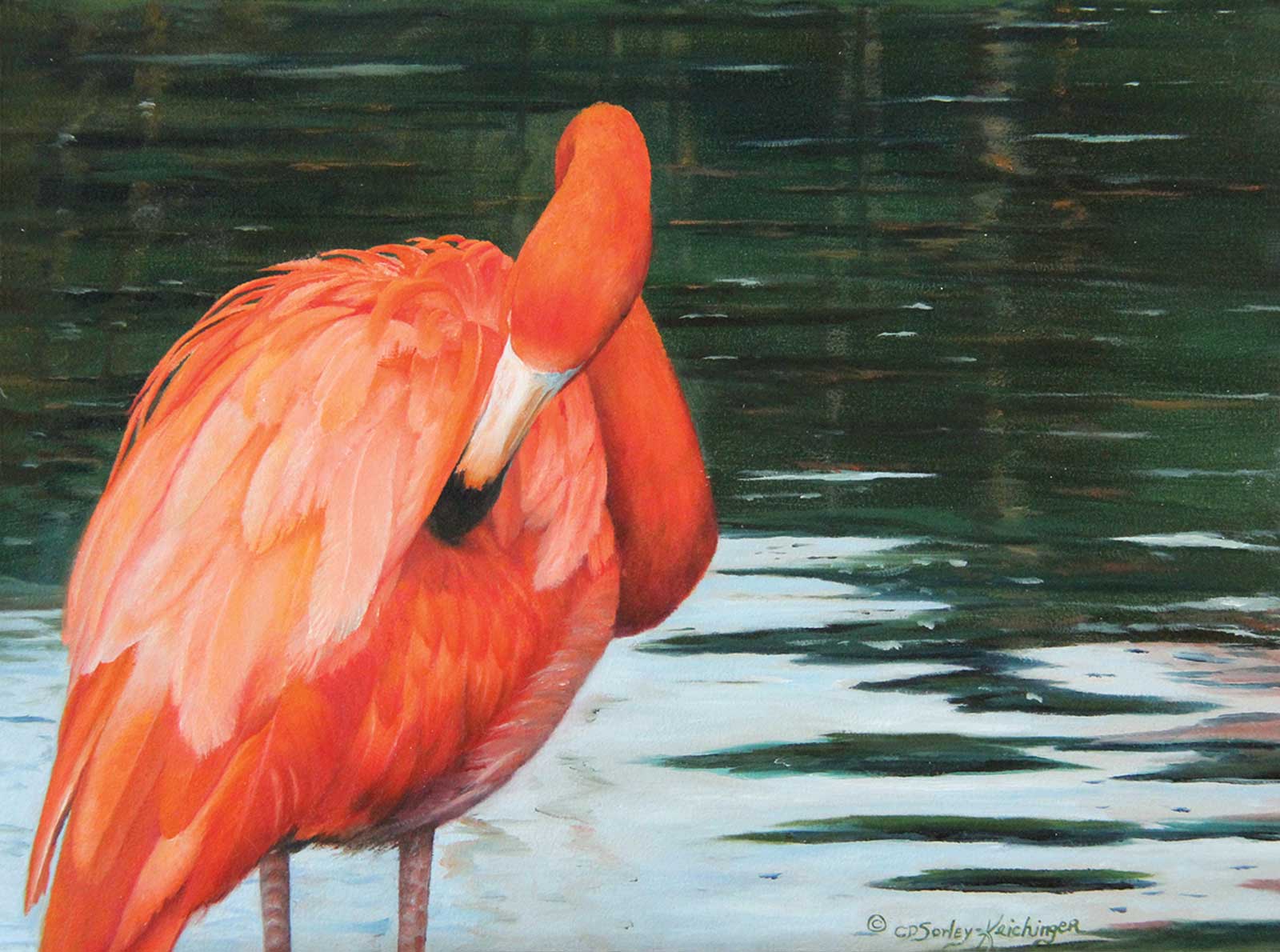
Cindy Sorley-Keichinger, South American Red, oil, 9 x 12”
“Since John James Audubon made the art of capturing creatures in the wild fashionable in the early 1800s,” says Maggie DeDecker, owner of Claggett/Rey Gallery, “the inclusion of wildlife art in collections today is essential. “Through countless mediums and approaches the thrill of catching a glimpse of exotic animals in their natural habitat has become a passion for [many] artists. Over the years in the gallery, we have come across some of the most passionate and expressive renditions of wildlife art. Three [of our artists] Tim Shinabarger, Hannah Harper and Steve Kestrel, show the wide chasm of options that attract collectors to this genre.”
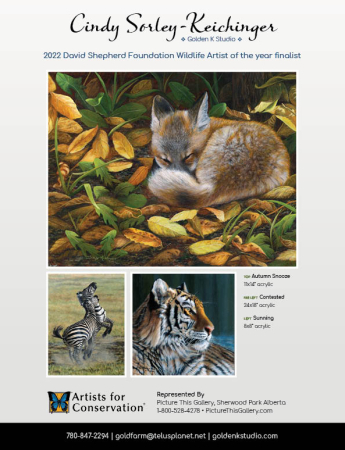
Artist Cindy Sorley-Keichinger is primarily a self-taught artist, finding passion in depicting landscape and wildlife subject matter from her Golden K Studio. She find these subjects calming and tries to project that in her work. “In today’s busy world, a little bit of calm and peace is a necessity,” she says. The main point of Sorley-Keichinger’s work is to impress upon others that we are not the only ones on the planet, and she would like people to see and enjoy images of our neighbors. “To see and know something is to take an interest in it,” she shares. “Urban life, and to a lesser degree, rural life, insulates us from the world around us. I hope to introduce people to what they do not see every day, and to see beauty in what they do see. You need to know something to care, and this leads to caring for the planet.”
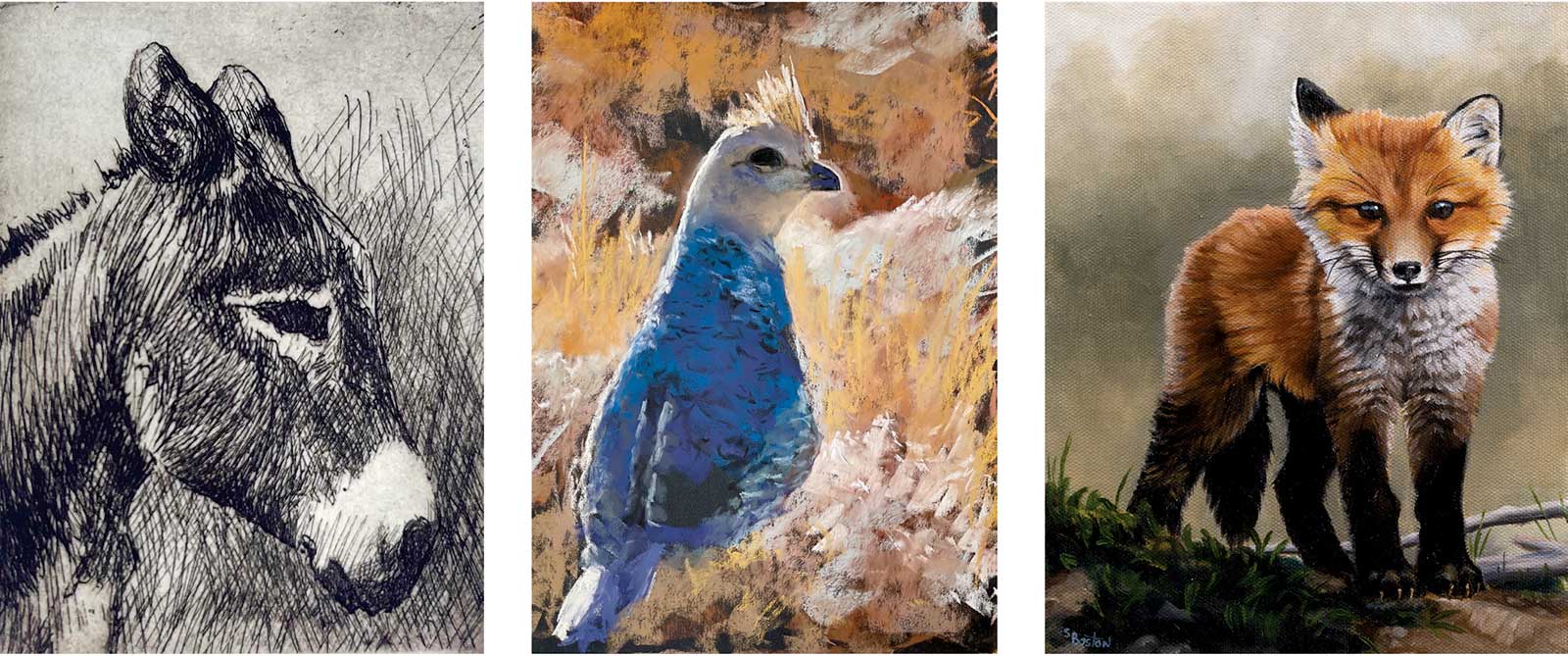
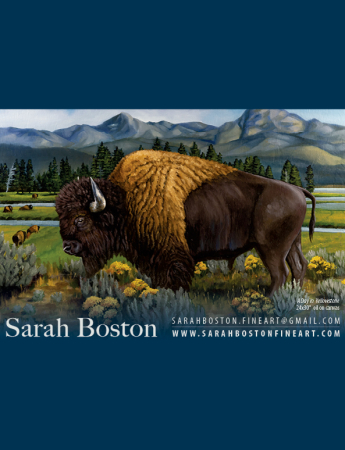
Museum of the Big Bend, Gracie, intaglio, 11 x 10”, by Chessney Sevier; Museum of the Big Bend, Texas Native, pastel on archival paper, 16 x 13”, by Carol Arnold; Sarah Boston, Young Tod, oil on canvas, 12 x 9”
As a Montana artist, Sarah Boston has had a lifelong love for the wildlife and landscapes of the Rocky Mountains, and the plains and valleys surrounding them. “Most wildlife pieces begin long before the brush touches the canvas; they start with an adventure into the animal’s territory,” Boston says. “I’m fortunate to live close to both Yellowstone and Glacier National Parks, so I’m never short of reference photos and inspiration. Back in the studio, it’s common for me to mix elements of multiple photographs. I like to take an animal from one scene and add it to a different landscape or change a pose with multiple photos. It’s all about creating a moment and trying to connect it to something within a viewer. My advice to collectors would be to look for those paintings that resonate within your soul. The most valuable pieces evoke emotions and wonder.”
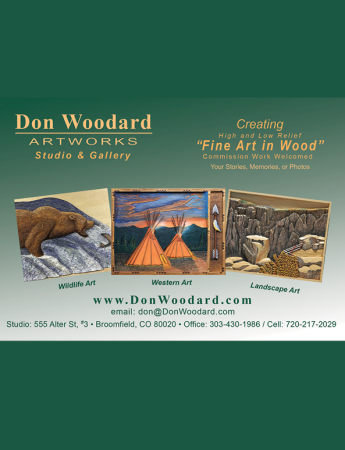
Don Woodard’s artwork is recognized as “fine art in wood,” a unique style of artwork that allows the artist to create both high and low relief work. He then complements the hand-carved work with detailed painting. The Olaf Wieghorst Museum & Western Heritage Center states, “Award-winning artist and sculptor Don Woodard combines carving and color to produce visual and functional art with Western and wildlife themes. Like Olaf, Don’s art is influenced by events and situations experienced firsthand.”
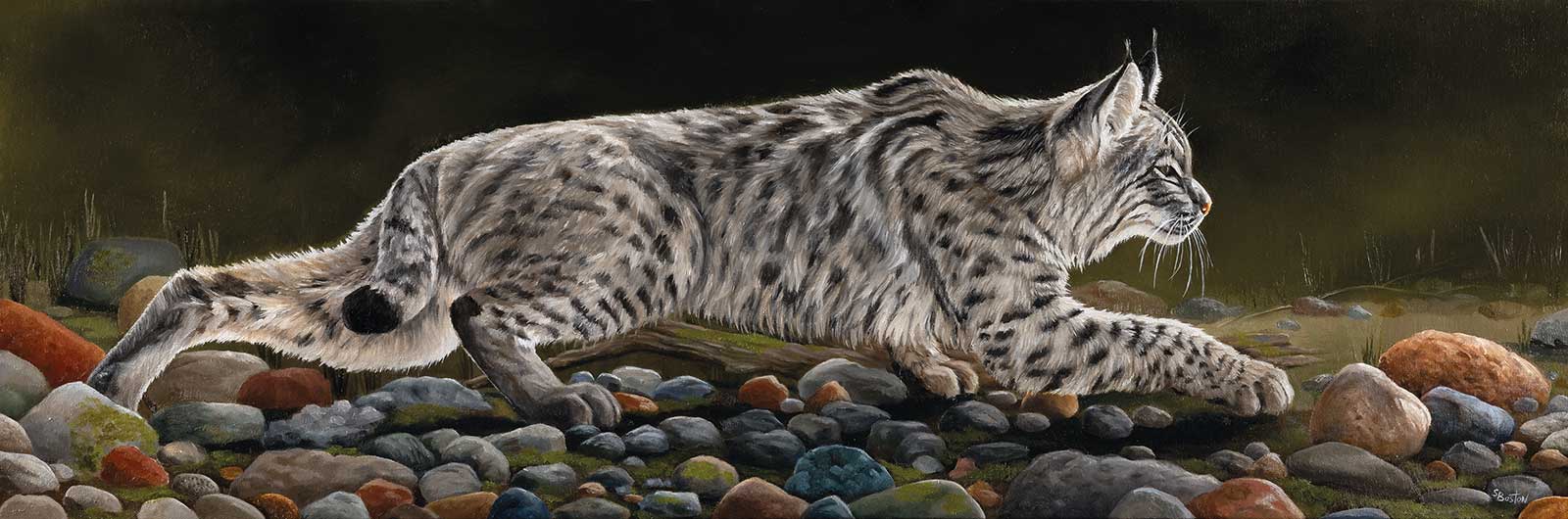
Sarah Boston, On the Prowl, oil on canvas, 12 x 36”
For instance, after spending a few days visiting Carlsbad Caverns National Park, in southern New Mexico, Woodard was inspired to create a high-relief artwork representing the walkway down into the cave, then, on the right side, create a scene inside of the cave. “Thousands of bats reside inside the cave, and from about the end of May through the middle of October, they take flight every morning and return each evening,” he explains. In his artwork titled Carlsbad Caverns, pictured within this section, he shows a few of the bats hanging from the ceiling of the cave.
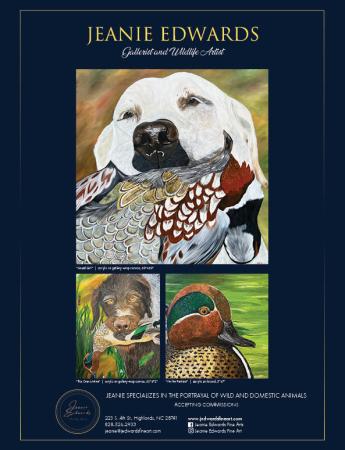
When Jeanie Edwards sits down at her easel to begin a new piece, she always begins with the animal’s eyes. She will tell you this is because that’s where her father taught her to look to really see an animal and its intentions. Unlike most wildlife artists, Edwards focuses almost solely on the animal instead of the background. She feels like you do not need to see what is going on around the animal to understand the subject’s story, to feel the emotions that are coursing through the animal. Edwards takes great pride in the fact that she is largely self-taught. She was “so bad” in college that her professor suggested she quit the program, which she ultimately did. Each time she sits down at her easel she thinks of him and smiles.
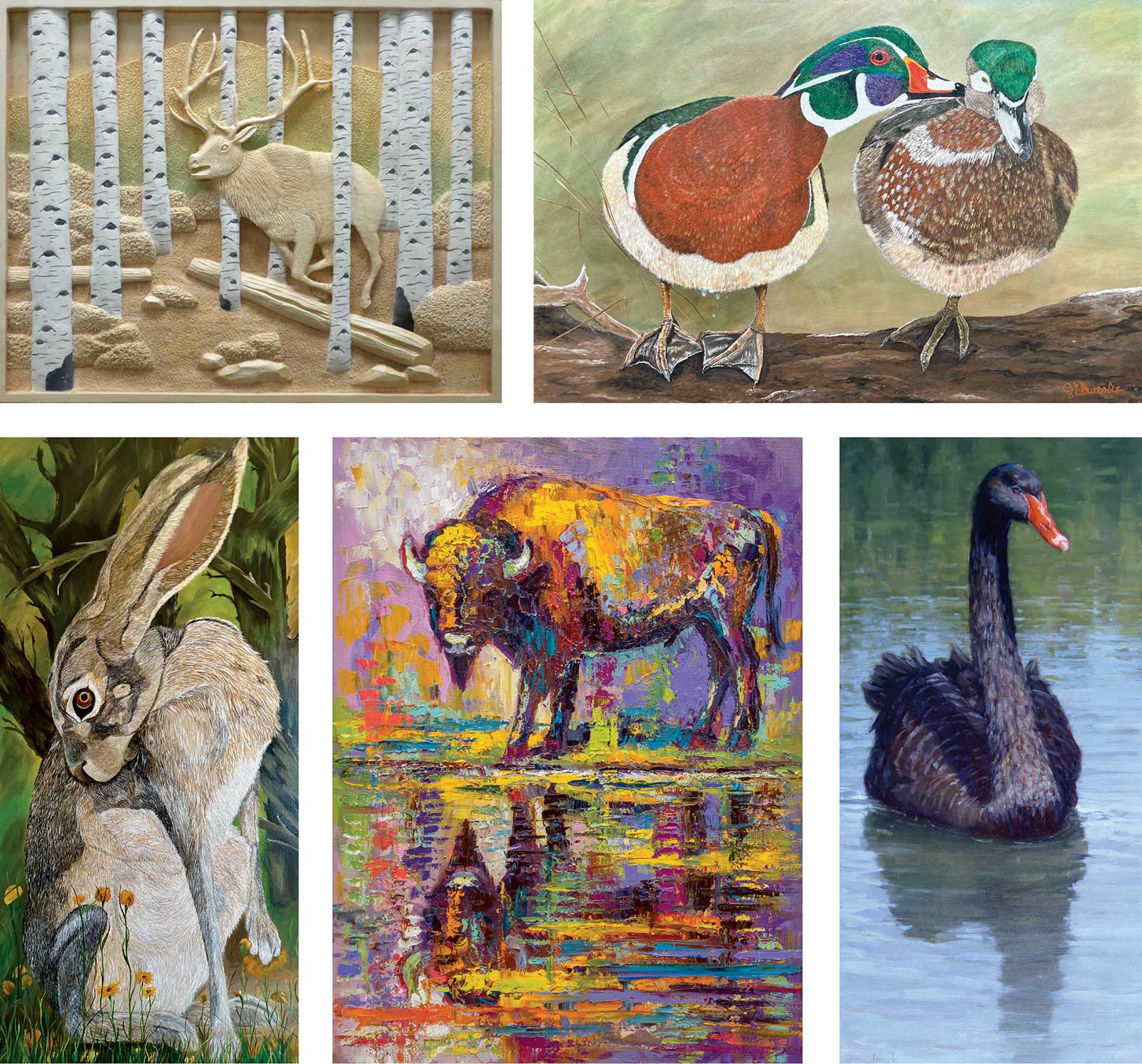
Top: Don Woodard, Run from the Burn, mixed media, 21 x 25½; Jeanie Edwards Fine Arts, Courting, acrylic on canvas, 24 x 36”, by Jeanie Edwards. Bottom: Jeanie Edwards Fine Arts, Frolicking in the Flowers, acrylic on canvas, 24 x 40”, by Jeanie Edwards; Barbara Meikle Fine Art, Reflecting Yellowstone, oil on canvas, 24 x 18”, by Barbara Meikle; Southeastern Wildlife Exposition, Black Beauty, oil, 36 x 18”, by Kathleen Dunphy.
“As an artist I feel like too much pressure is placed on the collector to ’choose the correct pieces,’” she says. “If you love a piece, it is the correct one—simple as that. I think what draws collectors to my body work is the fact that the animals’ emotions are palpable in their eyes. I have had collectors say, ‘I can feel the animal when I look at your work.’ That is the greatest compliment I could ever receive.”
You can find Edwards work on display at her gallery Jeanie Edwards Fine Arts and the Kelly Fitzpatrick Center for the Arts for the Alabama Wildlife Federation art show from September 28 to November 17.
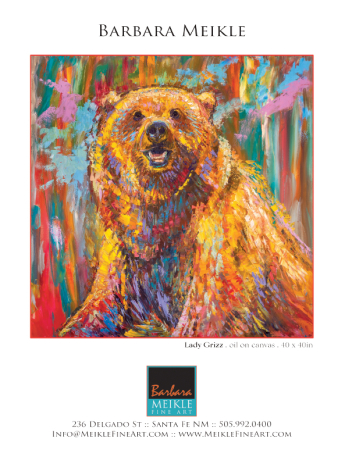
Last June, Barbara Meikle was able to go to Lake Clark National Park in Alaska where she spent a week photographing grizzly bears and eagles. “It was an amazing trip as the bears were everywhere doing what bears do before the salmon runs—clamming, grazing in the meadows, mating and generally looking wonderful and wild,” says the artist. “Each bear was an individual with special eyes, and a nose, and a stance that made them unique. I think this is really important as a wildlife painter to not generalize an animal’s features but to be as specific to that personality as you can.”
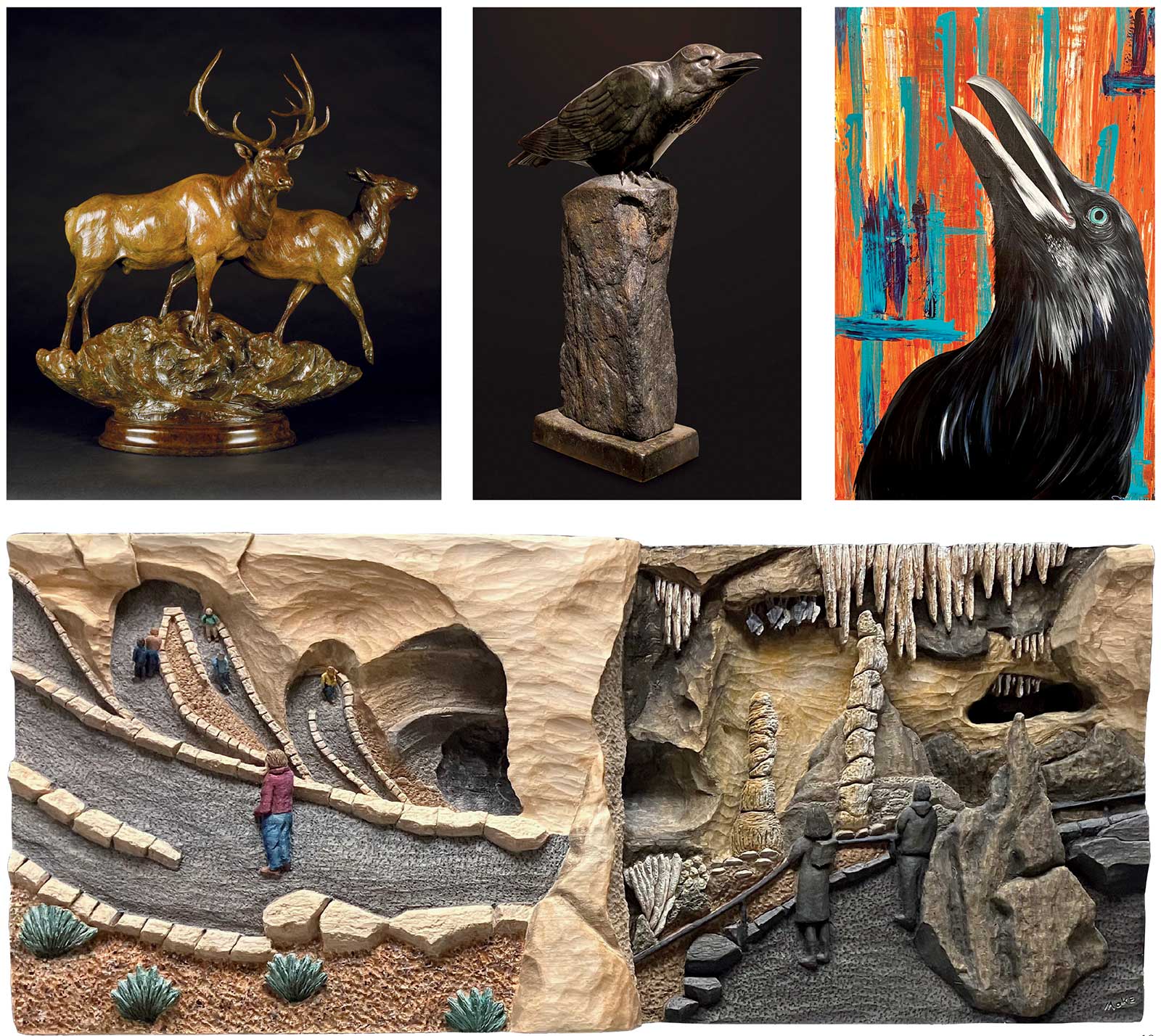
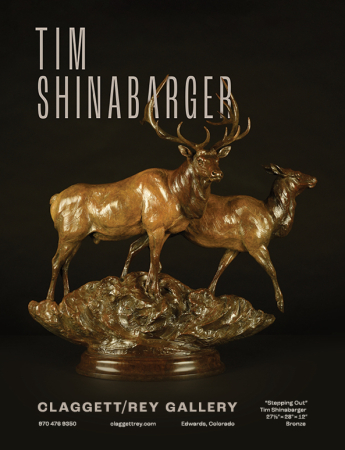
Top: Claggett/Rey Gallery, Stepping Out, bronze, ed. 5 of 24, 27½ x 28 x 12”, by Tim Shinabarger; Claggett/Rey Gallery, Trickster Transformation, bronze, ed. 1 of 21, 30 x 23 x 7”, by Steve Kestrel; Jeanie Edwards Fine Arts, TSALAGI, acrylic on canvas, 32 x 24”, by Jeanie Edwards. Bottom: Don Woodard, Carlsbad Caverns, mixed media, 11 x 25”
When collecting for the genre, Meikle says, “I always tell collectors to buy what you love. If the painting or sculpture resonates with you, it almost always continues to do so throughout the years, and you’ll never regret it!”
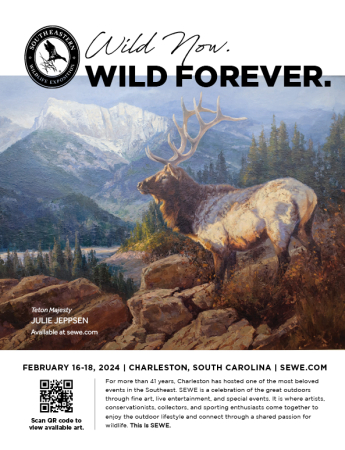
Every year in Charleston, South Carolina, the Southeastern Wildlife Exposition brings together a smattering of special programming and art displays in celebration of the great outdoors. “The largest event of its kind in the United States, SEWE promises attendees unforgettable experiences as we gather to share our collective love for wildlife and nature and recognize our role in protecting them for future generations,” says event representatives. SEWE brings you an incredible line up including conservation education, sporting demonstrations, after hours gatherings and, of course, art exhibits. Artists like Kathleen Dunphy display impeccable wildlife visions, as seen in her black swan piece Black Beauty, pictured here.
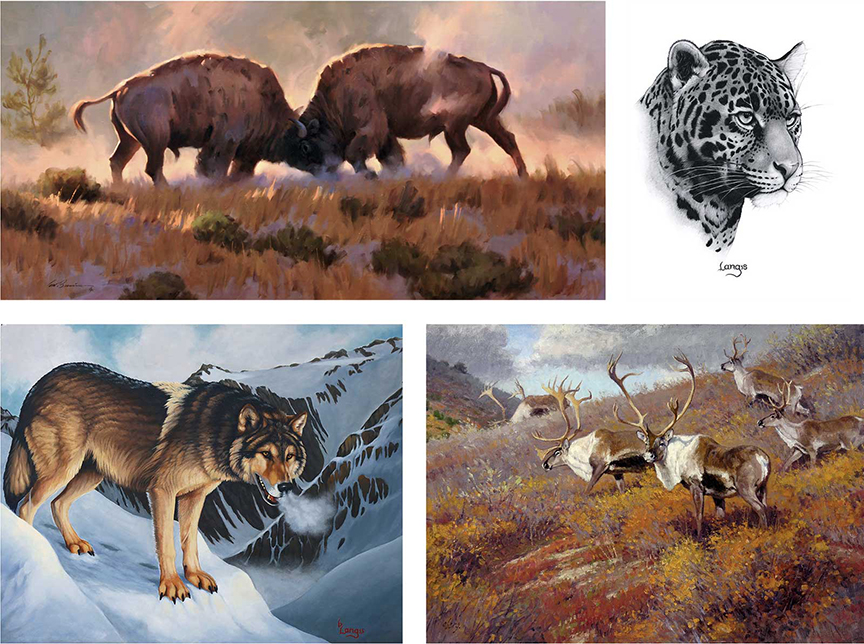
Top: The Woolaroc Museum & Wildlife Preserve, Buffalo Shuffle, oil, 25 x 50”, by Tom Browning; Bill Langis, Locked On, pencil on Strathmore, 14 x 11” Bottom: Bill Langis, Living on the Edge, oil on gesso board, 18 x 24”; The Woolaroc Museum & Wildlife Preserve, Alaskan Tapestry, oil on linen, 22 x 30”, by Ralph Oberg.
“These elegant, inky birds are striking counterparts to their more common white cousins,” says Dunphy. “I was taken with their unusual beauty and couldn’t wait to figure out how to convey their coloring and grace on canvas. Their cadmium red beaks and eyes provide just the right pop of color to contrast with their dark feathers. In painting these beautiful creatures, I learned just how many colors compose their ‘black’ plumage, an iridescent rainbow of red and blues and purples.”
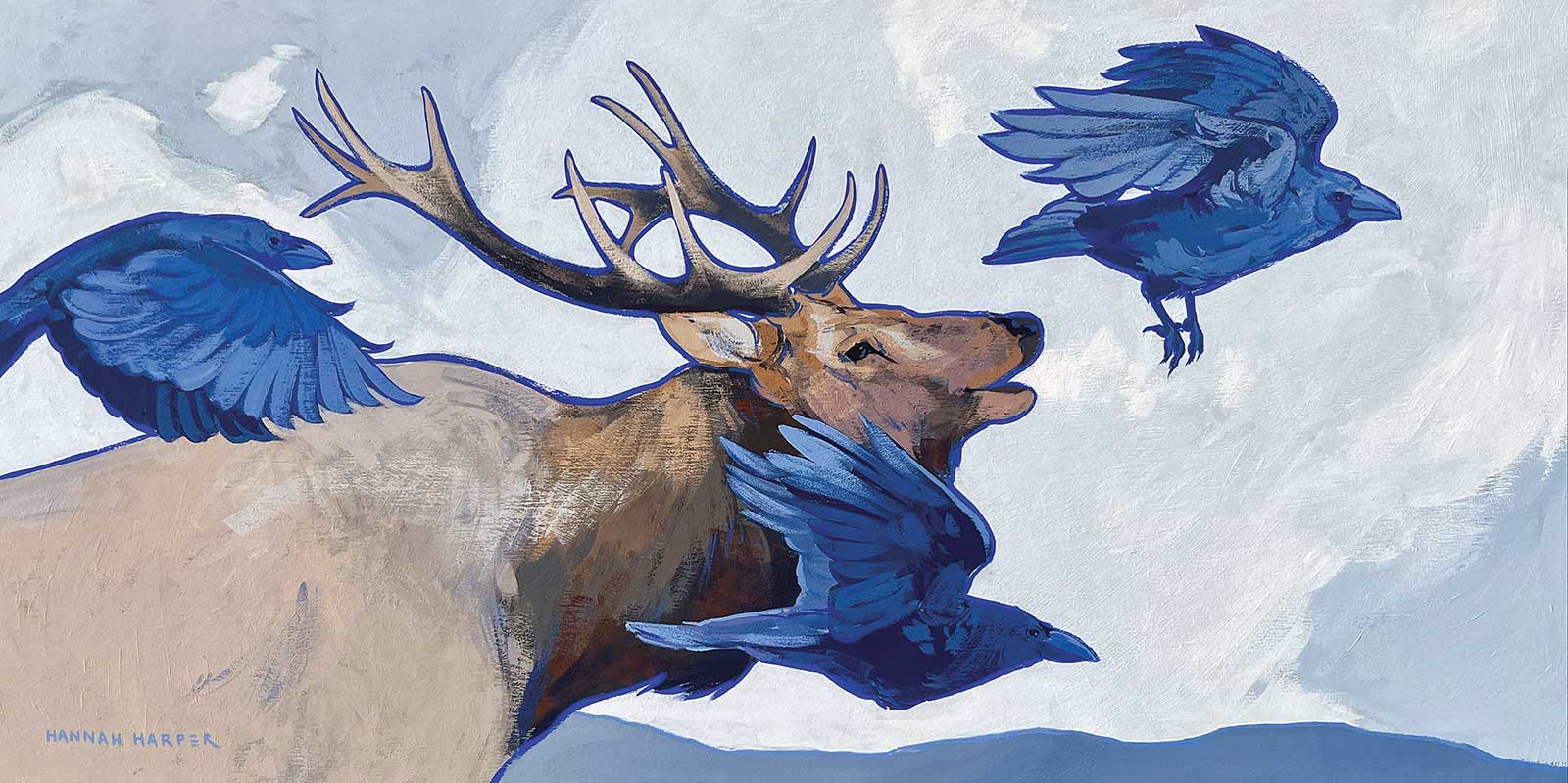
Claggett/Rey Gallery, Love Song, acrylic on birch, 12 x 24”, by Hannah Harper.
John Powell, SEWE president and CEO, advises when collecting, “Where possible, get to know the artist personally. They can often become as much a part of your life as your collection. A purchase can be an emotional process and not simply transactional. The appreciation and respect flows both ways.”
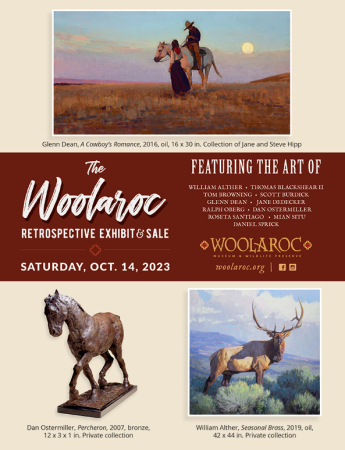
The Woolaroc Retrospective Exhibit & Sale, opening October 14 through December 31, and hosted at the Woolaroc Museum & Wildlife Preserve, is designed to be a breathtaking fusion of talent and passion. Each artist draws inspiration from their unique perspectives, backgrounds and experiences, bringing forth a diverse range of subjects and styles. From the stirring wildlife depictions of Tom Browning, Ralph Oberg and William Alther to the masterfully crafted sculptures of Dan Ostermiller and Jane DeDecker, their creations embody a profound dedication to artistic expression. Through their art, they capture moments of beauty, evoke emotions and connect people through the pieces they create.
When embarking on the journey of collecting art, Dean Zervas, chair of the Woolaroc, says, “It is essential to immerse yourself in the stories and narratives depicted in each piece. Look beyond the aesthetics, understand the artist’s vision, and take the time to explore the context and significance of the artist’s work.” Kathy Zervas, co-chair, also encourages collectors to “engage with galleries, attend exhibitions and interact with fellow collectors and experts. Art is a personal experience, and your collection should reflect your own appreciation and connection.”
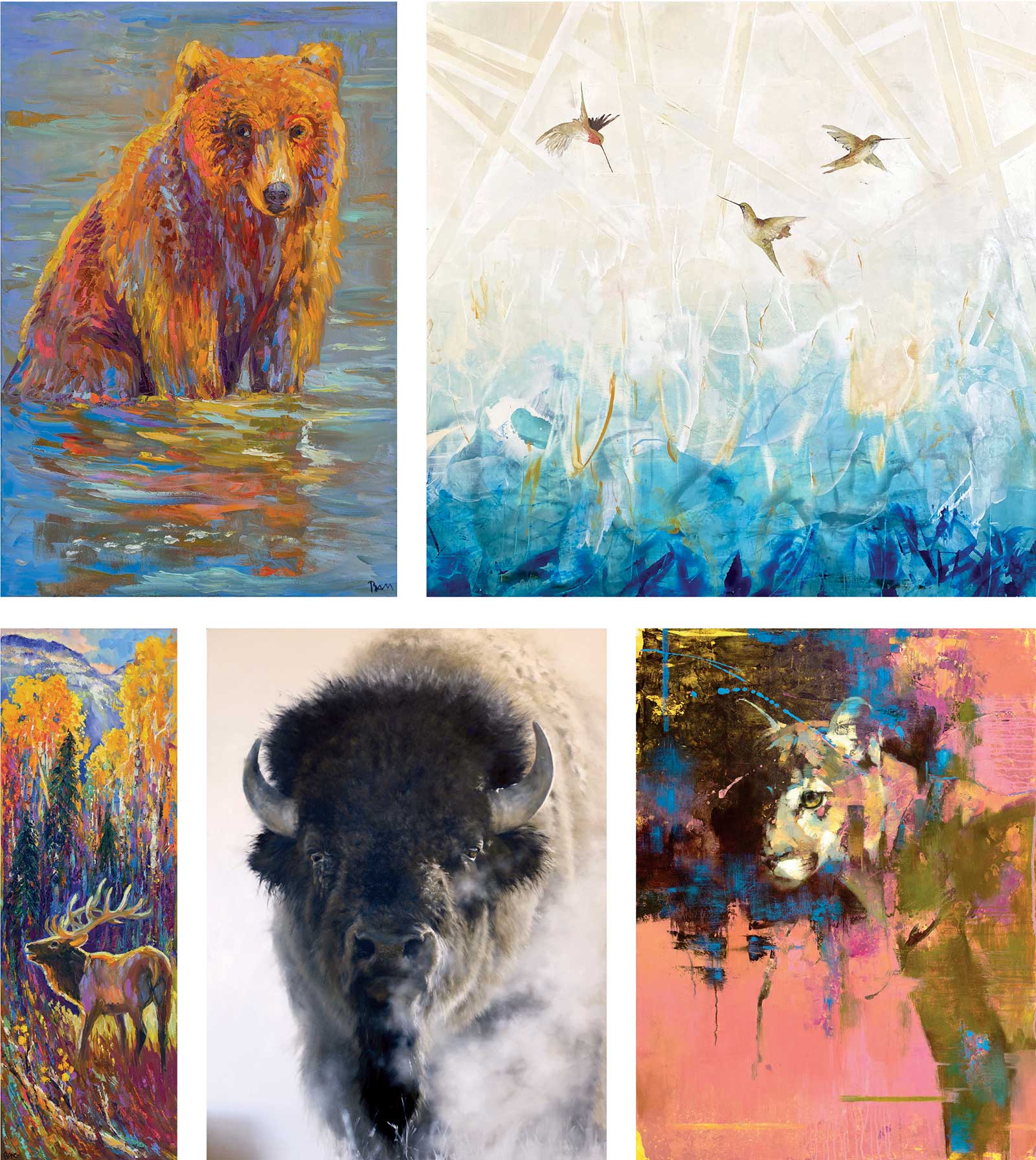
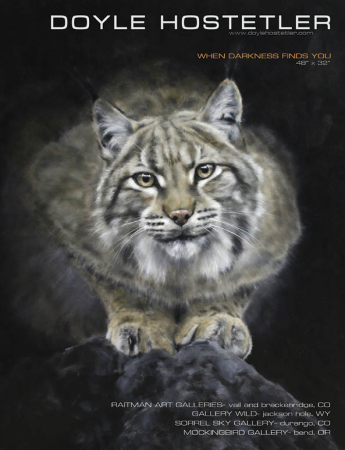
Top: Barbara Meikle Fine Art, Bathing Beauty, Lake Clark, oil on canvas, 30 x 20”, by Barbara Meikle; Gallery Wild, Sailing, oil on panel, 36 x 36”, by Jenna Von Benedikt. Bottom: Barbara Meikle Fine Art, Fall Classic, oil on canvas, 36 x 12”, by Barbara Meikle; Gallery Wild, Thunderheart, oil on canvas panel, 72 x 54”, by Doyle Hostetler; Gallery Wild, What the Cat Knows #2, mixed media, 40 x 30”, by Julie T. Chapman.
Artist Bill Langis is a fine artist whose passion, unique vision and creativity have all earned him the reputation as a talented, visual storyteller. Throughout the span of four decades, he has been honing his artistic craft and has become well-versed in multiple mediums and subject matter. When visiting Yellowstone National Park back in 1990, he began to dabble in wildlife art, quickly curating an extensive body of work. Langis received hundreds of awards, from cash prizes in East Coast exhibitions, to best in show. While his experience is vast, he continually strives to evolve, learn and challenge his abilities so he can be a better artist than he was one painting ago. Currently, Langis offers fine art originals and prints for sale directly on his website. He is working on numerous paintings in three different categories as well as a set of black and white wildlife drawings.
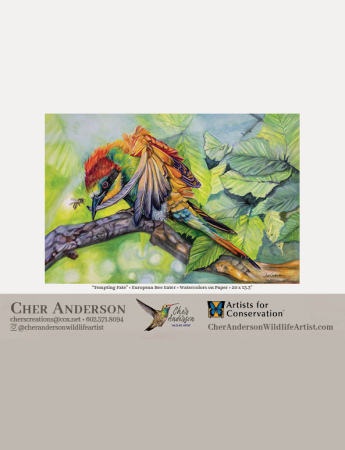
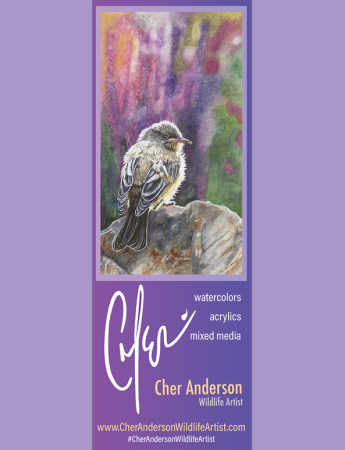
Cher Anderson has been an artist for the majority of her life, revolving through the years. “I have found an incredible joy in painting animals both in nature and by using my design background to create images that I use as references for paintings—combining nature in all its forms. Even if they are not coherent, they are beautifully designed to make sense.” Anderson’s new style has a unique and stunning end result executed with precise detail and light.
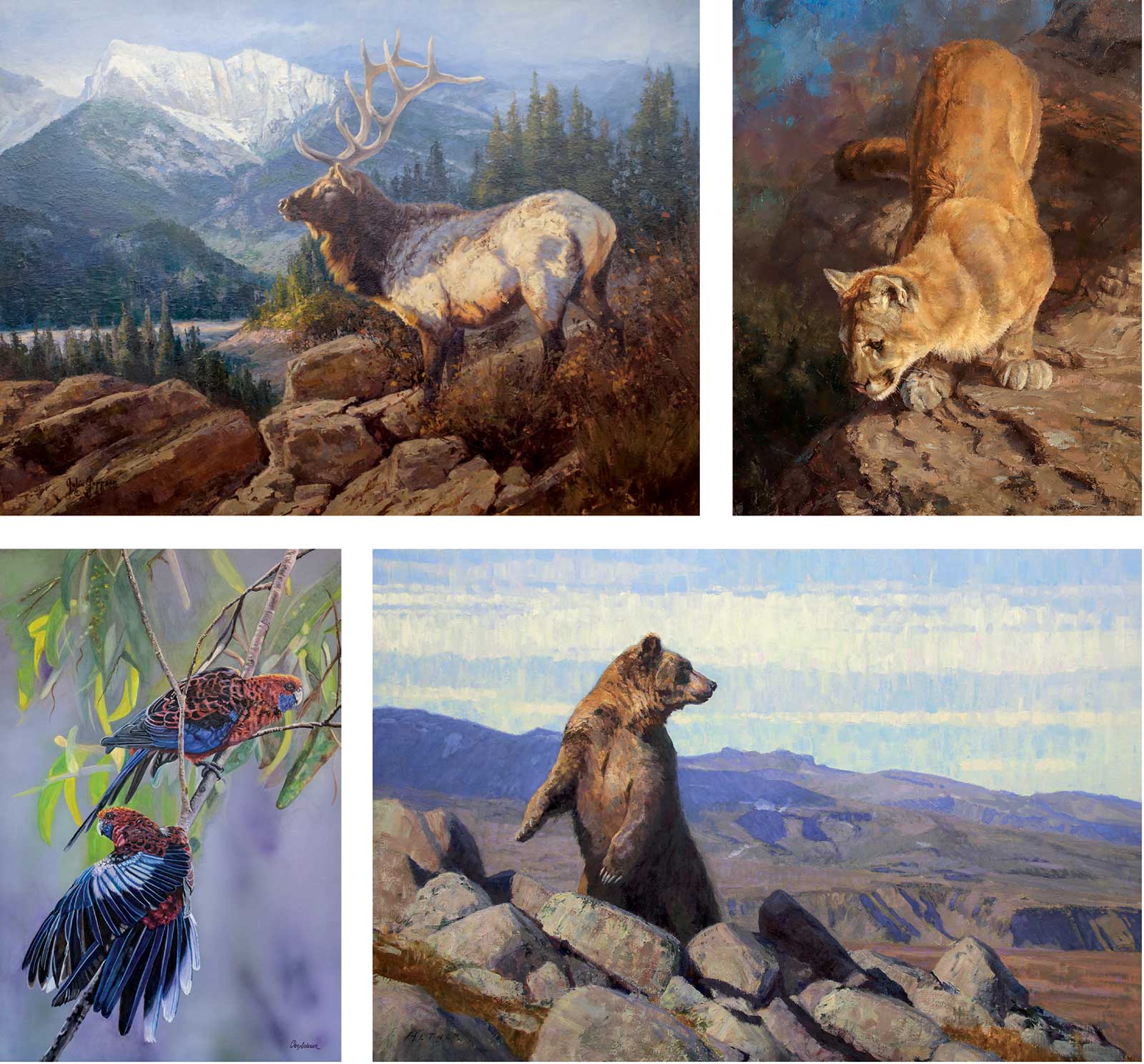
Top: Southeastern Wildlife Exposition, Teton Majesty, oil on canvas, 30 x 40”, by Julie Jeppsen; Southeastern Wildlife Exposition, Perched and Pretty, oil on linen, 30 x 24”, by Julia Rogers. Bottom: Cher Anderson, Aussie Rosellas, acrylic on board, 24 x 36”; The Woolaroc Museum & Wildlife Preserve, Forage Interrupted, oil, 24 x 36”, by William Alther.
Keep an eye out for her incredible new works which will take her art in a new and exciting direction.
“Being a graphic designer for a good part of my life has definitely influenced the way I interpret shapes and how I see things,” says artist Elise Mahaffie. “I love bold marks, strong colors, and unique and simplistic compositions, which I believe gives the viewer a feeling of easy discovery and control and can then focus on details. A carefully designed page can engage a viewer to take their time, stay a while and enjoy. I want that same feeling to come through in my paintings. I’ve always had a love for animals and often feel spellbound momentarily when I come upon an animal in the wild. When first spotted, I feel that initial exhilaration, then, I just stop, quiet down and watch. I hope the viewer finds a similar connection with the animals I paint.”
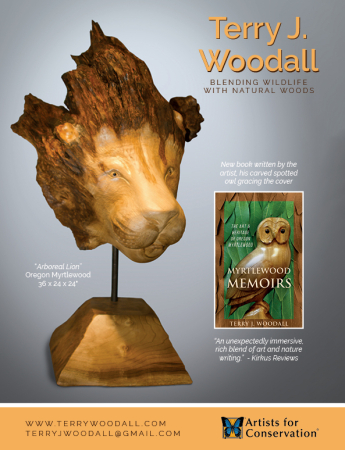
Pacific Carvings owner Terry J. Woodall shares that his creative inspirations arose from studies of the natural world, both from his Oregon forest studio and from excursions around the world. His work overlaps the expressions of trees in the wood they produce, and visions of wildlife figures that emerge from this arboreal world. Since these works are difficult or impossible to replicate, each art piece that finds its way to homes or museums is indeed a one-of-a-kind acquisition. “Achieving my success in the art world would never have occurred if I weren’t at home in Myrtlewood country with its abundance of wildlife,” he shares.
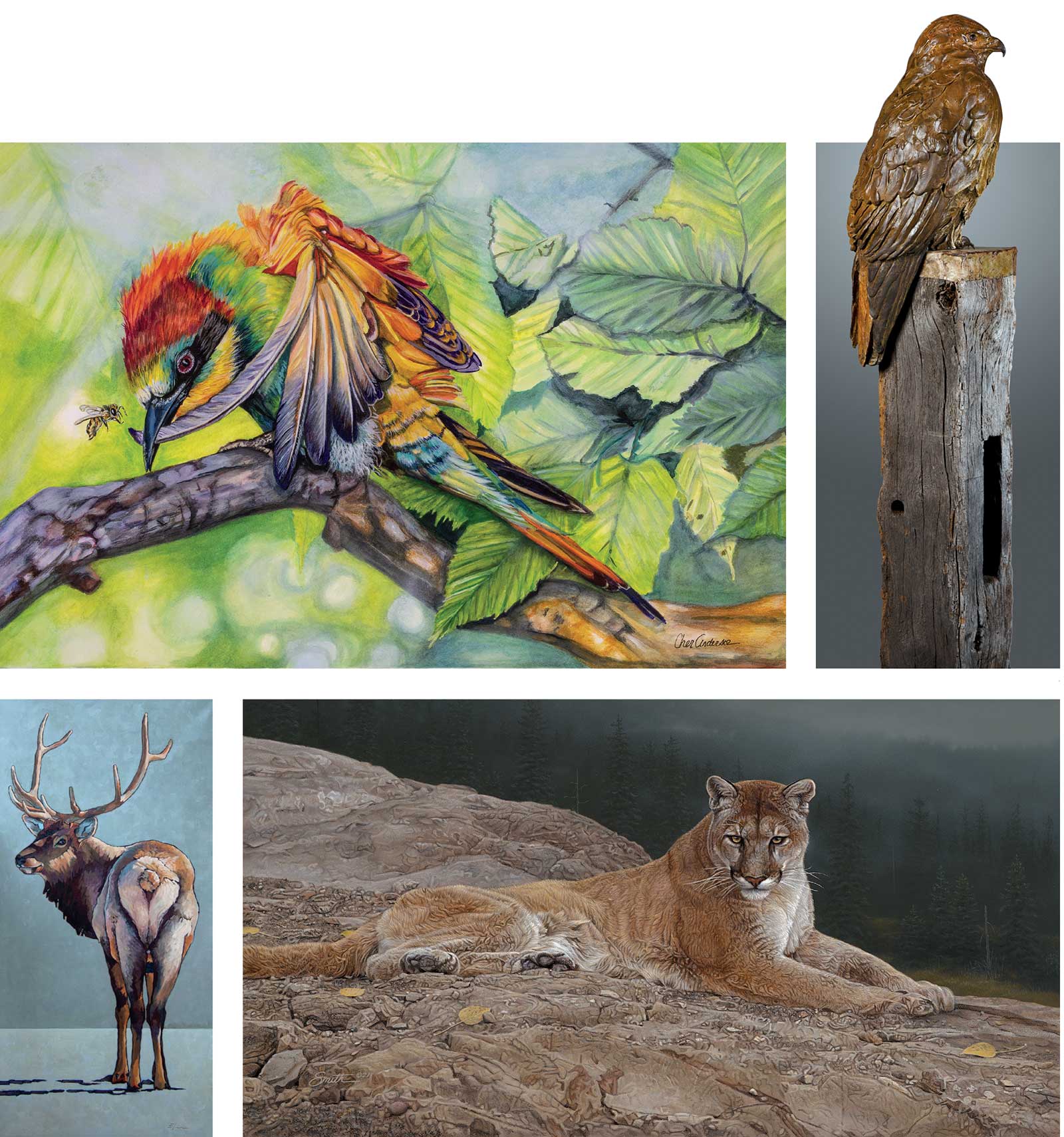
Top: Cher Anderson, Tempting Fate – European Bee Eater, watercolor on paper, 20 x 13”; Legacy Gallery, Chicken Hawk in Repose, bronze, ed. 24, 65 x 145 x 12”, by Paul Rhymer. Bottom: Elise Mahaffie, I Spy, oil on canvas, 48 x 24”; Legacy Gallery, Formidable Focus, oil, 17 x 30”, by Daniel Smith.
Woodall’s art career blossomed with an Artists for Conservation Fellowship Award, which gave him the opportunity for an artistic field study to Lake Baikal, Russia. The focus of this adventure, the seventh AFC Flag Expedition, was the freshwater seals that inhabit Lake Baikal. Many creations depicting these unusual pinnipeds resulted from Terry’s observations. Following this 2008 event were many years of supporting and exhibiting with the AFC foundation. —
Featured Artists & Galleries
Barbara Meikle Fine Art
236 Delgado Street, Santa Fe, NM 87501
(505) 992-0400
info@meiklefineart.com
www.meiklefineart.com
Bill Langis
Colorado Springs, CO
(603) 608-7265
billlangisfineart@gmail.com
www.billlangisfineart.com
Cher Anderson
(602) 571-8094
cherscreations@cox.net
www.cherandersonwildlifeartist.com
Cindy Sorley-Keichinger
(780) 847-2294
goldfarm@telusplanet.net
www.goldenkstudio.com
Claggett/Rey Gallery
216 Main Street, Suite C-100, Edwards, CO 81632
www.claggettrey.com
Don Woodard
Broomfield, CO
(720) 217-2029
don@donwoodard.com
www.donwoodard.com
Edition One Gallery
729 Canyon Road, Santa Fe, NM 87501
(505) 982-9668
www.editiononegallery.com
Elise Mahaffie
(301) 325-4899
elisemahaffie@mac.com
www.elisemahaffie.com
Gallery Wild
80 W. Broadway, Jackson, WY 83001
(307) 203-2322
203 Canyon Road, Santa Fe, NM 87501
(505) 467-8297
www.gallerywild.com
Jeanie Edwards Fine Arts
(828) 526-2933
jeanie@jedwardsfineart.com
www.jedwardsfineart.com
Legacy Gallery
7178 E. Main Street, Scottsdale, AZ 85251
(480) 945-1113
www.legacygallery.com
Manitou Galleries
123 Palace Avenue, Santa Fe, NM 87501
(505) 986-0440
www.manitougalleries.com
Museum of the Big Bend
400 N. Harrison Street, Alpine, TX 79832
(432) 837-8145
www.museumofthebigbend.com
National Museum of Wildlife Art
2820 Rungius Road, Jackson, WY 83001
(307) 733-5771
www.wildlifeart.org
Pacific Carvings
North Bend, OR
(541) 756-0752
www.terrywoodall.com
terryjwoodall@gmail.com
Sarah Boston
Billings, MT
(406) 696-2720
www.sarahbostonfineart.com
Southeastern Wildlife Exposition
P.O. Box 20635, Charleston, South Carolina 29413
(843) 723-1748
www.sewe.com
Stina Folkebrant
Gustavsberg, Sweden
www.stinafolkebrant.com
The Woolaroc Museum & Wildlife Preserve
1925 Woolaroc Ranch Road, Bartlesville, OK 74003
www.woolaroc.org
Winfield Gallery
Dolores between Ocean and 7th, Carmel-by-the-Sea, CA 93921
(831) 624-3369
art@winfieldgallery.com
www.winfieldgallery.com
Powered by Froala Editor
Powered by Froala Editor
Powered by Froala Editor