No figure in American history casts as long a shadow as the cowboy.
No figure has fueled entire genres of literature, cinema, visual art, music, toys and fashion for more than 100 years. Not farmers, not teachers or doctors or astronauts or soldiers or politicians or pirates or all of them put together can match the cultural impact of the cowboy. That image.
But the popular cowboy image has become more imagined than real.
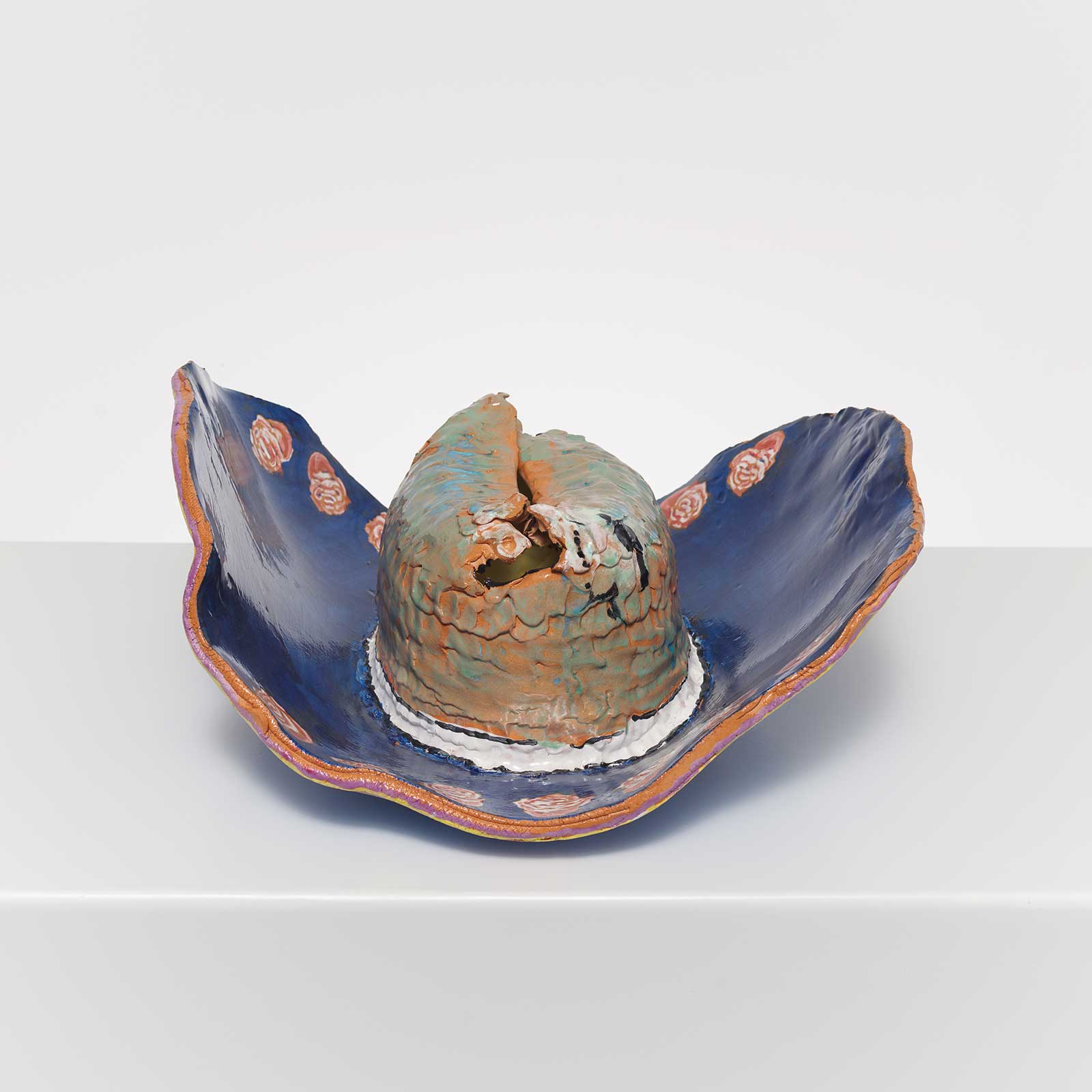 Ken Taylor Reynaga, Sombrero Ceramic Aqua, 2021, glazed ceramic, 8½ x 18¾ x 19¼”. Courtesy Stefan Simchowitz.
In an exhibition sure to jangle the spurs of more than a few admirers of the mythologized cowboy, the Museum of Contemporary Art Denver presents Cowboy, a contemporary examination of the figure through the lens of queer, Black, Asian, Indigenous and Latinx perspectives. A global roster featuring some of the most prominent artists working today sheds the cowboy of its white, masculine, heteronormative, loner chaps in favor of a more nuanced, expanded—and accurate—persona.
“What we have learned from the artists who we are working with is that the cowboy has always been embodied in a very diverse way, but through certain powerful machinery of popular culture, whether it was the dime novel or the birth of Hollywood, that representation got so narrowed,” MCA Denver director Nora Abrams says. “What we see as part of the great mission of this exhibition is to recognize that the cowboy has always been diverse historically, and very much so today.”
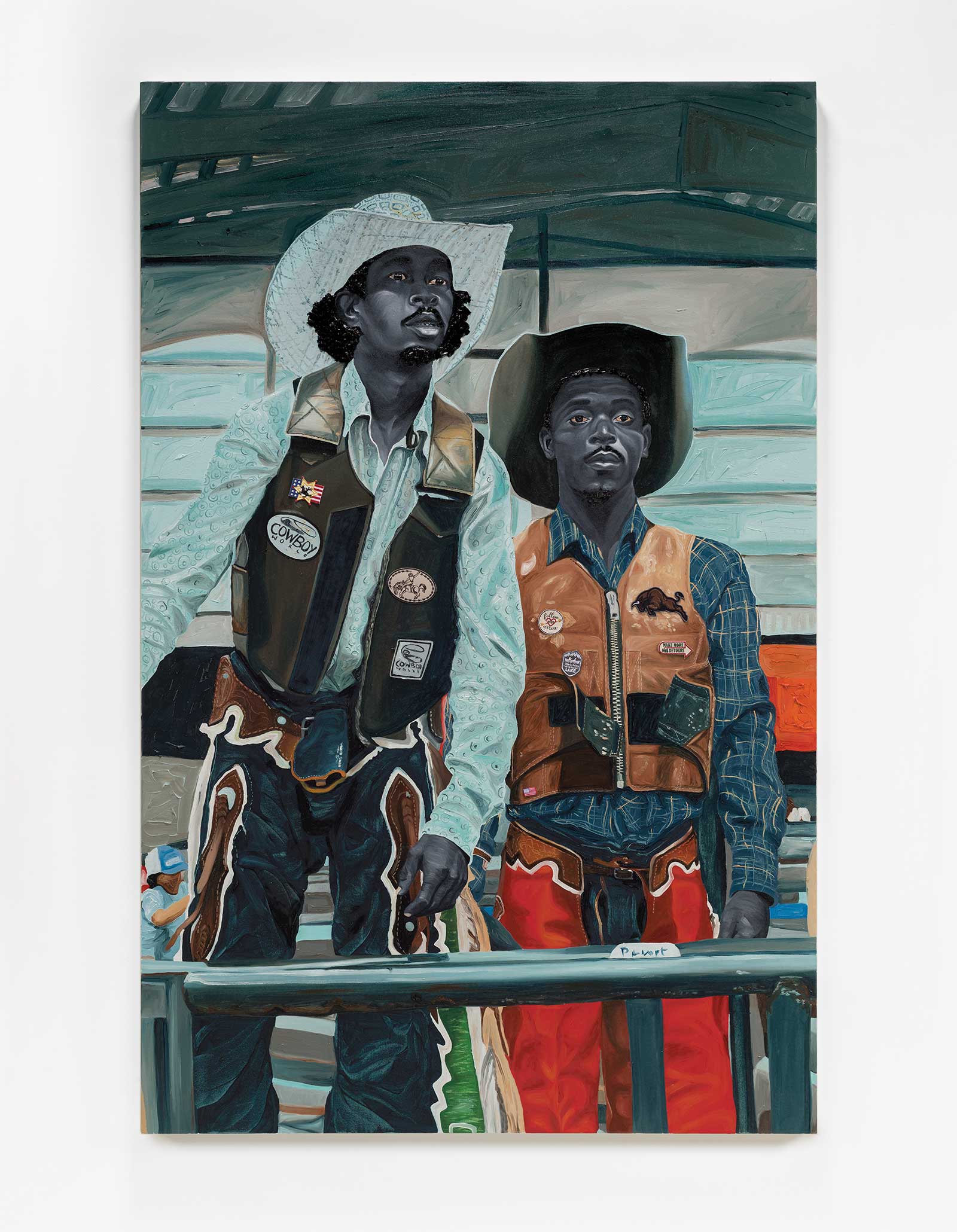
Otis Kwame Quaicoe, Rodeo Boys, 2022, oil and fabric applique on canvas, 84 x 54”. © Otis Kwame Qaicoe. Collection of Matthew and Melanie Bronfman. Courtesy the artist and Almine Rech. Photo: Hugard & Vanoverschelde.
As an example, remember, between a quarter and a third of all cowboys in the 19th century were Black or brown—the enslaved, the formerly enslaved, Mexicans. Faces mostly erased from subsequent 20th-century retellings of cowboy stories in print or on screen.
“Our point is there’s space for all of it, and there should be, because if we want to be honest and authentic about the history of the land that we are sharing, we have to have a clear lens on what that history is and how it lives out today,” Abrams adds. “We can speak of fictions, and we can speak of myths, and that’s fine, but if we’re talking about historical accuracy, then we have to open up that lens more broadly.”
When doing so, a surprising picture comes into view.
How many people know that Filipino performers played important roles in Buffalo Bill’s Wild West shows? They’re included in Cowboy.
Astoundingly, the cowboy figure actually transmits more cultural influence than even the enormous leverage it’s credited with in America or the Western art genre.
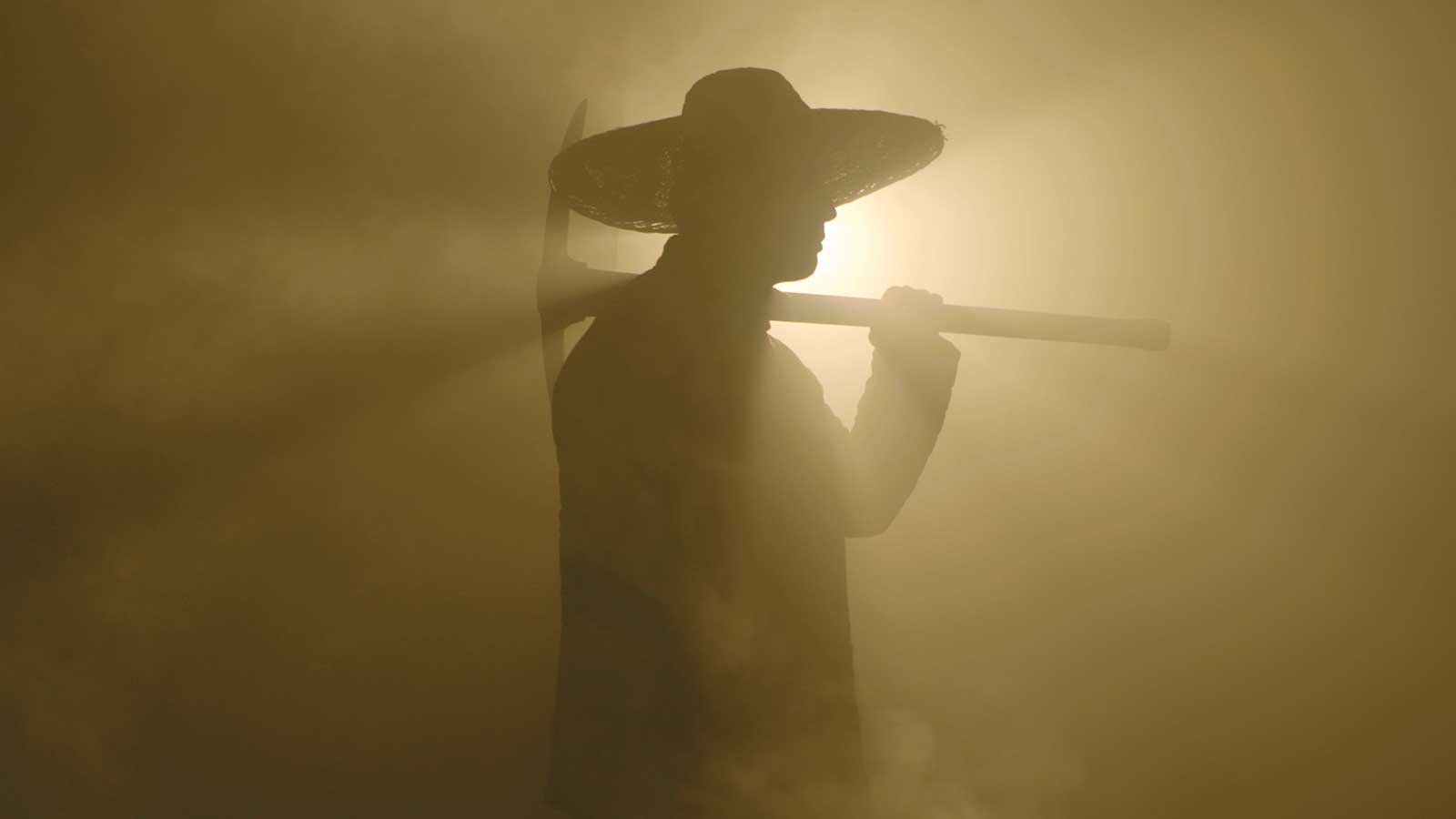
Kenneth Tam, still from Silent Spikes, 2021, two-channel video with sound. Commissioned by the Queens Museum with support from the Asian Art Circle of the Guggenheim Museum. Photo: Jason Madella.
“Internationally, ‘cowboy’ is in a way shorthand for ‘American,’” MCA senior curator Miranda Lash says. “When people in other countries think of what symbolizes America, the cowboy often gets conjured.”
That’s the case with Ghanaian artist Otis Kwame Quaicoe, several of whose rich, cowboy portraits appear in the exhibition.
“I asked him what got you interested in cowboys? He said, ‘For me, they symbolize America.’” Lash explains. “For better or worse, it’s one of our most lasting cultural exports. The idea of the cowboy has a life way beyond the borders of the United States.”
All the way to Africa and Asia.
Jaye Rhee is from Seoul, South Korea. Her sound piece for Cowboy, titled Arizona Cowboy, references an original 1955 song by the same name that became a huge pop hit in Korea, a country then devastated by war. Consider it the first K-Pop song.
“Despite the title Arizona Cowboy,the song does not speak directly to imagery from Arizona, but instead relies on clichéd imagery of ‘the American West,’ much like a Spaghetti Western,” Rhee explains of her artwork. “Influenced by the remains of the American army in South Korea, the lyrics spoke to Koreans’ desire to return ‘home,’ a desire shaped by displacement. This song, filled with a longing for home, found resonance among an audience grappling with deep cultural upheaval. This was, at the same time, a music of ambition and a desire to become more Western, to become ‘modern.’”
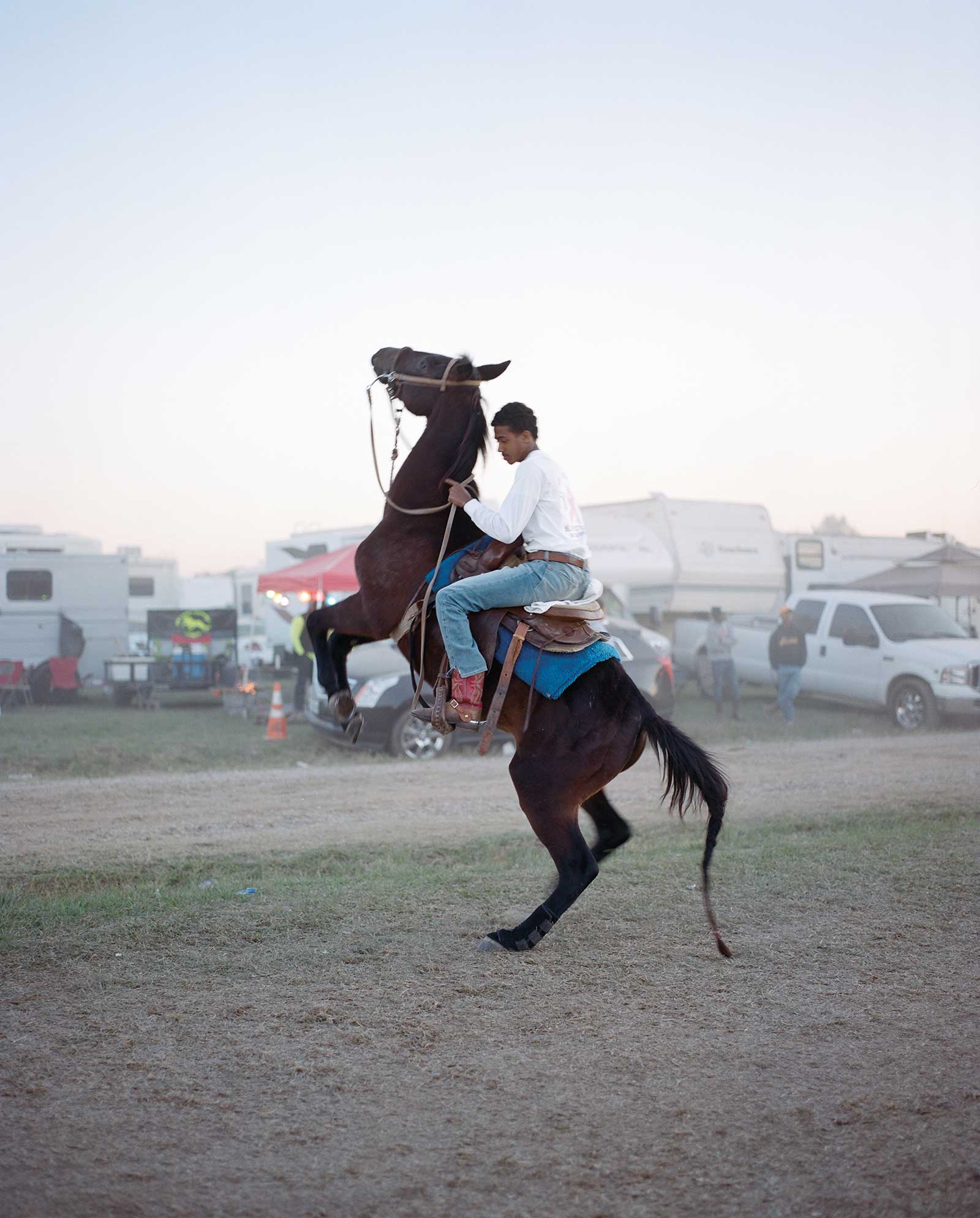
Akasha Rabut, Trail Rider at Sunset, 2014, archival digital print mounted to matboard, 28 x 24”. Courtesy the artist.
Even within America, the cowboy has purchase beyond the dusty, sunbaked West. The exhibition spotlights urban rider clubs through contemporary color photographs. Here, African American cowboys—including teens—connect with the historic Black cowboys and Black rodeos in places like New Orleans and Philadelphia, riding, roping and caring for horses.
“The idea of the cowboy looms so large and is interpreted and experienced so differently, and also very much in contrast to how popular culture puts forward a certain representation of the cowboy. We really wanted to poke that—to unpack it perhaps is a better term,” Abrams says.
No one has poked that “certain representation of the cowboy”—think the John Wayne version—more than hip-hop artist Lil Nas X. His 2019 smash hit “Old Town Road” features the artist, who is Black, riding a horse in full cowboy costume through an urban neighborhood to the astonishment of onlookers. The song, which would add a remix partner in Billy Ray Cyrus, spent a record 19 weeks at the No. 1 spot on Billboard’s Hot 100 listing of the most popular songs in America.
It’s a cowboy song as surely as “Home on the Range,” but due to Lil Nas X’s race, age, wildly flashy outfits and humorous, borderline absurdist approach to the revered, romanticized cowboy, he faced outrage from traditionalists who viewed his portrayal as sacrilege to the stereotypical version of the cowboy they’re beholden to.
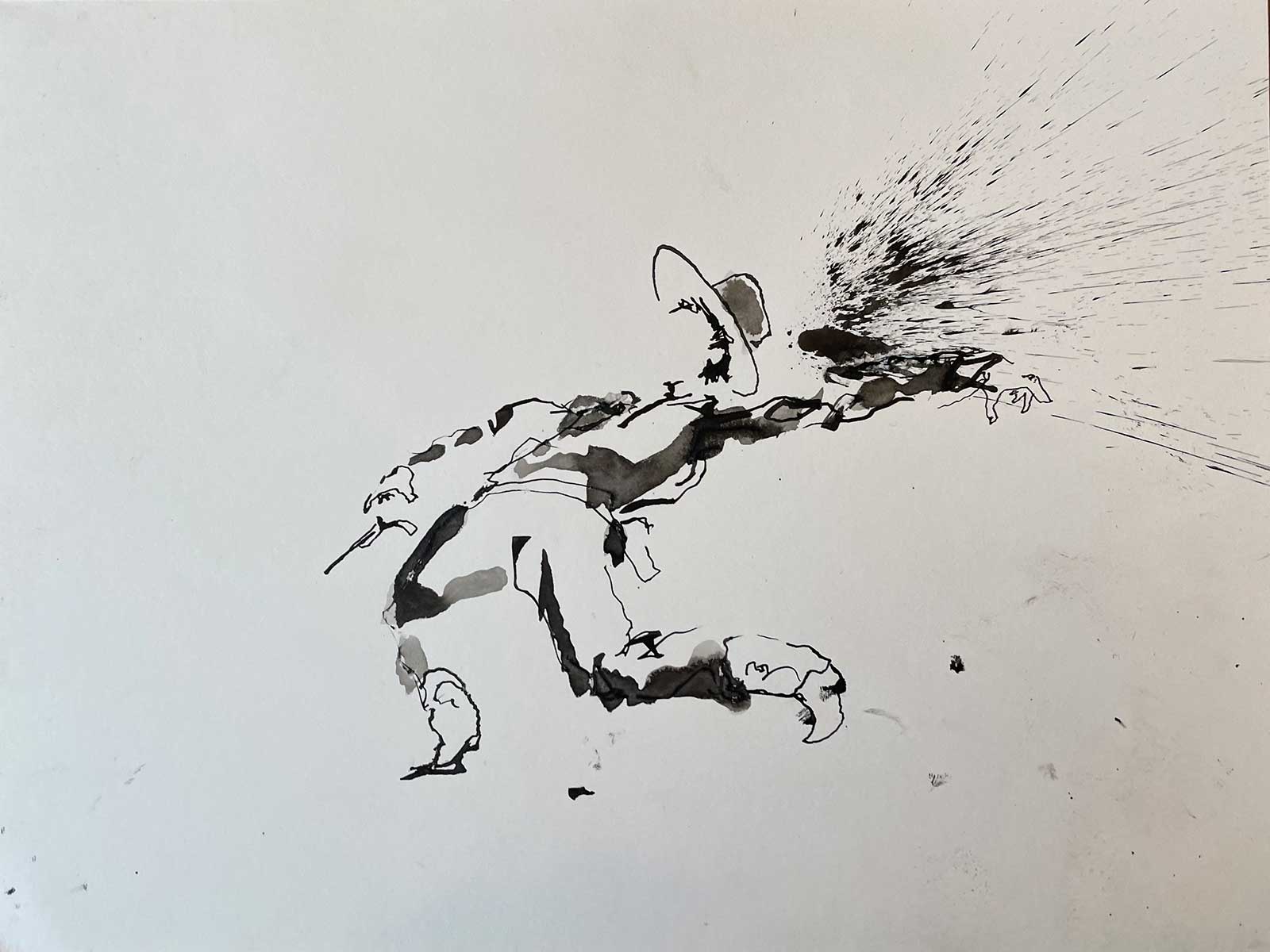
Matthew J. Mahoney, Untitled, from the series In the Wake of John Joel Glanton, 2013, 9 x 12”. Courtesy the Estate of Matthew J. Mahoney. Photo: Oriana Poindexter.
The actors in 2005’s Brokeback Mountain faced a similar backlash for their depictions of sexually entangled gay cowboys. The Cowboy exhibition follows in these footsteps, prominently queering the cowboy.
“We’re certainly not positioning that this is something new, there have always been diverse participants in the role of the cowboy, so this is not a contemporary art show saying this is a new trend in cowboy culture,” Lash says. “We are going a step further and trying to historicize and present an accurate historical rendering. Not everyone wants to hear history, especially not today, but that doesn’t mean it’s not beholden on us to share it.”
Backlash to Lil Nas X or Brokeback Mountainand other interpretations of the cowboy conflicting with the macho, white, male, version of the figure, tell us the cowboy is contested. The image is contested.
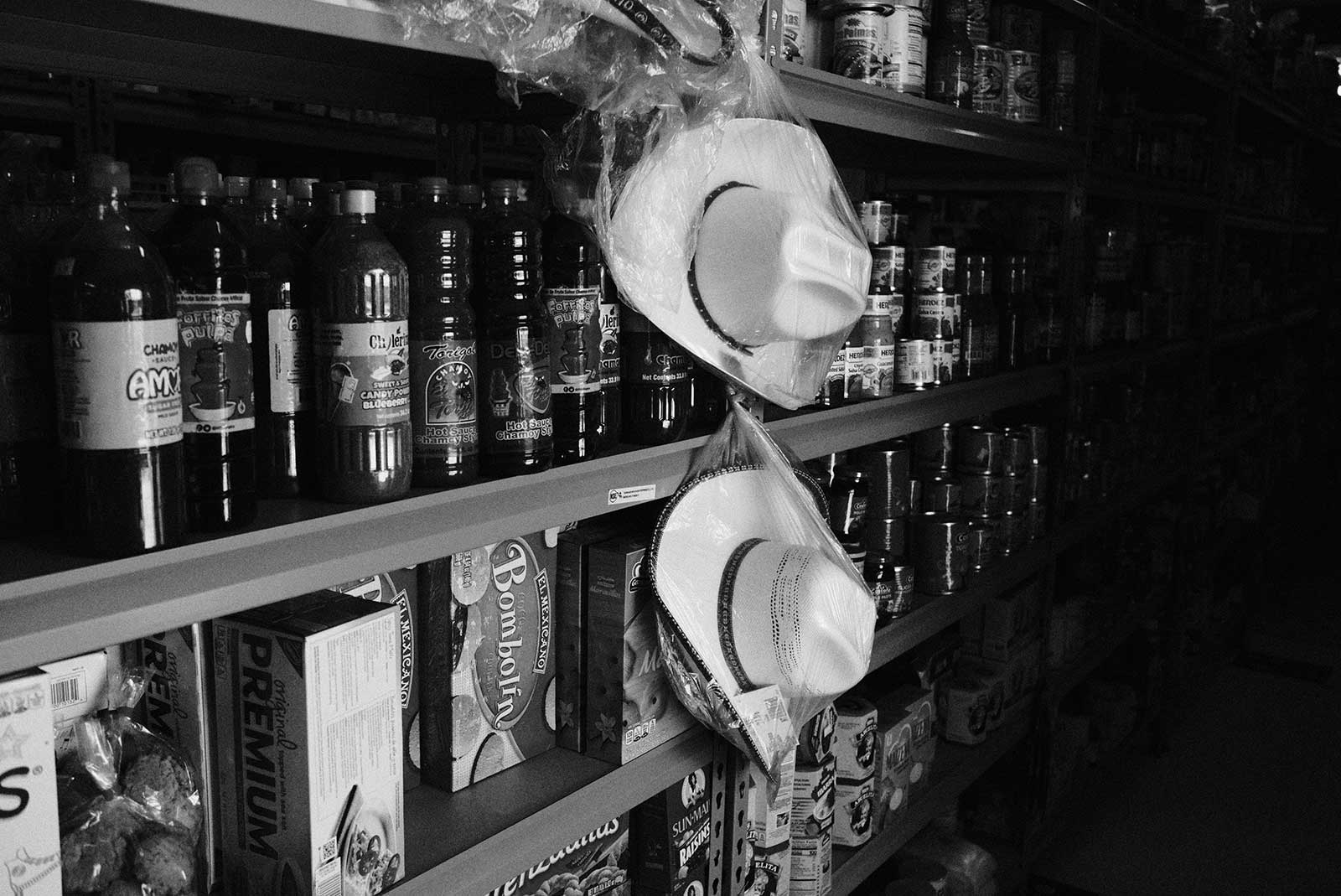
Juan Fuentes, Untitled, 2021, from the series Thirty-Six Miles East, photograph. Courtesy the artist.
To some, the cowboy embodies a rugged individualist, freedom, a take-charge “man’s man.” Everything that’s great about America.
To others, it’s the wellspring of toxic masculinity, violence run amuck, a symbol of Manifest Destiny and stolen Indigenous land.
The contest isn’t merely about the cowboy—it’s about America. The cowboy as a stand-in for America—tough, strong, independent, hardworking, steely. Where do you think those bootstraps to supposedly pull yourself up by come from?
“There is still this legacy of the cowboy and the settler and the rancher [and] what they achieved as something to really celebrate and look up to, and I think we’re all much more aware of how problematic that notion or that behavior has been, and how arrogant it has been, how hubristic it has been, [yet] it is still unimpeachable,” Abrams says. “We hope this exhibition, if not impeaches the cowboy, the intention is to take it from two dimensions to three dimensions, warts and all.”
The image of the cowboy—not the actual cowboy—like the image of America—not the actual country—has long been carefully and doggedly positioned. So Cowboy takes on not only who is privileged to determine the cowboy image and what the cowboy looks like, but the image of America, and what the country looks like.
Who is it for? Who gets a say? Who’s represented?
It may be that the ones who control the “cowboy,” control the country. —
Cowboy
September 29, 2023-February 18, 2024
Museum of Contemporary Art Denver, 1485 Delgany Street, Denver, CO 80202
(303) 236-1836, www.mcadenver.org
Powered by Froala Editor