Most collectors of Western fine art think of Tom Browning solely as an artist who has always painted cowboy-themed works. However, although he is one of today’s most highly acclaimed artists, who portrays cowboy subject matter, the reality is that Tom Browning has had a very long, very interesting and very successful five-decade career painting various other subject matter—and not always cowboys.
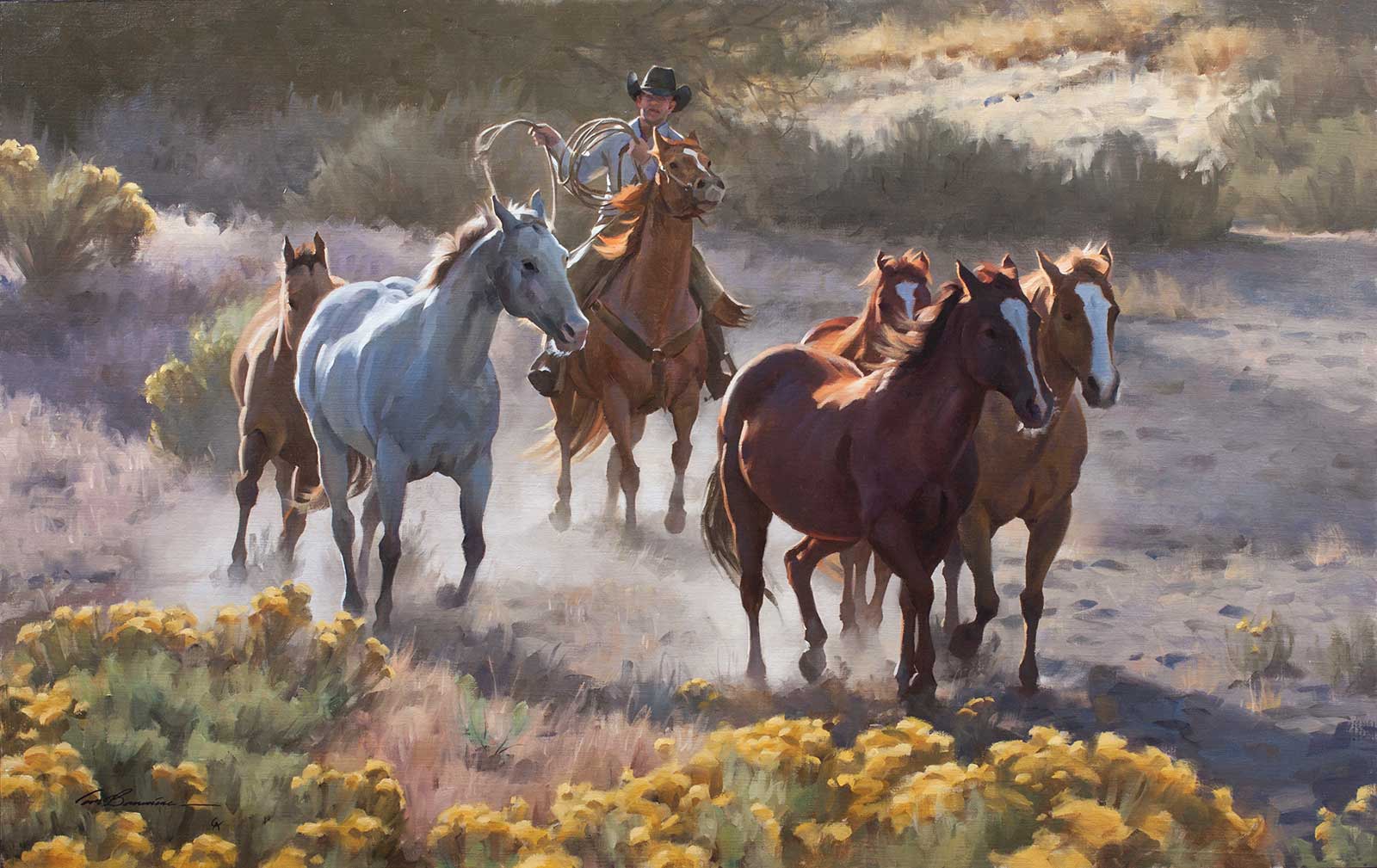
New Recruits (detail), oil, 24 x 38”
I originally met Tom 15 years ago, during one of the Prix de West shows at the National Cowboy & Western Heritage Museum in Oklahoma City. Like most collectors, I just assumed that Tom’s entire career had been devoted primarily to painting Western or cowboy subjects. Three years ago, I relocated from the East Coast to Scottsdale, Arizona, and it just so happened that Tom lived less than 10 minutes from my new home, which provided me with the unique opportunity to regularly spend time with him in his studio. And that is when and how I learned about Tom’s varied artistic career journey.
Like most career artists, Tom knew at a very early age that he wanted to someday be involved with art. Beginning when he was only 3 years old, he had a fascination with creating things by cutting and pasting magazine images. His favorite images, at that age, were the many colorful Disney characters he would discover in his parents’ magazines. Over the next seven years, this cutting from magazines progressed to the point where he began drawing various types of figures. But, as fate would have it, he did not receive the necessary encouragement to continue drawing until he encountered his fourth-grade teacher, Mrs. Nelle Wilcox, who immediately saw that her young student thoroughly enjoyed drawing, especially horses and Native American figures. It was a pivotal point in his early life.
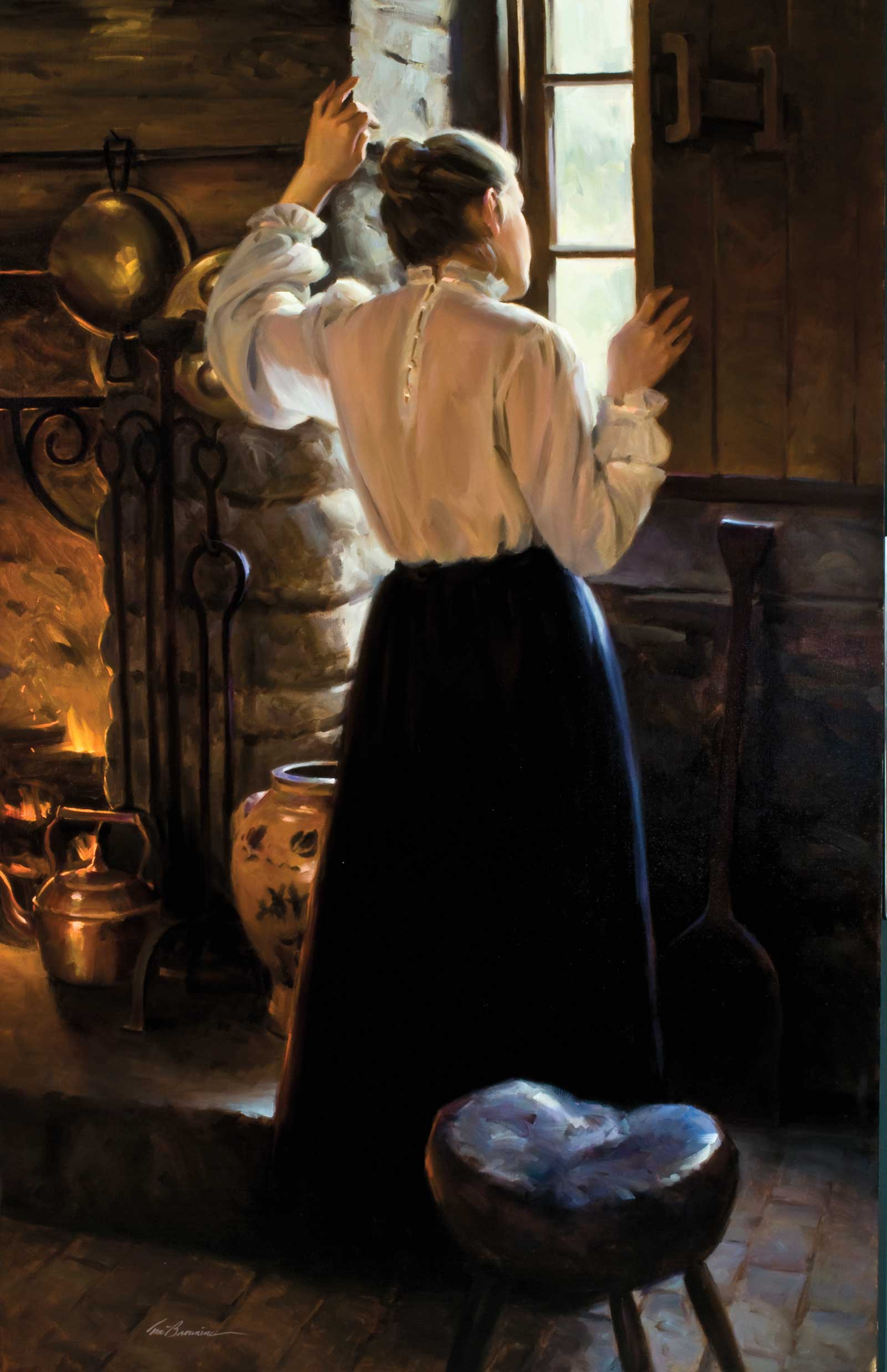
The Dawn of a New Day, oil, 50 x 32”
Tom’s bond with his very nurturing teacher, whom he characterized as the “kindest and the most caring teacher I ever had,” was so strong that it developed into a life-long friendship that lasted until she passed away at the age of 101. One could only imagine the immense pride and the pure joy that Mrs. Wilcox felt over the years as she witnessed her student, who was so enthralled with drawing, develop into the world-class artist he would become.
Throughout the remainder of his grade-school years, Tom’s interest in drawing continued, and upon graduation from high school he attended the University of Oregon, where he majored in art. Except for one instructor, Tom was not inspired by any of his college professors, so by the time he reached the first semester of his senior year, Tom began to realize that his college coursework was definitely not preparing him to make a living as an artist.
At the same time, Tom’s desire to devote himself full time to art was becoming much more intense. So, with a semester remaining before graduation, he made the decision to leave the University of Oregon to begin pursuing his dream of becoming an artist. As is the case with most careers, Tom’s journey as an artist, beginning on that fateful day, did not follow a straight career path up to the present day.
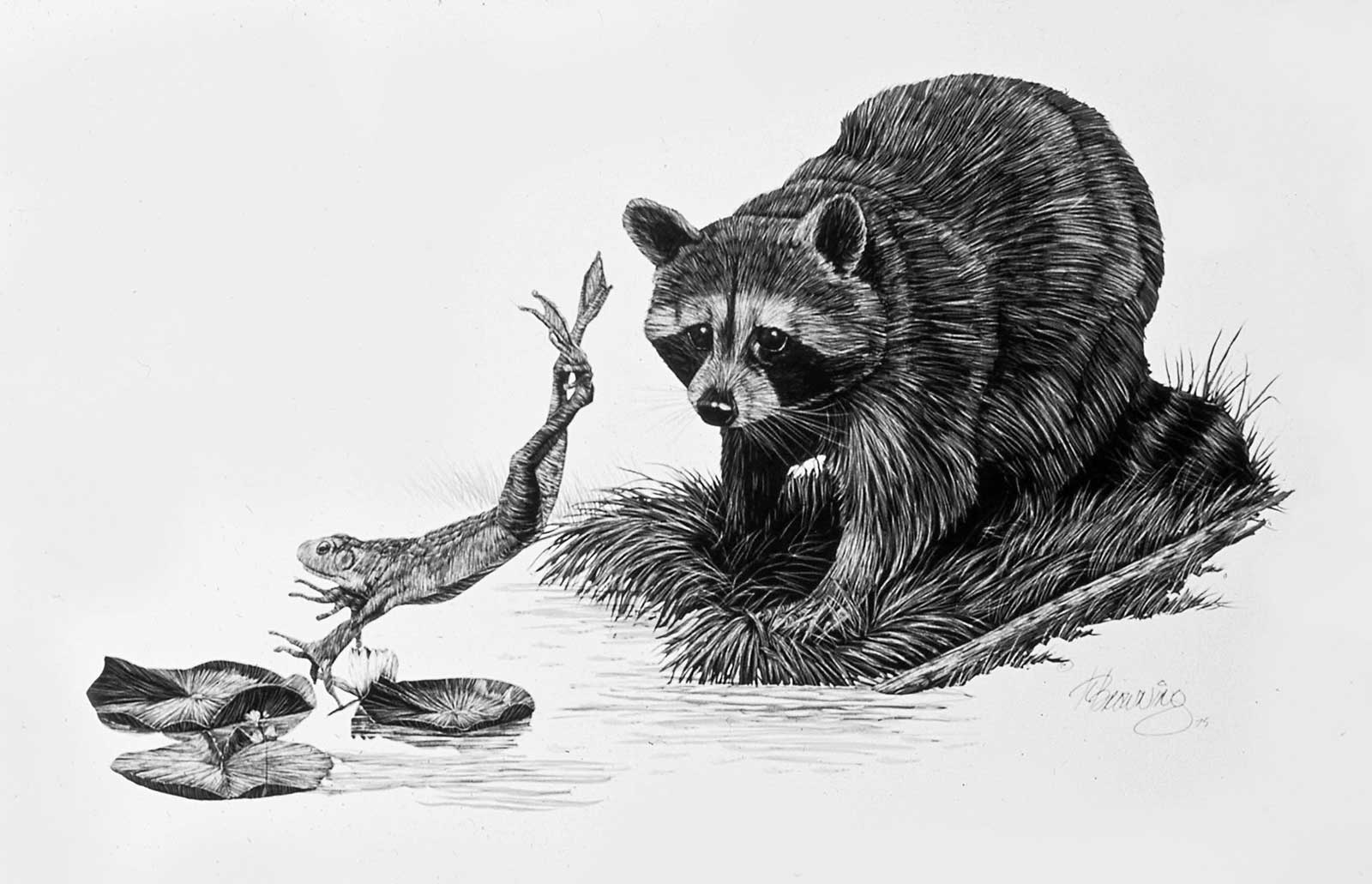
At the Pond, scratchboard
After leaving the University of Oregon, Tom first found a job as a taxidermist while he sold some of his first pen-and-ink drawings and scratchboard pieces. Later, he took a full-time job in construction during the day. After one year, though, Tom quickly found out that he was able to make more money painting than as a jackhammer operator on his day job in construction. So at the age of 23, Tom chose to leave the construction job in order to pursue his true passion of becoming a full-time artist.
Around this time, during a trip to Montana, the young painter first saw the work of Charlie Russell, which proved to be instrumental in his choice of subject matter that would ultimately define his successful career. But since he did not have access to enough cowboy and Native American reference subject matter, he focused much of his attention on wildlife. Later, Tom transitioned to charcoal drawings, then to watercolor and oil paintings of mountain men. And although he was enjoying some degree of success selling his work, Tom felt a need to closely study the paintings of several artists whom he respected. The careful consideration of other artists revealed Tom would need more technical training if he wanted to improve the quality of his own paintings.
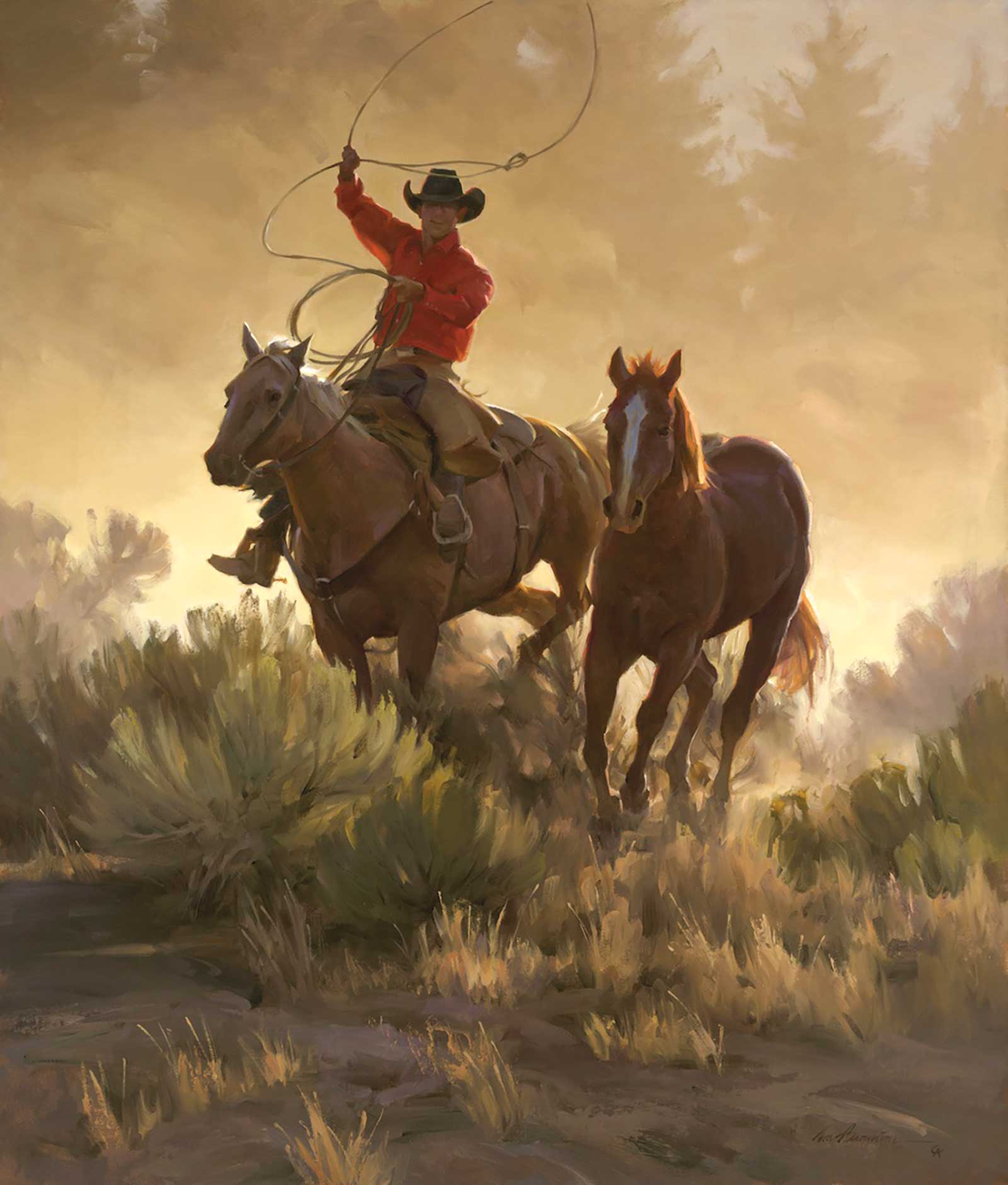
Spirit of the West, oil, 40 x 34”
To get that training, he turned to several artists whose work he respected. The first one was Del Gish, who taught him the importance of lighting, form and how to compare and replicate values in his paintings. With those newfound skills, Tom began to set up still life compositions which enabled him to better understand how light reveals form. Next, he turned to Bill Reese, who taught him the importance of painting from life. The time he spent with Bill resulted in an extended period of plein air painting that taught him how to artistically observe nature’s landscapes. Also, from those early outdoor sessions, he learned how to select the most important elements which were part of each natural setting that he was observing. In Tom’s words, those outdoor painting experiences “helped to add interest to my Western paintings and they were a big part of my development as a painter.”
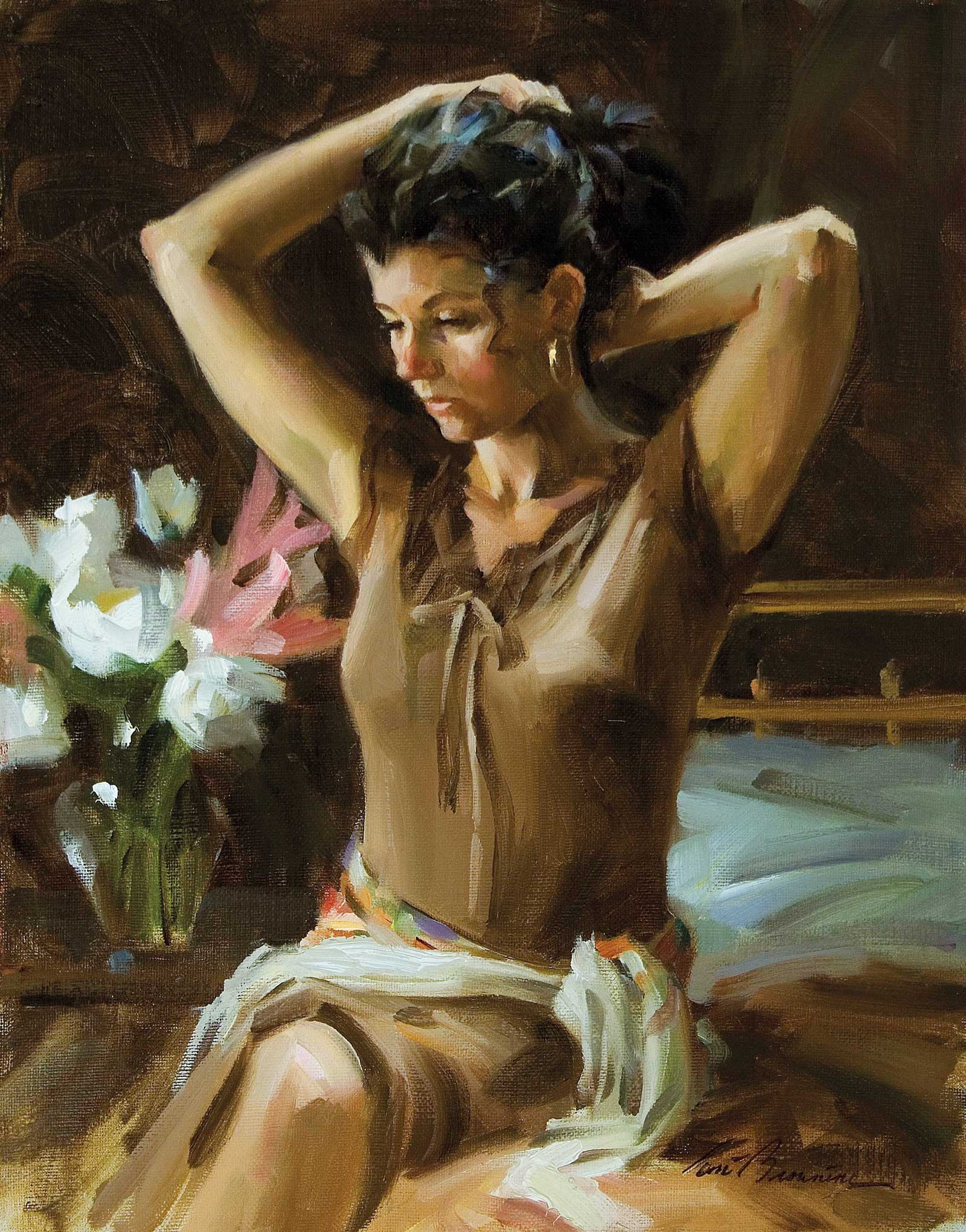
Morning, oil, 14 x 11”
Tom’s ongoing commitment to improving his painting skills eventually led him to the Boston School of artists and to works by American impressionists. In looking at their work, he was immediately captivated by what he saw, and he impulsively began to study their styles and techniques. With this newfound knowledge, Tom’s choice of subject matter dramatically changed again and he spent 10 very successful years painting figurative works that had a Victorian theme. However, during that 10-year portion of his career, he continued painting some Western-themed works and he began to incorporate female subjects into those compositions, often portraying them as an important part of the settling of the American West. Simultaneously, he began to add children subjects to his paintings. After being recognized by the National Portrait Society, Tom decided to include portraiture works in his varied repertoire of painting styles, even as cowboys and horses revealed to be his real passion.
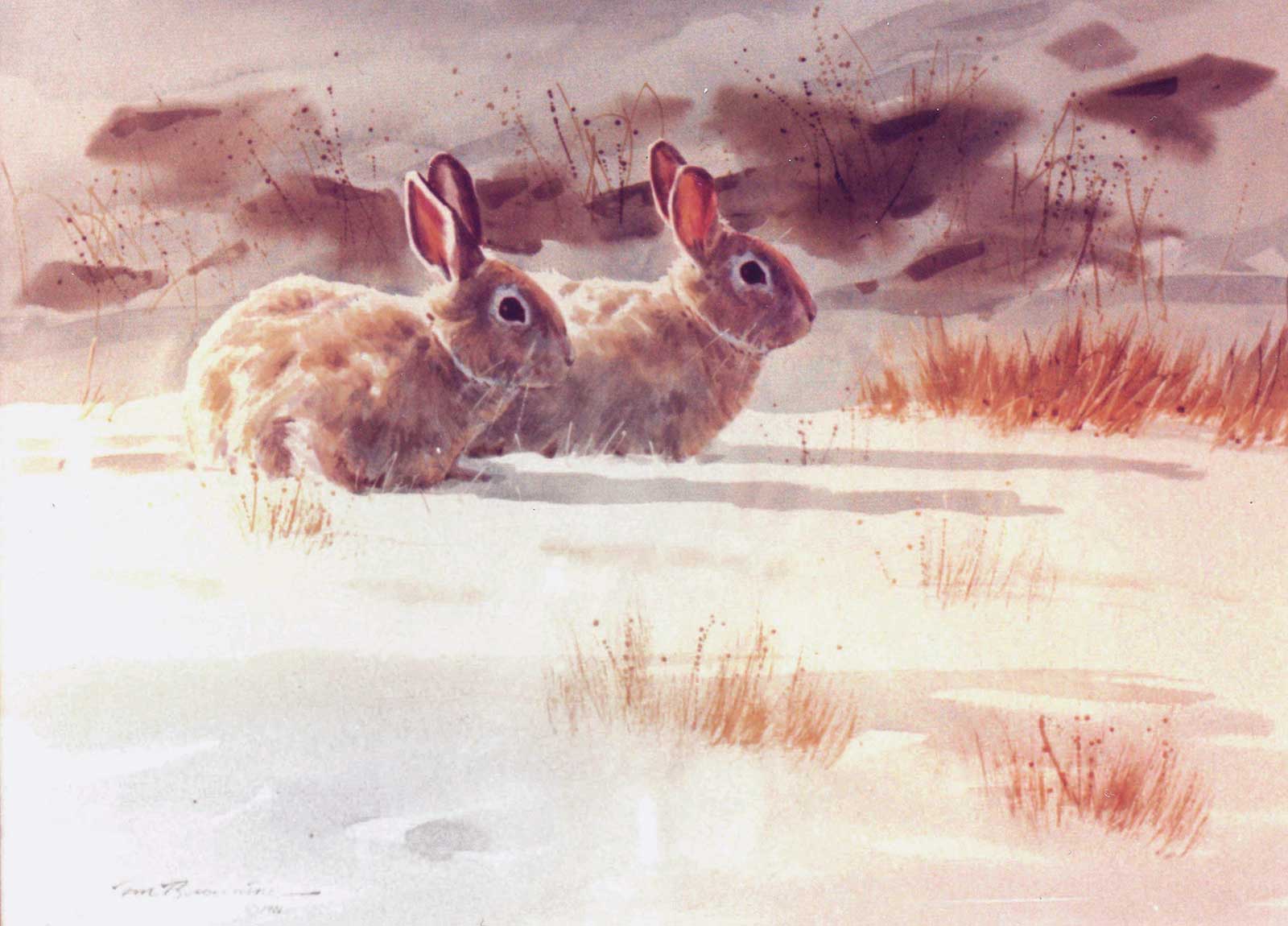
Sunning, watercolor
In 1980, on a whim, Tom decided to do a Santa Claus painting strictly for his own pleasure and with no intention of ever selling it. Shortly thereafter, a publisher was visiting the painter in his studio, and he happened to notice the Santa work hanging on the wall. The publisher liked the painting so much that he asked Tom if he could use it in one of his Christmas card lines that he was selling. Not thinking anything much would ever come of it, Tom agreed to the request. And that serendipitous moment resulted in Santa Claus-themed works ultimately becoming a major venture for the remainder of his career. The business side of that venture began 40 years ago, and it quickly evolved into a commercially successful Santa Claus publishing company that Tom and his wife ran for more than 20 years. Today, Tom continues to create some new Santa Claus paintings for commissions, for one-man shows and for the private licensing of his Santa Claus images. Those paintings include scenes not only of Santa Claus at Christmas time, but also of Santa at the beach, golfing and in other whimsical settings.
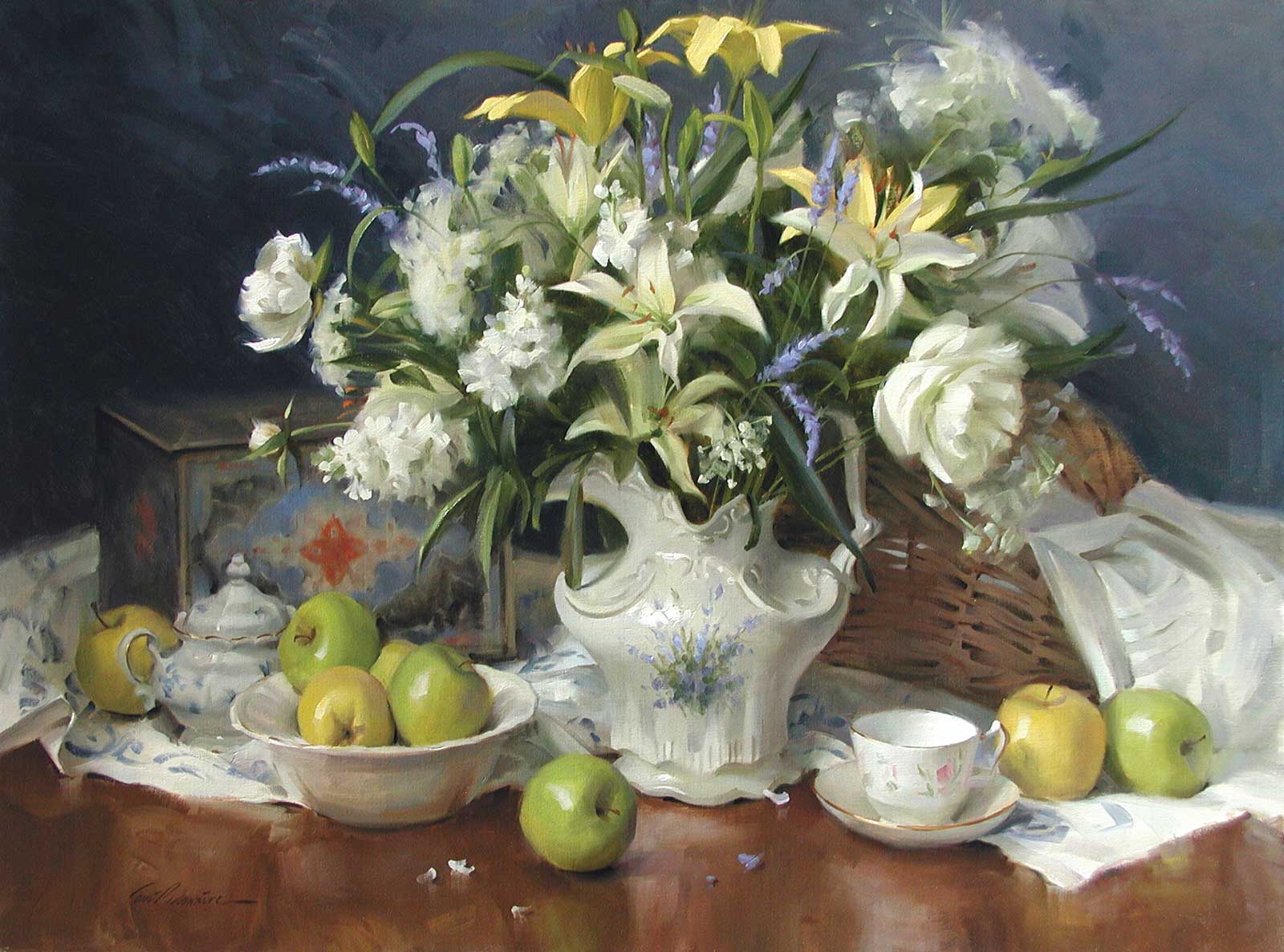
Arrangement in Blue, oil
But it wasn’t until about 20 years ago, after spending a good portion of his career painting a wide variety of unrelated subjects, that Tom made the decision to exclusively paint themes of the American West. Those themes included cowboy subjects as well as Native American and Western landscapes. And within a few years, and because of what he had learned from his varied experiences in the early part of his career, Tom’s unique cowboy-themed paintings quickly became very popular with collectors.

Tom Browning in his studio.
In 2007, he was invited to participate in the Prix de West Exhibition and Sale at the National Cowboy & Western Heritage Museum in Oklahoma City. Shortly thereafter, in 2009, Tom received the coveted Prix de West Purchase Award for his large painting Dawn of a New Day, which depicted a woman gazing out a window of a rustic home and wondering when her cowboy husband would be returning from a long day out on the range. That painting is now hanging in the Prix de West gallery of the National Cowboy & Western Heritage Museum.
Also in 2009, Tom was pleasantly surprised and honored when he was invited to become a member of the Cowboy Artists of America. And over the past 14 years, he has been recognized for his excellent portrayals of the American cowboy after receiving a number of awards during the CA’s annual shows.
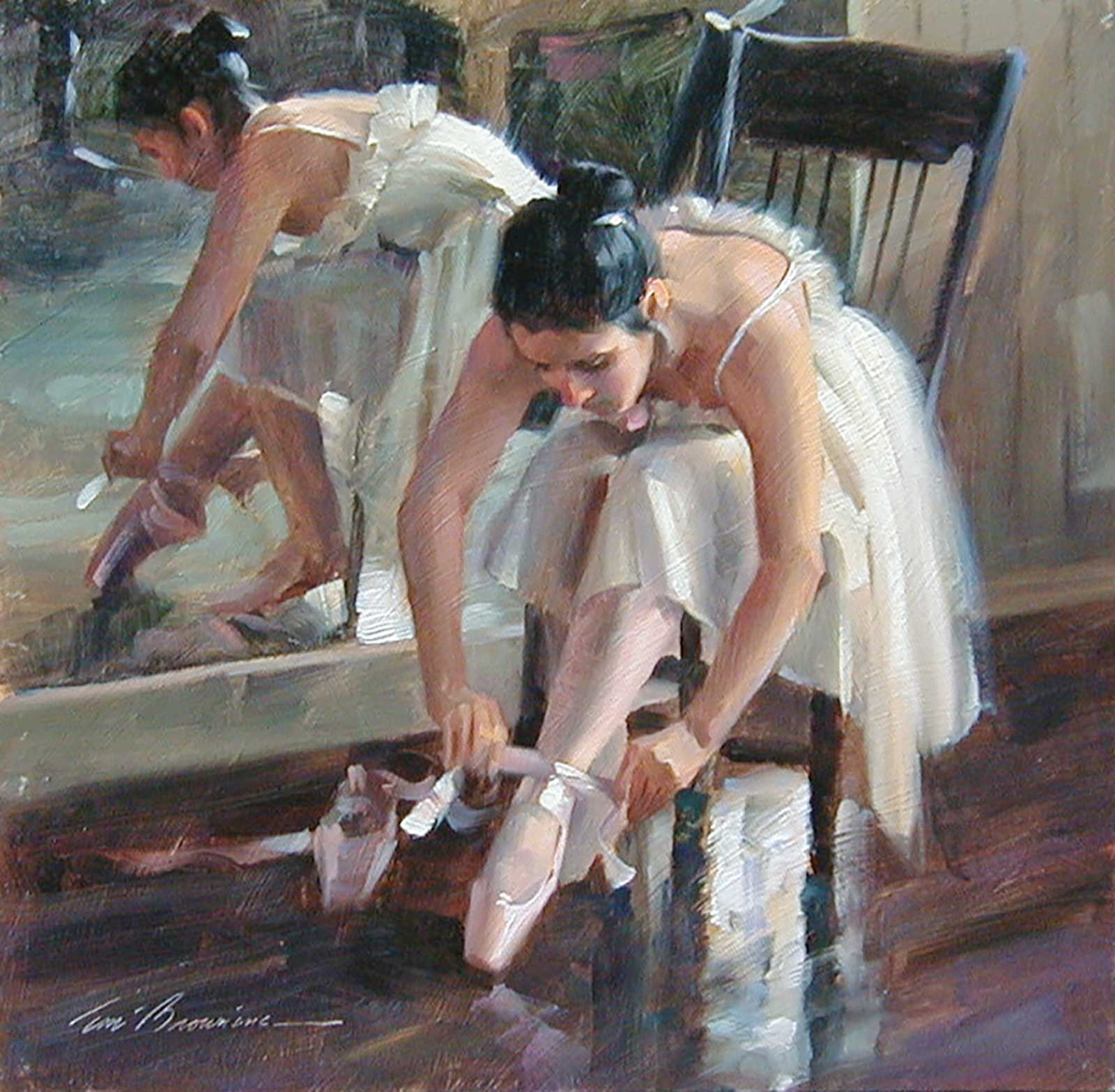
After the Curtain, oil
With this detailed look back over his long and varied career path, it should be relatively easy for everyone to understand why Tom Browning is one of today’s most admired and most highly esteemed artists who portrays the life of the American cowboy. My exchange with Tom about his career is revealing.
Was there ever a time or a moment, during your successful career, when you said to yourself, “I really am an artist?”
Browning: I have always revered the term “artist,” and I felt that it should be saved for those individuals who truly deserve the title, such as Michelangelo or da Vinci. For that reason, I have always referred to myself as a “painter.”
After almost 50 years of being a full-time artist who is constantly working to meet deadlines, what continues inspiring you to paint every day of the week?
Browning: The idea of continuing to improve my work with each painting has always been the driving force behind my enthusiasm. I developed this thought process early on by never getting complacent and by always looking for new ways to make each painting a little bit different and better than the last one.
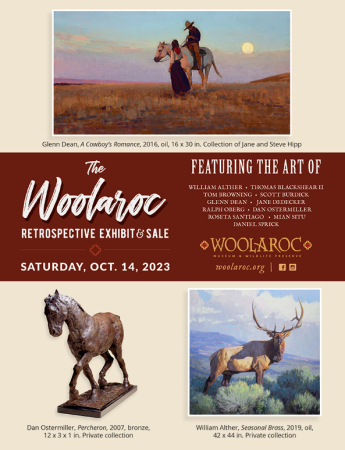
Tom Browning is represented by Legacy Gallery in Scottsdale, Arizona; Wilcox Gallery in Jackson Hole, Wyoming; Mockingbird Gallery in Bend, Oregon; and InSight Gallery in Fredericksburg, Texas. His work will next be seen at the Woolaroc Retrospective Exhibit and Sale, opening October 14 at the Woolaroc Museum & Wildlife Preserve in Bartlesville, Oklahoma. —
Powered by Froala Editor