
Art is seen as a solitary endeavor. Something artists toil away on in complete isolation. And when they emerge from the darkness of their studio, they are holding a completed artwork that is ready to be sent out into the world.
Sculptors certainly can work this way, but if they ever want their clay artwork turned into a more permanent material—like, say, bronze—then they must enlist the help of other artists and artisans, sometimes a whole fleet of them, at one of the bronze art foundries that dot North America.
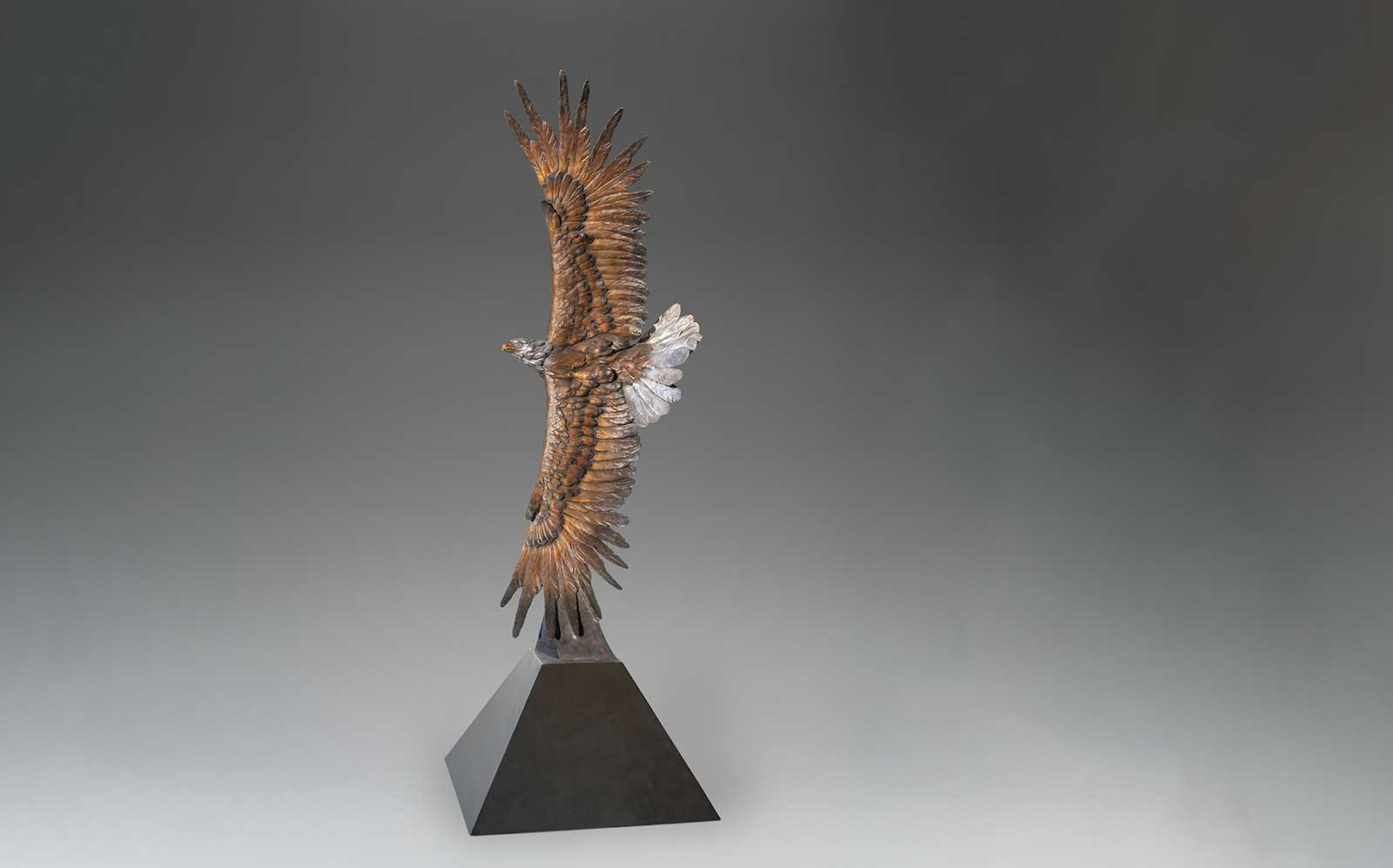
Bryce Pettit, Vertical Limit, bronze, 110 x 40 x 24"
Recently, Colorado sculptor Bryce Pettit invited us to visit his main bronze art foundry, Art City Bronze (formerly Baer Bronze Fine Art Foundry) in Springville, Utah. The biggest takeaway I had from the experience of watching his magnificent sculpture move its way through the process was that bronze art casting requires a team effort from people who are skilled in a vast variety of processes. Pettit’s clay work is the source, and ultimately the guiding light, but he entrusts others to do what they do best to create a work of art in metal that is as close as possible to his version in clay. Even after seeing it all happen firsthand, it still looks like magic.
“Every part of the process is an art form,” says Jeffrey Wright, president and owner of Art City Bronze. “And that’s what makes it all work.”
For your enjoyment, with many thanks to Wright and Pettit, here is a photographic journey into the bronze process as we follow Pettit’s large bronze eagle, Vertical Limit, from clay to finished bronze.
+++
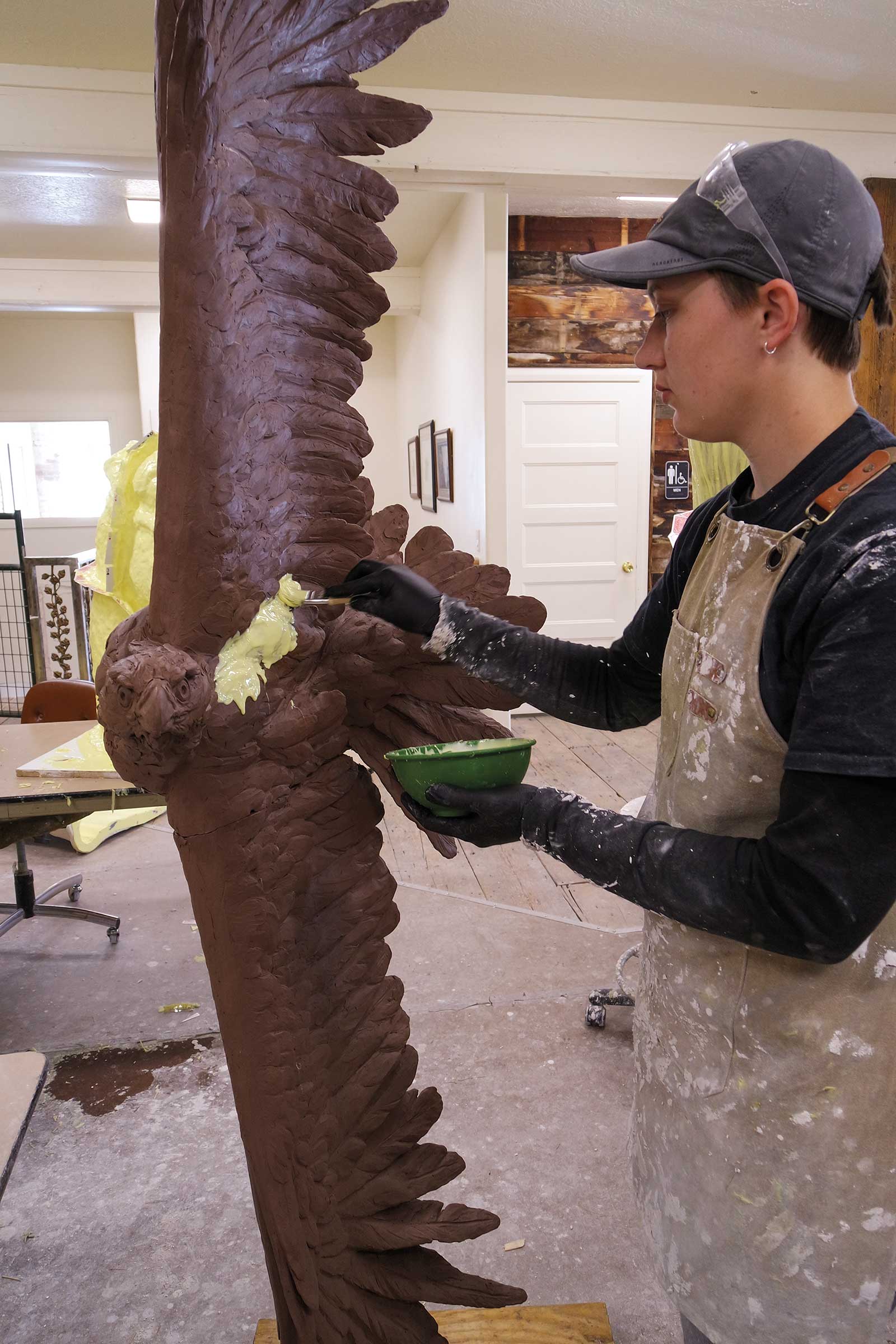
Mold maker specialist Kylie Beutler applies a layer of silicone to the finished clay sculpture. Numerous layers are painted onto the clay over several days. Small bronzes can be cast in one or two pieces, but larger pieces require more molds, more casts and more pours. Vertical Limit will be cast in six pieces and then assembled later in bronze. Sometimes the clays have to be cut apart for the silicone molds. Art City Bronze will also use playing cards stuck lightly into the clay to create the segments needed for the silicone molds. After the silicone mold is made, a plaster shell is formed around the mold to give the silicone a rigid surface to sit against. This is referred to as the mother mold, and it will be used for all editions of the bronze. The clay version is either returned to the artist or scrapped.
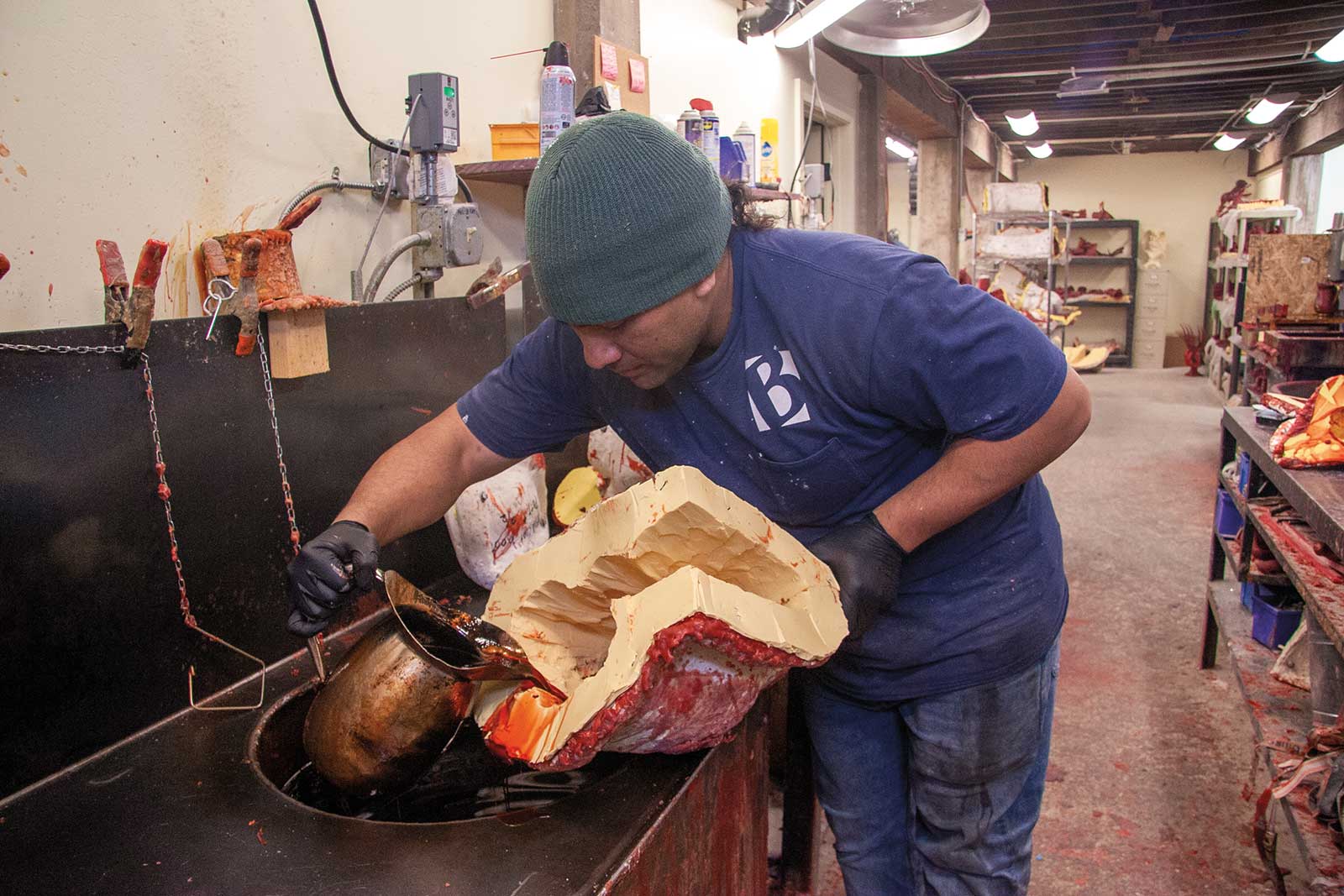
Wax pour specialist Sonatane (Tane) Falevai pours hot wax into the mold to create the very first layer of the wax version of Vertical Limit. He will coat the inside of the mold with wax and then dump out the excess wax. Like the silicone mold process, the mold is filled with wax numerous times with drying in between each layer. The goal is to build up the wax over numerous pours until it is thick enough to maintain its shape for the rest of the process. The whole process is a series of positive-negative reversals of molds and casts: the clay is a positive, the silicone mold is a negative, the wax is a positive, the ceramic shell that will eventually surround the wax is a negative and then the bronze is a positive.
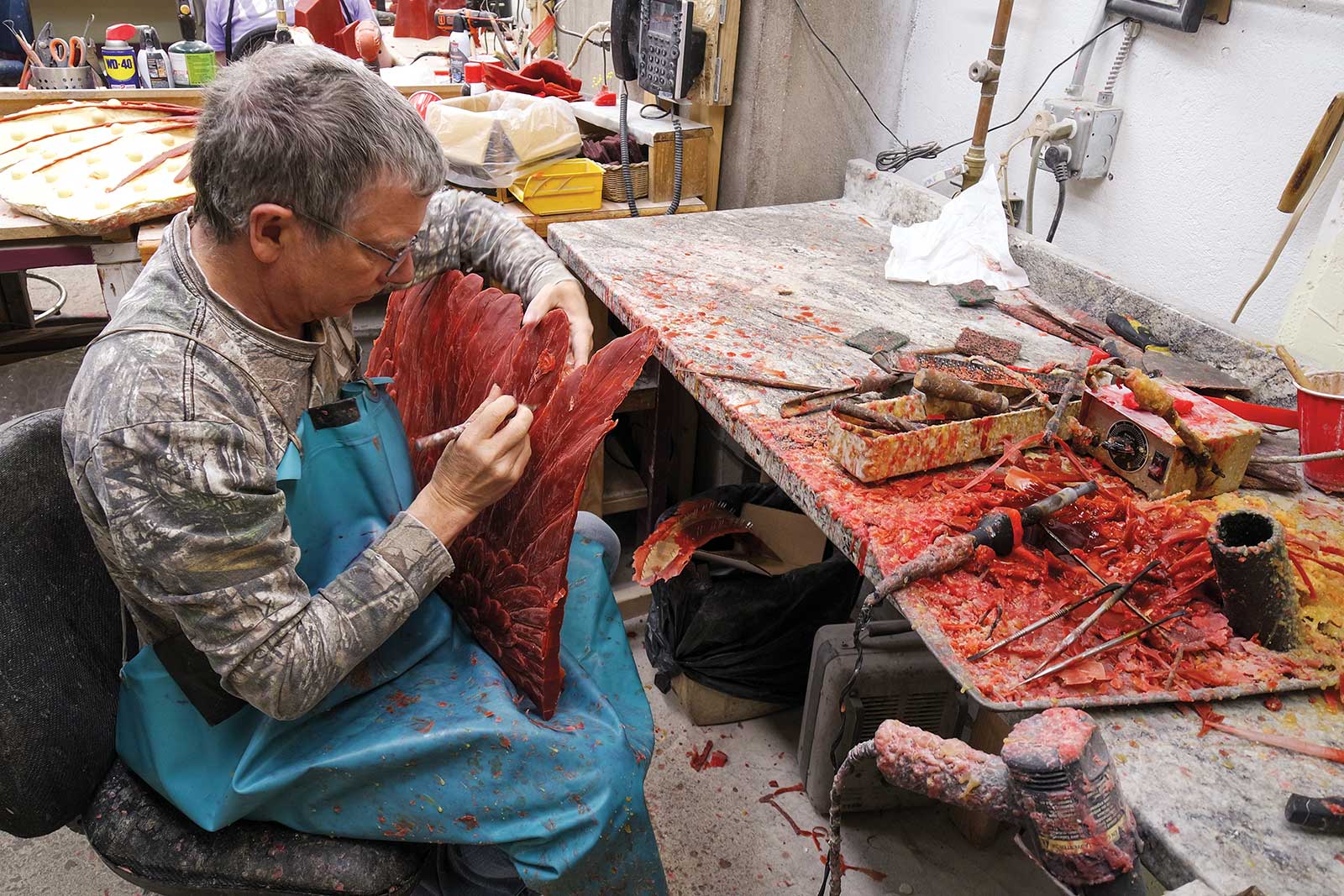
Wax chase and sprue specialist Blaine Black fixes minor imperfections in the wax cast that was carefully removed from the mother mold. Using hot knives and small scraping tools, he fills in any holes and makes sure the surfaces are identical to the clay version. Any errors made on the wax version will transfer to the bronze, so a delicate hand is required to make changes to the wax that align it closer to the clay version. Notice his workstation covered in wax. In addition to fixing the wax cast, Black will also add wax gates, which will eventually become the channels that funnel molten bronze down into every nook of the mold.
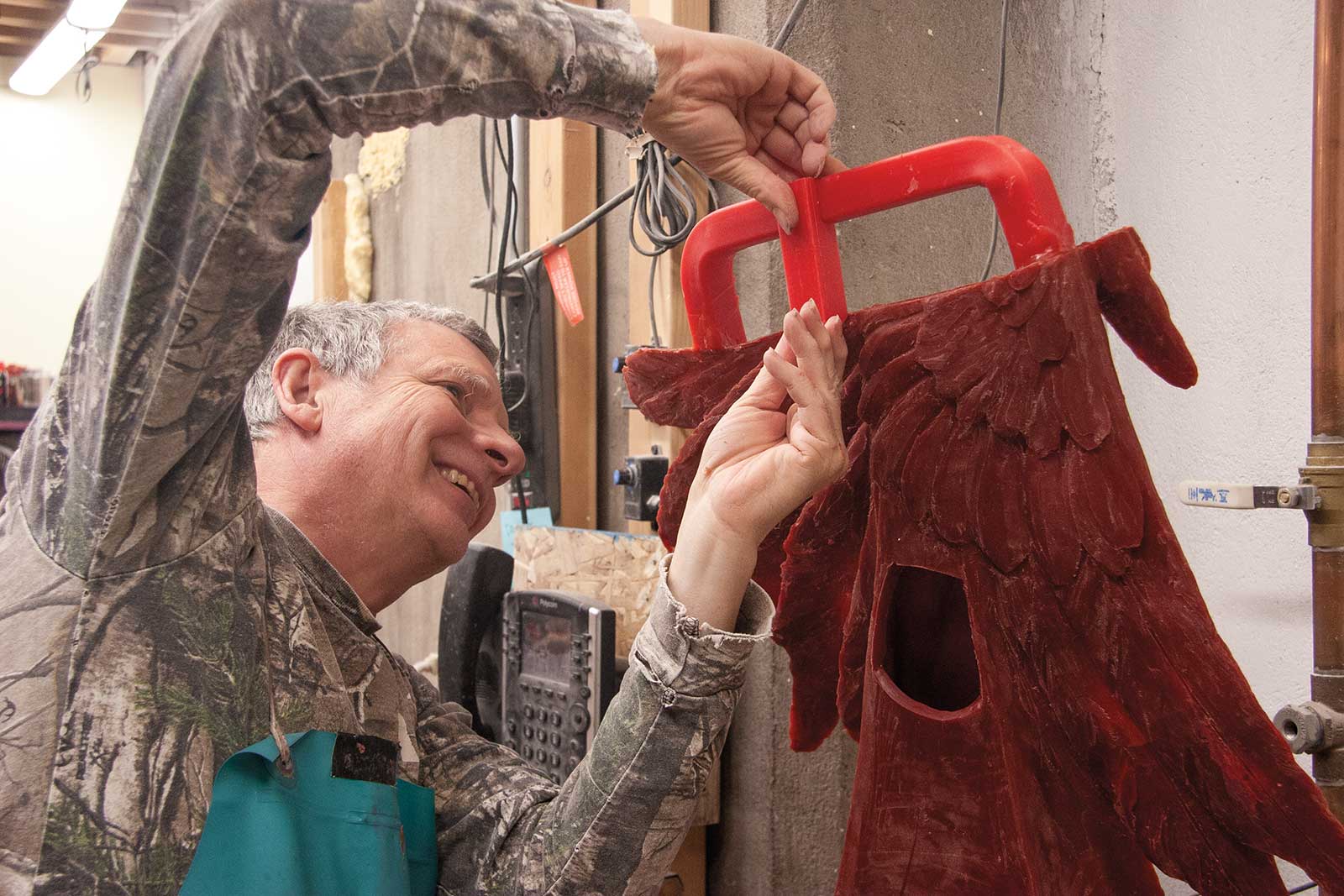
Blaine Black adds wax gates to Vertical Limit. These gates will eventually be part of the mold and will provide channels to funnel the molten bronze into the voids of the mold. Everything that is wax will soon be covered by a ceramic shell, and then the wax will be melted off leaving a void in the shell in the exact shape of the wax. Black “glues” the gates together using hot wax, some of which is applied and formed with his bare hands. “These guys all lost the feeling in their fingertips a long time ago,” Pettit says.
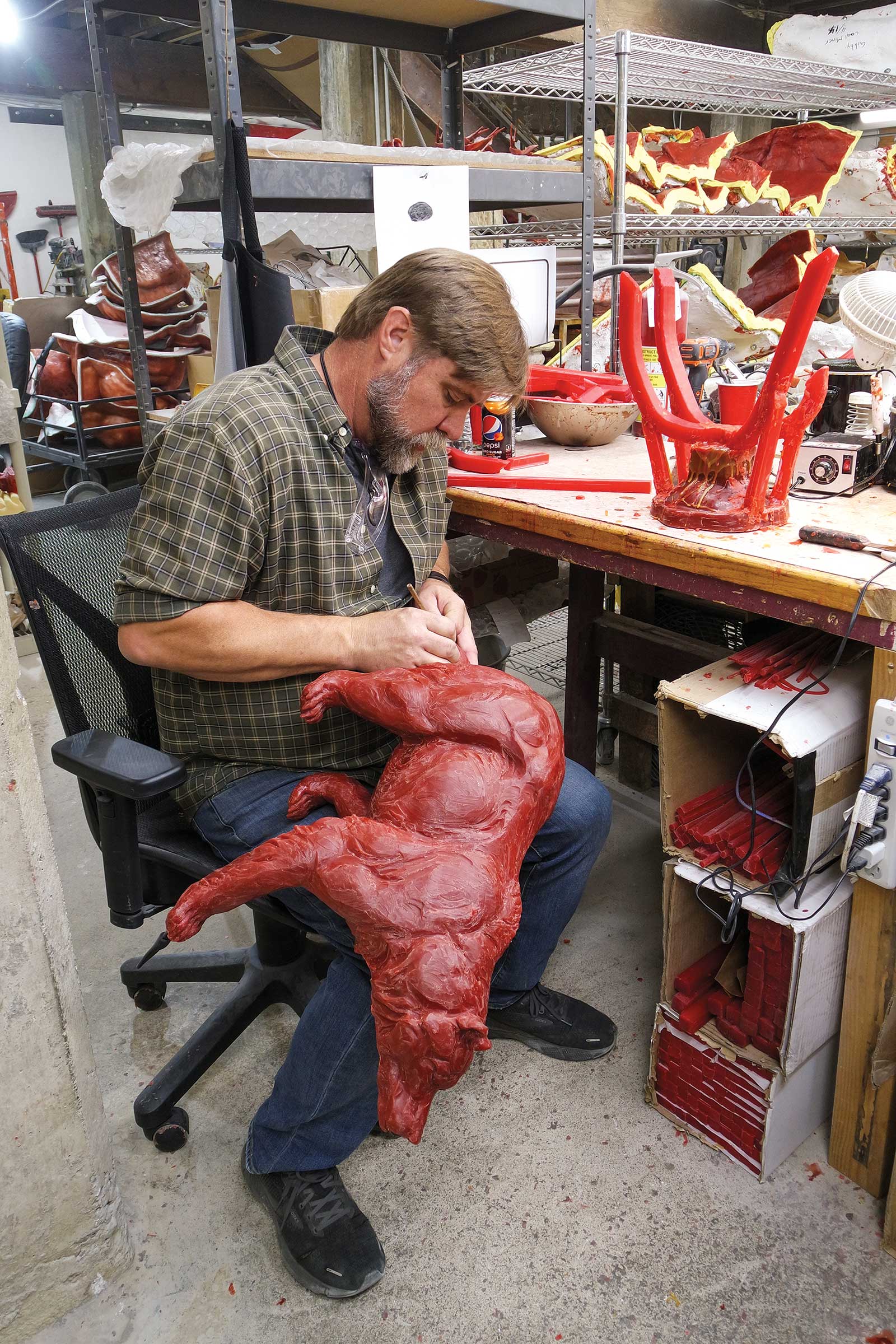
Pettit signs an edition of one of his bear pieces that is still in wax. Although an artist will occasionally assist the foundry with the process, large portions take place without the artist’s input. “A bronze artist has to trust his foundry in so many ways,” he says. “Otherwise, I would never be able to work in my studio because I would be down here all the time. I trust all these guys completely with my work.”
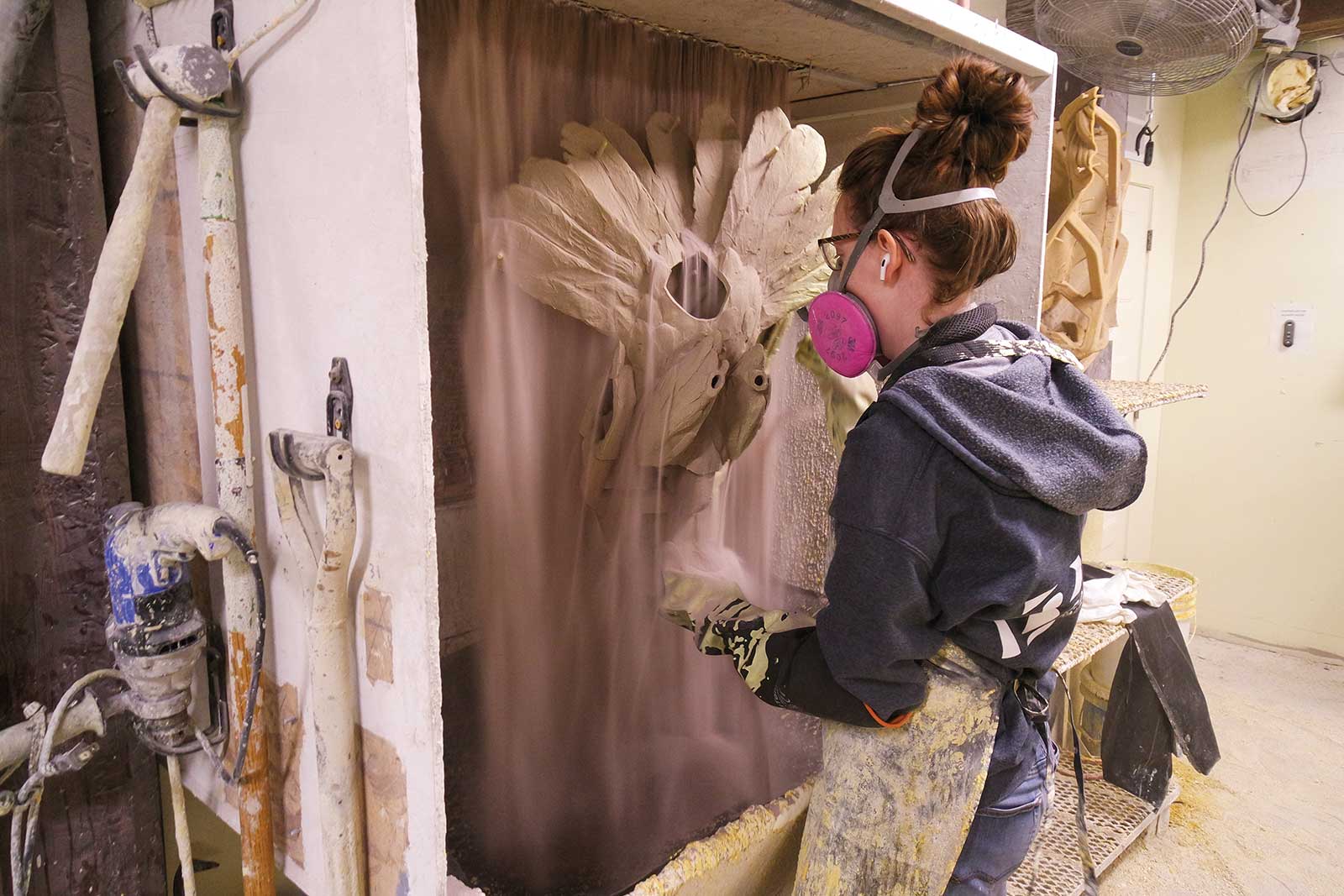
Slurry specialist Lyssa Fisk holds a wax piece of Vertical Limit under falling sand. Prior to the sand, Fisk dunked the wax into a chemical bath and then while it was still wet coated it with sand. The fine sand will help preserve the detail of the wax. After it is dry, the piece will get several more baths and dips in sand in order to make a thick outer shell that will eventually hold the bronze. Temperature and humidity are closely monitored for this process; if the shell does not dry or set correctly it could cause more severe issues later on when bronze is poured into the mold.
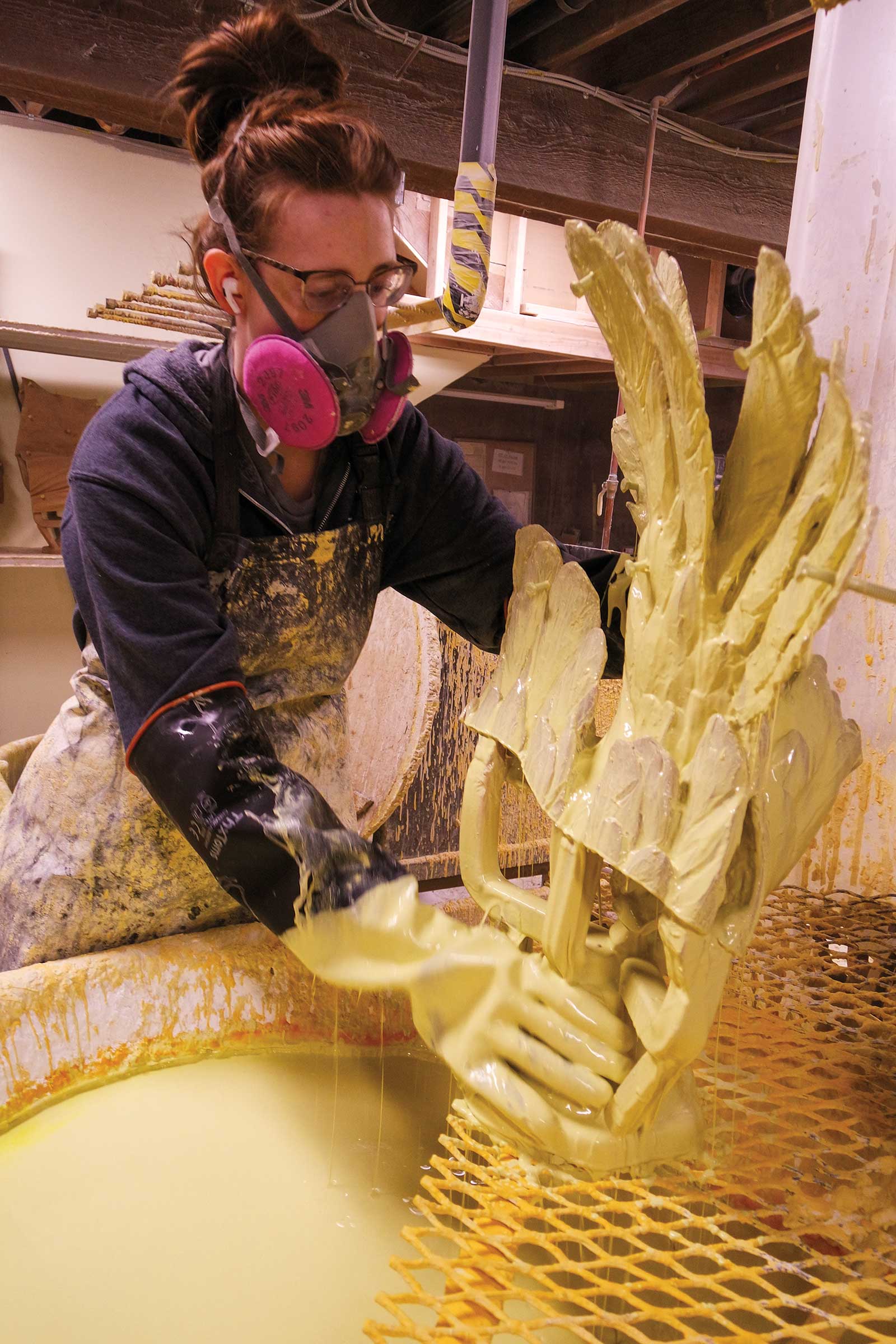
A part of Vertical Limit gets a quick dip in a chemical vat before it gets another coat of sand. The slurry room is full of wax casts in various stages of the process. The whole process can take several days depending on temperature and humidity. These are some of the last steps before the bronze is poured into the mold.
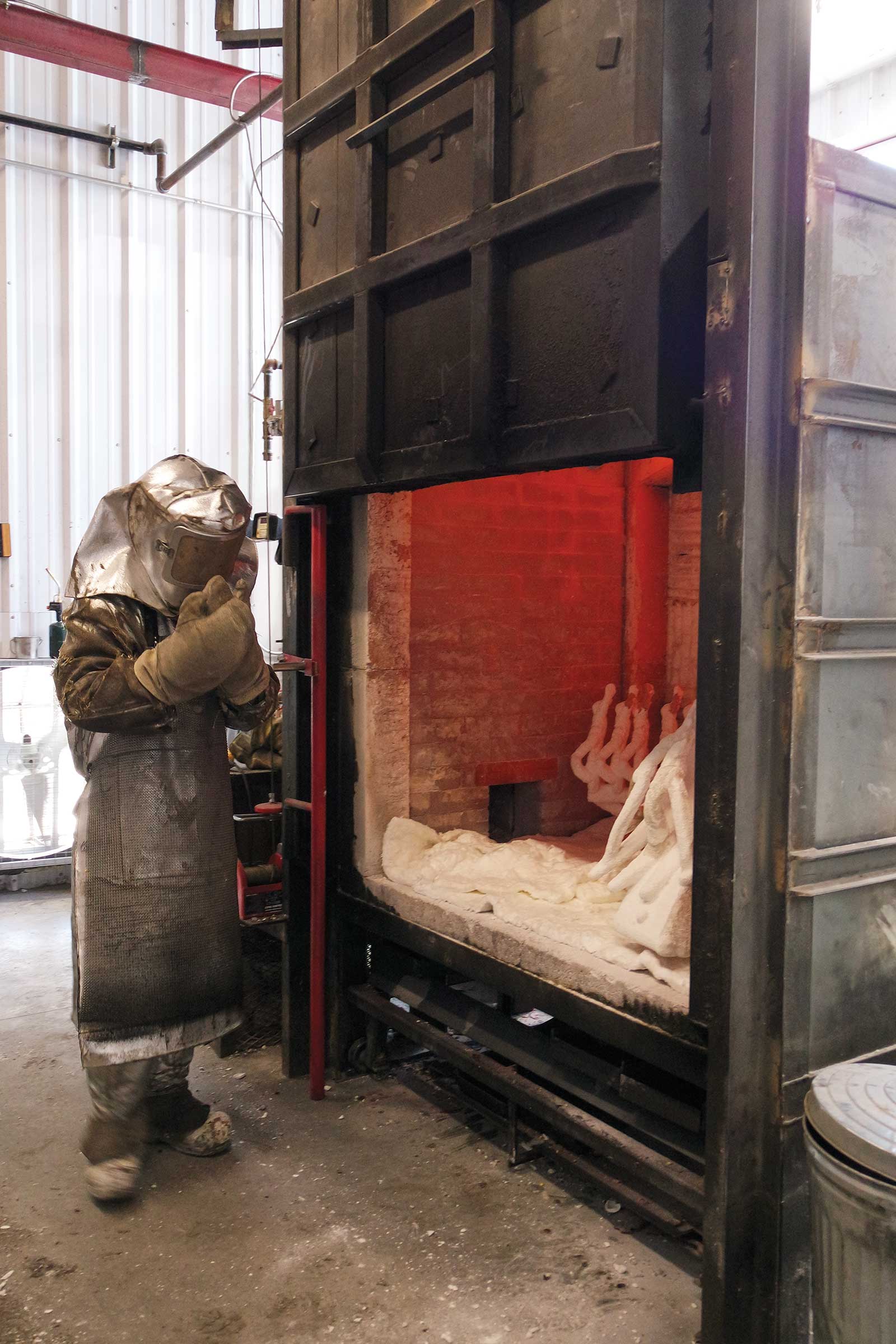
Flashing and casting specialist Mathew Baer prepares to pull several ceramic molds out of a large oven in the bronze room at Art City Bronze. The oven serves two major purposes: First, it melts the wax out of the molds, which then creates the voids that the bronze will eventually occupy. And secondly, it heats up the ceramic shell and eliminates any moisture. If molten bronze were poured in a room-temperature mold, or a mold with any moisture in it, the thermal shock would not only crack the cast, but also seriously injure anyone in the room.
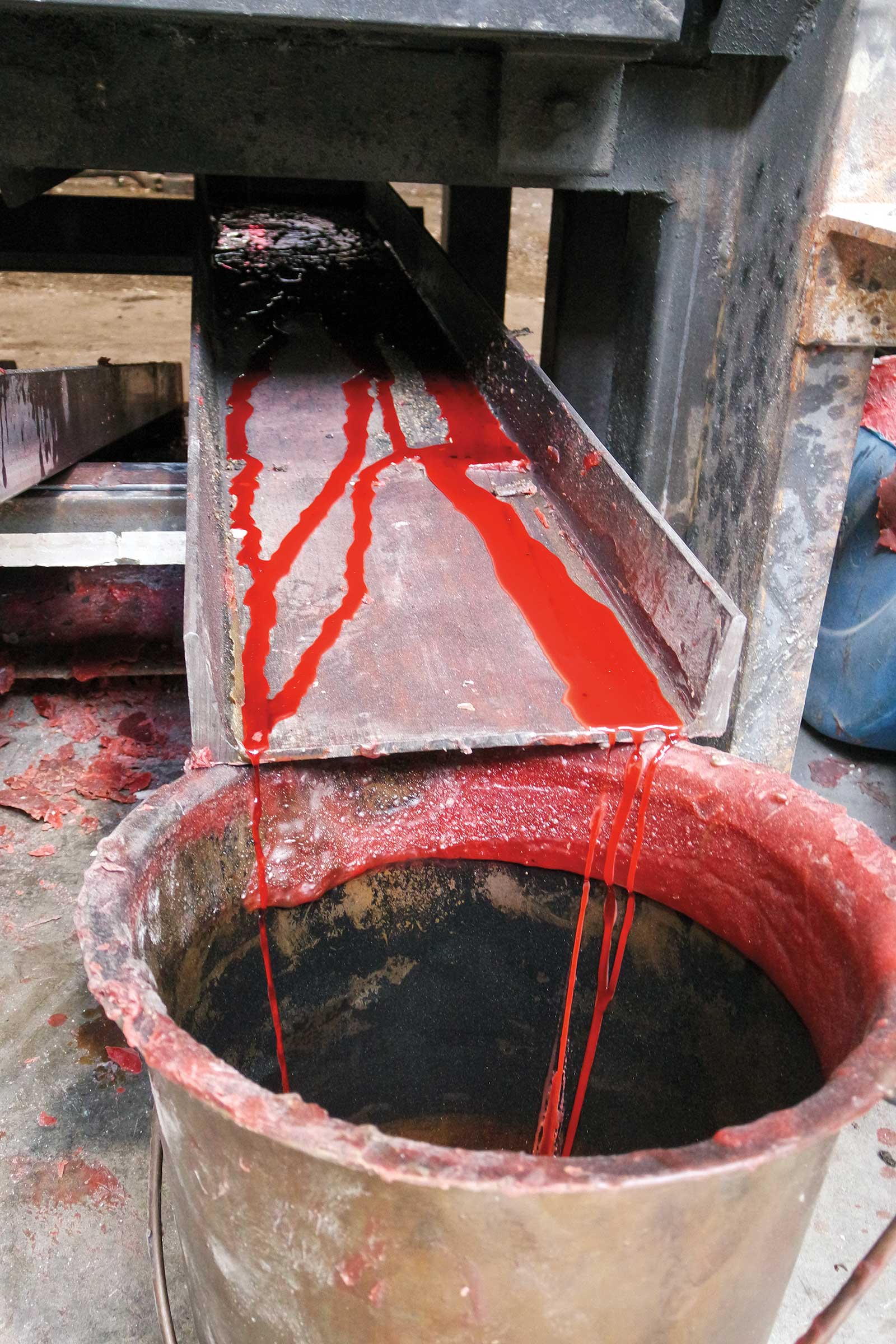
Wax begins to drain from a mold under the oven in the room where the bronze pour takes place. Once the wax is melted out and the ceramic shell is hot, the mold is ready for bronze. All of the wax is eventually filtered and reused for other projects.
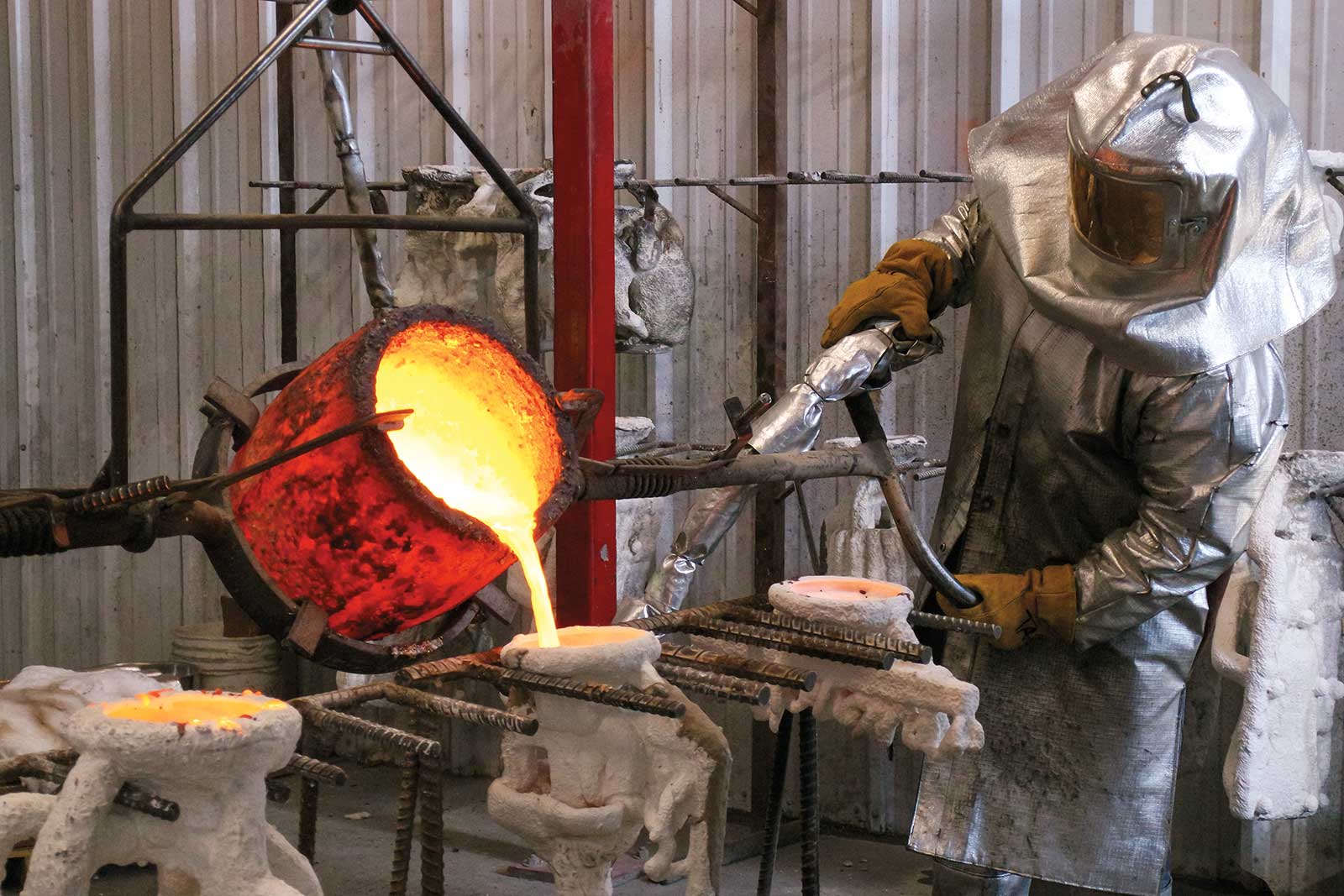
Sonatane (Tane) Falevai helps pour molten bronze from a crucible into ceramic molds that once held wax casts. The mold is designed so the bronze is evenly distributed and there are no air pockets. The bronze is heated up to nearly 2,000 degrees and pulled from the furnace to cool slightly. The temperature is closely monitored so the pour happens at the same temperature every time—it’s all about consistency. The silver suit not only protects from the heat, but if any bronze were to land on the suit it would roll off instead of stick.
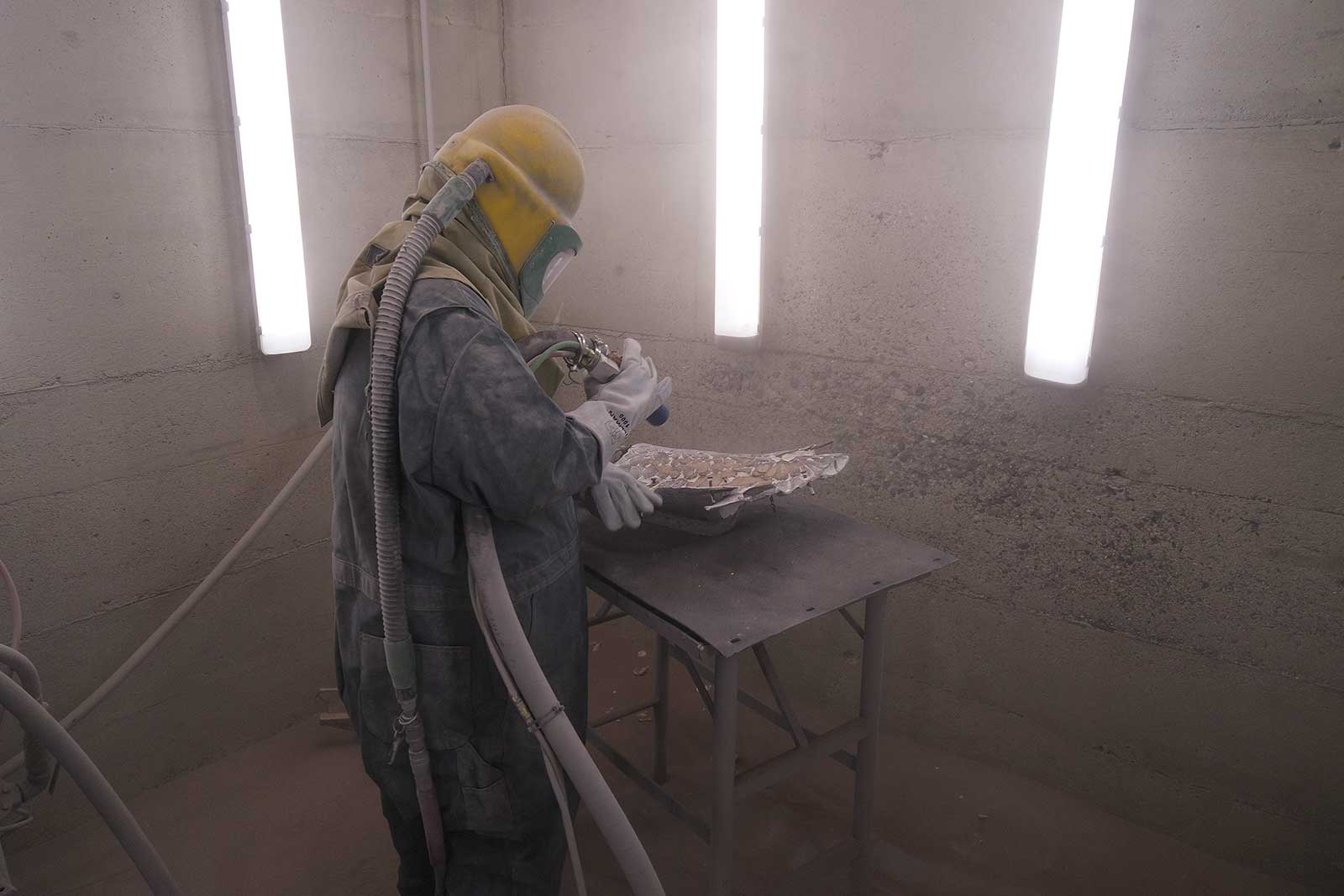
After the bronze in the mold cools, some of the ceramic shell will break off with little force. Other pieces have to be removed by a large jackhammer-like machine tucked away in a dusty room filled with ceramic chunks piled on the floor. The last remnant of ceramic is removed by a sandblaster. Smaller pieces will go in a sandblaster cabinet familiar to many metalworkers. Larger pieces, though, go in this room with metal prep specialist James Jacobsen, who sandblasts in this large protective suit. The handheld sandblaster instantly fills the room with dust and sand. “This is hell on earth right here,” Pettit says. “This is the worst room to be in any foundry. It’s hard work.”
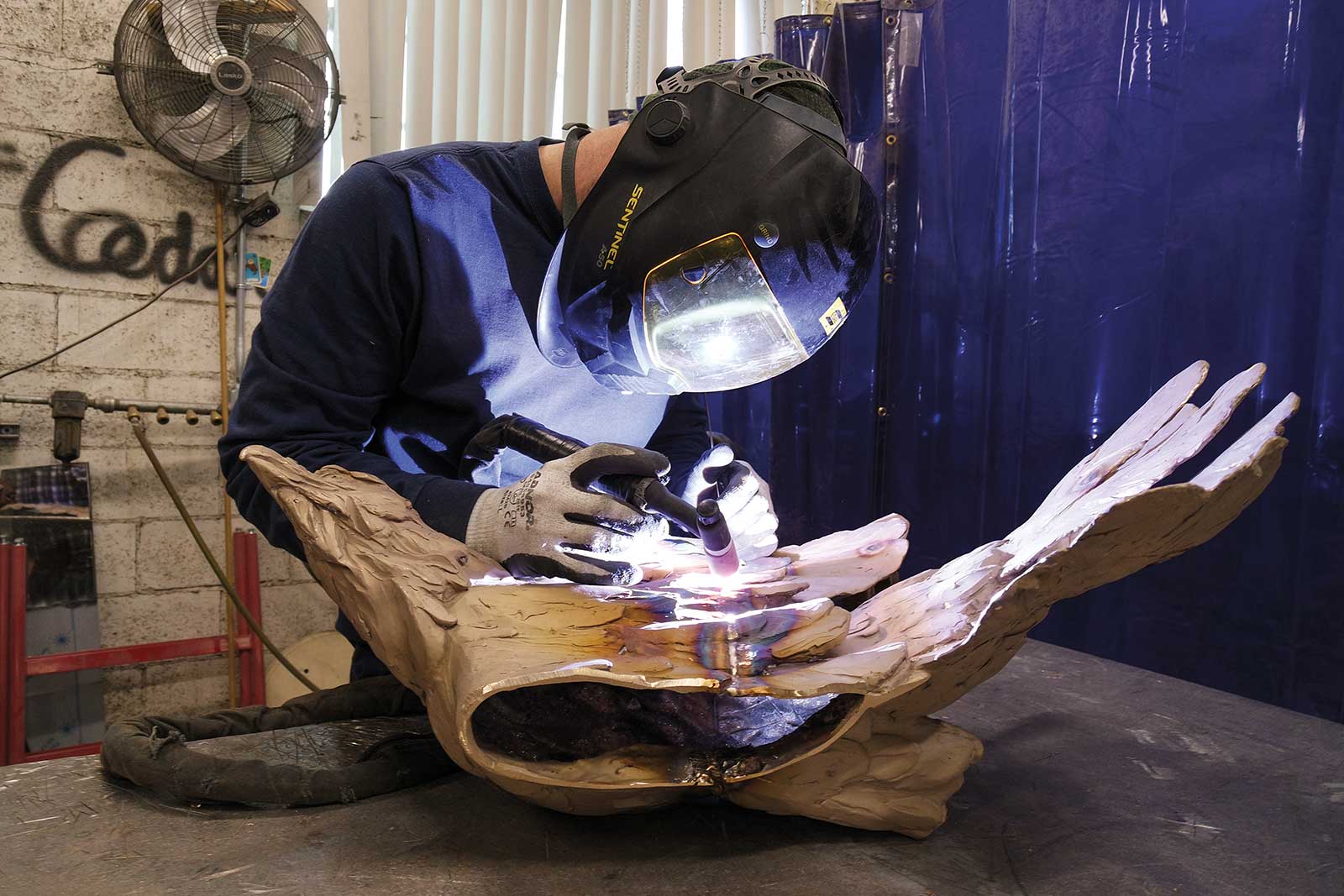
Metal chasing specialist Zachary Gerrard welds part of Vertical Limit. Prior to the welding, the pieces also have the bronze gates cut off with a plasma cutter. The gates, applied in wax during the wax process, are solid bronze after casting. Once the gates are removed, the piece is welded together and the imperfections from the casting process are fixed. The final step is the chasing, which is the blending of the welds and seams to duplicate the look of the clay version of the sculpture. Different tools are used to give the bronze different textures that mimic the clay.
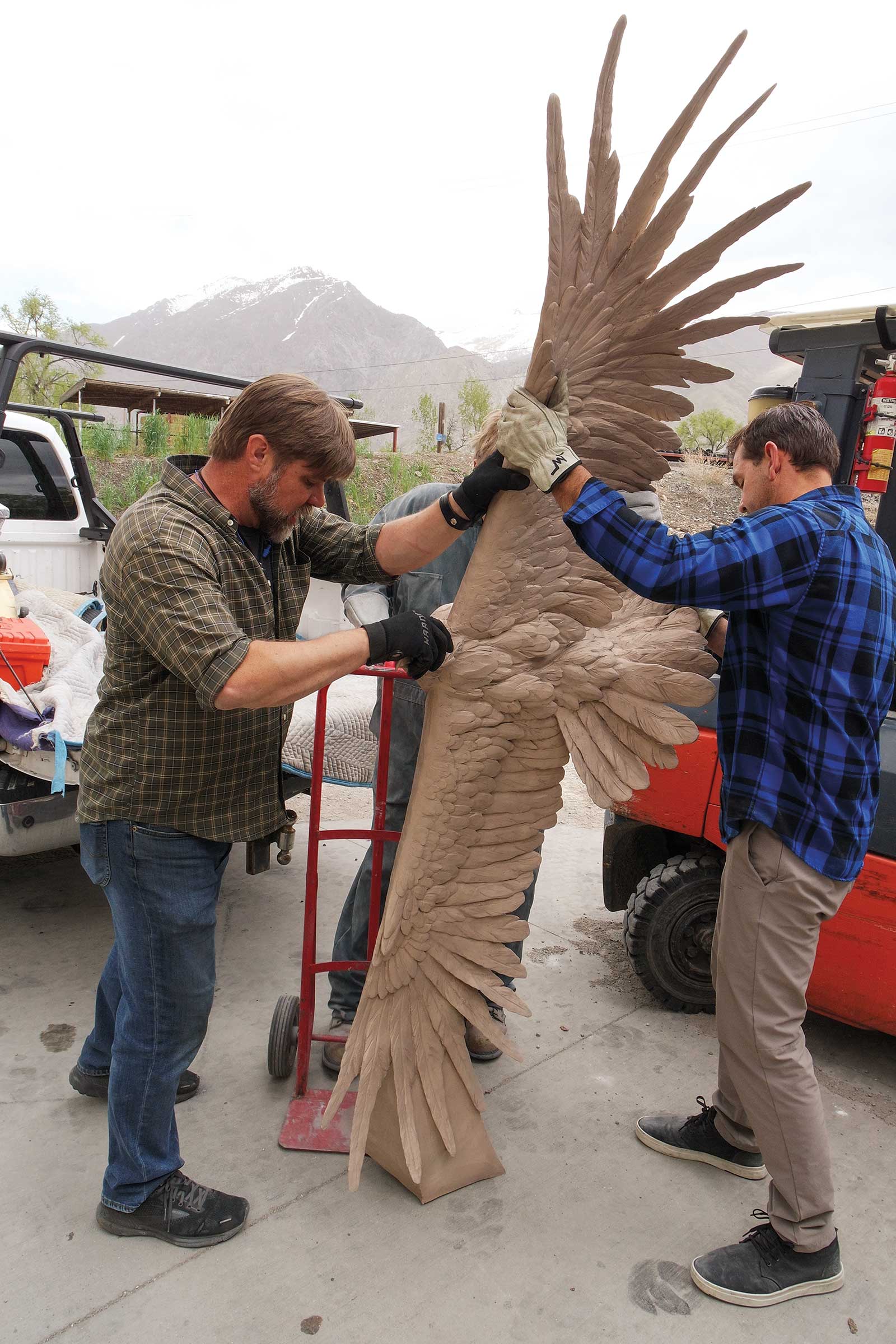
Bryce Pettit, left, and Art City Bronze owner Jeffrey Wright move a nearly finished Vertical Limit into Pettit’s truck. The work is headed to nearby patina artist Nathan Bennett, who does the patinas for most of Pettit’s work. Art City Bronze also has in-house patina artists.
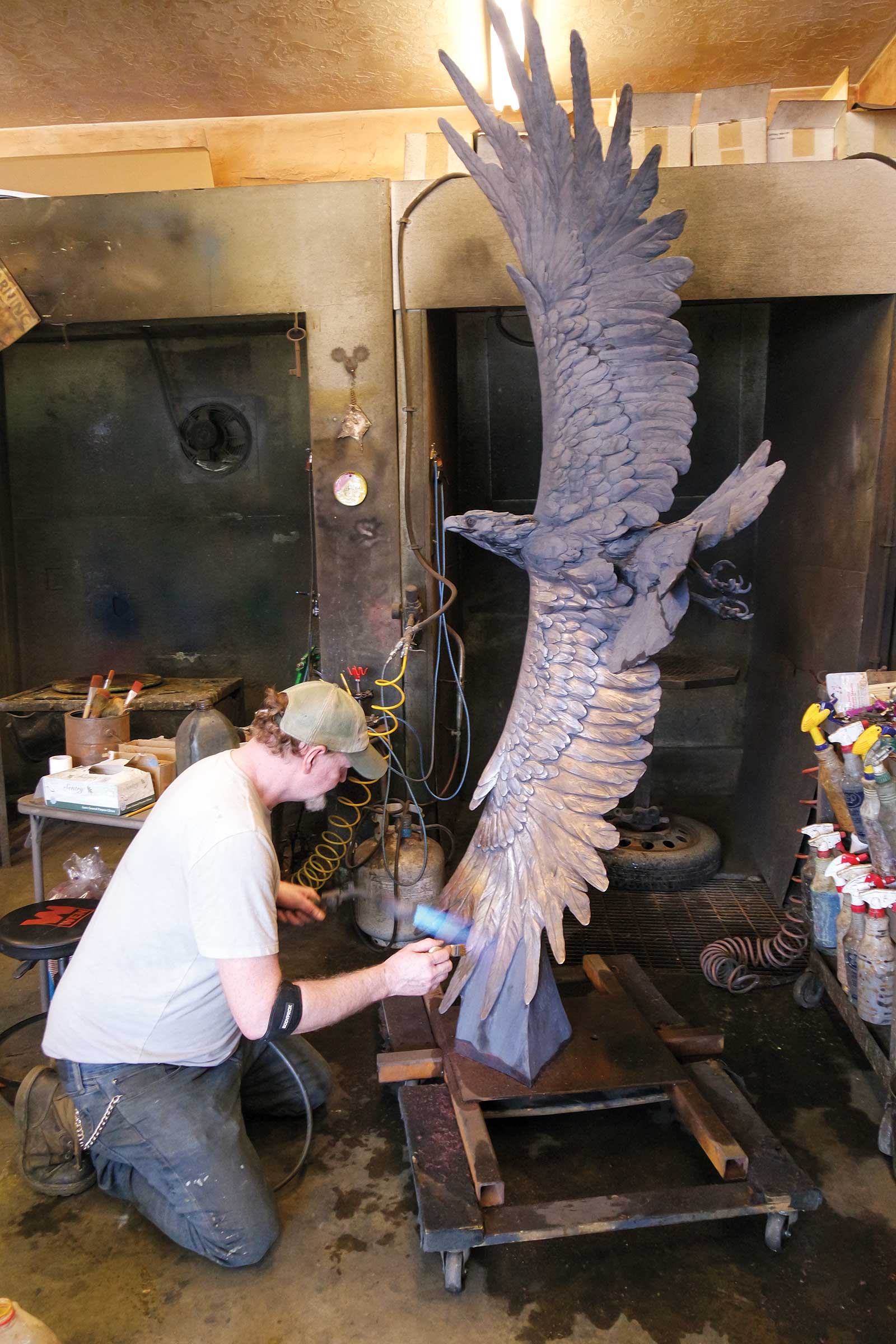
Using various chemicals and intense heat, Nathan Bennett applies a patina to Vertical Limit. It’s more chemistry than anything, with different chemicals that produce different colors, from gold and dark brown to green and even blue. “Bronze is a living metal,” Bennett says, “or else I wouldn’t be able to do what I do to it. It’s an exceptional metal to work with.” —
Powered by Froala Editor