Humans have been sculpting for around 40,000 years. Commenting on a figure excavated in 2008, the Guinness Book of World Records notes, “Unlike previous carvings of likenesses of animals into bone and rock, this depiction of the voluptuous female form—known as the Venus of Hohle Fels—incorporates both biological accuracy and abstract form, meeting all the requirements for true art sculpture.”
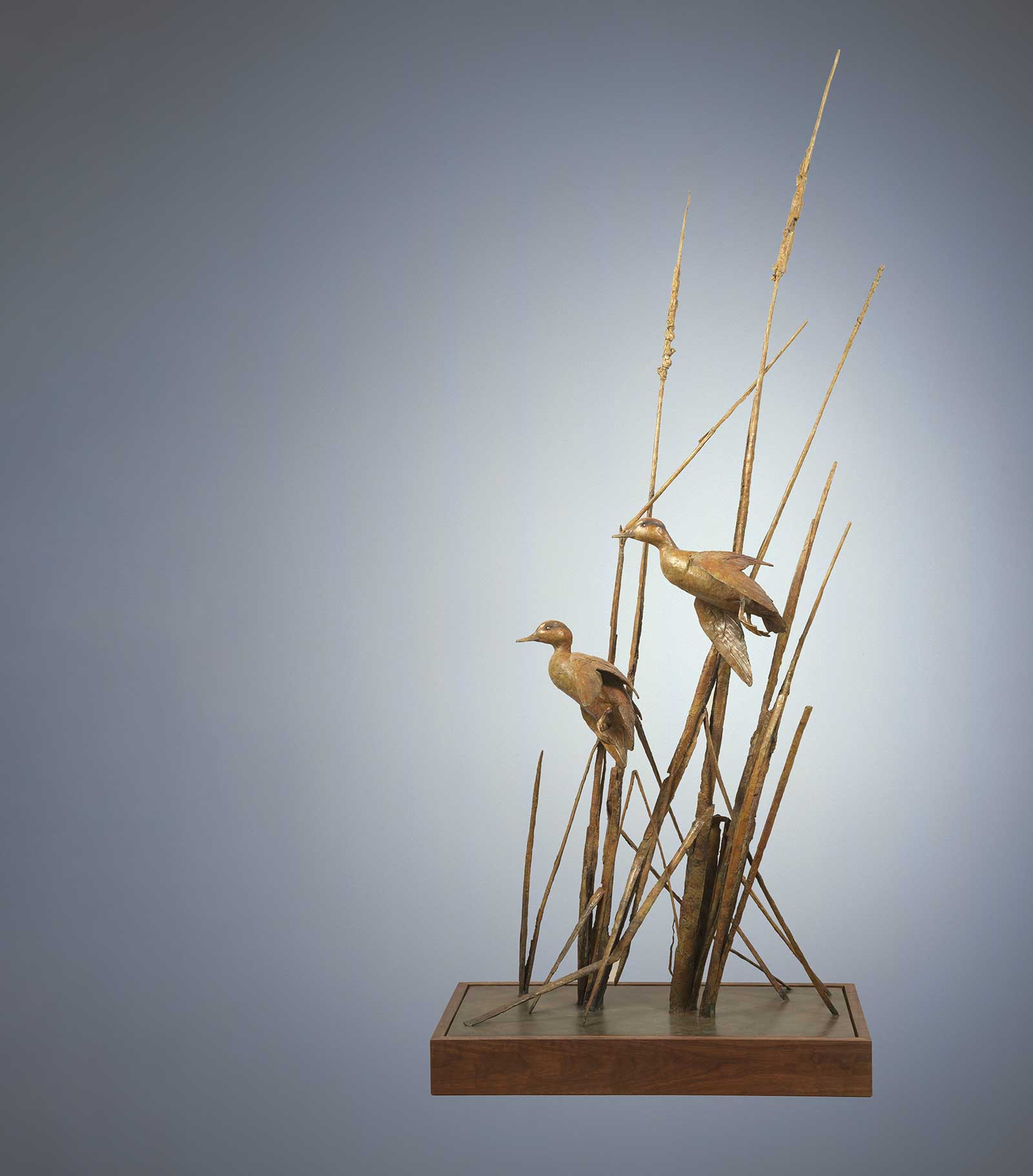
Gerald Peters Gallery, Landing Teal, bronze, 65 x 27 x 14”, by Walter Matia.
Biological accuracy and abstract form have animated sculpture ever since. In his marble sculpture The Rape of Proserpina, 1622, Gian Lorenzo Bernini carved the strong fingers of Pluto pressing into the thigh of Proserpina as if the marble were flesh itself. At the Art Gallery of Ontario, you can wander among a sea of large plaster and bronze maquettes for his abstractions of human form inspired by skulls and bones.
Artist Henry Moore wrote, “The observation of nature is part of an artist’s life, it enlarges his form-knowledge, keeps him fresh and from working only by formula, and feeds inspiration.”
Stephanie Revennaugh echoes Moore, commenting, “I model form because it is the most natural way for me to express an idea or feeling. I model the horse because its form has been imprinted into my consciousness through long hours of interaction, focused observation and drawing. While I am fascinated with the beauty and elegance of equine design, it is the sensitive spirit of the horse which invites exploration of more abstract deeper meanings.”
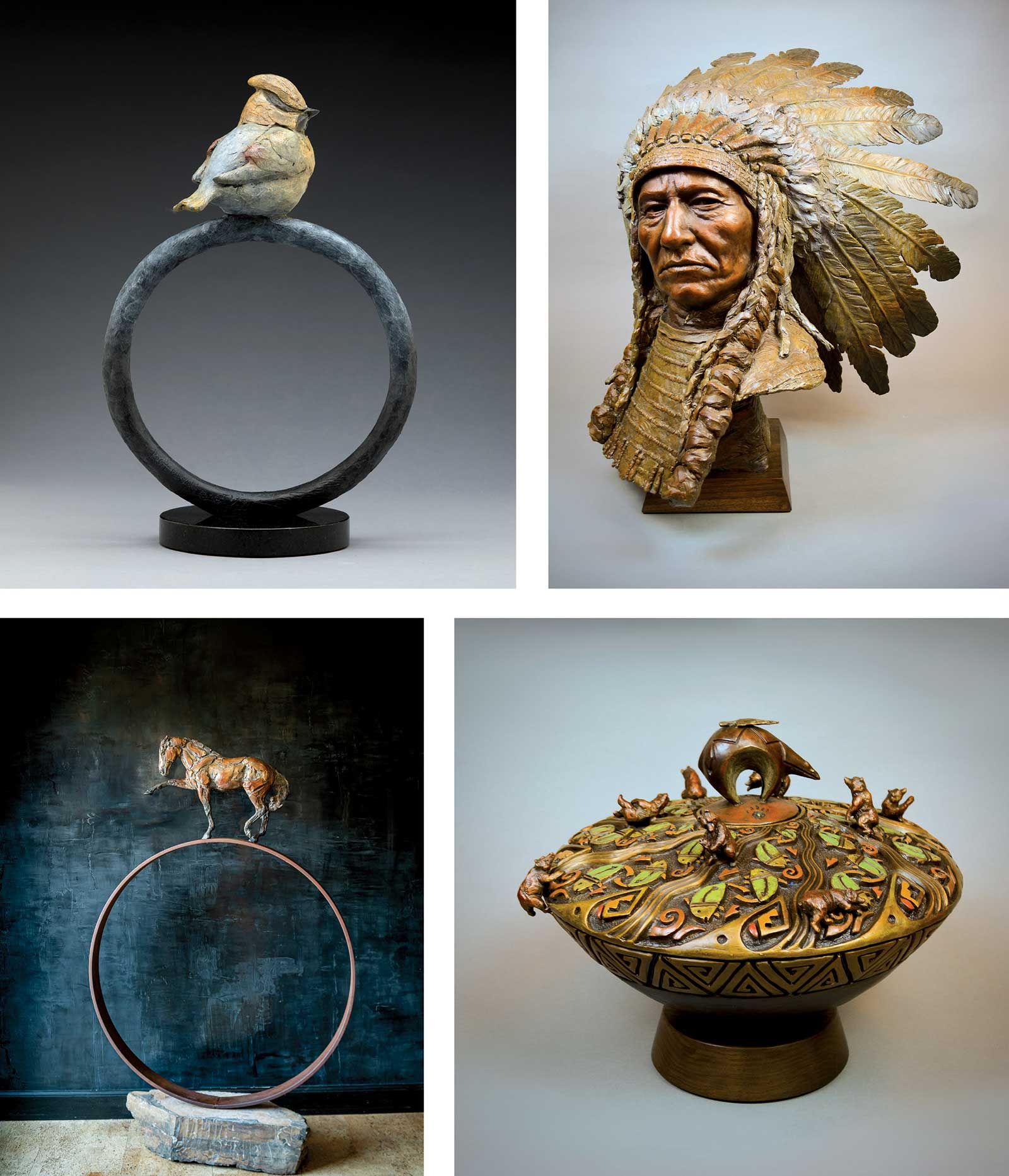
Top: Meyer Gallery, Winter Waxwing, bronze on black granite, 13½”, by David Richardson.; Manitou Galleries, Tatanka Iyotake - Sitting Bull, bronze, ed. of 15, 25 x 22 x 20”, by Ed Natiya. Bottom: Gallery MAR, Con Brillo, bronze, ed. of 21, 55 x 36 x 15”, by Stephanie Revennaugh; Manitou Galleries, Bear Medicine, bronze, ed. of 15, 11 x 14 x 14”, by Ed Natiya.
The vitality of her modeling the original clay, later cast in bronze, depicts the natural grace of the horse in Con Brio, balanced on the manufactured eternal symbol of the circle. She notes that in music, con brio means performed “with liveliness, spirit or brilliance.”
David Richardson says, “My bronze sculpture work is often pared down to an almost abstract minimalism, which allows my deep understanding of form to shine through and breathe life into my works. I am inspired by nature and architecture and offer a unique style by blending the two together.”
Winter Waxwing is from his series of bronze sculptures of Colorado songbirds. The waxwing, reduced to its basic form, balances on a perfect circle.
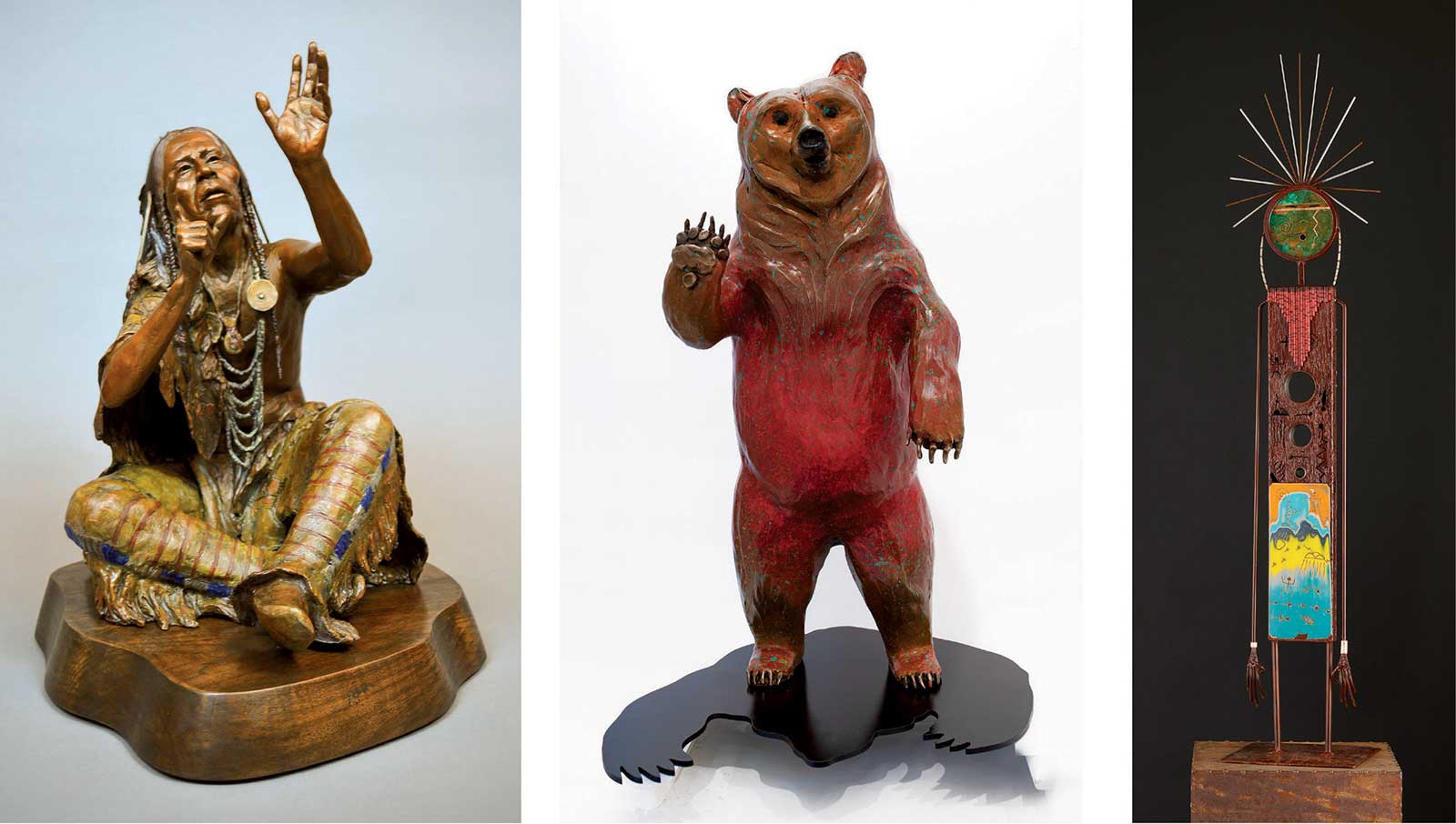
Manitou Galleries, Stories of our People, bronze, ed. of 15, 16 x 12 x 10”, by Ed Natiya; Barbara Meikle, Hi There Bear, bronze with unique color patina (in a “redwood” patina), ed. of 24, 23 x 14 x 14”; Chris Turri, Mirage, patina on reclaimed steel and copper, 42 x 9 x 8”
Walter Matia’s Landing Teal rests among a stand of cattails and marsh grass. Matia studied biology and art design in college, and worked in the exhibits department of the Cleveland Museum of Natural History as well as for the Nature Conservancy. His years of careful observation come together in works that often depict the fauna in ephemeral flora.
Creating artwork in three dimensions takes an entirely unique set of skills. Throughout this collector’s focus, explore more works of art by Western sculptors who have carved and chiseled these skills.
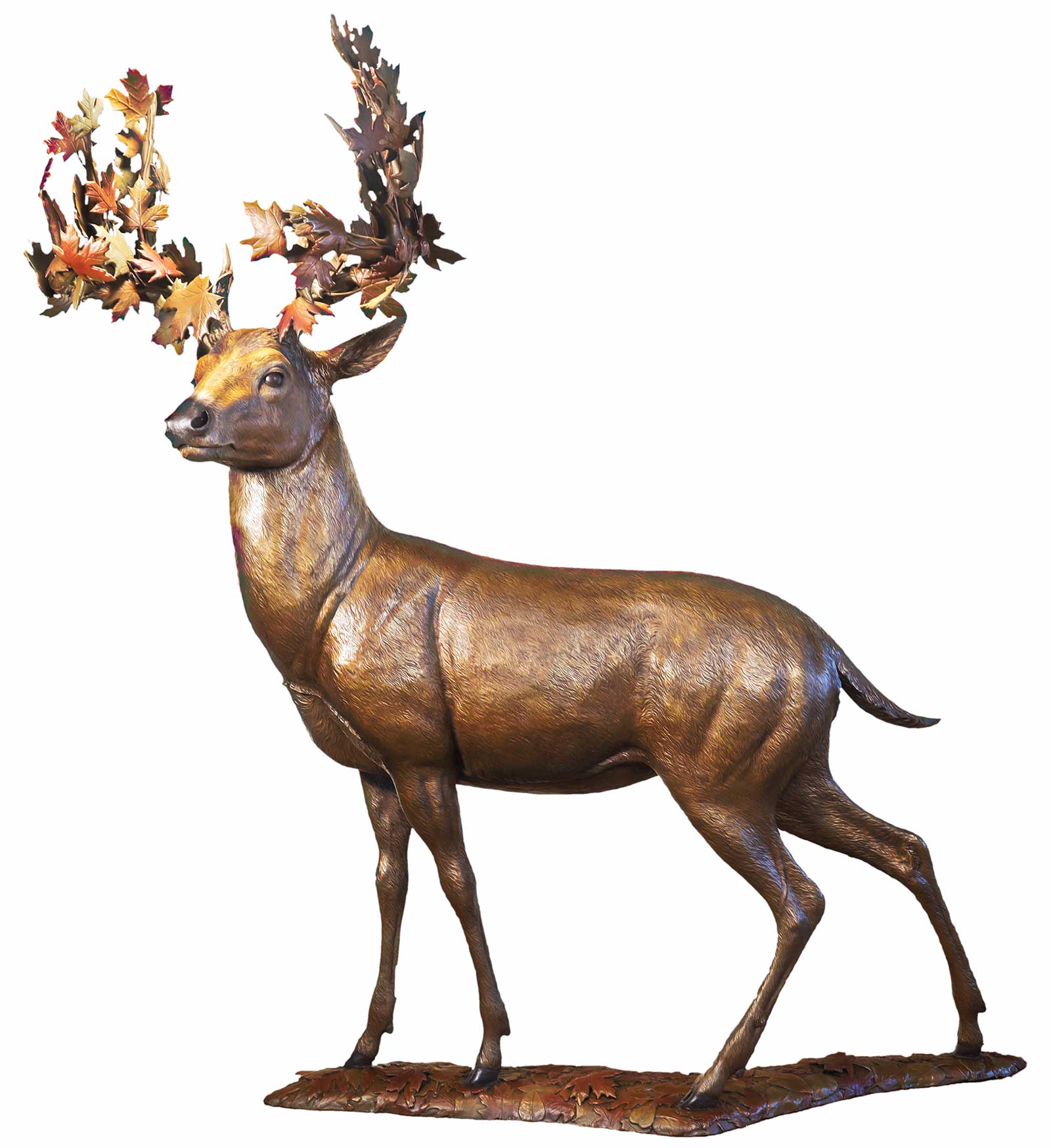
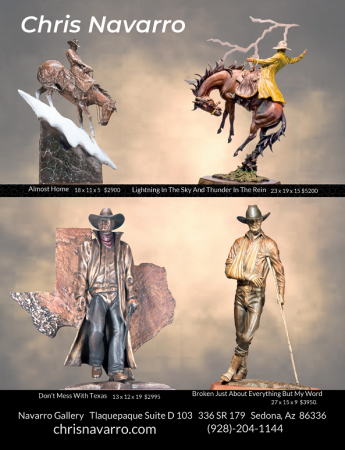
Chris Navarro, King of the Forest, bronze 66 x 67 x 26"
Manitou Galleries on Palace Avenue in Santa Fe, New Mexico, represents the works of Navajo artist Ed Natiya. Associate director Cyndi Hall comments, “Ed Natiya is driven by the need to explore the wisdom of long ago and the genuine nature of Native peoples. Inspired by his well-known ancestors, such as his great-great-grandfather, Bullet Manuelito, who was one of the last four chiefs of the Navajo Nation, he sculpts their stories and Native wisdom as it once was, in hopes that these teachings and values may be remembered and appreciated for years to come.”
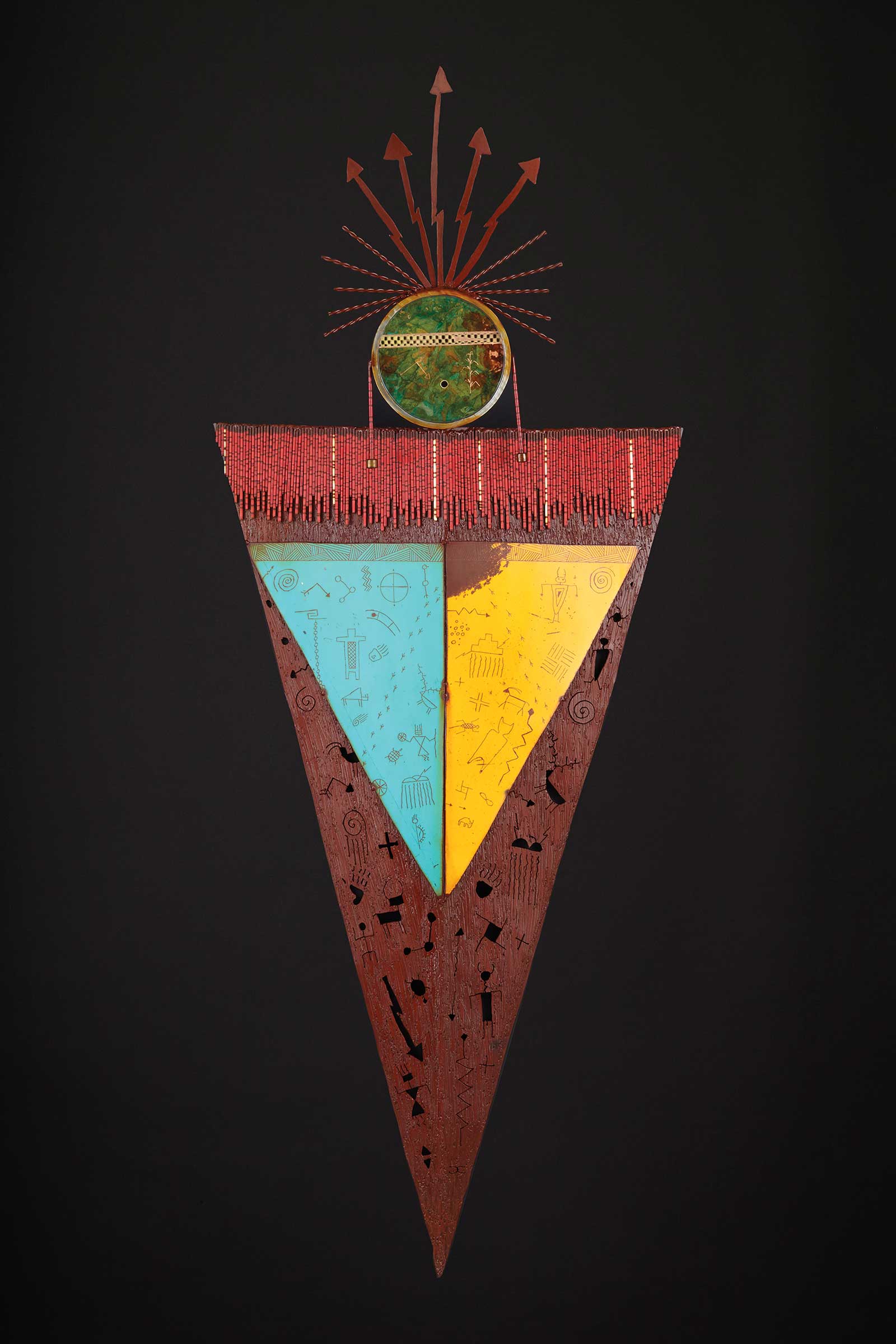
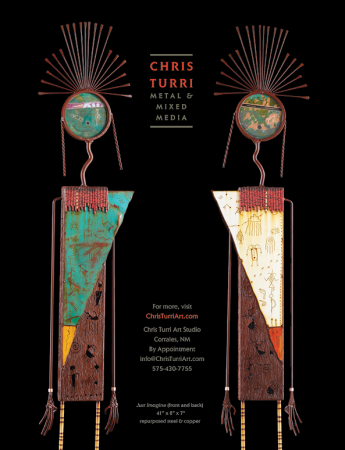
Chris Turri, Seguridad, patina on reclaimed steel and copper, 58 x 25 x 4"
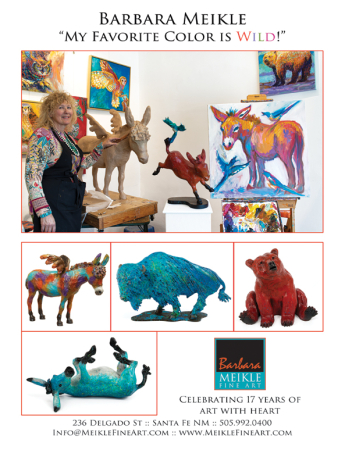
Barbara Meikle of Barbara Meikle Fine Art is both a painter and a sculptor. She began creating bronze sculptures in 2009. “I always remembered the quote from Edward Degas, which read, ‘If you want to learn to paint a horse, you must first sculpt it.’ And I have to say, working in three dimensions has benefitted my two-dimensional art immensely,” she says. “I immediately began incorporating hot color patinas onto my bronzes as a way to connect the sculpture with my paintings, which are very colorful. The process of patinating my bronzes this way requires heat, daring and patience. Each time I am creating not only a sculpture but a painting as the heat patinas are unique in their process.”
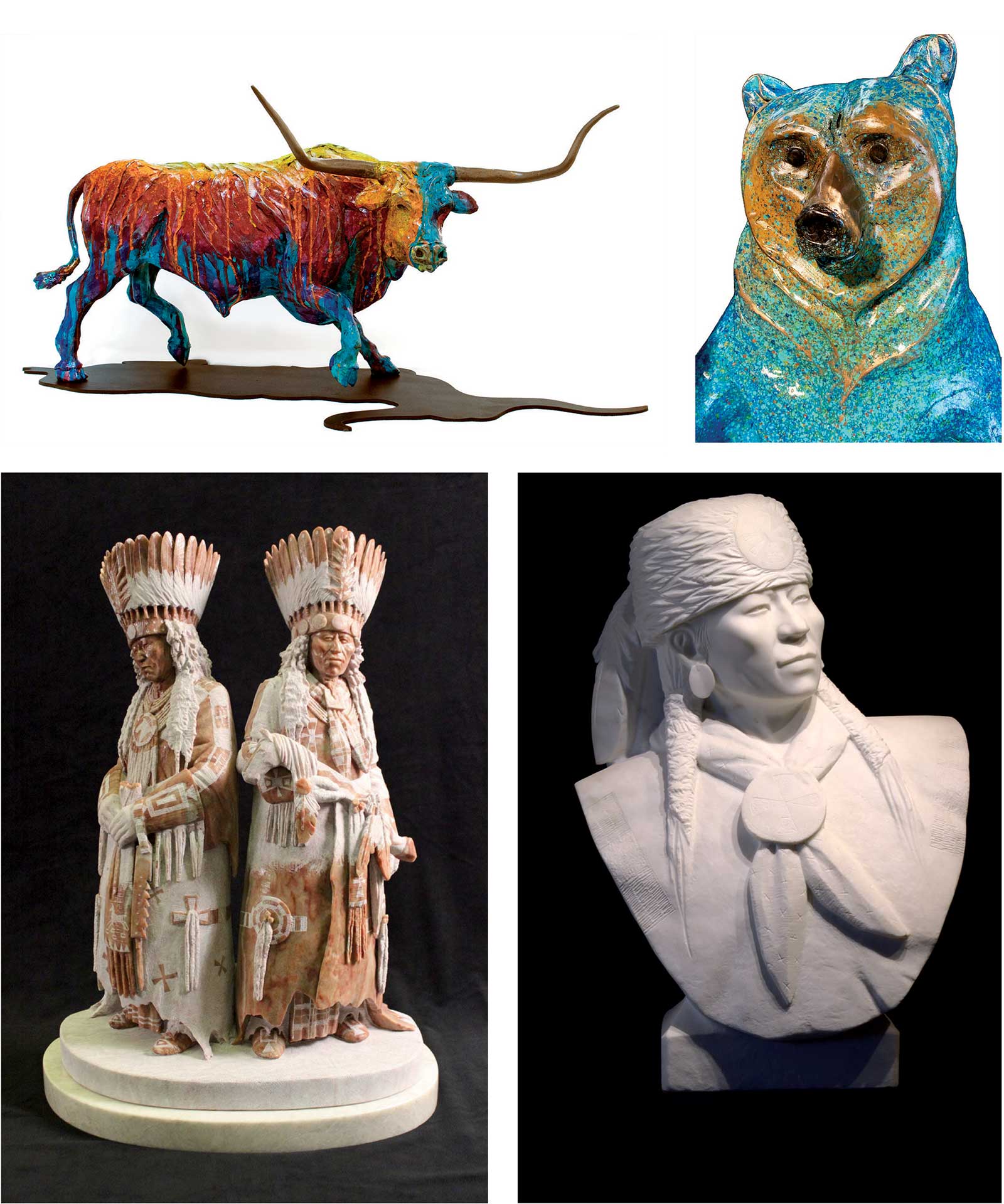
Top: Barbara Meikle, Sunset Storm, bronze with unique color patina, ed. of 30, 13 x 34 x 12”; Barbara Meikle, Hi There Bear (detail), (in an “ancient blue” patina), ed. of 24, 23 x 14 x 14” Bottom: Oreland Joe, Blackfoot Horsemen, Utah alabaster, 26”; Oreland Joe, Calling upon Thunder, white Italian marble, 27”
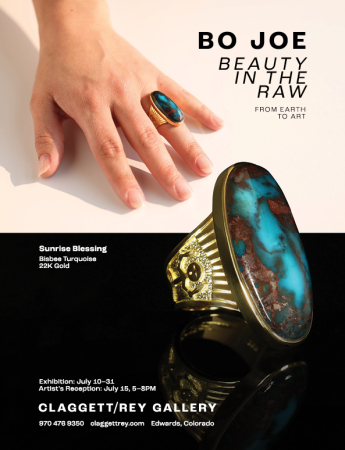
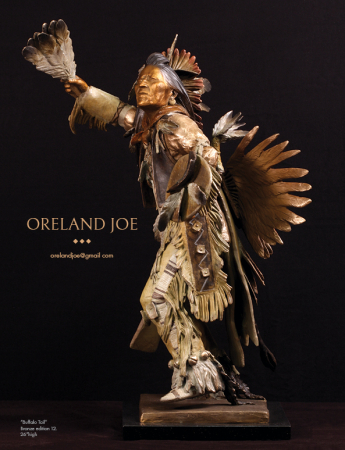
Navajo/Southern Ute artist Oreland Joe is world-renowned for his sculptures of stone and bronze. His family and heritage continue to inspire his work. “My grandfather’s power descended upon me at 5½ years old. I have clear memories of him rolling his smoke with Prince Albert tobacco,” Joe reflects. “He often tapped his knee to keep the rhythm with his singing. The Ute songs instilled visions and dreams to me as a youngster. I still have the power today to reach back in time and feel that special period that my grandfather lived and witnessed the power of song and dance and storytelling. It is the basis for every medium I explore and experiment with.”
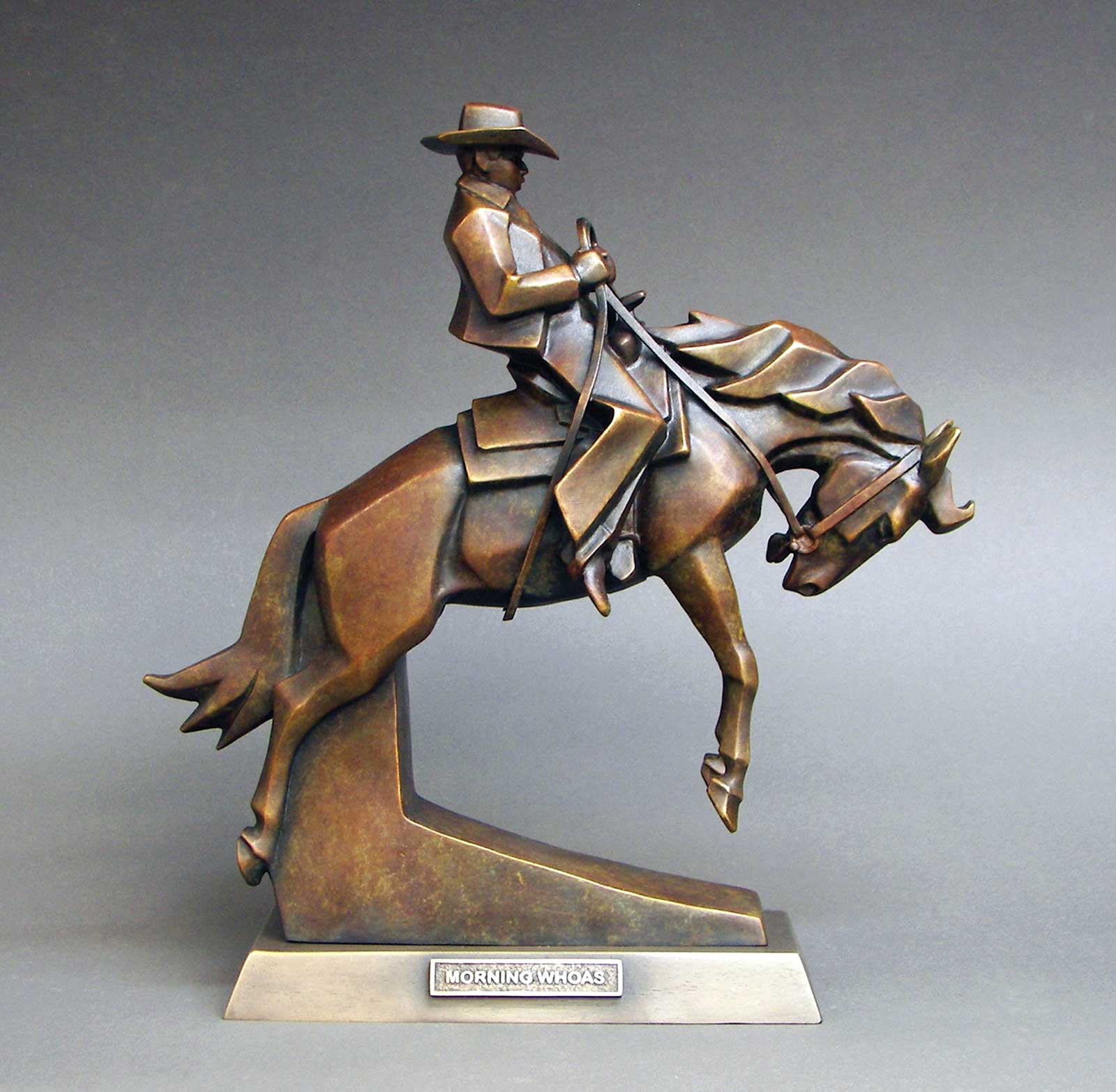
Legacy Gallery, Morning Whoas, bronze, 11½ x 11 x 3½", by Rick Terry.
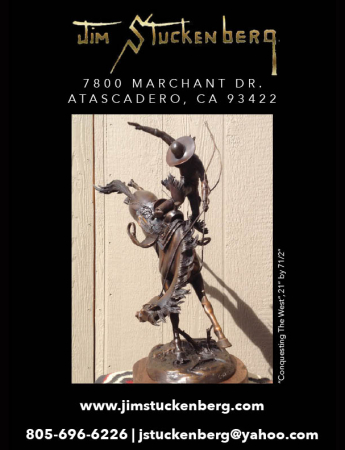
Jim Stuckenberg is known as one of the true “cowboy artists.” Born deaf in 1943 on a farm in St. Louis, Stuckenberg learned to read lips at age 4. Earning a degree in animal science from Fresno State University, the artist has had a lifelong love of horses that led him to working for famed racehorse trainer D. Wayne Lukas. This is also where he began experimenting with watercolor painting, which eventually evolved into his work in Western sculpture, as well as oils and other mediums. Since then, Stuckenberg has shown in galleries and museums nationwide.
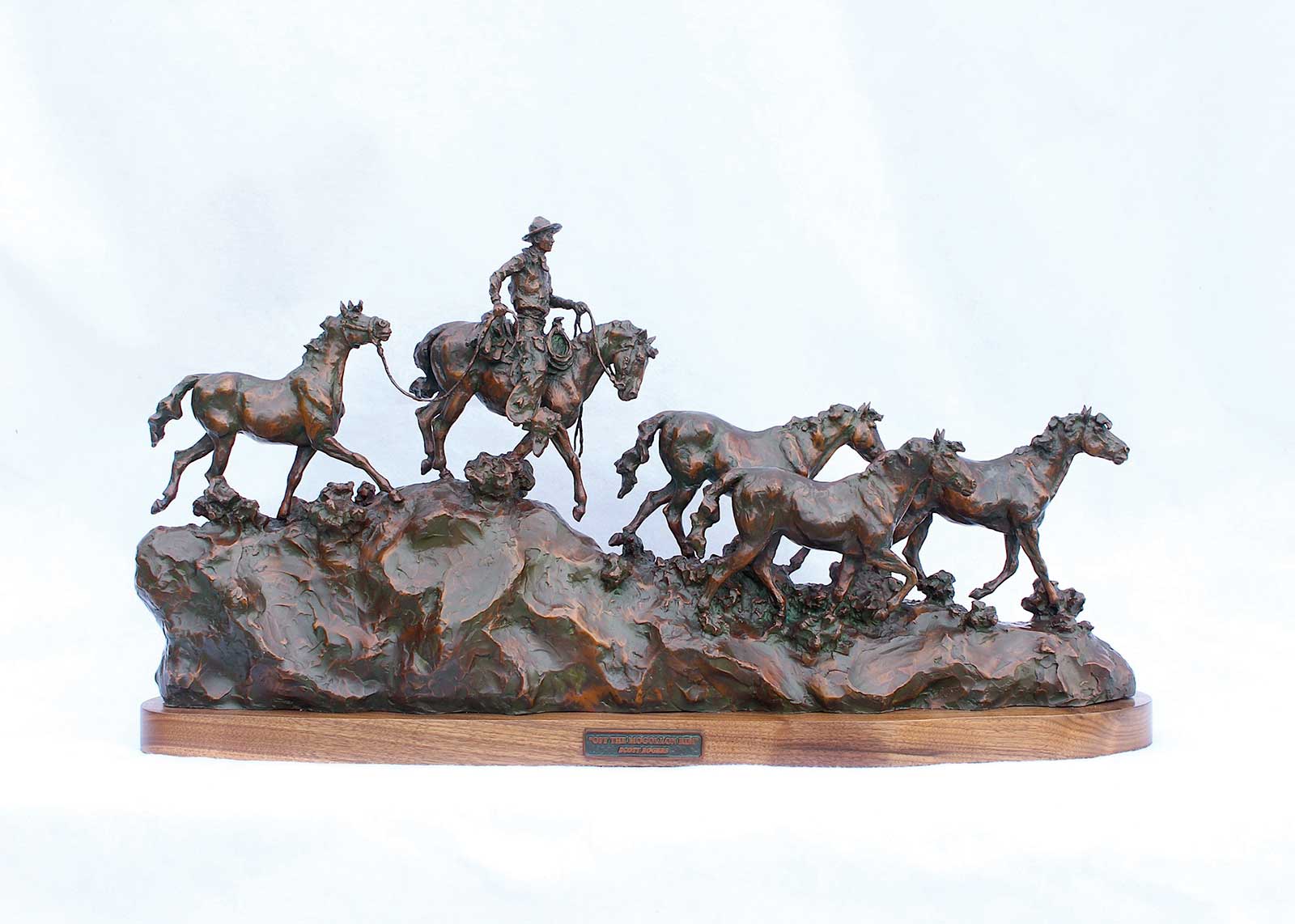
Legacy Gallery, Off the Mogollon Rim, bronze, ed. of 30, 18½ x 36 x 6", by Scott Rogers.
“My interest and inspiration come from my love of Native culture, the landscape and the stuff people leave behind,” says artist Chris Turri. “I’ve always been drawn to the sculpture in nature from the wind-blown ripples in the sand dunes at White Sands National Monument in southern New Mexico where I grew up, to the sandstone monoliths and hoodoos in Northern New Mexico. Through the years of exploring the landscape I have collected so much metal and at some point all these elements just collided with my creative energy. I use reclaimed metals, especially from old vehicles, and I let the patina, shapes and character of the metal move me. Most of my sculptures start there.”
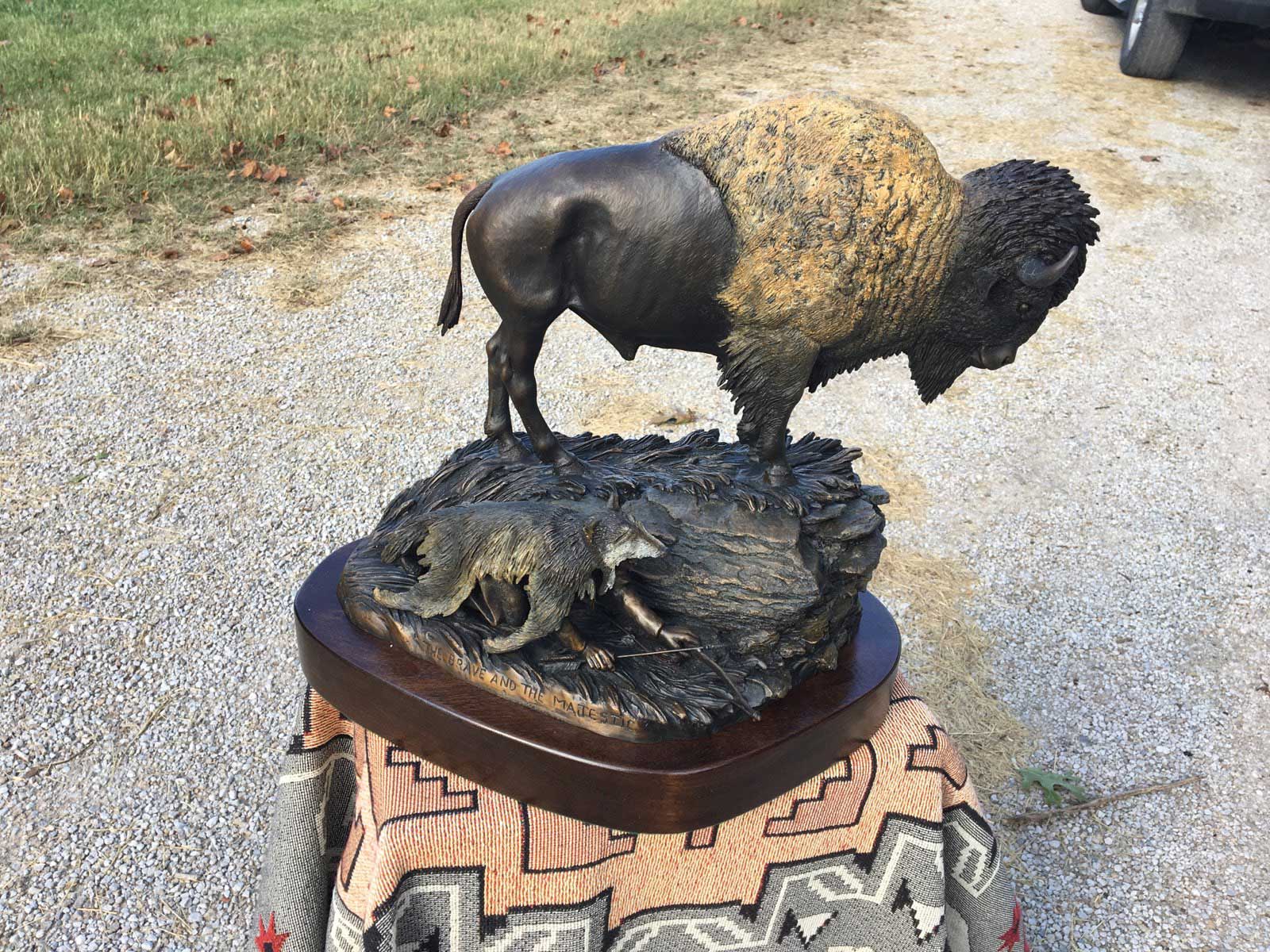
Jim Stuckenberg, The Brave and the Majestic, bronze, ed. of 45, 14 x 17½"
Originally from Utah, Ed Fraughton is a sculptor of Western and historical subjects, working with bronze and stone. He has a major interest in cowboys and horses, especially cowboys and horses in action.The artist once said, “The cowboy comes closest to being a Greek centaur, man and horse working together almost as one body.”
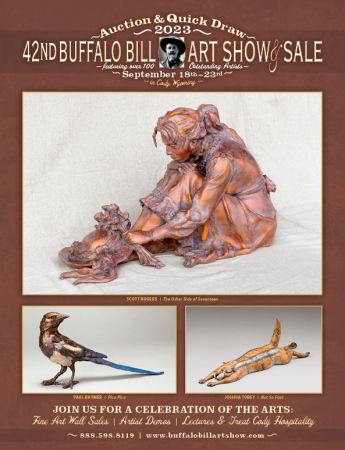
“In Northern Arizona, there is an area called the Mogollon Rim. It is famous for its beauty and ruggedness. About 20 years ago, I was invited to participate in a round-up in northern Arizona. The outfit ran cattle on 25 square miles of government land (which was part of the Mogollon Rim). That experience inspired this piece,” artist Scott Rogers says of his painting Off the Mogollon Rim.
Rick Terry became interested in bronze sculpture while visiting galleries in Jackson Hole, Wyoming. Back in the mid 1970s he worked in ceramic clay and fired at a local pottery shop.
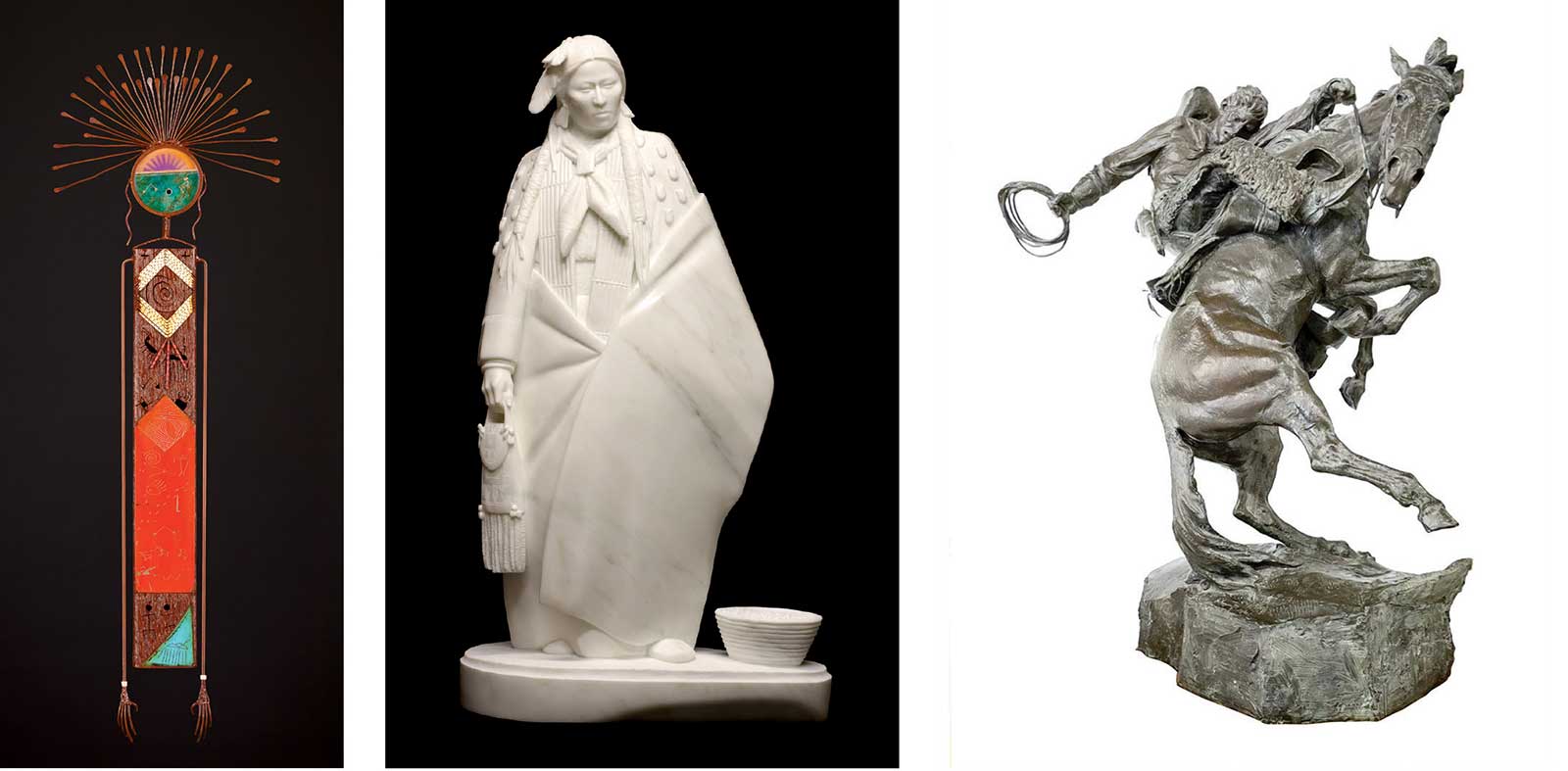
Chris Turri, Morning Star, patina on reclaimed steel and copper, 44 x 15 x 2”; Oreland Joe, Picking Choke Cherries along Pine River, Italian marble, 38”; Legacy Gallery, The Spirit of Wyoming, bronze, ed. 15 of 30, 43 x 34 x 25”, by Ed Fraughton.
Hoping to expand his art into bronze, he began an art program at Northern Arizona University in Flagstaff, Arizona. After working many years as a roughneck in Montana and Wyoming, an injury allowed Terry the downtime to go back to school and master his craft.
Fraughton, Rogers and Terry are each represented by Legacy Gallery in Scottsdale, Arizona. —
Featured Artists & Galleries
Barbara Meikle Fine Art
236 Delgado Street, Santa Fe, NM 87501
(505) 992-0400
info@meiklefineart.com
www.meiklefineart.com
Chris Navarro
Navarro Gallery, Tlaquepaque Suite D103
Sedona, AZ 86336
www.chrisnavarro.com
Chris Turri
Corrales, NM
(575) 430-7755
info@christurriart.com
www.christurriart.com
Gallery MAR Carmel
Dolores 5SW Ocean Avenue, Carmel, CA 93921
(831) 624-2000, www.gallerymarcarmel.com
Gerald Peters Gallery
1005 Paseo de Peralta, Santa Fe, NM 87501
www.gpgallery.com
Jim Stuckenberg
Atascadero, CA
(805) 769-6226
www.jimstuckenberg.com
Legacy Gallery
7178 Main Street, Scottsdale, AZ
(480) 945-1113, www.legacygallery.com
Manitou Galleries
123 W. Palace Avenue, Santa Fe, NM 87501
(505) 986-0440, www.manitougalleries.com
Meyer Gallery
225 Canyon Road, #14, Santa Fe, NM 87501
(505) 983-1434, www.meyergalleries.com
Oreland Joe
25 Road 6427, Kirtland, NM 87417
orelandjoe@gmail.com
Powered by Froala Editor