
Ancient Puebloans lived in Canyon de Chelly on the Navajo Nation of Arizona over 4,000 years ago. The cliffs of the canyon are about 30 feet high at its mouth and rise to more than 1,000 feet deeper in. Its name is a Spanish borrowing of the Navajo word for the region, Tséyi’, “deep in the rock.”
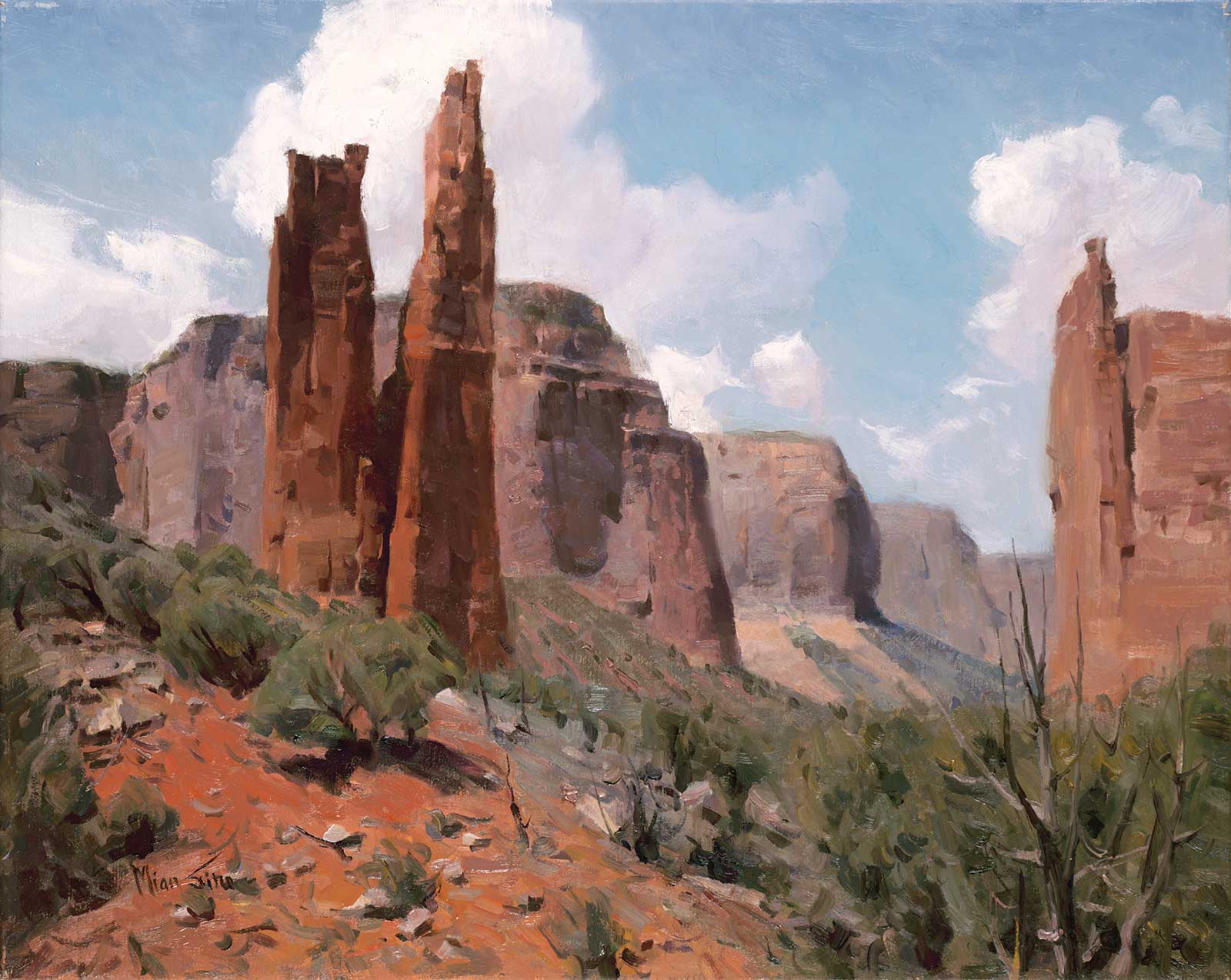
American Legacy Fine Arts, Spider Rock, Canyon de Chelly, oil on canvas, 16 x 20", by Mian Situ.
What may appear as a desert environment is a fertile area that has sustained people, animals and crops for centuries.
One of the iconic images of Canyon de Chelly is a photograph taken by Edward S. Curtis (1868-1952). Navajo Riders in Canyon de Chelly, circa 1904, depicts seven riders on horseback and a dog passing beneath the towering cliffs.
Curtis wrote in his life’s work The North American Indian, “In Cañon de Chelly, which may be termed the garden spot of the reservation, there are diminutive farms and splendid peach orchards irrigated with freshet water. The cañon drains an extensive region, and even a light rain causes the stream which flows at the base of its lofty walls to become swollen. This water the natives divert to their miniature cornfields and orchards, one or two freshets assuring good crops.”
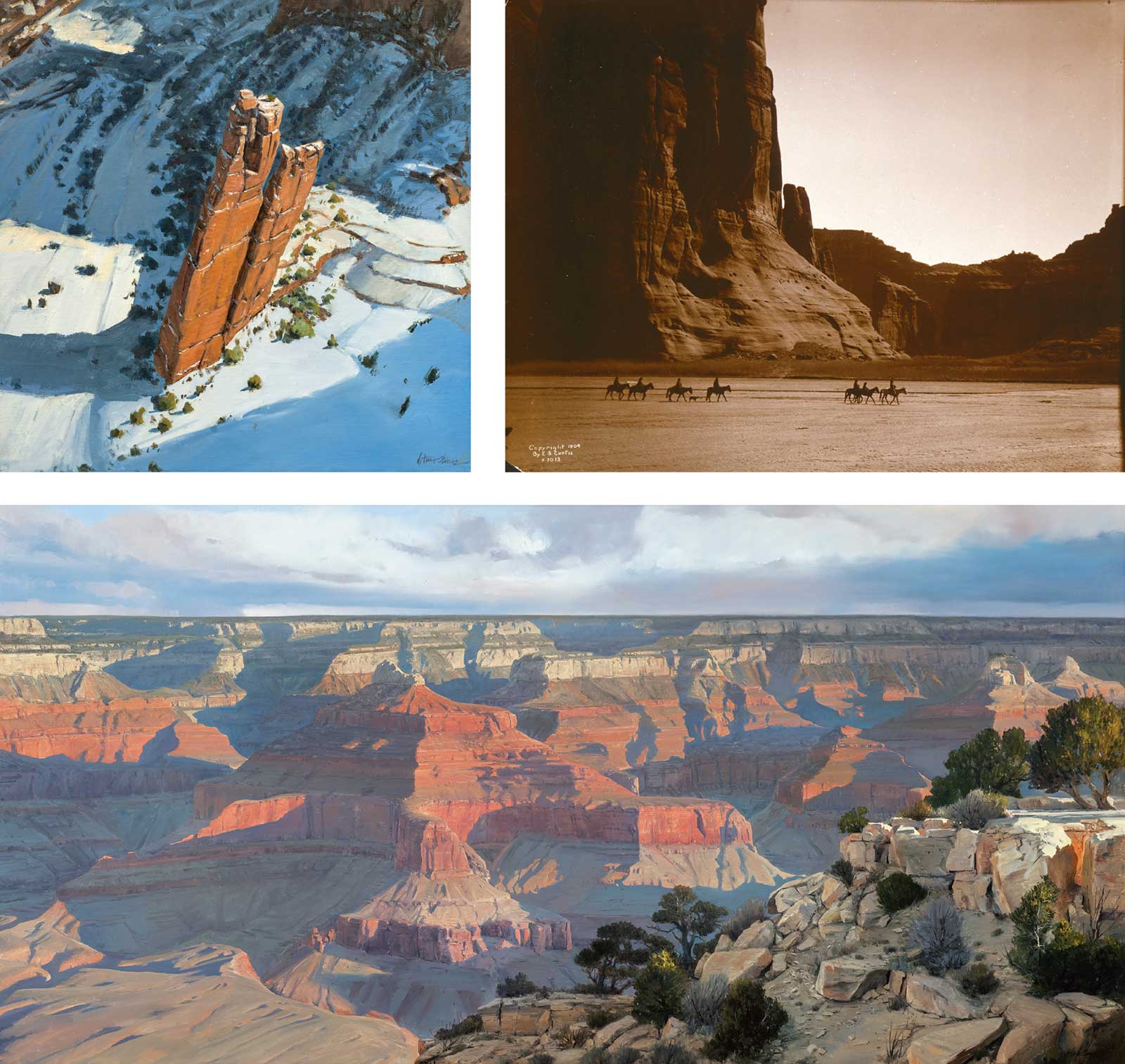
Top: Legacy Gallery, Aerial Over Spider Rock, oil, 24 x 24”, by Arturo Chávez; Edward S. Curtis (1868-1952), Navajo riders in Canyon de Chelly, ca. 1904, photograph. Library of Congress Prints and Photographs Division Washington, D.C. Bottom: Legacy Gallery, Rock of Ages, oil, 40 x 80”, by Arturo Chávez.
The Navajo entered the canyon about 400 years ago, bringing domesticated sheep and goats. Peach orchards dotted the canyon, planted by the Hopi who had used the canyon primarily for seasonal planting and who left for the higher mesas about 500 years ago.
Today, the National Park Service and the Navajo Nation share resources and manage Canyon de Chelly National Monument together.
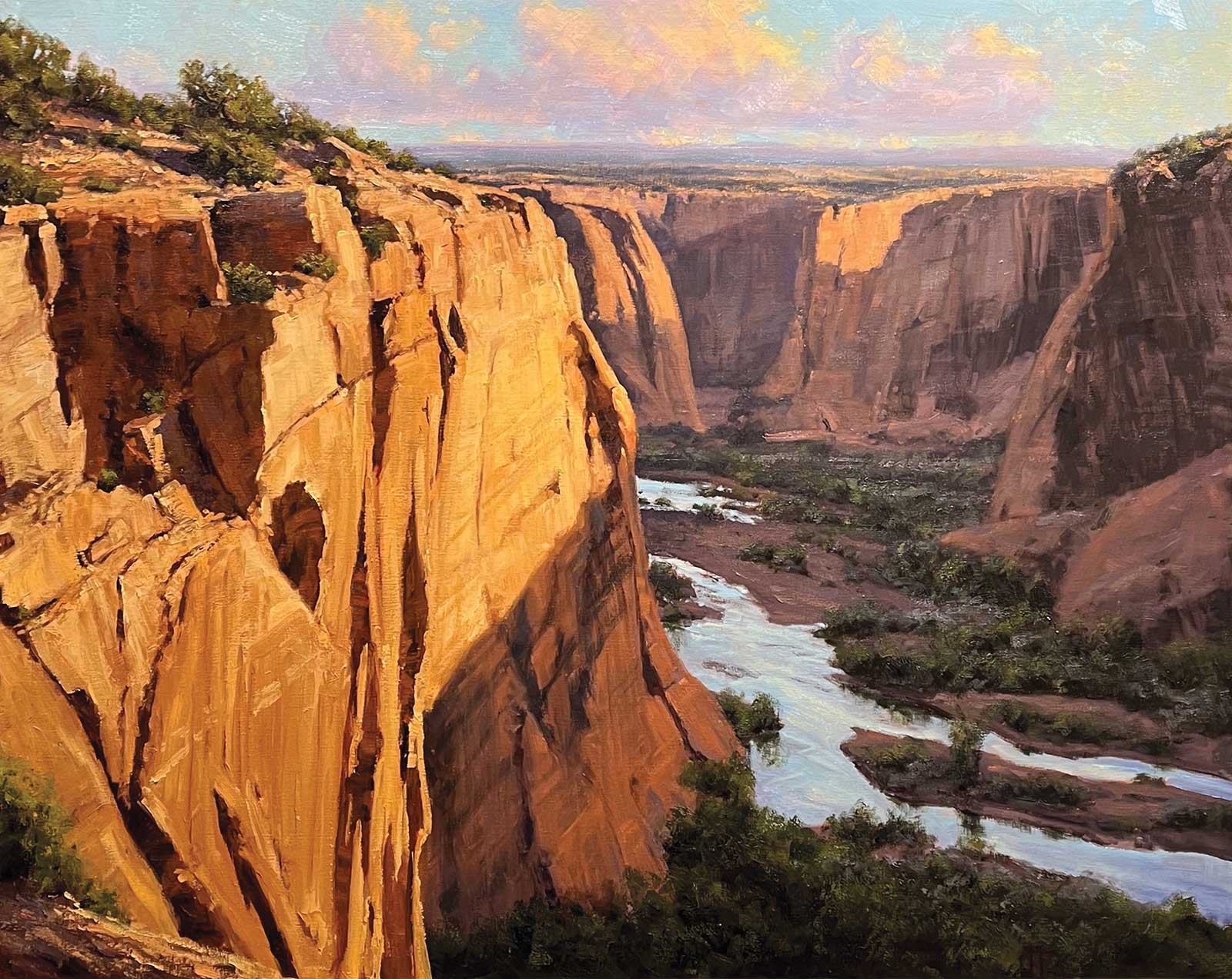
Legacy Gallery, Morning Rim Walk, oil, 40 x 50", by Kenny McKenna.
A distinctive feature of the canyon is Spider Rock which began to form 230 million years ago as its sandstone began to be laid down. Wind and water have eroded the rock to create a 750-foot-high megalith that the Navajo believe is the home of Spider Woman. Spider Woman brought the art of loom weaving to the ancient Diné and her husband, Spider Man, created the wooden loom. One of the stories passed down from generation to generation is that the top of Spider Rock is white because of all the bones of little children who were devoured by Spider Woman if they had been bad.
From Spider Rock Overlook, it is possible to look down on the oddly white top of the spire. Several years ago, Arturo Chávez, a retired pilot and a classical guitar player, hired a remote-controlled plane to fly over Spider Rock “as the crow flies” and to photograph it. He assembled the images in preliminary drawings, adjusting for the camera’s distortions, and created stunning paintings of the Navajo holy site.
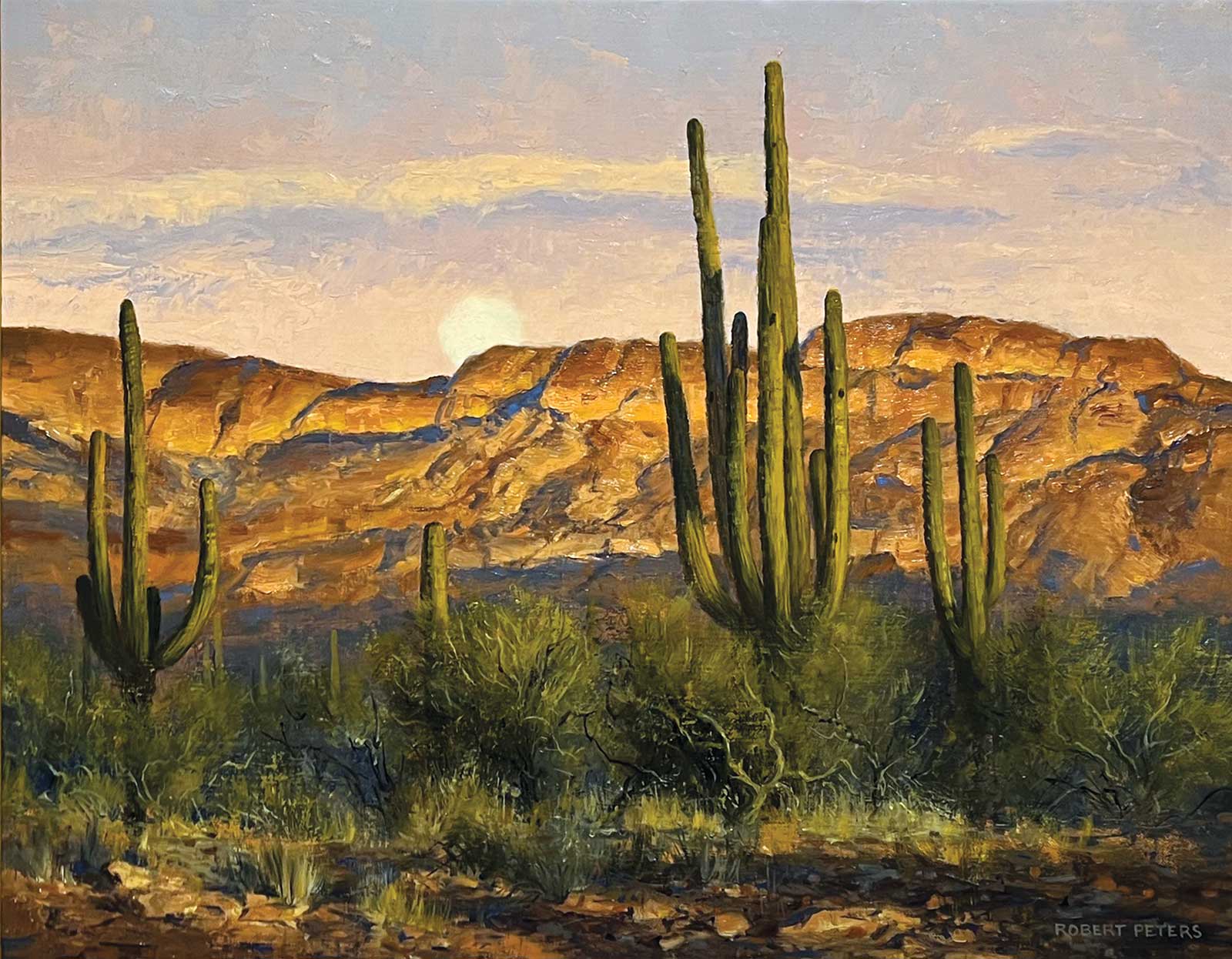
Legacy Gallery, Miners Canyon Moonrise, oil, 16 x 20", by Robert Peters.
Chávez, who traces his New Mexico roots back to 1600, says, “Landscape painting has been a continual inspiration for me since childhood. [Since] the first time I painted the Sangre de Cristo Mountains in winter while in the seventh grade, I have been enthralled with capturing a three-dimensional image on a two-dimensional plane.” In Aerial Over Spider Rock, the monolith thrusts up from the floor of the canyon, brightly lit on one side, standing out from the canyon’s shadows and the sunlit snow. The square format contributes to the drama of the scene
There is a poetic rhythm to the forms in his paintings, reflecting his training in music. Nevertheless, he is scientifically accurate in his rendition of a scene, relying on his field paintings, photographs and topographical maps.
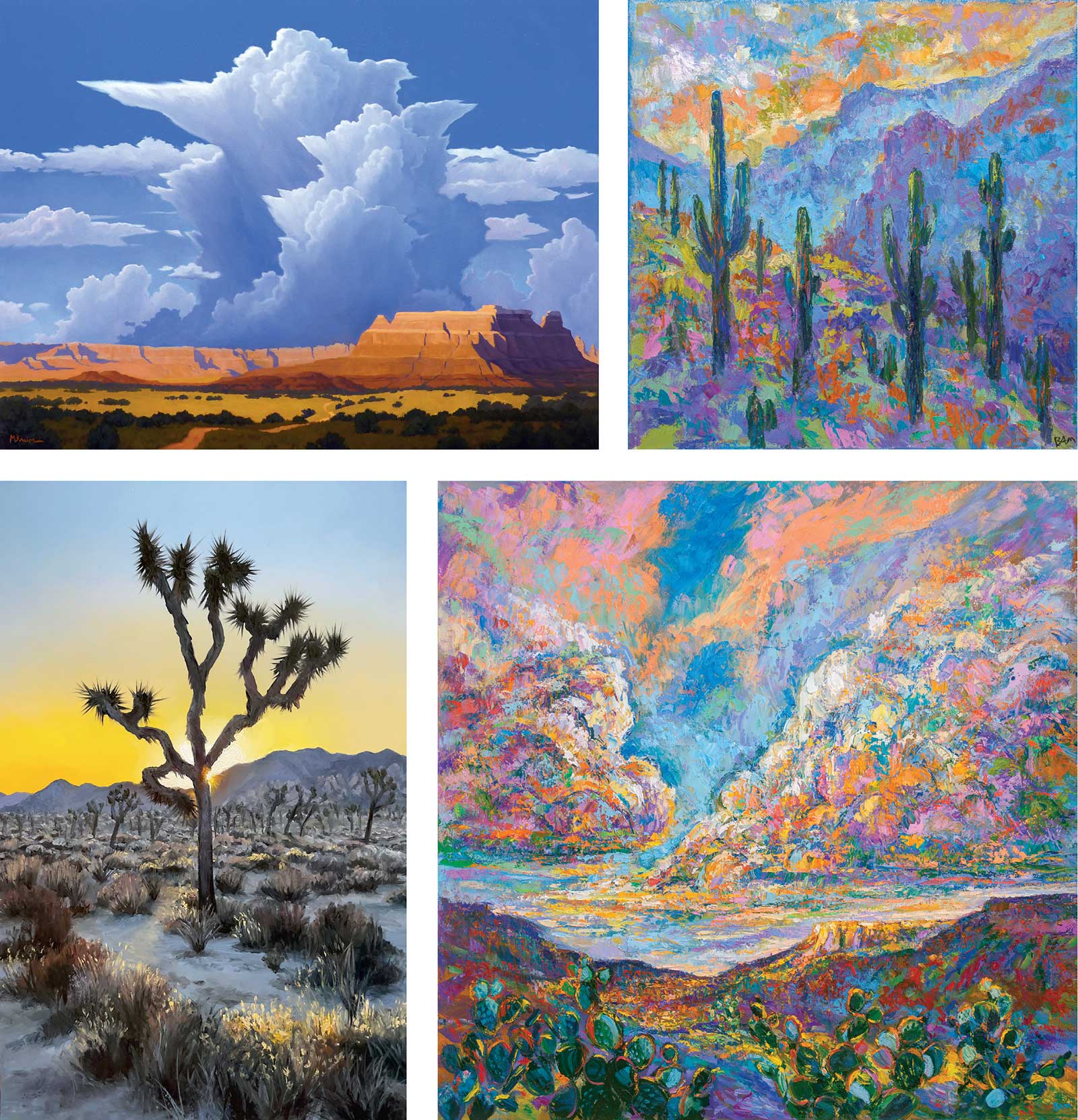
Top: Manitou Galleries, Big Storm over the Canyons, oil, 30 x 40”, by Michael Baum; Barbara Meikle, Spring in the Tonto Forest, oil on canvas, 16 x 16” Bottom: Naomi Brown, Sunlit Morning in Joshua Tree, oil on ABS board, 17 x 11”; Barbara Meikle, A Road to the Clouds, oil on canvas, 36 x 36”
Mian Situ was born in southern China, moved to Canada in 1987 and later to the United States. Known for his sensitive, impressionistic portrayals of the people of China, the late John Geraghty encouraged him to paint the Chinese immigrants who were so important to the development of the American West. He has since expanded into the landscapes of the West itself.
Spider Rock, Canyon de Chelly depicts the formation from the floor of the canyon. Coming to the U.S. and looking at the work of American artists, Situ began to bring more color into his paintings. In this painting he masterfully portrays the variety of colors in the red sandstone and the effect of light and shadow on them. The complementary green shrubs make an anchoring diagonal against the verticality of the canyon.
Continue reading to learn and see more from artists and galleries that specialize in canyons and deserts within the American West.
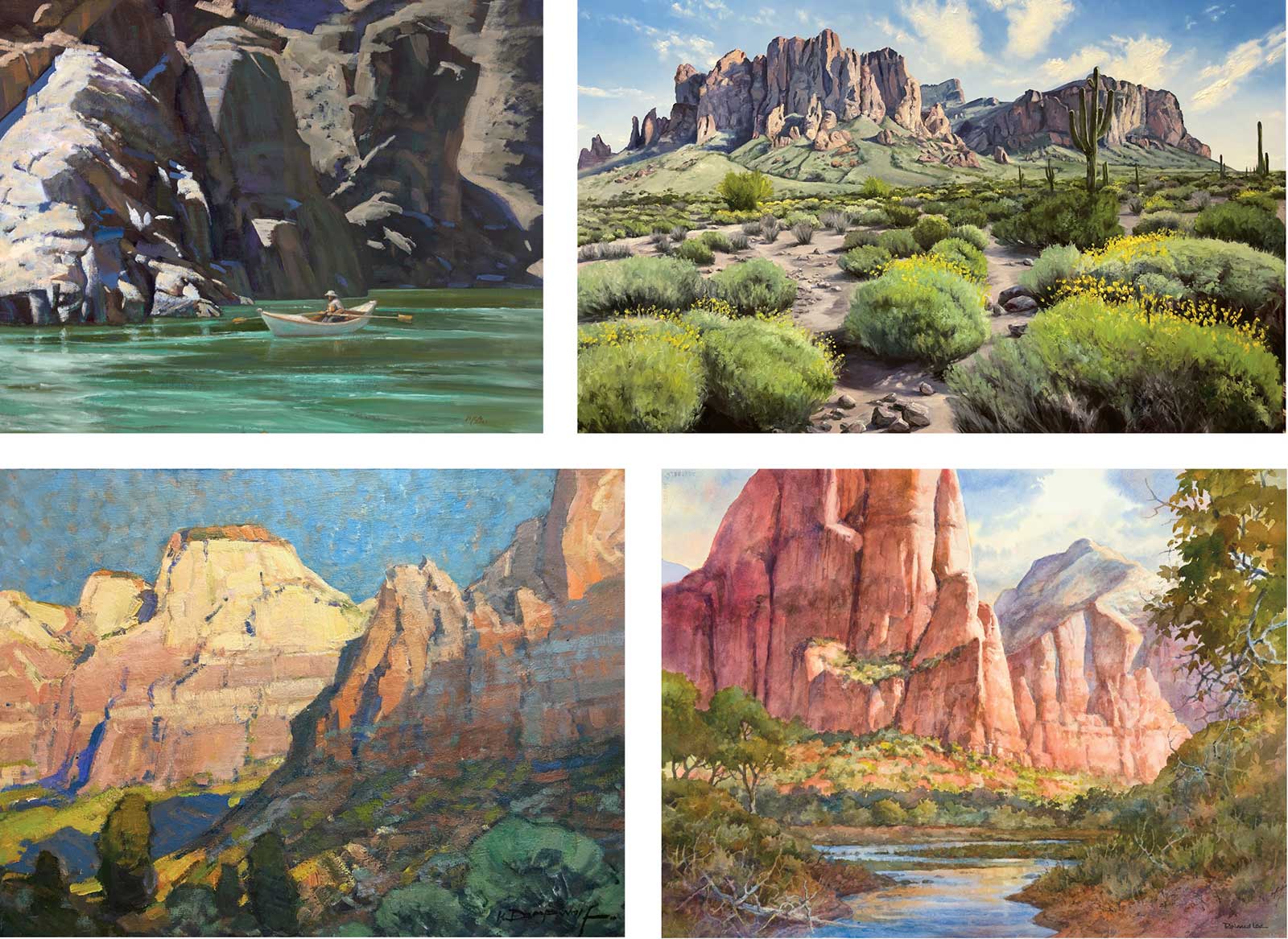
Top: Bonnie McGee, Solo, oil, 16 x 20”; Naomi Brown, Springtime Superstitions, oil on canvas, 30 x 48”. Bottom: Tehachapi Arts Commission, Zion, oil on canvas wood panel, 18 x 24”, by Karl Dempwolf.; Roland Lee, At the Feet of Angels, watercolor, 20 x 28”
At Legacy Gallery in Santa Fe, New Mexico, and in Scottsdale, Arizona, works showing canyons and deserts are common among the paintings shown on the gallery’s walls. Artists whose works are offered to collectors include Chávez, a 13th-generation New Mexican who was raised amid the spectacular vistas of Northern New Mexico; Kenny McKenna, who grew up in a family that loved to travel all around the American West; and Robert Peters, who says the Western landscape is an endless source of inspiration. “The Western landscape is famous for its canyons and desert,” Brad Richardson, gallery owner says. “When buying a piece of this nature, make sure it is something that stands out and speaks to you, allowing you to feel transported to that place.”
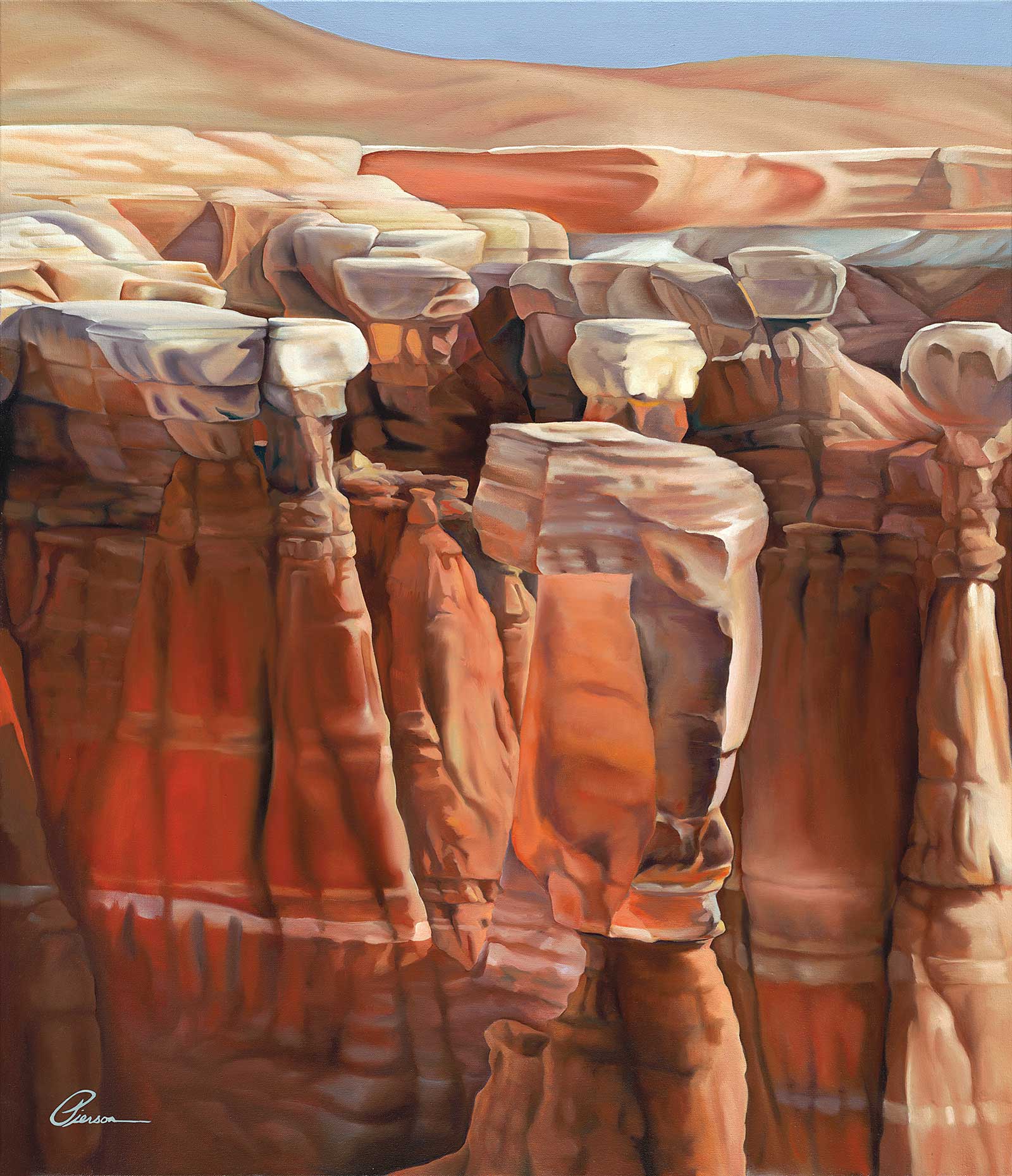
Manitou Galleries, Off World, oil on canvas, 36 x 31", by Paige Pierson
Not far from Legacy’s Canyon Road location in Santa Fe is its sister gallery, Manitou Galleries, near the Santa Fe Plaza. There, too, are exceptional works by artists who enjoy focusing on these subjects. “There is so much more to the deserts and canyons of New Mexico than the gentle beauty that abounds,” says Cyndi Hall, associate director. “There is a feeling unique to our canyon walls, the vast expanse of our desert, the enormous, endless sky that beckons the question, who walked here before me? Many of our artists pay homage to the environment, cultures and landscapes of the American Southwest in an attempt to answer this question.”
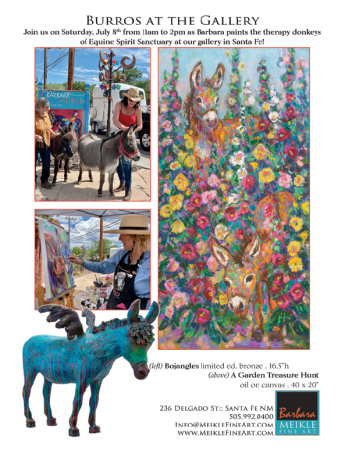
Another Santa Fe destination is Barbara Meikle Fine Art, where artist Barbara Meikle is continuously inspired by the nature around her. “New Mexico has such a unique landscape, with the two deserts in the south and the high deserts in the north,” she says. “You get a combination of earth and sky that is unlike anywhere else on Earth. I often paint the high desert and love the combination of tall ponderosas with bright pink mesas under a blue dome of sky. Of course, no landscape would be complete without the miles of white puffy clouds that we see in the summertime that can often turn into what we like to call ‘walking rain,’ where it rains at your neighbor’s house but not at yours.”
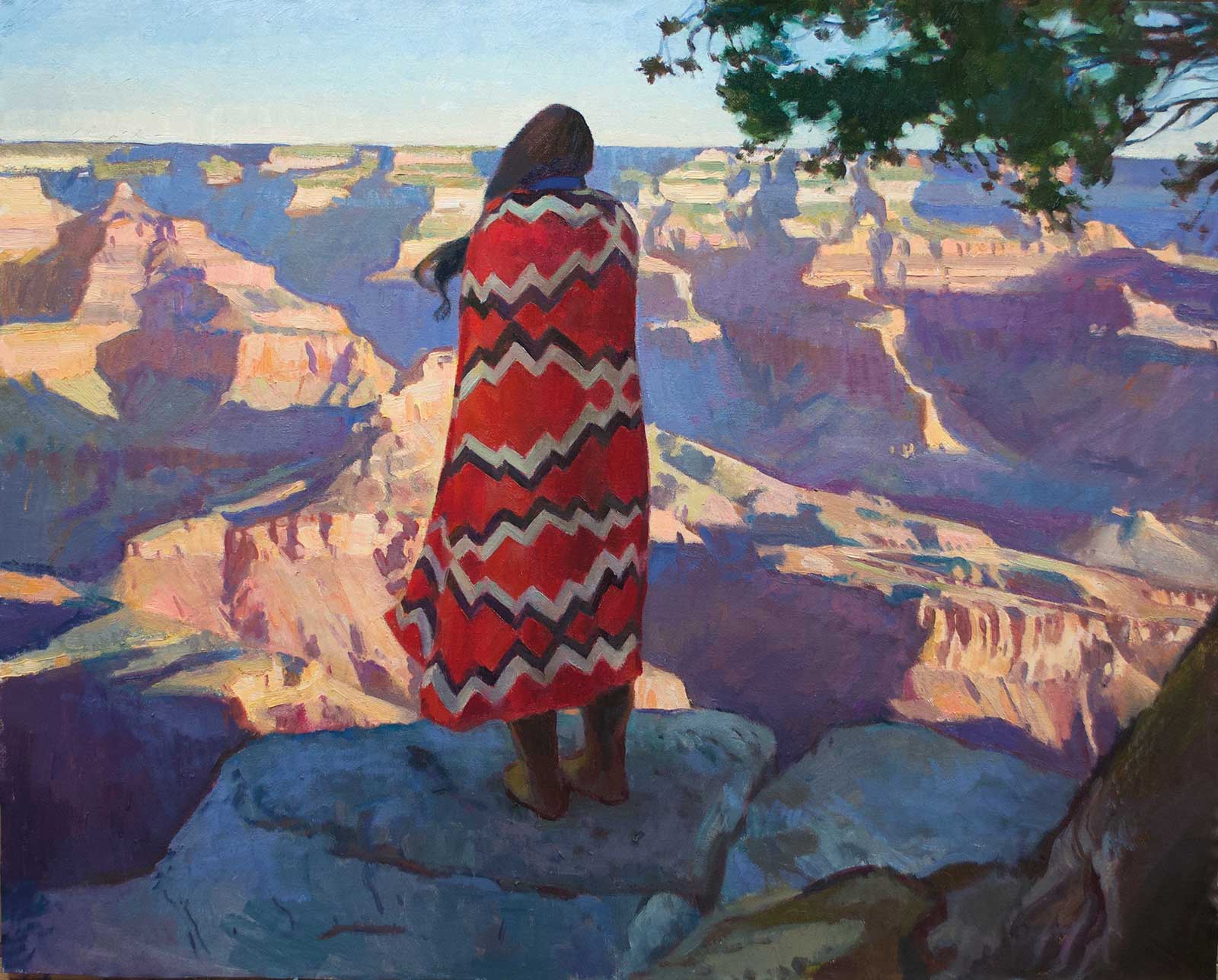
Manitou Galleries, Canyon Dweller II, oil on linen, 24 x 30", by Ray Roberts.
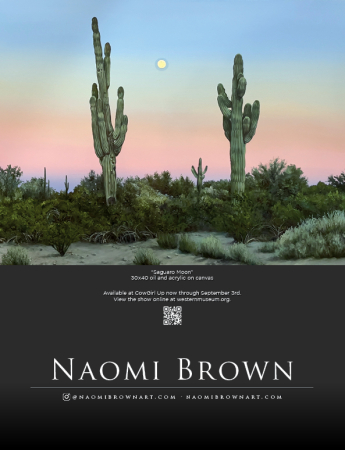
For Naomi Brown, a rising force in the art world, the desert is a beautiful subject that she greatly enjoys painting. “The Sonoran Desert has been so green this spring with all the rain. The desert comes alive with pops of color in the springtime, especially when we get a good amount of rainfall,” Brown says. “The wildflowers were breathtaking this year, with fields of orange and yellow. As a desert landscape artist, I find it challenging to paint with green sometimes. It almost feels out of place on my canvas. The desert has short seasons of ‘greens’ depending on the rainfall it receives. It’s a fun challenge for me to paint the desert when springtime has arrived. This season doesn’t last very long here in the desert. The summer heat tends to come quickly.”
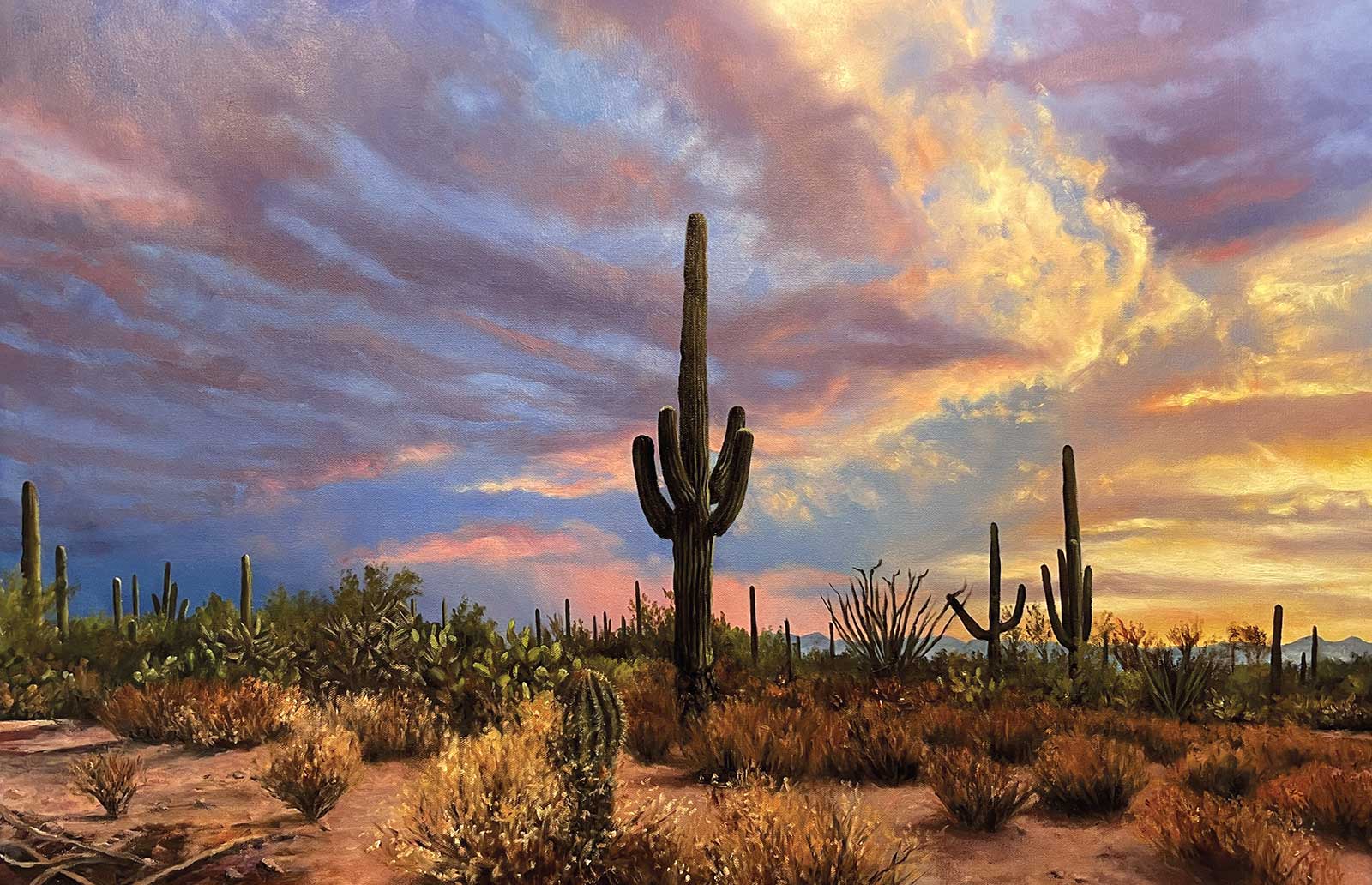
Tehachapi Arts Commission, Saguaro Evening Display, oil, 24 x 36", by Naomi Brown
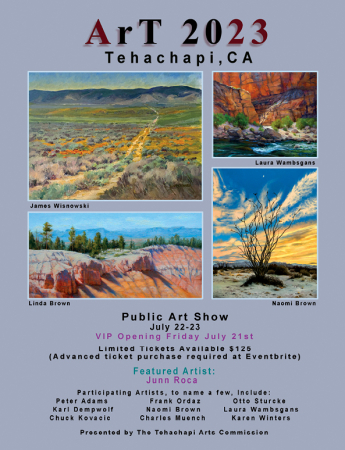
Brown will be showing her work at Art 2023, hosted by the Tehachapi Arts Commission on July 21 in Tehachapi, California. Joining her will be artists Karl Dempwolf and Russell Hunziker, as well as many others. Dempwolf will be showing his work Zion, which was based on personal observation. “Driving into Zion National Park during a recent October, I was rewarded as I steered through a shadowy, winding approach by a sudden brilliant, golden reveal of massive stone cliffs glowing in the early morning sun,” Dempwolf says. “The majesty of those immense and timeless forms, set within the contrast of the forest, challenged me to capture on canvas some of the thrill I had just experienced. The result is the image presented here, which I hope will inspire in viewers some of the awe and reverence I felt when in the presence of these Rocks of Ages.”
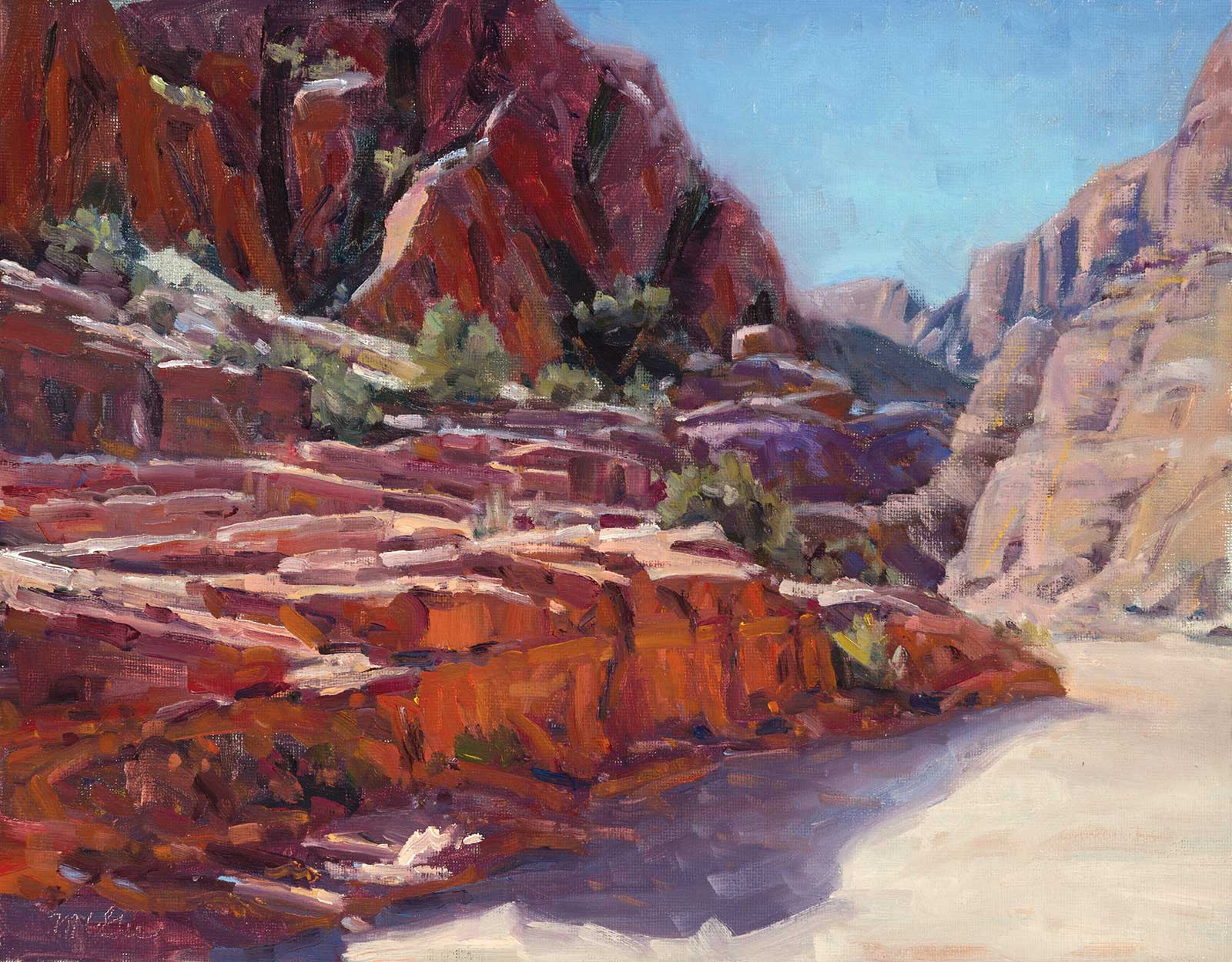
Bonnie McGee, Padre Canyon, oil, 11 x 14"
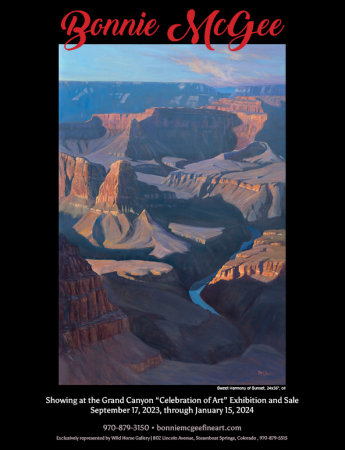
Bonnie McGee is based in Steamboat Springs, Colorado, and St. George, Utah, both of which have plenty of subjects to keep an artist inspired. Before she settled in those places, McGee studied at the Art Institute of Chicago and also had a 13-year teaching career with writing and literature. Later, she followed a dream when she boarded a 33-foot sailboat and circumnavigated the world over the period of four and a half years. In 2009, her book Voices on the Wind was published, featuring photos and stories of islanders and their influence on her cultural perspective. It was only after that experience did she circle back to art, studying under artists such as Albert Handel, Kevin Macpherson, Scott Christensen and Kathryn Stats. She has also won numerous awards, and is a member of the Oil Painters of America, American Impressionist Society and the Plein Air Artists of Colorado.
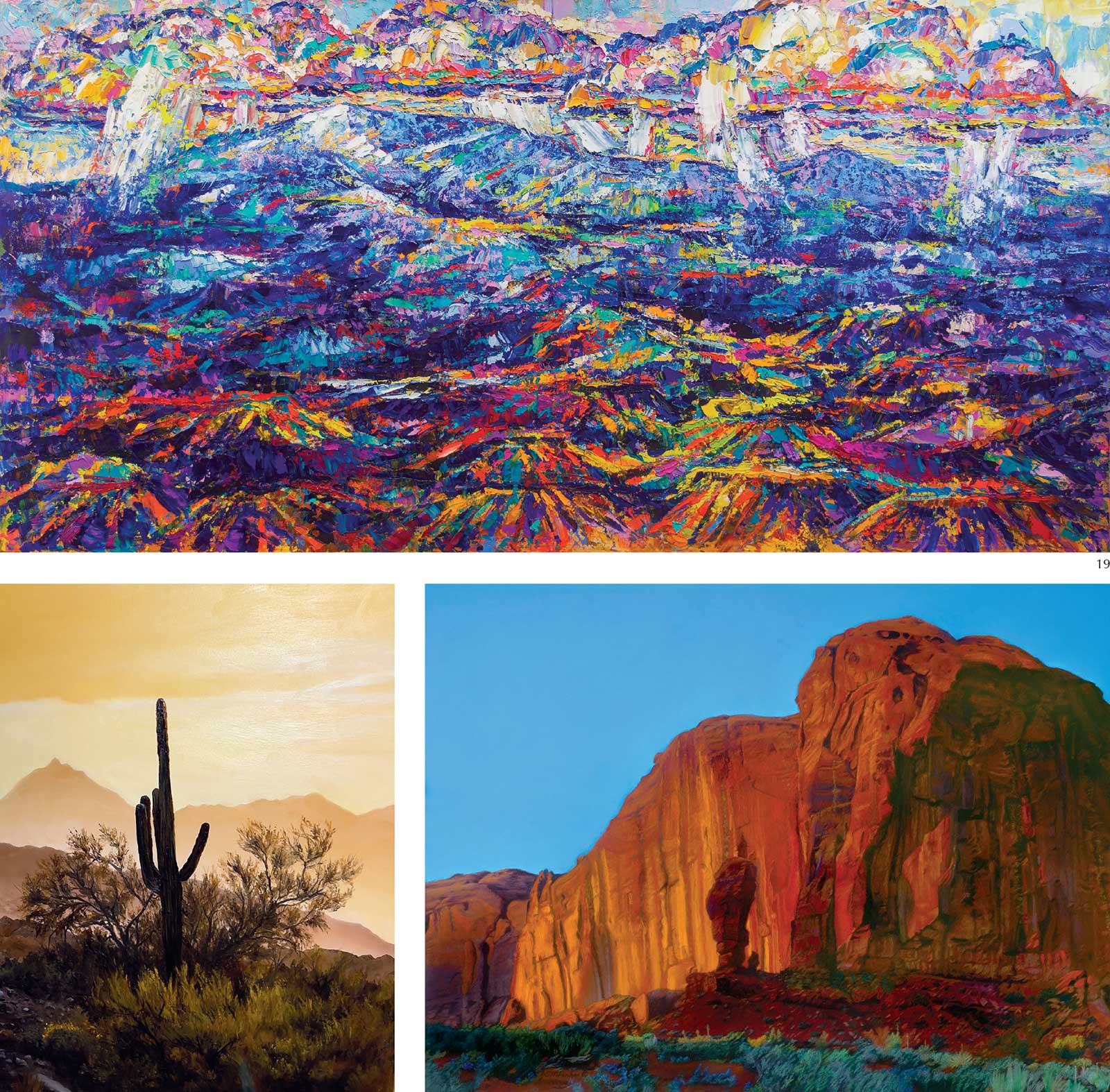
Top: Barbara Meikle, Coming Down from the Mountain, oil on canvas, 24 x 48”. Bottom: Naomi Brown, Golden Desert, oil on canvas, 24 x 30”; Carolyn Parker, Sunrise Serenity, pastel, 18 x 24”
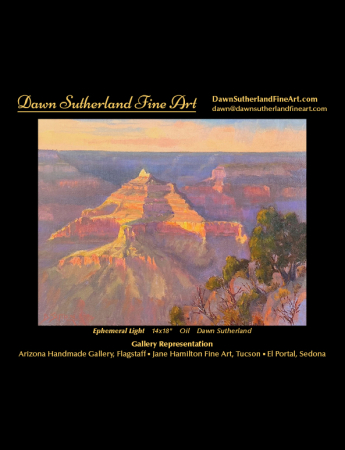
Northern Arizona-based artist Dawn Sutherland is enchanted with the subjects of canyons and deserts, and lives in a great part of the West to document them. “Painting is magic. Starting with a blank canvas, and a palette loaded with blobs of paint, I stir in inspiration and—voila!—something exists that didn’t exist before,” Sutherland says. “Paintings convey more than just a pretty scene. They bring to the viewer the intangible—a memory, a feeling, a desire. Paintings speak in different ways to different individuals. And that, too, is magic. Owning original art is so much more than a purchase. It’s an investment that links the painter, the purchaser and the landscape.” Sutherland shows her work at several Arizona venues, including Arizona Handmade Gallery/Fire on the Mountain in Flagstaff, Jane Hamilton Fine Art in Tucson and El Portal Inn in Sedona.
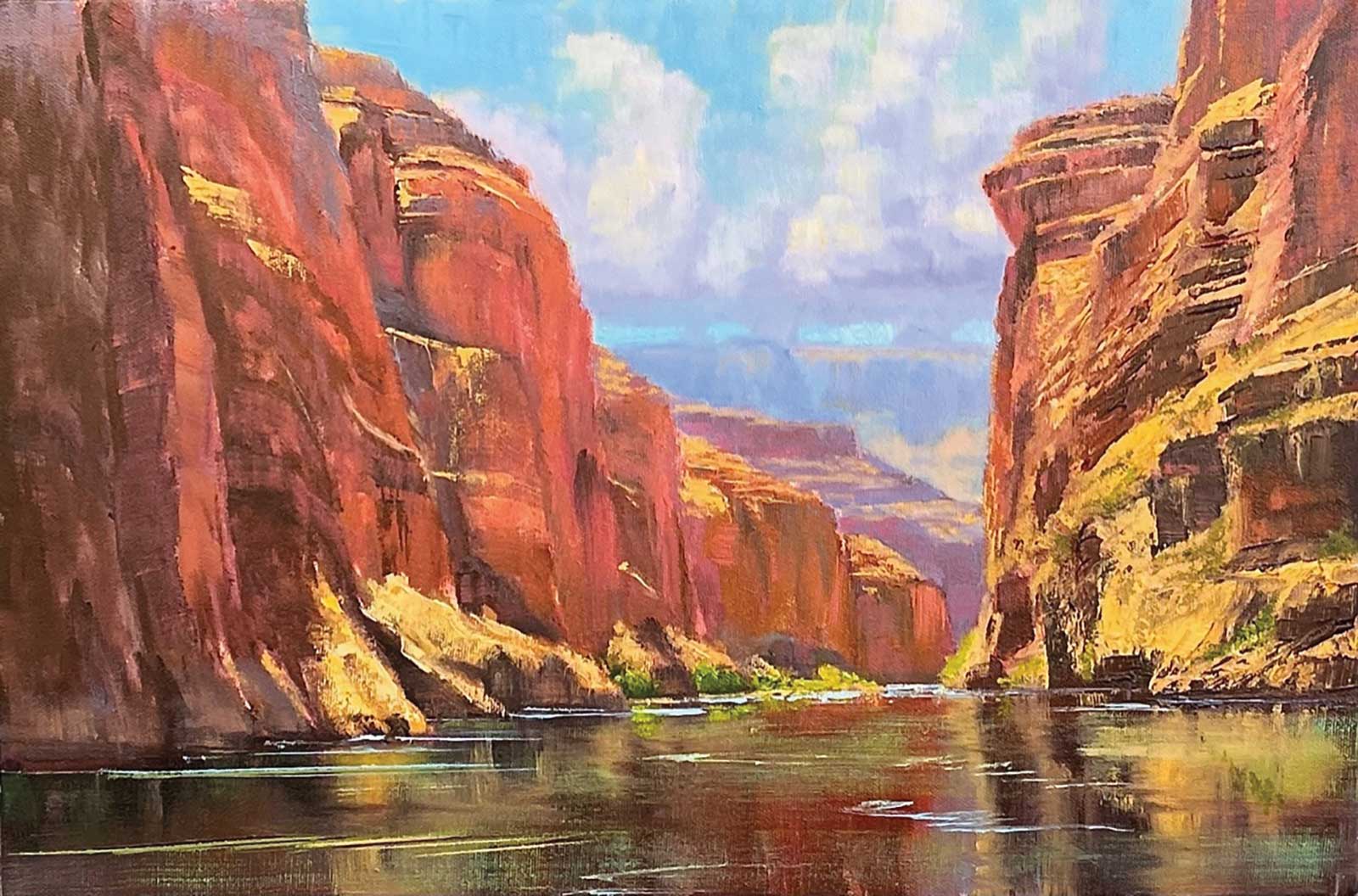
Dawn Sutherland, At the Feet of Giants, oil, 12 x 18"
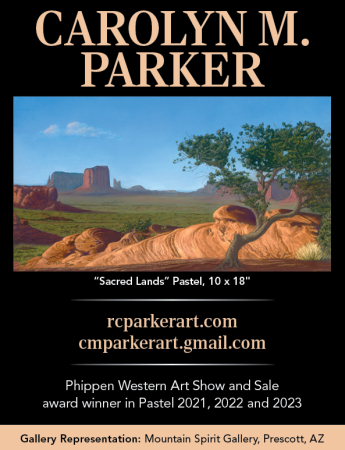
For Carolyn Parker, her work speaks to many qualities of the landscape, from the blue skies all the way down to the desert floor, or even beneath raging river waters. “When I feel compelled to paint a landscape, it’s because it ‘speaks’ to me. One of the most memorable, almost religious, moments I’ve experienced was at Monument Valley while watching a sunrise between the Totems,” Parker says. “It was a moment of complete peace, watching the birth of a new day and feeling enveloped in the beauty of the immense land with only a cool, gentle breeze caressing my cheeks, and no other sound except that of a distant bird chirping its greeting to the new day. As the sun rose higher, I turned to walk away, only to be greeted by the day’s early light revealing the ages-old strength of the orange/red cliffs rising to a tree-covered mesa towering over the sandy high desert of Monument Valley. The beauty was breathtaking!”
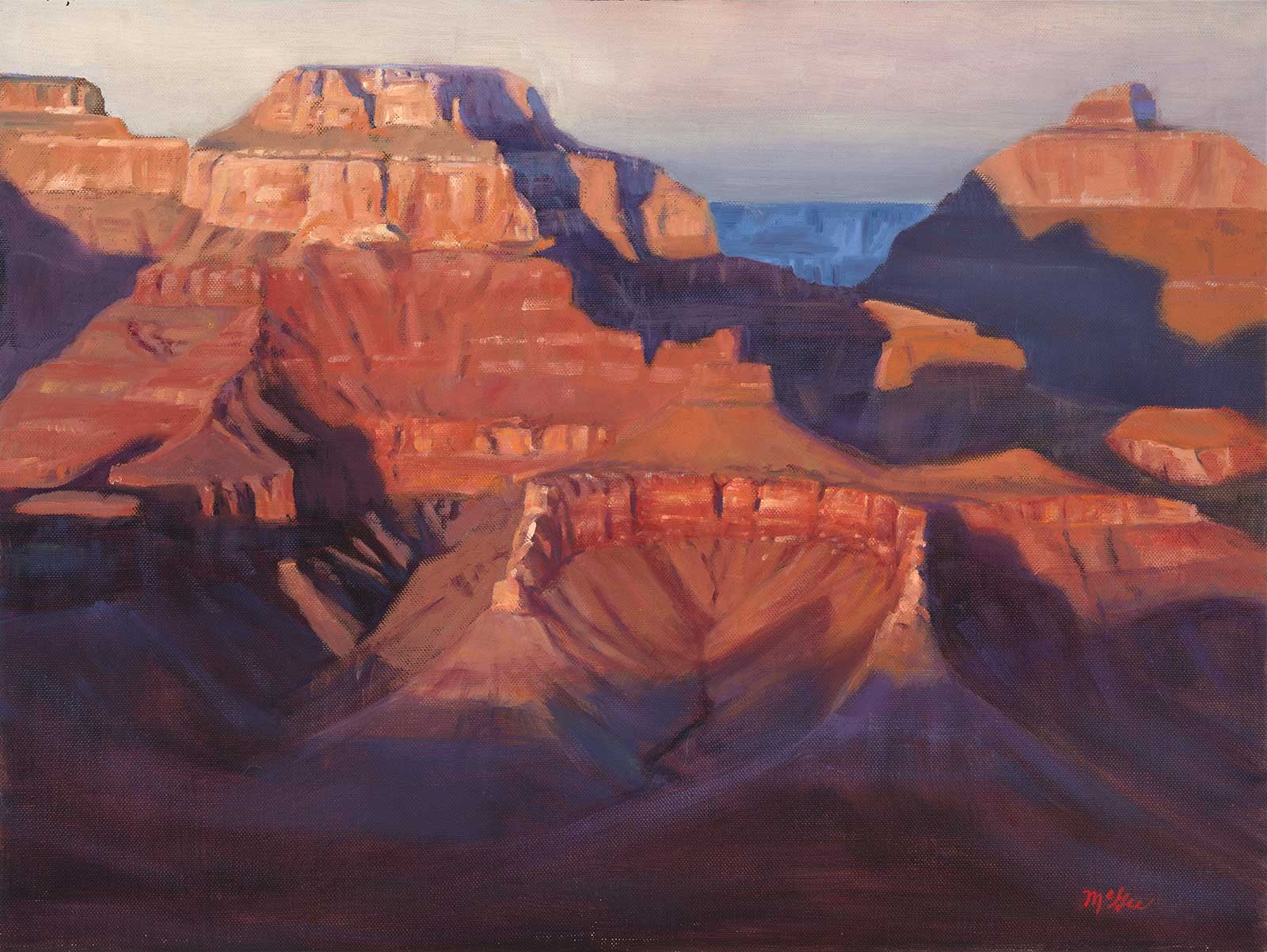
Bonnie McGee, Patterns of Light, oil, 18 x 24”
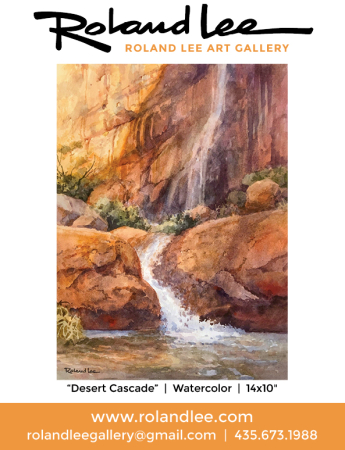
Painter Roland Lee has been exploring deserts and canyons for more than 50 years. “My senses are heightened in the deserts and canyons of the Southwest. I have found that wandering the walls and washes always results in an exhilarating feeling of freedom,” he says. “The dry sandy washes, dusky gray sage and layered mesas bring a refreshing solace. Alternating pageants of light and shadow steadily parade before me, sometimes generating feelings of solitude and serenity, and other times exuberance and awe. When collectors approach my paintings, I want them to feel the urge to step inside the frame, study the rocks, sand and water at their feet, let their gaze drift upward toward the towering cliffs, and finally lift their heads to revel in a sweeping cloudscape. Maybe for a moment they too can feel what I felt.” —
Featured Artists & Galleries
American Legacy Fine Arts
Pasadena, CA
(626) 577-7733
www.americanlegacyfinearts.com
Barbara Meikle Fine Art
236 Delgado Street, Santa Fe, NM 87501
(505) 992-0400
info@meiklefineart.com
www.meiklefineart.com
Carolyn Parker
Prescott, AZ, (928) 308-2481
cmparkerart@gmail.com
www.rcparkerart.com
Dawn Sutherland
Flagstaff, AZ
(928) 593-0604
www.dawnsutherlandfineart.com
Legacy Gallery
225 Canyon Road, Santa Fe, NM 87501
(505) 986-9833
www.legacygallery.com
Manitou Galleries
123 W. Palace Avenue, Santa Fe, NM 87501
(505) 986-0440
www.manitougalleries.com
Naomi Brown
www.naomibrownart.com
Roland Lee Art Gallery
165 N. 100 East #8, Saint George, UT 84770
rolandleegallery@gmail.com
(435) 673-1988
www.rolandlee.com
Bonnie McGee
Steamboat Springs, CO; St. George, UT
www.bonniemcgeefineart.com
Tehachapi Arts Commission
Laura Dreyer
dreyerfinearts@gmail.com
(626) 945-3753
www.artstehachapi.org
Powered by Froala Editor