Dripping spray paint. Lost and found forms. Dust, muscle, power and pain. Sophy Brown’s horses take you from chaos to calm and back again. Standing in front of one, it’s clear why they’re showstoppers. But as you spend more time with them, their glamor gives way to grit.
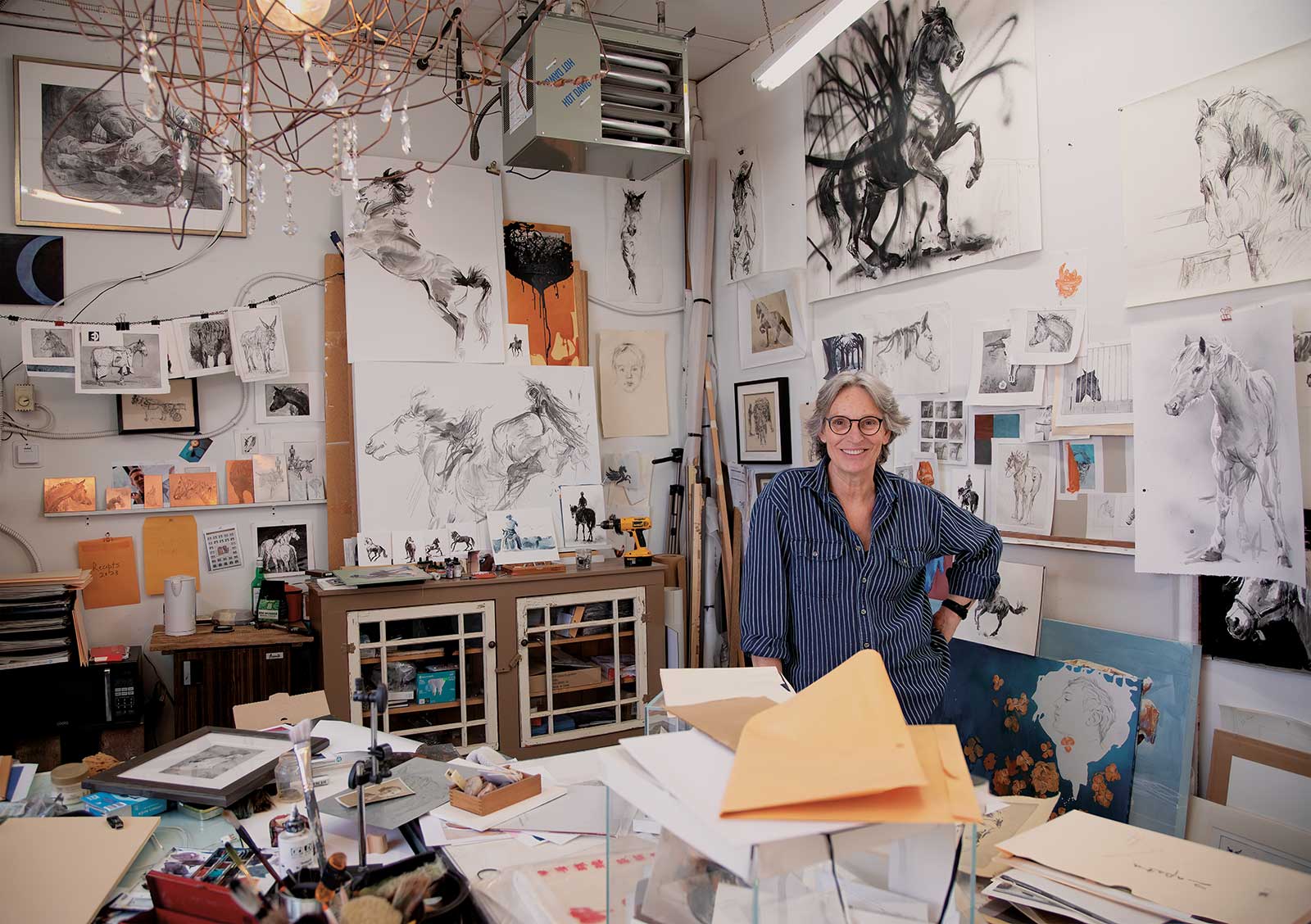
Sophy Brown in her studio. Photo by Jafe Parsons.
“Sophy is one of the people whose artwork blows me away every year,” says Lewis Wilks, chair of the Coors Western Art Advisory Committee, which runs the Coors Western Art Exhibit & Sale. “She amazes me with the power of her art, of her ability to tell a story within a story,” he continues, noting how her horses “explode off the canvas.” A crowd favorite at the annual Denver exhibition, Brown has taken home People’s Choice, Artists’ Choice and Best in Show in recent years.
“I’ve always loved horses and I could—and I do—look at them all day,” says Brown. “I think you could see all of life in there.” While hesitant to anthropomorphize, she finds personal parallels in the animals she paints, especially rough stock, she says. “The bucking horses—they’re kind of self-portraits in a way—of a state in a life. They’re about adrenaline and they’re about a fight,” Brown adds. “Life deals us all sorts of blows and changes who we are,” she explains, noting that works like The Fall and In Pieces emerged from times of grief.
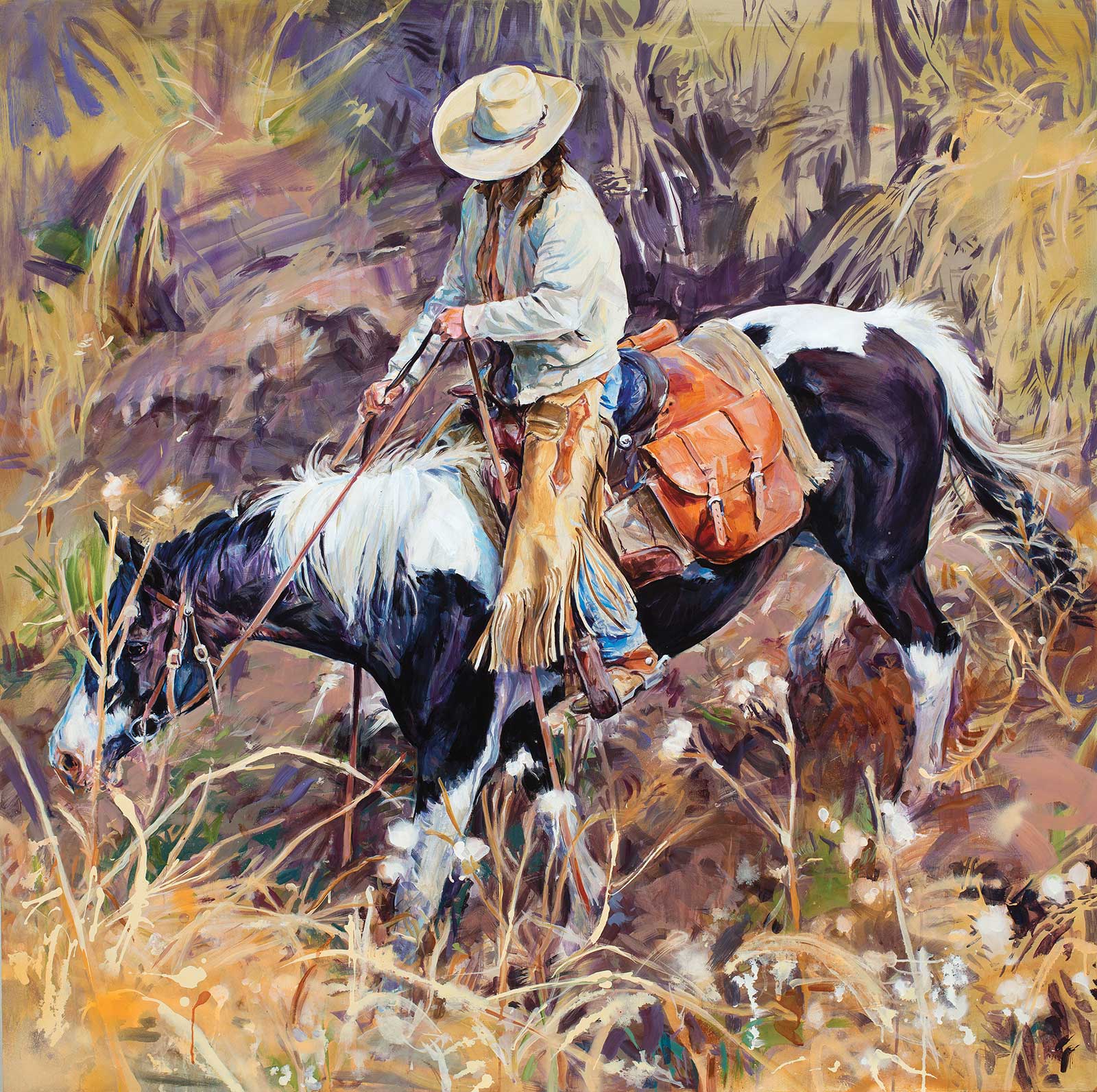
Cowgirls and Carharrts 2, acrylic on board, 60 x 60”
Even in repose, Brown’s horses can serve as allegory. A horse in a bridle, for instance, can signify obligation, the impacts of outside influences and circumstances out of our control, she explains. “I see things that people deal with in the horses.”
Today, the British-born, Colorado-based artist is well known in Western art circles, but her practice began at a very different time and place in art history. Brown was an undergrad at Goldsmiths College in London in the late 1980s—an era when Young British Artists (YBAs) like Sarah Lucas and Damien Hirst shot to fame with their unconventional and often shocking works.
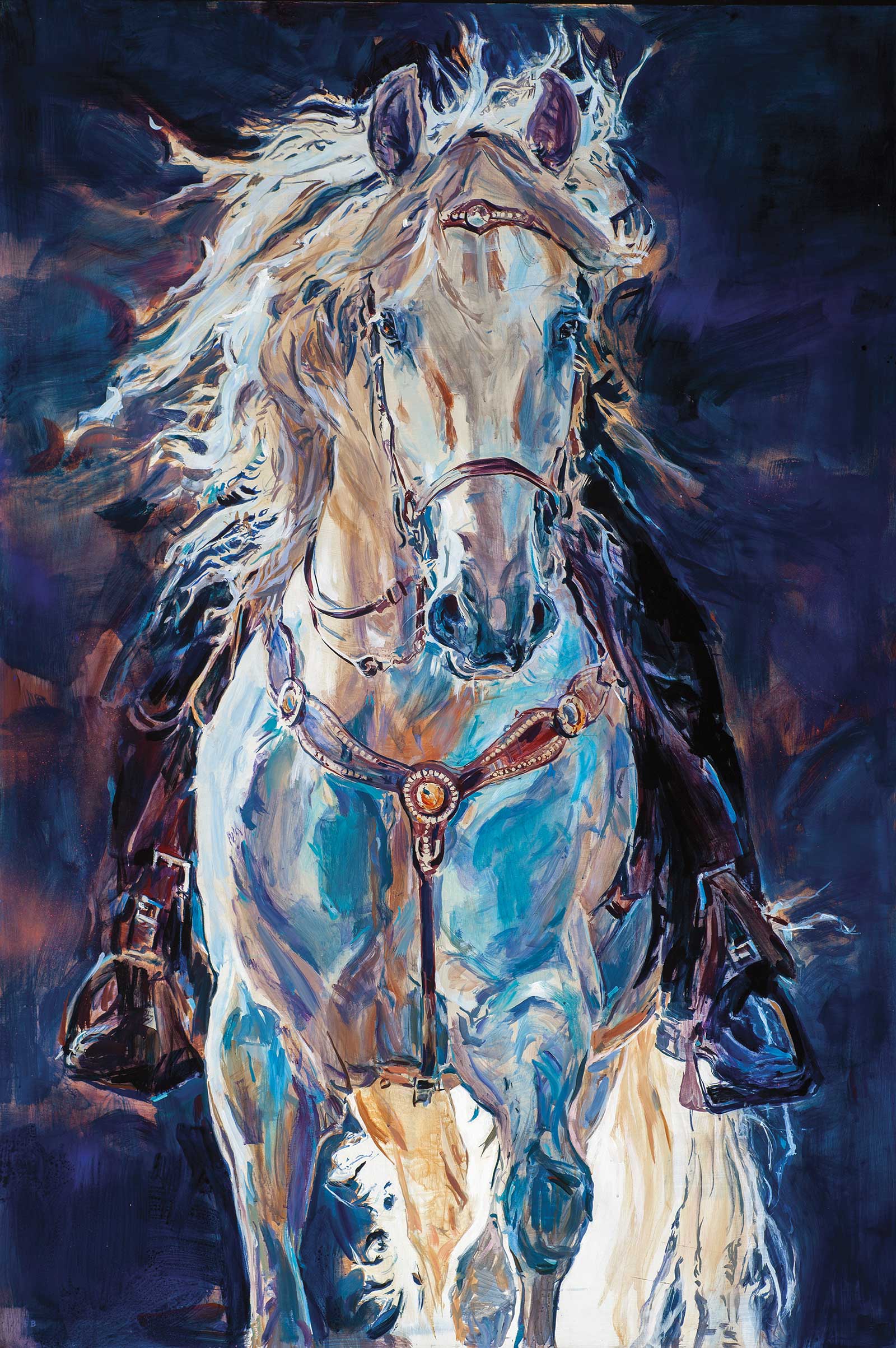
Nocturne 2, acrylic on board, 72 x 48”
“I’ll tell you what was great about Goldsmiths,” says Brown, “They gave me a space and told me to get on with it.” Students could call on working artists like Michael Craig-Martin and Patrick Caulfield but were largely self-guided. “You were expected at that time to have an idea of where you wanted to go, but the freedom was extraordinary,” she remembers.
Like many young artists, her work became “more and more abstract” as her practice evolved. “It was a wonderful time and I think what it gave me was, you don’t have to stay where you are,” says Brown. “Things move. People change. And art—what you make—can move along with it,” she says. “You just trust. You have to trust in the process and trust in the progression of your work.”
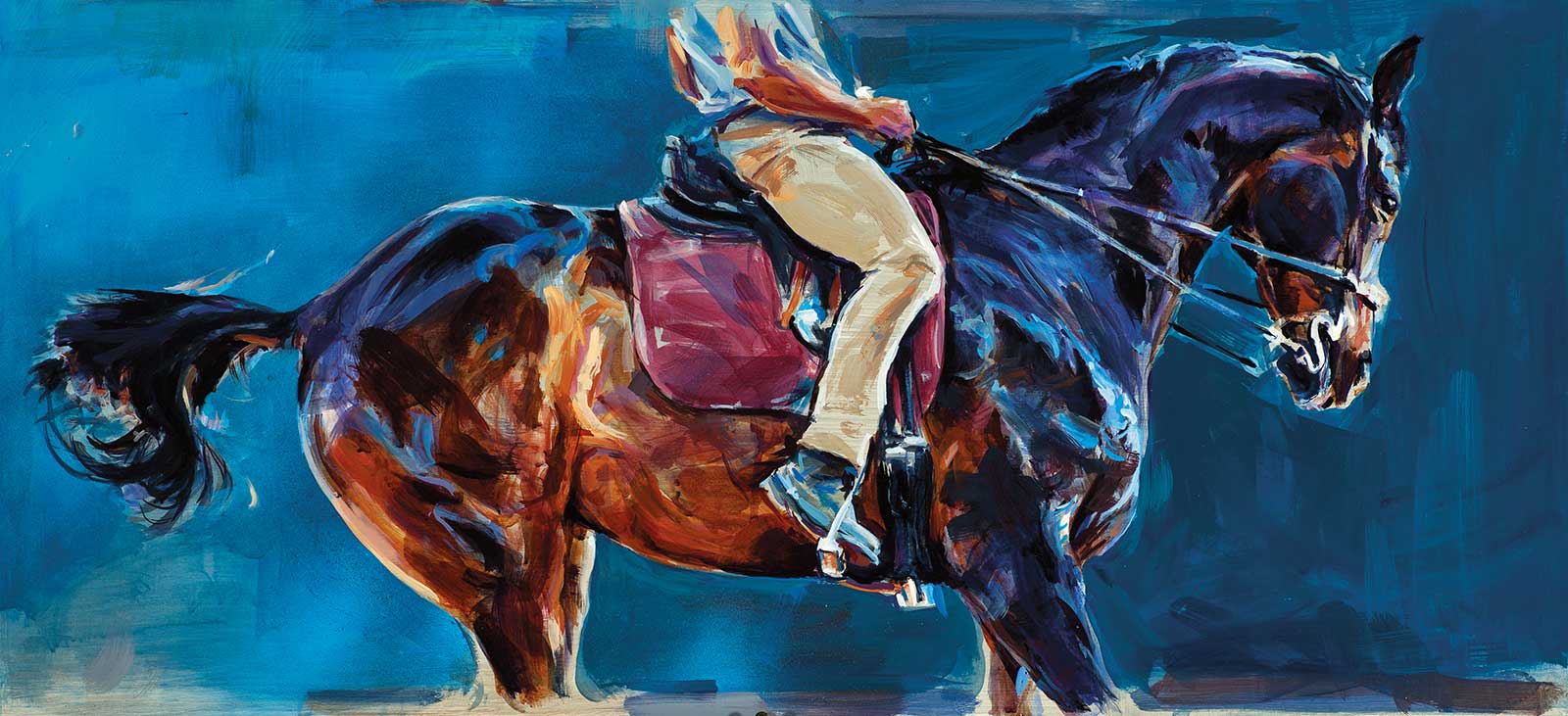
Pirouette, acrylic on board, 13 x 29”
Brown received her BFA just as the London contemporary art scene was heating up. “And then I left the country,” she laughs. She went on to earn an MFA at the University of Michigan and continued exploring non-objective forms like color field paintings and “root 5 rectangles.”
“I hadn’t put horses and painting together until about 2000,” says Brown. “I had horses. I loved horses. They were sort of parallel obsessions,” she says. “I found myself in Colorado. As an artist, you just respond to the world around you,” Brown tells us. “It’s sort of a product of where you are—you know, physically on the globe—and here, the horse lives large in contemporary culture.”
With Brown’s paintings, and horses in general, an element of chance is baked in. “Anybody who’s around horses knows that there’s risk involved. And indeed, you know there’s risk involved in anything, so I don’t avoid sort of busting big moves. I do regret them sometimes and sometimes and sometimes I don’t,” she says of her bold, physical mark making. “Sometimes you lose the surface or you lose the vitality. And you know, I find the trash can to be the best eraser.”
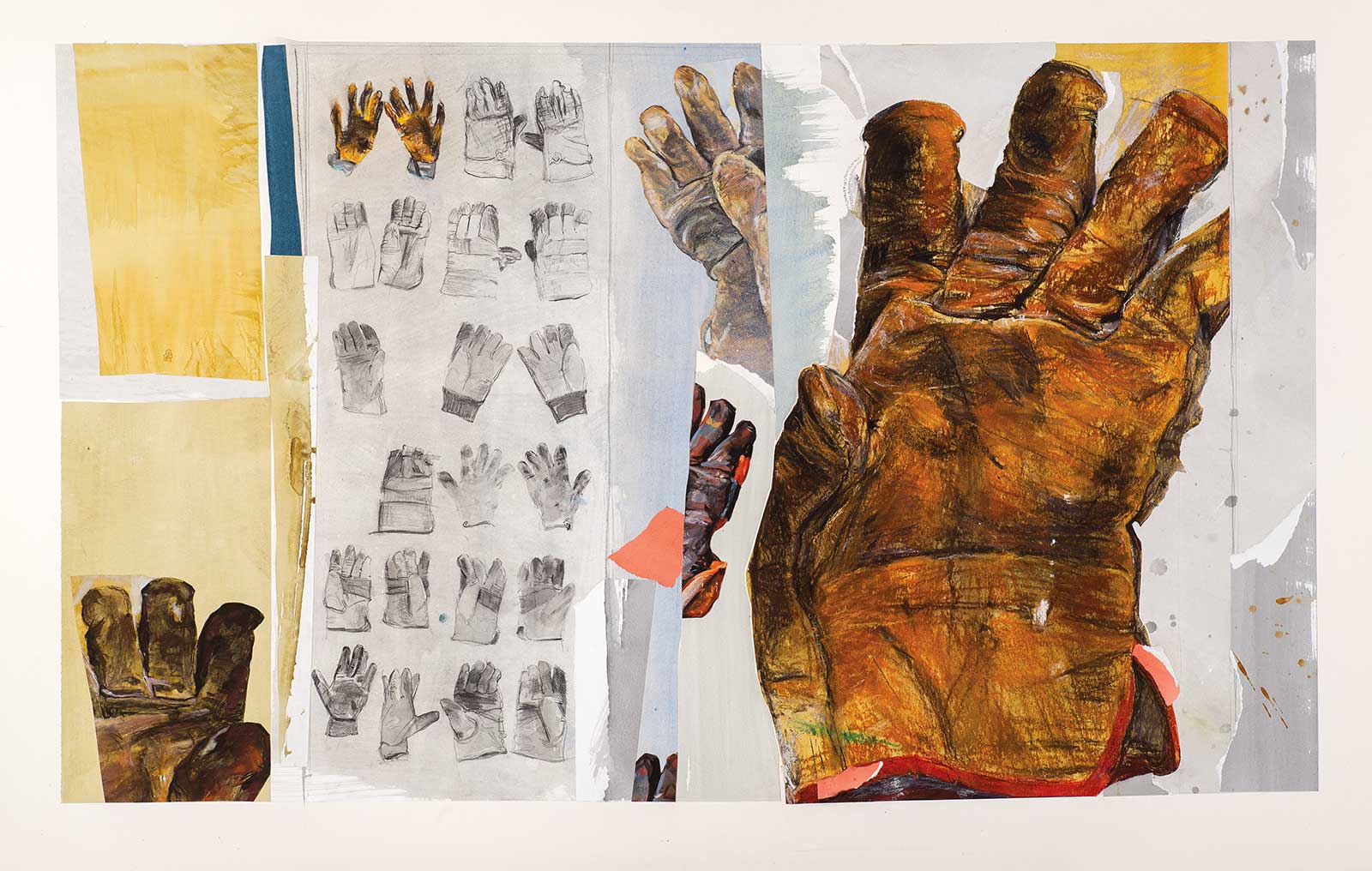
The Gloves He Left Behind, mixed media collage
Holding herself to high standards has paid off for Brown. You can see the slick noble steeds of George Stubbs as well as the raw energy of the abstract expressionists in her work. Maelstrom, a nearly eight-foot painting acquired for the permanent collection at the National Western Stock Show, combines the best of both.
“Ultimately, I think she is one of the most powerful contemporary Western artists that I’ve ever seen, and I hope that she participates in Coors Western Art for a long time to come,” says Wilks. When the new Legacy Building at the National Western Complex is complete, Maelstrom and many other works by Coors alumni will be on year-round public display.
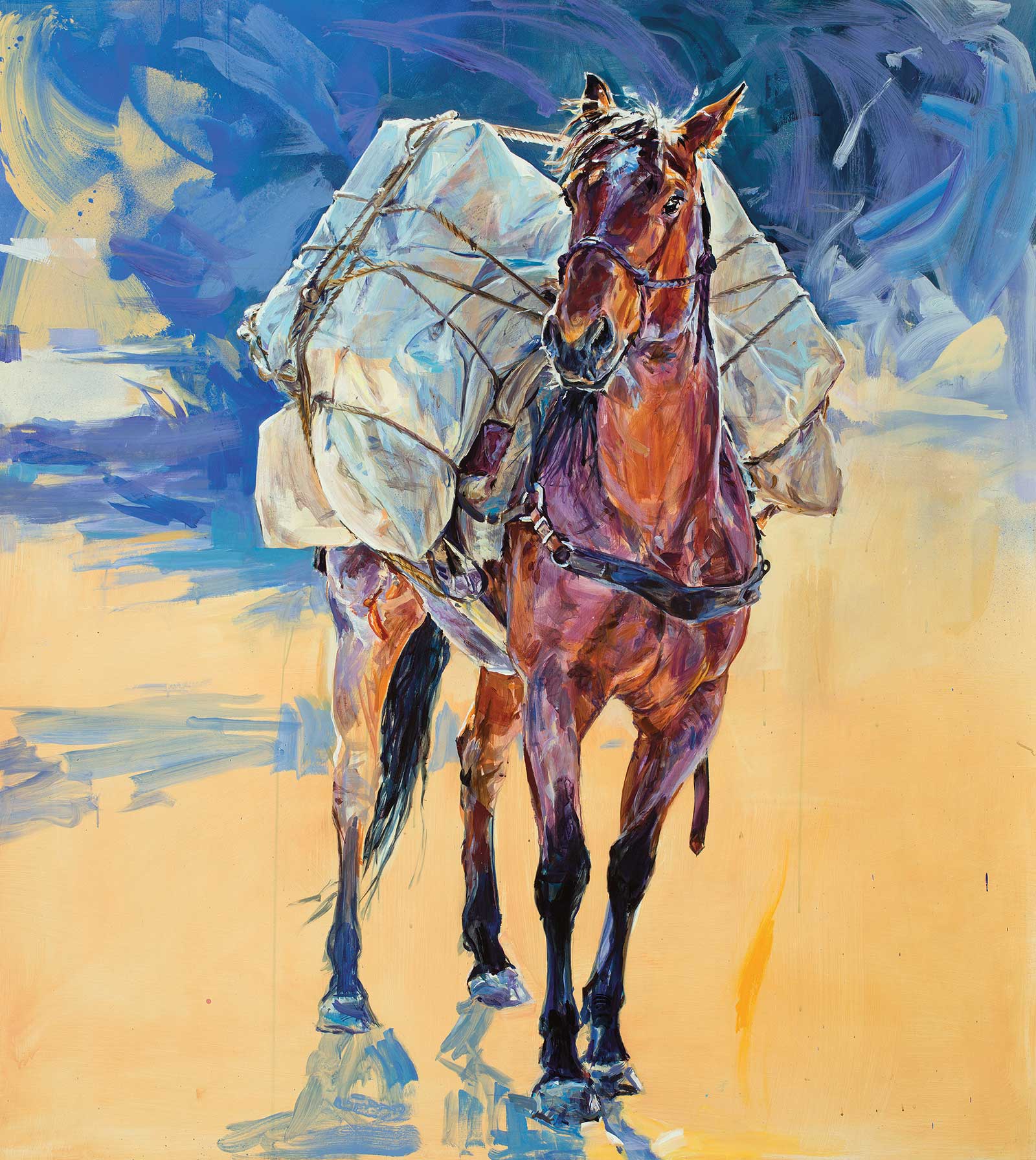
Are You Packed and Ready to Go?, acrylic on board, 54 x 48”.
All images courtesy the artist.
For Brown’s next chapter, she’ll keep growing and exploring. “I never felt particularly confined or labeled,” she says of her early career. “And I’m feeling like that again. I just made a sculpture and I’m painting something completely different at the moment.”
As someone who “came to the West late,” she’s also watching the art that made her develop and broaden. “It has to speak to people who are living with all the complications of being a human being in the modern world…which is pretty complicated,” she says. “The modern West is just as interesting as the Old West,” Brown continues. “More interesting, because here we are today.” —
Powered by Froala Editor