This year marks the 125th anniversary of the birth of Alexandre Hogue (1898-1994), and to mark this momentous occasion, the Philbrook Museum in Tulsa, Oklahoma, is hosting the exhibition Alexandre Hogue: Human/Nature.
Hogue’s influence on the art community in Oklahoma was undeniable. He served as the head of the art department and the University of Tulsa from 1945 to 1963. “He had grown up in Texas, but then during the war, he worked as a photographer,” explains curator Susan Green. “After the war ended, he was hired to head the art department here, and when he arrived in Tulsa, he was by all accounts a great creative force.”
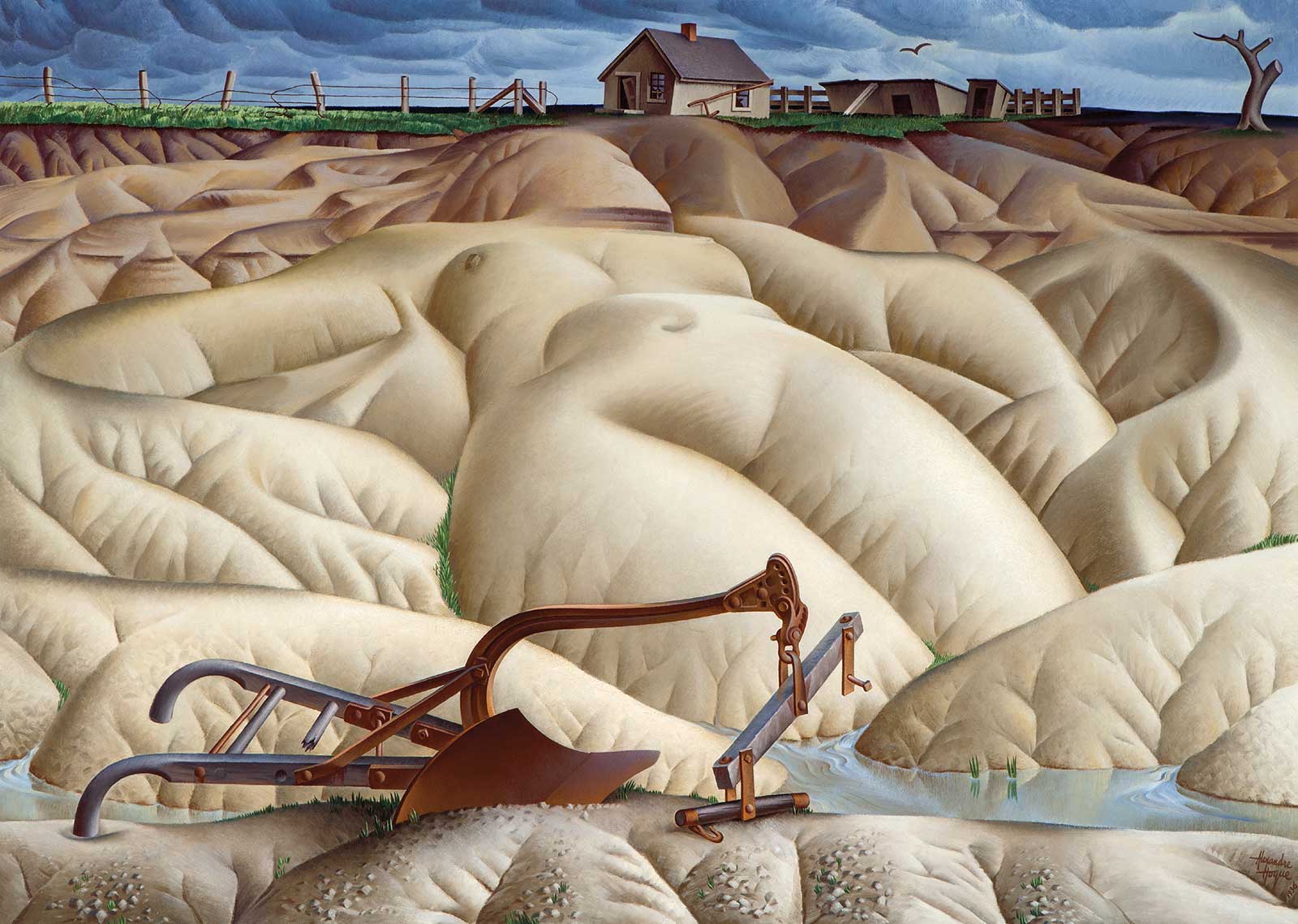
Erosion No. 2 - Mother Earth Laid Bare, 1936, oil on canvas. Museum purchase, 1946.4. © Olivia Marino.
As a teacher, he advocated for experimentation and cross-cultivation ideas. He encouraged his students to learn about a variety of mediums—to not just take painting, but printmaking and graphic design as well. “As much as he encouraged students to experiment, he was also someone who experimented and played with ideas, colors and techniques,” says Green.
Hogue’s history with the Philbrook Museum began before he ever arrived in Tulsa. The museum was established in 1938, and soon after, they purchased Hogue’s pivotal 1936 painting Erosion No. 2 — Mother Earth Laid Bare,which depicts the decimation of Texas during the dust bowl.
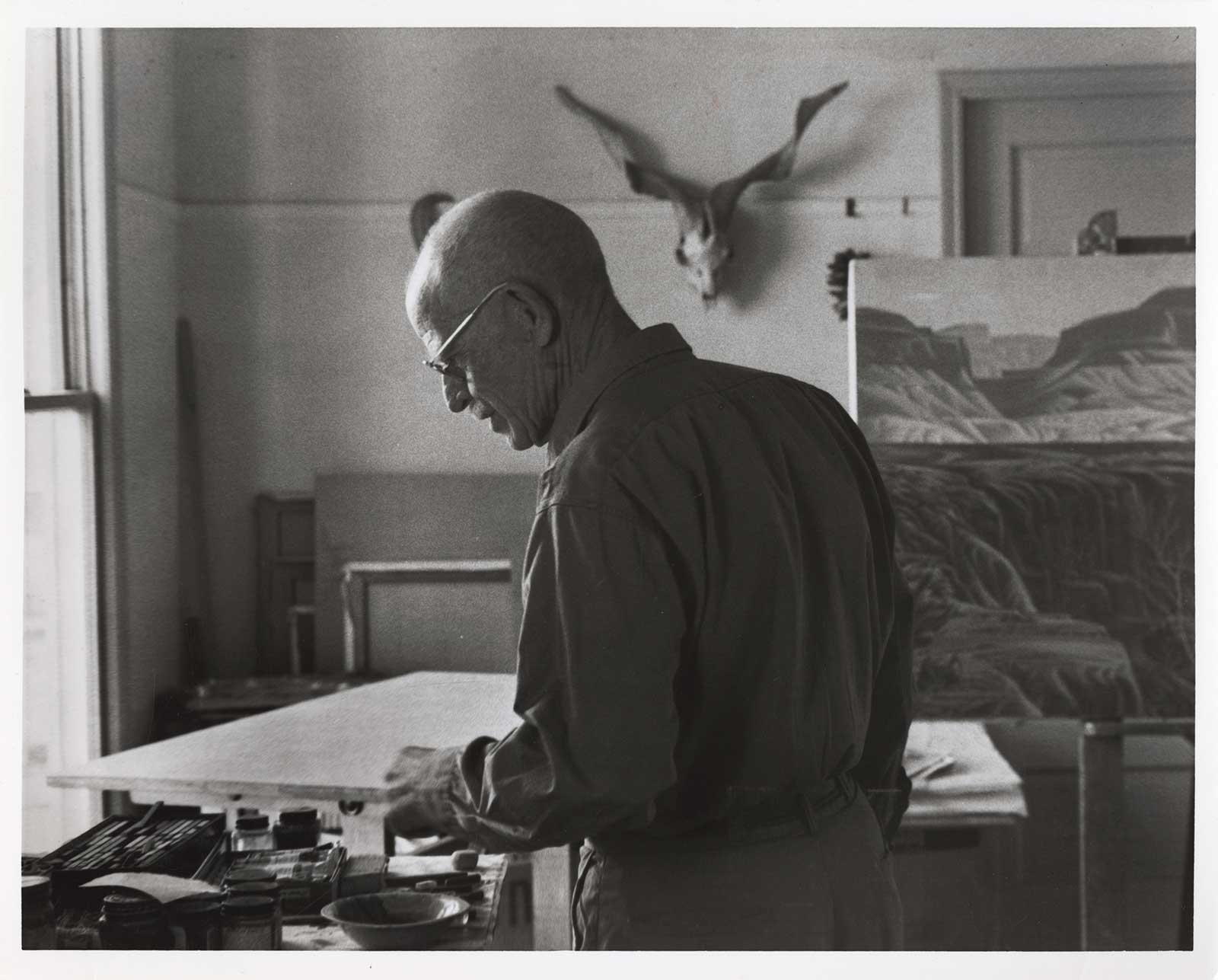
Alexandre Hogue in his studio, 1984, black-and-white photograph. Philbrook Museum of Art Archive, ARCH-1984.5.9.
“He was absolutely impacted by the erosion of the land, and then the mental destruction that he saw occurring there,” Green says. “He especially noted the impact on the environment and the impact on farmers. The people trying to make a living.”
The painting depicts what should be a rich, fertile prairie, but it’s been stripped away by erosion, revealing the body of Mother Earth, which is lying defenseless against the profligate agricultural practices that were so prevalent during the Dust Bowl. Storm clouds are brewing in the background and all the manmade objects in the scene are in a state of disrepair. “If you look very closely in the crevices of the eroded land, you’ll see that there are little shoots of green popping up. I personally see that as something optimistic, hinting at the possibility of renewal,” Green says of the work.
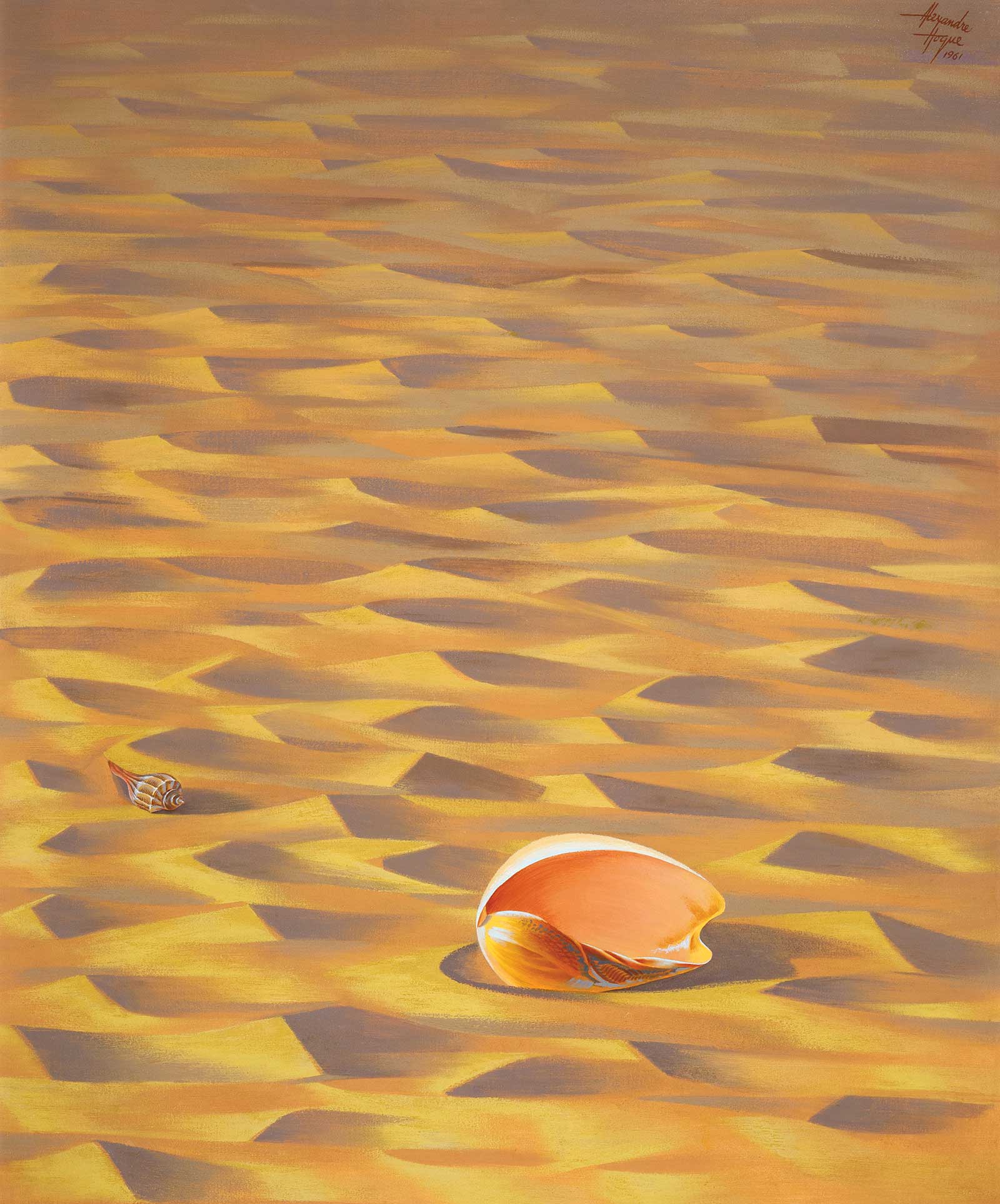
Up from the Sea, 1961, oil on canvas. Gift of the estate of Dr. Joe P. McLoud, 1985.13.1. © Olivia Marino.
Hogue also experimented with abstraction, as evidenced in the 1961 painting Up from the Sea. It’s a large piece that experiments with shape and shadow and color. “There’s a rhythm to the peaks of the sand,” Green says. “There are all these triangles, and then the shell has these rich, warm spirals. It’s wonderful.”
Also on view at the Philbrook exhibition will be Burning Bush #2,one of Hogue’s later works. The name and the image are a clear reference to the story of Moses in Leviticus, but the painting is also a meditation on the impact that humans have had on the planet.
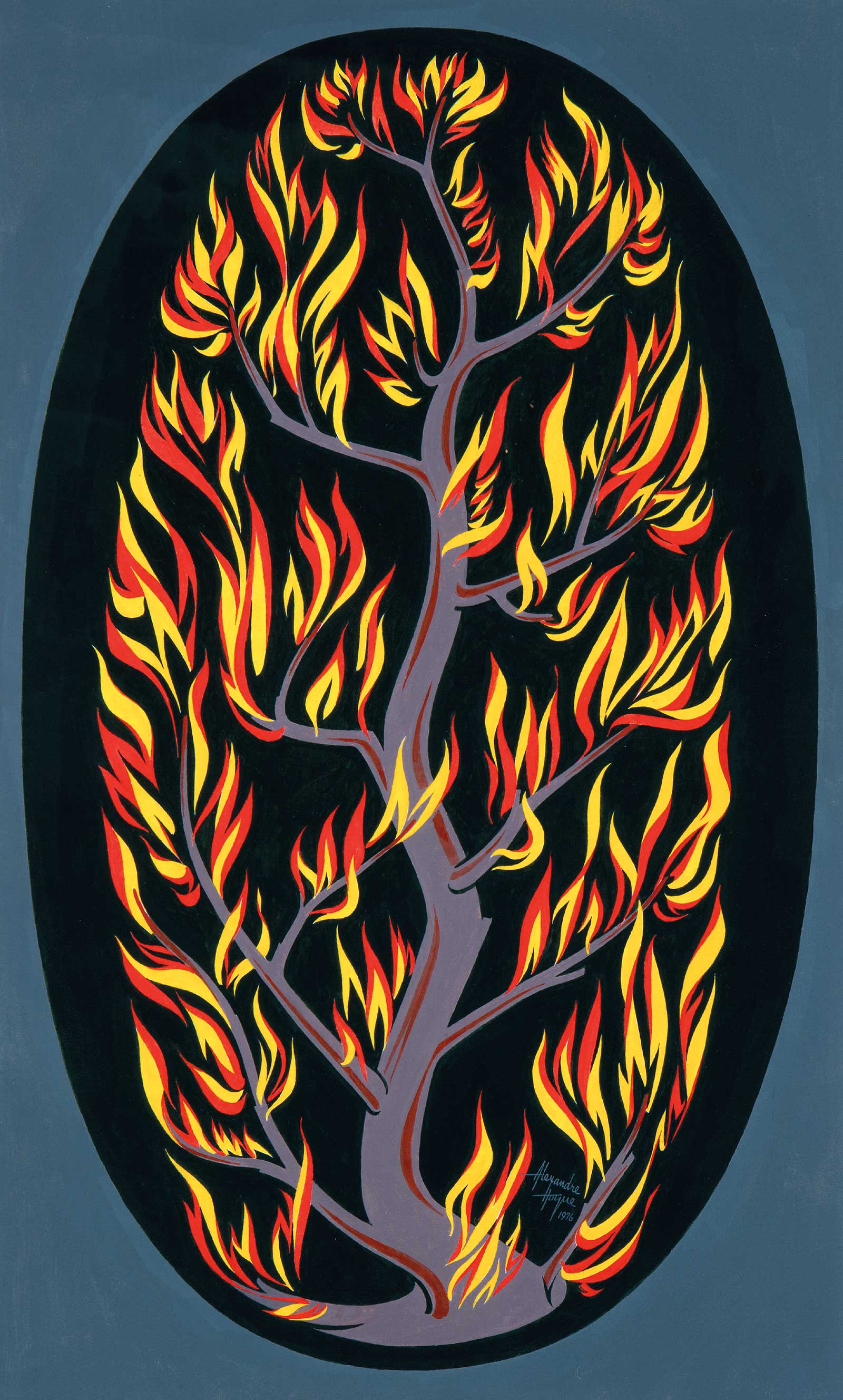
Burning Bush #2, 1976, gouache on paper. Gift from the estate of Edward S. Dumit, 2014.10.2. © Olivia Marino.
“It’s a wonderful, abstracted tree form, and it makes the viewer ask a lot of questions,” Green says. “Is it burning because of human effects? Is it just now bursting into flames or is it calming own? Or will it be eternally burning?”
Alexandre Hogue: Human/Nature will remain on view at the Philbrook Museum through June 25. —
Alexandre Hogue: Human/Nature
Through June 25, 2023
Philbrook Museum, 2727 S. Rockford Road, Tulsa, OK 74114
(918) 748-5300, www.philbrook.org
Powered by Froala Editor