Lajos Markos (1917-1993) was born in Budapest, Hungary, emigrated to the United States and established himself as a celebrity portrait painter in New York City. In the 1960s, he moved to Houston and discovered the Old West.
His painting Border Town portrays the hustle and bustle of transportation in the Old West from laden burros and their leader on horseback, to an old farm wagon with a precariously tilted rear wheel, to a stagecoach that could travel five mph during a 12-hour day. The coaches, usually drawn by four horses, required inns and stables along their journey, precipitating the building of numerous small towns.
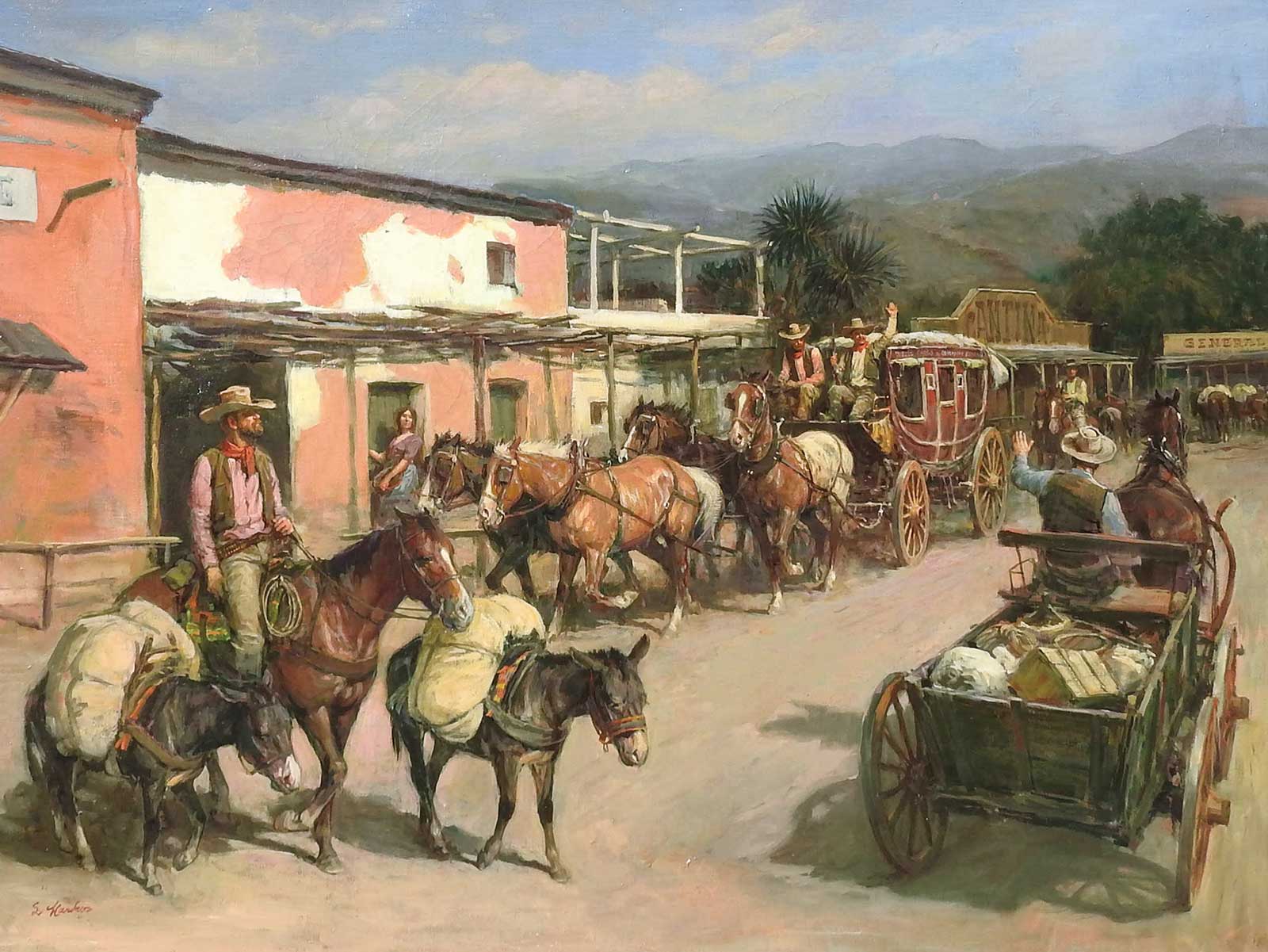
Southwest Gallery, Border Town, oil on canvas, 28 x 36", by Lajos Markos (1917-1993).
Stagecoach passengers had to sleep sitting up and were prohibited from resting their head on their neighbor’s shoulder. They were not allowed to drink and cussin’ was prohibited if ladies were present.
Stage drivers often covered the same sections of the trails and became familiar with the landscape and people who lived along it. In Border Town, Markos shows the driver waving at the driver of the small wagon. The town includes the requisite inn and stable as well as a general store and a cantina for relaxation and entertainment.
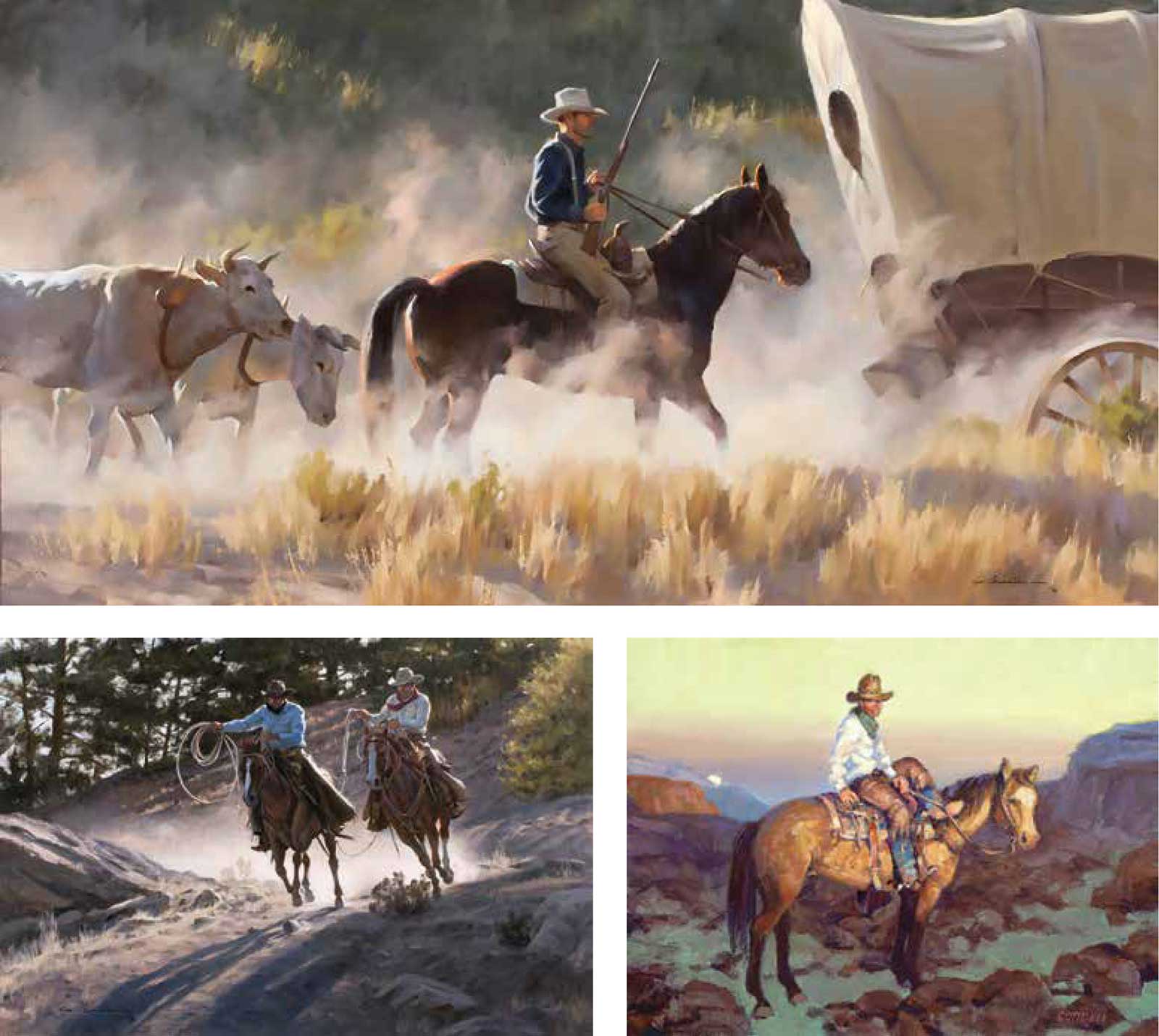
Top: Legacy Gallery, The Arduous Journey, oil, 24 x 46”, by Tom Browning. Bottom: Legacy Gallery, Get Up and Dust, oil, 20 x 30”, by Tom Browning; Sheila Cottrell, Wicky Cowboy, oil, 9 x 12”
Life in the West sped up with the coming of the steam-driven railroad. The locomotives also required frequent stops to replenish their water supply, causing other small towns to spring up. The first dining car appeared in 1867 and reclining swivel seats appeared in 1875.
Tourist travel and the transportation of goods expanded with the development of the railroads. The Transcontinental Railroad was completed in 1869.
In Capitol, Robert LaDuke depicts a more modern train traveling through Capitol Reef National Park in Utah. He paints transportation-oriented images of cars and trains in historical settings—more ideal times. He says, “I enjoy creating narratives with multiple meanings in my work. I imagine that a certain dark but humorous tone underlies my cartoon-like illustrative surfaces. Although realism often dominates my work visually, it is in fact merely providing a frame of reference to a metaphoric end.” Perhaps the dark undertone of Capitol, is that the locomotive is dashing toward an unknown future, one in which it will be superseded by more efficient engines.
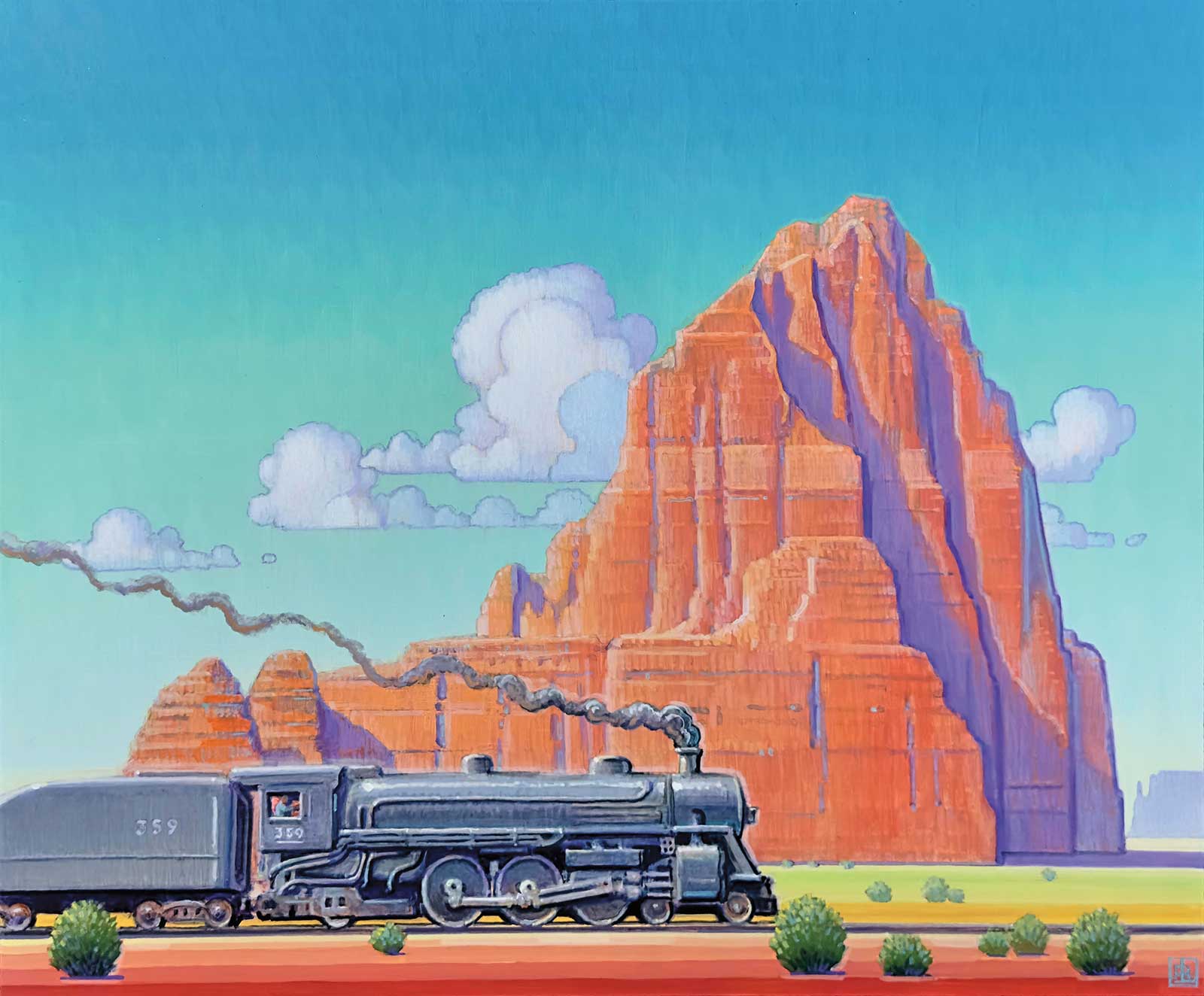
Meyer Gallery, Capitol, acrylic, 14 x 17", by Robert LaDuke.
The colorful, sunlit setting and the rock formations laid down tens of millions of years ago will endure, however.
P.A. Nisbet paints the Old West that endures in his dramatic landscape paintings. Thunder Comes Running, Little Big Horn depicts the awesome power of nature sweeping across the peaceful plain bringing life to its flora and fauna. In 1876, however, the Battle of Little Bighorn, or Custer’s Last Stand, was fought on this spot. It was the most important Native American victory and the worst U.S. Army defeat in the Plains Indian Wars that lasted from the early 1850s to the late 1870s.
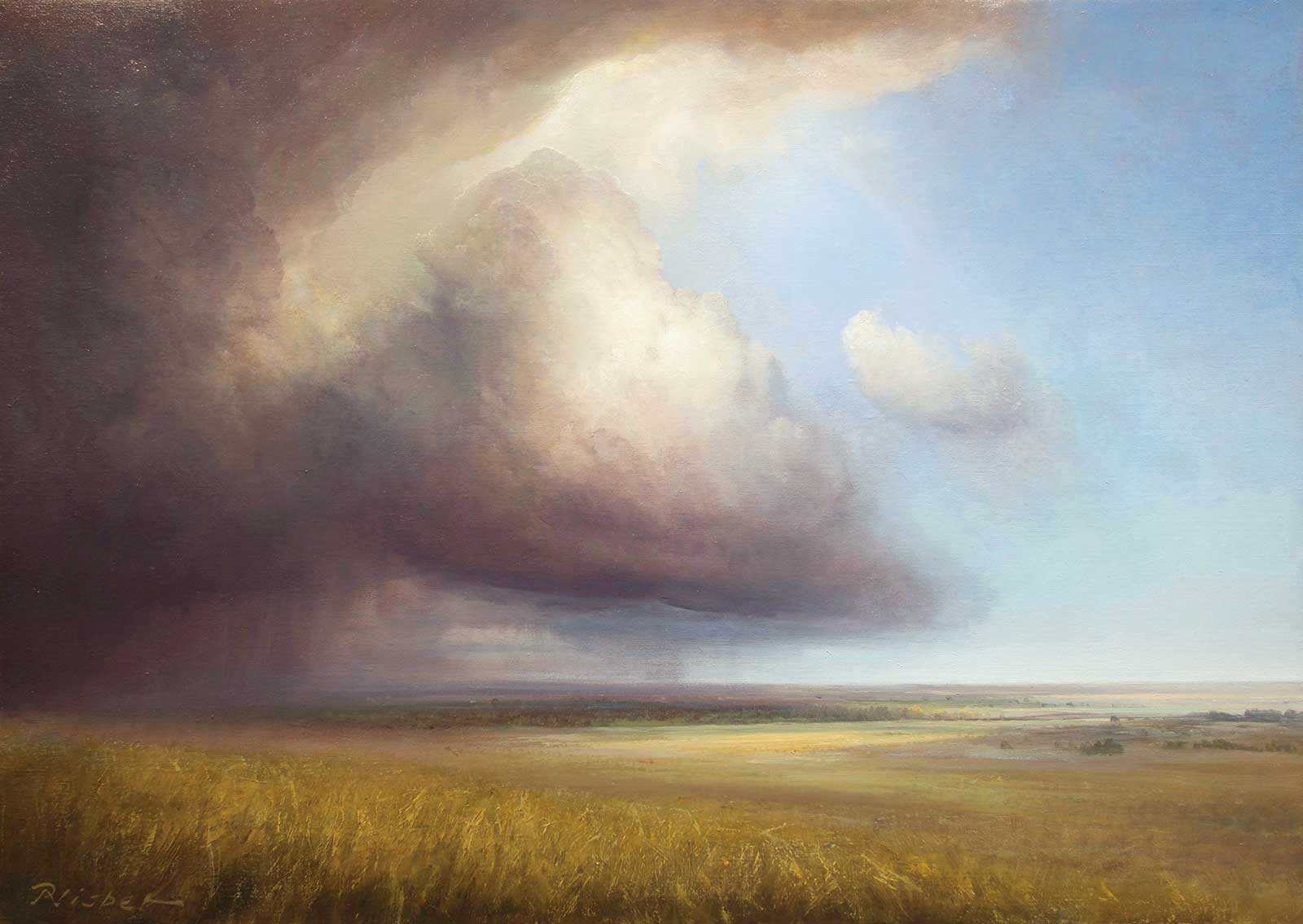
Meyer Gallery, Thunder Comes Running, Little Big Horn, oil, 20 x 28", by P.A. Nisbet.
The landscape is the true Old West, having witnessed the daily lives of Indigenous people, the Westward expansion by settlers convinced of their fulfilling the divine will, its despoilation and the attempts to revive it and live in harmony with it.
Chief Seattle of the Duwamish tribe said, “Humankind has not woven the web of life. We are but one thread within it. Whatever we do to the web, we do to ourselves. All things are bound together. All things connect.”
Keep reading for more perspective on the Old West from galleries, artists and arts organizations from around the country. They provide insight and inspiration on the genre of the Old West while also giving advice on establishing or growing a collection.
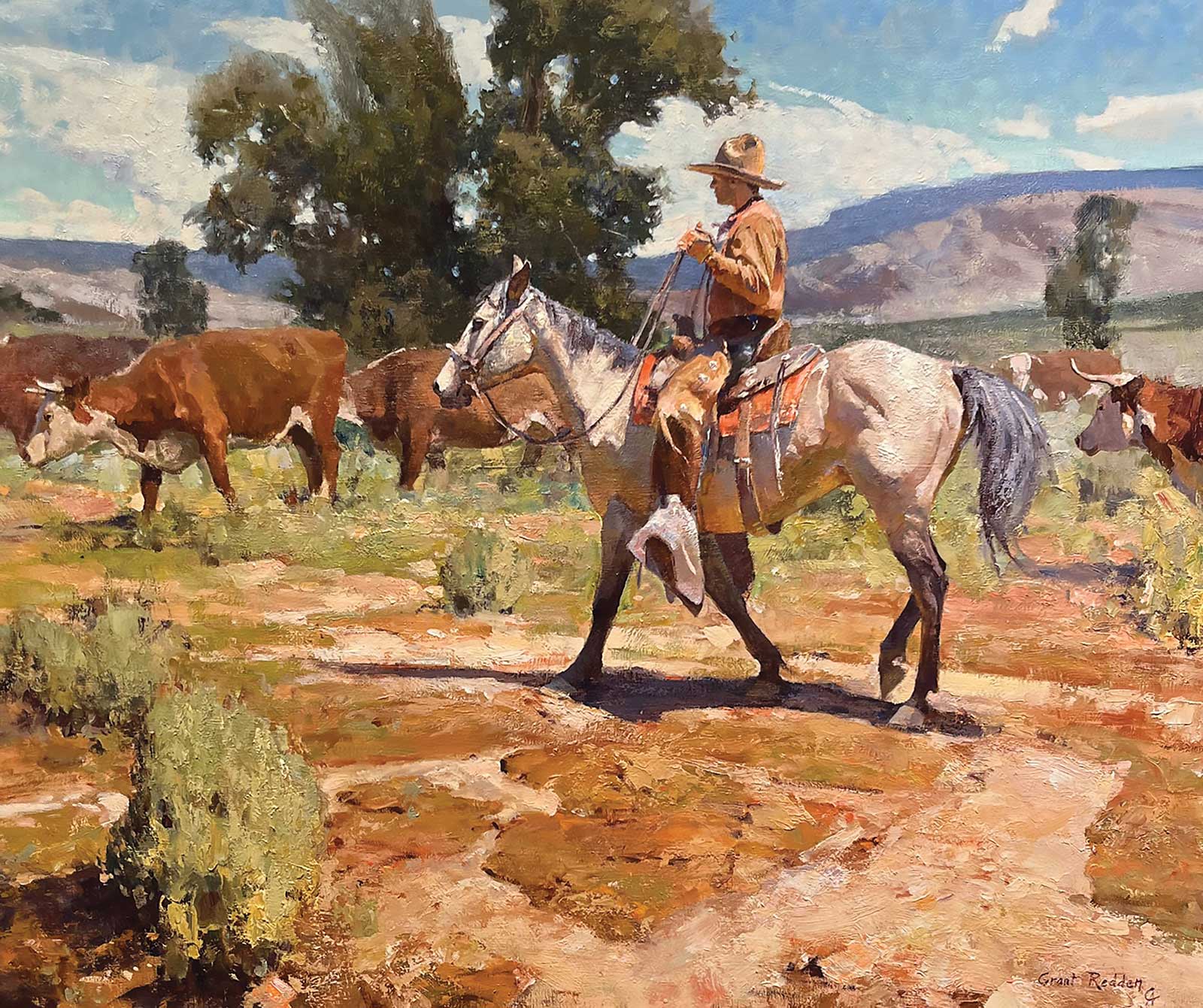
Legacy Gallery, Lonetree Cowboy, oil, 20 x 36", by Grant Redden
Based in Scottsdale, Arizona, Legacy Gallery has been offering Western art since 1988, and today, represents many of the top artists creating art. Two of those artists are Tom Browning and Grant Redden. “Working from a studio just outside of Eugene, Oregon, Tom Browning has created numerous still lifes, figure and Western genre works. Tom is no stranger to the Old West. Growing up in Oregon provided him with a rich history of the land in its beginning years,” says Haley Delaunais, Legacy’s marketing manager. “Grant Redden grew up on a ranch in Wyoming, another place of the glory of the Old West. His ability to capture the old-school cowboy can transport you back in time. The Old West was a wild place but it also had its calm and peaceful moments. When buying a painting of this genre, decide if you want a piece of the action or a peaceful scene from everyday life.”
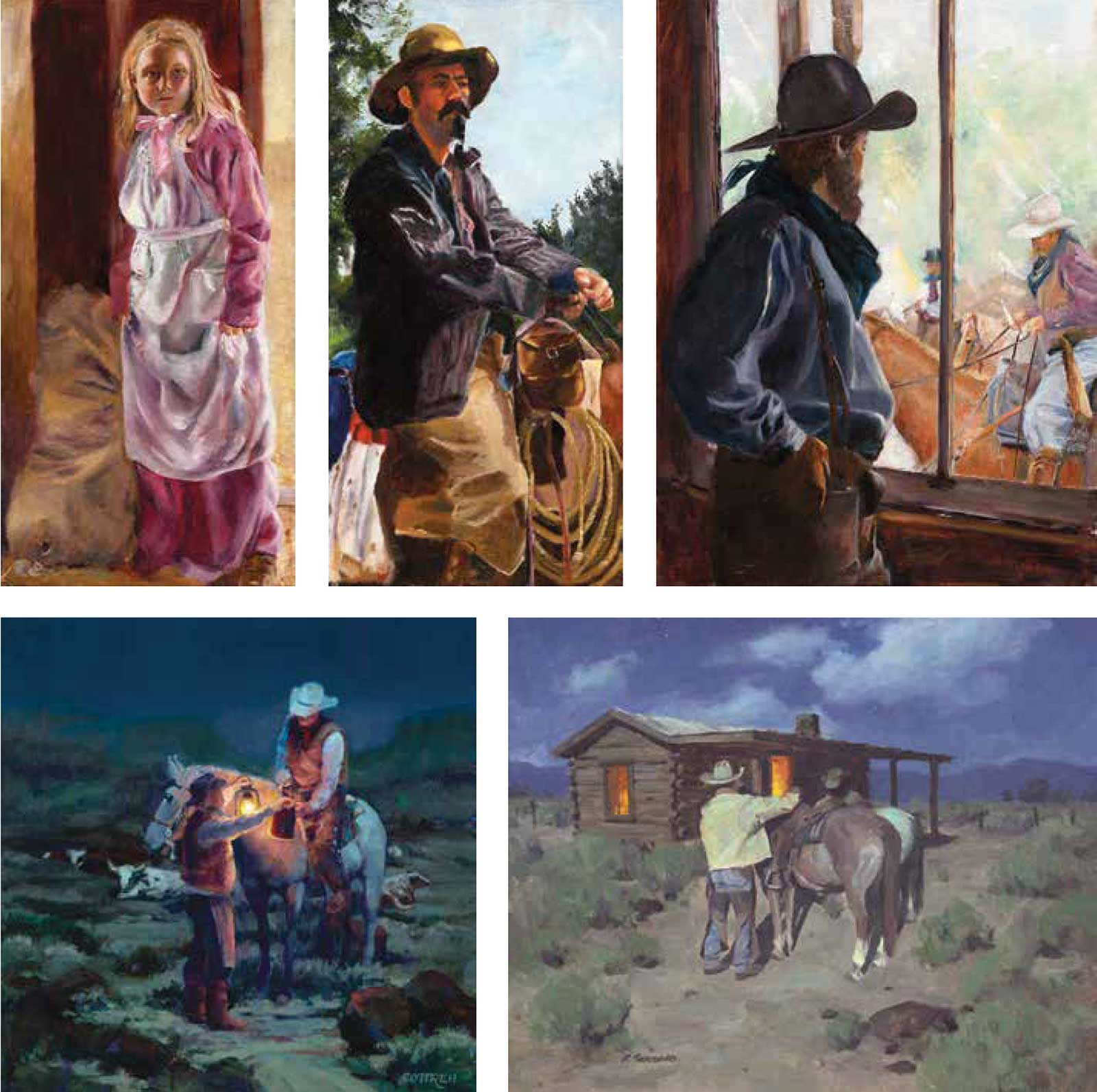
Top: Shirley Quaid, Chore Time, oil, 24 x 12”; Shirley Quaid, Travelin’ Man, oil, 24 x 12”; Shirley Quaid, Trouble for Wild Willie, oil, 24 x 18”. Bottom: Sheila Cottrell, Coffee for the Night Guard, oil, 12 x 12”; Tehachapi Arts Commission, That Was a Long Day, oil on linen, 11 x 14”, by Frank Serrano.
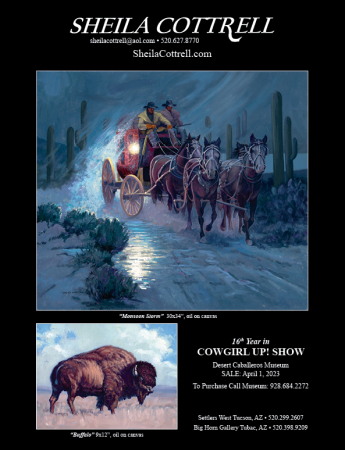
Painter Sheila Cottrell also paints the peaceful qualities of the Old West, but hints at action in some of her new work as well, including Attack at Dawn. Some of her work is also inspired by real events. “Painting the Old West has always been my passion. A book published on my Wells family history, sub-titled the Cochise County Bunch, has been the source of many of my paintings. Especially fun was the tale of deputy sheriff, RG Wells, who single-handedly captured two horse rustlers in Dragoon Pass,” she says. “He herded the horses and rustlers back to Tombstone, [Arizona], by handcuffing the rustlers to the pommel of their horses and making them walk back. When asked what would’ve happened if the horses had stampeded, he said, ‘That would’ve been tough on them boys.’” Cottrell advises collectors to look for authenticity in the works they purchase. “To many collectors, accuracy is critical. I once had a Nebraska rancher buy one of my paintings of a roper, listing five things I’d ‘caught perfectly’ starting with ‘the cant of his wrist.’ But many of my paintings are night scenes bought by collectors who say they were most influenced by their nostalgia for the Old West,” she adds. “My favorite comments have been from cowboys comparing their experiences camping under full moons, with the night untainted by any ambient light from nearby towns.”
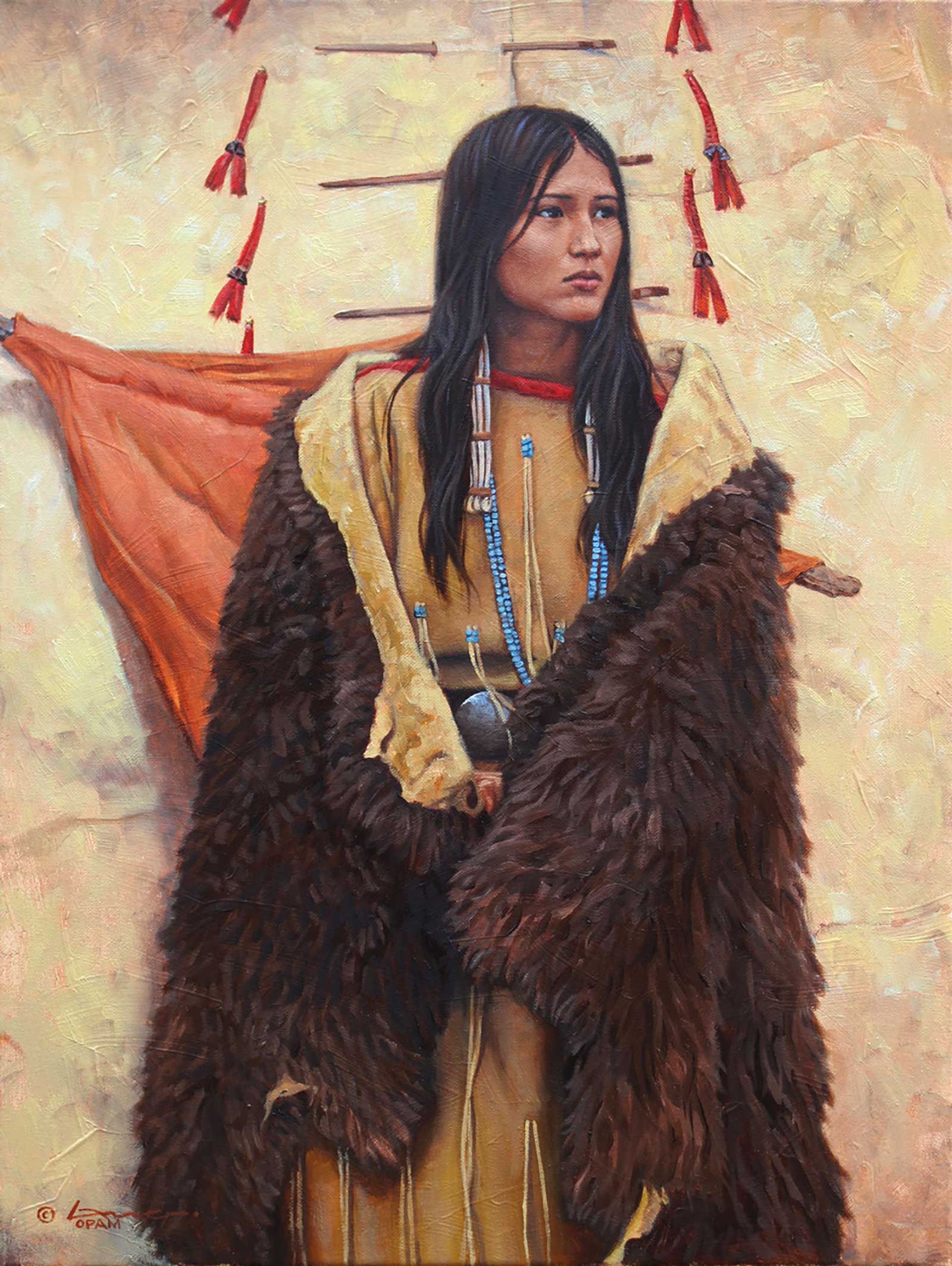
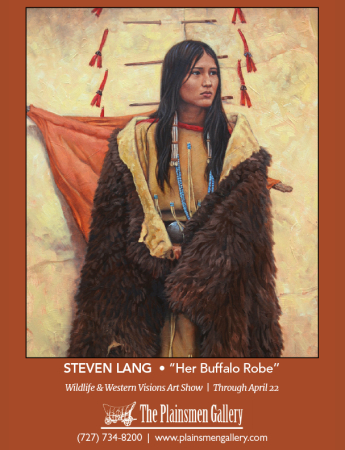
The Plainsmen Gallery, Her Buffalo Robe, oil, 24 x 18", by Steven Lang.
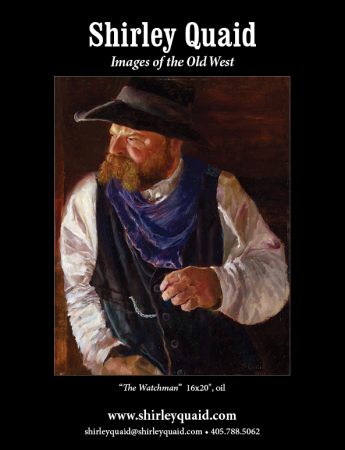
For her own work featuring the Wild West, Oklahoma artist Shirley Quaid says, “Really, how many ways can I say that I love to paint cowboys, Native Americans and children? I am a storyteller. I love to push paint around and it is so satisfying when my collectors share how much the paintings speak to them,” she says. “Light and shadow continue to spark my creative interest. But it is the stories that really grab me and cause me to choose that particular subject. I work almost every day using a limited palette and think that it has brought my artwork to a new level.” She continues: “I hope that collectors choose the work that connects on a deep emotional level, whether it is color, subject or the story that they see.”
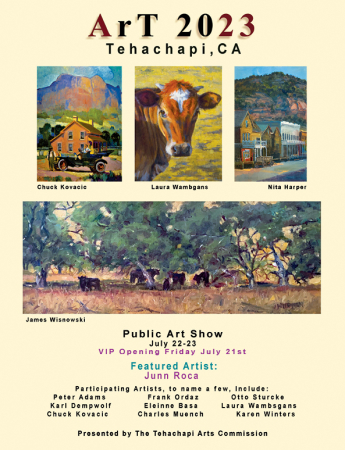
The Old West will be well represented in July at Art 2023, presented by the Tehachapi Arts Commission in Tehachapi, California. Renowned artists from all around the country participate in the show. One artist participating in 2023 is Frank Ordaz. “I am always moved by the strength of women who braved the open plains to forge a life away from the comforts of civilization,” he says about his work On the Prairie. “This painting is dedicated to those tremendous ladies who defied the terrors of the open prairie to settle and make a life for themselves and their family.”
Another Art 2023 participant is Frank Serrano, whose new work is That Was a Long Day. “This painting is my depiction of a couple of cowboys returning to a warm cabin on the ranch just as dinner is being prepared,” he says.
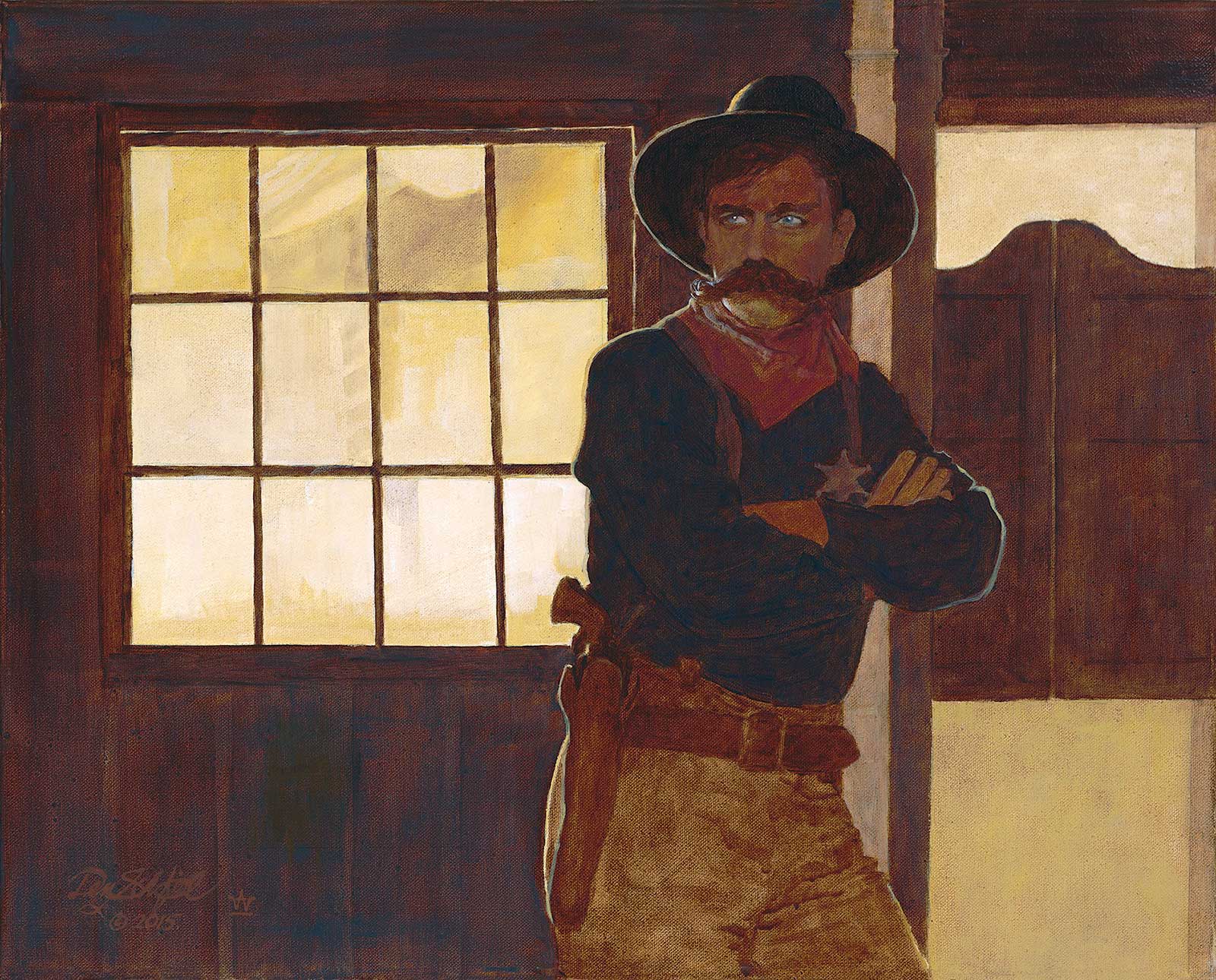
Den Schofield, Keeper of the Peace, oil on canvas, 16 x 20"
Junn Roca will be showing The Wooden Shed at the Tehachapi show. “As an artist, I always find inspiration in subjects that have stories to tell,” she says. “The first time I laid my eyes on this wooden shed, it pulled me into the total harmonious colors created by nature [in contrast to] a man-made shed. Through observation and immersing oneself within the confines of this painting, one learns the story of this shed.”
Across the country from California, in Dunedin, Florida, is The Plainsmen Gallery, which has proudly represented the artwork of Steven Lang for 10 years. “After a three-year hiatus from painting full time, Steven won two major awards last year including first place in oils at the Bosque Art Classic,” the gallery notes. “With his painting Her Buffalo Robe, which is featured in the Plainsmen Gallery’s Wildlife & Western Visions show, the artist captures the innocence of an ancient culture that still holds a strong appeal today. Standing against the backdrop of a teepee, the young woman is facing a cool, late summer morning wrapped in her buffalo robe. ‘What will the day bring?’ she wonders.”
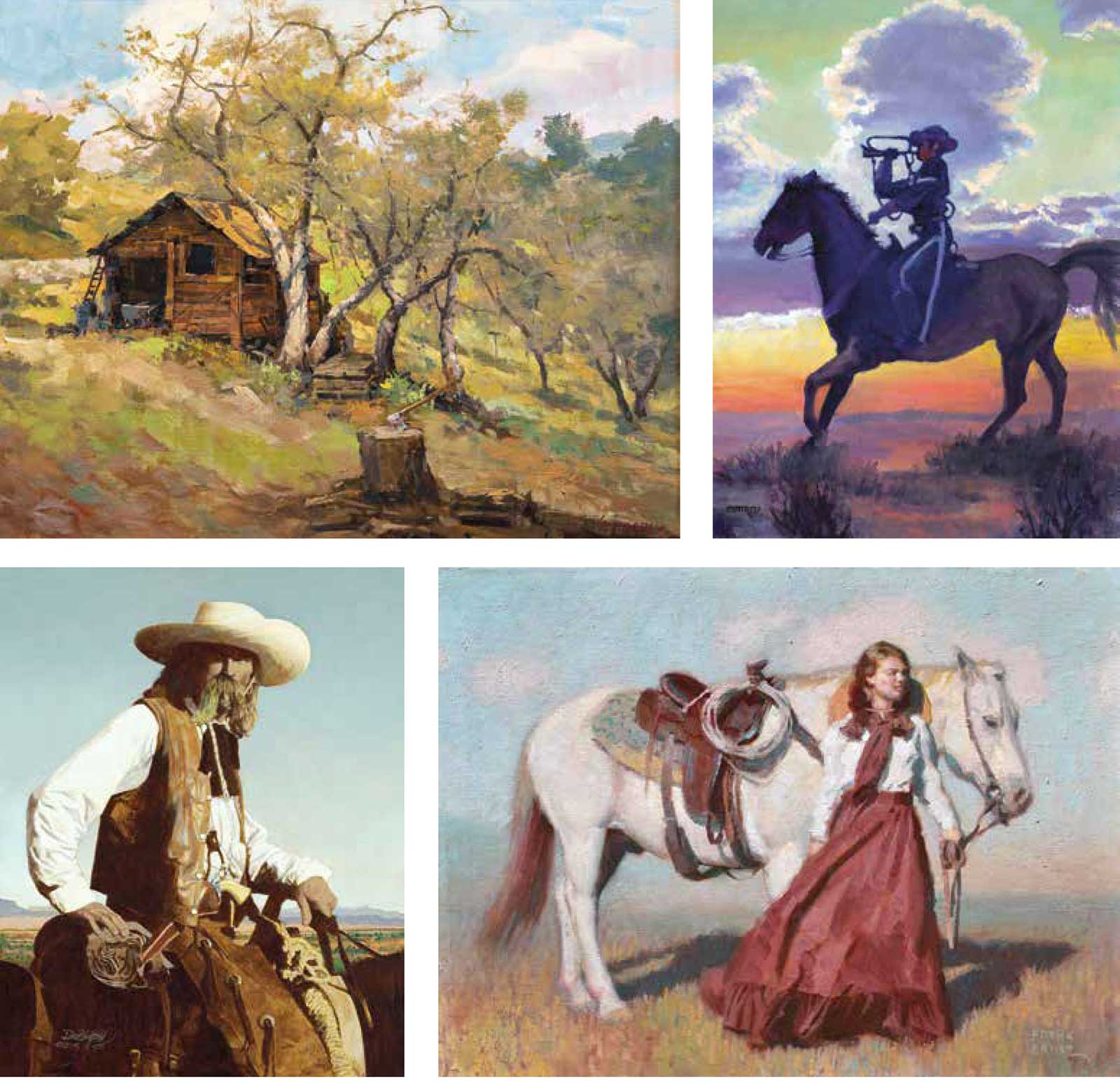
Top: Tehachapi Arts Commission, The Wooden Shed, oil on linen, 16 x 20”, by Junn Roca; Sheila Cottrell, Attack at Dawn, oil, 12 x 9”. Bottom: Den Schofield, The Westerner, oil on canvas, 20 x 16”; Tehachapi Arts Commission, On the Prairie, oil, 9 x 12”, by Frank Ordaz.
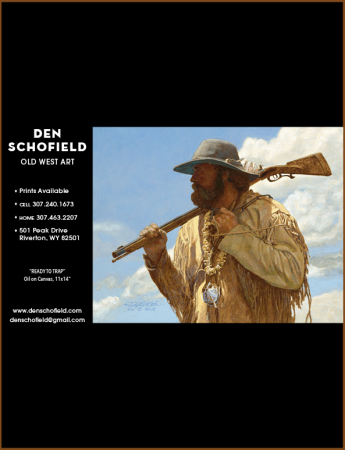
Den Schofield, born and raised in Philadelphia, is a graduate of the Philadelphia College of Art. The artist worked in the illustration business for 30 years before he tried to get into the Western art world. Once he dove into the genre, Schofield traveled repeatedly throughout the West to find subject matter. His work shows the mountains and the plains because he has seen them firsthand. He also took time to build up his own library, visit various reenactments and view museum collections related to the West, all to show the authentic reality of the Old West. —
Featured Artists & Galleries
Den Schofield
www.denschofield.com
Legacy Gallery
7178 Main Street, Scottsdale, AZ 85251
(480) 945-1113, www.legacygallery.com
Meyer Gallery
225 Canyon Road, #14, Santa Fe, NM 87501
(505) 983-1434, www.meyergalleries.com
Sheila Cottrell
(520) 627-8770
sheilacottrell@aol.com
www.sheilacottrell.com
Shirley Quaid
(405) 788-5062
www.shirleyquaid.com
Southwest Gallery
4500 Sigma Road, Dallas, TX 75244
(972) 960-8935, www.swgallery.com
Tehachapi Arts Commission
Laura Dreyer, (626) 945-3753
dreyerfinearts@gmail.com
www.artstehachapi.org
The Plainsmen Gallery
2141 Main Street, Dunedin, FL 34698
(727) 734-8200, www.plainsmengallery.com
Powered by Froala Editor