After three years of rising through the ranks of Western art, Sean Michael Chavez is reexamining what kind of work is important to him and the first thing he realized was it was his own history.
The painter, who was raised in New Mexico, has Mexican heritage and he sees that as an opportunity to explore the West in unique ways. “My last couple shows have really informed me on what people respond to with my work, but I also want to work in tandem with what I respond to. Where those things align, that’s where I want to be as an artist,” Chavez says. “So I’ve been exploring a dialogue with my audience and myself. And the Hispanic side of my history is really interesting to me. My family has been in the Rio Grande Valley for hundreds of years. As a child I remember seeing pictures of relatives with sidearms and badges.”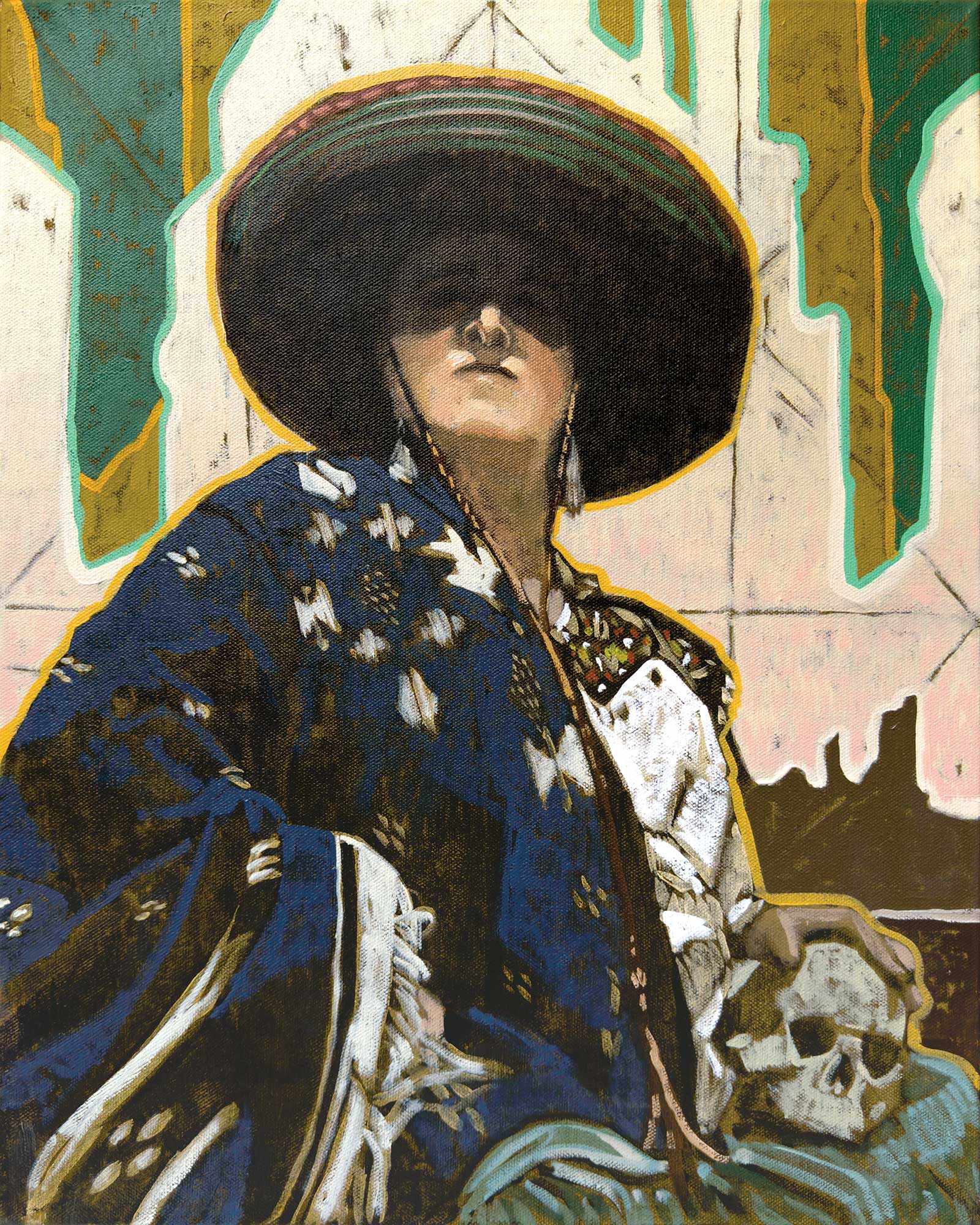 Encabezar (The Head II), oil on canvas, 20 x 16”Chavez remembers when he became an artist pursuing contemporary art as he sought to find direction in his creative output. “I wanted something I could personally relate to,” he adds.
All of his new work is still Western, but it’s more specifically grounded in the “Hispanic West, the world of the vaquero,” he says. New works include images of men and women wearing beautiful Mexican weavings, sombreros and other material that comes from a different part of the Old West. For many collectors, the images will look new, but some of the details will feel familiar. 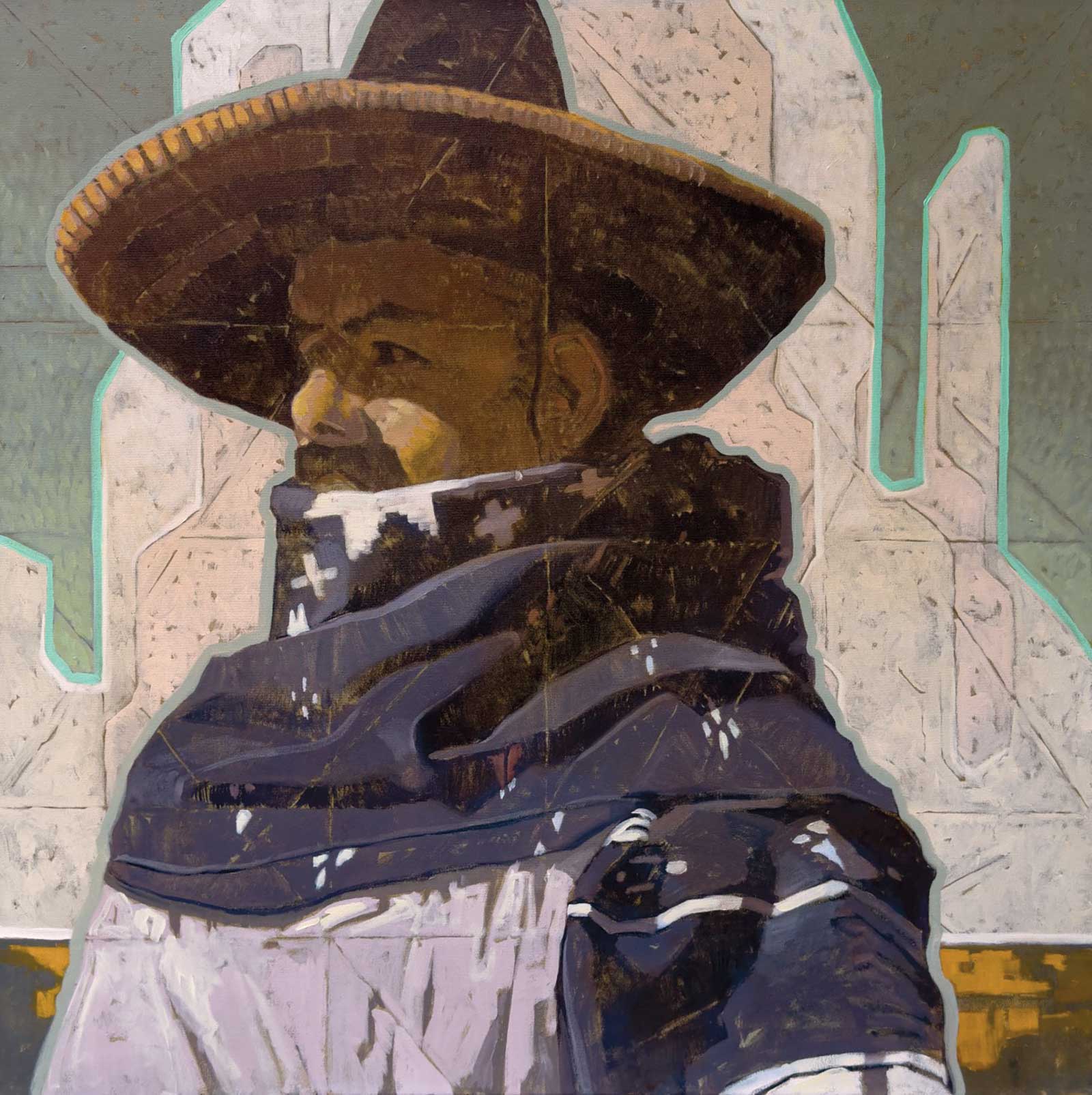 Brasadero (Azul), oil on canvas, 36 x 36”“What’s great about these images is that even the silhouettes are different,” Chavez says. “Just the way my vaqueros hold themselves and stand. They didn’t just have a different look, but they walked and stood differently as well. They carried themselves in unique ways. The Hispanic cowboy is often portrayed as a bumbling comic relief or a villain or thief. I want to course correct that. They lived by a gentleman’s code that was part of the old vaquero tradition.”
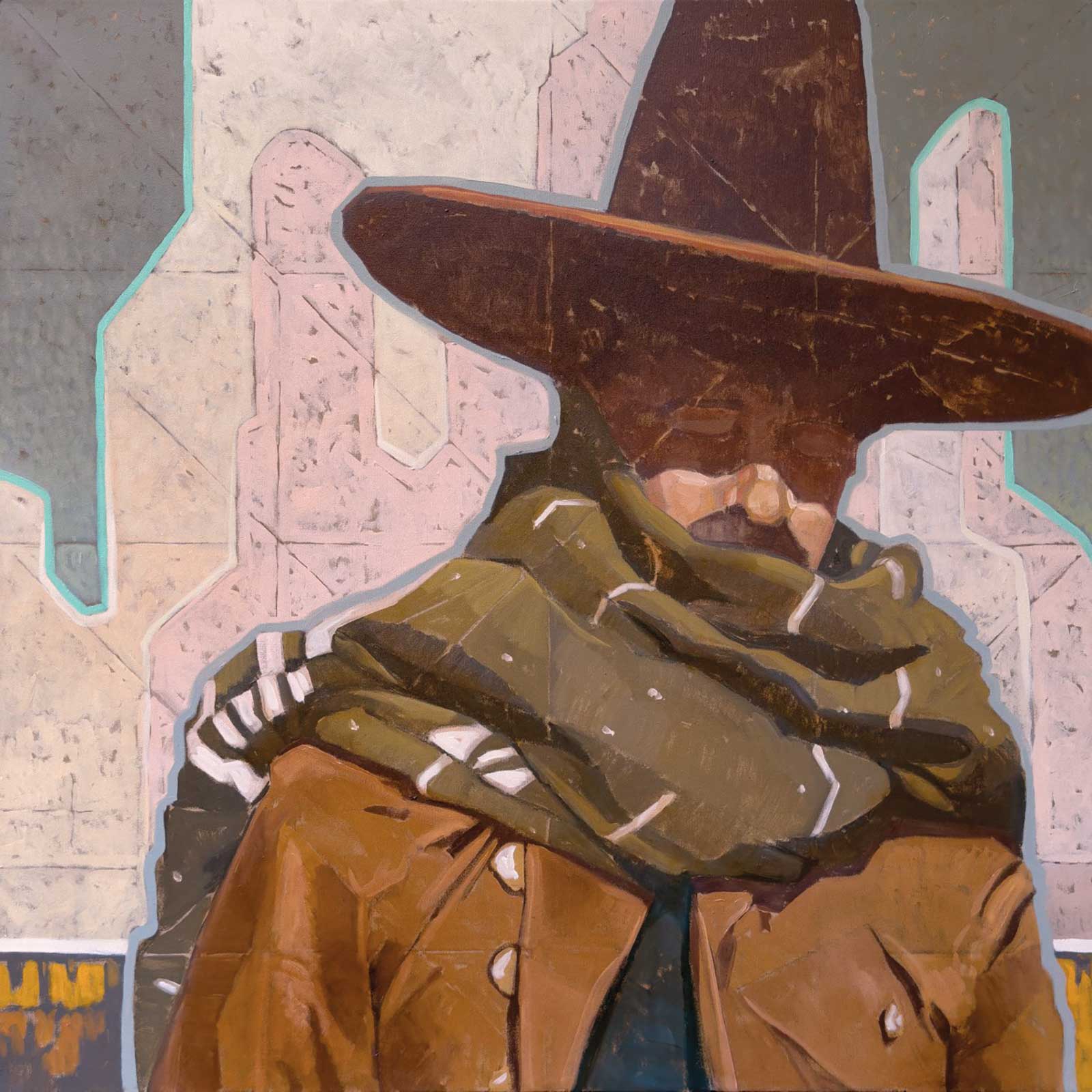 Brasadero (Verde), oil on canvas, 36 x 36”Many of the new paintings will have the artist’s abstracted clouds and landscapes behind the figures. Within the backgrounds are grid lines, horizontal and vertical, but also diagonal. These are remnants of his early drawing on the canvas that he chooses to leave slightly visible.
“I think of it as an armature that I use to divide and create the composition on the canvas.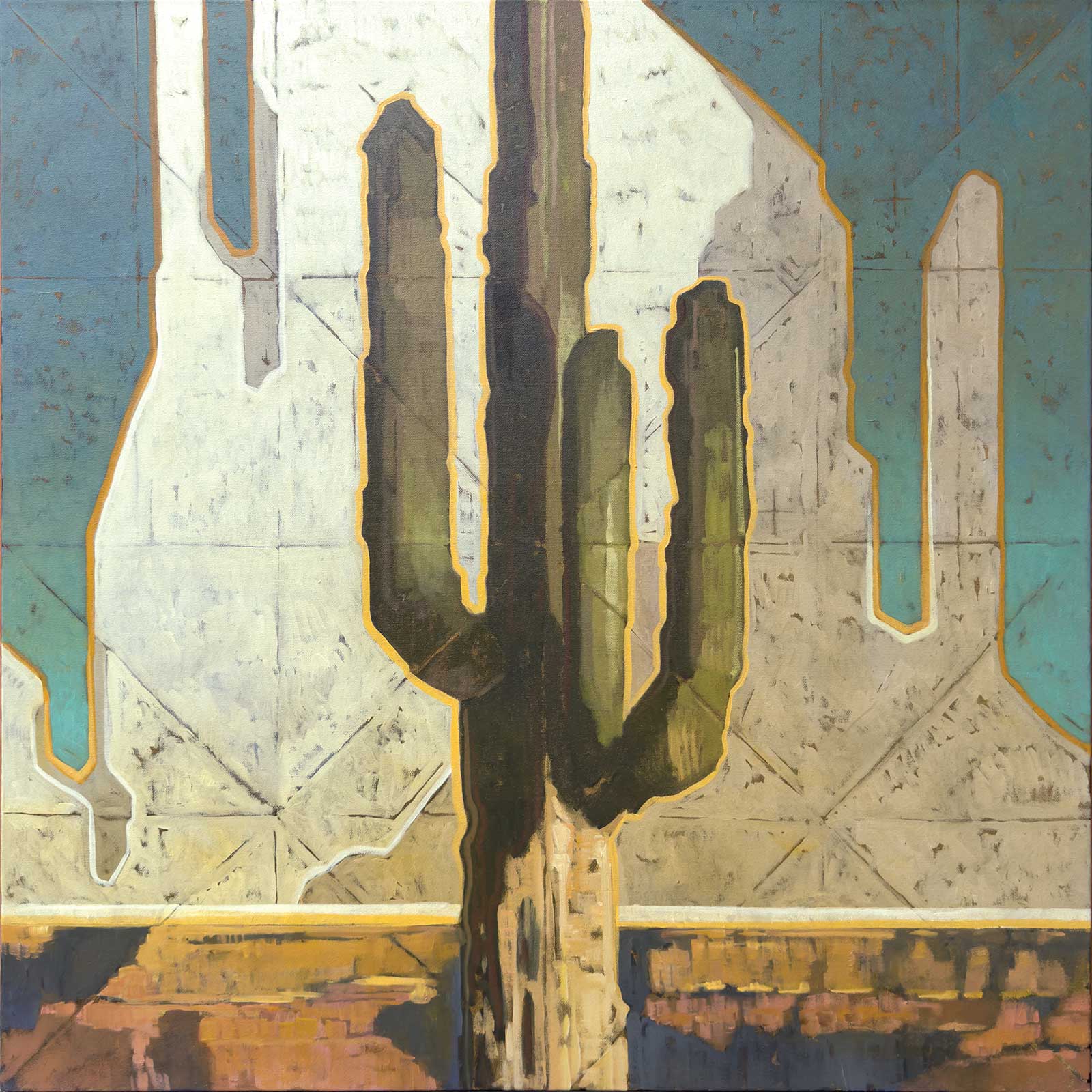 El Mano, oil on canvas, 36 x 36”I would paint over them, but I eventually got to a point where I would leave some of them in to reveal the structure of the work,” he says. “It’s nice because it brings something else to the table and gives my work a distinctive look.”
His new show will open March 3 at Commerce Gallery in Lockhart, Texas. It runs through April 2. —
Powered by Froala Editor