Nearly 500 years ago, Spanish explorer and conquistador Francisco Vázquez de Coronado trekked north through Mexico and into Arizona before crossing through New Mexico, across the panhandles of Texas and Oklahoma and stopping briefly in Kansas. None of these names and borders existed, but neither did what Coronado was searching for in this strange, new land—the Seven Golden Cities of Cibola.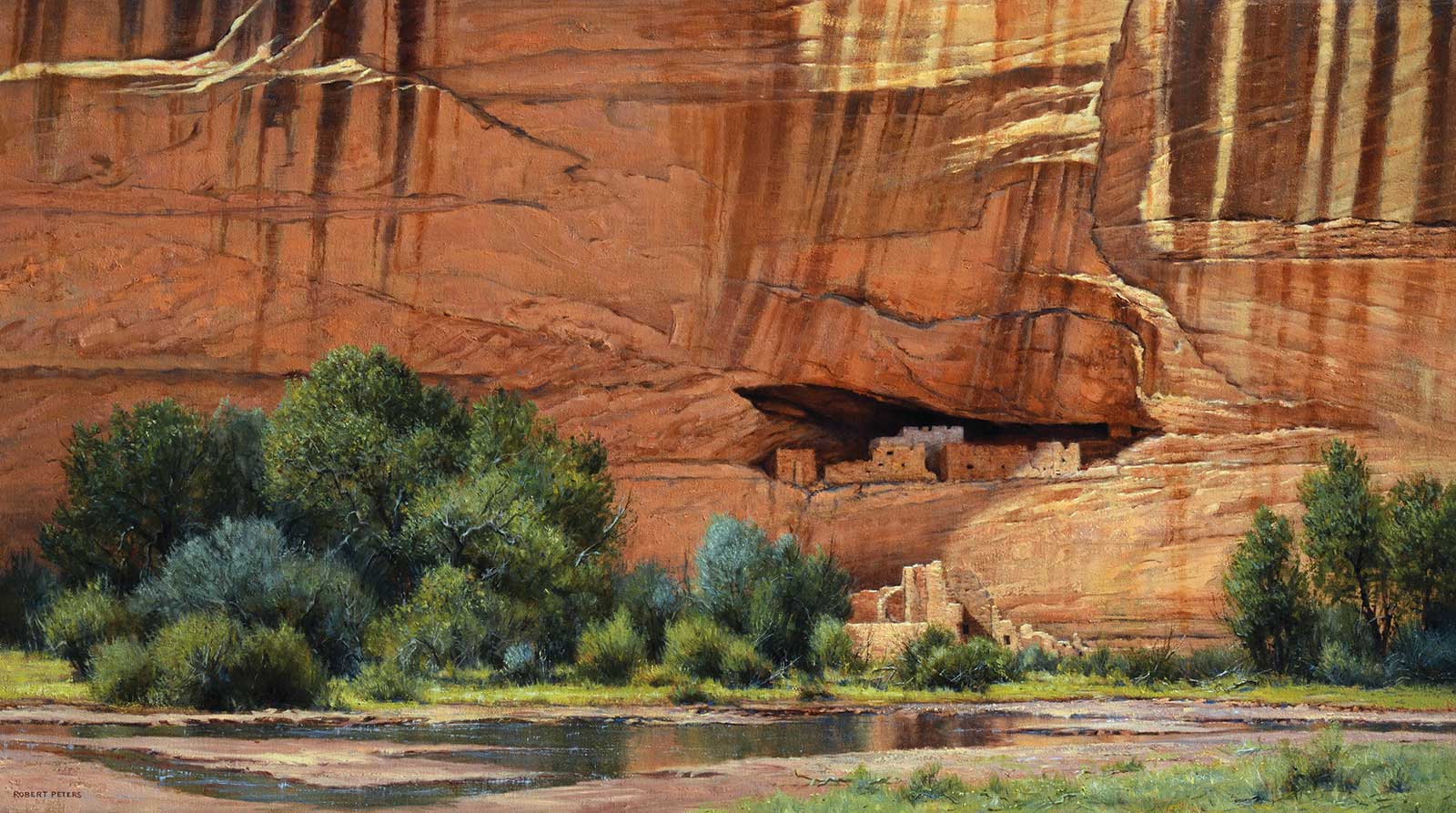 Robert Peters, Ancient Pueblo, Canyon de Chelly, oil, 28 x 50”The elusive golden cities were never found, but Coronado made other discoveries, including in what is today northeastern Arizona. As his soldiers, Indigenous guides and priests marched through the badlands, with crumbling towers and eroded hills, they passed through a rainbow of color created by stratified layers of rock being pulverized by weather and time. The mineral-rich hills sparkled under the sunlight. As the story goes, Coronado looked out over the land and named it El Desierto Pintado—the Painted Desert.
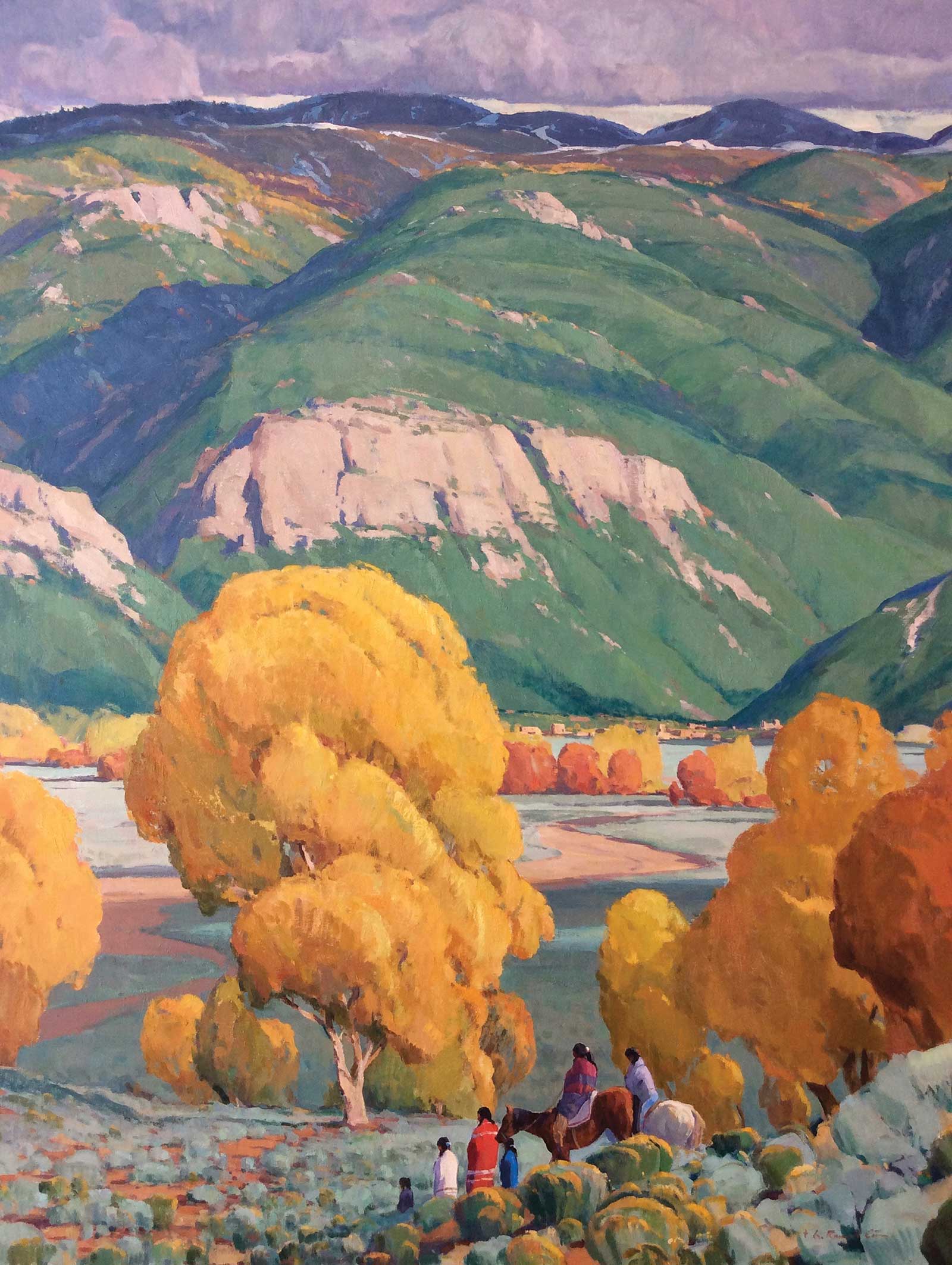 G. Russell Case, In the Sangre de Cristina, oil, 54 x 42”Coronado would leave the Southwest empty-handed. His failure was an oversight of immense proportions: The treasure was not in the land. The treasure was the land.
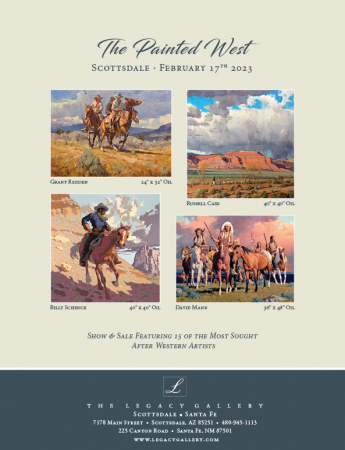
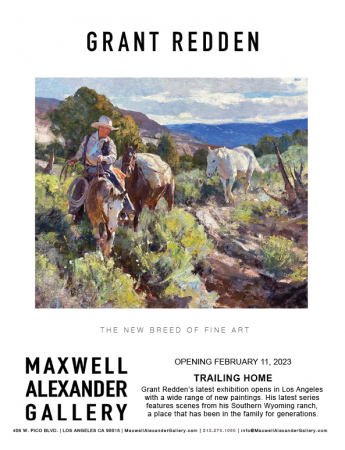
Today, the Southwest is celebrated for its beauty, its mesmerizing vastness and for the element that struck Coronado so deeply—its color. The rich variety of color will be celebrated at The Painted West, a new group show opening February 17 at Legacy Gallery in Scottsdale, Arizona. This year’s show is the third edition of The Painted West, which will feature works from some of the top artists working today.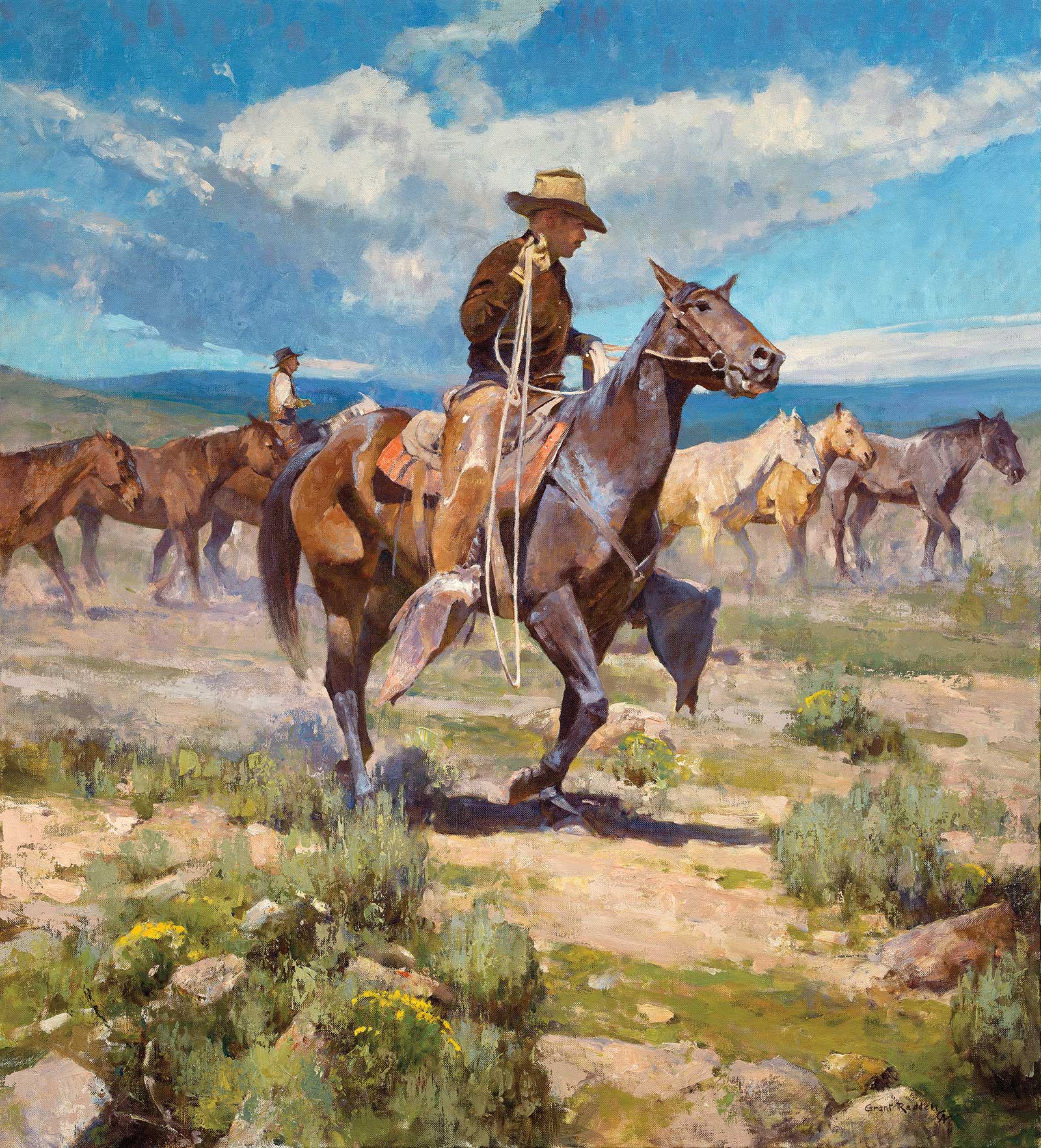 Grant Redden, Horse Wrangler, oil, 40 x 36”
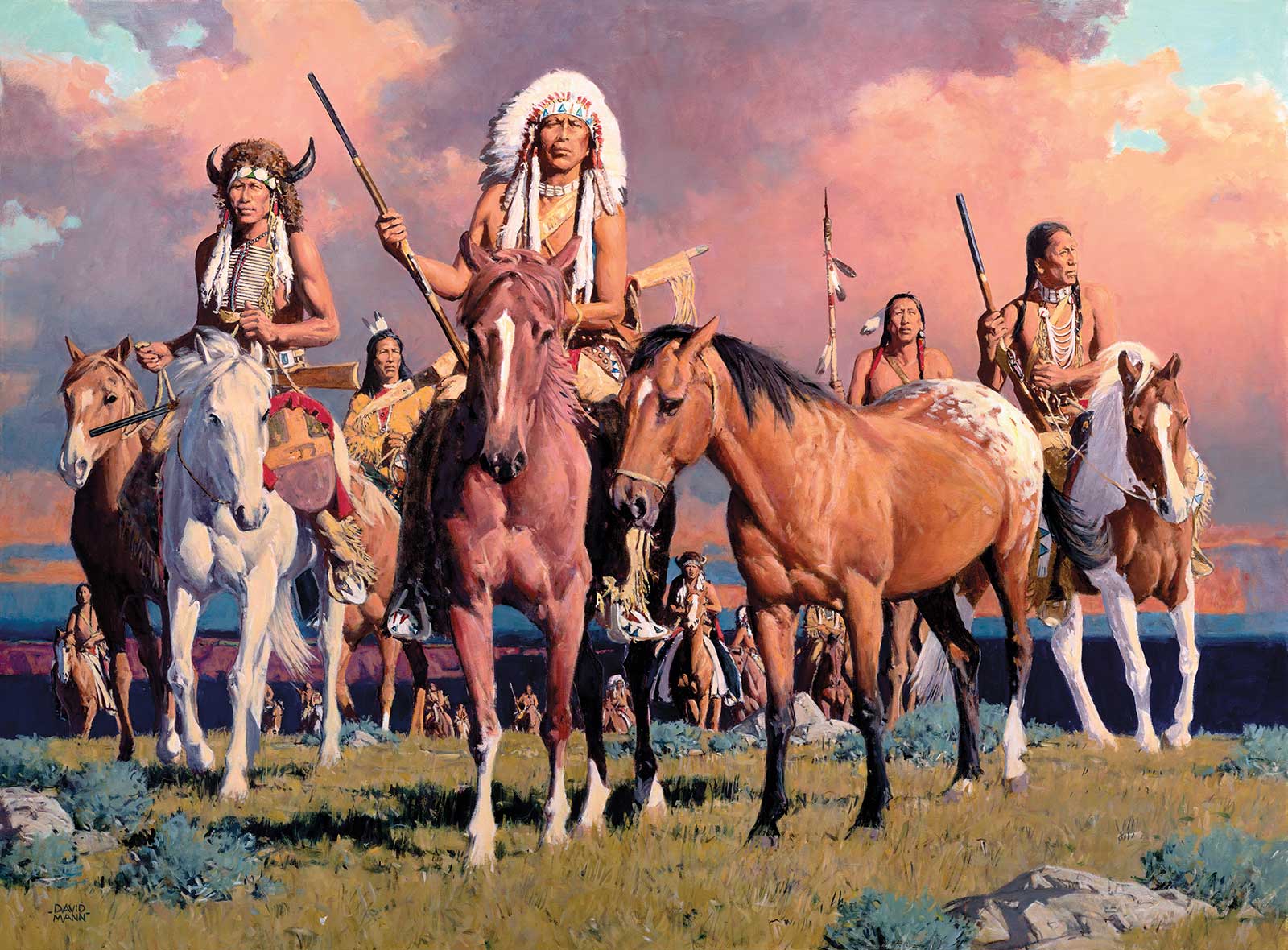 David Mann, Across the Great Plateau, oil, 36 x 48”
One of those artists is Bill Anton, who will be showing the piece Rancher’s Reward, a 30-by-36-inch oil painting showing a cowboy smiling down at a pair of calves. Anton, long known as a master of light and color, brings a sunny warmth to his painting. “Light and color are unique in the West for many reasons, chiefly among them are the keenness of the air. [Frederic] Remington spoke about it. The generally dry air and lack of light and air pollution in the backcountry are markedly different from the heavy atmosphere back east, making distant objects appear much closer than they actually are,” he says. “Early settlers coming west often remarked that landmarks on the horizon were deceptively far away and they were amazed at how clear dry air fooled them about distances. So color is often more intense out here. It takes a skilled painter to allow the distance to properly drop back in a painting and give dimension to a work. Also, the geography here, with great variations in altitude, allows the sun to gild mountaintops and canyon walls with dramatic light often missing in flatter country. As in all painting, artful orchestration of these elements is the difference between a picture and a piece of art.”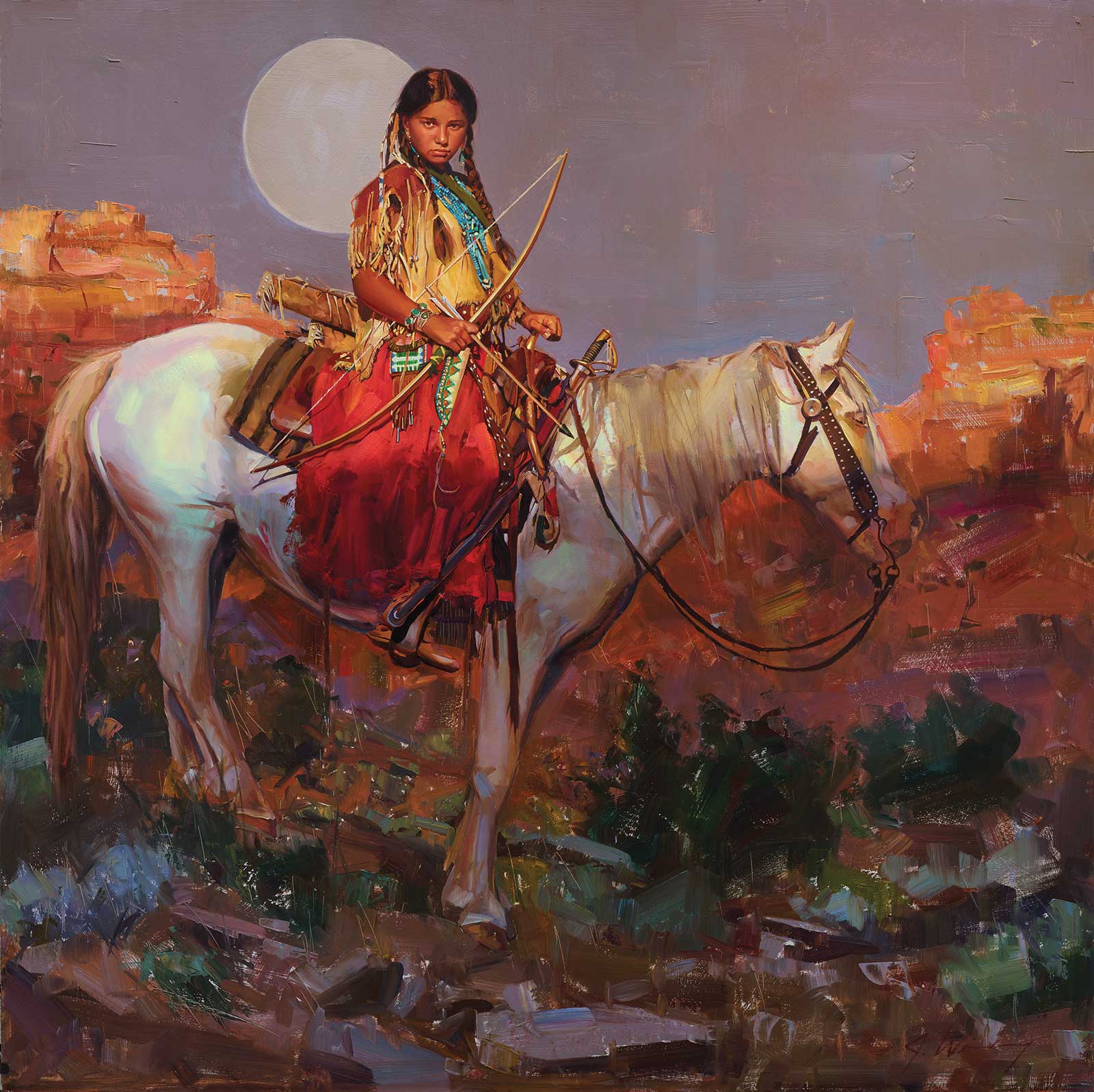 Jeremy Winborg, Moonrise Over the Mesa, oil, 48 x 48”Jeremy Winborg, who uses uniquely vibrant color with dramatic light and shadow, will be showing Moonrise Over the Mesa, a 48-inch square sunset piece showing a young Native American rider on a white horse. Thinking about the piece, he ponders a quote by Monet: “The light constantly changes, and that alters the atmosphere and beauty of things every minute.”
“A few years back, my wife and I bought an RV so we could easily travel with our five kids and two dogs. We’ve had a great time traveling through mountains and deserts throughout the West. On these trips, I always wake up early to photograph the beautiful sunrises while my family sleeps. They’re all bouncing around in the back while I drive like a madman trying to capture the sunrise while the intense, rich colors, lights and shadows are at their peak,” Winborg says. “The large painting I’m working on for the Painted West show is set in one of the places we went to visit this past year, [Utah's] Valley of the Gods. In my oil paintings I love to portray the cool shadows and the warm light that illuminate the features of the landscape. Color, light and shadow are such important parts of my work and there’s no better place to find that than in the West.”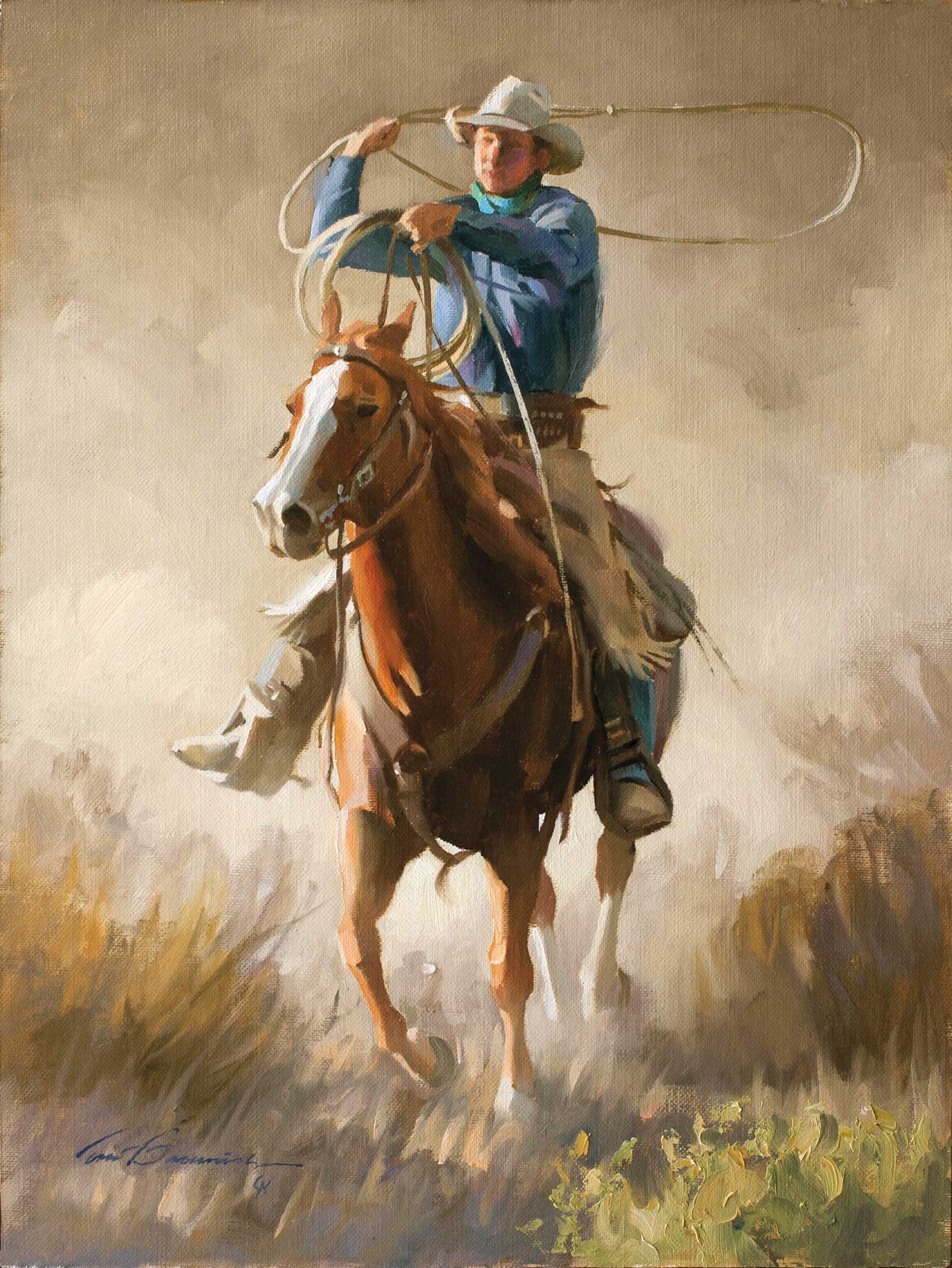 Tom Browning, On the Fly, oil, 12 x 16”
Winborg uses both a palette knife and brush to achieve his work, which creates a dynamic balance between more impressionistic scenery with highly detailed figures. With Moonrise Over the Mesa another dynamic is at play: the intensity of the fleeting light paired with the mellow shadows that are creeping up the scene as the light vanishes behind the horizon.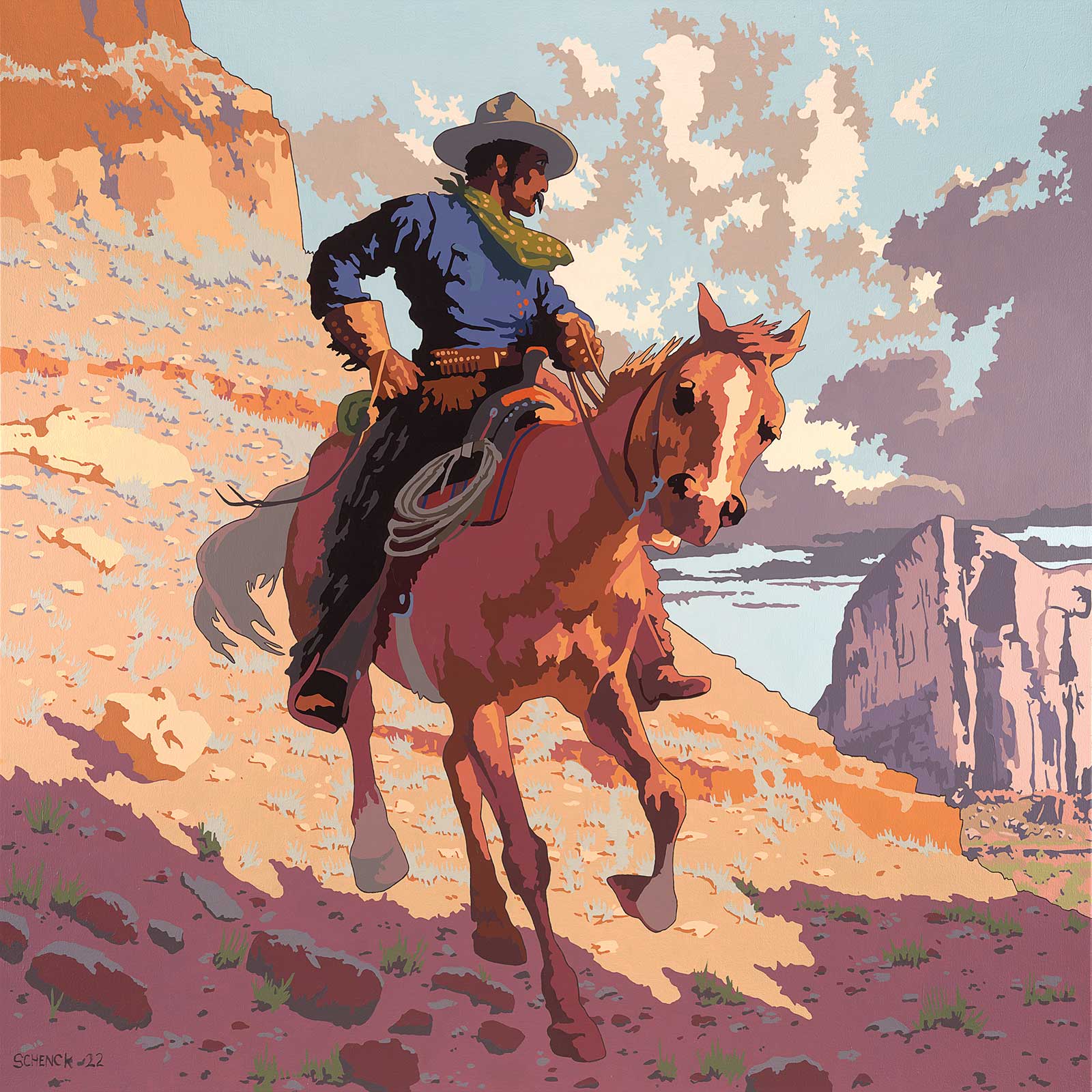 Billy Schenck, Descent from Moki, oil, 40 x 40”
Tom Browning will be showing new work in the Legacy show, including his piece On the Fly, a small 12-by-16-inch image of a cowboy spinning a rope over his head as his horse stirs up dust behind him. Known for his dusty paintings with intense light, the artist dials in his color carefully in the development of each piece. “Color seems to be the one aspect of painting that most defines an artist’s work. Although lighting situations and color can change from one subject to the next, there is always a similarity in one’s work linked to the palette chosen or the way they see color,” he says. “Personally, I choose to gray my colors down rather than depict them as saturated and vibrant like I ‘think’ I see them. The West offers so many color variations in any one particular scene that it becomes important to unify all of these differences to create a more convincing painting. For instance, it’s common to let the colors of the Southwest deserts get out of hand on canvas. So it helps to try to see and depict all of the vibrant colors in a more toned down state, and then let one color dominate with more brilliance.” In a painting like On the Fly, several colors leap out, including the blue of the rider’s shirt and the brown highlights on the horse’s neck, both of which find unity among the other colors of the pianting.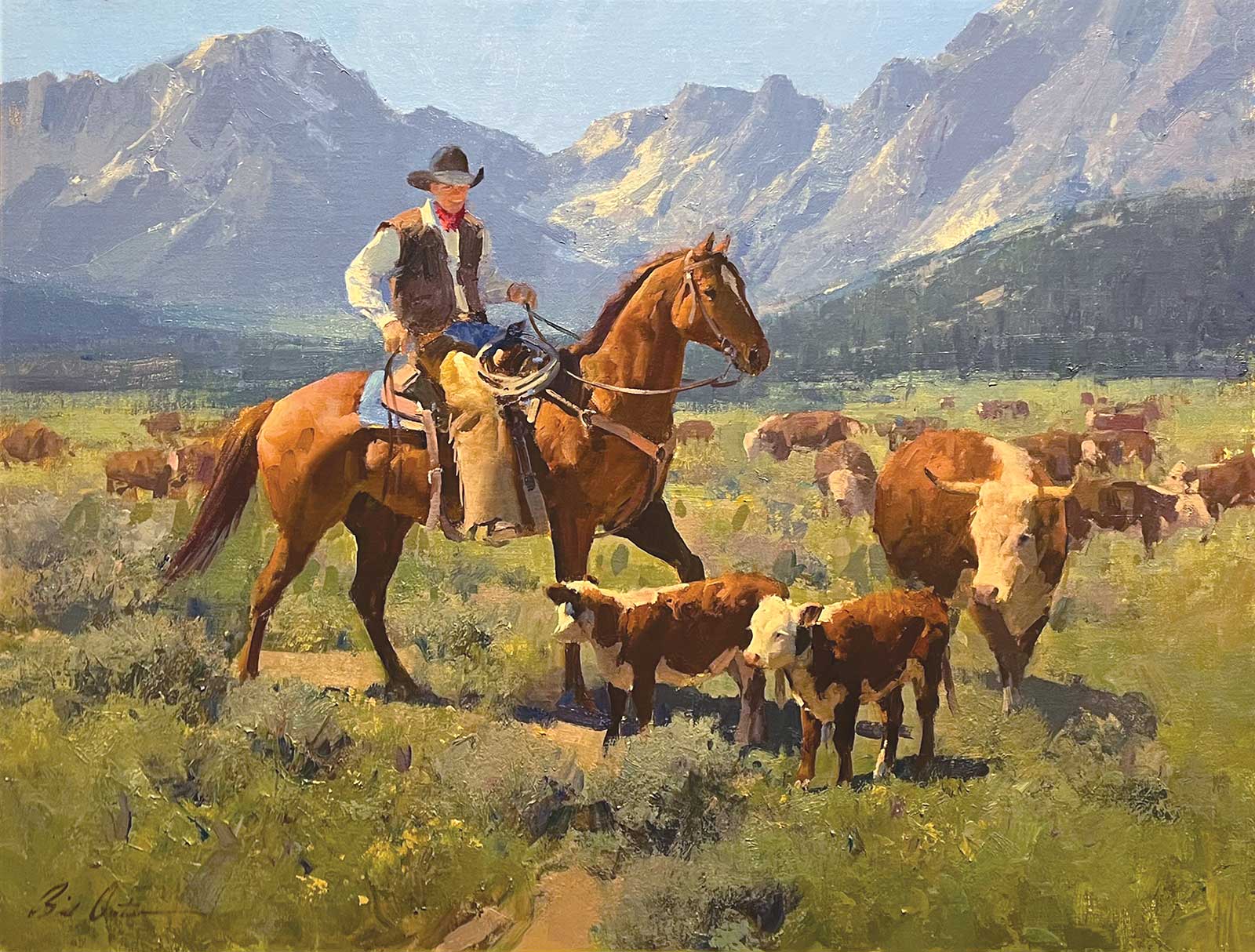 Bill Anton, Ranchers’ Reward, oil, 30 x 36”Robert Peters’ newest work, Ancient Pueblo, Canyon de Chelly, examines a rock face inset with an entire village that was built 1,000 years ago. For The Painted West, Peters approached the show in a straightforward way. “I tend to have a literal interpretation of the show’s title. This would be the task of translating the beautiful and dynamic landscapes of the West with my paintings,” he says. “I am always in awe and have a great sense of wonder about the places I paint. The distinctive colors of the western landscape are one aspect of what makes it such a captivating subject. Because of the extreme diversity of these landscapes, the range of colors is truly unparalleled.
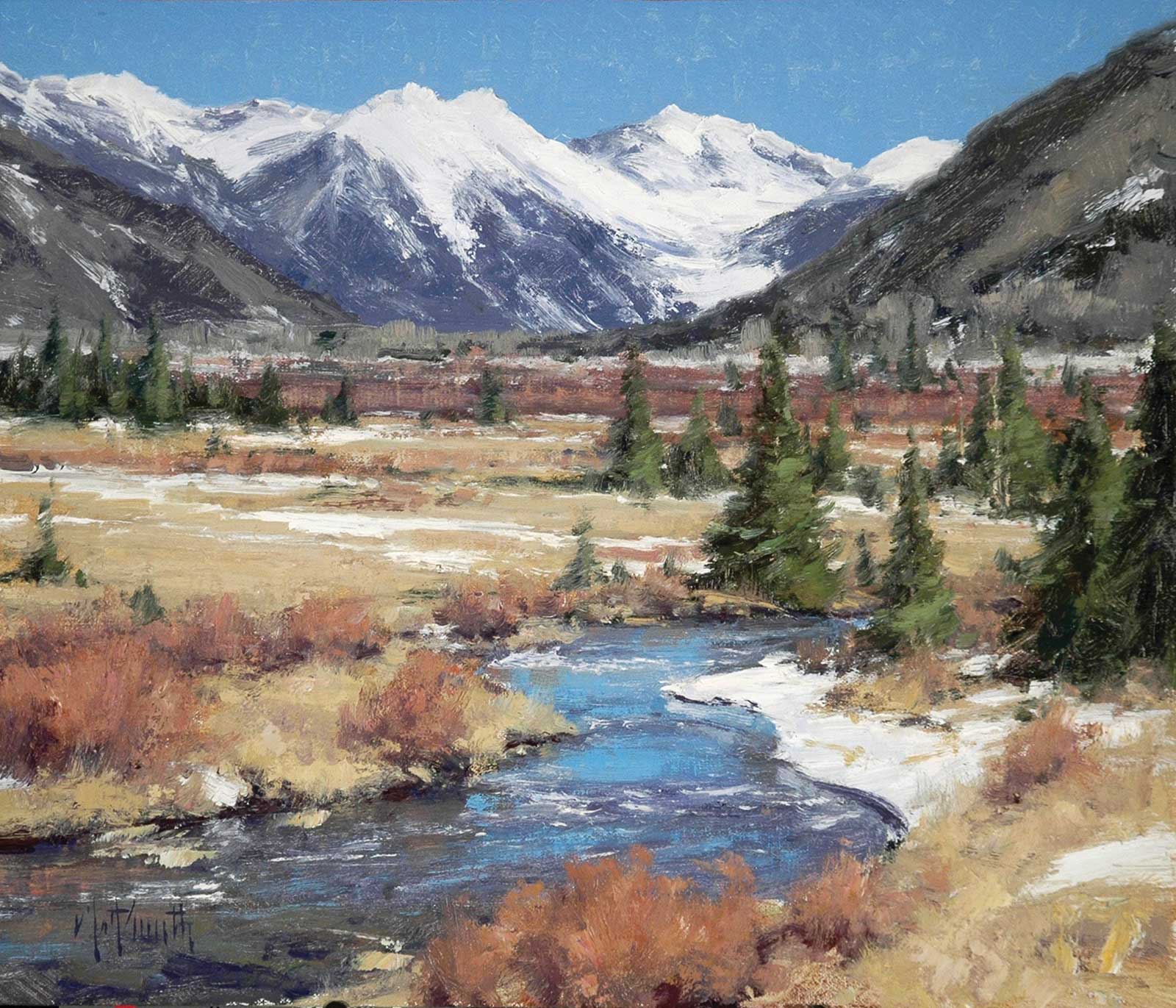 Matt Smith, The San Miguel at its Exit’s Telluride, oil, 14 x 16”I continually work on the hue, chroma, value (light and dark) and temperature of the colors I am using, making sure they are properly balanced so as to achieve the harmonies that I am always looking for.”
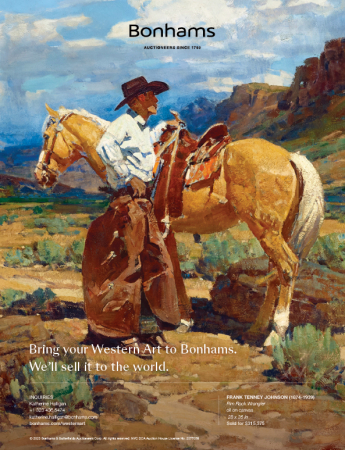
David Mann also turns his attention to Native Americans with his piece Across the Great Plateau, an oil measuring 48 inches wide. The scene shows five figures amid a group of horses. Mann creates interesting lines in his compositions with the horses’ legs and the spears and rifles that point into the sky. Also noticeable is his color, which he paints with an intensity that suggests a sunset setting. “The thing that fascinates me the most about the color of the West is the fabulously broad range of color it offers,” he says. “There is no color that is left out. No intensity, tone or contrasts of colors that fail to appear in the Western panorama. The limitless skies can absorb the color reflected from the earth’s surface and bring a harmony to the canvas from the lowest inch of the foreground to the highest portion of the sky, including every subtlety in between.”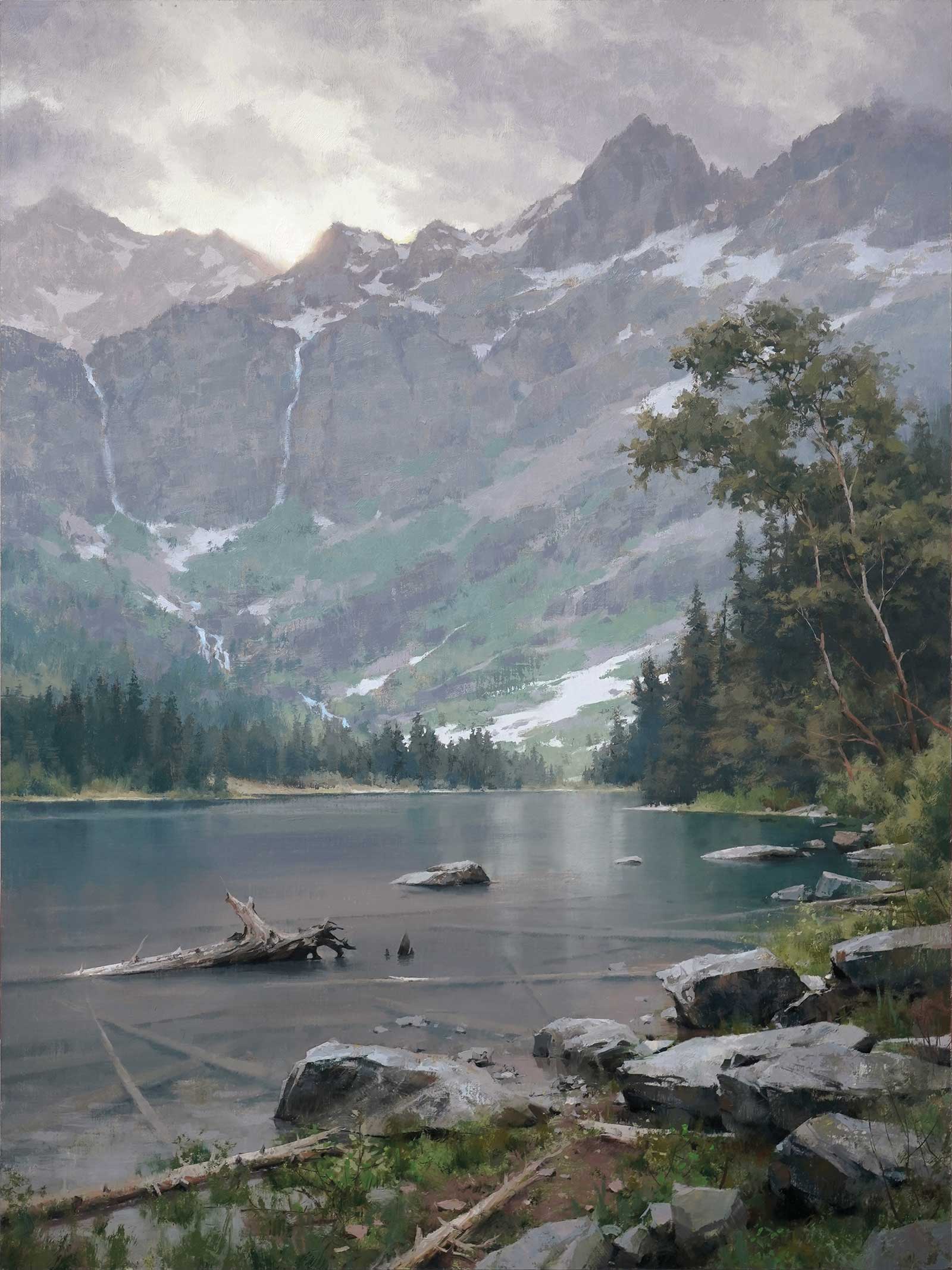 Mark Boedges, Spring Storm, oil, 40 x 30”Elsewhere in the show is G. Russell Case’s magnificent cottonwood scene In the Sangre de Cristina, a massive 54-by-42-inch painting that shows the scale of the Southwest with a colossal mountain range that towers over several small subjects; Billy Schenck’s Descent from Moki, with the artist’s distinctive painting style on full view; Grant Redden’s Horse Wrangler, with its interplay of blue and green above and below a cowboy in a cluster of horses; Matt Smith’s landscape The San Miguel as it Exits Telluride; and Mark Boedges’ Spring Storm, showing a mountain lake in gray and gloomy skies.
The Painted West will remain on view through February 24. A reception will be held February 17 in Scottsdale. —
The Painted West
February 17-24, 2023;
Reception, Feb. 17, 5-7 p.m.
Legacy Gallery, 7178 E. Main Street, Scottsdale, AZ 85251
(480) 945-1113, www.legacygallery.com
Powered by Froala Editor