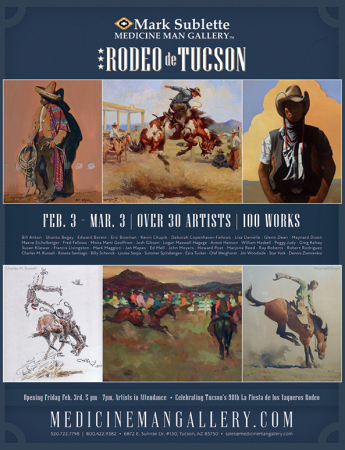
Few places in the United States treat their rodeo the way Tucson, Arizona, treats La Fiesta de los Vaqueros. Not only is the rodeo recognized as a holiday within the city, but schoolchildren are dismissed from school and some businesses even reduce hours to allow employees to take their families to the rodeo grounds for the festivities. If there was a red carpet, they’d roll it out, except the horses would…you know.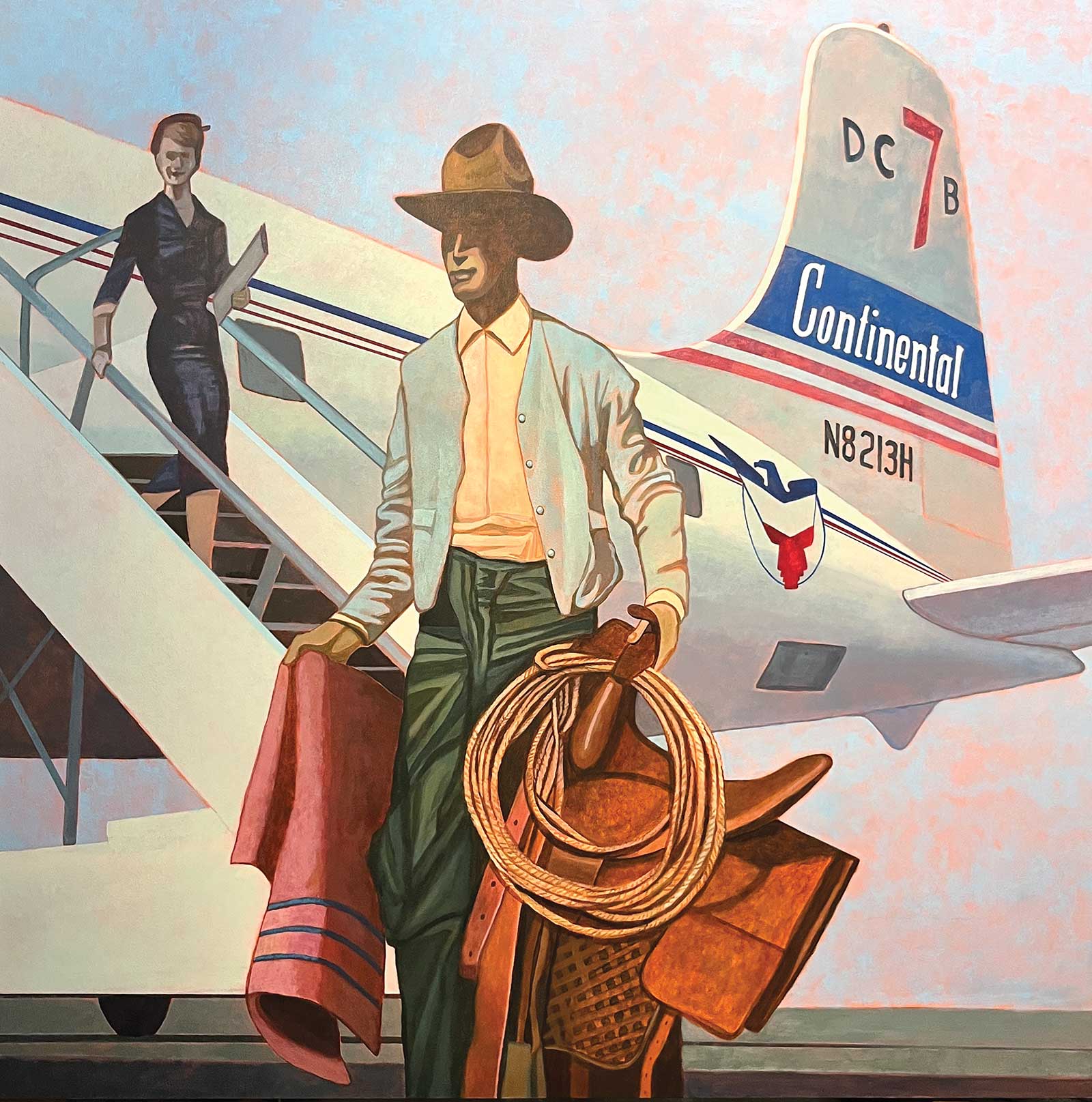 Kevin Chupik, Continental Cowboy, acrylic on cradled birch panel, 36 x 36”
To celebrate this year’s rodeo, Mark Sublette Medicine Man Gallery is hosting Rodeo de Tucson, a group exhibition that will spotlight artwork related to rodeos. The show will be made up of both old and new work, as well as art and objects of many mediums and styles. The work ranges from a work on paper from Charles M. Russell and a watercolor by Maynard Dixon, to contemporary works by Howard Post and Ed Mell, to Navajo saddle blankets, to a saddle made of Plexiglass.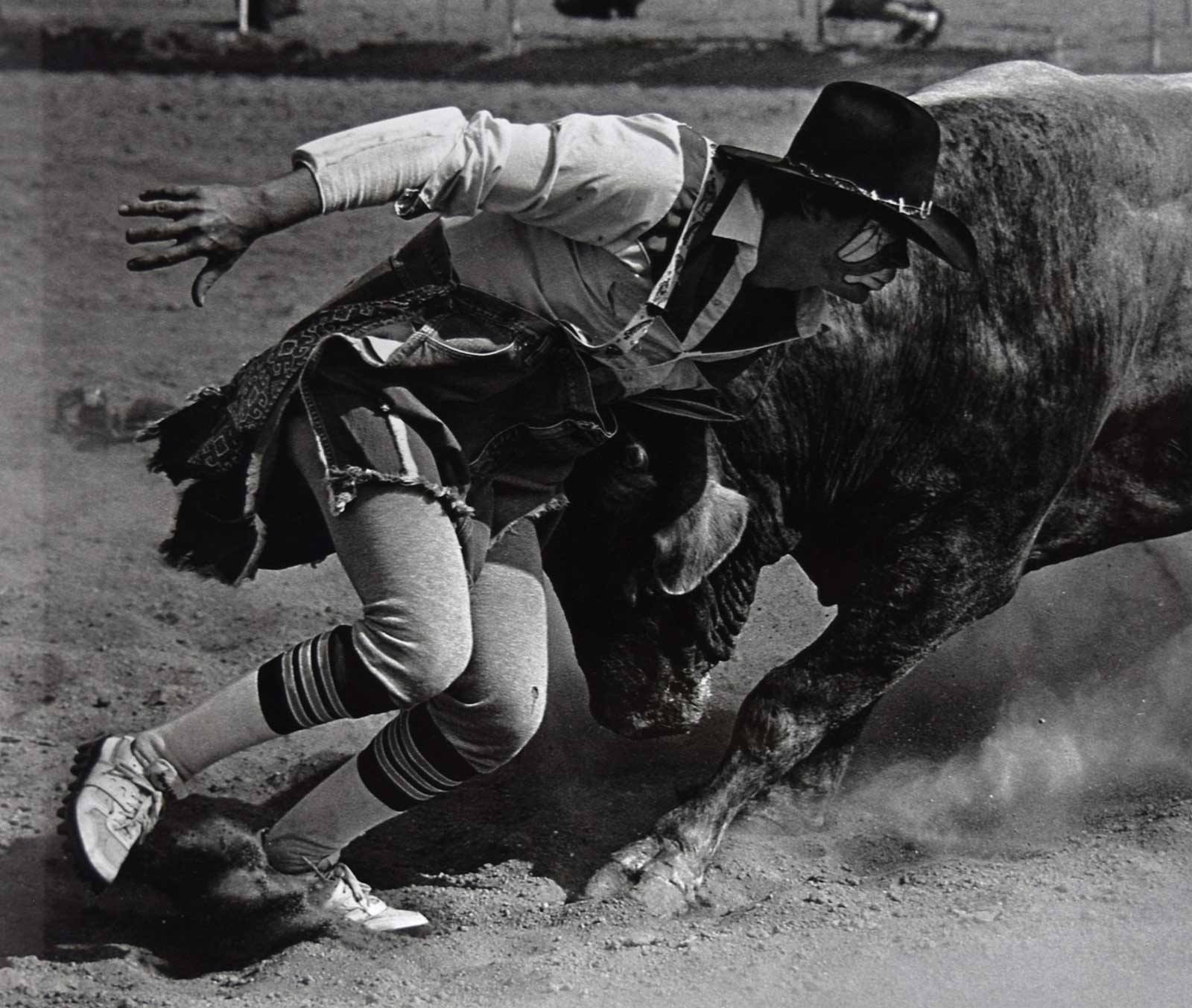 Louise Serpa (1925-2012), Jeff Kobza at Play – Prescott, AZ Pro-Rodeo Association, 1983, silver gelatin print, 20 x 23¾”
“Tucson is one of the few places in the world that has a week that is dedicated to rodeo. We call it Rodeo Week. All the kids get out of school and everyone makes a big deal about it. I love this aspect of Tucson—the rodeo is still of great importance to us as a culture and city,” says gallery owner Mark Sublette. “This year’s rodeo is the 98th one, so I wanted to celebrate with them by digging into this concept of the rodeo and what it means. And even though there is a lot of tradition with the rodeo, I didn’t want to limit the show to traditional images. I wanted more interpretive artwork as well, whether it’s an Ed Mell bronze or a Navajo saddle blanket. I wanted to explore everything related to the rodeo.”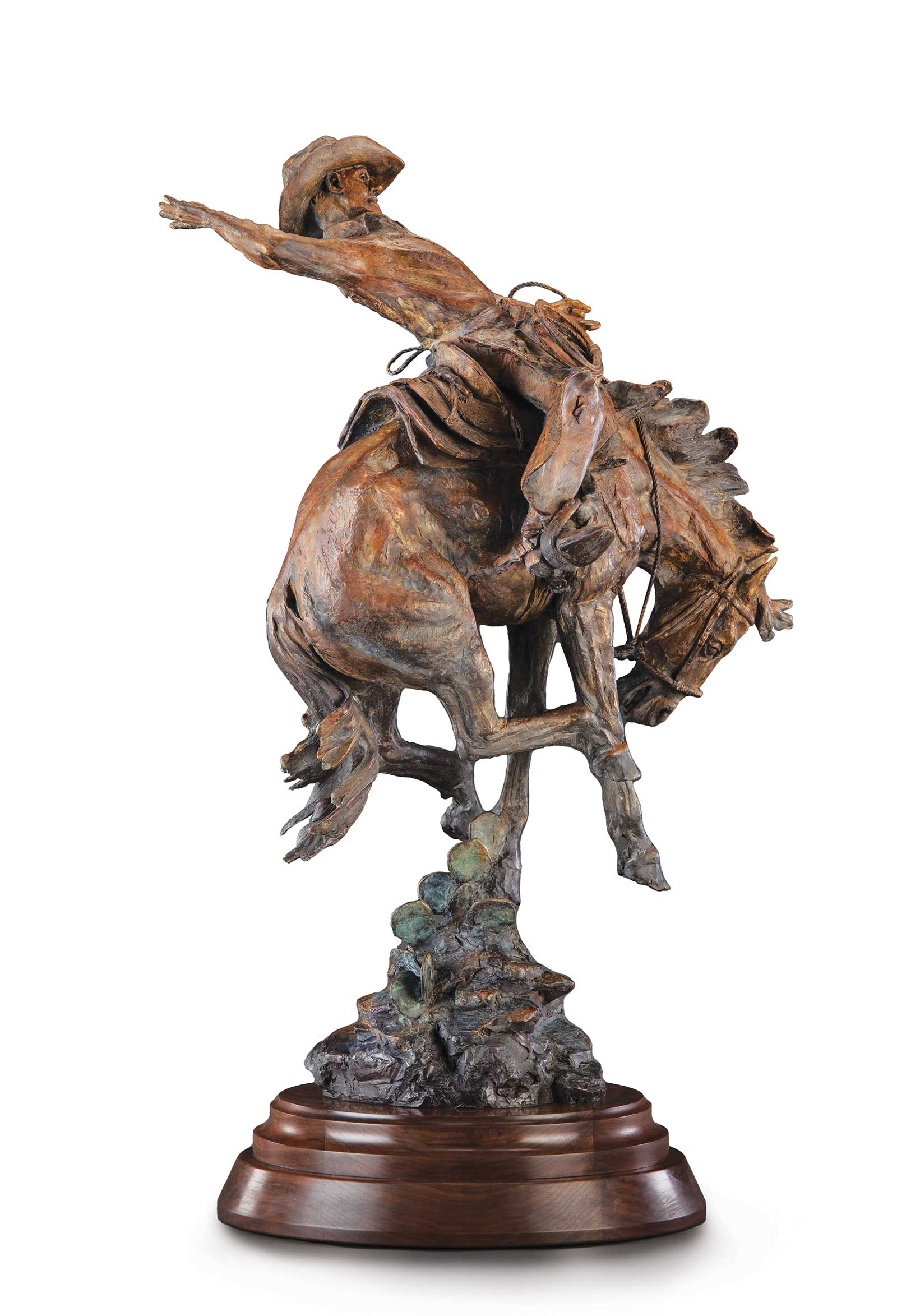 Deborah Copenhaver-Fellows, When Horses Made Heroes, bronze, ed. of 20, 30 x 20 x 11”
Sublette is not only presenting the show, but he’s also working with the rodeo organizers to do some cross-promotion leading up to the rodeo, which runs from February 18 through 26. The exhibition, 95 percent of which will be for sale, will bookend the rodeo run from February 3 to March 3.
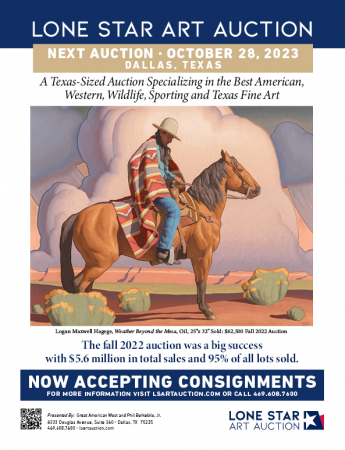
Sublette is most excited to bring an eclectic collection of work together in a first-of-its-kind show in Tucson. The traditional art, paintings and bronzes, will include major works from some truly iconic artists—Russell, Dixon, Mell, Edward Borein, Olaf Wieghorst, Logan Maxwell Hagege, Mark Maggiori, Fred Fellows and many others—but the show will also feature cowboy gear in a variety of material, weavings, early cowboy hats and boots, photography, lithography and so much more. Several of the artists will even be showing some of their own ephemera, including buckles, saddles and other material related to their own
careers in the rodeo. Billy Schenck and Howard Post, for instance, have had long relationships with professional rodeos.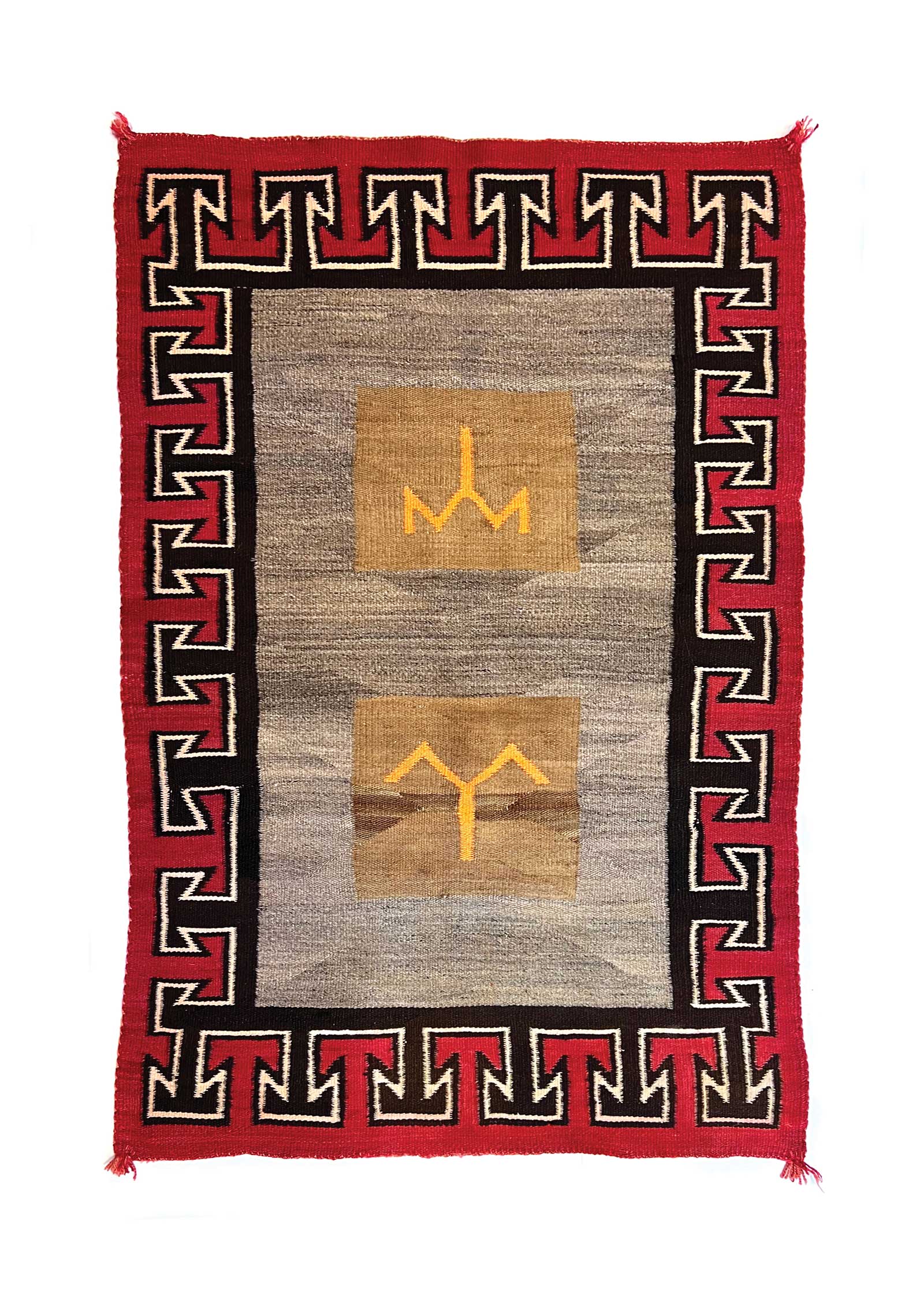 Navajo Double Saddle Blanket with brands, ca. 1910s, 48½ x 32½”
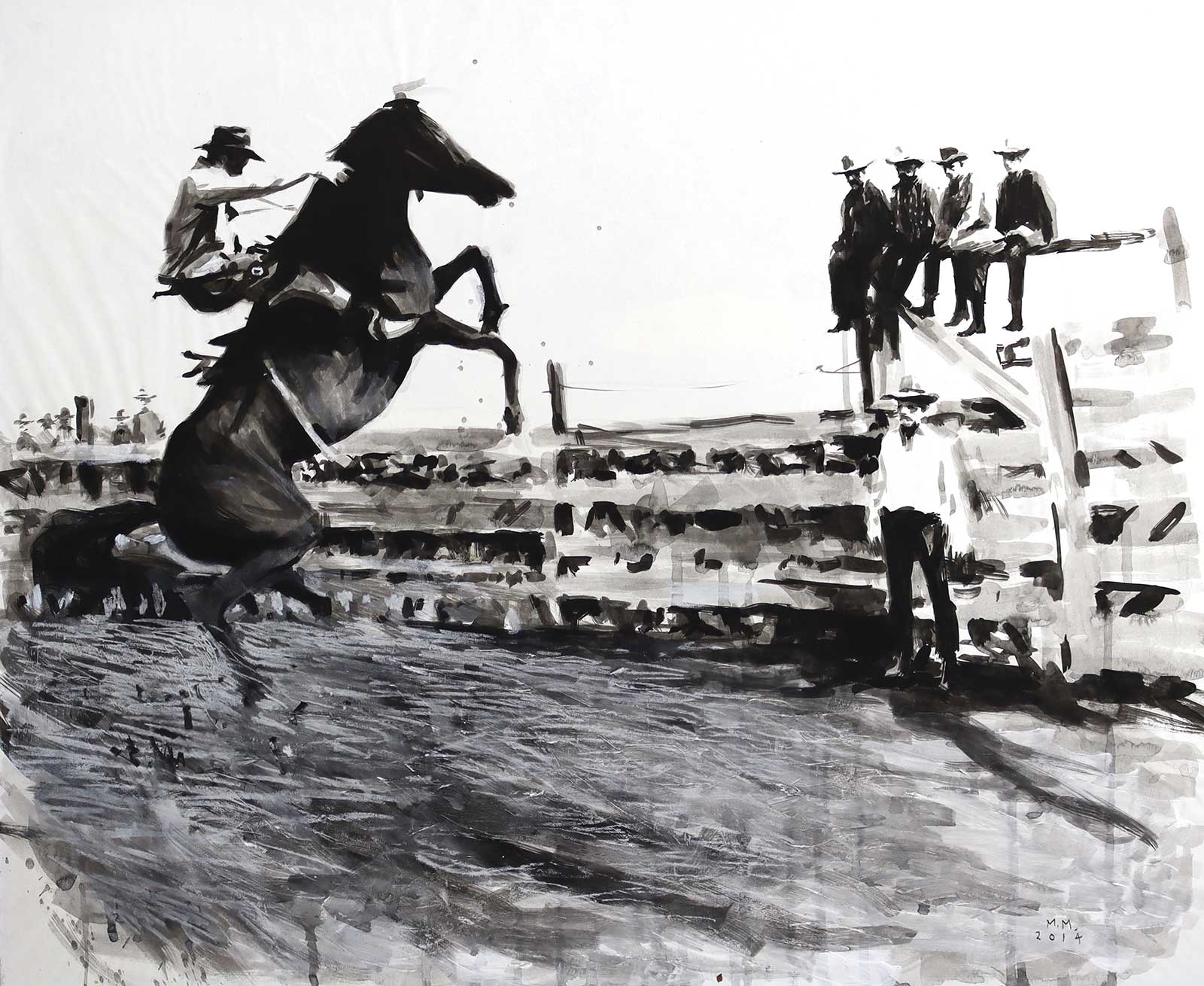 Mark Maggiori, Plow, ink wash on paper, 22 x 27”“I was part of the pro rodeo circuit for three or four years back in the 1960s and early 1970s, but then I moved into my career as an artist. Later I would join the senior pro rodeo for two or three years when team roping was the hottest sport in the Western world. I only retired this last year,” says Post, who will be showing several paintings in the rodeo show. “With team roping, you would be either a header, the person who would rope the head of the calf, or a heeler, who would rope the back legs. I had done a bit of both, but old guys like me usually were headers.”
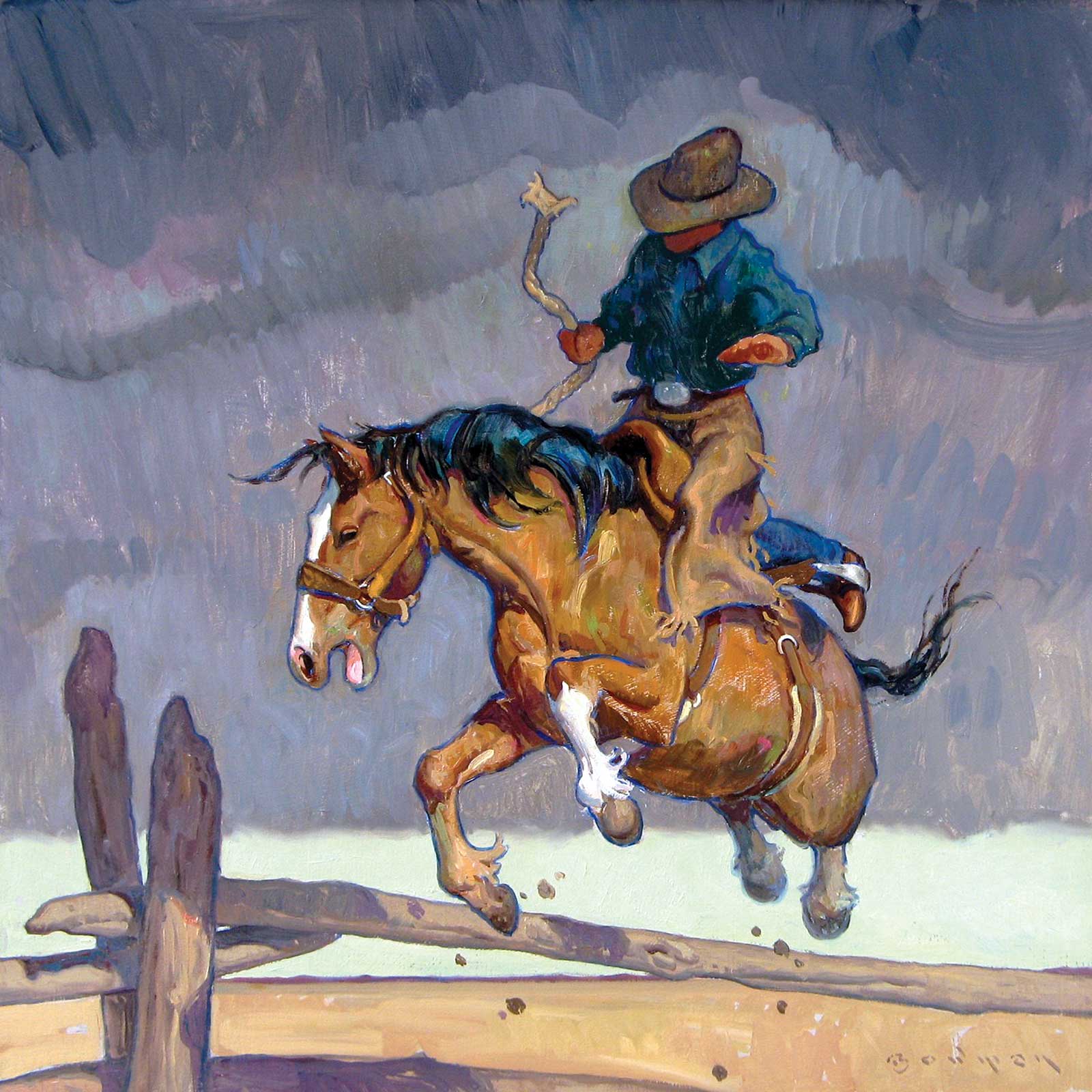 Eric Bowman, Thumper, oil, 12 x 12”
One of Post’s paintings in the show is Saleyard Workers, which shows two figures sitting on a fence within a vast series of empty pens. Works such as this one, as well as others, are directly inspired by Tucson’s rodeo. “My dad had a hay and feed business so he would supply the feed for the rodeo in the 1960s.
I remember sitting in the stands having that high view that was sort of directly overhead of some of the action below. That view really influenced a lot of my work,” Post says. “You could look down and see all these abstract patterns, shapes and colors. Oh, and there were cowboys, which made it pretty neat, too. After I had been painting a while, a writer called me the Cowboy Degas because I wasn’t interested in the rodeo itself, but all the other stuff that was happening behind the scenes. Degas painted dancers, but often from behind the curtain.”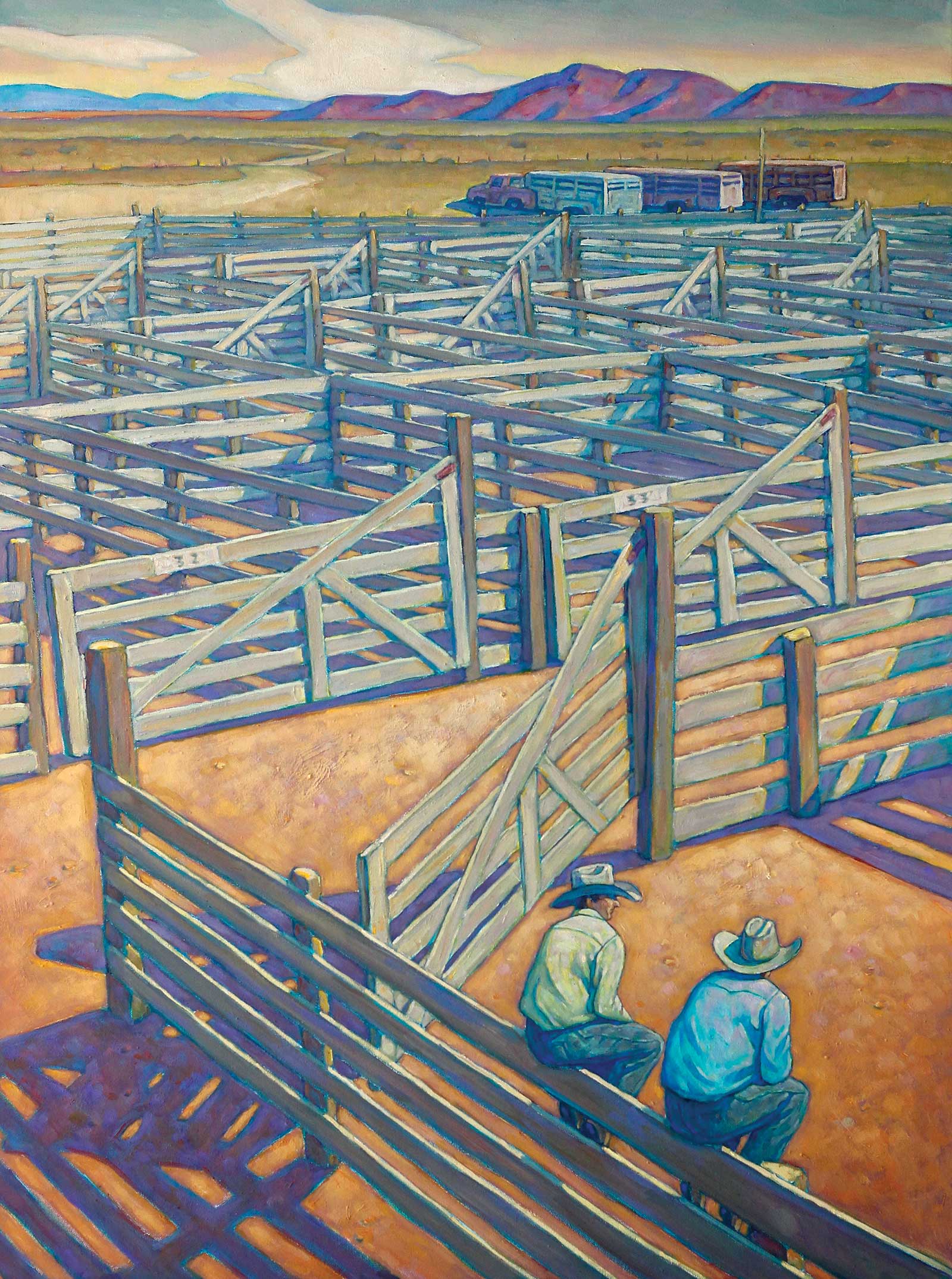 Howard Post, Saleyard Workers, oil, 40 x 30”
Post continues: “Back then the rodeo was a very big deal. Not only did the kids get the day off from school, but we’d all dress up in our cowboy shirts and hats. It was a cowboy holiday in Tucson. We’d go and just marvel at what we were seeing. Some of the events were like watching gladiators—a human against a 2,000-pound bull. You went there because it was fascinating, but you also knew there was a chance for blood and mayhem. More than anything, though, it was a connection to the horse and cattle industry, and if you were a rancher or in that business, this was the place to be.”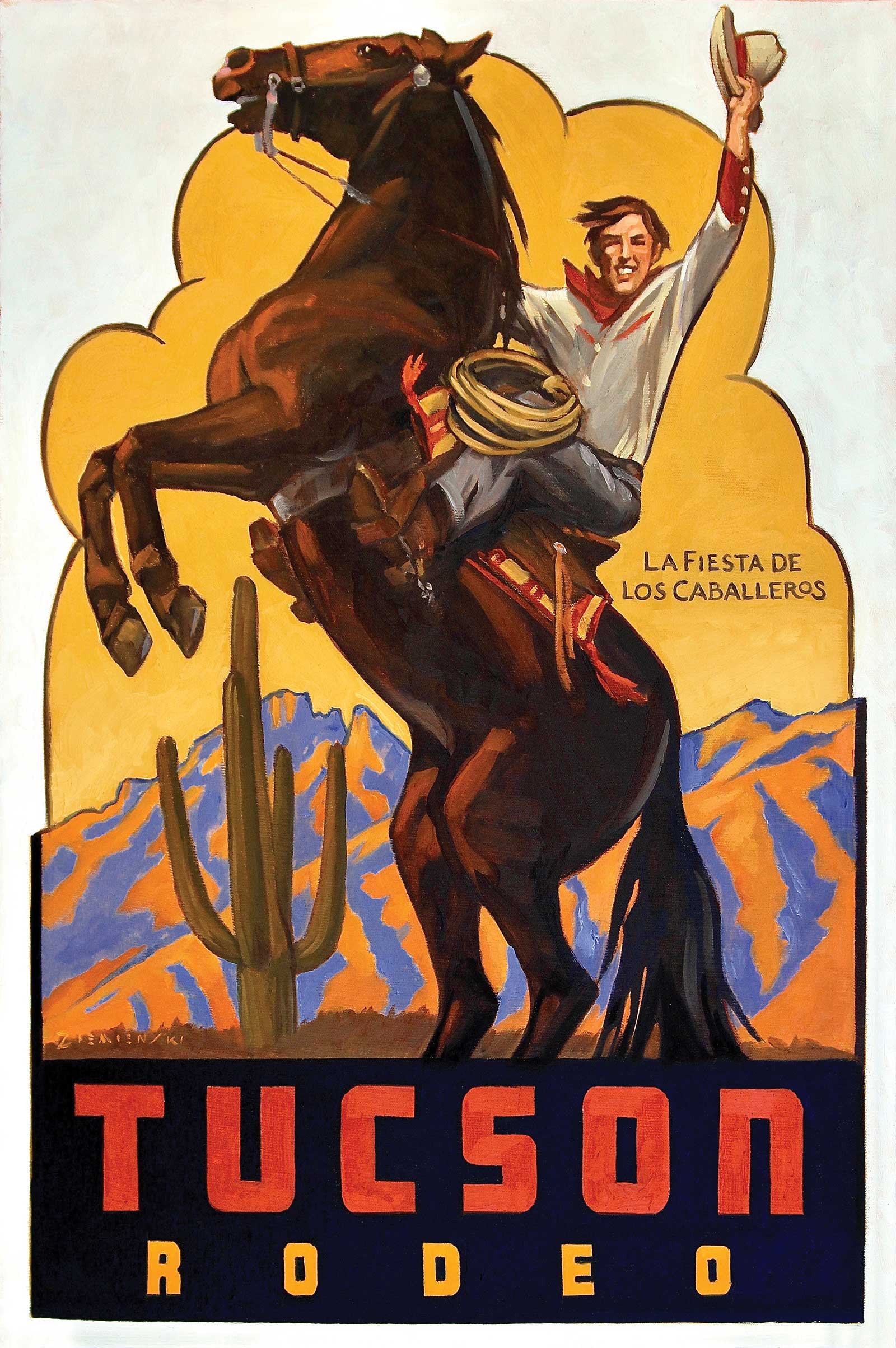 Dennis Ziemienski, Tucson Rodeo, oil on canvas, 30 x 20”
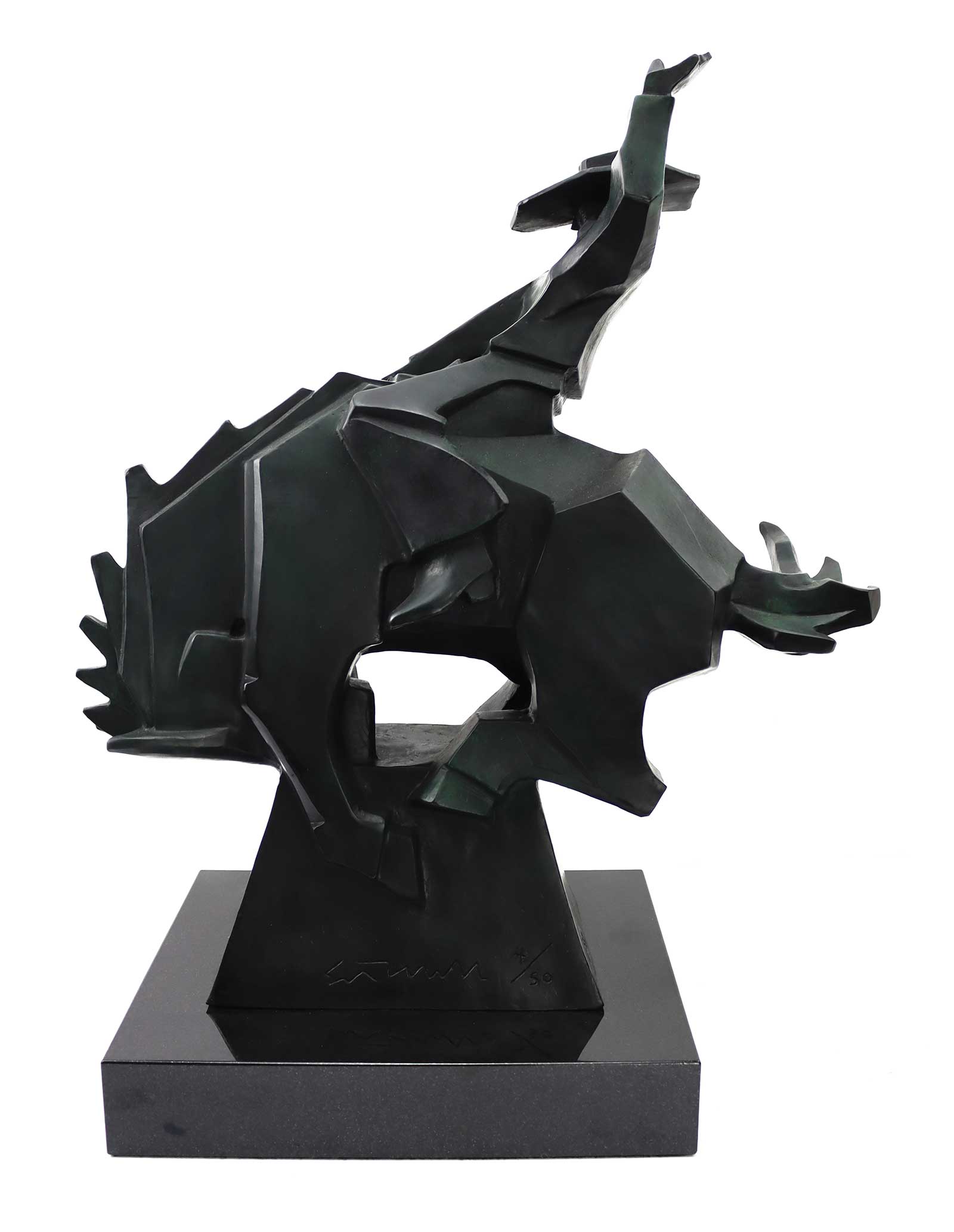 Ed Mell, Jack Knife, bronze, ed. of 50, 20”
Another artist in the show with strong rodeo connections is Armin Hansen, the son of the famous horse and action painter Herman Hansen. Armin Hansen, widely known for his coastal and marine paintings, attended the Salinas Rodeo in California in 1913 and was thunderstruck by what he saw. He was painting rodeo scenes in the 1920s and 1930 when the work started shining amid his ocean and boat paintings. The rodeo pieces were such a hit, the Los Angeles Record would announce that Hansen had “gone Western.” In 1927, a writer from the Carmel Pine Cone would catch a glimpse of the Western pieces and become a fan. “Odd that a painter of North Sea fishing boats should so capture the spirit of a Salinas bucking broncho! Yet Armin Hansen has done that very thing and I, for one, have never looked at a finer result.”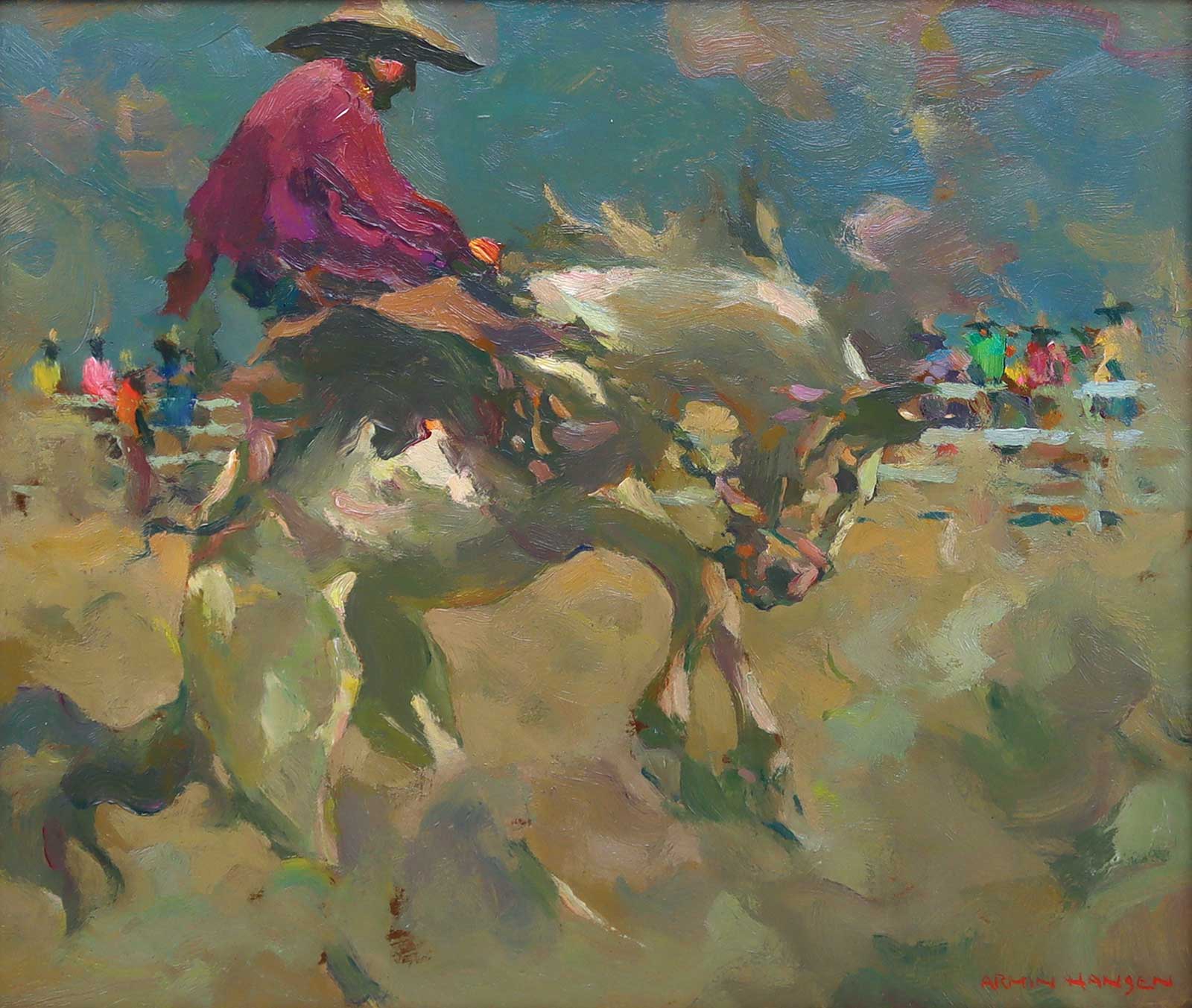 Armin Hansen (1886-1957), Rodeo Scene, oil on board, 14 x 16"
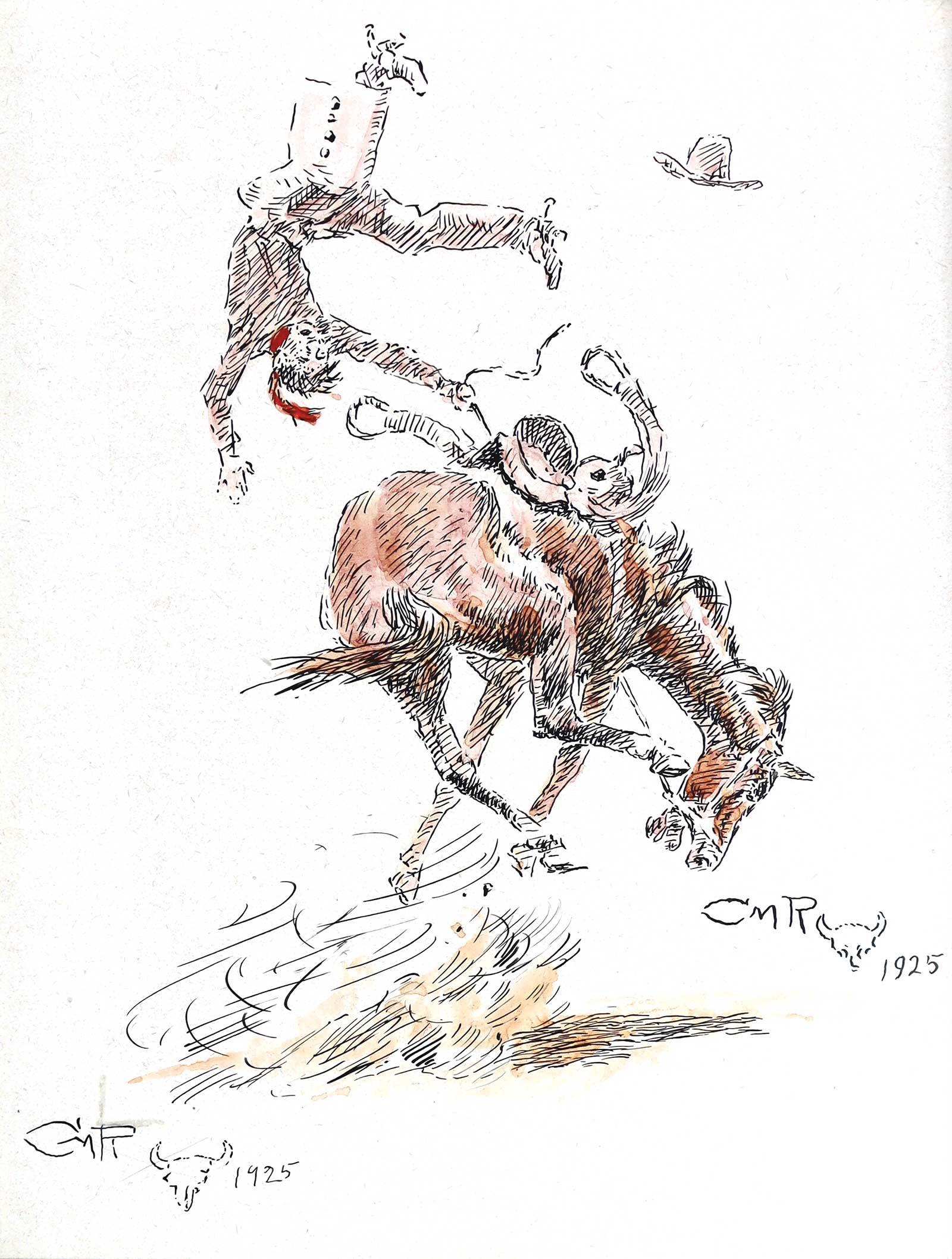 Charles M. Russell (1864-1926), Cowboy and Bucking Horse, ink and watercolor on paper, 8 x 6 1/8”
Although Hansen’s marine paintings are the works that are most cherished by connoisseurs—his auction record is $509,000 for an abstracted harbor view—a rare rodeo scene will pop up now and again before being scooped up quickly by eagle-eyed collectors. Sublette will have Rodeo Scene, a small 14-by-16-inch piece that captures the dust and kinetic energy that occurs when a rider tempts fate on a bucking whirlwind of a horse.
Other keys works are Kevin Chupik’s Continental Cowboy, showing a figure carrying his cowboy rig away from a commercial airplane; Dennis Ziemienski’s Tucson Rodeo, which could serve as a poster for the Southern Arizona event; and Russell’s ink and watercolor on paper, Cowboy and Bucking Horse, which has a rider that is about to have a very bad day. Eric Bowman will be showing a brand-new work, the 12-by-12-inch Thumper, showing a horse with all four legs off the ground as it clears a wooden fence with inches to spare.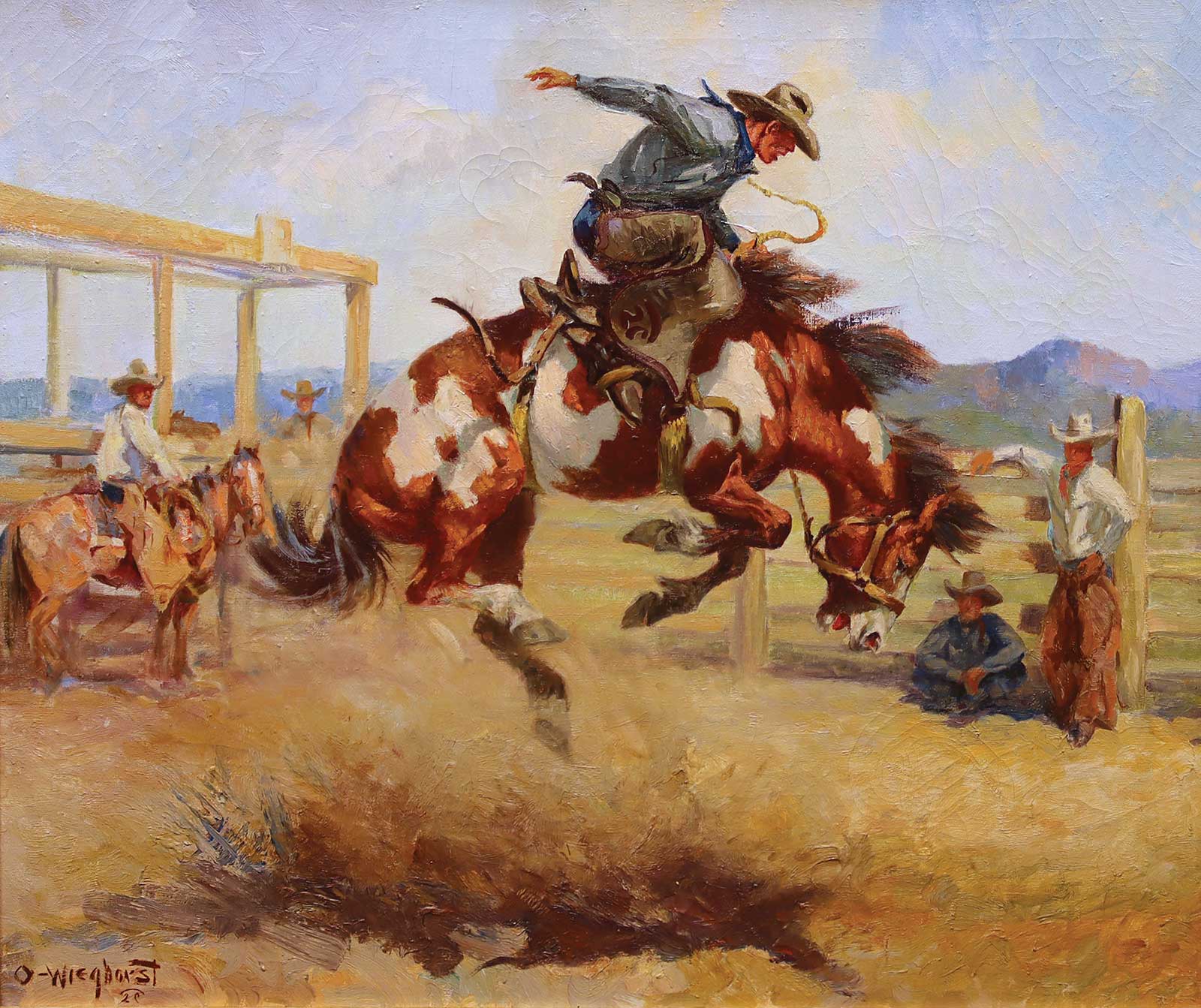 Olaf Weighorst (1899-1988), Pitching Pony, oil, 29¼ x 35¼”“Rodeo is part of cowboy culture—they are forever linked. It’s still a very important component of the identity of the West,” Sublette says. “Rodeo is part of Western art’s roots. So I hope when people come to the show, they dress in their best Western duds and they come to enjoy the art, and even go to the rodeo to celebrate this part of the West.” —
Rodeo de Tucson
February 3-March 3, 2023
Mark Sublette Medicine Man Gallery,
6872 E. Sunrise Drive, Suite 130, Tucson, AZ 85750
(520) 722-7798
www.medicinemangallery.com
Powered by Froala Editor