Joan Halifax Roshi, founder of Upaya Institute and Zen Center in Santa Fe, New Mexico, writes, “Some of us are drawn to mountains the way the moon draws the tide. Both the great forests and the mountains live in my bones. They have taught me, humbled me, purified me and changed me.” 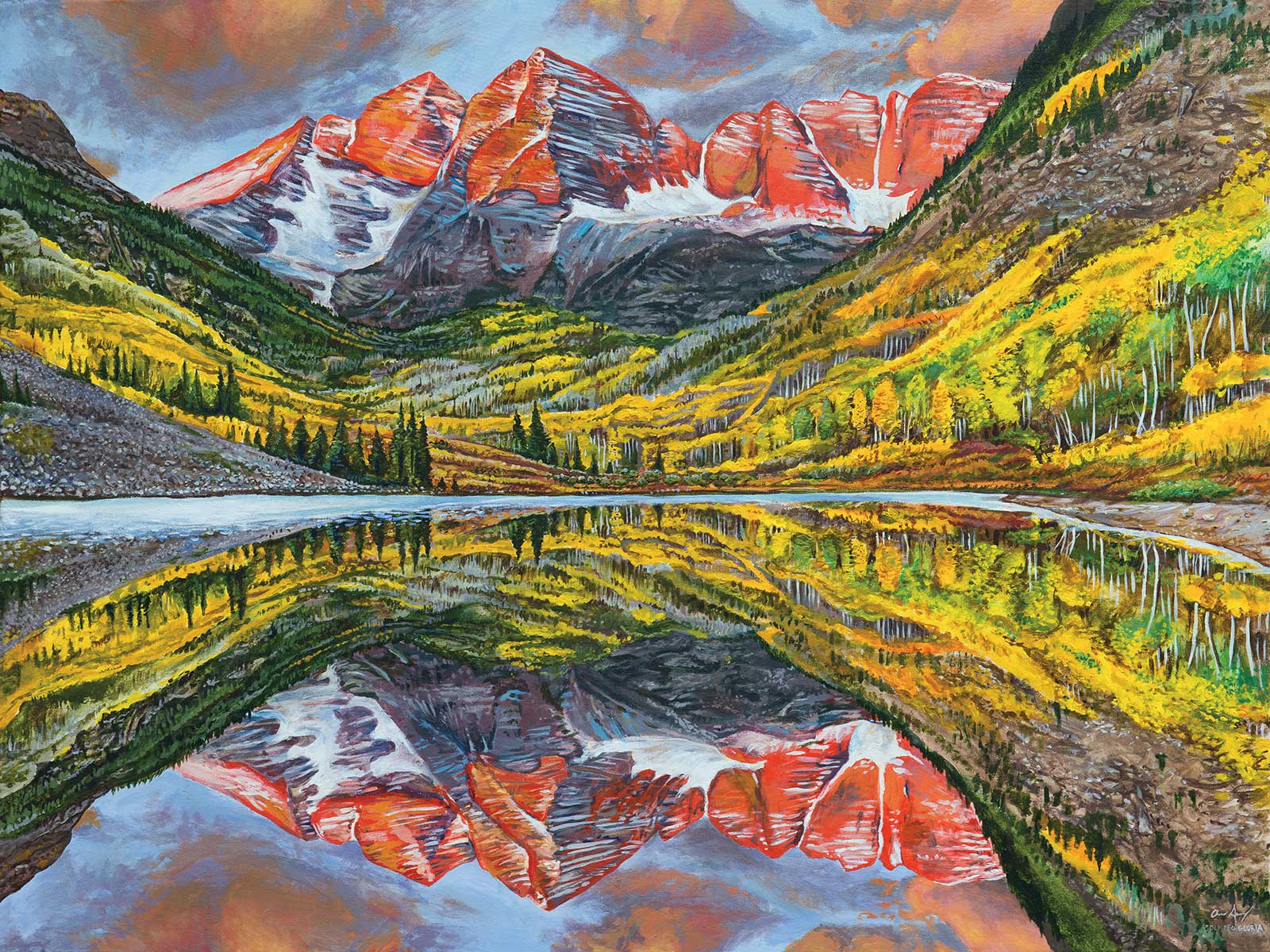 Aaron Spong, The Maroon Bells, acrylic on canvas, 36 x 48"
Upaya’s Prajna Mountain Forest Refuge lies at 9,400 feet in the Sangre de Cristo Mountains north of Santa Fe, New Mexico. Many years ago, during a week of camping and zen practice at Prajna, I experienced, for myself, that humbling, purifying and changing. Not quite wilderness, the refuge is at the end of a sometimes impassable dirt road, closed by snow in the winter and menaced by mud in the spring.
In 1962, attending college in the wilds of Baltimore, I came across the just-published book In Wildness is the Preservation of the World produced by the Sierra Club with extraordinary photographs by Eliot Porter, brother of the painter Fairfield Porter. Porter paired his photographs of the wild lands of New England with passages from the writings of Henry David Thoreau. The visual art and text deepened my love of nature and made me more visually aware. 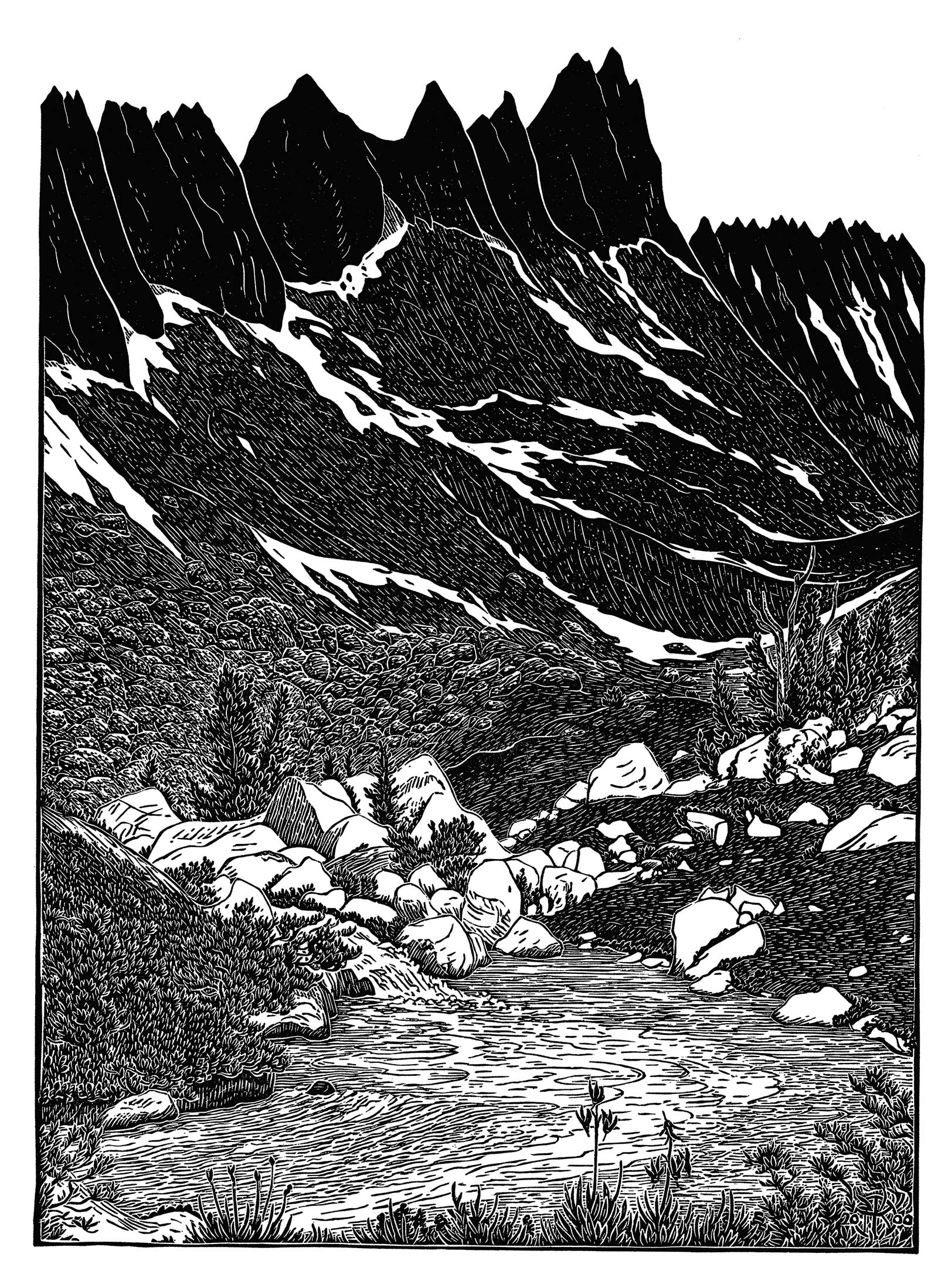 Tom Killion, Pinnacles Crest, John Muir Wilderness, woodcut, ed. of 95, 12 x 8½"
The Pulitzer Prize-winning zen poet Gary Snyder and internationally known printmaker Tom Killion have collaborated on several books on California mountains and the wilderness of the Sierra Nevada.
Killion’s woodcut Pinnacles Peak, John Muir Wilderness was included in their collaboration The High Sierra of California. In a recent talk, Killion said, “My concern producing landscape art is to celebrate the beauty and remember that we’re sharing the world with all these living things and we need to leave a place for them.”
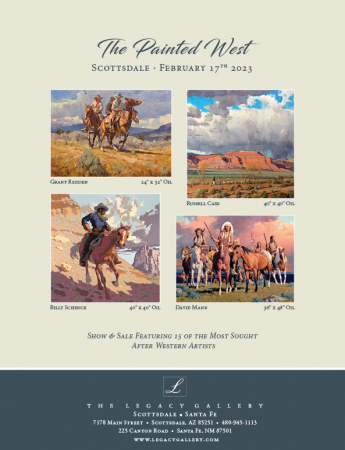
Explorers and colonists arrived in the vast American wilderness, already inhabited by Indigenous peoples. As expansion and industrialization increased, the wilderness diminished. It wasn’t until the passage of the Wilderness Act in 1964, that firm action was taken to preserve what was left. The act states, “A wilderness, in contrast with those areas where man and his works dominate the landscape, is hereby recognized as an area where the earth and its community of life are untrammeled by man, where man himself is a visitor who does not remain.”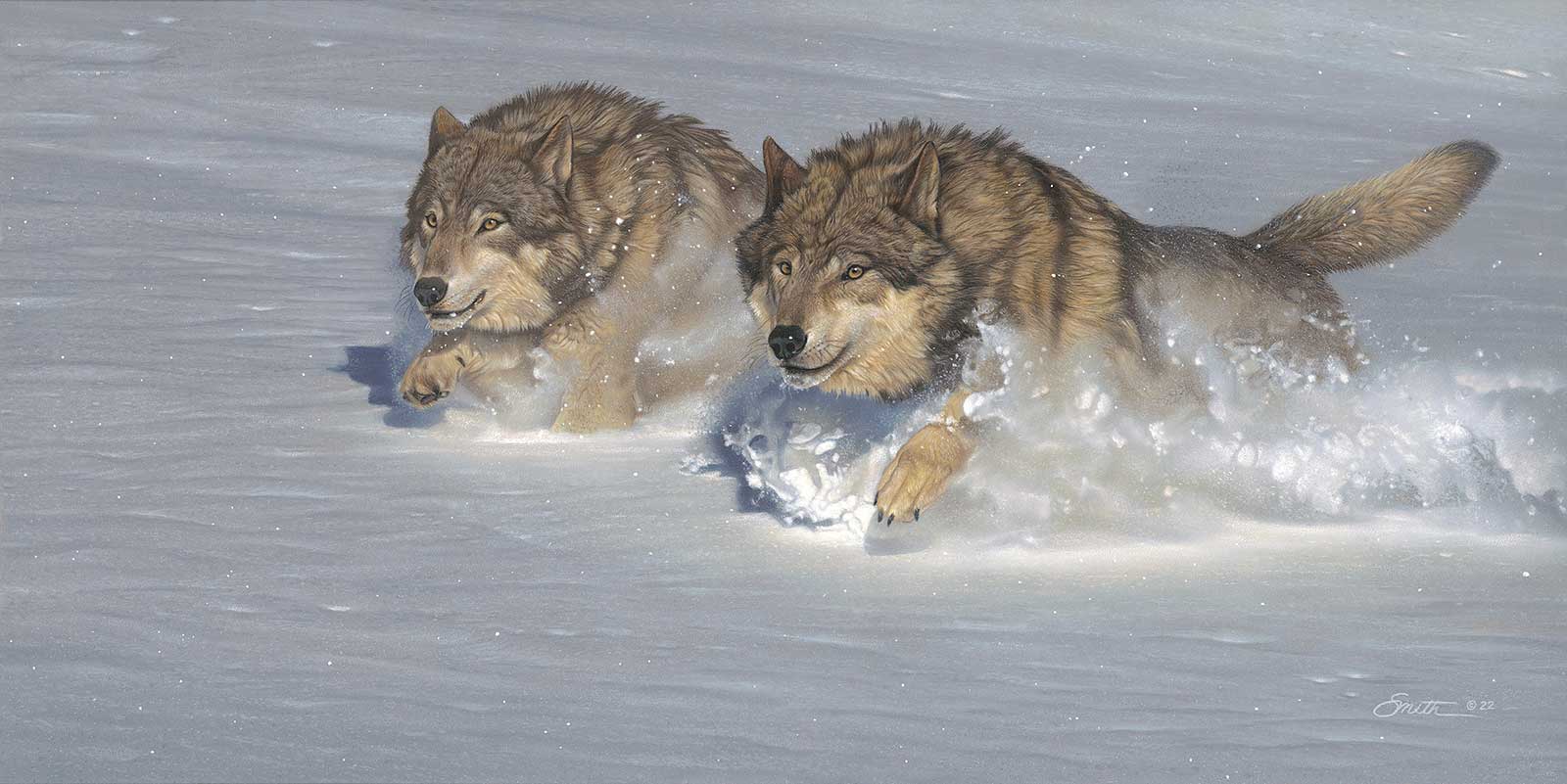 The Legacy Gallery, Powder Pursuit, acrylic, 15 x 30", by Daniel Smith.
The John Muir Wilderness commemorates John Muir who was a tireless advocate for the preservation of the wild lands of the Sierra Nevada and once described himself as a “self-styled poetico-tramp-geologist-bot. and ornith-natural, etc.!!!”
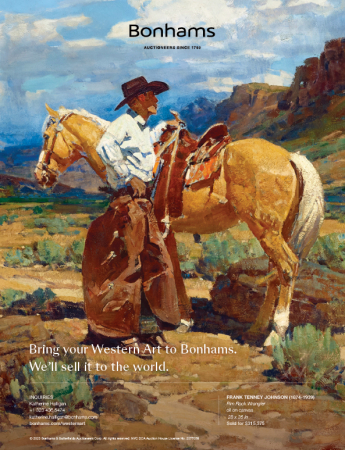
Tom Killion writes, “When we set off into the High Sierra, we are usually in search of something. Something that will take us out of our everyday experience; something that will connect us with another part of ourselves; something linked to an older way of living that is more dependent on our physical interaction with the natural world. The rituals of hunting and fishing clearly spring from this urge, as does delight in the simple life of backpack camping. But what is the special attraction of the high peaks and desolate plateaus of what Snyder calls the deva realm? As John Muir asked, ‘Whence comes it? What is the secret of the mysterious enjoyment felt here—the strange calm, the divine frenzy? Whence comes the annihilation of bonds that seem everlasting?’”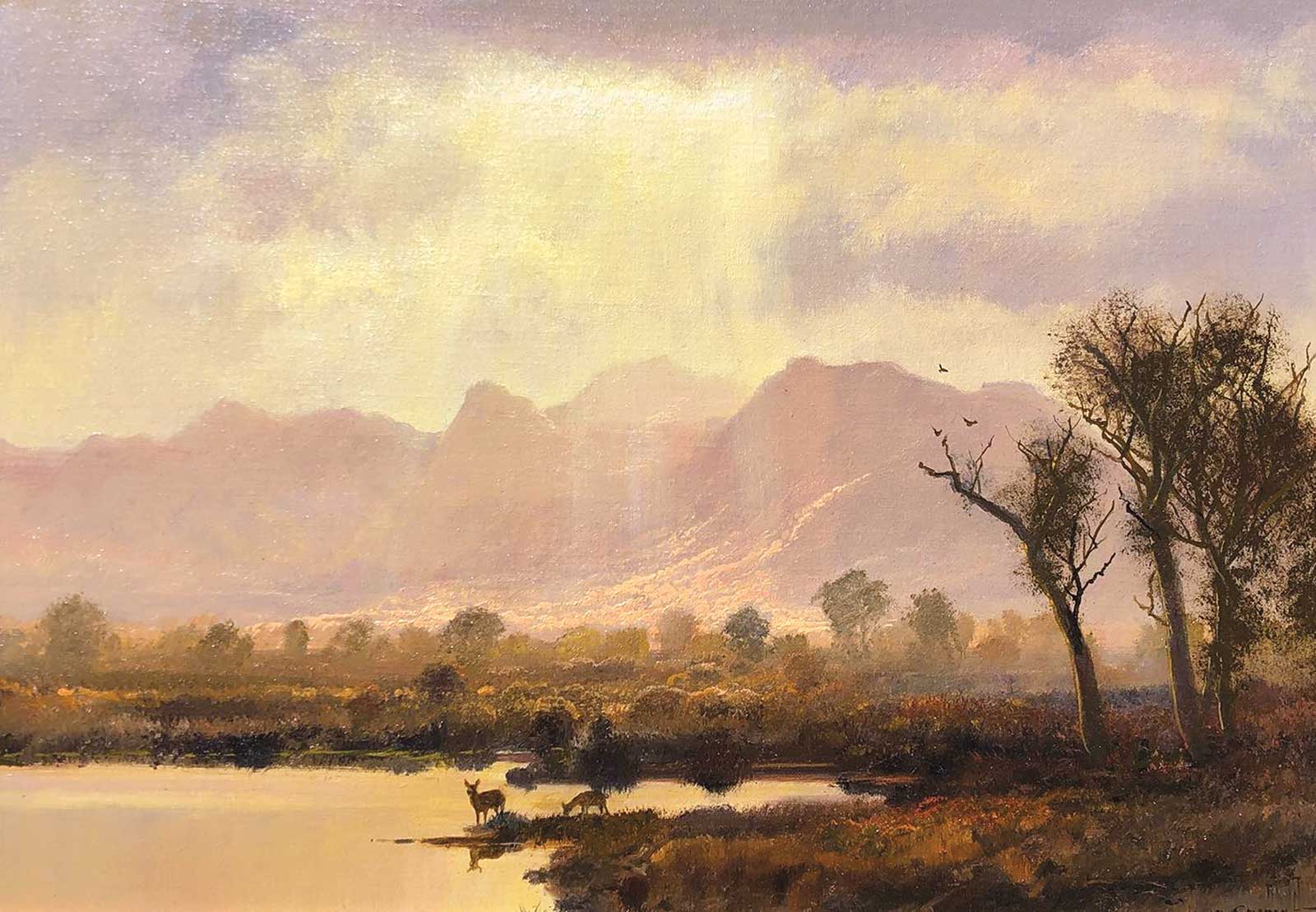 The Legacy Gallery, Light in the Mountains, oil, 14 x 20", by Michael Coleman.Just north of the John Muir Wilderness and abutting Yosemite National Park is the Ansel Adams Wilderness. The famed photographer of nature wrote, “There are worlds of experience beyond the world of the aggressive man, beyond history, and beyond science. The moods and qualities of nature and the revelations of great art are equally difficult to define; we can grasp them only in the depths of our perceptive spirit.”
Sam Brieck is an illustrator who has felt the impact of the High Sierra. Writing about his digital painting, Ansel Adams Wilderness/Sierra Nevadas, he says, “The piece is inspired by a backpacking trip my brother-in-law, father-in-law and I went on in the Ansel Adam Wilderness. We were on-trail for five days and it was one of the best trips of my life. It was my first time in the Sierra Nevadas and I was just in awe. Our trip was filled with towering peaks, alpine lakes, dusty pines, a little bit of altitude sickness and a sketchy off-trail ridge crossing. I kept a sketchbook the whole time. Thankfully, my two other companions were very slow at packing up in the morning, so I actually got a lot of time to draw. I started working on this piece almost as soon as I got back home. That trip has been speaking into all my art in one way or another since then.”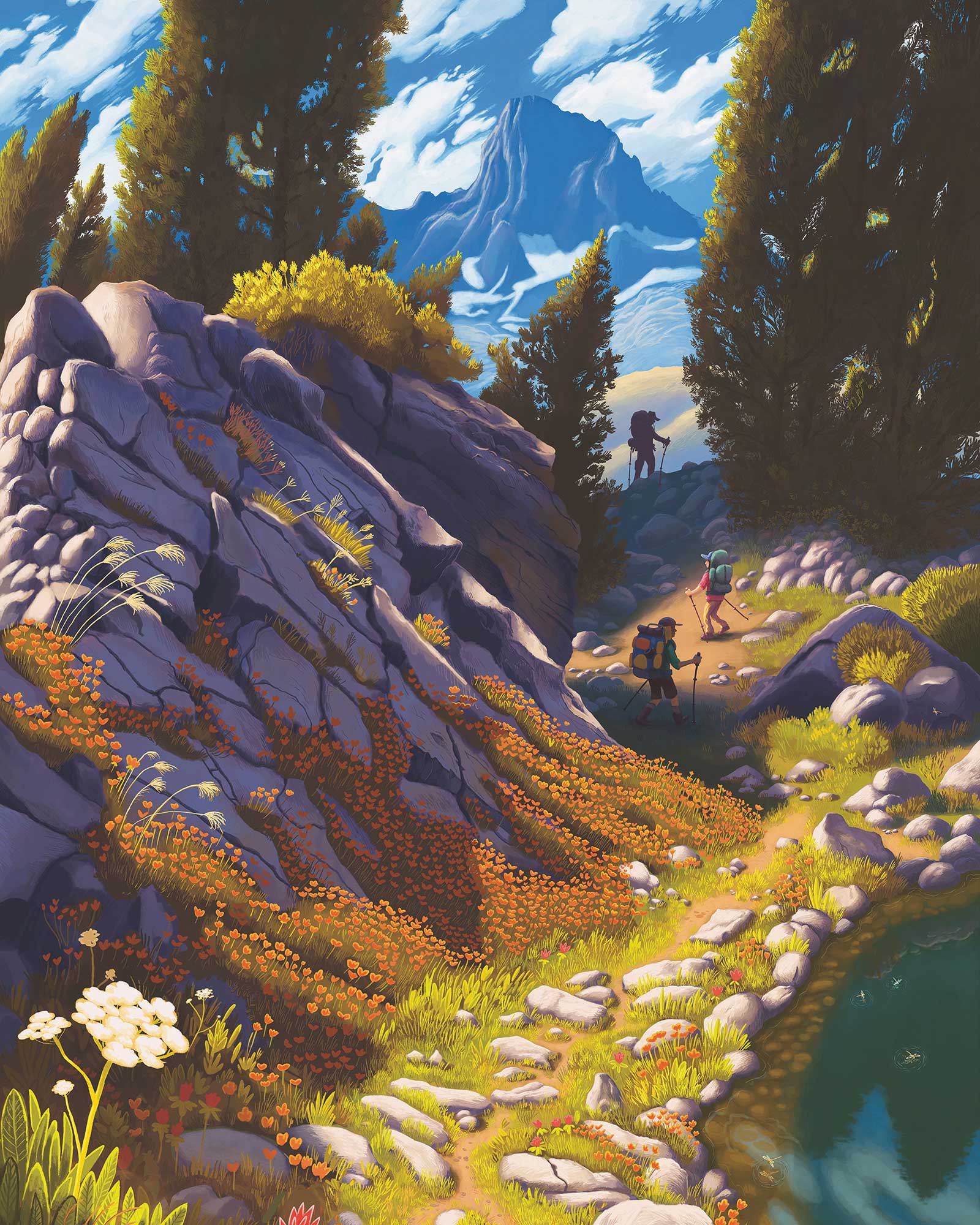 Sam Brieck, Ansel Adams Wilderness/Sierra Nevadas, procreate digital painting, 17 x 11"The Snowmass Wilderness in Colorado is home to the spectacular Maroon Bells, eternally reflected in Maroon Lake. Aaron Spong, who has captured the site in photographs and paintings, writes, “I am a Colorado artist and art teacher who specializes in traditional art as well as landscape/wildlife photography. My family and I live on the beautiful front range with a great view of the Rocky Mountains. As teachers, we spend much of our summer vacation time in the mountains hiking, fishing and enjoying the great outdoors. It is during these special adventures that I find my inspiration for many of my drawings, paintings and photographs.”
Responding to the grandeur of the mountains, he quotes J.R.R. Tolkein who wrote, “We make in our measure and in our derivative mode, because we are made: and not only made, but made in the image and likeness of a Maker.”
Continue reading to hear insights and stories from artists and galleries who feature scenes of the wildlife and wilderness genre.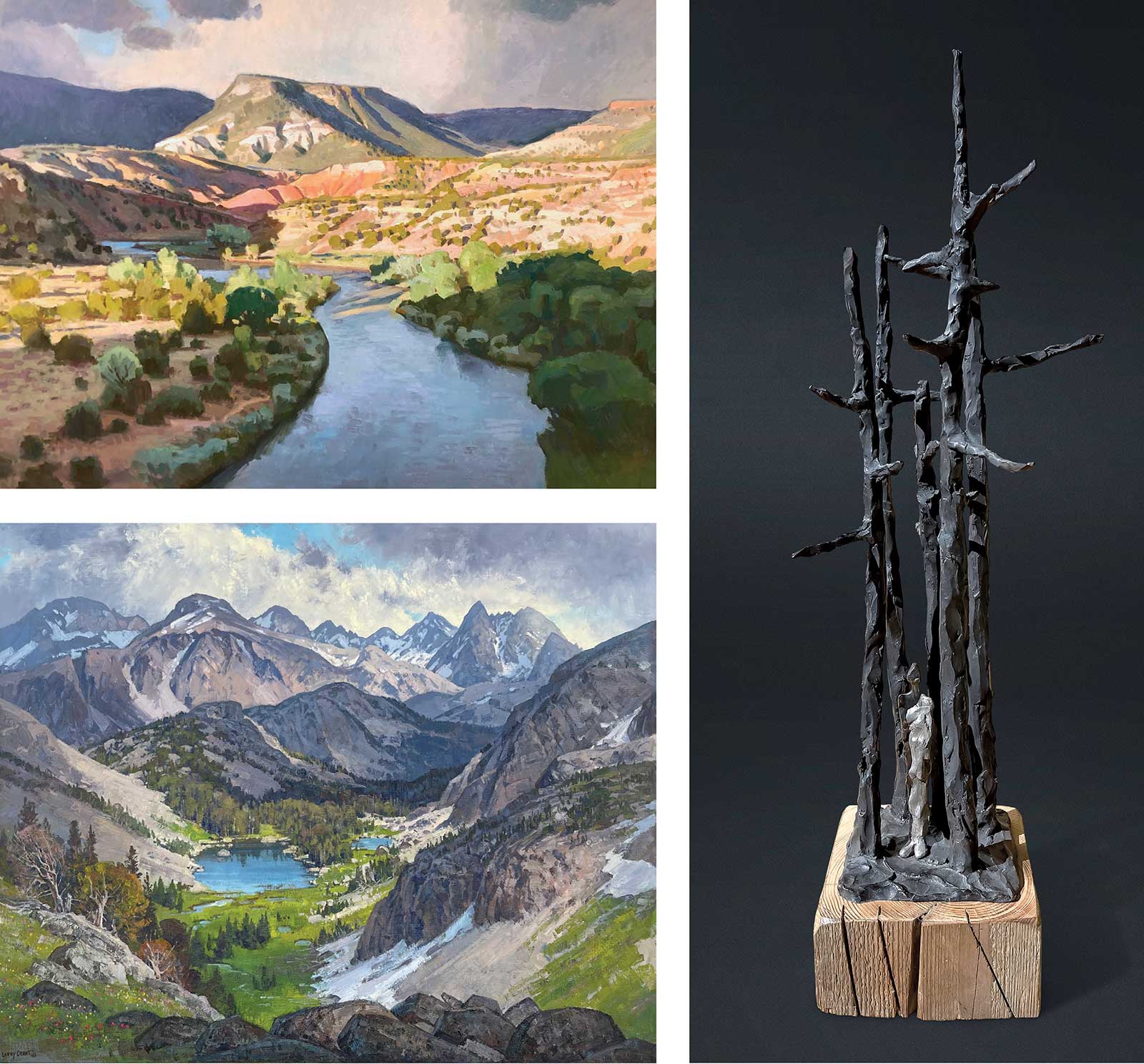 Clockwise from top left: The Legacy Gallery, Rio Chama Enchantment, oil, 30 x 40”, by Ray Roberts; Claggett/Rey Gallery, Forest From the Trees, bronze, 24 x 6 x 6”, by Jane DeDecker; Claggett/Rey Gallery, Clark Lake – Wind River Range, oil, 40 x 48”, by Lanny GrantLegacy Gallery artists’ Daniel Smith, Michael Coleman and Ray Roberts epitomize the genre of wilderness in astounding paintings inspired by their life experiences. Born in Minnesota, Daniel Smith, has always been one with nature. Currently residing near Yellowstone National Park, nature’s beauty inspires him every day. Smith is passionate about his subjects and travels frequently seeking artistic inspiration. Smith’s meticulous field research and insistence on directly observing the animals he paints is driven by a personal penchant to achieve greater authenticity.
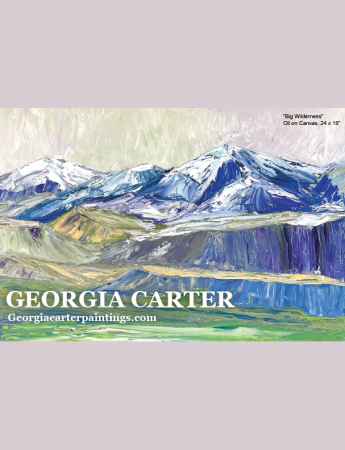
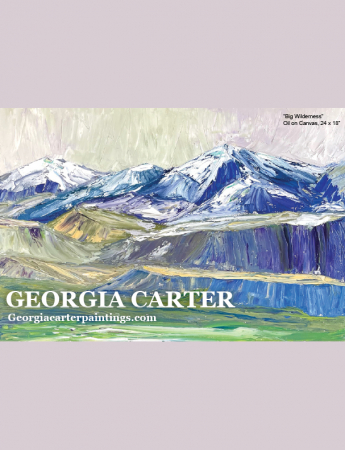
 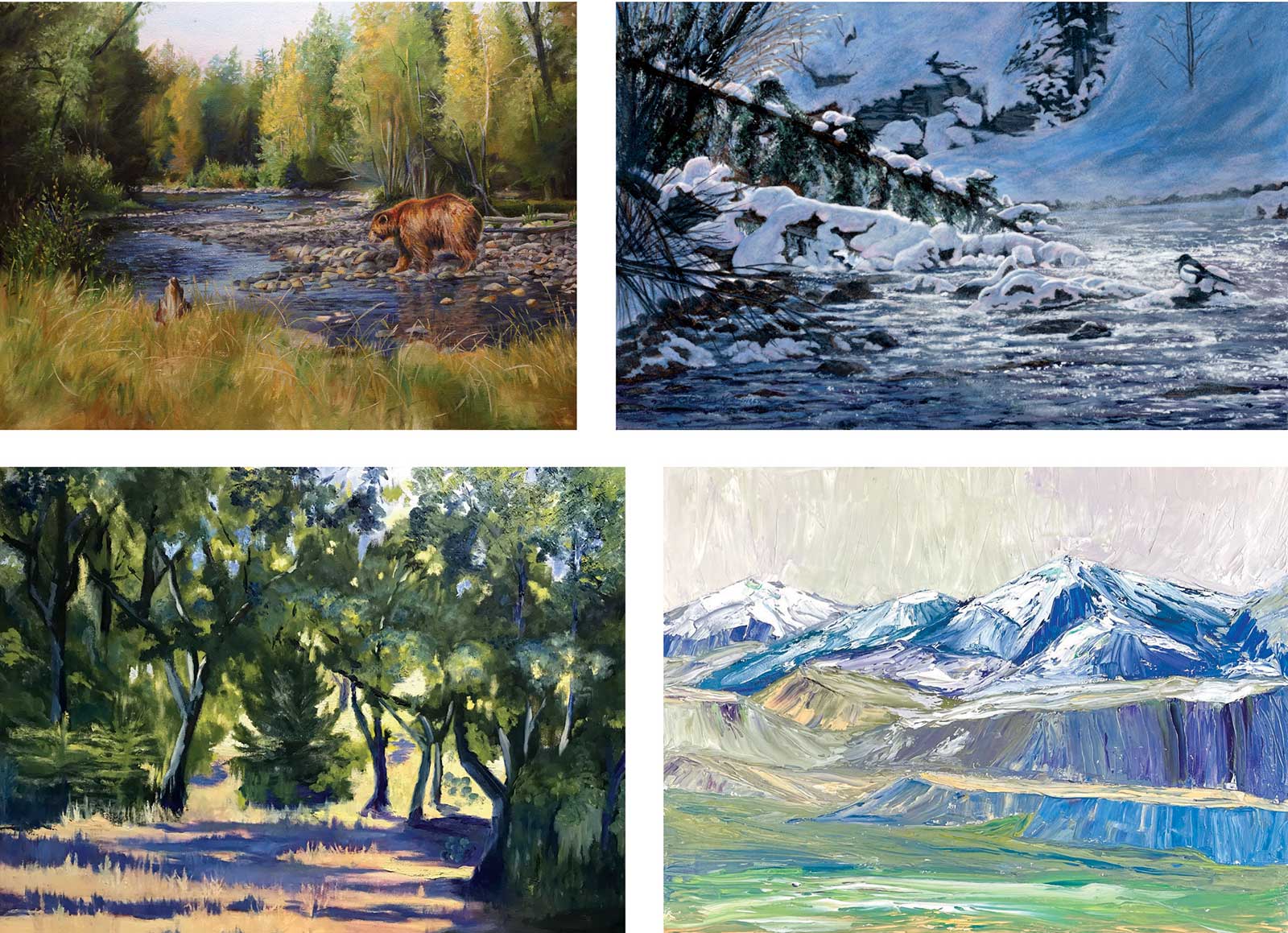 Top row: Dan Knepper, Fishing Bearfoot, oil, 18 x 24”; Cindy Sorley-Keichinger, Morning on the Maligne River, acrylic, 9 x 12”. Bottom: Georgia Carter, Secret Glade, oil on board, 24 x 30”; Georgia Carter, Big Wilderness, oil on canvas, 18 x 24”As a boy, Michael Coleman trapped, hunted and fished in the woods surrounding his Rocky Mountain home. Now, he continues to turn to nature for inspiration, for artistic purposes and personal. His boyhood experiences in the wild compelled him to paint those “magical moments.” Ray Roberts spent his childhood in Orange County with orange groves, before the days of freeways and sprawling housing developments. It has given him an enduring affection for the untamed, undeveloped California of his youth.
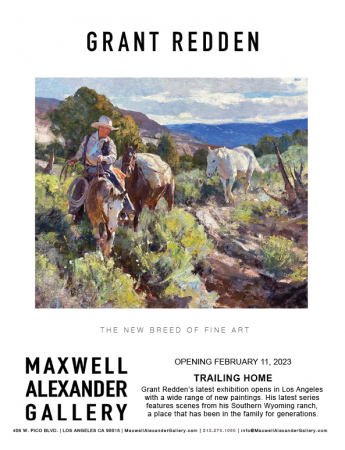
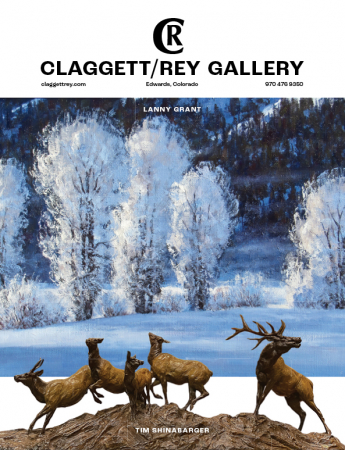
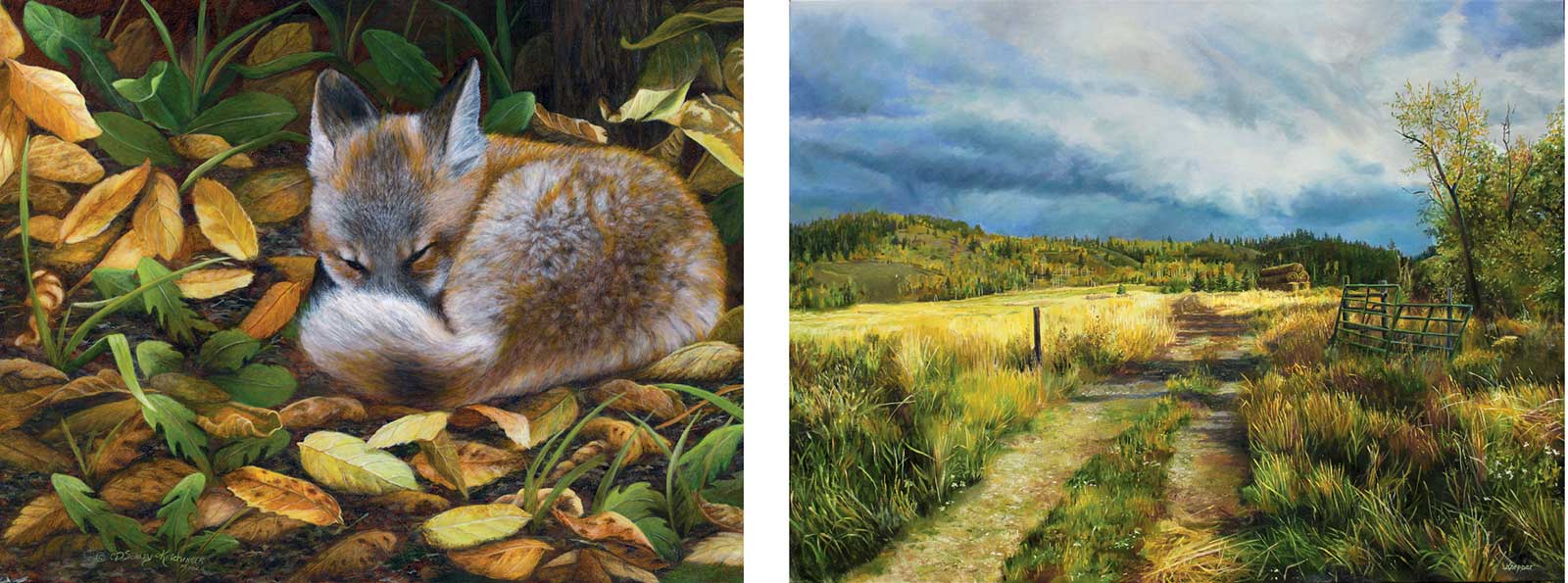 Cindy Sorley-Keichinger, Autumn Snooze, acrylic, 11 x 14”; Dan Knepper, Transitions, oil, 30 x 40”“Into the wilderness is a dynamic topic to explore in different art mediums,” says Claggett/Rey Gallery co-owner Maggie DeDecker. “When an artist can evoke the sensation of walking into a scene, they have accomplished a major feat. Encompassing ourselves with paintings of intimate and grand expanses can help enliven the times when we are unable to step off the beaten path of our busy lives.”Pictured here, Lanny Grant and Walt Gonske take very different approaches to capture their version of wilderness on canvas, but both illuminate a venue we can easily place ourselves in. Sculpture can work in a similar fashion, like the sculpture by Jane DeDecker titled The Forest from the Trees. She allows the viewer to complete the thought initiated by this dimensional invite.
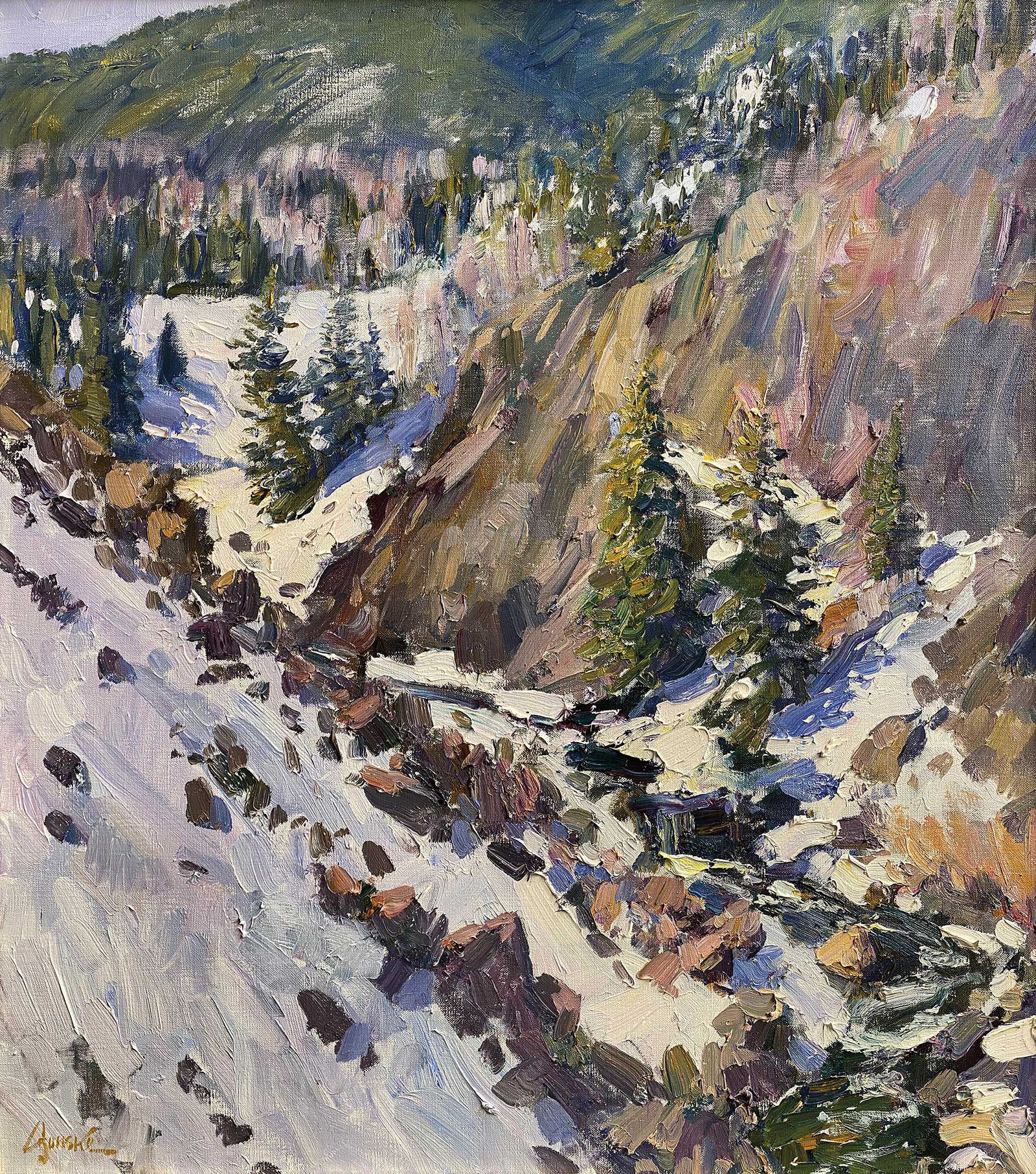 Claggett/Rey Gallery, Upper Beaver Creek, oil, 34 x 30", by Walt GonskeCindy Sorley-Keichinger is primarily self-taught but has taken workshops from and has exhibited with top artists in her genre. Her subjects of choice are landscapes and wildlife. She finds them calming and tries to project that in her work. “In today’s busy world, a little bit of calm and peace is a necessity,” she says. The artist works in acrylic primarily, but also uses gouache and oil. Over the years her style has evolved to where it is now. “The main point of my work is [to show] we are not the only ones on the planet, and I would like people to see and enjoy images of our neighbors,” she explains. “To see and know something is to take an interest in it. Urban life, and to a lesser degree, rural life, insulates us from the world around us.” Sorley-Keichinger hopes to introduce people to what they do not see every day, and to see beauty in what they do see.
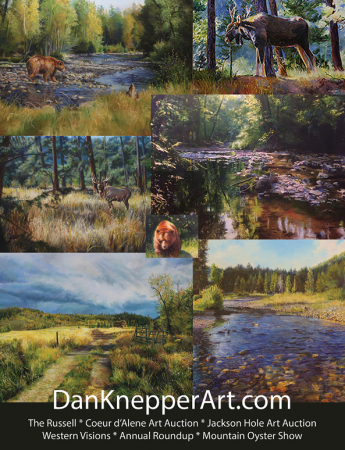
Dan Knepper tries to share the last wild places and the wildlife that inhabits them, lit by the soft light of morning or the warm rays at the end of the day. “I hope you can be transported and step into the space, hear the breath of the wind through the aspens, smell the sage and pine and feel the awe that I felt and that you’ll want to return to step into that place, at that moment, again and again,” he shares. Knepper invites viewers to follow his adventures and latest work like Fishing Bearfoot, a scene of a bear from a beautiful quiet spot in the Rockies. The artist notes that he was farther away than it seems in the painting—at a safe distance. We see more wildlife in the painting Forgot Why I Came in Here, pictured here, and another view of the Rockies in Transitions, this time from a friend’s ranch. “I was struck by the symbolism of passing through the gate into the light as the rolling dark clouds receded over the mountains,” says Knepper. “2022 was that kind of breakthrough year for me!”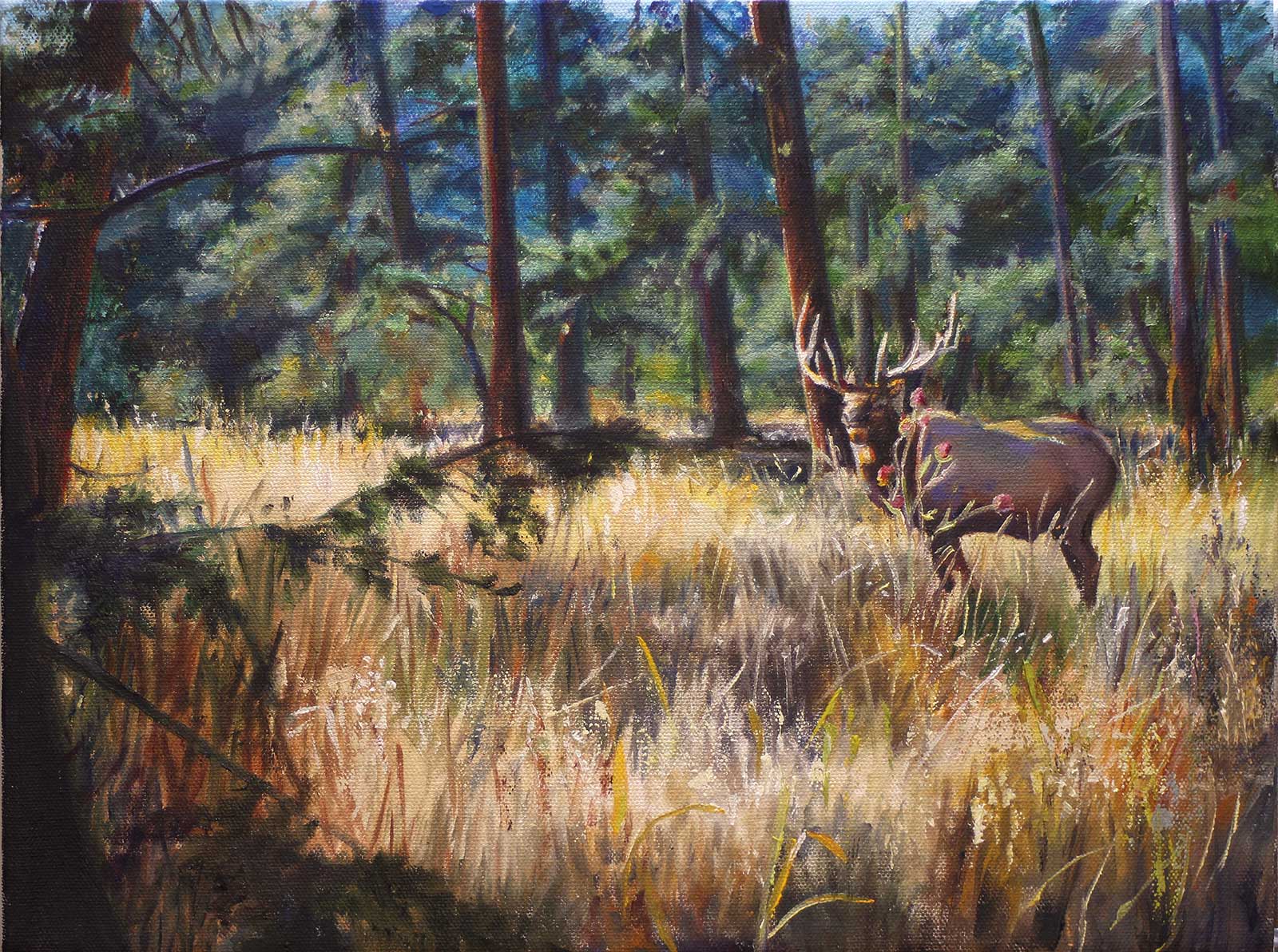 Dan Knepper, I Forgot Why I Came In Here, oil, 12 x 16"
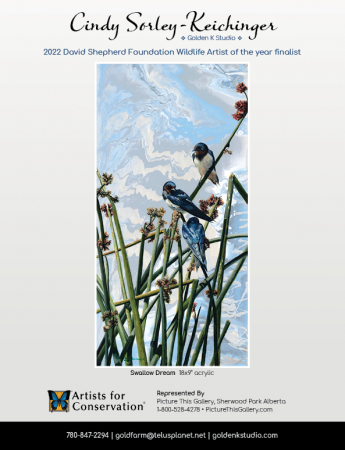
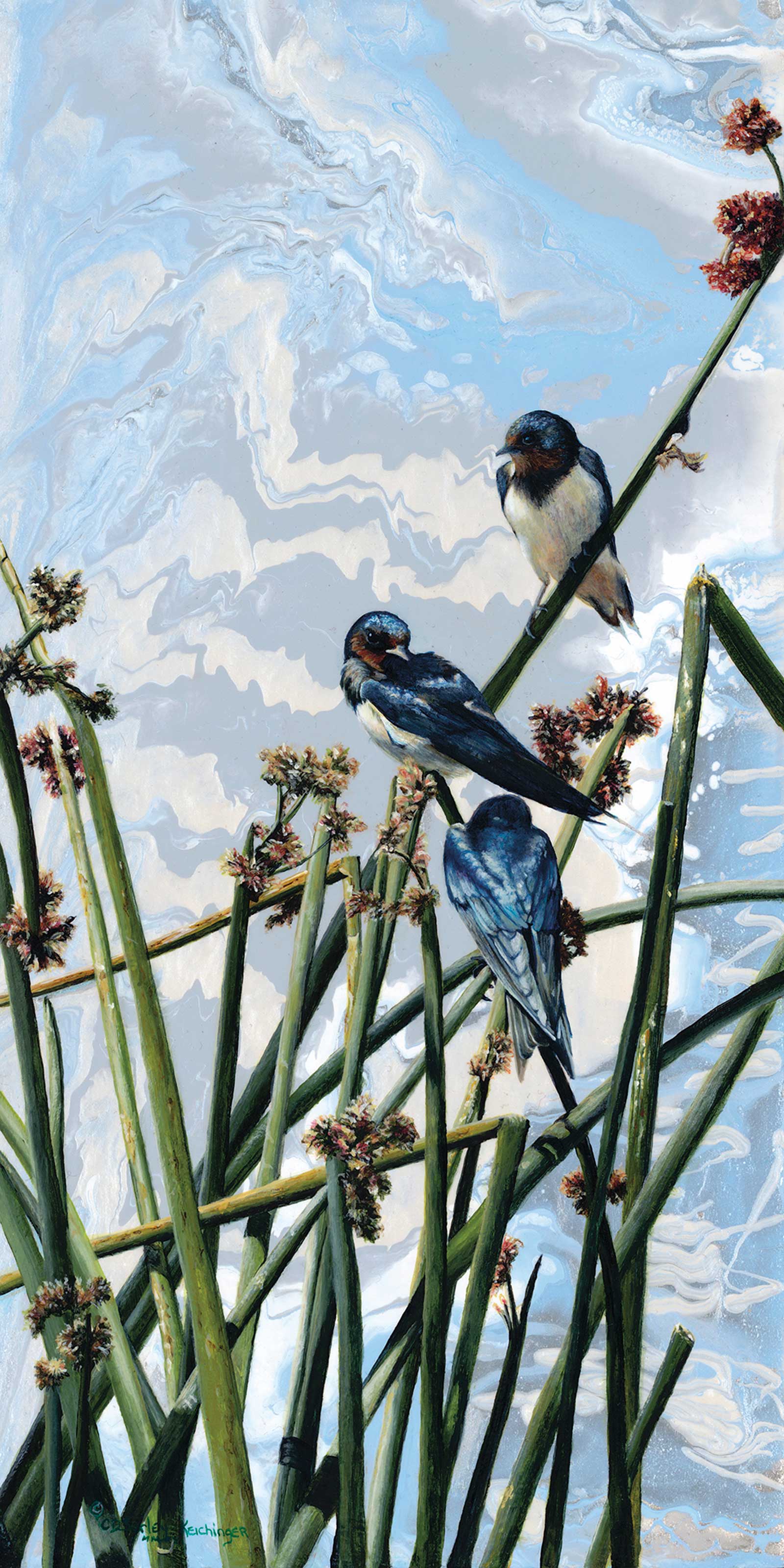 Cindy Sorley-Keichinger, Swallow Dream, acrylic, 18 x 9"When someone says wilderness, Georgia Carter’s imagination conjures mountain ranges and deep thick forests, “for that’s what our ancestors experienced when crossing this wonderful great country of ours,” she says. Carter’s painting Secret Glade, pictured here, is a real place, and one of her favorite places. “It’s a mott of oaks and cedars in the Texas Hill Country that has a natural open space in the middle,” she explains. “When entering my secret glade, I try to feel what it must have felt like in the 1800s, busting through thick brush day after day in hopes of a new and better life.” In painting her piece Big Wilderness, Carter wanted to feel the impossibility of crossing the Rockies. The vantage point of the painting is of someone standing at a distance looking at the beginning of a near impossible task and considering an attempt getting through. “I used my pallet knife,” she notes, “which I feel gives this painting lots of movement and harsh lines.” —
Featured Artists & Galleries
Aaron Spong
aaron-spong.pixels.com
Cindy Sorley-Keichinger
(780) 847-2294, goldfarm@telusplanet.net
www.goldenkstudio.com
Claggett/Rey Gallery
216 Main Street, Suite C-100
Edwards, CO 81632, www.claggettrey.com
Dan Knepper
danknepperart@yahoo.com
www.danknepperart.com
Georgia Carter
georgiacarterpaintings@gmail.com
www.georgiacarterpaintings.com
Sam Brieck
www.brieckdraw.com
Legacy Gallery
7178 Main Street, Scottsdale, AZ 85251
(480) 945-1113, www.legacygallery.com
Tom Killion
Point Reyes Station, CA, (415) 663-1516
contact@tomkillion.com
www.tomkillion.com
Powered by Froala Editor