Now open at the National Museum of Wildlife Art in Jackson Hole, Wyoming, is Wolves: Photography by Ronan Donovan, featuring Ronan Donovan’s photographic images of wild wolves in the Greater Yellowstone Ecosystem and Ellesmere Island in the high Canadian Arctic. Donovan, a National Geographic Explorer, examines the “relationship between wild wolves and humans in order to better understand the animals, our shared history, and what drives the persistent human-wolf conflict.”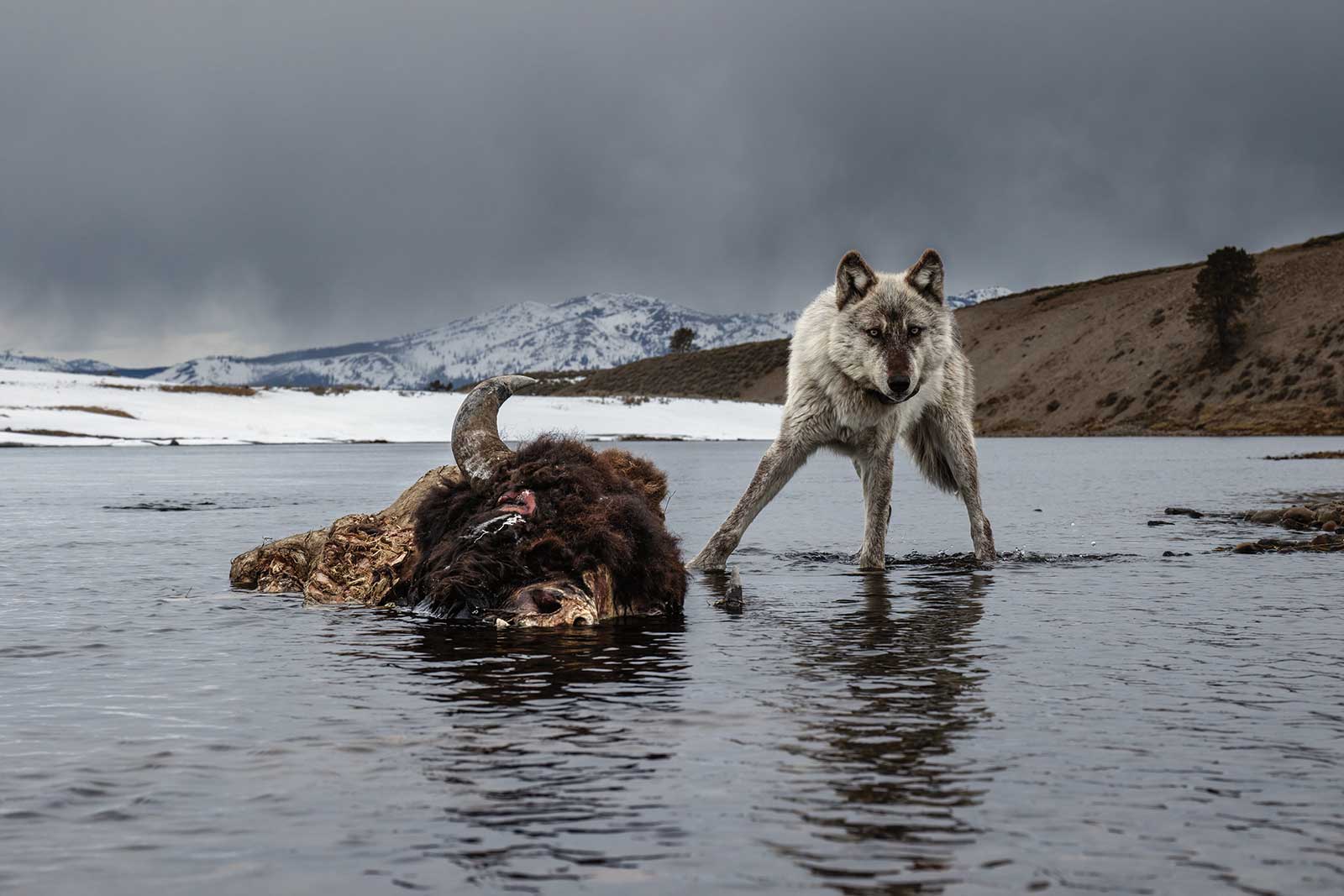 Ronan Donovan, photograph for National Geographic, Yellowstone National Park, Wyoming. This drowned bison fed a grizzly bear for several days before a wolf, photographed using a camera trap, moved in to take advantage of an easy meal. Known as Mr. Blue for his steely blue-gray coat, this wolf outlived five mates over the course of his life.
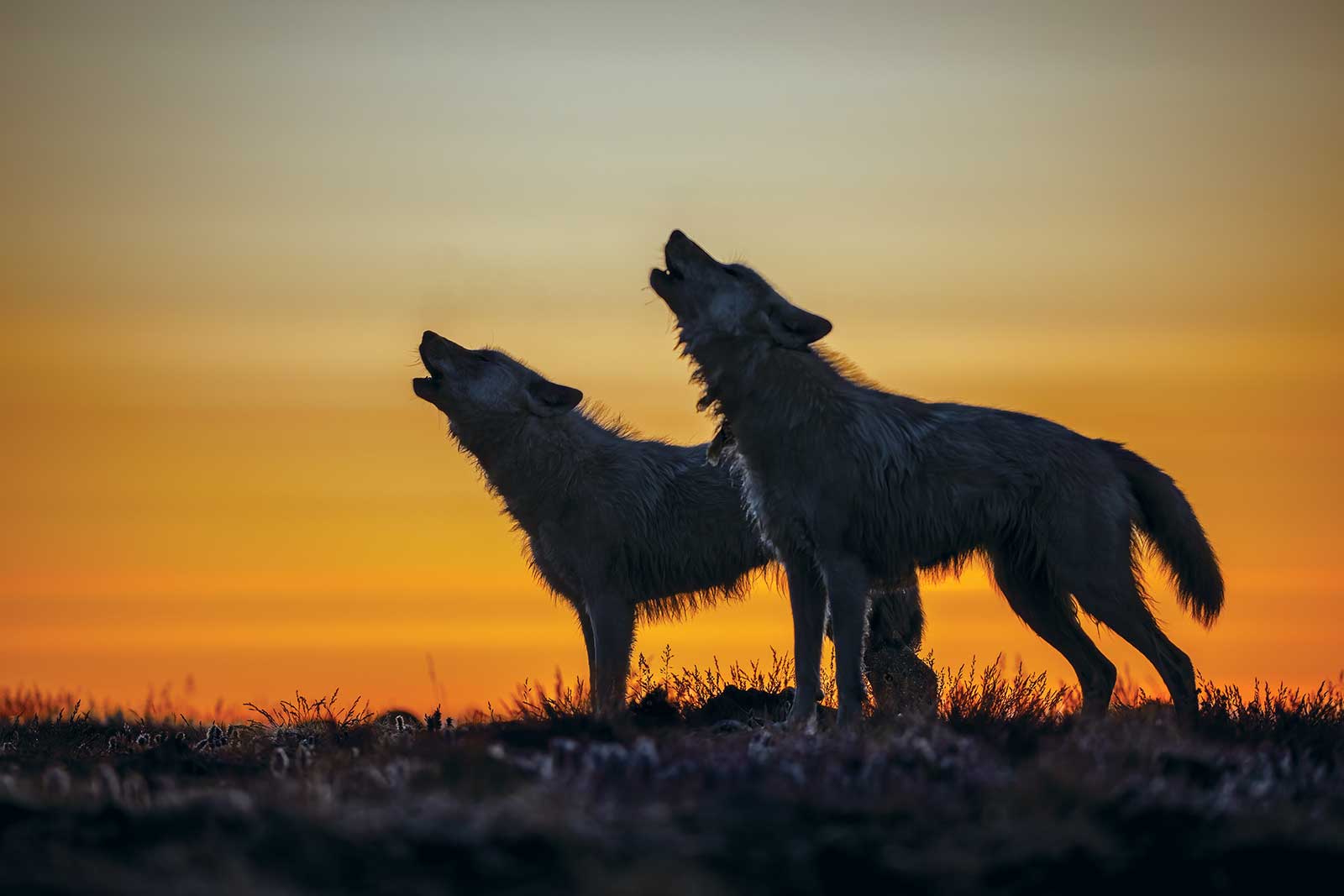 Ronan Donovan, photograph for National Geographic, Ellesmere Island, Nunavut, Canada. A wolf’s howl can travel as far as 10 miles in a vast, open landscape like Ellesmere Island. Here, sisters One Eye and Bright Eyes howl to family members who were moving south to survey their territory. Eventually, the pack split, leaving the tired pups behind at a previous year’s den while the adults continued to travel south.The exhibition, which runs through April 29, was created by the National Geographic Society and the National Museum of Wildlife Art. Not only will the show present photogaphs by Donovan, but also video he shot while on location in the Yellowstone region.
“Wolves are such a fascinating animal to me because of how complex their relationship is with humans,” Donovan says. “Wolves were the first animals humans domesticated some 30,000 years ago and they have lived alongside us ever since as guardians, workers, and companions. Yet as humans moved to more sedentary lives, raising what amounts to easy prey in the form of livestock, wolves have found themselves in conflict with humans.”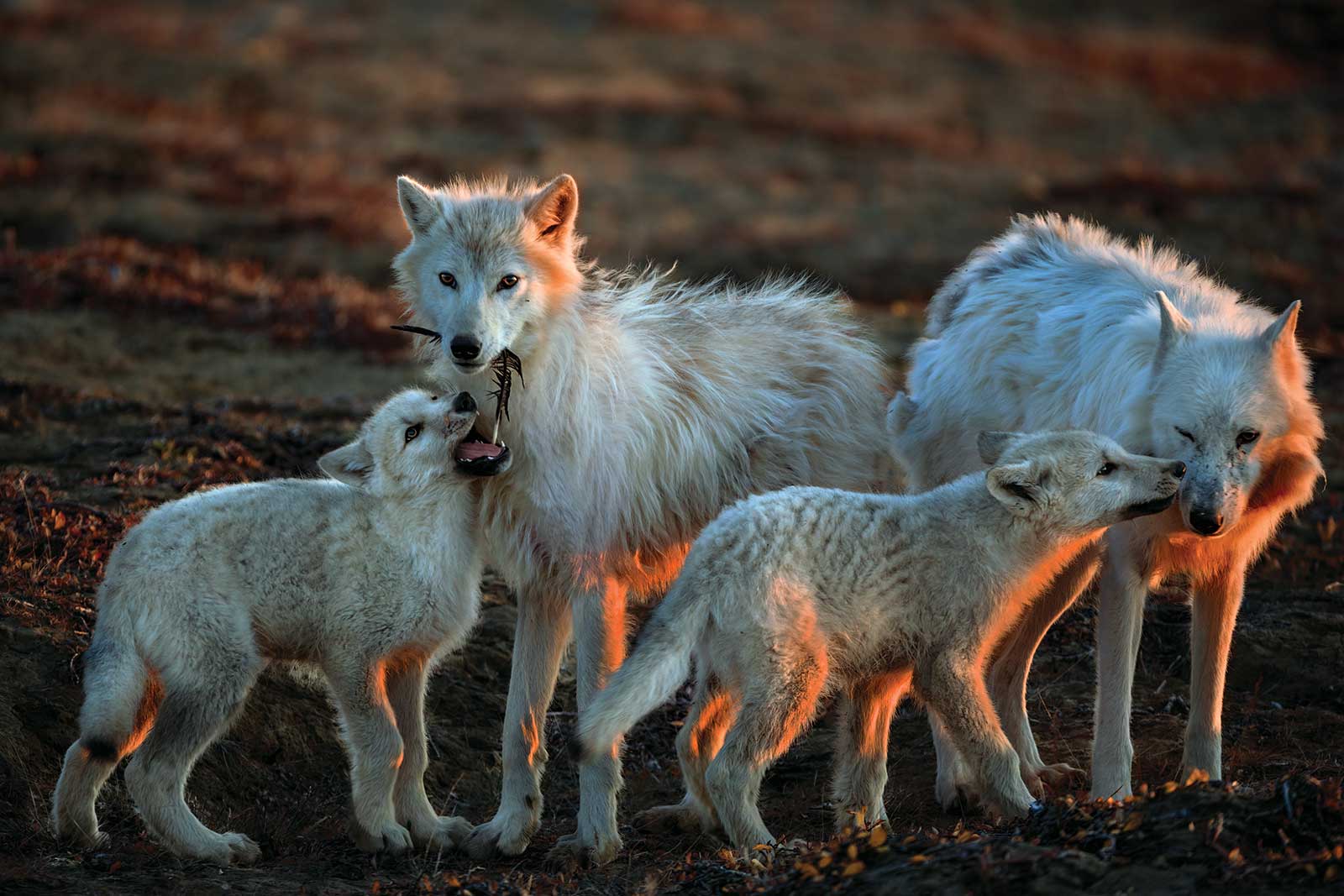 Ronan Donovan, photograph for National Geographic, Ellesmere Island, Nunavut, Canada. Members of the Polygon pack greet one another. One pup nuzzles the pack’s aging matriarch, White Scarf (far right). Nuzzling is a common method of greeting. A second pup is playfully biting a feather while nuzzling Slender Foot.The exhibition will draw attention to how wolves in North America are increasingly under threat due to recent extreme wolf-control laws, and humans continue to impinge on the land and food sources that these animals need to survive. —
Powered by Froala Editor