Until you’ve field-dressed an elk and carried it out of the backcountry, you don’t know its anatomy like Michael Coleman. Unless you’ve spent the last 75 years watching daybreak over the Wasatch Mountains, you can’t intuit the exact color of rose that spills over their craggy peaks onto the West Desert. For the Provo, Utah-based painter and wildlife sculptor, Googling his subject matter is simply not enough.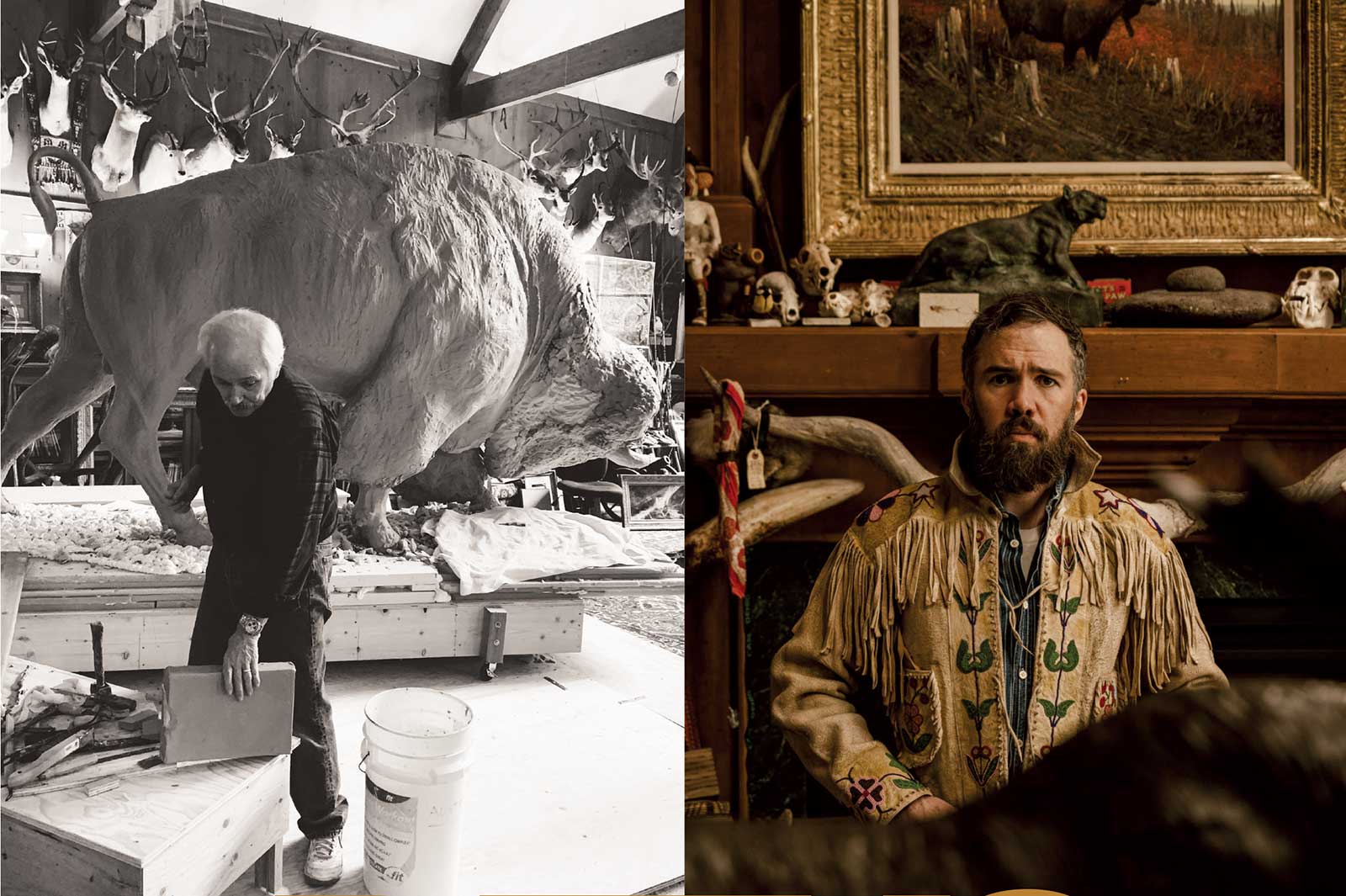 “Nature—to me and to Nick—has always been our guiding light,” says Michael, whose son Nicholas followed him into the family business. “When you’re out in nature, universally, we do feel better,” he continues. “There’s a structure, there’s a unity, a peacefulness.”
“Romantic is kind of a goofy word to use,” Michael laughs, though his visual and philosophical lineage link him to the light drenched landscapes of the Barbizans and Hudson River School. It’s this classic view of the frontier that earned him an invite to one of the first Masters of the American West shows at the Autry Museum and has made him a mainstay in the lineup ever since.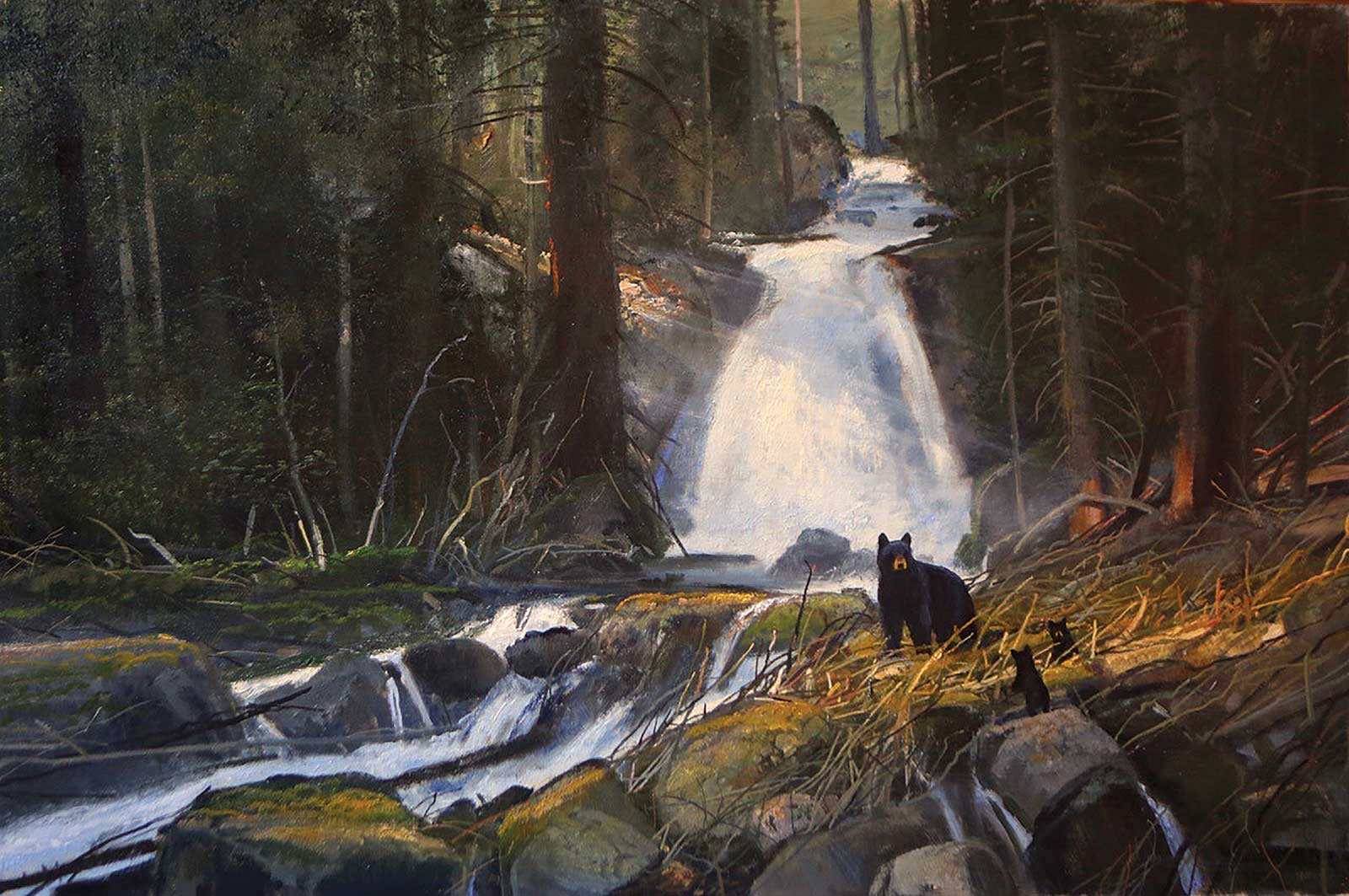 Michael Coleman, On the Sun River, oil on linen, 24 x 36”. Available at the Masters of the American West, Los Angeles, California.“The Colemans have a unique relationship to history, especially Michael, who has had this sort of unwavering devotion to traditional grand landscape in the romantic tradition,” says Amy Scott, curator and VP of research and interpretation at Autry Museum of the American West. “That played an important role in the 19th century when most Americans did not have direct access to Western landscapes like Yellowstone or Yosemite.”
“That’s the story that they continue to tell and they do a very good job of it,” says Masters co-chair and artist liaison Jim Rea. Like their predecessors, the Colemans’ take on the West comes from an idyllic point of view, but instead of completing major paintings in studios back east, their work springs from a purely Western perspective, Scott tells us. “They are not tourists. They are Westerners,” she says. “So having them here at the Autry is super meaningful, and equally so is putting them into conversation with California artists.”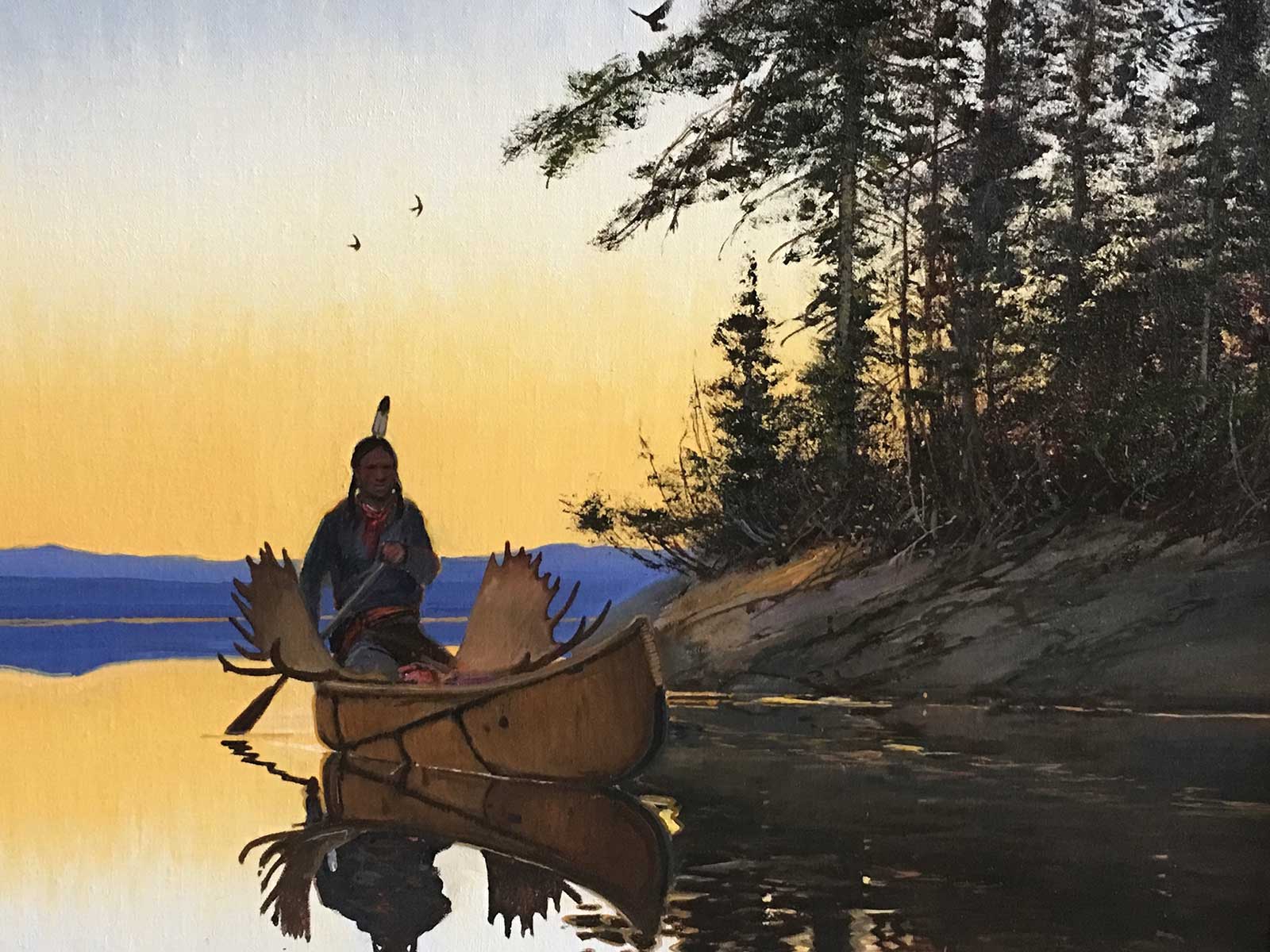 Nicholas Coleman, Up North, oil on linen, 18 x 24”
Los Angeles—probably not the first place that comes to mind when you think of the West or Western art. But the Autry’s location offers a distinct vantage point. “California is as west as you can get. You get much further west and you’re in the ocean,” says Scott. “Where better to look at the West broadly than from its westernmost outpost where we can look back across the West to the East?”
From the Gold Rush to Hollywood—California has played an integral role in American mythology. But as Scott points out, many of Western art’s most famous stories were told by outsiders. “All of that has compelled and driven so much of American settlement and expansion and economy and culture,” says Scott. “There’s, of course, a lot of tragedy and conflict and violence that comes out of that too, but we explore all of those stories.”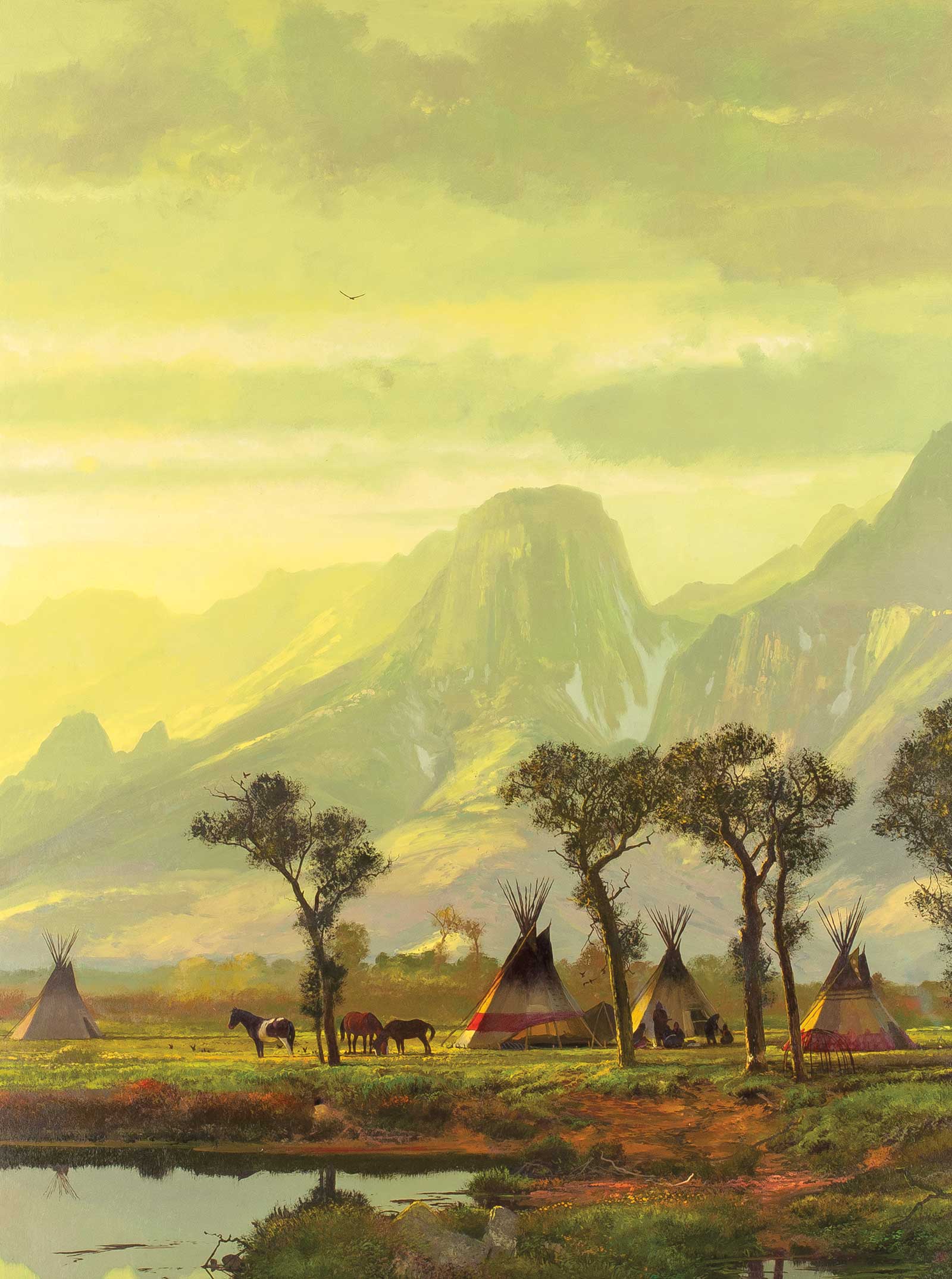 Michael Coleman, Golden Moment, Indian Encampment, oil on panel, 48 x 36”So what does a grounding in the West say about the West? “The Autry is known as the museum that tells all of the stories of the American West. And those stories are many, varied and diverse,” says Rea. “There’s kind of a modernist sensibility for the LA audience and we try to find the balance between the traditional, classical Western presentation and the more modern presentation,” he says. “If you’ve been to the Autry or the Masters in the past several years, you’ll certainly notice that contrast.”
Autry leadership has slowly and incrementally diversified both the cultural perspectives in the show as well as the stylistic influences, Scott tells us. “We want the show to be more reflective of the city that it’s in,” she says. “We also want it to retain a strong and powerful foothold in the traditional art that was its foundation and its inspiration.”“This classic versus modernist history goes back to the very beginning of modern Western representation,” says Rea. “It continues through to this very day and we’re happy to see it. Our audience is appreciative of both ends of that spectrum.”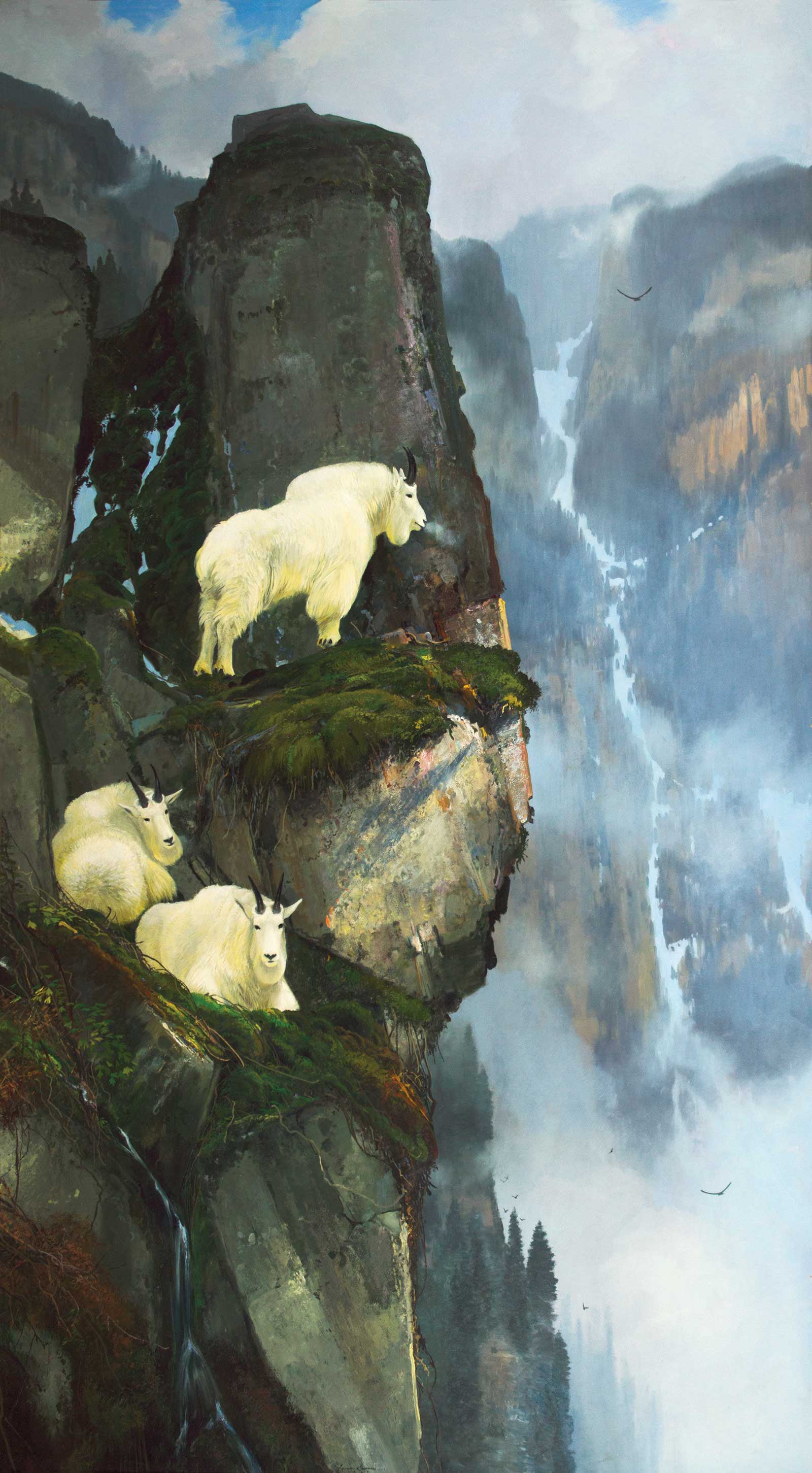 Michael Coleman, In the Cliffs, oil on board, 72 x 40”
For the Colemans, the West of Bierstadt and Moran is worth holding on to, even as another wave of modernity is at their door. “I don’t know if it’s a yearning or a harkening back to—not even a simpler time—it was even harder, probably, to live back in those days,” says Nicholas. “Teddy Roosevelt put it well when he was talking about living the strenuous life, life on the edge. It was harder to eke out an existence and survive.”“I’ve been on all kinds of trips hunting and fishing, and often the most memorable ones are the ones that are the hardest or where you narrowly averted some kind of disaster. Those are the best ones,” Nicholas says. “My dad gave me lots of books growing up—life and death in Yellowstone, bear attack storybooks—you know, the normal kid stuff,” he laughs. “I just loved everything there was to do with the West and the outdoors.”
Hanging out in a studio stuffed with taxidermy and era authentic props, young Nicholas Coleman decided he’d like to be an artist, too. “If my mom or my dad tried to stop me, I don’t think they could have. They did try to talk me out of it a few times when I was younger, telling me it’s not as easy as it looked,” he recalls. “I never thought that this looked easy.”
While the Coleman name may have opened some doors, he admits, it hasn’t been a free ride. “There are no magic elves that come in at night,” he says. “You still have to do the work. If you didn’t do the work, nothing would happen.”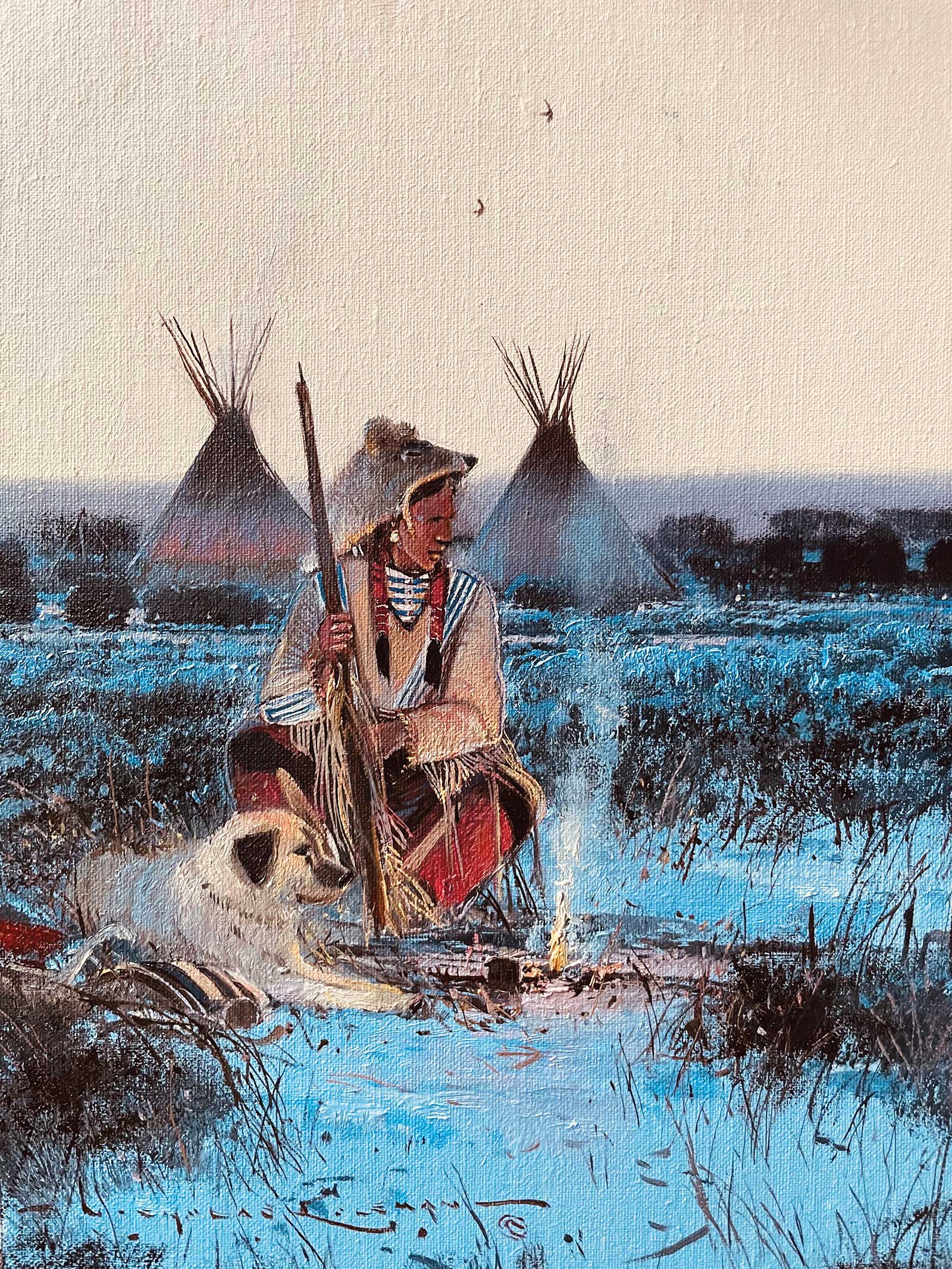 Nicholas Coleman, In Good Company, oil on linen, 12 x 9”. Available at the Masters of the American West, Los Angeles, California.
Energetic at 76, Michael Coleman is fighting arthritis, but still going strong. “He’s the busiest guy I know, and he’s been a great example to me—still to this day—that you just don’t stop, no matter what,” his son says. Whether by singular vision or sheer stubbornness, Michael has painted through a sea of changes in the art world and the world itself. Much like those early Western artists, he stuck to figuration when other art movements reigned. “All those guys really had to tough it out when the French impressionists came on. It killed their markets,” Michael says. “It’s just part of the history of art,” he continues. “The pendulum swings back and forth.”
Picturesque as it may be, even the Colemans’ own backyard is not frozen in time. Nicknamed Silicon Slopes, the Utah Valley is brimming with tidy subdivisions and the tech professionals who call them home. Just down the road, Brigham Young University hosts around 35,000 students—of which father and son were once among the ranks.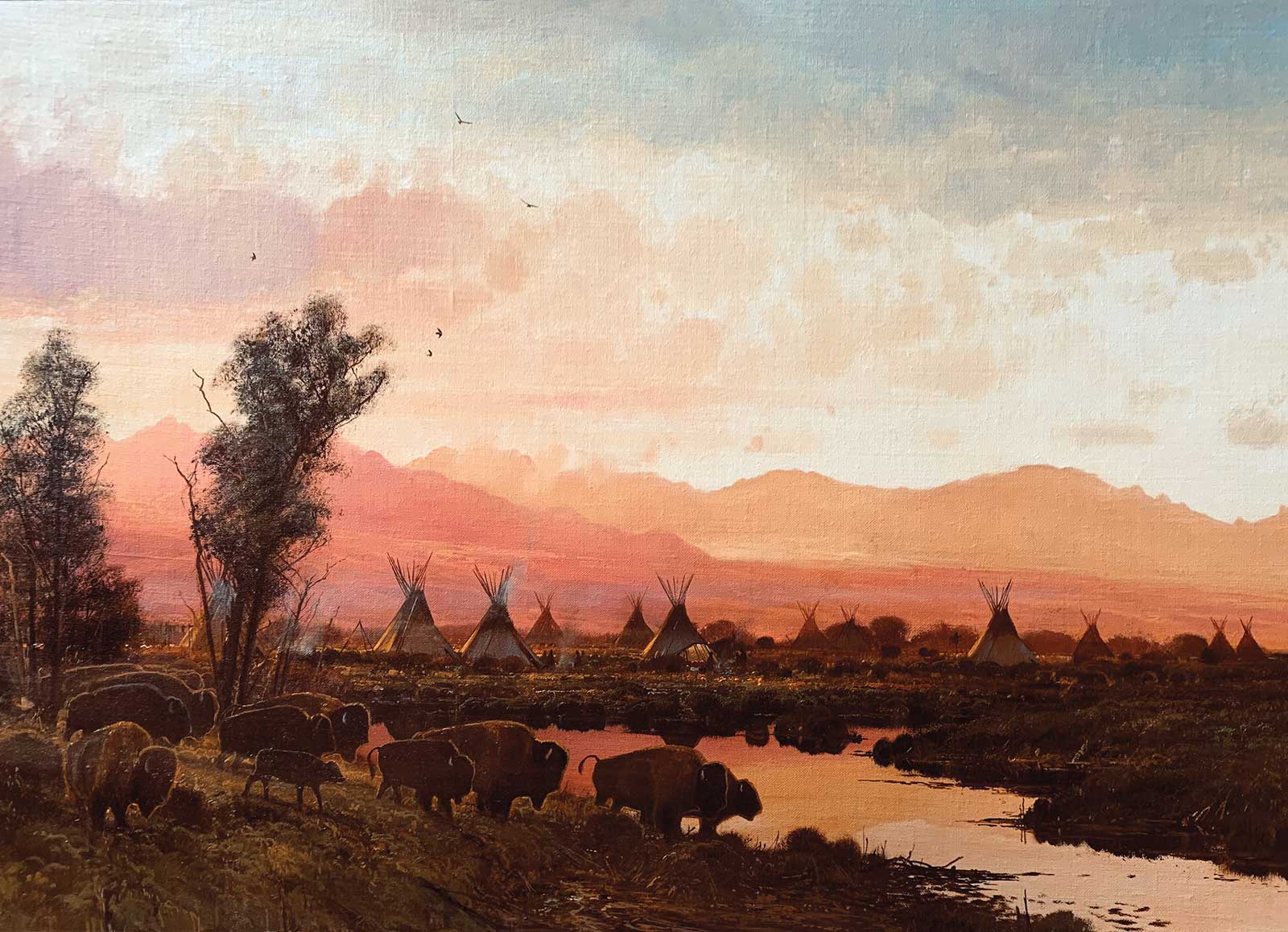 Nicholas Coleman, In God’s Country, oil on linen, 30 x 50”
Both artists, studying a generation apart, recount friction with faculty who suggested the dark art of abstraction. In the Coleman household, it’s a no-go. “When I went to BYU, all I did was argue,” Michael remembers. “And that abstract stuff still drives me crazy.” To him, realism is grounding and beauty a noble pursuit. Most importantly, he wants the viewer to feel something they can relate to when they look at his work. “That’s what somebody’s going to see in your paintings,” he says, “their own experience.”
For this year’s Masters of the American West, collectors can expect to see classic Western themes in both of the Colemans’ work—pristine wilderness, wildlife, water and Indigenous figures from another time. “They each are very different artists, but they have a link to academic principles—and I would say storytelling—that manifests very differently in their work,” says Scott. “There’s still a wide audience that wants to see what a healthy Western environment looks like—and not just aesthetically—but from the narrative of the creatures within it.” Wildlife, she says, is “part of the drama that is the West.”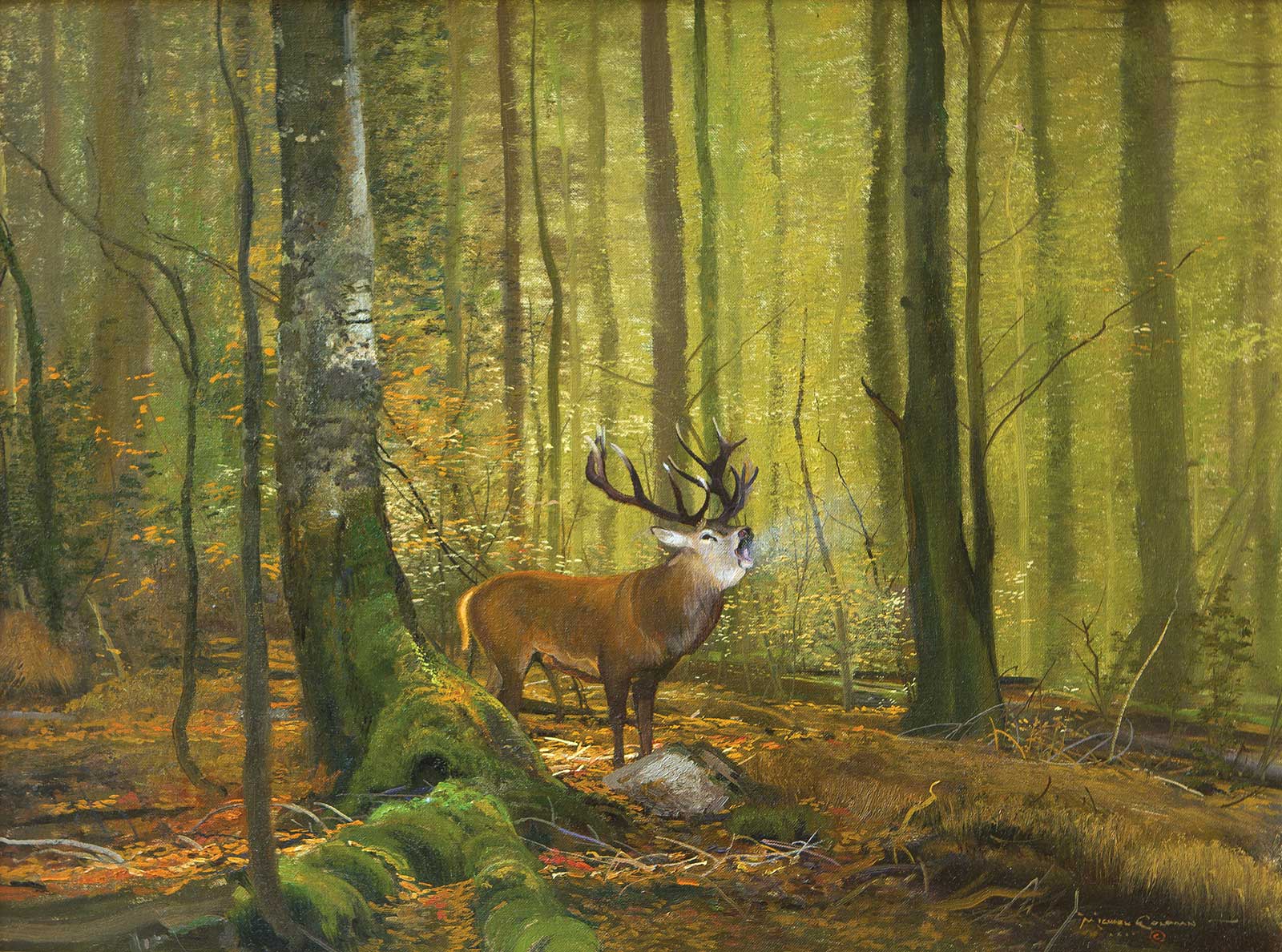 Michael Coleman, Stag, oil on panel, 30 x 36”
The Autry’s duty, as an institution with a foot in two worlds, is to complicate the conversation within Western art and to make Western stories more approachable for more people. “LA as a city, and as a town, likes to think it’s very knowledgeable in contemporary art, but they often overlook the Western American art and contemporary Native art,” says Scott. “We like to think that we fill a need—that Masters fills a need as well.”
Representing a younger demographic with a deep love of the West, Nicholas has a perspective of his own. “The Autry, over the years, has been a fantastic place to show,” he says, noting an optimism for the next generation of Western art. “I am seeing younger and younger audiences. And especially galleries like Logan and Beau’s gallery, Maxwell Alexander Gallery, they are being markedly smart—especially in LA, of all places—getting younger people interested in the work.”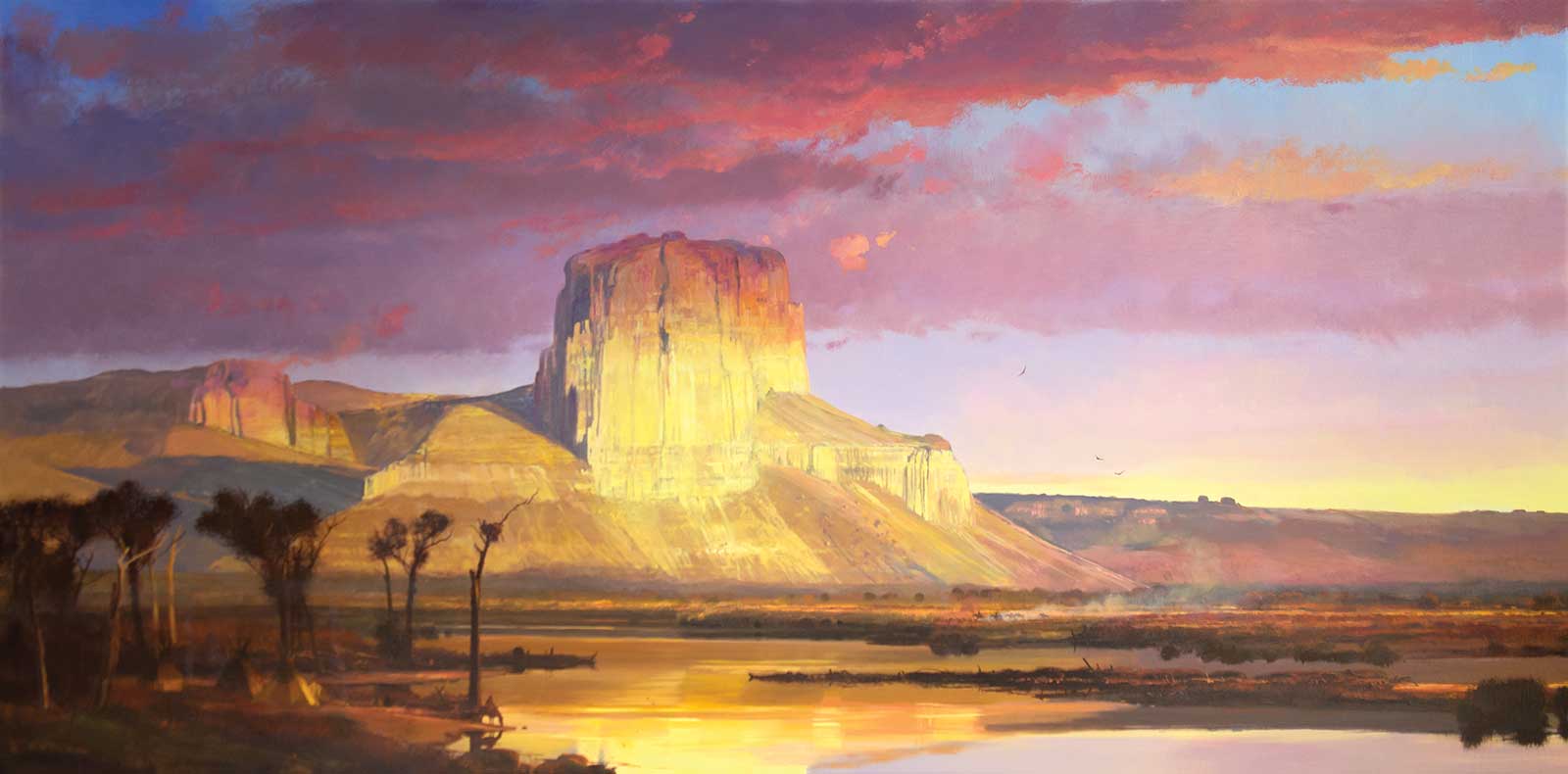 Michael Coleman, Castle Butte, Green River – Wyoming Territory, oil on board, 30 x 60”For the Masters show and the genre in general, Nicholas believes these collectors in their 30s and 40s are key. Not everybody is able to make a major purchase, he tells us, but small works are a great place for new collectors to start. “Collecting artwork, and especially Western artwork, can be addictive,” he says. With an expanded online presence, proxy bidding, and an offering of accessibly priced miniatures in addition to large works, this year’s Masters of the American West could reach new heights and new depths.
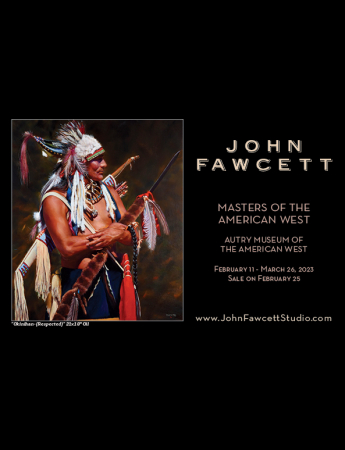
The exhibition is on view from February 11 through March 26. The digital and in-person draw box sale is February 25. —
Powered by Froala Editor