Jeremy Lipking was born in Santa Monica, California, and, today, lives not far away in Malibu Canyon with his wife, Danielle, five of their six children, dogs, countless chickens and a small herd of sheep. The sheep are to clear the brush. The family had been evacuated from the Woolsey Fire in 2018. They returned to find their house intact but full of soot and ash.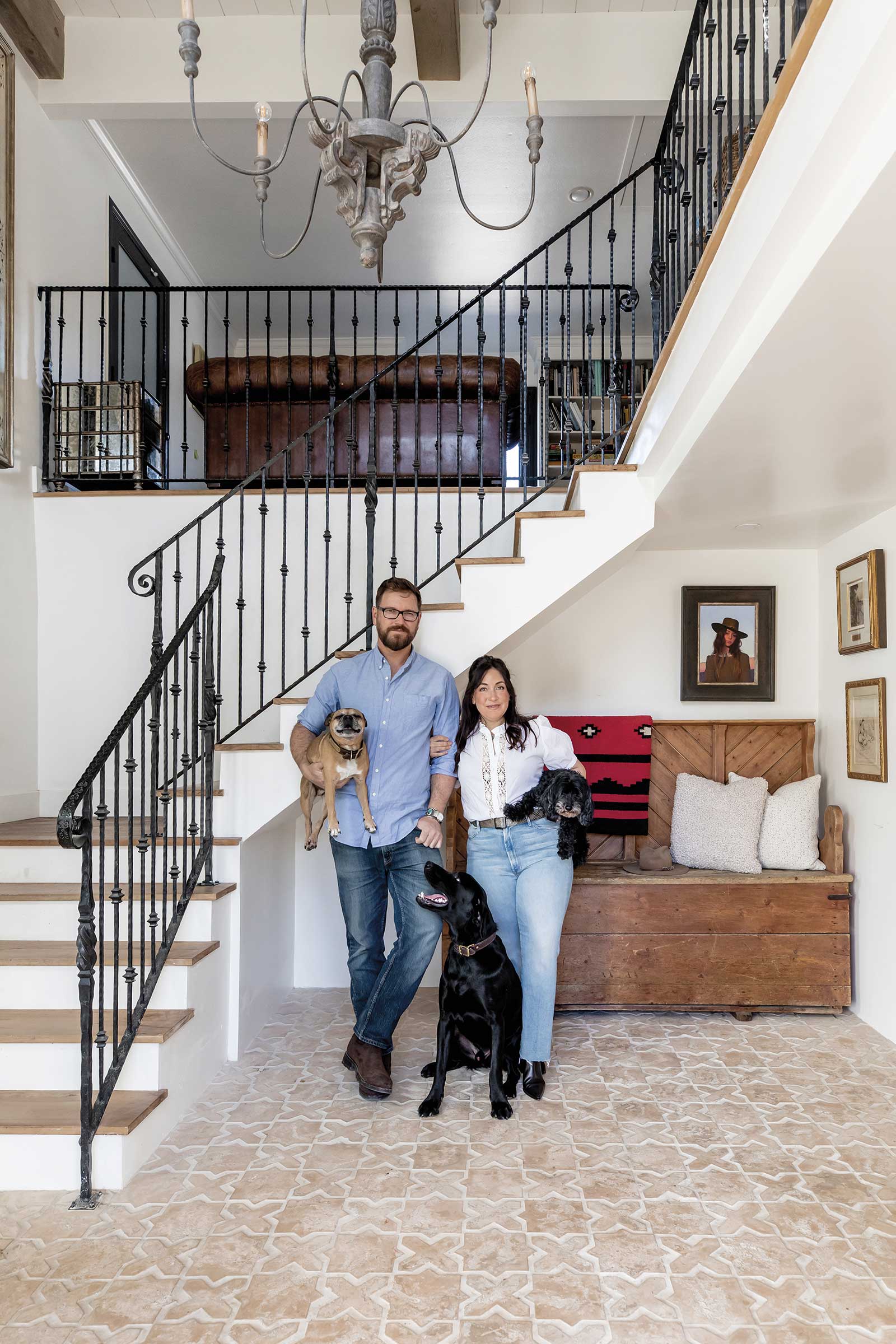 Jeremy and Danielle Lipking in the entry to their home with their dogs Buster, Scout and Hobie. The painting is Jeremy’s The Prospector’s Daughter.Jeremy has been immersed in art since his youth, encouraged to visit museums and galleries by his artist father who taught him the basics of creating his own art. After high school he enrolled in the California Art Institute in Westlake Village. The institute fostered a traditional approach to art instruction after which he struck out to continue learning on his own, studying the work of artists he admired such as John Singer Sargent, Nicolai Fechin, Joaquín Sorolla y Bastida and Anders Zorn.
When he was 25, he won the top prize at the California Art Club’s 91st Annual Exhibition. Today, his work rivals those of the greats he admires.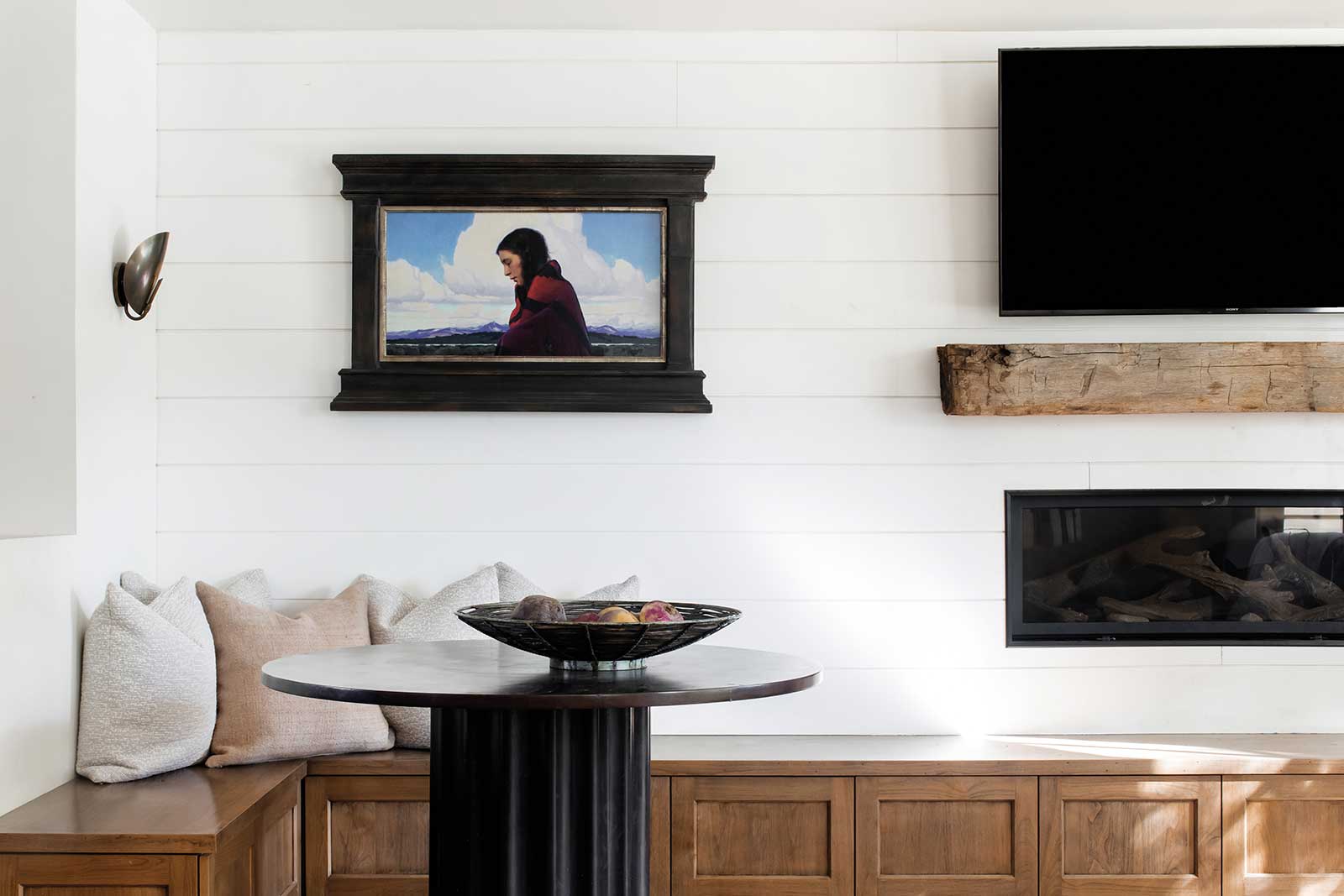 In the family room is Jeremy’s painting, Shadow Catcher.
Jeremy and Danielle’s home is full of light and the front door is often propped open with a pair of boots to let the fresh air flow through. It was redesigned by Laura Giuliani, founder of House of G Designs in Westlake Village. Laura says, “This was a warm earthy remodel of the family’s first story. I wanted to create an environment that inspired the creative group, that would stand up to their five children and countless animals and provide a complimentary backdrop to Jeremy’s paintings. We took down walls, added walls and made the space more functional overall.” Jeremy comments, “Laura’s the one who made the house much more art friendly than it was when we bought it.”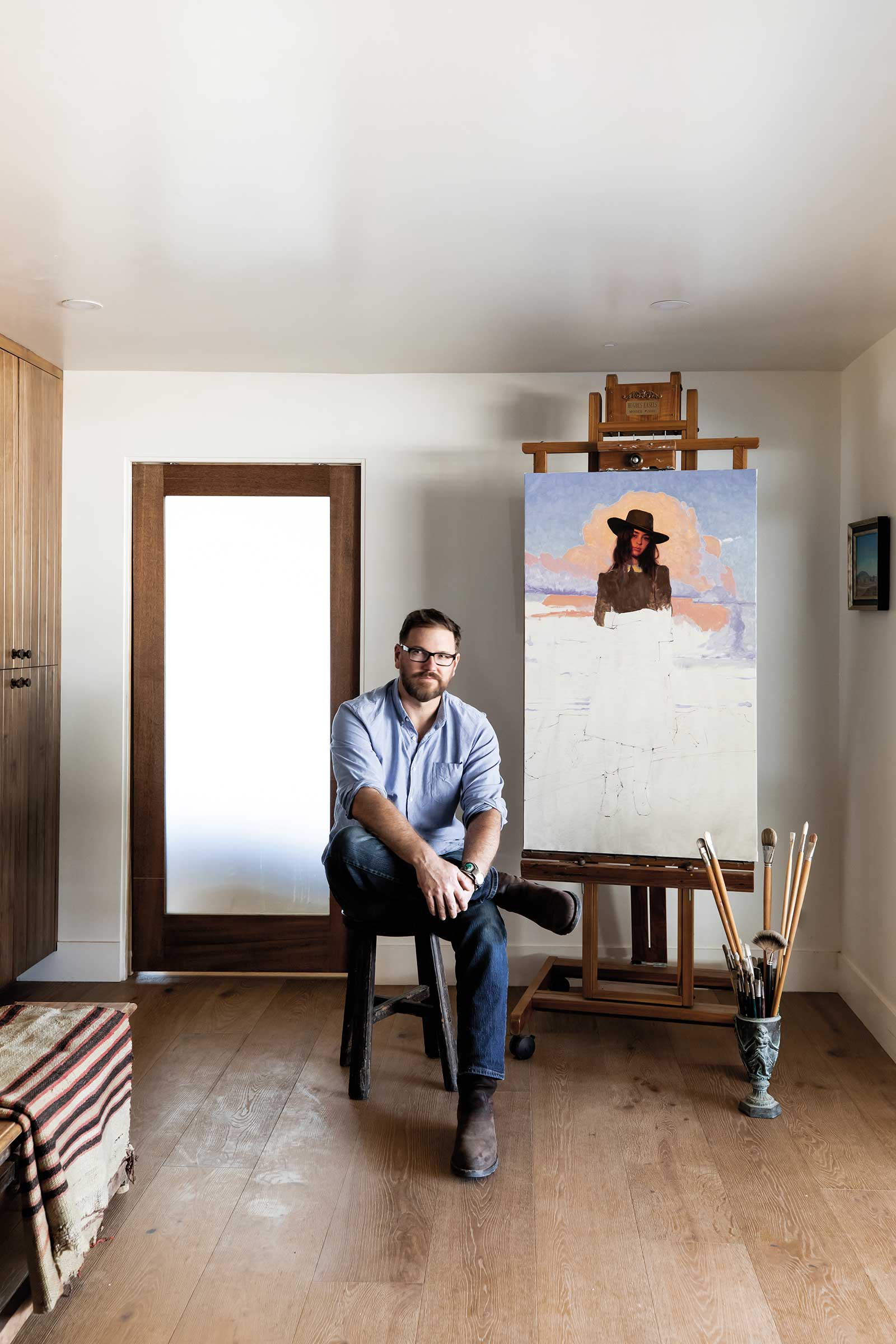 Jeremy with his work in progress, The Prospector’s Daughter.
Jeremy enjoys painting in plein air with his friends Glenn Dean, Josh Elliott and Logan Maxwell Hagege. “We’re long-time friends. It doesn’t feel like we’re going out and working. We’re guys hanging out. We’re spending time in the beautiful outdoors.”
The family has a cabin in the Eastern Sierras where he often sketches and paints and where, as a boy, he would observe his father painting and observe the subtleties of nature.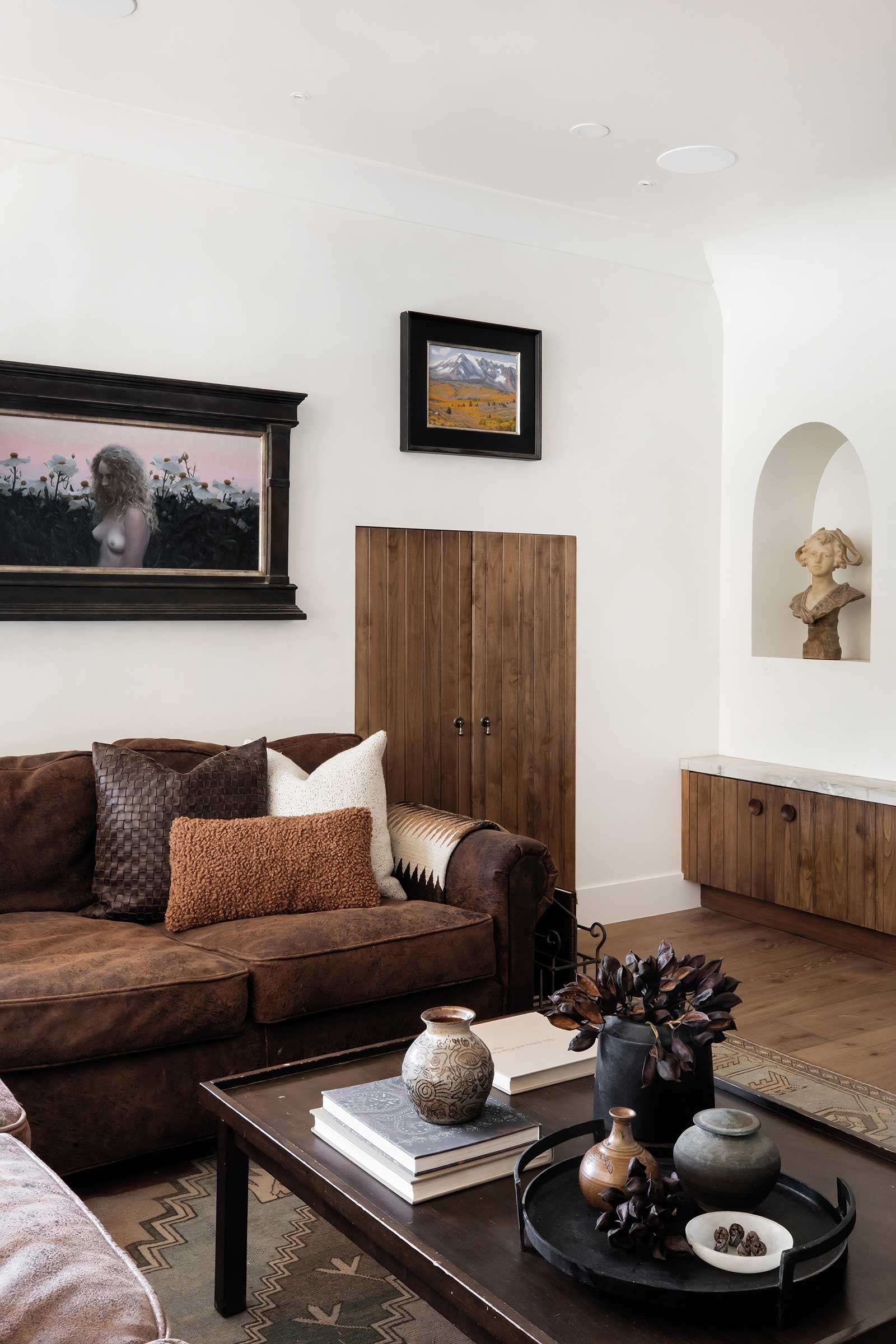 Jeremy’s painting Matilija Poppies hangs above the sofa. Above the door is Eastern Sierra Aspens by Charles Meunch. A 19th-century marble bust of a woman is in the nicho.
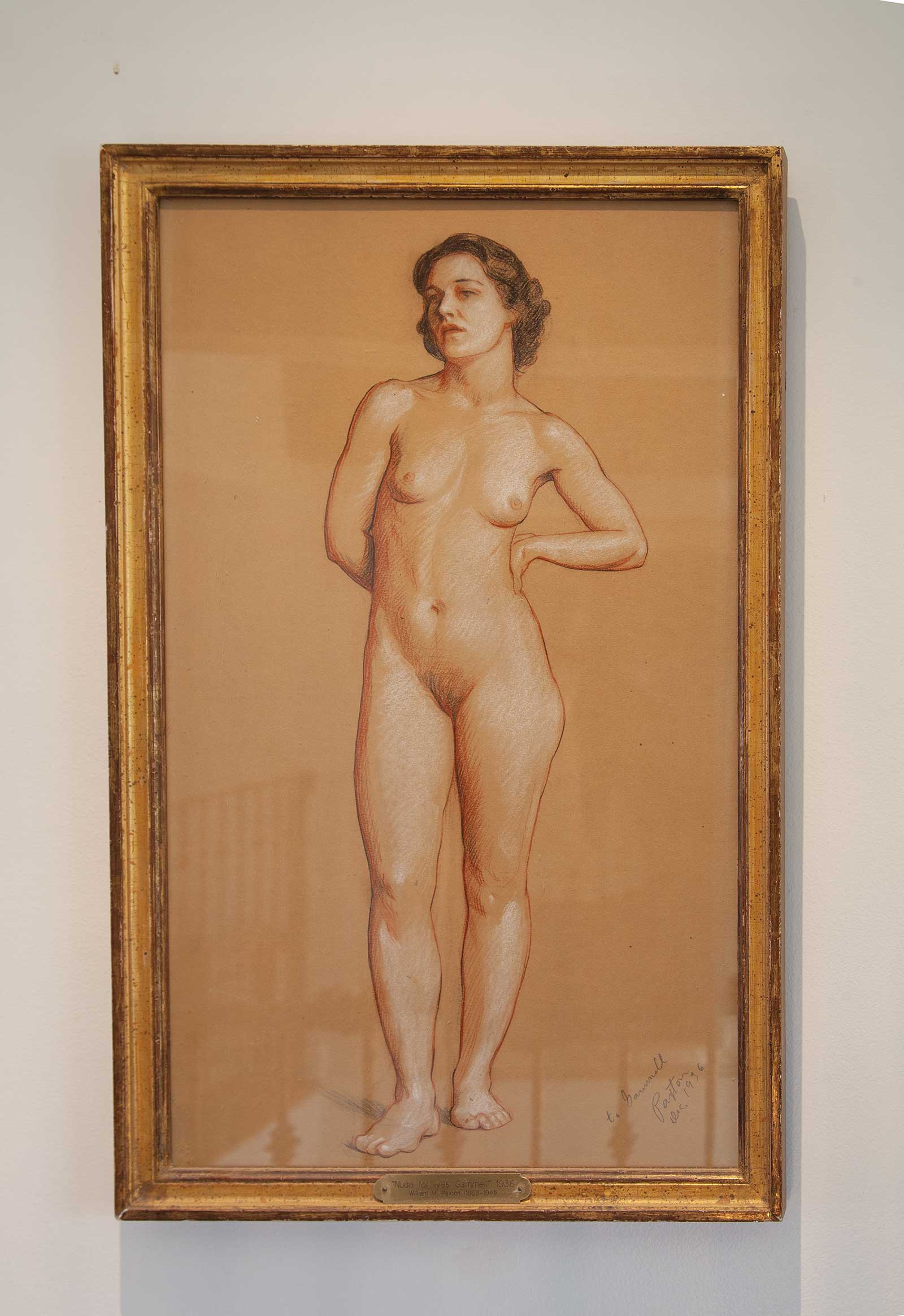 William McGregor Paxton (1869-1941), Nude for Ives Gammell, 1936
The Eastern Sierras were also a favorite of the California impressionist Edgar Payne (1883-1947) who wrote, “Though the painter may have the greatest possible talent, excellent training, and the most noble ideas or concepts, he is dependent to a great extent upon Nature. To her he must always go to for ideas to be translated.” He also commented, “The pleasure derived from viewing the achievements of others, coupled with a true appreciation of nature, sharpens the desire to express pictorially.”
The love of nature came early and, as a student at California Art Institute, he began to collect works by other artists at studio sales. For a while, he collected 18th- and 19th-century figure and landscape drawings.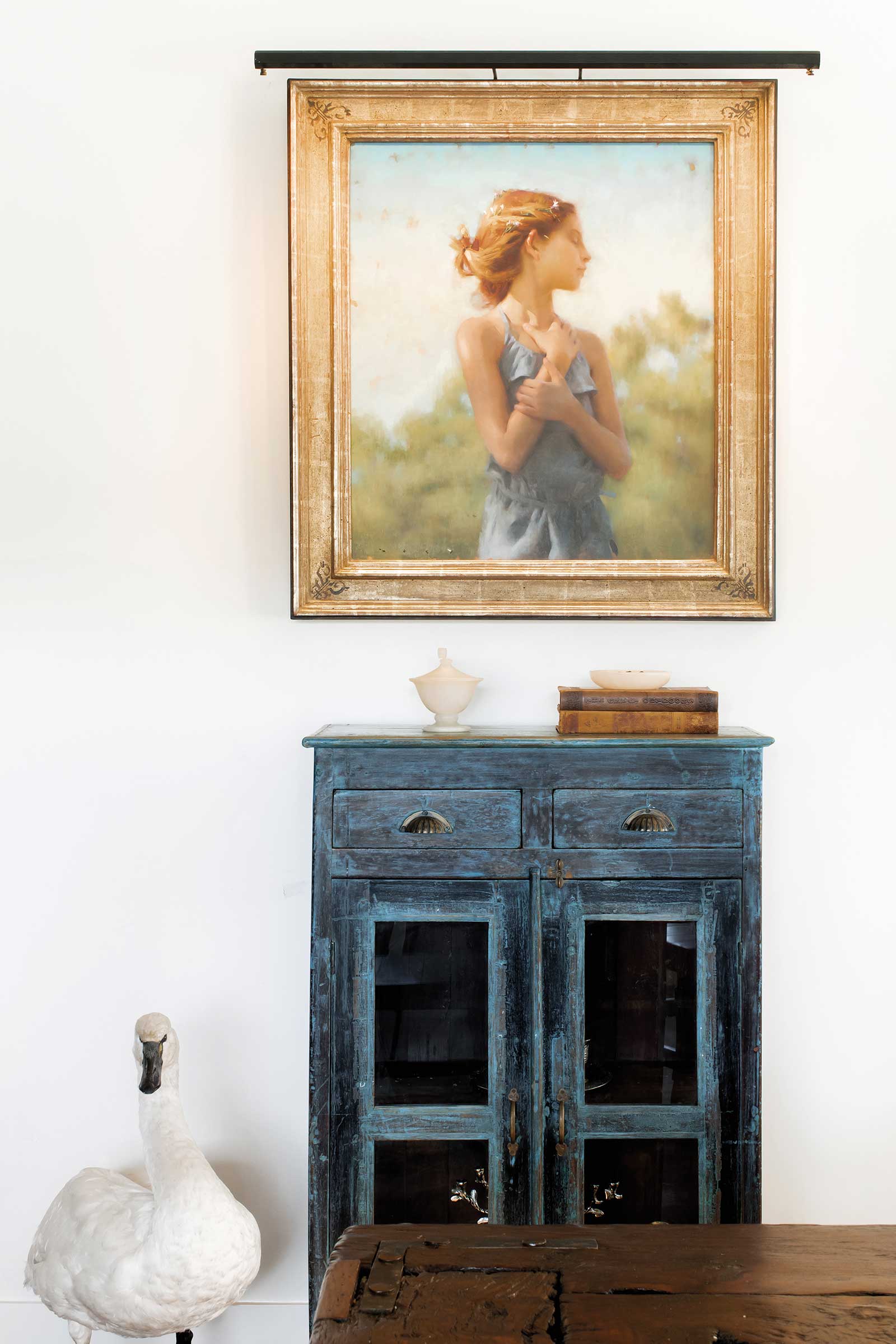 Young Girl by Joseph Todorovitch hangs above the cabinet.
“I could find them on the Internet,” he explains, “and they were affordable. They’re amazing works of art. I enjoy the history behind them and their technical virtuosity. When I know what atelier they come from I fantasize about who the artist teaching the class was. That period of history was a major influence on me. It is the coolest thing to have an actual drawing to hold in your hand.
“I wasn’t looking at contemporary artists. I was obsessed by that period of history.”
On his first trip to Europe he saw an exhibition of the French naturalist painter Émile Friant (1863-1932). “It blew me away,” he remarks. A number of years later he searched on the Internet and now owns a male figure painting by Friant.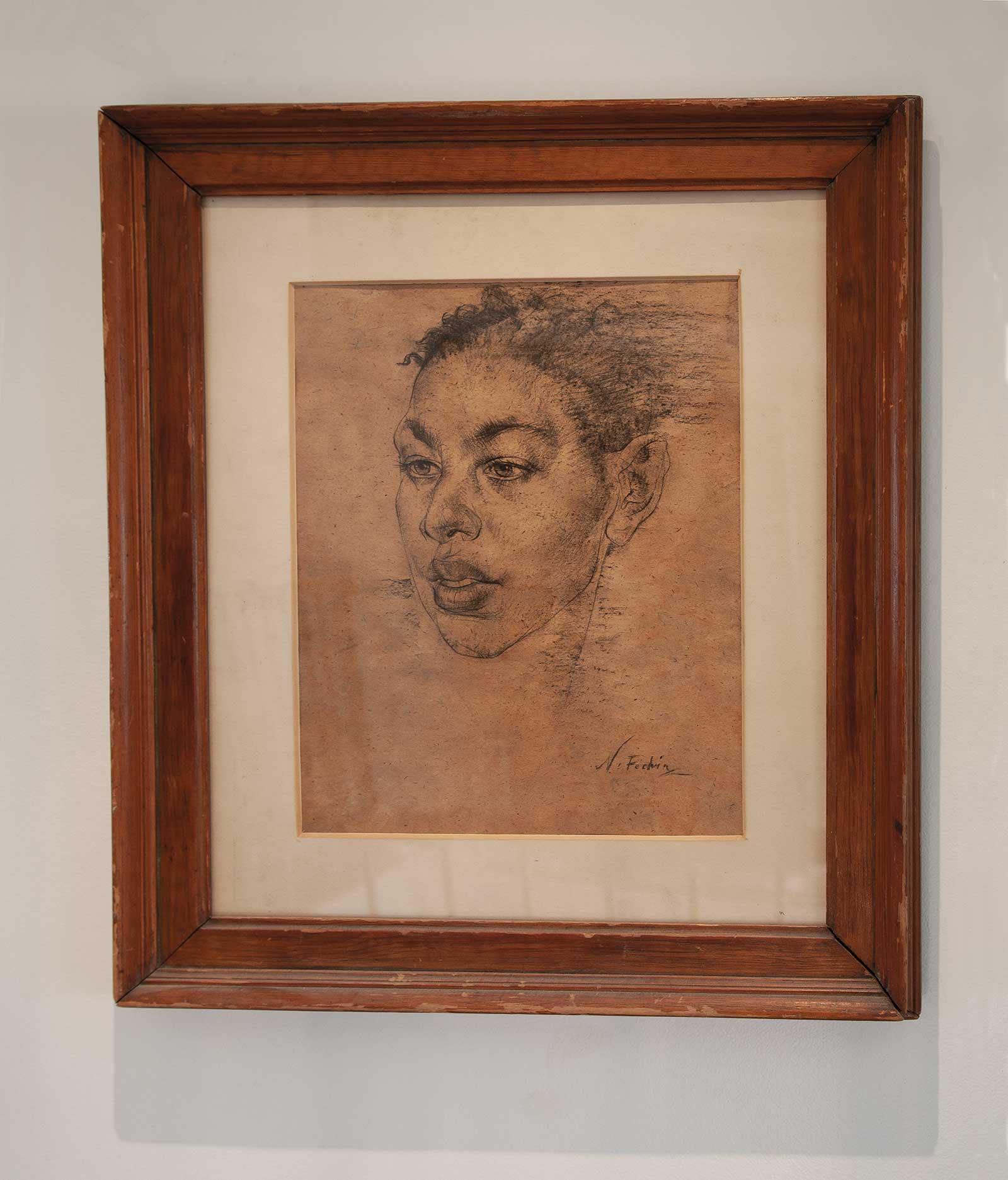 Nicolai Fechin (1881-1955), Indian Boy
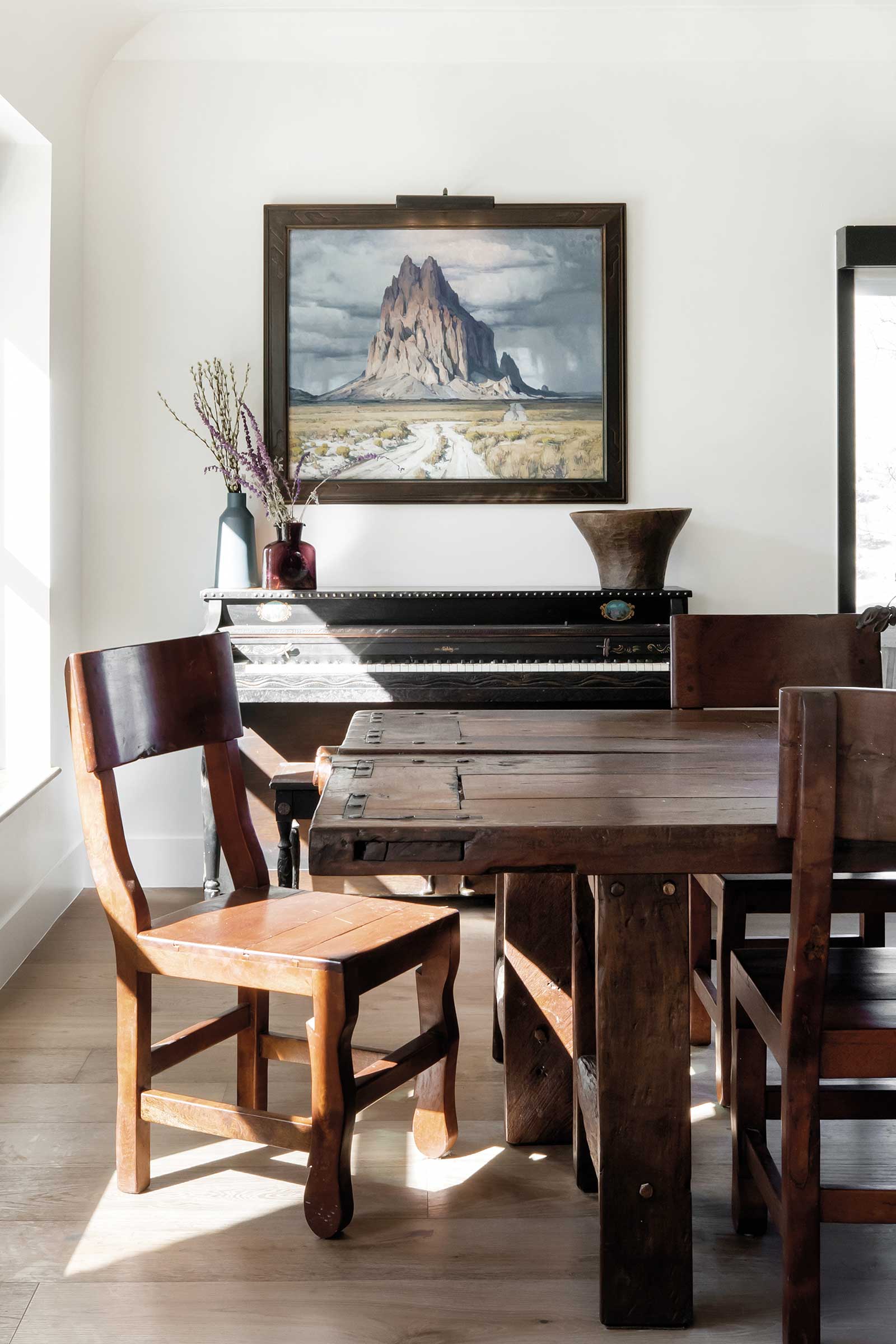 Hanging above the piano in the dining room is Josh Elliott’s Ship in a Storm.
In the entry there is an etching by Anders Zorn (1860-1920) and an ink drawing by Charles Sprague Pearce (1851-1914).
Also among his earlier pieces is a drawing by William McGregor Paxton (1869-1941). Paxton was a prominent Boston painter who studied with Jean-Léon Gérôme at the École des Beaux-Arts in Paris. His drawing of a female nude is endorsed to his apprentice, R.H. Ives Gammell (1883-1981) who was also an influential artist and teacher in Boston.
Among the contemporary paintings in the collection is one of a Young Girl by Joseph Todorovitch. “I’ve known him for a while. We saw this painting at a show and my wife bought it for me as a present. I love the life in his soft edges that make the figure appear to be moving.”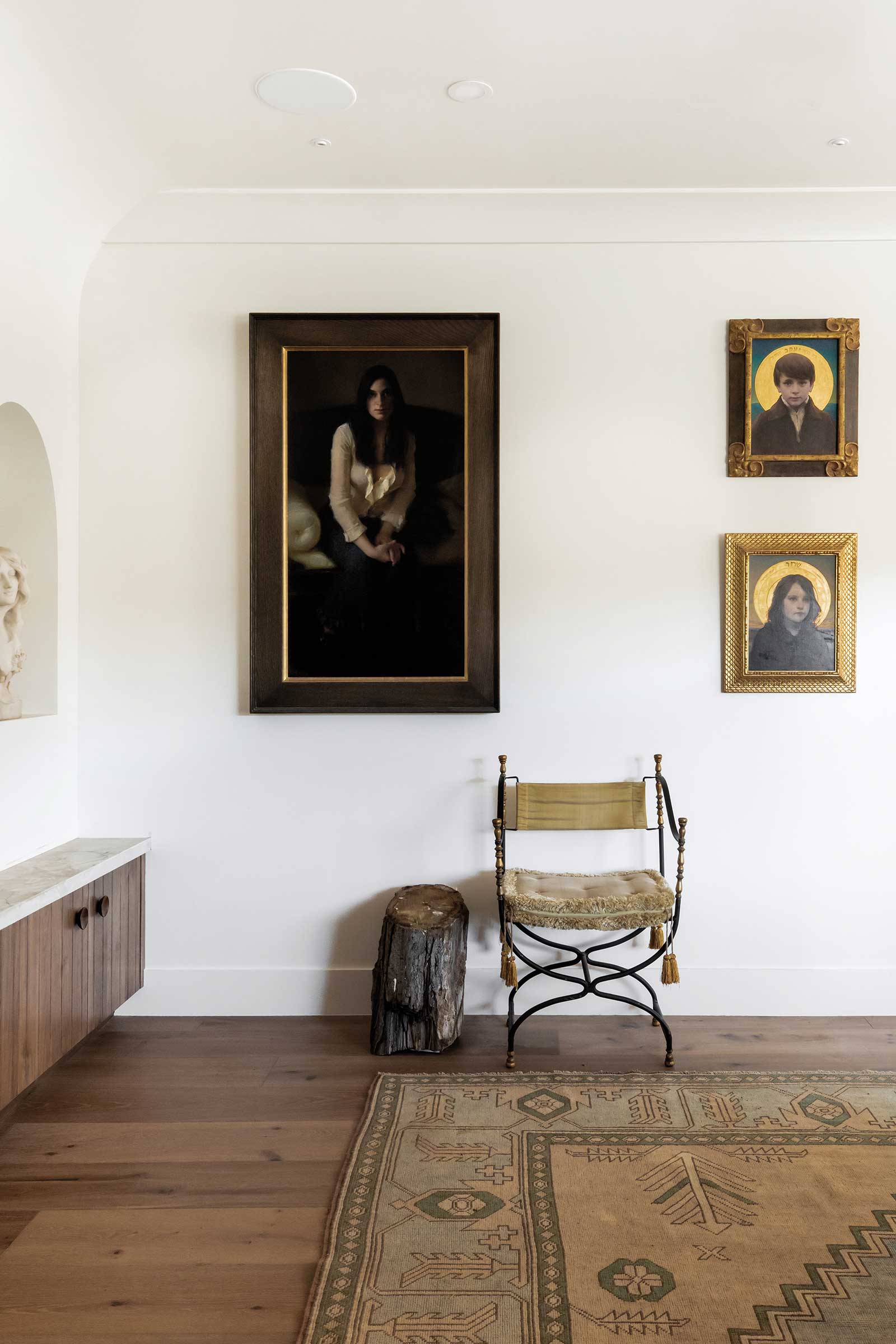 Jeremy’s portrait Danielle and Hobie hangs next to his portraits of two of their children, Jacob and Skylar.
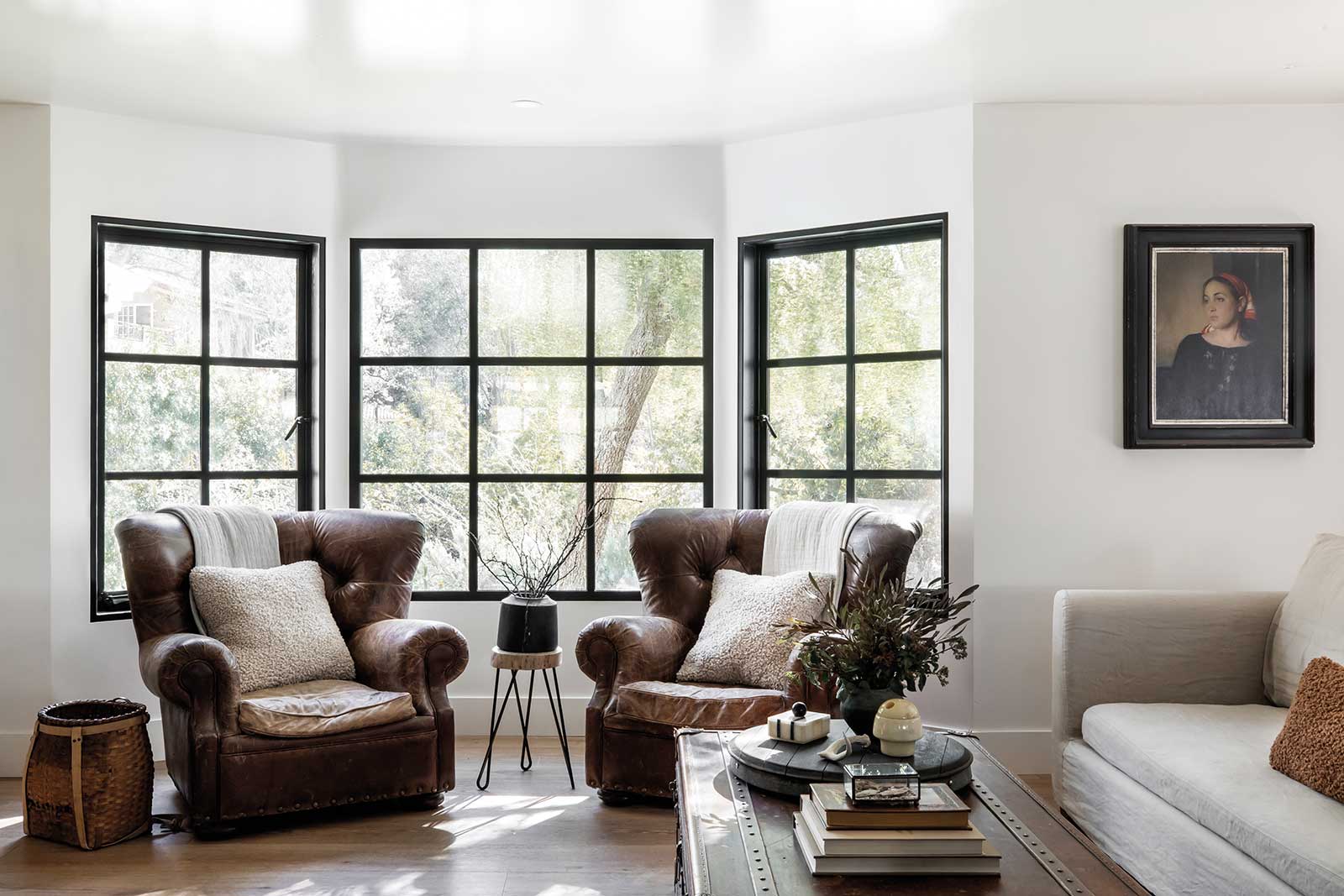 Jeremy’s Portrait of Danielle hangs to the right of the bay window.
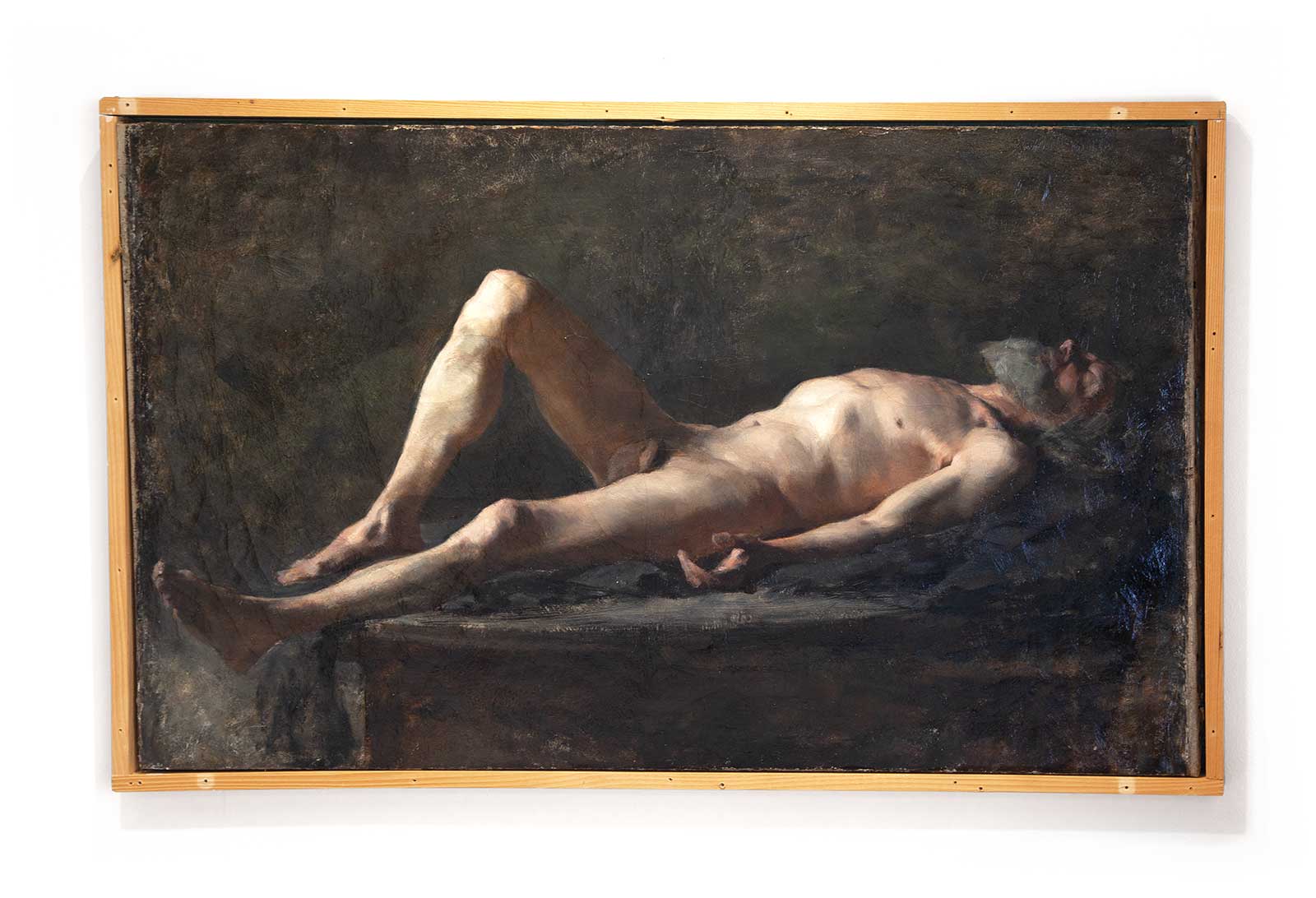 Émile Friant (1863-1932), Male Figure
In the dining room and visible from the entry is Josh Elliott’s Ship in a Storm, a painting of Shiprock on the Navajo Nation in northern New Mexico. “I’m familiar with Shiprock and have painted it before. It’s interesting to see another artist paint it in a different way. Josh has painted a subtle cool light on the top of the rock.”
Many of Jeremy’s own paintings hang on the wall before they go out to shows and galleries. The Prospector’s Daughter was a work in progress when the photographs for this article were taken. It later sold at the Prix de West at the National Cowboy & Western Heritage Museum in Oklahoma City, Oklahoma. —
Powered by Froala Editor