Frederic Remington is one of the most recognizable names in Western art, but his career was cut short in 1909 when he died of appendicitis at the age of 48. Night & Day: Frederic Remington’s Final Decade at the Sid Richardson Museum spotlights Remington’s last years and tells the story of his evolving ambitions. 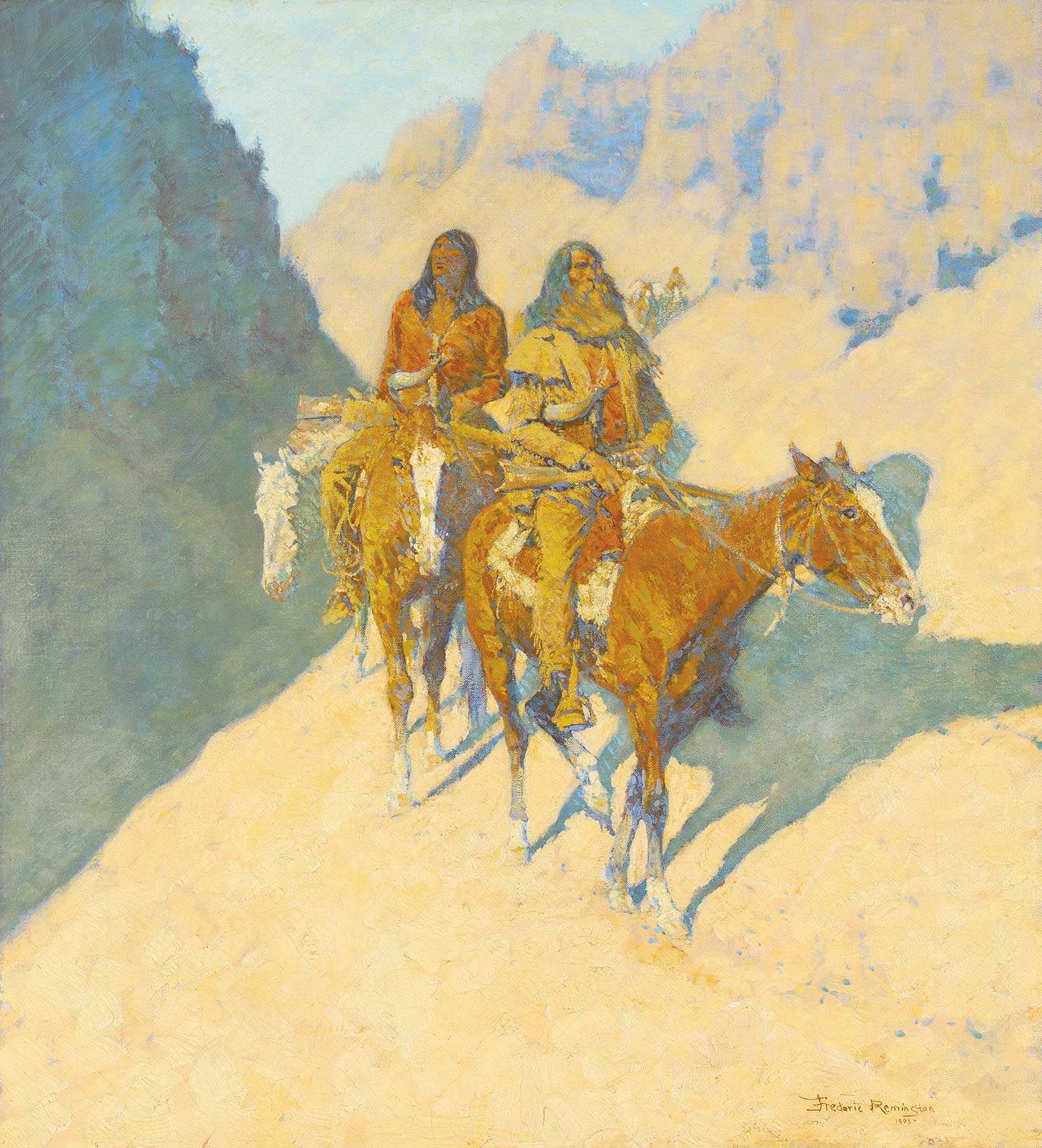 The Unknown Explorers, 1908, oil on canvas. Sid Richardson Museum, 1943.1.3.41.
Though Remington started out as an illustrator, at the turn of the century, he started to make a conscious effort to reshape his artistic image. “He started sculpting in 1895 and around 1900, he started to paint his nocturnes,” says Scott Winterrowd, director of the museum. “In his final decade, he really moves toward an impressionist-style brushwork.”
Remington was so intentional about his changing style that he destroyed dozens of his completed paintings because they no longer fit the aesthetic of what he was trying to accomplish. In his journals, he even wrote a list titled “Paintings which I burned up,” and detailed 28 works, three of which he later repainted to meet his new standards. 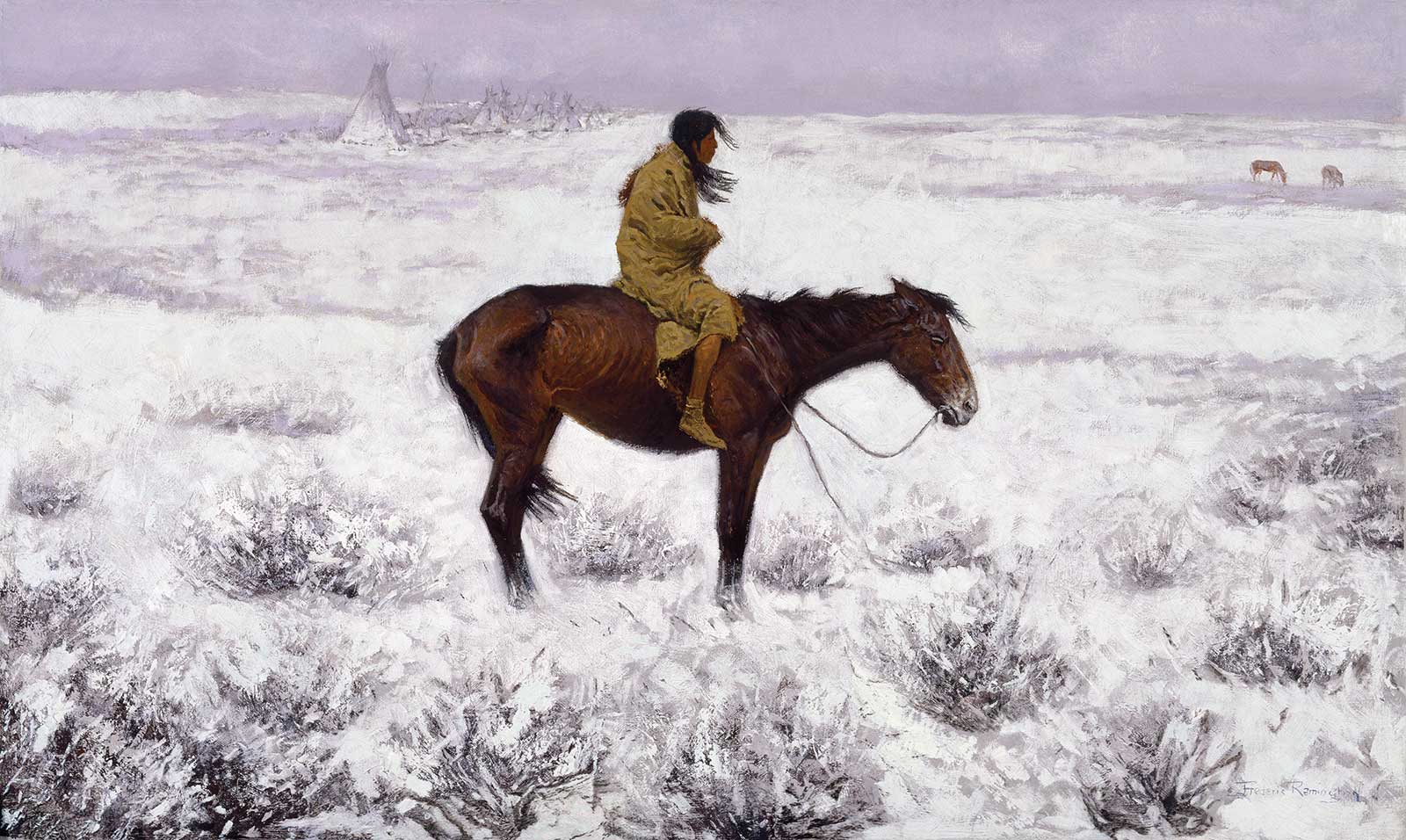 The Herd Boy, ca. 1905, oil on canvas. The Museum of Fine Arts, Houston, The Hogg Brothers Collection, gift of Miss Ima Hogg, 43.24, Photo Copyright: Photograph © The Museum of Fine Arts, Houston; Thomas R. DuBrock.
“We can actually see some of these paintings because he had a contract with Collier’s and the paintings were reproduced before he burned them,” Winterrowd says. Some of these reproductions will be included in the exhibition, displayed near similar surviving works, demonstrating how Remington would revisit the same subject time and again. One print of a destroyed 1905 painting called Drifting Before the Storm portrays a cowboy in a blizzard, and viewers can draw a connection between a surviving snowscape, The Herd Boy, and a bronze sculpture called The Norther. 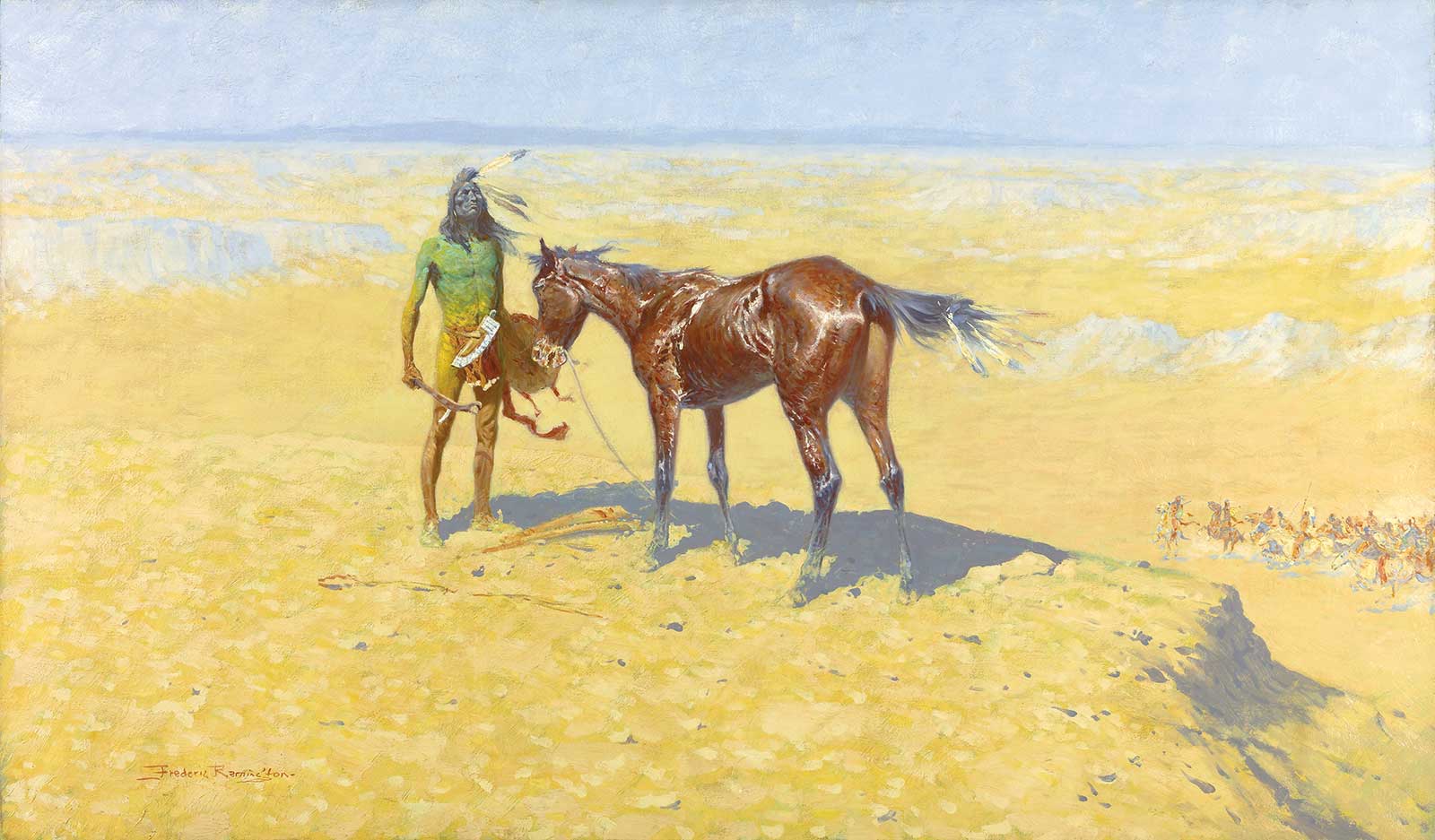 Ridden Down, 1905-1906, oil on canvas. Amon Carter Museum of American Art, Fort Worth, 1961.224.
When visitors walk through the exhibition, one thing they will notice is how the color palette changes become more nuanced. “He develops two dominant color palettes that he alternates back and forth between throughout the decade,” Winterrowd says. “By the time you get to his last years, he has become a much more thoughtful painter in terms of paint application. The earlier paintings, you see these great fields of yellow with lavender shadows, but when you get to the end, it’s a dapple of yellows and violets and blues.” 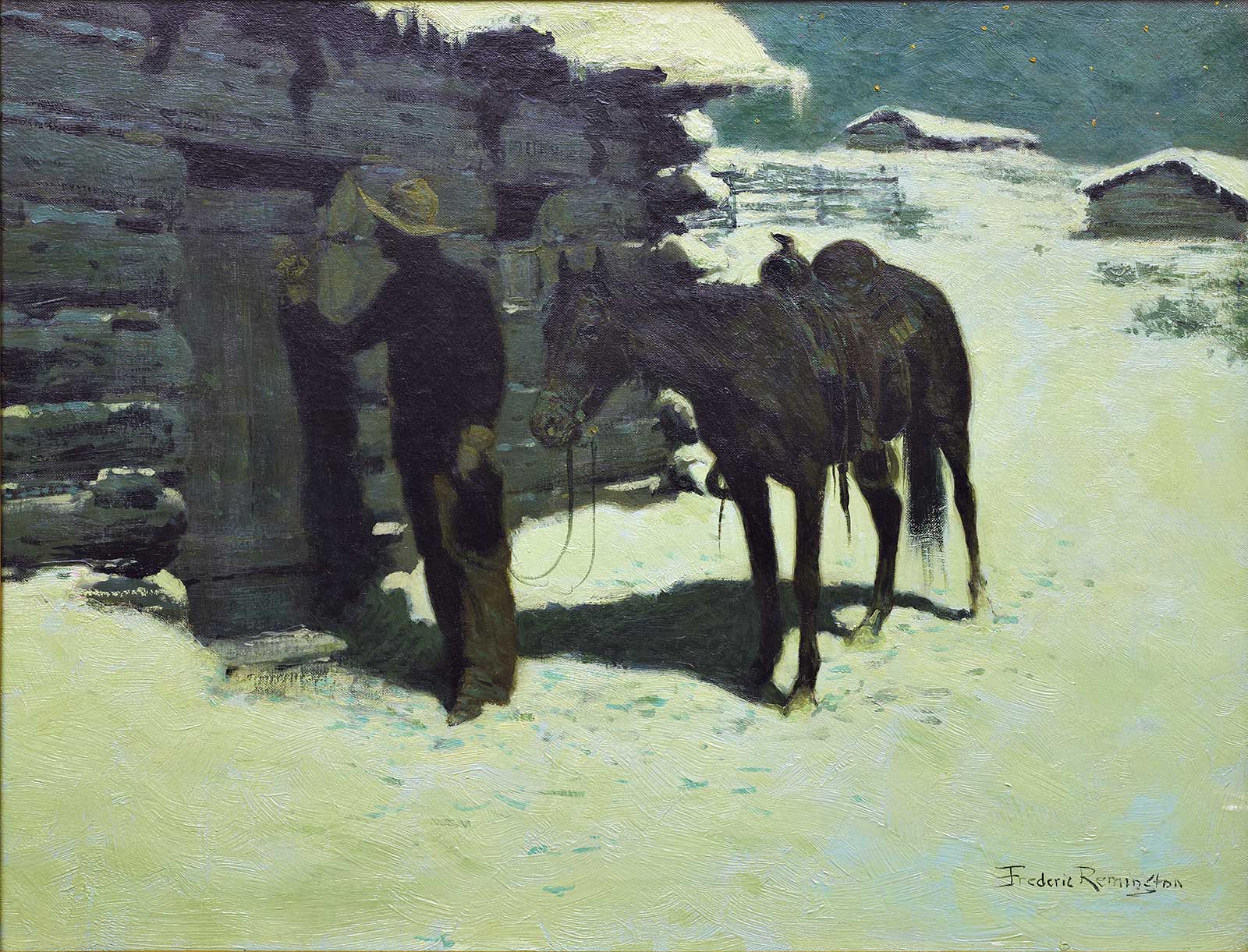 The Belated Traveler, 1905-1906, oil on canvas. Trevor Rees-Jones Collection.In some of the paintings, including the nocturne The Belated Traveler, viewers can see how Remington’s upbringing in upstate New York bleed into his Western works, with hints of the lumber camps common in the Adirondacks and wide expanses of snow.
“If you read what the critics were saying about his art, they were really noticing the change,” Winterrowd explains. “He obviously had no idea that he was going to pass away at 48, and it’s always been speculated that he might have become more of a landscape painter had he lived, but I don’t think he would have ever completely abandoned his Western subject matter.”
Night & Day will remain on view at the Sid Richardson Museum until April 23. —
Night & Day: Frederic Remington’s Final Decade
Through April 23, 2023
Sid Richardson Museum,
309 Main Street, Fort Worth, TX 76102
(817) 332-6554, www.sidrichardsonmuseum.org
Powered by Froala Editor