The entire history of the West can be experienced by contemporary visitors—from 1.8-billion-year-old strata in the Grand Canyon, to Ancestral Puebloan dwellings, to modern life and its intrusions on the landscape.
Canyon de Chelly lies within the Navajo Nation near Chinle, Arizona. It has been inhabited for around 5,000 years, and its cliff dwellings were built by Ancestral Puebloans around 1060 in sandstone that is more than 200 million years old. The prominent streaks on the cliff faces are called desert varnish and are made up of deposits of iron and manganese oxide. The deposit is also the material that ancient petroglyphs are scratched into.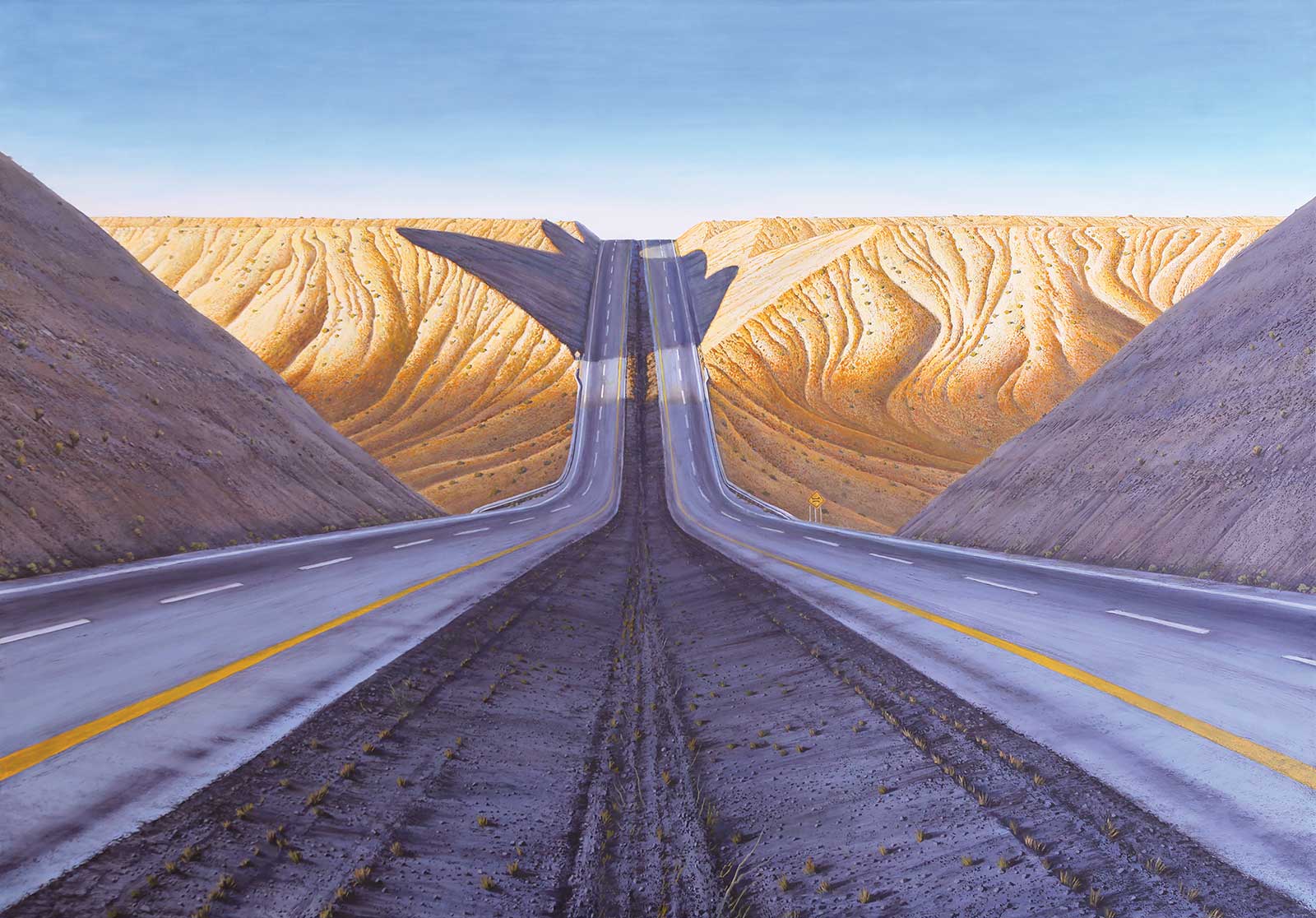 LewAllen Galleries, Road Cut, 1986, oil on canvas, 60 x 86”, by Woody Gwyn.
The mythologist Joseph Campbell called Canyon de Chelly “the most sacred place on Earth.” Although the cliff dwellings were abandoned around 1300, Navajo families continue to tend herds and orchards there.
Robert Peters was brought up in Arizona and explored the Southwest hiking, fishing and hunting. During a successful career in commercial art, he and his wife raised show horses. He began painting the horses and Western landscapes and soon phased out of commercial art to paint the West. He says, “If something is in one of my paintings, I’ve been there and experienced it.” His experience of the landscape has inspired him to paint the atmosphere of a place, controlling values and recording details such as the gnarled shrubs and the desert varnish in his painting Secrets in Stone.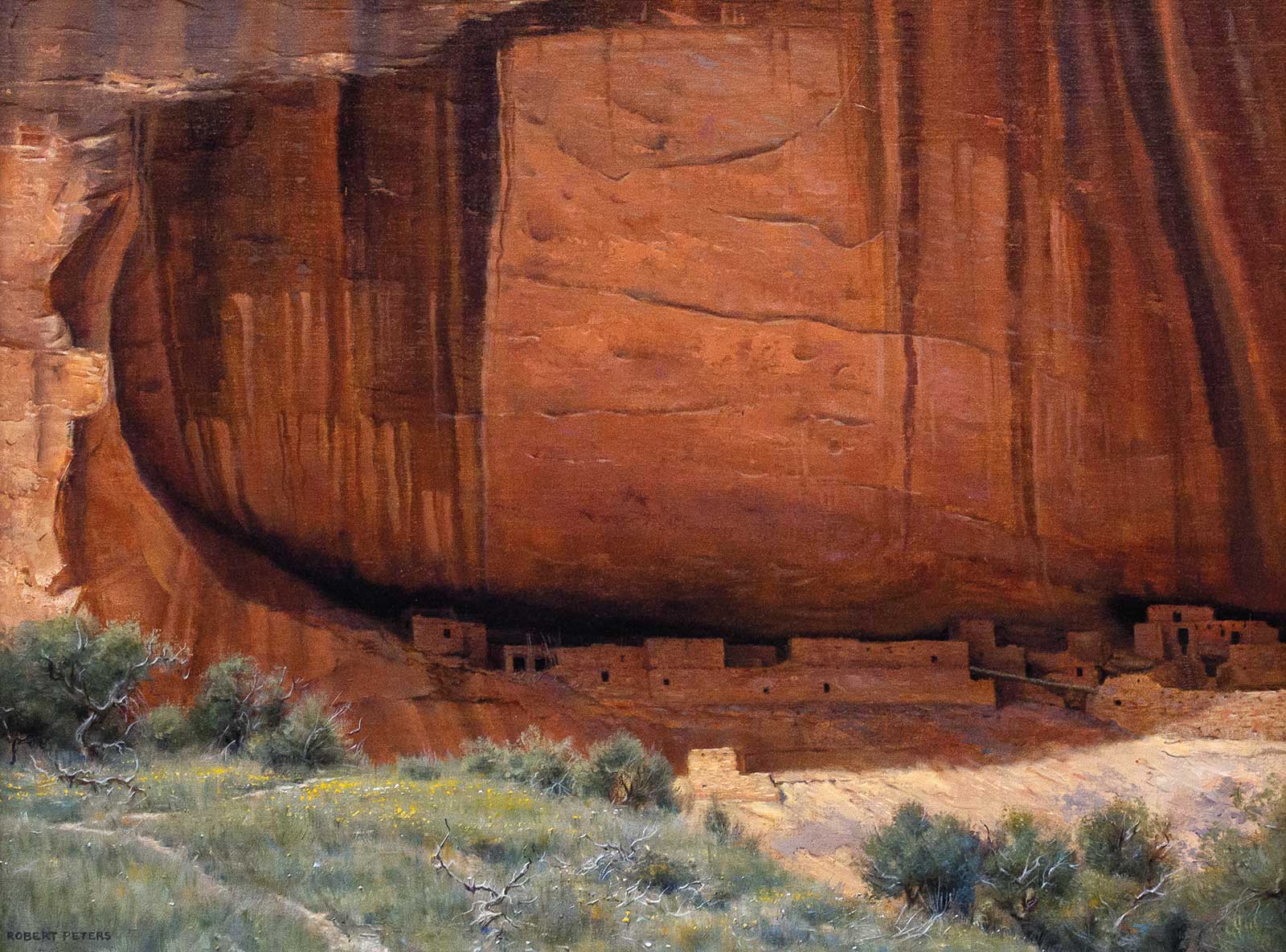 Broadmoor Galleries, Secrets in Stone, oil on linen, 31¾ x 37¾", by Robert PetersThe Palm Springs area of Southern California is in the hot desert surrounded by snow-capped mountains. It was first occupied by the Cahuilla people more than 2,000 years ago. In the early 1900s, it began to become the place for people seeking a healthful dry climate. Later, in the 1920s, Hollywood stars escaping the hustle of Los Angeles enlisted the best modernist architects to build their homes there. Palm Springs is now a mecca for mid-century modernist architecture.
Ed Lister was educated in England and came to California in the 1970s. He was lead scenic designer for several important theaters painted backdrops and installations for television. Moving to the Santa Barbara area in the 1990s he painted landscapes and seascapes. His fascination with water has led him to paint swimmers underwater, almost becoming one with it. In a series of paintings of Palm Springs, he paints pools in the desert with the churning water sometimes echoing the outline of the mountains in the distance. In Palm Springs Series #2, the water is only suggested by the thin line of a pool’s edge and handrails of a ladder. The landscape itself, from the mountains and the vast clear sky to the desert palm trees, is the primary subject.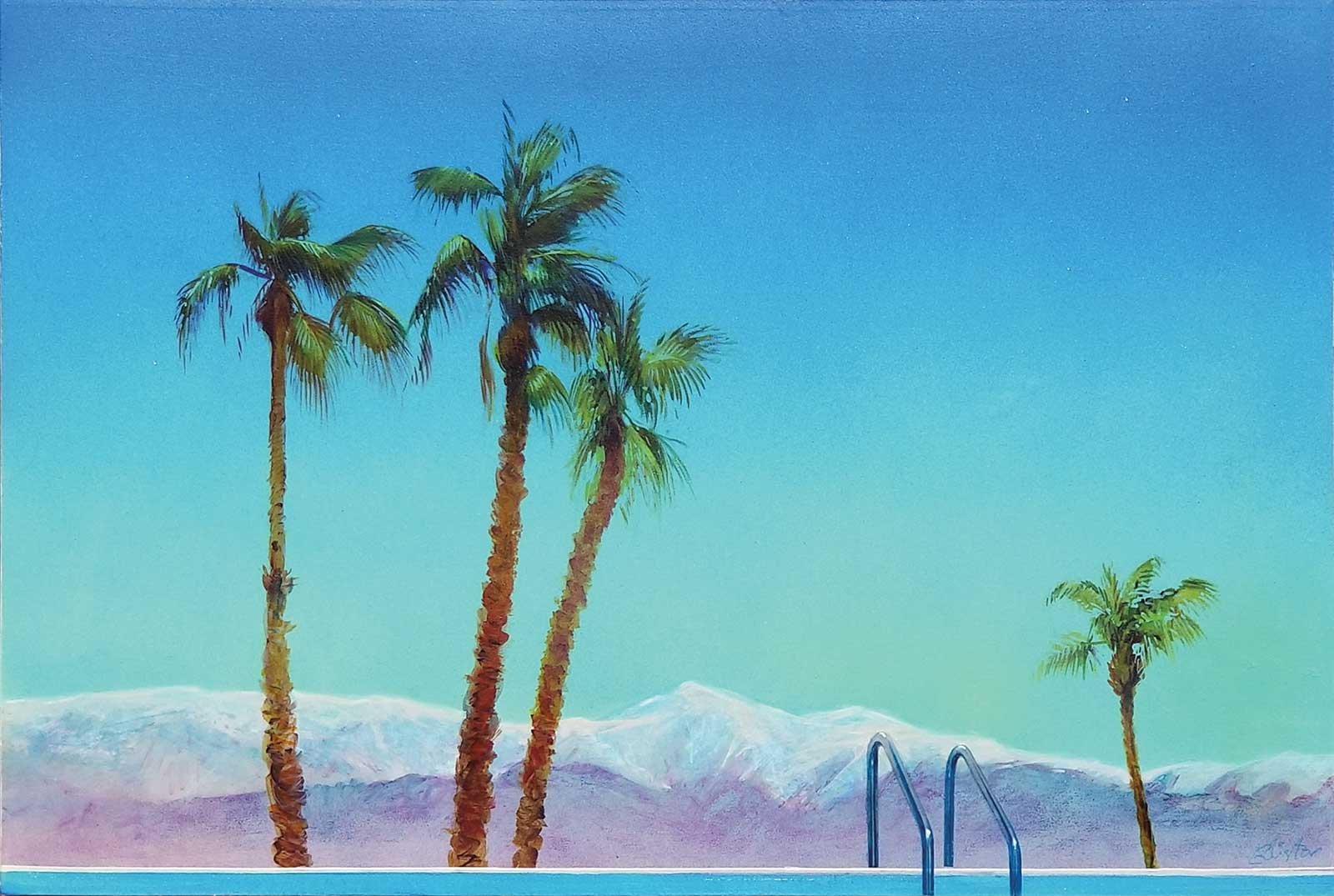 Ed Lister, Palm Springs Series #2, acrylic on canvas, 32 x 48"
While Lister may suggest that man’s impact on the landscape is minimal, Woody Gwyn dramatizes it in his 5-by-8-foot canvas, Road Cut. Gwyn lives on the edge of the Galisteo Basin in Northern New Mexico, an area of great archaeological importance, inhabited for nearly 9,000 years. Gwyn, whose own home dates back to 1703, finds the landscape “breathtaking.”
He paints the landscape in a way that invites recognition or startles us into seeing it in a new way. He says, “We know that the mountains are finite but they put us in mind of infinity.” He recalls a collector who saw one of his paintings of a road cut and remarking “You showed me there is still some beauty there.”
Road Cut depicts a relentlessly symmetrical intrusion into the living and complex landscape, cut through and built over forms that will continue to evolve. The sinuous lines of erosion contrast with the rectilinearity of the highway and the precisions of the road cuts.
Gwyn often paints solitary places, inviting the viewer to expand into them both through their experience of his paintings and through their encounters with the vastness of nature. 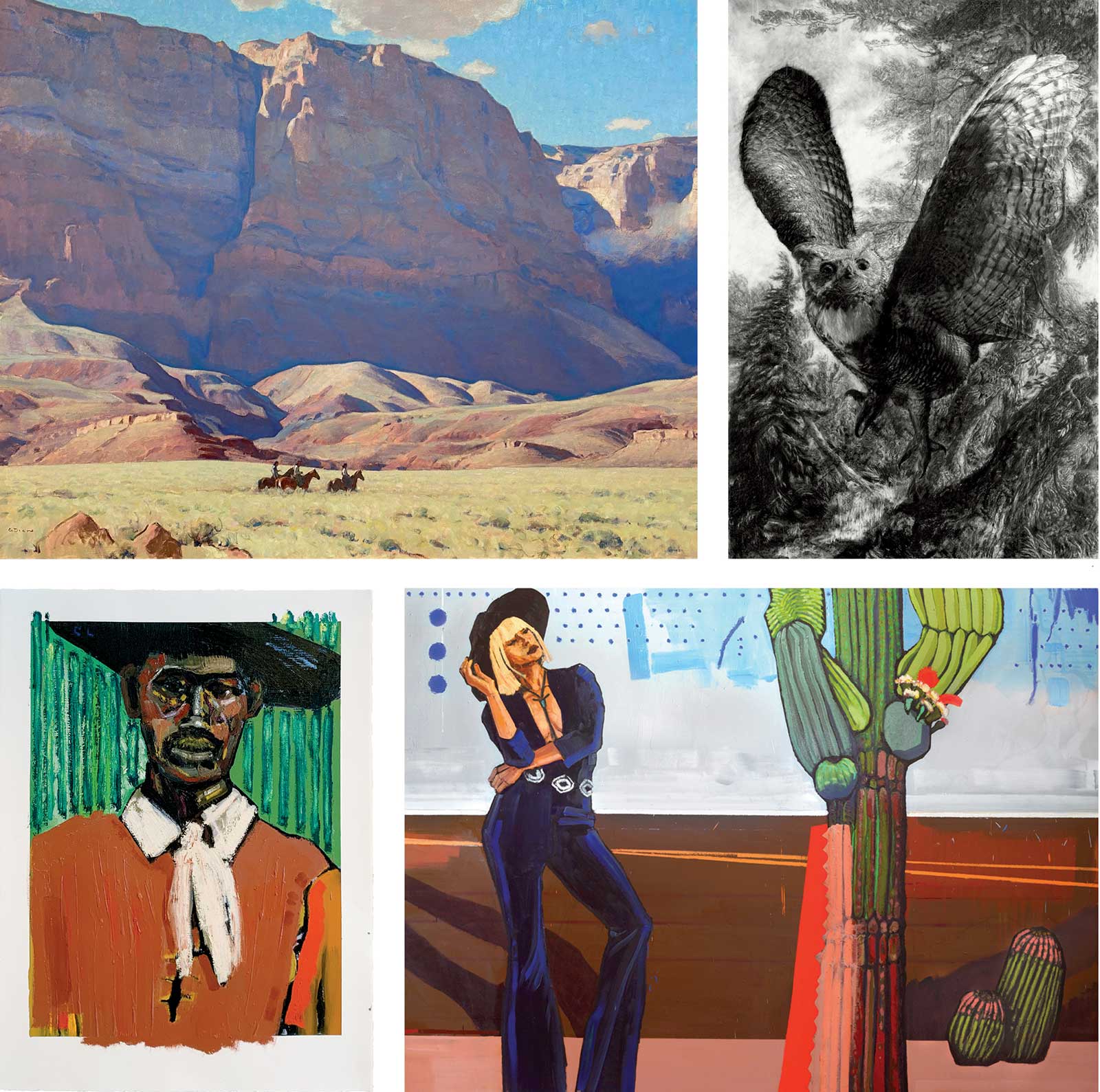 Top: Maxwell Alexander Gallery, Cliff Dwellers, oil, 48 x 60”, by Glenn Dean; RJD Gallery, Kingston (Great Grey Owl), charcoal and water on deep mounted canvas, 55 x 35”, by Tyler Vouros. Bottom: Connor Liljestrom, Thousand 101, oil, oil stick and oil pastel on paper, 36 x 27”; Connor Liljestrom, Am I Such Poor Company?, oil, oil stick and oil pastel on canvas, 84 x 114”
As you continue reading our Contemporary West special section, please enjoy the work of these artists and galleries as they push the boundaries of what Western art can be.
One of the leading forces behind contemporary Western art is Los Angeles-based gallery Maxwell Alexander Gallery, which just recently celebrated 10 years of bringing unique, at times genre-bending, artwork into Western art. One of the leaders of the movement is Logan Maxwell Hagege, who is constantly balancing two-dimensional backgrounds with more three-dimensional figures. It’s the interplay of the abstract, simple forms with the realistic representations—all of it beautifully colored and magnificently composed—that has made Hagege’s work popular with so many collectors all around Western art. Other gallery artists pushing the envelope include Howard Post, Glenn Dean, Eric Bowman, Kim Wiggins and many others. 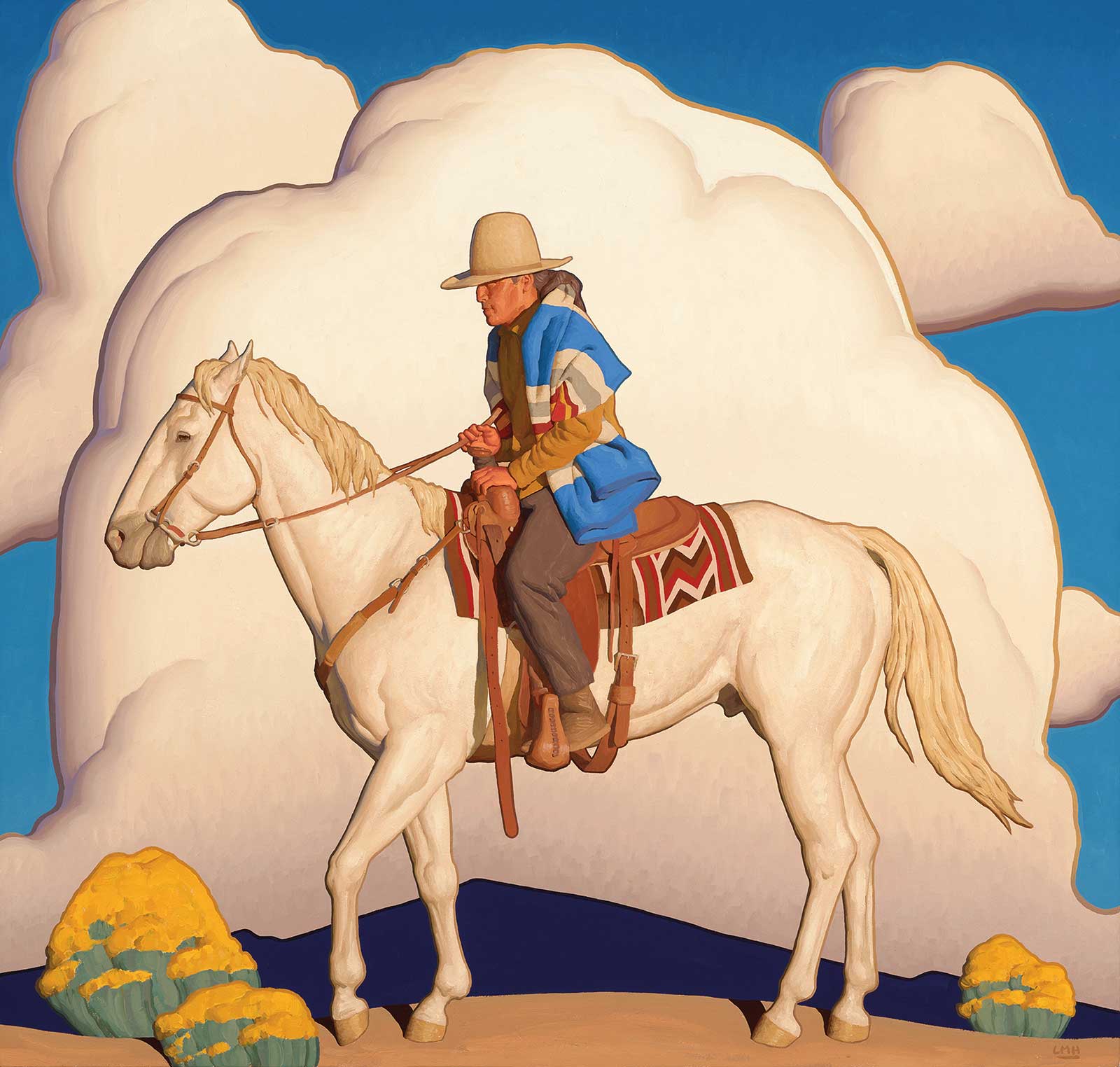 Maxwell Alexander Gallery, Drifting Blue, oil, 40 x 42", by Logan Maxwell Hagege
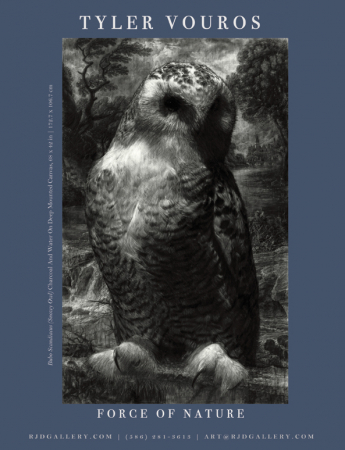
Another gallery that is exploring more contemporary realism, including more artwork within the Western genre, is RJD Gallery in Romeo, Michigan. One of the gallery’s rising stars is charcoal artist Tyler Vouros. His drawings are moody and shadowy images of birds against the wildness of nature. “Tyler Vouros is for the birds, in every way imaginable! His brilliant charcoal drawings of our feathered brethren highlight the importance of our natural environment and the bigger conversation of conservation and preserving wild spaces for wild things,” says gallery director Joi Jackson Perle. “Each feather, beak and claw are delicately rendered with an exacting eye and sure technique that is born of intimately knowing his subjects; birds he visits regularly at a rescue sanctuary in New Hampshire. His muses are magnificent raptors who are in some phase of rehabilitation at On the Wing, each with a distinct personality. Tyler’s birds are a force of nature that remind us of the magnificent world right outside our door.”
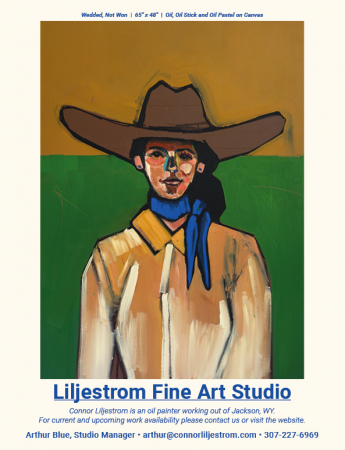
Connor Liljestrom, known for his abstracted and modern Western figures, is a rising force and is quickly building a reputation as an artist worth collecting. Working in a loose painting style, Liljestrom’s paint is active and alive, and it conveys the excitement of the people in the West. “Working with icons, lore, figures, stories and symbols gives a lot of depth and intrigue to the work, while also providing a platform to experiment with my medium—colors, line and paint,” he says. “Grounded in a Western upbringing, it is great to participate in Western culture through art. Creating work in the West that is about the West and often remains in the West is a compelling cultural wheel to participate in.”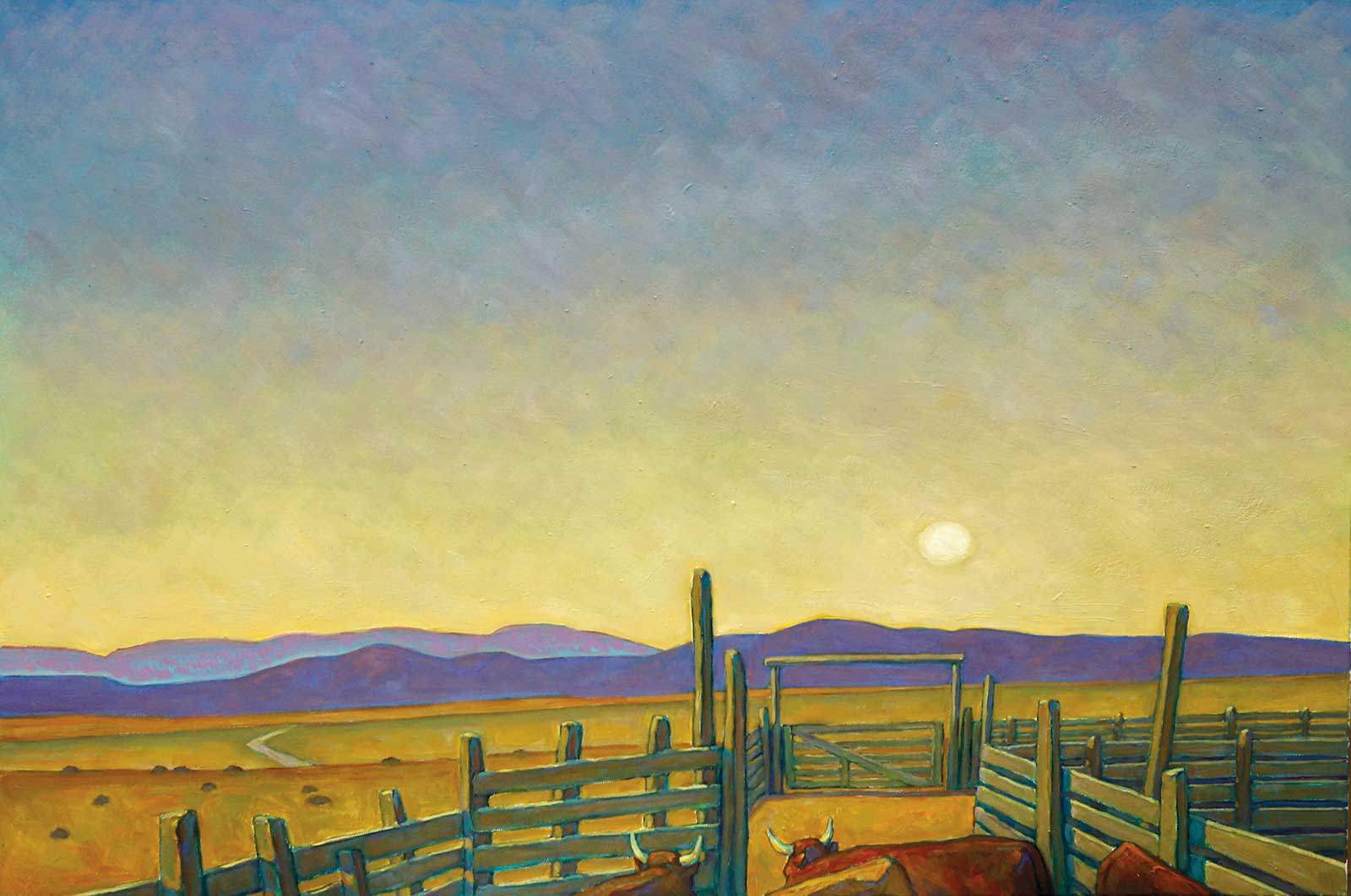 Maxwell Alexander Gallery, Last to Ship, oil on canvas, 24 x 36", by Howard Post
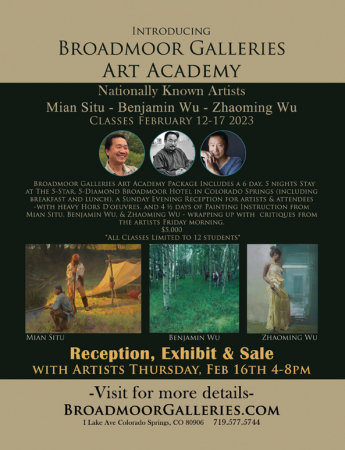
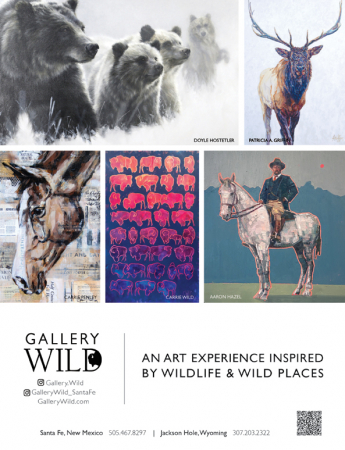
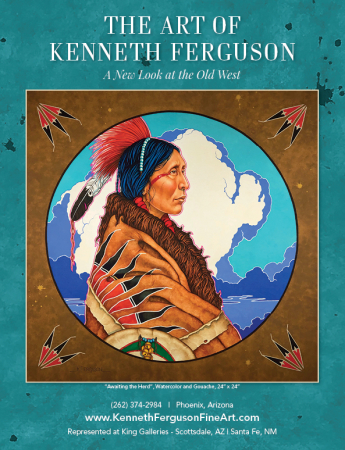
With locations in both Jackson Hole, Wyoming, and Santa Fe, New Mexico, Gallery Wild is in two great art destinations. Owned and operated by Jackson Hole-based wildlife painter Carrie Wild and her husband, wildlife photographer Jason Williams, Gallery Wild’s works and philosophy are inspired and directly influenced by thousands of hours in the field observing, studying and falling in love with all things wild. Its roster features established and emerging artists who offer a variety of mediums including both oil and acrylic paintings, bronze sculpture, mixed media and photography. Other artists represented include Carrie Penley, Amber Blazina, Patricia A. Griffin, Aaron Hazel, Doyle Hostetler, Silas Thompson and many others. “Gallery Wild artists take the idealistic subjects of the traditional American West and expand the concept into the realm of contemporary art using color, texture and non-traditional mediums to communicate their passion for their subjects,” Wild says.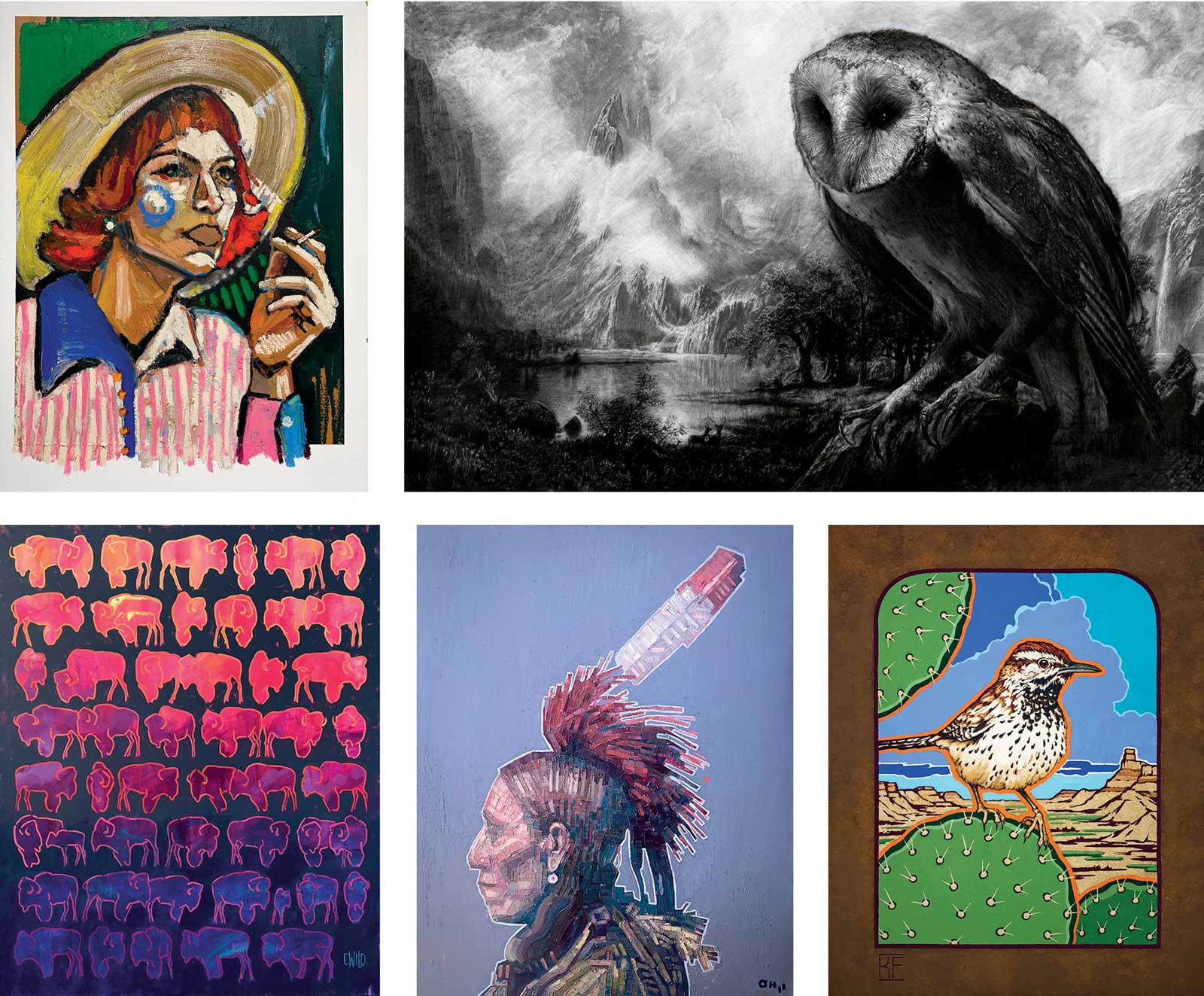 Top, from left: Connor Liljestrom, Thousand 128, oil, oil stick and oil pastel on paper, 30 x 22½”; RJD Gallery, Guthrie, charcoal and water on deep mounted canvas, 42 x 68”, by Tyler Vouros. Bottom from left: Gallery Wild, Rendezvous in Color Fifty One.0, acrylic and gold leaf on canvas, 60 x 48”, by Carrie Wild; Gallery Wild, Big Fox, oil on canvas, 60 x 48”, by Aaron Hazel; Kenneth Ferguson, Cactus Wren, watercolor and gouache, 10 x 8”Kenneth Ferguson is based in the Phoenix area and his work is filled with color and life. “Much of my work pertains to history and nature; often of the American West, and specifically, the people and animals that have made their home on the Great Plains. Through my paintings, I shake the dust off the past and present these traditional subject matters in a more vivid, contemporary way. My interest lies in the 19th century, but I paint it as a 21st-century artist,” he says. “The Western art world is seeing an influx of fresh perspectives as contemporary artists interested in the subject matter come on the scene. Consequently, this is a great time for intellectually curious collectors to broaden their horizons beyond traditional oil paintings and bronze sculptures. Whether it’s an unexpected take on composition, employing an atypical medium, or using humor to explore social and political issues, contemporary Western artists are creating really interesting, outside-the-box work. There’s so much out there for collectors of Western art to explore; I think this is an exciting time for the genre.”
 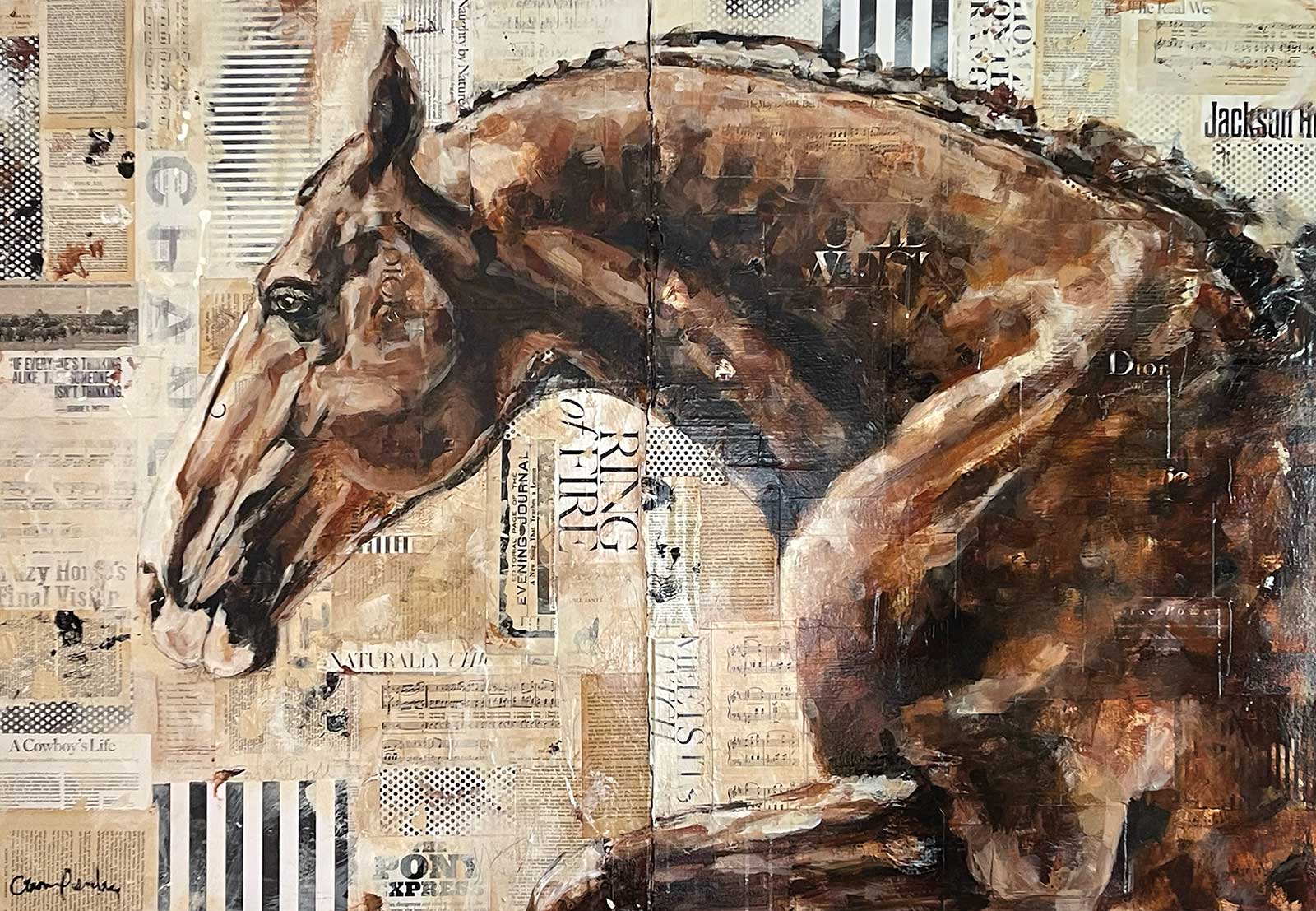 Gallery Wild, Naughty by Nature (diptych), acrylic and collage on canvas, 60 x 40", by Carrie Penley.
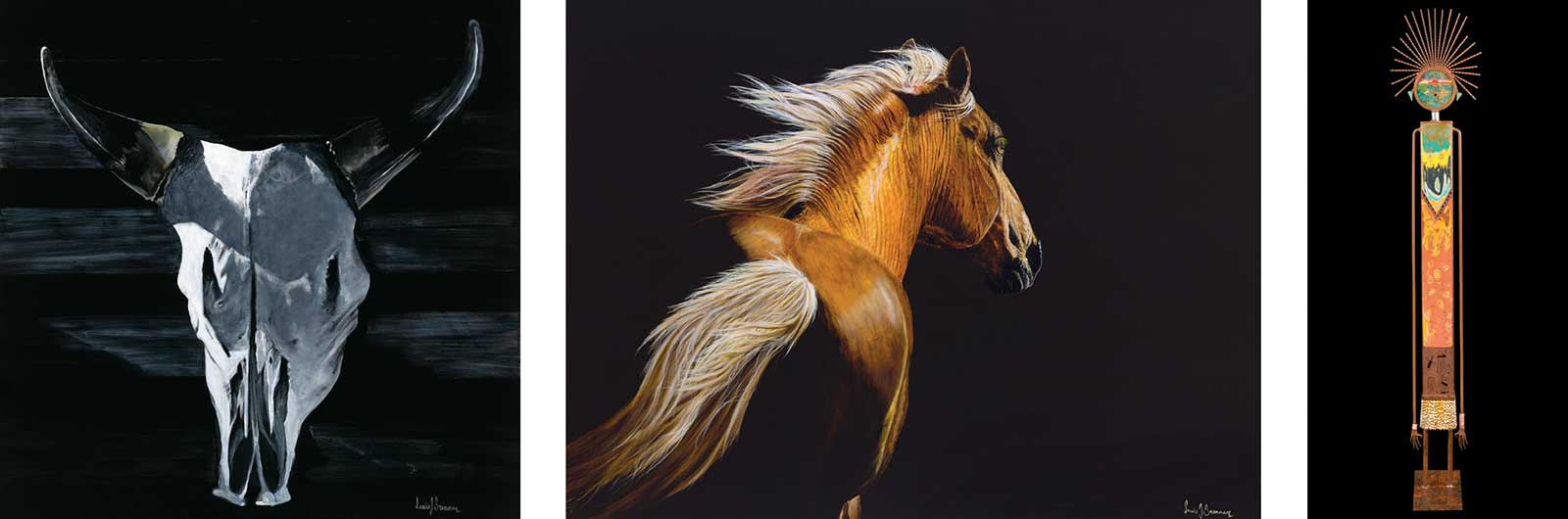 From left: Lew Brennan, Skull 3, oil, 48 x 48”; Lew Brennan, Sutter, oil, 36 x 48”; Chris Turri, Prosperity, patina on steel and copper, 64 x 12 x 11”
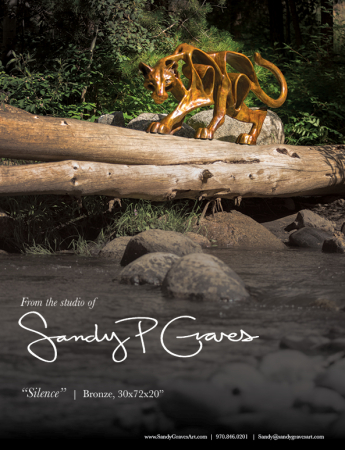
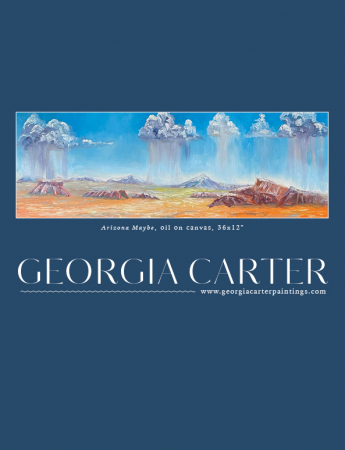
Artist Sandy Graves is exploring these same ideas, but in sculpture, including in her stylized wildlife and human subjects that emphasize positive and negative space. “When I am working on creating a new piece, I am connecting with a feeling or an attitude. I sometimes draw concepts and play with an overall composition. I never know exactly how my work will look until it is done, but I do know how it will feel,” Graves says. “I like to bend proportion and draw the viewer’s eye to what I want them to see, accentuating the aspects that matter and defining the energy that I want them to feel. I enjoy the freedom of creating stylized art as opposed to realism. Stylization has an expressive quality that goes beyond the recreation of nature and opens the opportunity to say so much more to the viewer. I always choose to live with (and create) artwork that reinforces the way that I want to feel or reminds me of the powerful and sweet spots in this one amazing life on this remarkable planet.”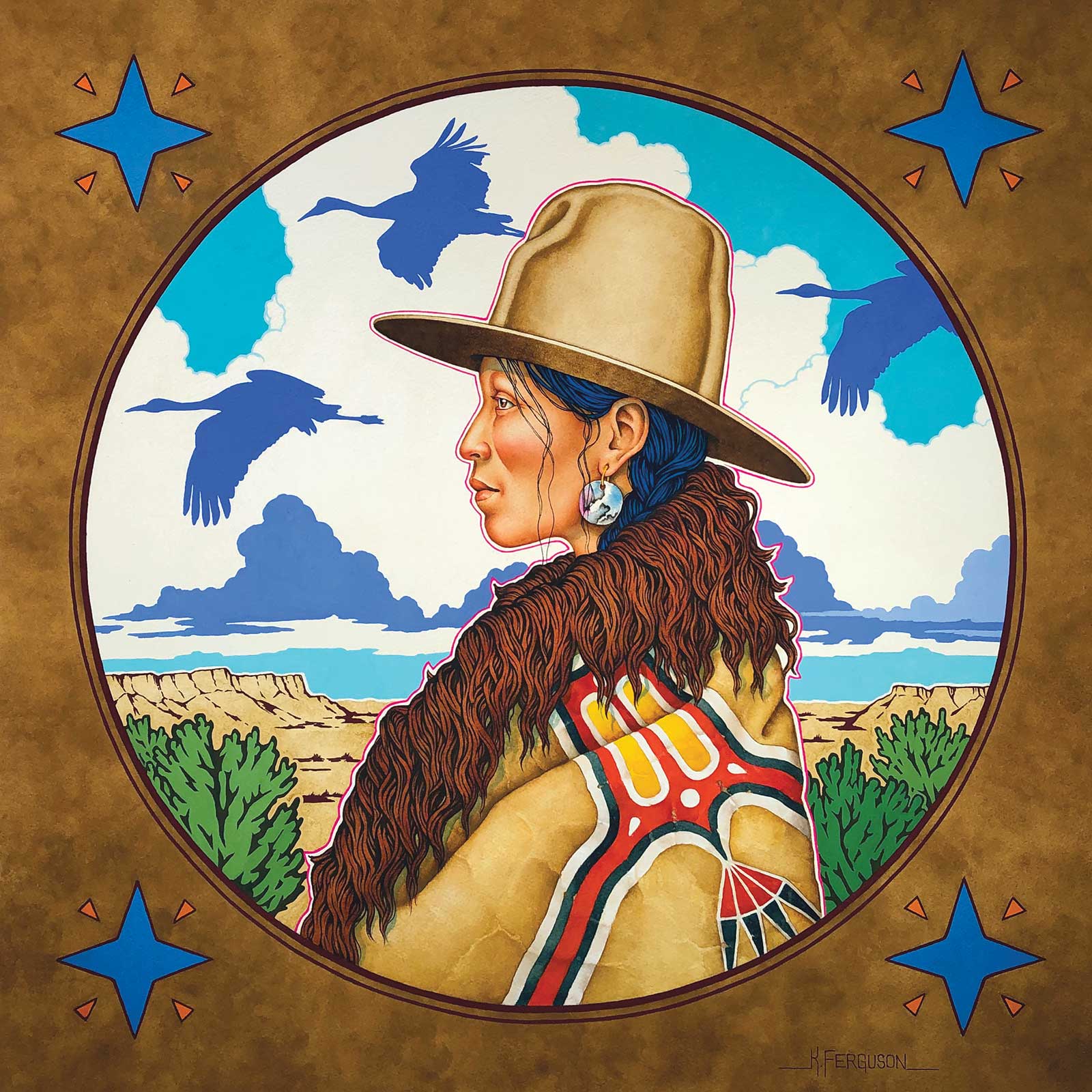 Kenneth Ferguson, Grandmother’s Robe, Grandfather’s Hat, watercolor and gouache, 24 x 24"In paintings by Georgia Carter, color is key as she explores her subjects. “I love painting desert landscapes because I have fun with the colors of the mesas in the bright sun and the contrast that the shadows and atmosphere bring into those colors. The geometric shapes of the mesas and canyons and general movement of a desert landscape seem to speak so easily to my brushstrokes,” she says. “One can play with the lighting and shadows in desert scenes that inspire imagination and curiosity. When collecting art, I am always drawn to the relationships between color, shape and shadow. If I feel like I want to climb into a painting, I will be brought back to the painting over and over, looking for what may be happening in the landscape itself. I might see different things happening or I look at the constant and favored colors and brushstrokes, which caught my eye to a painting initially.”
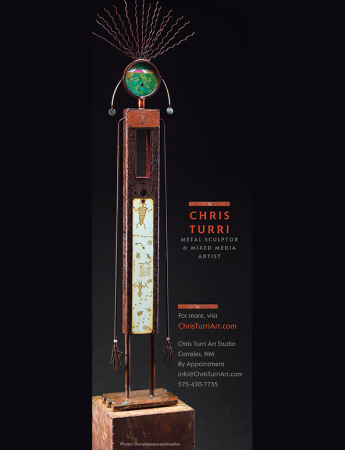
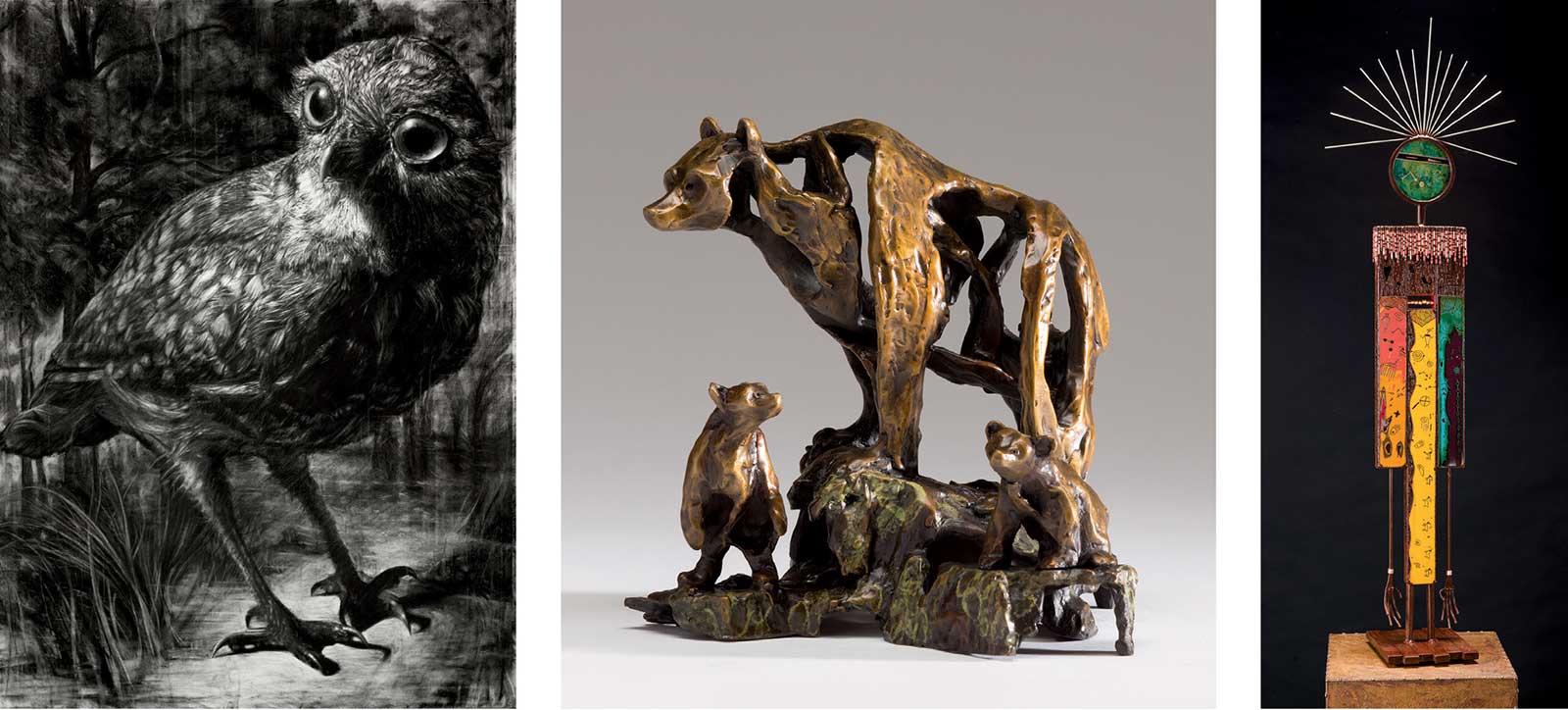 From left: RJD Gallery, Athena (Burrowing Owl), charcoal and water on deep mounted canvas, 41 x 29½”, by Tyler Vouros; Sandy Graves, Who’s There?, bronze, 7 x 8 x 7; Chris Turri, Tunica de Paz, patina on steel and copperColor certainly plays into the work of Chris Turri, but also materials. Turri hunts down scraps of metal that he upscales into art. “I transform old metal to fine art using techniques to expose colors and deepen the character already present in rusted, scraped, dented and discarded steel,” Turri says. “I seek out hoods, doors and fenders of vehicles from the 1940s through 1960s and look beyond the top layer. It’s amazing how many times a car was painted; sometimes I find four or more layers of color. Each piece starts out as a mystery and comes into being as I work the various elements.”
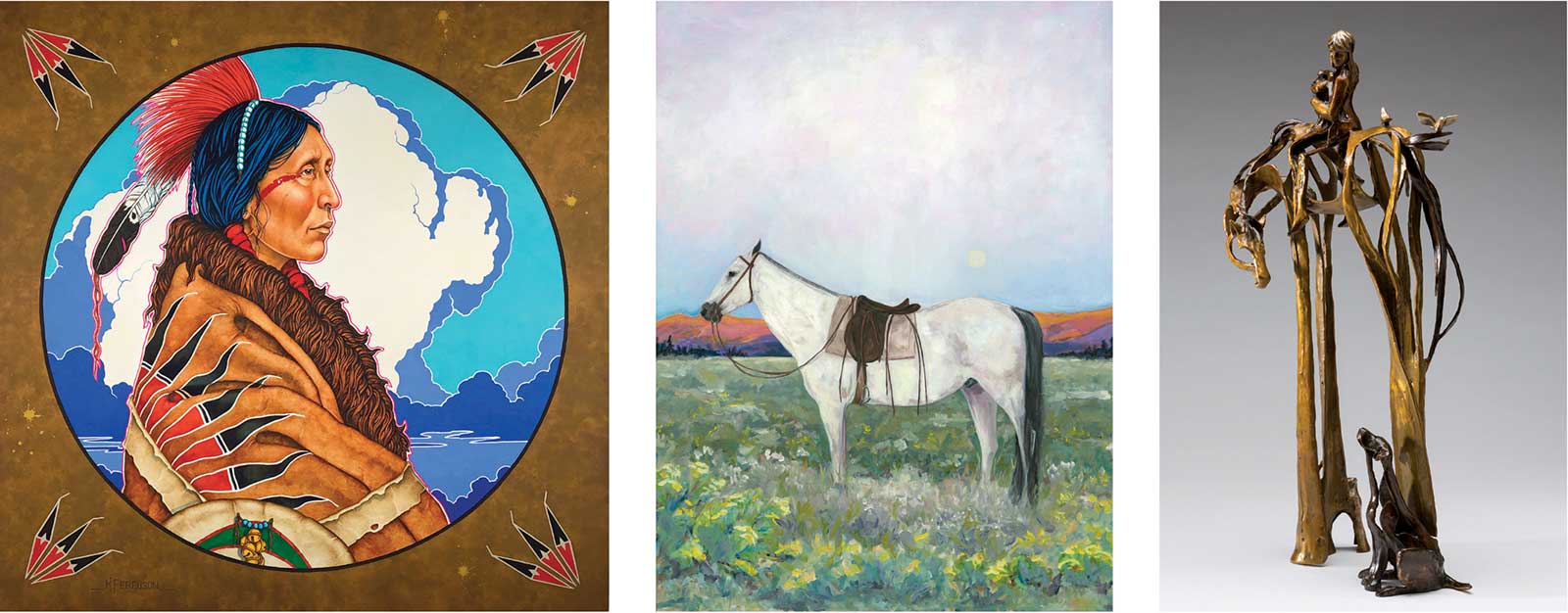 From left: Kenneth Ferguson, Awaiting the Herd, watercolor and gouache, 24 x 24”; Lisa Butters, True, oil on cradled panel, 24 x 18”; Sandy Graves, Kindred, bronze, 24 x 11 x 6”
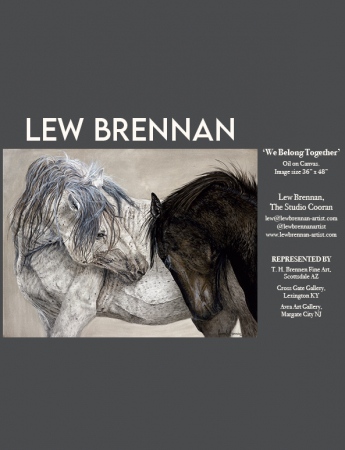
Lew Brennan is another artist to watch within the genre of contemporary Western art. “I’ve been painting and drawing since I was born. My wife and I managed the family’s 700-acre property for 40 years soon after getting married, raising Droughtmaster cattle and quarter horses until 10 years or so ago when we stepped back to our 10 acres and the house and studio we built all those years ago, where I now paint and draw my passion for ranch life full time,” Brennan says. “Mostly I paint and draw horses but also cover portraits, still lifes and landscapes but never stray too far from that country genre.” Brennan is represented by AVRA Art Gallery in Margate Cit, New Jersey; T.H. Brennen Fine Art in Scottsdale, Arizona; and Cross Gate Gallery in Lexington, Kentucky.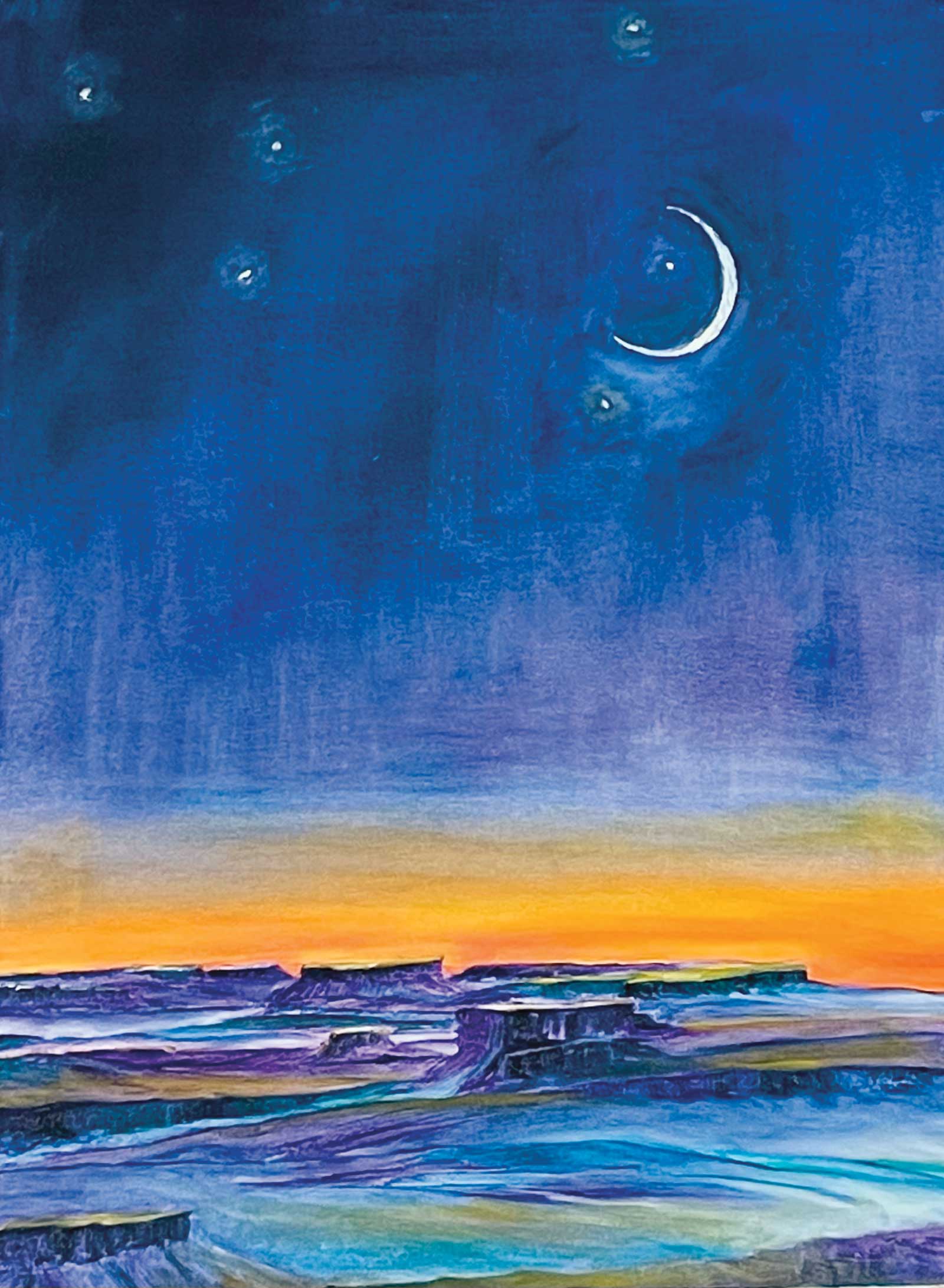 Georgia Carter, Purple Desert, oil on canvas, 24 x 18"
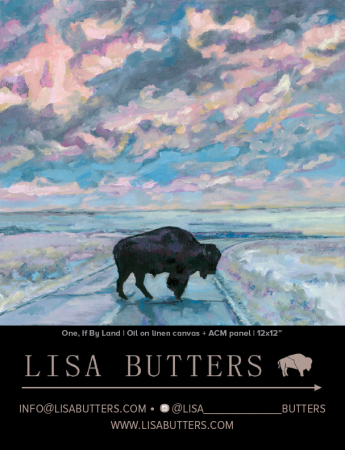
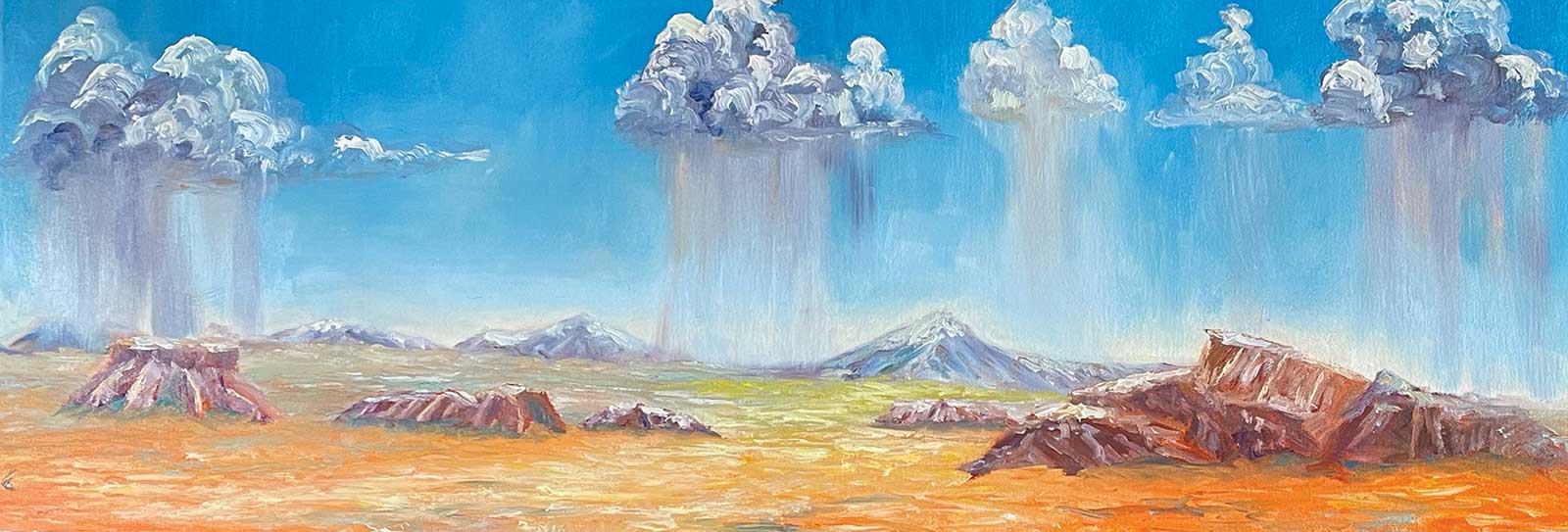 Georgia Carter, Arizona Maybe, oil on canvas, 12 x 36"For Lisa Butters, her process for making art “is a kind of storytelling, merging the expression of energy, perception and emotion with light, texture and form,” she says. “Subjective and deeply personal, to be moved by a painting is a profound experience. It’s the spark that makes certain works unforgettable and desirable, and holds the power to bring us back to ourselves.” One of Butters’ newest works is True, a simple yet powerful image of a horse against stunning color and the quietness of nature. “Like so many artists, creative expression has always been a part of my life. And, though I’ve spent most of my adult life pursuing a life and livelihood outside of the art world, creative pillars of art making—imagination and experimentation—have been essential and constant companions.” —
Featured Artists & Galleries
Lew Brennan
lew@lewbrennan-artist.com
www.lewbrennan.com
Broadmoor Galleries
1 Lake Circle, Colorado Springs, CO 80906
(719) 577-5744, www.broadmoorgalleries.com
Lisa Butters
info@lisabutters.com
www.lisabutters.com
Ed Lister Fine Art
(805) 259-6772, sceniced@gmail.com
www.edlisterfineart.com
Gallery Wild
80 W. Broadway, Jackson Hole, WY 83001
(307) 203-2322
203 Canyon Road, Santa Fe, NM 87501
(505) 467-8297, www.gallerywild.com
Georgia Carter
www.georgiacarterpaintings.com
Chris Turri Fine Art
Corrales, NM, (575) 430-7755
chris@christurriart.com
www.christurriart.com
Kenneth Ferguson
Phoenix, AZ, (262) 374-2984
www.kennethfergusonfineart.com
Represented by King Galleries
7077 E. Main Street, #20, Scottsdale, AZ 85251
130 Lincoln Avenue, Suite D
Santa Fe, NM 87501
www.kinggalleries.com
LewAllen Galleries
1613 Paseo de Peralta, Santa Fe, NM 87501
(505) 988-3250
contact@lewallengalleries.com
www.lewallengalleries.com
Liljestrom Fine Art Studio
(307) 227-6969, arthur@connorliljestrom.com
www.connorliljestrom.com
Maxwell Alexander Gallery
406 W. Pico Boulevard, Los Angeles, CA
(213) 275-1060, www.maxwellalexandergallery.com
RJD Gallery
227 N. Main Street, Romeo, MI 48065
(586) 281-3613, art@rjdallery.com
www.rjdgallery.com
Sandy Graves Art
www.sandygravesart.com
sandy@sandygravesart.com
Powered by Froala Editor