The naturalist and essayist John Burroughs (1837-1921) wrote, “He who marvels at the beauty of the world in summer will find equal cause for wonder and admiration in winter.”
The eyes receive the reflected light of the landscape and send signals to the brain. Often, in the winter, the brain responds, simply, “white!” Artists encourage us to actually “see” what the winter landscape is like with their inescapable use of color, either as a representation of what they experienced, or exaggerated to stimulate awareness in the viewer.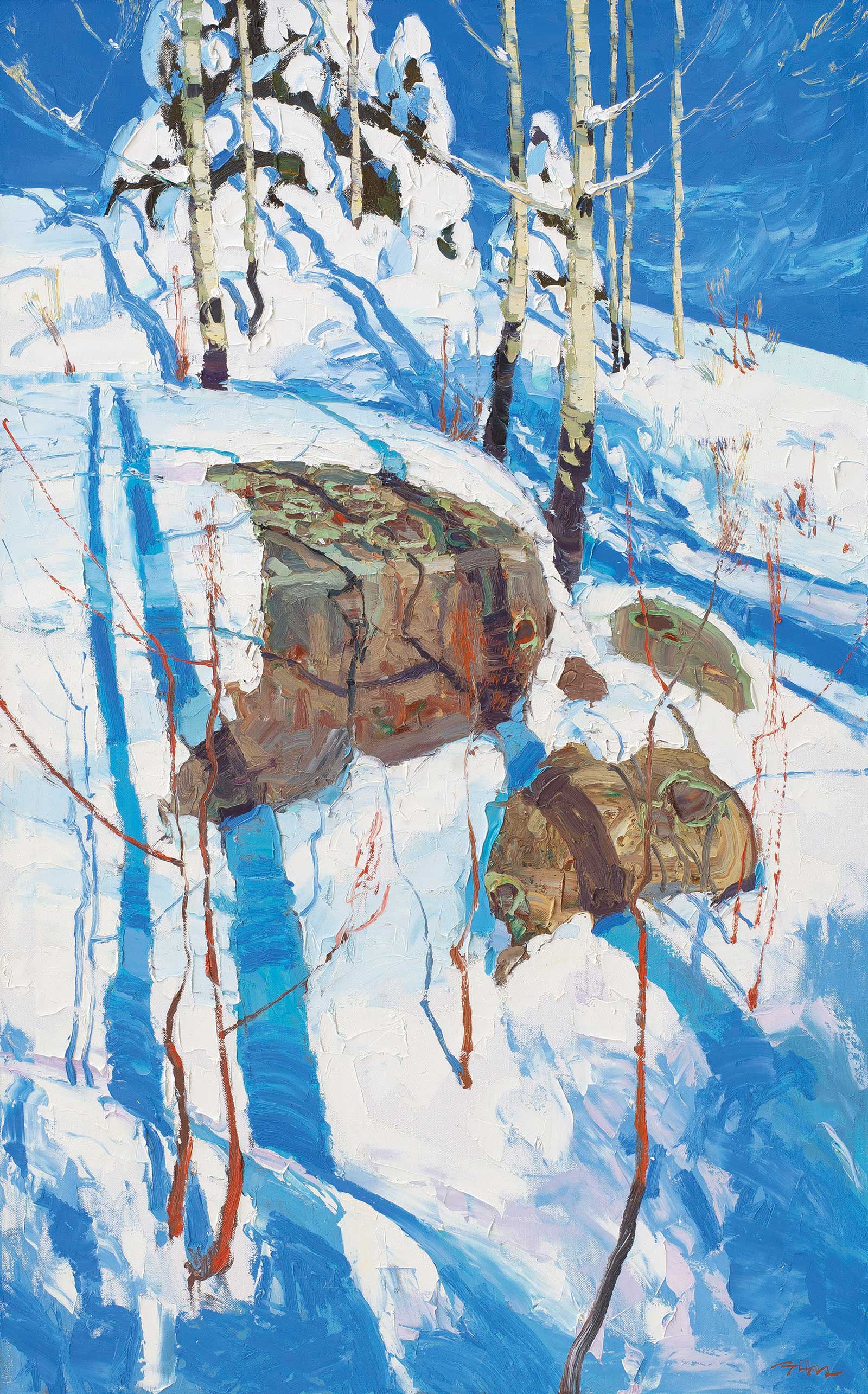 Gallery Wild, The Way Up, oil on canvas, 48 x 30", by Silas Thompson.
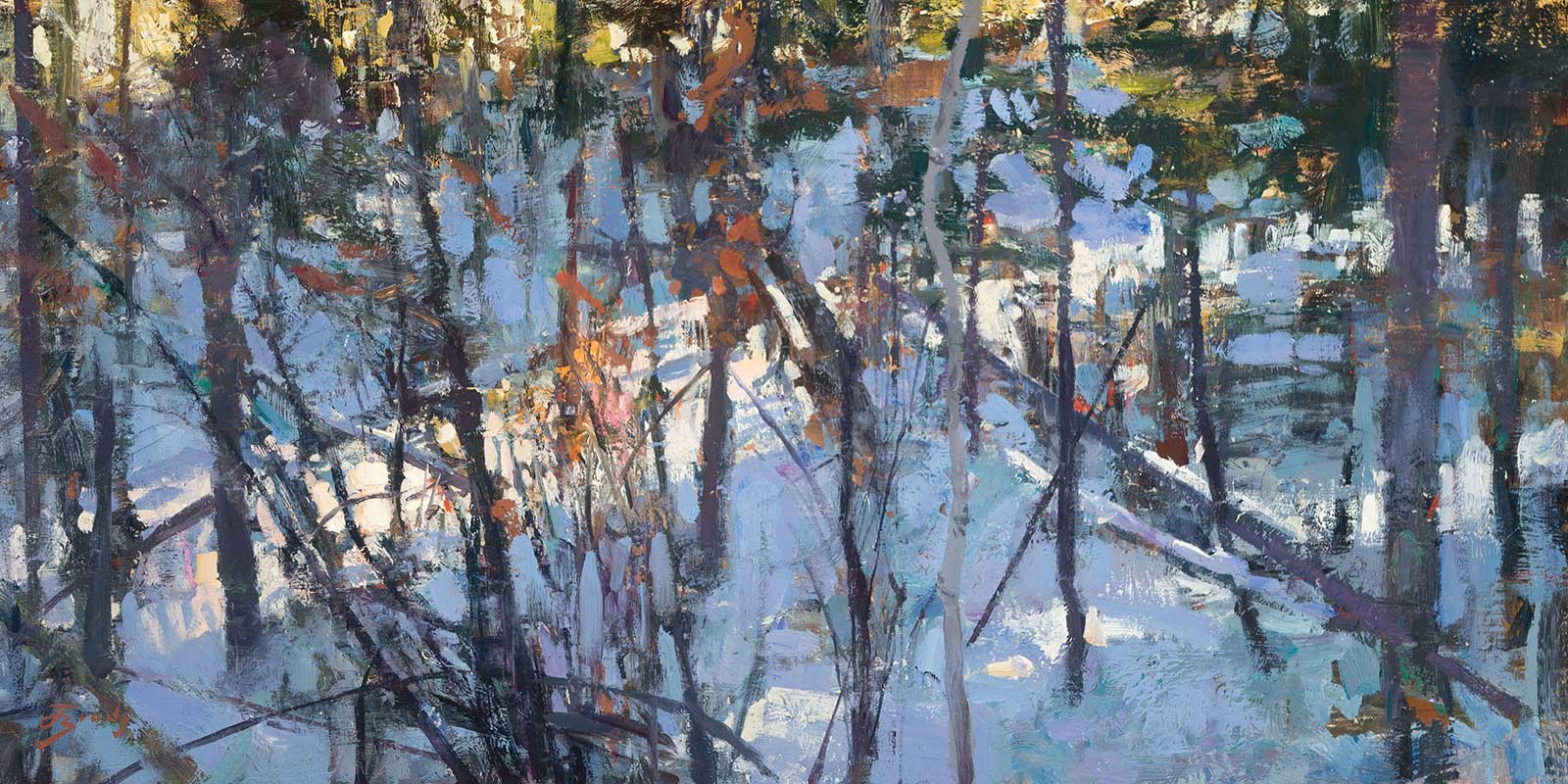 Broadmoor Galleries, Winter Mosaic, oil on linen panel, 12 x 24", by Jared Brady.
The startling blue shadows of trees in Silas Thompson’s The Way Up, draw attention to the gradations of “white” in the snow. The mere suggestions of small trees in slashes of color recall their being almost lost in the glaring reflected light.
Thompson says, “What I long to achieve in painting is a conversation. Not a lecture and not gibberish, but give and take. I want to bring the viewer only so far. Like a good mountain guide. I want to show them things that they have not seen and then let the viewer enjoy a conclusion. It is a fine line that exists between rendering and abstraction. I prefer to toe that line, losing edges yet maintaining integrity.”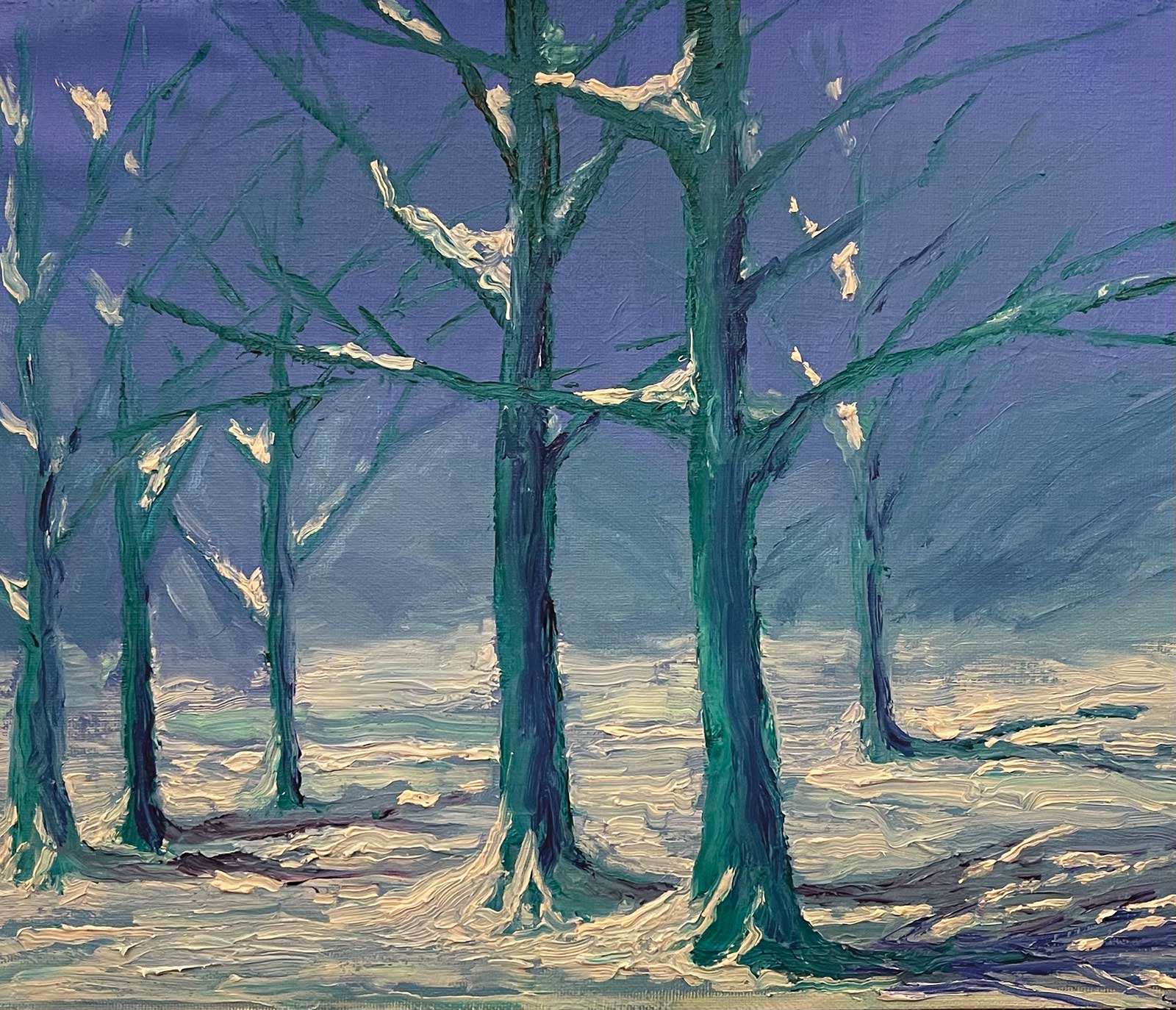 Georgia Carter, Cold Trees, oil, 12 x 16"Jared Brady paints bands of sunlight penetrating the thick forest undergrowth. He comments, “Something about the forest has always transfixed me. The abstraction, flow and complexity has always drawn me to it. I find that when a subject seems too difficult or out of reach, I gain so much when I push myself to take it on.”
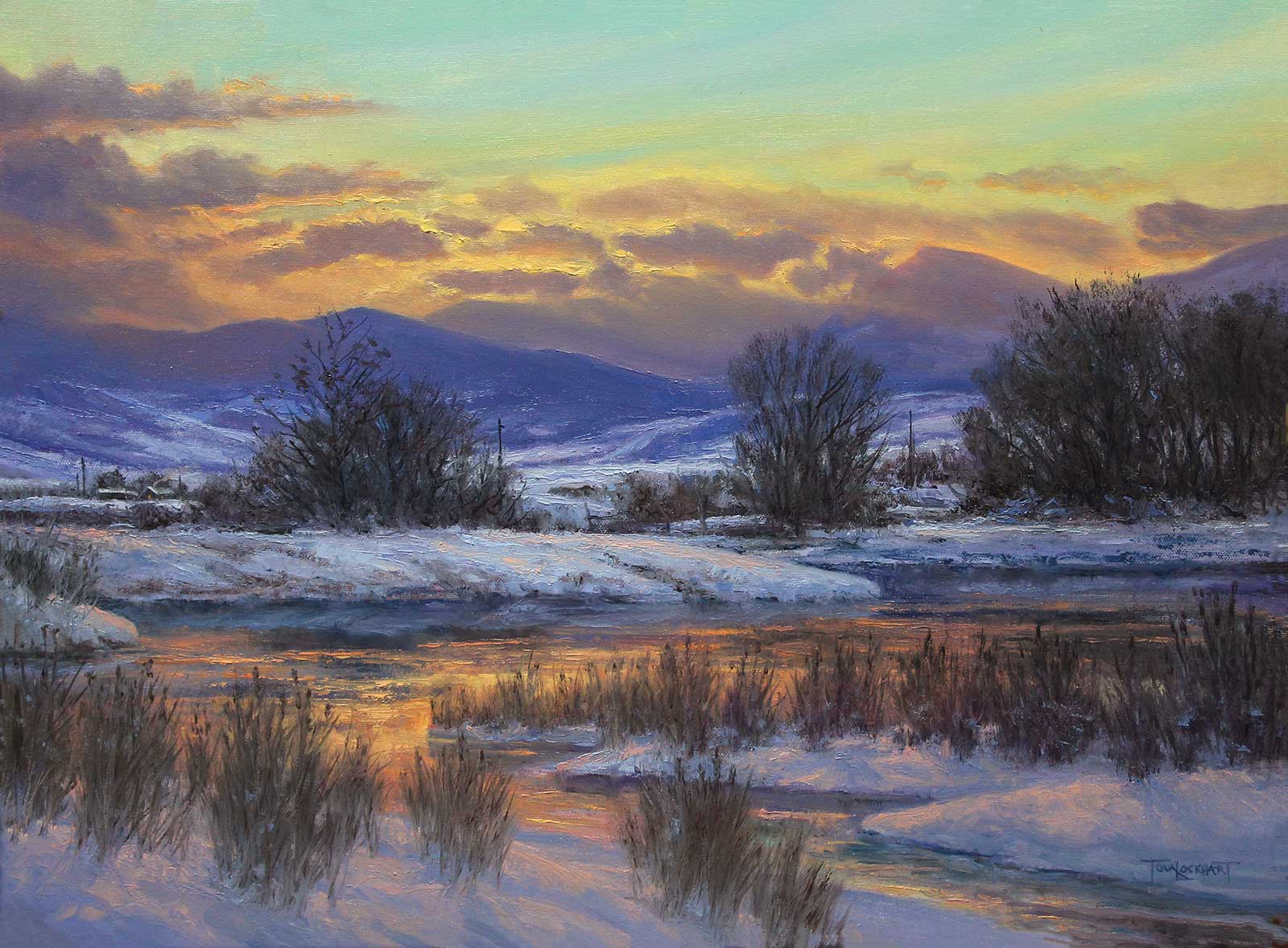 Tom Lockhart, A Still Winter Evening, oil, 18 x 24"
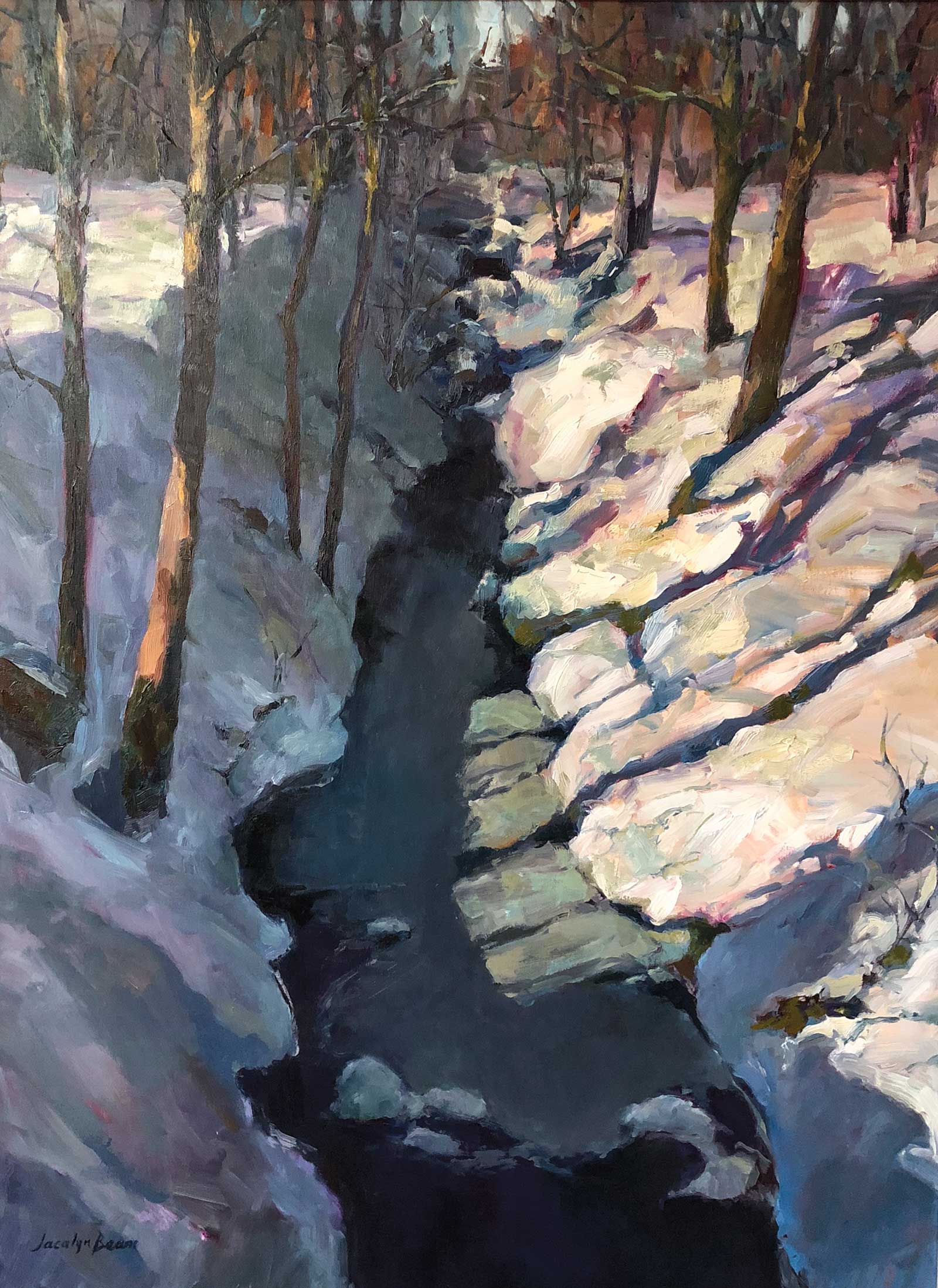 Jacalyn Beam, Coursing Through, oil, 40 x 30"
A close look at Winter Mosaic reveals the complexities of light, shadow, color and forms coalescing into a convincing experience of the winter woods. Fallen trees form a triangle which the sunlight follows, both on the ground and on the trees. The eye naturally goes to the apex of the triangle before wandering to the myriad shapes and colors in the scene.
Nathanael Gray takes the abstractions of Thompson and Brady a bit farther. From the age of 13, Gray explored the world around him through painting, always looking for their geometric abstract forms. Studying for a master’s degree in landscape architecture helped him learn more about “the infrastructure of the land, and how to read the landscape in a deeper way.”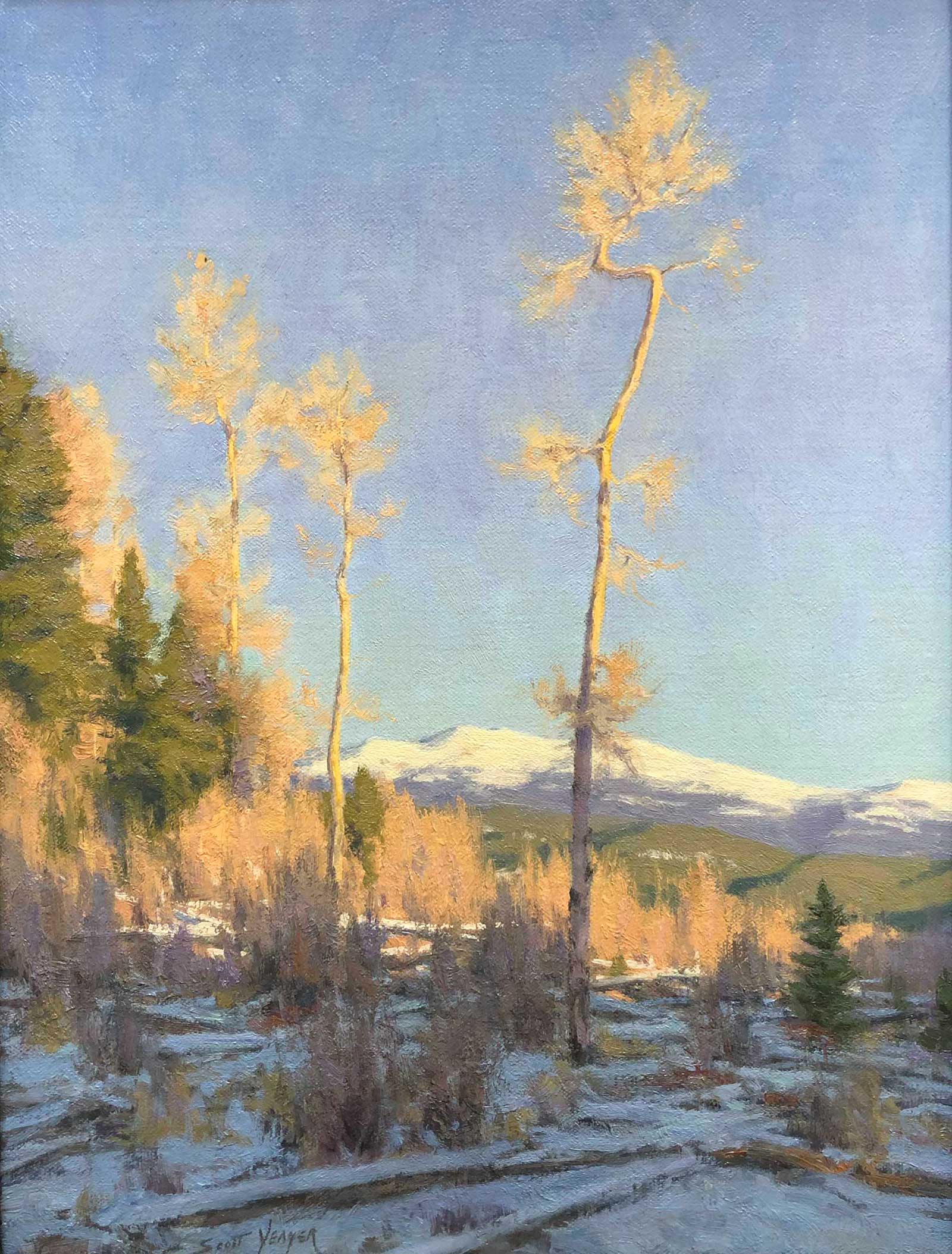 Scott Yeager, Late Afternoon Sun, oil on canvas, 16 x 12"He paints “poems of place” rich in the gestural application of thick oil paint on canvases he carts up mountains, to the sea and inspiring places in between. Based in California, he paints on his travels. Snow in the Caldera is a scene of Valles Caldera in Northern New Mexico, a vast, circular depression caused by a volcanic explosion over a million years ago. His paintings remind viewers that the ostensibly static landscape has a life in every season, an active history and an unknown future.
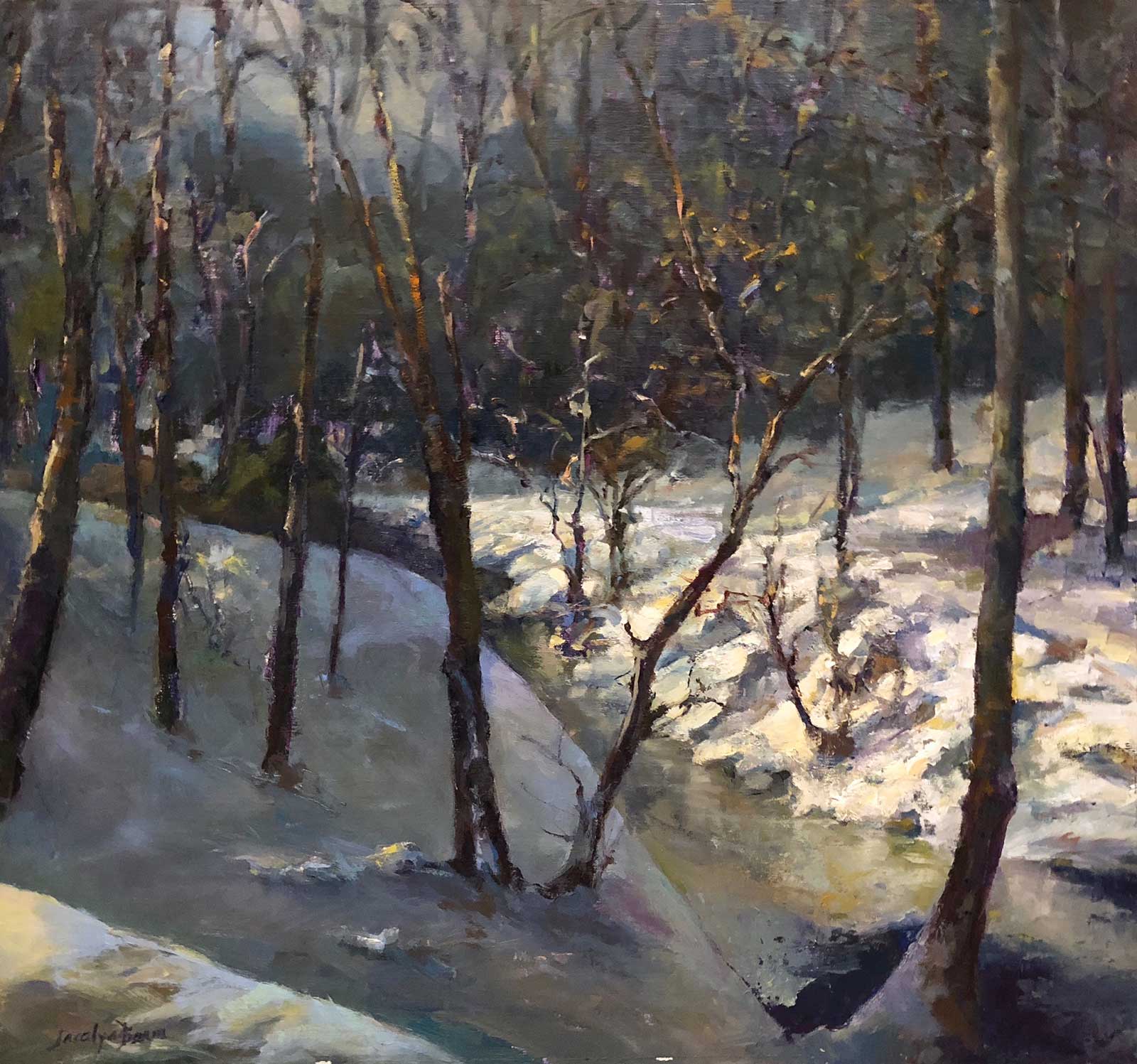 Jacalyn Beam, Snowlight, oil, 24 x 26"
Continue reading to hear more insights from noteworthy artists on the creation of their winter landscape scenes.
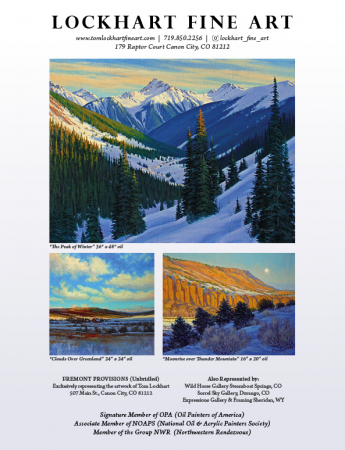
Tom Lockhart, a working artist for 40 years, began his career creating wildlife paintings, entered duck stamp competitions and extensively traveled looking for wildlife subjects. “While up in Yellowstone, I then discovered painting from life or en plein air,” Lockhart shares. “My art life and subject changed. Growing up in Southern Colorado, I was very aware of the long snowy wintery season. So as I grew in my career, I painted more and more outside, photographing and sketching the scenes that caught my attention and interest, and always loved snow scenes. I’m always looking for a unique view of the landscape—the glorious light, the atmospheric effect as well as the contrast of colors and the dramatic design, which I find so interesting in snow scenes.”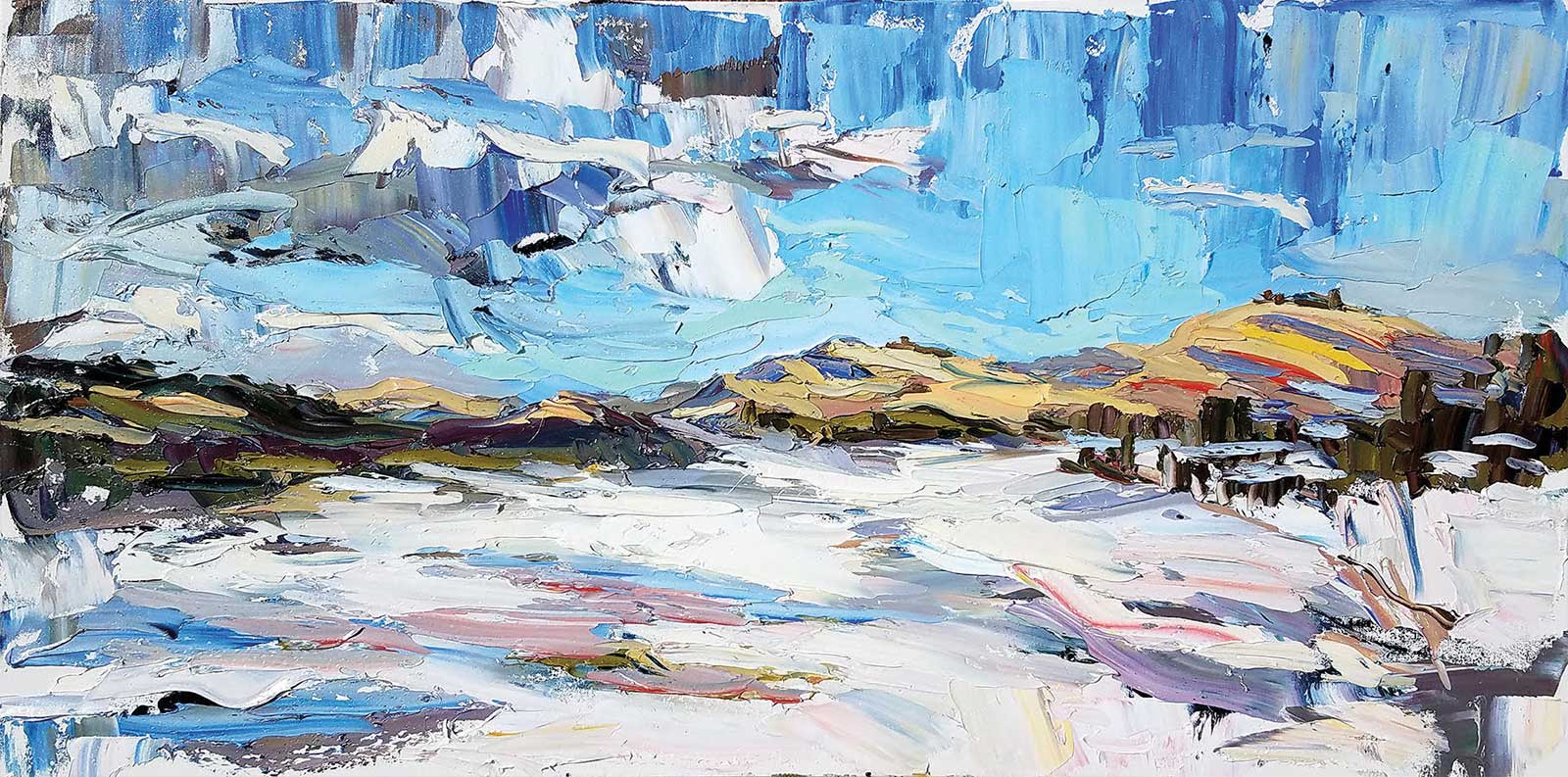 Kay Contemporary, Snow in the Caldera, oil on canvas, 24 x 48", by Nathanael Gray.We see Lockhart’s gorgeous works and breadth of skill in pieces like Winter Passage, of the Upper Alamosa River; A Still Winter Evening depicting the Rio Grande Refuge in Southern Colorado; and The Warming Glow 20 Below featuring the artist’s old hometown of Monte Vista, devasted by a fire last April. Lockhart notes, “One of the great things about being a landscape artist is the opportunity to save and create beautiful scenes, which may never be the same again.”
For Scott Yeager, winter is the time for painting dramatic light effects as well as the softer light that lends itself to the tonalism the he enjoys. “Late Afternoon Sun falls under the former, and although short winter days almost always produce rich shadows, it is especially colorful, albeit brief, late in the day,” the artist says. “Yellow and orange command the light and their complements, purple and blue, hold the shadows, revealing themselves more on a canvas of white snow than anywhere else.”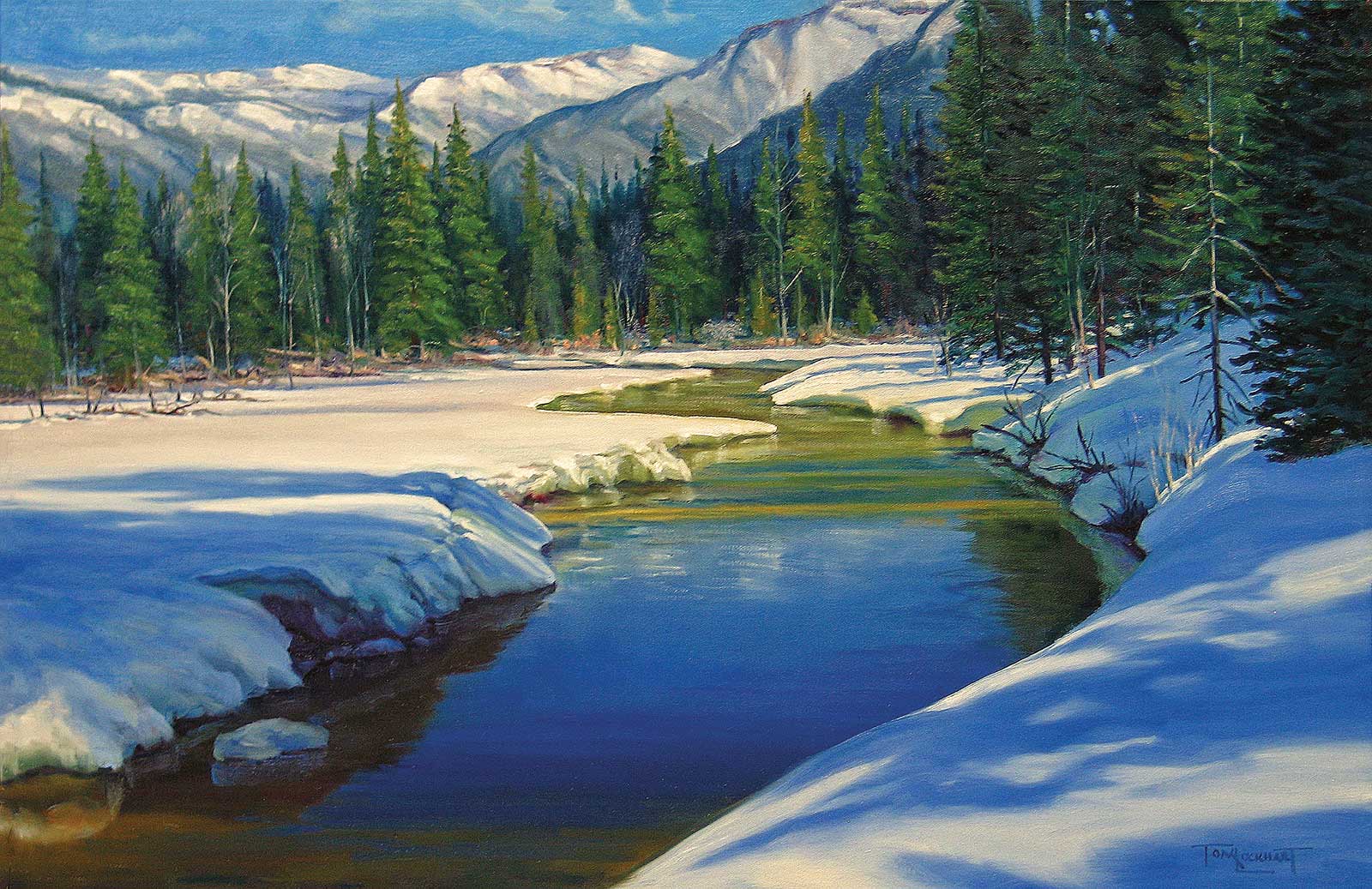 Tom Lockhart, Winter Passage, oil, 20 x 30"
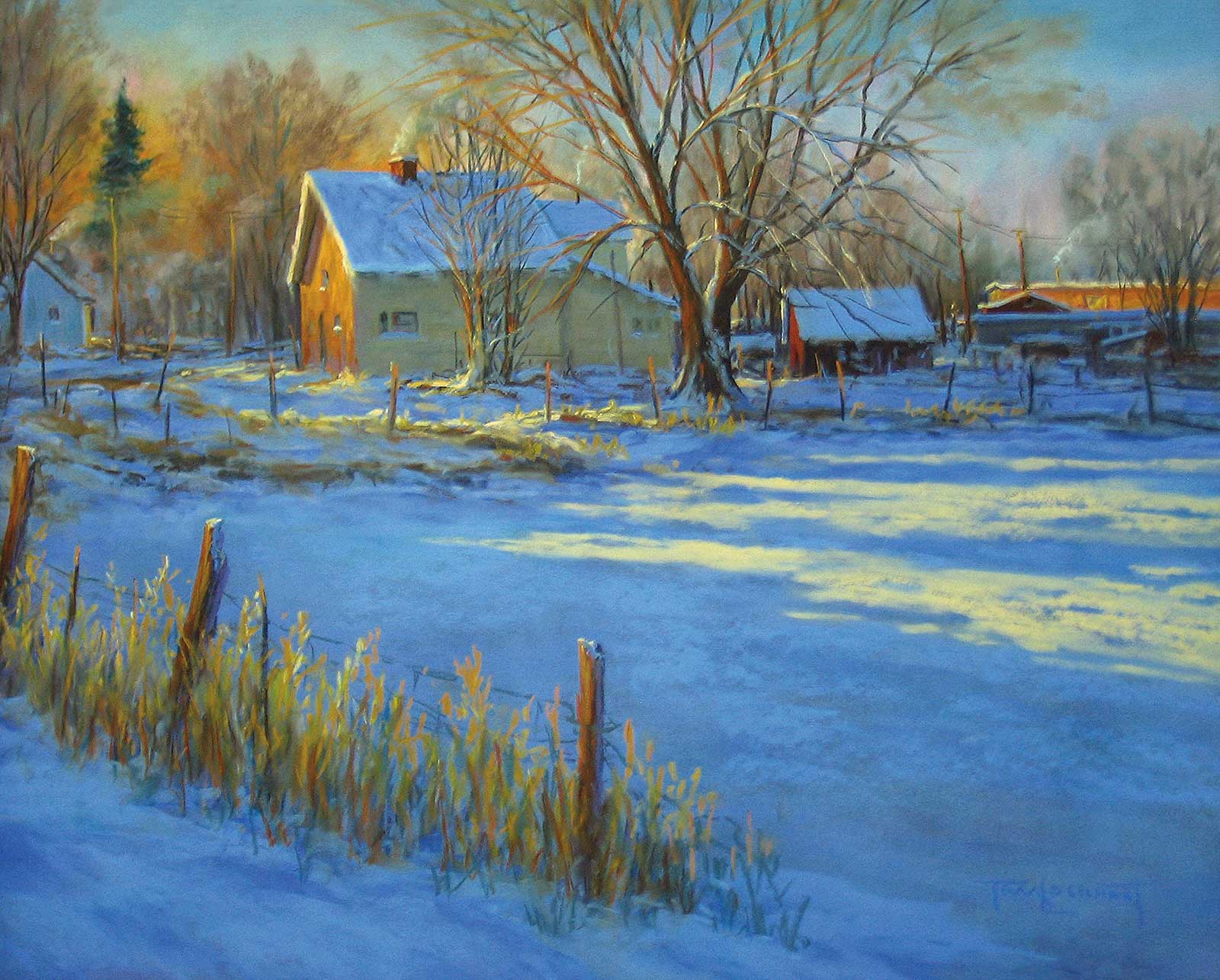 Tom Lockhart, The Warming Glow 20 Below, pastel, 20 x 24"
Yeager continues, “On the other hand, there is a wonderful atmosphere to be found in the approach or clearing of a storm and the soft light effects, such as in the late clearing in Two Bucks. Artistic license grows in time like this.” Collectors can find both pieces at Parsons Gallery of the West in Taos, New Mexico.
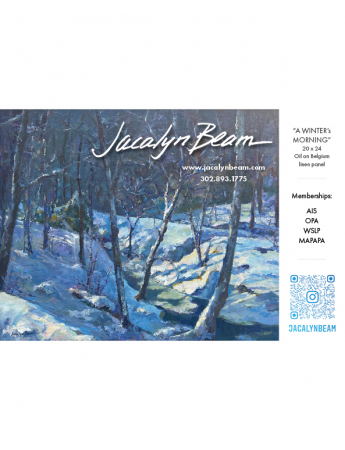
“The beauty of the earth inspires in all seasons, with winter holding unique appeal,” says artist Jacalyn Beam. “Winter leaves the landscape open to see far and wide, while each season holds a particular beauty. Winter, as [Andrew] Wyeth noted, is when, ‘you see the bones of the landscape.’ Scenes I cannot see and thus paint in summer are exposed in winter.” Beam is also captivated by winter with its snow and many colors. She notes that when painting en plein air, it’s not uncommon to see all of the color families in a snow scene—particularly on a sunny day when bouncing light creates multiple hues. “It’s a challenge to paint snow in all its glory, but it’s also fascinating,” she continues. “As I look at my available paintings, I’m always wishing there were more snow scenes! For me, snow is one of the gifts of winter.” 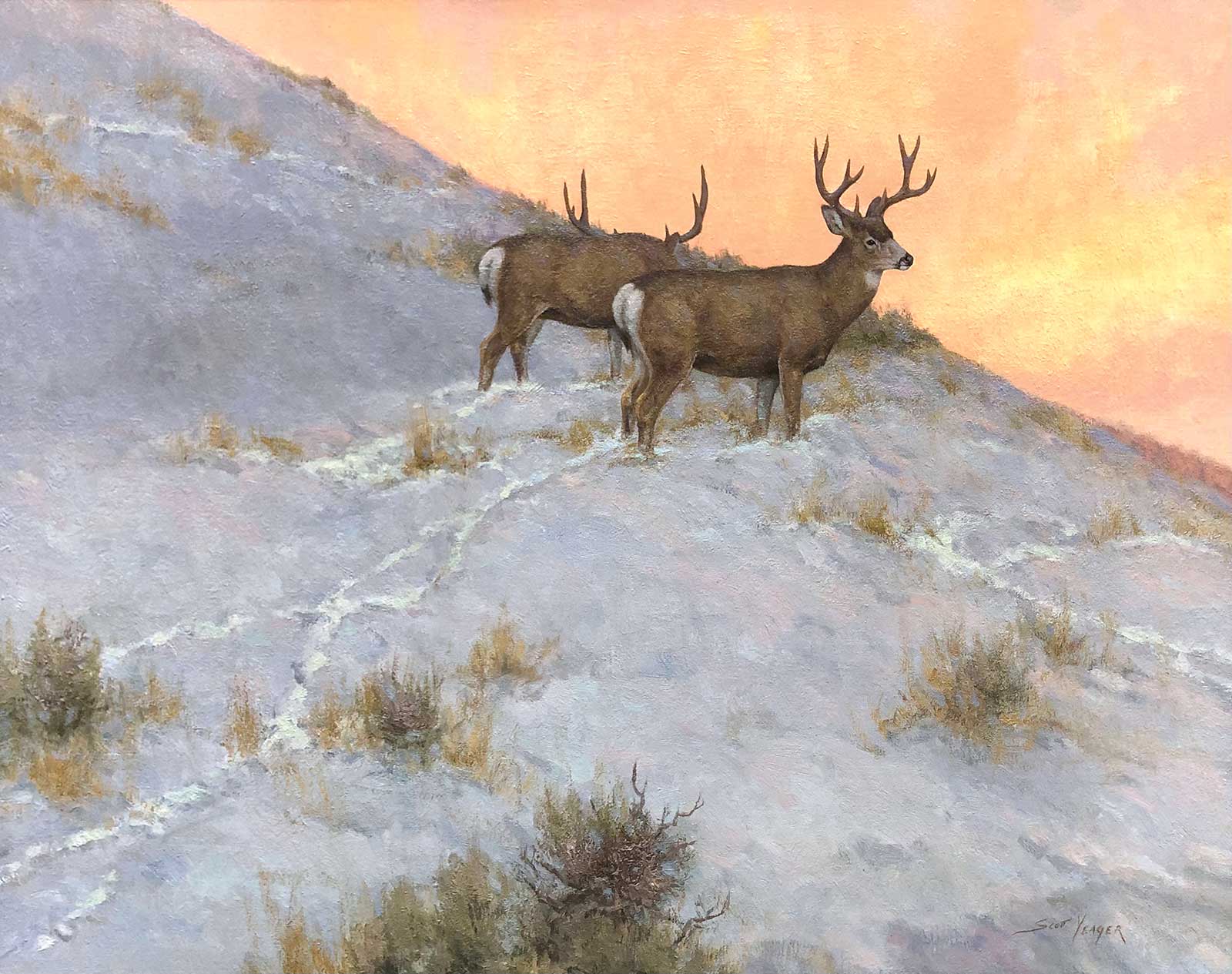 Scott Yeager, Two Bucks, oil on canvas, 24 x 30"
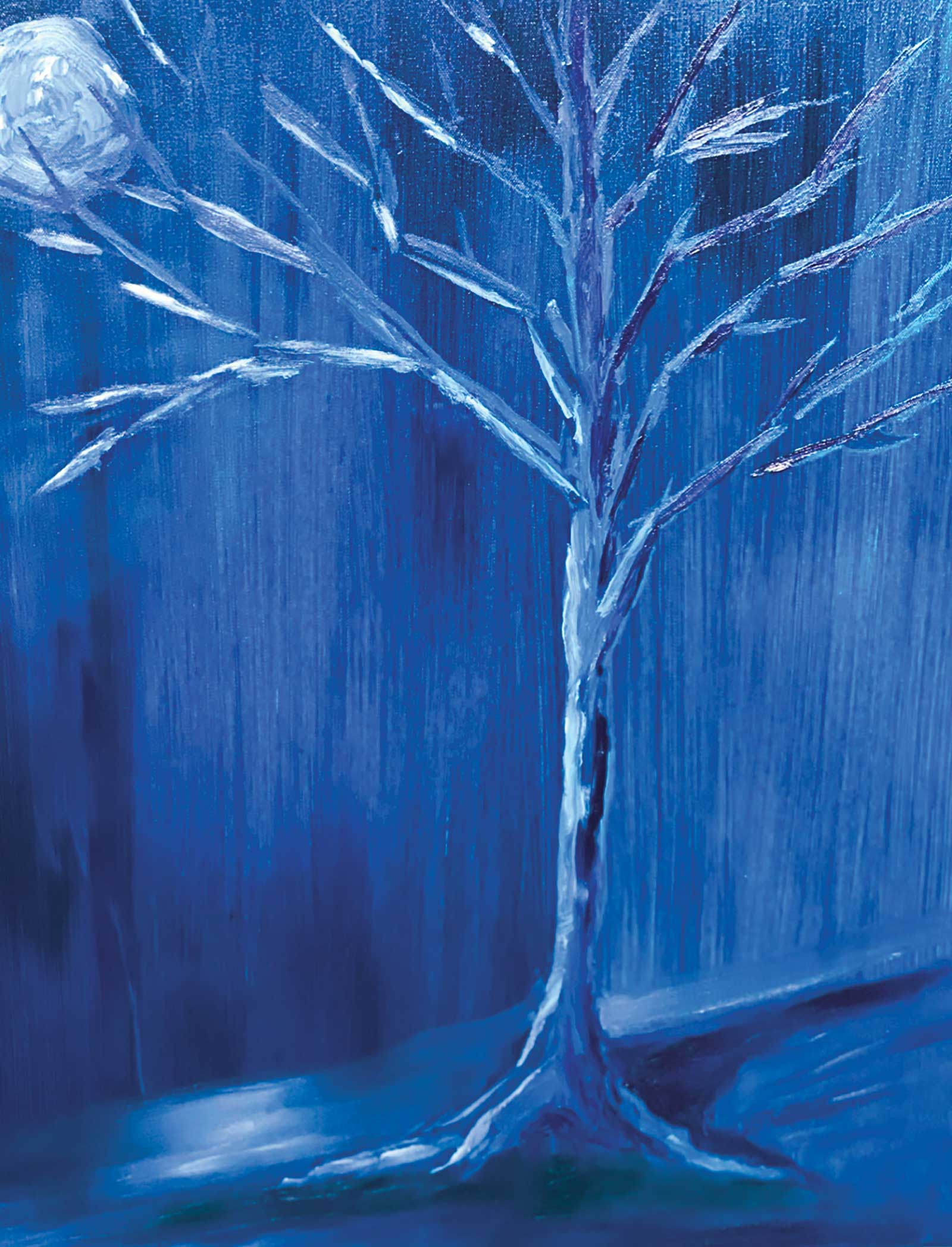 Georgia Carter, Moon and Tree, oil, 33 x 27"Beam’s advice to collectors of the genre is to “buy what you like—don’t hesitate. First impressions are often right. Live now with art that makes you happy!”
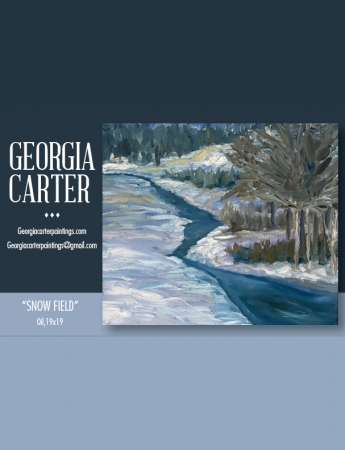
Georgia Carter is always surprised by how one’s emotional state and current life situations really and truly come through in one’s artwork. Her winter land work, Cold Trees and Moon and Tree, are pieces she’s painted recently. “There is so much uncertainty in the world right now, and I personally have been experiencing some challenges in my everyday life,” Carter says. “It seems that each time I sit to paint lately, I am compelled to paint these winter-time tree scenes. It feels like I am in a dormant, still and inner reflective period, while everything around me swirls and howls. The subject of the paintings and their feel requires only a few colors. As in a dormant state or hibernation, one’s needs are small and few. I also see these paintings as subjects full of rebirth and regeneration, full of many blessings and good things to come.” —
Featured Artists & Galleries
Broadmoor Galleries
1 Lake Circle, Colorado Springs, CO 80906
(719) 577-5744, www.broadmoorgalleries.com
Gallery Wild
80 W. Broadway, Jackson Hole, WY 83001, (307) 203-2322
203 Canyon Road, Santa Fe, NM 87501
(505) 467-8297, www.gallerywild.com
Georgia Carter
georgiacarterpaintings@gmail.com
www.georgiacarterpaintings.com
Jacalyn Beam
(302) 893-1775, www.jacalynbeam.com
Kay Contemporary
600 Canyon Road, Santa Fe, NM 87501
(505) 365-3992, www.kaycontemporaryart.com
Scott Yeager
scott@scottyeager.net
www.scottyeager.net
Tom Lockhart
(719) 850-2256, tlockhartpainter@hotmail.com
www.tomlockhartfineart.com
Powered by Froala Editor