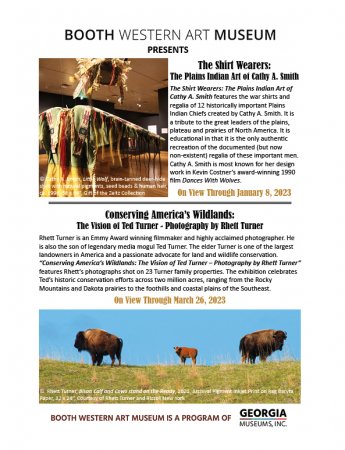
The Shirt Wearers: The Plains Indian Art of Cathy A. Smith, an exhibition at the Booth Western Art Museum, features meticulously researched replicas of the war shirts and regalia of 12 historically important Plains Indian chiefs. The 60-plus pieces in the exhibit were created by Cathy A. Smith, who gained widespread recognition for her costume designs for the movies Dances with Wolves, Comanche Moon and Geronimo, as well as the miniseries Son of the Morning Star, for which she won an Emmy award.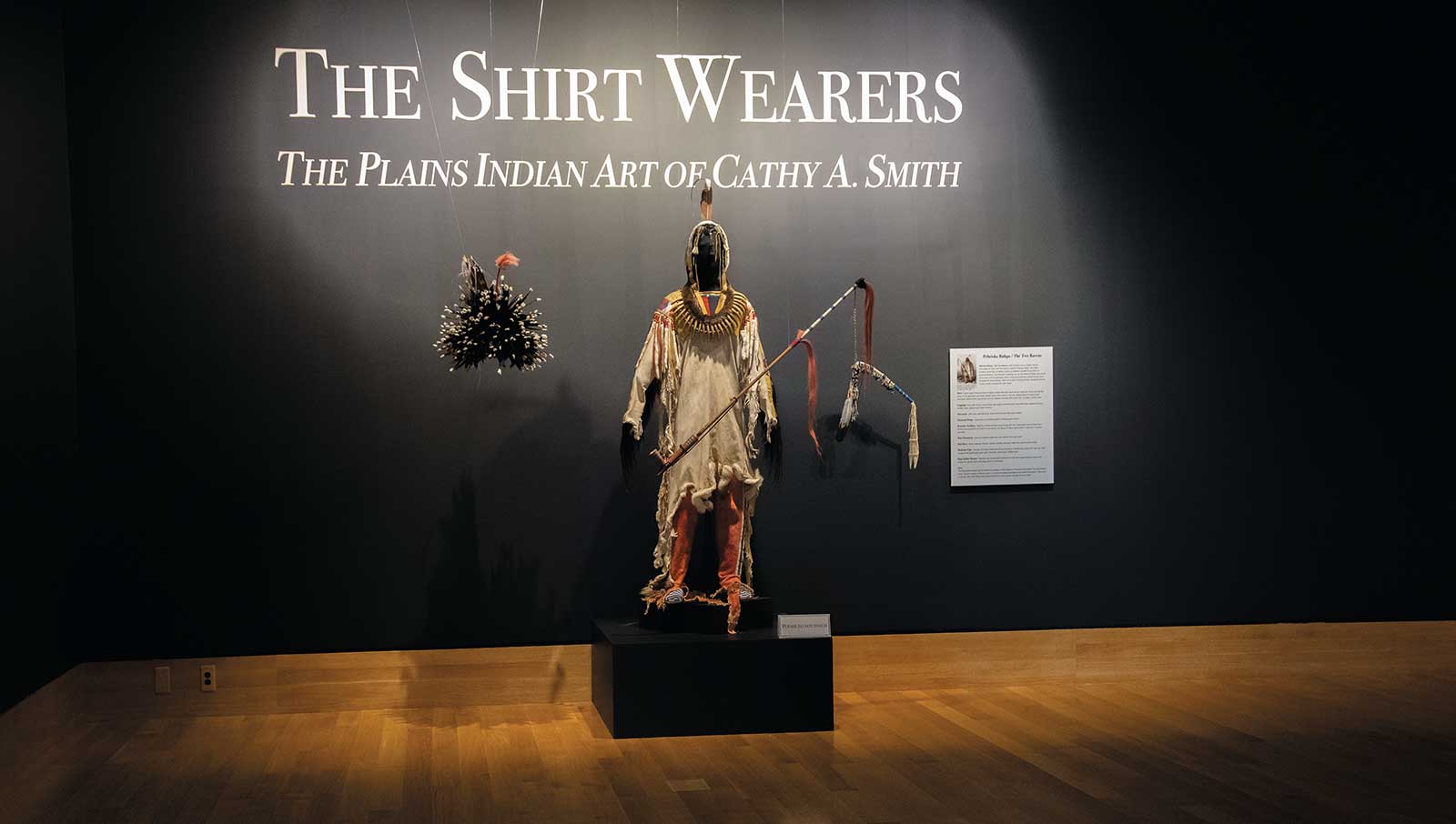 Cathy A. Smith, Péhriska Rúhpa / The Two Ravens, ca. 1996, brain-tanned bighorn sheep-hide shirt with porcupine quills, human hair, horse hair and ermine, 55 x 64”. Gift of the Zeitz Collection.
In 1996, Smith was commissioned to recreate the material accoutrements of these tribal leaders—in part chosen because few, if any, of their actual artifacts exist—for a private museum in Santa Fe, New Mexico. The articles were reproduced based on historical documentation including photographs, paintings, ledger drawings, scholarly research and tribal knowledge. With the exception of a few ethically based choices, the garments and accessories were made using traditional methods and materials from big horn sheep, antelope, buffalo and deer hides tanned with brains, original stock seed and pony beads, naturally dyed porcupine quills, sinew or linen thread, and original trade items such as wool stroud, brass hawk bells, buttons and silk ribbon. The collection consists of the shirts, leggings, moccasins, bonnets and other accessories that historical sources attribute to legends like Crazy Horse (Mniconjou/Oglala) and Chief Joseph (Nez Perce) to less-widely known figures such as Péhriska Rúhpa (Hidatsa) and Mató Tópe (Mandan) who are equally significant in the legacy of the Plains Indian history. 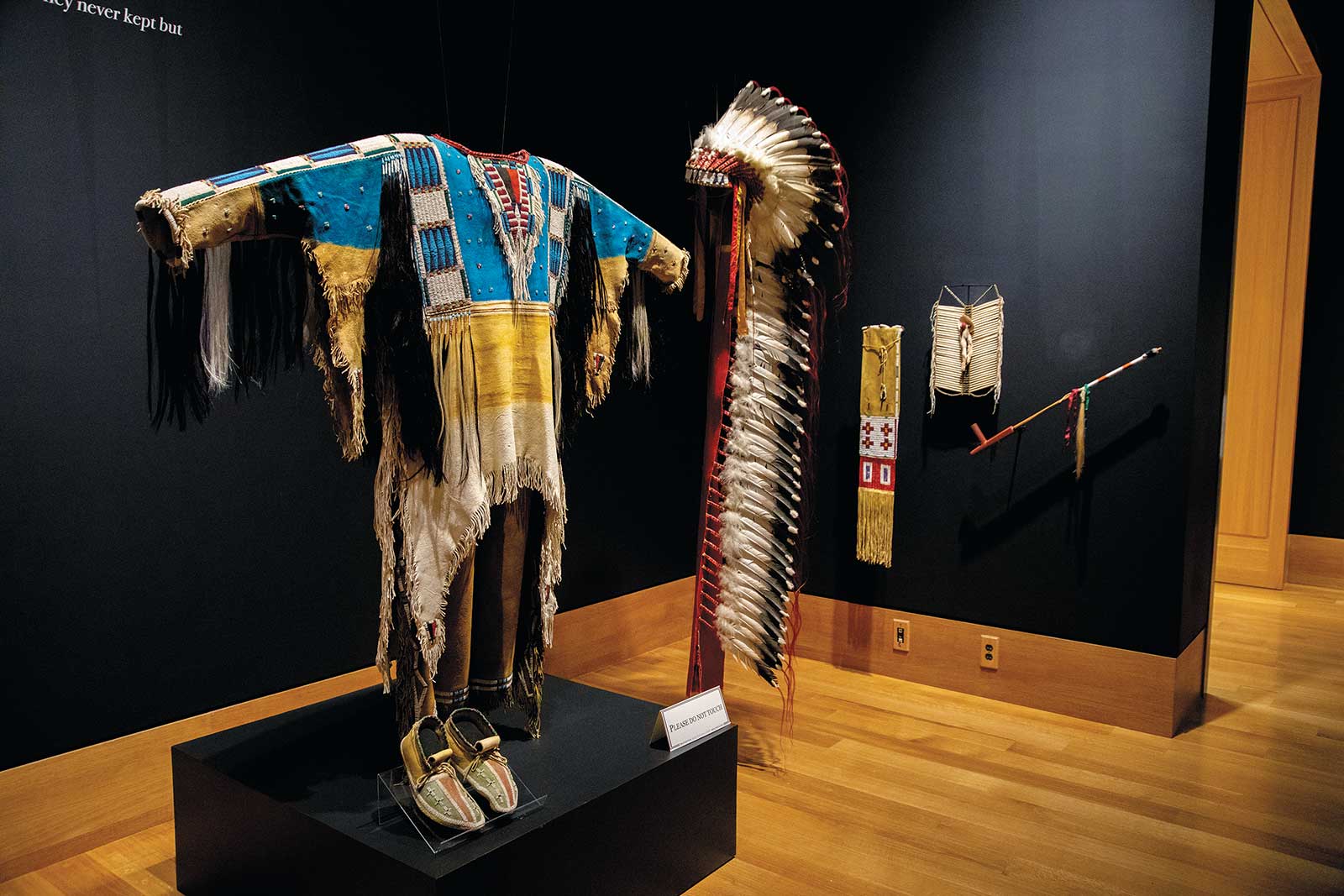 Cathy A. Smith, Makhpiya Luta / Red Cloud, ca. 1996, brain-tanned deer-hide shirt with seed beads, human hair, horse hair, natural pigments and trade cloth, 50 x 68”. Gift of the Zeitz Collection.
When the Booth Museum had the opportunity to acquire the collection, they were immediately interested for the historical and educational import of the works as well as their value as objects of art in and of themselves. It was also a means to preserve the fragile and light-sensitive collection for the long term.
“There’s nothing that exists of the [material] culture of these important chiefs. Recreating them is a way of honoring them and their significance and importance to the history of the West,” says Seth Hopkins, the executive director of the Booth Museum. 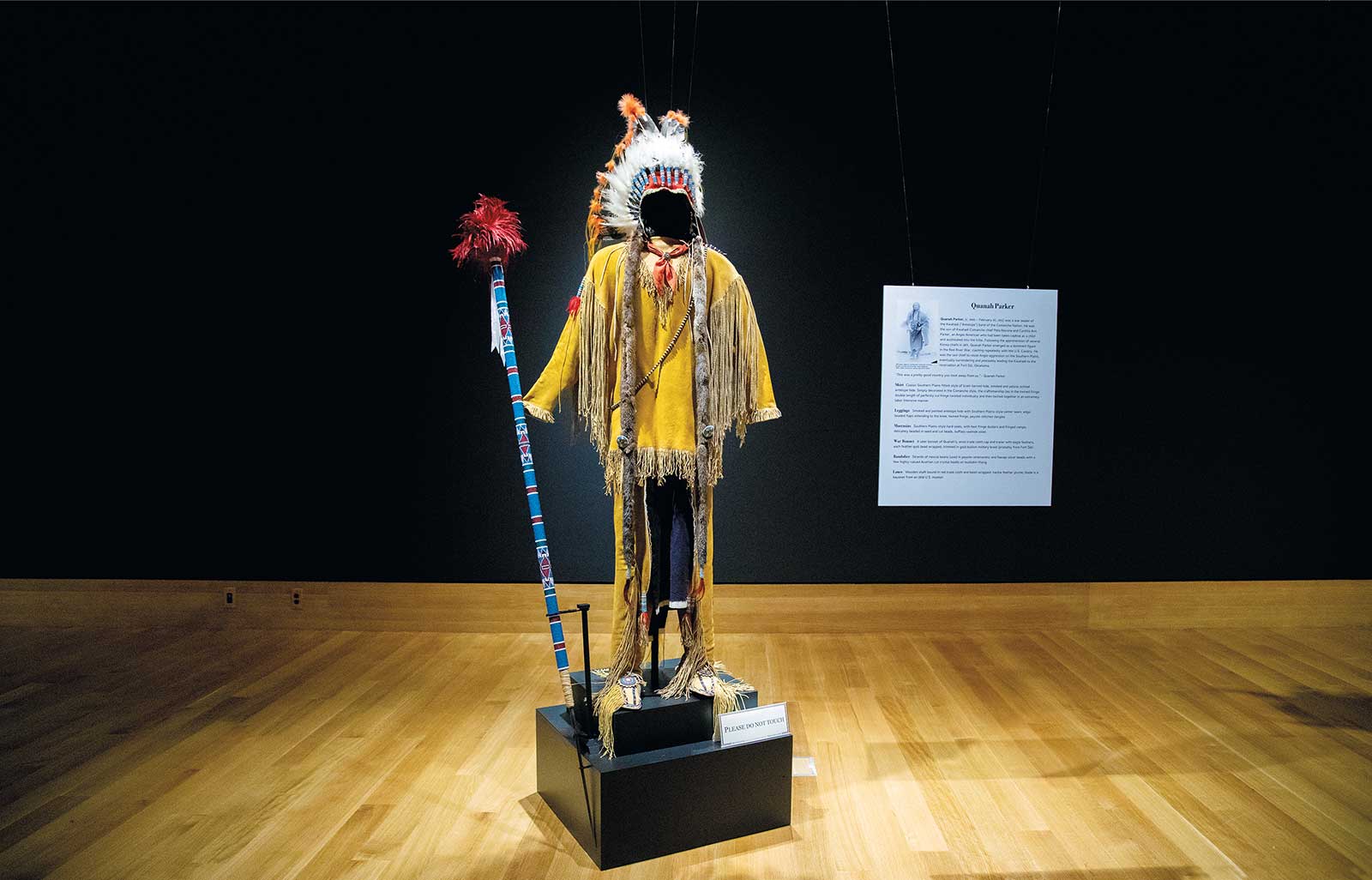 Cathy A. Smith, Quanah Parker, brain-tanned antelope-hide shirt, with ochre pigment and twined fringe, ca. 1996, 34 x 60”.
Gift of the Zeitz Collection.“I think it’s an incredible opportunity to be able to stand in front of these materials and think about the individuals who would’ve worn them and all the turmoil that was going on during their lifetimes and in our history. [It’s a chance to] reflect on what incredible leaders they were and how they managed the challenges of the changing times,” he adds.
The collection took Smith and a small team of assistants four years to complete but the research, understanding and artistic skill was accumulated over the course of 25 years. Smith grew up in South Dakota among the Lakota of Cheyenne River Reservation and her unwavering devotion earned her the knowledge, privilege and blessing to do this work. 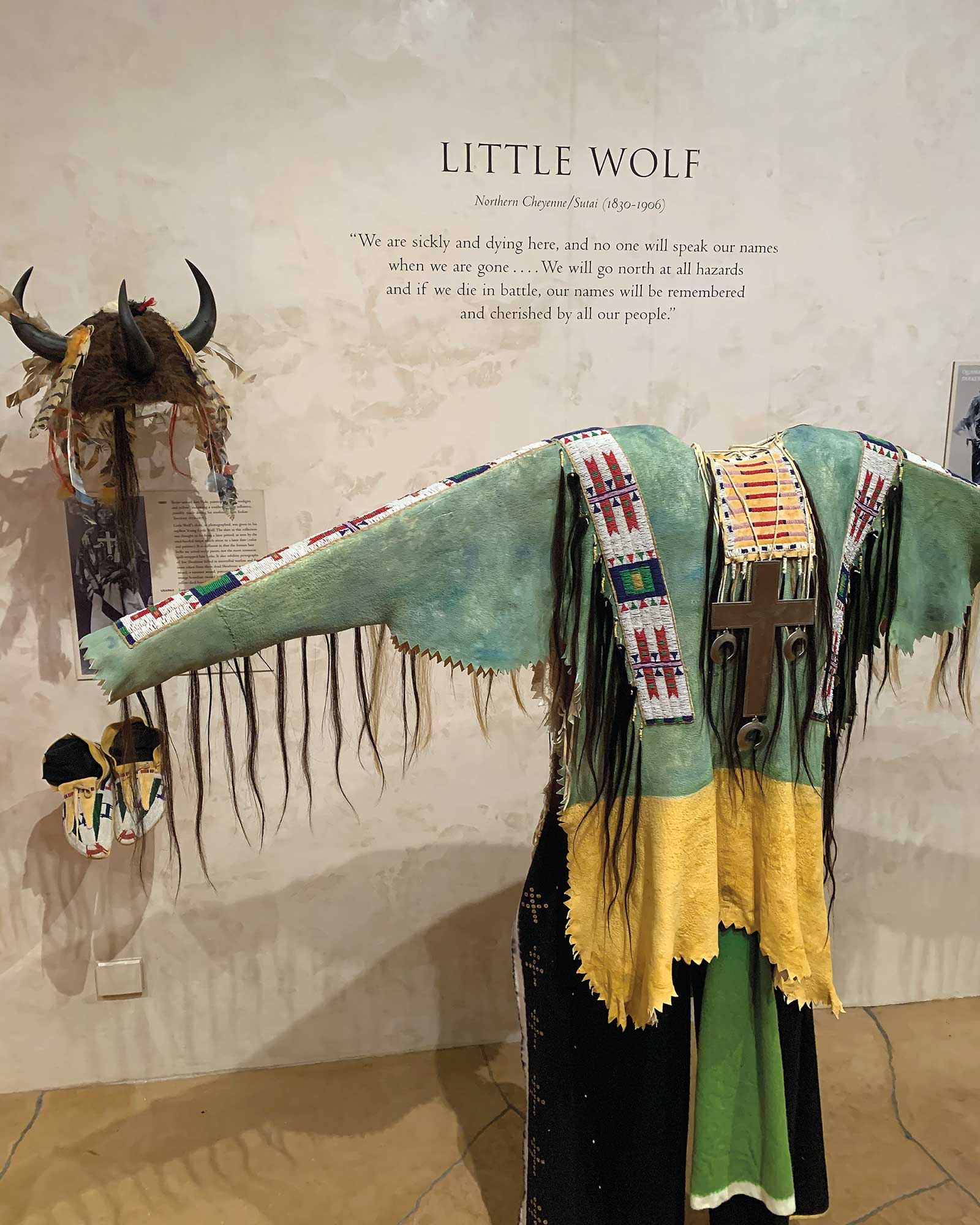 Cathy A. Smith, Little Wolf, ca. 1996, brain-tanned deer-hide shirt with natural pigments, seed beads and human hair,
38 x 64”. Gift of the Zeitz Collection.
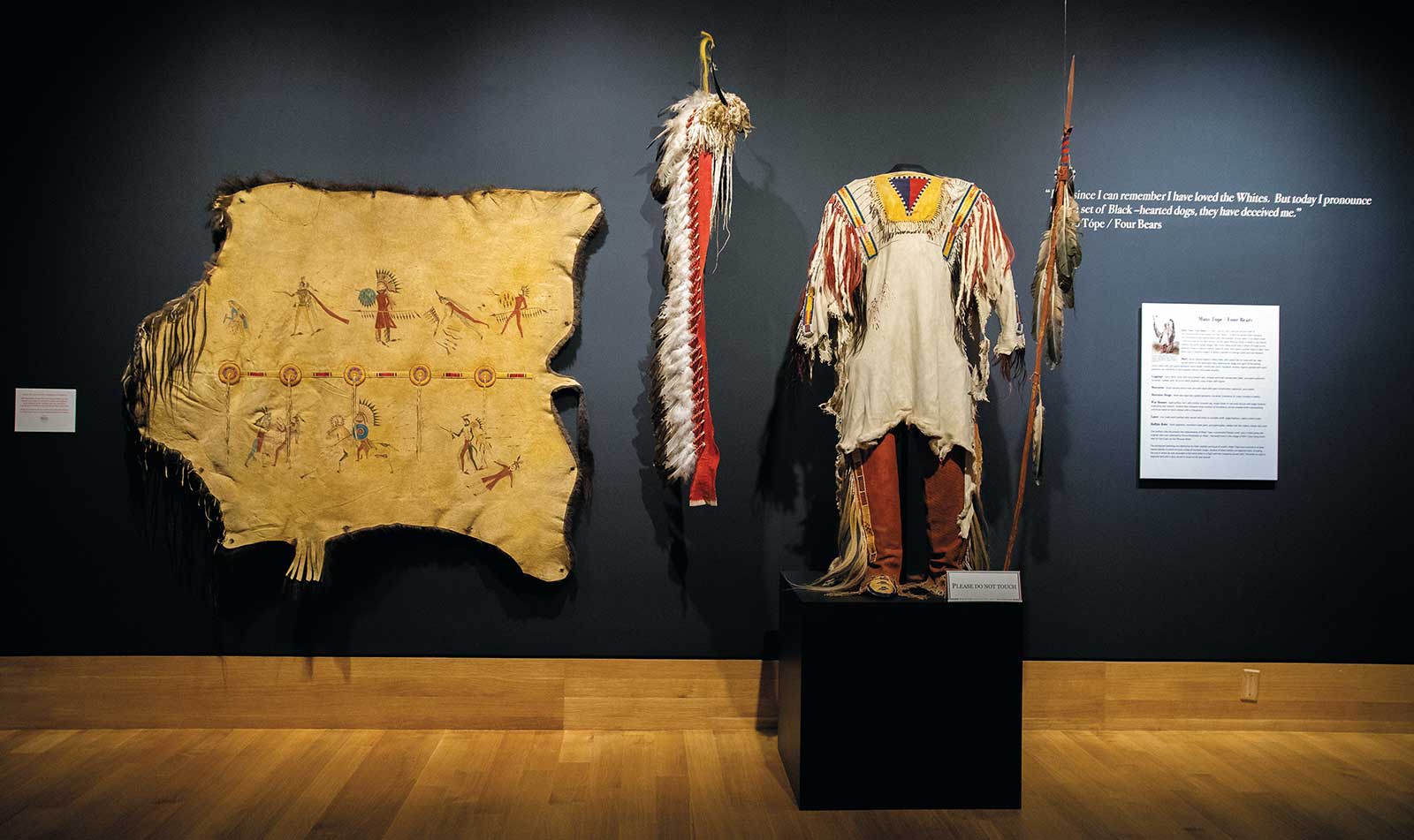 Cathy A. Smith, Mató Tópe / Four Bears, ca. 1996, brain-tanned bighorn sheep-hide shirt, with porcupine quills, pony beads, human hair, horse hair and ermine, 55 x 60”. Gift of the Zeitz Collection.“Creating this collection brought to awareness the grace, power, and dignity of these great Native Americans,” Smith notes in an artist statement. “It changed me forever, as I hope it will change you, the viewer.”
Curators at the Booth have decided not to display the regalia on mannequins as it has been in the past to emphasize the art aspect rather than portraying it as a Native American history exhibit. But Hopkins does wish that “by association it celebrates the true artists of the day who would have created the originals. Their names are lost to history. They were the original artisans and hopefully we honor them through the presentation of this body of work as well.” —
The Shirt Wearers: The Plains Indian Art of Cathy A. Smith
Through January 8, 2023
Booth Western Art Museum
501 Museum Drive, Cartersville, GA 30120
(770) 387-1300
www.boothmuseum.org
Powered by Froala Editor