Science says that gray wolves were domesticated between 27,000 and 40,000 years ago either in Europe or Asia. Hunter-gatherers used them for hunting as well as for protection. In Roman myth, the abandoned twins Romulus and Remus were found and nursed by a she-wolf. Romulus later founded the city of Rome.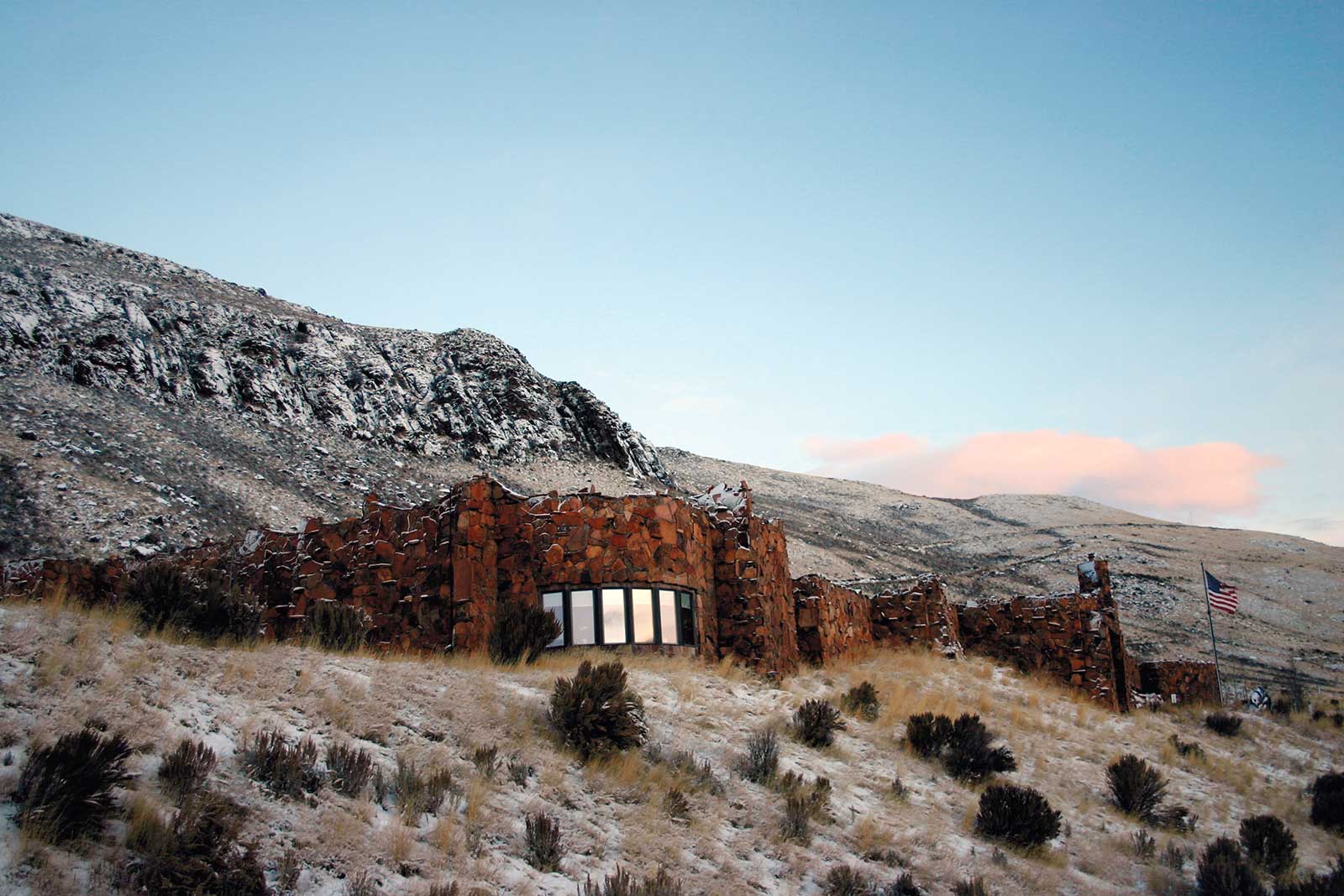 The National Museum of Wildlife Art in Jackson Hole, Wyoming.Today, our domesticated dogs retain their genetic relationship to their wolf ancestors as well as to other canines such as foxes and coyotes, all of which have a complicated history in the American West. Among Native American tribes, the coyote can represent everything from a teacher to a trickster. They also see the fox as a trickster but admire them for their gifts of anticipation, observation and stealth. Wolves are admired for their loyalty, familial ties, good communication, education of their young, understanding and intelligence. Yet, all have been the scourge of Western settlers who lose their livestock to their canine predators.
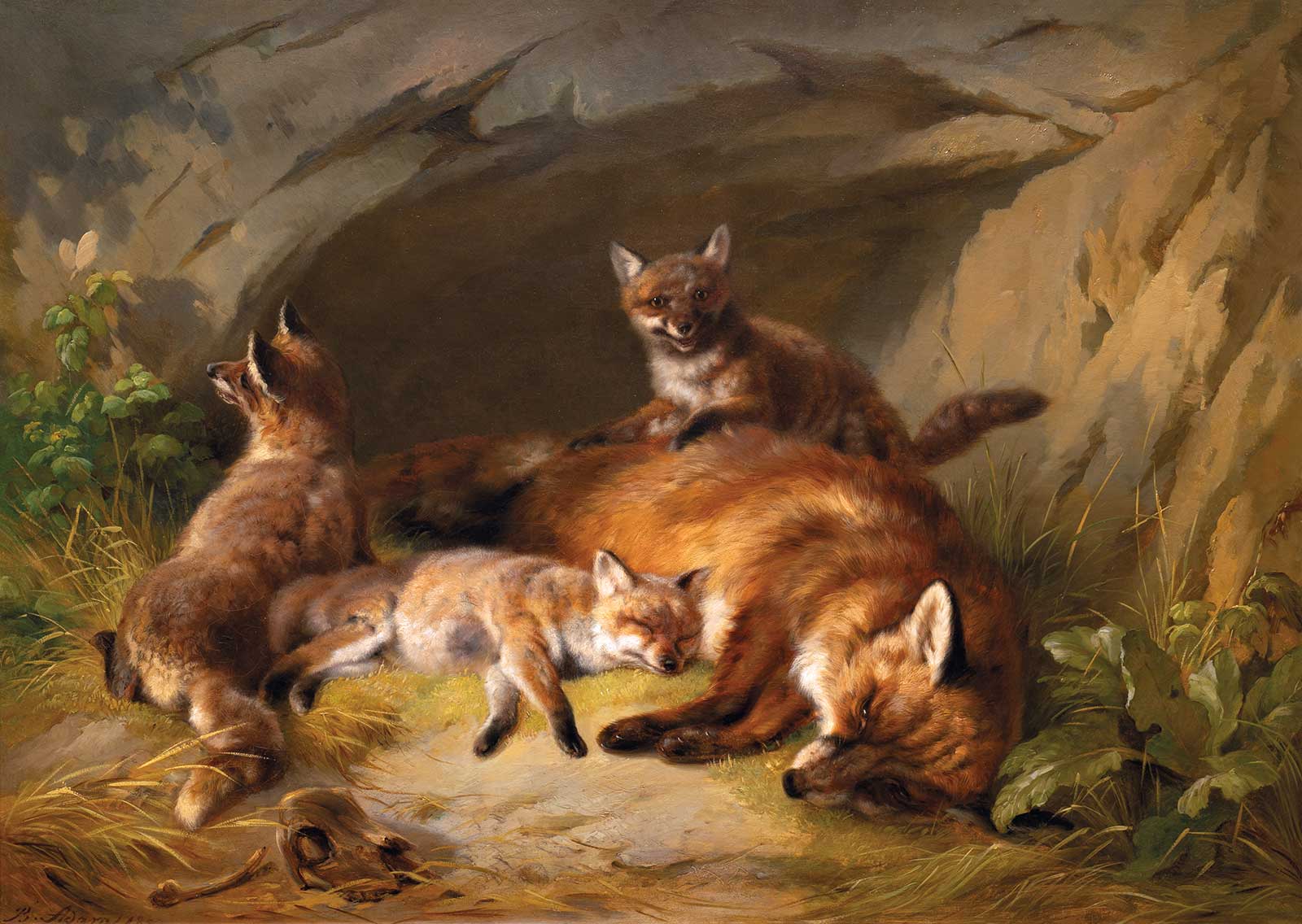 Benno Raffael Adam (1812-1892), Vixen and Cubs, 1852, oil on canvas, 32 x 45”. JKM Collection ®, National Museum of Wildlife Art.
The National Museum of Wildlife Art in Jackson, Wyoming, presents the exhibition For the Love of Canines through September 30, 2023. It explains, “For the Love of Canines questions humans’ relation and fascination with canines, whether love or loathing, through works of art from NMWA’s permanent collection.”
The Polish painter Alfred Wierusz Kowalski (1849-1915) often painted lone wolves surveying farms from the hills. Although the term “lone wolf” is often used for an independent outsider, in wolfdom, wolves run in packs and the rare lone wolf has been cast out. Here he depicts A Pack of Wolves in their marauding fury, their eyes glowing in the moonlight.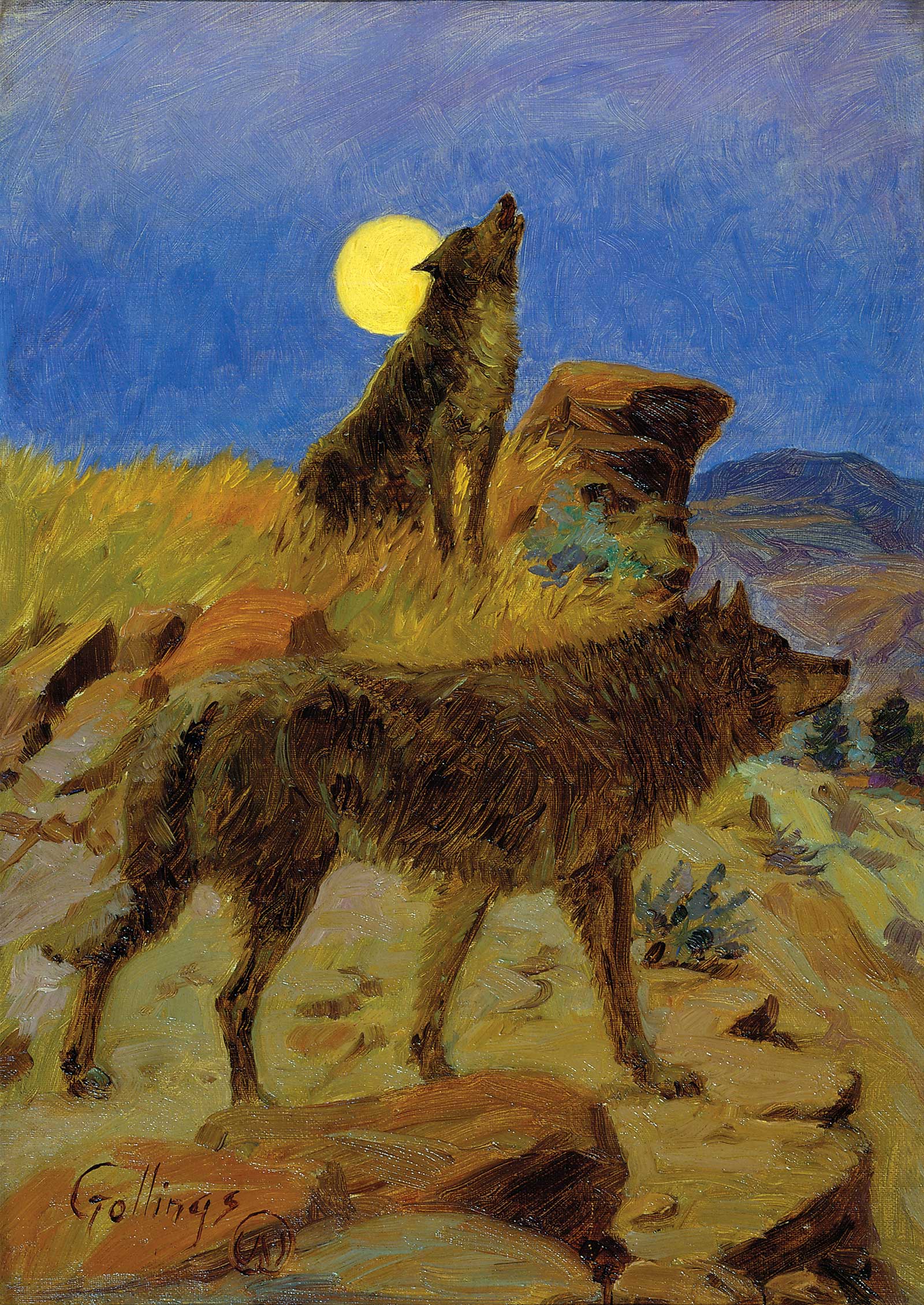 William Gollings (1878-1932), The Call, 1910, oil on canvas, 14½ x 10½”. JKM Collection ®, National Museum of Wildlife Art.
In Vixen and Kits, Benno Rafael Adam (1812-1892) depicts a female fox and her pups being alert, playful or peacefully sleeping, the mother resting but aware. Their peaceful existence is belied by the skeletal remains of an earlier meal.
The area around the museum has witnessed the history of wolves in the United States, with the last hated predator wolf in the greater Yellowstone ecosystem being killed in 1926. To rebalance the ecosystem, wolves were reintroduced in Yellowstone in 1995 and 1996. By 1999, some had established themselves in Jackson Hole.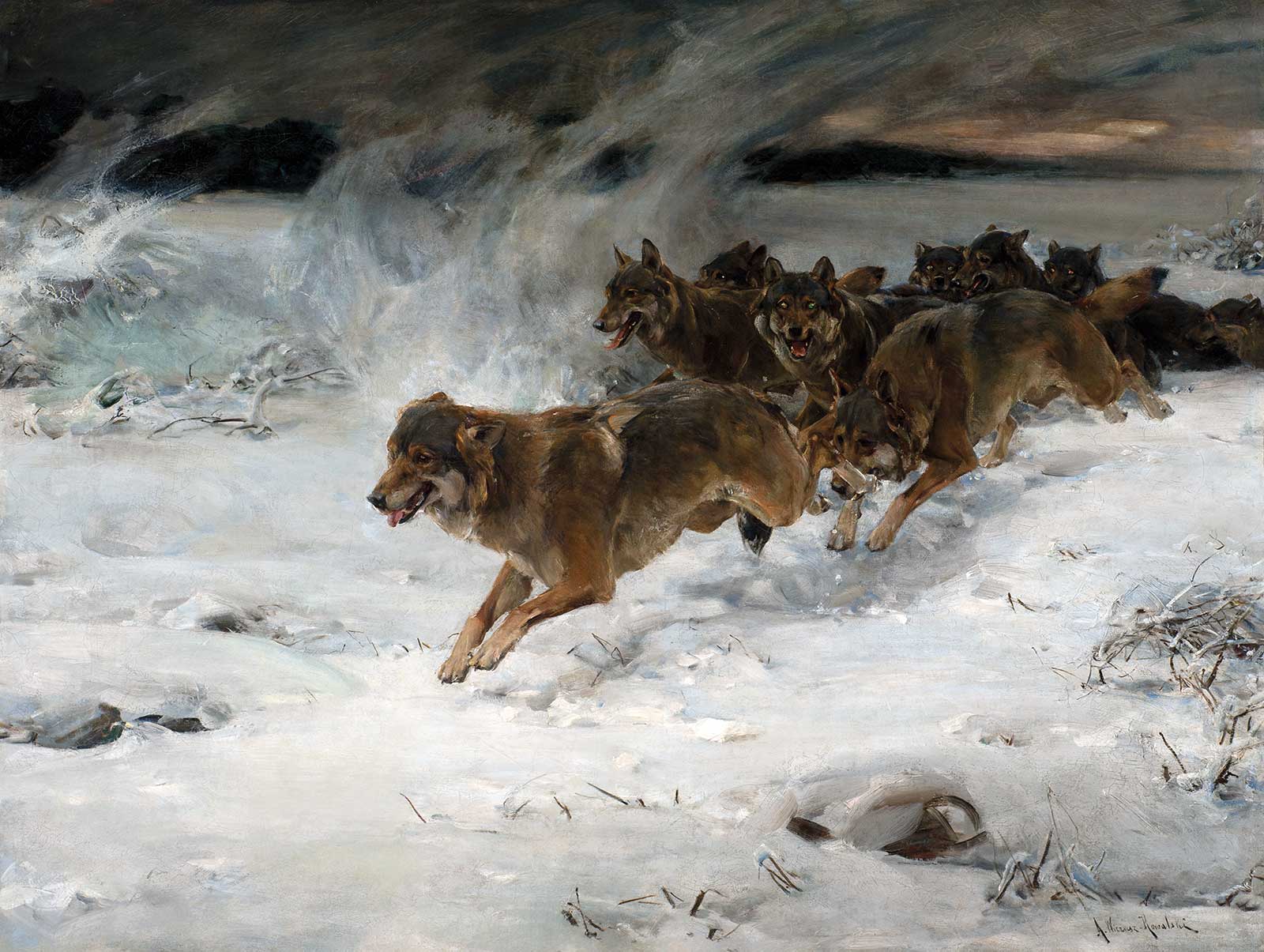 Alfred Wierusz Kowalski (1849-1915), A Pack of Wolves, oil on canvas, 36½ x 48 5/8”. On loan from William G. Kerr, National Museum of Wildlife Art.
Ken Carlson’s Wolf is a portrait of intentness and intention, seemingly about to prance off the canvas even though Carlson has cropped the predator’s paws in the composition. Carlson’s skill in animal portraiture comes from years of careful observation. He admired the work of Bob Kuhn (1920-2007) when he was a youngster and wanted to be an artist like him. Kuhn wrote, “For those of us who portray wildlife…our decision to persist in our quest for excellence is almost always based on a love affair, a fascination with the creatures of our planet, and a need to share this feeling the best way we know how.” Carlson won an art scholarship when he was 15 and the rest is, as they say, history. “I can’t remember a time when I didn’t dream of being an artist,” he says. “That’s all I ever wanted to be. Birds and animals were all I ever wanted to paint.”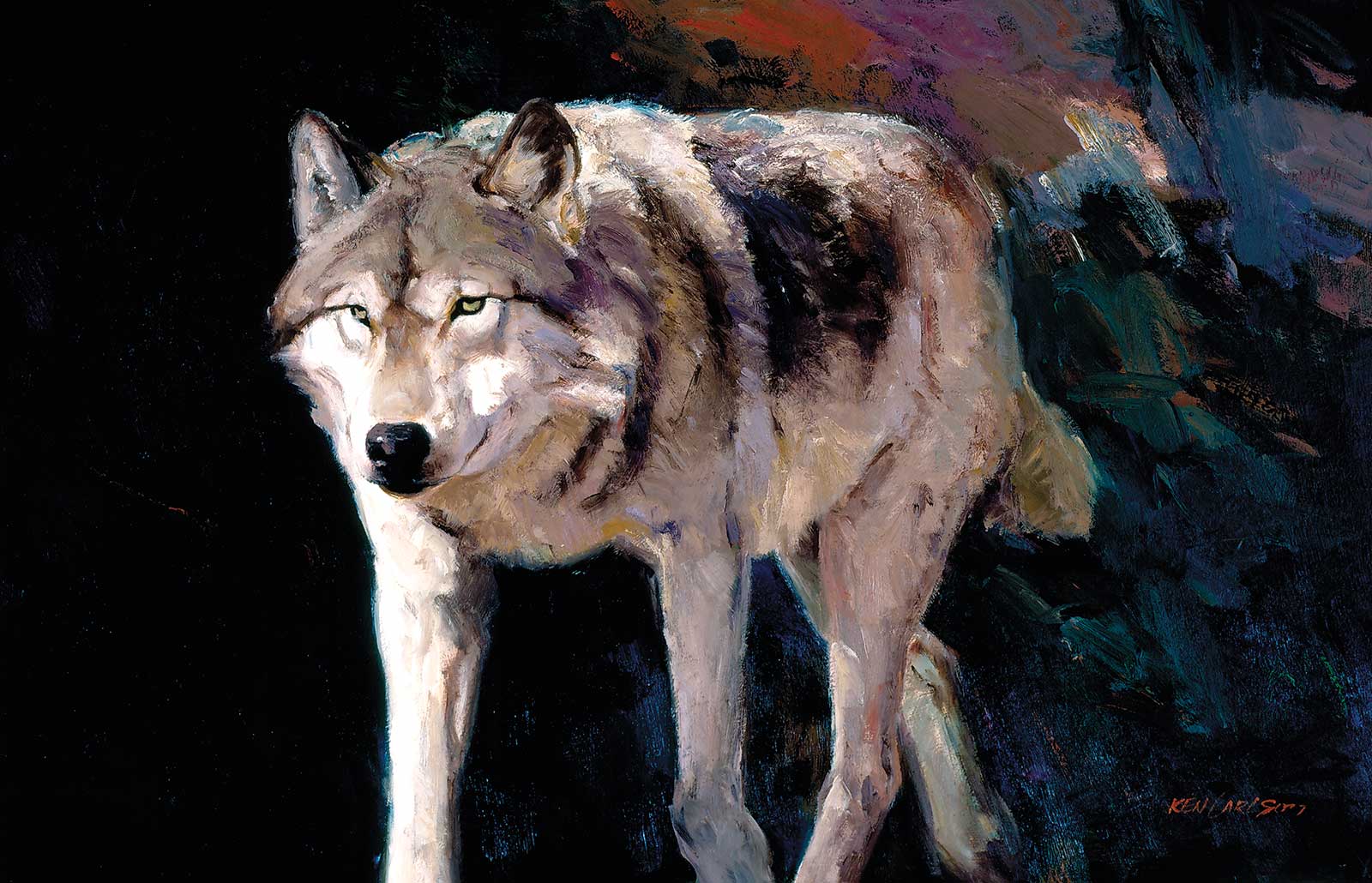 Ken Carlson, Wolf, 1988, oil on board, 23 x 35”. JKM Collection ®, National Museum of Wildlife Art. © Ken Carlson.
William Gollings (1878-1932) is known for his paintings of the Old West, the life of the cowboy. At the age of 19 he took a train west from Chicago and eventually ended up at his brother’s ranch in Montana. He borrowed a horse and set out on what is called the “grub trail”—doing odd jobs for lodging and food. He branded cattle, drove a stagecoach, was a fur trapper, and panned for gold. He returned to Chicago to study art and eventually settled in Sheridan, Wyoming, where he built a studio. He wrote, “I built a shack and called it a studio. The skylight in the roof gave me the right to call it such. I had met and talked with a few of America’s foremost painters: J.H. Sharp, Howard Russell Butler, William B. Henderson, C.M. Russell, Frederic Remington (now dead) and a few lesser lights. They have all had a good influence on my work.” Among them all, it was Sharp who had the greatest influence and invited him into his circle of artist friends.
Gollings painting of wolves, The Call, demonstrates his skill and his knowledge of all aspects of the Old West. —
For the Love of Canines
Through September 30, 2023
National Museum of Wildlife Art, 2820 Rungius Road, Jackson, WY 83001
(307) 733-5771, www.wildlifeart.org
Powered by Froala Editor