When Covid made travel impossible, watercolorist Terry Spehar-Fahey found herself living vicariously through the collective cameras of the internet. Vulnerable to infection, and careful to stay at home, she discovered social media groups of landscape and equine photographers, where people encouraged artists to use their pictures for credit. These are the days of collaborative authorship—she participated in Inktober, the annual October celebration of ink drawing, and joined Instagram groups like “30 x 30,” which attracts a cast of artists who flood the feed with a watercolor painted every day of June.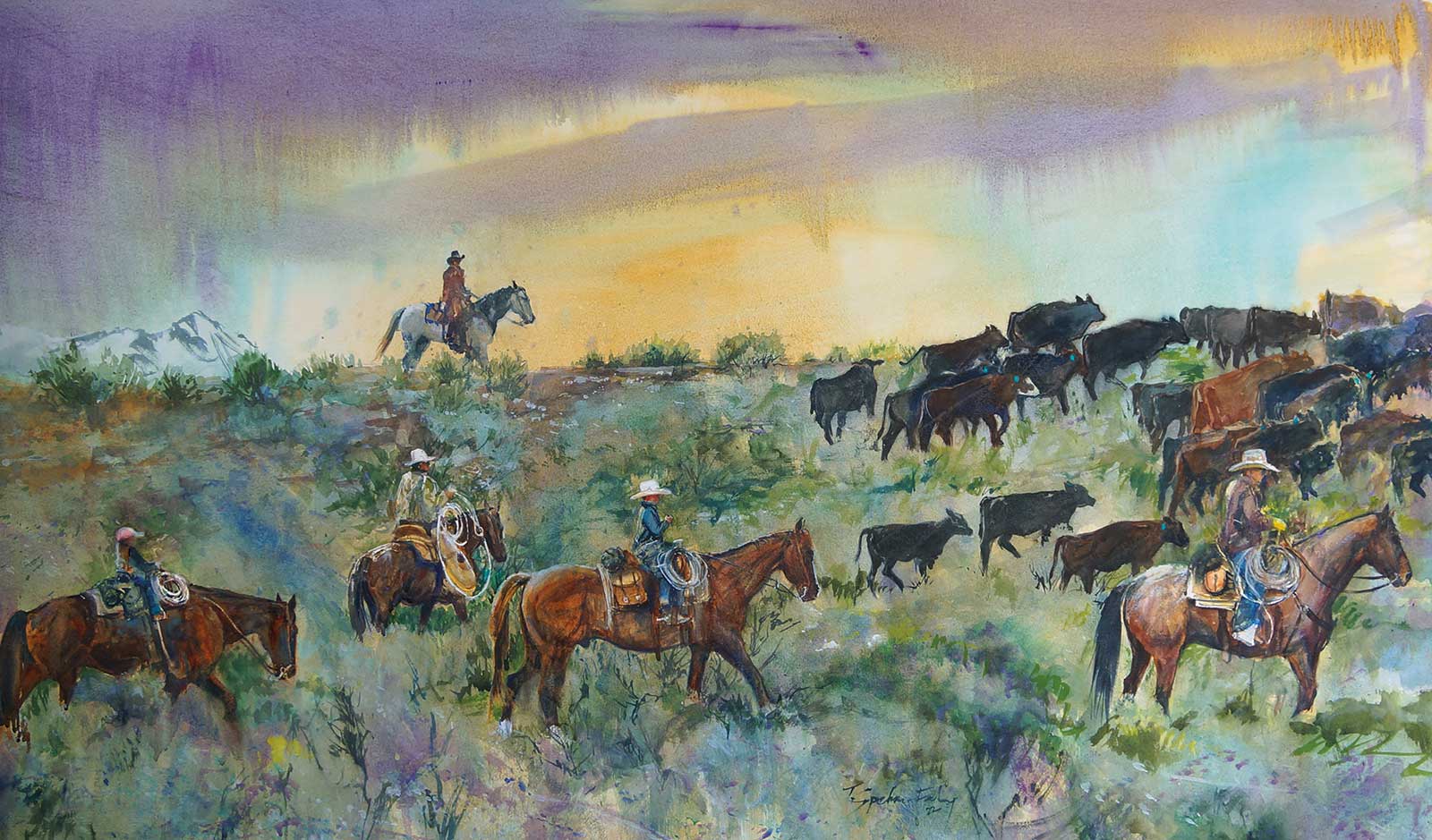 Dana’s Herd, watercolor on Arches 156-pound Cold Press Paper, 28 x 48”
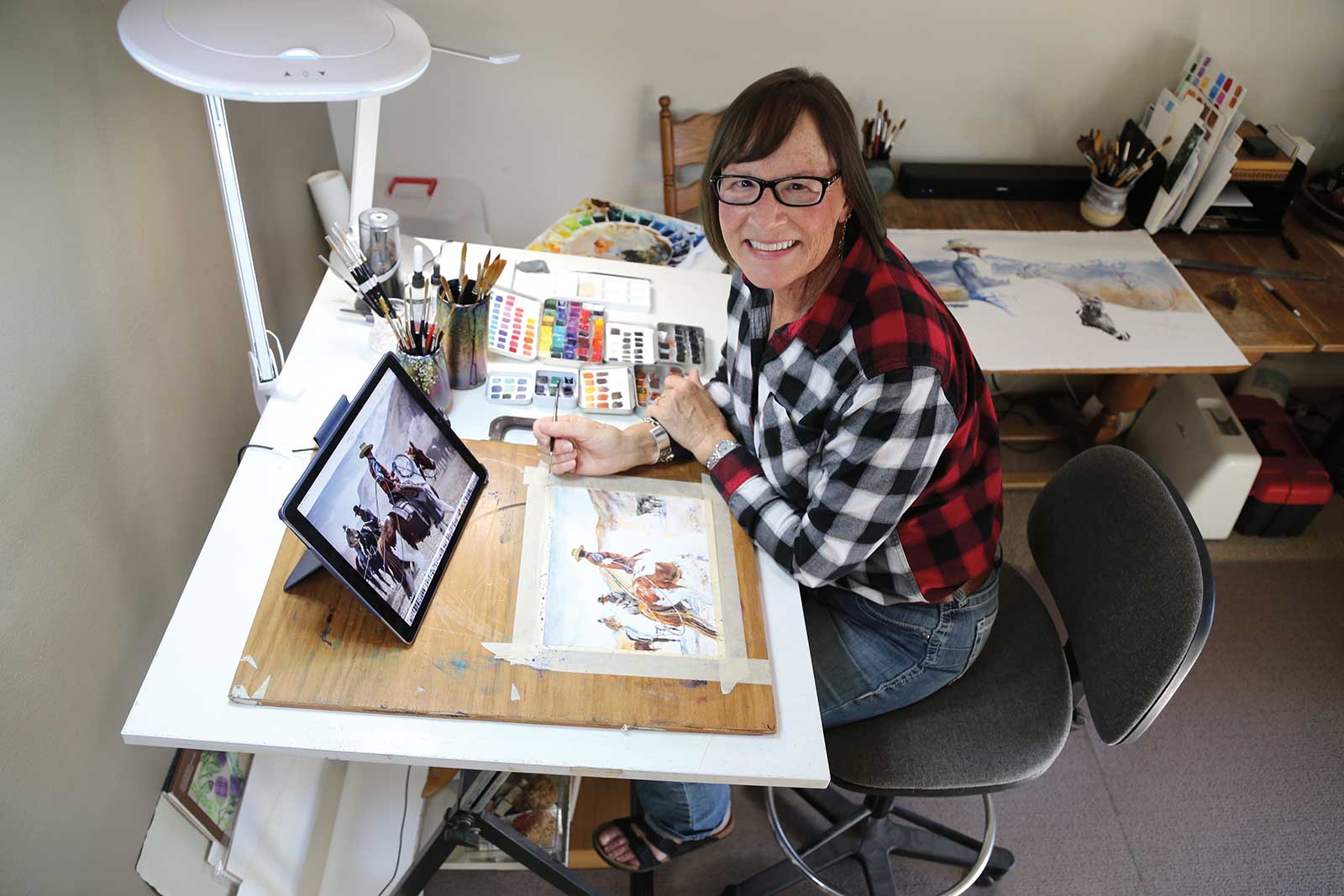 Terry Spehar-Fahey in her studio.But in her light-filled studio at California Lutheran University, Spehar-Fahey found an unexpected new source of inspiration when a Zooming student showed her pictures of working cowboys, and she was stunned by the photographer’s sense of light and space. It was a serendipitous introduction to the world of the Idaho ranching families of the Pahsimeroi Valley. “I always wanted to be a cowgirl when I was a kid,” she says. “We rode sticks and wore wide hats. Now I own two horses.” Captivated, she emailed the photographer, Kirstie Lambert, and asked if she could create paintings based on the pictures. Coincidentally, Lambert lived close to Spehar-Fahey, splitting her time between Ventura County in Southern California, and Mackey in central Idaho. A new network developed, as Spehar-Fahey got to know the people in Lambert’s photographs, and she was delighted with this digital community of new friends.
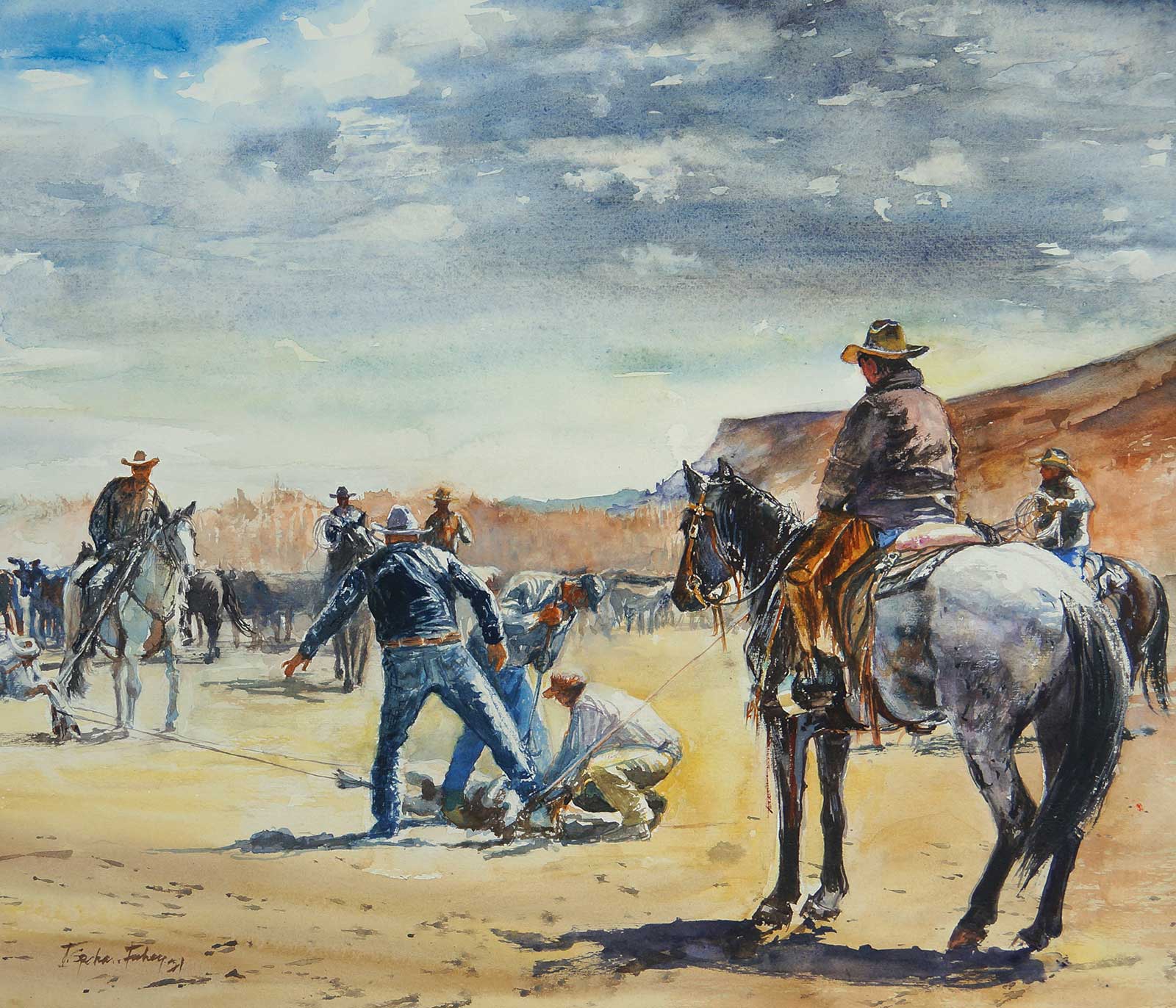 Wranglers, 140-pound Fabriano Cold Press paper, 13½ x 15½”
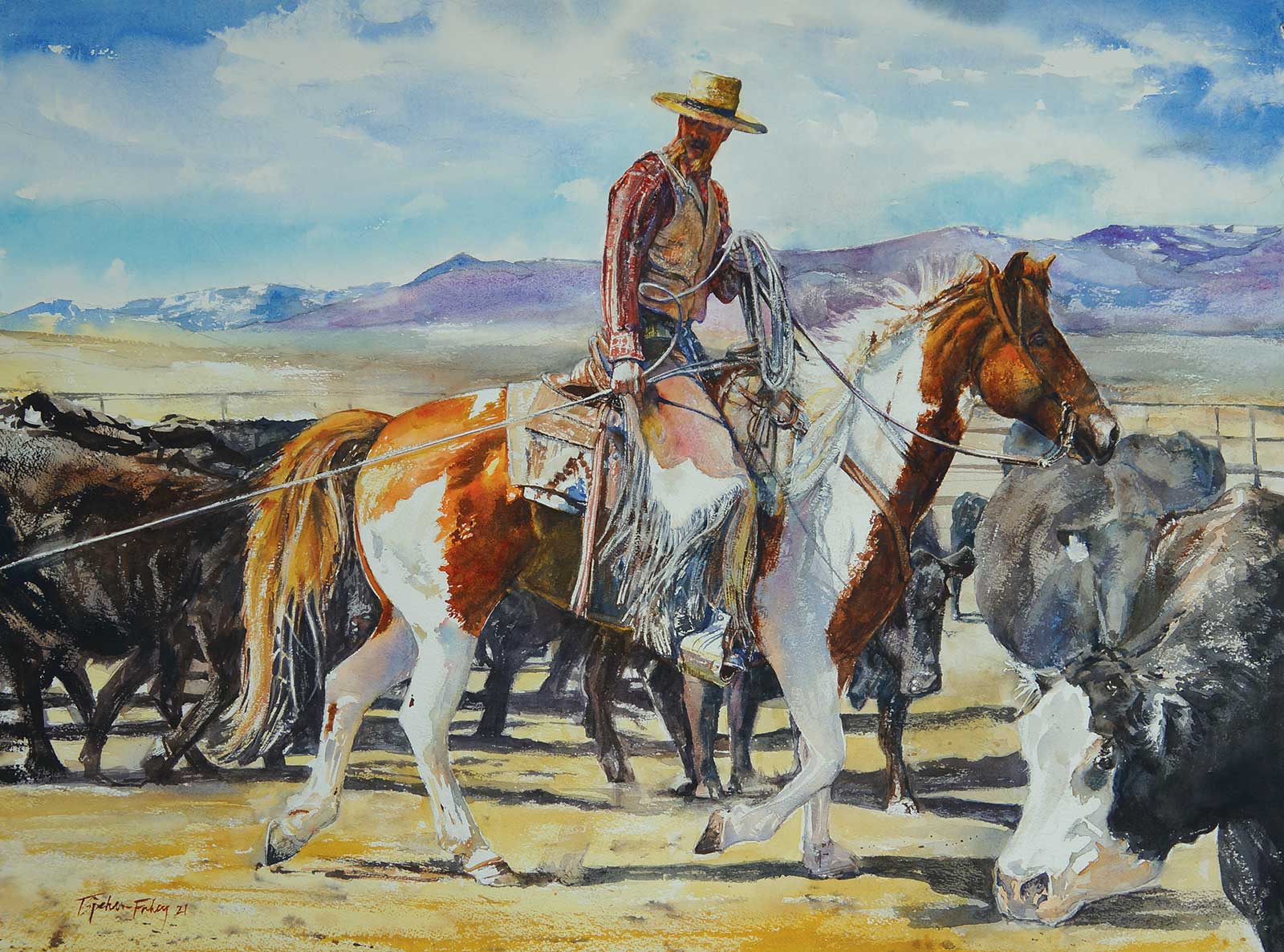 Painted Partners, watercolor, 300-pound Winsor Newton Rough Paper, 21 x 29”
“These are working cattle ranches.” Spehar-Fahey says. “These are the people who produce the meat that we eat. These are the people we rely on. They’re the salt of the earth, and they’re out there doing this tremendous physical labor, on these beautiful animals, and they have a community. The ranch owners all go to each others’ ranches, and help out during the gatherings and brandings, and they’re all there at the rodeos, and they’re all there supporting each other out in the countryside, where it’s really hard to live.” The network of support that characterized the ranchers’ life reflected the congenial little community which grew around her work as she painted through the days, months and years of isolation.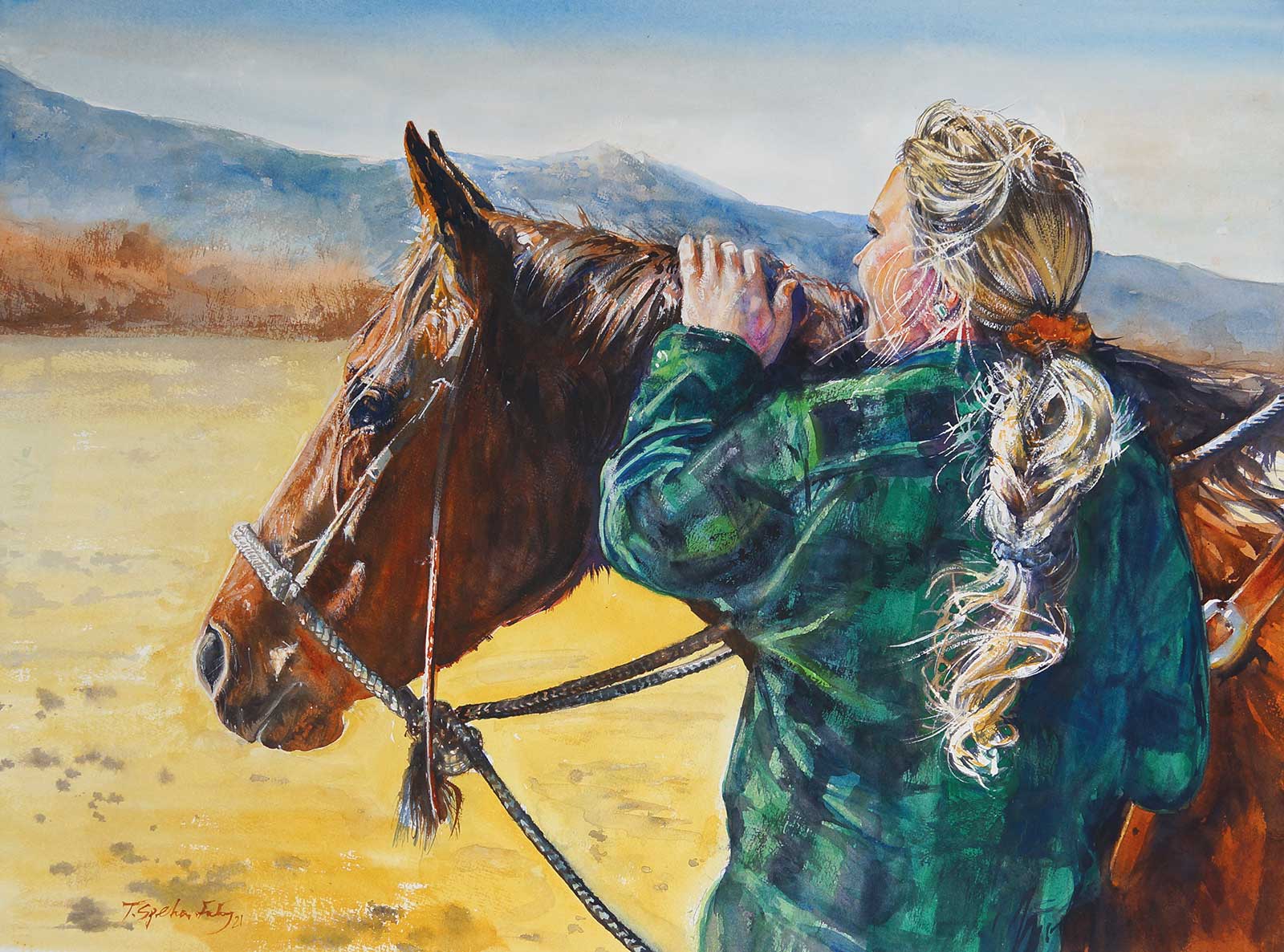 Braids, watercolor, 300-pound Fabriano Rough Paper, 21 x 29”
She says, “I posted them on the internet and the people in the paintings got really excited and they were really happy about it. I’m Facebook friends with a number of them. I’ve sold paintings to them. It’s nice, this ability to have a relationship with folks who you’ve never met before, who are hundreds of miles away from you. That’s an amazing thing.”
Although her work has spanned a career of 35 years, and she has produced large portfolios of Venetian landscapes, the Sierras, beautiful colorful floral images and produced alarmingly intense dramas of self-analytical therapy art, Spehar-Fahey is consistently attracted to the touch of sunlight’s kiss upon the earth, as it sculpts landscapes and figures from dusk and dawn with rays cutting beneath thunderheads, and behind mountains. Full of sunlight, Lambert’s photos were a perfect source of inspiration for the quarantined artist—and the people were the perfect subject—but the paintings are a step removed from the photographs, for Spehar-Fahey is a master of directing her viewers’ gaze, imitating human vision by focusing on specific areas of the composition while everything else blurs into wonderful washes.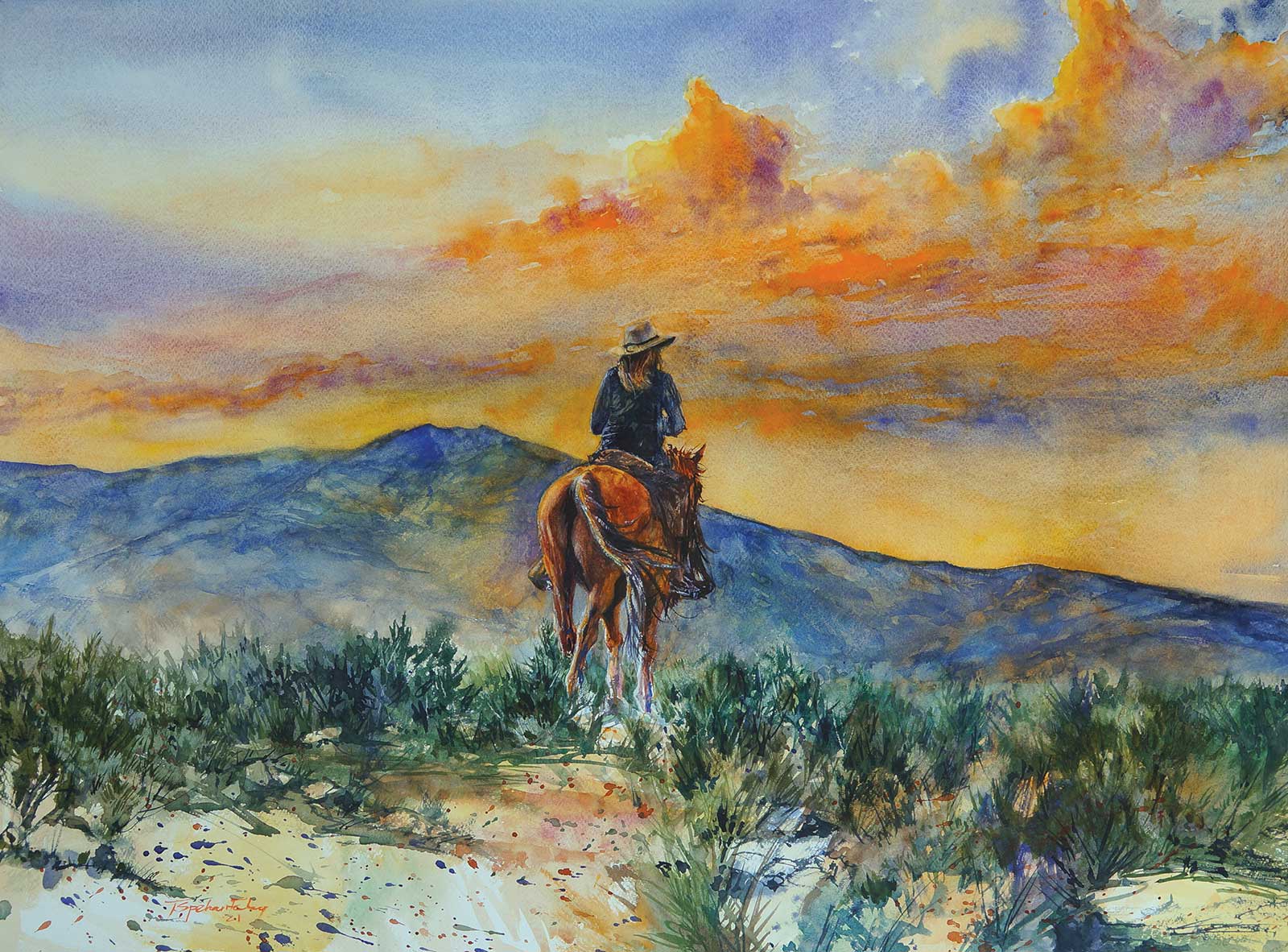 Heading Home, watercolor, 300-pound Fabriano Soft Press Paper, 21 x 29”
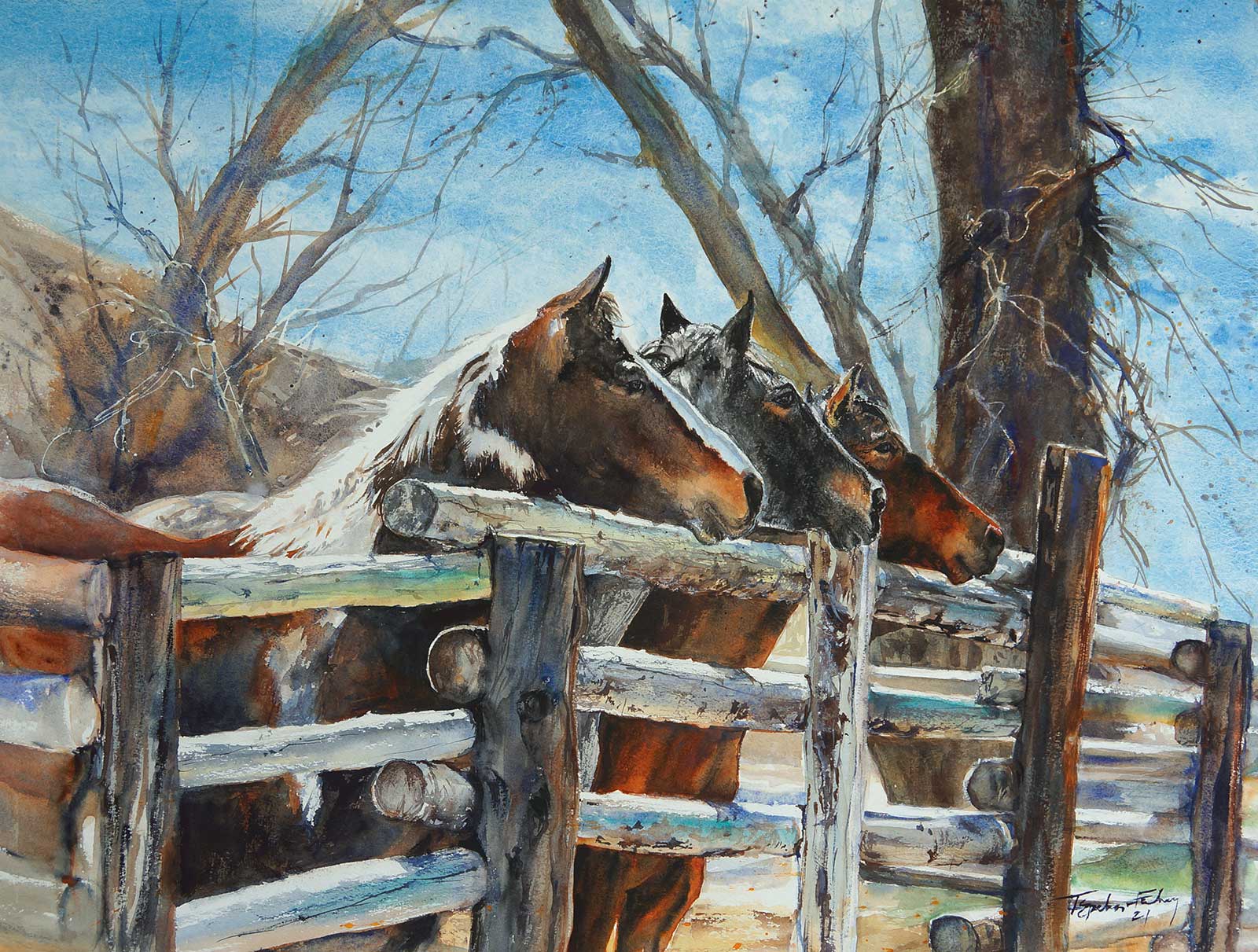 Take Us Too, watercolor, 300-pound Winsor Newton Rough Paper, 21 x 29”
She notes that creative collaboration is an ancient concept. “We tend to make heroes out of individual artists, but even in the renaissance, there were studios, there was collaborative work, so many painters worked on those masterpieces. Working together is no different to that. Every time I post a painting, I tag Kirstie Lambert. I’ve had lots of gatherings with her, we’ve become friends. She loves those people, and loves taking pictures of them, and I love painting them.” —
+++
Michael Pearce is a dynamic writer, curator and critic. He is a champion of skill-based art that emerges from popular culture and shapes the spirit of the age. He has published dozens of articles and is the author of Art in the Age of Emergence. He is a professor of art at California Lutheran University.
Powered by Froala Editor