Three giants of American realism are exhibiting together at the Broadmoor Gallery in Colorado Springs, opening November 10—but connoisseurs will have to be quick to catch the show—the exhibit is only open for a three-week run. Curator Jamie Oberloh has brought together beautiful paintings by the tremendous Western Nouveau innovator, Thomas Blackshear II; the superb wildlife painter Ezra Tucker; and the great guru of American watercolor, Dean Mitchell. All three men have painted images of African Americans for the show—as cowboys, as settlers, as ordinary people.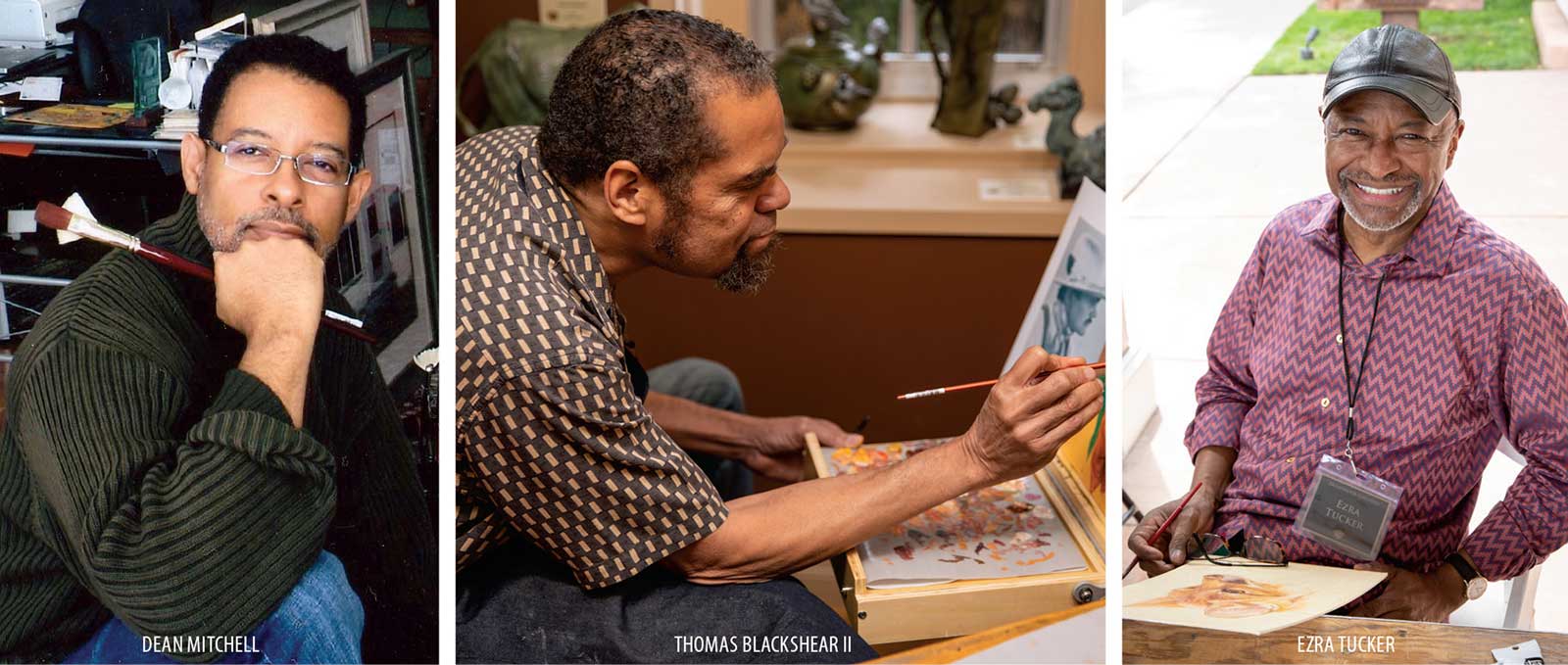
They all began their successful careers creating imagery for Hallmark, the retail greeting card giant. Tucker was hired in an influx of new talent brought to the company in a recruiting drive, and started at the company’s home office in Kansas City, Missouri, in May 1977, directly after graduating from the Memphis Academy of Art at the top of his class. Blackshear arrived in August for a short stint, hired straight out of college like Tucker, and was followed a couple of years later by Mitchell. They joined a staff of about 300 artists, and ranks of photographers and calligraphers working in different departments, all busily engaged in producing the brand’s famous cards, wrapping paper and stationery. “We all worked in the same building and socialized together on a daily basis because part of our job description was learning from each other,” describes Tucker “…They had people from around the world…the concept was very nice. I enjoyed it, always thought it was a graduate school— I didn’t have to pay for supplies, all I had to do was show up…I got the chance to experiment and use different media.”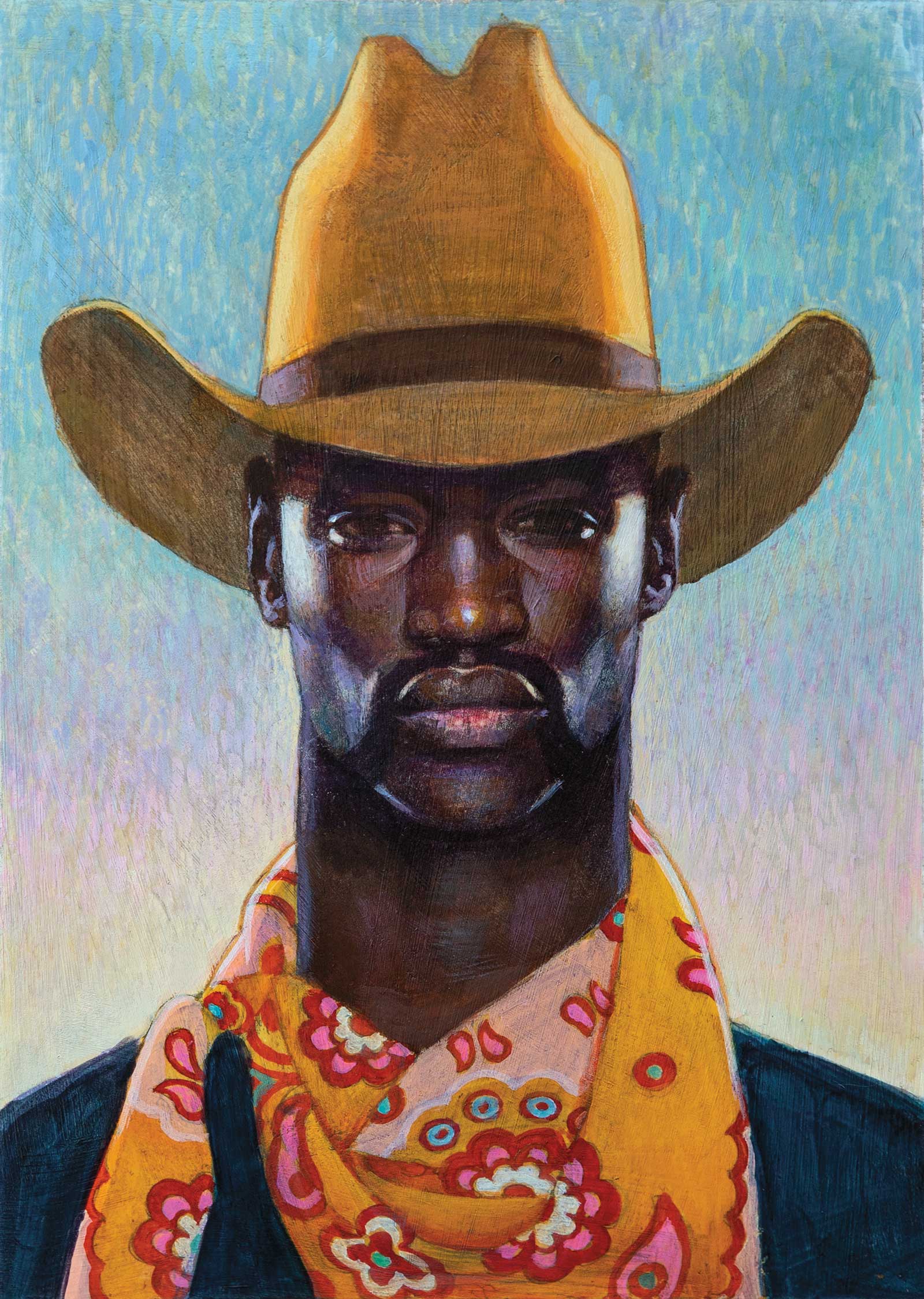 Thomas Blackshear II, Neon Cowboy, mixed media on board, 9½ x 6½”
As well as providing them with a professional approach, working at Hallmark shaped their studio practices. Blackshear and Tucker credit their tenure at the company with forming their careers, using the deadline discipline of their practices as professional illustrators to build their businesses when they left to cut their own paths into the unknown realms of freelancing. Blackshear didn’t remain there long, spending only a year at the company, but he is the most enthusiastic of the three men about his tenure. “Hallmark was an eye-opening experience,” he shares. “It was my first experience seeing what the world of business was really like. The thing that was really the gem in it was that Mark English, who was one of America’s most famous contemporary illustrators, was teaching a class there. It took me three months to get into his class. When he showed me his technique, I knew I could do it. I realized then that choosing Hallmark was the right decision.” Blackshear impressed English with the quality of his work, and soon found himself working two jobs, at Hallmark during the day, and as English’s apprentice at night. “It taught me so much about the business, and about sensitivity and design that it was truly the highlight of my career,” he says.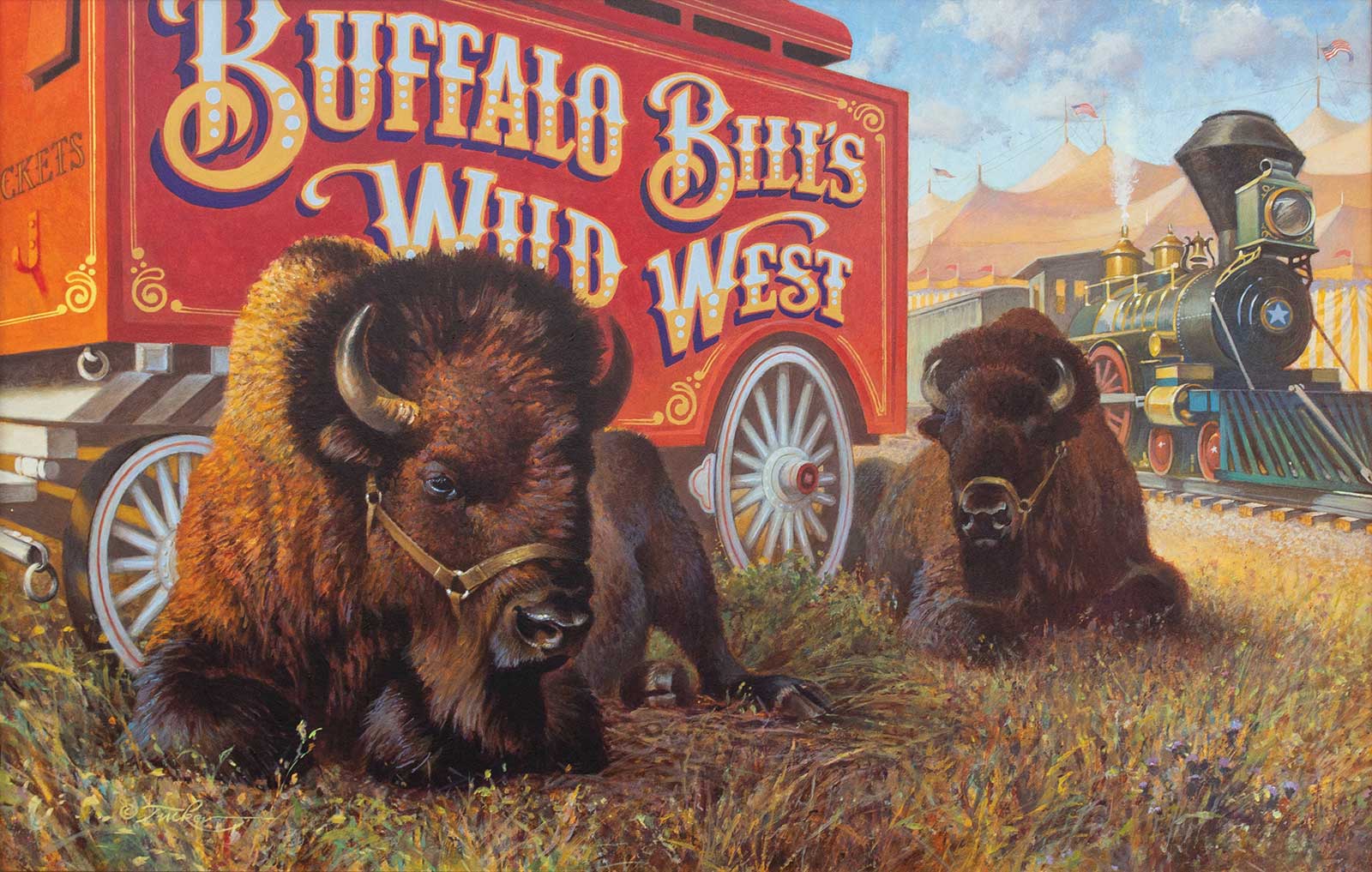 Ezra Tucker, Moving Day, acrylic, 20 x 30”
Tucker stayed with the company longest of the three, working there for five years, frugally saving his earnings until he had a year’s salary in his account, then leapt onto the roller coaster of independence. “It was an idyllic situation,” he says, “but at the same time, it was corporate America. They’re trying to make a profit.” After Hallmark, his burgeoning reputation as a superior wildlife artist gave him opportunities to produce iconic images of horses for Budweiser, and blockbuster Hollywood movie posters like Godzilla, and Warner Brothers’ The Never-Ending Story and Tales From the Dark Side.
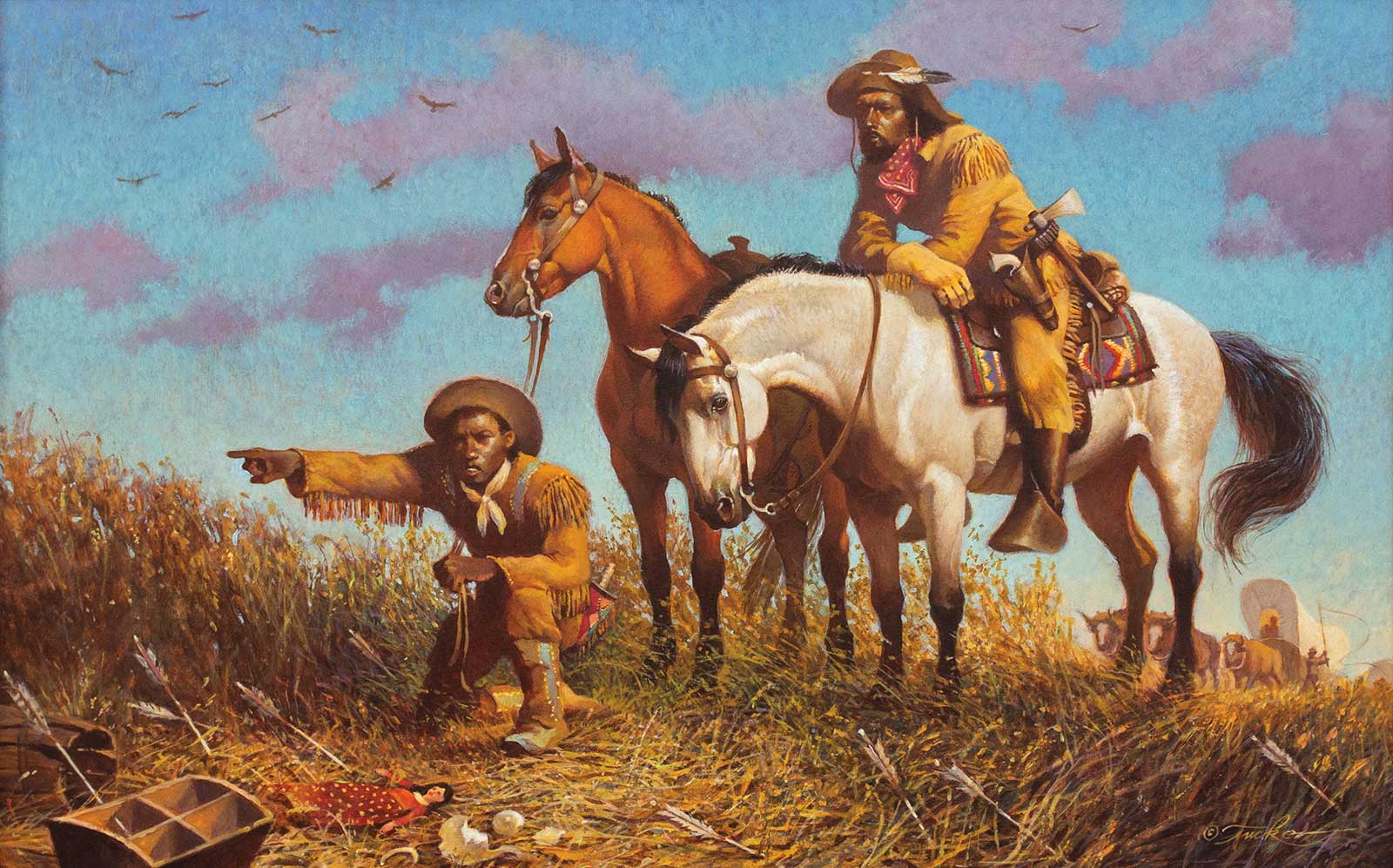 Ezra Tucker, They Went Yonder, acrylic, 20 x 30”While Mitchell was at Hallmark producing commercial work, he plunged into the world of fine art, entering juried competitions sponsored by organizations like the Allied Artists of America and the American Watercolor Society. He entered an important contest in London with a prize of $2,000, and won—Mitchell remembers being paid about the same amount for a month’s work at Hallmark. At first, the company seemed to be enthusiastic about his participation in the competitions, but after he had won several of them, the magazine of the Artist’s Coalition published a story about him and put him on the cover, and he soon discovered that his success caused intense professional and racist jealousy and resentment at work—he recalls seeing a secretary trying to hide a copy of the magazine from him, so she wouldn’t have to talk with him about it. His boss, who had previously encouraged him to enter the competitions, told him he should be more like other employees, and start taking work home—to paint for free. He refused and insisted on getting paid overtime. Soon, he was summoned to meet the vice president. Knowing exploitation when he saw it, Mitchell told the VP he had no intention of making a career at Hallmark because he saw no people of color in positions of authority and had no expectation of moving up. He was let go in November of 1983 after a tenure of only three years. “Race was a big part of the conversation when I was there,” he says.
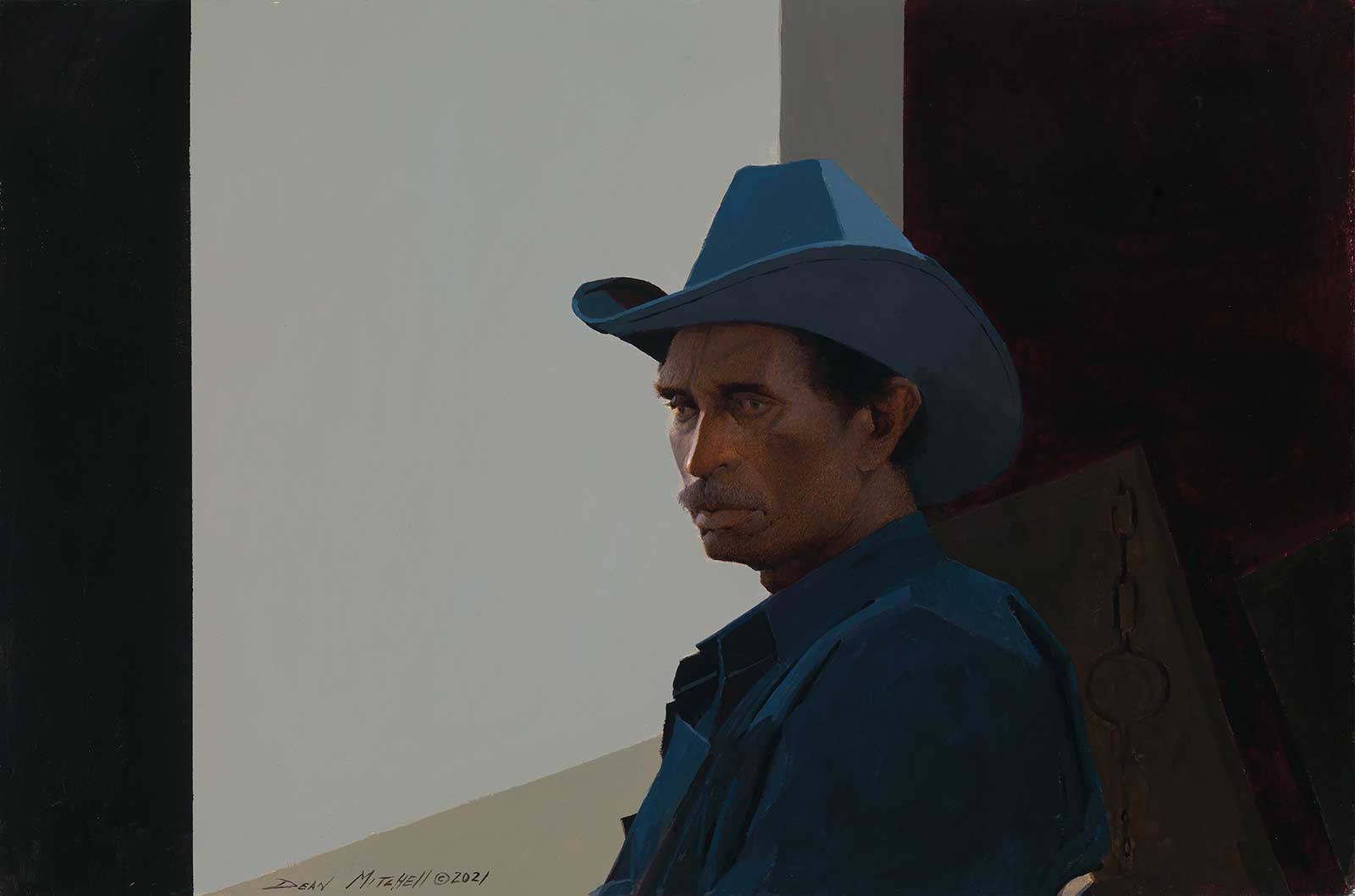 Dean Mitchell, One in Four, acrylic, 20 x 30”
After Hallmark, Mitchell became famous for his delicate watercolors of isolated, weather-beaten reservation houses, full of light and gentle rendering, capturing the collapsing buildings as metaphors for the desolate plight of Native Americans, who were almost eradicated by the genocidal invasions of their homelands. Andrew Wyeth admired him and sent him a complimentary letter, which he treasures.
But, with such guilt-inspiring imagery, he struggled to break into the white world of Western art, but in 1990, he was invited to participate in the Hubbard Art Awards—the only black artist to be asked. He submitted his beautiful watercolor Rowena, a portrait of an elegant and dignified elderly African American woman, but while other paintings were being snapped up by enthusiastic collectors at the opening gala, no one wanted Mitchell’s until the patron of the gala, Joan Gale Hubbard, bought it. She was immediately offered double the price she had paid for it by another patron, and the painting was voted the audience favorite. “It taught me about the power of money and the power of endorsement,” Mitchell observes.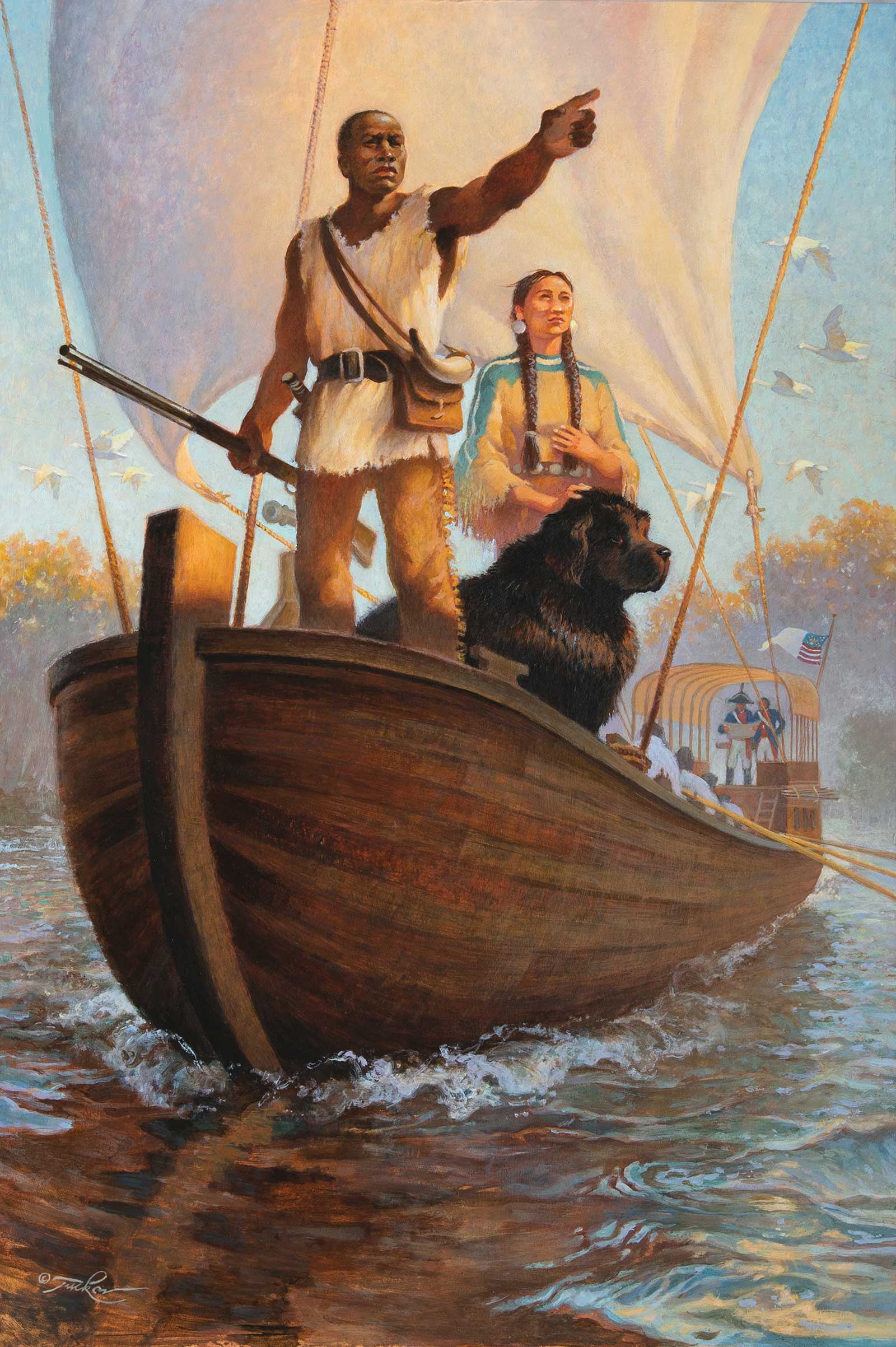 Ezra Tucker, Devoted Servants, 30 x 20”
The culture has changed, and although all three agree that racism is still an issue, they also note a new openness, and the show marks a refreshing change in the art market—an exhibit of work featuring three extremely successful African American artists showing their paintings of African Americans in the Western art market is a historic moment. The paintings mark the moment, for all three have painted Black men and women into the story of the Wild West. In 2016, the Village Voice reported that 25 percent of the 35,000 cowboys of the 1870s and 1880s were Black, but Hollywood and 20th-century art avoided representing them. 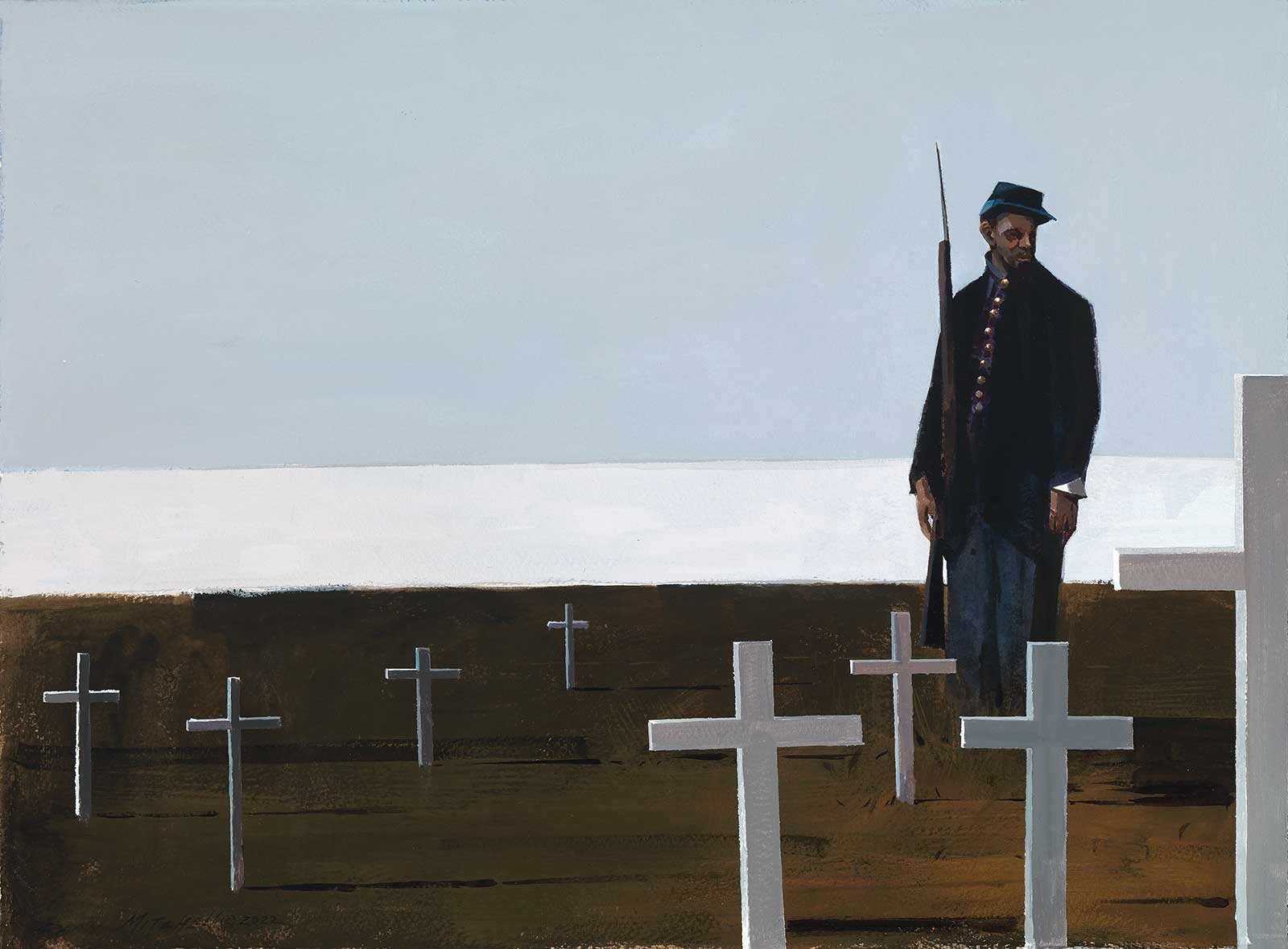 Dean Mitchell, The Crosses We Bear, acrylic, 22 x 30”
Tucker’s new bronco busters and Black lawmen help to fill the raw void in the imagery of cowboy art that was created by racial discrimination. Blackshear’s Black cowboys are placed within the unfolding narrative of art history as he continues to develop his gorgeous new genre of Western Nouveau, a beautiful hybrid of paintings of the old West coupled with the gorgeous, rhythmic styling of the Vienna Secession. For the Broadmoor show, he is producing a group of new paintings. “They’re mostly cowboys,” he says, “I’m combining more abstract design with realistic painting, so it has more of a contemporary look, more flat graphic shapes.” Mitchell’s beautiful buffalo soldiers are as lonesome and isolated as the other characters that fill his body of work. They are stoic and solid guardians of decency in the face of outrage. —
Icons of American Art
November 10, 2022, 4-8 p.m.
Broadmoor Galleries, 1 Lake Circle, Colorado Springs, CO 80906
(719) 577-5764, www.broadmoorgalleries.com
Powered by Froala Editor