Paul Rhymer began drawing as a young boy. His mother was a painter and his father a taxidermist. He worked in his father’s shop and later became a taxidermist and model maker at the Smithsonian Institution. As many taxidermists do, he gravitated into making sculpture, most often lifesized pieces recognized for their anatomical correctness because he knows them, literally, from the inside out. All of his sculpture bears the marks of his modeling the clay that is then cast in bronze.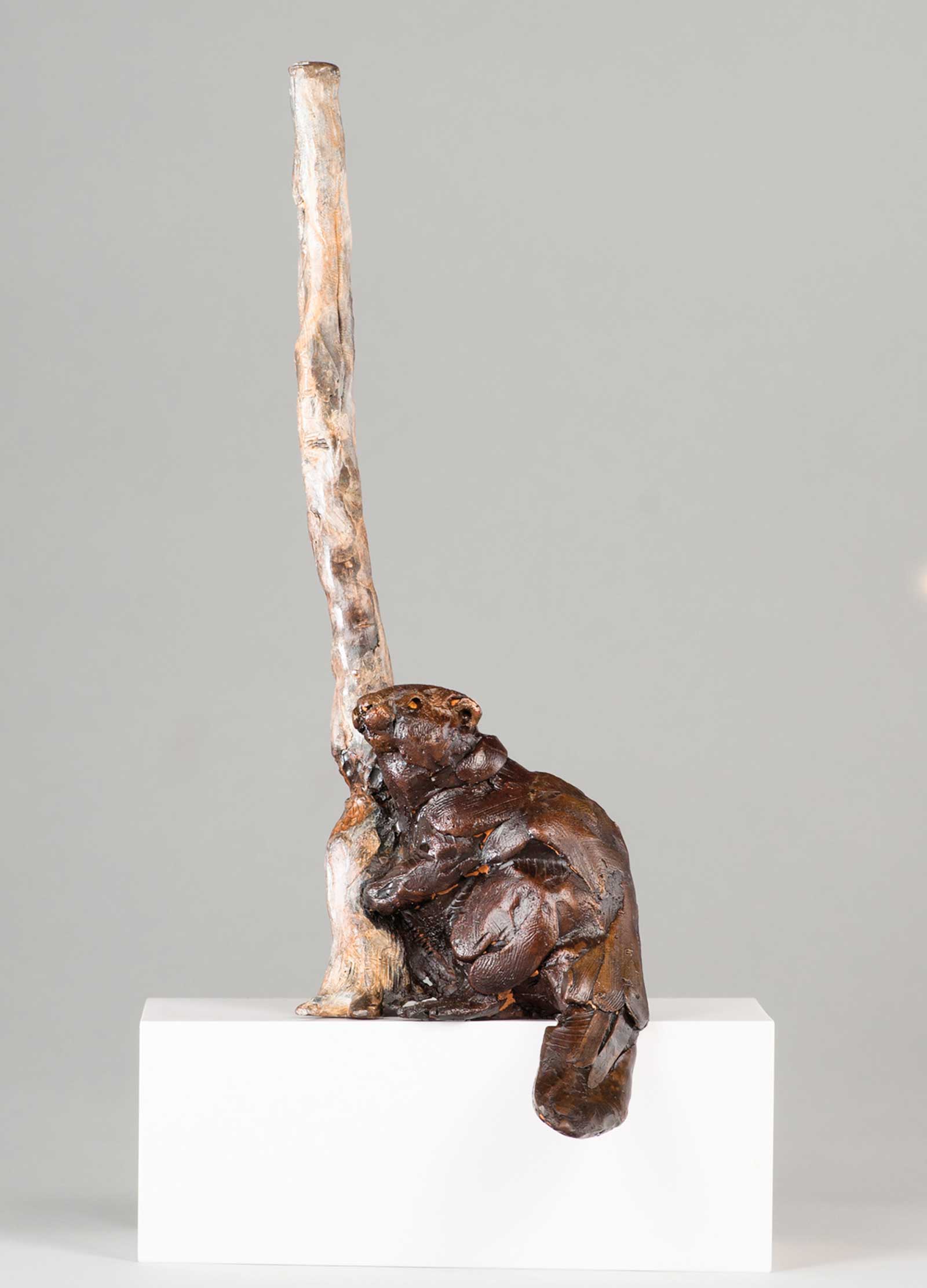 The Legacy Gallery, Beaver #21, bronze, 7 x 3”, by Paul Rhymer.
His small work, Beaver #21, even at its diminutive 7-by-3-inch size, bears the marks of its making and the characteristics of its living subject.
Ben Nighthorse Campbell (Northern Cheyenne) represented the people of Colorado in Congress, first as a member of the U.S. House of Representatives and, later, in the U.S. Senate. He went to Japan to continue his training in Judo and his interest in metal working, studying with a samurai sword maker. Back in the United States, he and his wife became champion horse trainers. Working as Ben Nighthorse, he is an award-winning jewelry maker.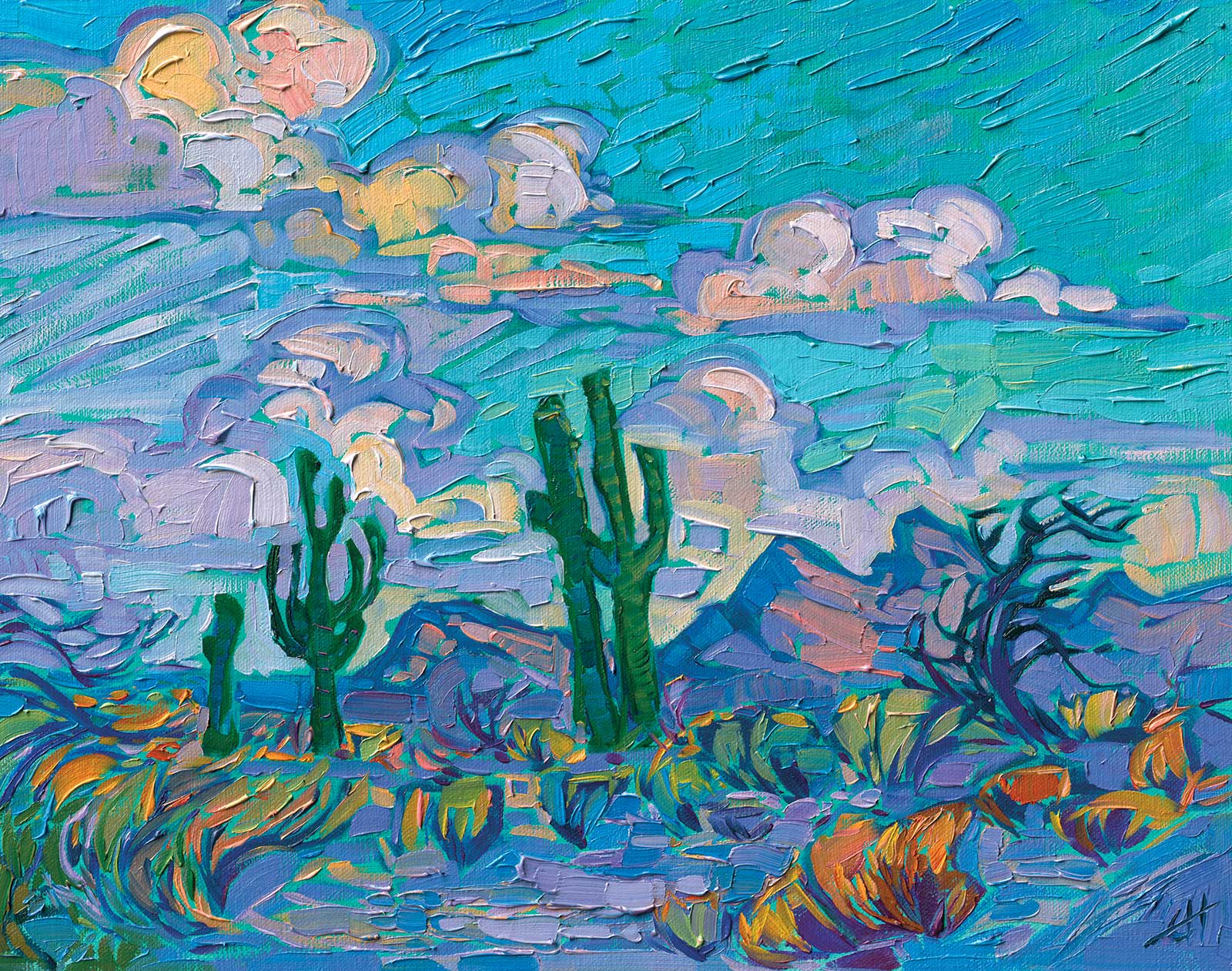 Erin Hanson, Saguaro Greens, oil on canvas, 11 x 14”
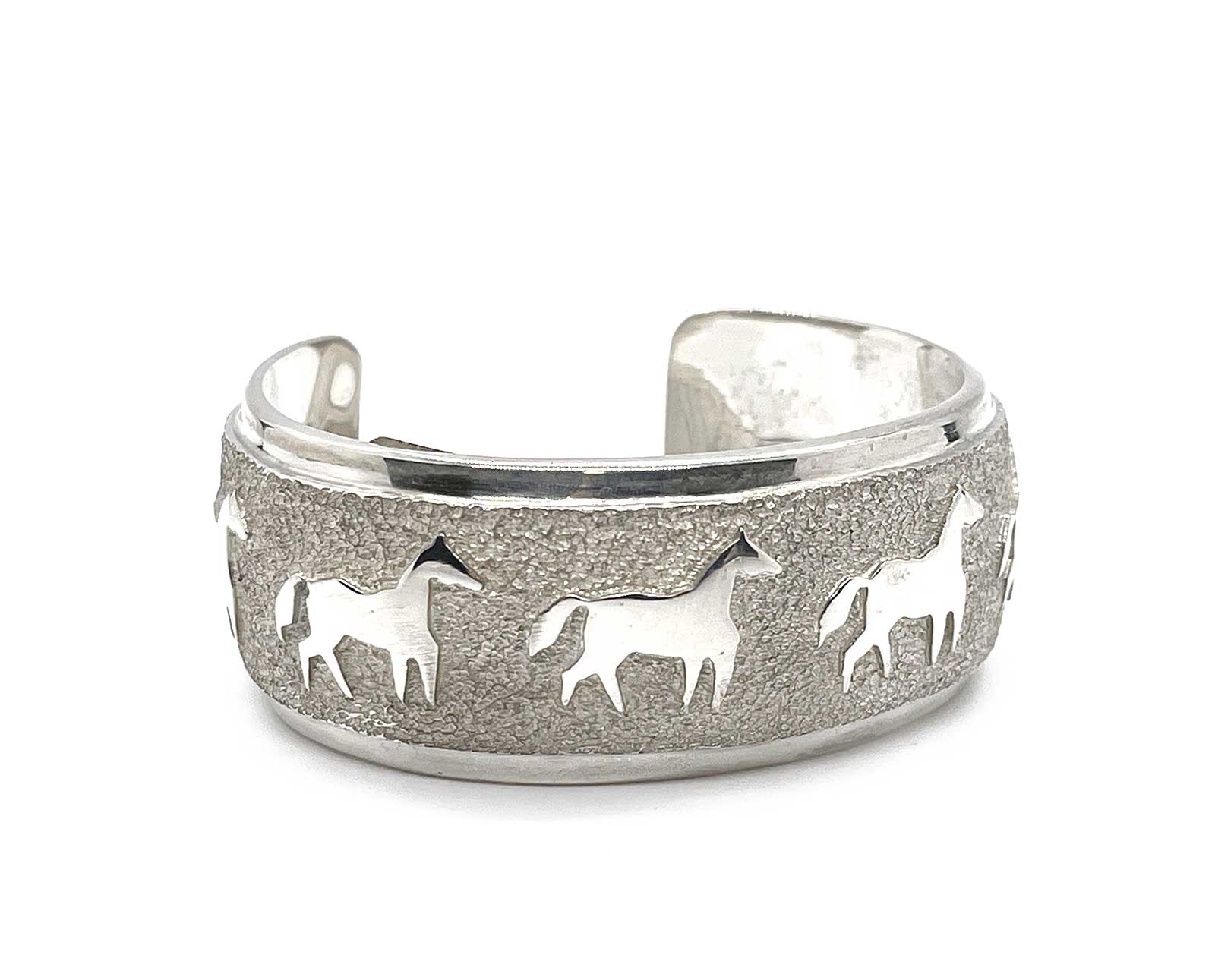 Sorrel Sky Gallery, All Metal Horse Bracelet, sterling silver, 7/8” wide, by Ben Nighthorse.
His knowledge of horses informs his frequent use of their form in his jewelry. His gallery notes, “Native Americans often believe that a person can inherit some of an animal’s virtues by wearing an image of it. That is one reason why noble creatures have always played an important role in Nighthorse Designs. This love of animals, especially the horse, which is seen as a symbol of freedom and strength, inspires him to create new innovative designs. As he says, ‘I have always liked horses for their emotion, strength and dignity.’”
Slade Wheeler grew up in a family of artisans and musicians and, today, makes trompe l’oeil paintings using everyday objects that bring a sense of familiarity but also a universal symbolism. He was initially inspired by the emotion and expressive brush strokes of Rembrandt but evolved into creating finely detailed paintings while maintaining the emotional connection.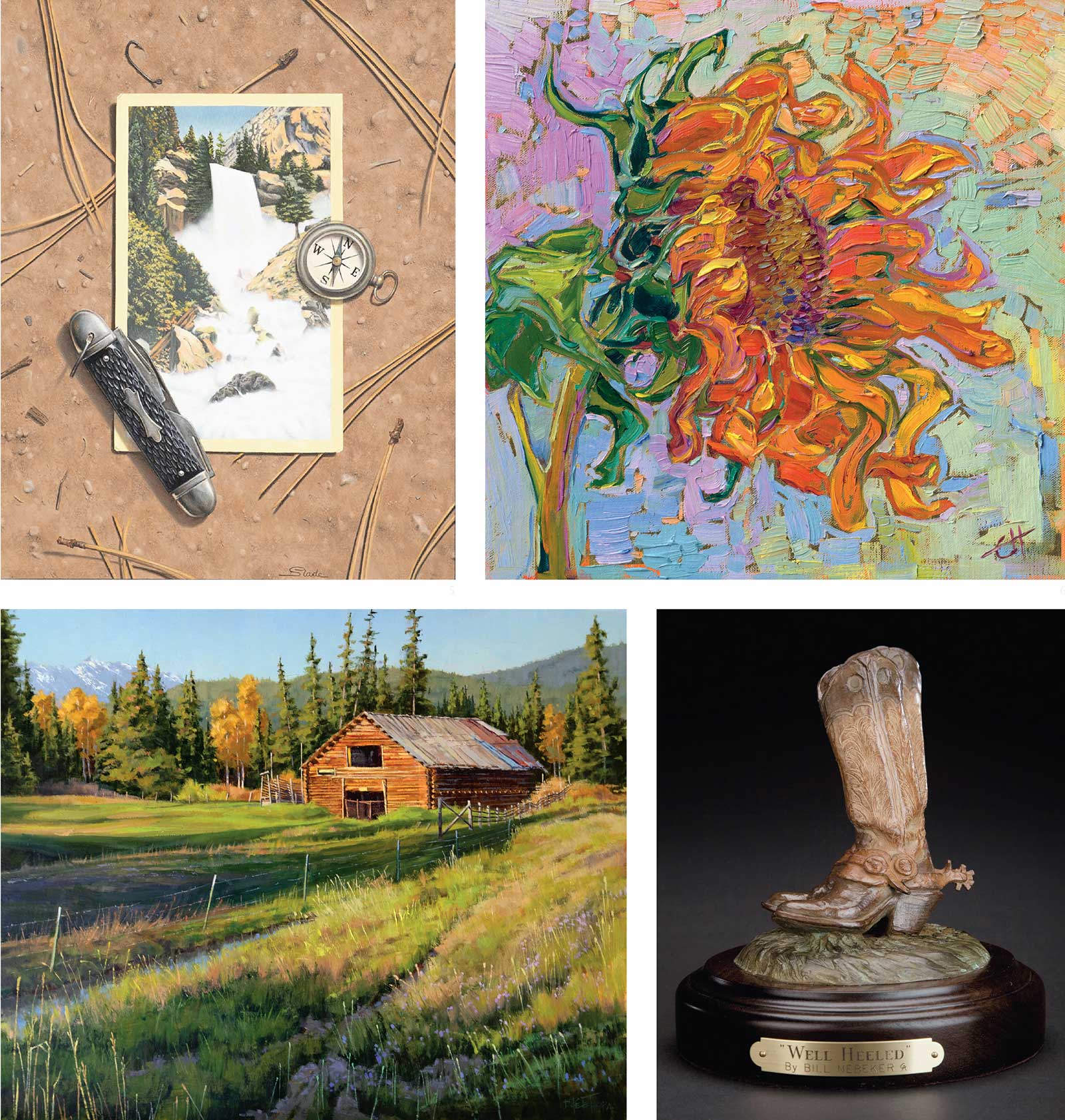 Top: Meyer Gallery, Roughin’ It, oil, 9½ x 7½”, by Slade Wheeler; Erin Hanson, Sunflower Bloom, oil on canvas, 12 x 12” . Bottom: Darcie Peet, Seasoned and Shabby, but Center Stage, oil, 16 x 19”; Bill Nebeker, Well Heeled, bronze, 7 x 6 x 6”
Today, he lives in the Sierra Mountains near Yosemite National Park. For his painting Roughin’ It, he assembled a colored postcard of Yosemite’s Vernal Fall, an old black bone jack knife and a simple old compass for his 9½-by-7½-inch composition in a rustic wooden frame. The items are arranged on a patch of ground littered with pine needles and an unexpected fishhook. You may not need to rough it to get to Vernal Fall but it is not visible from the road and requires a three-mile roundtrip hike to view its splendor.
Continue reading to learn more from artists, galleries and museums on the inspiration and drive behind creating small works and miniatures. Also get advice on adding to or starting a collection on the genre. 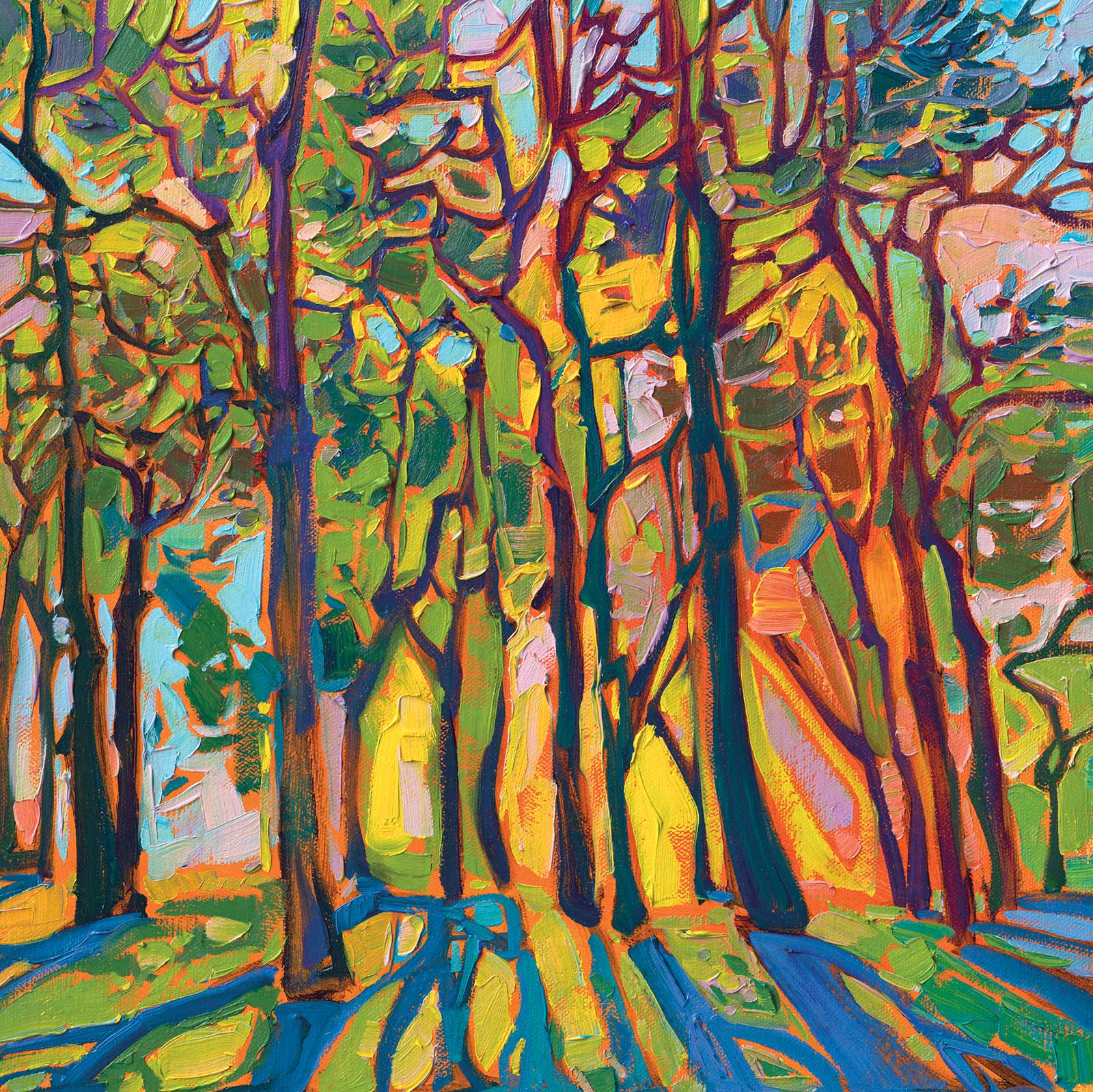 Erin Hanson, Pine Light, oil on canvas, 12 x 12”
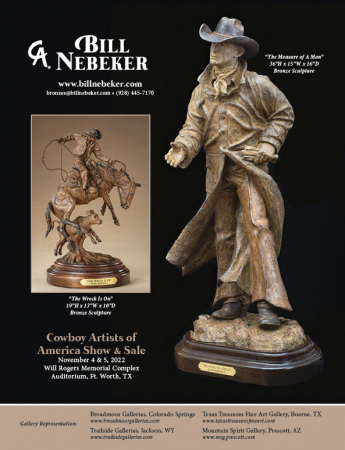
Artist Bill Nebeker’s small works and miniatures are inspired mostly from his family’s experience as American ranchers and cowboys, and values the cultural aspect of their work, ethics and ideals. “I want to tell their stories in my sculptures,” says Nebeker. “I create authentic historic and contemporary detailed depictions of the subjects I choose to sculpt. Whether I choose to portray a cowboy riding along a dusty, desert trail; a snowy, cold mountain pass; working cattle in a corral or out in the open wilderness, my viewer can see, feel and imagine the tension and atmosphere. Sculpting action and movement of the horses, cattle and cowhands brings each story to life. To me, what saddles and equipment are being used and even what hat, boots or clothing they wear also adds interest to the piece.”
Artist Erin Hanson is a life-long painter, beginning her study of oils as a young child. Her passion for natural beauty is seen in her work as she transforms vistas familiar and rare into stunning interpretations of bold color, playful rhythms and raw emotional impact—seen in work like Saguaro Greens, pictured in this section. Even in its miniature format, the desert landscape scene draws attention to itself in all its vibrant glory. 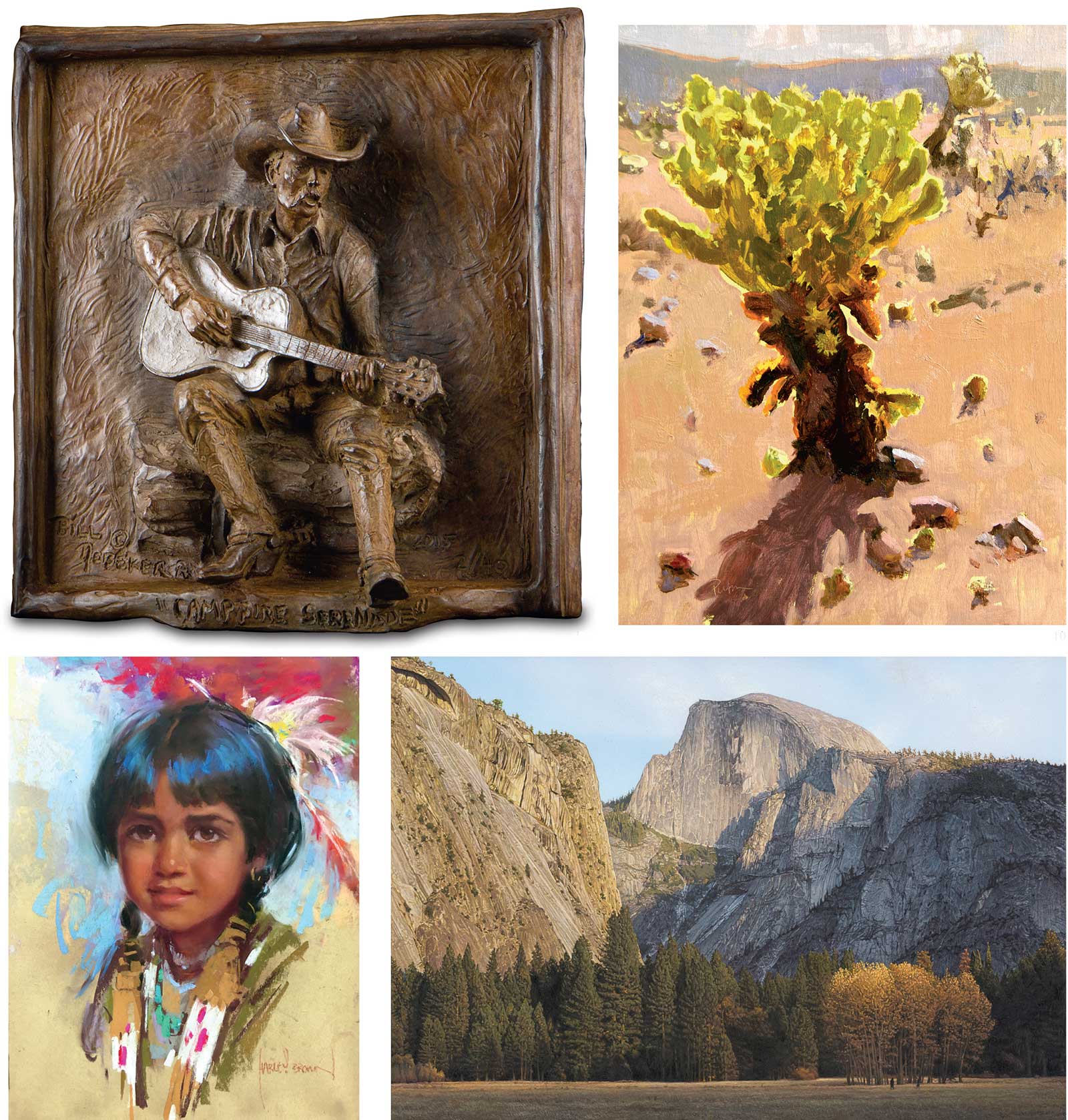 Top: Bill Nebeker, Campfire Serenade, bronze, 9 x 9”; Lori Putnam, Jumpers, oil on linen, 16 x 12”. Bottom: The Plainsmen Gallery, Rose, pastel, 12 x 9”, by Harley Brown; Robert Steiner, Half Dome – Fall, acrylic on canvas, 16 x 24”
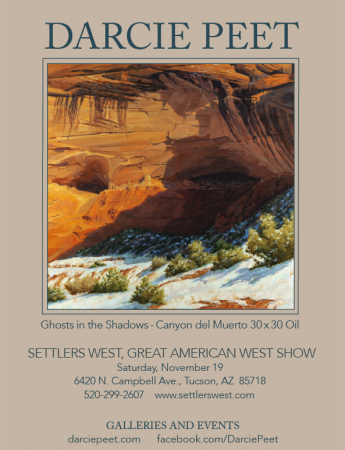
Hanson’s frequent forays into national parks and other havens of nature include backpacking expeditions, rock climbing and photo safaris. Hanson’s unique painting style has become known as open impressionism, which is now taught in art schools around the world. With thousands of collectors eagerly anticipating her work and millions of followers online, Hanson has become an iconic driving force in the rebirth of contemporary impressionism.In Darcie Peet’s oil painting Seasoned and Shabby, but Center Stage, she explains, “While visiting friends near Seeley Lake, Montana, we often walked a country dirt road not too far from their cabin. This tattered barn sat so very visibly ‘center stage’ at the edge of the road, punctuating a small pasture. Over many walks along the road, we saw this barn in so many different times of day, moods and light. This late, fall afternoon there was a dusting of snow on the distant Mission Range, and the angles of the shadows, fence line and irrigation ditch all seemed to point and call attention to this once active part of the ranch. A few late blooming lavender asters edge the setting like a decorative picture frame.”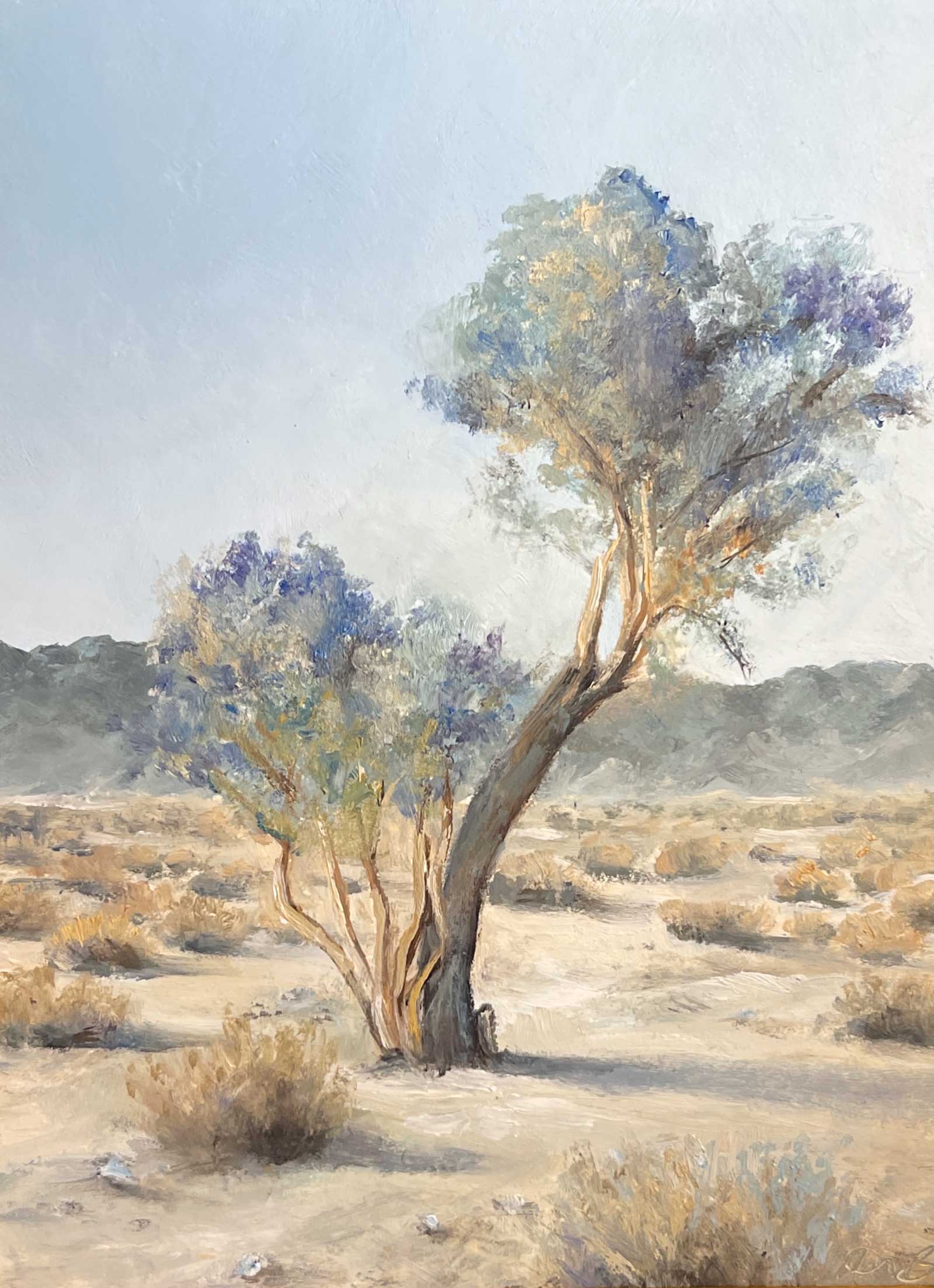 Naomi Brown, Desert Smoke Tree, oil, 7 x 5”
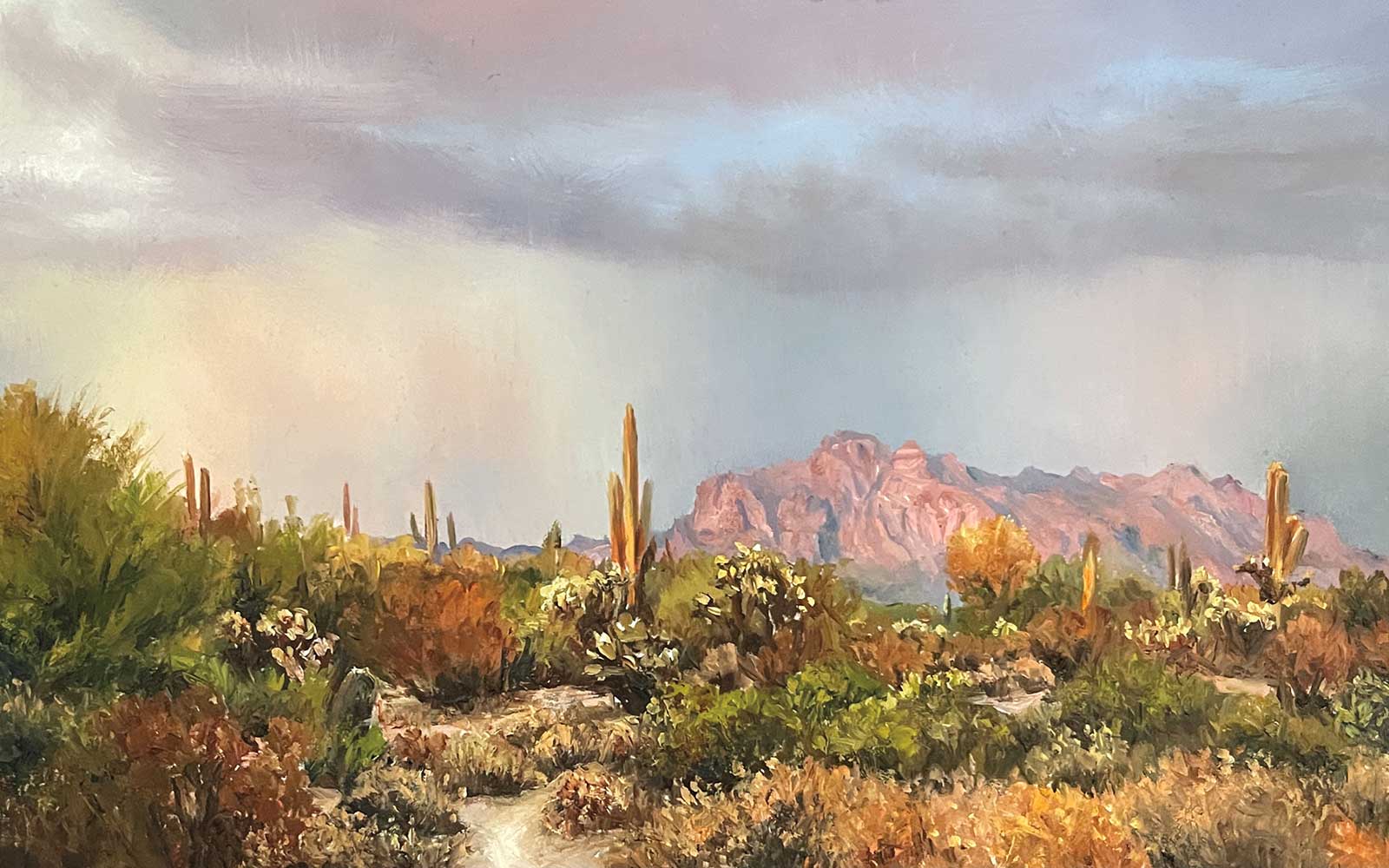 Naomi Brown, The Superstitions in the Spring, oil, 7 x 11”
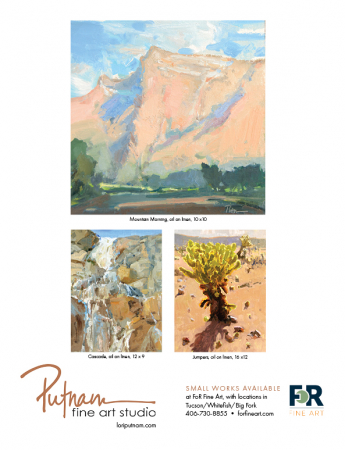
What interests Lori Putnam is rarely any specific subject unto itself. “Instead,” she says, “I am captivated by interlocking shapes, color harmony and precisely related tones. When seen up close, my paintings are abstract marks of color that only come into focus as the work is viewed from farther away. My three small work paintings pictured in this section, are all at different times of the day. Mountain Morning is an example of soft, pink, morning light; Cascade was painted in the hard, bright sun of mid-day; and Jumpers celebrates the lovely yellow glow of these backlit cactus in the afternoon. If purchasers are interested in acquiring pieces to round out their collection, choose works with a variety of themes, colors and light play.”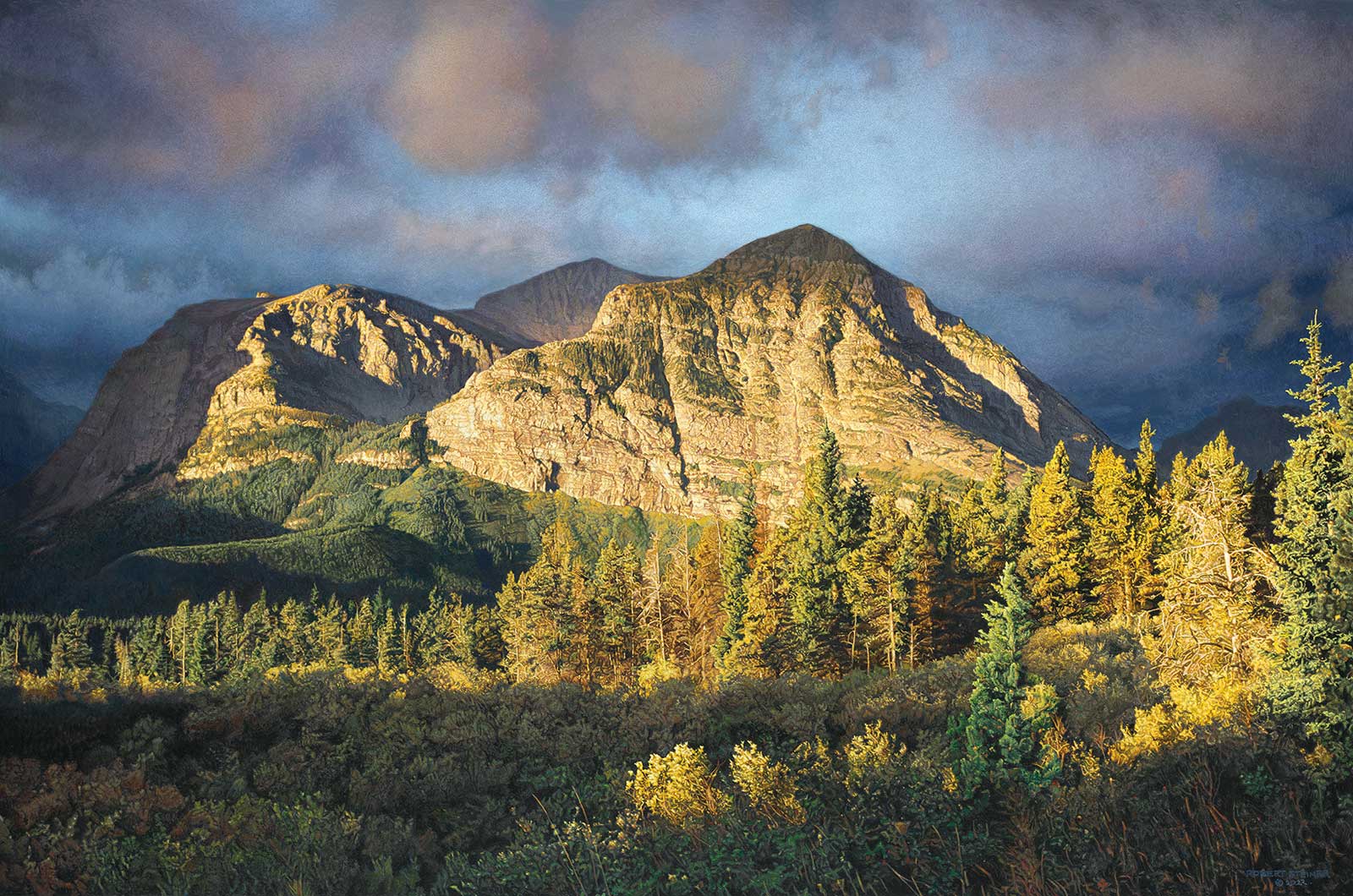 Robert Steiner, Glacier, acrylic on aluminum, 16 x 24”
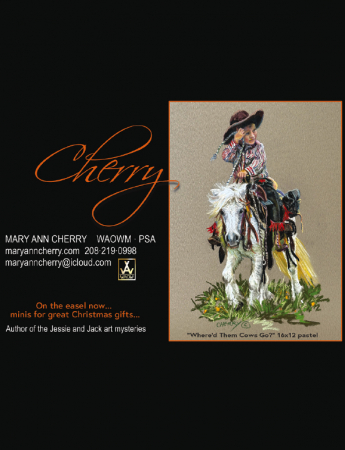
Mary Ann Cherry finds painting a miniature to be a good way to work out composition or color harmony for larger works, or simply a way to fill an hour or two when her day is broken up into appointments. “If I’m not really ‘in the mood to paint’ I start a tiny canvas to get myself revved up,” Cherry explains. “If I’m working on several deadlines, I’ll often do a couple studies for the large work and save those minis for the Christmas season when clients want small gems for gift giving. At the holiday season, I paint a ton of small animals and calves—often less than 8 by 10 inches in size. For people whose homes are already full of large-scale art, a miniature can brighten a random corner or find its way into a gift box.”
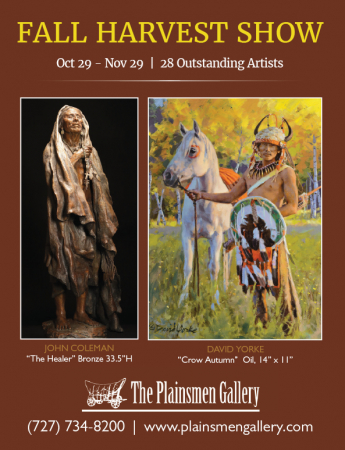
Artist Harley Brown, represented by the Plainsmen Gallery, showcases his masterpiece small work titled Rose. He explains, “My wife and I met Rose and her family during a visit to a traditional First Nation Ceremony in Alberta, Canada, near the foothills of the Rocky Mountains. We have gone to these ceremonies since the 1960s. It is amazing to watch families and friends close in heart, joining together to celebrate their heritage and traditions. One of the youngest of the dancers, Rose, was learning the steps and rhythm of the dances with a true, knowing spirit. I’ve spent a great deal of time portraying children over the years and it is such an inspiration. Every expression says so much.”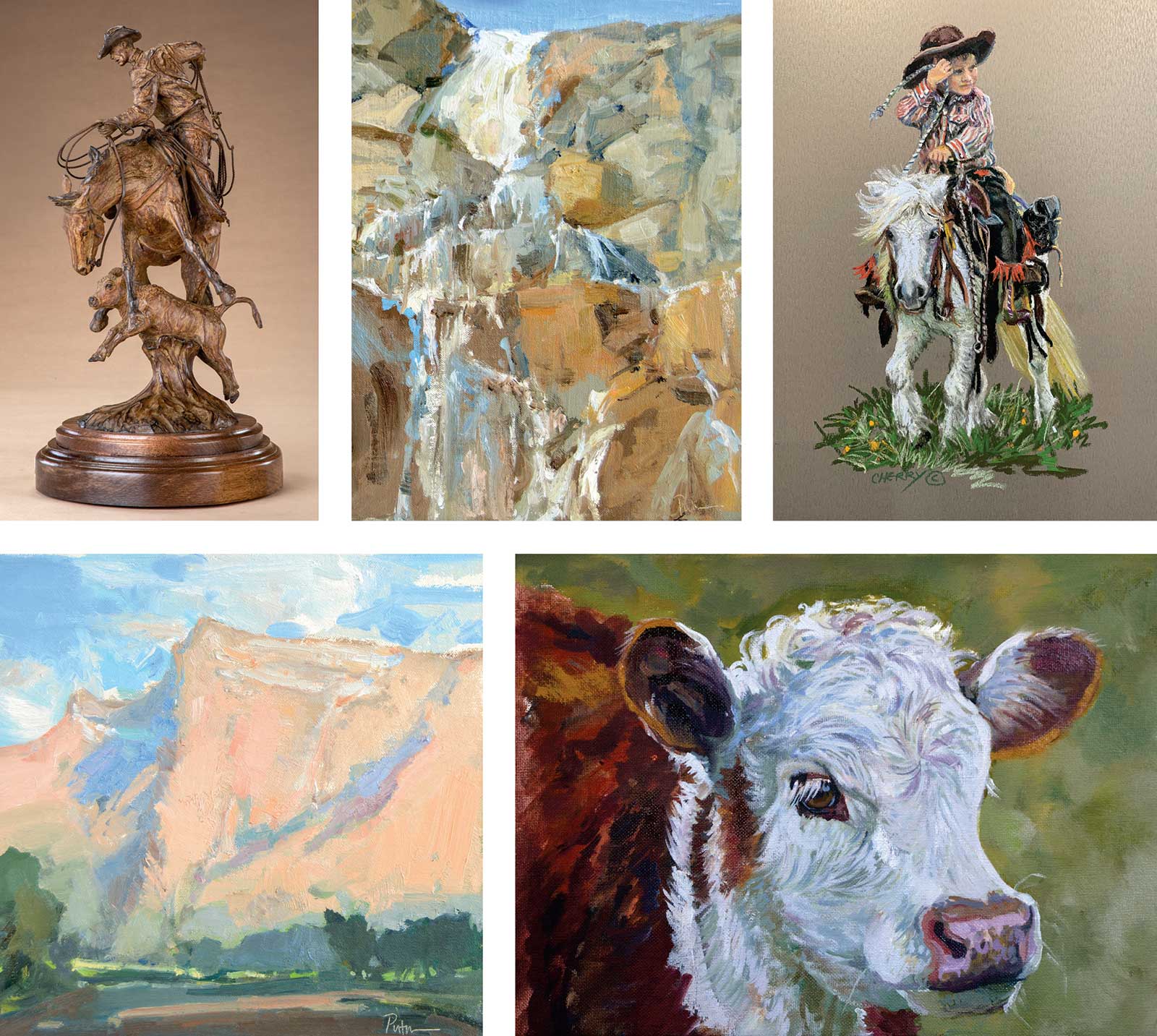 Top: Bill Nebeker, The Wreck is On, bronze, 16 x 13 x 10”; Lori Putnam, Cascade, oil on linen, 12 x 9”.; Mary Ann Cherry, Where’d Them Cow’s Go, oil, 16 x 12”. Bottom: Lori Putnam, Mountain Morning, oil on linen, 10 x 10”; Mary Ann Cherry, Making Calf Eyes, oil, 14 x 11”
For those collecting, Brown says, “When selecting a small work as an investment, it may be helpful to choose a subject that the artist is known for.”
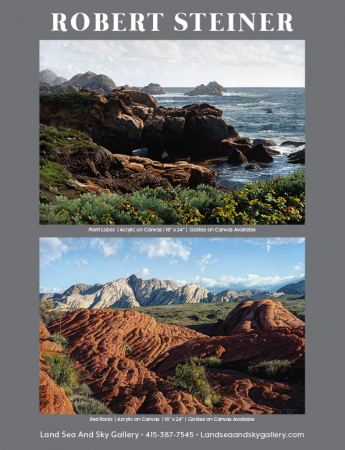
In Robert Steiner’s small Western landscape paintings, he tries to communicate his sense of wonder and appreciation for the unspeakable beauty of the natural world. “I have always marveled at the infinitesimal detail of the universe which exists simultaneously within its infinite expanse,” the artist remarks. “My paintings are an attempt to capture this sublime feeling. I particularly enjoy the scenery of the American West because of the interesting rock formations. These allow me to use shade and highlight to create a strong structural and volumetric effect. The intricate details of texture can then be hung on this structure.” 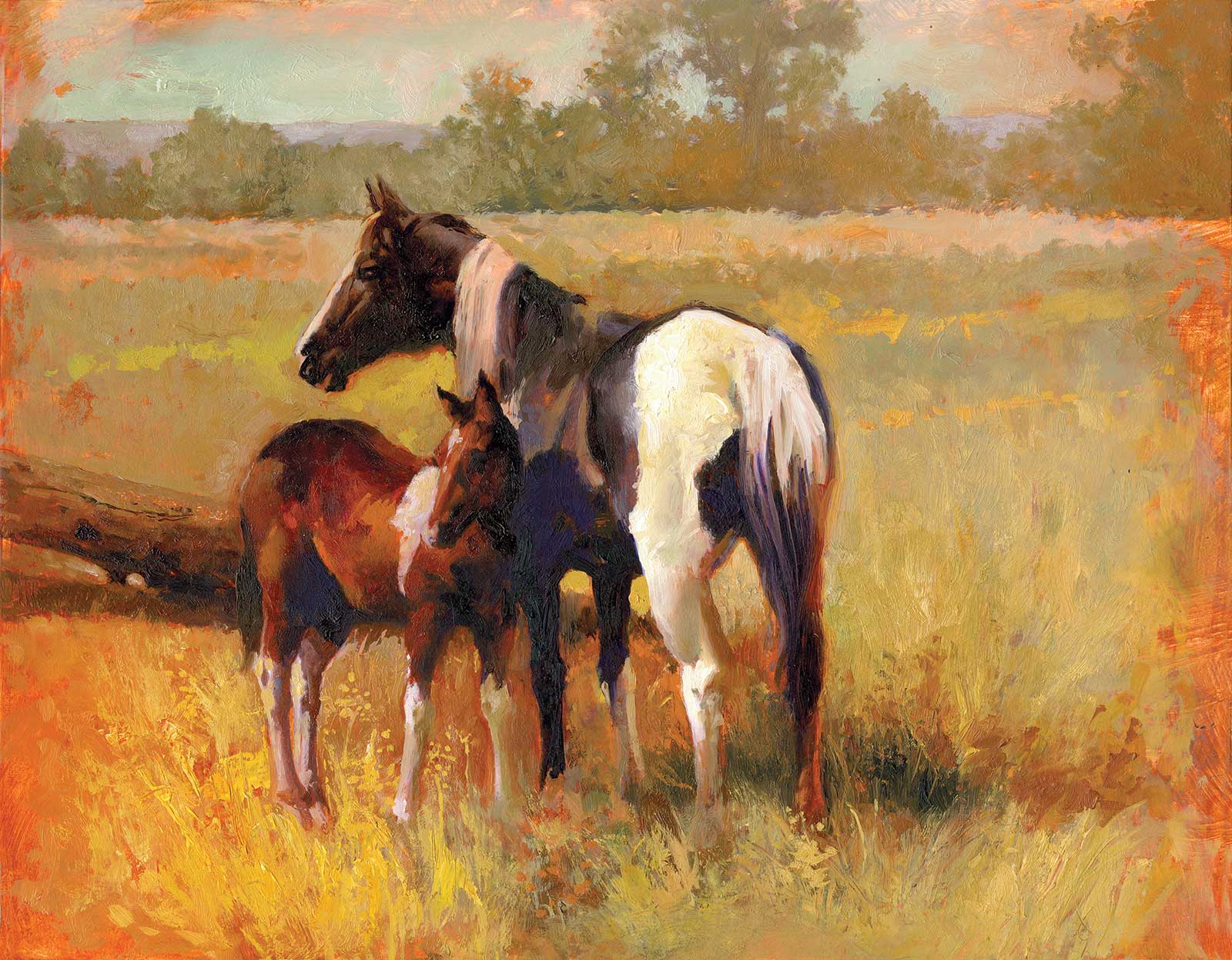 Robert Rodriguez, Mama and Me, oil on panel, 11 x 14”
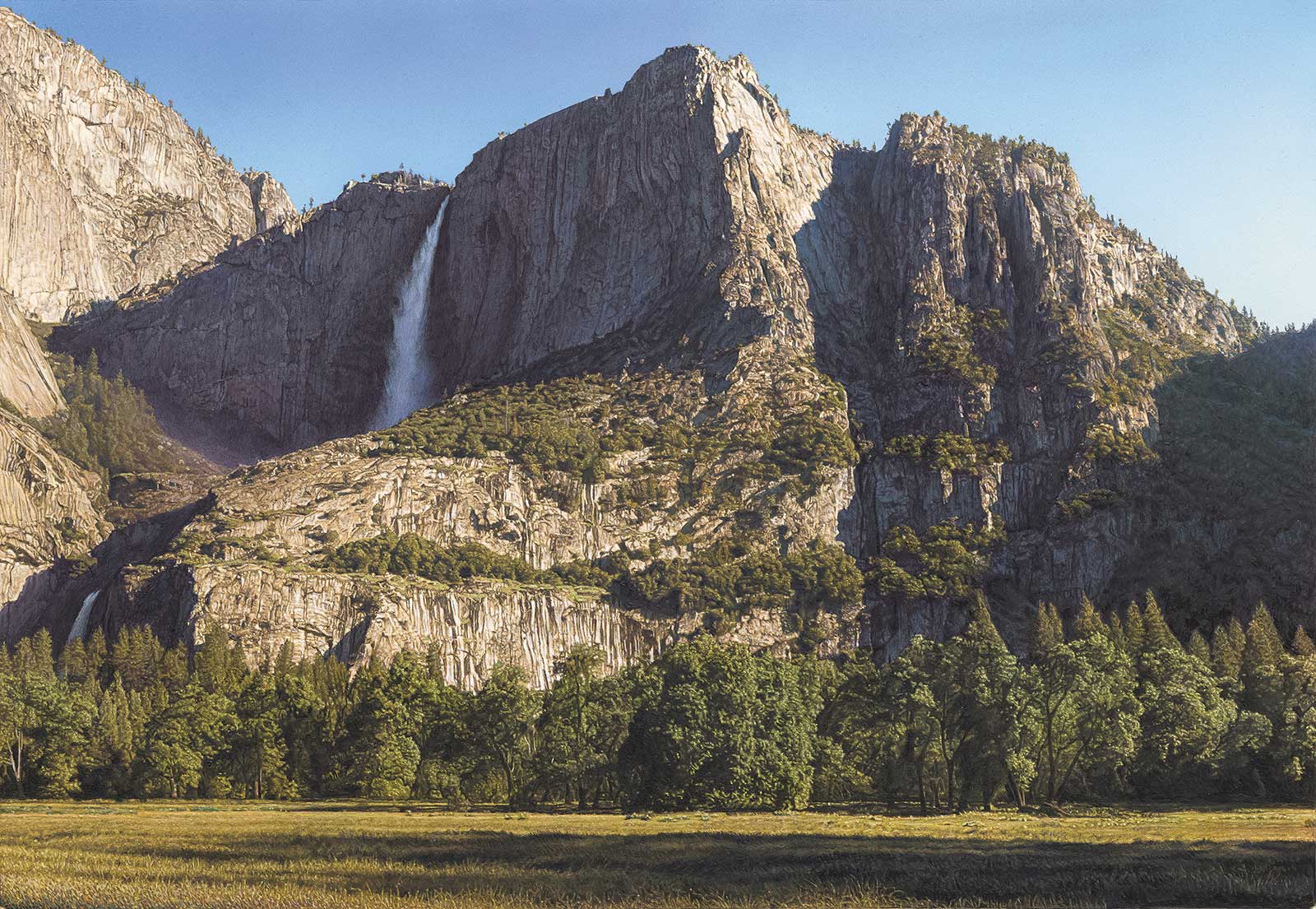 Robert Steiner, Yosemite Falls – Spring, acrylic on canvas, 16 x 24”
As a collector himself, Steiner only collects works which move him emotionally and impress him with their mastery of technique. “I prefer paintings that create a strong three-dimensional illusion through the use of the classical techniques of Western art which date to Titian and Velasquez.”
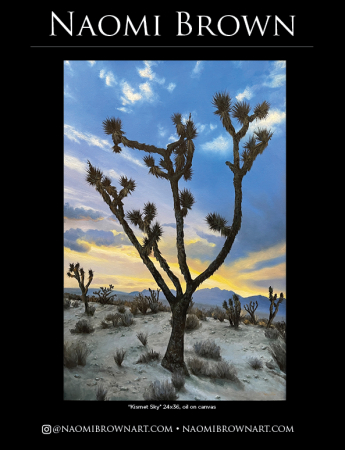
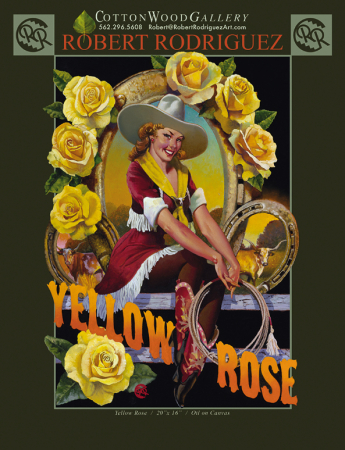
Buffalo Bill’s Wild West Show, old movies and posters of the silver screen, vintage orange crate labels, pressed-tin lunch boxes from the 1950s—all that vintage ephemera provides a wealth of inspiration for artist Robert Rodriguez. Being a contemporary artist, Rodriguez looks at his work with modern eyes and modern sensibilities. “The point is not to paint something that looks like it was done 75 years ago, just something that winks at the past in acknowledgement and recognition,” says Rodriguez. Seamlessly bringing together his inspiration of the Parthenon friezes, Art Deco, William Adolphe Bouguereau and the pre-Raphaelites as well as current trends in Western art, is what makes his work unique and personal.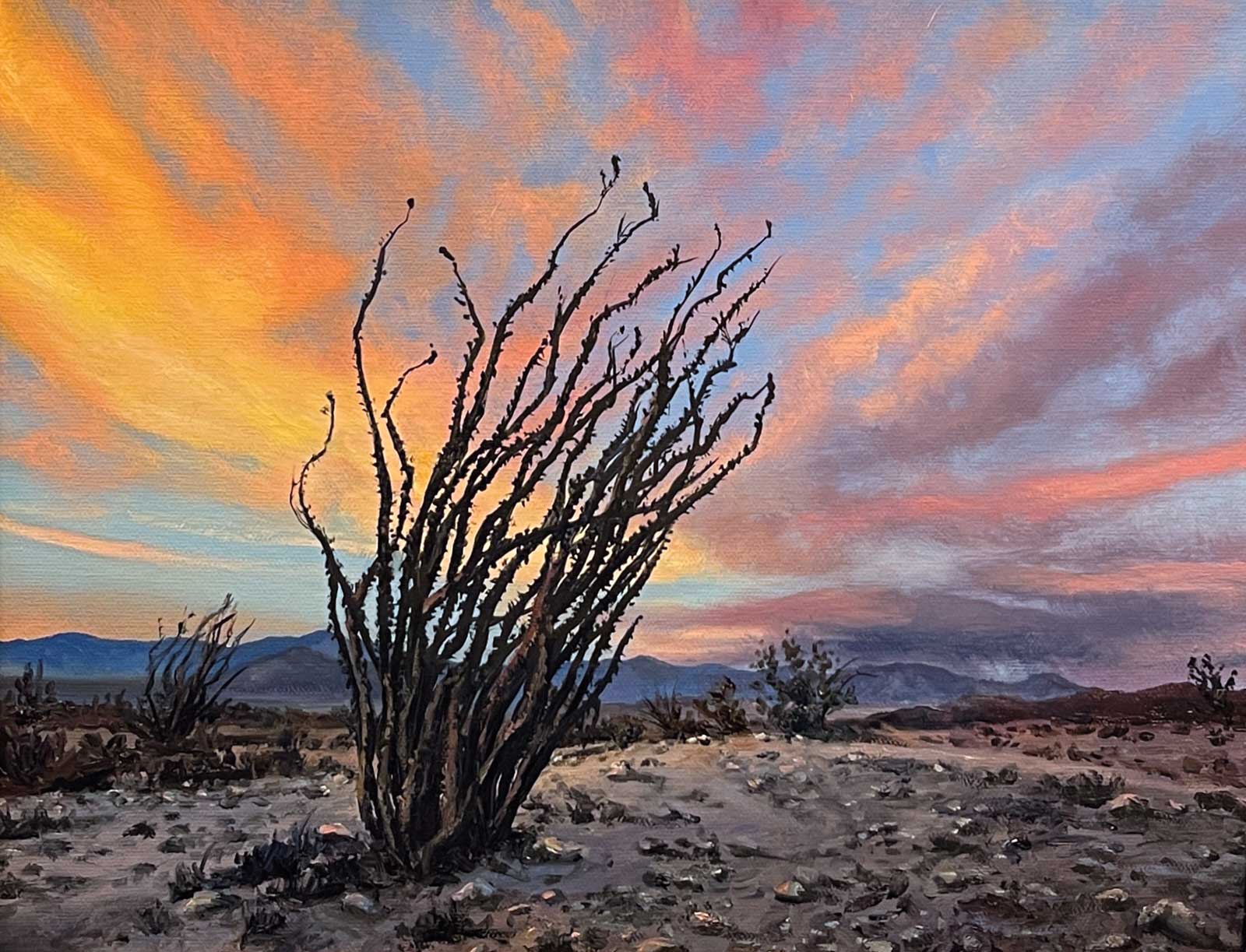 Naomi Brown, Ocotillo Magic, oil, 11 x 14”Naomi Brown taught herself how to paint by starting off with watercolor miniatures. “I sold these post card sized paintings for two dollars at my grandmother’s antique store,” says Brown. “I loved the challenge of taking all the details of a large image that I was painting from and shrink it down to a 4-by-6-inch or 5-by-7-inch painting. It really helped me understand how to paint the details. Over the years, I have had to learn to paint much larger sized paintings. Although I enjoy painting these larger scale paintings, my miniatures are still my favorite size. I love that there seems to be more of a following of art collectors and a new appreciation for miniature paintings.” —
Featured Artists & Galleries
Naomi Brown
www.naomibrownart.com
Mary Ann Cherry
maryanncherry@icloud.com
www.maryanncherry.com
Erin Hanson Gallery
Oregon, California and Arizona
(480) 336-2864, info@erinhanson.com
www.erinhanson.com
Legacy Gallery
7178 E. Main Street, Scottsdale, AZ 85251
(480) 945-1113, www.legacygallery.com
Meyer Gallery
225 Canyon Road, Suite 15, Santa Fe, NM 87501
(505) 983-1434, www.meyergalleries.com
Bill Nebeker
1830 Hereford Drive, Prescott, AZ 86305
(928) 445-7170, bronzes@billnebeker.com
www.billnebeker.com
Darcie Peet
www.darciepeet.com
Plainsmen Gallery
2141 Main Street, Dunedin, Florida
(727) 734-8200, www.plainsmengallery.com
Lori Putnam
(615) 512-0929, www.loriputnam.com
Robert Rodriguez
(562) 296-5608, patina1@earthlink.net
www.robertrodriguezart.com
Sorrel Sky Gallery
125 W. Palace Avenue, Santa Fe, NM 87501
(505) 501-6555, www.sorrelsky.com
Robert Steiner
(415) 387-9754
www.landseaandskygallery.com
Powered by Froala Editor